Taken 2 (2012)

★★

Director: Olivier Megaton

Release Date: October 4th, 2012 (UK); October 5th, 2012 (US)

Genre: Action; Crime; Thriller

Starring: Liam Neeson, Maggie Grace, Famke Janssen

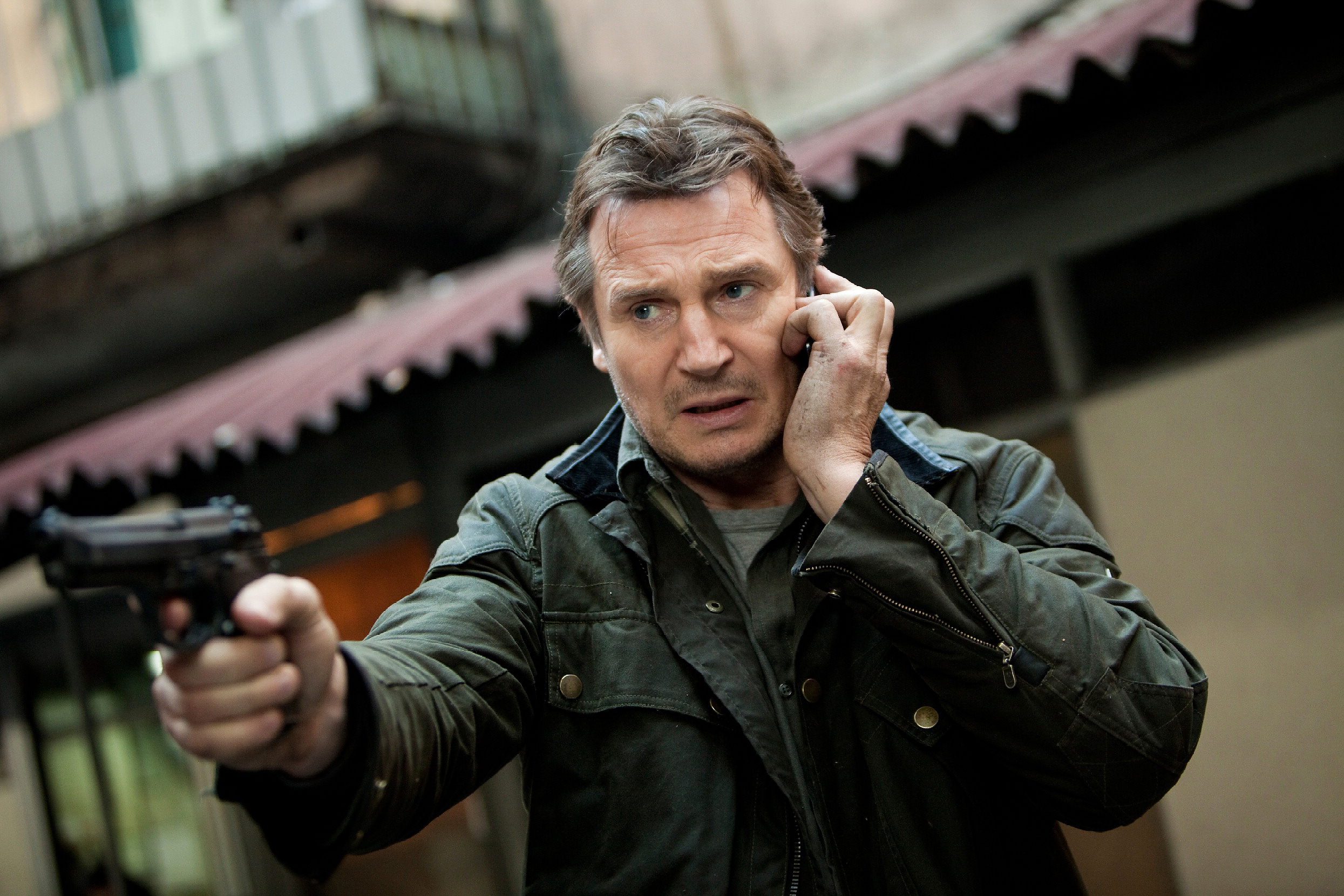
For a moderately more age-wise gentleman — compared to that of an average action star — Liam Neeson carries out his fair share of ass-kickings in Taken 2. This would not be a problem on the following bases: the film in question is a comedy and/or parody of action, such as RED; Neeson gets lucky once or twice, perhaps via enemy mistake; Neeson has capable assistance… or at the very least, assistance. Unfortunately none of these three apply in Taken 2, and along with a far too coincidental and convoluted plot, the novelty of a 60-year-old Liam Neeson overcoming gang of thugs after gang of thugs has worn off a tad since 2008.

Set primarily in Istanbul and sometime after the events of its predecessor, Taken 2 sees Bryan Mills, his estranged wife Lenore and daughter Kim, once again the targets of a group of criminals led by the man whose son Mills killed previously. After the trio find themselves separated and hunted by the vicious mobsters, it is down to Mills to rescue his family and put an end to the terror they have suffered at the hands of the Albanian gang.

90 percent of the problems which Taken 2 faces stem from the derisory plot that the film is ungratefully saddled with. Firstly, it is far too coincidental. Suspension of disbelief is a key factor in enjoying a film, but when a film is trying to be taken (ahem) as seriously as Taken 2 is, there has to be a degree of realism surrounding it. Instead, a number of events just happen to occur at the correct time, without justification. For instance, near the beginning of the film Neeson’s character Bryan Mills just happens to find his estranged wife upset at her house after her partner just happened to cancel their significant plans a few moments before. Okay, perhaps this case of coincidence is just a one-off — it is possible, right? Fast-forward a few scenes and, separated by the Atlantic Ocean, Neeson is in the midst of leaving his wife and daughter a message on their phone when, out of nowhere, they appear behind him. When a film is delivering by way of captivating its audience, inconsequential issues such as these would not be brought to fruition in any way. Taken 2 struggles to live up to the pulsating levels set by the first film, and therefore the viewer has nothing better to do than be distracted by coincidence. Did I mention that Neeson’s daughter Kim, played by Maggie Grace, has a squabble with her father over the importance of driving lessons at the start of proceedings? No reason.

The film also fails to place its characters in sensible scenarios, resulting in not only the story feeling unrealistic, but also the characters being perceived as slightly hokey. At one point, Kim is throwing loud, destructive grenades around the busiest city in Turkey, yet somehow manages to draw very little attention to herself. For someone who got caught by criminals after hiding under a bed(!) in Taken, those are some hefty stealth abilities. The illogical nature of the plot is surprising as the writer, Luc Besson, also wrote the screenplay for the first film (in what looks set to become a series), where goings-on made sense and more often than not had a reason behind them. There are illogical and puzzling tendencies aplenty this time around though, including a scene involving apparent intentional friendly fire which, again, makes absolutely no sense when taking into account the opening few minutes of the film.

As mentioned just a moment ago, Taken 2 is written by the same individual who wrote the gritty, hard-hitting and pleasantly surprising Taken — Luc Besson. In Taken, Besson created a visceral story with simplicity and some of the most quotable dialogue in recent cinema history. In Taken 2, he has recreated Taken with very little of that peppered around the story. The novelty of the first film was the rebirth of Liam Neeson as an action star, and a pretty believable one at that. Sadly, this novelty seems to have vanished in the sequel and Neeson does not quite come across as affirming and in control as he did previously. That is not to say that he — nor any of the other cast members — are particularly poor in their roles, rather they all provide solid performances. This time around however, there is hardly anything memorable about their portrayals.

The film is not without some merit. The action scenes are efficiently choreographed and succinctly delivered throughout, providing just about all the entertainment there is to be had. An action film’s number one priority is to deliver enjoyable fight and chase sequences, and Taken 2 does that. It also looks terrific, with the contrast between the colourful wealthy parts of Istanbul, to the grey, gravelly sections of the criminal underworld, adding an immersing setting to the film. Director Olivier Megaton does not set out to make a bad film and in all honesty Taken 2 is not a horrible, unwatchable mess — nowhere near that. It just could have been a whole lot better.

It is fitting that the song played over the credits is one associated with a television advert, because Taken 2 essentially feels like an extended advert for Taken. At its very best, the film is little more than a run-of-the-mill action flick.

Towards the end, Liam Neeson rebuffs a question with, “Because I’m tired of it all.” Me too Liam.

Me too.
Credit: The Movie Mash

The Imposter (2012)

★★★★★

Director: Bart Layton

Release Date: August 24th, 2012 (UK)

Genre: Documentary; Biography

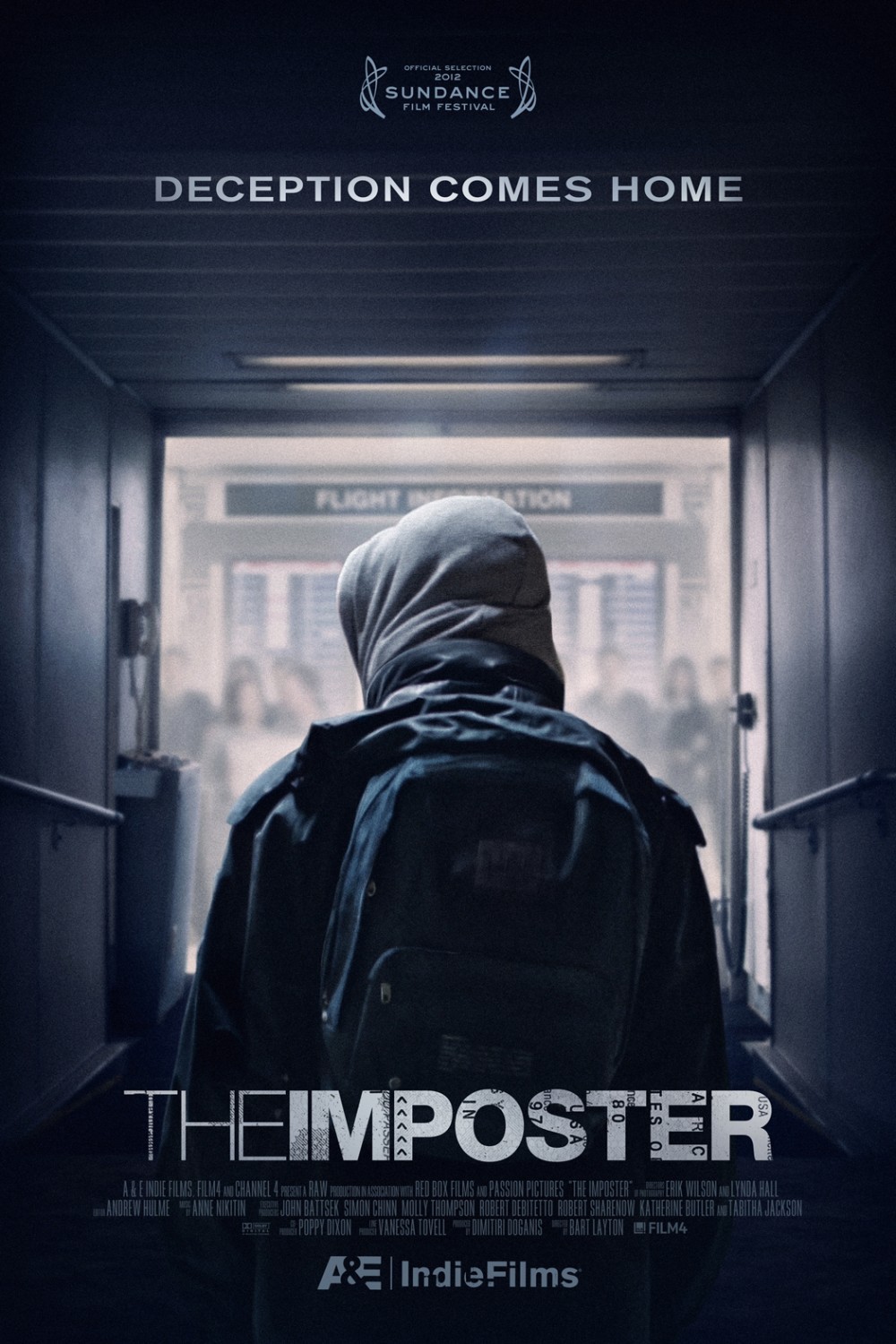
A documentary is good when it concisely lays out the facts and displays those facts in a manner open to audience interpretation. A documentary is great when it does all of that whilst telling a story and evoking a range of emotions from the audience. James Marsh’s incredible Oscar-winning Man on Wire is an example of a great documentary, and it just so happens that another British director, Bart Layton, is the man behind The Imposter: an astonishing film which has garnered universal critical acclaim and vindicates its place next to the likes of Man on Wire at the pinnacle of great documentaries.

Much like Man on Wire, The Imposter tells the story of a French individual in an extraordinary situation. However that is where the similarities end — tonally, subject-wise, and even stylistically. The documentary-film chronicles the events four years after the disappearance of a young Texan boy named Nicholas Barclay in 1993. Through archive footage, interviews and re-enactments, Frenchman Frédéric Bourdin reveals how he managed to fool Nicholas Barclay’s family into accepting him as their missing son back. As his story unravels, so too does the extraordinary circumstances surrounding the case.

The Imposter is so difficult to comprehend that, during an appearance on Mayo and Kermode’s Film Review, director Bart Layton mentioned how after a screening of the film at the Sundance Film Festival, “Someone put up their hand and asked, ‘I’m interested to know if [The Imposter] is based on a true story'”. This highlights the sheer absurdity of the situation, but also the tremendous ability of Bourdin to manipulate people and create a sense of believability when such a thing does not have any right to be present. The trickster Bourdin looks straight down camera lens as he narrates his side of the story and is eerily charming, coming across as a hypnotist putting the audience under his spell. Throughout the documentary-film, he talks about how from a young age he was neglected a childhood or any semblance of love, linking this deficiency of care and attention to the reason behind his despicable behaviour. This almost gives Bourdin a basis for demanding surreal sympathy — even as his lies become increasingly twisted, the reason behind those lies becomes increasingly clearer.

In contrast, Layton interviews family members of Nicholas Barclay, namely his mother, sister and brother-in-law. They also speak directly to the audience, each of them emitting a genuine sense of pain, wonderment and anger towards the circumstances they have lived through. These traits remain uncannily vivid even after a decade and a half, conveying just how skillful-yet-dastardly the unnervingly gravitating Bourdin is. As the piece progresses, more and more real life characters become entangled in the case, with more and more cracks appearing in Bourdin’s disguise. The final half hour of The Imposter eclipses the riveting first part of the documentary-film, as it enters a whole new heart-pounding level altogether. Each different layer to the story begins to overlap with the one which precedes it, as Layton gradually unveils fresh elements that come together in an explosive and intense conclusion. The number of films which have generated this amount of drama in the past year since The Imposter’s release is probably a number which could be counted on one hand.

Other than the obvious astounding nature of the story, one of the key factors behind the success of The Imposter is the style in which it is shot. As aforementioned, all of the interviews are conducted as if the interviewee is conversing directly with the audience. This adds an almost personal feel to proceedings — as if the viewer is the one interrogating Bourdin or speaking to the Barclay family. Alongside that, Layton’s decides to recreate — or in this case re-imagine — how the non-documented events happened (90 percent of the events were not documented first-hand). This develops a cinematic quality to the documentary-film. The Imposter therefore plays like a thoroughly thought-out and heavily invested-in piece of work. Just as matters begin to slip too far over to the cinematic side, Layton reels the audience back into the unsettling realism of events, either with an interview snippet involving Bourdin or archive footage of a young Nicholas Barclay with his family.

It would perhaps have been simpler and certainly far more financially rewarding for Bart Layton to have directed The Imposter as a Hollywood drama. Something tells me that the thought never even crossed Layton’s mind though — what he has here is an astonishingly captivating piece of work which at times plays like a fear-inducing horror film.

The question at the centre of it all is: how far would you go to believe the unbelievable?

Credit: Yards of Grapevine

Daybreakers (2010)

★★★

Directors: Michael and Peter Spierig

Release Date: January 6th, 2010 (UK); January 8th, 2010 (US)

Genre: Action; Drama; Horror

Starring: Ethan Hawke, Willem Dafoe, Sam Neill, Claudia Karvan

As a commentary on modern-day civilisation and western domination, Daybreakers is very good. As a scattered action romp where humans are pitted against vampires, Daybreakers is not too bad either. Where the film does fall on flat on its face though, is when it tries too hard to combine the two without properly answering all of the questions or delivering the most exhilarating action. In the end, there is just far too much going on.

Daybreakers is set a decade in the future, in 2019, where the human race is almost entirely extinct and the world is primarily inhabited by vampires. As the number of remaining human beings diminishes, so too does the amount of blood, the vampire’s means of function. A dominant vampiric corporation headed by owner Charles Bromley (Sam Neill) sets out to find an adequate blood substitute, while researcher and reluctant vampire Edward Dalton (a vampire named Edward? that will never work), played by Ethan Hawke, aligns with a group of humans in order to find a cure and save mankind.

From the get-go, Daybreakers develops a collection of parallel analogies with life in the present day, and all of the social, environmental and political problems the world currently faces. For example, the rapid depletion of human blood and local conflicts over obtaining the substance can be understood as a reference to the imminent decrease in water levels around the globe, along with the ‘water wars’ going on in many third world countries. In Daybreakers, cities are controlled and domineered over by a ruthless police force, much akin to the security forces inhabiting dictatorship regimes in varies reaches of the planet, where many civilians are wrongfully oppressed (in the case of Daybreakers, the humans). These are only two of a whole host of succinct and well established connections that writers and directors, the Spierig brothers, obviously had in mind when creating the film. The directors’ thematic inclusions are stimulating, as their representation of modern society works very well throughout. When attempting to incorporate select societal elements into a film it is important to ensure that the piece does not become too overawed with commentaries, and that it does not become a parody of modern existence. The film successfully steers clear of any such dangers for the time it spends on-screen. If part of the job of cinema is to get its audience thinking about issues relevant to them, then Daybreakers hits a home run.

However, where the film begins to lose its way is when the narrative itself becomes to over-run by plot points and sub-plots. The directors do so well in keeping the societal analogies in check that they seemingly forget about the actual events of the film, and the sheer volume of goings-on. Not only is the set-up to the main story confusing and does not really make much sense (Ethan Hawke’s character works for a corporation dealing in blood harvesting, yet he is opposed to drinking human blood and is sympathetic towards humanity), but before any of the main plot-points can be concluded, more and more sub-plots are added to proceedings. Along with the group of humans and Hawke attempting to find a cure and Neill’s corporation making inroads into discovering a blood substitute both playing out on-screen, so too does Hawke’s tumultuous relationship with his brother, Neill’s battle with the remorse he holds over the disappearance of his daughter and an underlying problem with subsiders around the city (vampires who feed on themselves, subsequently turning rogue). With all of these separate events divulging information at the same time for the audience to attempt to soak in, matters quickly become overbearing. The absence of many of the sub-plots would not have made the slightest difference to the outcome of the film.

Daybreakers also runs into trouble as it progresses along the cure story-line. A key event in the narrative takes place mid-way through the film which is intended to have harrowing connotations with what came before it and what comes later on. Unfortunately, the reveal goes the other way and comes across as a tad lazy and nonsensical. With that being said, this problem does sort itself to a degree as Daybreakers nears its conclusion, and to the Spierig brothers’ credit, the final few scenes are very smart and well thought-out. The film looks tremendous, with everything from the metallic, sharp city-scape to the visceral, gory horror elements mesh together to create a diverse-yet-encapsulating visual offering. Sam Neill is wonderfully wicked as the rich, oligarchical business leader who shares one or two similar characteristics with Mads Mikkelsen’s Hannibal Lecter. The rest of the film is efficiently cast, as Ethan Hawke (who has a vampire-like quality to his look in general) is effective in his role as the well-meaning protagonist. Willem Dafoe’s charismatic turn as “Elvis” Cormac is a far cry from his usual outings, and he is slightly underutilised here.

Running at just over an hour and a half, Daybreakers does not overstay its welcome as it brims with ideas and comments on modern society, successfully posing questions to its audience and generating the mind. However it simultaneously loses focus on the meat of events, as too many things are going on at once when a simpler narrative would have been the perfect accompaniment to the thought-provoking themes which the film boasts.

The Reef (2010)

Director: Andrew Traucki

Release Date: March 17th, 2011 (Australia)

Genre: Horror; Thriller

Starring: Damian Walsh-Howling, Zoe Naylor, Adrienne Pickering, Gyton Grantley

For an Australian horror outing that garnered over $25 million dollars at the box office (from a $1 million budget) and that has a Rotten Tomatoes rating of 78%, The Reef grandiosely fails to deliver. Restrained by unconvincing acting and an uninspired narrative, The Reef plods along at a less than satisfactory pace and does not offer anything that the audience has never seen before.

The film is apparently based on a true story although does not play up this aspect when perhaps it should have — doing so may have at least added a smidgen of drama. Essentially, four individuals who are related to each other in a variety of ways (brothers, sisters, girlfriends, boyfriends etc.) join a sailor on a journey out into the ocean. However, during their escapade across the sea, their sailboat hits some underlying rocks and capsizes, leaving the five companions in an unhealthy predicament.

The premise in itself should be enough to conjure up a decibel or two of tension, but by the time the boat crash happens the film has already hit rock bottom. The Reef is hampered by poor dialogue, which admittedly improves as the film progresses (although an improvement on excruciating is not exactly an improvement). The opening 20 minutes consists of the five characters exchanging awkward sound bites with one another — what happened to proper sentences? Many of the early exchanges come across as improvised, which generally is not necessarily a negative, but does not work as intended here. This lacklustre beginning to the film does not benefit the characters in any way, introducing them without any meaning or depth. The Reef is billed as a horror film, and one of the key elements assigned to any efficient horror film — or just any film — should be developing characters that the audience care about. The Reef does not do that and this is the driving force behind the film’s lack of tension and emotional involvement early on.

And that is just the first twenty minutes. After the group’s sailboat gets into some hot water (loving these ocean-related puns) and capsizes, the immediate collective reaction of the five characters is… nothing. There is no urgency. In the middle of the sea, with no drinkable water, no edible food and the only method of transport now upside down with a gaping hole on its underbelly, the five characters do not really seem that bothered. There are no hysterics, there is very little emotion, even a distinct lack of tears. Of course, if any one of the characters had a working mobile phone then it would make sense for all of those previous traits not to be applicable, but all mobile phones are floating in the sea by this point. The lack of immediate panic does not make sense — it is far from realistic — and takes the viewer out of the film when a bout of instant emotion would engross the audience further into the piece.

Another problem The Reef meanders into is a fairly confusing one, but one which certainly exists. Before the quintet sail into any danger, they make a short stop at a small island. When the group set foot on the island, they essentially do absolutely nothing apart from lie on a beach for an inconsequential period of time. The confusing element of this plot point (that is, the island stoppage) is just that — it is unclear if the island is a significant plot point, or if it is just there to waste another five minutes. When the group find themselves stranded at sea, they debate whether or not to swim to a place called Turtle Island. It is unclear whether or not Turtle Island is the small island they previously went ashore on, or if it is another island which one of the characters (the one who knows how to find North by using the sun and his watch) is aware of. If it is the former, then the earlier short stint on Turtle Island begins to feel too manufactured — as if the only reason the characters set foot on it was in order to establish a narrative ploy to be referred back to when disaster strikes. This is far too obvious, thus it would have improved the legitimacy of events if something meaningful happened when the group first disembarked on the island. On the flip side, if Turtle Island is not in fact the island that the characters are debating about swimming to, then their presence on the random island near the beginning of the trip is utterly unwarranted.

It should be noted that there are sharks, but by the time they arrive The Reef has already set sail to a point of no return. To the film’s credit however, the sharks are real and are not CGI, which does add a little apprehension to proceedings. As the sharks arrive, so too does a sense of panic (finally) amongst the characters, but unfortunately the timid dialogue remains for the most part. Admittedly there is a slight improvement as aforementioned, but the improvement is not enough and in earnest the damage has already been done. The final scenes of The Reef are also extremely anticlimactic, in accordance with everything else which has gone before.

Much like a sinking ship, The Reef sees the danger early on and does nothing to avoid it, as a result becoming a flailing, hapless vessel devoid of life, energy or the ability to rise from the depths and redeem itself.

Jaws can rest easy.

Credit: Trespass Magazine

Elysium (2013)

★★★

Director: Neill Blomkamp

Release Date: August 9th, 2013 (US); August 21st, 2013 (UK)

Genre: Action; Drama; Science-fiction

Starring: Matt Damon, Jodie Foster, Sharlto Copley, Alice Braga

Acquiring aesthetic influence from director Neill Blomkamp’s District 9, and combining that with a story inspired by Total Recall, Elysium takes its time as it slowly burns through its first hour — asking many of the same questions as those proposed in District 9 and Total Recall. However, with 40 minutes remaining and a more prominent role for Sharlto Copley developed, Elysium explodes into life with sci-fi action as entertaining and engrossing as much that has gone before it this summer.

Much like Total Recall, Elysium is set in a future where the wealthy live idyllic lives and the poor are left to fend for themselves. This time around, an enormous manufactured space station called Elysium plays host to those whose class and money outbid most others’. The Earth has been over-worked and over-populated, housing the vast majority of humanity — most of whom are poor and without essentials such as health care and shelter.

Elysium was hyped up fairly extensively throughout a summer dominated by science-fiction. Perhaps this was down to a combination of being directed by sci-fi extraordinaire Neill Blomkamp and boasting a juicy plot set to ignite many a discussion amongst viewers. For the most part, Elysium does hold up its end of the bargain and meets the high standards set beforehand. The film is not too dissimilar visually to Blomkamp’s District 9, which portrayed some of the Earth as extremely run-down and over-saturated by people, rubbish and rot. This obvious likeness is not a problem as the film certainly needs and benefits from the landscape it is primarily set in, with the contrast between Earth and the fresh, artificial Elysium comprehensively mirroring the gap between the rich and the poor. The film begins by scoping across the worn city of Los Angeles, projecting visuals which would not be out of place in a post-nuclear disaster. The camera then pans up towards the gleaming Elysium, signalling the overall objective of the film — to explore the results of mass-immigration and its impact on class divide.

Blomkamp appears to take significant inspiration from Total Recall, as Elysium incorporates two geographically and internally separate habitats into its story: a wealthy and a poor one. The film also sparks up many of the same questions asked in District 9, and the combination of these two somewhat recycled elements act as a small constraint against the piece. For example, just as District 9 is an analogy of oppression against ‘outsiders’ (the prawns), so too does Elysium focus on a lack of acceptance of ‘outsiders’ (the poor). Another key element which makes its way into Elysium much like it did District 9 is the lack of adequate health care offered to those who are in need of it. Installing similar themes to the extent Blomkamp does here runs the risk of being too referential in nature, however Elysium manages to overcome such an obstacle by way of an interesting (albeit slightly predictable) narrative and, in particular, a storming second-half.

After an hour comprised of plot points designed to set-up the main act of the film, Elysium bursts into life with the more prominent, speech-driven arrival of Sharlto Copley’s character, Kruger. A mercenary who works in an unofficial capacity for the Elysium Secretary of Defence, Jessica Delacourt (Jodie Foster), Kruger’s primary objective is to prevent any immigrants from escaping Earth and establishing themselves on Elysium. Copley — who also starred in District 9 — is tremendously vicious in the role, giving off the impression that his character is so unhinged he could snap at any given moment. Interestingly, Kruger’s dishevelled, vile look indicates that he has spent his life living off of scraps along with the rest of the poor on Earth, which adds another dimension to his relationship with the pristine Delacourt — it is likely that he does not want to see any form of success or joy amongst his peers on Earth and in order to ensure misery, he must ensure nobody can migrate to Elysium.

Matt Damon stars as an ex-convict named Max Da Costa who is trying to turn his life around and who finds himself, through a variety of circumstances, as the head of a mini-rebellion against the corporate Elyisians. There is a wonderful scene between Damon’s Da Costa and a robot near the beginning of the film (robots control the Earth as most upper-class humans deem the landscape unworthy and too polluted to exist on themselves). Da Costa becomes increasingly frustrated by the machine’s lack of care or understanding in regards to what he is saying to it. This essentially sums up the whole film, as Da Costa represents the poor and their struggle to be noticed and aided, against a discriminatory, emotionally unavailable upper-class. Both Damon and Foster are thoroughly convincing in their respective roles, however Copley’s effortless attempts at vulgarity ensure he is loathed universally, therefore he demands most of the plaudits. The final 40 minutes of Elysium are well worth the ticket price, as the drama evolves into hard-hitting action whilst maintaining an enveloping aura, much of which is to do with the uncertainty surrounding Kruger.

Even though the early stages of Elysium are slow-burning and a little nonsensical in parts, the film eventually hits full throttle as it meshes together awesome visuals, good performances and exhilarating action. The Total RecallDistrict 9 hybrid poses a number of recycled-yet-relevant questions to the audience, assuring its intentions are in the correct place.

Credit: The Location Guide

The Conjuring (2013)

★★★

Director: James Wan

Release Date: July 19th, 2013 (US); August 2nd, 2013 (UK)

Genre: Horror; Thriller

Starring: Vera Farmiga, Patrick Wilson, Lili Taylor, Ron Livingston

After months of heightened anticipation built up through posters and trailers, The Conjuring hit cinema screens accompanied by scares more in tune with a series of pithy jabs rather than any fully blown knockouts. Even though it does hit the mark on a number of elements, the film is deceivingly weak on the horror side of things.

Set in the early 1970s, The Conjuring is based on a case undertaken by real-life paranormal investigators Ed and Lorraine Warren. It relays the events the husband and wife pair experience as they attempt to assist the Perron family in ridding their new Rhode Island home of an evil presence.

Directed by the imaginative and twisted mind behind horror hits Saw and Insidious, James Wan, The Conjuring surprisingly relies heavily on drawn out sequences of tension-mounting silence. So much so that by the fifth time the spike in music arrives to signal a scare, the impact is lost on the viewer. In fact, any potential hair-raising moments brought upon through tension have already been screened in the trailer. The objective of any horror film is to frighten its audience, but there are other ways to do so as opposed to relentless attempts at jump-scaring (that is, solely depending on giving the audience a momentary and sudden fright). In fact the few times The Conjuring does deviate from this and instead opts for creepy imagery, it works very well and evokes that sense of fear and dread every horror film should strive for.

Another problem The Conjuring faces is the moments of incomprehensible decision-making by some of its characters. There is something about walking into a dark room which seconds before boasted a demented-looking ghost spewing eerie dialogue that does not exactly scream out as the most sensible option for somebody to take. This is not an obstacle exclusive to The Conjuring though, and is often an unfortunate nuance found in other horror films every year.

However, even when taking the aforementioned concerns into consideration, The Conjuring is still a very well-crafted, aesthetically on point film. Vera Farmiga and Patrick Wilson star as the Warren family and strike up a well-oiled dynamic as the piece progresses. Both are enjoyable to watch and Farmiga in particular stands out as an anxious-yet-determined mother and investigator who has suffered some sort of psychological attack, and who also holds the safety of her daughter close to her heart. Ron Livingston and Lili Taylor play the heads of the Perron family and both do a more-than-adequate job as a slightly sceptical father and an utterly confused and worried mother, respectively.

James Wan has a tremendous eye for developing encapsulating visuals, as proven in his previous work. This time, everything from the Amityville-like house which looks and sounds like it could collapse into a pile of wood within seconds, to the wonderfully hideous make-up splattered across the ghoulish faces of the demons, adds to the somewhat diminished fear-factor the film possesses. The very short and ominous title sequence also deserves a mention, as the blend of screeching instrumentals and a menacing yellow text font provide an introductory chill worthy of a scarier film. Wan does capture the essence of most of the essentials needed to create a fully-fledged horror spectacle, but disappointingly misses out on consistent spooks.

It is probably true that The Conjuring has fallen victim to too much hype (an account “too disturbing to be told”) and it also places too many of its eggs in one basket as far as focusing on the true story element of the film goes. Otherwise, it ticks all of the boxes required to be an entertaining film and it succeeds on the few occasions James Wan does get the horror aspect correct.

Credit: The Times
Credit: The Times

The Campaign (2012)

★★

Director: Jay Roach

Release Date: August 10th, 2012 (US); September 28th, 2012 (UK)

Genre: Comedy

Starring: Will Ferrell, Zach Galifianakis, Jason Sudeikis

Released in the midst of the 2012 Presidential Election in the United States, The Campaign struggles to reach the lofty heights set by Jay Roach’s previous work. More often than not the jokes are without any real substance and by the time the credits finish rolling, the film has cemented its place as a forgettable one.

The Campaign follows the naive Marty Huggins’ introduction into politics as he is propelled into the normally competition-scarce race for election in North Carolina’s 14th District. His opponent, Cam Brady, has spent the previous four terms as congressman of the district due to nobody running against him. However, two corrupt businessman use Brady’s involvement in an indecent incident to install Huggins into the race, with their motives less than noble and their focus solely on using Huggins to strike a profit-blazing deal with a Chinese company.

The film is at its best and funniest when it gets the political satire elements right (pointing out how far politicians will go to expose each other, for example), but too often these attempts fall flat and instead come across more like parody sketches on politics. When the events begin to enter the parody realm, the film veers dangerously close to Meet The Spartans and Epic Movie territory (although not quite as bad as either of those). This is unfortunate as the few times the writing does work the film is very funny, particularly with the added bonus of Will Ferrell and Zach Galifianakis who are fully versed in successfully delivering humour with the correct material put before them.

Another problem The Campaign encounters is that there is no clear character to root for (perhaps this an intentional attempt to mirror real life election battles). From the get-go it is clear that the villain of the piece is intended to be Cam Brady (Ferrell’s character). Brady comes across as a cocky, chauvinistic jerk, and Ferrell plays the role to a T. With the introduction of Galifianakis’ Marty Huggins, it is clear that the simple tourism director is set to be the sympathetic character. Brady is obnoxious, often degrading Huggins and taking advantage of the political newcomer’s nativity. However, the film does not even reach the half-way mark before the roles begin to reverse and Brady becomes the brunt of all of the jokes. The influential businessmen we see at the beginning of the film are clearly the puppeteers who are in need some sort of comeuppance, but they do not appear on-screen often enough to develop their nastiness and be paraded as the bad guys — must the audience rely on what they know from previous films of similar ilk to decipher who is playing what role? The Campaign sorts itself out in the end, but by then it is too late as the two main characters are not really worth caring about.

It is not all bad news though. As mentioned beforehand, Roach and the writers — Chris Henchy and Shawn Harwell — do hit the correct notes on a number of occasions and the film does conjure up a couple of genuinely humorous moments. Ferrell and Galifianakis play off of each other well enough, but neither really seem to be completely committed 100 percent to the cause. In fact, Ferrell’s Brady holds a number of similar characteristics to those of his much-loved Anchorman character, Ron Burgundy. However the difference between the two is clear — Burgundy is given both the time and the correct narrative to evolve and become something more than just an egotistical news anchor, whereas Brady must suffice with punching babies and being a horrible father. Galifianakis is essentially playing the same role he has played since starring in The Hangover. It is not that the role is not funny, rather it is just not funny the fifth time around.

The Campaign suffers from one or two glaring problems, namely a weak script and non-existent character roles. Nothing really sticks out: the performances are nothing special, the laughs are few and far between and story is over-played and without inspiration. With that being said, Roach, Henchy and Harwell do get the balance of discreet-yet-understandable humour correct on a few occasions and the film is better for it. Perhaps Roach should have cast Rick Santorum in the role of Marty Huggins — at least then there would have been a consistent cause for laughter.

Credit: Telstar Media

Insidious (2011)

★★★

Director: James Wan

Release Date: April 1st, 2011 (US); April 29th, 2011 (UK)

Genre: Horror; Thriller

Starring: Rose Byrne, Patrick Wilson, Ty Simpkins

As far as haunted house tales go, Insidious certainly does not fall into the dud category and for 40 minutes is actually very good. Unfortunately, the high volume of tension expertly built up throughout the first half of the film is let down by an average, scare-lacking second half which delivers a hokey logical explanation of the goings-on.

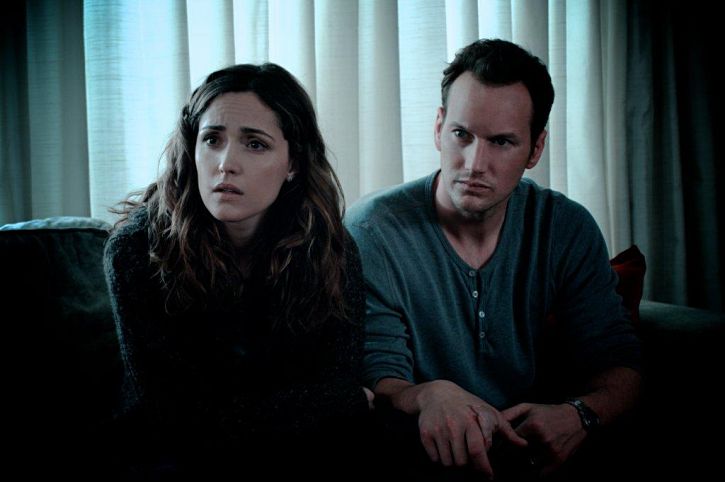
The film depicts the lives of the Lambert family — husband and wife, Josh and Renai, their two young sons and baby daughter — after the quintet’s relocation to a new house. The parents’ hopes for a new start absent of problems are soon dashed when their eldest son Dalton falls into a coma, triggering a series of weird and unsettling events.

James Wan, whose first directorial role was the innovative Saw back in 2004, is in his primary element when he is establishing trenches of tension and utilising shiver-inducing imagery to impart fear. This is exactly what Insidious offers for the first half of proceedings, as an ordinary family falls victim to a tragedy which bats away any explanation, and are then the subjects of various abnormal happenings, which are also devoid of explanation. The two are obviously linked, but in attempting to uncover how or why this is the case, the seeds of dread and fear for both the Lambert family and the audience are planted. This, along with a variety of common but still efficiently adapted elements of horror (doors randomly opening, figures appearing), ensure that the film sets standards high going into its second half.

When that second half arrives, however, proceedings begin to unravel a little. For every disturbing image in part one, there is a corny one in part two. For every discreet moment of tension built earlier on in the film, there is a disheartening logical explanation later. Delivering a unique, scare-inducing haunted house film is difficult in the present era, and this is mainly down to the vast majority of the tricks and frights being over-saturated year upon year. The ironic aspect of Insidious is that Wan gets the clichéd parts completely right, and even manages to add a twist to them. By the time we reach the end of the film though, it is Wan’s attempts at doing something different that comes back to haunt him. The logical (and I use that term lightly) explanation of events the audience is given is not scary at all, rather it is groan-worthy.

With that being said, the second half of Insidious is not without merit. Again, when sinister, almost maniacal imagery is present on-screen, the film grumbles as it threatens to erupt in a flow of ominous atmosphere. Wan delivers such imagery in the climax, but not nearly frequently enough, causing the scares to be overshadowed by some uninspired plot developments leeching onto Insidious towards the end. The opening 40 minutes does such a good job of building an unsettling atmosphere that it possible the remaining hour’s inability to keep up with what came before exposes the misfire more than the film deserves. Wan can do inventive, as he has proven in the past with Saw, but this time his attempt at originality veers too near to nonsensical logic than spontaneous genius.

Patrick Wilson and Rose Byrne star as the husband and wife pair and are thoroughly effective in their roles. Both come across as believable parents still trying to settle down into a comfortable way of living with their three young children. In line with the film separating into two parts, Wilson and Byrne appear to each take a turn at being the focal point of the piece. Byrne is at the centre of much of the spooky occurrences throughout the first phase of the film, and plays the traumatised, protective mother very well. Wilson on the other hand, sees much of the action in the second phase of the film, and is better than the hand he is dealt. Lin Shaye also makes an appearance as a paranormal investigator who fluctuates between calm and eccentric quicker than a tennis ball switches sides at Wimbledon.

The film’s tremendous box office returns have meant that Insidious: Chapter 2 has been scheduled for release later this year, and looks certain to be the autumn horror hit of 2013. James Wan will return to direct it and if he focuses on delivering a sequel more in tune with the first half of Insidious than the second, Chapter 2 will be as much of a critical hit as it will be a monetary one come September.

Credit: BoxOffice9
Credit: BoxOffice9

Spring Breakers (2013)

★★★★★

Director: Harmony Korine

Release Date: March 22nd, 2013 (US); April 5th, 2013 (UK)

Genre: Drama

Starring: Vanessa Hudgens, Selena Gomez, Ashley Benson, Rachel Korine, James Franco

Touted shortly after its release as a cult classic in the making, Spring Breakers delivers a unique blend of boisterous partying, melancholic musings and rhythmic tones. Following the exploits of four college students desperate to escape and experience spring break, we see two well-known former Disney stars averted from their origin and instead fuelled by drugs and desire.

The most prominent and intriguing question going into Spring Breakers was always going to be how Harmony Korine, the man behind the curtain, would be able to portray Vanessa Hudgens and Selena Gomez in particular as anything but two ‘teen queens’ idolized for their roles in the High School Musical franchise and Wizards of Waverly Place, but to focus solely on that aspect would be doing the film a huge disservice. It is to the trio’s credit that they manage to pull it off to the degree they do (the characters, and the film, are both hard-hitting), but the success of Spring Breakers is also down to the inclusion of many more elements.

From start until finish, Spring Breakers boasts a mesmeric quality (much akin to that of Drive) which amplifies the hauntingly idyllic narrative the film follows. This is partially down to the score, which blends hip-hop, synth and a surreal-yet-effective use of Britney Spears’ “Everytime”, to create a diverse audio backdrop to the story. However, the trance-inducing nature of Spring Breakers also owes a debt to just how well-edited the piece is. Although the film follows a linear structure, certain events are replayed in various different forms — such as in slow motion or from another character’s perspective — and these events are often interlaced with unassuming dialogue — such as phone calls to home. Every time an event or a piece of dialogue is repeated, it evokes a more fulfilling meaning than the last time, and so the film delves deeper into the characters’ psyche as it progresses.

Even as all of the beer-swigging, party-going and bikini-wearing (or otherwise) is playing out on-screen, Spring Breakers consistently retains and gradually develops its primary message: when somebody wants to escape, just how far are they willing to go? For each of the four women the answer is different, and their realisation, or lack thereof, varies in extremity. Although ‘spring breakers’ signifies the age-old clichéd representation of college students and their annual partying and alcoholic exploits, the real spring break is the one that the four females encounter, which is far from clichéd yet remains very real in terms of the power of persuasion, desire and accountability in society.

Vanessa Hudgens, Selena Gomez, Ashley Benson and Rachel Korine are all very good in their roles, and even begin to amalgamate into a single being as the story progresses. The abnormality of seeing Gomez and Hudgens portraying the characters that they do only adds to the overall bizarre and peculiar feel the film has to it (which is by no means a negative point). With that being said, perhaps even further astray from his comfort zone is James Franco, whose character Alien is a rapper who delves into a number of unconventional activities. Franco has never been more distant from square one with his performance here, and he is on full throttle from the get-go. His charisma and unconventional charm are in effect throughout, and by the end of the film Franco is almost entirely unrecognisable (not just visually). Whatever mindset James Franco had going into filming Spring Breakers was the correct one as he pulls the character off, cementing an excellent casting choice.

Spring Breakers is very vibrant and colourful, and at just over one and a half hours long does not overstay its welcome — another 20 minutes would probably have hurt this. The combination of many of the aforementioned devices (integration, repetition, colour etc.) come together to produce a film similar to that of a relentlessly meandering piece of art. There is more than a hint of beauty in the madness. Even without the use of special on-screen trickery such as CGI, Spring Breakers remains a spectacle in every manner: visually, audibly, and in relation to its narrative. The film has divided opinion since its release and will probably continue to do so, but Harmony Korine does something daring and provocative, and it works.

Credit: Cohorte
Credit: Cohorte