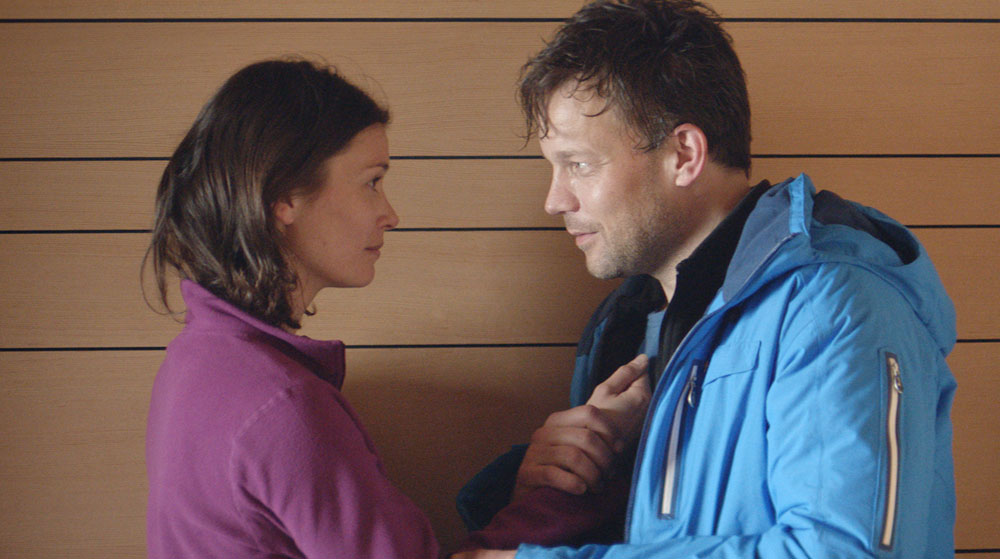
Girlhood (2015)

★★★★★

Girlhood PosterDirector: Céline Sciamma

Release Date: October 22nd, 2014 (France); May 8th, 2015 (UK)

Genre: Drama

Starring: Karidja Touré, Assa Sylla, Lindsay Karamoh, Mariétou Touré

Any filmmakers looking to edge themselves into the complimentary critical limelight next year might want to consider serving up a compelling human drama tinged with humour and realism, named something-hood. The approach worked for Richard Linklater and it has worked again here, this time for Céline Sciamma whose film about a young woman’s life after education is arguably the best of 2015 thus far.

The titular girl is Marieme, or Vic, played with exquisite poise by Karidja Touré. Caring for her two younger sisters while her mother works evenings has hampered Marieme’s success in school, and she’s unable to repeat classes for a third year running. As such she strives to take control of her present, believing her future is too far beyond reach. A group of girls, probably slightly older, invite Marieme to join their gang and the conflicted teen accepts.

This is very simple cinema. From a technical standpoint there are no obvious tricks, no special effects, because there is no need. Girlhood is injected instead with dramatic heft and humanistic depth. It is better than the director’s first voyage into the challenges of female maturity, Water Lilies, which does relay some raw authenticity but is ultimately a touch one dimensional. Here, we journey through the many different and very real experiences of burgeoning adulthood.

For one, Girlhood is braver than Sciamma’s debut film, an attribute highlighted by Marieme’s decision to join a gang from the get-go. Instantly she finds herself surrounded by three girls — Lady, Adiatou and Fily — who aren’t the most affable people. We’re certainly not drawn to them; when the invitation to join is presented to Marieme, you get the urge to reach through the screen and point her in another direction. The group don’t necessarily go looking for trouble, but when it lands on their doorstep clearer heads often fail to prevail.

Yet through deft writing and affecting acting, we feel ourselves rooting for Lady et al. The girls combat racial profiling with intimidation, and then erupt in a fit of giggles. They are relatable and genuine. Sciamma, who also penned the screenplay, makes it known that these characters have a great deal of learning to do. And they do learn. We see it through the eyes of Marieme, mostly, who often has to bear the brunt of her abusive older brother. But the piece doesn’t dwell on negativities — laughter and joy are frequently employed, mostly when the four females are in each other’s company.

“You have to do what you want,” says Lady. Her suggestion is misguided — she’s talking in extremes, i.e. petty theft — but entirely true. Vexed by poor grades, Marieme struggles with the anxiety of unfulfilled potential. Touré captures this internal ache with such subtlety for much of the drama, before exploding in a fit of justifiable rage over a system that has clearly failed her: “Where’s the dream? You wanna tell me where your dreams are?” she bellows at her three friends in the second of two utterly masterful scenes.

The first is like something out of Harmony Korine’s Spring Breakers, only with an added dose of reality. It sees the group collectively mime to Rihanna’s “Diamonds”, the screen tinted with an aqua fresh glare, in a hotel room rented for momentary respite from real life. The song lyrics reflect Marieme’s aspirations — those dreams she cares so much about — while also latching onto the more materialistic, idealistic psyche prominent in the minds of maturing teens (the quartet are all wearing delicate, expensive-looking dresses as they dance and sing about gemstones).

Inevitably, there are lots of peaks and troughs — from our characters squabbling affectionately and giggling the day away, to painful rejection at home. A scene where Marieme’s brother returns to their apartment in a fit of rage as she chats happily to her younger sister is incredibly well acted, Touré’s instinctive reaction almost as good as it gets from an actor (especially one in her first film). The piece touches on gender politics but never gets weighed down by it because, most of the time, to the girls their gender isn’t an issue. Other themes that arise include the paranoia of growing up, where everything feels like a competition and everybody a competitor, embodied by pre-arranged fights between gang members.

Though exceptional throughout, Girlhood arguably loses some vitality during the final act, but you get the sense that this decrease in energy is applied for a reason — it is Marieme’s worst half hour on screen, after all. The film is at its best when catching up with the four girls. Assa Sylla, Lindsay Karamoh, Mariétou Touré are each individually effective but their collective effort bulges with vigour. A game of minigolf game perfectly illustrates their infectious chemistry.

Cinematographer Crystel Fournier makes use of light and darkness, blue tints, and a rich colour palette to make the film reverberate with life despite the gravelly surroundings. Blunt gang verbiage such as “iced” and “wasted” is littered throughout, a classically un-French touch that serves to keep the gritty, urban atmosphere afloat. Electronic pulses in between scenes make up a soundtrack bearing that same psychedelic nighttime vibe as Drive.

French cinema is a go-to destination for those after simplistic dramas about people and life (Blue is the Warmest Colour similarly lit up the big screen last year). Girlhood is another that fits that mould. In a way, it is very unlike Boyhood — the perspective taken on growing up is rougher in this instance — but the two films would make a wonderful double-bill, equal in overarching message and, just about, in quality.

Girlhood - Cast

Images credit: IMP Awards, Collider

Images copyright (©): Pyramide Distribution

Begin Again (2014)

★★★★

Begin Again PosterDirector: John Carney

Release Date: July 11th, 2014 (UK & US)

Genre: Drama; Music

Starring: Keira Knightley, Mark Ruffalo

Why do they get nine out of ten of her dollars? Those are the words that spring from the mouth of Keira Knightley’s Gretta, a talented musician with a newfound shrewdness for business economics and life in general. Her question is aimed at record label producer Saul (Yasiin Bey aka Mos Def) who likely knows more about the dials on an Auto-Tune system than he does real musical verve.

But this isn’t a straightforward examination of the successes and failures of the contemporary music landscape. That is an underlying — and at times on the nose — theme, but not the film’s primary prerogative. Begin Again is more tuned into people, and how the relationships between those people unfold within a high intensity city, surrounded by an even higher intensity business.

We begin with an impressive James Corden as best friend Steve, encouraging a reluctant Gretta to get up and play one of her songs in a dingy New York City bar. She’s good, but through the murmurs and glass-smashing nobody takes much notice. Apart from Dan (Mark Ruffalo), who looks a little worse for wear. Dan, as it transpires, is a struggling record producer and former partner of the aforementioned Saul. Differing business models caused the split, a common occurrence in Dan’s life — he is also separated from his wife and bears the brunt of a friction-fuelled relationship with his daughter. Alcohol is his solution, which leads him to a dingy New York City bar.

And then we begin again, only this time our two central characters arrive imbued with backstory. The non-linear storytelling technique used early in the film is one of a few nuances implemented by director John Carney that help to maintain the freshness of what otherwise might be an occasionally dour narrative. When we first meet Gretta and Dan their individual baggage is evident, and because both Knightley and Ruffalo instantly come across empathetically, our affection greatly increases as their bad experiences are unveiled.

Dan is at odds both personally and professionally. He lives alone in a dank apartment that has probably seen more hangovers than clean bed sheets. Much to his ineffectual chagrin, his daughter Violet (Hailee Steinfeld) wears attire unsuitable for school. “Jodie Foster from Taxi Driver,” is Dan’s unsavoury description. It’s a good thing Gretta is around to interject as wardrobe advisor in between bouts of album recording.

Gretta used to be outgoing and inspired until she and ex-boyfriend Dave Kohl (Adam Levine) unceremoniously severed ties. She becomes those things again when in Dan’s company, but their partnership thankfully doesn’t venture down generic romantic channels when you get the feeling it might. Carney, who directed and wrote the screenplay, has form in the genre — he helmed the much lauded indie music-drama Once, and puts the positive expertise gained from that to use here.

Ruffalo and Knightley excel individually and collectively. Ruffalo is particularly full of off-kilter charm as the scruffy music lover trying to maintain originality in an increasingly banal industry. When the actor is in his element — quirky, unfiltered and eccentric — he is really great, and he’s in his element for the duration. In a tough role to get right, Knightley manages to be genuinely likeable. It is a characterisation that can have thankless, mopey elements, however Knightley carries Gretta with realistic ambition — her talent is never really in question, just her own personal desire to work on an album — therefore we don’t have to sit through endless hurdles of self-doubt.

That being said, from a broad perspective the film does exist in a picture perfect world. Even though Dan is no longer with his wife, terrifically portrayed by Catherine Keener, the duo still have a budding relationship (in other words, they get along more than they argue). Gretta, on the day before she is set return to England, somehow finds herself playing her own song in front of the only guy willing to take a punt on her. Despite a quip about possible rainfall, the sun also always seems to be shining. However, any potential misgivings regarding circumstance play second fiddle to engaging performances and otherwise unsentimental storytelling.

Bubbling underneath all the character drama (you could say it is the film’s bassist) is a plot about the commercialisation of the music industry. Dan is the victim of this shift away from ingenuity, a notion captured in a funny yet somewhat overtly glaring scene that sees the song scout try unsuccessfully to remove wall “art” from his record label premises. “We need vision, not gimmicks,” he bemoans having just endured an endless stream of overproduced pop demos.

As an A&R man, there is also a compelling dynamic between Dan and Gretta. In an electric conversation over drinks, we can literally see Dan squirm around on his stool as he talks about compromising in order to, “Get people in [the door] before the music can do its work.” In a way Gretta is more of a purist than he, though that might be expected given she is the artist.

The proverbial ‘bad’ side of modern music is embodied by a bizarre record exec who flaunts that cocky Bradley Cooper vibe from American Hustle. Carney does afford some leeway to the idea that music and money are worst enemies by including the horrendously named Troublegum (CeeLo Green), one of Dan’s prized discoveries who still has his back. This allows for a hilarious impromptu rap scene that probably accurately reflects how CeeLo converses in real life.

The New York setting serenades the film with helping of authenticity — while doing press for the movie, Knightley spoke of how the crew adopted a guerrilla filmmaking style when shooting in back alleys and on rooftops. The songs themselves are woody and energetic, and certainly mirror Dan’s desperation to save the spirit of music. The soundtrack isn’t as earthy as something like Inside Llewyn Davis, or even Crazy Heart, but like in those films, the songs do play a part in ensuring proceedings don’t begin to flounder.

Begin Again balances carefully developed characters and musical intermissions with a somewhat stinging appraisal of how music is produced today. Gretta simply wants to write songs and release them for anyone’s consumption. She would charge as little as a dollar for her album. By the way, you can purchase Begin Again’s year-old soundtrack for £5.99 on iTunes. Huh. At least the film itself sticks to its admirable laurels.

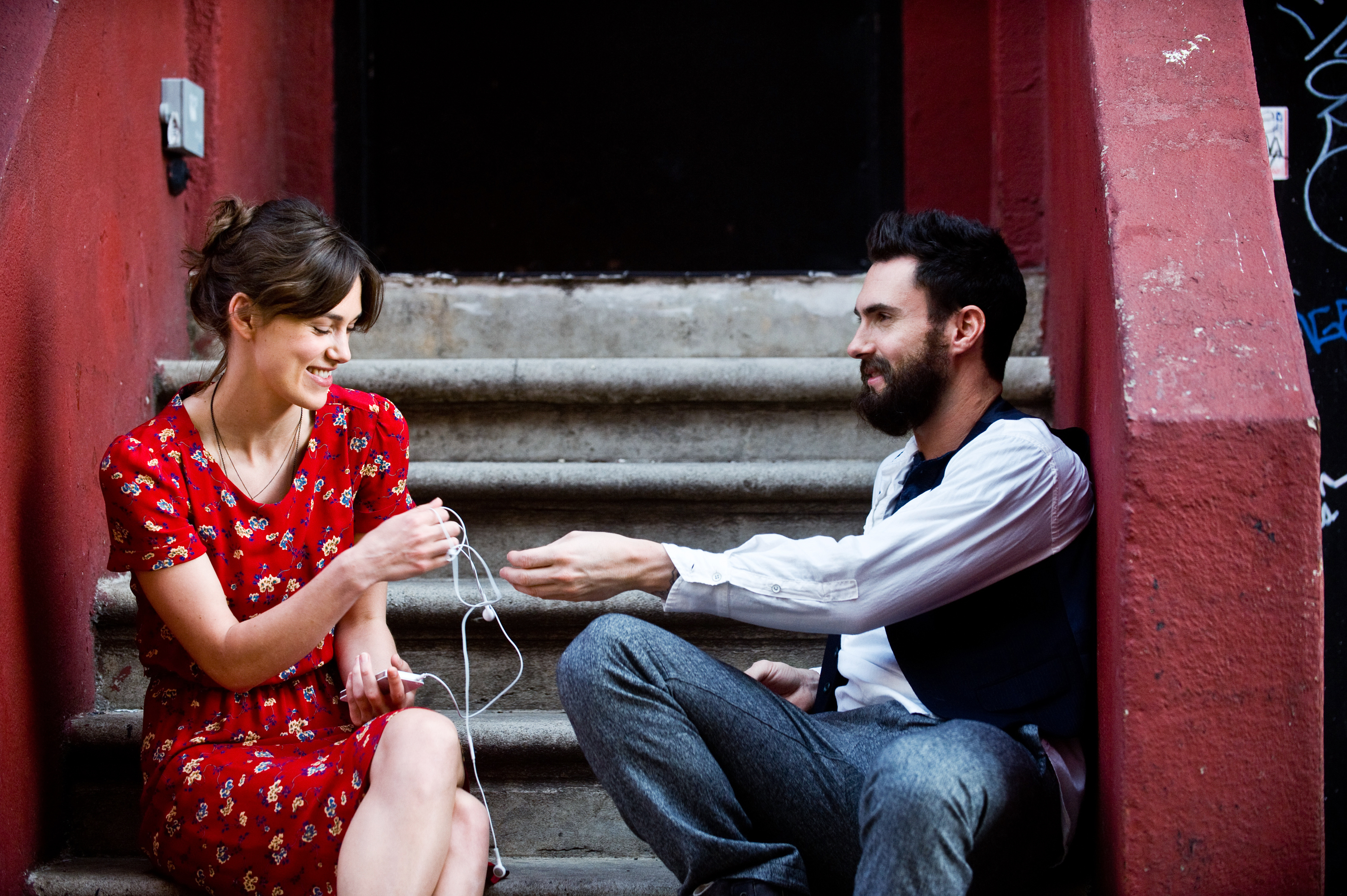
Begin Again - Knightley & Levine

Images credit: IMP Awards, Collider

Images copyright (©): The Weinstein Company

Mad Max 2: The Road Warrior (1981)

★★★★

Mad Max The Road Warrior PosterDirector: George Miller

Release Date: January 19th, 1982 (UK); May 21st, 1982 (US)

Genre: Action; Adventure; Science fiction

Starring: Mel Gibson

When it comes to writing, you get the sense George Miller (and co-writers Terry Hayes and Brian Hannant) can’t wait to put pen to paper. It is an eagerness that translates across the whole Mad Max franchise, one that permeates each film from the word go. The Road Warrior begins in much the same vein as its predecessor, with lots of revving and car acrobatics and dodging and crashing.

Only this time Max (Mel Gibson) is the hunted and not the hunter. Nightrider has nothing on Max’s new curtain-jerking nemesis — a sign of crazier things to come. The red-Mohicaned Wez (Vernon Wells) and Max race to a stalemate (there’s that western influence again), which sees the former pull an arrow from his injured arm and evoke an unmoved screech.

This local impasse is indicative of a much grander one to which the film builds. The world has emerged from its process of environmental, political and economic degradation and is now in a state of total desolation. Max, alone following the tragic events that went before, must decide whether or not to assist a similarly cut off community in their fight against an oil-hungry motorcycle cult.

The former patrol officer runs into another drifter after his aforementioned interaction. The drifter, therein known as the Gyro Captain (Bruce Spence), exclaims: “You’re quick, very quick! Never seen a man beat a snake.” That’s where Max is now, instinct fully developed, greatly skilled in the art of survival. He is the road warrior. Max’s only companion is a scruffy dog, who amusingly entrusts with the Gyro Captain’s life — a scene involving an errant rabbit is absurdly hilarious.

As opposed to phones or wallets, people carry around spoons in the hope that they will find some leftover food rotting away in a tin can. The enforced partnership between Max and the Gyro Captain — the latter’s existence in exchange for direction — offers a bout of light relief from this demoralising and harsh landscape. Spence’s character is a sort of Ragetti figure (or perhaps Ragetti is more of a Gyro Captain), which is a welcome contrast to Max’s more sombre, uptight self.

Miller incessantly plays up his anti-hero’s transformation. Later in the film, Michael Preston’s settlement leader Pappagallo laments Max’s lone wolf status: “You think you’re the only one who’s suffered? We’re still human beings with dignity. You? You’re out there with the garbage. You’re nothing.” While his words ring with truth, we still feel compelled to sympathise with Max given his unfortunate past. The character’s evolution, or devolution, from a wholesome upholder of law to a lawless, fractured outcast is believable not only in accordance with society’s lack of structure, but more so because both Gibson and Miller consistently afford the character thoughtful consideration.

Marauding car sequences come with extra bite. At one point we see Max and the Gyro Captain peer through a telescope at a grisly runaway attempt. We become part of their distance spying, which adds a sense of realism to an otherwise unrecognisable world. The telescopic view carries the same rawness as modern amateur news reporting. In a way there is more at stake now that the landscape is completely barren; everyone is out for themselves, there is no more justice via the Main Force Patrol and instead barbarity is fought with barbarity. This shift towards more brutal action is a lot like shift in tone from The Terminator to Terminator 2: Judgement Day.

Classic genre tropes are at large, including a classic Mexican standoff that sees an invading army attack the resource-rich town where Max ends up stranded. When guns are unavailable, blunt arrows and skull-cracking headbutts take centre stage, emphasising civilisation’s retreat back towards more archaic times. A finger-slicing boomerang finds its way into a brilliant scene, compounding the unadulterated madness of Miller’s film which, despite his no-nonsense approach, is thankfully still around.

Lord Humungus (obviously) is Max’s new nemesis. He dons a Jason-esque hockey mask and exudes the soothing pitch of an experience cult leader. “There has been too much violence, too much pain… just walk away and there will be an end to the horror,” Humungus decrees to the people defending their refinery. Kjell Nilsson is great to watch, sounding like an enigmatic overseer who has all the answers and looking like a monster who could do serious damage. He adopts Hugh Keays-Byrne’s intellectual Toecutter vibe but matches that with brute strength and sense of imminent physical threat.

One of The Road Warrior’s more abstract moments is a distorted scene which resembles something out of a Cecil B. DeMille horror flick: a loud brassy score with shots overlapping one another as enemy characters wail and gesture violently. There are aesthetic echoes of Charlton Heston’s Moses presenting the stone tablet to his followers in The Ten Commandments, oddly. Here, Humungus appears to take on the mantra of Hades, vehemently spouting threats as he stands before what appears to be the fiery pits of hell. It’s a bizarre scene, but the film’s genuine self-awareness justifies its inclusion.

Since release, The Road Warrior’s many admirers have catapulted the film into cult status. It is more aloof and less predictable than Mad Max. But it also favours simplicity in the right areas, affording more time for the development of its central character who is now a very different person. Just as Max has changed through circumstance, the world has changed with him. The symmetry is admirable, if expected. The execution is expectedly excellent.

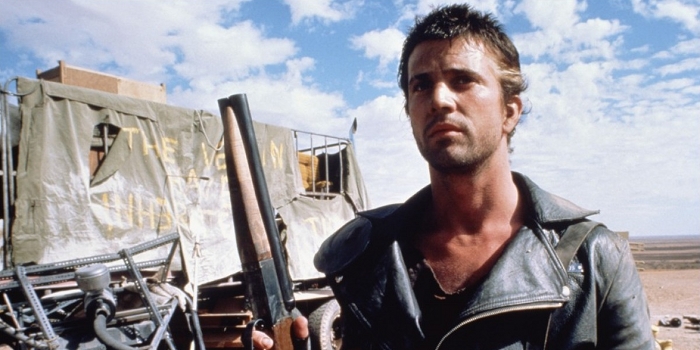
Mad Max The Road Warrior - Max

Images credit: IMP Awards

Images copyright (©): Warner Bros.

Mad Max (1979)

★★★★

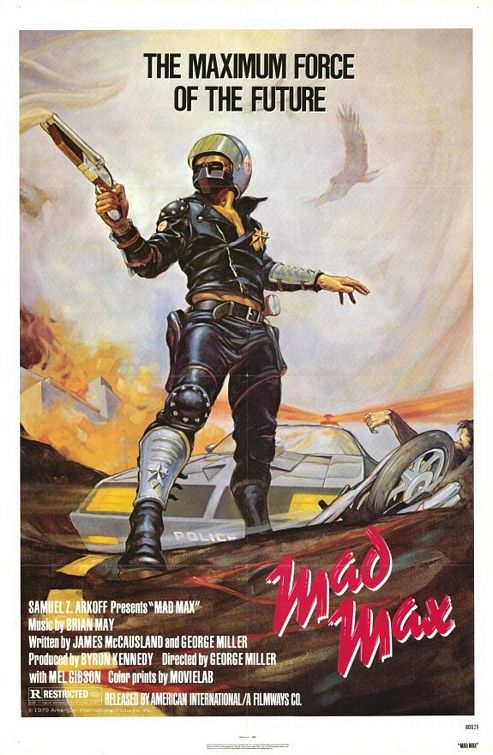
Mad Max PosterDirector: George Miller

Release Date: December 10th, 1979 (UK)

Genre: Action; Adventure; Science fiction

Starring: Mel Gibson

Mad Max roars into life in the midst of an increasingly tumultuous car chase. Nightrider, a crazed gang member, is on the run from a group of police officers seeking justice for the murder of one of their own. The cops — or Main Force Patrol (MFP) — aren’t the most skilled highway cruisers, bumbling in nature and even more so in execution. All except one. Max Rockatansky (Mel Gibson), the definition of poise, is the key player in a rather lousy team. We only see his grazed cowboy boots and chiselled chin to start with.

Max enters the vehicular fray, rampaging down an otherwise barren motorway — George Miller took inspiration from the 1973 Australian oil crisis, and this certainly looks like a region in need of basic resources. The director acknowledges the absurdity in what is occurring, and in what is set to occur, by introducing a plethora of slapstick obstacles: a stranded caravan, a barrage of road works, and a road-crossing baby. The pursuers crash, but the maniacal Nightrider cackles his way past each distraction in his “fuel-injected suicide machine”. Of course, Nightrider eventually crumbles at the sight of cool Max. He should have frenzied at dusk instead.

The screenplay never really deviates from the antics relayed above. It turns out Nightrider was part of The Acolytes, a motorcycle gang cut from the same cloth as Alex and his droogs. Their ultraviolence really is ultra-violent; from smashing up towns to off-camera rape to fiery murder, The Acolytes are a bad bunch. In line with Miller’s preferred tone there’s also an unconventional aura to the troupe, whose members would rather roly-poly back to their vehicles than walk.

Droogs they may be but unlike Kubrick, who liked to slow events down to a thoughtful meander, Miller takes an all over the place approach, with David Eggby’s cinematography zipping around and refusing to linger. This unholstered style greatly heightens the film’s prevailing intensity. The closest we get to an extended shot is during car chase scenes, at least when vehicles aren’t flipping on their head or exploding into pieces.

An apt description of the film might be ‘western on motorcycles’. But instead of galloping into town, characters rev. Said towns are often dusty, laid back communities where every day is Sunday. We are privy to a world where civilisation is in the process of falling, where chaos is a wrongdoer’s prime weapon and justice is in tatters (the latter, visually represented by the worn-out Halls of Justice sign). Trial attendance is low thus criminals walk free, devoid of lawful comeuppance, leaving only one form of comeuppance left to dish out. It doesn’t resemble the dystopian landscapes prominent in modern outings such as The Hunger Games or Oblivion, but instead a future that still bears familiarity, in that sense more aligned with a Blade Runner.

Droves of faceless characters are the product of a relentless mindset, and as such it can be difficult to clearly distinguish who stands on which side and why. Toecutter (Hugh Keays-Byrne), leader of The Acolytes and definite villain, is how you would imagine Russell Brand if Russell Brand was the leader of a post-apocalyptic motorcycle gang: speaker of intellectual gibberish; British accent; hair all over the place; wearing a lot of leather. Keays-Bryne successfully balances oddness with menace and is particularly effective when conversing. “That man is Cundalini and Cundalini wants his hand back,” is one of his numerous uncouth and brilliantly delivered lines. Every time he appears on screen the film instantly spruces up. Toecutter is a bit like Heath Ledger’s Joker in that sense — irresistible to watch, utterly deranged yet eternally composed.

Gibson’s Max isn’t a hard-nosed or rugged vigilante, but in fact baby-faced and emotive. He spends his evenings listening to soothing saxophone melodies and having his hair washed by his wife Jessie (Joanne Samuel). At one point the job becomes too much for him and he opts to spend more time with his family, which means lying in wheat fields and Tarzan-ing into springs. But Max is “a winner”, he’s “on the top shelf” according to his MFP overseer, Captain Fifi (Fifi in name only), portrayed solidly by Roger Ward.

This overly righteous version of Max works because it highlights the character’s purity in a bad world, and underscores the endpoint of his arc. Miller’s decision to purposefully emphasise the familial side of Max — the side pre-Mad — before entering into the final act is a simple-yet-effective ploy that makes us sympathise with greater heft.

Miller spreads his OTT prerogative across all aspects of the story, not stopping short simply at action sequences. Corny music plays over loved-up scenes between Max and Jessie. Brassy cacophonies of sound are present during dramatic moments too — for example, a gruesome hospital bed scene. Elsewhere the pillaging score is constant and somewhat overdone but, again, is a key part of the director’s ethos.

A middling lull is unfortunate, where contrivance seeps into the narrative (somehow Max and The Acolytes keep wheeling into each other) however proceedings soon pick up again and build to a gratifying conclusion. This isn’t Mad Max yet, not the iconic manifestation of the character as moviegoers know him, but it’s a superbly crafted worldbuilder.

Mad Max - Max

Images credit: IMP Awards

Images copyright (©): Warner Bros.

Tomorrowland: A World Beyond (2015)

★★★

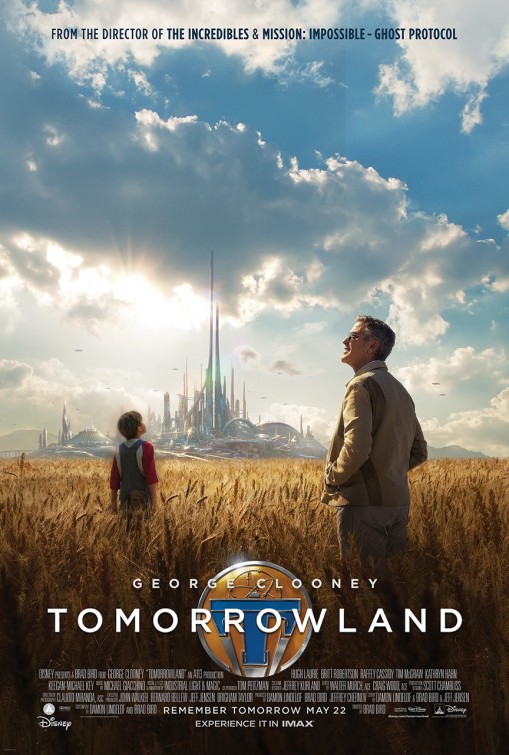
Tomorrowland PosterDirector: Brad Bird

Release Date: May 22nd, 2015 (UK & US)

Genre: Action; Adventure; Family

Starring: Britt Robertson, George Clooney, Raffey Cassidy

We shouldn’t be surprised that Tomorrowland is a giant bouncing ball of alacrity. From Brad Bird, director of The Incredibles (the hint is in the title), comes a film packed with a positive punch. “There’s a great big beautiful tomorrow,” we’re told at the very beginning via cheery song. Shortly thereafter, a young Frank Walker (Thomas Robinson) engages in conversation with Tomorrowland overseer David Nix (Hugh Laurie). Nix asks about the practicality of Walker’s jet pack creation. Walker, wide-eyed and all, replies: “Can’t it just be fun?”

Though it may not have been sufficiently clear from Disney’s muddled marketing campaign — one possible factor in a disappointing opening weekend financially — this is a film about incentive and inspiration, enjoyment and energy. Whereas evasive trailers have partly sold the piece as a sci-fi escape and partly as a family drama, the movie itself is far from confused. Tomorrowland is bright, and it knows it.

Starring Britt Robertson as the self-prescribed ultra-optimist Casey Newton (probably related to Isaac), the story follows her eventful journey as she searches high and low for a mysterious place called Tomorrowland. Accompanying her are recruiter Athena (Raffey Cassidy) and the now older, world-weary Frank (George Clooney). Casey is the human embodiment of the film’s joyful prerogative. Her school teachers drawl on about end of world scenarios — spouting warnings on everything from nuclear Armageddon to environmental degradation — but all Casey wants to know is how to fix these problems.

Just as the camera struggles to go more than a minute without whizzing towards a Hall of Invention or something of similar ilk, Casey can’t spend any significant length of time without exuding eagerness. She would be the perfect citizen of Tomorrowland, where everything is so big and bold. In Mad Max: Fury Road — which shares the same sticking-by-one’s-convictions mantra — vehicles are bolted on top of other vehicles. Here, we see skyscrapers double up to create super skyscrapers. Bird spends a long time worldbuilding, striving to convey a sense of wondrous momentum from the off. It is probably too long, especially when we spend so little of the two hours actually in Tomorrowland.

Robertson is charming and consistently watchable as our central character. Quite brilliantly, she manages to be sprightly but not sickening. Unlike in the television series Under the Dome, this is a much more assured performance from the actor (admittedly, her character in the former offers little in the way of depth). Young newcomer Raffey Cassidy is a victim of the hyped up and overly long sugary beginning, her verbiage a tad too sentimental. The talented teen increases in charm as the film progresses though, to the point where the screen significantly benefits from her presence.

Damon Lindelof’s screenplay avoids the politics and greed normally rife in the world we know. This lack of cynicism is actually quite refreshing, and the film shouldn’t be kicked for carrying a hopeful message. It should be saluted, really, for moulding its message of hope into a pertinent discussion about the state of humankind. At one point Casey exclaims, “It’s hard to have ideas and easy to give up!”, a statement epitomised by the film itself. Tomorrowland is more than just a surface level blockbuster. At its core, it boasts a perceptive idea about how we, humanity, have accepted and monetised our demise. Bird and Lindelof should have mined this concept further, but its inclusion is evidence that their script isn’t naive, nor ill-judged.

However, it can’t quite dodge plot holes. Terminator-ish humanoid robots show up occasionally wearing goofy smiles (obviously) and guided by a view to kill, though it’s never really apparent why. The existence of the film’s grandiose, hidden cityscape is also somewhat puzzling. Sure, it looks great and has some cool gravity defying roads, but what exactly is it? And where did it come from? Rather than answering these questions, Bird and Lindelof seem to be more transfixed by their attempts to include as many cinematic references as possible.

And who can blame them? There are so many fun touchstones: Baymax bubble suits are worn with jet packs as a safety precaution; attire-wise, the futuristic land resembles The Hunger Games’ unconventional Capitol style; visually, moments of inter-dimensional travel momentarily resemble David Bowman’s cosmological pilgrimage in Kubrick’s 2001: A Space Odyssey; and Charles Xavier’s Cerebro room gets an interactive Google Maps makeover. A Forbidden Planet-esque store that we enter midway through the piece is a treasure trove of movie geekdom.

Aside from his presence as part of an unnecessary narration tactic that materialises every so often, George Clooney is introduced to us with the sun beaming down behind him and illuminating half his face, probably because he is God. Frank has a grizzled beard and is a bit moody, but that’s as rebellious as it gets. He delivers a “son of a” but no “bitch”.

Frank’s downbeat personality is the story in a nutshell — someone once driven by promise who has presently accepted defeat, but can be saved. “Can’t you just be amazed and move on?” Frank muses when Casey persistently asks about his cool house gadgetry, and you sort of get the feeling that in lesser hands this would be the film speaking to its audience. Neither a baddie, nor a goody, Hugh Laurie’s David Nix is a misstep. The presidential figure is very thinly drawn, though the actor does deliver a really compelling speech towards the end summarising humanity’s passiveness.

Tomorrowland doesn’t throw the cat among the pigeons. The closest we get to edgy is a non-diegetic rock tune that accompanies Casey as she invades a NASA launch station while wearing a treasured NASA cap given to her by her NASA-employed father. The film tells the world that we have lost our way and that we can reclaim our rosy roots, but that we should strive to be even better than before. It is what it is and if you’re happy to spend a few hours riding a roller coaster of cerebral optimism, it is for you.

Tomorrowland - Hall of Invention

Images credit: IMP Awards, Collider

Images copyright (©): Walt Disney Studios Motion Pictures

Mad Max: Fury Road (2015)

★★★★★

Mad Max Fury Road PosterDirector: George Miller

Release Day: May 14th, 2015 (UK)

Genre: Action; Adventure; Science fiction

Starring: Tom Hardy, Charlize Theron, Nicholas Hoult

Vehicles have always played a huge part in the Maxverse and veteran director George Miller decides to hammer this point home in Mad Max: Fury Road. Various characters are seen to cherish steering wheels, hauling them around in the same way Bruce Spence’s Gyro Captain clung onto a spoon in Mad Max 2. His spoon could pick at leftover tinned food, a novelty apparently long gone. Small-scale scavenging is out. This is a world dominated by distance, by grandeur, by gasoline. The spoon has become the steering wheel.

Or, maybe such pensiveness doesn’t exist within these characters. Maybe they just love to thunder across the desert. Maybe they can’t wait to get on the road. Miller certainly can’t.

After a brief prologue from Max explaining his post-apocalyptic mantra (“A man reduced to a single instinct: survive”) we hurtle into a half hour opening sequence that obliterates anything remotely resembling action we might have seen in previous films. These thirty minutes of total carnage, of collapsed worldbuilding, shoot past in an aluminium whirlwind, leaving your eyes watering and heart bellowing. It’s almost as if Miller has been waiting three decades to get something off his chest.

The plot is simple but by no means inadequate: Max (Tom Hardy) finds himself in an unlikely partnership alongside Imperator Furiosa (Charlize Theron) as the pair attempt to evade the monarchical clutches of Immortan Joe (Hugh Keays-Byrne), a slave-keeping cultish leader. The destination, or “Green Place”, dreamt up by the formerly shackled wives of Joe, is unknown. It is more or less a mystery, the characters unable to shed much light and, as such, we are left in the dark. This doesn’t matter, the journey does.

The best thing, unquestionably, about the franchise has always been Miller’s ingenious and realistic-looking action sequences. They are here in abundance, bearing the hallmarks of even greater ingenuity and somehow appearing just as authentic. Oil trucks are christened “War Rigs” and subsequently live up to the name. Amazingly, the majority of effects are practical, in line with the director’s penchant for traditional movie-making. As such, praise should be heaped upon the many stunt performers whose death-defying efforts play a key role in raising the stakes.

We are constantly reminded of the urgency facing Max, Furiosa and company: as the camera pans back towards the chasing pack, all we can see is an ominous mirage, a giant metallic silhouette in the distance. The threat is real and incoming, energised by a booming score that carries more than a hint of Brian May’s earlier franchise work. Other throwbacks to past films include: Master-Blaster-esque siblings (one of whom is former WWE wrestler Nathan Jones), and the occasional lower front bumper camera shot. There’s even that familiar feeling of disorientation, where the screen is so rammed full of carnage that deciphering who is fighting who becomes a task.

Of course, absurdity is tossed around like a hot potato. From vehicles in the form of mechanical hedgehogs, to an electric guitarist who looks like a cross between The Silence from Doctor Who and Klaus Kinski’s Nosferatu, Miller has all bases covered. This includes humour: “Of all the legs, you had to shoot the one that was attached to his favourite”. Nicholas Hoult’s Nux is the ideal amalgamation of odd and funny, his obsession with the Gates of Valhalla both amusing and touching. Hoult absolutely throws himself at the role, which is arguably the best of his career.

Probably for the first time, Max truly is mad. He’s no more than a splash of white body paint away from being one of Joe’s skeletal followers, growling incoherently and shifting his gun aim maniacally. Hardy sometimes deviates verbally back into Bane-mode, but he is mighty impressive as the iconic loner. The Welshman is gruff, a far cry from Mel Gibson’s portrayal in the inaugural instalment and possibly more interesting too.

Hugh Keays-Byrne, the man behind Gibson’s nemesis in Mad Max, returns as new villain Immortan Joe. Perhaps it is not by coincidence that Joe’s world-weary appearance could very well be that of Toecutter after toiling for decades in the scorching desert. Imagine the sunburn? “Do not, my friends, become addicted to water,” Joe preaches to the subservient crowds upon affording them momentary respite from thirst. His voice croaks like the Uruk-hai from The Lord of the Rings, and he is almost as scary too.

In a film overflowing with eccentric and domineering characters, Imperator Furiosa is two things: a warrior and a realist. She handles herself in battle while aiding the escape of five enslaved wives, who are also each pretty handy when it comes to fighting and smarts (and who all somehow manage to keep their white clothing miraculously clean). Rosie Huntington-Whiteley is especially good, steely and determined, as Joe’s pregnant prized possession. The women drive this movie; Max is along for the ride through coincidence, but it is the female characters who initiate the chase because they value life.

“Out here everything hurts,” Furiosa states bluntly. Crucially, Theron does not play her as totally wound up — she is reasonable, and willing to work in a team because it is the right course of action. As a result, the relationship between her, Max and the rest of their ragtag band imbues believability. Some might accuse these characters of being too cordial too soon. They are all survivors though, in a harsh world, with a common enemy.

Without trying to sound overly hyperbolic, Mad Max has hit a new stratosphere. You can just about see Beyond Thunderdome — a perfectly fine outing, by the way — squirming in the corner. The direction, how the film has been pieced meticulously together only to then be blown apart, is all a work of art (in many other genres this would likely demand awards recognition). John Seale’s cinematography is wonderful — a night assault has the dreading echo and gloomy manifestation of something straight from Saving Private Ryan.

A Furiosa moment towards the end should, in time, cement its place in action movie lore alongside the likes of “Yippee-ki-yay motherfucker” and “Hasta-la-vista baby”. This is seminal cinema. The 80s had Die Hard. The 90s, Terminator 2: Judgement Day. Give it 20 years and we’ll be talking about Mad Max: Fury Road as the go-to action jaunt of the early 21st century.

Mad Max Fury Road - Hardy and Theron

Images credit: IMP Awards, Collider

Images copyright (©): Warner Bros. Pictures

Unfriended (2015)

★★★

Unfriended PosterDirector: Levan Gabriadze

Release Date: April 17th, 2015 (US); May 1st, 2015 (UK)

Genre: Horror; Thriller

Starring: Shelley Hennig, Moses Jacob Storm, Will Peltz

Sitting in the cinema, half regretting my decision to see another potentially uninspired scare-free jaunt, half suppressing those cynical emotions, it became impossible to avoid the endless stream of horror trailers. Insidious: Part 3 — Even More Insidious (I think). A Poltergeist remake (Poltertwice, I think). There were probably others. To judge a film before seeing it is unfair and ultimately pointless, however the trailers all shared that annoyingly familiar ‘quiet, quiet, quiet… BANG!’ effect. It was obvious then that Unfriended needed to bring something fresh to an often exploited genre.

Much like The Blair Witch Project was back in 1999, Levan Gabriadze’s film is, for the most part, refreshingly different. Not afraid to embrace its target audience, the entire 83 minutes are relayed to popcorn-crunching teens and young date-nighters via computer screen. As a result, Unfriended is able to manoeuvre around the usual formalities and upload some genuine moments of terror. The monitor format is a novelty but it is one that surely reverberates with many viewers who feverishly delete search histories and spend far too long formulating replies to mates.

The computerised approach neatly ties in with the overarching theme too: cyber bullying. A group of high school students reconvene over Skype for what appears to be common nightly arrangement. It is Blaire’s (Shelley Hennig) screen through which we gaze, making her the central character and also the least offensive. She is online with her boyfriend Mitch (Moses Jacob Storm), and three others — Jess (Renee Olstead), Ken (Jacob Wysocki) and Adam (Will Peltz).

As the insufferable clan — for once, it looks like they’re supposed to be insufferable — banter back and forth, an unknown caller joins the conversation. Unable to fend off the uninvited, the group grow increasingly wary. As it turns out, this is the first anniversary of the death of Blaire’s childhood pal Laura Barns, who committed suicide after a bout of bullying. Is the appearance of this immovable online intruder a coincidence? Unlikely. Bad stuff is about to go down.

From the moment we log into proceedings there is a sense of unease. The Universal Pictures logo freezes up, doing that pixely thing your laptop screen does when you’ve left Netflix on pause for too long before eventually pressing play again. Avoid the impulse to charge out and complain about more shoddy projectionist work though — Unfriended is simply getting into its techno-distortion mentality. There is a lot more pixel interference to come.

This is a film aimed at the younger audience, and its attempt to relay an anti-bullying message is noted (though the chat in class tomorrow will probably be about blenders and Blaire’s iffy iTunes content). For a while it does feel like an R-rated public service announcement; like one of those road safety talks in school where you know the speaker, having finished flagging up things you shouldn’t do when behind the wheel, is about to reveal a harrowing true story involving a nearby accident. In Unfriended the thing you shouldn’t do is be a bully and the harrowing accident(s) is shortly forthcoming. Fortunately, by then PSA-mode is on the back burner.

We Millennials are an easy lot to scare — “Laura Barns” has unsurprisingly become a top YouTube and Google search — but the disconcerting atmosphere that lingers throughout Unfriended is authentic. Though this is still a Scream-esque roulette of death, the delivery unique. The computer screen framing method is overcrowding, leaving nowhere to look as group members are set for the chop. The first casualty is the most unsettling — this person’s still image left to linger on screen, subsidised by an oddness and a feeling that something isn’t right. As the evening wears on, Gabriadze incorporates a few subtle elements that bolster the drive for believability. For instance Blaire’s mouse cursor becomes an indicator of panic, moving more rapidly when she feels threatened.

Sadly, annoyingly, the generic pitfalls are there: dumb characters (they aren’t initially aware that it’s the anniversary of their friend’s death) and lazy scares. Blaire, despite her apparent internet savviness, doesn’t know what an online troll is. In 2015. And why don’t these people just simultaneously scamper to a nearby neighbour’s house for help? Perhaps the idea is that they’re all too sucked in by the grisly online culture to remove themselves from it, but even that seems a bit far-fetched in a life or death scenario. They also all appear to live alone, though to be fair that isn’t unrealistic given their prevailing lack of personableness.

It is entirely likely that the characters are supposed to be somewhat lame — they are bullies after all — however the shift towards lazily constructed frights is disappointing. A death involving a blender does pang you right in the sternum with a dollop of discomfort, but it is only momentary. Only brief and unimaginative, scaring you in the same way a random fire alarm blaring would. The aforementioned creepy images lodge into our headspace because they’re given more time to fester on screen, and because there often is something alarming about peculiarity.

The actors, who essentially spend an hour and a half manufacturing disturbed faces and loud shrieks through webcams, are perfectly fine. One asserts, “What we’ve done here will live forever,” capturing the film’s ethos in a nutshell. It is a pertinent message. Don’t be a bully, period. Don’t stock up on future regret through social media misuse either. In that sense Unfriended is scary, but it is also- ah, hold on. I have an incoming Skype call.

Unfriended - Cast

Images credit: IMP Awards, Collider

Images copyright (©): Universal Pictures

Avengers: Age of Ultron (2015)

★★★★

Avengers Age of Ultron PosterDirector: Joss Whedon

Release Date: April 23rd, 2015 (UK); May 1st, 2015 (US)

Genre: Action; Adventure; Science-fiction

Starring: Robert Downey Jr., Chris Evans, Chris Hemsworth, Scarlett Johansson, Jeremy Renner, Mark Ruffalo

When Marvel rolls into town, you can absolutely expect two things: sarcastic humour and blistering action. The first phase of Kevin Feige’s super-cinema initiative had both of these in abundance. Iron Man brought the wit, Thor the hoopla and while Hulk mainly sulked, Captain America struck a balance between fun and funny. Phase Two, especially since The Winter Soldier, has provided something even more. Sure, those characteristics are still plentiful but now that the franchise’s myriad of characters have had time to flex their muscles — or branches — storytelling has the stage.

In a way, Avengers: Age of Ultron is the perfect amalgamation of everything MCU-related up until now. It is formulaic in the sense that you know the narrative structure before the lights go down: early energetic sequences designed to engross, a meatier, more reserved middle section, and finally a ball-busting finale. That’s not just superhero cinema, that’s action cinema. The antithesis of formulaic, however, is how director Joss Whedon almost manages to divulge equal spotlight to the most star-studded cast on the silver screen.

We re-rendezvous with the Spandexed Six during a battle in the frosty forests of Eastern Europe, where ardent anti-swearer Steve Rodgers (Chris Evans) is calling the shots. The raid is a success, thankfully, with the Avengers managing to obtain Loki’s sceptre. It’s an opening scene worthy of closing many a superhero jaunt, packed with effervescent camera work and some fist-pumping teamwork: Cap and Thor’s shield-hammer double team manoeuvre is a particular highlight. The Asgardian receives the least amount of screen time, certainly it feels that way, which is a shame as Chris Hemsworth’s gallant personification has become a wholesome source of entertainment.

As it turns out, Loki’s magic stick is the final piece Tony Stark needs to initiate his Ultron program, a system designed to defend the world from extraterrestrial threat. Stark’s unfiltered approach, driven by his insistence on protecting others and living up to expectations, ends in disaster when the artificially intelligent Ultron (James Spader) embarks on a violent purge of humankind.

The film fragments its characters when they’re not in the process of resisting their machine-bodied, prescient enemy. Hawkeye finally gets his chance to shine as a result, and Jeremy Renner hits the mark when it comes to emotional beats and wry comedy. A scene towards the end is one of the funniest of the entire franchise, this down as much to the actor as the writing. It pits Hawkeye, bow in hand, directing murmured threats towards a companion (“Nobody would know”). Nobody would.

The bowman has largely been ignored up until this point because he is just that, a supremely skilled man with bow. By inconspicuously embracing this notion, Whedon and company essentially break the third wall. Under the guidance of many others, playing the ‘normal guy challenging adversity’ card might have come across as cheesy and cheap, but Renner’s earnestness encourages us to believe in the character.

Draped in American patriotism and outdated chivalry, Captain America once could have flailed in the same situation — embodying an unrealistic symbol of humanity. Fortunately, since his initiation back in 2011 Chris Evans has injected palpable authenticity into Cap, and here we watch Evans evolve into a true leader with stature and assuredness. Even the egotistic Stark quips, “Actually, he’s the boss”. The piece is littered with Civil War previews built upon the duo’s clashing ideologies, paving the way for another Captain America instalment currently brimming with potential.

Age of Ultron, despite the customary destructiveness, is actually at its most compelling when it hones in on the people involved. It’s basically a quarter of a billion dollar psych evaluation, with relationships tightened or, as above, hollowed. Mark Ruffalo maintains his best-Hulk-yet aura, often sharing solid romantic screen time with Scarlett Johansson’s Black Widow. Elizabeth Olsen and Aaron Taylor-Johnson are the latest lover-to-sibling converts, following on from Shailene Woodley and Ansel Elgort. The Godzilla co-stars play Wanda and Pietro Maximoff respectively, both welcome additions despite some shaky accent work.

As the main villain, James Spader has stumbled into an almost impossible task. Tom Hiddleston’s Loki managed to eclipse convention by being devious and charismatic in equal measure. Computer generated Ultron is a bad entity, plain and simple, and Spader’s croaky voice is packed full of calm menace, which works really well. But comparison, perhaps unfairly so, is inevitable and the character isn’t as enticing on screen as Loki.

The main problem abound throughout Age of Ultron is a familiar one: in handling so many characters, Whedon must oversee the lighting of touchpaper for multiple story arcs. You can feel the film seeping at the seams on occasion, with so much being rammed into such a short window (though, ironically, two and a half hours is normally an overindulgent runtime). Resultantly, some of the goings-on are left underfed. Hot off heels of Alex Garland’s probing science-fiction parable Ex Machina, the AI story told between Ultron and the Vision here isn’t quite as fascinating as recent evidence suggests it could have been.

Not consigned to resting on its opening sequence laurels, the piece ups the ante even more during a blistering, if somewhat disorienting, conclusion. You do get the sense that the stakes are shuffling their way up a notch the longer the clash between our Avengers and Ultron’s robot army goes on. By the time Brian Tyler and Danny Elfman’s booming score coalesces with Ben Davis’ now signature circular shot, goosebumps are flourishing. We’ve seen it before, and yet it carries no less weight this time around.

This is a Marvel film first and foremost, and a properly pulsating one at that. We live in a cynical world when it comes to big budget blockbuster movies, and at $300 million this is a very big budget blockbuster movie. But it’s one that doesn’t discriminate against proper storytelling and intelligent character development in favour of the extra exploding vehicle. Prompted by a build-up where hype levels usurped dollar bills, Age of Ultron matches expectations — at least, for my money.

Avengers Age of Ultron - Cast

Images credit: IMP Awards, Collider

Images copyright (©): Walt Disney Studios

Force Majeure (2015)

★★★

Force Majeure PosterDirector: Ruben Östlund

Release Date: April 10th, 2015 (UK)

Genre: Drama

Starring: Johannes Bah Kuhnke, Lisa Loven Kongsli

As far as family vacations go, this is one for the ‘iffy’ pile. Force Majeure unfurls a day-by-day account of a couple’s wintry retreat to the French Alps where, as it turns out, avalanches are the least of their worries. We join Ebba (Lisa Loven Kongsli) and Tomas (Johannes Bah Kuhnke) as they ski with their two children atop vast snow ranges, surrounded by ominous looking mountains. An eerie atmosphere driven by the mechanical squawks of equipment dominates early, but it soon becomes clear that there isn’t anything conventionally disconcerting going on here.

The titular “superior force” indeed exists, but not exactly in the way you would think. Director Ruben Östlund delivers a bait-and-switch disaster piece, one entirely without action and instead built upon the perceived consequences of disaster. Had the Swede focused primarily on the drama element, Force Majeure would almost certainly be one of the year’s most suspenseful and unnerving films (it still manages to be both of those, to a lesser degree).

After a seemingly enjoyable first day, our spotlighted family sit down with other holiday-makers to enjoy an outdoor lunch. An innocuous explosion unsettles everyone and, despite Tomas’ insistence that nobody is in danger, mounds of snow begin pillaging towards the restaurant. The scene is intense, but it is the characters’ instinctive reactions to potential fatality that provides the pivot from which Östlund’s parable spins.

What we end up with thereafter is a sniping ninety minute liquidation of family life and patriarchal values, completely fuelled by this avalanche experience. It becomes an anecdotal reference point, recounted particularly by Ebba in awkward situations. Through her increasingly disturbed exterior, Lisa Loven Kongsli manages to rekindle much of the earlier scene’s tension when conversing with others. The topic is somewhat over-egged by the end of a discussion between Ebba, Tomas and two acquaintances (one of whom is Game of Thrones’ Kristofer Hivju, he in a somewhat familiar setting). It’s an unnecessarily long sequence that, resultantly, veers close to overdoing Östlund’s message. “I can’t take this seriously anymore, we’ve been going on for hours,” says one of the party. Touché.

The characters themselves are quite annoying, but they’re meant to be. Nobody exits with an outright air of self-preservation, though Ebba is clearly supposed to garner the most sympathy. Tomas, played well by Johannes Bah Kuhnke, manoeuvres from an apparently unfocused husband to a crumbling mess. Bearing tonal continuity, the various characters niggle away under your skin with the same irritation as the events unfolding around them. Wisely, screen time for the children is kept to a minimum.

Alongside this overtly sombre underbelly, Östlund opts to incorporate a satirical layer that serves only to butt helmets with the aforementioned seriousness. If you can forgive a wintry gag: it’s as if the director is trying to put on a pair of skis when he’s already wearing snowboard boots. The nudging comedy isn’t nearly as effective, instead often awkward and confused — an outpouring of emotion from Tomas seems like something that should be taken seriously, but the prevailing attempt at satire renders it somewhat amusing.

Force Majeure wanders into a tonal snowstorm on occasion: is it meant to be piercing and tough, or self-aware and playful? The accompanying subtitles are funnier than most of the attempts at humour, which is a blessing in disguise (though ultimately damning). It is worth noting a crowd-gathered-around-a-mobile scene that does successfully evade the tonal ambivalence, generating a chuckle or two.

In an attempt to bridge this gap between witty satire and ponderous drama, the film succumbs to some heavy-handed storytelling — a conversation between Ebba and her frivolous friend about the pros of an open relationship is too coincidental, then ends up going nowhere anyway. This clumsiness reaches a crescendo during the concluding moments, presenting an ending that is ridiculously on-the-nose. Any tonal reservations notwithstanding, Östlund shows throughout that he is a smart writer with interesting ideas related to perceived societal norms. Why the filmmaker choose to pen such a careless finale is baffling, as it completely undermines much of dramatic effect laid out in earlier scenes.

There is no disputing Fredrik Wenzel’s brilliantly engrossing cinematography, nor the equally impressive sound design. A sense of discomfort and discombobulation gradually grows from elements such as worrisome wooden creaks and an odd sci-fi night-scape. A Clockwork Orange is the obvious musical touchstone and Wenzel’s patient, scoping shots are certainly Kubrickian, though whether the famous director’s influence goes beyond style is up for debate.

Force Majeure is an intriguing film, perhaps on the cusp of something really biting. However, its tonal imbalance distracts a great deal from the thought-provoking drama on display. Anything the film might say about parenting, peer trust, and human instinct is left frozen by an oddly misfired ending. Much like Tomas, it seems Östlund shouldn’t have let his guard down.

Force Majeure - Lisa Loven Kongsli & Johannes Kuhnke

Images credit: IMP Awards, Collider

Images copyright (©): TriArt Film