Fargo (1996)

★★★★★

Directors: Joel and Ethan Coen

Release Date: April 5th, 1996 (US); May 31st, 1996 (UK)

Genre: Crime; Drama; Thriller

Starring: Frances McDormand, Steve Buscemi, William H. Macy

A jack of all trades, and perhaps one of the best. Shuttled forth by a bleakly comedic narrative, Fargo occasionally amps up the awkward, tie-loosening tension before ploughing right and left into a caveat of blunt criminality. There’s an inherently dramatic element too, the underbelly of bumbling luck and the ultimate tale of karma. The Coen brothers boast a unique style; precise in their crafting and often ironic in their delivery, a deliriously absorbing mantra that stretches far and wide here. Characters gargle seemingly innocuous lines of dialogue, yet a nonchalant poise often demands bouts of laughter. And therein lies the film’s most admirable quality: it makes you guffaw through moments of sadism, but never denounces you for doing so. The sibling duo at the helm aren’t overly serious in their direction (only when required), yet still manage to divulge a genuine sense of authentic story-telling. In Fargo, every scene holds a certain weight and although engagement with the particulars is at the viewer’s discretion, there’s never a sense of an overbearing burden. Yaaaa.

In Fargo, North Dakota, police chief Marge Gunderson (Frances McDormand) — a woman as cheerful as she is pregnant — is called to a road-side accident harbouring two casualties. Only it’s not an accident, and is instead part of a series of unfortunate events set alight by car salesman Gerry Lundegaard (William H. Macy) in an attempt to recoup much needed cash for his family. A master plan that would garner appreciation from the likes of John Kramer, Gerry hires a pair of quintessential henchmen to kidnap his wife and subsequently demand an $80,000 ransom, the spoils of which would be shared between the trio of plotters. Only Gerry is deviously untangling his own personal puppeteering strings, ready to juggle them against his father-in-law in an attempt to gain one million dollars from the extravaganza. In Gerry’s anxiety-plastered eyes, family comes first… and last.

There’s an ever-present aura that wilfully jaunts around any Coen film. It’s easy to spot, deliberate in implementation but astutely subtle as to never degrade proceedings. Drawing upon the experience of 16 previous films, seeing the words “Joel and Ethan Coen” sprawl across the screen nowadays prompts an intrinsic knowledge that meticulous sardonicism will soon be lingering. Released when their three-decade-old filmmaking odyssey was eighteen years younger, Fargo might just be the sibling duo’s most complete diamond of irony. Some films might be more wholesome in their flippant ideology, for example O Brother, Where Art Thou? and its caper-esque comedic quality, whereas others will undoubtedly offer greater absorbency through numerous interpretations and delightful tones, such as Inside Llewyn Davis. You’d be hard-pressed to come up with another Coen creation as genre-splicing as Fargo though, for this conglomeration of classification is what cinema is all about.

In a Minnesotan setting bitten by frost and populated with oddities constantly attempting to cover their innocuous tracks (“I don’t vouch for him”) the Coen brothers present and develop a number of wholly recognisable characters. Carl Showalter and Gaear Grimsrud are the absolute epitome of a caricature criminal partnership: the snivelling manipulator, out of his depth but armed with a motor mouth, and the dumb brute, purposeful only in violent outbursts or foul language. Gerry Lundegaard is the struggling businessman who ventures further into the ocean of uncertainty than he should, and is all the more blundering for it. His father-in-law Wade Gustafson has more money than patience, and decreases in accessibility when he knows his cash is at risk (“A lotta damn money” is one of the funniest gags). These characters are familiar, but they are also affectionately handled and escorted through a variety of tonal preoccupations, from comedy to crime to drama, constantly forging energy and slap-stick-like commotion. Our child-bearing detective Marge is the only figure who detours from the norm; noticeably pregnant, deliriously good-humoured and actively chasing murderers are three traits that do not often mesh together. This hodgepodge collection of characters coupled alongside a narrative that explodes with vibrancy, will refrain from giving you enough time to reflect on what just happened before it makes you ponder what’s going to happen next.

Yet, in spite of a growing sense of madness, the Coens always appear fully in control. Although the narrative is idiosyncratic — one minute a Steve Buscemi facial expression will have your jaw aching and the next a gunshot will leave you in shock — there is a point, a certain method, to all on-screen antics. The craziness of each character reflects the madness of his or her actions, prompting us to consider the length of a person’s sanity during tough times, whilst simultaneously sending out a nod towards the wondrous scope of cinema. Masterfully, the Coens develop a blunt and sadistic sense of realism amongst the hilarities. Fargo details karma as a rapid mule with more bite than the cold landscape from which it festers. In this tale of people playing people playing people, only the people face the consequences.

Shepherded by Roger Deakins’ icy cinematography, the arctic setting becomes a player of its own as it seeps into every other aspect of the film. Most characters endure cold minds. Lasting shots of mundaneness appear frozen to the screen. There’s a stiff lack of motivation, embodied emphatically by Marge’s police partner who can only conjure up phrases such as, “Watch your step Margie,” and, “You okay Margie?” as the heavily pregnant woman inspects dead bodies. Even the comedy is frosty — plotting and kidnapping is carried out in an atmosphere far more jovial than intense. Though, the funny buck stops at murder, an action presented more chillingly and viscerally than any other.

Regular Coen contributors Frances McDormand and Steve Buscemi are once again on hand and, alongside William H. Macy, deliver terrific performances. Humour is the common denominator for the trio, though the source varies. For McDormand, an incessant politeness in the face of violence and misnomer creates a peculiar dynamic. McDormand’s poise throughout sees Marge one step ahead of the game, even when she’s a day or two behind the others. Entirely the opposite, then, is Macy as the bumbling goof businessman Gerry. Gerry’s idiocy is built from a spectrum of nervous facial expressions and worried posturing; an unassured plight that sees no positive solution. He’s anxious to a T, but so dud-like that you sort of expect his ridiculous plan to come off in a spectacularly inadvertent fashion. The third of three great performances derives from the acting chops of Steve Buscemi, whose raging demeanour funds a big-mouthed little guy not far removed from Tommy DeVito. He relentlessly contradicts himself and thus withholds attracting seriousness, but it’s obvious that Buscemi is having a blast with the role and fun is infectious. It also helps that he gets many of the funniest quips.

The Coen brothers leave nothing to chance and inject Fargo with fastidious application — it’s no surprise that a wintry white landscape pronounces vivid red blood. The film will keep you guessing, is littered with humour and completely embraces the medium from which it thrives. In doing so, it even has the wherewithal to reflect on the outrageousness of its characters’ wrong-doings.

In the often correct words of Roger Ebert, “Films like Fargo are why I love the movies”.

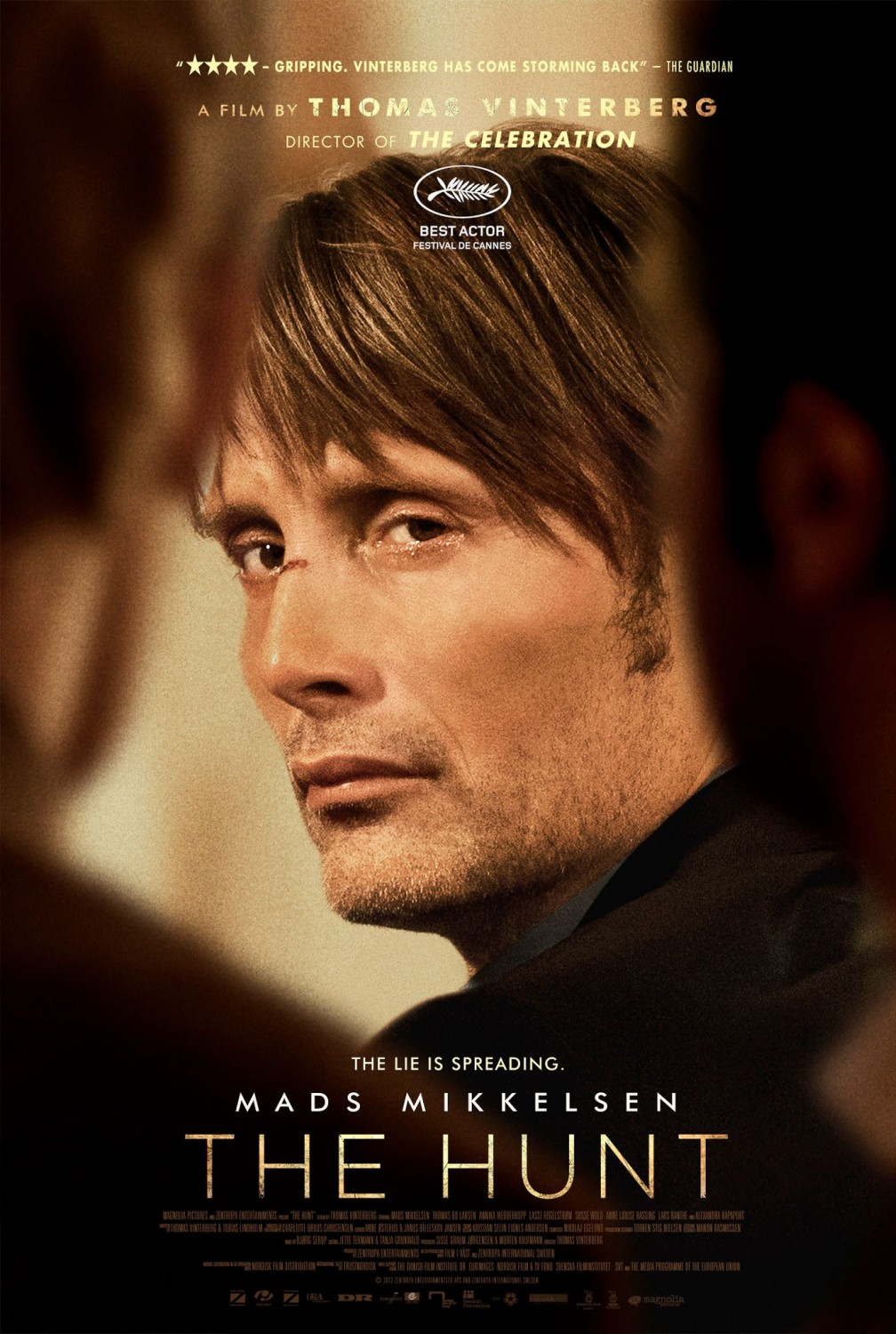
The Hunt (2013)

★★★★★

Director: Thomas Vinterberg

Release Date: November 30th, 2012 (UK); January 10th, 2013 (Denmark)

Genre: Drama

Starring: Mads Mikkelsen

“What’s your favourite dish?”

The question, posed by a young, chirpy girl not long after the opening credits, is a humdrum one. The kind of conversation starter that represents the mundanity of everyday life, or in this case, the imagination of a child yearning to learn more about people, the world and everything. But also a sentence that sets the proceeding tone, run-of-the-mill, at least for 20 minutes or so. The question then, is a devious one. It represents a laid-back, frothy atmosphere that in hindsight turns to chilling and haunting given the almost two hours of harrowing on-screen events that follow. The question, therefore, is brilliant. At least, its connotations are in the long run. The two whose conversation includes said food-related musing are also the two whose actions and reactions determine what is come. The question, above all else, is apt. Because only a daring director can script a meal question and pose it to Mads Mikkelsen. And, apparently, only Thomas Vinterberg possesses the smarts to cheekily have an imagination-driven child ask the question. And only once the lingering shroud of Hannibal-esque clouds are confronted and subsequently expunged, can the narrative truly advance and become one of the year’s toughest and absolute best.

Venison, by the way.

Lucas (Mads Mikkelsen) is a caring fellow; his dedicated work at the local kindergarten secondary only to a day-to-day template constructed by the enthusiastic youngsters, to whom he abides. In the evenings, Lucas spends time endorsing the merriment brought on by the combination of alcohol and a tight-knit community, and at weekends he either crazily plunges into freezing water with his chums, or tactfully hunts with his gun. Normal life. In fact, the only oddity encasing this small Danish community is that it is so friendly. That is, until a fleeting comment escapes the mouth of Klara (Annika Wedderkopp), one of the children Lucas looks after. The words are untrue, generated from the petulant anger of an unassuming child, but they still send shock waves around the neighbourhood. Subsequently, that day-to-day existence Lucas thrives on spirals through an unforgiving rigour. For an ingrained belief can never truly be shaken.

From the get-go, director Thomas Vinterberg sets out to achieve a specific but absolutely necessary tone. Lucas is always the central cog from which we gauge emotion. As daylight seeps from the screen, early interactions are conversational. When darkness falls, raucous beer-fuelled gatherings evoke jolly connotations of Nordic Vikings. There’s a familiar communal atmosphere, enveloping familiar people. Therefore when the agonising allegation is made, by a child no less, the audience has already bought into the realism shrouding proceedings. From then, a simmering tension takes over. Vinterberg does not over-egg or ‘Hollywoodize’ anything; even though detective teachers and informed parents are aware of the situation, they don’t explode in fits of rage or anger. Rather, internal disgust consumes all, allowing the narrative to tentatively build to its anticipated crescendo. Vinterberg’s controlled approach is admirable and ultimately successful; in this sense, the film is very mature and the filmmaking is very accomplished.

Vinterberg also hammers home the accused’s criminal status: at no point during the film is Lucas positioned as guilty. That’s never an issue, not in the eyes of the audience anyway. We know Lucas is innocent, but we also find it difficult to persecute a child for a mistaken phrase. And what right, if any, does anyone have in denouncing the actions of parents and a community trying to protect their own? Lucas himself mightn’t even challenge the paternal instinct, given his own attempts to secure custody of his son. The Hunt ponders this question, and tackles resultant topical societal issues. Important ones. Soon after Klara’s confession (“I don’t believe a child would lie about these things”) disapproving fumes centred on Lucas’ apparent actions spread like wildfire throughout the area, as he becomes the poster-boy of wrongfulness. These reverberations are not only felt by Lucas himself, but also by his son and partner. The teacher’s identity being revealed so soon after the incident essentially scalds an innocent man for life, a notion the film appears to consider unfair.

Bookended by two apparently different but thematically resounding hunting outings, proceedings never really ease up — mirroring probable real life. Towards the climax, a scene involving Lucas and Klara will have you watching through bated breath, and there’s more still thereafter. Speaking of the two primary players in this chess game of moral standing and right or wrong-doing, the actors involved all have something to offer said disturbingly riveting happenings. As Lucas, Mads Mikkelsen delivers arguably a career-best performance; amiable at the beginning, poignantly steadfast throughout his plight and never without dignity which, given his character’s predicament, is an extraordinary achievement from the Dane. Annika Wedderkopp plays Klara and more than holds her own surrounded by many adult peers. She’s a child obviously, thus inherently boasts that endearing quality, but is much better than simply charming. The pair share an unwaveringly realistic dynamic.

Other noteworthy performances emanate from Lasse Fogelstrøm as Lucas’ son Marcus, and Thomas Bo Larsen as Theo, Lucas’ best friend and the father of Klara. Marcus is troubled by the allegations made against his dad, yet determined not to let it get the better of him. One scene, subtle in delivery but upsetting in substance, sees Marcus barred from a supermarket while in the vicinity of a girl he likes. Fogelstrøm is just as meaningful in these moments as he is during his emotional tirade later on. Trust is the issue when it comes to Theo, whose immediate outpouring of anger subdues a lingering instinctive feeling that his best friend is innocent. This concept is highlighted throughout the film, where characters inadvertently advance a lie and ignore a truth in order to find some sort of closure. Larsen is excellent in his role, torn, bewildered and hurt by the goings-on. Alexandra Rapaport plays Nadja, the love interest of Lucas, another victim of events.

The Hunt is an exceptional piece of filmmaking, not afraid to explore tough questions and certainly not unwilling to challenge any subsequent societal issues. Chartered by a magnificent Mads Mikkelsen performance, and crafted meticulously by Thomas Vinterberg, the film doesn’t do much wrong. At times the silence is deafening, and as the nerve-shredding tensions builds, that silence turns to a harrowing closet hysteria.

The hunt indeed.

Shaun of the Dead (2004)

★★★★

Director: Edgar Wright

Release Date: April 9th, 2004 (UK); September 24th, 2004 (US)

Genre: Comedy; Horror

Starring: Simon Pegg, Nick Frost

It has been almost 10 years since we first met the instantly relatable yet spatially anarchic Pegg, Frost and Wright trio. Since 2004, their fumes of hilarity have glazed earlobes the world over, excellence exhaled from the likes of Hot Fuzz. But before Pegg and Frost had an unruly, conspiring cultist town to deal with, the duo wielded shovels and cricket bats in a war against zombies. The epitome of wholesome comedy-horror, Shaun of the Dead wittingly embraces society’s increasing individuality and detachment — a hapless trait infused even more in today’s world — before sending it spiralling in a zombie rage. The zombie adage it apt too, a smart comparison that evokes humour because the notion cuts so close to the bone. Perhaps a few characters are too incidental to warrant their on screen presence, but part one of the Three Flavours Cornetto trilogy is damn tasty regardless.

Working in an electronics shop where he commands disrespect, and still living with his overweight, uninspired room-mate Ed (Nick Frost), Shaun (Simon Pegg) is pitifully meandering through life, unwilling to commit and unable to justify. His girlfriend Liz (Kate Ashfield) bemoans Shaun’s discrepancies, in particular a monotonous infatuation with the local pub, the Winchester. As Shaun spends many a day lethargic amongst the comatose masses, juggling fractious relations between Ed and another house guest, and failing to win over the love of his life, he must be pretty certain that it cannot get any worse. Only, it can. Zombie worse.

Simon Pegg and Nick Frost front this raucous outing, and their gag-full chemistry is one of the prevailing positives. As down-on-his-luck lead man Shaun, Pegg exudes the everyday. His demeanour is casual, occasionally showing the slightest hint of enthusiasm, only to be shot down by an ungrateful colleague or a disappointed friend. Even Shaun’s motivational methods leave a lot to be desired (“There’s no ‘I’ in team, but there is an ‘I’ in meat pie”). You can see part of yourself in Shaun; well-meaning but gobbled up by a generically infectious culture, and Pegg’s bedraggled showing is suitably so. Though when the going gets heroic, Pegg is just as believable. His camaraderie with Nick Frost acts as the driving force behind the film’s intelligent wit. Frost portrays Ed, who’s a bit of a git. Ed is sort of like Shaun, only a lot further along the waster-scale. Rude and lazy, he seemingly exists only as the semi-loveable pain in Shaun’s backside, though he does emit a semblance of smarts every so often. The duo bounce comedic mouthfuls off each other for the duration, and they never get stuck in a rut. If the key to comedy is timing, these two have the art of early arrival down to a T.

At the forefront of Shaun of the Dead — which often harks knowingly back to zombie classics such as George A. Romero’s Dead series and Sam Raimi’s maniacal Evil Dead — is this concept of reviewing society as a failed collective unit. Although the zombie undead are the primary antagonists throughout, the narrative is really about the zombie alive — us humans. Director Edgar Wright, who also co-wrote the clever script with Pegg, smartly highlights numerous zombie-esque characteristics of the modern being: from waking up still tired after a late night, to ambling around streets unaware of anything other than oneself, to sitting slumped and mouth-gaping in tune with the other morsels on public transport. And each of these distastes are depicted before any actual zombie shows up. Wright’s almost satirical outlook on our isolated existence is smart, and is actually the most horrifying realisation that comes to fruition during the film, as opposed to the limb-deprived monsters. “The only thing that will redeem mankind is cooperation,” proclaims Shaun, an admission boasting more truth than realistic application.

Unlike the slow zombies afoot, Shaun of the Dead advances at a brisk pace and never threatens to dwell on a gag for longer than necessary. In fact, many of the funniest lines are quipped as humorous sound bites, again playing off the excellent chemistry between the front pair. Moreover, lengthy jokes interspersed throughout the zom-com tend to work (for example, a certain rifle in a pub) meaning each pay-off feels validated. There aren’t many things more frustrating than a film-long gag that loses steam before reaching the station, or worse, breaks down on arrival. The meaningful pace adopted by the filmmakers ensures proceedings are camp, as the people involved don’t take the goings-on super seriously, generating a healthy spirit throughout. Of course, there’s a genuine societal pondering going on as aforementioned, but encasing this sincerity is a plethora of over-the-top gut removals and blood splattering. Perhaps the most outrageous scene of the lot involves three humans, as many pool cues, a zombie and an oddly beat-by-beat consistent rendition of Queen’s “Don’t Stop Me Now”. Why outrageous? Because we’re having such a good time.

The tremendous Bill Nighy appears inconsistently as Shaun’s apparently disapproving step-dad, but should have a bigger role. Nighy’s lack of connection with Shaun acts as an embodiment of the film’s appraisal of civilisation, whilst at the same time provides the funniest moments external to those involving Pegg and Frost. His lack of sufficient screen time rankles even more so in the presence of peripheral characters Diane and David, played by Lucy Davis and Dylan Moran respectively. Both Davis and Moran are fine in their roles, but Moran’s spiteful, bitter David is unlikeable and therefore not worth investing in. His constant appearance coincides with hardly any character development, and therefore acts as a regular surplus to requirements reminder. Generic isn’t necessarily bad, especially considering the film’s self-awareness. However irrelevance is bad, and both David and Diane are just that. Kate Ashfield remains appealing as Liz even when denying Shaun, which is a testament to her solid performance. Peter Serafinowicz partakes in a small role as the grumpy room-mate, relinquishing more than one hilarious and angry diatribe.

Edgar Wright’s Shaun of the Dead delivers on two levels: as an accessible cautionary tale denouncing a cultural phenomenon of zombie-like monotony in society, and as a camp, witty and downright amusing banterfest with a splurge of chopping, ripping and cutting. Imperfections are not absent, but nor are they wholly adverse, and the excellent script maintains a rollicking pace throughout. Anyone for a Cornetto?

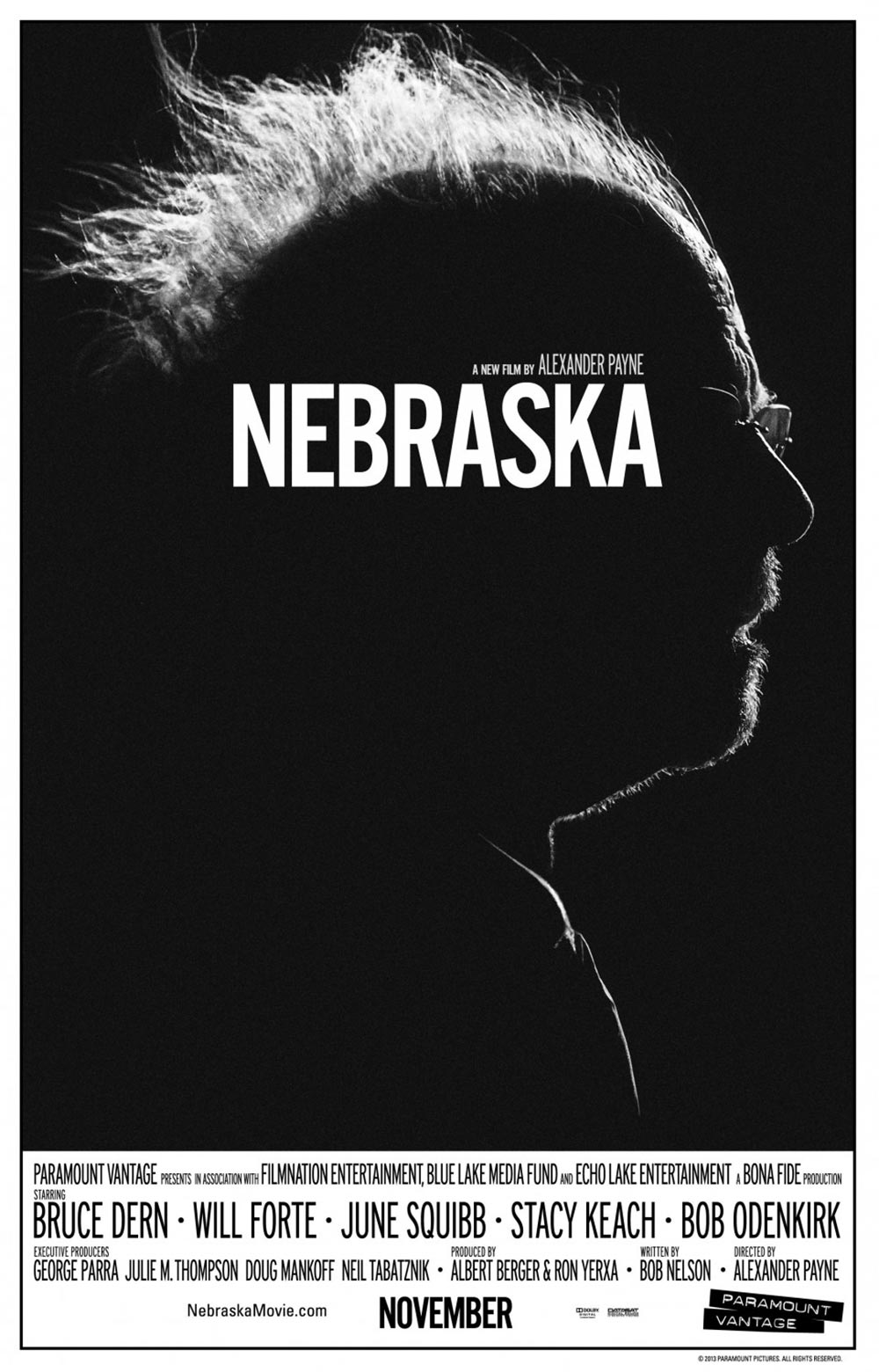
Nebraska (2013)

★★★★

Director: Alexander Payne

Release Date: December 6th, 2013 (UK); January 24th, 2014 (US)

Genre: Adventure; Drama

Starring: Bruce Dern, Will Forte, June Squibb

Alexander Payne truly has a knack for relaying the road story on screen. You need more than an echelon of soul, characters whose individual hearts collectively beat in time with the narrative, and a narrative that quips comically, evolves raucously and affirms genuinely. In Sideways, he created a cinematic Everest, a pinnacle that will require something pretty spectacular to reach. And although Nebraska — Payne’s latest venture into the genre that sees characters finding their way around town before finding themselves — doesn’t quite reach the Sideways summit, it’s still a comforting, humorous and reminiscing ride.

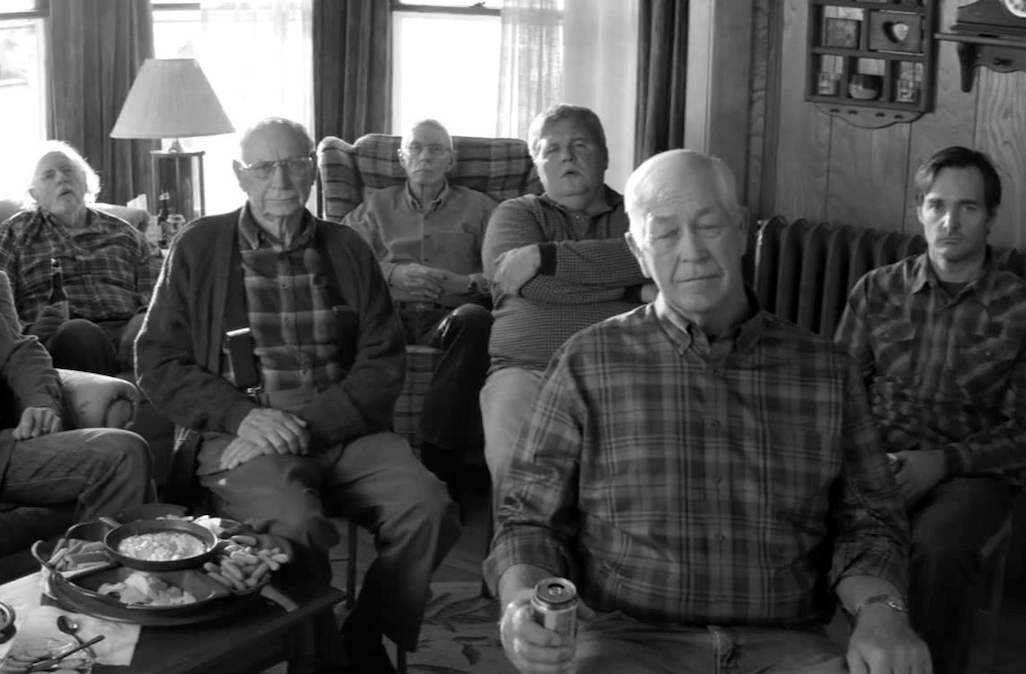
Absolutely dead-cert he’s stumbled upon a one million dollar sweepstakes letter, getting to Lincoln, Nebraska is the first, last and only thing on Woody Grant’s (Bruce Dern) torpedoing mind. If it weren’t for highway patrol, he’d have walked there. His end goal momentarily scuppered by the confines of a police station and a sigh-fully approaching son, Woody mentally prepares a case for action. Because in his eyes, there’s a mound of cash crying out to him at the end of a Nebraskan road. Son David (Will Forte) believes the letter is a scam, and initially denounces Woody’s nonsensical intentions. However, after a number of persistence-driven incidents, David agrees to chauffeur his father towards the elder’s prescribed destination; probably not out of curiosity, rather, in order to spend time with his ageing old man.

From its elegant cinematography to a perfectly poised story, Nebraska evokes a sense of accomplishment and craftsmanship. Of course, the road-trip mantra will always centre on character study, and it’s no different here. However to not acknowledge the technical prowess on display would be doing the film a disservice. The black-and-white scape works both as a visual appeasement and as a narrative cog, as it represents not only the blunt tone, but also Woody’s depreciating mind and somewhat selfish outlook. In composing a curtain of sound, Mark Orton infuses proceedings with a Wild West twang, harking connotations of the primitive western ‘every man for themselves’ adage. Technically, the film is better than proficient. It is wholly engaging.

Having communicated the industrial superlatives, I ought to focus on the film as a depiction of characters, because without doubt Nebraska is about people and family and relationships. Those, and the subsequent pile of complex baggage associated with such humanistic tendencies. Although Woody isn’t the most amiable chap — his monetary determination prevails above all else — the viewer still sympathises with him to the point where you are subliminally rooting for the lead to walk away with a heap of cash, if only to see him smile. Bruce Dern embodies the retired Woody in all his stout manliness (“I served my country, I paid my taxes”), a portrayal that in many other hands would sway towards generic, yet Dern emits realism. But he’s also frail and his exuberance is quenched before it really gets going, demanding many a refuelling tavern trip.

Will Forte is the caring son David, who stands by his father through thick and thin. Forte must act as a sufficient bumper against all of Woody’s grouchy impulses, a challenging task if there ever was. The duo are essentially a two-man act, strained as a pairing but valiant against any external threat (much like Miles and Jack in Sideways). Enter June Squibb as mother Kate, the experienced firecracker of the family, whose hilarious opening statement sets the tone for her appearance: “You dumb cluck!” The withered status of Kate and Woody’s relationship is prevalent throughout, but it’s a natural abrasion brought on through years of being together, rather than simply a clash of personalities. Squibb impeccably channels her character’s outspoken demeanour into one of protection over Woody.

Bob Nelson’s screenplay is terrific, and Alexander Payne coats an affirming lesson with crude comedy. As father and son settle down at a family gathering alongside a ramshackle troupe of wordless Woodys and ditsy Davids, we watch that familiar social awkwardness at its most humorous. Cousins Cole and Bart insist on mundane car conversations, but at least someone is trying to cover over the cracks of silence. “Cole here did some jail”… maybe silence was the way to go after all. And it’s that tonal take-no-prisoners style that the film thrives on. Yet, there is a dramatic strand running throughout, one that takes its subject matter seriously. Woody is old. His senses are dwindling; he walks along motorways and unwittingly unveils his perceived monetary gain to strangers and enemies. This melancholic exercise on advancing years and losing oneself is relatable — everybody gets old, and many of us have spent time with elderly loved ones. Whilst Woody’s millionaire claims are momentarily amusing, they’re also sad in reflection as we see judgement fail him. At one point, you question Woody’s actual intentions: to chase a false dream, or to live and relive a reminiscent present? For David, the road-trip is a touching venture of discovery about the wholesome life endured by his father, a man you don’t get the impression David knows all that well, despite their familial ties.

Nebraska is another successful excursion for its director. Suitable in its simplicity and subtle in its sensitivity, the film is spearheaded by three admirably relatable performances. At the end of it all, Payne reflects on trust, on bonding, and on seizing the moment. It’s nothing groundbreaking, but it is, to quote Woody himself, “Pretty good”.

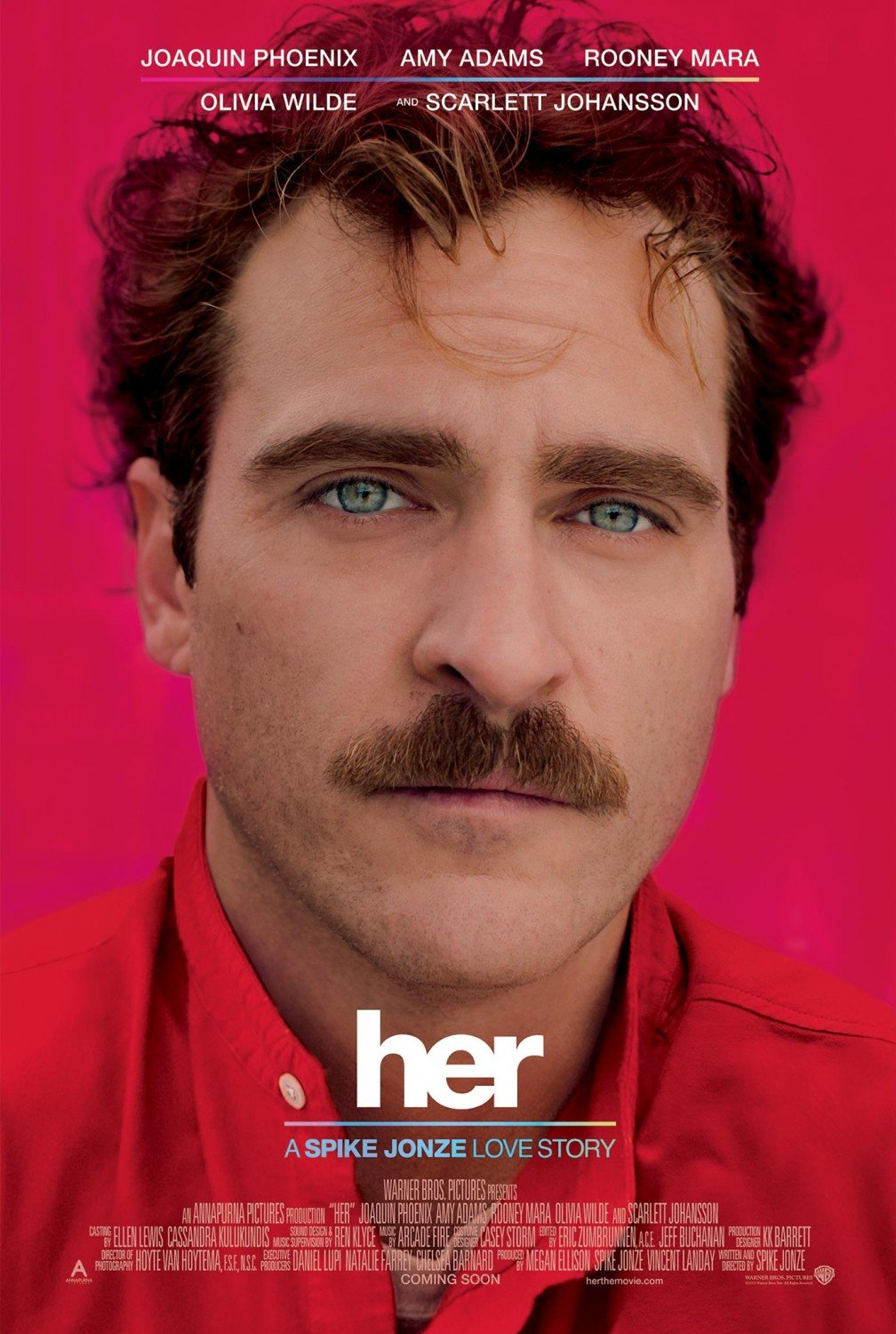
Her (2014)

★★★

Director: Spike Jonze

Release Date: January 10th, 2014 (US); February 14th, 2014 (UK)

Genre: Drama; Romance; Science fiction

Starring: Joaquin Phoenix, Amy Adams, Scarlett Johansson

The last time Joaquin Phoenix and Amy Adams acted side-by-side they were components of an enigmatic collective, including the late Philip Seymour Hoffman, in an enigmatic film, The Master. Perhaps Scarlett Johansson’s most well-regarded stint in-front of camera was as part of Lost in Translation, and there are echoes here of that wayward soul in a hasty world mantra. Surprisingly then — given Phoenix, Adams and Johansson’s presence — Her somewhat ambles along uncertainly. Unlike The Master, it never reaches the pinnacle of engrossment, and it doesn’t quite have that admirable ambience of Lost in Translation. There is something delicate and charming though, admittedly often deriving from the performances of our fair trio. Yet aside from its lively textures, there’s a lacking sharpness, a missing clarity. Sometimes it’s all in the name, and the world in which Theodore Twombly exists is all a bit, well, wibbly-twombly.

It’s 2025 and Theodore Twombly (Joaquin Phoenix) splits his time between love letter composition for those unable to elaborate on their feelings, engaging in virtual gaming, and moping about his impending divorce. Given his own stuttering when it comes to expressing emotions, it’s miraculous that Theodore succeeds in his paraphrasing-mediation job. Inward and suitably unnoticeable among the masses of technology consumed beings, Theodore decides to invest in a brand new OS system, shortly thereafter named Samantha (Scarlett Johansson). At first he’s unsure, but still awkwardly encapsulated; by the impossibly sophisticated technology, the presence of something new in his life, and more than anything, Samantha’s sultry voice.

A voice that absolutely entices. Scarlett Johansson delivers a pitch perfect audio performance that rings both affectionate and strong-willed, increasingly growing in knowledge and pseudo-humanity. As viewers, we know of Johansson’s actual beauty and picture her as the OS system exhales airwaves, therefore it is easier to grasp on to her allure and, ultimately, understand why Theodore is becoming more and more infatuated with those wispy tones. Essentially, we see what he hears. On the empirical side of things, Joaquin Phoenix amiably bumbles as the lead. In reality Phoenix has a tough job, considering many of his conversations take place without the presence of another human being, and there’s no central location for him to direct speech towards. In evading this obstacle, Phoenix creates a flailing uncertainty that, even in direct conversation with another body, would probably still have him glancing from ceiling to floor. Theodore’s fidgety, glasses-adjusting unsettled social existence works well, in turn ensuring another successful acting outing for Phoenix.

Aptly, women are the order of the day in Her and another three effectively contribute, only in smaller doses. Olivia Wilde manifests as Theodore’s date, spiky in exterior yet personifying that lack of assurance that runs throughout the film. Soon-to-be ex-wife Catherine is played by Rooney Mara, appearing in a few montages and even fewer real-time scenes. Mara is fine, but doesn’t really see enough light of day to develop character-wise. Amy Adams gets a lot more screen time as Theodore’s childhood friend Amy and, much like her mate, is adoringly awkward. Which raises the first issue – the pair are so alike, seemingly very close and totally get on, so why are they not together? When we meet Theodore he is recently removed from a committed relationship, and Amy’s collapsing love life isn’t far behind. The premise obviously demands that there be an absorbing connection between its characters and their technologies, but the narrative still seems far-fetched in that neither Theodore nor Amy ever raise the issue of a potential relationship between the pair, which considering all the evidence, would be a flourishing escapade. Perhaps Amy’s human-on-human romance exfoliating with negativity subsequently forces Theodore’s mechanical-driven desire.

The insistence, then, on contemplating and evoking a social commentary on how civilisation is becoming enslaved by technology, starts edging towards overbearing status. Constantly, the screen cuts from unfolding events to convey the number of humans seen aimlessly wandering with an electronic voice in one ear. Yet a number of these techno-captives — not all — still convey surprise when Theodore details his rapport with an OS system (“You’re dating your computer?”). The notion is weird for the viewer, of course, but in the context of a future world driven by the machine, Theodore’s budding romance doesn’t really seem all that peculiar. To get around this, writer-director Spike Jonze delves further into the land of philosophical thought, encountering Samantha as she raises her own moral dichotomy. “Are these feelings real, or are they just programming?” she wonders worriedly. Is she even a she? Instead of Her, would Thing be a more suitable title? For a while, this dilemma sort of works as it becomes more about the creation of a new, potentially dominant artificial intelligence, rather than a human-computer relationship. Inevitably though, it wears.

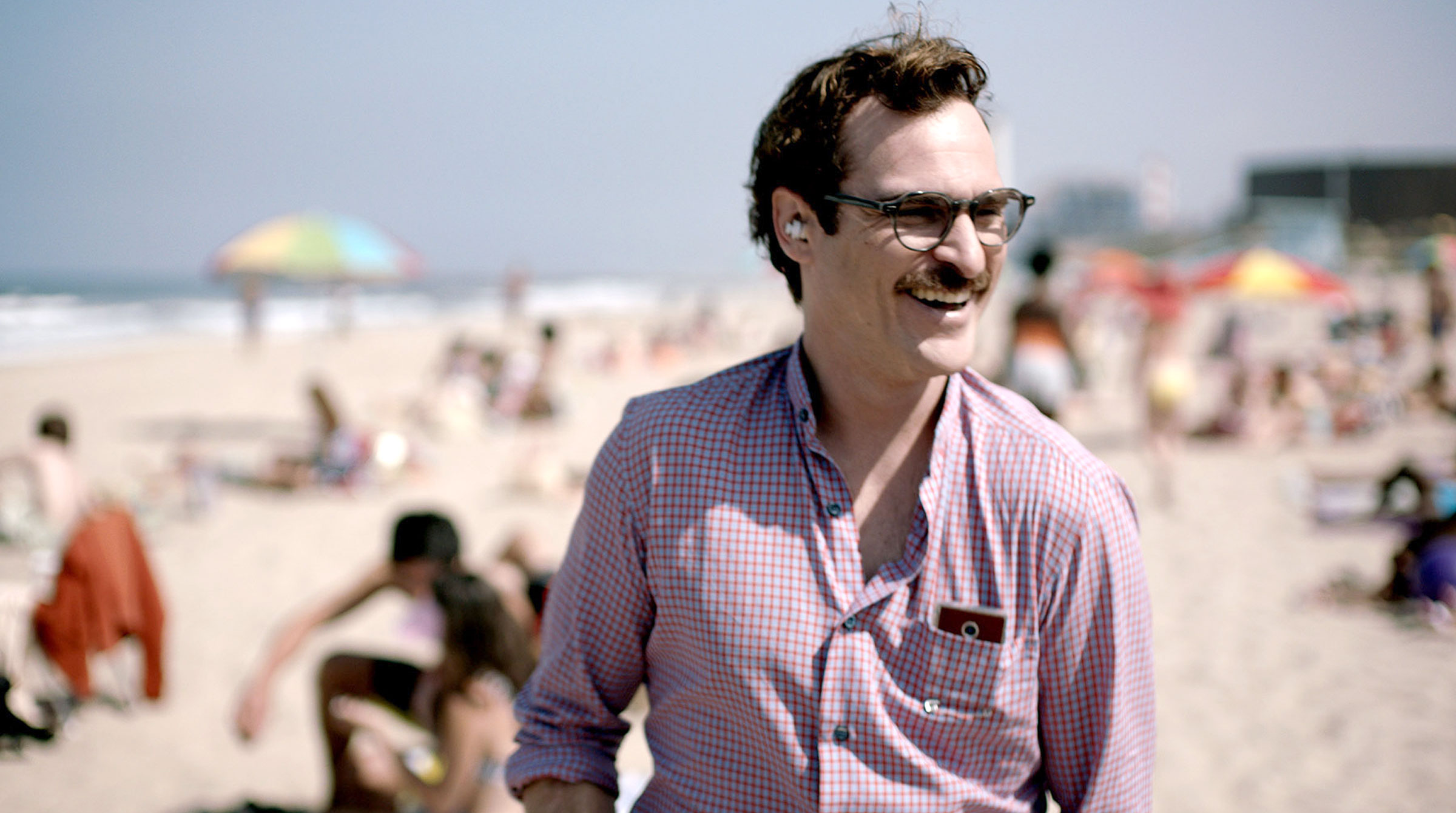
Once Jonze gets past the schmaltz and hit-or-miss musings (“The past is just a story we tell ourselves” — guess I don’t need to return that television I stole yesterday then) and focuses on purely simplicity, Her really hits its stride. When Theodore and Samantha are having banterous, funny conversations, that’s when the film oozes charm and good-natured infectiousness. Moments of energy reign supreme over soliloquies of sad reflection. The film is encased in vibrancy, a future world that somehow gleams with a retro feel, almost as if we’ve returned to the inception of computers rather than their sovereignty. Theodore’s moustache is as welcome as his bright orange shirt and the multicoloured glass windows his office. This glossy texture, coupled with a hypnotic soundtrack not dissimilar to that of Lost in Translation, aids in capturing a setting that you wouldn’t mind spending hours encapsulated in.

Strong performances provide Spike Jonze’s Her with a required dose of oomph, as often the director’s relentless societal ponderings become too much or increasingly repetitive. Having said that, the film is entirely watchable and probably just as rewatchable, given its wonderful cinematography and generous atmosphere. Despite a few significant misgivings, Her is actually pretty good fun.

2001: A Space Odyssey (1968)

★★★★★

Director: Stanley Kubrick

Release Date: April 3rd, 1968 (US limited)

Genre: Adventure; Mystery; Science-fiction

Starring: Keir Dullea, Gary Lockwood, William Sylvester, Douglas Rain

Where to begin?

The beginning of time, apparently. A group of apes, shepherded by an apparent leader, are growled at and hounded from their waterhole having already lost a member via the scissor-like teeth of a leopard. It appears; seemingly from nowhere, from nothing: a large and brooding object, known as the monolith. The beasts shriek, cower and then gain strength in its presence. Shortly thereafter, the now tactical, abrasive early hominids have reclaimed their waterhole. Clutching a bone, envisioning a tool, the leader tosses his symbol of construction, destruction and all else into air.

We’re floating in space.

It truly is a remarkable opening sequence, Stanley Kubrick’s depiction of premature life dissolving into an achievement-driven existence, an existence embodied by the amazing feat of spatial prosperity. By squashing life’s inception all the way through to thriving humanity into only a few minutes, is Kubrick trivialising said time period? Is he playing down the importance of thousands of years in anticipation of what is to come next? Perhaps. Yet it is the black structure, the monolith that is most intriguing. So odd in its appearance, the edged object turns ominous; what of its instantly empowering effect on the apes? Stanley Kubrick’s 2001: A Space Odyssey is one of the most influential pieces of cinema, of art, to be born out of the last century, and in less than 10 minutes it pillages viewers with more questions than answers. Over a two hour and 40 minute run-time these questions double, treble, as Kubrick raises issue after issue including our reliance on machines, mechanical manipulation, the significance of alien existence, of shapes even. He does all of this whilst celebrating humankind and our limitless prerogative. It’s wonderful.

Zarathustra, speak. Cue the brass…

Across four far-reaching periods of time, each one linked existentially and thematically to the next, 2001: A Space Odyssey engages in a tale — the tale — of life. After encountering the early hominid creatures, we ascend over the horizon into space and join Dr. Heywood R. Floyd (William Sylvester) are he prepares for a mission to Clavius Base in the midst of some abnormal goings-on. The narrative sprints ahead thereafter, to the Jupiter Mission, doctors Frank Poole (Gary Lockwood) and David Bowman (Keir Dullea), and their increasingly claustrophobic relationship with ship computer HAL 9000 (Douglas Rain). Finally, Kubrick takes us on a peculiar and tantalising journey across, through and around the cosmos, blanketed in an array of magnificent cosmological phenomena.

This collection of chronological mini-movies, although odd at first glance, succeeds two-fold: in compounding the monumental story being told, and in detailing the development of mindful curiosity, technological prowess and emotional manipulation. The first strand — the only section to be located on land — portrays everything primitive. The ape, soon to become man. The waterhole, soon to become territory. The bone, soon to become a sword, and a sceptre, and a hammer. It’s smart, cunning almost, as the sequence sets your brain clogs in motion. And the viewer’s mind is certainly going to need to be switched on, as the black vacuum above plays host to everything that follows.

An iconic image: the bone thrown and subsequently plummeting through the air, snappily followed by a space shuttle harnessed by gravity. Perhaps an indication of humankind’s selfishly perceived stability all these years later. Selfish in their control over nature, and negligence of mechanical reliance. Machines that seemingly have a “dependence on people,” at least that’s the view of Heywood, and later both Frank and David. Kubrick switches his line of questioning, batting that now aged-old ‘man versus machine’ adage that was gaining prominence around the film’s release in 1968. The internal AI system, HAL, is essentially the ticking heart of Discovery One, Frank and David’s space liner — HAL’s physical appearance burns a bright reddish-orange, symbolising the sun. Yet the system is almost secondary to the humans on board, simply a part of their routine; machinery assists in cooking food (unlike the raw meat off the slain bone eaten by apes), in steering the ship, providing entertainment (HAL wins at a game of chess), and almost all else.

This notion of machine-driven consumption prevails throughout the film, climaxing in HAL’s eventual devilishness and therefore implying both that machine has absolute rule over man, and that it is perhaps the next stage in the evolution of life. Douglas Rain is deadpan as the system’s voice, verbalising in an incredibly unassuming-turned-condescending manner (“Without your space helmet, Dave, you’re going to find that rather difficult”). Coincidentally, this converging relationship between man and machine has once again reared its societal hand recently, in Spike Jonze’s Her, a story about a man who falls in love with his AI system. The topic is an intriguing one, and Stanley Kubrick tackles it as well as anybody has done (or will do).

There are also other subtexts rummaging around, including our intrinsic attraction to the search for alien existence, conveyed by how characters interact with the menacing monoliths scattered throughout. Another irregular data byte comes by way of shapes — the sphere: HAL, the ship’s centre, and planet Earth indicating a form of coming full circle; the rectangle: those brooding and dangerous monoliths, offering no leeway; and the picturesque octagon: part of Discovery One’s walkway, an uncommon shape signalling strange happenings.

Interspersed within this ocean of thought-provoking query is a soundtrack as wide-ranging as the eon covered, yet one that maintains a common brassy undertone. Celebratory and grandiose, Richard Strauss’ “Thus Spoke Zarathustra” blares as a triumphant recognition of achievement. Conversely, scores of haunting, ghostly tones wail out like human souls in fear of extraterrestrials; it’s the ambience of the unknown. Geoffrey Unsworth has a whole universe to work with, and his cinematography is marvellous. The special effects, though obviously not up to present day standards, are admirable in their imagination — the influence of the camera work on show here can be seen propelling modern movies like Gravity. Performances from Keir Dullea, Gary Lockwood, and William Sylvester are by no means the centrepiece of proceedings, but Dullea in particularly stands out depicting of the authority-battling and bearings-losing Dr. David Bowman.

Stanley Kubrick films are renowned for offering more questions than answers. This potentially problematic mantra shows no sign of miss-deployment here, instead thriving in tandem with 2001: A Space Odyssey, a film that encompasses all of time and that debates the multitude of lives lived throughout.

Images copyright (©): Metro-Goldwyn-Mayer

12 Years a Slave (2014)

★★★★★

Director: Steve McQueen

Release Date: November 8th, 2013 (US); January 10th, 2014 (UK)

Genre: Biography; Drama; History

Starring: Chiwetel Ejiofor, Michael Fassbender, Lupita Nyong’o

“I will not fall into despair till freedom is opportune!”

Those purposeful words, you will have heard over the last few months in trailers, adverts and previews. They are strong-willed; in one sense uplifting, yet in another more visceral sense, haunted by humanity’s most evil endeavours. Despair and freedom, traits inversely diverging in the life, rather, the existence of Solomon Norfolk. Steve McQueen challenges us to consider and then reconsider as his depiction of the animalistic slave trade hammers with shock, but does not rely on it. For the most part, the moments of solitude and silence profoundly exhibit a monstrous reality lived by those such as the remorseless slave owner Edwin Epps. There are no punches pulled, no whippings recoiled; McQueen’s 12 Years a Slave is a harrowing watch without question. More than that though, it is a necessary watch. Not to reassure a cultural ridding that hasn’t fully been expunged. Rather, to condemn what should never have occurred, and to shed a flicker of true resilience on a truly despicable time.

A well-off and considerate skilled carpenter, Solomon Norfolk (Chiwetel Ejiofor) tends to the every need of his young family. It’s 1841 and the slave trade is rife with wealthy disregard. Approached by two not noticeably iffy gentlemen, Solomon — a fiddle player at heart — is offered an extended musical job, an offer greeted with appreciative acceptance. After a drunken night, he awakens in chains, stripped of his identity and mercilessly pawned. 12 Years a Slave tells Solomon’s harrowing story, as he is traded from a would-be sympathetic slave owner (that is, if such a juxtaposition exists) to the vile, despicable Edwin Epps (Michael Fassbender) who has abomination clenched in his fists and the abyss peering through his eyes.

This is an intense watch, no doubt. Not necessarily because it’s another retelling of a horrible time — though that alone warrants attention and denouncing. Rather, it comes down to how Steve McQueen unflinchingly tells the story. His directorial application is admirable in that no disservice is done to those who fell victim to slavery, this isn’t in any remote sense a Hollywood-esque drama bloated full of riveting set pieces or manipulative tones. Nor is it buoyed by a somewhat ironic, semi-exploitative raft akin to that of Quentin Tarantino’s Django Unchained, a cinematic spectacle in every sense. 12 Years a Slave is real life, a reflection of events not so long gone. You may judge success on ticket sales, or audience reception, or even personal affirmation, but there’s also a genuine feeling abound that McQueen’s priorities are and would always have been aligned alongside authentic storytelling regardless. His straightforward devotion to re-imagining the unimaginable is admirable, and it’s this wholeheartedness that enables the viewer to watch with an only just an ounce of ease, but an ounce nonetheless.

From the point of his wrongful capture, Solomon wrestles with a tragic dignity-driven dilemma: does he succumb to hate to become bastion of support for his helpless compatriots already grappled by despair, or does he stoutly, fearlessly stare directly into the heartlessness of one of humanity’s worst episodes? Initially, Solomon is disbelieving, perhaps as much of slavery’s existence as of his own forced manoeuvre into it. “They were not kidnappers, they were artists… fellow performers,” he wrongly assures, detailing those absolutely iffy gentlemen. Maybe if he can convince someone, anyone, they’ll see sense. But there is no sense, not in the racist pits of Southern USA. Everywhere Solomon glances there is a monster in human skin. The slave-trader, auctioning off people like watches (“My sentimentality stretches the length of a coin”). The plantation owner, who treats his slaves fairly well — but to treat a slave well would be to treat a slave as a human, not an object, therefore not to treat a slave at all. His empathy is misguided. The hired carpenter, a white pre-Nazi figure teaming with abhorrent spew. Yet through these early trials, Solomon remains resilient and hopeful — freedom is still vaguely in sight.

Wholly, 12 Years a Slave is mighty, but a number of moments stand out in their contrasting potency. As a twenty-first century audience, we’ve sponged it all, and have resultantly become immune to most atrocities displayed in film or any other art-form. There’s something to be said, then, for an act of depicted violence that leaves you mouth gaping, eyes watering and mind searching. In a sickening whipping display not far removed from The Passion of the Christ, the film emphatically compounds its horrors. Yet it remains realistic, and that rankles the stomach. Conversely, a scene of isolation is striking. Surrounded by an audibly hissing nature, pupils dark and eclipsing, Solomon slowly stares right and left before catching the camera’s lens. Profound, absolutely. Painful, worryingly. You wonder whether Solomon has approached the point of no return, the despair, and assume thereafter that he has seen no end. It’s an extraordinary piece of filmmaking, perhaps the most poignant all both in delivery and meaning.

Chiwetel Ejiofor’s depiction of Solomon is utterly remarkable. He is defiant in hope, upsetting in pain and compelling throughout, embodying this range in absolute earnest. The role is a difficult one; Ejiofor must reign in grief and disperse it invariably at the correct moments, or risk devaluing the man. At the same time, Solomon’s sympathetic nature cannot restrain, and instead Ejiofor has to symbolise at least partial hope where there is none. Ejiofor masterfully accomplishes all of this, and more — every strained note from his mouth rings with plea, and his eyes bulge with emotion. As diabolical slave-owner Edwin Epps, Michael Fassbender demonstrably bewitches himself in a spell of pure evil. At one point Epps falls flat on his face, yet you cannot muster up the slightest node of joy because it’s obvious that his repulsive mindset enjoyed the discomfort.

Newcomer Lupita Nyong’o is also incredible. She plays Patsey, a young female slave whom Epps fantasies over and hates himself for it. Nyong’o displays an air of vulnerability, whilst at the same time commanding the screen with her undeniably astute presence. Paul Giamatti has a minor role as the aforementioned slave-trader, excelling in cruelty, the same uncaring sensibility as Paul Dano, the aforementioned hired carpenter. Brad Pitt oddly appears as a different carpenter, Amish beard and all. His random arrival is slightly off-putting, though the co-producer of the film (ah, that’s why) is solid enough. Benedict Cumberbatch is William Ford, the empathetic plantation owner whose sentences begin with an English accent and end in a southern drawl. Having said that, Cumberbatch is an excellent choice to play the role, that much-loved real life personality giving the character some small semblance of decency.

Sean Bobbitt’s cinematography is exquisite, offering a pristine vehicle for the film to vibrantly beam out of. A contagious scent of excellence must’ve attached itself to each component on set, and Hans Zimmer’s score is no different. Moving and soaring, Zimmer’s orchestral harmonies wrap around events on screen as if to comfort the forsaken humans. This contrasts with the weighty Roll Jordan Roll, a roar of solidarity that you don’t want Solomon to contribute to for fear of his own confirmation of plight.

If not the best film of the year, 12 Years a Slave is certainly the most important and probably the least comfortable to watch. Steve McQueen powerfully unravels a horrific period lived mercilessly by those far wickeder than any revised history suggests, and endured harrowingly by those whose suffering is unrelenting in its depiction. It’s stark and honest, so much so that you’ll exit the cinema, mind image-strewn, wishing the film never had to be made.

Philomena (2013)

★★★★

Director: Stephen Frears

Release Date: November 1st, 2013 (UK); November 27th, 2013 (US)

Genre: Drama

Starring: Judi Dench, Steve Coogan

It’s not often you watch a drama about the culmination of a woman’s fifty year search for her long lost son, and end up spending a significant amount of time laughing in the wake of an odd comedy duo. Settle down at the mercy of Stephen Frears’ Philomena though, and that’s exactly what’ll happen. At its heartiest the film flows with a sense of uncertain determination embodied in diverging ways by the two lead characters, but in between these moments of bottled up emotion, at its most organic, Philomena charms in tone and entertains by way of a banterous dynamic. This incredible story pitched excellently is often funny, occasionally shocking and always peculiar in believability, even if it does lose some legitimacy at its conclusion.

Philomena Lee (Judi Dench) stares wholesomely into the eyes of a young gentleman pictured inside a piece of jewellery. It’s her son, Anthony, taken fifty years earlier and placed in the care of an American family. Philomena spent her younger years as part of an Irish Abbey, sent there by her disapproving father in a rebuttal to pregnancy. By chance, recently fired Labour government adviser Martin Sixsmith (Steve Coogan) is in attendance at a party where he is approached by Philomena’s daughter who pleas to have her mother’s tragic tale exposed to the world. It’s a “human interest story”, or for Martin, a way back into the positive glares of journalistic limelight, and so he embarks on a journey of discovery and hope with Philomena.

At the centre of the film is this weird dynamic shared between Philomena and Martin, one driven by religion and faith (or, in Martin’s case, the lack thereof). Having been forcibly separated from her child in an act of apparent punishment, Philomena retains a staunch belief in God and moreover, treats the present day nuns — of which still includes the prominent Sister Hildegard, who was instrumental in said previous events — with respect and without any incrimination. The horrendous actions undertaken in 1951 are presented in a unsavoury manner, as they should be, by both the film itself and just about every character, from tainted journalist to boisterous pub owner (“What about the evil nuns, what’s happening with them?”). Yet Philomena valiantly, admirably, stands by her beliefs and wholly practices the forgiving teachings, ensuring the narrative never plumbs over into anti-Catholic territory.

On the other hand, Martin embodies the typical cynical reporter. He spends half of the time answering his elderly associate’s questions about believing in God (“No”) and the other half truly puzzled by Philomena’s strong-willed demeanour. The journalist, who experiences a moral realignment himself as the film canters on, publicly denounces Philomena’s inbuilt faith having never sincerely lived it — although he was an alter boy once upon a time.

These quizzical debates between the pair provide the catalyst for the film’s good-humoured underbelly. That, in tow with the chuckle-worthy “little old Irish lady” and business-like, trying-to-reignite-him-career journalist, together in America, heralds a jesty atmosphere. The pair are outwardly mismatched, yet they share an intrinsic desire to reclaim a significant loss in their respective lives. For Philomena it’s her son, whereas for Martin it’s his dignity and journalistic aura, which is probably why he constantly contemplates writing a book about Russian history, a cultivated topic if there ever was. His initial detachment broods a condescending resonance towards Philomena, whose fickleness in the face of sarcasm offers a few comedic titbits. While Martin discusses how to approach divulging the story with his callous editor, Philomena amazes over the “the size of the portions!” in America, claiming she always worried about her son’s weight. While fully endorsing laughter, director Stephen Frears never marginalises his at times serious approach to the subject matter, without which the film would lose authenticity given the harrowing happenings occurred in real life, as part of Philomena Lee’s actual existence. A healthy balance is essential, and Frears achieves one.

Our two main protagonists are, in essence, conventional characters — a dour, disenfranchised reporter and an energetic-yet-inconstant wee Irish lady — but given the film is based on a true story, on genuine people, it is right that these characters should be conventional to a degree. That way they are recognisable and relatable, in turn evoking emotion from the audience. Judi Dench is wonderful as Philomena, humming the full dramatic spectrum in the process. She exhibits an ardent perseverance, the same kind that any mother would typify in a search for her child. However, at the same time she always carries that homely quality, a charming awkwardness in a world far bigger than and increasingly alien to her. As Martin Sixsmith, Steve Coogan is the perfect folly, boasting a very valid ‘been there, done that’ attitude. Unlike Dench whose character is a straight-shooter from the off, Coogan often has to reign in his thoughts (probably for fear of a skelp from his elder) as he gradually warms towards Philomena, instantaneously to the audience directing a growing fondness in the direction of Martin and his changing intentions.

Along with Jeff Pope, Steve Coogan brilliantly co-wrote the screenplay based on Martin Sixsmith’s book The Long Lost Child of Philomena Lee. The duo do an exemplary job in adapting book to the screen, a traverse that facilitates this witty, emotionally-tugging film. Nevertheless, there is a problem that arises near the very climax, one captured and dragged by the notion of dramatic licence. Dramatic licence, a function utilised by the industry’s best, creates tension where there may be none, or sprinkles a share of humour if it sorely lacks. In the case of Philomena, the dramatic licence becomes problematic because it goes beyond these constructed trivialities. There is a fabricated scene approaching the conclusion that is designed specifically to be a blow-off moment for Martin, but that resultantly, sadly, envisions a significant falsity. In a way the film takes an emotional liberty, the same kind that it spends ninety minutes preaching against. A disappointing blemish, but arguably the only one.

Martin Sixsmith, worried about his health, is told to run. This same deed is adhered to by Steve Coogan and Judi Dench, who collectively grab hold of Coogan’s delightful — if a tad tainted towards the end — script and run with it, creating waves of charm and seemingly incompatible comedy in the process. First and foremost though, this is a serious and harrowing story, and Frears ensures that it is treated as such. If you journey purely alongside the happenings on screen, not investigative of the climactic authenticity, Philomena might just tinge those emotions; the laughs and the cries.

The Wolf of Wall Street (2014)

★★★★

Director: Martin Scorsese

Release Date: December 25th, 2013 (US); January 17th 2014 (UK)

Genre: Biography; Comedy; Crime

Starring: Leonardo DiCaprio, Jonah Hill, Margot Robbie

It’s their fifth director/actor collaboration and The Wolf of Wall Street may well be Martin Scorsese and Leonardo DiCaprio at their most exuberant. This maniacal tale of excess drowns in a flood of alcohol, showers in a plethora of drugs and embezzles in enough debauchery, sex and controversy to last a lifetime, although probably not a Jordan Belfort lifetime. Yet, in spite of the countless unsavouries on display, there’s a hint of caution lingering. A moment of thought, of silent consideration. It’s only a whisper though, nothing more — caution is perhaps the only trait lacking throughout the film.

Is The Wolf of Wall Street, then, glorifying a repulsive glut-based culture? Perhaps for over two and a half hours, yes. You laugh, guffaw even, when a damning head shake should suffice. That is until a line of blood trickles down one character’s forehead, when perspective and sense reign supreme. Maybe not from Jordan Belfort or any other money-gorging lackey at his disposal. Rather, from Scorsese himself, who subtly denounces the previously lauded mounds of greed and subsequently, masterfully, ties this disastrous party in a bow of warning.

Jordan Belfort (Leonardo DiCaprio) is the kind of guy who would strut into a room full of more experienced heads and immediately present himself as bigger and as better. In fact, shortly after a Black Monday layoff, Belfort does exactly that as he aggressively and successfully makes an impressive sale in his new job as part of a small brokerage firm. This sale, or in layman’s terms customer manipulation, is the catalyst for Belfort’s booming career, one that sees himself and partner Donnie Azoff (Jonah Hill) set up their own financial consultancy business that, funded by immorality, skyrockets the pair to monetary heaven.

From the outset, The Wolf of Wall Street positions itself as relentless and indulgent, maintaining those tonal traits throughout, effectively, its entirety. Excess is the mantra, limits are ostracised. Belfort narrates in a gloating manner not too far removed from, “Hey, look at all this crazy, hilarious shit we got up to!” Animals are paraded, devoured. Women are either reduced to objects solely to aid the male desire, or are rendered forever in debt to their gender opposites. At one point Belfort bellows, “I want you to deal with your problems by becoming rich!” absolutely believing his own deplorable motto. Yet, in all its apparent glorification of the obscene — a glorification that has attracted waves of controversy in some parts — the film never dawns a disguise. Scorsese, and perhaps he has earned to right to do so, goes that bit further. Of course there’s distaste galore, how could there not be given we are seeing the world through Belfort’s eyes? The film is not a bait-and-switch — this isn’t a narrative presently neutrally, one which then props up one or two flailing dubious remarks. Far from it. The cards are on the table from the off, boisterous cards without question, but the only cards possible.

What then, of the unadulterated humour that often floods the screen? If these obscenities playing out before us are so hideous, uncaring and self-centred, why are they presented comically — or better yet, why are we laughing along? Primarily, you laugh because it’s difficult not to get caught up in it all; in the madness, the chaos, the highs… and that’s the point. Belfort’s story is a journey of ever increasing lavishness (if his sewage ran dollar-full, nobody would bat an eyelid) and there is so much surplus residue that realistic comprehension becomes ridiculous — “It was a madhouse,” says the ringleader, and it most certainly was. Quaalude binges at work. Customer misguidance at work. Chimpanzees at work. Less-romantic-than-animalistic group interactions at work. We meet FBI agent Patrick Denham investigating the dodgy dealings on Wall Street, and sure enough our disbelieving minds are served another shocking reminder, one that puts beyond doubt the main reason why we are recession-hit. These insanities are just that, yet they’re quickly glossed either with a witty one-liner that you chuckle at, or an utterly hilarious hum ritual simultaneously employed by everyone in a crowded room. Terrence Winter’s screenplay is at times uncompromisingly funny, often because it adheres to Belfort’s drastic lifestyle and blends vibrantly with Scorsese’s scoping direction.

Significantly though, the film does not condone its characters’ actions. Without giving too much away, Belfort’s status during the final twenty minutes ensures that his previous shenanigans are not to be heralded triumphantly, perhaps not even by the man himself. After loudly depicting his life of riches and numerous abnormal behaviours, the screen displays Belfort’s resultantly crippled existence. Yet it’s worth noting that the film refrains from divulging an absolute stance in its final scene; after two and a half hours incessantly shoving overabundance down your throat, Scorsese rightly lets the audience take for themselves that which they so desire — incidentally, the film is an 18 certificate, and surely any sensible adult would regard the on screen depictions as probably funny in the moment, but then even more wrong in reflection.

Matthew McConaughey looks set to pick up the Best Actor gong at this year’s Academy Awards for an incredible performance in Dallas Buyers Club, and he has a cameo here where the Texan gives an eccentric diatribe so oddly humorous that its seven and a half minute length races by. The speech sets the scene for what is to come, crudely summed up in three words: “Fuck the clients.” On the other end of said speech is the man McConaughey is likely to trump at the Oscars, Jordan Belfort himself, Leonardo DiCaprio. DiCaprio’s portrayal is awards-worthy, without doubt. From that first rampant manipulative sell he has the audience in the palm of his hands, unwittingly eating and then repentantly spitting out his soup of excess. Belfort is a dick; nuances such as talking down to the phone and beaming at the camera confirm exactly that. Somewhat surprisingly then, DiCaprio manages to keep you engaged in his aura just enough. It’s not that you ever like him, or that you feel sorry for him at any point. Yet DiCaprio ensures that there would be never any doubting a pleading second helping from the audience, even if Belfort sold you an initial injustice.

Jonah Hill’s acting stock ascends further up the ladder (no pun intended) as he once again proves his dramatic and comedic worth. The opposite of Belfort’s slick demeanour, Donnie is brash and instantly uncontrollable. If it weren’t for his gleaming teeth, you’d be certain that he’d kissed a few asses in his day. Hill is even better here than in Moneyball, where his underplayed wit is substituted for full on abrasion. Margot Robbie is Naomi, Belfort’s mistress and later wife, and she holds her own in a display of smutty elegance. As Swiss banking extraordinaire Jean-Jacques Saurel, Jean Dujardin combats Belfort’s booming ego with an even more pompously narcissistic mindset. Kyle Chandler solidly plays aforementioned FBI agent Patrick Denham and the narrative flirts with this idea that, on another day, Denham could’ve been a Jordan Belfort. However, this intriguing notion is regrettably gobbled up by the monstrous endeavours on show when, on another day, it might’ve played a bigger role.

Denham’s undervaluation is slightly disappointing, although like many other potential complications, his infrequent presence in a way adds to the overbearing message of excess. For example, problems such as the finance-driven plot becoming too difficult to consume and to follow, along with the superfluous length of the film, both drive home the exuberant attitude on display. Even the series of infomercials (Jordan Belfort’s Straight Line) all add to this inherently consumerist ideology. Another nit-picky annoyance that occasionally rears centres on editing. In particular, one glaringly obvious mishap occurs during the now notoriously funny Quaalude-incapacitating scene, where a set of stairs intermittently grows and shrinks in size. Maybe noticing that kind of sparing mistake is an indication that the action on screen has lost you which, for once, is accurate. The joke isn’t all that funny and this is a shame considering how well DiCaprio frustratingly manoeuvres.

The controversy surrounding this latest Martin Scorsese romp is unjust, or at least unnecessary. While the film does, to a degree, glorify the antics of its morally hideous protagonist played exceptionally well by Leonardo DiCaprio, the final few scenes denounce rather than herald all that has come before. Funny, rapturous, and although hampered by one or two problems of over excessiveness, the film delivers with punch. If The Wolf of Wall Street was a pen ready for sale, Scorsese would have me buying paper. Lots of it.