The Revenant (2016)

★★★★

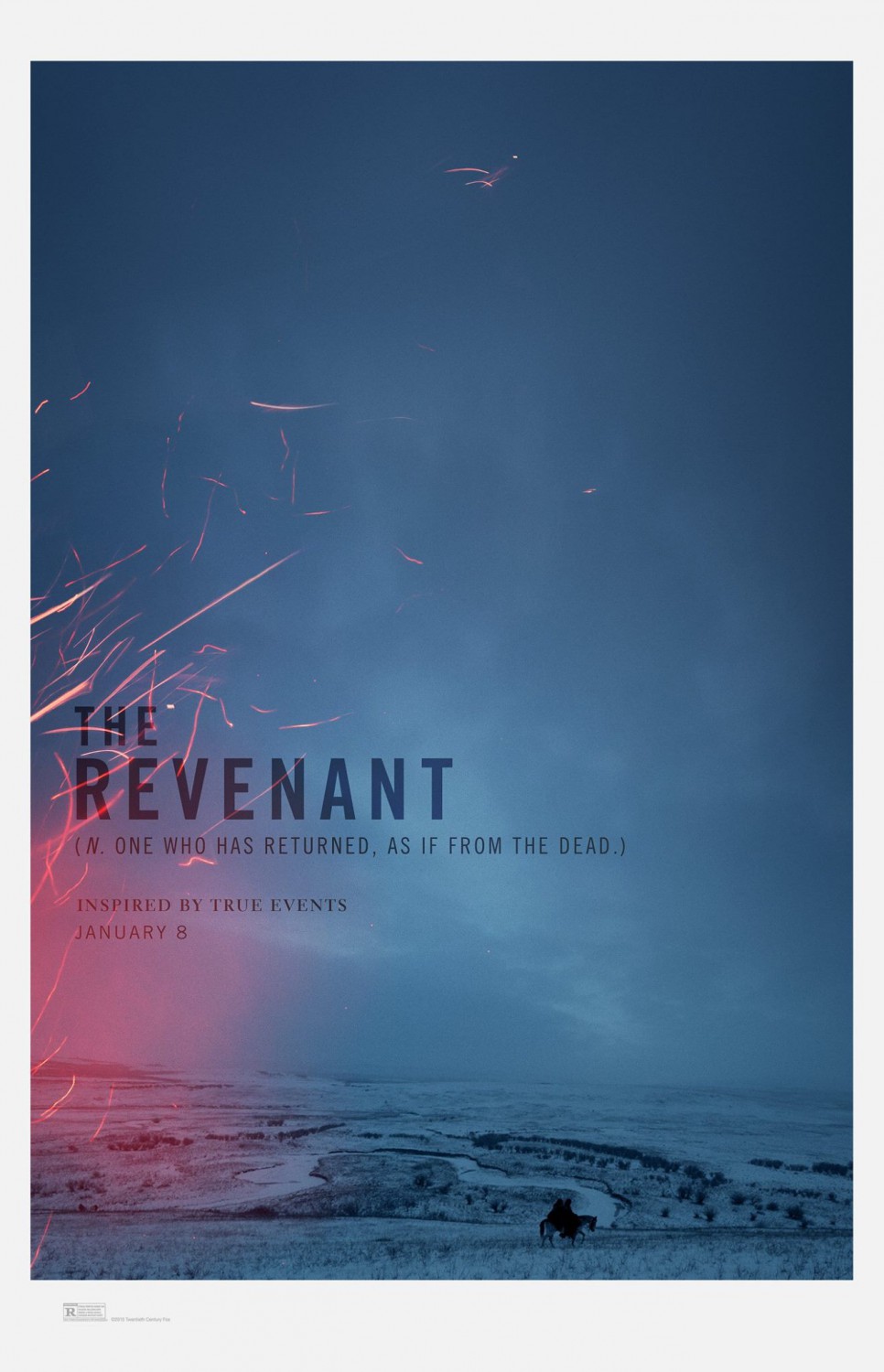
The Revenant Poster 1Director: Alejandro González Iñárritu

Release Date: January 8th, 2016 (US); January 15th, 2016 (UK)

Genre: Adventure; Drama; Thriller

Starring: Leonardo DiCaprio, Tom Hardy, Will Poulter

Before The Revenant, cinematographer extraordinaire Emmanuel Lubezki shot Birdman with such technical wizardry he garnered significant critical acclaim. The floating, stalking style he employed throughout the film manifested itself in the paranoid exterior of Birdman’s central character Riggan Thomson (Michael Keaton). Alejandro González Iñárritu’s newest epic is a visual feast that again transcends simple splendour, similarly mirroring the harrowing and heartening journey of its protagonist, Hugh Glass (Leonardo DiCaprio).

A brutal insurgence sets the unflinching tone while also highlighting the perversely wonderful landscape. Lubezki tags this opening sequence, which goes on for many minutes, with a nauseating sense of disorientation: arrows splice necks indiscriminately as bodies burn and blister. The conditions are pretty horrid and only get worse, and the audience is not let off lightly — Lubezki’s cinematography might occasionally disperse beauty but when the tough times assume focus, you’re right there with the unlucky Glass (at one point waves literally batter the camera lens).

Describing Glass as unlucky is an understatement. Having led a band of fur trappers around the northern regions of America, a bear attack renders the hunter severely incapacitated. His camp, behind on their expedition following decimation at the hands of a group of Arikara Native Americans searching for their chief’s daughter, collectively decide to leave him in the hands of his half-native son Hawk (Forrest Goodluck), the inexperienced Jim Bridger (Will Poulter), and John Fitzgerald (Tom Hardy). Fitzgerald, consumed by antipathy and greed, subsequently leaves for Glass for dead.

As such, ongoing themes of retribution (“Revenge is in the creator’s hands”) and guilt (“We all saw it,” says Fitzgerald, trying to redirect blame) loom large. The two coalesce to fund this overriding examination of karma’s role in nature — having invaded the Arikara natives’ land, western hunters find themselves either dead, nearly dead, or morally dying. Even Domhnall Gleeson’s character, the captain of the expedition and arguably one of the more righteous on-screen characters, is burdened by a sense injustice and guilt. The Arikara natives, meanwhile, represent karma in human form, defending their honour and fighting capital-driven colonialism: they are judge, jury and executioner.

The aforementioned bear assault is impressive and harrowing, so much so that Glass’ survival actually beggars belief. You really need to buy into Iñárritu’s oft-included spiritual strand at this point and accept that there is some sort of superior healing going on (spirituality later manifests as a dove emerging from the chest of Glass’ deceased wife and as a perched black crow awaiting death). Given his abject surroundings, numerous gaping wounds and eventual solitude, it is miracle that Glass pulls through — to compound the matter, he wears a bearskin coat which reminds us of his survival instinct.

DiCaprio is great, as has become the norm, but the version of Hugh Glass we meet in The Revenant isn’t all that interesting. That we feel anything more than natural sympathy for the fur trapper is a testament to the actor’s rugged portrayal and, crucially, his commitment. Not the method actory stuff like raw bison chewing or raw carcass sheltering, but the emotional commitment DiCaprio shows from start until finish, by which point he did manage to coax some eye-welling out of me. And that’s pretty good going given we only really see the broken, vengeful side of Glass: he carves Fitzgerald’s name into the landscape as a motivational tool to stay alive.

Hardy itches and grunts his way through a performance that might strike some as scenery chewing (there’s a lot of scenery ripe for chewing), but that genuinely had me gripped. He is uncomfortably magnetic playing a truly evil man who does not appear to have any primal strength, only a lawless prerogative and a heartlessness bred out of self-centred durability. Menace blazes from his eyes: “You just have to blink [to die],” he informs a hurt Glass, fully aware the latter’s eyes cannot possibly hold out. Iñárritu shot in sequence and it shows: you can see weariness increasingly impede upon the actors to the point that they mightn’t even be acting. Will Poulter is also excellent as Fitzgerald’s innocent understudy, a spark of humanity among the viciousness.

Snowy forest locales are reminiscent of Edward Zwick’s Defiance, and are just as haunting too. Skyward shots of trees are frequent, depicting a barrage of tentacles ready to strike and engulf those below. Despite the general vastness, the film has a claustrophobic feel denoting no reprieve and no escape. Lubezki shows white mountainscapes and ice-carpeted valleys akin to those in The Fellowship of the Ring, though the visuals extend beyond scope, incorporating harshness and wince-inducing iconography to great effect. The score, a joint effort from Ryuichi Sakamoto and Alva Noto, is invasive and chilling — this time it is The Return of the King that springs to mind (see Sméagol’s transformation into Gollum) as eerie whistles build disconcerting tension.

In essence, what we’ve got is Max Mad: Fury Road without the exhilarating zing and character depth. The Revenant is a challenging watch, but not necessarily challenging to process. The themes are broad and like Alfonso Cuarón’s Gravity, there is an anomalous quality at play in that the film feels both narratively weightless and technically marvellous. You might consider this Iñárritu’s version of 21st century silent cinema; often suffocated by a lack of engaging verbiage, the movie’s main protagonist never feels fully formed. But for what The Revenant is and for what it is trying to do, this Wild Wild North tale has a tendency to stun.

The Revenant - Leo DiCaprio

Image credit: IMP Awards, Collider

Images copyright (©): 20th Century Fox
The Big Short (2016)

★★★★

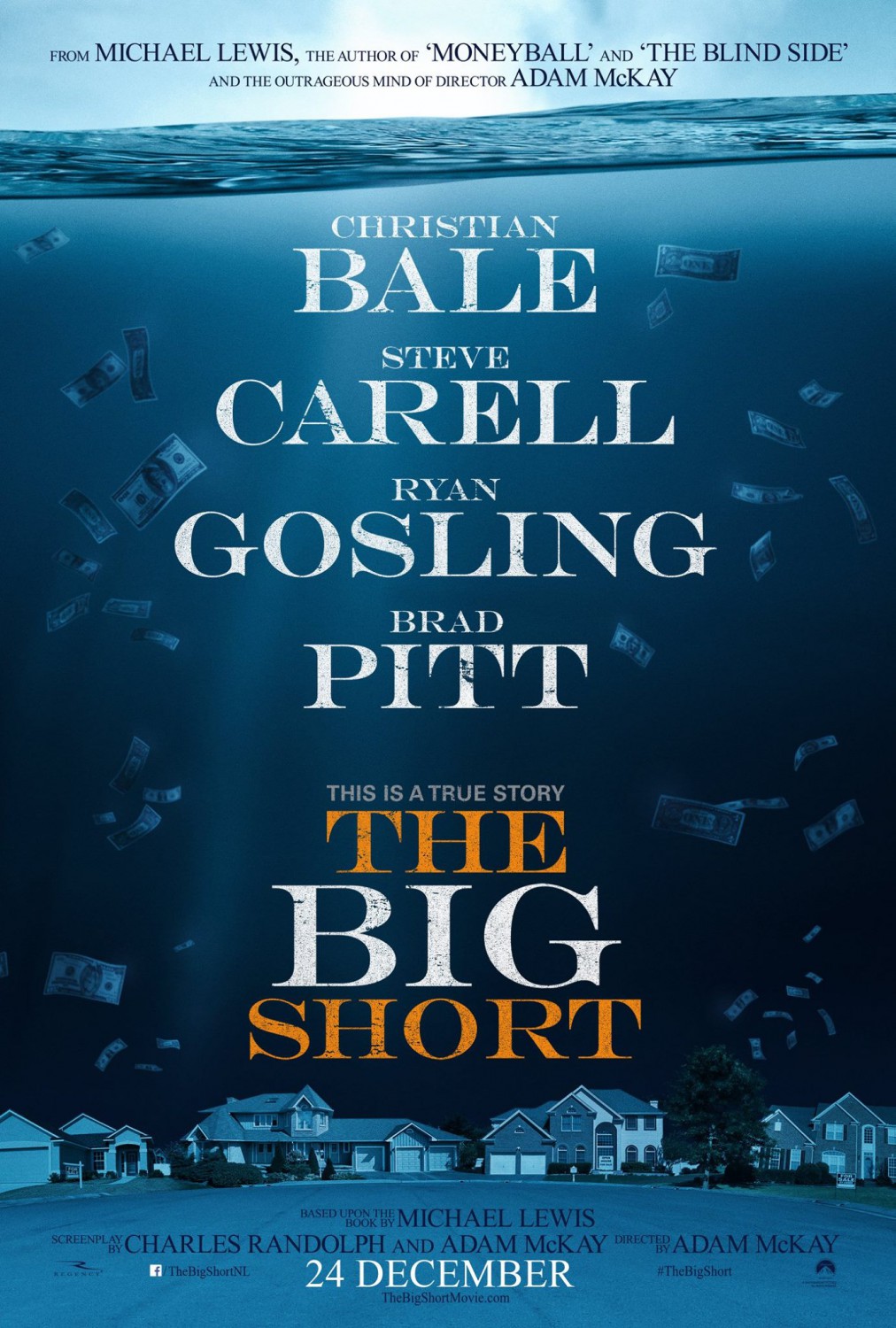
The Big Short PosterDirector: Adam McKay

Release Date: December 23rd, 2015 (US); January 22nd, 2016 (UK)

Genre: Biography; Drama

Starring: Steve Carell, Christian Bale, Ryan Gosling, Brad Pitt

The Big Short recalls the audacious actions of “a few outsiders and weirdos”, a group of like-minded money men who managed to accurately predict the 2008 global financial crash years in advance. Sure, it may not sound like the most enthralling venture, but it is. Adam McKay’s outing finds its footing somewhere between the maniacal antics of The Wolf of Wall Street and J.C. Chandor’s sobering Margin Call, lined with humour and born out of blood-boiling truth. Warning: it is a piece wholeheartedly set in its ways — if you are on the side of the bankers, this ain’t for you (nor, frankly, is decency).

Christian Bale plays Michael Burry, real life hedge fund supremo and heavy metal lover. Eccentric, his brain scorched by numbers and spreadsheets (the film is based on a book by Moneyball author Michael Lewis and it shows), Burry spots a flaw in the structure of the American housing market and, since nobody will take his findings seriously, he opts to invest in said market’s eventual collapse. “This is Wall Street Dr. Burry. If you offer us free money, we’re going to take it,” says one Goldman Sachs representative with glee in her heart and cash in her eyes.

Following an industry-driven family tragedy, Mark Baum has more emotional investment that anyone in Burry’s prediction. Coaxed on by a prowling vendetta against the world, Steve Carell is terrific in the role (there’s not a bum note generally, but Carell is the stand out). You really get the sense this is a guy who wholly detests the fraudulent system, and you feel a shared sense of injustice. However, Baum’s attempt to profit from the system’s downfall — and by proxy the plight of millions of innocent livelihoods — eats away at him, this internal struggle projected with weariness by Carell’s bruised eyes.

Ryan Gosling offers his two (million) cents as the sort of guy who practices catchy lines under his breath in preparation for important meetings — this sets up a hilarious money smelling quip. Gosling is financial trader Jared Vennett, a dick, but a dick with a point. Another Burry believer, he often breaks the fourth wall to explain what’s going on, funding his smarmy exterior in the process. The straight-to-camera dialogue works because the film is relentlessly preaching to us anyway. He and Baum work together but are opposing forces in personality terms: Baum amusingly no-sells Vennett’s macho demeanour while Vennett takes no notice, only interested in his rising bank balance.

Of the four headline names, Brad Pitt has the quietest role: Ben Rickert, having been chewed up and spat out by the banking industry, now abides by a pseudo-apocalyptic philosophy (“Seeds are gonna be the new currency”). Rickert is cajoled by understudies Charlie (John Magaro) and Jamie (Finn Whittrock) and subsequently returns to the field as their unshowy mentor, won over by Burry’s cataclysmic pattern. The presence of Pitt affords some weight to an arc that might have otherwise felt inconsequential given its unoriginal through line — it gets caught in the shadow of the other two, more prominent narrative strands.

McKay and co-writer Charles Randolph’s screenplay admirably juggles all of these hefty personalities, men collectively singing from the same ledger, without homogenising them. Nor does the script hold its protagonists to some sort of impenetrable moral standard — after all, irrespective of their true target, these guys are actively seeking to profit from the misfortune of both rich bankers and struggling Americans. McKay and Randolph frequently add layers to the plot, though when the film threatens to go beyond our intellectual comprehension it is saved by offbeat explanatory segments (chartered by the likes of Margot Robbie and Selena Gomez playing themselves).

It is abundantly clear who the villains are and the film knows that. But The Big Short also recognised the need to remind us of the primary culprits and does so by throwing around masses of Wall Street jargon, creating a divide between the folk who speak said language on a daily basis and everybody else. These are people who deviously undercut their customers and then guffaw about doing so in the safety of luxury afterwards — Max Greenfield and Billy Magnussen play the worst on-screen offenders, two mortgage brokers painted with broad strokes by necessity. They believe the joke is on everyone else when it’s obviously on them.

There are plenty of other jokes too, gags inspired by wit and executed with piercing zest (McKay and Randolph even manage to take a jab at artistic licence by openly owning up to small bouts of fabrication). This overarching smartness does alienate one small story section, namely the jarring appearance of a soon-to-be ailing homeowner. The film is too clever for something so blunt, especially given its tendency to avoid emotional manipulation elsewhere. You might argue the scene puts a face on the economic turmoil, but having lived through the crisis the audience will already be thoroughly aware of the consequences. It does at least serve up an eerie visual of a housing wasteland that evokes Chernobyl connotations.

Hank Corwin’s editing encourages a rampant effervescence that is more or less employed throughout; from an opening montage that outlines the inception of the disaster, to various images of music videos, celebrities, models, and cash spliced together — all symbols of corporate America, of the new American Dream sold by capitalism, a false dream. The choppiness can be a bit disorienting but it does induce urgency and even a degree of mess, fitting since it reflects the impending financial calamity.

As characters debate the legitimacy of Burry’s predictions the camera wanders freely between their faces, upholding both the kinetic energy of the fast-moving industry and said industry’s unpredictable nature. When all the desks have been cleared and all the cheques resentfully written, The Big Short unveils its prognosis: that those involved, the guilty bankers eventually given legal clearance, were either blindly stupid or corrupted by immorality. It is a sombre conclusion but one we always knew was coming. Having laughed a lot, you’ll leave angry — and you’re supposed to.

The Big Short - Steve Carell & Ryan Gosling

Images credit: IMP Awards, Collider

Images copyright (©): Paramount Pictures

The Hateful Eight (2016)

★★★★

The Hateful Eight PosterDirector: Quentin Tarantino

Release Date: December 25th, 2015 (US); January 8th, 2016 (UK)

Genre: Comedy; Crime; Drama

Starring: Samuel L. Jackson, Kurt Russell, Jennifer Jason Leigh

Quentin Tarantino’s The Hateful Eight almost feels like a career denouement. Fittingly, its structure loosely resembles that of the director’s inaugural feature, Reservoir Dogs, though experience has clearly softened his haste. One can imagine a young Tarantino, exuberance overriding patience, penning a screenplay too snappy to tempt overstaying its welcome (at less than 100 minutes, it is his shortest film). With over 20 successful years to his name and having perfected his incomparable style — arthouse blockbusters — snappy screenplays no longer have a place in the auteur’s workshop. The Hateful Eight reflects just that, seemingly to the point of no return.

Post-Civil-War tensions are rife in what is essentially a courtroom western. In non-revelatory terms, let’s run through some of the prosecutors (after all, Tarantino’s screenplay does the best descriptive job). John Ruth (Kurt Russell) is pure Americana, the type who gets glossy-eyed reading a letter written by President Abraham Lincoln. He is transporting criminal Daisy Domergue to Red Rock where she will be hanged — Jennifer Jason Leigh, oddly enough, increasingly channels The Breakfast Club’s Allison with each disconcerting grin and her general weirdness. Along the way they meet Major Marquis Warren, practical and thoughtful, played by Samuel L. Jackson.

He hitches a ride after some toing and froing, as does Chris Mannix who the trio find flailing around frantically in the brewing blizzard. Mannix, the prospective Sheriff of Red Rock, is weaselly and the most out-there of the entire bunch. He is played by Walton Goggins, the film’s MVP on the humour front. Tim Roth (Oswaldo Mobray), Michael Madsen (Joe Gage), Bruce Dern (General Sanford Smithers), and Demián Bichir (Bob) are already huddled up in Minnie’s Haberdashery when the travelling troupe arrive seeking shelter from the storm. Turns out the snow would have been a safer bet.

This rabble, though most engaging, are a noxious bunch. They use “during wartime” as a reductive excuse for past misdemeanours when really those misdemeanours were, and are, a way of life. “Justice delivered without dispassion is always in danger of not being justice,” muses Roth’s Mobray with ominous foreboding. Much has been made about the treatment of Domergue, and it’s plain to see why: she gets throttled often and without much in the way of retaliatory action. The characters are almost universally vile, Domergue included; the abuse is not funny nor, crucially, do I think it is meant to be. It didn’t offend me (the N word is again invoked with consistency) but others mightn’t be so kind.

For around an hour and a half, you get the feeling Tarantino and co. are taking the material seriously, so much so that those doing the striking gain a nasty reputation. But when the spaghetti violence takes form later on, that conscientious veneer ceases to exist and gory absurdity reigns supreme. Perhaps justifiably, given the caricature-esque group involved. At this point the violence is played, at least to an extent, for laughs and shock value — although it is worth noting most of the amusing moments arrive via verbiage. Ruth, for instance, intentionally has the worst comeback patter: “My pistol plays a tune… Domergue’s Death March.”

Jackson gets the best of the dialogue and subsequently repays Tarantino’s faith. He delivers a whodunit monologue with such devious joy; you can just about see the actor licking his lips as he succumbs to the satisfying taste of the words rumbling around his mouth. On the topic of audio, Ennio Morricone delivers another resplendent score, thoroughly grandiose and absolutely worthy of the occasion: his return to the genre for the first time since Buddy Goes West (1981). Galloping horses carry a distinctly cinematic sound and Tarantino, a movie lover, knows it. He also knows and cherishes the woody authenticity of film as a shooting medium, making Robert Richardson’s immaculate visual serving a welcome non-surprise.

There are times, and this is true of all Tarantino outings apart from the aforementioned Reservoir Dogs, when you find yourself actively egging conversations towards their conclusion. This is especially applicable in “Chapter One” of The Hateful Eight, when Warren is attempting to nab a seat in Ruth’s convoy. It might be a genuine attempt to flesh out key characters or simply a matter of self-indulgence, or possibly a bit of both. Tarantino writes and writes, and then writes some more, and when you see one of his films you just have to accept that. Because when he gets it right — and let’s face it, he does get it right quite a lot — even Aaron Sorkin must look on with a hint of jealousy.

Having said that, there isn’t much depth beyond the obvious cultural and political divisions (which are so plainly invoked they barely register as thoughtful). The certainty of death manifests via blood-trails in the snow — these rose markings could also represent the importance of evidence on the path to justice, though I might be clutching at straws with that one. Tarantino makes it work, however, by subbing in rich characters and the unrepentant screenplay I have already alluded to. The film exists in an era that demands people declare their backstory upon meeting a stranger and those variably truthful backstories are thoroughly enticing to hear.

A chapter in the film’s second act expertly refreshes proceedings just when you think the film might be turning stagnant and a tad repetitive. “The name of the game is patience.” It is true; patience welcomes more positives than negatives in The Hateful Eight. Quentin Tarantino is the sort of director who would rather swim across an ocean than take a speedboat in order to prove his point. You’ll know by now whether or not you enjoy that sort of storytelling. Regardless, there is something charming about a film that keeps you in the cinema a little longer than necessary — especially if said film has a lot going for it.

The Hateful Eight - Kurt Russell, Jennifer Jason Leigh & Bruce Dern

Images credit: IMP Awards, Collider

Images copyright (©): The Weinstein Company

Creed (2016)

★★★★

Creed PosterDirector: Ryan Coogler

Release Date: November 25th, 2015 (US); January 15th, 2016 (UK)

Genre: Drama; Sport

Starring: Michael B. Jordan, Sylvester Stallone, Tessa Thompson

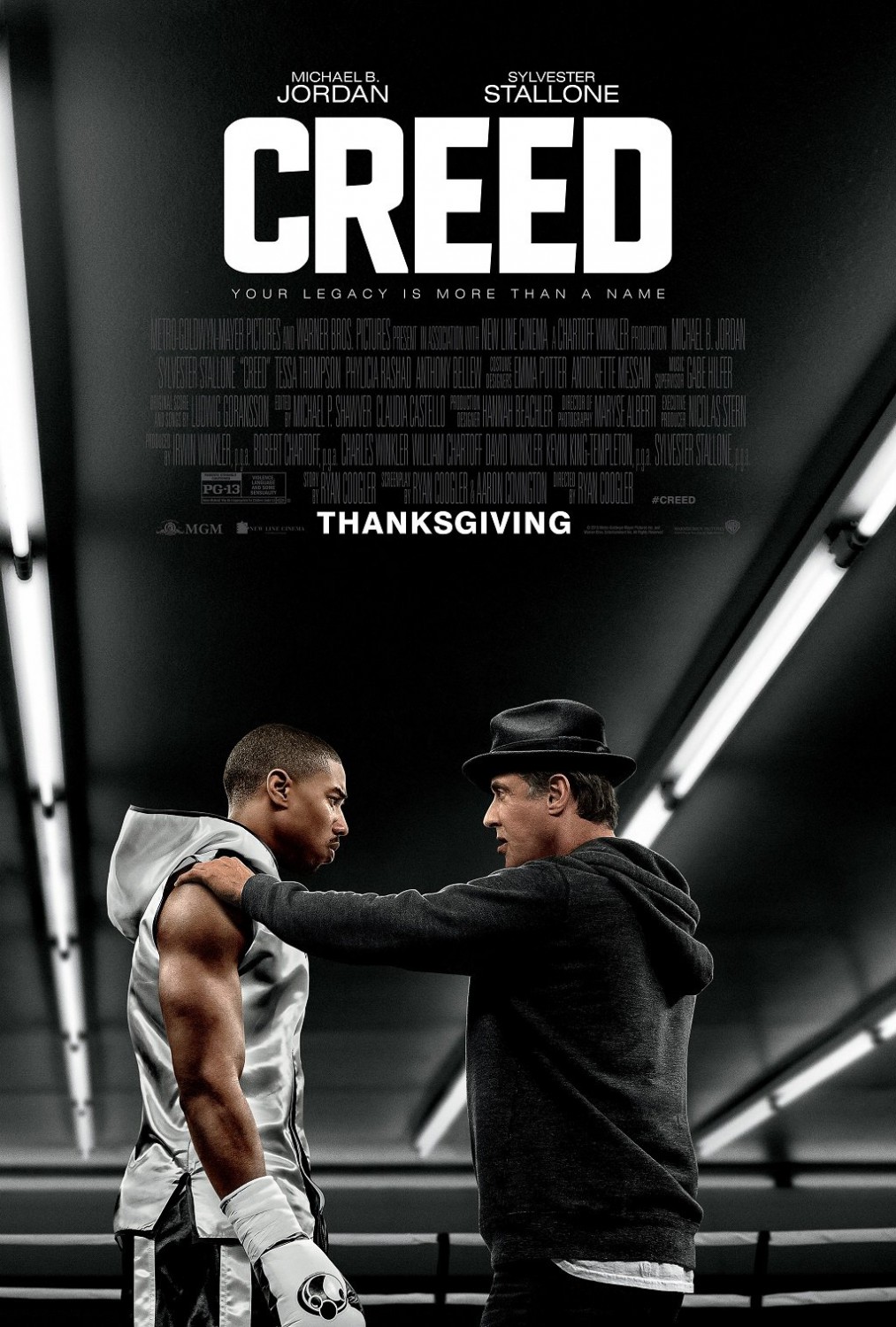
“Adonis got into a fight today” are some of the first words we hear in Creed, Ryan Coogler’s Rocky revitaliser, and you expect them to be words the film will live by. After all, when we first meet Adonis “Donnie” Johnson, son of heavyweight boxing legend Apollo Creed, he is in a young offender’s institution and suffering from some serious anger issues. Plus it’s a boxing movie, right? Boxers are big brutes, right? Well, wrong on both counts. Creed isn’t a boxing movie, it is a movie about companionship and love and legacy, and Donnie certainly ain’t a big brute, but rather a fairly normal guy whose lineage and hard-working attitude have afforded him abnormal talent.

The next time we see him fighting is 17 years later in a seedy, smoky Mexican club and he wins, though a terrific edit cuts the celebrations short by sending us back over to the US and into a corporate meeting. Unlike Rocky, this is not a rags to riches story (eventual opponent “Pretty” Ricky Conlan (Tony Bellew) makes that clear at a press conference later on). Donnie is intellectually sound and he lives in a plush home having been adopted by his father’s widow, Mary Anne Creed (Phylicia Rashad). There is a non-boxing path paved out for him should he want to take it.

But Donnie has a problem coming to terms with Apollo’s legacy. He doesn’t want the plush house paid for — at least in part — by the father who he feels abandoned him, yet Donnie admires Apollo’s talent and he absolutely wants a shot at the sport that conquered his father. Unfortunately, nobody in Los Angeles will train him; Donnie won’t use his dad’s name therefore trainers simply see him as an erratic wannabe. So the bum does what any boxer worth their gloves would do: shut up shop, move to Philadelphia, and seek out the man who went 15 official rounds with Apollo Creed (twice) and won (twice, really).

“You are your father’s son,” says a defeated Mary Anne. And he is as far as determination goes. But Donnie doesn’t want to be; he is haunted by Apollo’s lingering shadow — quite literally too, as posters paint the walls of just about every gym he visits. There is an odd attempt to challenge the media’s obsession with legacy-tarnishing celebrities that feels too abrupt to have any impact, but otherwise Coogler and Aaron Covington’s screenplay is excellent, only briefly tapping into nostalgia when it is unavoidable.

This gives the cast a clear platform to carve their own creations, especially Michael B. Jordan who might as well work with Coogler for the rest of time if the duo are always going to be this good together. He has a ton of charisma, not the loud or arrogant type, but the natural sort that convinces audiences to invest their emotion. The relationship between Donnie and Rocky is central to the film’s triumph and it beats with such a genuine heart — a handful of their interactions bear so much nuance and truth that your lip might threaten to quiver.

Rocky thinks his understudy is a “better” man than he because the well-educated Donnie knows a bit about stuff, but the Italian Stallion knows a bit more about trouncing the odds. At one point the pair are offered a potentially tricky fight and Donnie instantly approves, his mind already focused on weight loss. But Rocky knows the offer might have come too soon for an inexperienced Donnie and, more importantly, he knows it isn’t about cutting weight. It is about the fight game and playing said game with a healthy balance of honour and smarts.

Stallone is Rocky, but Rocky is older. His irrepressible yammering has quietened in light of Adrian’s passing and his retirement, yet you get the sense there is a part of him still stuck in the 70s (an iCloud gag just about authenticates that). Likewise, Maryse Alberti captures Philly essentially as it was in the original Rocky. Wearing its best wintry coat, Eagles-town revs up for another bout of fight preparation: icy breath; long-distance jogging; chicken chases; grey tracksuits and woolly hats. It’s all there. Meanwhile Rocky, eyes still pointing out mistakes and mind still working out tactics, is a tired sight physically.

Another integral relationship is the romantic one between Donnie and fellow apartment dweller Bianca (Tessa Thompson). The nature of the franchise beast suggests comparison is an inevitability and while Donnie and Bianca’s companionship is not as charmingly spontaneous as Rocky and Adrian’s, it really is quite lovely. This time she is the outgoing one and he is more reserved, traits reflected in conversations between the two: whereas Donnie’s trepidation is based on a self-created manifestation of doubt, Bianca, living with progressive hearing loss, has something concrete to fear. So she sings for a living, and he should box without inhibition.

Southpaw, despite its creaky storytelling, got the in-ring sequences spot on and Creed is similarly successful. The casting of actual heavyweight fighters — Tony Bellew is a world title challenger and Andre Ward, playing another knockout artist, is a world champion — affords the fight scenes proper pedigree, especially when someone like Bellew is placed in a familiar HBO environment. The actual boxing isn’t gung ho which also funds the realistic aesthetic and the training montages are as good as any in recent memory; buoyed on by another exhilarating score, they have oomph and momentum.

You can practically see the weight on Stallone’s ageing shoulders as he juggles Rocky’s search for another shot at glory and his uncertainty over how to handle Donnie. It is an uncertainty born out of caring too much. And we buy it, unconditionally. Donnie is the boxing son Rocky never had, the son of his fiercest foe and fondest friend, the son who has re-awoken the fight in cinema’s greatest ever fighter.

Creed - Sylvester Stallone & Michael B. Jordan

Images credit: IMP Awards, Collider

Images copyright (©): Metro-Goldwyn-Mayer, Warner Bros. Pictures

The Danish Girl (2016)

★★★

The Danish Girl PosterDirector: Tom Hooper

Release Date: December 25th, 2015 (US); January 1st, 2016 (UK)

Genre: Biography; Drama; Romance

Starring: Eddie Redmayne, Alicia Vikander

Just like last year, Eddie Redmayne is spending his January up on cinema screens across the UK in a film about strong relationships and physical change. The Theory of Everything thrived upon its stars’ chemistry — Redmayne and Felicity Jones perfectly complemented each other as Mr. and Mrs. Hawking — and it is true that much of what is great about The Danish Girl revolves around its central pairing. Unfortunately, the film undercuts the dramatic potential of its subject matter (reality-based pioneering gender reassignment surgery). It shouldn’t be standard fare, but it is.

Redmayne plays Einar Wegener, an artist who dresses up as a woman at the behest of his wife, Gerda (Alicia Vikander), and feels whole upon doing so. Einar evolves into Lili, first mentally and then physically, though Redmayne’s vulnerability remains steadily palpable throughout. The problem isn’t the actor; it won’t come as a surprise for you to learn he is good. Rather, it is the syrupy circus that surrounds him — those feather-light piano melodies that are enforced without any sort of careful restraint, and a screenplay absolutely swamped in fluffy dialogue (“My life, my wife”).

There is heartfelt delicacy, which is clearly what screenwriter Lucinda Coxon is going for, and then there is off-putting sentimentality, which is what she ends up with. Despite this, the film manages to celebrate two different kinds of femininity. Redmayne plays Lili with a soft evasiveness undoubtedly born out of her repressed identity. Gerda, on the other hand, appears battle-hardened, initially parading a boldness and then later genuine strength in the face of life-changing revelations. You have to believe in their relationship and its robustness in order to believe in the film on a very basic level, and you do because Redmayne and particularly Vikander sell their characters’ love authentically.

As Lili’s desire for personal correction ripens, the nuances of the two central roles are reversed and the narrative focus flips (at least it did for me). The Danish Girl starts to explore those hardships encountered by its other Danish girl, Gerda. Lili’s physical and mental anguish is plain to see and at times tough to consume, but we also must remember the major impact her situation is having on Gerda’s life too. Vikander takes us on an emotional roller coaster: pained, confused, sorrowful, empathetic. We watch just as she does, and we feel because she feels.

Like in Mr. Turner, art is used as a mode for exploration. That is until the film forgets about the art, which in and of itself isn’t a bad thing. Securing one’s true lifestyle is far more important after all, but we do spend a fair chunk of time in plush museums and at fancy gatherings and around interesting paintings for the piece to avoid that stuff thereafter (the movie’s funniest moment transpires from Gerda painting a particularly uptight gentleman). To be fair, this move away from art is consistent with Lili’s mindset — she decides not continue her career upon finding her real self — though a visit to the easel every now and again would have been welcome for story continuity: how are the duo making enough money for travel and healthcare if only one of them is working?

Tom Hooper and cinematographer Danny Cohen borrow from, of all people, Wes Anderson’s portfolio, at one point whimsically depicting a street of yellow bungalows side-on. It is a great shot, a single quirky page out of an otherwise standard picture book. Lili and Gerda’s house looks a bit like a charcoal painting, with shades of blue and grey adding little colour to the wooden floorboards and cracked walls — like the opening hour of The Hobbit: An Unexpected Journey, of all films, it feels as though we are watching people interact on a carefully constructed set.

Todd Haynes’ Carol took on the social imbalance of 1950s New York and The Danish Girl similarly reflects a time when ‘to be different’ meant ‘to be insane’. We never really get into the nitty gritty of that though; the piece does seem to want to delve further into how Lili is affected by society’s petulance, opting to show an unprovoked attack and a couple of doctors’ misinformed diagnoses, though that is as far as it goes. Upon learning about a surgeon who might be willing to help Lili from one of Gerda’s clients (Amber Heard), any lingering backlash becomes non-existent.

Vikander aside, subtlety rarely features. Perhaps the subject matter requires as much, but an overly mushy screenplay lands the outing in cold water. The script also fails to carry the level of propulsion necessary to maintain two genuinely compelling hours. We enter more interesting territory when the spotlight is shone on Gerda and her struggles — a point at which Lili’s post-breakthrough self-obsession is admirably acknowledged (“Not everything is about you”) — but it isn’t really enough. Matthias Schoenaerts and Ben Wishaw freshen things up occasionally, though their roles do not carry any weight in the grand scheme of things.

I referred to a particularly amusing portrait painting scene earlier as a lone funny moment, but there is another unintentionally humorous façade: Lili (at this point still Einar) dresses up as a woman and attends an artist’s ball with Gerda. It’s like something out of a Superman comic: apart from a few close friends, nobody recognises the apparently popular landscape artist despite the astounding resemblance. Perhaps that is The Danish Girl in a nutshell: all too obvious and oddly difficult to comprehend.

The Danish Girl - Eddie Redmayne & Alicia Vikander

Images credit: IMP Awards, Collider

Images copyright (©): Focus Features, Universal Pictures

Joy (2016)

★★★★

Joy PosterDirector: David O. Russell

Release Date: December 25th, 2015 (US); January 1st, 2016 (UK)

Genre: Comedy; Drama

Starring: Jennifer Lawrence, Bradley Cooper, Robert De Niro, Édgar Ramírez

Hey, look. Another film starring Jennifer Lawrence and another star turn from Jennifer Lawrence. The can-do-no-wrong actor is back alongside Bradley Cooper and Robert De Niro in Joy, all three under the familiar guidance of director David O. Russell. This is better than their last collaboration, American Hustle, solely because it pits Lawrence in the driver’s seat. It’s not better written, nor better shot. It is simply better shepherded by its central player, whose is clearly one of the best performers cinema currently has to offer.

She plays Joy Mangano, a multifaceted individual struggling to keep her domestic life on the straight and narrow. Her grandmother Mimi (Diane Lane) narrates in parts, telling us about Joy’s childhood and what the youngster had before divorce sent things by the wayside: family, pets, love, a non-idealistic attitude (“I don’t need a prince”). Now a grown women, Joy still doesn’t need a prince nor is she an idealist, but the inventor could do with a degree of leeway in terms of luck.

Mum Terri (Virginia Madsen) is obsessed with television, unwilling to interrupt her bed-based viewing for anything apart from the bare essentials. Like the lone passive smoker living in a cigarette guzzling household, you can see the obsession rubbing off on Joy. In Terri, O. Russell seems to be highlighting our inherent desire to live vicariously through others, and why this can be both good and bad (which is rich coming from a movie). We learn early on that Terri’s TV-induced laziness -cum-ineptitude meant she failed to get her daughter a patent for a potentially profit spinning invention years back.

See, Joy is an inventor. At least she should be. Unfortunately, her house has taken the form of a hotel for relatives. Whenever she visits her father’s (Robert De Niro) vehicle repair shop, the ideas woman walks past men taking aim at empty glass bottles. It’s as if her dreams and aspirations are shot to pieces every time she spends time with her family: Joy does the washing; Joy does the plumbing; Joy does the bedtime reading; Joy does the cooking. Joy even has to mediate verbal jousts between dad and ex-husband, Tony (Édgar Ramírez). Home life is a mess.

And yet there isn’t that same underlying darkness present in O. Russell’s latest offering that was there in, say, The Fighter. This threatens to leave the story hanging, particularly during the opening hour when the family shenanigans bear a fun streak despite boasting life-halting ramifications — heck, Joy and Tony are “the best divorced couple in America”. Lawrence does wear exhaustion well though, allowing only brief bursts of spark to shine through. It is obvious that Joy is the level-headed one, admirably unshowy despite having the intuitive capacity to back up any arrogance. The rest of them are oddballs.

De Niro’s recent filmography doesn’t exactly reflect his irresistible earlier stuff, but he does work well alongside present company. The veteran is as good here as he has been in a while, snarky and showing pinpoint comedic timing. Tony grates a little, especially when we see him in his basement setting without any character depth towards the start, but he fares better as the film advances. He is a singer and, like Joy, the screenplay wants to protect him — O. Russell has penned a celebration of creativity after all.

The film trundles along appealingly, though without too much in the way of bite or real depth. That changes in the second act, when the Miracle Mop takes shape and sales pitches are invoked. Cooper turns up as a distanced TV exec with more business acumen than generosity. Energy levels heighten as he shows Joy around the QVC studio. The piece comes to life and starts to really feel like a David O. Russell production: Melissa Rivers barters before our eyes as her late mother (uncannily by the way); words suddenly have urgency; a western twang sounds out; the camera swoops left and right as ringing telephones carry the frantic calls of seduced customers.

Real life Mangano has the spotlight but the film is really an amalgamation of many exceptional tales (“Inspired by true stories of daring women” are the first worlds we see on-screen), and as such you sometimes get the sense our central character is too good to be true — when she needs Miracle Mop personnel, Joy hires a bunch of female immigrants and turns her father’s male workplace into a sort of gender-balanced haven. Lawrence absolutely makes it work though: like her character’s family, the camera relentlessly pesters the actor, worried it might miss a moment of her brilliance.

Linus Sandgren’s cinematography is crisp but the film does parade an idiosyncrasy in the way it is structured. We get flashbacks that serve to fill some life gaps, but then there are these silly dream sequences dressed up as episodes of a melodramatic soap opera. They feel more suited to American Hustle than Silver Linings Playbook, and given Joy falls tonally on the side of the latter, the sequences don’t really mesh well with the surrounding drama and are ultimately superfluous.

Like American Hustle, it is a film that ages well; certainly, there were moments that had me feeling a bit blasé about the whole thing, but then it won me over and continued to do so even hours after the credits had rolled. Sure you can telegraph certain plot points, but you aren’t really paying for plot: you’re paying for Joy and Jen. The movie is about a functional mop. Isabella Rossellini appears as a bonkers love interest. There is a hotel room standoff involving a guy wearing a cowboy hat for goodness’ sake. What’s not to like?

Joy - Jennifer Lawrence

Images credit: IMP Awards, Collider

Images copyright: 20th Century Fox

Southpaw (2015)

★★★

Southpaw PosterDirector: Antoine Fuqua

Release Date: July 24th, 2015 (UK & US)

Genre: Action; Drama; Sport

Starring: Jake Gyllenhaal, Rachel McAdams, Forest Whitaker

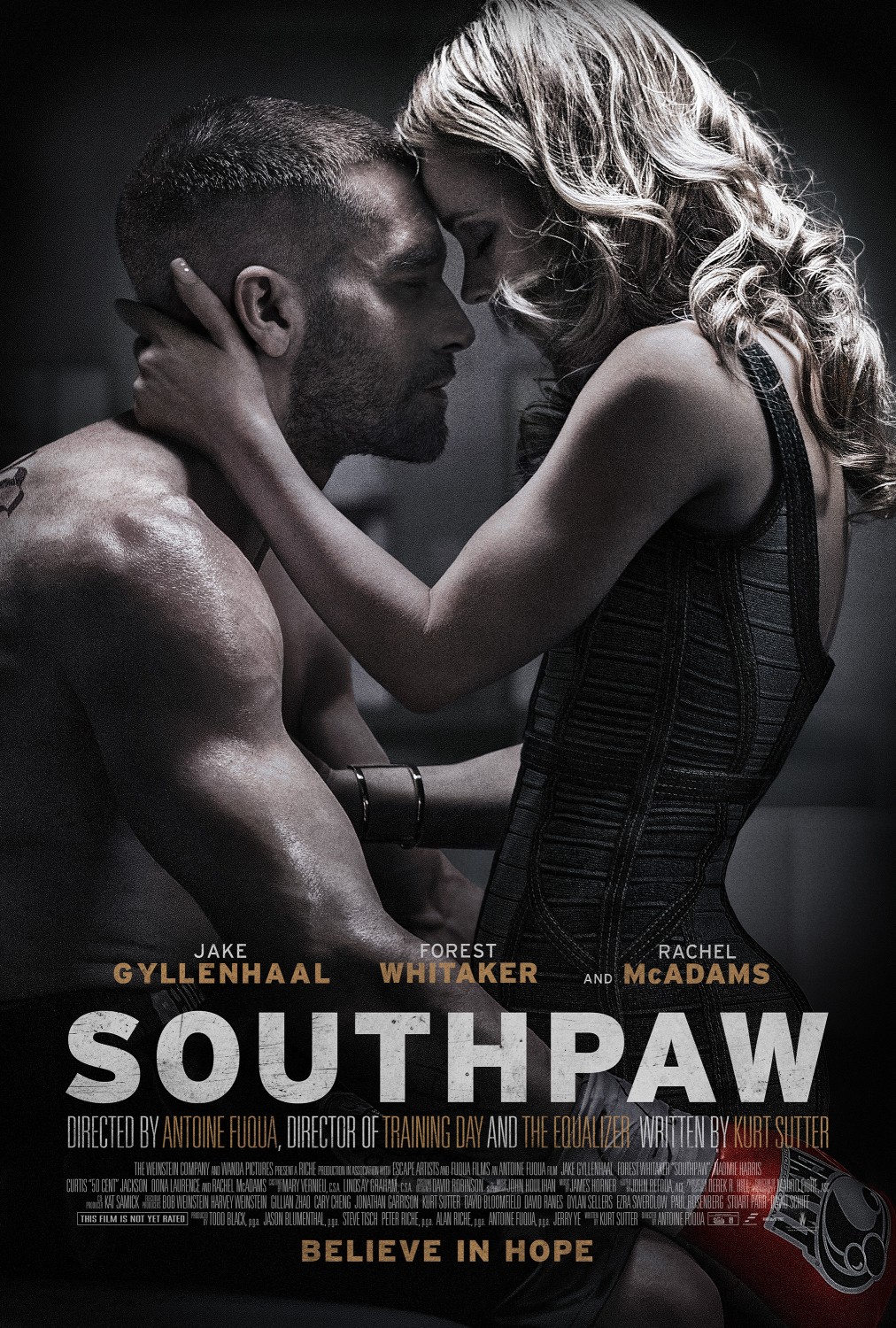
The fact that Southpaw struggles to hurdle the proverbial style over substance dilemma is perhaps not particularly surprising given its director Antoine Fuqua recently doused the silver screen with The Equalizer and Olympus Has Fallen. Having said that, Fuqua was also the man behind Training Day back in 2001, and had he borrowed more of that movie’s mettle, the filmmaker might have been onto a winner with this otherwise fairly conventional sports drama.

“Billy Hope” is a classic boxing name, the sort given to someone destined to surmount typical obstacles. True to form, Billy Hope (Jake Gyllenhaal) is an underdog: orphaned at a young age, odds stacked against him from the get-go, we meet Hope right before he is about to box for the World Light Heavyweight Title in Madison Square Garden. He wins. And that’s fine; boxing movies tend to be underdog movies for a reason — in real life, the sport is all about rising above adversity and showing heart, so it is right cinema should reflect that.

But when dazzling shots of New York City find significant screen time, something feels off. Commercialism is in the air and it rears its rich head more often than it ought to. Sure, this idealist aura fits when Hope is champion and resultantly wrapped up in his material world — he and his wife Maureen (Rachel McAdams), a fellow orphan, live in a plush home with their adolescent daughter — but as soon as the fighter loses everything, materiality should no longer be his goal. For a while, it isn’t.

After Hope’s victory, the film is dead-set on convincing us that boxers never truly win. From subtle hints at memory loss, to his wife’s misgivings about him competing again, to the actions of another title contender, the darker side of boxing is emphasised. Of course, tragedy is bound to strike and when it does it’s really quite heartbreakingly played by the people involved. Those who have seen the trailer will know what happens — I’ll avoid the particulars, though it is easy to work out. The abrupt nature of the tragedy suggests it is merely a narrative device designed to propel Hope’s story forward, and although there is truth to that line of thought, it does also introduce compelling themes such as fatherhood with greater heft.

The legal resolution to the tragedy is poorly realised; the consequences seem lazily construed (harsh punishments are dealt to innocent parties, whereas the guilty gang appear to get away scot-free). Left wallowing in despair, Hope turns again to boxing rather than his equally distraught daughter, and then to drink and violence when the fighting does not pan out. His once loyal promoter (50 Cent) drops him without any incline of regret because, after all, “it’s just business”. Here, Sons of Anarchy creator Kurt Sutter’s screenplay highlights the ruthless side of the sport, the corporate face that wholly goes against boxing’s brotherly backbone.

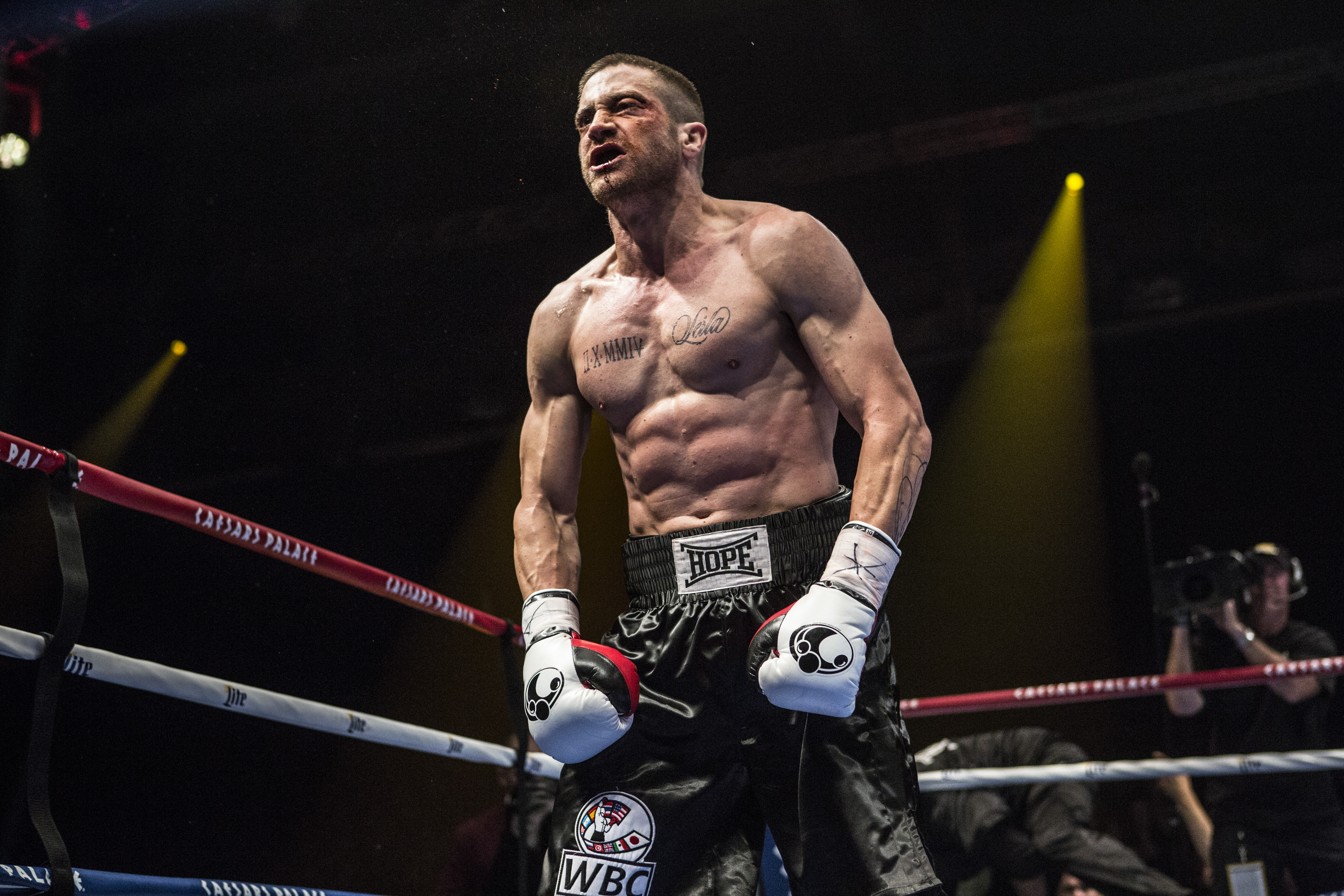
Gyllenhaal channels Anthony Quinn in Requiem for a Heavyweight, muttering and growling through helpings of dialogue. We watch him navigate home life with busted ribs and a busted face, and the actor sells the agony with so much realism you wonder whether he literally took a beating for his craft. The typical boxer stereotypes are enforced: Hope can’t really spell, nor is he a great public speaker outside the world of boxing, but at least we get a chance to see these anxieties play out. In truth he isn’t an especially well written character, erratic, for example, in moments of should-be clarity — an introductory conversation between he and maturing gym owner Tick Willis (Forest Whitaker) combusts out of nowhere.

I’m not entirely sure how Whitaker meant to portray Tick; he flirts between calm and crazed a little too enthusiastically. Oona Laurence ably pulls off Hope’s book smart daughter. She has lovely poise and avoids the potentially suffocating Grating Child Actor trap. This is the Gyllenhaal show though. He manages to terrify and reflect instability, yet still garner our complete sympathy. Indeed it is a transformative performance, but the muscular physicality is almost irrelevant. His heavy face, his anguished voice, his bowed eyes — these are the traits that actually engage us.

But as unoriginal training montages begin to arrive, coaxed on by Eminem, the overly produced aura makes a comeback. I think the film gets too caught up in reaching an idealistic end point: it needs to better separate the grit and the glam (it does for a while and works as a result), because the glam is poison and we do not want our reformed anti-hero seeking out poison. Million Dollar Baby is an example of a film that brilliantly subverts the recognisable model. Fuqua, it seems, can’t quite help chasing another false dream.

We do see an apt balance of grit and glam inside the ring. Fights are HBO presentations, and broadcasting mainstays Jim Lampley and Roy Jones, Jr. provide commentary. Wide shots positively feed the authentic televisual nature of the matches (as opposed to lingering on the boxers’ faces, common in Rocky and Raging Bull, those films likely limited by their technical capabilities). The fight choreography even evokes reality: head and body clinches are plentiful, and a blood-sweat concoction violently sprays at the behest of punches. One particularly intuitive camera movement vaults backwards over the top rope after a brutal uppercut.

Apart from that, there is nothing new going on here. Fuqua directs on familiar ground, navigating efficiently through the usual peaks and troughs before landing where all boxing movies land. His lead actor elevates the material, but even he needs more support from those around him (main villain Miguel Escobar (Miguel Gomez) is woefully wafer-thin). Southpaw was probably never going to be a true contender, but thanks to Jake Gyllenhaal, Billy Hope is at least somebody.

Southpaw - Jake Gyllenhaal

Images credit: IMP Awards, Collider

Images copyright (©): The Weinstein Company

Ex Machina (2015)

★★★★

Ex Machina PosterDirector: Alex Garland

Release Date: January 21st, 2015 (UK); April 24th, 2015 (US)

Genre: Drama; Mystery; Science fiction

Starring: Domhnall Gleeson, Oscar Isaac, Alicia Vikander

One moment programmer Caleb (Domhnall Gleeson) is sitting at his desk, face illuminated by the glaring light of his work computer. The next he is strapped inside a helicopter, flying over an ice age and landing in Jurassic Park. The technological feat awaiting him would likely put dino DNA revitalisers to shame. If not, his target locale is certainly about to outmatch Isla Nublar on the ominous atmosphere front. See, Caleb has won the opportunity of a lifetime: the chance to spend a week working alongside his employer Nathan (Oscar Isaac) at the latter’s remote outpost.

Nathan is a sharp-minded billionaire, which is plain to see upon reaching his scientific base: polished surfaces, gleaming windows, furniture positioned perfectly. Mirrors are plentiful, perhaps incorporated to feed the CEO’s macho demeanour (physical exertion is a favourite), and conjure up artificial reflections of those looking into them — more on that shortly. As Nathan, Isaac evokes detachment yet somehow also total involvement; he is knowledgeable, not only scientifically, but anthropologically too. He pokes fun at Caleb while asking all of the right (leading) questions to support his manifesto — for one, he convinces the out-of-sync employee to sign an autocratic non-disclosure form.

At once a beer-guzzling waster who speaks in Ghostbusters gags when drunk and a piercing intellect who is hard to pin down, the character benefits from Isaacs’ mysterious approach. Caleb has been invited over to test Nathan’s newest creation: an android called Ava (Alicia Vikander). A near instant iciness develops between both guys, purposefully invoked by Nathan and anxiously accepted by Caleb, and it only gets worse as the experiment progresses. Test sessions between Caleb and Ava are signified by creepy, black title cards bred from the hard-edged Alien school of font. These interactions begin innocently enough, though the tables subtly turn when Ava asks her examiner about his love life (“Is your status single?”). Caleb giggles accordingly.

Vikander is brilliant — she moves with an odd mechanical smoothness, and glides with inhuman grace. Her tone is at once impersonal and enrapturing. Metaphorically speaking, her existence embodies humankind’s attraction towards technological achievement and how said attraction has been, and will continue to be, massively detrimental (atomic bombs are mentioned). Writer-director Alexander Garland uses Nathan as a centrepiece for humankind’s petulance: at one point Nathan informs us he made Ava simply because he could. It is also worth pointing out the excellent work of Gleeson, who juggles both the need to discover and the fear of causing a fuss with pristine awkwardness.

Caleb doesn’t know how to process his attraction, dismissing it as a false consequence of the preconditions set by Nathan. “This is your insecurity talking, this is not your intellect,” replies the CEO with a dose of glee. Whereas earlier test sessions between Caleb and Ava would show the former on the left and the latter on the right, cinematographer Rob Hardy flips the two in later sessions. All of a sudden, he is part-AI and she is part-human. The artificial textures are so genuine looking they incur an uncanny valley vibe — the skin, the limbs, and the eyes all seem real, but we know they aren’t. We see all of this through Caleb’s gaze and Caleb, unsurprisingly, is bewildered and amazed, his sanity in depletion.

Garland delivers an indie outing that looks more mature than the norm and one that seems to carry more purpose too. It shares the same tense underbelly as Kelly Reichardt’s Eco-thriller Night Moves, only Garland’s film doesn’t lose steam halfway through, tension superbly maintained at the expense of clear-cut characterisation. We never truly understand anybody’s motive — how much does Nathan actually know about Ava? How much does Ava actually know about the programme? The entire film is like a sinister, sublime chess match formulated entirely by Nathan, and Caleb is the piece being played.

Dewy, misty surroundings denote total seclusion. A haunting score heightens bouts of inevitable eeriness (inevitable, but terrifically construed), particularly during a spying session. Even sweeter musical inflections, like an Explosions in the Sky sounding addition, are laden with menace. Every so often blood red warning lights repaint the scientific centre as a doomed spaceship — Event Horizon springs to mind, or perhaps Danny Boyle’s Sunshine, another Garland-penned film. It looks and feels like proper science fiction: you don’t know what is around the corner, but you do know whatever it is will hold secrets primed to test your mind and probably freak you out.

Considering all I’ve written, you might see Ex Machina as an old school genre movie: dotted with expositional speeches that explore futuristic themes; plans smartly laid out and then executed; tension constantly simmering; characters attempting to outsmart each other. Even though it falters slightly at the very, very last hurdle — though one wonders where else the story could have conceivably gone — smart sci-fi is a treat, and this will test your brain in the most engaging manner.

Ex Machina - Isaac & Gleeson

Images credit: IMP Awards, Collider

Images copyright: A24Universal Studios

Star Wars: The Force Awakens (2015)

★★★★★

Star Wars The Force Awakens PosterDirector: J.J. Abrams

Release Date: December 17th, 2015 (UK); December 18th, 2015 (US)

Genre: Action; Adventure; Fantasy

Starring: Daisy Ridley, John Boyega, Oscar Isaac, Harrison Ford, Carrie Fisher, Mark Hamill, Adam Driver

If the mark of a great movie lies in its ability to permanently tattoo a grin across the face of its viewer, Star Wars: The Force Awakens might just be one of the best movies ever made. I couldn’t help but smile profusely throughout J.J. Abrams’ stunning series revitaliser, so much so that by the time the credits began to roll (following arguably the best closing shot the saga has produced to date) my jaw felt like it had been tagged by a fiery lightsaber.

We’re drafted straight into the chaos of war, and we see said chaos unfold from the perspective of both sides. Led by the evil Kylo Ren (Adam Driver), stormtroopers invade a small village looking for information on the whereabouts of Luke Skywalker (Mark Hamill), and the one-sided battle that ensues relays a tangible energy missing from those ill-fated prequels. The scene shifts thereafter to Rey (Daisy Ridley), a scavenger rappelling down an airy, desolate craft hoping to find extraneous junk she can later trade for food. Much like Skywalker in A New Hope, we meet Rey draped in white dusty robes — they’ve turned greyish — on a scorching desert planet (Jakku).

Conversely, Ren’s First Order starship is chrome-like and glossy. When we promptly cut back to the vessel it evokes a sense of austereness, of strictly implemented structure, as if fear has been drilled into the crew by Ren and like-minded baddie General Hux (Domhnall Gleeson). By fervently switching between light and dark the film sets out its moral compass and highlights some truly wonderful sound design: the swoosh of lightsabers, the echoes of a vast ship. Ren is a terrific villain, full of dangerous complexity. Whereas Darth Vader would check his true emotion at the sliding door and favour an apathetic exterior, Adam Driver grants Ren an unpredictability that only serves to compound his menace.

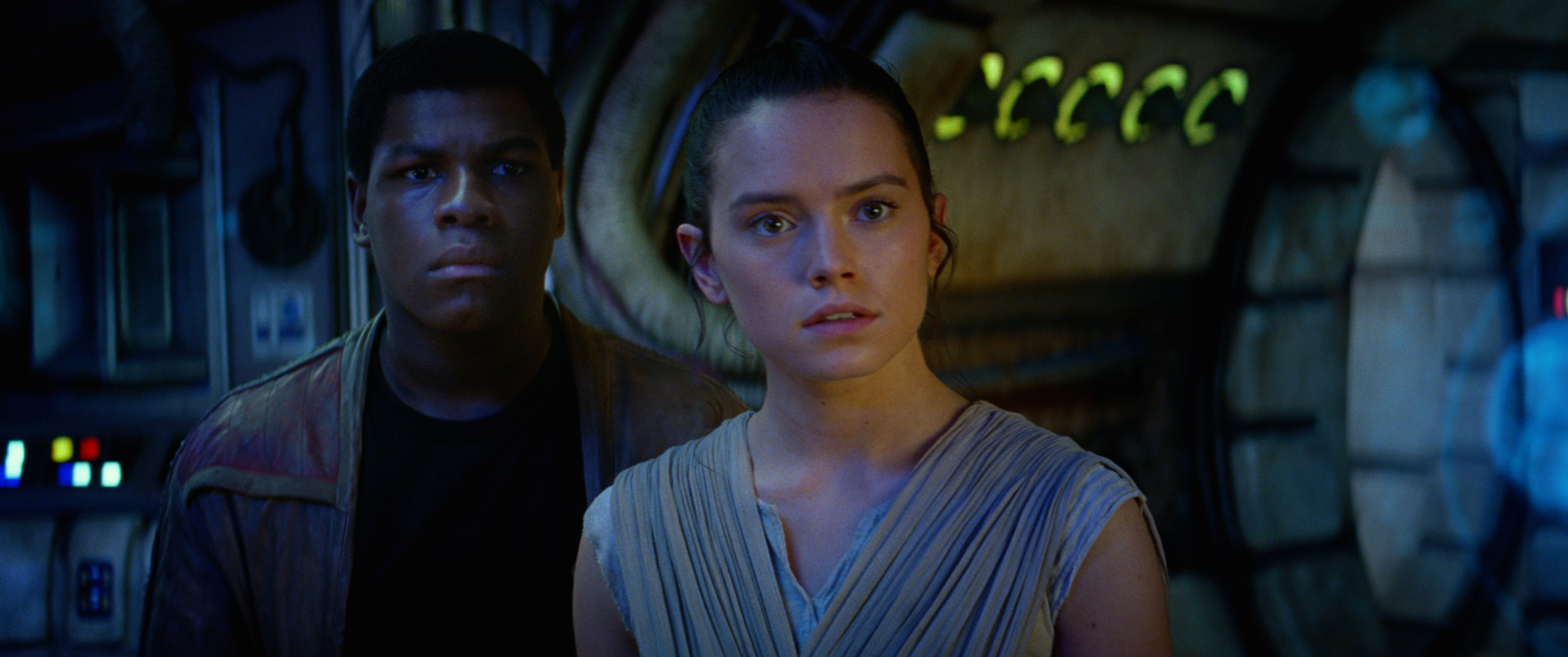
Finn (John Boyega) is the link bad and good, having escaped the former only to find himself caught up in latter. We have moved away from the post-Cold War machine landscape into a more sinister, dehumanised age — stormtroopers are no longer artificial clones, but actual human beings, and Finn doesn’t want any part of the cruel conformity. He meets Rey on Jakku towards the beginning, at which point Abrams opts to stick with the pair, relying on their camaraderie and bustling chemistry. She is isolated yet wily and proficient; he functions through a humorous backbone likely installed as a defence mechanism against his shady past.

Ridley sparkles with vibrancy and Boyega is instantly likeable; together, they click into gear like a pristine Millennium Falcon. At times, you feel like you’re watching a buddy road trip venture, only here the sputtering cars have been replaced by sky-scoping jets. At one point both Rey and Finn repeat, “I can do this. I can do this,” perhaps speaking on behalf of their director who absolutely has ‘done it’. An information-touting droid named BB-8 trundles alongside the pair, spluttering hilarities. Oscar Isaac gushes charisma as Poe Dameron, premier fighter pilot for the self-descriptive Resistance, but he doesn’t feature nearly enough (nor does Gwendoline Christie’s First Order baddie Captain Phasma, who’ll likely see more screen time in the extended edition Blu-ray).

The Force Awakens wouldn’t be a proper franchise sequel without some crowd-pleasing throwback nods and while these moments are smirk-inducing for those in the know, they also bear just enough subtlety to avoid alienating those taking part for the first time. The snappy one-liners are genuinely funny and this shouldn’t be undervalued; indeed, the fact that many of the gags are rich in Star Wars mythology affords them greater validation. Marvel films, by comparison, employ a similar comedy format and although the jokes are often funny, they don’t quite have the same vitality.

A Kraken-esque battle scene inside a ship unfolds like something out of Doctor Who, only louder and bolder and much, much more expensive. Abrams’ film invokes the same melodramatic filling championed by the original trilogy: characters say mad things with a serious tone and pull it off. This is particularly true of Domhnall Gleeson, who offloads some terrific thespian yabber — 1977 wants its patter back — the best of which manifests during a maniacal speech straight out of Saruman’s playbook. But the outing is a playful fantasy at heart, a grandiose adventure, and everyone knows that. When some sentences creak, and some do, it’s just part of the charm.

That certainly doesn’t mean screenwriters Lawrence Kasdan and J.J. Abrams (they redrafted an earlier Michael Arndt script) avoid hefty solemnity. There are instances of genuinely shocking gravitas, moments bolstered by Dan Mindel’s sweeping cinematography. The landscapes that unfold before our eyes feel authentic, primarily because they often are. Fight scenes boast substance too and the action is easy to comprehend, therefore the stakes are raised. John Williams’ score, as if it really needs saying, is as wondrous as ever.

Speaking of revamped classics, a few familiar faces join in on the fun. Harrison Ford’s grouchiness totally fits his older Han Solo, the rogue still fond of heart-warming cynicism. Carrie Fisher doesn’t have an awful lot to do as Leia, now a General, but her presence fuels the film’s emotional weight. Crucially, and this is true of the various other returnees, the duo serve the story: seeing our heroes back together in such a familiar environment is meaningful. It also ages the world in the best way possible — we know it is the same place as before, but we don’t know what fresh mysteries lie beyond the next star.

The beauty of The Force Awakens is that it addresses the nostalgic needs of the many while simultaneously ushering in a contemporary set of filmic variables ripe for fresh storytelling. It’s not just about waiting impatiently for the old guard to reappear; the new faces are a delight. I say four stars for a truly fantastic motion picture romp, and one more to J.J. Abrams for his frankly ballsy decision to take on the hopes of a cine-nation and successfully rekindle that highly sought after magic. We really appreciate it.

Star Wars The Force Awakens - Boyega & Ridley

Images credit: IMP Awards, Collider

Images copyright (©): Walt Disney Studios Motion Pictures