Midnight in Paris (2011)

★★★

Director: Woody Allen

Release Date: June 10th, 2011 (US); October 7th, 2011 (UK)

Genre: Comedy; Fantasy; Romance

Starring: Owen Wilson, Rachel McAdams, Marion Cotillard

As images of modern Paris caressed by romanticising tones that blare heartily from a trumpet fade in and out of vision, we are made aware of perceived idealism and hereditary sentiment. The French capital has forever been associated with society’s most esteemed virtues; desires of art and literature and fashion and love, a variety of tropes that amalgamate together as one in Woody Allen’s Midnight in Paris. You may find yourself all at sea, or at least caught by the tide as events unfold on screen if, like myself, you’re not a quintessential artiste, or a fashionista, or a literary encyclopaedia. Perhaps some form of salvage anchor exists for those who have experienced the aura of Paris. For this artless dodger though, Allen’s highly nuanced nostalgic whim certainly paints a beautiful picture, but ultimately fails to connect.

For Gil Pender (Owen Wilson), achieving success as a Hollywood screenwriter isn’t enough. He wishes to expand his artistic portfolio by penning a novel, but is unfortunately struggling to gather any inspiration. That’s where a wander to Paris offers respite, therefore off the back of a vacation funded by his wife Inez’s (Rachel McAdams) parents, Gil sees hope. Only, hope isn’t all he sees. Having escaped both the drones of an obnoxious family friend and his other half’s party manifesto, Gil finds himself slap-bang amongst the dazzling costumes and enigmatic personalities of an era he vociferously admires, the 1920s. It could be the wine, or perhaps Gil’s quest for inspiration has genuinely uncovered the Lost Generation.

Illuminated by quarantined nostalgia, Midnight in Paris firmly sinks its reels into a refined foundation. Gil champions the past, whereas others are either sceptical over his ambition or simply put-off by his tendency to reminisce. He lusts over the 1920s, wishing nature had granted him a spot at the dinner table of said time period. The main character in Gil’s novel works in a “nostalgia shop,” essentially reflecting the writer’s non-peripheral outlook on life. For 15 minutes, the presentation of a man who seemingly has everything going his way — affluence, a beautiful wife and a prosperous career — but remains unable to shake the cobwebs of a non-romantic reality, carries some weight.

Unfortunately the narrative somewhat spontaneously retreats a century backwards and kick-starts a conveyor belt of the intellectual. We meet Hemingway, the Fitzgeralds, Dalí and a whole host of other scholars, artists, and fanciful knick-knacks. As Gil interacts with his heroes the problem is never clearer: these people are his heroes, not the audience’s — that would be to assume all Woody Allen outings are observed by a precise denomination, a notion that’s simply untrue given Midnight in Paris made over $150 million at the box office. Traits that may be recognised by artistically knowledgeably viewers otherwise play unsuccessfully to puzzled minds. Perhaps this is not a fault on the filmmaker’s end and an issue that instead lies squarely with those, like myself, who are less well-versed in the lives of Hemingway and company. Not every film is shot through a universal lens. Sadly for us common folk, much of Midnight in Paris renders superfluous as more vague faces appear spouting diatribes that are relayed with concealed significance. The phrase “we should quit the idle chatter” reverberates without implementation.

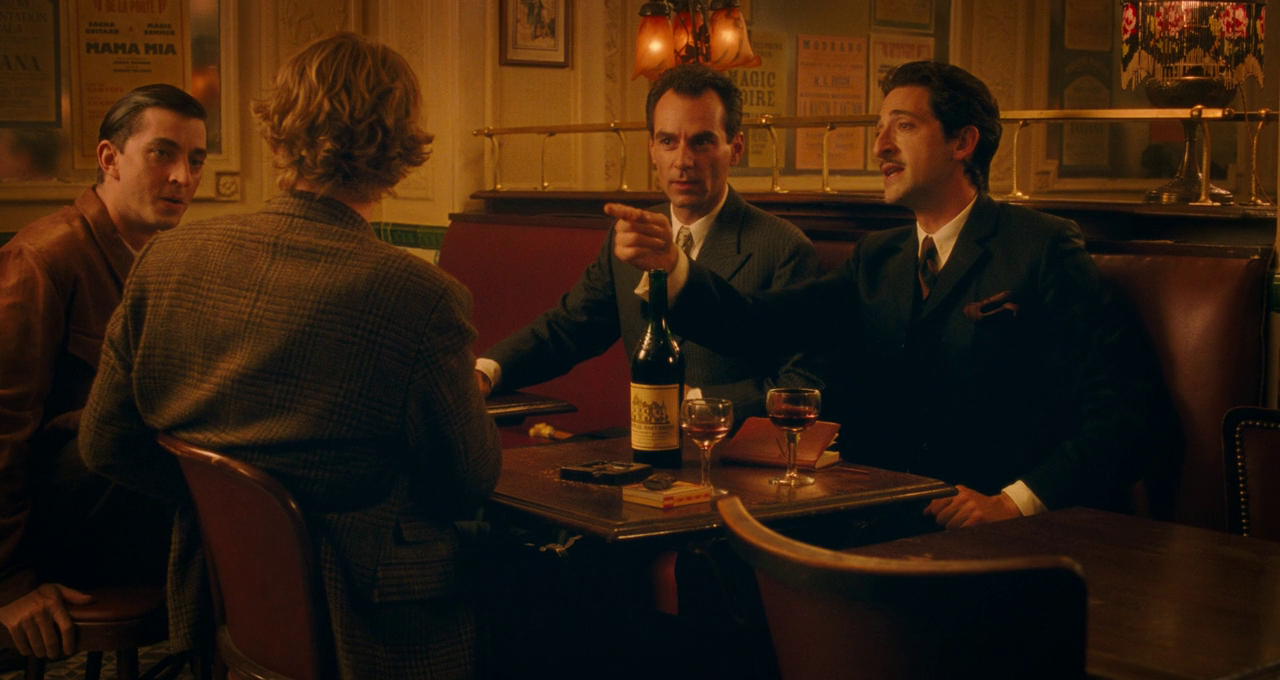
Allen formulates a familiar whimsical tone that brims full of quirkiness. Abiding by this eccentric slant on proceedings, the highbrow collection of 1920s (and earlier) historical figures are all portrayed without too much sincerity. The actors take to the screen like a hungry herd of cattle, displaying enough scenery chewing to clear any field of its green sheen. Everyone seems to be having a blast and although the various classical persons fluctuate in terms of how decipherable they are, an infectious joviality often washes over proceedings. Tom Hiddleston couples with Alison Phil as F. Scott Fitzgerald and wife Zelda respectively, and both are undoubtedly enjoying playing dress-up; Phil in particular accentuates those vowels. Kathy Bates shows up as Gertrude Stein, delighting as ever on cue. Adrien Brody hams it up more than any other as Salvador Dalí in a truly humorous display that overrules any notion of personal ignorance.

The film plays up the juxtaposition of modern American consumerist Paris versus romantic Renaissance-laden Paris, a contradiction embodied emphatically by Gil and his wife Inez. Owen Wilson is very good as the inspiration deprived writer turned wide-eyed child in a candy store, whose dream to live in Paris is far from the mind of Rachel McAdams’ Inez. Inez is the typical tourist who sees Paris merely in its present day form as a temporary drop-out zone, and not for its natural inbuilt beauty — unlike her husband, she hates how the city looks in the rain. McAdams is fine in her role too, but struggles for breath at times given the nature of her one-dimensional character. The pair’s relationship is never really believable, a sentiment raised by Marion Cotillard’s Adriana in between escapades of Basil Exposition (“I dropped in from 2010″… “You DID?!”).

Shot by cinematographer Darius Khondji, the film basks in a wonderfully rich texture that is quite the opposite of the quaint plot which invariably ducks and dives. Too many on screen presences mean a few are lost in the shuffle; antiques dealer Gabrielle feels like a character without conviction, and Inez’s mother, other than manifesting as a dead ringer for Cate Blanchett’s Jasmine a decade on, has very little to do. After traipsing through party after party full of observant pundits you begin to wonder why nobody is picking up on Gil’s 21st century fashion sense.

Midnight in Paris’ admirable intentions are there for all to see, but perhaps only a few will fully comprehend. That is not to say the film is lacking in watchability, for a host of energetic performances alongside a narrative that accommodates more than a trace of intrigue through its humorous comparison in culture certainly offers delight in small doses.
The House of the Devil (2009)

★★★★

Director: Ti West

Release Date: October 30th, 2009 (US limited)

Genre: Horror

Starring: Jocelin Donahue, Tom Noonan, Greta Gerwig

Ti West must have endured the most haunted of houses during his childhood, because only through first-hand experience can somebody gain, preserve and later paint such an enticing scary picture. Both a thematic precursor to his 2011 spook-gala The Innkeepers and a nostalgic nod to horror in general, The House of the Devil serves up a cauldron full of tension and idiosyncratic peculiarities. Framed within a B movie context where babysitters are in danger, wooden houses creak with undesirable exaggeration and a grainy glaze smoulders from the screen, the film embodies the work of a director smart enough to create a piece that stands out in its maturity whilst also retaining key horror tropes. West admirably holds back in an area where many others have succumbed to generic jump-scares and gore, instead teasing and withholding clarification before building to a timely, creepy crescendo. Paying homage to the haunted house flicks of the 70s and 80s, The House of the Devil concludes the greatest fear is that which cannot be explained, and sometimes the unexplainable thrives inside four walls.

Struggling for cash and trying to fend off a landlady breathing down her neck, Samantha (Jocelin Donahue) throws her name in the babysitting hat. After an odd conversation or two over the phone, she accepts a job offer at short notice given the monetary incentive. Upon reaching her office for the night — a secluded manor hidden amongst the arching trees and a wispy fog — Samantha meets the voice on the other end of her phone calls, Mr. Ulman (Tom Noonan), whose edgy nature reflects the pair’s recent kooky interactions. In fact, Mr. Ulman’s demeanour ain’t the only bizarre manifestation, and it looks like Samantha is in for a long night. Pizza, anybody?

Undoubtedly, The House of the Devil’s greatest strength is its restraint; both from divulging all of the answers immediately, and from rashly conceding to the genericism that has hampered the land of fright — or not — in recent years. Here, mystery shrouds all. Noises echo without a source. Light switches don’t exist in their usual spot on the wall. From the get-go, and even more so when goings-on reach the ill-fated haunted house, there extrinsically exists an offbeat ambiance. Ti West generates a tone that always promises an explosion of manic torment — we’re fully aware that things could kick-off at any moment — but one that relentlessly goads the viewer as tension creeps higher and higher. An inspired tactic, really.

Jeff Grace’s score drones one moment, as if signalling an inert-yet-eerie mundanity, before tingling the ears with sharp bursts that are of the genre but difficult to pinpoint. The cinematography too, relayed by Eliot Rockett, adds to an underlying sense of confusion as the camera stalks Samantha around the house, watching her, waiting for something to frighten; for a head to grace a mirror, or a silhouette to find the shadows, or a figure to appear from behind a door. Samantha often peers from windows and, as the camera pans backwards, we see her for the stranded victim that she is, unbeknown, trapped inside a house that evoked warnings signs way before the front door rattled its hinges to greet our protagonist.

West successfully bolsters this unwavering feeling of mystery and disorientation by suggesting a splatter-fest early on, and subsequently reshuffling the narrative towards the aforementioned suspense-fuelled happenings. Certainly, The House of the Devil avoids any universal horror trap holes, yet the film still reverberates B movie vibes that are welcomed rather than denounced. The premise hardly emits intuition, whereas the execution does entirely and therein lies the success. Characters find a place on the caricature spectrum and remain there throughout; the tall Mr. Ulman’s exasperated oddness contrasts his wife’s sheik, Gothic appearance — it’s not lost on the viewer that she ascends from the basement — and Samantha’s goofy friend Megan is seemingly only able to speak hokily (“How d’ya like them apples?”). Upon conclusion we are greeted by grimy yellow credits, though not before a series of exceedingly haunting flashing imagery. Off-putting in the hands of another, these familiar tropes work effectively here because they coincide with West’s unusually, expertly, tentative approach.

Though not as concise as the narrative, and also slightly constrained by common characters, the performances are solid. Leading the way as Samantha, Jocelin Donahue displays the type of defiant resolve towards the beginning that ends up getting you in trouble, before steadily warping into a paranoid employee. If only she’d listened to her mate Megan, played by Greta Gerwig, whose “it’s too good to be true” caution warrants observation. Gerwig doesn’t have an awful lot to do here, though going by her recent work there’s no questing the Californian’s acting prowess. The most enjoyable performance is evasive and intriguing, delivered by Tom Noonan as Mr. Ulman. Noonan’s unassured motions are the source from which mystery and unusualness sprinkle, aided by his knack for not directly answering questions (“No, not exactly…”). Mary Woronov has little to do as Mrs. Ulman, and A. J. Bowen also makes a fruitless appearance, consolidating the problem that sees one character too many materialise. Listen out for the voice of Girls favourite Lena Dunham.

Ti West is purposeful in direction, creating an atmosphere of ascending dread and hopeless lunacy. His meticulous input sees fear spawn from peculiarity, so much so that even nuances such as the tallness of a stranger promotes creep, and this execution thrives alongside a grin-inducing B movie panache. The House of the Devil is an appreciative mishmash of horror; from haunted house to satanic ritual to psychological thriller, with a gloss of gore. Wait until the end too, for when that inevitable crescendo hits, there may yet be a surprise in store.

This Is The End (2013)

★★★

Directors: Evan Goldberg and Seth Rogen

Release Date: June 12th (US); June 28th, 2013 (UK)

Genre: Comedy; Fantasy

Starring: Seth Rogen, Jay Baruchel, James Franco, Jonah Hill, Craig Robinson, Danny McBride

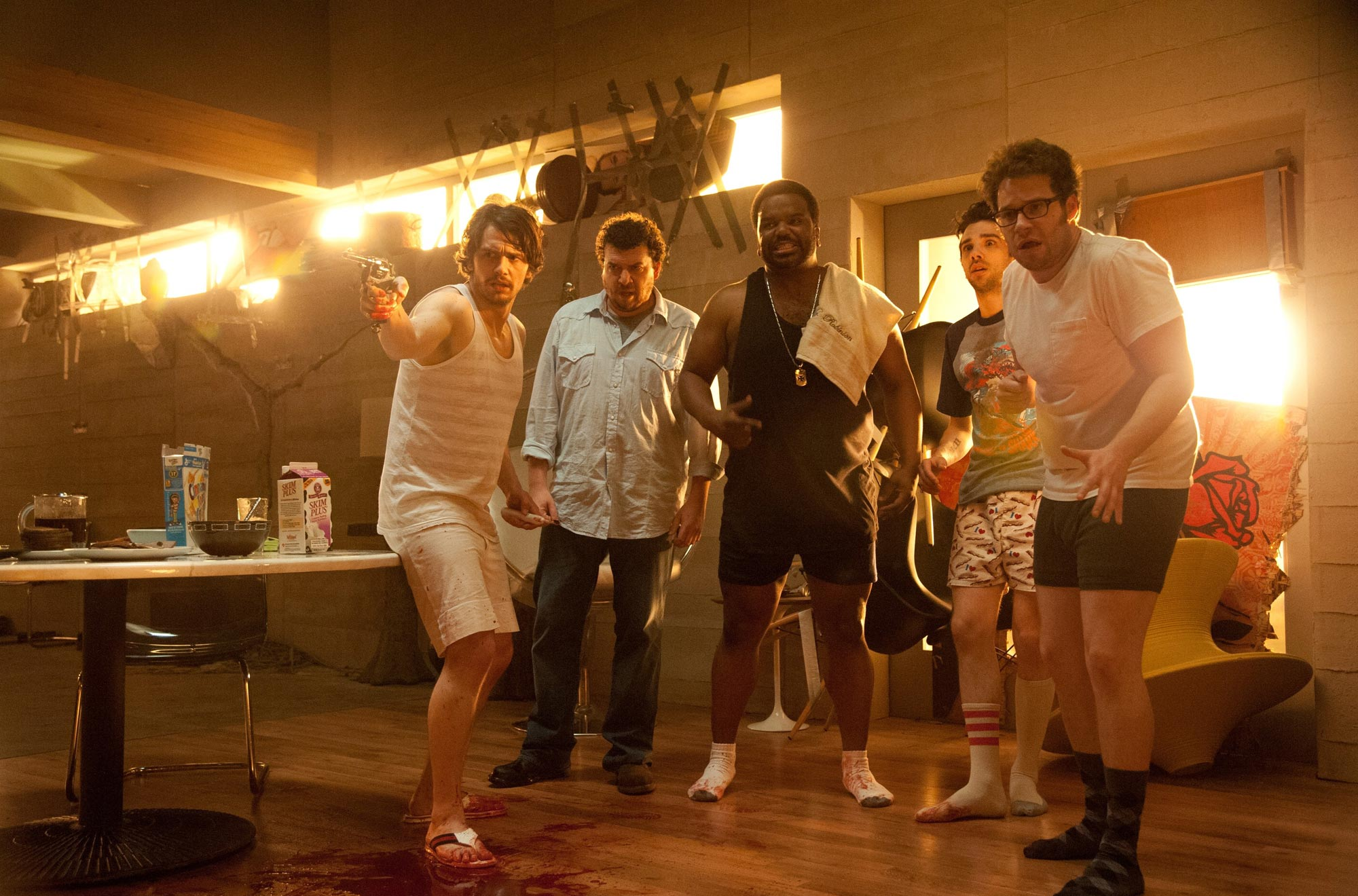
It’s difficult to imagine a scenario where a pick-n-mix group of inherently comedic actors and Rihanna could converge together to play themselves effectively. Not on purpose, anyway. The concept is harnessed too tightly before it’s even able to leap from the screen; in a peculiar dynamic, the only genre truly capable of housing said character-actor flip-flopping is the comedy genre, because the gimmick of self-depiction is supposed to a funny one. But there’s a problem. This Is The End runs into a brick wall of indifference built by past humorous undertakings from the tongues of its cast: Seth Rogen, Jonah Hill and company are playing the same characters that they always do, and the fact that these personifications happen to be extensions of their own selves is irrelevant. Though, once the failed gimmick attempt is established as a misfire, the film is able to advance as a fairly solid profanity-laced comedy. The only real happenstance of ingenuity here is, well… this is the end.

Jay Baruchel arrives at Seth Rogen’s serviceably plush residence in Los Angeles hoping to spend some time with his Hollywood buddy. It doesn’t take long for the Hollywood norm to encroach in their affairs though, as the pair receive an invite to James Franco’s housewarming party a dash up the hill. This is too bad for Jay who hates back-patting social gathers and isn’t all that fond of many expected guests, namely Jonah Hill. However, before the duo can settle in to their raucous surroundings (or in Jay’s case, get uncomfortable) an enormous earthquake sends shudders through the ego-mansion, leaving Jay, Seth, Jonah, James and pals stranded in the midst of a fiery apocalypse. And not even Emma Watson is exempt.

Paraded as a depiction of real actors, or ‘celebrities’, fraught and bumbling as their world collapsing in front of them — almost as if self-cleansing — the film doesn’t click. Primarily because those on screen are the foul-mouthed, comically-obnoxious and quip-firing knuckleheads of recent past. We’re not seeing Jonah Hill, we’re seeing Schmidt from 21 Jump Street. Seth Rogen isn’t playing Seth Rogen, he’s playing Ben Stone from Knocked Up. Nick from Hot Tub Time Machine makes an appearance, not Craig Robinson. And that ain’t really James Franco, it’s Pineapple Express’ Saul Silver. Essentially, each of these aforementioned characters — including those present in This Is The End — are all amplifications of the actors portraying them. Therefore the gimmick presented doesn’t stand out as inventive or extra-funny in this instance because we’ve seen it numerous times before.

In fact the only time it does work is when Emma Watson is on screen. The lovely lass whose wand waving skills and crisp pronunciations in Harry Potter have envisaged an image built on pleasantries, turns into a sweary and aggressive pit bull. The Emma Watson here is an exaggerated version — or not — of the widely held self-endorsing, peer-adulating celebrity perception. It’s not actually Emma Watson, and it’s never intended to be Emma Watson (I can’t imagine too much weapon wielding goes on in her life, though I’ve been wrong before). Unfortunately, this nuance collides head on with the presentation of the others as their real selves. Clinging to the rubble and remains of a crumbling ‘it’s actually us’ mantra, the film relentlessly takes pot shots at the idea that famous folk cannot work their way out of a paper bag without external aid. Again, the aforementioned stodgy dynamic on display does consume all and thus this approach struggles to come off as planned, but that’s not to say the film isn’t funny. Because it is; often giggle-worthy, periodically laugh-out-loud.

After meandering through an auspicious beginning, directors Evan Goldberg and Seth Rogen realign the camera with the focus on funny, as opposed to a crippled narrative gadget. Light does occasionally seep through this otherwise irreparable artifice, with James Franco’s on screen manifestation proving the most successful of the bunch, certainly within the context of real-life satire. He projects himself as an art mogul — a trait not far off the mark if Comedy Central’s Roast of James Franco is anything to go by — and his magnified pompous demeanour feels the brunt of many a gag (“This place is like a piece of me”). Intentional momentary lapses in arty bravado are just as humorous too, such as his vociferous defence of solitary right to a Milky Way. Whereas Franco’s snob is alienating but not offensive, Jonah Hill’s hollow delivery sees his character assume a position above the others. A condescending Hill oils his excellent comedy chops, evoking the sole deadpan tone amongst a rabble of manic jesters. These remaining hoaxers are serviceable: Jay Baruchel is the only normal bloke, and suffers a tad; Seth Rogen is his usual drug-driven self; Danny McBride bellows obscenities like there’s no tomorrow (to be fair, there isn’t); and Craig Robinson is the cowardly squealer-cum-good. Sound familiar?

On a final humour-related note, as far as camp comedy goes the final scene delivers in abundance. It’s the best part of an outing that bats decent gags throughout, ardently dancing far away in the distance atop the league table of hilarity.

This Is The End seeks jaw-aching victory through a narrative ploy that is prematurely shackled by the jaws of defeat. Besides, self-humiliation isn’t too admirable given that the chaps on screen have constructed comedic careers above such a ridiculing foundation. Despite these grand shortcomings, the film delivers almost consistently in the gag-realm and sort of has its heart in the right place. Given the hilariously absurd finale, you’ll probably leave not really caring about the rest anyway.

This Is 40 (2013)

★★

Director: Judd Apatow

Release Date: December 21st, 2012 (US); February 14th, 2013 (UK)

Genre: Comedy

Starring: Leslie Mann, Paul Rudd

The Valentine’s Day film always goads suspicion. Like releasing a Christmas flick in December, a children’s adventure during mid-term, or a horror movie on Halloween, the legitimacy of the proverbial February 14th film (the date This Is 40 was released in the UK) often comes into question, at least in these semi-cynical eyes. How would it fare in cinemas on any other generic weekend? A moot point really, particularly in terms of critically assessing the piece. But the decision to hold out for a specific release date lends its hand to a lack of confidence in the product in the first place. And sadly, when it comes to Judd Apatow’s This Is 40, a confidence deficit is only one of many headaches. Misdirection, grating characters and a badly written screenplay sit atop a list of negative traits associated with a comedy that’s only occasionally funny, and ought to thank its lucky stars that some semblance of watch-ability is retained through the accommodating faces of Leslie Mann and Paul Rudd.

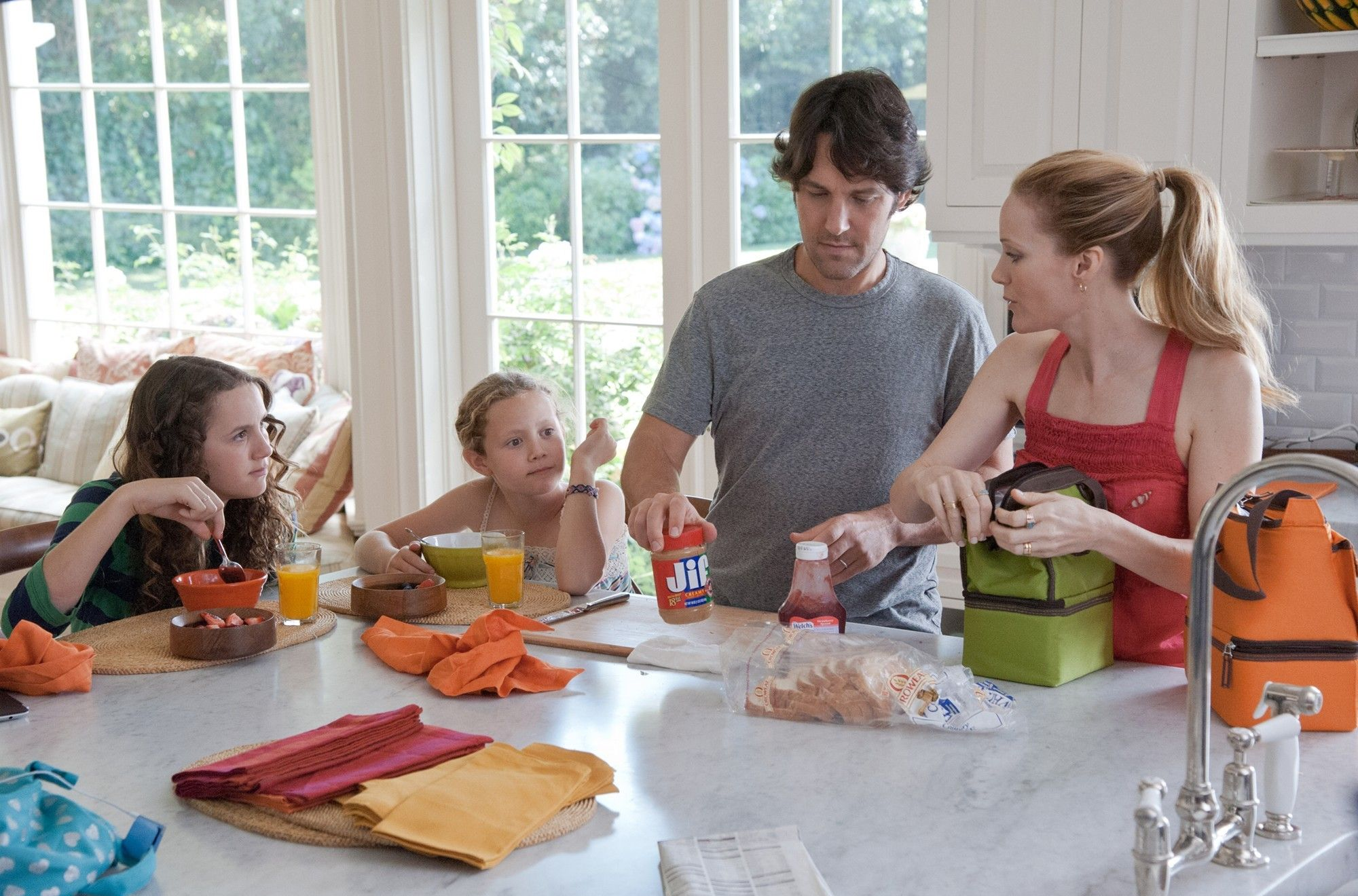
Seemingly happily married, but unhappily ageing, Pete (Paul Rudd) and Debbie (Leslie Mann) live with their two young daughters. They must be pretty well-off too as Debbie owns a boutique and Pete runs his own record label; a venture he probably undertook to get away from his wife every now and again, or maybe it was to embellish himself in a false sense of youthful hipness. It’s not that he doesn’t care for Debbie, but there’s only so much baseless moaning a human can endure. Debbie has just turned 38 — that’s forty to every other sane person — and cannot handle the overbearing, horrifying toll it is taking on her. Only nobody really cares about her age. Especially not the audience. And that’s the problem.

Going into a film titled “This Is 40” you are absolutely aware of the self-opulence about to be hurled your way, but that doesn’t soften any blows from water balloons filled with whine (and not the alcoholic kind) as they relentlessly strike your face. Debbie cannot fathom waking up to the big four-oh, which is a petty mindset in itself but might have had some comedic legs within the boundaries of structured character development and a cohesive narrative. However she’s too jolly too often, making it difficult to engage with any semblance of sympathy that may or may not exist. Debbie lies on medical forms to hide her age, yet she doesn’t even bother to use a consistent date of birth. Further tarnishing matters is her relationship with husband Pete, one that skips foot-by-foot between hot coals of happiness and hatred quicker than the first penis joke is sounded. The duo get up to generic antic after generic antic, from hash-cookie gorging to awkward family gatherings that are no longer awkward. Heck, the film itself struggles to identify any prerogative – “The sort of sequel to Knocked Up,” reads the poster.

The best character is Sadie, Pete and Debbie’s eldest daughter, because she is easy to relate to; when met with end-of-the-world stipulations we concur with her inexperienced spitefulness, knowing it’s not terminal. There’s a significant difference between a 13-year-old cursing the earth over a Lost ban enforced by her parents, and a grown-up churlishly denouncing her existence over age. Besides, if someone prevented me from watching Lost, I’d lose the plot too (“It’s not frying my brain, it’s blowing my mind”). Interestingly, This Is 40 is an Apatow family affair: Judd directs, Leslie stars, and their two children Maude and Iris act.

Another nail in the coffin is hammered tediously by way of a fairly uneventful plot. Although comedies are driven first and foremost by gags, quips and puns, a baseline story must be present in order to provide a buffer. Nothing happens in the opening 30 minutes (of an unnecessarily long two hour runtime), other than the establishment of how great the family before our eyes have it in life. Both daughters amble around with iPads, the two parents drive their own glimmering cars, the house is spacious and homely, Pete spends his time gorging on delicious-looking cakes and Debbie eats out with her father at up-scale restaurants. Sounds pretty good to me. And other than the groan-inducing issue of getting older that pitifully tries to veil itself as a narrative, no authentic dramas arise until proceedings are too far gone (by that time, the JJ Abrams condemnation has played out and there’s no way back into my good books). Historically Apatow has been hit-or-miss in the director’s chair, and neither his directorial nor his writing skills are up to standard here.

Thankfully, there are a few positives. Even though many characters are lifeless, they benefit enormously from embodiment by a pair of very likeable actors. Paul Rudd is up there with the best comedic performers around today, someone whose timing and wit often exceed the material in front of him. Pete is not the most annoying character, but without the spark provided by Rudd he’d likely be the most boring — instead, that accolade goes to camera-fodder Desi, played by Megan Fox, whose existence in the film seems only to advocate prostitution because it affords you a nice car. Leslie Mann, although straddled by the gripe-ridden Debbie, once or twice manages to valiantly charm her way through an annoying character and relax into that recognisable humorous self in moments of respite. Chris O’Dowd is criminally underused as an employee at Pete’s record company, but manages to be funny when given the chance. Melissa McCarthy, Lena Dunham and Jason Segel also find time for a cup of coffee. Oh, and there’s a very funny Simon & Garfunkel joke. I’m out.

Hampered by shoddy characters, all too familiar comedy tropes and a messy narrative, This Is 40 ain’t even good enough to be a one star film. Occasional murmurs of humour seep through, and likeable faces shield the piece from too much brutal disharmony, but a lot more is required. Sadly, neither man(n) can save this one: Ant nor Leslie.

Fargo (1996)

★★★★★

Directors: Joel and Ethan Coen

Release Date: April 5th, 1996 (US); May 31st, 1996 (UK)

Genre: Crime; Drama; Thriller

Starring: Frances McDormand, Steve Buscemi, William H. Macy

A jack of all trades, and perhaps one of the best. Shuttled forth by a bleakly comedic narrative, Fargo occasionally amps up the awkward, tie-loosening tension before ploughing right and left into a caveat of blunt criminality. There’s an inherently dramatic element too, the underbelly of bumbling luck and the ultimate tale of karma. The Coen brothers boast a unique style; precise in their crafting and often ironic in their delivery, a deliriously absorbing mantra that stretches far and wide here. Characters gargle seemingly innocuous lines of dialogue, yet a nonchalant poise often demands bouts of laughter. And therein lies the film’s most admirable quality: it makes you guffaw through moments of sadism, but never denounces you for doing so. The sibling duo at the helm aren’t overly serious in their direction (only when required), yet still manage to divulge a genuine sense of authentic story-telling. In Fargo, every scene holds a certain weight and although engagement with the particulars is at the viewer’s discretion, there’s never a sense of an overbearing burden. Yaaaa.

In Fargo, North Dakota, police chief Marge Gunderson (Frances McDormand) — a woman as cheerful as she is pregnant — is called to a road-side accident harbouring two casualties. Only it’s not an accident, and is instead part of a series of unfortunate events set alight by car salesman Gerry Lundegaard (William H. Macy) in an attempt to recoup much needed cash for his family. A master plan that would garner appreciation from the likes of John Kramer, Gerry hires a pair of quintessential henchmen to kidnap his wife and subsequently demand an $80,000 ransom, the spoils of which would be shared between the trio of plotters. Only Gerry is deviously untangling his own personal puppeteering strings, ready to juggle them against his father-in-law in an attempt to gain one million dollars from the extravaganza. In Gerry’s anxiety-plastered eyes, family comes first… and last.

There’s an ever-present aura that wilfully jaunts around any Coen film. It’s easy to spot, deliberate in implementation but astutely subtle as to never degrade proceedings. Drawing upon the experience of 16 previous films, seeing the words “Joel and Ethan Coen” sprawl across the screen nowadays prompts an intrinsic knowledge that meticulous sardonicism will soon be lingering. Released when their three-decade-old filmmaking odyssey was eighteen years younger, Fargo might just be the sibling duo’s most complete diamond of irony. Some films might be more wholesome in their flippant ideology, for example O Brother, Where Art Thou? and its caper-esque comedic quality, whereas others will undoubtedly offer greater absorbency through numerous interpretations and delightful tones, such as Inside Llewyn Davis. You’d be hard-pressed to come up with another Coen creation as genre-splicing as Fargo though, for this conglomeration of classification is what cinema is all about.

In a Minnesotan setting bitten by frost and populated with oddities constantly attempting to cover their innocuous tracks (“I don’t vouch for him”) the Coen brothers present and develop a number of wholly recognisable characters. Carl Showalter and Gaear Grimsrud are the absolute epitome of a caricature criminal partnership: the snivelling manipulator, out of his depth but armed with a motor mouth, and the dumb brute, purposeful only in violent outbursts or foul language. Gerry Lundegaard is the struggling businessman who ventures further into the ocean of uncertainty than he should, and is all the more blundering for it. His father-in-law Wade Gustafson has more money than patience, and decreases in accessibility when he knows his cash is at risk (“A lotta damn money” is one of the funniest gags). These characters are familiar, but they are also affectionately handled and escorted through a variety of tonal preoccupations, from comedy to crime to drama, constantly forging energy and slap-stick-like commotion. Our child-bearing detective Marge is the only figure who detours from the norm; noticeably pregnant, deliriously good-humoured and actively chasing murderers are three traits that do not often mesh together. This hodgepodge collection of characters coupled alongside a narrative that explodes with vibrancy, will refrain from giving you enough time to reflect on what just happened before it makes you ponder what’s going to happen next.

Yet, in spite of a growing sense of madness, the Coens always appear fully in control. Although the narrative is idiosyncratic — one minute a Steve Buscemi facial expression will have your jaw aching and the next a gunshot will leave you in shock — there is a point, a certain method, to all on-screen antics. The craziness of each character reflects the madness of his or her actions, prompting us to consider the length of a person’s sanity during tough times, whilst simultaneously sending out a nod towards the wondrous scope of cinema. Masterfully, the Coens develop a blunt and sadistic sense of realism amongst the hilarities. Fargo details karma as a rapid mule with more bite than the cold landscape from which it festers. In this tale of people playing people playing people, only the people face the consequences.

Shepherded by Roger Deakins’ icy cinematography, the arctic setting becomes a player of its own as it seeps into every other aspect of the film. Most characters endure cold minds. Lasting shots of mundaneness appear frozen to the screen. There’s a stiff lack of motivation, embodied emphatically by Marge’s police partner who can only conjure up phrases such as, “Watch your step Margie,” and, “You okay Margie?” as the heavily pregnant woman inspects dead bodies. Even the comedy is frosty — plotting and kidnapping is carried out in an atmosphere far more jovial than intense. Though, the funny buck stops at murder, an action presented more chillingly and viscerally than any other.

Regular Coen contributors Frances McDormand and Steve Buscemi are once again on hand and, alongside William H. Macy, deliver terrific performances. Humour is the common denominator for the trio, though the source varies. For McDormand, an incessant politeness in the face of violence and misnomer creates a peculiar dynamic. McDormand’s poise throughout sees Marge one step ahead of the game, even when she’s a day or two behind the others. Entirely the opposite, then, is Macy as the bumbling goof businessman Gerry. Gerry’s idiocy is built from a spectrum of nervous facial expressions and worried posturing; an unassured plight that sees no positive solution. He’s anxious to a T, but so dud-like that you sort of expect his ridiculous plan to come off in a spectacularly inadvertent fashion. The third of three great performances derives from the acting chops of Steve Buscemi, whose raging demeanour funds a big-mouthed little guy not far removed from Tommy DeVito. He relentlessly contradicts himself and thus withholds attracting seriousness, but it’s obvious that Buscemi is having a blast with the role and fun is infectious. It also helps that he gets many of the funniest quips.

The Coen brothers leave nothing to chance and inject Fargo with fastidious application — it’s no surprise that a wintry white landscape pronounces vivid red blood. The film will keep you guessing, is littered with humour and completely embraces the medium from which it thrives. In doing so, it even has the wherewithal to reflect on the outrageousness of its characters’ wrong-doings.

In the often correct words of Roger Ebert, “Films like Fargo are why I love the movies”.

The Hunt (2013)

★★★★★

Director: Thomas Vinterberg

Release Date: November 30th, 2012 (UK); January 10th, 2013 (Denmark)

Genre: Drama

Starring: Mads Mikkelsen

“What’s your favourite dish?”

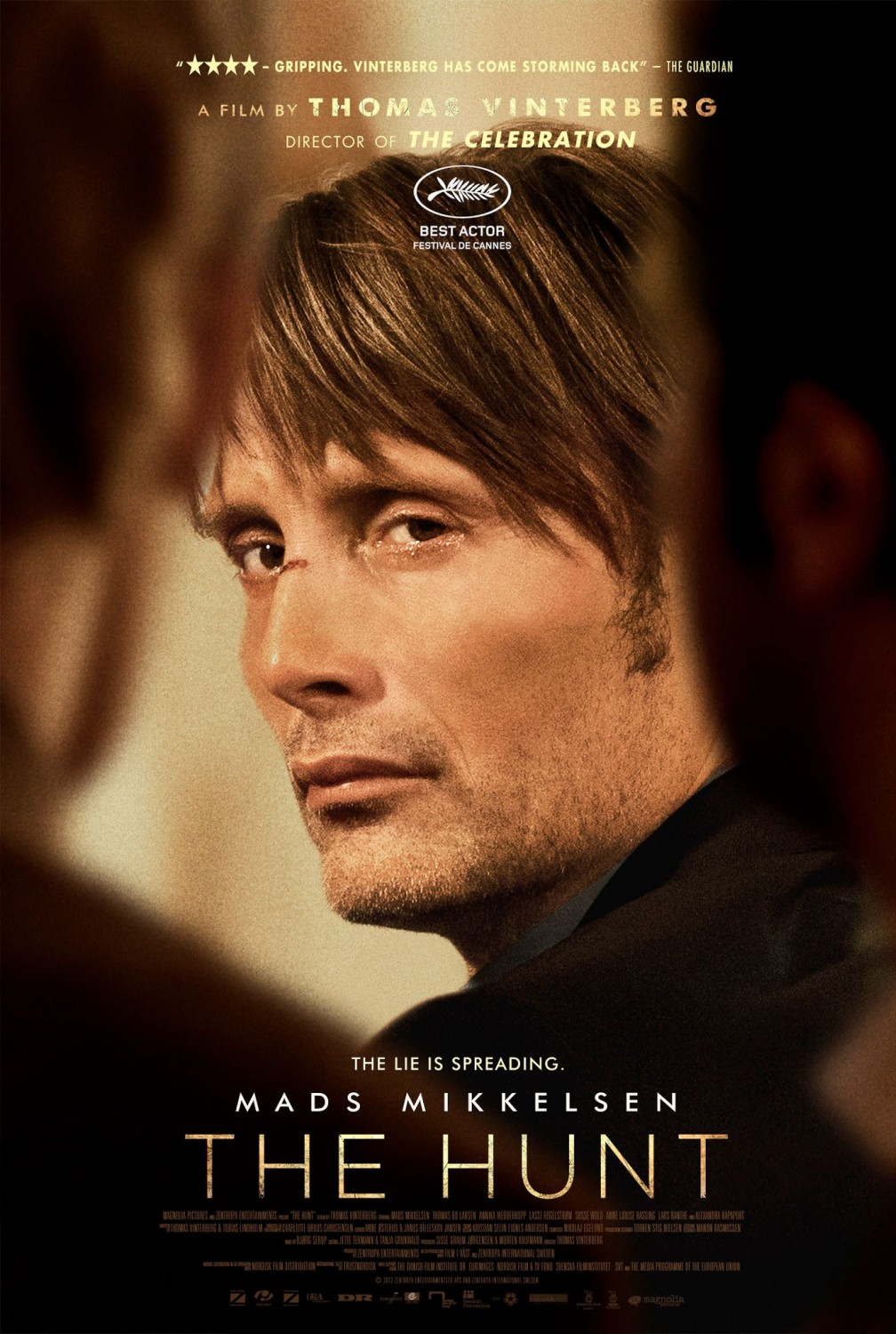
The question, posed by a young, chirpy girl not long after the opening credits, is a humdrum one. The kind of conversation starter that represents the mundanity of everyday life, or in this case, the imagination of a child yearning to learn more about people, the world and everything. But also a sentence that sets the proceeding tone, run-of-the-mill, at least for 20 minutes or so. The question then, is a devious one. It represents a laid-back, frothy atmosphere that in hindsight turns to chilling and haunting given the almost two hours of harrowing on-screen events that follow. The question, therefore, is brilliant. At least, its connotations are in the long run. The two whose conversation includes said food-related musing are also the two whose actions and reactions determine what is come. The question, above all else, is apt. Because only a daring director can script a meal question and pose it to Mads Mikkelsen. And, apparently, only Thomas Vinterberg possesses the smarts to cheekily have an imagination-driven child ask the question. And only once the lingering shroud of Hannibal-esque clouds are confronted and subsequently expunged, can the narrative truly advance and become one of the year’s toughest and absolute best.

Venison, by the way.

Lucas (Mads Mikkelsen) is a caring fellow; his dedicated work at the local kindergarten secondary only to a day-to-day template constructed by the enthusiastic youngsters, to whom he abides. In the evenings, Lucas spends time endorsing the merriment brought on by the combination of alcohol and a tight-knit community, and at weekends he either crazily plunges into freezing water with his chums, or tactfully hunts with his gun. Normal life. In fact, the only oddity encasing this small Danish community is that it is so friendly. That is, until a fleeting comment escapes the mouth of Klara (Annika Wedderkopp), one of the children Lucas looks after. The words are untrue, generated from the petulant anger of an unassuming child, but they still send shock waves around the neighbourhood. Subsequently, that day-to-day existence Lucas thrives on spirals through an unforgiving rigour. For an ingrained belief can never truly be shaken.

From the get-go, director Thomas Vinterberg sets out to achieve a specific but absolutely necessary tone. Lucas is always the central cog from which we gauge emotion. As daylight seeps from the screen, early interactions are conversational. When darkness falls, raucous beer-fuelled gatherings evoke jolly connotations of Nordic Vikings. There’s a familiar communal atmosphere, enveloping familiar people. Therefore when the agonising allegation is made, by a child no less, the audience has already bought into the realism shrouding proceedings. From then, a simmering tension takes over. Vinterberg does not over-egg or ‘Hollywoodize’ anything; even though detective teachers and informed parents are aware of the situation, they don’t explode in fits of rage or anger. Rather, internal disgust consumes all, allowing the narrative to tentatively build to its anticipated crescendo. Vinterberg’s controlled approach is admirable and ultimately successful; in this sense, the film is very mature and the filmmaking is very accomplished.

Vinterberg also hammers home the accused’s criminal status: at no point during the film is Lucas positioned as guilty. That’s never an issue, not in the eyes of the audience anyway. We know Lucas is innocent, but we also find it difficult to persecute a child for a mistaken phrase. And what right, if any, does anyone have in denouncing the actions of parents and a community trying to protect their own? Lucas himself mightn’t even challenge the paternal instinct, given his own attempts to secure custody of his son. The Hunt ponders this question, and tackles resultant topical societal issues. Important ones. Soon after Klara’s confession (“I don’t believe a child would lie about these things”) disapproving fumes centred on Lucas’ apparent actions spread like wildfire throughout the area, as he becomes the poster-boy of wrongfulness. These reverberations are not only felt by Lucas himself, but also by his son and partner. The teacher’s identity being revealed so soon after the incident essentially scalds an innocent man for life, a notion the film appears to consider unfair.

Bookended by two apparently different but thematically resounding hunting outings, proceedings never really ease up — mirroring probable real life. Towards the climax, a scene involving Lucas and Klara will have you watching through bated breath, and there’s more still thereafter. Speaking of the two primary players in this chess game of moral standing and right or wrong-doing, the actors involved all have something to offer said disturbingly riveting happenings. As Lucas, Mads Mikkelsen delivers arguably a career-best performance; amiable at the beginning, poignantly steadfast throughout his plight and never without dignity which, given his character’s predicament, is an extraordinary achievement from the Dane. Annika Wedderkopp plays Klara and more than holds her own surrounded by many adult peers. She’s a child obviously, thus inherently boasts that endearing quality, but is much better than simply charming. The pair share an unwaveringly realistic dynamic.

Other noteworthy performances emanate from Lasse Fogelstrøm as Lucas’ son Marcus, and Thomas Bo Larsen as Theo, Lucas’ best friend and the father of Klara. Marcus is troubled by the allegations made against his dad, yet determined not to let it get the better of him. One scene, subtle in delivery but upsetting in substance, sees Marcus barred from a supermarket while in the vicinity of a girl he likes. Fogelstrøm is just as meaningful in these moments as he is during his emotional tirade later on. Trust is the issue when it comes to Theo, whose immediate outpouring of anger subdues a lingering instinctive feeling that his best friend is innocent. This concept is highlighted throughout the film, where characters inadvertently advance a lie and ignore a truth in order to find some sort of closure. Larsen is excellent in his role, torn, bewildered and hurt by the goings-on. Alexandra Rapaport plays Nadja, the love interest of Lucas, another victim of events.

The Hunt is an exceptional piece of filmmaking, not afraid to explore tough questions and certainly not unwilling to challenge any subsequent societal issues. Chartered by a magnificent Mads Mikkelsen performance, and crafted meticulously by Thomas Vinterberg, the film doesn’t do much wrong. At times the silence is deafening, and as the nerve-shredding tensions builds, that silence turns to a harrowing closet hysteria.

The hunt indeed.

Shaun of the Dead (2004)

★★★★

Director: Edgar Wright

Release Date: April 9th, 2004 (UK); September 24th, 2004 (US)

Genre: Comedy; Horror

Starring: Simon Pegg, Nick Frost

It has been almost 10 years since we first met the instantly relatable yet spatially anarchic Pegg, Frost and Wright trio. Since 2004, their fumes of hilarity have glazed earlobes the world over, excellence exhaled from the likes of Hot Fuzz. But before Pegg and Frost had an unruly, conspiring cultist town to deal with, the duo wielded shovels and cricket bats in a war against zombies. The epitome of wholesome comedy-horror, Shaun of the Dead wittingly embraces society’s increasing individuality and detachment — a hapless trait infused even more in today’s world — before sending it spiralling in a zombie rage. The zombie adage it apt too, a smart comparison that evokes humour because the notion cuts so close to the bone. Perhaps a few characters are too incidental to warrant their on screen presence, but part one of the Three Flavours Cornetto trilogy is damn tasty regardless.

Working in an electronics shop where he commands disrespect, and still living with his overweight, uninspired room-mate Ed (Nick Frost), Shaun (Simon Pegg) is pitifully meandering through life, unwilling to commit and unable to justify. His girlfriend Liz (Kate Ashfield) bemoans Shaun’s discrepancies, in particular a monotonous infatuation with the local pub, the Winchester. As Shaun spends many a day lethargic amongst the comatose masses, juggling fractious relations between Ed and another house guest, and failing to win over the love of his life, he must be pretty certain that it cannot get any worse. Only, it can. Zombie worse.

Simon Pegg and Nick Frost front this raucous outing, and their gag-full chemistry is one of the prevailing positives. As down-on-his-luck lead man Shaun, Pegg exudes the everyday. His demeanour is casual, occasionally showing the slightest hint of enthusiasm, only to be shot down by an ungrateful colleague or a disappointed friend. Even Shaun’s motivational methods leave a lot to be desired (“There’s no ‘I’ in team, but there is an ‘I’ in meat pie”). You can see part of yourself in Shaun; well-meaning but gobbled up by a generically infectious culture, and Pegg’s bedraggled showing is suitably so. Though when the going gets heroic, Pegg is just as believable. His camaraderie with Nick Frost acts as the driving force behind the film’s intelligent wit. Frost portrays Ed, who’s a bit of a git. Ed is sort of like Shaun, only a lot further along the waster-scale. Rude and lazy, he seemingly exists only as the semi-loveable pain in Shaun’s backside, though he does emit a semblance of smarts every so often. The duo bounce comedic mouthfuls off each other for the duration, and they never get stuck in a rut. If the key to comedy is timing, these two have the art of early arrival down to a T.

At the forefront of Shaun of the Dead — which often harks knowingly back to zombie classics such as George A. Romero’s Dead series and Sam Raimi’s maniacal Evil Dead — is this concept of reviewing society as a failed collective unit. Although the zombie undead are the primary antagonists throughout, the narrative is really about the zombie alive — us humans. Director Edgar Wright, who also co-wrote the clever script with Pegg, smartly highlights numerous zombie-esque characteristics of the modern being: from waking up still tired after a late night, to ambling around streets unaware of anything other than oneself, to sitting slumped and mouth-gaping in tune with the other morsels on public transport. And each of these distastes are depicted before any actual zombie shows up. Wright’s almost satirical outlook on our isolated existence is smart, and is actually the most horrifying realisation that comes to fruition during the film, as opposed to the limb-deprived monsters. “The only thing that will redeem mankind is cooperation,” proclaims Shaun, an admission boasting more truth than realistic application.

Unlike the slow zombies afoot, Shaun of the Dead advances at a brisk pace and never threatens to dwell on a gag for longer than necessary. In fact, many of the funniest lines are quipped as humorous sound bites, again playing off the excellent chemistry between the front pair. Moreover, lengthy jokes interspersed throughout the zom-com tend to work (for example, a certain rifle in a pub) meaning each pay-off feels validated. There aren’t many things more frustrating than a film-long gag that loses steam before reaching the station, or worse, breaks down on arrival. The meaningful pace adopted by the filmmakers ensures proceedings are camp, as the people involved don’t take the goings-on super seriously, generating a healthy spirit throughout. Of course, there’s a genuine societal pondering going on as aforementioned, but encasing this sincerity is a plethora of over-the-top gut removals and blood splattering. Perhaps the most outrageous scene of the lot involves three humans, as many pool cues, a zombie and an oddly beat-by-beat consistent rendition of Queen’s “Don’t Stop Me Now”. Why outrageous? Because we’re having such a good time.

The tremendous Bill Nighy appears inconsistently as Shaun’s apparently disapproving step-dad, but should have a bigger role. Nighy’s lack of connection with Shaun acts as an embodiment of the film’s appraisal of civilisation, whilst at the same time provides the funniest moments external to those involving Pegg and Frost. His lack of sufficient screen time rankles even more so in the presence of peripheral characters Diane and David, played by Lucy Davis and Dylan Moran respectively. Both Davis and Moran are fine in their roles, but Moran’s spiteful, bitter David is unlikeable and therefore not worth investing in. His constant appearance coincides with hardly any character development, and therefore acts as a regular surplus to requirements reminder. Generic isn’t necessarily bad, especially considering the film’s self-awareness. However irrelevance is bad, and both David and Diane are just that. Kate Ashfield remains appealing as Liz even when denying Shaun, which is a testament to her solid performance. Peter Serafinowicz partakes in a small role as the grumpy room-mate, relinquishing more than one hilarious and angry diatribe.

Edgar Wright’s Shaun of the Dead delivers on two levels: as an accessible cautionary tale denouncing a cultural phenomenon of zombie-like monotony in society, and as a camp, witty and downright amusing banterfest with a splurge of chopping, ripping and cutting. Imperfections are not absent, but nor are they wholly adverse, and the excellent script maintains a rollicking pace throughout. Anyone for a Cornetto?

Oscars 2014 — Final Predictions

Hollywood’s favourite night of the year is once again upon us. Stars have campaigned. Odds have shortened. Dresses have been selected. Cinema trips have come thick and fast. Jared Leto’s hair has been straightened.

And, now that I’ve seen all the nominated films in all the most talked about categories, here are my final predictions for the 86th Academy Awards.

If you want to know a bit more about why I picked what/who, there are a few ponderings towards the end. For my review of each Best Picture nominee, click on the respective title.

Best Picture

American Hustle

Captain Phillips

Dallas Buyers Club

Gravity

Her

Nebraska

Philomena

12 Years a Slave

The Wolf of Wall Street

– What will win: 12 Years a Slave

– What I want to win: 12 Years a Slave

– What should’ve been nominated: Blue is the Warmest Colour

Best Actor

Christian Bale

Bruce Dern

Leonardo DiCaprio

Chiwetel Ejiofor

Matthew McConaughey

– Who will win: Matthew McConaughey

– Who I want to win: Leonardo DiCaprio

– Who should’ve been nominated: Tom Hanks (Captain Phillips)

Best Actress

Amy Adams

Cate Blanchett

Sandra Bullock

Judi Dench

Meryl Streep

– Who will win: Cate Blanchett

– Who I want to win: Cate Blanchett

– Who should’ve been nominatedAdèle Exarchopoulos (Blue is the Warmest Colour)

Best Supporting Actor

Barkhad Abdi

Bradley Cooper

Michael Fassbender

Jonah Hill

Jared Leto

– Who will win: Jared Leto

– Who I want to win: Barkhad Abdi

Who should’ve been nominated: N/A

Best Supporting Actress

Sally Hawkins

Jennifer Lawrence

Lupita Nyong’o

Julia Roberts

June Squibb

– Who will win: Jennifer Lawrence

– Who I want to win: Lupita Nyong’o

Who should’ve been nominated: Scarlett Johansson (Her)

Best Director

David O. Russell

Alfonso Cuarón

Alexander Payne

Steve McQueen

Martin Scorsese

– Who will winAlfonso Cuarón

– Who I want to win: Steve McQueen

Who should’ve been nominated: Joel and Ethan Coen (Inside Llewyn Davis)

Best Original Screenplay

American Hustle

Blue Jasmine

Dallas Buyers Club

Her

Nebraska

– What will win: American Hustle

– What I want to win: American Hustle

– What should’ve been nominated: Inside Llewyn Davis

Best Adapted Screenplay

Before Midnight

Captain Phillips

Philomena

12 Years a Slave

The Wolf of Wall Street

– What will win: 12 Years a Slave

– What I want to win: 12 Years a Slave

What should’ve been nominated: Blue is the Warmest Colour

Best Documentary Feature

The Act of Killing

Cutie and the Boxer

Dirty Wars

The Square

20 Feet From Stardom

– What will win: The Act of Killing

– What I want to win: The Act of Killing

– What should’ve been nominated: Blackfish

Additional Quick-hits

With the exception of a few glaring errors, The Academy has more or less come up trumps this year, at least nominations-wise. Time will tell whether the industry congregation get it right on the night, but until then, let’s take a look at some of the unfortunate snubbees (in a personal snub, I’ve opted not to include my Best Foreign Language picks above as, for whatever reason, i haven’t seen enough of the nominated films).

Inside Llewyn Davis, what is going on? Only up for Best Cinematography and Best Sound Mixing, my personal favourite film of the year has strummed a valiant strum, only to be waived by another Bud Grossman. As unlucky as Llewyn himself (irony eh?) the film should be up for a lot more.

Tom Hanks delivers the performance of a lifetime in the final moments of Captain Phillips, but his name is nowhere to be seen. I’m a fan of Christian Bale, and thought he was really good in American Hustle, but no phony wig can hide the travesty that places his performance ahead of Hanks’. Having said that, old Tom’s already won a couple, so he might not be that bothered.

Another disappointingly shunned near-masterpiece, the folks behind Blue is the Warmest Colour must feel hard done by. Adèle Exarchopoulos’ raw, enchanting portrayal is criminally ignored. The film was ineligible for a Best Foreign Language nomination, but Best Director, Best Supporting Actress and Best Film nods should’ve been calling. It’s almost as if some of those hardened Americana execs don’t fancy reading subtitles…

On to the actual bunch clambering for awards, and it seems Best Actor, Best Actress and Best Supporting Actor are all pretty much sown up. I’d love Leo DiCaprio to finally receive the adulation he deserves in the form of a golden statuette, but McConaughey is the favourite and a worthy winner. Barkhad Abdi surprised at the BAFTAs, but won’t here. Cate Blanchett is the definitive stick on.

Jennifer Lawrence and Lupita Nyong’o have been tussling for Best Supporting Actress throughout this awards season, the former having come out on top more often. Nyong’o delivers the more powerful and wholly better performance, thus should win the gong. Gravity is up for a lot, but outwith the technical categories, might only win Best Director for Alfonso Cuarón.

What then, of the top prize? Best Film. It appears to be a three-way jostle between the important 12 Years a Slave, the glitzy American Hustle, and the floaty Gravity. Apparently, some Academy members find 12 Years a Slave too tough a watch – which is absurd – and Gravity ain’t exactly at its best on a laptop screen (most voters see the films at home), therefore a shock could be on the cards which would see American Hustle hustle its way to the top. I don’t think so. For me, there’s no looking past Steve McQueen’s haunting 12 Years a Slave.

There we have it.

After a fairly lacklustre spring/summer, the arrival of that typical awards scent in late autumn summoned a plethora of very good to great films. From Captain Phillips to The Wolf of Wall Street, and many others in between, we’ve seen a mixture of high intensity drama, awe-inspiring visuals, harrowing story-telling and debaucherous eccentricity. All in all, I reckon it’s been a pretty good year.

Here’s to another!

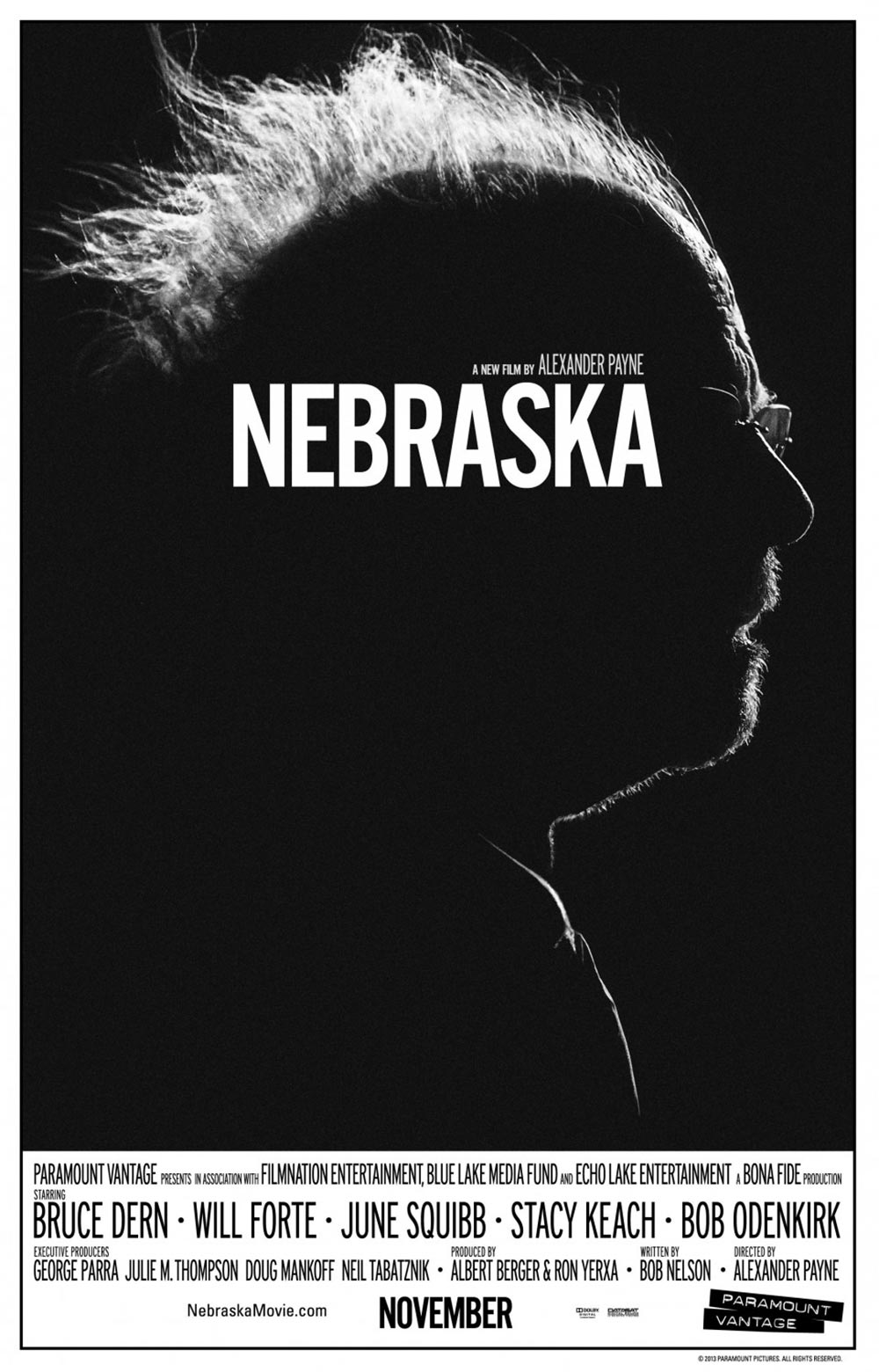
Nebraska (2013)

★★★★

Director: Alexander Payne

Release Date: December 6th, 2013 (UK); January 24th, 2014 (US)

Genre: Adventure; Drama

Starring: Bruce Dern, Will Forte, June Squibb

Alexander Payne truly has a knack for relaying the road story on screen. You need more than an echelon of soul, characters whose individual hearts collectively beat in time with the narrative, and a narrative that quips comically, evolves raucously and affirms genuinely. In Sideways, he created a cinematic Everest, a pinnacle that will require something pretty spectacular to reach. And although Nebraska — Payne’s latest venture into the genre that sees characters finding their way around town before finding themselves — doesn’t quite reach the Sideways summit, it’s still a comforting, humorous and reminiscing ride.

Absolutely dead-cert he’s stumbled upon a one million dollar sweepstakes letter, getting to Lincoln, Nebraska is the first, last and only thing on Woody Grant’s (Bruce Dern) torpedoing mind. If it weren’t for highway patrol, he’d have walked there. His end goal momentarily scuppered by the confines of a police station and a sigh-fully approaching son, Woody mentally prepares a case for action. Because in his eyes, there’s a mound of cash crying out to him at the end of a Nebraskan road. Son David (Will Forte) believes the letter is a scam, and initially denounces Woody’s nonsensical intentions. However, after a number of persistence-driven incidents, David agrees to chauffeur his father towards the elder’s prescribed destination; probably not out of curiosity, rather, in order to spend time with his ageing old man.

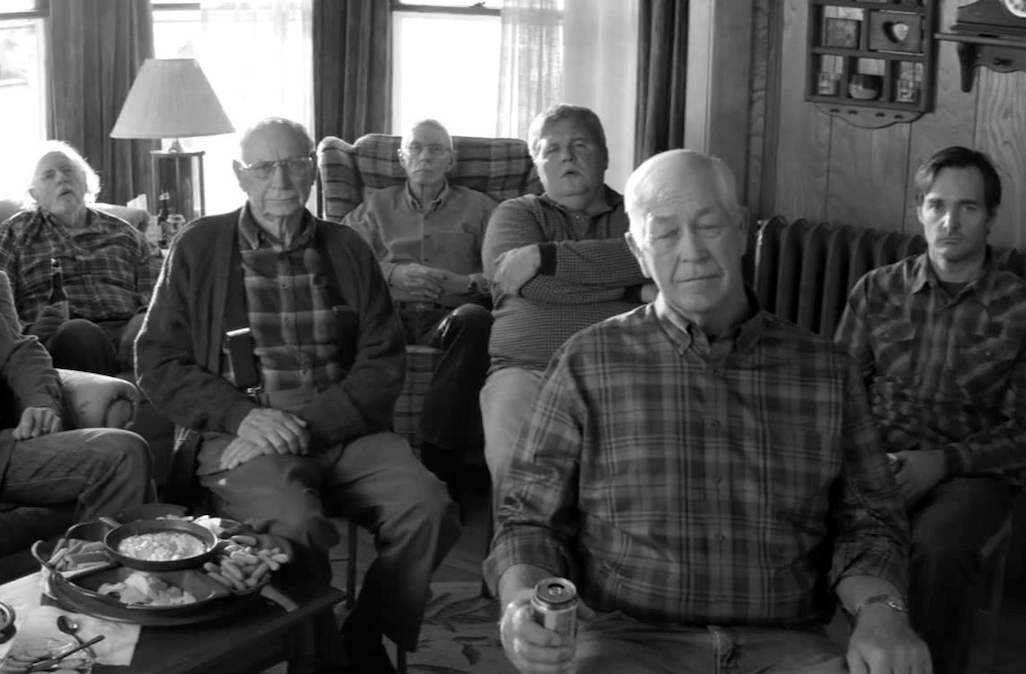
From its elegant cinematography to a perfectly poised story, Nebraska evokes a sense of accomplishment and craftsmanship. Of course, the road-trip mantra will always centre on character study, and it’s no different here. However to not acknowledge the technical prowess on display would be doing the film a disservice. The black-and-white scape works both as a visual appeasement and as a narrative cog, as it represents not only the blunt tone, but also Woody’s depreciating mind and somewhat selfish outlook. In composing a curtain of sound, Mark Orton infuses proceedings with a Wild West twang, harking connotations of the primitive western ‘every man for themselves’ adage. Technically, the film is better than proficient. It is wholly engaging.

Having communicated the industrial superlatives, I ought to focus on the film as a depiction of characters, because without doubt Nebraska is about people and family and relationships. Those, and the subsequent pile of complex baggage associated with such humanistic tendencies. Although Woody isn’t the most amiable chap — his monetary determination prevails above all else — the viewer still sympathises with him to the point where you are subliminally rooting for the lead to walk away with a heap of cash, if only to see him smile. Bruce Dern embodies the retired Woody in all his stout manliness (“I served my country, I paid my taxes”), a portrayal that in many other hands would sway towards generic, yet Dern emits realism. But he’s also frail and his exuberance is quenched before it really gets going, demanding many a refuelling tavern trip.

Will Forte is the caring son David, who stands by his father through thick and thin. Forte must act as a sufficient bumper against all of Woody’s grouchy impulses, a challenging task if there ever was. The duo are essentially a two-man act, strained as a pairing but valiant against any external threat (much like Miles and Jack in Sideways). Enter June Squibb as mother Kate, the experienced firecracker of the family, whose hilarious opening statement sets the tone for her appearance: “You dumb cluck!” The withered status of Kate and Woody’s relationship is prevalent throughout, but it’s a natural abrasion brought on through years of being together, rather than simply a clash of personalities. Squibb impeccably channels her character’s outspoken demeanour into one of protection over Woody.

Bob Nelson’s screenplay is terrific, and Alexander Payne coats an affirming lesson with crude comedy. As father and son settle down at a family gathering alongside a ramshackle troupe of wordless Woodys and ditsy Davids, we watch that familiar social awkwardness at its most humorous. Cousins Cole and Bart insist on mundane car conversations, but at least someone is trying to cover over the cracks of silence. “Cole here did some jail”… maybe silence was the way to go after all. And it’s that tonal take-no-prisoners style that the film thrives on. Yet, there is a dramatic strand running throughout, one that takes its subject matter seriously. Woody is old. His senses are dwindling; he walks along motorways and unwittingly unveils his perceived monetary gain to strangers and enemies. This melancholic exercise on advancing years and losing oneself is relatable — everybody gets old, and many of us have spent time with elderly loved ones. Whilst Woody’s millionaire claims are momentarily amusing, they’re also sad in reflection as we see judgement fail him. At one point, you question Woody’s actual intentions: to chase a false dream, or to live and relive a reminiscent present? For David, the road-trip is a touching venture of discovery about the wholesome life endured by his father, a man you don’t get the impression David knows all that well, despite their familial ties.

Nebraska is another successful excursion for its director. Suitable in its simplicity and subtle in its sensitivity, the film is spearheaded by three admirably relatable performances. At the end of it all, Payne reflects on trust, on bonding, and on seizing the moment. It’s nothing groundbreaking, but it is, to quote Woody himself, “Pretty good”.