Myths at the Movies

Myths don’t necessarily have to be true. In fact, more often than not they are false. The attraction of a myth, at least for me, is not that it is true, but rather the mystery surrounding its authenticity. The sort of ‘imagine if that actually happened?’ feeling. Some are scary, others funny, and many just plain stupid.

Recently, I have found myself traversing across the internet in search of popular movie myths (I have a lot of spare time on my hands). The myths in question range from the unnervingly accurate, to the outright preposterous. For something a bit different, I am going to write about a few of these wacky myths. You may have already heard of some of them, but hopefully there’ll be a few new ones for you to absorb.

The Wizard of Flaws

One of the most popular film myths, and one that has been around for years, is the Munchkin suicide myth from The Wizard of Oz (1939).

Apparently, if you look closely enough, at the point during the film where Dorothy and her companions are skipping along the road you can see a Munchkin’s silhouette hanging from a tree. I know what you are thinking: why start off by writing about something so horrible? Fear not. The suicidal Munchkin actually turned out to be a rather large bird stretching its rather large wings. As a matter of fact, the Munchkin actors had yet to arrive on set for filming by that point. This myth garnered so much momentum that BBC News picked up the story back in 2006. Here’s the scene on YouTube, along with a user’s attempt to debunk the myth completely.

It is all a little confusing, but I think it’s safe to say that this myth is nothing more than just that — a myth.

Exorcising The Exorcist

Up next we have a whole host of myths associated with just the one film (and a scary one at that), The Exorcist (1973). Some of these are not really myths at all — the vast majority of them are true.

“It looks colder in there than out here.”

Stories from the set claim that director William Friedkin went to abnormal lengths to create an organic scare-factor: he kept the room that Regan (the daughter at the centre of the film, played by Linda Blair) slept in — and where a large percentage of the film was shot — at freezing cold temperatures, inviting icicles to form around the girl’s face. Friedkin also fired live ammunition behind priest Damien Karras (Jason Miller) in order to get a sufficient fright out of him. The director even slapped Father William O’Malley (a real life priest who also played one) in the face right before an emotional scene. I’ve heard of method acting, but method directing? Sheesh.

That ain’t all from the set of The Exorcist as far as myths go. Remember the freezing room? Friedkin ought to have invoked even lower temperatures; after filming finished, a studio fire caused the whole house to burn down — only, Regan’s bedroom remained unscathed. There are even those — evangelist Billy Graham — who believe the celluloid rolls of film still harbour evil. The final, and most unfortunate, myth aligned with The Exorcist suggests that any person involved in production will be cursed for life. Jack MacGowran and Vasiliki Maliaros, who played a film director and a mother respectively, sadly passed away before The Exorcist was released in cinemas. Eerily, both actors’ characters die in the film too.

Weird, right? Perhaps a mixture of truth and exaggeration, but The Exorcist remains one of the most mythical films in existence.

In The Jungle

On to something a bit more cheery then, as we take a trip to Africa where some unsuitable hidden messages can be found loitering in The Lion King (1994), or so it may seem.

A nighttime scene shows a sad Simba slumping down onto the mossy ground below. That slump sends various bits and pieces from the turf up into the air, only for the fragments to spell out the letters “S-E-X”. Well, well, well. Those Lion King animators sure do have dirty minds. Or perhaps they innocently intended to spell out “S-F-X” in order to pay homage to the sound department. Certainly, the mother whose child alerted her to the ambiguous wordage didn’t see the term as a friendly inter-crew acknowledgement.

This one could go either way. It is difficult to make out each letter from the video above. Hey, maybe somebody who has seen The Lion King in 3D can let us know?

The Rescuers need Rescued

Sticking with the world of animation for the time being, let’s take a look at another potentially egregious myth. If you think spelling out “sex” was bad, just wait until you see what someone managed to sneak into The Rescuers (1977).

“Don’t look, there’s something over there that hasn’t been drawn by a pencil!”

That’s correct, the innocent film about two little mice who just want to help other little mice. It just so happens that, on their way to rescuing those other mice, our two heroes unwittingly pass something not quite as animated as the rest of the film (well, it’s not animated in the literal sense at least). Hanging from a window in the background behind our furry friends is an image of a topless woman. How did it get there? I guess we’ll never know. It could be that someone in post-production slipped the image into the film. Or maybe it was simply a complete accident (yeah… right).

One thing that we can be absolutely certain about is that this myth is completely true — all you need is a pair of working eyes to see it. Though it appears even well-functioning eyes were absent back in 1977 because it took Disney until 1999 to correct their X-rated mishap. A bit late to the party if you ask me.

Ill-diana Jones

Harrison Ford is arguably most well-known for his exploits as Indiana Jones, from where our next myth emanates. This is definitely a favourite of mine.

During the filming of Raiders of the Lost Ark (1981), the unfortunate Ford had developed a nasty case of dysentery, making him more popular with the bathroom than the film set. Ford, required to execute an almost four-page-long fight scene with a scimitar warrior, asked director Steven Spielberg if he could film the scene a little differently. And that he did just that — take a look.

Simple. Effective. Hilarious. Spielberg enjoyed the new version so much that he ensured it made the final cut. Good old dysentery.

Slash and Burn

The Texas Chain Saw Massacre (1974). The myth here is that the events depicted in the film actually happened. Eugh.

“Wait. You’re telling me some us these myths are true?”

That’s correct — a chainsaw-wielding family of cannibals who slaughtered and ate their victims, actually existed (hopefully past tense is applicable). This is also backed up by the film’s home video release synopsis which reads, “This film is an account of a tragedy which befell a group of five youths…” and, “This video cassette is based on a true incident…” The low-quality, seedy and grainy aesthetic of the movie actually backs up this myth.

The question is: was this just a ploy used by the filmmakers to darken the reputation of the film and get it noticed? Maybe. But it turns out some of the events on-screen do have connotations with a real life serial killer named Ed Gein, from Wisconsin. He was something of a mama’s boy and he did murder people, which is as far as the similarities go. The characters are fictional, the setting is fictional, and the chainsaw undertakings are probably somewhat fictional too. I hope.

Three Men, a Baby and a Ghost Boy

After all of that chainsaw stuff, I think it is best to end on a slightly more positive note. Or rather, a slightly more stupid note.

He’s behind you.

For this myth we must branch off over to the set of Three Men and a Baby (1987), and the myth of the child ghost. Spooky. Indeed, the tale goes that a young boy was killed on the set of the film and that, just for a laugh, he decided that he wanted to be a part of the final cut — positioning himself behind a curtain during this scene to the right.

See? That’s him alright. The young boy who met his untimely demise on the set of one of the biggest films of 1987, and whose death was obviously swept under the rug to avoid any backlash. Not quite. It’s actually just a cardboard cutout of actor and star of the film Ted Danson, a prop meant to be used elsewhere in the film that was accidentally left on set. Those damn tricky cardboard cut-outs; you can never predict what they might get up to in their spare time, but pretending to be a ghost boy is a new low.

I love myths in general, so when they’re combined with cinema it grants them an additional layer of intrigue. Hopefully you enjoyed reading about some film myths and — like me — spent some time laughing at the sheer idiocy of some of them. If you know of any more then please feel free to share them in the comments section below. Thanks!
Shockingly Good Television

Warning: There will be spoilers (and blood, probably).

Bear with me here, for I am still reeling from last night’s instalment of Game of Thrones (“The Rains of Castamere”). Having recorded the episode to watch later, I browsed through Twitter only to discover an outcry of shock, fury, tears and every other emotion that is not necessarily a positive one. ‘The Red Wedding’ as I believe it is commonly known as amongst dedicated fans of the show (the ones who know everything about everyone, like those guys on Sky Atlantic’s Thronecast — very impressive) certainly lived up to the hype and proved itself to be one of the most shocking television moments I have ever witnessed. If you do not watch Game of Thrones you are missing out — and are also probably a bit fed up with the content that the internet has relentlessly regurgitated over the last day or two.

Therefore, rather than another top five films from me today, I have decided to pick my most shocking television moments. I must stress that I have not seen every television show in the world (in actual fact, I really have not seen that much — particularly older shows), therefore if a stand-out scene from the television show that you watch is not included then it is probably because I have not seen it yet — I have never seen Dexter or Breaking Bad, for example. No, these are the most shocking moments from the shows that I have watched. Also, they are in no particular order, because that would call for more effort than I can muster up after last night’s Game of Thrones malarkey.

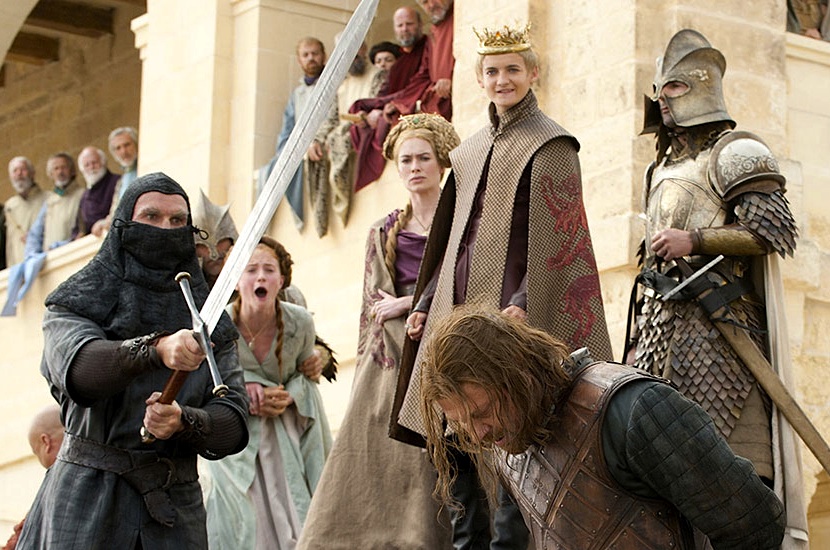
Ned Stark’s beheading — Game of Thrones

(Season: 1, Episode: 9 — “Baelor”)

“I hope that’s a rubber sword.”

After being betrayed at the hands of the Lannisters following Robert Baratheon’s death, Eddard Stark, Lord of Winterfell, is executed in front of a clamouring crowd at King’s Landing.

This was the audience’s first warning from author George R.R. Martin and show creators David Benioff and D. B. Weiss to stop watching if we did not approve of the death of main characters – because it is going to happen. A lot, evidently. There are three things make this so shocking: the shows willingness to kill off main characters without hesitation; the presence of Ned Stark’s two daughters, Sansa and Arya, at the execution; and King Joffrey’s ruthlessness and lack of mercy towards Stark, even after the latter had confessed to treason and sworn allegiance to the Lannisters. That Joffrey is a bugger. The only unsurprising aspect of this death is that it was at the expense of Sean Bean.

Jack is ordered to kill Ryan Chappelle — 24

(Season: 3, Episode: 18 — “Day 3: 6:00 a.m. — 7:00 a.m.”)

“Dude, i missed.”

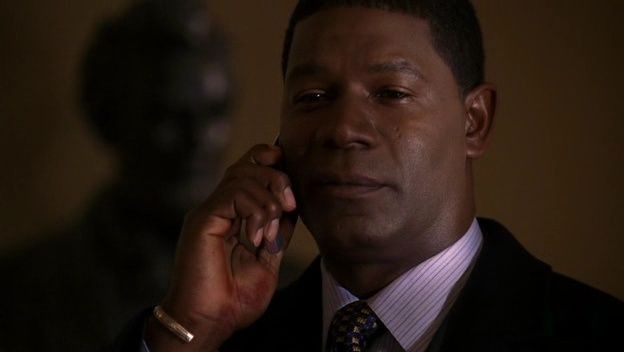
As a result of their inability to find terrorist Stephen Saunders in time, Jack Bauer is ordered to kill CTU’s Regional Division Director, Ryan Chappelle.

Although he was never the most popular character in the show, the death of Ryan Chappelle was certainly despairing, not to mention unexpected. This cemented Bauer as a man willing to do whatever needed to be done in order to save the majority. The direct involvement of the President of the United States, David Palmer — he was the one who assigned the task to Bauer — makes this all the more shocking. Chappelle’s revelation that he had no friends or close family, along with Jack’s apology for failing Chappelle, only added to the sombre nature of this scene, telling fans of the show that, sometimes, the bad guys really do get their own way.

Life on Mars/Ashes to Ashes are both set in limbo — Ashes to Ashes

(Season: 3, Episode: 8 — “Episode 8”)

“Pub?”

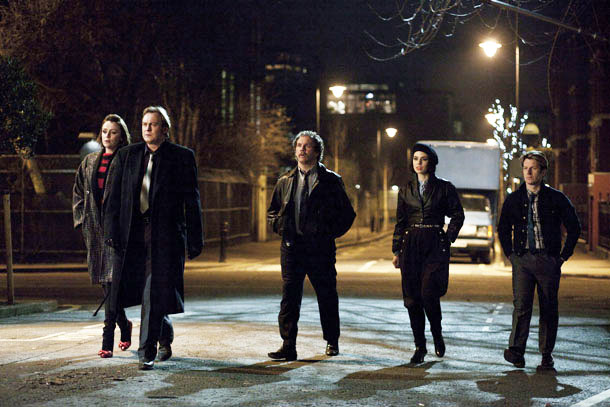
It is revealed that Detective Gene Hunt and the rest of the police officers (including Alex Drake and Sam Tyler) are all dead and left lingering a form of purgatory.

This one caught me off guard, mainly because I was expecting a completely different ending (one which I cannot remember — it was three years ago). It turns out that every episode in both Life on Mars and Ashes to Ashes is actually a depiction of “restless” police officers who are, unknowingly, seeking a way to “move on” — symbolised by ‘The Railway Arms’ pub. Hunt is the only character who has known this from the beginning, and has been acting as a guide for newly bereaved officers. The limbo explanation is not the most shocking on the list, but it was a nice twist and a fitting end to the show.

Rick kills Shane — The Walking Dead

(Season: 2, Episode: 12 — “Better Angels”)

“That’s not how you play Statues!”

Knowing that a troubled Shane is about to kill him, Rick is forced to turn the tables and act first against his best friend.

The death of Shane at the hands of Rick is arguably the most shocking, and heartbreaking scene, to come out of The Walking Dead thus far. Again, the death of a main character plays a part in the shocking nature of this scene, but the emotional attachment to both characters is also a major player. The audience had known that something was brooding between the pair since the beginning of season one as a result of Shane’s affair with Rick’s wife Lori, but for it to result in the death of Shane was certainly alarming. The proof is in the pudding as far as ratings go, because as a result of Shane’s untimely demise, the episode after this one (Episode 13, “Beside the Dying Fire”) drew over nine million viewers, up from just under seven million this time around, and breaking all sorts of records at the time.

Dr. Thredson is Bloody Face — American Horror Story: Asylum

(Season: 2, Episode: 5 — “I am Anne Frank (Part 2)”)

“I’m too old for this.”

Lana discovers that the man who has helped her escape the asylum, Dr. Thredson, is actually the brutal serial killer, Bloody Face.

Throughout the second season of American Horror Story, the burning question had been: who is Bloody Face? Though many were accused, it was Kit Harrington, a young man blamed for the disappearance of his wife, who was singled out eventually. It sort of made sense (well, apart from the audience more or less knowing it was not Kit due to events broadcast at the beginning of the season) that he was the killer, right? Wrong. It turns out Bloody Face was actually the doctor assigned to help both Kit and Lana, Dr. Thredson. In case you have never seen American Horror Story before and are unaware, it really is, well — mental. This is definitely not the most shocking event on the list, but having Zachary Quinto portray an evil, nasty and downright creepy serial killer was a touch of genius at the pens of the writers.

The flashback is actually a flashforward — Lost

(Season: 3, Episode: 22/23 – “Through the Looking Glass”)

“I left my shaving kit on the island… WE HAVE TO GO BACK!”

Jack’s apparent flashbacks throughout the episode are revealed to be flashforwards, divulging that he and Kate have both escaped from the island somehow.

“We have to go back!” And just like that, Lost hits another home run. This one really blew me away. Known for its signature flashbacks throughout the first two seasons, and majority of the third, Lost creators J.J. Abrams and Cartlon Cuse, masterfully lulled viewers into a false sense of security as Jack’s flashbacks in the finale of season three turned out to be flashforwards, revealing that he and Kate (who is meeting Jack in the scene) were off the island. For the first time in 72 episodes, the audience finds out that some characters have left the island – the whole aim of the characters in the show in the first place. In true Lost fashion, viewers were left with an almighty cliffhanger, with so mention questions remaining unanswered: How did they get off the island? Who else is off the island? Why does Jack really want to go back? And so on. By a distance this is one of the most shocking and surprising moments on this list — it still gets me to this day!

David Palmer’s assassination — 24

(Season: 5, Episode: 1 — “Day 1: 7:00 a.m. — 8:00 a.m.”)

“I want to play a game.”

As he is discussing his memoirs with his brother, David Palmer is shot in the neck by a sniper, and killed.

The assassination of former President David Palmer kicked off season five with a massive bang. Not only was he very popular amongst fans (at least in my view), it also appeared as if the show was gearing up for another season dominated, in part, by his presence. But it was not to be. There are a number of elements linked to Palmer’s assassination which made it so shocking: the attempted murder of fellow prominent individuals in the show, Chloe O’Brien, Tony Almeida and Michelle Dessler (the latter was successfully eliminated) and the revelation at the end of the season that the man behind the orders was current President, Charles Logan. This one came out of absolutely nowhere, particularly for me as I did not watch the series when it aired (presumably word had gotten out that Dennis Haysbert, the actor portraying David Palmer, was leaving the show). 24 had a knack for surprises, but this was certainly one of the most shocking.

Carrie blows her cover in front of Brody — Homeland

(Season: 2, Episode: 4 — “New Car Smell”)

*I’m too good – she’ll never find out.*

Having been unsuccessful at getting Brody to admit he is working with a terrorist, Carrie storms into his hotel room and exclaims she knows who he is and what he is doing, before Brody is taken into custody.

It was fairly obvious that something similar to this was going to occur at some point over the course of the season, but not as early on as episode four. Carrie, believing Brody is on to her after a briefly showing anger during a conversation between the two of them, ends up storming up to his hotel room — with nobody else around — and blowing her cover in front of him. This was a tremendous moment in the shows short history, as the audience was provided with another amazing performance from Claire Danes (and Damian Lewis). As I mentioned a moment ago, this happened so early on in the season that it was hard to believe — at the time I wondered how the writers were going to fill another eight episodes. Thankfully the scene was more than warranted, as the happenings in this episode ended up prefacing events which occurred in the best episode of Homeland thus far — “Q&A”.

Ross says the wrong name at the altar — Friends

(Season: 4, Episode: 24 — “The One with Ross’s Wedding”)

“Wait… you’re not called Rachel?”

As he is in the middle of saying his vows during his wedding to Emily, Ross accidentally blurts out Rachel’s name instead.

Of all the names, Gellar. This was probably a lot more awkward than it was shocking, but it still was shocking nonetheless. The most unexpected moments are often left for the end of an episode, or better yet, the end of a season, and this one closed season five — leaving viewers reeling. The Ross/Rachel dynamic was more or the less the core of Friends throughout the shows existence, and I am willing to bet that the vast majority of fans did not want Ross to marry Emily when this episode aired (in 1999 I was watching Scooby-Doo, not Friends… I still watch Scooby-Doo), so when it looked like there was nothing else stopping the marriage from happening, Ross, in all his glory, surprised everyone — including himself — saving the day in return. Another great moment which kept the audience guessing and left them in high anticipation of season six, I am sure.

Charlie’s death — Lost

(Season: 3, Episode: 22/23 — “Through the Looking Glass”)

I have nothing.

Charlie sacrifices himself to save Desmond, after turning off the transmission blocker and potentially saving everyone else on the island.

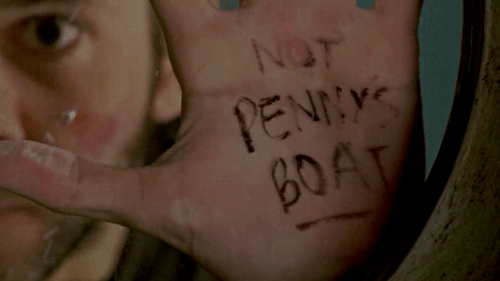
The finale of Lost season three really was a shocker alright. In fact, this particular moment is the most shocking in my experience of watching television shows, more so due to who was involved and what was happening to him, rather than it happening out of nowhere. Around the middle of season three it became apparent that Desmond could see into the future and had foreseen Charlie’s death. After Desmond had saved Charlie various times, everyone (well, me) began to believe that Charlie no longer had death in his foreseeable future. That was, until that damn Jack needed somebody to swim to an underwater Dharma station and turn off the transmission blocker. But again, after Charlie had swam down (followed by Desmond) and turned off the jammer, it appeared that he was in the clear. That was, until that damn Mikhail started flooding the station with water. Unselfishly, Charlie locked the door of the room he was occupying in the station in order to contain the flooding, whilst at the same time warning Desmond that the boat near the island was not Penny’s. A highly emotional moment. Somebody pass the tissues.

The end of Matt Smith as The Doctor — Doctor Who

(Christmas Special 2013)

It has not happened yet, but when it does I will weep.

I know Matt. I feel the same way.

So there they are, some of the most shocking television moments I have witnessed. Little Mo clobbering Trevor with an iron was another one that did not quite make it. As I wrote earlier, I have not seen every television show that has ever existed, and therefore I imagine there will probably be a second part to this blog post when I have watched more — hopefully including scenes from shows like Boardwalk Empire, Sons of Anarchy and Dexter.

Comment below with the small screen moments that shocked you the most if you like!

CBF’s Genre Toppers: Comedy

After spending most of the day trying to fix my laptop (and succeeding, evidently) I think some laughs are in order. Therefore, it is time for five funny comedies! Everybody loves to laugh and there are not many better places to go than the cinema to be prompted in that direction. I have been a fan of comedy for as long as I can remember and the great thing about the genre is that it does not discriminate — everybody enjoys it.

Anyway, let the hilarity ensue!

Johnny English (2003)

I am okay with this.

Released in 2003 and directed by Peter Howitt, Johnny English stars the incomparable Rowan Atkinson as the title character and the only British spy left in action after an attack on MI5. English — confident, yet lacking in the intelligence department — is tasked with finding the perpetrator of the attack and recovering the stolen Crown Jewels, with assistance from the far more capable Interpol Agent Lorna Campbell (Natalie Imbruglia).

This is the one of the first comedy films that I can remember watching and laughing uncontrollably at throughout. Rowan Atkinson really is a comedic genius, with everything from his facial expressions to his timing absolutely spot on here. The film acts as a sort of parody of James Bond, and Atkinson is exceedingly good at making the audience root for a rather unintelligent, out-of-depth British spy. There are a few particularly funny scenes (the sewers), but in general the film is bursting with laughs. Natalie Imbruglia does a fairly good job at portraying English’s more sensible partner, although the apparent romance between the two is a little far-fetched (I guess that is comedy though, right?). John Malkovich hits just about all the right notes as the villain of the piece with his dodgy French accent (it only adds to the humour) and sublime hair.

Johnny English does not attempt to take itself too seriously and this works in its favour as the film delivers barrels of laughs and entertainment.

Silver Linings Playbook (2012)

“Come on! Bin bags make great clothes, we could sell millions of these!”

The first film to be nominated in all four acting categories at the Academy Awards since 1981, David O. Russell’s Silver Linings Playbook stars Jennifer Lawrence and Bradley Cooper as recently widowed sex addict Tiffany Maxwell and bipolar Pat Solitano, respectively. After being released from a psychiatric ward, Pat’s primary aim is to reconcile with his ex-wife who wants nothing to do with him. Meanwhile, having just lost her husband Tiffany has her focus on an upcoming dance competition. After the two meet, they agree to help each other out with Tiffany ensuring Pat’s letters reach his ex-wife, as long as he partners Tiffany in her dance competition.

Well that was a long synopsis. The first thing to say here is Jennifer Lawrence is the greatest living being and Bradley Cooper have tremendous chemistry which more or less makes this film as good (and funny) as it is. They work so well together, in fact, that they are working together on another two future films, one of which David O. Russell is back directing. Lawrence is absolutely on fire at the moment (no pun intended) and can do wrong, and Cooper has put in a steady stream of really great performances in recent films such as, The Place Beyond the Pines and Limitless. It is no surprise, therefore, that the foundation of all things good about Silver Linings Playbook is in the dynamic between the duo. Combine that with a witty, energetic and sensitive script, along with magnificent supporting actors like Robert De Niro and Jacki Weaver and you have a very funny but also very moving film.

Much has been said about this film’s careful depiction of mental illness and how positively it is put across on-screen, but purely in terms of comedy, Silver Linings Playbook is up there with the funniest films in recent years.

Ferris Bueller’s Day Off (1986)

“For the hundredth time, the camera’s this way!”

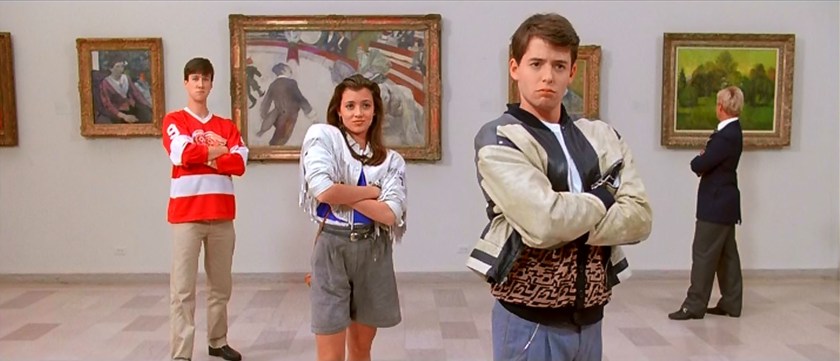
Next, we take a trip back to 1986 where Ferris Bueller’s Day Off has just graced cinemas around the world, garnering much critical acclaim. Matthew Broderick stars as Ferris Bueller, a teenager who decides to take a day off school (imagine that?) with his girlfriend Sloane (Mia Sara) and best friend Cameron (Alan Ruck), where they go out and explore their freedom whilst simultaneously attempting to avoid the school principal in any way they can.

It took me a long time to get around to seeing this film, which is regrettable because it is one of the best feel-good comedies out there in my view. In terms of sheer laughs, Ferris Bueller’s Day Off probably is not the funniest on my list, but it certainly is the funnest. Be it the inventive ways the trio try to avoid the principal or the principal himself’s various ordeals throughout, this film grasps the ‘be positive’ attitude more than any other I have seen. Broderick, Sara and Ruck work well together in the three prominent roles, with Broderick keeping the audience on their toes as he breaks the fourth wall a number of times — this I thought was an interesting ploy used by director John Hughes and one which worked well. Jeffrey Jones is hilarious as the principal (or ‘Dean of Students’) and makes a more than adequate nemesis opposite the trio.

John Hughes has a brilliant knack for comedies and Ferris Bueller’s Day Off is definitely one his more heartfelt, if not one of his funniest.

In Bruges (2008)

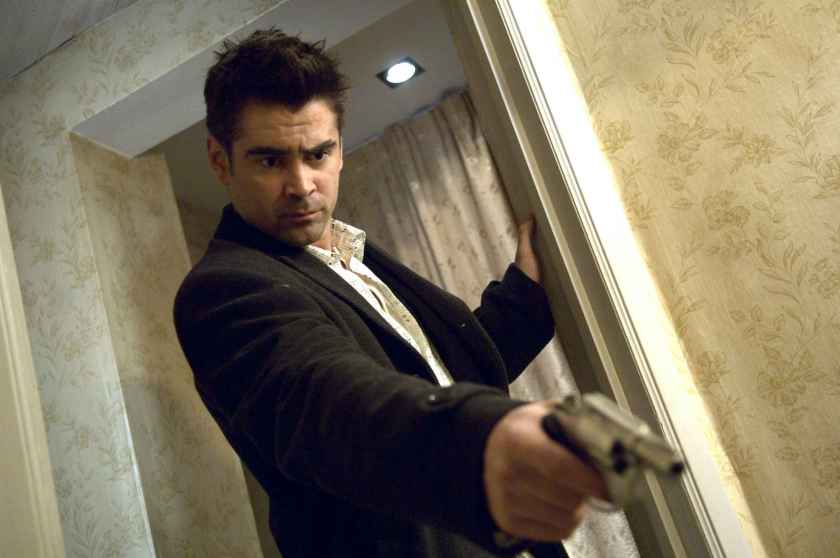
Directed by Martin McDonagh, In Bruges was released in cinemas back in 2008. It stars Colin Farrell and Brendan Gleeson as two Irish hitmen who are relocated to Bruges, Belgium after a hit goes wrong. But what they believe to be another job turns out to be something else entirely.

“Man, you’re small.”

Since its release in 2008, In Bruges has gone on to claim cult status and is regarded as a classic by many. McDonagh’s brand of black comedy is in full force here, and both Colin Farrell and Brendan Gleeson deliver it with ease. The two leads are hilarious in their roles, playing off each other to great effect and both generating much empathy from the audience, particularly Farrell whose character, Ray, has played an accidental role in the murder of a child. McDonagh’s sense of direction comes through in abundance here, with each character playing an important part in the film and each scene executed with finesse. The Bruges setting is beautiful and greatly adds to the poetic nature of the script and the fairy tale aspect of the film. Although this is primarily a comedy, there are a few touching moments which take the film above and beyond the comedy genre. Ralph Fiennes and Clemence Poesy are both effective in, metaphorically, very different supporting roles — the former about order and conviction while the latter exudes freedom and new beginnings.

In his directorial debut, Martin McDonagh has created a gem in In Bruges: often hilarious and occasionally touching, this is a winner.

O Brother, Where Art Thou? (2000)

O Brother, Where Art Thou? opened in cinemas in 2000 and is directed by the Coen brothers, Joel and Ethan (although Ethan is uncredited). Set amid the Great Depression in 1930s America, it stars George Clooney, John Turturro and Tim Blake Nelson as three convicts — Ulysses, Pete and Delmar, respectively — who escape capture in order to search for hidden treasure, whilst evading a lawman who is in pursuit.

“My ears are burning. Can anybody smell smoke?”

This is just fantastic. I first watched this in school (school finally comes up trumps) and have been a big fan ever since. The rural Mississippi setting creates a dusty, woody atmosphere (which is by no means a bad thing), shoving the three leads right into the heart of the hardships of the depression in 1930s America. With nothing but themselves and their brains — well, Ulysses’ brain — to keep them on the correct path, they must rely on trust and luck more than anything else. The Coen brothers, as I have mentioned in one of these blogs previously, have an exceptional eye for selecting locations to film and, more than any other film on this list, the dusty plains of rural Mississippi are unequivocally suited to the mood and script of O Brother, Where Art Thou? In terms of the script, it is witty, wacky and insightful and is delivered with nothing but enthusiasm by Clooney, Turturro and Nelson. Of course, I cannot forget about John Goodman, who is very funny playing the brash, obnoxious Bible salesman “Big Dan” Teague. There are plenty of laughs woven throughout the film and they all hit the mark without going overboard — this film is out there at times, but not too far out there. Finally, the soundtrack is rich and hugely satisfying, giving the film a nice twang.

O Brother, Where Art Thou? is another corker from the Coen brothers, full of quips and ambition. It is a triumph in filmmaking in my opinion.


Here are a few honourable mentions, films that I really like but not quite as much as the aforementioned five:

Planes, Trains and Automobiles (1987) — The original comedy road trip film, Planes, Train and Automobiles sees Steve Martin and John Candy unwittingly team up in order to find a way home for Thanksgiving, but not without a few mishaps on the way.

American Pie (1999) — The raucous teen comedy which paved the way for more like it, the original American Pie is by far the funniest and probably the least offensive. You do not need to be offensive to be funny, right?

Bruce Almighty (2003) — Jim Carrey is in full comedic flow (facial expressions and all) in Bruce Almighty as he portrays an unlucky guy who is given God’s job for a week. Chaos, commence.

Dodgeball: A True Underdog Story (2004) — Alongside Johnny English, Dodgeball: A True Underdog Story is one of my long-standing favourite comedy films, and it is still as funny now as it was back in 2004. Yes, it is still dodging those wrenches.

The Hangover (2009) — Hopefully Kermode won’t see this.

Which films make you laugh the most?