The Guest (2014)

★★★★

The Guest PosterDirector: Adam Wingard

Release Date: September 5th, 2014 (UK); September 17th, 2014 (US)

Genre: Thriller

Starring: Dan Stevens, Maika Munroe, Brendan Meyer, Sheila Kelly

Hot on the heels of their inverted slasher jaunt You’re Next, director Adam Wingard and writer Simon Barrett are back with another bold outing. The Guest moves along purposefully, fuelled by a pulpy beat that adds to its wholesale allure. In some ways it’s one of those that is difficult to consume in a single sitting — there are so many astutely placed kinks to pick out and admire.

Yet, the story is simple. A generally agreeable tale that would undoubtedly flounder in lesser hands. Wingard and Barrett are too committed to let matters evade them and The Guest thrives as a result.

As she opens the door to a stranger whom we later come to know as David (Dan Stevens), mother Laura Peterson (Sheila Kelly) is still wiping from her face the fresh and presumably frequent tears brought on by the thought of her son’s death in Afghanistan. David claims to be the deceased soldier’s squad mate, having stopped by in order to uphold a promise and offer his condolences. His presence immediately fills a gap and the popular David finds himself around for the long haul. Only, something about the visitor doesn’t sit correctly with daughter Anna (Maika Munroe).

It’s obvious that the director cherishes each and every frame afforded to him as the screen is relentlessly tinged with meaning and inquisition. We’re gripped from the get-go, unable to shake of the taut dinner table ambience or Dan Stevens’ malice-sprinkled gaze. The Guest isn’t a conventional thriller because it doesn’t rely on snappy movements or authoritative language. There is a lot of weapon speech (“I’m a soldier, man. I like guns,” David reassures us) but the tension here lies almost universally upon the brow of the lead actor.

The Downton Abbey star is far from lord-like on this occasion, though Stevens does retain a resolute posture, unmoved and unflinching. When we first meet him he manifests as a fairly ordinary guy, a former soldier about to make his way back into society. A peculiar glance is at first distracting, and then nerve-jangling. Stevens gives off an impression of suppressed power; his character is always in control and, to make matters worse, the Stevenson family are completely unaware. They are caught in a charisma spell. So are we.

Frankly, the actor is brilliant, his simple delivery layered with complex volume and mysterious motives. It’s almost as if Barrett penned the character with Stevens in mind. Superseding said performance is the actor’s ability to consistently engage the viewer, to make us like him even though we are unequivocally aware that the chap before us is a dodgy guy. His iffiness pours from every crevice and, somehow, we cannot help but egg David on. This element centres the film and effectively pulls the various pieces together. Part thriller, part mystery, part character study, an immediate need to like David infects proceedings with a darkly comedic underbelly.

It’s dark. It’s devious. It’s horrible. And it’s bloody delightful. As Robby Baumgartner focuses his camera on David, carefully edging closer into his nasty glare, we become the devil on the wanderer’s shoulder and indulge in helpings of fun as a result. Wingard knows he is appeasing the genre audience every step of the way. The director has history, rewriting the pillars of horror to accommodate something different in You’re Next, and this mantra is once again capitalised upon here.

The other performances are somewhat overshadowed by the excellence of the lead actor, but it is worth singling out newcomer Maika Munroe’s work as the entranced-cum-anxious daughter. Anna could very easily have stumbled over into annoying territory, but Munroe just about reigns in the mood swings and does enough positive rallying to see her through unscathed. Sheila Kelly’s performance as devastated mother Laura is also commendable. We believe in her plight to keep David around, though misguided due to the loss of her son, and we can therefore sympathise rather than judge. In between moments of ill-advised glee, we ultimately care about the family.

The sheer abundance of solid work done beforehand enables us to forgive the overly ironic haunted maze finale, and instead pass it off as a humorously cheesy side order. Everything else is so good. If such an anomaly exists in our ever diverging cinematic universe, The Guest is intelligent popcorn entertainment. And if such an anomaly exists, Adam Wingard might be on his way to mastering it.

The Guest - Dan Stevens

Images credit: IMP Awards, Collider

Images copyright (©): Picturehouse
All Is Lost (2013)

★★★★

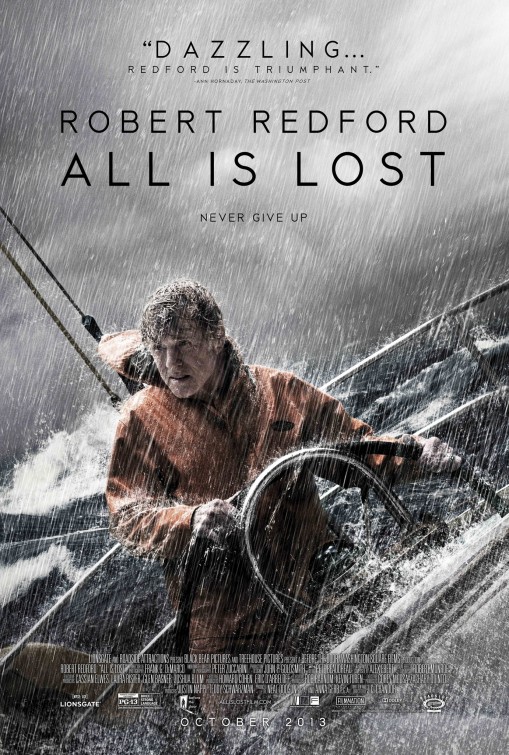
All Is Lost PosterDirector: J. C. Chandor

Release Date: October 25th, 2013 (US limited); December 26th, 2013 (UK)

Genre: Action; Adventure; Drama

Starring: Robert Redford

Robert Redford, in one of the most physically demanding roles to hit cinema screens as of late, is truly captivating in All Is Lost. But not in a flashy way. No, Redford is a loner here. An outcast, literally. He doesn’t talk much. Instead, nature does that for him. For this is a ferociously sounding film and one that, at just under one and three-quarter hours long, probably shouldn’t be as attention-clutching as it ends up consistently being throughout its runtime. There are limits exclusive to the genre, quite obvious at times, but those don’t really matter. This is a fine piece of filmmaking that boasts an even finer central turn from its lonely captain.

A man (Robert Redford) wakes up to an abundance of splashing water careering into his boat. Still half asleep, he ventures up top to check out the commotion and discovers a gaping hole in the vessel’s side caused by an errant shipping container. He doesn’t know it yet but despite fixing the damage in the short-term, the patched up hole is an indicator of the problems to come for the man, problems set to face exasperation at the mercy of an oncoming storm.

Such is the nature of the beast, All Is Lost serves up a very simple story. Man versus nature. There are only really two paths proceedings can slosh down; one, a venture towards the continuation of life and the other, quite frankly, death. Yet despite this perceived lack of narrative territory primed and ready for exploitation, what we see remains utterly captivating. Writer and director J. C. Chandor gets a lot of time out of his simple tale. The near two hour saga — a runtime that might ordinarily generate a tinge of doubt amongst viewers — surprisingly flies in, though given the filmmaker’s succinct track record perhaps surprise is not justified in this instance.

The storytelling is so easy, so uncluttered, that it becomes enticing. Watching Redford’s character patch up a damaged part of the boat transcends mundanity and evolves into something more. It is foreshadowing, but it is also life. This man’s life. He is a sailor and a carpenter. A geographer and chef. The simplicities are accentuated by Chandor’s precise direction and his natural screenplay, growing to the point where every action is must-see. All Is Lost emerges past the man too, though he is always at arm’s length, and considers nature as a pulsating force. The main centrepiece is a prolonged storm sequence that is noisy and intense. Wholly believable, it looks and sounds and presumably acts like a real storm, incessantly dangerous but not Hollywood-ised. We’re eagerly willing for it to pass.

Chandor utilises pathetic fallacy handily — though, admittedly, foreshadowing by way of some grumbling weather is a proposal already there for the taking. We see and hear the storm advance at the same time as Redford. There exists an incoming rush of dread as the captain bolts cupboards mechanically and secures glass bottles. Having said that, the anticipation isn’t overblown and nor should it be given the often low key approach of nature in reality. The inevitable punch carries more weight as a result, leaving Redford — and us — desperately clawing for some motion sickness tablets.

Robert Redford is undoubtedly the film’s infallible anchor. Aside from a sombre and somewhat playful opening monologue where we don’t actually see the actor, there is no verbiage whatsoever for the first twenty minutes. When the man (nameless due to a lack of necessity) finally utters words, he stutters as his throat is so lethargic. The ploy works because it isn’t really a plot. It’s another titbit of reality, one that captures the mood of solitude. Redford’s poise, his calmness laced with acceptance is magnificent. He never fully allows us into his thought process, maintaining a fairly stern stance. Therefore we’re captivated by what the sailor is doing and by what he is about to do — when Redford is analysing the wreckage, for instance. The actor purveys an uncanny grace in the face of turbulence and it is totally inviting.

In some ways, these traits pale in comparison to the sheer physicality of the role. We watch Redford engage in a heap of fixing and heaving and climbing and pumping, a quite miraculous measure given the actor’s advancing years. The eventual intrusion of heavy gale is relentless too, and in this regard Redford’s taxing demeanour adds both to the plight and strength of his lightly-worded character. His performance echoes that of Ryan Reynolds in Buried — we believe the struggle because the struggle is palpable and the sweat is dripping.

Credit should go to Frank G. DeMarco also, his cinematography presenting a quite wonderful setting. The film looks beautiful. Of course when shooting sunscapes that are cascading over waves of blue ocean, there already exists something of a platform to work from, but DeMarco’s excellent gloss aids our placement at sea alongside Redford. It is inventive too; diving with the vessel in a moment of peril particularly sticks out. This look is just one half of a lethal aesthetic duo, partnering up with the outing’s authentic audio. From the initial problem-causing container that groans in accordance, to the boat’s flapping sails caught in the wind, All Is Lost consistently complements our ears. Even the water has a voice, sometimes gentle and pondering, other times violently swelling.

The words ‘all is lost’ can be applied to much: materials that are swamped and destroyed by water; an aimlessly floating container; the doomed vessel; Robert Redford’s stranded, weary man. The film exists within a limited scope and there is only so much it can do, but a permanently laudable sole performance coupled with an incisive aesthetic ensures that All Is Lost a significantly worthwhile trip.

All Is Lost - Redford

Images credit: IMP Awards, Collider

Images copyright (©): Lionsgate, FilmNation Entertainment

The Last Days on Mars (2013)

★★

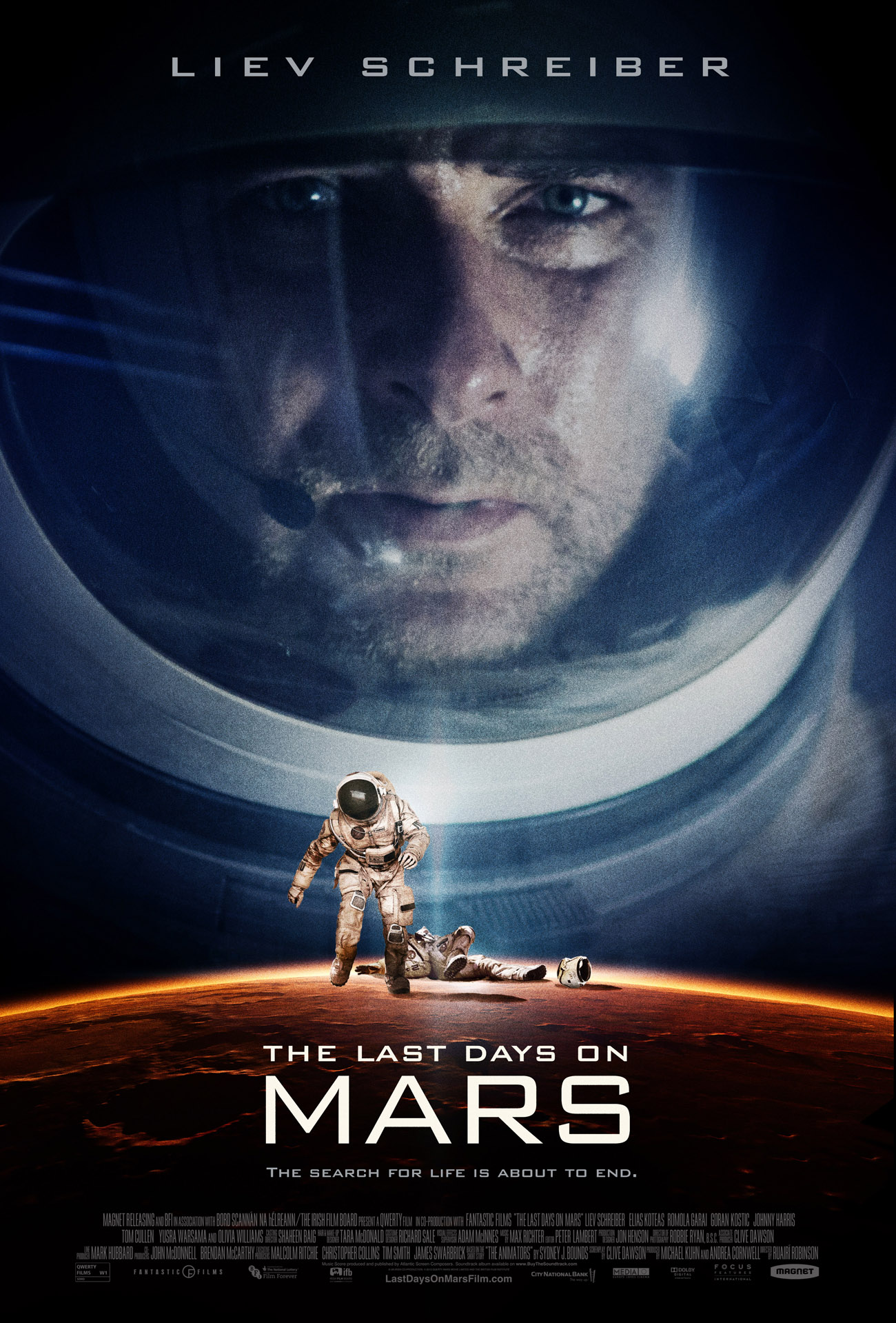
The Last Days on Mars PosterDirector: Ruairí Robinson

Release Date: September 19th, 2013 (UK); December 6th, 2013 (US limited)

Genre: Horror; Science-fiction; Thriller

Starring: Liev Schreiber, Elias Koteas, Olivia Williams

The Last Days on Mars begins with a fairly promising sequence that sees two characters attempt to navigate an approaching dust storm. They bat around bouts of small talk, clean-sounding due to the atmospheric vacuum, quickly establishing their roles in the process. The air is quite eerie, uncanny almost. For five minutes, Ruairí Robinson’s outing works. Unfortunately, for ninety minutes it doesn’t. This subtle, edgy poise rapidly loses out to a flimsy skeleton; plot, characters and decision-making all broken and seemingly unmendable. On the Sunshine scale, The Last Days on Mars drifts miles yonder of Event Horizon before landing worryingly close to Apollo 18. Eek.

Thirty years or so from now, a team of scientists stationed on Mars are less than a day away from extraction. The incoming Aurora spacecraft is set to shuttle the crew back to Earth, but not before Marko (Goran Kostić) can covertly investigate some odd bacteria that he has come across. His findings are extraordinary, indicating the primitive existence of some new life form. However the nature of said discovery proves to be horrifying, and subsequently puts the remainder of the team in immediate danger.

In translating to the big screen, sci-fi historically carries a fairly patchy record. One element that has consistently shone though, is how the genre permeates atmospherically. Vastness is vast, and filmmakers are essentially unlimited given the nature of space potential. The Last Days on Mars makes fine work of the opportunities on offer, parading a visual spectrum that is encapsulating for the most part, and an aura that meanders tactfully between normal and creepy. Cinematographer Robbie Ryan delivers more than any other, affording the piece its one true success story. It’s only fair to point out Max Richter’s occasionally disconcerting score too, his musical interludes apparently effective enough to land him recent gigs as part of The Leftovers and As Above, So Below.

Annoyingly, this eerie-cum-wondrous soundscape signals the end of all things positive. The film tries too hard to be a slasher when the setting is far better suited to a probing approach. For some reason director Robinson cannot wait to show off his monster, and as a result the reveal comes sooner than expected. Scare factor crumbling, we turn to chaotic, jerking camera movements surrounded by pitch black darkness, all fruitful cinematography gone. Slotted indiscreetly amongst the outpouring of brash-yet-monotonous horror are snippets of philosophical musings.

It is as if the filmmakers, having mismanaged or simply forgotten the science-fiction element of their piece, feel the best solution lies with invariably adding earthy monologues. (“Do you think any part of us survives after death?” says one character, the notion shot down in a flicker as the next creature attacks). At one point we float over into unintentionally hilarious territory as the group argue about existing and dying over a deceased corpse that is showing signs of life. Sci-fi should engage its audience by channelling smart reflections and themes with gravitas, but the faint attempts displayed here reek of laziness.

The cast, quite well known despite the small budget, haven’t a hope in the world. Or in any world. Liev Schreiber leads as the claustrophobic Vincent and is granted the most material to work with. Once we’ve given up hope in terms of trying to figure out why a person afraid of small spaces would select space travel as his profession — he refers to their shuttle as a “coffin” — we’re left with hardly any inkling as to who Vincent and the other crew members are. The human characters are so poorly mapped out that it’s a wonder all of the actors found the set. It becomes an eternal struggle to care about any of them, or their fates, simply because we don’t know anything about the group. Mission psychologist Robert is the first one to lose his mind. Tedious.

Clive Dawson’s screenplay isn’t much better. Aside from the lack of scares and occasional deep thoughts, the narrative trundles along without vigour and fuelled by coincidence. The entire set-up hinges on a chain reaction of monumental contrivances: having spent a whole six months on Mars the team just so happen to discover this evil bacteria hours before they jet off home and the only reason said bacteria makes it on board is because a petulant crew member decides to look up the location of an errant mate and subsequently finds him at the site of the bacterial breeding ground. It is ridiculous and unashamedly so.

Perhaps the most grating factor of the lot is the fact that The Last Days on Mars could have been fun hour and a half. It never shows any signs of restraint or wisdom, thus the film was never going to be a serious sci-fi jaunt. But there is room for some B movie silliness. Though the whole thing is ravaged by a disappointing and ineffective requisite to walk the line tonally, a few looser ends here and there would undoubtedly have induced waves of low end but high value madness. It would’ve been a welcome turn of events for most of the cast — including well-travelled names such as Olivia Williams and Elias Koteas — who are instead left to suffer through cringeworthy speeches and poorly written characters.

The Last Days on Mars has been done immensely better before. It’s not necessarily that this is a horrible film, because it isn’t. Robinson’s piece is certainly bereft of many working parts but I’ve seen much worse. The movie is unavoidably boring though, and lazy. It wallows. With the ingredients laid before us — brimming with promise — it should, at the very least, be shooting for the stars and missing. Yet, The Last Days on Mars relents from even aiming skywards.

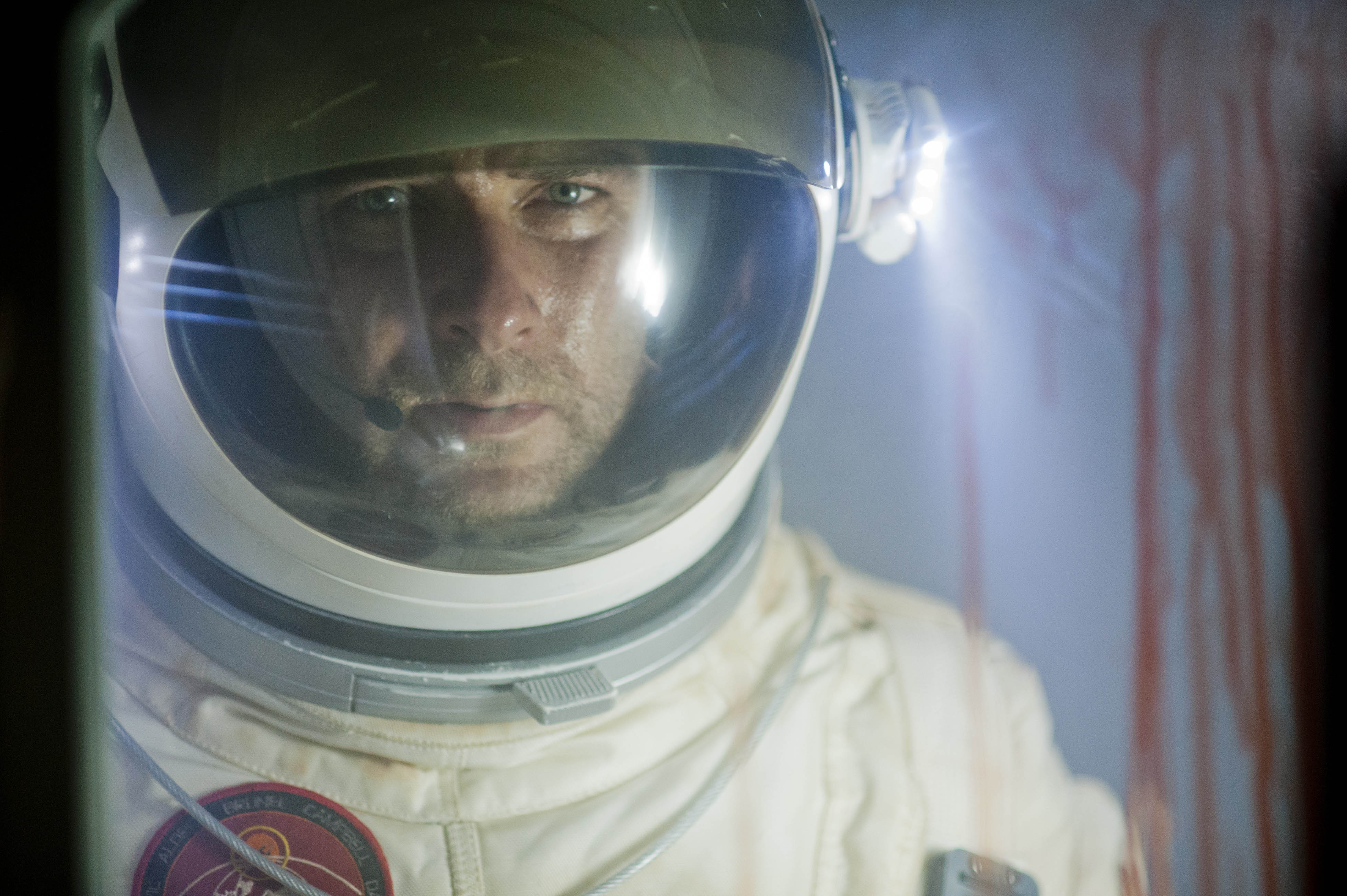
The Last Days on Mars - Liev

Images credit: Collider

Images copyright (©): Universal Pictures, Focus Features, Magnet Releasing

21 (2008)

★★

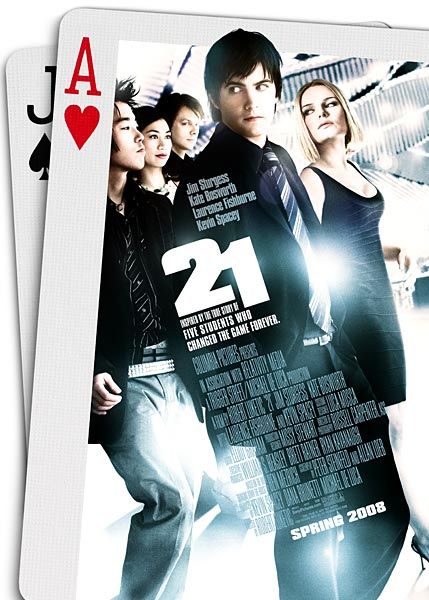
21 PosterDirector: Robert Luketic

Release Date: March 28th, 2008 (US); April 11th, 2008 (UK)

Genre: Crime; Drama; Thriller

Starring: Jim Sturgess, Kevin Spacey, Kate Bosworth

When it comes to playing cards there are two ways a trick can go wrong. A plethora of impressive skills, perhaps including some nifty sleight of hand, culminating in unexpected disaster. That’s the first. The finale is disappointing, but at least you get the temporary thrill of expectation. The second revolves around a bland illusion. When a trick hits all of the correct spots yet fails to sparkle. 21 is a bland card trick. Its deceptively pacey opening hints at promise however, when the hands have been laid and the chips counted, Robert Luketic’s film amounts to nothing more than a serviceable few hours.

Inspired by true events, 21 tells the tale of six MIT students and their advantageous teacher who coalesce together in order to pull off card counting blackjack victories. Ben Campbell (Jim Sturgess) is the team’s newest recruit, having joined in a desperate attempt to fund his Harvard dream. Though the Las Vegas voyagers get off to a successful start, rising tensions begin to chisel away at the group’s policy that denounces in-game emotion, and their cover is threatened.

If you struggled to follow any of the poker lingo in the opening paragraph, 21 will probably have you pulling your hair out after half an hour. (I’m almost bald now). The first few frames are snappy and strategy-led, though quite unnecessary given the content is repeated later on. In short, infrequent bursts, detailing the logistics of what our characters are doing is fine. The nature of the narrative needs some exposition to keep the film bubbling along. But we hear about rules and game play so often, and without vindication too. The film isn’t about blackjack — it isn’t about anything really — blackjack is simply a means to an end. That is how the characters see things (“It’s just business”) and it should be how we see them too. Unfortunately, writers Peter Steinfeld and Allan Loeb get too caught up in the explanation part that they forget about storytelling. It’s all a blur, really: stat crunching, pluses, minuses, attributing animals to numbers. Who cares?

This need to accurately relay the ins and outs of the gambling world leaves little room for narrative clarity, ushering forth an enormous helping of laziness. Coincidence is rampant from the get-go; “The Robinson is going to someone who dazzles,” a Harvard representative informs Ben, giving him his only motivation to cheat. If that wasn’t cheap enough, the interviewer goes on to tell Ben he needs more life experience. Money and life experience, huh? If only there was a quick-fix solution to both. Good thing our lead is intelligent as well, otherwise we’d be spending almost two hours — a ridiculously long run time — watching him pay his way to Harvard in a suit store. We never really believe in Kevin Spacey’s teacher by day, Vegas kingpin by night either. You’d think a flustered student would have ratted him out by now. Navigating the outing’s incredulity becomes increasingly arduous as the events dive deeper.

Kevin Spacey is pretty good though. Perhaps there is an element of phoning it in going on, but the actor’s charisma works wonders for his character even if it does accentuate the mundanity of those around him. His delivery strikes as quite perceptive on occasion. Presumably he is aware of the invariably groan-inducing dialogue. (“Ben, let the car drive by itself,” says Micky after hearing about his student’s attempt to create a self-driving car). The other performers tough it out, but they can’t overcome the bland material. Jim Sturgess is okay as the main player, never threatening to erupt from his character’s generic chains. It is worth pointing out Josh Gad, who is quite amusing as Ben’s obnoxious best mate.

The characters join the plot in the doldrums of commonality. We’ve seen it all before: the group member who succumbs to jealousy; the friend left hanging in the lurch; the suave leader with ulterior motives; the hard-to-get girl whose beauty matches her romantic indecision. Sure, 21 looks alright when the gang reach Las Vegas but even then there are so many aerial shots that we begin to wonder if the director simply has no idea what to do next. Since there is inability to conjure up any emotional connection, the filmmakers recruit surface elements to grab our attention. The bright lights and quick edits fail to yield pizazz, and even a fairly sparky soundtrack feels diluted amongst the mechanical air.

Laurence Fishburne shows up every now and again and effectively sums up the film’s failures. He plays casino security chief Cole Williams, and his moral stance is never really unfurled. Cole hates the incoming modernisation — he’s an old school guy, preferring film to digital — and the soon to be implemented facial recognition software is sure to leave him out of a job. The guy is a dick though, more or less working the antagonist role opposite our card counting clan. It is conceivable that Cole’s ambiguity is a reflection of dubious actions elsewhere, and gambling in general, but that is probably awarding too much credit to an otherwise uninspired production. So we don’t care about him.

21 is eternally insipid. Everything from plot to character diversity reeks of carefulness, even the group’s motto is tedious. (“Don’t get caught counting”). Kevin Spacey provides the occasional spark that the piece seeks dearly. It wishes to dazzle, some might say, but eventually peters out. I’m still trying to figure out why an underground gambling hub exists in a Chinese restaurant.

21 - Cast

Images credit: IMP Awards, Vulture

Images copyright (©): Columbia Pictures

The Place Beyond the Pines (2013)

★★★★

The Place Beyond the Pines PosterDirector: Derek Cianfrance

Release Date: April 12th, 2013 (UK); April 19th, 2013 (US)

Genre: Crime; Drama

Starring: Ryan Gosling, Bradley Cooper, Eva Mendes

The film that almost instantly springs to mind when watching The Place Beyond the Pines is Drive. Ryan Gosling stars in both, and in both he plays an outsider, a semi-vagrant. The Driver is a suave customer on the surface; he steers people away from danger in his glossy 1973 Malibu. Luke Glanton, on the other hand, trundles towards peril atop a motorcycle, common sense not in tow. For him it’s either a spherical cage of imminent perpetual risk or a bank robbery. Unlike Drive, Derek Cianfrance’s ambitious picture widens its berth to include a host of other characters. The result is an end product that is nowhere near as chiselled as the 2011 indie, at times detrimentally so, but one that should absolutely be applauded for its scope.

Luke Glanton (Ryan Gosling) is a stunt motorcyclist who travels from state fair to state fair earning a wage. Upon rekindling his relationship with a previous beau, Romina (Eva Mendes), the marauder ventures into a life of crime. That’s where he encounters Avery Cross (Bradley Cooper), a police officer whose moral head space is struggling under the weight of a corrupt department.

Primarily, this is the story of two people and the incessant reverberations of their actions. We meet Luke from the off, and follow him as he strolls into a bowl of hell. His job, as a stunt motorcyclist, perfectly embodies his unconventional lifestyle. The quiet, edgy nomad is someone for hire and when we first meet Luke his already dirty attire fields smatterings of blood. Instantly we feel detached, yet the revelation that he has a son enshrouds our lead with some semblance of humanity. A church scene that pits a worn out Luke as a self-realised squanderer is powerful. The constant circle of danger that flares throughout the film — the cage, his annually reloading lifestyle — succumbs to a strive for rehabilitation.

Director Derek Cianfrance then violently cuts from intense, loud robberies to sweet family days out. It works. The desperation in Luke becomes apparent; here is a character whom we’re not necessarily encouraged to get behind, nor is he somebody tarred with pitch black strokes. His criminal exploits are stark but they’re not isolated, a notion that vividly rears during a home altercation. As he, Romina — Eva Mendes is an amiable foil for Gosling, but her character suffers from a lack of clear definition — and their child are having a family photo taken, Luke relays his instructions to the taker: “Just capture the mood… the bike’s part of the family.” It is one of his few moments of solemn happiness.

On the surface, Avery Cross is different animal. He is a do-gooder, a fresh faced police officer. Avery spends his days protecting people from the likes of Luke Glanton. However, the reverberations of an incident leave him shaken, more or less infecting Avery with the same ceaseless moral dilemma prominent in the mind of his criminal counterpart. Work also becomes his escape, and his workplace is one wrought with wrongfulness too. (“But that’s the job” is a phrase of resignation constantly thrown around). This is where the film runs into its first problem. Avery is part of a crooked police department led by the viciously enrapturing Ray Liotta, but we don’t really believe it. Is the whole division corrupt? The virtuous cop’s aversion to corruption paints him with a gloss of goodness but we’re left to ponder why he is the only impartial officer.

This is the first in a chain of coincidence that ends with a major bang, though by then we’re willing to forgive. Whereas the corruption layer is a similarly fortuitous addition installed by Cianfrance and co-writers Ben Coccio and Darius Marder, it is one that rings less true, less authentic than the rest. In a sense, the director’s ambition suffers a tad as it becomes warped by sheer scope, but it shouldn’t be shot down as a result. Somewhere approaching the midpoint, the director unleashes quite the narrative swerve. The sequence is unexpected but ultimately rewarded because it endeavours to further the story, adding depth in the process. Regardless, the move signals the inception of a stunningly constructed piece of cinema.

Ryan Gosling’s work as Luke might be his best to date. The star manages to balance a controlled ferocity originating from struggle and toil, with a slice of unorthodox compassion. The Place Beyond the Pines does occasionally resemble Drive — a film whose slickness helped to paper over any cracks, a luxury not afforded here — but it is more rugged, and by proxy so is Gosling’s portrayal of Luke. As Avery, Bradley Cooper contributes with equal effort. It is true that his character follows a more recognisable and perhaps, therefore, more relatable path, but Cooper ensures there’s nothing generic about the police officer; in fact the further along we go, the meatier his role gets. Dane DeHaan’s performance is another worth singling out for praise, his stock on a seemingly unending rise.

Other factors are complimentary too. For instance, we get the raspy echoes of Bruce Springsteen rather than the melancholic waves of Kavinsky. At these points the outing hints at Scoot Cooper’s Out of the Furnace, a sentiment that gains more weight in tandem with Sean Bobbitt’s crackling cinematography. The camera stalks characters, firmly placing us amongst the people on display and invoking another degree of personableness. It’s guerrilla filmmaking finely executed.

Derek Cianfrance’s follow-up to his uncompromising hit Blue Valentine retains the same empathetic tendencies as said flick, but ambitiously rolls them out over a vaster blanket. The story presents two sides of the same coin, both engaging and effective. There are dips conjured by happenstance, but nothing catastrophic. Rather, we’re attracted to Cianfrance’s portrait of life, work, consequence and connection, and it’s a well-founded attraction.

The Place Beyond the Pines - Gosling

Images credit: IMP Awards, Collider

Images copyright (©): Focus Features