Everest (2015)

★★★★

Everest PosterDirector: Baltasar Kormákur

Release Date: September 18th, 2015 (UK); September 25th, 2015 (US)

Genre: Adventure; Drama; Thriller

Starring: Jason Clarke, Josh Brolin, Jake Gyllenhaal, Keira Knightley, Emily Watson

“One in four died.” That’s the first thing we see on screen, a solitary line in a block of informative dialogue detailing the worrisome history of Everest expeditions. It is our dramatic lever, pulled at the inception just in case we’re not already aware of Mount Everest’s indiscriminate harshness. Throughout, numerous avalanches interrupt our viewing but unlike the false threat exhumed from similar-looking shots in the alpine-set Force Majeure, the danger here is very real.

William Nicholson and Simon Beaufoy’s screenplay (which may or may not be based on John Krakauer’s Into Thin Airdraw your own conclusions) sheds light and dark on the late-90s mountaineering disaster involving rival trekking companies. Going in bereft of any knowledge probably isn’t much of an advantage; there is a moment at around the forty minute mark that essentially earmarks the film’s ending. It is one of those disaster movie clichés — Titanic’s “You jump, I jump”; any conversation between Bruce Willis and Ben Affleck in Armageddon — that acts as a sentimental forewarning.

Admirably, it is the only instance of pure sentimentality in a film more concerned with truth. Everest is cold, at times freezing, but authentic and gripping and no less emotionally involving as a result. Realising the dangers of a crowded field, opposing expedition leaders Rob Hall (Jason Clarke) and Scott Fischer (Jake Gyllenhaal) — the former is excellent, relaying an exhausting and exhaustive performance — opt to team up during a simple scene bound by numerous layers: it shows two experienced climbers anxiously bowing at the mercy of the mountain, but does so in a manner that provides one of the film’s only junctures of light relief.

Fischer asks who will lead when they near the summit, and both men laugh. There is clarity in his words, an assertion that the need to achieve will always usurp the right to survive. Or, if you like, it’s just a rare chance to giggle. Baltasar Kormákur hones in on the competition between colleagues, a smart move that affords these men and women who are otherwise embroiled in an unrelatable escapade a degree of accessibility.

Invoked from the get-go, this competitive edge mirrors a layer of unsettled snow poised to subside at any moment. At the beginning the banter is weightless — it’s there, but the sly digs between Josh Brolin’s Texas-bred Beck Weathers and the aforementioned journalist John Krakauer carry an ominous undercurrent. The film’s atmosphere is driven by poorly disguised trepidation, and you just know something has to give. “There is competition between every person on this mountain,” says the hippie-esque Fischer, and it is palpable. But any interplay between the climbers is superfluous and Fischer acknowledges this shortly thereafter, declaring the mountain will inevitably have the last word.

In a sense Everest is about the pull of an unavoidable thrill. “Why?” asks Krakauer as he documents the climbers’ journey. “Because it’s there,” is the comically-inclined universal reply, but it is also the best reply the mountaineers can muster. Nobody really has a solid answer — postman Doug Hansen (John Hawkes) talks about his desire to be the everyman who conquered the monster and achieved the impossible. We’re left to ponder whether the reward eclipses the risk, a contemplation that becomes increasingly one-sided the more Hall’s pregnant wife (a game Keira Knightley) appears. Various other members of the group give their reasons: Yasuko Namba (Naoko Mori) references her need to complete the Seven Summits, having already commandeered the other six.

But each response to Krakauer is admonished with persiflage. It is as if the alpinists know the risk is too great, and they’ve simply given in to the thrill. An unfortunate offshoot of the film’s competition element is a spot about the completion of a celebratory magazine article. Emily Watson, who graciously adds oomph to her fairly thankless role as a glorified receptionist (the actors are very good en masse in generally underfed roles), is stressed about her company receiving a bad review in the midst of the encumbering drama, a whim that feels tonally fake.

Death is an inevitability and when it occurs it is visceral in a non-violent way. Shades of grey don’t exist; the landscape yields either white tundras or black crevasses, and as such when people pass they do so bluntly. Analysing the effectiveness of a death scene in this instance feels egregious and unnecessary, particularly given the victims are real people, but Kormákur does handle said moments with candour and, crucially, without mawkishness. Mass amounts of clothing and equipment make it difficult to differentiate between those on screen, reinforcing the notion that on Everest individuals are merely pawns, merely statistics.

Kormákur’s direction is adroit initially, and it gets better as things get worse. We often see the misty, black peak looming over base camp like a plague. Oxygen masks quickly resemble gas masks. Each second the climbers spend plodding up slopes represents an ounce of life extracted from their bodies. This dangerous aura is complemented by Salvatore Totino’s visual flair — the snow-covered ridges could easily pass for one of The Two Towers’ awe-inspiring New Zealand shots.

Enhanced by booming screening room speakers (Everest is definitely a cinema movie), the sound design frequently jabs at your solar plexus. You instinctively breathe a little more vociferously when things start to go wrong and the outing’s audio power does nothing to ease the tension. There is one tranquil shot that is particularly wonderful; at twilight, camped in the eye of the storm, the camera pans calmly around Hall and co. as they gaze longingly at their lofty goal.

Everest stays true to its subjects in a way that is both compelling and respectful, even if some individuals don’t receive the attention they likely should due to the constraints posed by an excessively large cast. By the end, as the credits paid tribute to many of those involved, I found myself in a morose state of sadness, agitation and admiration. For a ‘big disaster movie’, that’s pretty good going.

Everest

Images credit: IMP Awards, Collider

Images copyright (©): Universal Pictures

Prisoners (2013)

★★★★

Prisoners PosterDirector: Denis Villeneuve

Release Date: September 20th, 2013 (US); September 27th, 2013 (UK)

Genre: Crime; Drama; Mystery

Starring: Jake Gyllenhaal, Hugh Jackman

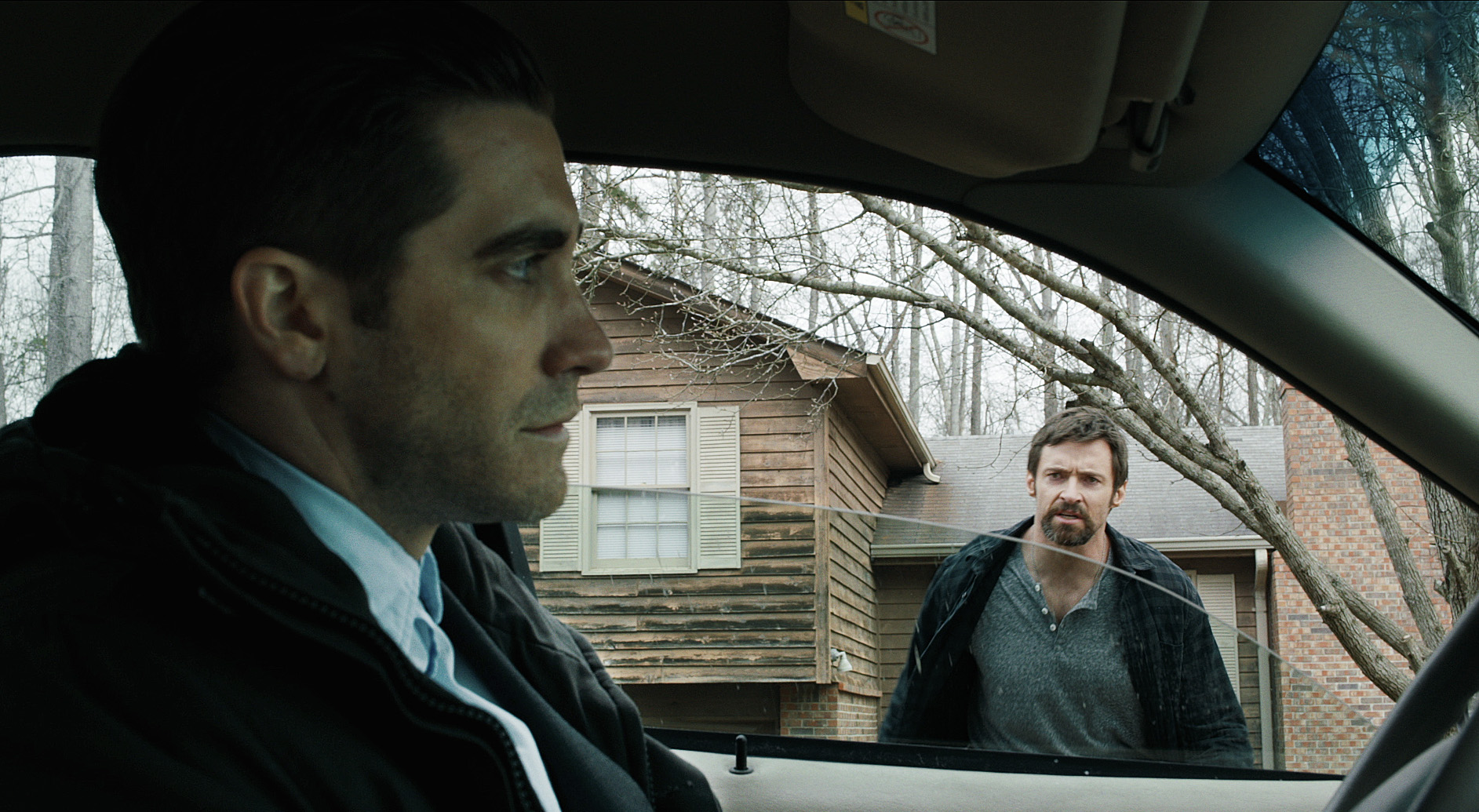
There is a great deal of religious allegory laced throughout Prisoners, Denis Villeneuve’s morbid entry in the child abduction genre (when wouldn’t morbidity factor?). The first voice we hear belongs to Keller Dover, played by Hugh Jackman, who relays the Lord’s Prayer “Our Father” with solemn gruff. Shortly thereafter, the dad of two converses with his son about the need to be prepared for impending natural disasters — floods, subsequent humanitarian crises etc. These early religious influxes glare from the screen, but as the film progresses it is driven by a more subtle assertion: loss of children equals loss of faith, and loss humanity.

Prisoners isn’t really about religion at all. It’s about our mundane and/or extreme reactions to potential tragedy. We follow two men, broadly speaking, each fulfilling his perceived duty in the wake of a double disappearance. Keller Dover is one of those men, whose young daughter and friend go missing on Thanksgiving. Perennial show-stealer Jake Gyllenhaal is the other man, the detective on the case. Aaron Guzikowski’s screenplay awards ample development time to the pair of them; just when you think the film is erring too much on one side of the story, it shifts to the other perspective.

Gyllenhaal’s Loki relays that sort of downtrodden look, one that suggests he may be fed up with his role in the dank Pennsylvania logging town. He relentlessly blinks as if forcing himself to stay awake. We learn from the source that Loki has solved every case he’s ever been assigned, and you get the sense that is probably because he routinely swap sleep for work. Keller, likewise, bears a dishevelled appearance most of the time, his gruff beard and hardened exterior perfectly matching the woody setting. Even Keller’s chequered shirt is dark grey and army green.

When the pair first interact following the girls’ disappearance, Jackman is brilliantly emotional; enraged to no end, with bloodshot eyes and a reckless aura that serves as a basis for what is to come. On the other hand Gyllenhaal evokes detachment, as if Loki has already been down this horrid route before. To him, it seems, what happens next is a formality. It is a fascinating — if not entirely surprising — clash that continues to evolve without genericism.

Roger Deakins’ use of a woozy grey colour palette encourages the dour and desolate mood. Cinematographer Deakins is always an ever-present during awards season (he was nominated for his work here, and has been on the final ballot for his numerous efforts alongside the Coen brothers) but, in one of the circuit’s most egregious ongoing shams, the camera master has never won an Oscar. He sets the scene ominously in Prisoners: when it rains, it really does pour.

For around an hour Deakins meticulously cuts away from any violence, allowing our imagination to run wild. The first instance of visceral brutality comes via the fists of dad Keller, flipping the morality of good and bad. Terrence Howard plays the father of the other lost girl, his ethics wavering but without as much force. Keller arrives at barbarity through his own prejudice — he believes he has the culprit, but the law disagrees. To Keller, his psyche crumbling under the weight of anguish and guilt, the law has become sterile and justice is best served cold.

The film challenges us to consider his predicament, and whether or not his actions are justified. That Hollywood babyface Hugh Jackman is the one inverting right and wrong only serves to complicate matters further. Even the local priest is a drunk, and worse. The reaction of Keller’s wife, mother to one of the missing girls, is a little harder to swallow. Played well by Maria Bello, she blames her husband for what has happened. Though this might be a truthful and raw circumstantial response, there is a disconnect between the overstretched attempt at melodramatic realism and the more grounded troubled realism surrounding Keller.

Villeneuve’s film is also about systematic failure. It calls into question how two girls, both of whom should be safe in their own neighbourhood, can go missing without a trace. The fact that Loki always seems to be fatigued suggests that he is overworked. You applaud his tenacity and sympathise with his increasing hopelessness — especially as he juggles the intense job with spit-fire tirades from the victims’ families — but you also lament the inadequate law set up. Keller is unable to actively assist the ongoing investigation due to legalities, the structure keeping him and his wife at arm’s length.

The movie reflects Zodiac’s overbearing misery (and also its literal puzzlement), and Gyllenhaal’s appearance also recounts his Nightcrawler aesthetic — post-gaunt, perhaps. He has to be restrained as the detective, but also as the co-star. Jackman, quite obviously, is the one doing most of the emoting. He gives a stunted powerhouse performance, a broken one, a trembling one. “You look very tired.” And he is. Paul Dano plays one of the primary suspects and although the nature of his character generally renders him silent, his performance manages to be one of internal terror and external creep.

“No-one took them. Nothing happened. They’re just gone,” says one women dejectedly. And that’s the mantra by which the film lives. It keeps us guessing to the point where we might never find out what happened. This slow burning premise echoes of the first season of The Killing; very thorough, manoeuvring this way and that, affording its audience time to think. The pace is slow and film is long at two and a half hours, but the pace would be slow for the families involved. A sudden burst of energy towards the conclusion ushers in an incredibly well-executed car sequence.

Prisoners reconstructs the pillars of humanness and purity. What would we do in similar circumstances? Having initially caught his suspect with fuzzily correct intentions, doubt soon creeps into Keller’s mind. Yet he never releases his captive. As time wears on, it becomes apparent that Keller is only disseminating pain in order to serve his own emptiness — it’s a temporary stop-gap that might, somehow, eventually lead to a permanent solution.

Prisoners - Gyllenhaal & Jackman

Images credit: IMP Awards, Collider

Images copyright: Warner Bros. Pictures

Scream (1996)

★★★★★

Scream PosterDirector: Wes Craven

Release Date: December 20th, 1996 (US); May 2nd, 1997 (UK)

Genre: Horror; Mystery

Starring: Neve Campbell, Courtney Cox, David Arquette

Within minutes, it asks us to consider our “favourite scary movie”. Characters relentlessly quote or refer to other characters from other films, such Pyscho’s Norman Bates or Friday the 13th’s Jason Voorhees. Wes Craven’s Scream is both a love letter to horror cinema and a skilfully rammed knife in the genre’s back. It is vibrant and arrogant and brash. Kevin Williamson pens a screenplay that inverts commonality, and does so for two reasons: to offer fans something new, and to prove that you still can offer fans something new.

Take the bloody prologue as an example. One of the greatest bait and switch openings to ever grace the silver screen, it suddenly manoeuvres from harmless small talk between Drew Barrymore’s unsuspecting teen and an anonymous caller, to effervescent morbidity. “Turn on the patio lights,” orders the unidentified voice, and from then convention is flipped: our proverbial heroine dies in an instant, despite almost escaping, almost alerting her parents, almost relaying the correct answer. You need to know your horror history or else bad things will happen. If that’s not an advert for the genre, what is?

Scream’s role in revitalising the slasher genre ought to be celebrated. Diverting tonally from the superbly mean-spirited Texas Chain Saw Massacres and Exorcists of the 1970s, this embraced the madness and subsequently recaptured the imagination of viewers with self-reflective normalisation. Whereas earlier audiences sought out squeals and yelps (as seen in this recording of a 70s Halloween screening), cinemagoers in the 90s were clearly after something different. Craven obliged, combining wit with exhilarating chills to create an atmosphere that encouraged knowledgeable grins.

More recently, Final Destination and Saw have built entire franchises atop Scream’s perceptive hallmarks, and filmmakers such as Ti West and Adam Wingard likely fostered their own brand of creative horror having gazed upon Craven’s work. Edgar Wright published a touching tribute to the late director, noting the visceral influence Craven’s portfolio had on him in his younger years, an influence that once again reared during the production of Shaun of the Dead (you can read that tribute here).

The story is straightforward: a rampaging killer is loose in Woodsboro, a small Californian community seemingly dominated by obnoxious teens and roving reporters. Still living with the demons brought on by her mother’s murder, Sydney Prescott (Neve Campbell, who wholly endears) unwittingly gets caught up in the knife-wielding drama. Knowing the killer’s identity before seeing the film doesn’t undo its value, which is sort of the point; though guessing is part of the fun, horror doesn’t have to be about who is under the hood. The preceding thrill is worth its weight in gold.

Speaking of said killer, the villain here is a maniacal conglomeration of humour and fear. The way Ghostface runs is both funny and scary, as is the way his/her mask droops. Ghostface appears anywhere and everywhere: reflected in the eye of a deceased victim; scampering through neighbourhood forests; hiding behind school closets. It could be anybody under the black cloak and as such a prevailing air of bubbling uncertainty exists (“There’s a formula to it, a very simple formula. Everybody’s a suspect!”). Characters act erratically around each other, but no more erratically than normal teenagers act, which helps to harnesses any disengaging silliness.

Famous for breaking the fourth wall and openly discussing the rules of horror, Scream’s meta ambience still holds up almost two decades on. Perhaps this is indicative of a lack of evolution in the genre, or perhaps it is simply because Wes Craven had a penchant for predicting and challenging the future Zeitgeist. Regarding scary movies, Sydney lays it out for us: “What’s the point? They’re all the same. Some stupid killer stalking some big-breasted girl who can’t act, who is always running up the stairs when she should be running out the front door. It’s insulting.” And normally it is insulting, but not this time.

Patrick Lussier’s snappy editing feeds the edgy (and also comedic) aura, as do Marco Beltrami’s brassy convulsions. Mark Irwin’s camera often shows us what Sydney does not see — for example, the killer’s feet and costume descending into view beneath a bathroom stall door that our protagonist checked only moments prior. Scream is not, incidentally, an out-and-out comedy. We laugh when the film acknowledges absurdity, a trait familiar to the genre that is often ignored in favour of a more serious approach.

At one point the song lyrics “say a prayer for the youth of America” ring out before the view instantly cuts to a house party. The insinuation could be anything. That youngsters lack focus and are too materialistic. That the teens in this film are in grave danger. It could even be a nod towards the social plight of kids in the real world — 1996, after all, continued to play host to the consumerist, ratings-gorging MTV Generation.

The outing even manages to appraise the media in between its scary movie satire. It is tough on said industry, embodied by journalist Gale Weathers’ constant need to invade the teens’ privacy as well as her less than admirable moral motivations (“Do you know what that could do for my book sales?”). But there is a blunt nod towards the media’s role in serving justice too.

It all culminates in an intense, enjoyable and smartly executed wild goose chase with so many well-earned twists and turns. And, like in all great horror flicks, you really want the innocent lot to make it through the bloodbath unscathed. Well, maybe a little scathed. Those are the rules after all.

Scream - Ghostface

Images credit: IMP AwardsPopcorn Horror

Images copyright (©): Dimension Films