Top 8 Films of 2015 (January-June)

In life it’s always worth taking a moment to stop and think. Before crossing the road, for example. During an exam. Just as you’re about to send out those inflammatory tweets. And especially when the cinematic year reaches its midpoint. At half-time, sports teams indulge in a studious team talk. This is our half-time team talk. A period of transitory reflection. Or, plainly, a great excuse to muster up a celebratory list singling out the best films released between January and June. Besides, if Mark Kermode does it, it’s worth doing.

I’ve decided not to include films released last year in the US. As such, the rankings won’t incorporate any of the 2015 Oscar crop – Birdman and Foxcatcher would definitely have made the cut otherwise. Though released this year in the UK, those are technically 2014 films. And so, from the great to the greater, let’s get going.

8. Inherent Vice

Inherent Vice PosterIt is very likely that your face will resemble Joaquin Phoenix’s poster expression by the end of Inherent Vice, but that’s not necessarily a bad thing. The film has a woozy magnetism that occasionally threatens to blind, but Phoenix’s aloof performance as an oddball 1970s detective keeps us attentive throughout (though probably not wholly aware). Paul Thomas Anderson is a really interesting director and this is another really interesting, if frequently bonkers, journey. Recurrent collaborator Robert Elswit provides hazy mood-setting cinematography. Josh Brolin also shows up bearing the flattest haircut in the history of cinema.

7. Kingsman: The Secret Service
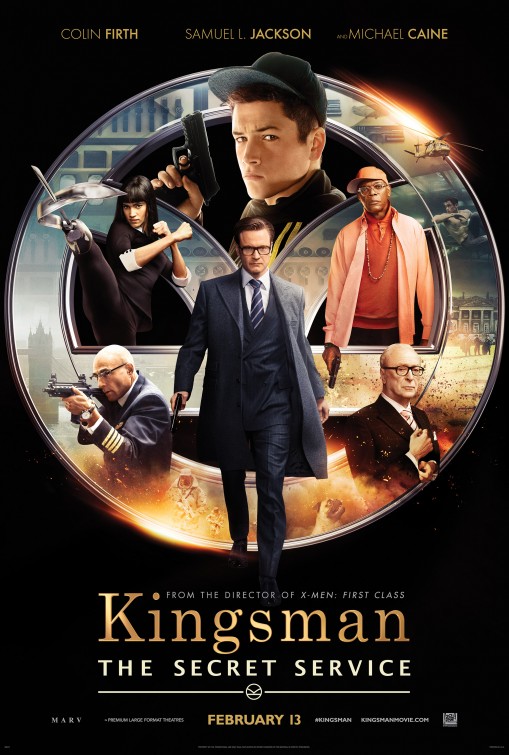
Kingsman PosterAn amalgamation of Kick Ass’ thumping comic violence and Bond’s narrative flow, Kingsman: The Secret Service is an at times dazzling action-comedy. You do occasionally get the sense writer/director Matthew Vaughn’s errant imagination is overruling his common sense, but it is this exuberant mentality that funds the film’s enjoyability. Colin Firth ditches the stuttering king’s speech for something more poised and abrasive, while his fresh on the scene co-star Taron Egerton delivers a breakout performance. Firth also engages in a Quicksilver-esque slow motion church battle that has to be seen to be believed.

6. Jurassic World

Jurassic World PosterAs it continues to chomp its way through the global box office, Jurassic World is fast becoming one of the biggest films of all time in economic terms. Colin Trevorrow’s dinosaur delight is also a nostalgic powerhouse, respectful in its acknowledgement of Steven Spielberg’s breathtaking original but also geared towards a new generation of young, expectant cinemagoers. Underfed screenplay and character problems aside (no outright disasters), this is genuinely enjoyable cinema with a few spine-tingling moments to really savour. Listen out for the reverberations of John Williams’ glorious score, and keep an eye on that flare.

5. It Follows

It Follows PosterDavid Robert Mitchell’s second feature gained a lot of positive traction through word of mouth and subsequently found its way into cinemas nationwide across the UK and US. It Follows opens atop a barrage of tension, most of which the film never loses. There’s a vintage sheen at the fore, broadcast exquisitely via Mike Gioulakis’ rich cinematography, though we never actually find out when the movie is set (adding to the bizarre and unsettling goings-on). Maika Munroe is brilliant as the anti-scream queen in a patiently eerie horror outing that has more in common with John Hughes than it does Rob Zombie.

4. Ex Machina

Ex Machina PosterAnother wonderfully paced piece, Ex Machina manages to be both pristinely clinical and oddly ambiguous. Alex Garland, whose screenwriting backlog includes the stunning Sunshine, makes his directorial debut: a sci-fi mind-jolter set almost entirely within the shiny walls of a remote retreat. The director uses the element of mystery to great effect – character motives are never wholly clear. Oscar Isaac is pally yet deceitful, feeding Domhnall Gleeson’s inquisitive suspicions. Alicia Vikander also superbly captures the uncanny valley-like quality of a humanoid robot.

3. Avengers: Age of Ultron

Avengers Age of Ultron Poster 2Much like Jurassic World the second Avengers get-together suffers in the screenplay department. However, here it’s a case of over-complication as opposed to a lack of perceived originality. Age of Ultron isn’t difficult to follow, there’s simply a bit too much going on. And you can understand why: these characters are tremendous fun to be around, full of inevitable persiflage, and by now the actors have clicked as a collective unit. As Hawkeye, Jeremy Renner finally gets something meaningful to do and he does it with emotional gravitas. Joss Whedon’s final Marvel bow is one of the studios’ best so far.

2. Girlhood

Girlhood PosterGirlhood, a French independent drama that hones in on one girl’s social and cultural maturity, is quite the opposite. The film is compelling to no end, aided in abundance by lead actor Karidja Touré’s standoffish performance. The first time performer really is a joy to watch and a miraculous casting find. Crystel Fournier’s stylish cinematography contrasts thematically with an otherwise gritty, urban environment, highlighting the difference between dreams and reality. The film also hosts the year’s best scene so far: a stunningly shot group dance to Rihanna’s “Diamonds” that you’ll watch in a state of emotional fluctuation.

1. Mad Max: Fury Road

Mad Max Fury Road Poster 2Comparing the merits of a low-key European drama and a barnstorming Aussie dystopian epic is a pretty thankless task, but Mad Max: Fury Road just about edges top spot. After a thirty year break, George Miller delivers his best franchise instalment yet. Charlize Theron and Tom Hardy share the same type of niggling chemistry you’d expect to see in the middle of a high-intensity, life or death vehicular war. As Imperator Furiosa Theron is bullish and powerful, but the fact that she has a heart is why we care so much. Miller’s penchant for practical effects works a treat, helping to signify a seminal moment in action cinema.

Images credit: IMP Awards

The Lucky Ones (2008)

★★★

The Lucky Ones PosterDirector: Neil Burger

Release Date: September 26th, 2008 (US)

Genre: Comedy; Drama; War

Starring: Rachel McAdams, Tim Robbins, Michael Peña

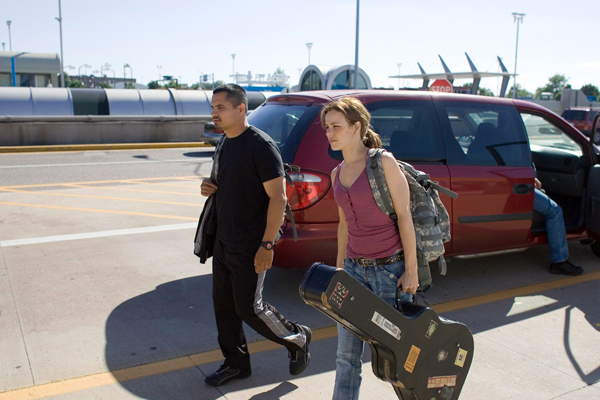
In the upcoming season of True Detective, Rachel McAdams will play a prickly, stoical police sheriff (or if you’re reading this after August she already has, and rather brilliantly too, right?!). That sounds like quite the departure from her character in The Lucky Ones — a soldier, tough without doubt, but whose veins pulse with good-natured naivety. Her volcanic charm is the type that could turn a long road trip into a really, really long road trip. Not here though. Not on McAdams’ watch.

She is Private first class Colee Dunn, joined on a cross country excursion by Sergeant first class Fred Cheaver (Tim Robbins) and Staff sergeant T.K. Poole (Michael Peña). The trio meet at JFK airport having just finished their respective tours of duty, and opt to collectively hire a car since flights home are in short supply. What follows is a familiar voyage down the road movie genre, with periodic stops at comedic junctions and soul searching stations.

What this is not, is a war movie. The film has been criticised for not sufficiently addressing the complex issues of battle — but it simply isn’t a war movie. Certainly, the three main characters with whom we spent time are soldiers on leave, but that doesn’t mean the film has to ruminate about the war they’re presently separated from. Colee and company discuss it, sure. They feel the weight of its heavy baggage at times. But hey, maybe they’re just people. Two normal guys and one normal girl, each trying to reacclimatise to the real world. Struggling, often comically, sometimes painfully.

T.K. is the brash macho-type who subdues authenticity. We first see him inside a tank spouting tasteless jibes about women, before debris from an explosion renders him impotent. His lack of functionality becomes a recurring joke that eventually finds resolution in the film’s worst scene — a poorly executed tornado forces Colee and T.K. into a claustrophobic drain pipe, and it’s really cringe-worthy. Peña undercuts most of the unlikeable traits often attributed to those “macho-types” by delivering a fairly nuanced performance. At one point his character awakens suddenly in the middle of the night, clearly still troubled by the blast, and can only mutter a, “You know… sorry,” when questioned by Colee.

She is the most engaging of the three. McAdams has real presence, lighting up the screen every time she appears. Colee is the buffer between humour and emotion, her wide-eyed lack of cynicism both refreshingly authentic and solemnly disheartening. “That girl’s living in a dream world,” T.K. asserts, and it’s true. She lugs around the guitar of her close friend Randy who died on duty, aiming to return the instrument to his family in Las Vegas. Though Colee has never met them, she is driven by the hope that they’ll let her stay. She exudes so much positivity that we start to buy into her crazy plan. It’s the potential prize at the end of the rainbow, a treasure that differs from the materialistic hoards prevalent in other road trip movies such as O Brother, Where Art Thou? and Rat Race.

Quite the opposite is Tim Robbins’ Fred, or Cheaver, since he is the elder statesman of the group. A modest guy looking to get away from active combat, Cheaver rolls into family despair near the beginning of the journey. He is definitely the unluckiest — though the other two aren’t exactly wearing rabbit’s feet — and Robbins succinctly captures this turmoil. There are similarities to be drawn with Sam Jaeger’s Take Me Home as far as character relationships go, where petty squabbles inevitably evolve into admiration and understanding.

That film’s aimless quality is also apparent — the men constantly say they “don’t have time” to indulge Colee’s sight-seeing desires, but they’re not actually going anywhere. In a way they have all the time in the world, but the guys are too obsessed with achieving an end goal that probably doesn’t actually exist. Though their plot construction could be questioned, director Neil Burger (Limitless, Divergent) and co-writer Dirk Wittenborn’s character creation is effective. Just like in the army, the trio grow to rely upon each other — monetarily, emotionally, and intellectually — a conclusion arrived at with sincerity.

To the film’s credit it doesn’t spend two hours achingly debating the woes war. However, it opts not to ignore the pitfalls either. America becomes part of a clinical world that the army-goers aren’t used to (“You’re at a disadvantage if you don’t master your computer skills”). Bystanders and acquaintances constantly thank them for their efforts abroad, but it’s all platitudinal. Yet it doesn’t feel like The Lucky Ones is trying to emulate the rich verve of something like a Sideways. When the movie threatens too much seriousness it quickly scrambles back under its light-hearted comfort blanket, embodied in a scene where life reflections are interrupted by a penis balloon joke.

Nibbles of narrative stupidity are glibly accepted as a given by the screenwriters. A customer service employee grants the group a car due to their army credentials, even though the only vehicle remaining belongs to the employee’s airport boss. Problems that arise often bear very simple solutions, these problems too easily erected in the first place (Cheaver’s son gets accepted into Stanford University but needs to cough up $20,000 in tuition fees). The film chooses to manoeuvre its way around simple answers through comedy: Randy’s guitar would solve Cheaver’s monetary problems, but Colee amusingly decides to cry rather than oblige.

Though the actual trip part of The Lucky Ones does run into a few roadblocks — it’s not as funny as it should be, nor as emotionally-involving — the characters behind the wheel are wholly accommodating. Besides, who doesn’t want to watch a movie where Rachel McAdams plays an impulsive Southerner with more charm in one glance than a machine gun has bullets?

The Lucky Ones - McAdams & Pena

Images credit: IMP Awards, Collider

Images copyright (©): Lionsgate, Roadside Attractions

Jurassic World (2015)

★★★★

Jurassic World PosterDirector: Colin Trevorrow

Release Date: June 11th, 2015 (UK); June 12th, 2015 (US)

Genre: Action; Adventure; Science fiction

Starring: Chris Pratt, Bryce Dallas Howard, Nick Robinson, Ty Simpkins

They say imitation is the sincerest form of flattery. In the context of filmmaking, it’s very easy to construe that as nothing more than an excuse for lazy writing or a general lack of ideas. Mainstream horror comes to mind, movies that retread the same ground so often that the concrete slabs below are eroding into nothingness. Jurassic World similarly stomps over familiar tracks, the same ones paved back in 1993 by Steven Spielberg.

Yet there’s an authentic admiration afoot in Colin Trevorrow’s work. Moments so sincere that any semblance of cynicism will be expunged from your psyche. A lot of goodwill has clearly been poured into the making of this fourth dino instalment, a film that undoubtedly strives to capture the fantastical magic of the first. It probably gets there in the end. We see imitation in spades and it’s flat out splendid.

Some time after the tumultuous events of Jurassic Park, Isla Nublar has been transformed into the tourist-attracting dinosaur paradise originally envisioned by John Hammond. Operations manager Claire (Bryce Dallas Howard) invites her two nephews — gloomy Zach (Nick Robinson) and wide-eyed Gray (Ty Simpkins) — over to experience the park first-hand. When something inexplicably goes wrong, Claire and Velociraptor coach Owen (Chris Pratt) find themselves in a race to restore civility.

These characters are initially drawn rather whimsically. Chris Pratt’s Owen is the morally upright park hand who spends his time tucked away in a cabin fixing up motorcycles when he’s not training Velociraptors. Claire is work-obsessed, her penchant for sustainable order and satisfaction statistics often overruling any time spent with her nephews (both of whom also assume recognisable age-related traits). It’s all part of the writers’ plan though; imminent danger brings heroism and savviness to the fore, particularly in Claire whose transformation is punctuated in a scene where she literally rolls up her sleeves.

In fairness, there are early hints at this increasing character roundedness. Conversations about the new breed of dinosaur — Indominus Rex, a corporate attempt to freshen up the park — leave Claire flustered, suggesting she is somewhat torn by the possible consequences. “Indominus wasn’t bred, she was designed,” we hear ominously. Owen, despite treating his raptors with care and respect, is still holding them captive. The influence of corporations, poor animal welfare, and immoral science are all interesting themes that would have benefited from more breathing time in a film not contractually obliged to serve up grand bouts of action.

Occasionally, Trevorrow and his team of co-writers do return to the aforementioned themes — an exhilarating scene where Owen rides his bike among the raptors seems to suggest humans and dinosaurs are one in the same. But the moment of the movie, and a shoe-in for one of the moments of the entire year, belongs to Claire. It comes towards the conclusion, spine-tingling in delivery, and cements her place atop the annual cinematic table of quick-thinking badassery.

While Bryce Dallas Howard moulds into the cool aunt we always knew she could be — shooting errant dinosaurs and using her wily driving skills to protect her nephews — Chris Pratt remains impossibly cool throughout. He’s Indiana Jones, a surly customer not afraid to echo some juvenile Han Solo-esque one-liners. When he gets serious, he means it. The two actors appear effortless in their roles, and share an engaging, charmingly awkward chemistry.

An underfed yet sweet relationship plays out between brothers Zach and Gray too. Not helped by an unnecessary divorce plot strand, Nick Robinson and Ty Simpkins are fun to watch as the generic sibling duo who eventually, predictably, come to appreciate each other. Robinson, who excelled in The Kings of Summer, has natural charisma and could be a breakout role away from superstardom. Comparably younger, Simpkins defies the annoying kid curse and puts on an amiable show here.

Other members of a pleasingly diverse cast include Omar Sy, Jake Johnson, Lauren Lapkus, Vincent D’Onofrio, Irrfan Khan, and previous Jurassic survivor, BD Wong. Jimmy Fallon makes a hilarious cameo, striking a funny bone from which point the film gets gradually more amusing. Trevorrow manages to carefully balance light-hearted humour (which the franchise well known for) and rampaging action (which the franchise is also well known for). We see this during a dino football scene: the situation is terrifying in theory, but the visual of a marauding dinosaur thumping a giant glass ball around is humorous.

Action spots are aplenty, though never burdensome. Executed with boisterous energy, you willingly give into the air of childlike joy and genuine threat. One sequence sees the dinosaurs meet The Birds and we subsequently feel that film’s sense of impending, uncontrollable danger. A claustrophobic night vision routine looks like it has been lifted directly from the Zero Dark Thirty Abbottabad raid. These instigators of flickering emotion merge with John Schwartzman’s realistic-looking cinematography, and as such we constantly feel embedded in the story. This is, without doubt, a CGI masterstroke.

The same can’t be said for compelling dialogue, of which is there is very little. There are plenty of exposition-driven sound bites in first hour though, lines wrapped in a heightened dramatic effect, snippets that have an unfortunate made-for-trailer dynamic. The screenplay is ham-fisted, especially during the film’s opening third where the desire to induce peril overrides any airy character discussion. But the people and the sounds and the overall atmosphere collectively create a welcome distraction.

At its simplest — and it is often simple — Jurassic World is a nostalgic love letter to cinema. It is a wonderfully reminiscent piece bearing great admiration for Spielberg’s original, and is able to duplicate Jurassic Park’s most memorable moments without plunging into mawkish territory. We hear John Williams’ famous track early on, during a perfectly handled island tour sequence celebrating the magnificent park facilities (Tomorrowland… pfft), before it hits a crescendo coated in cinematic glee.

Those sort of goosebump-inducing moments are the foundation of the cinematic experience. Jurassic World is not the complete package by any means, but as far as celebratory storytelling goes, it has serious bite.

Jurassic World - Pratt & Howard

Images credit: IMP Awards, Collider

Images copyright (©): Universal Pictures

Oculus (2014)

★★★

Oculus PosterDirector: Mike Flanagan

Release Date: June 14th, 2014

Genre: Horror

Starring: Karen Gillan, Brenton Thwaties

Perhaps the most commendable thing about Mike Flanagan’s Oculus is that, for the most part, it refrains from divulging the usual genre conventions. In an era where horror isn’t just for Halloween and franchises reign handily over standalone outings, a scary movie that deviates from the Final Destination school of fright is a welcome sight. It’s a shame that the film’s increasingly choppy narrative slips from the grasp of its director and his co-writer Jeff Howard, but there is a lot to admire here.

We jump between two timelines throughout: in the present day Kaylie (Karen Gillan) and her younger brother Tim (Breton Thwaites) return to their childhood home in order to confront and “kill” a spirit emanating from an antiquated mirror. Kaylie believes the mirror is haunted, that it infiltrated their parents’ minds and subsequently caused their deaths — events retold in the other timeline.

Tim isn’t as convinced. At the beginning of the film he is in the process of being discharged from a psychiatric hospital having come to the conclusion that the aforementioned tragedy was non-supernatural. An underlying darkness is already in full flow when we meet the characters; Tim would rather avoid speaking about the past whereas Kaylie is noticeably desperate to face her demons head on. “I know you’ll never understand that part of my life,” she tells her fiancé (who is otherwise surplus to requirements) and you get the sense she has been plotting glass-shattering comeuppance for years.

Actually, it’s more than a sense. In a scintillating ten minute scene, Kaylie meticulously describes and explains the bleak history of the mirror, the just-as-bleak history of her family and how she plans to prove that the artefact is engaged in dark arts. Its function could be construed as lazy storytelling — getting one character to spout exposition rather than conjuring up something more inventive — and it does raise a few outdated genre tropes (smashing mirrors is bad luck, apparently). However, Gillan’s superb form elevates the scene high above its promise. She is determined, her emotion buried beneath a precise exterior. The Scot is arguably the best thing on screen, despite her deep homegrown accent occasionally escaping off the ends of sentences.

Kaylie’s tenacious exterior isn’t instantly appealing, nor is it off-putting, but her doggedness is compelling. She seems pleased when the mirror exhibits an array of unusual reflections, including a sheet-covered mannequin that doesn’t actually exist, and treats the object like a living creature. The film’s immediate mystique owes much to The Newton Brothers’ slightly bulging score too. As the tension mounts it resembles the echo of a pulsating heartbeat. Michael Fimognari’s cinematography is steady and likes to linger, particularly during the first half of Oculus.

Alternating between two different timelines is a premise that bears significant intrigue. The television show Lost expertly utilised the flashback technique, and films such as The Usual Suspects and — to a lesser degree — Sinister have successfully dabbled in the method too. For a while it is effective here, bolstering the taut atmosphere as events in the past add more emotional verve to events in the present.

The estate, where most of the film takes place, is put to proficient use as memories fade back into reality with technical dexterity. It is like something out of a modern Guillermo del Toro flick: grand with wooden floorboards that undoubtedly croak at night, and full of mystery and immaculate character. Yet, in a neat contrast, the unsavoury mirror looks out of place, like something more suited to del Toro’s classically-set brand of filmmaking.

We’re left to wonder if there is actually anything going on beyond the horror — does Oculus present a slant on the effects of ill mental health, or the tribulations of a dysfunctional family? Kaylie shouts with joy when she realises she isn’t making it all up, that it’s all spookily true. Tim has been psychologically ‘healed’ so to speak, though we know from the get-go that he has always been sane (this is a horror film after all). The mirror encourages a rift between Kaylie and Tim’s parents by manifesting as an intrusive female stranger. If anything, the piece touches upon these subjects without really investigating them.

Unfortunately, the constant jumping between timelines becomes increasingly frequent, meaning proceedings in both the past and present invariably lose momentum. Sticking primarily in the contemporary space would have been more interesting because the characters’ past is more obvious. Flanagan’s swift editing is technically well executed, but annoyingly misguided. The point is to smartly fill in biographical gaps and for Kaylie and Tim to encounter a growing sense of alienation. We are supposed to feel unsettled, not confused.

The past is awash with a Kubrick-lite aura, as if the writers co-wrote the screenplay with The Shining on in the background. As dad Alan, Rory Cochrane adopts Jack Nicholson’s wavering sanity, while Katee Sackhoff’s Marie takes up Shelley Duvall’s fearful paranoia. A historical bathtub death even finds its way on board, hinting at that disgusting scene with the old woman in Kubrick’s film. Both Cochrane and Sackhoff are creepy enough in their respective roles.

In the end, Oculus doesn’t quite amount to the sum of its parts. But it does break tradition — the protagonists run straight towards evil as opposed to it chasing them — and Karen Gillan is a consistently excellent screen presence. For about an hour this is really enticing, imaginative stuff. A sequel doesn’t sound so scary after all.

Oculus - Gillen & Thwaites

Images credit: IMP Awards, Collider

Images copyright (©): Relativity Media

Girlhood (2015)

★★★★★

Girlhood PosterDirector: Céline Sciamma

Release Date: October 22nd, 2014 (France); May 8th, 2015 (UK)

Genre: Drama

Starring: Karidja Touré, Assa Sylla, Lindsay Karamoh, Mariétou Touré

Any filmmakers looking to edge themselves into the complimentary critical limelight next year might want to consider serving up a compelling human drama tinged with humour and realism, named something-hood. The approach worked for Richard Linklater and it has worked again here, this time for Céline Sciamma whose film about a young woman’s life after education is arguably the best of 2015 thus far.

The titular girl is Marieme, or Vic, played with exquisite poise by Karidja Touré. Caring for her two younger sisters while her mother works evenings has hampered Marieme’s success in school, and she’s unable to repeat classes for a third year running. As such she strives to take control of her present, believing her future is too far beyond reach. A group of girls, probably slightly older, invite Marieme to join their gang and the conflicted teen accepts.

This is very simple cinema. From a technical standpoint there are no obvious tricks, no special effects, because there is no need. Girlhood is injected instead with dramatic heft and humanistic depth. It is better than the director’s first voyage into the challenges of female maturity, Water Lilies, which does relay some raw authenticity but is ultimately a touch one dimensional. Here, we journey through the many different and very real experiences of burgeoning adulthood.

For one, Girlhood is braver than Sciamma’s debut film, an attribute highlighted by Marieme’s decision to join a gang from the get-go. Instantly she finds herself surrounded by three girls — Lady, Adiatou and Fily — who aren’t the most affable people. We’re certainly not drawn to them; when the invitation to join is presented to Marieme, you get the urge to reach through the screen and point her in another direction. The group don’t necessarily go looking for trouble, but when it lands on their doorstep clearer heads often fail to prevail.

Yet through deft writing and affecting acting, we feel ourselves rooting for Lady et al. The girls combat racial profiling with intimidation, and then erupt in a fit of giggles. They are relatable and genuine. Sciamma, who also penned the screenplay, makes it known that these characters have a great deal of learning to do. And they do learn. We see it through the eyes of Marieme, mostly, who often has to bear the brunt of her abusive older brother. But the piece doesn’t dwell on negativities — laughter and joy are frequently employed, mostly when the four females are in each other’s company.

“You have to do what you want,” says Lady. Her suggestion is misguided — she’s talking in extremes, i.e. petty theft — but entirely true. Vexed by poor grades, Marieme struggles with the anxiety of unfulfilled potential. Touré captures this internal ache with such subtlety for much of the drama, before exploding in a fit of justifiable rage over a system that has clearly failed her: “Where’s the dream? You wanna tell me where your dreams are?” she bellows at her three friends in the second of two utterly masterful scenes.

The first is like something out of Harmony Korine’s Spring Breakers, only with an added dose of reality. It sees the group collectively mime to Rihanna’s “Diamonds”, the screen tinted with an aqua fresh glare, in a hotel room rented for momentary respite from real life. The song lyrics reflect Marieme’s aspirations — those dreams she cares so much about — while also latching onto the more materialistic, idealistic psyche prominent in the minds of maturing teens (the quartet are all wearing delicate, expensive-looking dresses as they dance and sing about gemstones).

Inevitably, there are lots of peaks and troughs — from our characters squabbling affectionately and giggling the day away, to painful rejection at home. A scene where Marieme’s brother returns to their apartment in a fit of rage as she chats happily to her younger sister is incredibly well acted, Touré’s instinctive reaction almost as good as it gets from an actor (especially one in her first film). The piece touches on gender politics but never gets weighed down by it because, most of the time, to the girls their gender isn’t an issue. Other themes that arise include the paranoia of growing up, where everything feels like a competition and everybody a competitor, embodied by pre-arranged fights between gang members.

Though exceptional throughout, Girlhood arguably loses some vitality during the final act, but you get the sense that this decrease in energy is applied for a reason — it is Marieme’s worst half hour on screen, after all. The film is at its best when catching up with the four girls. Assa Sylla, Lindsay Karamoh, Mariétou Touré are each individually effective but their collective effort bulges with vigour. A game of minigolf game perfectly illustrates their infectious chemistry.

Cinematographer Crystel Fournier makes use of light and darkness, blue tints, and a rich colour palette to make the film reverberate with life despite the gravelly surroundings. Blunt gang verbiage such as “iced” and “wasted” is littered throughout, a classically un-French touch that serves to keep the gritty, urban atmosphere afloat. Electronic pulses in between scenes make up a soundtrack bearing that same psychedelic nighttime vibe as Drive.

French cinema is a go-to destination for those after simplistic dramas about people and life (Blue is the Warmest Colour similarly lit up the big screen last year). Girlhood is another that fits that mould. In a way, it is very unlike Boyhood — the perspective taken on growing up is rougher in this instance — but the two films would make a wonderful double-bill, equal in overarching message and, just about, in quality.

Girlhood - Cast

Images credit: IMP Awards, Collider

Images copyright (©): Pyramide Distribution

Begin Again (2014)

★★★★

Begin Again PosterDirector: John Carney

Release Date: July 11th, 2014 (UK & US)

Genre: Drama; Music

Starring: Keira Knightley, Mark Ruffalo

Why do they get nine out of ten of her dollars? Those are the words that spring from the mouth of Keira Knightley’s Gretta, a talented musician with a newfound shrewdness for business economics and life in general. Her question is aimed at record label producer Saul (Yasiin Bey aka Mos Def) who likely knows more about the dials on an Auto-Tune system than he does real musical verve.

But this isn’t a straightforward examination of the successes and failures of the contemporary music landscape. That is an underlying — and at times on the nose — theme, but not the film’s primary prerogative. Begin Again is more tuned into people, and how the relationships between those people unfold within a high intensity city, surrounded by an even higher intensity business.

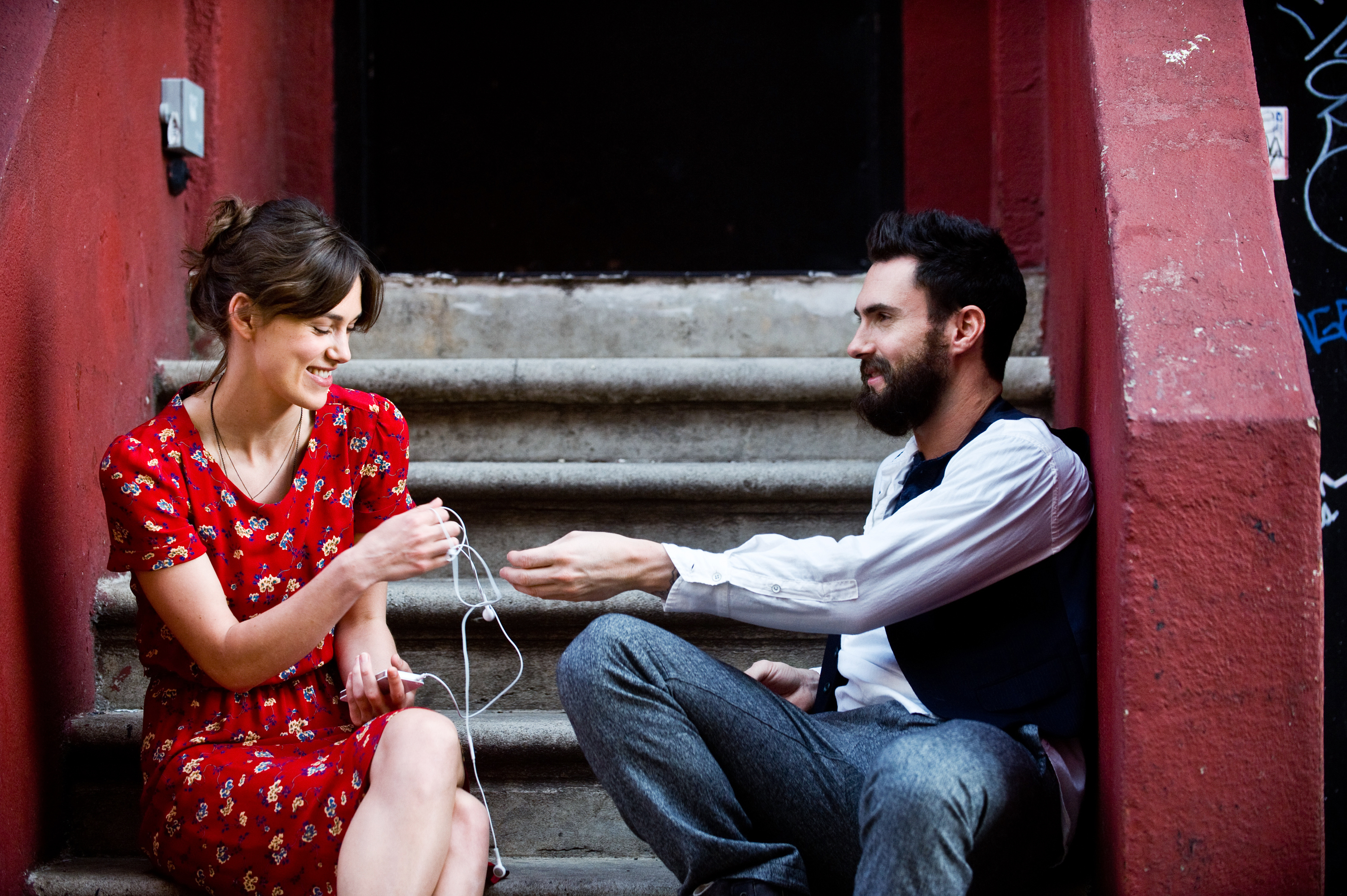
We begin with an impressive James Corden as best friend Steve, encouraging a reluctant Gretta to get up and play one of her songs in a dingy New York City bar. She’s good, but through the murmurs and glass-smashing nobody takes much notice. Apart from Dan (Mark Ruffalo), who looks a little worse for wear. Dan, as it transpires, is a struggling record producer and former partner of the aforementioned Saul. Differing business models caused the split, a common occurrence in Dan’s life — he is also separated from his wife and bears the brunt of a friction-fuelled relationship with his daughter. Alcohol is his solution, which leads him to a dingy New York City bar.

And then we begin again, only this time our two central characters arrive imbued with backstory. The non-linear storytelling technique used early in the film is one of a few nuances implemented by director John Carney that help to maintain the freshness of what otherwise might be an occasionally dour narrative. When we first meet Gretta and Dan their individual baggage is evident, and because both Knightley and Ruffalo instantly come across empathetically, our affection greatly increases as their bad experiences are unveiled.

Dan is at odds both personally and professionally. He lives alone in a dank apartment that has probably seen more hangovers than clean bed sheets. Much to his ineffectual chagrin, his daughter Violet (Hailee Steinfeld) wears attire unsuitable for school. “Jodie Foster from Taxi Driver,” is Dan’s unsavoury description. It’s a good thing Gretta is around to interject as wardrobe advisor in between bouts of album recording.

Gretta used to be outgoing and inspired until she and ex-boyfriend Dave Kohl (Adam Levine) unceremoniously severed ties. She becomes those things again when in Dan’s company, but their partnership thankfully doesn’t venture down generic romantic channels when you get the feeling it might. Carney, who directed and wrote the screenplay, has form in the genre — he helmed the much lauded indie music-drama Once, and puts the positive expertise gained from that to use here.

Ruffalo and Knightley excel individually and collectively. Ruffalo is particularly full of off-kilter charm as the scruffy music lover trying to maintain originality in an increasingly banal industry. When the actor is in his element — quirky, unfiltered and eccentric — he is really great, and he’s in his element for the duration. In a tough role to get right, Knightley manages to be genuinely likeable. It is a characterisation that can have thankless, mopey elements, however Knightley carries Gretta with realistic ambition — her talent is never really in question, just her own personal desire to work on an album — therefore we don’t have to sit through endless hurdles of self-doubt.

That being said, from a broad perspective the film does exist in a picture perfect world. Even though Dan is no longer with his wife, terrifically portrayed by Catherine Keener, the duo still have a budding relationship (in other words, they get along more than they argue). Gretta, on the day before she is set return to England, somehow finds herself playing her own song in front of the only guy willing to take a punt on her. Despite a quip about possible rainfall, the sun also always seems to be shining. However, any potential misgivings regarding circumstance play second fiddle to engaging performances and otherwise unsentimental storytelling.

Bubbling underneath all the character drama (you could say it is the film’s bassist) is a plot about the commercialisation of the music industry. Dan is the victim of this shift away from ingenuity, a notion captured in a funny yet somewhat overtly glaring scene that sees the song scout try unsuccessfully to remove wall “art” from his record label premises. “We need vision, not gimmicks,” he bemoans having just endured an endless stream of overproduced pop demos.

As an A&R man, there is also a compelling dynamic between Dan and Gretta. In an electric conversation over drinks, we can literally see Dan squirm around on his stool as he talks about compromising in order to, “Get people in [the door] before the music can do its work.” In a way Gretta is more of a purist than he, though that might be expected given she is the artist.

The proverbial ‘bad’ side of modern music is embodied by a bizarre record exec who flaunts that cocky Bradley Cooper vibe from American Hustle. Carney does afford some leeway to the idea that music and money are worst enemies by including the horrendously named Troublegum (CeeLo Green), one of Dan’s prized discoveries who still has his back. This allows for a hilarious impromptu rap scene that probably accurately reflects how CeeLo converses in real life.

The New York setting serenades the film with helping of authenticity — while doing press for the movie, Knightley spoke of how the crew adopted a guerrilla filmmaking style when shooting in back alleys and on rooftops. The songs themselves are woody and energetic, and certainly mirror Dan’s desperation to save the spirit of music. The soundtrack isn’t as earthy as something like Inside Llewyn Davis, or even Crazy Heart, but like in those films, the songs do play a part in ensuring proceedings don’t begin to flounder.

Begin Again balances carefully developed characters and musical intermissions with a somewhat stinging appraisal of how music is produced today. Gretta simply wants to write songs and release them for anyone’s consumption. She would charge as little as a dollar for her album. By the way, you can purchase Begin Again’s year-old soundtrack for £5.99 on iTunes. Huh. At least the film itself sticks to its admirable laurels.

Begin Again - Knightley & Levine

Images credit: IMP Awards, Collider

Images copyright (©): The Weinstein Company

Mad Max 2: The Road Warrior (1981)

★★★★

Mad Max The Road Warrior PosterDirector: George Miller

Release Date: January 19th, 1982 (UK); May 21st, 1982 (US)

Genre: Action; Adventure; Science fiction

Starring: Mel Gibson

When it comes to writing, you get the sense George Miller (and co-writers Terry Hayes and Brian Hannant) can’t wait to put pen to paper. It is an eagerness that translates across the whole Mad Max franchise, one that permeates each film from the word go. The Road Warrior begins in much the same vein as its predecessor, with lots of revving and car acrobatics and dodging and crashing.

Only this time Max (Mel Gibson) is the hunted and not the hunter. Nightrider has nothing on Max’s new curtain-jerking nemesis — a sign of crazier things to come. The red-Mohicaned Wez (Vernon Wells) and Max race to a stalemate (there’s that western influence again), which sees the former pull an arrow from his injured arm and evoke an unmoved screech.

This local impasse is indicative of a much grander one to which the film builds. The world has emerged from its process of environmental, political and economic degradation and is now in a state of total desolation. Max, alone following the tragic events that went before, must decide whether or not to assist a similarly cut off community in their fight against an oil-hungry motorcycle cult.

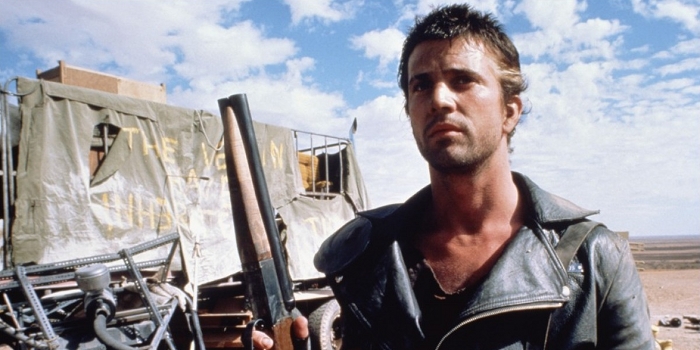
The former patrol officer runs into another drifter after his aforementioned interaction. The drifter, therein known as the Gyro Captain (Bruce Spence), exclaims: “You’re quick, very quick! Never seen a man beat a snake.” That’s where Max is now, instinct fully developed, greatly skilled in the art of survival. He is the road warrior. Max’s only companion is a scruffy dog, who amusingly entrusts with the Gyro Captain’s life — a scene involving an errant rabbit is absurdly hilarious.

As opposed to phones or wallets, people carry around spoons in the hope that they will find some leftover food rotting away in a tin can. The enforced partnership between Max and the Gyro Captain — the latter’s existence in exchange for direction — offers a bout of light relief from this demoralising and harsh landscape. Spence’s character is a sort of Ragetti figure (or perhaps Ragetti is more of a Gyro Captain), which is a welcome contrast to Max’s more sombre, uptight self.

Miller incessantly plays up his anti-hero’s transformation. Later in the film, Michael Preston’s settlement leader Pappagallo laments Max’s lone wolf status: “You think you’re the only one who’s suffered? We’re still human beings with dignity. You? You’re out there with the garbage. You’re nothing.” While his words ring with truth, we still feel compelled to sympathise with Max given his unfortunate past. The character’s evolution, or devolution, from a wholesome upholder of law to a lawless, fractured outcast is believable not only in accordance with society’s lack of structure, but more so because both Gibson and Miller consistently afford the character thoughtful consideration.

Marauding car sequences come with extra bite. At one point we see Max and the Gyro Captain peer through a telescope at a grisly runaway attempt. We become part of their distance spying, which adds a sense of realism to an otherwise unrecognisable world. The telescopic view carries the same rawness as modern amateur news reporting. In a way there is more at stake now that the landscape is completely barren; everyone is out for themselves, there is no more justice via the Main Force Patrol and instead barbarity is fought with barbarity. This shift towards more brutal action is a lot like shift in tone from The Terminator to Terminator 2: Judgement Day.

Classic genre tropes are at large, including a classic Mexican standoff that sees an invading army attack the resource-rich town where Max ends up stranded. When guns are unavailable, blunt arrows and skull-cracking headbutts take centre stage, emphasising civilisation’s retreat back towards more archaic times. A finger-slicing boomerang finds its way into a brilliant scene, compounding the unadulterated madness of Miller’s film which, despite his no-nonsense approach, is thankfully still around.

Lord Humungus (obviously) is Max’s new nemesis. He dons a Jason-esque hockey mask and exudes the soothing pitch of an experience cult leader. “There has been too much violence, too much pain… just walk away and there will be an end to the horror,” Humungus decrees to the people defending their refinery. Kjell Nilsson is great to watch, sounding like an enigmatic overseer who has all the answers and looking like a monster who could do serious damage. He adopts Hugh Keays-Byrne’s intellectual Toecutter vibe but matches that with brute strength and sense of imminent physical threat.

One of The Road Warrior’s more abstract moments is a distorted scene which resembles something out of a Cecil B. DeMille horror flick: a loud brassy score with shots overlapping one another as enemy characters wail and gesture violently. There are aesthetic echoes of Charlton Heston’s Moses presenting the stone tablet to his followers in The Ten Commandments, oddly. Here, Humungus appears to take on the mantra of Hades, vehemently spouting threats as he stands before what appears to be the fiery pits of hell. It’s a bizarre scene, but the film’s genuine self-awareness justifies its inclusion.

Since release, The Road Warrior’s many admirers have catapulted the film into cult status. It is more aloof and less predictable than Mad Max. But it also favours simplicity in the right areas, affording more time for the development of its central character who is now a very different person. Just as Max has changed through circumstance, the world has changed with him. The symmetry is admirable, if expected. The execution is expectedly excellent.

Mad Max The Road Warrior - Max

Images credit: IMP Awards

Images copyright (©): Warner Bros.

Mad Max (1979)

★★★★

Mad Max PosterDirector: George Miller

Release Date: December 10th, 1979 (UK)

Genre: Action; Adventure; Science fiction

Starring: Mel Gibson

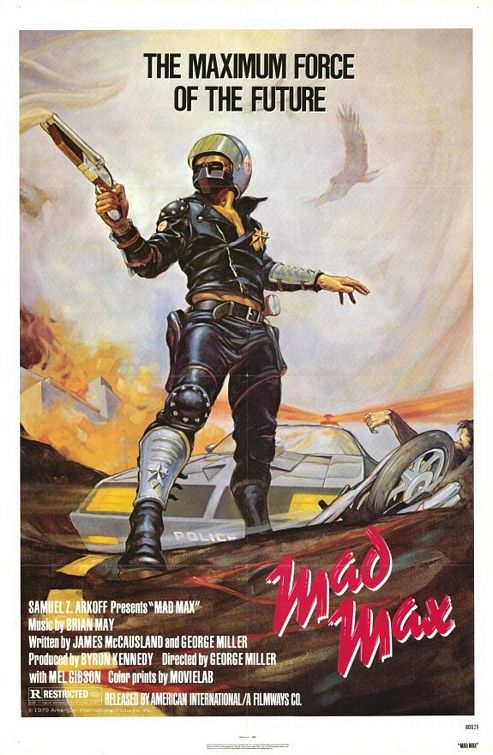
Mad Max roars into life in the midst of an increasingly tumultuous car chase. Nightrider, a crazed gang member, is on the run from a group of police officers seeking justice for the murder of one of their own. The cops — or Main Force Patrol (MFP) — aren’t the most skilled highway cruisers, bumbling in nature and even more so in execution. All except one. Max Rockatansky (Mel Gibson), the definition of poise, is the key player in a rather lousy team. We only see his grazed cowboy boots and chiselled chin to start with.

Max enters the vehicular fray, rampaging down an otherwise barren motorway — George Miller took inspiration from the 1973 Australian oil crisis, and this certainly looks like a region in need of basic resources. The director acknowledges the absurdity in what is occurring, and in what is set to occur, by introducing a plethora of slapstick obstacles: a stranded caravan, a barrage of road works, and a road-crossing baby. The pursuers crash, but the maniacal Nightrider cackles his way past each distraction in his “fuel-injected suicide machine”. Of course, Nightrider eventually crumbles at the sight of cool Max. He should have frenzied at dusk instead.

The screenplay never really deviates from the antics relayed above. It turns out Nightrider was part of The Acolytes, a motorcycle gang cut from the same cloth as Alex and his droogs. Their ultraviolence really is ultra-violent; from smashing up towns to off-camera rape to fiery murder, The Acolytes are a bad bunch. In line with Miller’s preferred tone there’s also an unconventional aura to the troupe, whose members would rather roly-poly back to their vehicles than walk.

Droogs they may be but unlike Kubrick, who liked to slow events down to a thoughtful meander, Miller takes an all over the place approach, with David Eggby’s cinematography zipping around and refusing to linger. This unholstered style greatly heightens the film’s prevailing intensity. The closest we get to an extended shot is during car chase scenes, at least when vehicles aren’t flipping on their head or exploding into pieces.

An apt description of the film might be ‘western on motorcycles’. But instead of galloping into town, characters rev. Said towns are often dusty, laid back communities where every day is Sunday. We are privy to a world where civilisation is in the process of falling, where chaos is a wrongdoer’s prime weapon and justice is in tatters (the latter, visually represented by the worn-out Halls of Justice sign). Trial attendance is low thus criminals walk free, devoid of lawful comeuppance, leaving only one form of comeuppance left to dish out. It doesn’t resemble the dystopian landscapes prominent in modern outings such as The Hunger Games or Oblivion, but instead a future that still bears familiarity, in that sense more aligned with a Blade Runner.

Droves of faceless characters are the product of a relentless mindset, and as such it can be difficult to clearly distinguish who stands on which side and why. Toecutter (Hugh Keays-Byrne), leader of The Acolytes and definite villain, is how you would imagine Russell Brand if Russell Brand was the leader of a post-apocalyptic motorcycle gang: speaker of intellectual gibberish; British accent; hair all over the place; wearing a lot of leather. Keays-Bryne successfully balances oddness with menace and is particularly effective when conversing. “That man is Cundalini and Cundalini wants his hand back,” is one of his numerous uncouth and brilliantly delivered lines. Every time he appears on screen the film instantly spruces up. Toecutter is a bit like Heath Ledger’s Joker in that sense — irresistible to watch, utterly deranged yet eternally composed.

Gibson’s Max isn’t a hard-nosed or rugged vigilante, but in fact baby-faced and emotive. He spends his evenings listening to soothing saxophone melodies and having his hair washed by his wife Jessie (Joanne Samuel). At one point the job becomes too much for him and he opts to spend more time with his family, which means lying in wheat fields and Tarzan-ing into springs. But Max is “a winner”, he’s “on the top shelf” according to his MFP overseer, Captain Fifi (Fifi in name only), portrayed solidly by Roger Ward.

This overly righteous version of Max works because it highlights the character’s purity in a bad world, and underscores the endpoint of his arc. Miller’s decision to purposefully emphasise the familial side of Max — the side pre-Mad — before entering into the final act is a simple-yet-effective ploy that makes us sympathise with greater heft.

Miller spreads his OTT prerogative across all aspects of the story, not stopping short simply at action sequences. Corny music plays over loved-up scenes between Max and Jessie. Brassy cacophonies of sound are present during dramatic moments too — for example, a gruesome hospital bed scene. Elsewhere the pillaging score is constant and somewhat overdone but, again, is a key part of the director’s ethos.

A middling lull is unfortunate, where contrivance seeps into the narrative (somehow Max and The Acolytes keep wheeling into each other) however proceedings soon pick up again and build to a gratifying conclusion. This isn’t Mad Max yet, not the iconic manifestation of the character as moviegoers know him, but it’s a superbly crafted worldbuilder.

Mad Max - Max

Images credit: IMP Awards

Images copyright (©): Warner Bros.

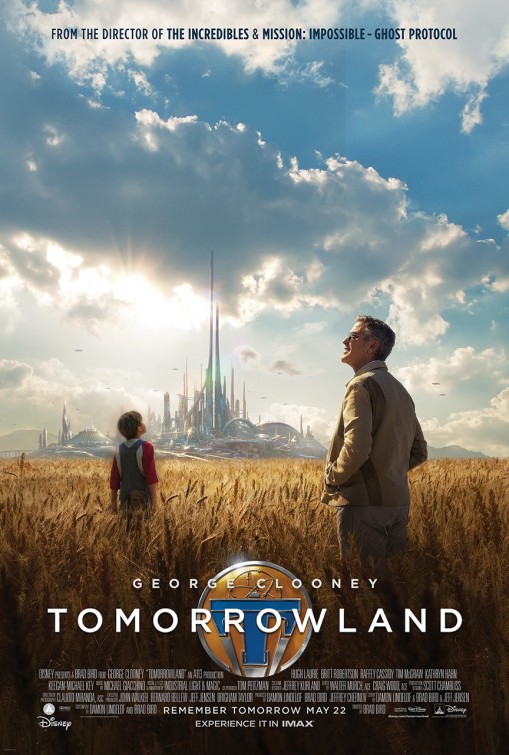
Tomorrowland: A World Beyond (2015)

★★★

Tomorrowland PosterDirector: Brad Bird

Release Date: May 22nd, 2015 (UK & US)

Genre: Action; Adventure; Family

Starring: Britt Robertson, George Clooney, Raffey Cassidy

We shouldn’t be surprised that Tomorrowland is a giant bouncing ball of alacrity. From Brad Bird, director of The Incredibles (the hint is in the title), comes a film packed with a positive punch. “There’s a great big beautiful tomorrow,” we’re told at the very beginning via cheery song. Shortly thereafter, a young Frank Walker (Thomas Robinson) engages in conversation with Tomorrowland overseer David Nix (Hugh Laurie). Nix asks about the practicality of Walker’s jet pack creation. Walker, wide-eyed and all, replies: “Can’t it just be fun?”

Though it may not have been sufficiently clear from Disney’s muddled marketing campaign — one possible factor in a disappointing opening weekend financially — this is a film about incentive and inspiration, enjoyment and energy. Whereas evasive trailers have partly sold the piece as a sci-fi escape and partly as a family drama, the movie itself is far from confused. Tomorrowland is bright, and it knows it.

Starring Britt Robertson as the self-prescribed ultra-optimist Casey Newton (probably related to Isaac), the story follows her eventful journey as she searches high and low for a mysterious place called Tomorrowland. Accompanying her are recruiter Athena (Raffey Cassidy) and the now older, world-weary Frank (George Clooney). Casey is the human embodiment of the film’s joyful prerogative. Her school teachers drawl on about end of world scenarios — spouting warnings on everything from nuclear Armageddon to environmental degradation — but all Casey wants to know is how to fix these problems.

Just as the camera struggles to go more than a minute without whizzing towards a Hall of Invention or something of similar ilk, Casey can’t spend any significant length of time without exuding eagerness. She would be the perfect citizen of Tomorrowland, where everything is so big and bold. In Mad Max: Fury Road — which shares the same sticking-by-one’s-convictions mantra — vehicles are bolted on top of other vehicles. Here, we see skyscrapers double up to create super skyscrapers. Bird spends a long time worldbuilding, striving to convey a sense of wondrous momentum from the off. It is probably too long, especially when we spend so little of the two hours actually in Tomorrowland.

Robertson is charming and consistently watchable as our central character. Quite brilliantly, she manages to be sprightly but not sickening. Unlike in the television series Under the Dome, this is a much more assured performance from the actor (admittedly, her character in the former offers little in the way of depth). Young newcomer Raffey Cassidy is a victim of the hyped up and overly long sugary beginning, her verbiage a tad too sentimental. The talented teen increases in charm as the film progresses though, to the point where the screen significantly benefits from her presence.

Damon Lindelof’s screenplay avoids the politics and greed normally rife in the world we know. This lack of cynicism is actually quite refreshing, and the film shouldn’t be kicked for carrying a hopeful message. It should be saluted, really, for moulding its message of hope into a pertinent discussion about the state of humankind. At one point Casey exclaims, “It’s hard to have ideas and easy to give up!”, a statement epitomised by the film itself. Tomorrowland is more than just a surface level blockbuster. At its core, it boasts a perceptive idea about how we, humanity, have accepted and monetised our demise. Bird and Lindelof should have mined this concept further, but its inclusion is evidence that their script isn’t naive, nor ill-judged.

However, it can’t quite dodge plot holes. Terminator-ish humanoid robots show up occasionally wearing goofy smiles (obviously) and guided by a view to kill, though it’s never really apparent why. The existence of the film’s grandiose, hidden cityscape is also somewhat puzzling. Sure, it looks great and has some cool gravity defying roads, but what exactly is it? And where did it come from? Rather than answering these questions, Bird and Lindelof seem to be more transfixed by their attempts to include as many cinematic references as possible.

And who can blame them? There are so many fun touchstones: Baymax bubble suits are worn with jet packs as a safety precaution; attire-wise, the futuristic land resembles The Hunger Games’ unconventional Capitol style; visually, moments of inter-dimensional travel momentarily resemble David Bowman’s cosmological pilgrimage in Kubrick’s 2001: A Space Odyssey; and Charles Xavier’s Cerebro room gets an interactive Google Maps makeover. A Forbidden Planet-esque store that we enter midway through the piece is a treasure trove of movie geekdom.

Aside from his presence as part of an unnecessary narration tactic that materialises every so often, George Clooney is introduced to us with the sun beaming down behind him and illuminating half his face, probably because he is God. Frank has a grizzled beard and is a bit moody, but that’s as rebellious as it gets. He delivers a “son of a” but no “bitch”.

Frank’s downbeat personality is the story in a nutshell — someone once driven by promise who has presently accepted defeat, but can be saved. “Can’t you just be amazed and move on?” Frank muses when Casey persistently asks about his cool house gadgetry, and you sort of get the feeling that in lesser hands this would be the film speaking to its audience. Neither a baddie, nor a goody, Hugh Laurie’s David Nix is a misstep. The presidential figure is very thinly drawn, though the actor does deliver a really compelling speech towards the end summarising humanity’s passiveness.

Tomorrowland doesn’t throw the cat among the pigeons. The closest we get to edgy is a non-diegetic rock tune that accompanies Casey as she invades a NASA launch station while wearing a treasured NASA cap given to her by her NASA-employed father. The film tells the world that we have lost our way and that we can reclaim our rosy roots, but that we should strive to be even better than before. It is what it is and if you’re happy to spend a few hours riding a roller coaster of cerebral optimism, it is for you.

Tomorrowland - Hall of Invention

Images credit: IMP Awards, Collider

Images copyright (©): Walt Disney Studios Motion Pictures