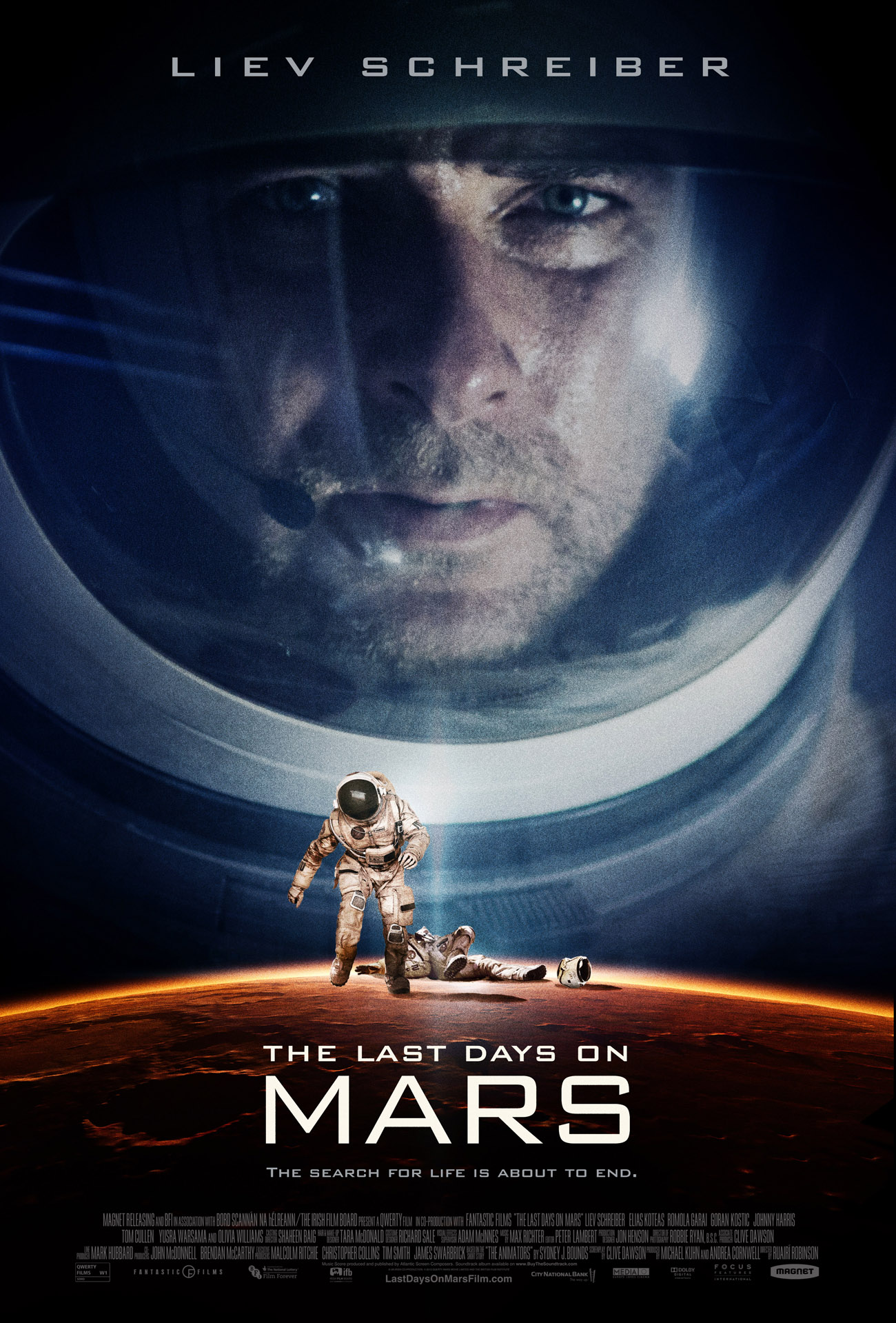
The Last Days on Mars (2013)

★★

The Last Days on Mars PosterDirector: Ruairí Robinson

Release Date: September 19th, 2013 (UK); December 6th, 2013 (US limited)

Genre: Horror; Science-fiction; Thriller

Starring: Liev Schreiber, Elias Koteas, Olivia Williams

The Last Days on Mars begins with a fairly promising sequence that sees two characters attempt to navigate an approaching dust storm. They bat around bouts of small talk, clean-sounding due to the atmospheric vacuum, quickly establishing their roles in the process. The air is quite eerie, uncanny almost. For five minutes, Ruairí Robinson’s outing works. Unfortunately, for ninety minutes it doesn’t. This subtle, edgy poise rapidly loses out to a flimsy skeleton; plot, characters and decision-making all broken and seemingly unmendable. On the Sunshine scale, The Last Days on Mars drifts miles yonder of Event Horizon before landing worryingly close to Apollo 18. Eek.

Thirty years or so from now, a team of scientists stationed on Mars are less than a day away from extraction. The incoming Aurora spacecraft is set to shuttle the crew back to Earth, but not before Marko (Goran Kostić) can covertly investigate some odd bacteria that he has come across. His findings are extraordinary, indicating the primitive existence of some new life form. However the nature of said discovery proves to be horrifying, and subsequently puts the remainder of the team in immediate danger.

In translating to the big screen, sci-fi historically carries a fairly patchy record. One element that has consistently shone though, is how the genre permeates atmospherically. Vastness is vast, and filmmakers are essentially unlimited given the nature of space potential. The Last Days on Mars makes fine work of the opportunities on offer, parading a visual spectrum that is encapsulating for the most part, and an aura that meanders tactfully between normal and creepy. Cinematographer Robbie Ryan delivers more than any other, affording the piece its one true success story. It’s only fair to point out Max Richter’s occasionally disconcerting score too, his musical interludes apparently effective enough to land him recent gigs as part of The Leftovers and As Above, So Below.

Annoyingly, this eerie-cum-wondrous soundscape signals the end of all things positive. The film tries too hard to be a slasher when the setting is far better suited to a probing approach. For some reason director Robinson cannot wait to show off his monster, and as a result the reveal comes sooner than expected. Scare factor crumbling, we turn to chaotic, jerking camera movements surrounded by pitch black darkness, all fruitful cinematography gone. Slotted indiscreetly amongst the outpouring of brash-yet-monotonous horror are snippets of philosophical musings.

It is as if the filmmakers, having mismanaged or simply forgotten the science-fiction element of their piece, feel the best solution lies with invariably adding earthy monologues. (“Do you think any part of us survives after death?” says one character, the notion shot down in a flicker as the next creature attacks). At one point we float over into unintentionally hilarious territory as the group argue about existing and dying over a deceased corpse that is showing signs of life. Sci-fi should engage its audience by channelling smart reflections and themes with gravitas, but the faint attempts displayed here reek of laziness.

The cast, quite well known despite the small budget, haven’t a hope in the world. Or in any world. Liev Schreiber leads as the claustrophobic Vincent and is granted the most material to work with. Once we’ve given up hope in terms of trying to figure out why a person afraid of small spaces would select space travel as his profession — he refers to their shuttle as a “coffin” — we’re left with hardly any inkling as to who Vincent and the other crew members are. The human characters are so poorly mapped out that it’s a wonder all of the actors found the set. It becomes an eternal struggle to care about any of them, or their fates, simply because we don’t know anything about the group. Mission psychologist Robert is the first one to lose his mind. Tedious.

Clive Dawson’s screenplay isn’t much better. Aside from the lack of scares and occasional deep thoughts, the narrative trundles along without vigour and fuelled by coincidence. The entire set-up hinges on a chain reaction of monumental contrivances: having spent a whole six months on Mars the team just so happen to discover this evil bacteria hours before they jet off home and the only reason said bacteria makes it on board is because a petulant crew member decides to look up the location of an errant mate and subsequently finds him at the site of the bacterial breeding ground. It is ridiculous and unashamedly so.

Perhaps the most grating factor of the lot is the fact that The Last Days on Mars could have been fun hour and a half. It never shows any signs of restraint or wisdom, thus the film was never going to be a serious sci-fi jaunt. But there is room for some B movie silliness. Though the whole thing is ravaged by a disappointing and ineffective requisite to walk the line tonally, a few looser ends here and there would undoubtedly have induced waves of low end but high value madness. It would’ve been a welcome turn of events for most of the cast — including well-travelled names such as Olivia Williams and Elias Koteas — who are instead left to suffer through cringeworthy speeches and poorly written characters.

The Last Days on Mars has been done immensely better before. It’s not necessarily that this is a horrible film, because it isn’t. Robinson’s piece is certainly bereft of many working parts but I’ve seen much worse. The movie is unavoidably boring though, and lazy. It wallows. With the ingredients laid before us — brimming with promise — it should, at the very least, be shooting for the stars and missing. Yet, The Last Days on Mars relents from even aiming skywards.
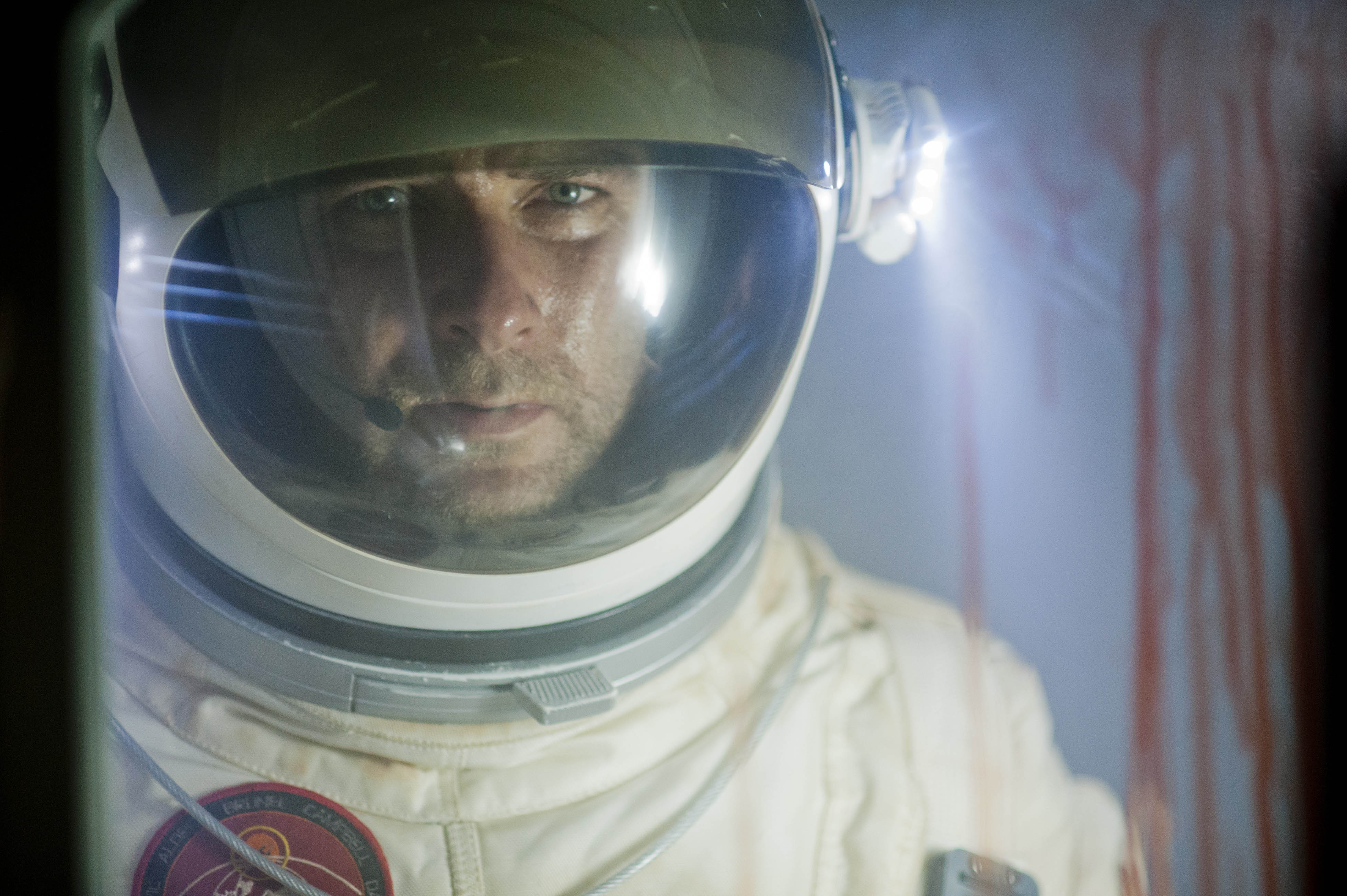
The Last Days on Mars - Liev

Images credit: Collider

Images copyright (©): Universal Pictures, Focus Features, Magnet Releasing
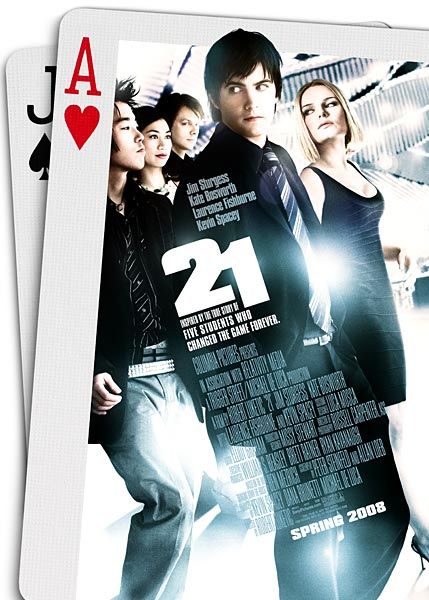
21 (2008)

★★

21 PosterDirector: Robert Luketic

Release Date: March 28th, 2008 (US); April 11th, 2008 (UK)

Genre: Crime; Drama; Thriller

Starring: Jim Sturgess, Kevin Spacey, Kate Bosworth

When it comes to playing cards there are two ways a trick can go wrong. A plethora of impressive skills, perhaps including some nifty sleight of hand, culminating in unexpected disaster. That’s the first. The finale is disappointing, but at least you get the temporary thrill of expectation. The second revolves around a bland illusion. When a trick hits all of the correct spots yet fails to sparkle. 21 is a bland card trick. Its deceptively pacey opening hints at promise however, when the hands have been laid and the chips counted, Robert Luketic’s film amounts to nothing more than a serviceable few hours.

Inspired by true events, 21 tells the tale of six MIT students and their advantageous teacher who coalesce together in order to pull off card counting blackjack victories. Ben Campbell (Jim Sturgess) is the team’s newest recruit, having joined in a desperate attempt to fund his Harvard dream. Though the Las Vegas voyagers get off to a successful start, rising tensions begin to chisel away at the group’s policy that denounces in-game emotion, and their cover is threatened.

If you struggled to follow any of the poker lingo in the opening paragraph, 21 will probably have you pulling your hair out after half an hour. (I’m almost bald now). The first few frames are snappy and strategy-led, though quite unnecessary given the content is repeated later on. In short, infrequent bursts, detailing the logistics of what our characters are doing is fine. The nature of the narrative needs some exposition to keep the film bubbling along. But we hear about rules and game play so often, and without vindication too. The film isn’t about blackjack — it isn’t about anything really — blackjack is simply a means to an end. That is how the characters see things (“It’s just business”) and it should be how we see them too. Unfortunately, writers Peter Steinfeld and Allan Loeb get too caught up in the explanation part that they forget about storytelling. It’s all a blur, really: stat crunching, pluses, minuses, attributing animals to numbers. Who cares?

This need to accurately relay the ins and outs of the gambling world leaves little room for narrative clarity, ushering forth an enormous helping of laziness. Coincidence is rampant from the get-go; “The Robinson is going to someone who dazzles,” a Harvard representative informs Ben, giving him his only motivation to cheat. If that wasn’t cheap enough, the interviewer goes on to tell Ben he needs more life experience. Money and life experience, huh? If only there was a quick-fix solution to both. Good thing our lead is intelligent as well, otherwise we’d be spending almost two hours — a ridiculously long run time — watching him pay his way to Harvard in a suit store. We never really believe in Kevin Spacey’s teacher by day, Vegas kingpin by night either. You’d think a flustered student would have ratted him out by now. Navigating the outing’s incredulity becomes increasingly arduous as the events dive deeper.

Kevin Spacey is pretty good though. Perhaps there is an element of phoning it in going on, but the actor’s charisma works wonders for his character even if it does accentuate the mundanity of those around him. His delivery strikes as quite perceptive on occasion. Presumably he is aware of the invariably groan-inducing dialogue. (“Ben, let the car drive by itself,” says Micky after hearing about his student’s attempt to create a self-driving car). The other performers tough it out, but they can’t overcome the bland material. Jim Sturgess is okay as the main player, never threatening to erupt from his character’s generic chains. It is worth pointing out Josh Gad, who is quite amusing as Ben’s obnoxious best mate.

The characters join the plot in the doldrums of commonality. We’ve seen it all before: the group member who succumbs to jealousy; the friend left hanging in the lurch; the suave leader with ulterior motives; the hard-to-get girl whose beauty matches her romantic indecision. Sure, 21 looks alright when the gang reach Las Vegas but even then there are so many aerial shots that we begin to wonder if the director simply has no idea what to do next. Since there is inability to conjure up any emotional connection, the filmmakers recruit surface elements to grab our attention. The bright lights and quick edits fail to yield pizazz, and even a fairly sparky soundtrack feels diluted amongst the mechanical air.

Laurence Fishburne shows up every now and again and effectively sums up the film’s failures. He plays casino security chief Cole Williams, and his moral stance is never really unfurled. Cole hates the incoming modernisation — he’s an old school guy, preferring film to digital — and the soon to be implemented facial recognition software is sure to leave him out of a job. The guy is a dick though, more or less working the antagonist role opposite our card counting clan. It is conceivable that Cole’s ambiguity is a reflection of dubious actions elsewhere, and gambling in general, but that is probably awarding too much credit to an otherwise uninspired production. So we don’t care about him.

21 is eternally insipid. Everything from plot to character diversity reeks of carefulness, even the group’s motto is tedious. (“Don’t get caught counting”). Kevin Spacey provides the occasional spark that the piece seeks dearly. It wishes to dazzle, some might say, but eventually peters out. I’m still trying to figure out why an underground gambling hub exists in a Chinese restaurant.

21 - Cast

Images credit: IMP Awards, Vulture

Images copyright (©): Columbia Pictures

The Place Beyond the Pines (2013)

★★★★

The Place Beyond the Pines PosterDirector: Derek Cianfrance

Release Date: April 12th, 2013 (UK); April 19th, 2013 (US)

Genre: Crime; Drama

Starring: Ryan Gosling, Bradley Cooper, Eva Mendes

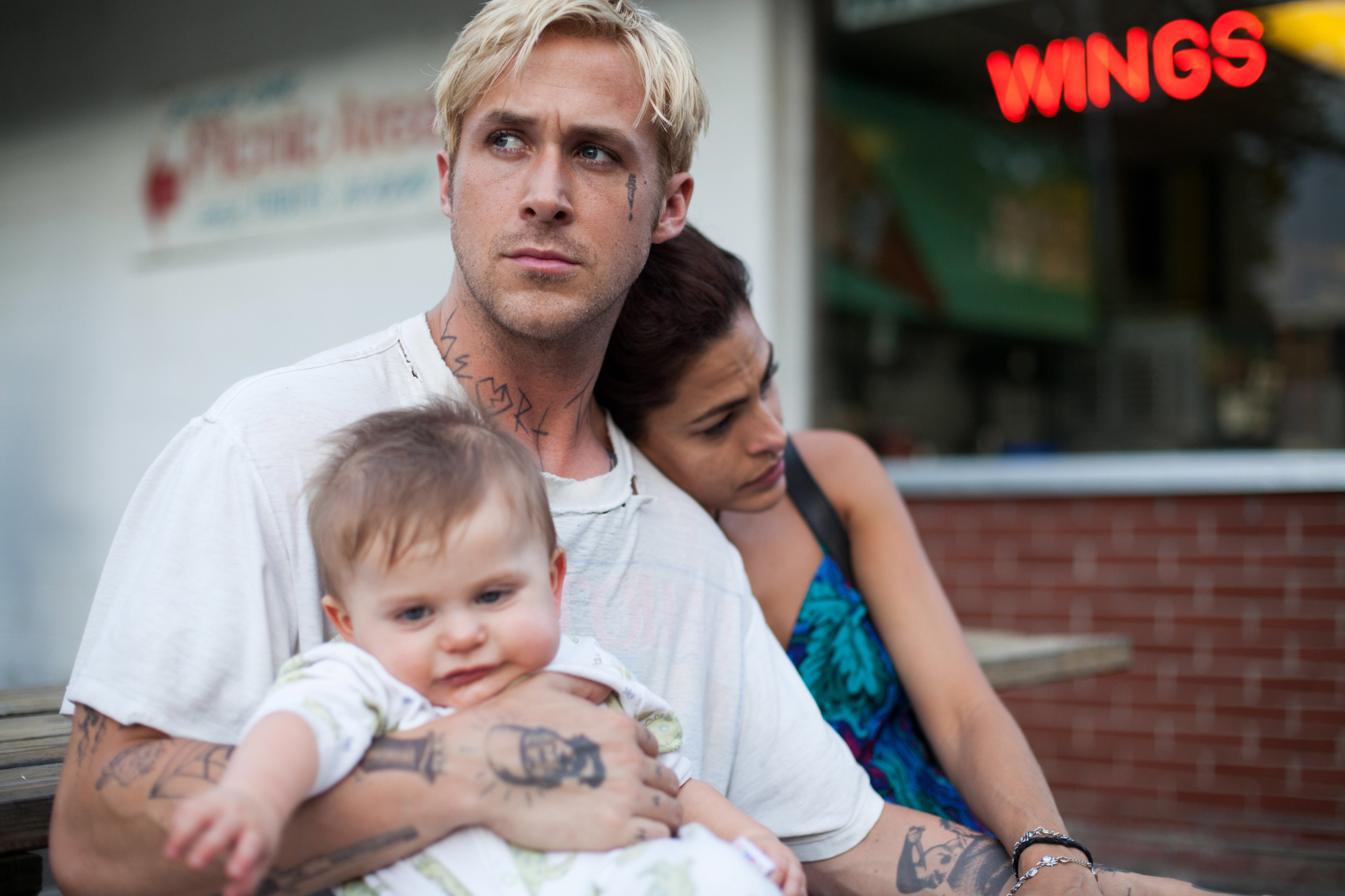
The film that almost instantly springs to mind when watching The Place Beyond the Pines is Drive. Ryan Gosling stars in both, and in both he plays an outsider, a semi-vagrant. The Driver is a suave customer on the surface; he steers people away from danger in his glossy 1973 Malibu. Luke Glanton, on the other hand, trundles towards peril atop a motorcycle, common sense not in tow. For him it’s either a spherical cage of imminent perpetual risk or a bank robbery. Unlike Drive, Derek Cianfrance’s ambitious picture widens its berth to include a host of other characters. The result is an end product that is nowhere near as chiselled as the 2011 indie, at times detrimentally so, but one that should absolutely be applauded for its scope.

Luke Glanton (Ryan Gosling) is a stunt motorcyclist who travels from state fair to state fair earning a wage. Upon rekindling his relationship with a previous beau, Romina (Eva Mendes), the marauder ventures into a life of crime. That’s where he encounters Avery Cross (Bradley Cooper), a police officer whose moral head space is struggling under the weight of a corrupt department.

Primarily, this is the story of two people and the incessant reverberations of their actions. We meet Luke from the off, and follow him as he strolls into a bowl of hell. His job, as a stunt motorcyclist, perfectly embodies his unconventional lifestyle. The quiet, edgy nomad is someone for hire and when we first meet Luke his already dirty attire fields smatterings of blood. Instantly we feel detached, yet the revelation that he has a son enshrouds our lead with some semblance of humanity. A church scene that pits a worn out Luke as a self-realised squanderer is powerful. The constant circle of danger that flares throughout the film — the cage, his annually reloading lifestyle — succumbs to a strive for rehabilitation.

Director Derek Cianfrance then violently cuts from intense, loud robberies to sweet family days out. It works. The desperation in Luke becomes apparent; here is a character whom we’re not necessarily encouraged to get behind, nor is he somebody tarred with pitch black strokes. His criminal exploits are stark but they’re not isolated, a notion that vividly rears during a home altercation. As he, Romina — Eva Mendes is an amiable foil for Gosling, but her character suffers from a lack of clear definition — and their child are having a family photo taken, Luke relays his instructions to the taker: “Just capture the mood… the bike’s part of the family.” It is one of his few moments of solemn happiness.

On the surface, Avery Cross is different animal. He is a do-gooder, a fresh faced police officer. Avery spends his days protecting people from the likes of Luke Glanton. However, the reverberations of an incident leave him shaken, more or less infecting Avery with the same ceaseless moral dilemma prominent in the mind of his criminal counterpart. Work also becomes his escape, and his workplace is one wrought with wrongfulness too. (“But that’s the job” is a phrase of resignation constantly thrown around). This is where the film runs into its first problem. Avery is part of a crooked police department led by the viciously enrapturing Ray Liotta, but we don’t really believe it. Is the whole division corrupt? The virtuous cop’s aversion to corruption paints him with a gloss of goodness but we’re left to ponder why he is the only impartial officer.

This is the first in a chain of coincidence that ends with a major bang, though by then we’re willing to forgive. Whereas the corruption layer is a similarly fortuitous addition installed by Cianfrance and co-writers Ben Coccio and Darius Marder, it is one that rings less true, less authentic than the rest. In a sense, the director’s ambition suffers a tad as it becomes warped by sheer scope, but it shouldn’t be shot down as a result. Somewhere approaching the midpoint, the director unleashes quite the narrative swerve. The sequence is unexpected but ultimately rewarded because it endeavours to further the story, adding depth in the process. Regardless, the move signals the inception of a stunningly constructed piece of cinema.

Ryan Gosling’s work as Luke might be his best to date. The star manages to balance a controlled ferocity originating from struggle and toil, with a slice of unorthodox compassion. The Place Beyond the Pines does occasionally resemble Drive — a film whose slickness helped to paper over any cracks, a luxury not afforded here — but it is more rugged, and by proxy so is Gosling’s portrayal of Luke. As Avery, Bradley Cooper contributes with equal effort. It is true that his character follows a more recognisable and perhaps, therefore, more relatable path, but Cooper ensures there’s nothing generic about the police officer; in fact the further along we go, the meatier his role gets. Dane DeHaan’s performance is another worth singling out for praise, his stock on a seemingly unending rise.

Other factors are complimentary too. For instance, we get the raspy echoes of Bruce Springsteen rather than the melancholic waves of Kavinsky. At these points the outing hints at Scoot Cooper’s Out of the Furnace, a sentiment that gains more weight in tandem with Sean Bobbitt’s crackling cinematography. The camera stalks characters, firmly placing us amongst the people on display and invoking another degree of personableness. It’s guerrilla filmmaking finely executed.

Derek Cianfrance’s follow-up to his uncompromising hit Blue Valentine retains the same empathetic tendencies as said flick, but ambitiously rolls them out over a vaster blanket. The story presents two sides of the same coin, both engaging and effective. There are dips conjured by happenstance, but nothing catastrophic. Rather, we’re attracted to Cianfrance’s portrait of life, work, consequence and connection, and it’s a well-founded attraction.

The Place Beyond the Pines - Gosling

Images credit: IMP Awards, Collider

Images copyright (©): Focus Features

Grave Encounters (2011)

★★

Grave Encounters PosterDirector: The Vicious Brothers

Release Date: September 9th, 2011 (US); April 20th, 2012 (UK)

Genre: Horror

Starring: Sean Rogerson, Ashleigh Gryzko

We are abruptly informed that “what you’re about to see is not a horror movie”. Well, it is. At least it’s meant to be. Grave Encounters is so utterly infatuated by the genre, by appeasing the masses, that it sacrifices integrity for indiscreetness. Checklists at the ready: haunted asylum, moving wheelchairs, amateur crack team. It is all here. The Vicious Brothers have made a bad film, one that seeps with obvious happenings and undeniably familiar events. But they haven’t made a boring film. What Grave Encounters lacks in spontaneity it makes up for in irrational, occasionally eerie and often humorous sequences.

As far as ghost investigations go, the Grave Encounters team aren’t having much luck. When they seek out and pitch up at a desolate mental hospital, the group led by presenter Lance Preston (Sean Rogerson) are quite willing to manipulate matters for additional shock value. Then increasingly strange occurrences rear, leading Lance and company to the stark realisation that they’ve landed in a location not to messed with.

Grave Encounters is many things. Ordinary. Ambling. Almost entirely lacking in scares. Truth be told, the first thirty minutes play out as a comedy, an embellishment laden on the film precisely due to one thing it ain’t: tactful. As upcoming events are foreshadowed, it feels like we’ve bought a ticket for the latest horror movie walk through; from a quick reminder of how dark it gets at night to the singling out of a window that peculiarly opens by itself, everything reeks of internal uncertainty and external panic on the filmmakers’ part. And it gets worse — before our not-so-beloved reality honchos begin their quote/unquote official investigation, somebody showing them around the asylum points out the service tunnels. (“It’s like a maze down here, you could easily get lost”). Paranormal terrors are set up in a similar vein to glass bottles, or targets, poised and waiting to be smashed.

Don’t worry about having to clean the subsequent shard-like mess. Even though The Vicious Brothers — who wrote and directed the picture — plainly relay their scare tactics, the film struggles to follow through. Sheer obviousness is an issue. We know what to expect because the horror has already been hinted at, and it’s not as if said horror is intuitive enough to overcome our expectations. The camera often peers down corridors for periods of time hoping to conjure up something of a creepy atmosphere. These moments are better but remain held down by a prevailing lack of authenticity emanating from an amateurish presentation, both within the film’s context and outwith its boundaries.

For instance, at the start a producer played by Ben Wilkinson, who is never present during the investigation, informs us that the content we are about to view hasn’t been tampered with in any way, apart from some editing to alleviate time constraints. Why, then, are behind-the-curtain sections left in? A car interrupting host Lance Preston’s introduction to the episode, or the team’s unrelated small talk upon meeting a historian. These are nagging issues that hardly amount to a fatal whole, but they are indicative of the filmmakers’ complacency. Attempts to induce realism are trodden on by a flawed premise. Just as events seem to be gaining some sort of momentum, such as the aforementioned shots settling on eerie corridors, this complacency once again crops up. Grave Encounters is scariest in silence and, though it owes more to REC than originality, the ending is quite unsettling. It simmers with hair-raising solemnity. Elsewhere, there is far too much shouting.

Grave Encounters would be significantly less entertaining minus its cast of cartoon characters who constantly indulge in gleeful idiocy. Lance, played by Sean Rogerson, is terrible. Our lead is the amateur biting off more than he can chew. The presenter pays an unassuming gardener to make something spooky up, and we’re resultantly left to ponder which is funnier: the caretaker’s nonchalant reaction to Lance’s request or the notion that, when push comes to shove, anyone would actually believe the local grass-cutter. During his Emmy award winning comedic exploits, Lance also decides to hire an overly eccentric, dark sunglasses wearing medium who emphatically gasps upon entering each room. (Incidentally, the ‘medium’ is probably a better gardener than he is spirit converser).

Rogerson’s persona is just one of a band of stupid characters who make stupid decisions for stupid reasons, and they each know of their dumbness. (“I know this sounds really stupid, but…”). We’ve reached a point in horror where lunacy has become the norm, an unfortunate feature that for the most part is something we must roll with to at least attain some level of enjoyment. It’s disheartening but it’s also reality — not an exclusive one, thankfully. We can’t take any of what is going on throughout Grave Encounters with a modicum of seriousness because there is hardly an ounce of existing tension and the characters are clichéd numpties. Believing in them is out of question, as is empathising with their plight.

Grave Encounters is so wrapped up in its attempts to appease the mass audience that the film misguidedly ventures down a shadowy corridor of ‘been there done that’. The Vicious Brothers’ piece might momentarily tickle a few horror cravings for those attracted by towards a shallow scare, but even that is debatable. The occasional influx of genuine terror hurts more because it signifies unfulfilled potential.

Perhaps it is best not to fret, and to simply giggle along with the absurdness.

Grave Encounters - Rogerson

Images credit: IMP Awards, Fanpop

Images copyright (©): Tribeca Film Festival

I Know What You Did Last Summer (1997)

★★

I Know What You Did Last Summer PosterDirector: Jim Gillespie

Release Date: October 17th, 1997 (US); December 12th, 1997 (UK)

Genre: Horror; Mystery; Thriller

Starring: Jennifer Love Hewitt, Sarah Michelle Gellar, Ryan Phillippe, Freddie Prinze Jr.

We probably shouldn’t be too surprised that a film called I Know What You Did Last Summer reeks of laziness. Just as someone couldn’t find the time to come up with a proper title — it ain’t bad, but it is a tagline at the end of the day — renowned screenwriter Kevin Williamson must’ve had better things to do when he should have been jotting down ideas for this particular outing. Odd too, given some of Williamson’s best work hit cinemas only a year prior. Released during the peak of slasher popularity, I Know What You Did Last Summer is an almost wholesomely generic film that seldom has something fresh to offer. Though when it occasionally does, it’s quite fun.

The day is July 4th — it always is — and a group of friends partying at the beach are celebrating the end of high school life. Fuelled by alcohol, their lively drive home in the early hours of the morning takes a violent turn when designated wheel man Ray (Freddie Prinze Jr.) inadvertently hits a stranger. A year later, the quartet reconvene to face their demons after Julie (Jennifer Love Hewitt) receives a worrying letter from an unknown threat.

Riding on the coattails of horror’s slashiest sub-genre at its peak, this may well have worked for audiences 15 years ago. For those 90s kids who were willing to manoeuvre away from their post-Fresh Prince couches and venture along to the cinema in a search for their latest scare kick, an air of fragmentary vindication likely arose. The proceeding 15 years haven’t done Jim Gillespie’s piece any favours though as these days I Know What You Did Last Summer communicates sluggishly rather than scarily.

Characters who were once amusingly familiar are now dully recognisable; here we watch incompetent cops, hysterical teens, unappreciative family members and an oddball whose home is a cabin in the woods fight it out for screen time. You could go one further and split our four leads into general types: the douche, the do-gooder, the good-looking chick and so on. The lot presented before us are hardly fleshed out at all, not figuratively anyway — when main ladies Julie and Helen reconnect after a year, the duo interact as if they’ve only been apart for the length of a toilet break. Emotion, posted missing.

It is peculiar, then, that we sort of like the characters. The high profile names involved do well with the lightweight personas laid upon them — at least the car accident at the beginning manifests as some sort of an attempt to taint our protagonists with an iffy moral shadow early on. Jennifer Love Hewitt and Sarah Michelle Gellar are accommodating screen presences, and both veer closer to the scream queen tag than the annoying gal stamp. In a divergence from rule, we’re essentially roused to root for a pair of leading females and the film does well to split its time between them. Although Sarah Michelle Gellar’s Helen is a pageant contestant she is also quite resourceful and not stigmatised by her materialism. On the other hand, when he is afforded something to do Ryan Phillippe is either angry or the purveyor of comical nodes. “You can’t drive for shit, you know that?” Barry exclaims seconds before his pal runs somebody over. Slick.

Perhaps Kevin Williamson is aiming for self-awareness throughout his screenplay, akin to the tone promoted in Scream the year before. There is a noticeable pronunciation in certain elements that would indicate as such; from telling ghost stories around a campfire to dumping a body in a dark lake, at night, surrounded by mist and eerie silence. But the film gets caught somewhere amid tongue-and-cheek and deadly serious. Unlike Scream, a picture that successfully manages both overriding irony and a sinister underbelly, I Know What You Did Last Summer plods along an uncertain middling route. Humorous moments are infrequent yet amplified when they enter the fray. It doesn’t help when action lulls are supported by dialogue that is often erroneously funny. (“Maybe he wanted to die?”)

And it wouldn’t be a nineties slasher flick without splurges of stupidity either. Conversations are crummy but these are nothing compared to the baffling silliness on display, an unnatural lunacy that regularly exudes the horror norm. Some instances we are forced to forgive for the sake of sanity, such as the arrival of an ominous note on the exact same day Julie returns home, or that her mate just happens to work locally and not be in New York during Julie’s time of need. Other scenes are notable for their unavoidable absurdity: at one point Sarah Michelle Gellar’s character enters her bedroom and dozes off whilst the baddie hides in the cupboard, refraining from killing her. Guess someone behind the scenes managed to inform the villain just in time that there’s another thirty minutes to go.

Slasher outings aren’t really meant to be scary, not exclusively. The aim is to shock, to rattle the audience. Unfortunately this does nothing more than encourage a few winces. Admittedly, our persistence is somewhat rewarded with a couple of good ones. The first kill, for example, is impactful without being overly gory. From here Williamson’s screenplay hints profusely at who the killer is and does so effectively. We foresee a twist coming, we think we know the culprit. Ultimately, the conclusion flatters to deceive but the ponderous build up is admirable and an insight into what could have been.

I Know What You Did Last Summer clumsily loses touch with its tone. The piece cajoles between hokey and ominous, and the end result is rather fluffy. Sure, it is sort of fun if you are looking to suspend you brain for over an hour and a half. But it’s certainly not anything to scream about. And it’s certainly not Scream.

I Know What You Did Last Summer - Cast

Images credit: IMP Awards, The Movie Buff

Images copyright (©): Columbia Pictures

The Borderlands (2013)

★★★

The Borderlands PosterDirector: Elliot Goldner

Release Date: August 23rd, 2013 (UK Frightfest)

Genre: Horror; Mystery

Starring: Gordon Kennedy, Robin Hill, Aidan McArdle

Elliot Goldner brings a heap of diligence to his directorial debut. The Borderlands is the Brit’s first venture behind the camera, the outing a horror flick that opts for patience over pillaging. Goldner manages the atmosphere well and his film builds to a genuinely creepy crescendo as a result. But the ingredients aren’t all that original, nor are they universally receptive. It is tough to root for obnoxious characters and tougher still to engage in such a familiar situation; we slot into the misty West Country, our time split between a haunted church and flaming sheep. Persevere, though, and be rewarded.

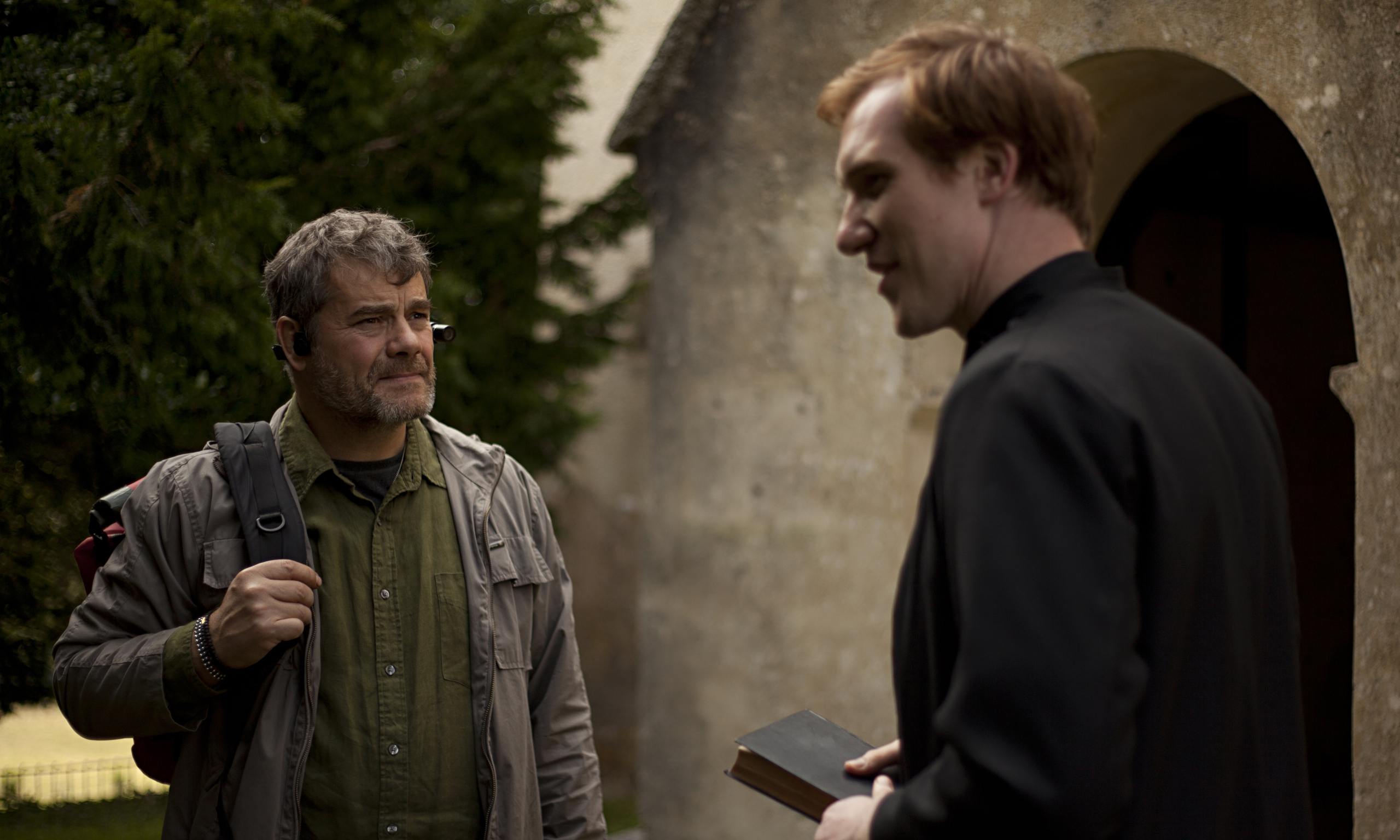
Having been summoned by the local priest, Vatican paranormal investigators Deacon (Gordon Kennedy) and Mark (Aidan McArdle) find themselves trying to disprove a plethora of mysterious happenings. They are joined by Gray (Robin Hill) who, despite being non-religious, sees more weight in the ghostly declarations than his colleagues. That is until what is perceived to be coincidental gradually grows stranger.

The first thing to note is The Borderlands’ lack of originality. This is no spectacular deviation from the horror norm, certainly not in terms of character or overarching story. Candles moving without provocation, noises emanating from walls, a rural location. The characters too, divided by scepticism and belief, are more or less conventional. Deacon, portrayed fairly well by Gordon Kennedy, is the moody Scot bearing a mysterious secret that is no doubt disquietingly aligned to the current job. He won’t share it though, and instead we must succumb to generic small talk that does nothing for the characters. Discussions enveloped in weird histories sort of add to the film’s simmering tension but retread old ground in content.

A beginning that is at best innocuous trundles over into annoying territory the longer our resident tech guy Gray is on screen. You’ll recognise him as the tech guy because the tech guy is always the offbeat one, harmlessly immature and progressively frustrating. Gray laughs at place names and rustles crisp packets in church. “Food, cleanliness and a little bit of naughty,” is one of his more egregious lines. And just on the off chance you missed all of that, we also see him also partaking in a lot of webcam installation. Robin Hill plays Gray without any real panache but the performance serves its purpose. They all do — Luke Neal is perhaps the most efficient as Father Crellick. The problem is that these people are not the most likeable bunch. Mark arrives later on and completes the undesirable investigative trio, he a bit of a bumbler who objects to almost anything. By the time the scary stuff arises, we don’t really care too much for anyone’s safety. (Though, admittedly, the film overcomes this issue in the end.)

After a fairly average, and arguably quite boring, opening half hour — one that occasionally plays out like a peculiarly mundane episode of Big Brother — Goldner amps up the menace. Shouting matches emerge sparingly but time is most often filled by a growing sense of risk. Patience is the film’s most effective employee; the director never panics despite a narrative that is somewhat uneventful, at least in horror terms. The creaky characters become less creaky because the film no longer wholesomely relies on their interactive antics. Dialogue that may have manifested as outlandish beforehand gains a degree of importance, particularly as the end nears. (“That’s nature for you Deacon, big stuff eating little stuff”). By the time the final sequence plays out we are just about glued to the screen in an ocular concoction of fear and intrigue. It is an ambiguous conclusion, but not an alienating one.

The Borderlands’ technical aspects deserve credit too. In between scenes, the camera likes to pull back and take in the spooky country surroundings, every so often reminding us of the characters’ vulnerability due to their presence in a relatively secluded area. A mountain looms in the background with grey, murky clouds swirling overhead relaying somewhat of a foreboding nod. The gloomy cinematography ushers forth a landscape that frequently becomes a character in and of itself. Goldner, who also wrote the piece, is savvy when it comes to his use of the found footage element. Cameras are mounted on walls and characters wear Google Glass-esque lens recorders, covering all bases. Subsequently, what we’re presented with is a hybrid of found footage and classic direction that works well.

Clocking in at just under 90 minutes, The Borderlands is a fairly short film. It squeezes as much horror juice and brooding anticipation out of its runtime as possible and does so without ever revealing too much. Held down by shaky characters and a largely unoriginal story, the outing — though admirable in its atmospheric quality — hinges on a strong conclusion. It delivers.

The Borderlands

Images credit: BBFC, Gallery Hip

Images copyright (©): Metrodome Distribution

Drinking Buddies (2013)

★★★

Drinking Buddies PosterDirector: Joe Swanberg

Release Date: August 23rd, 2013 (US limited); November 1st, 2013 (UK)

Genre: Drama; Romance

Starring: Olivia Wilde, Jake Johnson, Anna Kendrick

If I knew anything about alcohol, I’d compare Drinking Buddies to an ice cold brew: refreshing and momentarily absolving, but certainly nothing impactful in the long run. Guzzle too much and you’ll wake up with a dizzied demeanour, clutching at the faint straws of last night’s antics. You probably wouldn’t want to indulge these characters for too long either, else their credible charm will devolve into a more septic annoyance. Director Joe Swanberg finds an amiable balance though and subsequently delivers a film that is controlled despite its obvious air of improvisation. But much like that 11th beer, Drinking Buddies just doesn’t feel necessary. There is a gaping plot contrivance, one that’s really difficult to ignore.

As co-workers at a Chicago-based brewery, Kate (Olivia Wilde) and Luke (Jake Johnson) spend more time with each other than they do their respective partners. The duo even manage to squeeze evening bar gallivants alongside other staffers into their laid back schedules. A double date weekend away ushers in a few new home truths — at least one more than we’re already aware of — whilst also cementing the obvious, that these two should be a couple.

So why aren’t they? Drinking Buddies calmly shuffles along for 90 minutes and for at least 85 of those we ponder that exact sentiment. The notion promoting Kate and Luke as a terminally separate item is quite unbelievable, so much so that the amour scales eventually bowl over into absurdity. At its heart the film is a ‘will they, won’t they?’ story that seems destined for a conclusion within reach but beyond common sense. Kate and Luke are both drinkers, they’re both jokers, both laid back. The two even work at the same craft brewery. Better still, the duo’s respective partners are more suited to a relationship with each other as opposed to their current situation. Anna Kendrick is Jill, who likes to hike and muse over philosophical idioms. She’s not much of a bevy merchant. Inconspicuously, neither is Kate’s boyfriend Chris.

The plot, though straightforward and immersive enough, struggles to overcome the grandiose fabrication staring it right in the face. We spent far too much time frustrated, pleading with the characters to face the overt facts. Not frustrated in an enticing manner, rather, gratingly so. It is a shame because Swanberg — who also wrote, edited and co-produced — drives home a genuine sense of believability when it comes to his characters. We recognise the people and we like them, but their situation is borderline nonsense.

There is an impetus to improvise and, for the most part, a justifiable one. Although proceedings occasionally teeter down an overly spontaneous route where natural is irritatingly substituted in favour of awkward (a conversation during a mundane forest hike, for example) this mantra that puts the ball in the actors’ court is a welcome one. The indie tint is prevalent and actually very agreeable; visually, Drinking Buddies manifests as cosy if not at all flashy. Nor should it be flashy. The filmmaker squeezes a lot out of his $500,000 budget by tending towards simplicity, a decision that also coalesces neatly with Swanberg’s attempts to enforce purity.

Much of what is happening hinges on the talents of Drinking Buddies‘ cast and they universally deliver. Olivia Wilde leads as Kate, constantly dawning shades in order to convince us she is hungover. Kate could easily be unlikeable — she is sort of clingy and relentlessly fails to take control of situations — but Wilde’s effortless allure grants her unlimited lives. Stepping away from the wrestling ring for a moment, Jake Johnson turns up as the other half of the film’s dynamic duo, Luke. Johnson has a slightly easier job than Wilde but delivers wholesomely nonetheless; Jake is cool (he has a beard) and eternally collected. The flick is at its most mobile when these two share the screen, their chemistry constantly sizzling. Anna Kendrick is also thrown in at the deep end — Jill is the character who is sort of ruining what inevitably would be a picturesque relationship. Yet, we still get along with her. Kendrick’s stock is on a rapid ascent and it is clear why.

Simmering irrepressibly beneath the love quadrangle is alcoholism, a damning and serious issue. Though the tone fluctuates between frothy romance and light wit, the subject of alcoholism subconsciously rears every so often — it would, at the end of the day this is a piece about people working with drink and drinking after work — and Swanberg handles it well. He has to. Kate is definitely the serial gulp offender and it is consequently unsurprising that her personal life is the one falling apart. The director aptly manages said topic by raising awareness without stumbling into burdensome territory.

There is no avoiding the almost fatal error in Drinking Buddies’ narrative. The film’s strive to be authentic butts heads with its stubbornness when it comes to characters’ romantic tendencies. Put that to one side though, and Joe Swanberg’s light-hearted indierrific outing will certainly quench your thirst.

Drinking Buddies - Olivia Wilde & Jake Johnson

Images credit: IMP Awards, Collider

Images copyright (©): Magnolia Pictures

Filth (2013)

★★★

Flith PosterDirector: Jon S. Baird

Release Date: October 4th, 2013 (UK); May 30th, 2014 (US)

Genre: Comedy; Crime; Drama

Starring: James McAvoy

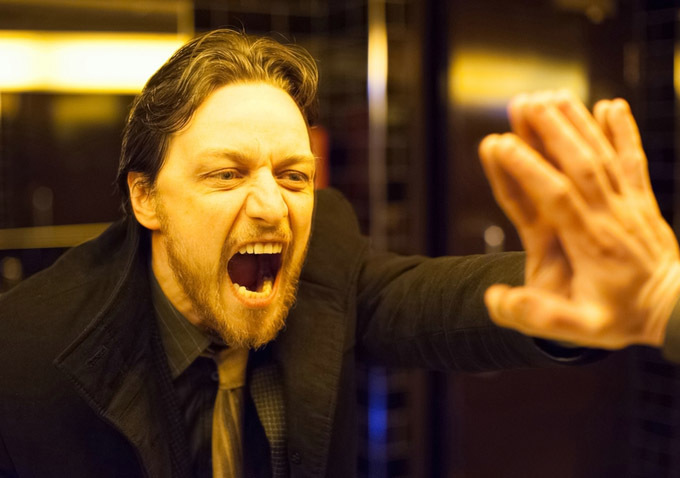
Filth might apply to the tumultuous antics of Jon S. Baird’s lead character, or it may simply be an indicator of Detective Bruce Robertson’s often questionable appearance. (And, likely, prevailing stench). Though, perhaps Filth’s title is a deeper reflection of one man and his increasingly deteriorating mental state; his conscious but not conscientious plummet down into the murky swallows of inhumanity.

James McAvoy is the star of the show, his portrayal of Bruce both admirable and disgusting in equal measure. But just as the (sort of) law man frequently gets sucked back and guzzled by the sewage of life during moments of potential rehabilitation, Baird’s film drowns in its own merits. Whereas individual factors are successful, the piece as a whole lacks continuity. It’s tough to hate a funny chap. It’s also tough to love a chap you hate.

Bruce Robertson (James McAvoy) is as corrupt as that virus ready to spring from the latest suspiciously titled email in your inbox. He is deceitful, devious and dishonest, but only he knows that. Which is a real plus, given Bruce has his eyes firmly glued to the new detective inspector position available. On the downside, the Scot’s relentless convolution of kindness has itself convoluted Bruce’s mental capacity. In other words, he could be on the verge of a massive breakdown.

Filth is one for those fond of the Trainspotting genre — heck, there is even a not so subtle nod towards said film. (When there is a toilet around, “Don’t fall in.”) It is based on another novel by Scottish author Irvine Welsh and retains the same out-to-offend sheen as was merrily paraded throughout Trainspotting; though one would imagine if you’re watching this you’re probably part of the target audience and therefore unlikely to be offended. Our lead character this time is a right git. Bruce’s morning cereal is a bowl of cocaine and vodka, and he’ll only sleep with someone if she’s the wife of a mate. His moral compass is infinitely spinning out of control. Most importantly, Bruce knows how to play the game. And we sort of morbidly appreciate him for that.

It helps that he is quite amusing. The first we see of Bruce is a baggy-eyed figure striding down an Edinburgh street, fingers pressed firmly in his ears as bagpipes sound. “There’s no place like home,” he retorts and from then we’re somewhat disagreeably cajoled under his unflattering spell. As the man wearing Bruce’s stinking clothes, you would inherently expect James McAvoy to play a huge part in that enticement and he absolutely does. He fits into Baird’s adopted world perfectly, lingo down to a tee. Moments shared with Jamie Bell veer close to hilarious with one particular spiel near the beginning particularly well executed, and the actor’s disparaging glances are especially sterling. McAvoy’s stock in Hollywood continues to rise and Filth is yet another effective vehicle shepherding his talents.

Almost as suddenly as they explode awkwardly on screen, the laughs are invariably substituted for a hodgepodge conglomeration of nonsensical dream sequences and scenes intended to be wrought with emotion. There is a wholly serious edge going on here, something more sinister, but these junctures of sincerity are undercut by the weirdness. Jim Broadbent shows up as an aloof psychiatrist armed with creepily elongated vowels and to the fanfare of A Clockwork Orange-esque melodies. His appearance is funny when it shouldn’t be as it represents Bruce’s mental implosion. Surface interactions with fellow officers and other sadistic actions are amusing because, at these precise points, we are only aware of Bruce as a dodgy fellow. As proceedings dissolve into his frail psychological state, laughter isn’t really applicable and subsequently the tone jars.

It is a shame too, because McAvoy makes these disturbing moments work to an extent. A scene between the actor and Imogen Poots is the most poignant, and best, of the film but there is a danger that some impact is lost due to this tonal inconsistency. It also becomes challenging to stick with Bruce. In one sense, his unrepentant demeanour when he knows his actions are driving him into the ground is quite tragic. But then we struggle to care because the guy is a dick. The character’s ambiguous moral standing feels more like an excuse than a justification. At one point he stares into a mirror and sees himself as a pig — Bruce knows he is a horrible person and the film should have played more on this rather than insisting on peculiarities.

The film is a conveyor belt of British screen savvy. Eddie Marsan gets the most time as part of a supporting cast accommodating the likes of Martin Compston, Shirley Henderson, Joanne Froggatt, Katie Dickie and Iain De Caestecker. Imogen Poots is criminally underused as one of Bruce’s promotion chasing enemies and, as Bunty, Shirley Henderson is essentially playing an X-rated Moaning Myrtle. It is a packed, if somewhat slightly ineffectively utilised, cast.

Bruce’s mantra is simple: “Because ah can’t fuckin’ help ma self.” In some ways director Jon S. Baird shares a similar sentiment, one that contributes as much to the film’s success as it does its downfall. Filth is funny, you’ll giggle often. However we’re also encouraged to chuckle at less appropriate moments and, despite the excellent efforts afforded by James McAvoy, this over-eagerness greatly hampers the piece.

Filth - McAvoy

Images credit: IMP Awards, Collider

Images copyright (©): Lionsgate

Only God Forgives (2013)

Only God Forgives PosterDirector: Nicolas Winding Refn

Release Date: July 19th, 2013 (US limited); August 2nd, 2013 (UK)

Genre: Crime; Drama; Thriller

Starring: Ryan Gosling, Kristin Scott Thomas

When Gareth Evans’ The Raid hit cinemas a few years ago, the film brought with it an urgent sense of bludgeoning violence and hard-hitting combat. Unflinching and at times eye-scrunching, The Raid was also heralded as a bloody masterstroke. The fights were astoundingly well choreographed and, though it wasn’t the most prominent element, the story meant something. Rightly, Evans’ film felt the accommodating brunt of financial and critical adulation, ushering forth a sequel.

Only God Forgives is the antithesis of all things great about The Raid. It fails to yield any semblance of narrative, instead opting to parade a bunch of hateful characters throughout a maze of disorientating sequences. And it is brutal, gratuitously so. The unsubstantiated violence is the worst part.

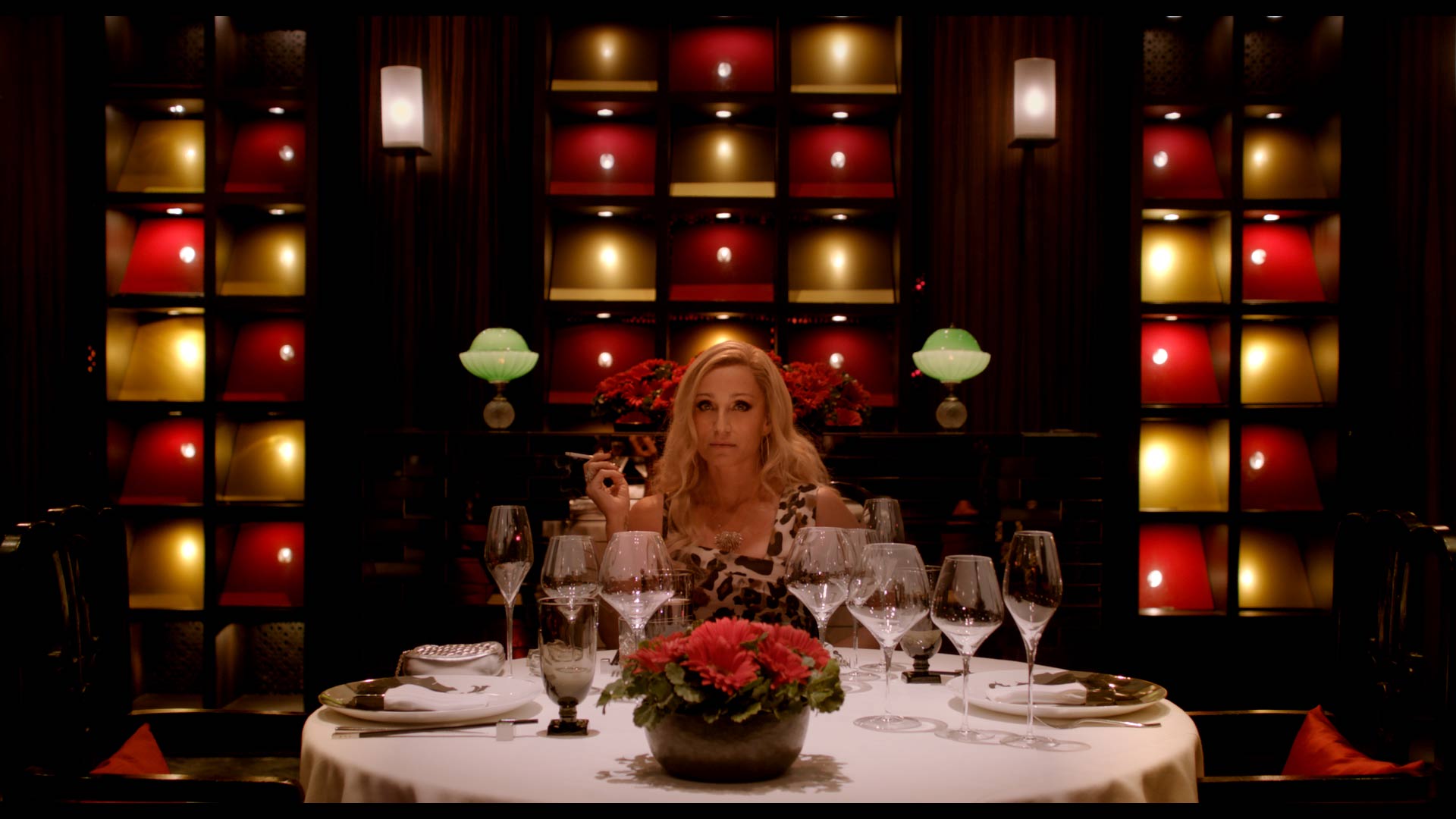
Julian (Ryan Gosling) runs a Muay Thai club in Bangkok, but uses it as a veil to cover his successful drug smuggling business. After his brother is savagely murdered, Julian finds himself caught up in a storm of hate and vengeance. His spiteful mother Crystal (Kristin Scott Thomas), having made the trip to Thailand on the back of her son’s death, orders Julian to seek out his brother’s killer and attain revenge, a demand the American expatriate isn’t too overjoyed about.

Unlike in his previous disparately blood-fuelled outings Valhalla Rising and Drive, director Nicolas Winding Refn follows a half-fulfilled mantra here; one that pits grisly style over any form of substance other than the red stuff. The chain of grotesqueness begins almost before the opening credits, as we see murder compensate for more murder. Whereas the likes of both Valhalla Rising and Drive relayed a method to their differing levels of violent outburst — a curious soul and a pulsating beat, respectively — Only God Forgives squanders any opportunity to inject a sense of purpose. Essentially, it is violence for the sake of violence. There is no prevailing message. At one point Kristin Scott Thomas’ character despicably murmurs, “I’m sure he had his reasons,” when she catches wind of a particularly awful revelation. I’m sure Refn has his reasons too, but they are few and far between here.

When the film is not painfully boring it is an uncomfortable watch for all the wrong reasons — certainly, it’s not distressing in an adrenaline-driven way. This is partially due to the uncompromising and baseless brutalities on show, but it is also down to the palette of characters present before us. Either we hate them — and we hate most of them — or they are treated woefully. The females either represent a gaping hole searing through the heart of humanity (in the case of Crystal), or they’re token prostitutes (in the case of everyone else). Refn is painting just one picture that seeks to represent just one slice of humankind, which is fine. But must that picture really be as degrading to women as this is?

The guys aren’t let off lightly either. Ryan Gosling plays Julian, perhaps the least reprehensible of the lot. He has something of a moral backbone, one that stops short of unjust killing. (We’re into that territory, where murder must be separated into unjust and “ach, well maybe he deserved it”). Instead Julian funds his tumultuous conscience by running a drug smuggling operation and, more or less, employing a woman to be his puppet. The character stuffiness does absolutely nothing for Gosling. He’s trapped in a body too similar to the driver in Drive: emotionless, straight-backed but this time without that unorthodox charisma. Despite portraying genuine evil Kristin Scott Thomas is at least afforded the ability to be the only fluid person stuck among a meandering rabble of perceived luminaries. Crystal is a horrible person but she does move in a three-dimensional manner. The rest could pass for robots.

Refn’s customary art house injection arrives by way of the film’s visual appeal. Only God Forgives tries to manifest as a nifty, slick-looking film and cinematographer Larry Smith actually performs commendably. It does look good. Vogue photo shoots also look good, which is exactly what this is — a 90-minute photo op with a Halloween theme set in Thailand. The camera constantly looms around with precision, latching onto folk who are often standing as if giving prior notice; poised, posing and ready for their cover shot. Superficiality reigns supreme, a notion backed up the incessant air of boredom disguised as arty silence.

Aside from the early gore fest, the picture’s opening thirty minutes are bereft of any intrigue, subsequently setting the desolate tone moving forward. Ryan Gosling stares blankly into space. Characters walk so slowly. The violence might be gratuitous, but this carry on is borderline self-indulgent. Even the ambient music — an element Refn often gets spot on — is a little underwhelming. It certainly doesn’t make staring at wallpaper any more interesting. (Though staring at wallpaper might be more interesting than Only God Forgives.)

Nicolas Winding Refn tries to combine the successful strands of two previous outings — Valhalla Rising’s disconcerting climate and Drive’s brute force — yet ends up with the worst possible result. If we are taking this outing as a primary source, attributing Refn with a bleak view of humankind is probably fair. We’re all unmerciful maniacs.

Apparently only God forgives. Well hopefully God won’t see this, else we’ll be living in a world without forgiveness.

Only God Forgives - Kristin Scott Thomas

Images credit: IMP Awards, Collider

Images copyright (©): Radius-TWC, Lionsgate