Bone Tomahawk (2016)

★★★★★

Bone Tomahawk PosterDirector: S. Craig Zahler

Release Date: October 23rd, 2015 (US); February 19th, 2016 (UK)

Genre: Adventure; Drama; Horror

Starring: Kurt Russell, Matthew Fox, Patrick Wilson, Richard Jenkins

Bone Tomahawk is an audible treat. Not since Peter Strickland’s Berberian Sound Studio has a movie sounded so raw and striking (Sicario might warrant a shout, in fairness). During the opening segment here, in which a pair of drifters execute a travelling party before stumbling upon an eerie burial ground, we learn about the 16 major veins that exist inside the human neck. “And you have to cut through ’em all,” claims scavenger Buddy (Sid Haig). David Arquette’s Purvis obliges and we hear every squeak, twist, and snap as he does so. It is cringe-inducing for all the right reasons and the perfect introduction to S. Craig Zahler’s unforgiving picture, a western thoroughly bludgeoned by despair and horror.

Sometime thereafter, Purvis turns up looking a bit worse for wear in Bright Hope, a small town with a population of 268 according to its welcome signpost. He runs into sheriff Franklin Hunt (Kurt Russell) and earns a bullet in the leg, the first of many indications that Hunt favours blunt practicality over weak-mindedness. And so begins the sequence of events which send the sheriff, his well-meaning deputy Chicory (Richard Jenkins), the egotistical John Brooder (Matthew Fox), and local foreman Arthur O’Dwyer (Patrick Wilson) on a mission to rescue the latter’s kidnapped wife, Samantha (Lili Simmons).

Foreshadowing and foreboding are wilfully employed by Zahler — replacing what could have been a more natural music-driven score, the howls of wolves (or worse) ominously serenade events early on and then manifest in threatening form later. It’s the ambiance of the west, or at least this incarnation of the west. “Oh boy, that smells good now that I know it’s not supposed to be tea,” Chicory muses, referring to corn chowder but also reflecting the film’s underbelly. See, though there are plenty of traditional western strands at play — the gruff sheriff who commands authority, the isolated community tormented by threat, plenty of horses — Bone Tomahawk sets its stall out with a difference.

Slowly paced scenes reflect the slower time period, when face-to-face interactions dominated and long distance journeys relied on animal willpower. Russell taps into this considered approach, employing words with authority; patience really is a virtue and in Hunt’s presence you get the sense patience will be rewarded. Comparisons with The Hateful Eight’s John Ruth are inevitable, though the pair have less in common than you might think. Composure, for one: Hunt’s detective-esque apprehension of Purvis is the product of gradual interrogation, whereas Ruth’s treatment of Daisy Domergue is often abrasive and erratic. It is a testament to the actor that he has managed to create such varied yet equally compelling characters from two very similar seeds.

The version of the 1890s we see on-screen is one characterised by manual labour. O’Dwyer is a worker, though his involvement in the job has been tempered by a nasty leg injury that continues to plague him during the group’s arduous trek. Wilson does his utmost to sell his character’s ongoing pain in a performance that values physicality over emotional depth, though that is not to say O’Dwyer is a bland protagonist. Quite the opposite, in fact: the persistence of his injury only serves to bolster his heroic tendencies, to the point that we believe in him as a viable saviour and not just a tag-along husband.

Such ponderous momentum affords these characters natural breathing space, and Fox’s Brooder benefits too. Brooder is perhaps the most intriguing of the main quartet, certainly the most mysterious — the camera often shows him isolated from his fellow pack. One moment he inspires anti-heroic Han Solo connotations, the next plain ignorance, and then there’s his penchant for wry humour: “I’ll probably beat you to the draw,” Brooder boasts before amusingly justifying said boast. This is the best Matthew Fox has been in years. It is also one of Richard Jenkins’ most endearing showings, a real triumph given the overarching strand of impersonal cruelty.

Zahler’s film takes up a somewhat conventional western face for much of its running time, though said face is masked by an uneasy mist. It would be best to avoid specific details, but I will note that proceedings take a turn for the sickeningly gory and genuinely unsettling. This genre mishmash works because terror and anxiety have always been woven into the genre. The mishmash refrains from stopping at abject fear too. This is also a film about how men are impacted by separation (O’Dwyer’s wife is missing, Hunt’s is worried at home, and Chicory’s deceased). As the group traverse further from civilisation and closer to potential doom, the score unveils a pained melancholy, manifesting almost as a sort of death soliloquy.

On a technical front, Bone Tomahawk is infallible. I’ve already lauded the sound quality and the production team maintain a similar level of excellence in their set creation and landscape scouting. It feels like the end of the 19th century; that retro gunslinging allure in full effect. We ride across mossy vistas and tiptoe through ghost valleys that bear some resemblance to those in The Return of the King. Presumably working with a low budget, those behind the lens have smartly utilised nature’s virtues and rustled up quite the canvass for exploration, fusing the harsh brutalities of No Country For Old Men with the pilgrimage proclivities of Slow West.

All of the elements are furnished to oaky perfection but you could remove the lot — the charcoal landscapes, the wooden interiors, the deceptive humour — to leave just the four central characters, and you would still have something well worth two hours of your time. These marauders are wacky and layered. Zahler sticks to his guns even after the craziness takes off, winningly heralding the richness of his protagonists over shock value. A late, brief exchange between sheriff and deputy recalls the film’s intimate, considered mantra. In one moment, Bone Tomahawk cements its status as a future classic.

Bone Tomahawk - Russell, Fox, Jenkins, Wilson

Images credit: IMP Awards, Collider

Images copyright (©): RLJ Entertainment

Deadpool (2016)

★★★

Deadpool PosterDirector: Tim Miller

Release Date: February 10th, 2016 (UK); February 12th, 2016 (US)

Genre: Action; Adventure; Comedy

Starring: Ryan Reynolds, Morena Baccarin, Ed Skrein

When you strip away the humour, the action and the madcap characters, Ryan Reynolds’ decade-long pet project is a standard revenge tale. Reynolds plays Wade Wilson, a cocky mercenary who becomes the seemingly invincible — and significantly cockier — Deadpool following an immoral experiment designed to cure his cancer. To make matters worse, Ajax (Ed Skrein, honouring his Britishness through elongated pauses and exaggerated vowels), the man who dished out said experimentation, now has it in for Wilson’s on/off lover, Vanessa (Morena Baccarin). What we’ve got then is an unethical Robin Hood whose payback meter is on the brink of breaking point. Quite straightforward really.

Justly, a slow motion opening sequence ushers in the prevailing two-fingered mood. Rather than the names of the actors involved, we’re graced with the generic roles they will be playing: “A gratuitous cameo, a British villain, a hot chick.” Such blanket roles form part of an assault on the genre, supported by profanity-laden wisecracks. That’s all Deadpool is really, one giant gag. The jokes are self-referential to no end, and many of them aren’t even jokes — invoking names like McAvoy and Stewart, for instance, doesn’t take that much effort. A Detroit quip suggests smarter thoughts are at play, but they seem drowned out by an unflappable need to guffaw at anything genital-related.

Yet on the visual side of things, the film exceeds its own humorous expectations. Laughter might be hard to come by verbally, but visually director Tim Miller has crafted a goldmine: from an early shot of Deadpool popping his head out of the window of an overturned vehicle to arguably the movie’s funniest moment, a joke based around a mask. The latter works because Miller and cinematographer Ken Seng are careful in its construction, opting to tease us by positioning their camera at a certain angle. Another effective shot sees Wilson journey to his torture destination aboard a stretcher, creepily reimagining a similar scene in Jacob’s Ladder.

Perhaps the greatest flaw in Deadpool isn’t anything to do with the film itself, but its retrospectively overcooked marketing campaign. If you consider not just the punchlines but also the build up to those punchlines, there are probably around 30 or 40 minutes of Deadpool that anyone who has seen the trailers (which is everyone) will be familiar with. This means the jokes land with less oomph in the cinema, if any oomph at all — you could argue the best jokes are those that generate a laugh irrespective of how they are heard, which isn’t the case here. Here, repetition sucks the life out of would-be key moments, such as the opening vehicular mayhem or the standoff between Deadpool’s crew and Ajax’s gang.

By railing against the typical genre trappings, you would expect the film to at least offer something different upon nearing its conclusion. There is a joke about International Women’s Day that takes issue with uneven gender roles — a problem not completely eradicated on the superhero movie front — after which I found myself anticipating Deadpool’s response, for the film to maybe lead the way in making a statement. But it never does. Of the three main females on-screen, one is a wordless brute (Gina Carano), another is a moody teenager (Brianna Hildebrand), and the third is a prostitute (Morena Baccarin). And they remain as such: at no point do we see any of them deviate from their characters’ genericisms.

That was quite a lot of negativity, but Deadpool is undoubtedly an enjoyable twist on the genre and a piece that boasts its fair share of genuinely entertaining moments. The action is vigorous, any pulling of punches outlawed. It is a fairly brutal adaptation that certainly earns its stateside R rating; as violence goes, this has more in common with Marvel’s Daredevil than anything from the studio’s recent cinematic portfolio. A word too for an inventive closing credits sequence that implores you stick around, which is just as well given the post-credits scene is also cracking, an homage to one of cinema’s very best anti-authority comedy outings.

The movie wouldn’t be half as good without Ryan Reynolds, who looks and sounds like he is having a blast in spandex, his condescending voice a perfect match for the provocatively annoying character. The actor’s kid-in-a-candy-shop exuberance pollutes the air and spreads throughout the audience. It is a testament to Reynolds’ physical abilities that he manages to evoke Deadpool’s unique personality despite spending most of the flick beneath a mask. Mutant Wilson, by the way, looks like a terrifying cross between Freddy Kruger and the monstrous figure from Sunshine, so the mask is definitely a good call.

I’ll be the first to hold my hands up: in a packed screening room, my mellower reactions were consistently drowned out by uproarious laughter. This is a film that many have anticipated for a long time and it appears to have pleased the vast majority. There is clearly a desire to reflect the source material, which is admirable if a tad foolhardy. Maybe it’s the rebellious streak, or perhaps the cathartic undoing of distinctly poorer previous superhero incarnations (see X-Men Origins: Wolverine and Green Lantern). Thanks to Ryan Reynolds, at least Deadpool offers something a bit different.

Deadpool - Ryan Reynolds

Images credit: IMP Awards, Collider

Images copyright (©): 20th Century Fox

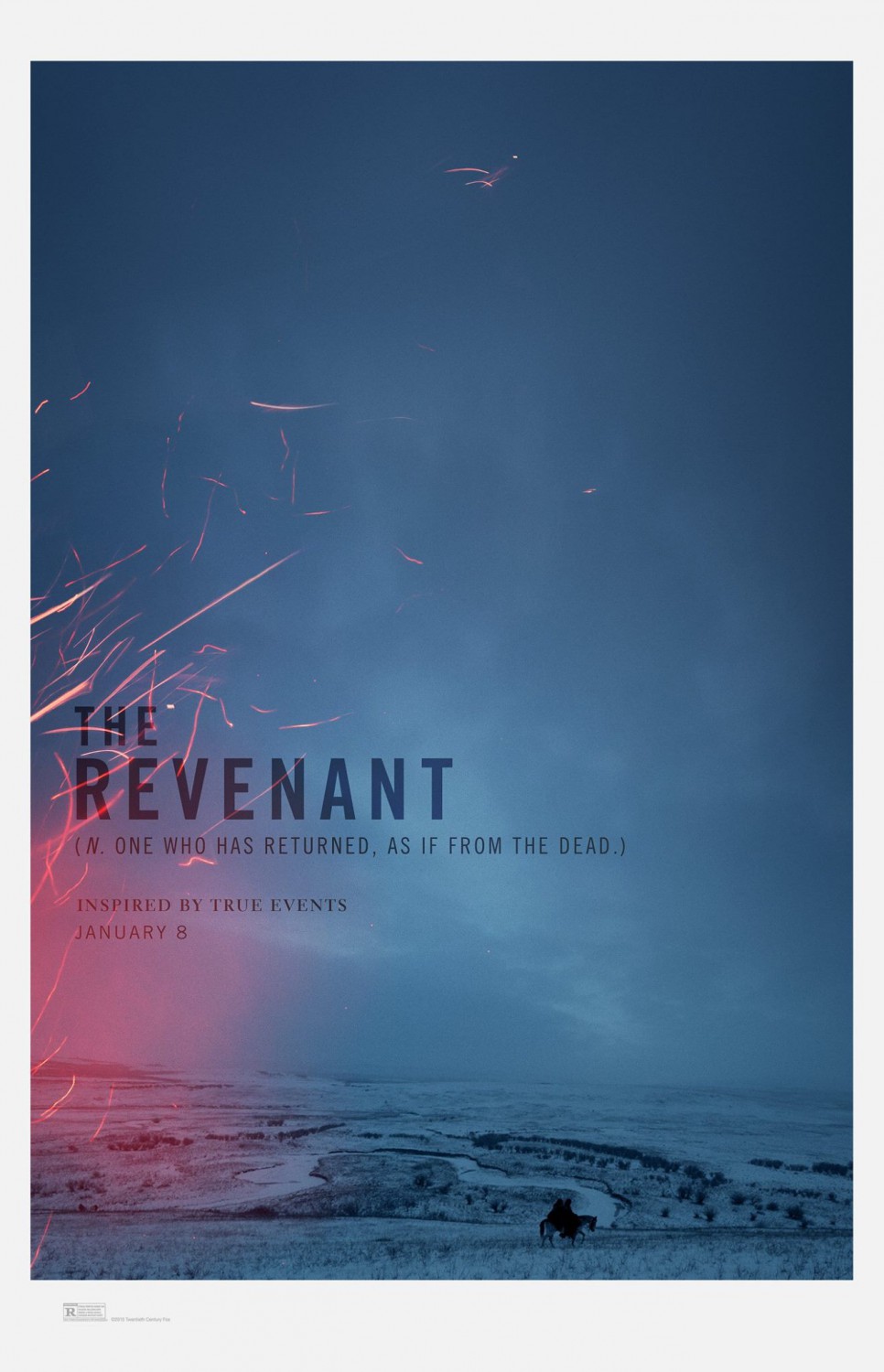
The Revenant (2016)

★★★★

The Revenant Poster 1Director: Alejandro González Iñárritu

Release Date: January 8th, 2016 (US); January 15th, 2016 (UK)

Genre: Adventure; Drama; Thriller

Starring: Leonardo DiCaprio, Tom Hardy, Will Poulter

Before The Revenant, cinematographer extraordinaire Emmanuel Lubezki shot Birdman with such technical wizardry he garnered significant critical acclaim. The floating, stalking style he employed throughout the film manifested itself in the paranoid exterior of Birdman’s central character Riggan Thomson (Michael Keaton). Alejandro González Iñárritu’s newest epic is a visual feast that again transcends simple splendour, similarly mirroring the harrowing and heartening journey of its protagonist, Hugh Glass (Leonardo DiCaprio).

A brutal insurgence sets the unflinching tone while also highlighting the perversely wonderful landscape. Lubezki tags this opening sequence, which goes on for many minutes, with a nauseating sense of disorientation: arrows splice necks indiscriminately as bodies burn and blister. The conditions are pretty horrid and only get worse, and the audience is not let off lightly — Lubezki’s cinematography might occasionally disperse beauty but when the tough times assume focus, you’re right there with the unlucky Glass (at one point waves literally batter the camera lens).

Describing Glass as unlucky is an understatement. Having led a band of fur trappers around the northern regions of America, a bear attack renders the hunter severely incapacitated. His camp, behind on their expedition following decimation at the hands of a group of Arikara Native Americans searching for their chief’s daughter, collectively decide to leave him in the hands of his half-native son Hawk (Forrest Goodluck), the inexperienced Jim Bridger (Will Poulter), and John Fitzgerald (Tom Hardy). Fitzgerald, consumed by antipathy and greed, subsequently leaves for Glass for dead.

As such, ongoing themes of retribution (“Revenge is in the creator’s hands”) and guilt (“We all saw it,” says Fitzgerald, trying to redirect blame) loom large. The two coalesce to fund this overriding examination of karma’s role in nature — having invaded the Arikara natives’ land, western hunters find themselves either dead, nearly dead, or morally dying. Even Domhnall Gleeson’s character, the captain of the expedition and arguably one of the more righteous on-screen characters, is burdened by a sense injustice and guilt. The Arikara natives, meanwhile, represent karma in human form, defending their honour and fighting capital-driven colonialism: they are judge, jury and executioner.

The aforementioned bear assault is impressive and harrowing, so much so that Glass’ survival actually beggars belief. You really need to buy into Iñárritu’s oft-included spiritual strand at this point and accept that there is some sort of superior healing going on (spirituality later manifests as a dove emerging from the chest of Glass’ deceased wife and as a perched black crow awaiting death). Given his abject surroundings, numerous gaping wounds and eventual solitude, it is miracle that Glass pulls through — to compound the matter, he wears a bearskin coat which reminds us of his survival instinct.

DiCaprio is great, as has become the norm, but the version of Hugh Glass we meet in The Revenant isn’t all that interesting. That we feel anything more than natural sympathy for the fur trapper is a testament to the actor’s rugged portrayal and, crucially, his commitment. Not the method actory stuff like raw bison chewing or raw carcass sheltering, but the emotional commitment DiCaprio shows from start until finish, by which point he did manage to coax some eye-welling out of me. And that’s pretty good going given we only really see the broken, vengeful side of Glass: he carves Fitzgerald’s name into the landscape as a motivational tool to stay alive.

Hardy itches and grunts his way through a performance that might strike some as scenery chewing (there’s a lot of scenery ripe for chewing), but that genuinely had me gripped. He is uncomfortably magnetic playing a truly evil man who does not appear to have any primal strength, only a lawless prerogative and a heartlessness bred out of self-centred durability. Menace blazes from his eyes: “You just have to blink [to die],” he informs a hurt Glass, fully aware the latter’s eyes cannot possibly hold out. Iñárritu shot in sequence and it shows: you can see weariness increasingly impede upon the actors to the point that they mightn’t even be acting. Will Poulter is also excellent as Fitzgerald’s innocent understudy, a spark of humanity among the viciousness.

Snowy forest locales are reminiscent of Edward Zwick’s Defiance, and are just as haunting too. Skyward shots of trees are frequent, depicting a barrage of tentacles ready to strike and engulf those below. Despite the general vastness, the film has a claustrophobic feel denoting no reprieve and no escape. Lubezki shows white mountainscapes and ice-carpeted valleys akin to those in The Fellowship of the Ring, though the visuals extend beyond scope, incorporating harshness and wince-inducing iconography to great effect. The score, a joint effort from Ryuichi Sakamoto and Alva Noto, is invasive and chilling — this time it is The Return of the King that springs to mind (see Sméagol’s transformation into Gollum) as eerie whistles build disconcerting tension.

In essence, what we’ve got is Max Mad: Fury Road without the exhilarating zing and character depth. The Revenant is a challenging watch, but not necessarily challenging to process. The themes are broad and like Alfonso Cuarón’s Gravity, there is an anomalous quality at play in that the film feels both narratively weightless and technically marvellous. You might consider this Iñárritu’s version of 21st century silent cinema; often suffocated by a lack of engaging verbiage, the movie’s main protagonist never feels fully formed. But for what The Revenant is and for what it is trying to do, this Wild Wild North tale has a tendency to stun.

The Revenant - Leo DiCaprio

Image credit: IMP Awards, Collider

Images copyright (©): 20th Century Fox

Star Wars: The Force Awakens (2015)

★★★★★

Star Wars The Force Awakens PosterDirector: J.J. Abrams

Release Date: December 17th, 2015 (UK); December 18th, 2015 (US)

Genre: Action; Adventure; Fantasy

Starring: Daisy Ridley, John Boyega, Oscar Isaac, Harrison Ford, Carrie Fisher, Mark Hamill, Adam Driver

If the mark of a great movie lies in its ability to permanently tattoo a grin across the face of its viewer, Star Wars: The Force Awakens might just be one of the best movies ever made. I couldn’t help but smile profusely throughout J.J. Abrams’ stunning series revitaliser, so much so that by the time the credits began to roll (following arguably the best closing shot the saga has produced to date) my jaw felt like it had been tagged by a fiery lightsaber.

We’re drafted straight into the chaos of war, and we see said chaos unfold from the perspective of both sides. Led by the evil Kylo Ren (Adam Driver), stormtroopers invade a small village looking for information on the whereabouts of Luke Skywalker (Mark Hamill), and the one-sided battle that ensues relays a tangible energy missing from those ill-fated prequels. The scene shifts thereafter to Rey (Daisy Ridley), a scavenger rappelling down an airy, desolate craft hoping to find extraneous junk she can later trade for food. Much like Skywalker in A New Hope, we meet Rey draped in white dusty robes — they’ve turned greyish — on a scorching desert planet (Jakku).

Conversely, Ren’s First Order starship is chrome-like and glossy. When we promptly cut back to the vessel it evokes a sense of austereness, of strictly implemented structure, as if fear has been drilled into the crew by Ren and like-minded baddie General Hux (Domhnall Gleeson). By fervently switching between light and dark the film sets out its moral compass and highlights some truly wonderful sound design: the swoosh of lightsabers, the echoes of a vast ship. Ren is a terrific villain, full of dangerous complexity. Whereas Darth Vader would check his true emotion at the sliding door and favour an apathetic exterior, Adam Driver grants Ren an unpredictability that only serves to compound his menace.

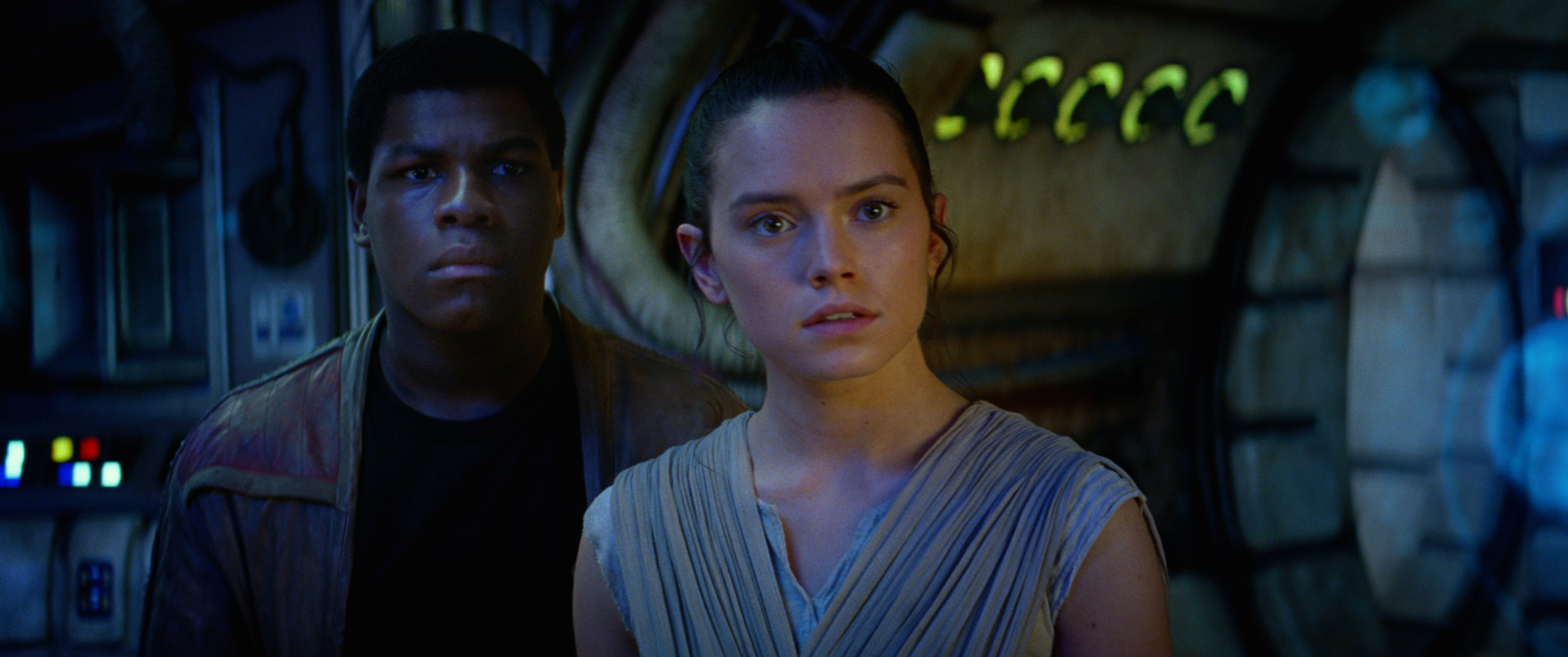
Finn (John Boyega) is the link bad and good, having escaped the former only to find himself caught up in latter. We have moved away from the post-Cold War machine landscape into a more sinister, dehumanised age — stormtroopers are no longer artificial clones, but actual human beings, and Finn doesn’t want any part of the cruel conformity. He meets Rey on Jakku towards the beginning, at which point Abrams opts to stick with the pair, relying on their camaraderie and bustling chemistry. She is isolated yet wily and proficient; he functions through a humorous backbone likely installed as a defence mechanism against his shady past.

Ridley sparkles with vibrancy and Boyega is instantly likeable; together, they click into gear like a pristine Millennium Falcon. At times, you feel like you’re watching a buddy road trip venture, only here the sputtering cars have been replaced by sky-scoping jets. At one point both Rey and Finn repeat, “I can do this. I can do this,” perhaps speaking on behalf of their director who absolutely has ‘done it’. An information-touting droid named BB-8 trundles alongside the pair, spluttering hilarities. Oscar Isaac gushes charisma as Poe Dameron, premier fighter pilot for the self-descriptive Resistance, but he doesn’t feature nearly enough (nor does Gwendoline Christie’s First Order baddie Captain Phasma, who’ll likely see more screen time in the extended edition Blu-ray).

The Force Awakens wouldn’t be a proper franchise sequel without some crowd-pleasing throwback nods and while these moments are smirk-inducing for those in the know, they also bear just enough subtlety to avoid alienating those taking part for the first time. The snappy one-liners are genuinely funny and this shouldn’t be undervalued; indeed, the fact that many of the gags are rich in Star Wars mythology affords them greater validation. Marvel films, by comparison, employ a similar comedy format and although the jokes are often funny, they don’t quite have the same vitality.

A Kraken-esque battle scene inside a ship unfolds like something out of Doctor Who, only louder and bolder and much, much more expensive. Abrams’ film invokes the same melodramatic filling championed by the original trilogy: characters say mad things with a serious tone and pull it off. This is particularly true of Domhnall Gleeson, who offloads some terrific thespian yabber — 1977 wants its patter back — the best of which manifests during a maniacal speech straight out of Saruman’s playbook. But the outing is a playful fantasy at heart, a grandiose adventure, and everyone knows that. When some sentences creak, and some do, it’s just part of the charm.

That certainly doesn’t mean screenwriters Lawrence Kasdan and J.J. Abrams (they redrafted an earlier Michael Arndt script) avoid hefty solemnity. There are instances of genuinely shocking gravitas, moments bolstered by Dan Mindel’s sweeping cinematography. The landscapes that unfold before our eyes feel authentic, primarily because they often are. Fight scenes boast substance too and the action is easy to comprehend, therefore the stakes are raised. John Williams’ score, as if it really needs saying, is as wondrous as ever.

Speaking of revamped classics, a few familiar faces join in on the fun. Harrison Ford’s grouchiness totally fits his older Han Solo, the rogue still fond of heart-warming cynicism. Carrie Fisher doesn’t have an awful lot to do as Leia, now a General, but her presence fuels the film’s emotional weight. Crucially, and this is true of the various other returnees, the duo serve the story: seeing our heroes back together in such a familiar environment is meaningful. It also ages the world in the best way possible — we know it is the same place as before, but we don’t know what fresh mysteries lie beyond the next star.

The beauty of The Force Awakens is that it addresses the nostalgic needs of the many while simultaneously ushering in a contemporary set of filmic variables ripe for fresh storytelling. It’s not just about waiting impatiently for the old guard to reappear; the new faces are a delight. I say four stars for a truly fantastic motion picture romp, and one more to J.J. Abrams for his frankly ballsy decision to take on the hopes of a cine-nation and successfully rekindle that highly sought after magic. We really appreciate it.

Star Wars The Force Awakens - Boyega & Ridley

Images credit: IMP Awards, Collider

Images copyright (©): Walt Disney Studios Motion Pictures

The Hunger Games: Mockingjay — Part 2 (2015)

★★★★

The Hunger Games Mockingjay Part 2 PosterDirector: Francis Lawrence

Release Date: November 19th, 2015 (UK); November 20th, 2015 (US)

Genre: Adventure; Science fiction

Starring: Jennifer Lawrence, Josh Hutcherson, Liam Hemsworth

The Hunger Games: Mockingjay — Part 2 is an empowering film, and it was likely always going to be that. However, there is no denying the impact that recent tragic events have had on further funding its overarching message of hope. Movie-making, of course, manifests as a trivial pursuit when considered alongside matters of life and death. It’s a luxury, a pastime, a hobby, a passion. But it’s also a love, a source of joy, a triumph, an escape. Cinema is one of life’s most important unimportant things, and when it reflects reality in any form — big or small — cinema is arguably at its most engaging.

The Hunger Games franchise has always had its finger on the pulse of geopolitics and society; the struggle that Katniss (Jennifer Lawrence) faces, against tyranny and barbarism, is also the struggle that many people in this world are currently caught up in. You can feel the heightened reverence as you watch, and those behind the series — from Gary Ross to Francis Lawrence, from Suzanne Collins to Danny Strong and Peter Craig — deserve credit for bringing those aforementioned weighty themes to the forefront of young adult fiction.

The film opens with Katniss hoarsely attempting to say her name, battling against the damage inflicted by Peeta (Josh Hutcherson) towards the end of the previous film. Instantly the outing is reinforcing its central notion of a silenced body fighting against said silence and not giving into an oppressive society. President Snow (Donald Sutherland) is the oppressor in Panem, Katniss the symbolic body speaking out. As Snow and his cohorts sit around lavish dining tables, eating and drinking and toasting their own unsavoury greed, Mockingjay — Part 2 initiates the conclusive rebellion.

We know there won’t be any messing about when the title card appears on screen, white letters bluntly protruding from a black background. But the moral structure of this tale isn’t as clear-cut. “It’s war Katniss. Sometimes killing isn’t personal,” says Gale (Liam Hemsworth), whose righteousness has apparently seen better days. For the rebels, cause is supposed to take precedent over spectacle — The Hunger Games and Catching Fire particularly honed in on the consequences of the latter via their televised Gaming exploits — but there are even those in Katniss’ team who adhere specifically to marvel. This blurred morality keeps us on our toes as characters waver on who to trust.

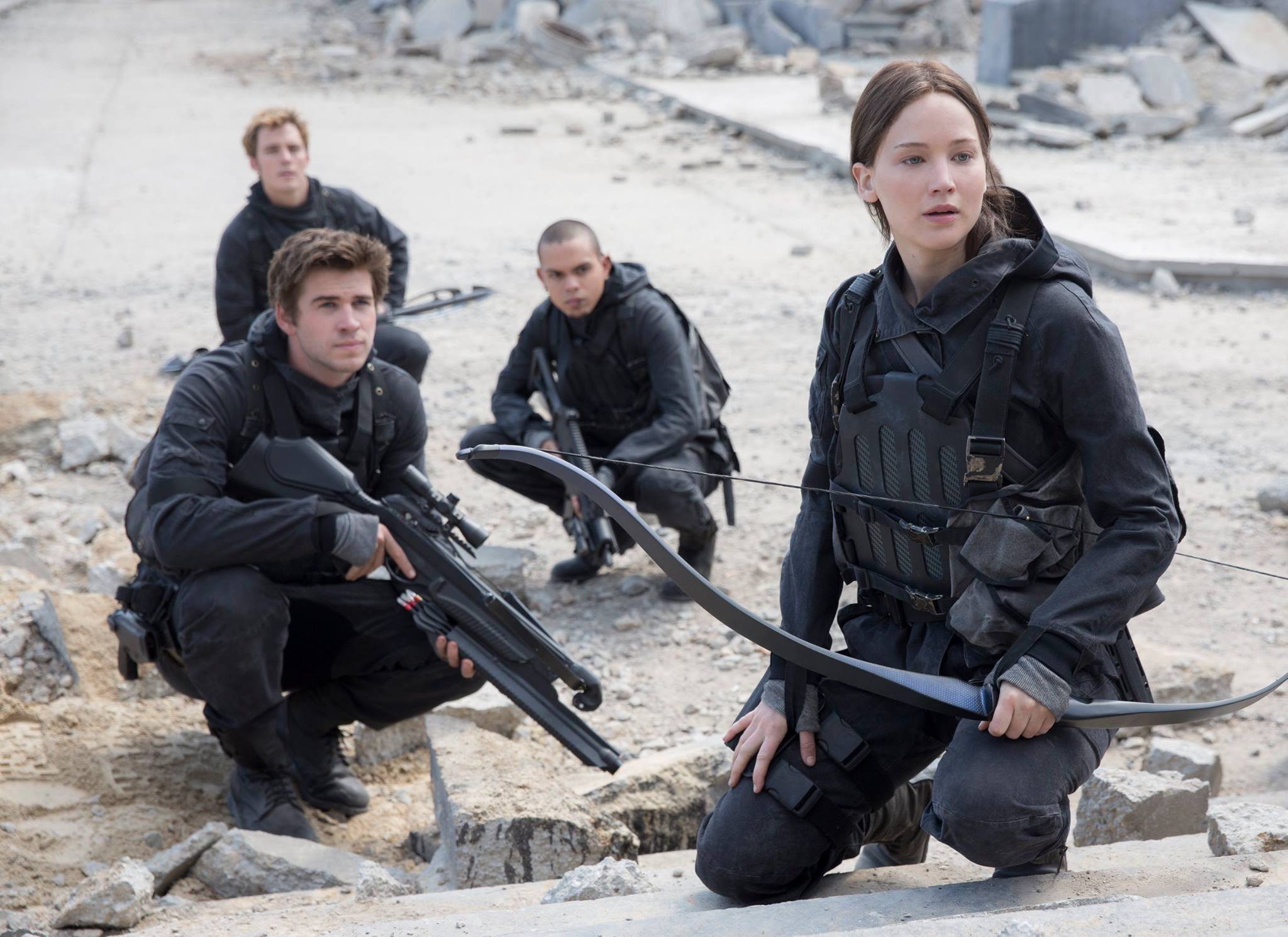
Even Katniss, leader of the rebellion, feels harnessed by the warring tactics invoked by her superiors: “It doesn’t matter what you want,” Haymitch (Woody Harrelson) spits. The film has a grey palette that is quite distinct from the flashiness of earlier films, but that is similar to the chalky aesthetic of something like Saving Private Ryan. Katniss, Gale and co. are part of an insurgent team that takes to the booby trapped Capitol in an effort to fuel their cause and, perhaps, deal with Snow. We think back to Saving Private Ryan again as the rebels carefully navigate the urban decay, threat constantly hanging over the screen like a dark shadow. It really feels like the final battle, especially following Mockingjay — Part 1’s more subdued, poised, and frankly justified prerogative.

Fans of The Walking Dead will see familiarities in the Capital-set roulette game, where death could befall anybody at any moment; as such we sit through nerve-shredding uncertainty. A genuinely scary sewer sequence is coincidentally similar to a scene in Maze Runner: The Scorch Trials, only this one bears even more edgy ferocity. The underground monsters here are spawns of World War Z’s sprinters and The Descent’s crawlers. Neither Francis Lawrence nor his writers shirk away from tough subject matters which means death, a lot of it, is inevitable. It’s a brave mantra and an honest one in my view (i.e. not exploitative), though there is a truly horrifying moment that some might find too tough for a film rated 12A.

We do get small glimpses of cheer: the wedding of Finnick Odair (Sam Claflin) and Annie Cresta (Stef Dawson), for instance, ushers in a deluge of celebratory dancing. War thoughts never abate though; Katniss and Johanna Mason (Jena Malone) watch the festivities from afar as they debate their separate roles in the rebellion. It’s a scene akin to one in The Return of the King where Gandalf and Aragorn discuss the probability of Frodo’s success while Merry and Pippin party nearby. The brooding calm before the inevitable storm. The screenplay also investigates how individuals scarred by war operate. Johanna, for example, is dependent on drugs. Avox cameraman Pollux (Eldon Henson) bears not only physical but also mental ailments. And Peeta spends much of his time conflicted, Josh Hutcherson playing the tortured soul with a sense of purpose.

Given the large cast involved, some characters only appear fleetingly: Caesar Flickerman (Stanley Tucci), to mediate the revamped Hunger Games with despicable aplomb; Plutarch Heavensbee (Philip Seymour Hoffman), affording the film greater substance with a simple glance; Effie Trinket (Elizabeth Banks), humanised to the point of no return; Primrose Everdeen (Willow Shields), a key player in generating emotion; and President Alma Coin (Julianne Moore), a burst of thunder amongst the clouded moral spectrum.

There are a few fairly minor problems, namely that the all-seeing Snow constantly believes Katniss has met her demise when it is clear she hasn’t and, without tempting spoilers, the unfair and somewhat puzzling fate of one key character (no death involved). The final half hour is unexpected in many ways — some good, some not-so-good — but it at least ought to be hailed for not conforming to a prerequisite narrative. It’s also worth pointing out that this is an action movie that manages to dazzle without sacrificing its politically-infused roots, which must be worth something in 2015.

Fittingly, we end with a nod to Jennifer Lawrence. Mockingjay — Part 2 packs an emotional punch because it has good writing and good direction, but those are only conduits for a performer and Lawrence’s performance here, just as it has been throughout the entire series, is wholly affecting. She absolutely is a filmmaker’s dream, both talented and marketable. But her commitment, her discernibility, also makes Lawrence a film-watcher’s dream, and it is through her leadership that this smart, pertinent blockbuster franchise has flourished.

The Hunger Games Mockingjay Part 2 - Katniss & Gale

Images credit: IMP Awards, Collider

Images copyright (©): Lionsgate

Jaws (1975)

★★★★★

Jaws PosterDirector: Steven Spielberg

Release Date: June 20th, 1975 (US); December 26th, 1975 (UK)

Genre: Adventure; Drama; Thriller

Starring: Roy Scheider, Robert Shaw, Richard Dreyfuss

It is probably fair to say Jaws cemented Steven Spielberg’s status as a prominent athlete in the movie-making race. Released in 1975, the film ushered in a fresh era of monster flicks. Those hallmarks that we deem familiar in the genre today made their mainstream debut in Spielberg’s classic: the inaugural attack and subsequent denial; the saviour who is the only one bearing initial clarity; the prevention plan executed atop a wave of mayhem.

It is a blueprint that studios and filmmakers have followed since — the pitch for Alien famously included the tagline “Jaws in space” — primarily because the structure indiscriminately appeals to audiences. You only have to glance back at the last two summers to see the formula play out in Gareth Edwards’ Godzilla and Colin Trevorrow’s Jurassic World. Speaking of summer, Jaws is often also touted as the first seasonal blockbuster (it broke box office records upon release in the US). The catch? This blockbuster is one of those intelligently composed things.

Following the watery demise of a teenage girl via shark attack, the residents of Amity Island find themselves on high alert. Chief Martin Brody (Roy Scheider) is tasked with developing a solution, but when the problem takes the form of a person-guzzling creature solutions are hard to come by. Bill Butler’s camera focuses directly on the words “shark attack” as Brody punches them into the death certificate of the aforementioned teen, the surrounding silence signifying both the solemnity at hand and the imminent danger. Everybody is a potential target because, on Amity Island, everybody is water-bound.

The locale is a “summer town [that] needs summer dollars,” according to Mayor Larry Vaughn (Murray Hamilton). Speaking to an agitated Brody, he continues, “You yell shark and we’ve got a panic on our hands on the 4th of July.” Though his use of the word panic is probably a reference to any incoming tourists, chances are he is more concerned about panic on the business front. It’s commercialism versus well-being, a duel unethically buffeted by a mayor who slinks around in a bright suit looking like a candy floss vendor selling treats that appear appetising but are ultimately bad for your health. And it’s Brody who takes the brunt of his poor decision-making: after a grieving mother vents her fury to Brody’s face, the film evolves into a tale of redemption and vengeance.

A smart and often snarky screenplay accommodates various themes and elevates Jaws well beyond popcorn entertainment (though it can be just that if you want it to). Originally written by Peter Benchley, the screenplay was reshaped by Carl Gottlieb, adapting his own novel, as filming got under way. And to his credit Spielberg values the duo’s writing just as much as he does tension building and aquatic action. This means there is wit in abundance, “we’re gonna need a bigger boat” being the obvious calling card. It is more than just a throwaway line though — the iconic scene quite brilliantly combines comedy, timing, and terror.

The shark seems to strike out of the blue. Though precautions are in place (shutting down beaches etc.) everything seems a bit rushed, a bit chaotic, as if the appearance of the creature is a wholly uncommon event. A rubbery meteor thrashing into an otherwise idyllic seaside lifestyle. Then there are the constant distractions — while Brody tries to keep an eye on swimmers, a plethora of unwary residents inundate him with random musings. And when the islanders catch a bogus shark, the local photographer is too busy taking photos for anyone to notice it’s the wrong fish.

Like an old Wild West villain, the shark has a $3,000 bounty placed on its fin. We don’t see it for a long time, but we do catch a glimpse of the consequences left in the monster’s wake: a crab-strewn arm; a volcanic bloodbath; various images of unevenly dissected limbs. You can do nothing but watch as its grey silhouette stalks the dangling legs of helpless victims whose idea of a beach vacation involves more relaxation and less chomping. Simmering in the background is this domestic strand about a father trying to introduce his sons to a dangerous world, juggling the virtues of the sea with the violence of its inhabitants.

There is a masculine theme at play too, and it particularly rears when boatman Quint (Robert Shaw) shows up, gruff and tough, parading a confidence and idly disrespecting those around him. But there is more to Quint, a clouded morality that swims beneath the surface. Robert Shaw delivers a revelatory monologue with a look on his face that denotes unsubtly disguised horror in one of the film’s more serene, excellent scenes. He joins Brody and oceanographer Matt Hooper (Richard Dreyfuss) on a voyage to oust the shark and as the three guys get grimier and drunker, you constantly wonder just how exactly they’re going to conquer the aqua beast.

Jaws’ score is often heralded for its tense beat that builds to a crescendo, but it also bears a swooping grandiosity that marks the film’s action-adventure element. Sharp high notes chirp along pleasantly, notes that composer John Williams would go on to recycle for the first few Harry Potter outings. The film isn’t an out-and-out horror flick but it does dabble in gruesome visuals and a playfully heart pounding atmosphere.

There is a bit of dip in stress levels just before the final act plays out, but you let it slide as Spielberg has spent so long admirably refraining from bluster, favouring human drama instead. Led by the quintessential everyman Chief Brody, his regular qualities superbly highlighted by Roy Scheider, Jaws manifests as a clever genre-chewer that still boasts significant bite 40 years on.

Jaws - Cast

Images credit: IMP Awards, The Guardian

Images copyright (©): Universal Pictures

Spectre (2015)

★★★★

Spectre PosterDirector: Sam Mendes

Release Date: October 26th, 2015 (UK); November 6th, 2015 (US)

Genre: Action; Adventure; Thriller

Starring: Daniel Craig, Léa Seydoux, Christoph Waltz, Ralph Fiennes

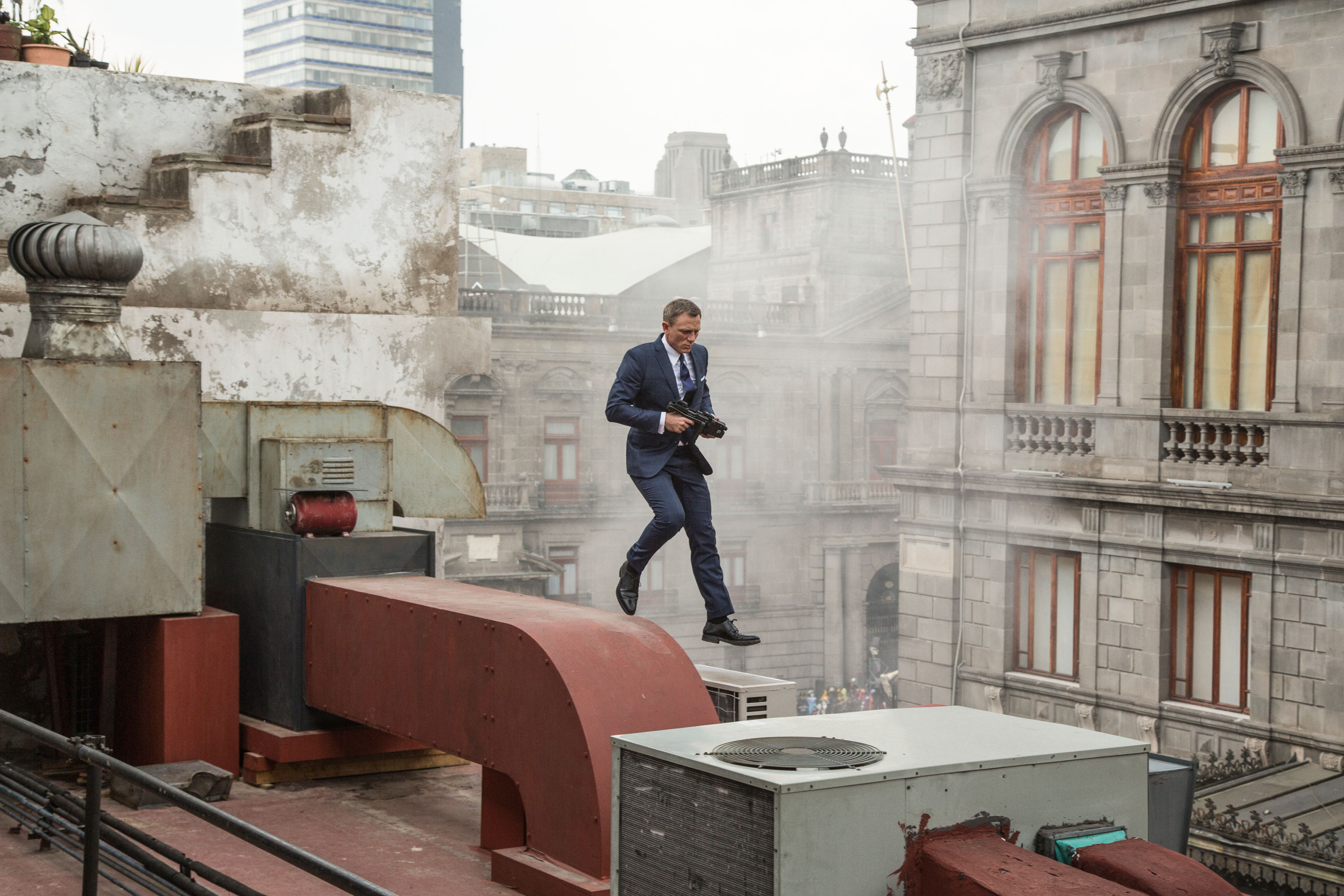
Emmanuel Lubezki’s cinematography was all the rage at the Oscars earlier this year, and Hoyte van Hoytema has tapped into the technical furore. Spectre begins with a Birdman-esque gallivant through a musty Mexican city, hollow drum beats slowly drowned out by the fluid orchestral waves of Monty Norman’s classic Bond theme as proceedings manoeuvre away from Day of the Dead festivities and towards 007’s (Daniel Craig) ensuing mission. Bond shoots at his target, Marco Sciarra (Alessandro Cremona), causing an enormous explosion that ought to terminate the wrongdoer. But just when you think it’s mission complete, Sciarra escapes. We momentarily meander back into the slow-moving parade before barrelling skywards aboard an out-of-control helicopter.

Director Sam Mendes is clearly having fun playing with our expectations, teasing tonally and pacing-wise. It is a super sequence in mechanical terms, but also a celebration of Bond: throughout the five-minute long take we see spying, shooting, surviving, and seducing. And, deviously, the film eliminates a would-be model Bond villain in record time — at one point the camera catches Sciarra looking like a cross between Jaws and Raoul Silva.

The main title montage then springs into life, this particular incarnation both encapsulating and artistically rich, affording meaning to Sam Smith’s otherwise uncertain lyrics. Perennial opening credits creator Daniel Kleinman delivers a montage that is all about retracing familiar steps, and Spectre does a lot of backwards walking. Bond, no longer in favour at a spatially revamped MI6, finds himself working outwith the espionage structure of government moderniser Max Denbigh (Andrew Scott), aided covertly by Moneypenny (Naomie Harris) and Q (Ben Wishaw).

The film is an entirely different prospect to Skyfall; this, in many ways, is Bond back to basics. Somewhat shunned by the morose undercurrent of its predecessor, Spectre revisits the franchise’s sly vein of humour. Ben Wishaw continues to grow into the role of Q, his pinpoint comedy timing affording the character greater charm. We dash all over the globe, though admirably the outing never succumbs to the artificial sheen of a travel brochure. Snowscapes make a comeback — there’s something to be said for beautiful blanket-white mountain locales and Bond often speaks fluently in this regard.

Just when you think the film won’t eclipse its previous action set piece, an even bigger and better one explodes on screen. Heck, we even get a hulking villain in Hinx, the bruiser given personality by Dave Bautista whose terminally arrogant-cum-ominous grin suggests total control. He brawls with Bond aboard a train in a punch-up that looks and sounds brutal — words such as vigour and pulp spring to mind as you begin to think Hinx might actually be a Terminator.

Some shots could have easily been borrowed from a Sergio Leone western, prompting quite the departure from what is otherwise a modern espionage jaunt. These pit Bond as the ageing gunslinger, a field agent feeling the brunt of a very real existential crisis provoked by Denbigh’s mechanical tactics, but also an operative who is still able to get the job done. Taunted by Franz Oberhauser (Christoph Waltz) who, like Denbigh, is also plugged into the new world, Bond must confront the ghosts of his past in order to remain operationally relevant.

See, while reviving the franchise’s historical spirit, Spectre also roots itself in present day amenities. Denbigh is the corporate stooge infecting our treasured institutions, the guy who wants to take MI6 “out of the Dark Ages”. He heads up the Centre for National Security, or “George Orwell’s worst nightmare,” as M (Ralph Fiennes) puts it, a base designed to undemocratically scrutinise the globe. His vision is all-encompassing, a desk-based surveillance system that identifies and eliminates potential targets. Keyword: potential.

As Bond battles enemies in the field, seeing Fiennes and Scott engage in a dual over career politics is a warranted change of pace and one that never ceases to intrigue. A paranoid air arises based on the premise that any misstep might be critical, and this trope no longer only applies to Bond. The argument relayed by the old guard, essentially, is that espionage is too cloudy to be conducted in an impersonal manner.

This clash between old and new also incorporates Waltz’s Oberhauser, though the less said about him the better. He struts on screen encased in a cloud of shadow, Hoytema’s cinematography imbuing the character with immense mystique. We know exactly what Christoph Waltz looks like and yet we can’t help but wonder what sits beneath the darkness. Interactions between Oberhauser and Bond are few and far between and you do find yourself yearning for more, but perhaps the restraint employed by Mendes and his team of writers (John Logan, Neal Purvis, Robert Wade, and Jez Butterworth all contribute) is what funds the tantalising energy surrounding both men.

Romantic (or unromantic) strands are still odd and awkward to sit through, especially in 2015. Bond’s infallibility when it comes to courting women remains a key characteristic that is tough to get along with, though his relationship with Lea Séydoux’s Madeleine Swan is at least sort of understandable — Madeleine is, after all, the daughter of spy. His fleeting flirtation with Monica Bellucci, playing a grieving widow, isn’t quite as logical.

A word finally on Daniel Craig, who looks like he is once again enjoying himself after the stunning solemnity of Skyfall. Spectre may or may not be his last tux session. Either way there is no denying the actor’s quite remarkable achievement since donning the attire in Casino Royale: imperfectly humanising a foolproof iron man. I’m not so convinced viewers these days aspire to live the life of Bond, and that is a good thing.

Spectre - Daniel Craig

Images credit: IMP Awards, Collider

Images copyright (©): Metro-Goldwyn-Mayer Pictures, Columbia Pictures

Back to the Future (1985)

★★★★

Back to the Future PosterDirector: Robert Zemeckis

Release Date: July 3rd, 1985 (US); December 4th, 1985 (UK)

Genre: Adventure; Comedy; Science fiction

Starring: Michael J. Fox, Christopher Lloyd

From the moment Dean Cundy trails his camera around Emmett “Doc” Brown’s (Christopher Lloyd) cantankerous home, clickety-tickety gadgets clicking and ticking in all directions, you just know Back to the Future is going to be a film that values wacky invention and rich characterisation. The plethora of loud clocks, the iffy tin openers, the monster amps, they all reflect Doc’s personality: budding, buzzing, and entirely unpredictable. And we haven’t even met him yet.

It’s Marty McFly (Michael J. Fox) whom we first encounter, tripping over Doc’s seemingly infinite housebound bits and bobs, somehow looking both uncomfortably out of place and at ease with his bonkers surroundings. We know then that the pair share an uncommon bond and that, for the remaining two hours, its lack of plausibility doesn’t matter. These opening 10 minutes, penned by director Robert Zemeckis and co-writer Bob Gale, are brilliant. Those that follow are pretty good too.

We initially find ourselves slap-bang in the mid-1980s, Huey Lewis and the News’ “Power of Love” beefing up the Zeitgeist with pop rock verve. The special effects are goofy but in charming sort of manner, electric lights fizzing and squawking. When we shift to the 1950s soon after, the visual palette takes on a post-war retro tint: glass bottles of Coca-Cola, tall chocolate milkshakes, unabashedly shiny vehicles. Doc and Marty are to blame for said shift, the former having transformed his DeLorean into a time travelling machine and the latter having taken the time-sensitive plunge.

Marty is a bit cocky, a bit arrogant. He’s a rebel with a cause: to change history. Zemeckis and Gale set up the various pay-offs early on — Biff (Thomas F. Wilson), the adult bully who needs some comeuppance; the Hill Valley Preservation Society’s attempts to save the town clock tower that, coincidentally, was struck by lightning 30 years ago. We know how story facets such as these will play out, but other rules are established only to be rewritten. In 1955, Marty takes his father George’s (Crispin Glover) place in a car accident, blacking out and subsequently awaking in his mother’s teenage bedroom. She, unaware Marty is her son, tries to seduce him.

The aforementioned notion would provoke cringe in many other outings, but Back to the Future gets away with it because the air is so madcap. Michael J. Fox’s nervous energy around his young mum Lorraine (Lea Thompson) is both hilarious and touching: “You shouldn’t drink because… you might regret it later in life,” he informs his mother, a future alcoholic. Crossover traits from the 50s and 80s afford Marty a freshness in both settings — traits such as booming teenage culture, motor car appreciation, and the imminent popularity of rock music. The film even paints Marty as the brainchild behind Chuck Berry’s “Johnny B. Goode”, and you can’t help but admire its odd legitimacy.

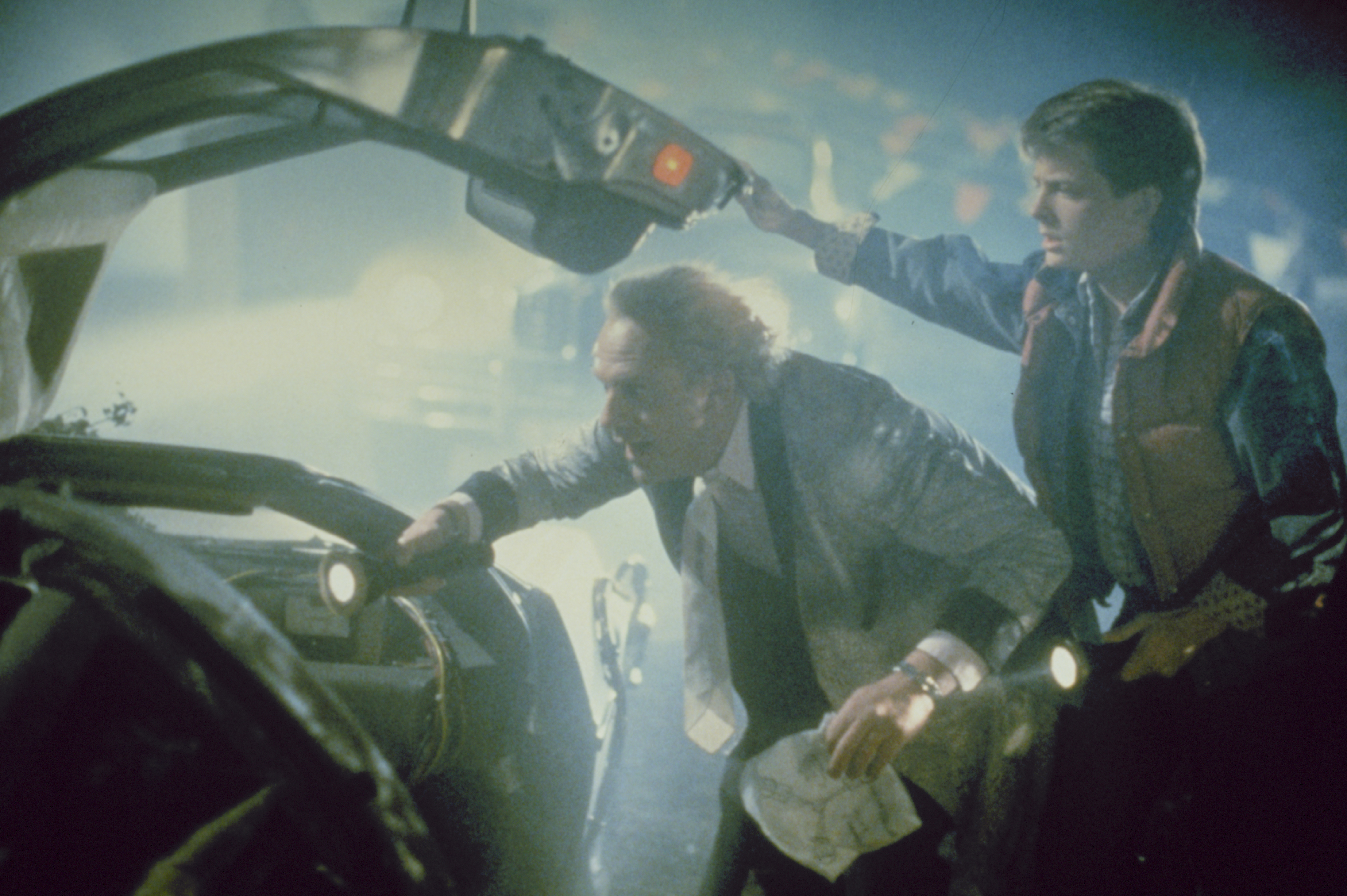
On the other hand, Doc is introduced under an air of mystery. We hear his voice, eccentric and agitated, over the phone long before we meet him in person. The barmy inventor reverses noisily on-screen, smoke pillowing wherever there is space, his frazzled hair and radioactive suit vindicating our original preconceptions. Christopher Lloyd unveils an intense stare that promotes excitement rather than intimidation. His character is like an affable Count Olaf, if Count Olaf was a mad scientist and affable. You accept Doc and Marty’s offbeat camaraderie as standard practice because the two actors have natural, unkempt chemistry. They drive the film with as much intent and enthusiasm as they drive the DeLorean.

Elsewhere, Back to the Future spends time taking potshots at 1950s culture and politics because doing anything else would be against time travel law. In a not-so-solid burst of intuition, Marty decides the only way to convince past Doc (there are a few incarnations of one or two characters which can be a tad confusing) that he has arrived from the future is by reeling off 1980s characteristics, and subsequently names Ronald Reagan as the current US President. “Ronald Reagan, the actor? Ha!” Doc shoots back, a response that probably would have held weight back then, when Reagan was more likely to be found on a Hollywood movie set than inside the Oval Office.

It is practically impossible not to enjoy this film. With almost as many quotable lines as Casablanca, it’s essentially Grease on physics-defying  wheels. Zemeckis creates a heightened ambience that encourages nothing but authentic, irreverent chaos. Suburban madness was a movie-making norm in the 1980s, and Back to the Future is as wonderfully mad as it gets.

Back to the Future - Doc & Marty 2

Images credit: IMP Awards, Collider

Images copyright (©): Universal Pictures

The Walk (2015)

★★★

The Walk PosterDirector: Robert Zemeckis

Release Date: October 9th, 2015 (UK & US)

Genre: Adventure; Biography; Drama

Starring: Joseph Gordon-Levitt, Charlotte Le Bon, Ben Kingsley

In 1896 the Lumière brothers screened one of their debut films, L’arrivée d’un train à La Ciotat. Legend mischievously has it that audience members, shocked by the sight of a steam locomotive moving towards them, fled from the vicinity with vigour. It’s one of those historic stories draped in romanticism that you desperately want to believe, and films such as The Walk give credence to stories such as those. The Walk isn’t as authentic as James Marsh’s brilliant Man on Wire, but then that documentary never dangled us 1,350 feet above Lower Manhattan.

Philippe Petit (Joseph Gordon-Levitt) does not believe in “getting a permit”. He can say that again. After biting into a sugary sweet, the French street performer scuttles over to his local dentist and then moans about having to struggle through two hours of toothache as he waits for an appointment. He ain’t the only one squirming for two hours; if you don’t get along especially well with heights, things might get a bit tetchy. Petit’s pain-stricken time at the dentist acts as a catalyst for what he would later call the “artistic coup of the century”: a tightrope walk between the Twin Towers.

But before we can ascend, there is stuff to do. Narrative, or set-up, or something. The visuals down on ground level are oddly ropey. It’s as if the film is trying to mix a Toy Story-esque texture with real life, and it doesn’t quite work. The objective is clear and sort of understandable: to evoke a fairy tale quality that supports Petit’s impossible task, one bearing mythical connotations. But the uncanny aesthetic funds a light, sprightly momentum when perhaps something grittier would have been more interesting — the real Petit, for instance, has never shunned away from acknowledging his foolish qualities. In fairness, Joseph Gordon-Levitt does energetic vanity well.

Writer-director Robert Zemeckis and co-writer Christopher Browne do at least shed some light on Petit’s stubbornness. The performer’s selfish mantra in the pursuit of artistic merit places unfair stress on his friends and family, a sentiment also explored in Everest. As such Petit veers exceedingly close to unlikeable, which would be fine if the film wasn’t so hell-bent on trying to sell him as the dream-conquering saviour of New York. The screenplay takes liberties with specific true events. In Man on Wire, Petit admits to cheating on his girlfriend Annie (Charlotte Le Bon) immediately after achieving his goal, but the film shies away from this revelation and the alternative it proposes is unsatisfactory.

Petit’s characterisation could be bolder. In an interview on the Empire Podcast, Zemeckis revealed why he chose to selectively colour his lead: “The character I thought the audience could identify with is the one that I portrayed”. His reasoning is fair, but the director is underselling his audience’s willingness to empathise with shades of grey. Towards the end, one of Petit’s comrades suggest he has finally given soul to the Twin Towers, which might also be a fabrication. But at least this is part of Zemeckis’ attempt to pay homage to the World Trade Center post-9/11, and the idealistic notion is actually quite sweet.

Back in France we occasionally rendezvous with Ben Kingsley, playing tutor Papa Rudy, who sports a non-specific European accent — it’s all over the place and nowhere in particular. One of the team members recruited by Petit to fulfil his self-penned destiny suffers from vertigo, while another, who spends the film intoxicated on drugs, jokes about the height of the stunt (though to be fair, the latter’s Shaggy from Scooby-Doo demeanour is quite amusing). Petit himself donates to this atmosphere of farce with statements such as, “I whisper so the demons won’t hear me”.

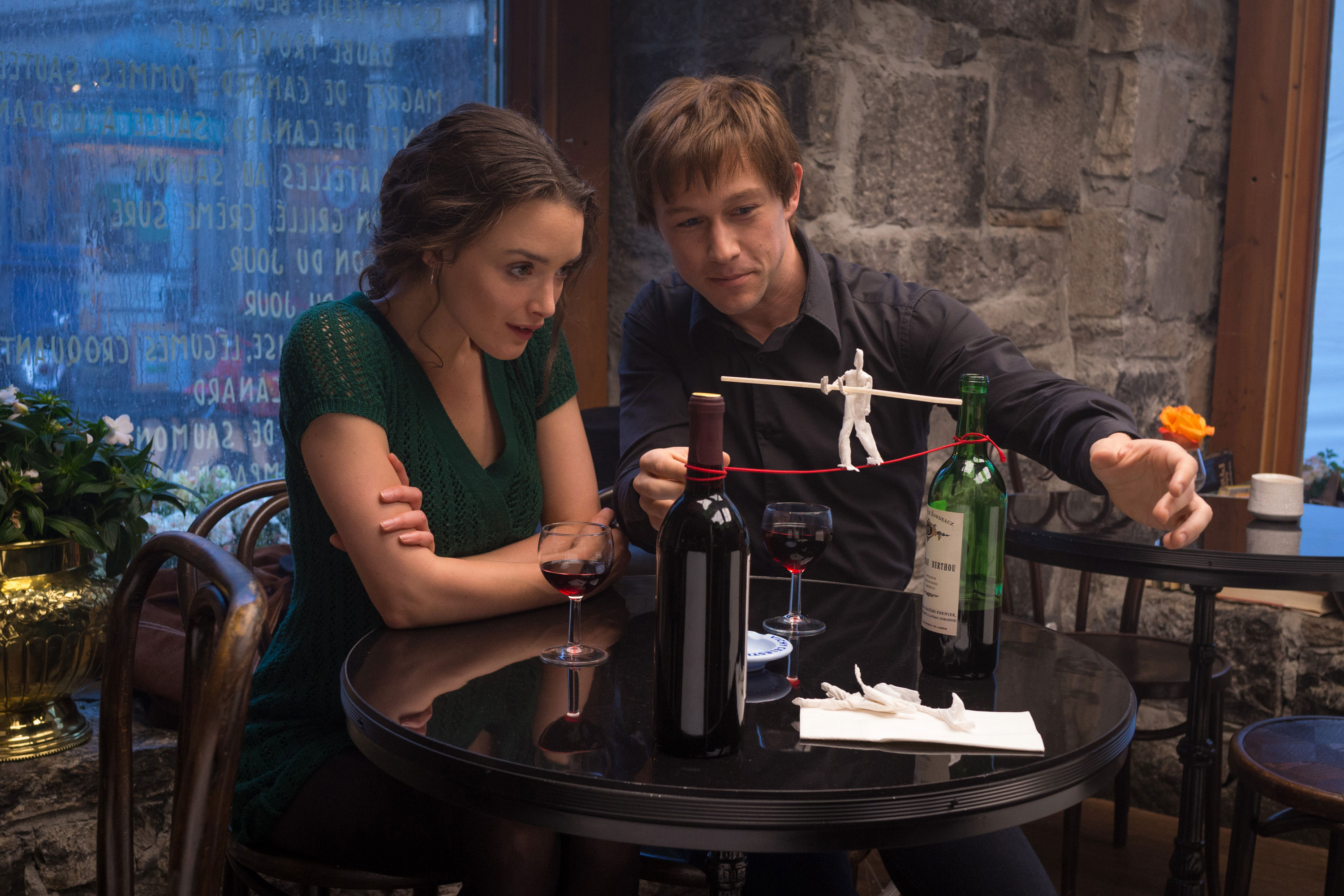
It is all quite ludicrously caper-ish. Ocean’s Eleven atop the world’s tallest building. As the team plans Petit’s vertical-turned-horizontal heist, the tightrope walker dawns a number of amusing disguises: reporter, construction worker (foot impaled by nail included), tourist, businessman. Composer Alan Silvestri even occasionally treats us to Mission: Impossible’s famous vacillating whistle. The soundtrack also borrows from Damien Chazelle’s Whiplash, fielding a cantankerous drum and jazz beat aided by the prevailing tension. Thankfully there is no rushing during The Walk.

Inevitably, the outing has to wade through a sea of invasive anticipation. Most of the events that occur during the opening two-thirds are fine, but we’re only really here to trial the fearful majesty of high, high, high-wire walking. Following Petit’s lead — his calming influence is a saviour — the first time we peer over the edge of the World Trade Center an undeniable rush of exhilaration and terror ensues. This is where Dariusz Wolski’s cinematography really comes to fruition, at night unveiling a wonderful neon carpet below, and during the day capturing the voluminous bustle of New York City. The towers look incredible too; it’s nice seeing them relayed in such a positive light.

But is the walking part of The Walk just a stunning gimmick, or is it a genuine cinematic experience? Probably a bit of both. As Petit steps onto his wire you brace yourself in much the same way someone would prior to pelting down a steep slope on the world’s fastest roller coaster, but the sequence also incorporates classic movie tropes: burgeoning threat, visual amazement, a visceral personal reaction. There is one moment involving a seagull that almost ruins the spectacle (it’s ridiculous and unnecessary) but thankfully that dissipates quickly.

If 3D is one of modern cinema’s aggravating realities then this is the way it ought to be used. For around half an hour, the format contributes to the genuine awe you feel when balancing between the towers. Zemeckis has set a new benchmark in three-dimensional movie-making. Upping the ante? That’ll be a tall order.

The Walk - Charlotte Le Bon & Joseph Gordon-Levitt

Images credit: IMP Awards, Collider

Images copyright (©): TriStar Pictures