The King of Comedy (1983)

★★★★★

The King of Comedy PosterDirector: Martin Scorsese

Release Date: February 18th, 1983 (US limited)

Genre: Comedy; Drama

Starring: Robert De Niro, Jerry Lewis

From the moment Robert De Niro’s eccentric autograph-hunter Rupert Pupkin hops his way inside the limousine of talk show host Jerry Langford, The King of Comedy sizzles with motor mouth-induced panache. This isn’t the cynical nor the blunt outing that we have come to expect from Martin Scorsese. Instead, it is a light entry into comedy hall of fame, one that flaunts a relevant satirical backbone and a truly impervious performance from the director’s right-hand man De Niro. Proceedings are aided by a snappy screenplay, energetic direction and brisk editing, but this is absolutely a one-man show. Elements of subtle psychosis are explored through the pitfalls of rejection but, at heart, The King of Comedy is simply journey of hilarious wit, De Niro its perfect driver.

Rupert Pupkin’s (Robert De Niro) dream is to become a successful comedian plying his trade on a personal talk show. He spends many a day persistently practising routines and his evenings glued to the rear entrance of stage-doors, impatiently awaiting the signature of a celebrity (you get the sense anyone will do). Upon receiving a bout of half-hearted vindication from Jerry Langford (Jerry Lewis) and a less than half-hearted promise that Langford will consider his talents, Rupert believes he has finally achieved the break he has been after. Only, the aspirer’s ambition far outweighs his common sense.

Robert De Niro has never been funnier. Rupert exists on the opposite end of the mentalist spectrum from Travis Bickle, though De Niro portrays each persona with equal amounts of verve and precision. Just like Travis, Rupert demands our utmost attention and more, though this time it’s as a direct result of an incessant need to talk his way into and out of every situation. De Niro effortlessly channels a man who always appears to be precariously teetering on the brink of a nervous breakdown, yet someone who still retains a peculiar air of discipline. His mannerisms are exceptional, displaying the actor’s decisive comedic timing. Interactions with Jerry’s receptionist are particularly sterling, not to mention an awkward card reading scene that encapsulates Rupert’s mantra: purposeful without structure. The film is less interesting when De Niro is absent from the screen, not because the remaining elements are poor, but because De Niro’s presence is simply that enticing.

Paul D. Zimmerman’s screenplay scorches with immensely delivered dialogue. It throws up a satirical funny bone that harbours the on-going effects of celebrity obsession, on both the obsessive and those being obsessed over. Rupert is an in-over-his-head autograph collector (“The more scribbled the name, the bigger the fame”), but his problem is a far greater one: he’s a frenetic attention-seeker. If it’s not a woman, it’s a talk show host, or even a wall covered in painted figures resembling an applauding audience — the latter is one of the film’s most disconcerting and telling moments, echoing the infallible pitfalls of rejection. Though admirably gag-full, The King of Comedy also ushers in an eerie strand that strikes an even greater nerve as we learn more about our wannabe comedian. For a split second, the culture of mania becomes humane.

We begin to feel sorry for Rupert, who is ignored by all those whom he admires. When Rupert sees the walls in Jerry’s office are painted red, desperation asserts that he wears a red tie during the next visit — anything to impress. The film encourages us to get on board with a man who feels hard done by in life and who subsequently uses this as justification to overbear. Rejection manifests in similar forms to those of modern denial; “company policy” loopholes, an assistant reverberating condescending tones and emitting dissociative remarks. There’s no doubting De Niro’s impact in terms of making his character user-friendly, but credit must also go towards how Scorsese and company present the character. After all, it’s easier to engage and spend time with somebody who you like, as opposed to a person less cherished.

At its most rampant when De Niro is in view, The King of Comedy peaks by way of the humour expelled. Believing the hype — mainly his own — Rupert exclaims extraordinary fact after extraordinary fact in such a nonchalant manner that we begin to wonder whether or not they’re actually true (“That’s Woody Allen… he’s a friend of mine”). Other amusing sequences include Rupert’s uncanny resilience that sees him consistently refer to strangers by first name as if on a first-name basis — he’s a bit like the annoying drunk seemingly frozen in time and on repeat. Even his attire is so silly that it garners laughter: from the uncoordinated suit and tie to the pristine hair and questionable moustache. Listen out for De Niro’s dynamite “MAM!” too.

It’s blatantly obvious that Scorsese cares about his characters, particular his lead here whom he treats with affection and injects with more well-roundedness than is custom for such a psychotic individual. This caressing nature is reflected in the film’s overall image, one far from the brutal shades of grey seen in Goodfellas or the not so subtle shades of black and white in The Wolf of Wall Street. Typical of Scorsese, The King of Comedy does arrive in tandem with an inert pizazz, though not the glossy kind seen in the aforementioned outings, but rather an artificial glamour mirroring the inauthentic essence of show business on display. Proceedings rumble as they near the inevitable and dramatic conclusion, which sees an utterly outstanding monologue that tows the line between funny and pained. It’s the golden bow on a succinctly wrapped present.

The other performances range from very good to decent. Jerry Lewis is Jerry Langford, a man devoid of any cheer despite his lofty position in comedy. Ironically, the same spot a lively Rupert vies for. Though he plays the quintessential victim, Lewis’ pinpoint dismissive delivery assists in spinning the traditional roles. We cannot help but side with the guy who is trying his damnedest to etch some semblance of enthusiasm from his successful counterpart. Sandra Bernhard isn’t quite as effective as Rupert’s fellow maniac Masha, though her character suffers from being too one-dimensional, an issue increasingly flagged up in the presence of a well-rounded Rupert. In fairness, the pair display quite the frazzled dynamic when together.

Though it’s not as scoping as many of his other outings, The King of Comedy is definitely one of Martin Scorsese’s best and most intriguing. Spearheaded by Robert De Niro doing his best funny-man-cum-insane impression, the outing spawns diatribes of electricity and opts to stand out from the crowd of convention. “Better to be king for a night than schmuck for a lifetime.”

The King of Comedy - De Niro

Images credit: IMP AwardsThe Guardian

Images copyright (©): 20th Century Fox

April Fools 2014: Consumed by Film

Check out my list of five loveable idiots, plucked straight from cinema’s comedy museum! You know, those endearing folks who are a bit worse for wear in the common sense department? And thanks again to Cara for welcoming me into her terrific April Fools series.

caragale's avatarSilver Screen Serenade

consumed by film

Happy Friday, you beautiful people! That’s right–you’re beautiful. Know what else is beautiful? A nice list of lovable idiots. Lucky for you, I have such a list for you from Adam of Consumed by Film. That’s right, Adam took some time away from his excellent movie and TV review site (that you should certainly follow) to share his own list of April Fools. Let’s check out his picks!

View original post 827 more words

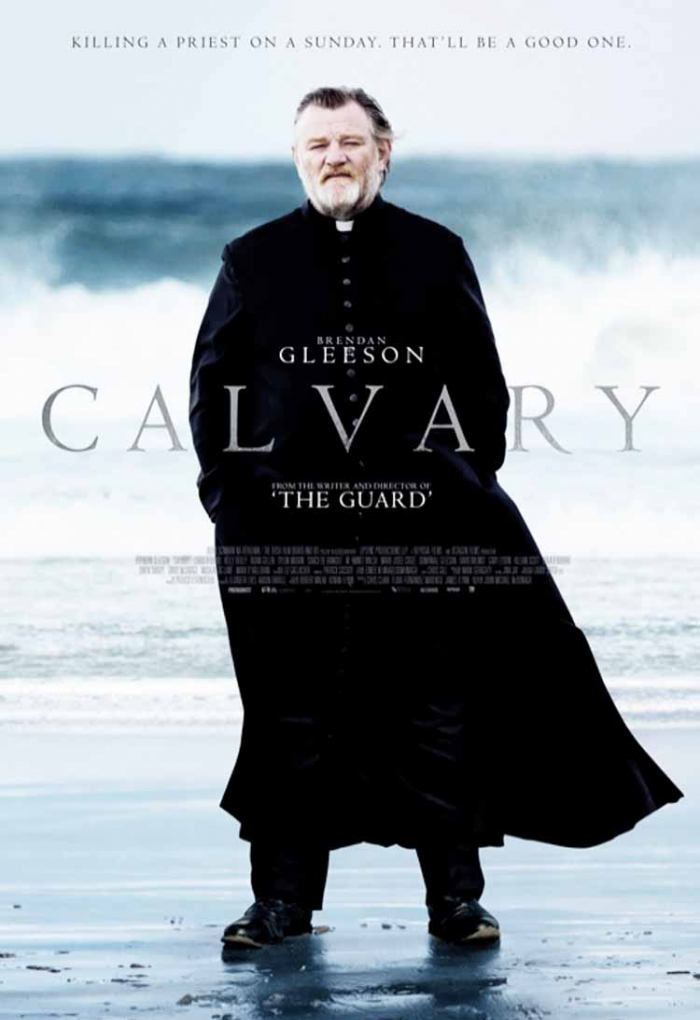
Calvary (2014)

★★★★

Director: John Michael McDonagh

Release Date: April 11th, 2014 (UK); August 1st, 2014 (US)

Genre: Comedy; Drama

Starring: Brendan Gleeson, Chris O’Dowd, Kelly Reilly, Aidan Gillen

John Michael McDonagh’s second venture into the directorial settee is a significant improvement on his fun but ultimately forgettable 2011 debut The Guard. In Calvary, many previously utilised elements are retained — namely Brendan Gleeson, dark comedic undertones and Ireland — but an additional steadfast formula heralding both intrigue and earnestness offers robust support to these familiarities. This time around we’re essentially presented with the makings of a whodunit mystery, only nothing has been ‘done’ yet. It’s a ploy that keeps you guessing, one that forges with bleak humour and traces of hearty emotion (just about) resultantly presenting a film worthy of the talent displayed on-screen and the guile emitted from those off-screen.

As one of the more considerate residents of Sligo, Father James Lavelle (Brendan Gleeson) often finds himself at the quarrelsome mercy of those whose problems determine their lives. His priesthood is undoubtedly a factor in this invariable trust too, only said profession is one James mightn’t be too fond of presently given his life has just been threatened by a troubled voice emanating from the other side of a confession booth. “Sunday week” is seemingly his final calling, because that way he’ll have a few days to get his affairs in order. How thoughtful.

Perhaps Calvary’s greatest strength is that it manages to successfully fluctuate between a variety of modes without losing its primary sense of direction. Most obvious is the blackly comedic tone that hollowly reverberates throughout proceedings. It should come as no surprise to those well-versed in the work of the McDonagh siblings — brother Martin wrote and directed the wonderfully downbeat In Bruges — that laughs are placed on a pedestal above the occasional murmurings of insensitivity here, but each quip is genuine in nature and far from callous. The film is akin to a live-action version of Guess Who? as numerous distinct personifications manifest on screen. At one point James is informed, “Playing you though now, that might be interesting,” enforcing this odd feeling of different characters role-playing. Many of the actors are funny in their caricature mannerisms, but there are a few who especially stand out by way of effortlessly humorous portrayals. Killian Scott is particularly amusing as the naive Milo, his stoic facial expressions accentuating a comical deadpan delivery (“The war on terror has no borders”). The ignorant doctor of Sligo, Frank Harte is gauged efficiently by Aidan Gillen; funny, intimating and overtly suspicious all in equal measure.

Brendan Gleeson carries the weight of the film upon his shoulders for its entirety (the camera hardly wanders from his bearded jawline) and evokes a sense of attachment in tandem with the viewer from the get-go. It’s not necessarily sympathy that we feel — James peculiarly appears in control of his own destiny despite the threat on his life — but rather it is the priest’s accommodating presence to those around him that warmly rubs off on us with an amiable sheen. Aside from the comedy then, is a story about a man attempting to come to terms with his profession, his faith and effectively his own life. James is unable to assemble the frantic thoughts racing through his own head never mind those of others, yet he still tries: “Everything’s fine”, he says almost systematically before realising his own desperate predicament, “I mean no, everything’s not fine”.

As the film progresses director John Michael McDonagh raises the currently prominent issue of priesthood stigma, motioning towards prejudgement and the idea of tarring all with the sins of a few — we become more aware of James as a human being, somebody dealing with more problems than any it seems. A notably poignant scene towards the fraught conclusion embodies the sentiment of forgiveness and wholly captures a sincerely heartfelt air that McDonagh absolutely appears to have intentionally sought out. Calvary exhibits a serious tone that never becomes overbearing thanks largely to a number of chuckle-worthy happenings, but a serious tone that demands consideration nonetheless.

The third side of Calvary’s narrative triangle is the aforementioned murder mystery element, and it too meshes well with the other components. From the exceedingly off-kilter opening, the film garners intrigue as a tension builds. There are constant references to sinning, to death and wrong-doing, remarks almost always aimed indirectly at James (“Evil thoughts floating around”). These serve as frequent reminders amongst the raft of humour and seriousness that there is a conundrum demanding solution. Though some characters occupy characteristics too obvious to be genuinely threatening, McDonagh’s dialogue-driven plot ensures that just about anybody could be the instigator of violence. Maybe the knife-wielder is Dylan Moran’s upper-class hedonist Fitzgerald, or perhaps it is Kelly Reilly’s distressed Fiona Lavelle who has her hand on the trigger — there are more than enough candidates offered up to consistently make us doubt ourselves as we attempt to play detective alongside Father James. One thing is for sure: as wide-shots of vast drumlins are shown leering over the town of Sligo, a progressively uneasy mentality begins to unfairly haunt our lead.

After an exceedingly well-executed hour and a half that sufficiently garners enough pent-up curiosity, Calvary does sadly struggle to keep a lid on proceedings during the final act. Events come across as slightly rushed without meaningful conviction, and one or two questions remain unanswered — though not in a self-inquisitive way, but rather completely unnecessarily.

With the exception of a far from catastrophic concluding blot, Calvary admirably manages to juggle humour, intrigue and seriousness without compromising any element. Presently, after the completion of two native outings, John Michael McDonagh isn’t all that far from replicating his brother’s In Bruges-esque achievement, a pretty darn good feat in itself.

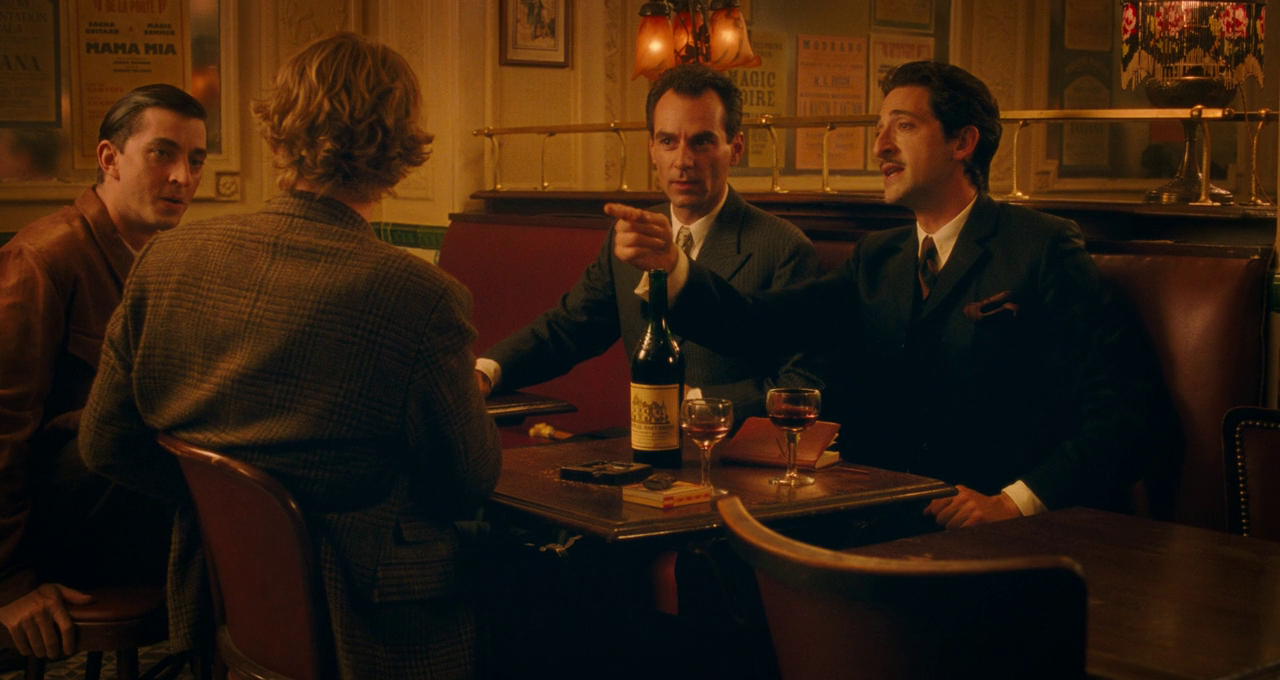
Midnight in Paris (2011)

★★★

Director: Woody Allen

Release Date: June 10th, 2011 (US); October 7th, 2011 (UK)

Genre: Comedy; Fantasy; Romance

Starring: Owen Wilson, Rachel McAdams, Marion Cotillard

As images of modern Paris caressed by romanticising tones that blare heartily from a trumpet fade in and out of vision, we are made aware of perceived idealism and hereditary sentiment. The French capital has forever been associated with society’s most esteemed virtues; desires of art and literature and fashion and love, a variety of tropes that amalgamate together as one in Woody Allen’s Midnight in Paris. You may find yourself all at sea, or at least caught by the tide as events unfold on screen if, like myself, you’re not a quintessential artiste, or a fashionista, or a literary encyclopaedia. Perhaps some form of salvage anchor exists for those who have experienced the aura of Paris. For this artless dodger though, Allen’s highly nuanced nostalgic whim certainly paints a beautiful picture, but ultimately fails to connect.

For Gil Pender (Owen Wilson), achieving success as a Hollywood screenwriter isn’t enough. He wishes to expand his artistic portfolio by penning a novel, but is unfortunately struggling to gather any inspiration. That’s where a wander to Paris offers respite, therefore off the back of a vacation funded by his wife Inez’s (Rachel McAdams) parents, Gil sees hope. Only, hope isn’t all he sees. Having escaped both the drones of an obnoxious family friend and his other half’s party manifesto, Gil finds himself slap-bang amongst the dazzling costumes and enigmatic personalities of an era he vociferously admires, the 1920s. It could be the wine, or perhaps Gil’s quest for inspiration has genuinely uncovered the Lost Generation.

Illuminated by quarantined nostalgia, Midnight in Paris firmly sinks its reels into a refined foundation. Gil champions the past, whereas others are either sceptical over his ambition or simply put-off by his tendency to reminisce. He lusts over the 1920s, wishing nature had granted him a spot at the dinner table of said time period. The main character in Gil’s novel works in a “nostalgia shop,” essentially reflecting the writer’s non-peripheral outlook on life. For 15 minutes, the presentation of a man who seemingly has everything going his way — affluence, a beautiful wife and a prosperous career — but remains unable to shake the cobwebs of a non-romantic reality, carries some weight.

Unfortunately the narrative somewhat spontaneously retreats a century backwards and kick-starts a conveyor belt of the intellectual. We meet Hemingway, the Fitzgeralds, Dalí and a whole host of other scholars, artists, and fanciful knick-knacks. As Gil interacts with his heroes the problem is never clearer: these people are his heroes, not the audience’s — that would be to assume all Woody Allen outings are observed by a precise denomination, a notion that’s simply untrue given Midnight in Paris made over $150 million at the box office. Traits that may be recognised by artistically knowledgeably viewers otherwise play unsuccessfully to puzzled minds. Perhaps this is not a fault on the filmmaker’s end and an issue that instead lies squarely with those, like myself, who are less well-versed in the lives of Hemingway and company. Not every film is shot through a universal lens. Sadly for us common folk, much of Midnight in Paris renders superfluous as more vague faces appear spouting diatribes that are relayed with concealed significance. The phrase “we should quit the idle chatter” reverberates without implementation.

Allen formulates a familiar whimsical tone that brims full of quirkiness. Abiding by this eccentric slant on proceedings, the highbrow collection of 1920s (and earlier) historical figures are all portrayed without too much sincerity. The actors take to the screen like a hungry herd of cattle, displaying enough scenery chewing to clear any field of its green sheen. Everyone seems to be having a blast and although the various classical persons fluctuate in terms of how decipherable they are, an infectious joviality often washes over proceedings. Tom Hiddleston couples with Alison Phil as F. Scott Fitzgerald and wife Zelda respectively, and both are undoubtedly enjoying playing dress-up; Phil in particular accentuates those vowels. Kathy Bates shows up as Gertrude Stein, delighting as ever on cue. Adrien Brody hams it up more than any other as Salvador Dalí in a truly humorous display that overrules any notion of personal ignorance.

The film plays up the juxtaposition of modern American consumerist Paris versus romantic Renaissance-laden Paris, a contradiction embodied emphatically by Gil and his wife Inez. Owen Wilson is very good as the inspiration deprived writer turned wide-eyed child in a candy store, whose dream to live in Paris is far from the mind of Rachel McAdams’ Inez. Inez is the typical tourist who sees Paris merely in its present day form as a temporary drop-out zone, and not for its natural inbuilt beauty — unlike her husband, she hates how the city looks in the rain. McAdams is fine in her role too, but struggles for breath at times given the nature of her one-dimensional character. The pair’s relationship is never really believable, a sentiment raised by Marion Cotillard’s Adriana in between escapades of Basil Exposition (“I dropped in from 2010″… “You DID?!”).

Shot by cinematographer Darius Khondji, the film basks in a wonderfully rich texture that is quite the opposite of the quaint plot which invariably ducks and dives. Too many on screen presences mean a few are lost in the shuffle; antiques dealer Gabrielle feels like a character without conviction, and Inez’s mother, other than manifesting as a dead ringer for Cate Blanchett’s Jasmine a decade on, has very little to do. After traipsing through party after party full of observant pundits you begin to wonder why nobody is picking up on Gil’s 21st century fashion sense.

Midnight in Paris’ admirable intentions are there for all to see, but perhaps only a few will fully comprehend. That is not to say the film is lacking in watchability, for a host of energetic performances alongside a narrative that accommodates more than a trace of intrigue through its humorous comparison in culture certainly offers delight in small doses.

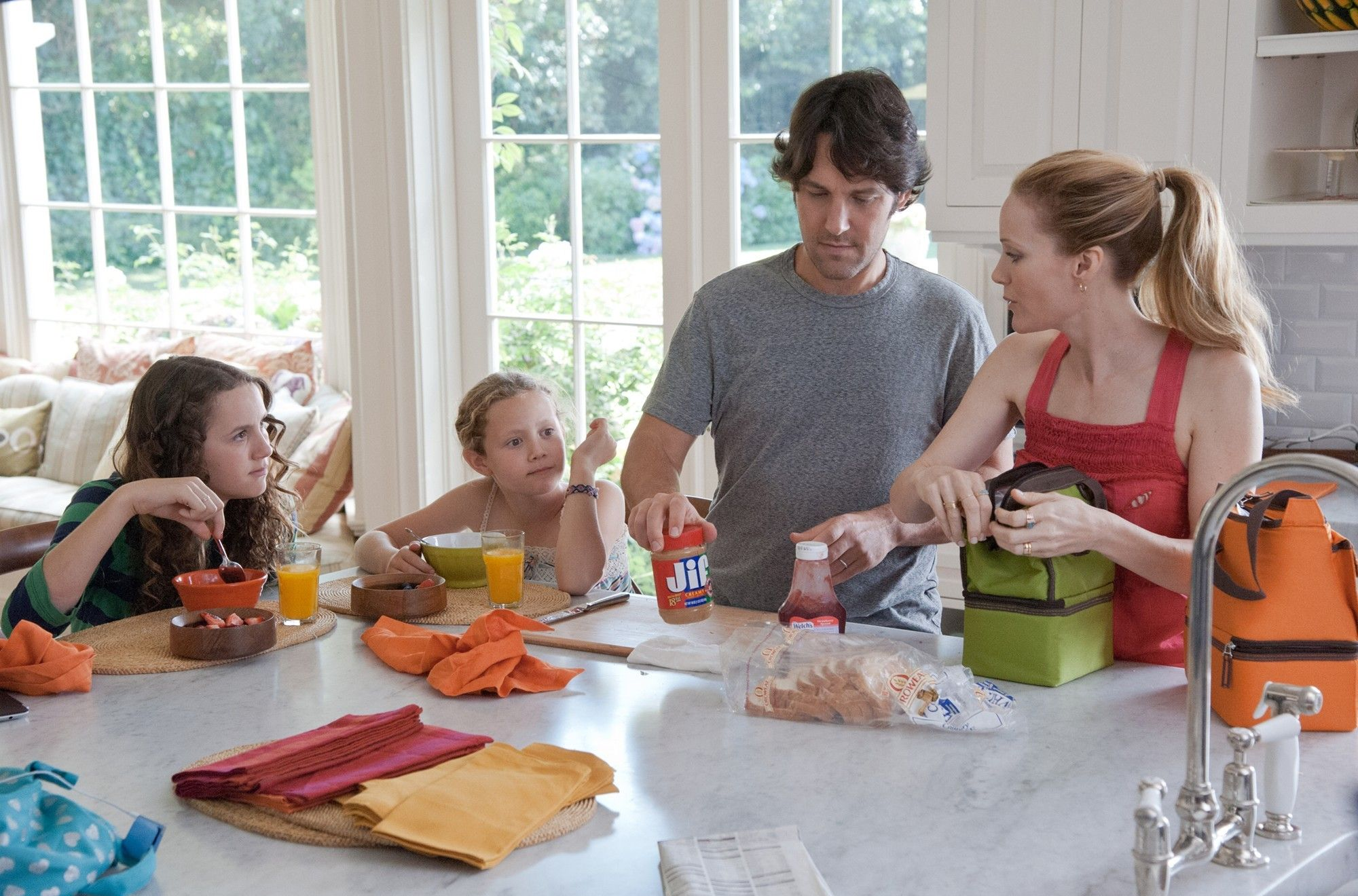
This Is 40 (2013)

★★

Director: Judd Apatow

Release Date: December 21st, 2012 (US); February 14th, 2013 (UK)

Genre: Comedy

Starring: Leslie Mann, Paul Rudd

The Valentine’s Day film always goads suspicion. Like releasing a Christmas flick in December, a children’s adventure during mid-term, or a horror movie on Halloween, the legitimacy of the proverbial February 14th film (the date This Is 40 was released in the UK) often comes into question, at least in these semi-cynical eyes. How would it fare in cinemas on any other generic weekend? A moot point really, particularly in terms of critically assessing the piece. But the decision to hold out for a specific release date lends its hand to a lack of confidence in the product in the first place. And sadly, when it comes to Judd Apatow’s This Is 40, a confidence deficit is only one of many headaches. Misdirection, grating characters and a badly written screenplay sit atop a list of negative traits associated with a comedy that’s only occasionally funny, and ought to thank its lucky stars that some semblance of watch-ability is retained through the accommodating faces of Leslie Mann and Paul Rudd.

Seemingly happily married, but unhappily ageing, Pete (Paul Rudd) and Debbie (Leslie Mann) live with their two young daughters. They must be pretty well-off too as Debbie owns a boutique and Pete runs his own record label; a venture he probably undertook to get away from his wife every now and again, or maybe it was to embellish himself in a false sense of youthful hipness. It’s not that he doesn’t care for Debbie, but there’s only so much baseless moaning a human can endure. Debbie has just turned 38 — that’s forty to every other sane person — and cannot handle the overbearing, horrifying toll it is taking on her. Only nobody really cares about her age. Especially not the audience. And that’s the problem.

Going into a film titled “This Is 40” you are absolutely aware of the self-opulence about to be hurled your way, but that doesn’t soften any blows from water balloons filled with whine (and not the alcoholic kind) as they relentlessly strike your face. Debbie cannot fathom waking up to the big four-oh, which is a petty mindset in itself but might have had some comedic legs within the boundaries of structured character development and a cohesive narrative. However she’s too jolly too often, making it difficult to engage with any semblance of sympathy that may or may not exist. Debbie lies on medical forms to hide her age, yet she doesn’t even bother to use a consistent date of birth. Further tarnishing matters is her relationship with husband Pete, one that skips foot-by-foot between hot coals of happiness and hatred quicker than the first penis joke is sounded. The duo get up to generic antic after generic antic, from hash-cookie gorging to awkward family gatherings that are no longer awkward. Heck, the film itself struggles to identify any prerogative – “The sort of sequel to Knocked Up,” reads the poster.

The best character is Sadie, Pete and Debbie’s eldest daughter, because she is easy to relate to; when met with end-of-the-world stipulations we concur with her inexperienced spitefulness, knowing it’s not terminal. There’s a significant difference between a 13-year-old cursing the earth over a Lost ban enforced by her parents, and a grown-up churlishly denouncing her existence over age. Besides, if someone prevented me from watching Lost, I’d lose the plot too (“It’s not frying my brain, it’s blowing my mind”). Interestingly, This Is 40 is an Apatow family affair: Judd directs, Leslie stars, and their two children Maude and Iris act.

Another nail in the coffin is hammered tediously by way of a fairly uneventful plot. Although comedies are driven first and foremost by gags, quips and puns, a baseline story must be present in order to provide a buffer. Nothing happens in the opening 30 minutes (of an unnecessarily long two hour runtime), other than the establishment of how great the family before our eyes have it in life. Both daughters amble around with iPads, the two parents drive their own glimmering cars, the house is spacious and homely, Pete spends his time gorging on delicious-looking cakes and Debbie eats out with her father at up-scale restaurants. Sounds pretty good to me. And other than the groan-inducing issue of getting older that pitifully tries to veil itself as a narrative, no authentic dramas arise until proceedings are too far gone (by that time, the JJ Abrams condemnation has played out and there’s no way back into my good books). Historically Apatow has been hit-or-miss in the director’s chair, and neither his directorial nor his writing skills are up to standard here.

Thankfully, there are a few positives. Even though many characters are lifeless, they benefit enormously from embodiment by a pair of very likeable actors. Paul Rudd is up there with the best comedic performers around today, someone whose timing and wit often exceed the material in front of him. Pete is not the most annoying character, but without the spark provided by Rudd he’d likely be the most boring — instead, that accolade goes to camera-fodder Desi, played by Megan Fox, whose existence in the film seems only to advocate prostitution because it affords you a nice car. Leslie Mann, although straddled by the gripe-ridden Debbie, once or twice manages to valiantly charm her way through an annoying character and relax into that recognisable humorous self in moments of respite. Chris O’Dowd is criminally underused as an employee at Pete’s record company, but manages to be funny when given the chance. Melissa McCarthy, Lena Dunham and Jason Segel also find time for a cup of coffee. Oh, and there’s a very funny Simon & Garfunkel joke. I’m out.

Hampered by shoddy characters, all too familiar comedy tropes and a messy narrative, This Is 40 ain’t even good enough to be a one star film. Occasional murmurs of humour seep through, and likeable faces shield the piece from too much brutal disharmony, but a lot more is required. Sadly, neither man(n) can save this one: Ant nor Leslie.

Shaun of the Dead (2004)

★★★★

Director: Edgar Wright

Release Date: April 9th, 2004 (UK); September 24th, 2004 (US)

Genre: Comedy; Horror

Starring: Simon Pegg, Nick Frost

It has been almost 10 years since we first met the instantly relatable yet spatially anarchic Pegg, Frost and Wright trio. Since 2004, their fumes of hilarity have glazed earlobes the world over, excellence exhaled from the likes of Hot Fuzz. But before Pegg and Frost had an unruly, conspiring cultist town to deal with, the duo wielded shovels and cricket bats in a war against zombies. The epitome of wholesome comedy-horror, Shaun of the Dead wittingly embraces society’s increasing individuality and detachment — a hapless trait infused even more in today’s world — before sending it spiralling in a zombie rage. The zombie adage it apt too, a smart comparison that evokes humour because the notion cuts so close to the bone. Perhaps a few characters are too incidental to warrant their on screen presence, but part one of the Three Flavours Cornetto trilogy is damn tasty regardless.

Working in an electronics shop where he commands disrespect, and still living with his overweight, uninspired room-mate Ed (Nick Frost), Shaun (Simon Pegg) is pitifully meandering through life, unwilling to commit and unable to justify. His girlfriend Liz (Kate Ashfield) bemoans Shaun’s discrepancies, in particular a monotonous infatuation with the local pub, the Winchester. As Shaun spends many a day lethargic amongst the comatose masses, juggling fractious relations between Ed and another house guest, and failing to win over the love of his life, he must be pretty certain that it cannot get any worse. Only, it can. Zombie worse.

Simon Pegg and Nick Frost front this raucous outing, and their gag-full chemistry is one of the prevailing positives. As down-on-his-luck lead man Shaun, Pegg exudes the everyday. His demeanour is casual, occasionally showing the slightest hint of enthusiasm, only to be shot down by an ungrateful colleague or a disappointed friend. Even Shaun’s motivational methods leave a lot to be desired (“There’s no ‘I’ in team, but there is an ‘I’ in meat pie”). You can see part of yourself in Shaun; well-meaning but gobbled up by a generically infectious culture, and Pegg’s bedraggled showing is suitably so. Though when the going gets heroic, Pegg is just as believable. His camaraderie with Nick Frost acts as the driving force behind the film’s intelligent wit. Frost portrays Ed, who’s a bit of a git. Ed is sort of like Shaun, only a lot further along the waster-scale. Rude and lazy, he seemingly exists only as the semi-loveable pain in Shaun’s backside, though he does emit a semblance of smarts every so often. The duo bounce comedic mouthfuls off each other for the duration, and they never get stuck in a rut. If the key to comedy is timing, these two have the art of early arrival down to a T.

At the forefront of Shaun of the Dead — which often harks knowingly back to zombie classics such as George A. Romero’s Dead series and Sam Raimi’s maniacal Evil Dead — is this concept of reviewing society as a failed collective unit. Although the zombie undead are the primary antagonists throughout, the narrative is really about the zombie alive — us humans. Director Edgar Wright, who also co-wrote the clever script with Pegg, smartly highlights numerous zombie-esque characteristics of the modern being: from waking up still tired after a late night, to ambling around streets unaware of anything other than oneself, to sitting slumped and mouth-gaping in tune with the other morsels on public transport. And each of these distastes are depicted before any actual zombie shows up. Wright’s almost satirical outlook on our isolated existence is smart, and is actually the most horrifying realisation that comes to fruition during the film, as opposed to the limb-deprived monsters. “The only thing that will redeem mankind is cooperation,” proclaims Shaun, an admission boasting more truth than realistic application.

Unlike the slow zombies afoot, Shaun of the Dead advances at a brisk pace and never threatens to dwell on a gag for longer than necessary. In fact, many of the funniest lines are quipped as humorous sound bites, again playing off the excellent chemistry between the front pair. Moreover, lengthy jokes interspersed throughout the zom-com tend to work (for example, a certain rifle in a pub) meaning each pay-off feels validated. There aren’t many things more frustrating than a film-long gag that loses steam before reaching the station, or worse, breaks down on arrival. The meaningful pace adopted by the filmmakers ensures proceedings are camp, as the people involved don’t take the goings-on super seriously, generating a healthy spirit throughout. Of course, there’s a genuine societal pondering going on as aforementioned, but encasing this sincerity is a plethora of over-the-top gut removals and blood splattering. Perhaps the most outrageous scene of the lot involves three humans, as many pool cues, a zombie and an oddly beat-by-beat consistent rendition of Queen’s “Don’t Stop Me Now”. Why outrageous? Because we’re having such a good time.

The tremendous Bill Nighy appears inconsistently as Shaun’s apparently disapproving step-dad, but should have a bigger role. Nighy’s lack of connection with Shaun acts as an embodiment of the film’s appraisal of civilisation, whilst at the same time provides the funniest moments external to those involving Pegg and Frost. His lack of sufficient screen time rankles even more so in the presence of peripheral characters Diane and David, played by Lucy Davis and Dylan Moran respectively. Both Davis and Moran are fine in their roles, but Moran’s spiteful, bitter David is unlikeable and therefore not worth investing in. His constant appearance coincides with hardly any character development, and therefore acts as a regular surplus to requirements reminder. Generic isn’t necessarily bad, especially considering the film’s self-awareness. However irrelevance is bad, and both David and Diane are just that. Kate Ashfield remains appealing as Liz even when denying Shaun, which is a testament to her solid performance. Peter Serafinowicz partakes in a small role as the grumpy room-mate, relinquishing more than one hilarious and angry diatribe.

Edgar Wright’s Shaun of the Dead delivers on two levels: as an accessible cautionary tale denouncing a cultural phenomenon of zombie-like monotony in society, and as a camp, witty and downright amusing banterfest with a splurge of chopping, ripping and cutting. Imperfections are not absent, but nor are they wholly adverse, and the excellent script maintains a rollicking pace throughout. Anyone for a Cornetto?

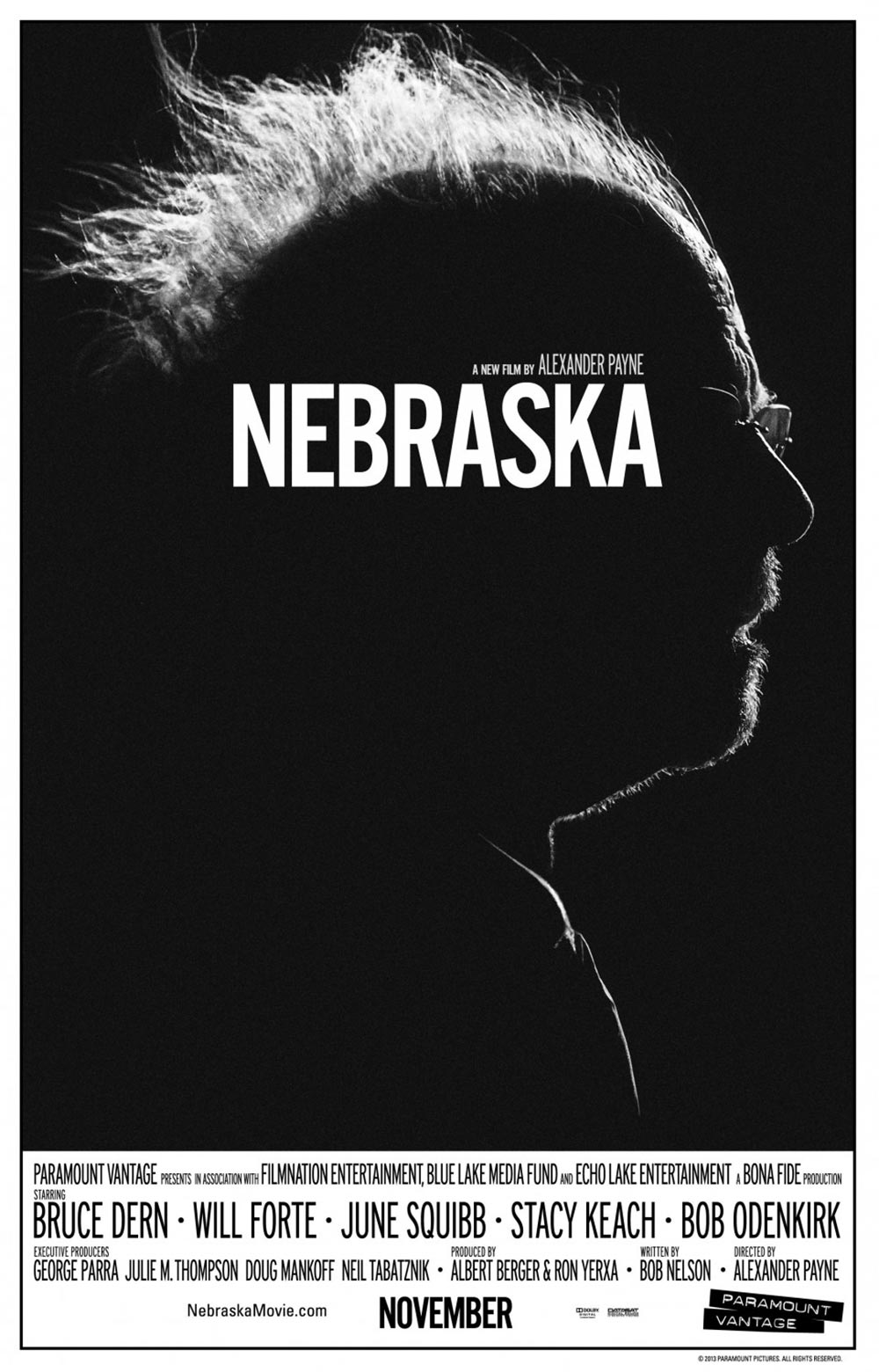
Nebraska (2013)

★★★★

Director: Alexander Payne

Release Date: December 6th, 2013 (UK); January 24th, 2014 (US)

Genre: Adventure; Drama

Starring: Bruce Dern, Will Forte, June Squibb

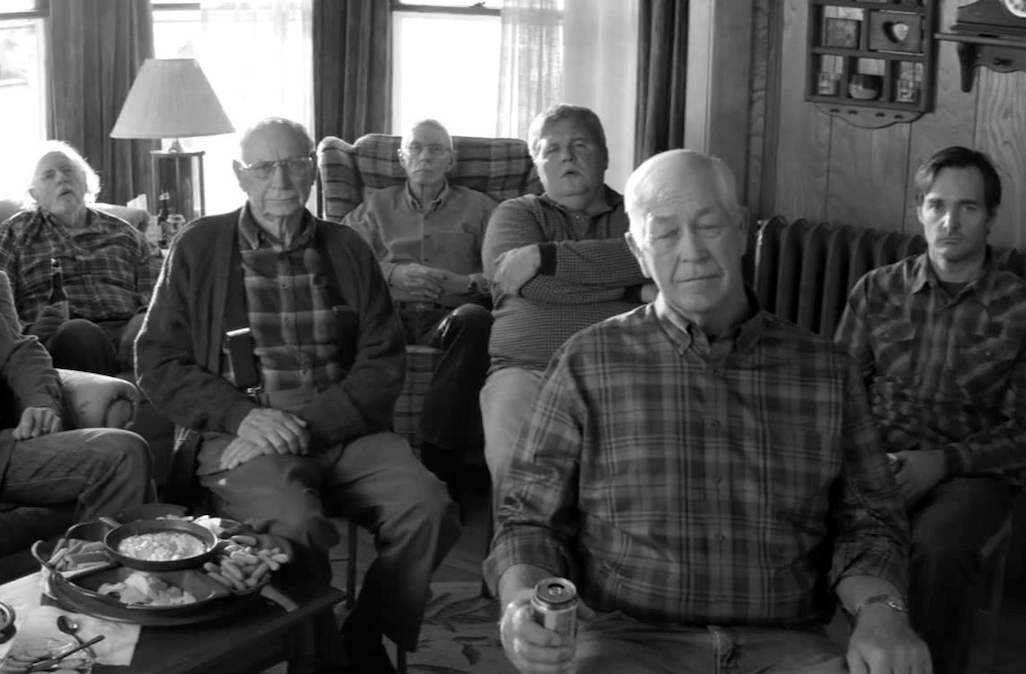
Alexander Payne truly has a knack for relaying the road story on screen. You need more than an echelon of soul, characters whose individual hearts collectively beat in time with the narrative, and a narrative that quips comically, evolves raucously and affirms genuinely. In Sideways, he created a cinematic Everest, a pinnacle that will require something pretty spectacular to reach. And although Nebraska — Payne’s latest venture into the genre that sees characters finding their way around town before finding themselves — doesn’t quite reach the Sideways summit, it’s still a comforting, humorous and reminiscing ride.

Absolutely dead-cert he’s stumbled upon a one million dollar sweepstakes letter, getting to Lincoln, Nebraska is the first, last and only thing on Woody Grant’s (Bruce Dern) torpedoing mind. If it weren’t for highway patrol, he’d have walked there. His end goal momentarily scuppered by the confines of a police station and a sigh-fully approaching son, Woody mentally prepares a case for action. Because in his eyes, there’s a mound of cash crying out to him at the end of a Nebraskan road. Son David (Will Forte) believes the letter is a scam, and initially denounces Woody’s nonsensical intentions. However, after a number of persistence-driven incidents, David agrees to chauffeur his father towards the elder’s prescribed destination; probably not out of curiosity, rather, in order to spend time with his ageing old man.

From its elegant cinematography to a perfectly poised story, Nebraska evokes a sense of accomplishment and craftsmanship. Of course, the road-trip mantra will always centre on character study, and it’s no different here. However to not acknowledge the technical prowess on display would be doing the film a disservice. The black-and-white scape works both as a visual appeasement and as a narrative cog, as it represents not only the blunt tone, but also Woody’s depreciating mind and somewhat selfish outlook. In composing a curtain of sound, Mark Orton infuses proceedings with a Wild West twang, harking connotations of the primitive western ‘every man for themselves’ adage. Technically, the film is better than proficient. It is wholly engaging.

Having communicated the industrial superlatives, I ought to focus on the film as a depiction of characters, because without doubt Nebraska is about people and family and relationships. Those, and the subsequent pile of complex baggage associated with such humanistic tendencies. Although Woody isn’t the most amiable chap — his monetary determination prevails above all else — the viewer still sympathises with him to the point where you are subliminally rooting for the lead to walk away with a heap of cash, if only to see him smile. Bruce Dern embodies the retired Woody in all his stout manliness (“I served my country, I paid my taxes”), a portrayal that in many other hands would sway towards generic, yet Dern emits realism. But he’s also frail and his exuberance is quenched before it really gets going, demanding many a refuelling tavern trip.

Will Forte is the caring son David, who stands by his father through thick and thin. Forte must act as a sufficient bumper against all of Woody’s grouchy impulses, a challenging task if there ever was. The duo are essentially a two-man act, strained as a pairing but valiant against any external threat (much like Miles and Jack in Sideways). Enter June Squibb as mother Kate, the experienced firecracker of the family, whose hilarious opening statement sets the tone for her appearance: “You dumb cluck!” The withered status of Kate and Woody’s relationship is prevalent throughout, but it’s a natural abrasion brought on through years of being together, rather than simply a clash of personalities. Squibb impeccably channels her character’s outspoken demeanour into one of protection over Woody.

Bob Nelson’s screenplay is terrific, and Alexander Payne coats an affirming lesson with crude comedy. As father and son settle down at a family gathering alongside a ramshackle troupe of wordless Woodys and ditsy Davids, we watch that familiar social awkwardness at its most humorous. Cousins Cole and Bart insist on mundane car conversations, but at least someone is trying to cover over the cracks of silence. “Cole here did some jail”… maybe silence was the way to go after all. And it’s that tonal take-no-prisoners style that the film thrives on. Yet, there is a dramatic strand running throughout, one that takes its subject matter seriously. Woody is old. His senses are dwindling; he walks along motorways and unwittingly unveils his perceived monetary gain to strangers and enemies. This melancholic exercise on advancing years and losing oneself is relatable — everybody gets old, and many of us have spent time with elderly loved ones. Whilst Woody’s millionaire claims are momentarily amusing, they’re also sad in reflection as we see judgement fail him. At one point, you question Woody’s actual intentions: to chase a false dream, or to live and relive a reminiscent present? For David, the road-trip is a touching venture of discovery about the wholesome life endured by his father, a man you don’t get the impression David knows all that well, despite their familial ties.

Nebraska is another successful excursion for its director. Suitable in its simplicity and subtle in its sensitivity, the film is spearheaded by three admirably relatable performances. At the end of it all, Payne reflects on trust, on bonding, and on seizing the moment. It’s nothing groundbreaking, but it is, to quote Woody himself, “Pretty good”.

Sixteen Candles (1984)

★★★★

Director: John Hughes

Release Date: May 4th, 1984 (US)

Genre: Comedy; Romance

Starring: Molly Ringwald, Anthony Michael Hall, Michael Schoeffling

John Hughes got it. The teenage ‘life, the universe and everything else is against me’ phenomena that grabs hold in those years of early adolescence. Hughes captured it, twisted it, humourised it, but never demonised it. In a society which often bemoans the pre-adult demographic, where an internet driven social media age embarks primarily on straining relationships between old and young, films such as The Breakfast Club, Ferris Bueller’s Day Off and Sixteen Candles hold even more reverence. There’s no cynicism here, only joyfully glum appreciation. Of life lessons and abridged maturity. John Hughes reminds us that teenage years are not tepid, far from it, and that teenagers are not turbulent. Most of all, he reminds us to laugh and to cherish a generous time lived in all our lives.

Waking up on the morning of her 16th birthday, Sam (Molly Ringwald) is frustrated by the lack of overnight bodily development. Exacerbating matters, her entire family are too caught up in the hysteria of her sister’s impending wedding that Sam’s landmark day of celebration has been shunned far from the forefront of any of their minds. School treats her with the same apparent disinterest too; Sam only has eyes for senior student Jake Ryan (Michael Schoeffling) who she believes is unaware of her own existence. Enter witty, geeky Ted (Anthony Michael Hall) and let the chaotic, humorous and well-meaning love maze commence.

Sixteen Candles was John Hughes’ first outing in the director’s chair, so it would be conceivable to forgive a sprinkling of over-eagerness on his part, or even stout rigidity. Forget that. Hughes sinks the nostalgic, adolescent lobe of his creativity-centre into the plundering paranoia of teenage high school life and comes up with a thriving, fun piece of filmmaking that doesn’t take itself too seriously — which at the end of the day is kind of the point considering his characters do take ultra-seriously a time in their lives that should be driven by inhibition. Subsequently though, importantly, it never boils over into caricature territory. You always get the feeling that these people on screen could be real people in real life, and that their self-aware predicaments are similarly scattered throughout schools all over the empirical world. In this sense, there’s an intrinsic personal attraction present, one that encapsulates the viewer because he or she knows that they have been where Sam’s emotions currently reside, or that they are even still living there.

And the thing is, as Sam worries over-dramatically about a missing sex quiz, or her inert awkwardness at the mercy of the love of her life Jake, it’s obvious that none of this really matters: “You know? Neither one of us is gonna die if it doesn’t happen for us.” This epitomises the opposite mentality which is prevalent throughout the film, an important one yes, but not a mentality based on set-in-stone principles. High-school life exists in a strange, disconnected bubble separated from the rest of civilisation. From when the bell rings at nine o’clock until it resounds six or seven hours later, you’re only focused on inter-class gossip or what’s on the lunch menu, far removed of the outside world. Hughes generates this introverted atmosphere exceedingly well, and mirrors it with the unimportant struggles of the teenager. It’s because Sam’s misgivings are heralded by herself and her peers as the worst problems (or best solutions) on earth that a natural hilarity ensues.

Central to many of the funny goings-on is Anthony Michael Hall, whose freshman Ted is fuelled by a bet made amongst his pals prompting a need to sleep with Sam. Ted’s youthful insecurities are often hidden under a surface sheen of semi-arrogance and energy. He’s a bit of a chancer, not least when making a second move on his target merely moments after being forgiven for the first eager attempt. Hall’s portrayal of this youngster unsure of his convictions is often witty as he snaps back many of the funniest lines. His persistence in the face of staunch rebuttals — mainly from Molly Ringwald’s Sam — is chuckle-laden, and the pair share a flourishing dynamic. Ringwald has much of the film resting on her premature shoulders as her various plots and non-successes are the basis of the amusing proceedings, and she does a tremendous job as the blissfully suffering lead. Both Hall and Ringwald would go on to work more as part of Hughes’ teenage parable series of movies, and their respective primitive deliveries here, plumb, full of comedy and wholehearted, offer only a few reasons why.

Perhaps when all is said and done there’s really not much difference between the material struggles of a teenage-existence and adulthood. Alcohol-drowned parties remain alcohol-drowned parties no matter how old you get. Relationships are still relationships until the knot has been tied. Sixteen Candles alludes to this continuity, embodied by way of the utterly chaotic preparation and execution of Sam’s sister’s wedding — a tumultuous pandemonium succeeded by no other. There’s no biased cynicism towards an age or demographic superfluous in the grand scheme of things because in the grand scheme of things, the trials of adulthood can be just as nonsensical and anarchic, yet sweet in nature (look out for a wedding commandeered by muscle-relaxant) as those teenage years.

Sixteen Candles is the first in a line of emotive comedies that paved the way for films from the Judd Apatow’s and Richard Linklater’s of this world. It’s not difficult to comprehend why John Hughes movies (his early work in particular) are so affectionately regarded these days. Relatable characters, charming mindfulness and funny screenplays are just three of the key proponents for present-day recognition, and are certainly three boastful characteristics on display here.

Airplane! (1980)

★★★★★

Directors: Jim Abrahams, David Zucker and Jerry Zucker

Release Date: July 2nd, 1980 (US)

Genre: Comedy

Starring: Robert Hays, Julie Hagerty, Leslie Nielsen, Peter Graves

These days, any utterance of the term ‘spoof movie’ would have the receptor sprinting for the closest exit. Films –  and I use that term extremely lightly –  including, and of similar ilk to, Epic Movie and Meet the Spartans are really just compilations of over-wrought, unfunny and ironic copy-cat segments that would have no place in a bargain bucket, never mind a cinema screen. However it wasn’t always that way. Released over 30 years ago, Airplane! may have unwittingly paved the way for the cackle of uncackles we are now invariably subject to. The only difference being: Airplane! is exceedingly funny, witty and actually pretty smartly written.

Unable to sufficiently maintain a job after becoming stricken by a fear of flying, former fighter pilot Ted Striker (Robert Hays) now sees his relationship with girlfriend and flight attendant Elaine (Julie Hagerty) crumbling before him. In an act of desperation, Ted reluctantly dashes onto a plane ready for take-off, bidding to conquer his anxieties and secure his romance. Only, Ted’s lofty worries are the least he has to juggle aboard a plane journey where many of the passengers — and all of the pilots — are hit by a nasty bout of food poisoning. Never trust a fish, especially a dead one. Those slippery creatures.

From an introduction sprinkled with a dose of pointed aircraft tails swimming amongst the clouds à la Jaws, which certainly isn’t brooding as much as it is comical, Airplane! has you in the palm of its hands. Or the metal of its wings, even. The film is plastered with on-point, unrelenting one-liners that hit you maybe a little more than you’d like, yet somehow an inherent strength to laugh succeeds against aching cheekbones. The quick-fire jokes are a tad corny and rarely over-complicated, yet they always command the viewer’s full attention in order to be entirely understood. In this sense, it’s a bout of hats off to the writers (and directors) Jim Abrahams, David Zucker and Jerry Zucker, who seem to accept and revel in the nature of the spoof-genre without committing comedy homicide — that would entail generic and tedious gags.

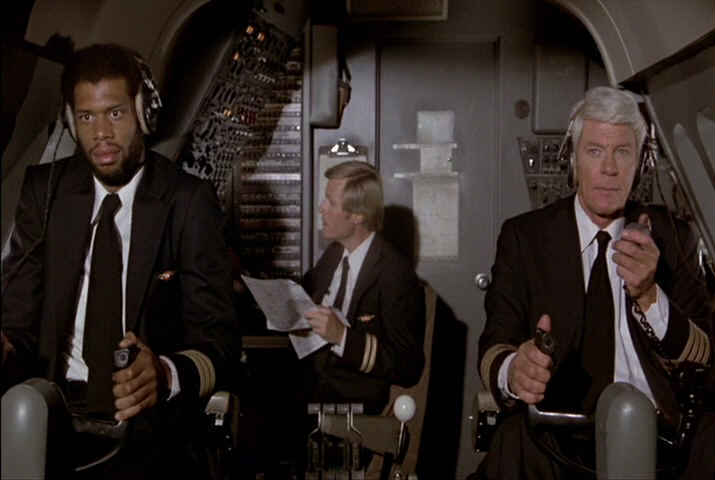
Even on occasions where the obvious, in-your-face type of musings refrain from divulging organic humour in themselves, it’s the deadpan delivery that breeds and then elevates the comedy (“Smoking or non-smoking?”). As a collective troupe the actors are funny; in particular Leslie Nielsen and Robert Stark bristle with pun-filled laughter by way of their impassive and controlling demeanours respectively. Patrick Kennedy does an exceptional job editing as he allows each of the jokes to soak in all their snappiness, ultimately enabling the film to find an uproarious rhythm in the process. Given the importance of speed and momentum in any laugh generation mechanism, without Kennedy’s editing efforts there’s a good chance Airplane! would enter a tailspin.

Although the dreary wisecracks aren’t there, the noticeably familiar characters are on display because they simply have to be in a spoof offering. The nature of parody — and to a degree satirical output — is developing an immediately self-referential atmosphere and, in this case, flying with it. Have your caricature checklist at the ready: we’ve got the popular hostess; an ill but ultra-polite child; the troubled hero trying to win back his partner; two stuck-up kids; the African-American pair with subtitles; an un-oblivious captain; the paranoid wife abroad; an emotionless doctor; the failing basketball star trying to stay out of the limelight; an overworked agent. Sore hand yet? The list goes on, but that’s the point. We hear talkies era music during romantic endeavours, mellow tones as part of war-time recollections. It’s all recognisable and that’s absolutely a slice of the humour cake.

Airplane! is expertly constructed, squeezing a bountiful amount of jokes into a relatively short run-time without ever feeling crammed. Part of the traditional hit or miss genre, the film punctures a hole in the proverbial bullseye a great deal more often than it misses. Many an expert of funny would regularly see fit to claim that the key to comedy is perfect timing. Well, this is never late.

Looks like I picked the right week to watch a spoof movie.