Everest (2015)

★★★★

Everest PosterDirector: Baltasar Kormákur

Release Date: September 18th, 2015 (UK); September 25th, 2015 (US)

Genre: Adventure; Drama; Thriller

Starring: Jason Clarke, Josh Brolin, Jake Gyllenhaal, Keira Knightley, Emily Watson

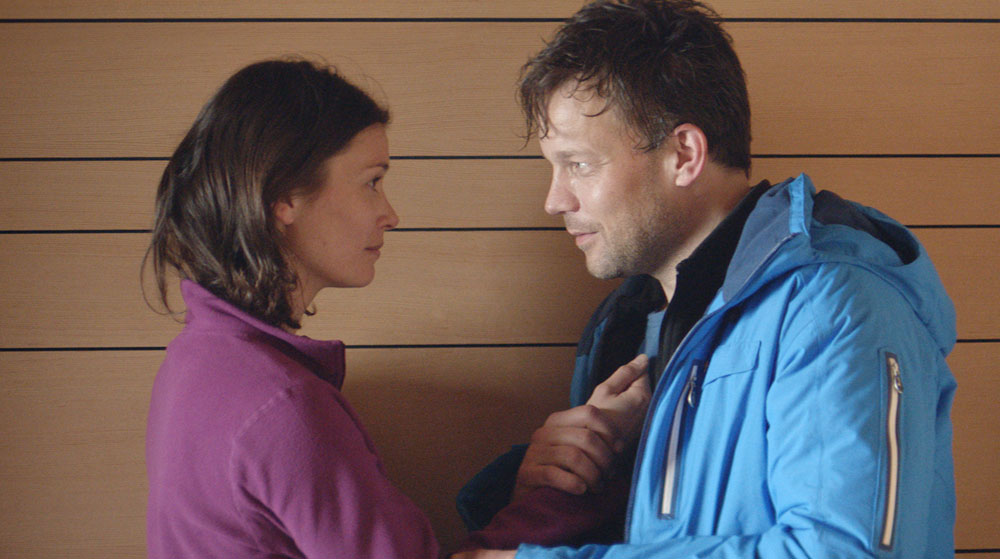
“One in four died.” That’s the first thing we see on screen, a solitary line in a block of informative dialogue detailing the worrisome history of Everest expeditions. It is our dramatic lever, pulled at the inception just in case we’re not already aware of Mount Everest’s indiscriminate harshness. Throughout, numerous avalanches interrupt our viewing but unlike the false threat exhumed from similar-looking shots in the alpine-set Force Majeure, the danger here is very real.

William Nicholson and Simon Beaufoy’s screenplay (which may or may not be based on John Krakauer’s Into Thin Airdraw your own conclusions) sheds light and dark on the late-90s mountaineering disaster involving rival trekking companies. Going in bereft of any knowledge probably isn’t much of an advantage; there is a moment at around the forty minute mark that essentially earmarks the film’s ending. It is one of those disaster movie clichés — Titanic’s “You jump, I jump”; any conversation between Bruce Willis and Ben Affleck in Armageddon — that acts as a sentimental forewarning.

Admirably, it is the only instance of pure sentimentality in a film more concerned with truth. Everest is cold, at times freezing, but authentic and gripping and no less emotionally involving as a result. Realising the dangers of a crowded field, opposing expedition leaders Rob Hall (Jason Clarke) and Scott Fischer (Jake Gyllenhaal) — the former is excellent, relaying an exhausting and exhaustive performance — opt to team up during a simple scene bound by numerous layers: it shows two experienced climbers anxiously bowing at the mercy of the mountain, but does so in a manner that provides one of the film’s only junctures of light relief.

Fischer asks who will lead when they near the summit, and both men laugh. There is clarity in his words, an assertion that the need to achieve will always usurp the right to survive. Or, if you like, it’s just a rare chance to giggle. Baltasar Kormákur hones in on the competition between colleagues, a smart move that affords these men and women who are otherwise embroiled in an unrelatable escapade a degree of accessibility.

Invoked from the get-go, this competitive edge mirrors a layer of unsettled snow poised to subside at any moment. At the beginning the banter is weightless — it’s there, but the sly digs between Josh Brolin’s Texas-bred Beck Weathers and the aforementioned journalist John Krakauer carry an ominous undercurrent. The film’s atmosphere is driven by poorly disguised trepidation, and you just know something has to give. “There is competition between every person on this mountain,” says the hippie-esque Fischer, and it is palpable. But any interplay between the climbers is superfluous and Fischer acknowledges this shortly thereafter, declaring the mountain will inevitably have the last word.

In a sense Everest is about the pull of an unavoidable thrill. “Why?” asks Krakauer as he documents the climbers’ journey. “Because it’s there,” is the comically-inclined universal reply, but it is also the best reply the mountaineers can muster. Nobody really has a solid answer — postman Doug Hansen (John Hawkes) talks about his desire to be the everyman who conquered the monster and achieved the impossible. We’re left to ponder whether the reward eclipses the risk, a contemplation that becomes increasingly one-sided the more Hall’s pregnant wife (a game Keira Knightley) appears. Various other members of the group give their reasons: Yasuko Namba (Naoko Mori) references her need to complete the Seven Summits, having already commandeered the other six.

But each response to Krakauer is admonished with persiflage. It is as if the alpinists know the risk is too great, and they’ve simply given in to the thrill. An unfortunate offshoot of the film’s competition element is a spot about the completion of a celebratory magazine article. Emily Watson, who graciously adds oomph to her fairly thankless role as a glorified receptionist (the actors are very good en masse in generally underfed roles), is stressed about her company receiving a bad review in the midst of the encumbering drama, a whim that feels tonally fake.

Death is an inevitability and when it occurs it is visceral in a non-violent way. Shades of grey don’t exist; the landscape yields either white tundras or black crevasses, and as such when people pass they do so bluntly. Analysing the effectiveness of a death scene in this instance feels egregious and unnecessary, particularly given the victims are real people, but Kormákur does handle said moments with candour and, crucially, without mawkishness. Mass amounts of clothing and equipment make it difficult to differentiate between those on screen, reinforcing the notion that on Everest individuals are merely pawns, merely statistics.

Kormákur’s direction is adroit initially, and it gets better as things get worse. We often see the misty, black peak looming over base camp like a plague. Oxygen masks quickly resemble gas masks. Each second the climbers spend plodding up slopes represents an ounce of life extracted from their bodies. This dangerous aura is complemented by Salvatore Totino’s visual flair — the snow-covered ridges could easily pass for one of The Two Towers’ awe-inspiring New Zealand shots.

Enhanced by booming screening room speakers (Everest is definitely a cinema movie), the sound design frequently jabs at your solar plexus. You instinctively breathe a little more vociferously when things start to go wrong and the outing’s audio power does nothing to ease the tension. There is one tranquil shot that is particularly wonderful; at twilight, camped in the eye of the storm, the camera pans calmly around Hall and co. as they gaze longingly at their lofty goal.

Everest stays true to its subjects in a way that is both compelling and respectful, even if some individuals don’t receive the attention they likely should due to the constraints posed by an excessively large cast. By the end, as the credits paid tribute to many of those involved, I found myself in a morose state of sadness, agitation and admiration. For a ‘big disaster movie’, that’s pretty good going.

Everest

Images credit: IMP Awards, Collider

Images copyright (©): Universal Pictures

Prisoners (2013)

★★★★

Prisoners PosterDirector: Denis Villeneuve

Release Date: September 20th, 2013 (US); September 27th, 2013 (UK)

Genre: Crime; Drama; Mystery

Starring: Jake Gyllenhaal, Hugh Jackman

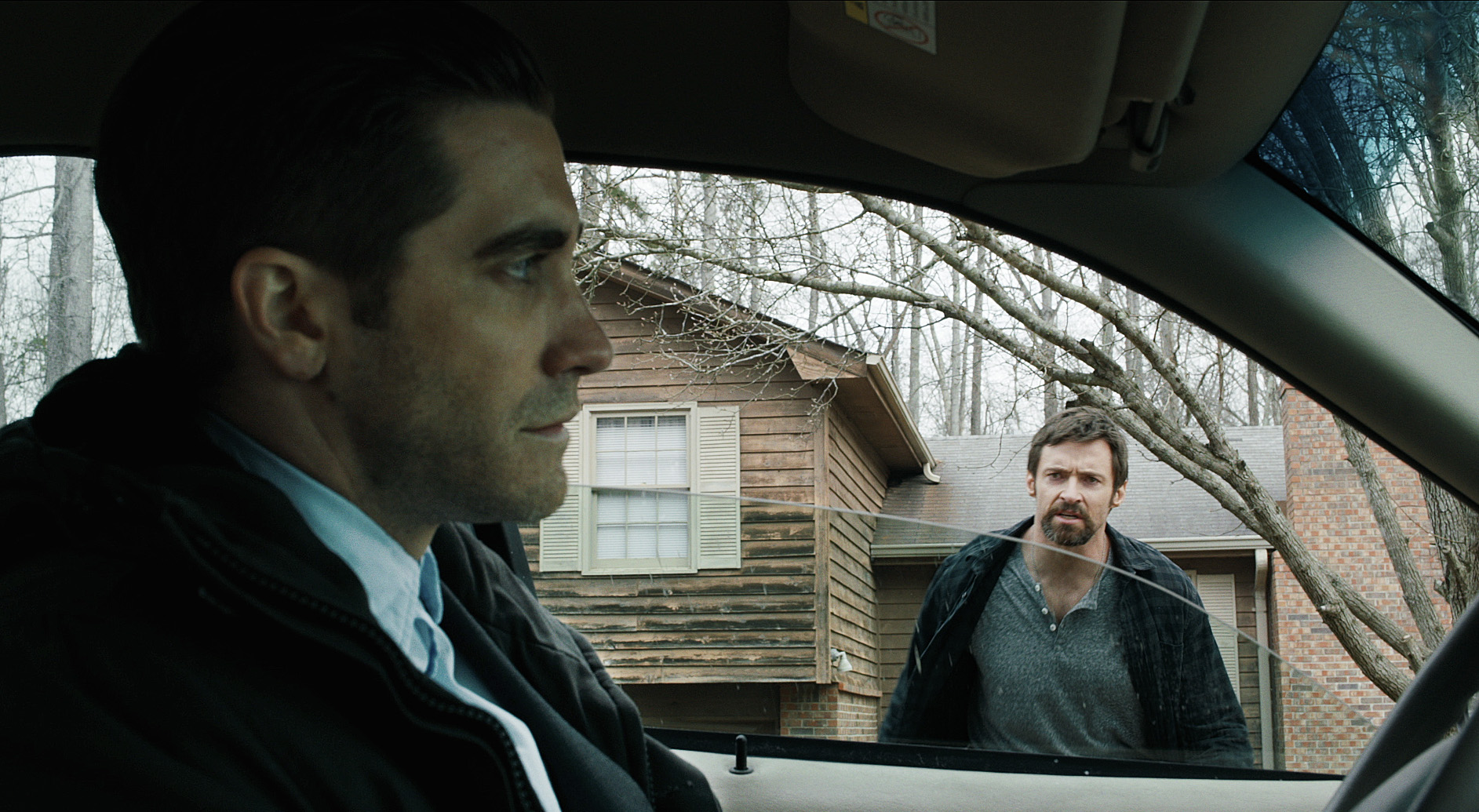
There is a great deal of religious allegory laced throughout Prisoners, Denis Villeneuve’s morbid entry in the child abduction genre (when wouldn’t morbidity factor?). The first voice we hear belongs to Keller Dover, played by Hugh Jackman, who relays the Lord’s Prayer “Our Father” with solemn gruff. Shortly thereafter, the dad of two converses with his son about the need to be prepared for impending natural disasters — floods, subsequent humanitarian crises etc. These early religious influxes glare from the screen, but as the film progresses it is driven by a more subtle assertion: loss of children equals loss of faith, and loss humanity.

Prisoners isn’t really about religion at all. It’s about our mundane and/or extreme reactions to potential tragedy. We follow two men, broadly speaking, each fulfilling his perceived duty in the wake of a double disappearance. Keller Dover is one of those men, whose young daughter and friend go missing on Thanksgiving. Perennial show-stealer Jake Gyllenhaal is the other man, the detective on the case. Aaron Guzikowski’s screenplay awards ample development time to the pair of them; just when you think the film is erring too much on one side of the story, it shifts to the other perspective.

Gyllenhaal’s Loki relays that sort of downtrodden look, one that suggests he may be fed up with his role in the dank Pennsylvania logging town. He relentlessly blinks as if forcing himself to stay awake. We learn from the source that Loki has solved every case he’s ever been assigned, and you get the sense that is probably because he routinely swap sleep for work. Keller, likewise, bears a dishevelled appearance most of the time, his gruff beard and hardened exterior perfectly matching the woody setting. Even Keller’s chequered shirt is dark grey and army green.

When the pair first interact following the girls’ disappearance, Jackman is brilliantly emotional; enraged to no end, with bloodshot eyes and a reckless aura that serves as a basis for what is to come. On the other hand Gyllenhaal evokes detachment, as if Loki has already been down this horrid route before. To him, it seems, what happens next is a formality. It is a fascinating — if not entirely surprising — clash that continues to evolve without genericism.

Roger Deakins’ use of a woozy grey colour palette encourages the dour and desolate mood. Cinematographer Deakins is always an ever-present during awards season (he was nominated for his work here, and has been on the final ballot for his numerous efforts alongside the Coen brothers) but, in one of the circuit’s most egregious ongoing shams, the camera master has never won an Oscar. He sets the scene ominously in Prisoners: when it rains, it really does pour.

For around an hour Deakins meticulously cuts away from any violence, allowing our imagination to run wild. The first instance of visceral brutality comes via the fists of dad Keller, flipping the morality of good and bad. Terrence Howard plays the father of the other lost girl, his ethics wavering but without as much force. Keller arrives at barbarity through his own prejudice — he believes he has the culprit, but the law disagrees. To Keller, his psyche crumbling under the weight of anguish and guilt, the law has become sterile and justice is best served cold.

The film challenges us to consider his predicament, and whether or not his actions are justified. That Hollywood babyface Hugh Jackman is the one inverting right and wrong only serves to complicate matters further. Even the local priest is a drunk, and worse. The reaction of Keller’s wife, mother to one of the missing girls, is a little harder to swallow. Played well by Maria Bello, she blames her husband for what has happened. Though this might be a truthful and raw circumstantial response, there is a disconnect between the overstretched attempt at melodramatic realism and the more grounded troubled realism surrounding Keller.

Villeneuve’s film is also about systematic failure. It calls into question how two girls, both of whom should be safe in their own neighbourhood, can go missing without a trace. The fact that Loki always seems to be fatigued suggests that he is overworked. You applaud his tenacity and sympathise with his increasing hopelessness — especially as he juggles the intense job with spit-fire tirades from the victims’ families — but you also lament the inadequate law set up. Keller is unable to actively assist the ongoing investigation due to legalities, the structure keeping him and his wife at arm’s length.

The movie reflects Zodiac’s overbearing misery (and also its literal puzzlement), and Gyllenhaal’s appearance also recounts his Nightcrawler aesthetic — post-gaunt, perhaps. He has to be restrained as the detective, but also as the co-star. Jackman, quite obviously, is the one doing most of the emoting. He gives a stunted powerhouse performance, a broken one, a trembling one. “You look very tired.” And he is. Paul Dano plays one of the primary suspects and although the nature of his character generally renders him silent, his performance manages to be one of internal terror and external creep.

“No-one took them. Nothing happened. They’re just gone,” says one women dejectedly. And that’s the mantra by which the film lives. It keeps us guessing to the point where we might never find out what happened. This slow burning premise echoes of the first season of The Killing; very thorough, manoeuvring this way and that, affording its audience time to think. The pace is slow and film is long at two and a half hours, but the pace would be slow for the families involved. A sudden burst of energy towards the conclusion ushers in an incredibly well-executed car sequence.

Prisoners reconstructs the pillars of humanness and purity. What would we do in similar circumstances? Having initially caught his suspect with fuzzily correct intentions, doubt soon creeps into Keller’s mind. Yet he never releases his captive. As time wears on, it becomes apparent that Keller is only disseminating pain in order to serve his own emptiness — it’s a temporary stop-gap that might, somehow, eventually lead to a permanent solution.

Prisoners - Gyllenhaal & Jackman

Images credit: IMP Awards, Collider

Images copyright: Warner Bros. Pictures

Metropolis (1927)

★★★★★

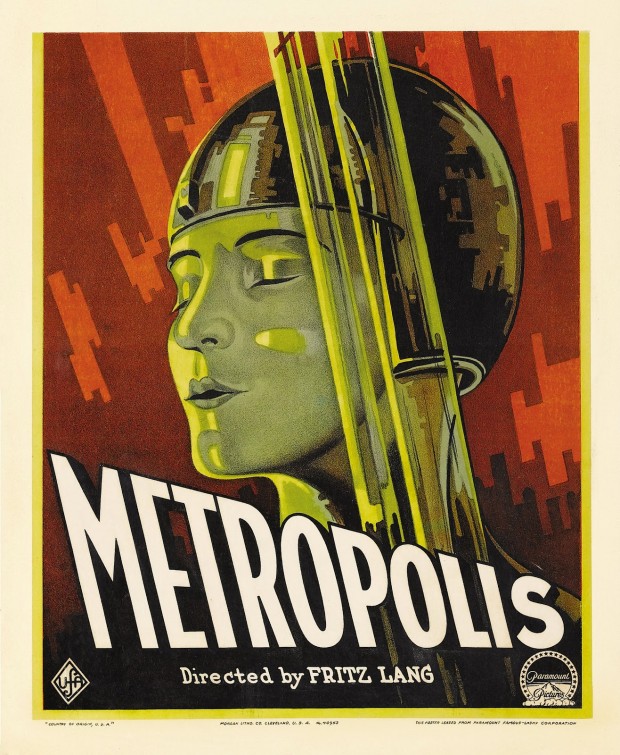
Metropolis PosterDirector: Fritz Lang

Release Date: March 13th, 1927 (US)

Genre: Drama; Science fiction

Starring: Gustav Fröhlich, Brigitte Helm, Rudolf Klein-Rogge, Alfred Abel

Lost for 80 years until its miraculous 2008 rediscovery in an Argentinian museum, Fritz Lang’s original version of Metropolis astonishes in both its visionary aesthetic and also its societal relevance almost a century after release. The film’s opening montage depicts brassy, metallic equipment chinking away as steam spurts out without prejudice, and it is clear from the off — the machines have taken over. Workers solemnly shuffle in and out of tunnels for their latest totalitarian inspired shift, shoulders hunched, heads drooped. “Deep below the surface lay the workers’ city,” a cue card informs us.

The ‘Club of the Sons’ lies above, hosting libraries and lecture halls and lush gardens. Inhabitants all wear bright, expensive garments that haven’t been dirtied by the plumes of ash below. They scurry around dazzling water fountains seemingly oblivious to burden, their nonchalance heightened by the fact that those doing all the hard graft underneath probably don’t see much in the way of H2O replenishment. Lang is introducing us to a clear class order, where those on the lower end of the scale are compelled to fund their loftier counterparts’ serene lifestyle.

The first literal clash of class occurs shortly thereafter: worn, muddled children seemingly escape into the land of luxury, leaving the socialites frozen in anger. Or perhaps it is fear. All except Freder (Gustav Fröhlich), offspring of the Master of Metropolis Joh Fredersen (Alfred Abel) — the latter resides in the even grander Tower of Babel, one of many religious references laced throughout. The film primarily follows Freder as he goes in search of Maria (Brigitte Helm), a young Mother Teresa-esque figure from the workers’ city.

He ventures into a world of capitalist mechanisation where everything is procedural and methodological, and where a single deviation from structure entails disaster; we see men fall, likely tragically, after a large machine providing power to the city above malfunctions. It is here that Freder realises these labourers are essentially slaves to the system, and that his father is complicit in promoting their hardships. “What if one day those in the depths rise up against you?” says son despondently to father as the film not-so-subtly anticipates events to come.

From the beginning, it is made apparent that our protagonist considers all humans to be his brothers and sisters. It could come across as forced characterisation, but Gustav Fröhlich subsequently spends two hours justifying his persona’s caring mentality through empathetic expression. Freder’s not the only aristocrat with a conscience; we also have Joh’s trusty-cum-not-so-trusty assistant Josaphat (Theodor Loos), whose job security anxieties capture in a nutshell the power his boss has over the city.

Joh’s other sidekick — you could say he is the devil to Josaphat’s angel — is known only as The Thin Man (Fritz Rasp): a slender-faced and baggy-eyed detective who is tasked with stalking Freder. He is pre-transformation Nosferatu. There is also Rotwang (Rudolf Klein-Rogge), an Einstein-like inventor who dwells in a Gothic house that looks distinctly out of place amongst the grandeur of Metropolis. At one point Rotwang ambles maniacally towards the camera, his outstretched arms poised to grapple. Werner Herzog would employ a similarly eerie shot in his interpretation of Nosferatu the Vampyre years later in 1979.

Towing frazzled hair and a forlorn gaze, the scientist reckons he can bring back his deceased ex-wife (Joh’s eventual partner and Freder’s mother) in machine form. The film plunders this intersection between life, currency and machinery for all it is worth, decrying the amalgamation of prosperity and power as something that’ll almost certainly lead to immorality. Rotwang claims nobody will be able to tell the difference between man and his Machine-Man creation. But the workers, the people, are already powerless machines.

By design silent films have a far-reaching interpretative wingspan and this can confuse viewers, or at the very least distract us from events actively playing out on screen. That is not the case here — you can translate the film as you please, and the more thematic mining you do the more fascinating it is. Thea von Harbou’s screenplay evolves into a game of pseudo-AI deception, where life’s more positive aspects (such as love) are warped and used against our central protagonist.

Even revolts, which are often stimulated by underdog collectives seeking to rise up against injustice, are inverted through artifice in Metropolis — the workers’ revolt is manufactured without their knowledge by Joh, another instance of the overseer using his influence to puppeteer society. Said uprising unveils some Titanic-esque disaster imagery involving, again, water, and you being to wonder if James Cameron was influenced by the class crisis on display here when writing his record-breaking flick.

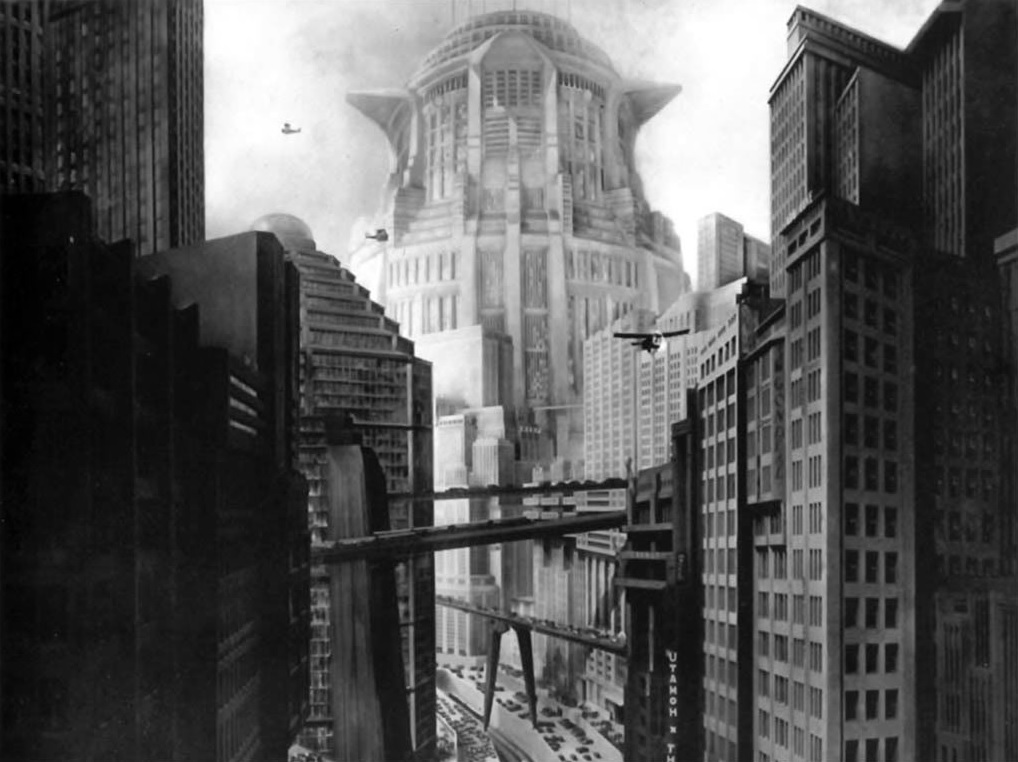
The piece’s appearance is something to behold, particularly given it is almost a century old. It is plain to see how other filmmakers were visually galvanised: Ridley Scott and Blade Runner’s neo-noir cityscape; Luc Besson and The Fifth Element’s futuristic allure; George Lucas and Star Wars’ hovercraft network. Utilising miniatures, effects master Eugen Schüfftan created an urban locale resembling New York (director Lang was inspired by the concrete jungle during a visit).

But the smaller details stand out as much as the larger ones — glowing science fiction spirals sit atop desks and hang beneath ceilings, their ascending-descending design mirroring Metropolis’ upper and lower class system. A wonderfully shot elevator scene sees Freder sink with hope gleaming from his eyes as the menacing Thin Man rises, the pair just missing each other. Silent movie performances are about body movements and facial expressions, and this sequence captures that imperative notion perhaps more than any other.

Time has afforded Metropolis even greater substance. Terrifyingly so, given its underlying message — that centralised sovereignty shouldn’t prevail — is still a widely problematic phenomenon at large in various parts of the world today. The movie is a bit long and some might find its war on capitalism too one-sided (Netflix is great after all), but this is pioneering filmmaking.

Metropolis - City

Images credit: IMP Awards, Film 110

Images copyright (©): UFA, Paramount Pictures

The Lucky Ones (2008)

★★★

The Lucky Ones PosterDirector: Neil Burger

Release Date: September 26th, 2008 (US)

Genre: Comedy; Drama; War

Starring: Rachel McAdams, Tim Robbins, Michael Peña

In the upcoming season of True Detective, Rachel McAdams will play a prickly, stoical police sheriff (or if you’re reading this after August she already has, and rather brilliantly too, right?!). That sounds like quite the departure from her character in The Lucky Ones — a soldier, tough without doubt, but whose veins pulse with good-natured naivety. Her volcanic charm is the type that could turn a long road trip into a really, really long road trip. Not here though. Not on McAdams’ watch.

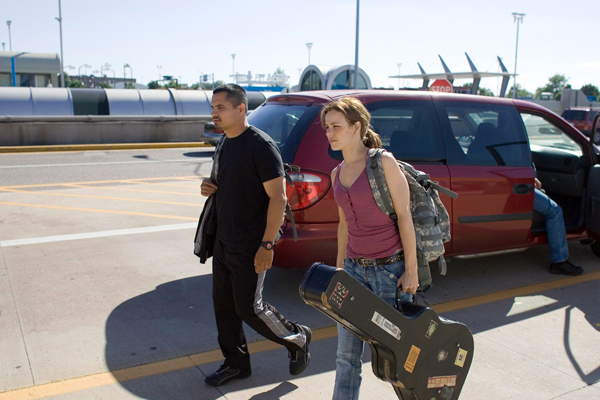
She is Private first class Colee Dunn, joined on a cross country excursion by Sergeant first class Fred Cheaver (Tim Robbins) and Staff sergeant T.K. Poole (Michael Peña). The trio meet at JFK airport having just finished their respective tours of duty, and opt to collectively hire a car since flights home are in short supply. What follows is a familiar voyage down the road movie genre, with periodic stops at comedic junctions and soul searching stations.

What this is not, is a war movie. The film has been criticised for not sufficiently addressing the complex issues of battle — but it simply isn’t a war movie. Certainly, the three main characters with whom we spent time are soldiers on leave, but that doesn’t mean the film has to ruminate about the war they’re presently separated from. Colee and company discuss it, sure. They feel the weight of its heavy baggage at times. But hey, maybe they’re just people. Two normal guys and one normal girl, each trying to reacclimatise to the real world. Struggling, often comically, sometimes painfully.

T.K. is the brash macho-type who subdues authenticity. We first see him inside a tank spouting tasteless jibes about women, before debris from an explosion renders him impotent. His lack of functionality becomes a recurring joke that eventually finds resolution in the film’s worst scene — a poorly executed tornado forces Colee and T.K. into a claustrophobic drain pipe, and it’s really cringe-worthy. Peña undercuts most of the unlikeable traits often attributed to those “macho-types” by delivering a fairly nuanced performance. At one point his character awakens suddenly in the middle of the night, clearly still troubled by the blast, and can only mutter a, “You know… sorry,” when questioned by Colee.

She is the most engaging of the three. McAdams has real presence, lighting up the screen every time she appears. Colee is the buffer between humour and emotion, her wide-eyed lack of cynicism both refreshingly authentic and solemnly disheartening. “That girl’s living in a dream world,” T.K. asserts, and it’s true. She lugs around the guitar of her close friend Randy who died on duty, aiming to return the instrument to his family in Las Vegas. Though Colee has never met them, she is driven by the hope that they’ll let her stay. She exudes so much positivity that we start to buy into her crazy plan. It’s the potential prize at the end of the rainbow, a treasure that differs from the materialistic hoards prevalent in other road trip movies such as O Brother, Where Art Thou? and Rat Race.

Quite the opposite is Tim Robbins’ Fred, or Cheaver, since he is the elder statesman of the group. A modest guy looking to get away from active combat, Cheaver rolls into family despair near the beginning of the journey. He is definitely the unluckiest — though the other two aren’t exactly wearing rabbit’s feet — and Robbins succinctly captures this turmoil. There are similarities to be drawn with Sam Jaeger’s Take Me Home as far as character relationships go, where petty squabbles inevitably evolve into admiration and understanding.

That film’s aimless quality is also apparent — the men constantly say they “don’t have time” to indulge Colee’s sight-seeing desires, but they’re not actually going anywhere. In a way they have all the time in the world, but the guys are too obsessed with achieving an end goal that probably doesn’t actually exist. Though their plot construction could be questioned, director Neil Burger (Limitless, Divergent) and co-writer Dirk Wittenborn’s character creation is effective. Just like in the army, the trio grow to rely upon each other — monetarily, emotionally, and intellectually — a conclusion arrived at with sincerity.

To the film’s credit it doesn’t spend two hours achingly debating the woes war. However, it opts not to ignore the pitfalls either. America becomes part of a clinical world that the army-goers aren’t used to (“You’re at a disadvantage if you don’t master your computer skills”). Bystanders and acquaintances constantly thank them for their efforts abroad, but it’s all platitudinal. Yet it doesn’t feel like The Lucky Ones is trying to emulate the rich verve of something like a Sideways. When the movie threatens too much seriousness it quickly scrambles back under its light-hearted comfort blanket, embodied in a scene where life reflections are interrupted by a penis balloon joke.

Nibbles of narrative stupidity are glibly accepted as a given by the screenwriters. A customer service employee grants the group a car due to their army credentials, even though the only vehicle remaining belongs to the employee’s airport boss. Problems that arise often bear very simple solutions, these problems too easily erected in the first place (Cheaver’s son gets accepted into Stanford University but needs to cough up $20,000 in tuition fees). The film chooses to manoeuvre its way around simple answers through comedy: Randy’s guitar would solve Cheaver’s monetary problems, but Colee amusingly decides to cry rather than oblige.

Though the actual trip part of The Lucky Ones does run into a few roadblocks — it’s not as funny as it should be, nor as emotionally-involving — the characters behind the wheel are wholly accommodating. Besides, who doesn’t want to watch a movie where Rachel McAdams plays an impulsive Southerner with more charm in one glance than a machine gun has bullets?

The Lucky Ones - McAdams & Pena

Images credit: IMP Awards, Collider

Images copyright (©): Lionsgate, Roadside Attractions

Girlhood (2015)

★★★★★

Girlhood PosterDirector: Céline Sciamma

Release Date: October 22nd, 2014 (France); May 8th, 2015 (UK)

Genre: Drama

Starring: Karidja Touré, Assa Sylla, Lindsay Karamoh, Mariétou Touré

Any filmmakers looking to edge themselves into the complimentary critical limelight next year might want to consider serving up a compelling human drama tinged with humour and realism, named something-hood. The approach worked for Richard Linklater and it has worked again here, this time for Céline Sciamma whose film about a young woman’s life after education is arguably the best of 2015 thus far.

The titular girl is Marieme, or Vic, played with exquisite poise by Karidja Touré. Caring for her two younger sisters while her mother works evenings has hampered Marieme’s success in school, and she’s unable to repeat classes for a third year running. As such she strives to take control of her present, believing her future is too far beyond reach. A group of girls, probably slightly older, invite Marieme to join their gang and the conflicted teen accepts.

This is very simple cinema. From a technical standpoint there are no obvious tricks, no special effects, because there is no need. Girlhood is injected instead with dramatic heft and humanistic depth. It is better than the director’s first voyage into the challenges of female maturity, Water Lilies, which does relay some raw authenticity but is ultimately a touch one dimensional. Here, we journey through the many different and very real experiences of burgeoning adulthood.

For one, Girlhood is braver than Sciamma’s debut film, an attribute highlighted by Marieme’s decision to join a gang from the get-go. Instantly she finds herself surrounded by three girls — Lady, Adiatou and Fily — who aren’t the most affable people. We’re certainly not drawn to them; when the invitation to join is presented to Marieme, you get the urge to reach through the screen and point her in another direction. The group don’t necessarily go looking for trouble, but when it lands on their doorstep clearer heads often fail to prevail.

Yet through deft writing and affecting acting, we feel ourselves rooting for Lady et al. The girls combat racial profiling with intimidation, and then erupt in a fit of giggles. They are relatable and genuine. Sciamma, who also penned the screenplay, makes it known that these characters have a great deal of learning to do. And they do learn. We see it through the eyes of Marieme, mostly, who often has to bear the brunt of her abusive older brother. But the piece doesn’t dwell on negativities — laughter and joy are frequently employed, mostly when the four females are in each other’s company.

“You have to do what you want,” says Lady. Her suggestion is misguided — she’s talking in extremes, i.e. petty theft — but entirely true. Vexed by poor grades, Marieme struggles with the anxiety of unfulfilled potential. Touré captures this internal ache with such subtlety for much of the drama, before exploding in a fit of justifiable rage over a system that has clearly failed her: “Where’s the dream? You wanna tell me where your dreams are?” she bellows at her three friends in the second of two utterly masterful scenes.

The first is like something out of Harmony Korine’s Spring Breakers, only with an added dose of reality. It sees the group collectively mime to Rihanna’s “Diamonds”, the screen tinted with an aqua fresh glare, in a hotel room rented for momentary respite from real life. The song lyrics reflect Marieme’s aspirations — those dreams she cares so much about — while also latching onto the more materialistic, idealistic psyche prominent in the minds of maturing teens (the quartet are all wearing delicate, expensive-looking dresses as they dance and sing about gemstones).

Inevitably, there are lots of peaks and troughs — from our characters squabbling affectionately and giggling the day away, to painful rejection at home. A scene where Marieme’s brother returns to their apartment in a fit of rage as she chats happily to her younger sister is incredibly well acted, Touré’s instinctive reaction almost as good as it gets from an actor (especially one in her first film). The piece touches on gender politics but never gets weighed down by it because, most of the time, to the girls their gender isn’t an issue. Other themes that arise include the paranoia of growing up, where everything feels like a competition and everybody a competitor, embodied by pre-arranged fights between gang members.

Though exceptional throughout, Girlhood arguably loses some vitality during the final act, but you get the sense that this decrease in energy is applied for a reason — it is Marieme’s worst half hour on screen, after all. The film is at its best when catching up with the four girls. Assa Sylla, Lindsay Karamoh, Mariétou Touré are each individually effective but their collective effort bulges with vigour. A game of minigolf game perfectly illustrates their infectious chemistry.

Cinematographer Crystel Fournier makes use of light and darkness, blue tints, and a rich colour palette to make the film reverberate with life despite the gravelly surroundings. Blunt gang verbiage such as “iced” and “wasted” is littered throughout, a classically un-French touch that serves to keep the gritty, urban atmosphere afloat. Electronic pulses in between scenes make up a soundtrack bearing that same psychedelic nighttime vibe as Drive.

French cinema is a go-to destination for those after simplistic dramas about people and life (Blue is the Warmest Colour similarly lit up the big screen last year). Girlhood is another that fits that mould. In a way, it is very unlike Boyhood — the perspective taken on growing up is rougher in this instance — but the two films would make a wonderful double-bill, equal in overarching message and, just about, in quality.

Girlhood - Cast

Images credit: IMP Awards, Collider

Images copyright (©): Pyramide Distribution

Begin Again (2014)

★★★★

Begin Again PosterDirector: John Carney

Release Date: July 11th, 2014 (UK & US)

Genre: Drama; Music

Starring: Keira Knightley, Mark Ruffalo

Why do they get nine out of ten of her dollars? Those are the words that spring from the mouth of Keira Knightley’s Gretta, a talented musician with a newfound shrewdness for business economics and life in general. Her question is aimed at record label producer Saul (Yasiin Bey aka Mos Def) who likely knows more about the dials on an Auto-Tune system than he does real musical verve.

But this isn’t a straightforward examination of the successes and failures of the contemporary music landscape. That is an underlying — and at times on the nose — theme, but not the film’s primary prerogative. Begin Again is more tuned into people, and how the relationships between those people unfold within a high intensity city, surrounded by an even higher intensity business.

We begin with an impressive James Corden as best friend Steve, encouraging a reluctant Gretta to get up and play one of her songs in a dingy New York City bar. She’s good, but through the murmurs and glass-smashing nobody takes much notice. Apart from Dan (Mark Ruffalo), who looks a little worse for wear. Dan, as it transpires, is a struggling record producer and former partner of the aforementioned Saul. Differing business models caused the split, a common occurrence in Dan’s life — he is also separated from his wife and bears the brunt of a friction-fuelled relationship with his daughter. Alcohol is his solution, which leads him to a dingy New York City bar.

And then we begin again, only this time our two central characters arrive imbued with backstory. The non-linear storytelling technique used early in the film is one of a few nuances implemented by director John Carney that help to maintain the freshness of what otherwise might be an occasionally dour narrative. When we first meet Gretta and Dan their individual baggage is evident, and because both Knightley and Ruffalo instantly come across empathetically, our affection greatly increases as their bad experiences are unveiled.

Dan is at odds both personally and professionally. He lives alone in a dank apartment that has probably seen more hangovers than clean bed sheets. Much to his ineffectual chagrin, his daughter Violet (Hailee Steinfeld) wears attire unsuitable for school. “Jodie Foster from Taxi Driver,” is Dan’s unsavoury description. It’s a good thing Gretta is around to interject as wardrobe advisor in between bouts of album recording.

Gretta used to be outgoing and inspired until she and ex-boyfriend Dave Kohl (Adam Levine) unceremoniously severed ties. She becomes those things again when in Dan’s company, but their partnership thankfully doesn’t venture down generic romantic channels when you get the feeling it might. Carney, who directed and wrote the screenplay, has form in the genre — he helmed the much lauded indie music-drama Once, and puts the positive expertise gained from that to use here.

Ruffalo and Knightley excel individually and collectively. Ruffalo is particularly full of off-kilter charm as the scruffy music lover trying to maintain originality in an increasingly banal industry. When the actor is in his element — quirky, unfiltered and eccentric — he is really great, and he’s in his element for the duration. In a tough role to get right, Knightley manages to be genuinely likeable. It is a characterisation that can have thankless, mopey elements, however Knightley carries Gretta with realistic ambition — her talent is never really in question, just her own personal desire to work on an album — therefore we don’t have to sit through endless hurdles of self-doubt.

That being said, from a broad perspective the film does exist in a picture perfect world. Even though Dan is no longer with his wife, terrifically portrayed by Catherine Keener, the duo still have a budding relationship (in other words, they get along more than they argue). Gretta, on the day before she is set return to England, somehow finds herself playing her own song in front of the only guy willing to take a punt on her. Despite a quip about possible rainfall, the sun also always seems to be shining. However, any potential misgivings regarding circumstance play second fiddle to engaging performances and otherwise unsentimental storytelling.

Bubbling underneath all the character drama (you could say it is the film’s bassist) is a plot about the commercialisation of the music industry. Dan is the victim of this shift away from ingenuity, a notion captured in a funny yet somewhat overtly glaring scene that sees the song scout try unsuccessfully to remove wall “art” from his record label premises. “We need vision, not gimmicks,” he bemoans having just endured an endless stream of overproduced pop demos.

As an A&R man, there is also a compelling dynamic between Dan and Gretta. In an electric conversation over drinks, we can literally see Dan squirm around on his stool as he talks about compromising in order to, “Get people in [the door] before the music can do its work.” In a way Gretta is more of a purist than he, though that might be expected given she is the artist.

The proverbial ‘bad’ side of modern music is embodied by a bizarre record exec who flaunts that cocky Bradley Cooper vibe from American Hustle. Carney does afford some leeway to the idea that music and money are worst enemies by including the horrendously named Troublegum (CeeLo Green), one of Dan’s prized discoveries who still has his back. This allows for a hilarious impromptu rap scene that probably accurately reflects how CeeLo converses in real life.

The New York setting serenades the film with helping of authenticity — while doing press for the movie, Knightley spoke of how the crew adopted a guerrilla filmmaking style when shooting in back alleys and on rooftops. The songs themselves are woody and energetic, and certainly mirror Dan’s desperation to save the spirit of music. The soundtrack isn’t as earthy as something like Inside Llewyn Davis, or even Crazy Heart, but like in those films, the songs do play a part in ensuring proceedings don’t begin to flounder.

Begin Again balances carefully developed characters and musical intermissions with a somewhat stinging appraisal of how music is produced today. Gretta simply wants to write songs and release them for anyone’s consumption. She would charge as little as a dollar for her album. By the way, you can purchase Begin Again’s year-old soundtrack for £5.99 on iTunes. Huh. At least the film itself sticks to its admirable laurels.

Begin Again - Knightley & Levine

Images credit: IMP Awards, Collider

Images copyright (©): The Weinstein Company

Force Majeure (2015)

★★★

Force Majeure PosterDirector: Ruben Östlund

Release Date: April 10th, 2015 (UK)

Genre: Drama

Starring: Johannes Bah Kuhnke, Lisa Loven Kongsli

As far as family vacations go, this is one for the ‘iffy’ pile. Force Majeure unfurls a day-by-day account of a couple’s wintry retreat to the French Alps where, as it turns out, avalanches are the least of their worries. We join Ebba (Lisa Loven Kongsli) and Tomas (Johannes Bah Kuhnke) as they ski with their two children atop vast snow ranges, surrounded by ominous looking mountains. An eerie atmosphere driven by the mechanical squawks of equipment dominates early, but it soon becomes clear that there isn’t anything conventionally disconcerting going on here.

The titular “superior force” indeed exists, but not exactly in the way you would think. Director Ruben Östlund delivers a bait-and-switch disaster piece, one entirely without action and instead built upon the perceived consequences of disaster. Had the Swede focused primarily on the drama element, Force Majeure would almost certainly be one of the year’s most suspenseful and unnerving films (it still manages to be both of those, to a lesser degree).

After a seemingly enjoyable first day, our spotlighted family sit down with other holiday-makers to enjoy an outdoor lunch. An innocuous explosion unsettles everyone and, despite Tomas’ insistence that nobody is in danger, mounds of snow begin pillaging towards the restaurant. The scene is intense, but it is the characters’ instinctive reactions to potential fatality that provides the pivot from which Östlund’s parable spins.

What we end up with thereafter is a sniping ninety minute liquidation of family life and patriarchal values, completely fuelled by this avalanche experience. It becomes an anecdotal reference point, recounted particularly by Ebba in awkward situations. Through her increasingly disturbed exterior, Lisa Loven Kongsli manages to rekindle much of the earlier scene’s tension when conversing with others. The topic is somewhat over-egged by the end of a discussion between Ebba, Tomas and two acquaintances (one of whom is Game of Thrones’ Kristofer Hivju, he in a somewhat familiar setting). It’s an unnecessarily long sequence that, resultantly, veers close to overdoing Östlund’s message. “I can’t take this seriously anymore, we’ve been going on for hours,” says one of the party. Touché.

The characters themselves are quite annoying, but they’re meant to be. Nobody exits with an outright air of self-preservation, though Ebba is clearly supposed to garner the most sympathy. Tomas, played well by Johannes Bah Kuhnke, manoeuvres from an apparently unfocused husband to a crumbling mess. Bearing tonal continuity, the various characters niggle away under your skin with the same irritation as the events unfolding around them. Wisely, screen time for the children is kept to a minimum.

Alongside this overtly sombre underbelly, Östlund opts to incorporate a satirical layer that serves only to butt helmets with the aforementioned seriousness. If you can forgive a wintry gag: it’s as if the director is trying to put on a pair of skis when he’s already wearing snowboard boots. The nudging comedy isn’t nearly as effective, instead often awkward and confused — an outpouring of emotion from Tomas seems like something that should be taken seriously, but the prevailing attempt at satire renders it somewhat amusing.

Force Majeure wanders into a tonal snowstorm on occasion: is it meant to be piercing and tough, or self-aware and playful? The accompanying subtitles are funnier than most of the attempts at humour, which is a blessing in disguise (though ultimately damning). It is worth noting a crowd-gathered-around-a-mobile scene that does successfully evade the tonal ambivalence, generating a chuckle or two.

In an attempt to bridge this gap between witty satire and ponderous drama, the film succumbs to some heavy-handed storytelling — a conversation between Ebba and her frivolous friend about the pros of an open relationship is too coincidental, then ends up going nowhere anyway. This clumsiness reaches a crescendo during the concluding moments, presenting an ending that is ridiculously on-the-nose. Any tonal reservations notwithstanding, Östlund shows throughout that he is a smart writer with interesting ideas related to perceived societal norms. Why the filmmaker choose to pen such a careless finale is baffling, as it completely undermines much of dramatic effect laid out in earlier scenes.

There is no disputing Fredrik Wenzel’s brilliantly engrossing cinematography, nor the equally impressive sound design. A sense of discomfort and discombobulation gradually grows from elements such as worrisome wooden creaks and an odd sci-fi night-scape. A Clockwork Orange is the obvious musical touchstone and Wenzel’s patient, scoping shots are certainly Kubrickian, though whether the famous director’s influence goes beyond style is up for debate.

Force Majeure is an intriguing film, perhaps on the cusp of something really biting. However, its tonal imbalance distracts a great deal from the thought-provoking drama on display. Anything the film might say about parenting, peer trust, and human instinct is left frozen by an oddly misfired ending. Much like Tomas, it seems Östlund shouldn’t have let his guard down.

Force Majeure - Lisa Loven Kongsli & Johannes Kuhnke

Images credit: IMP Awards, Collider

Images copyright (©): TriArt Film

The Grand Budapest Hotel (2014)

★★★

TGBH PosterDirector: Wes Anderson

Release Date: March 7th, 2014 (UK); March 28th, 2014 (US)

Genre: Adventure; Comedy; Drama

Starring: Ralph Fiennes, Tony Revolori

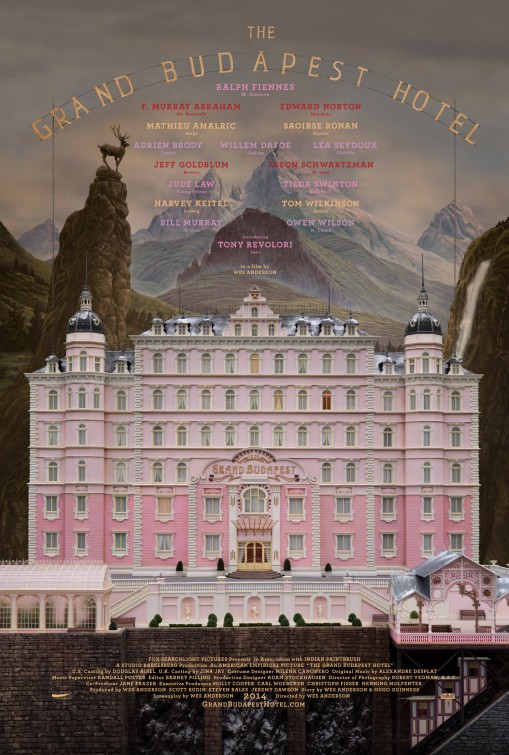
It goes without saying that Wes Anderson rustles up his films to appease a desired taste and The Grand Budapest Hotel, despite its universal recognition on the awards circuit, is another fine delicacy. That’s not a bad thing, especially if you’ve previously been a fan of Anderson’s work. Cards on the table: I haven’t seen enough to really form a stalwart opinion on the director. Moonrise Kingdom was a charm-fest and although The Grand Budapest Hotel doesn’t quite match up for my inexperienced liking, it is still a fun one hundred minutes.

This is the story of a much admired hotel concierge and his invaluable lobby boy. Not for the first time we watch a Wes Anderson flick that is tremendously well crafted, with everyone from prolific cinematographer Robert Yeoman to those in the costume department really pulling up trees to make the outing a visual feast for the audience. It rattles on without so much as a chink, fluent and meticulous in full flow. Walls are painted the right shade of blonde or pink to suit the mood at any given moment, and we watch the madness unfold as if perched on a stand measured to a ninety degree angle with the utmost precision (at one point a character fixes a lopsided painting to maintain this custom).

The piece is a real gem to look at — you could easily spend the entire run-time focused on how minor details play out in the background without as much as a glance towards the immediate plot and still be pretty satisfied. Different aspect ratios are employed at different points in the film, from the older traditional 4:3 to current traditional 1.85:1. It’s fairly enjoyable watching hotel concierge Monsieur Gustave (Ralph Fiennes) and his young partner in crime Zero (Tony Revolori) scamper around, but the purpose of the varying ratios gets somewhat lost as time passes.

There is an almost slapstick element to the film, one that totally suits its colourful, comic-ey surroundings. Every movement is overly emphasised, from running with knees aloft to plate-setting. The characters are all sky high on the eccentric scale — Tilda Swinton appears as an elderly lover and we even get Harvey Keitel in especially nutty convict form. The sheer volume of famous faces that show up, many of whom only appear for a scene or two, is a testament to Anderson’s strongly regarded reputation around acting circles, as well as the jovial atmosphere apparently present on set. This star-studded Hollywood collective helps fund a comedic tone — funniest when it breaks the mould with common insults (“that little prick!”; “who’s got the throat-slitter?”) as opposed to long-winded monologues, some of which can be a tad egregious.

And The Grand Budapest Hotel can be difficult to get into, simply because the screenplay’s ferocious nature doesn’t offer as much as a breather for the audience to adjust and then readjust. It might be a personal thing, in fact it almost certainly is, but the constant velocity can be off-putting (despite it enabling much of the sharp humour). As a viewer, you’re either strapped in and along for the ride or still weighing up the height of the roller coaster. For me it’s a bit too tall.

Much of the film’s allure emanates from the charismatic Gustave, played brilliantly by Fiennes. Fairly short of previous comedy chops — he was part of In Bruges, though his performance in the Martin McDonagh piece was far darker — Fiennes is quite the surprise here. He gets the funniest gags (“you know the drill then? Zip it”) and the actor plays the popular Gustave with an amusing air of receptive non-discrimination; he engages with everyone equally, from jail mates to lobby boys to militant inspectors.

Tony Revolori is a fine assistant to Fiennes on screen, and the two strike up quite the odd chemistry. Members of Anderson’s large cast move in and out of shot as if through a revolving door — Edward Norton, Bill Murray, Saoirse Ronan, Adrien Brody, Willem Dafoe, Léa Seydoux all show face, to name but a few. The film isn’t as fun when we’re not watching Gustave and Zero in tandem, but thankfully they’re together for most of the piece.

The question remains: is there anything going on beneath the surface, or is it all just that — surface? The director doesn’t appear too fussed about incorporating deep meaning and there is nothing necessarily wrong with that. He is more than an aesthetic filmmaker, as evidenced by the humour on show here, but his approach does to an extent alienate those without wholesome affection for it. There isn’t really a plot, rather a whole host of five minute segments incorporating many different Hollywood stars.

As such The Grand Budapest Hotel is an enjoyable spectacle, rampantly good fun on occasion, but not much more than that.

TGBH - Fiennes and Revolori

Images credit: IMP Awards, Collider

Images copyright (©): Fox Searchlight Pictures

The Imitation Game (2014)

★★★

The Imitation Game PosterDirector: Morten Tyldum

Release Date: November 14th, 2014 (UK); December 25th, 2014 (US)

Genre: Biography; Drama; Thriller

Starring: Benedict Cumberbatch, Keira Knightley

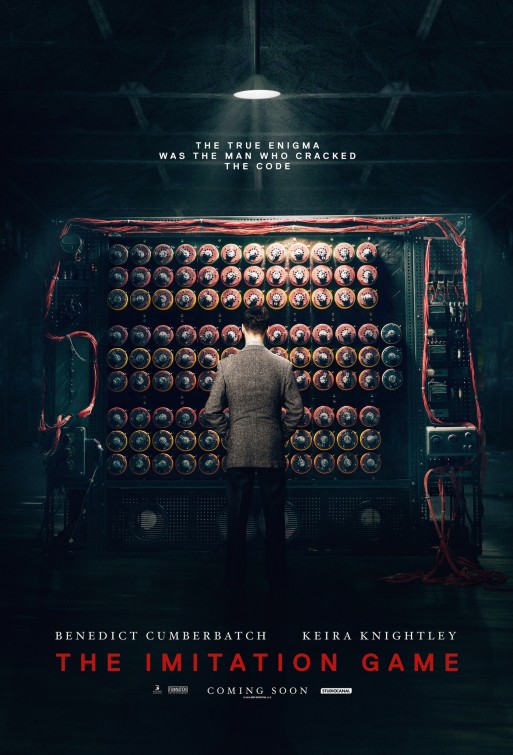
I saw The Imitation Game last year and was too caught up in other work to jot down some thoughts in a semi-coherent manner. This review, then, comes significantly later than it should have and, despite still possessing a few pages of notes designed to jog the memory, I’m now struggling to recall much of the film. That’s the main problem here. The Imitation Game is just unmemorable. It’s not a time issue either — the piece left as much to be desired back in December as it does now. Of course, the story of Alan Turing is an incredibly memorable one but that has nothing to do with this film per se (rather, it’s because his life actually happened and was shocking in and of itself).

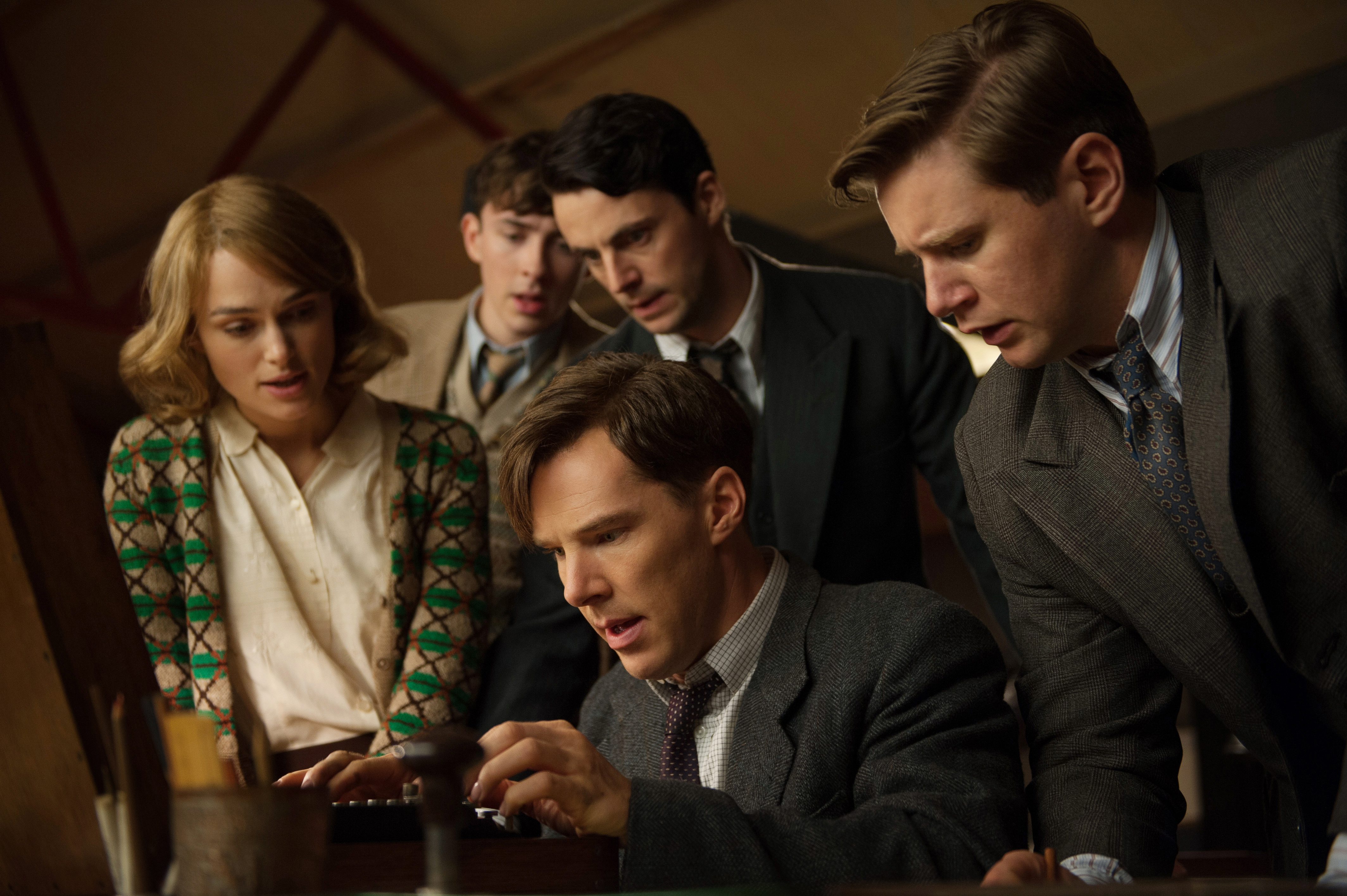
Benedict Cumberbatch plays Turing, a British mathematician and cryptanalyst courted by his country to solve the seemingly impenetrable Nazi Enigma code. The film takes place at the peak of World War II, but you wouldn’t have guessed it if not for the occasional reference. At one point, problem solving team member Peter (Matthew Beard) refers to that big battle thing happening far from the otherwise serene Bletchley Park: “There are actual soldiers out there trying to win an actual war.” We don’t see enough, or at the very least feel enough, of this supposed ongoing war. It’s as if all the events on-screen are unfolding on a remote island as opposed to an island entrenched in a horrendous, deadly human struggle.

Returning to more local matters, we watch as a whole host of obstacles are thrown in front of Turing — those well-known ones related to his private life, but also professional obstacles that simply do not make sense. Charles Dance’s Commander Alistair Denniston, who is overseeing the operation at Bletchley Park, essentially becomes a less brutal version of Tywin Lannister as he dishes out ultimatums to Turing and his team, threatening to shut down their potentially life-saving efforts. “Our patience has expired,” he groans. But why? Surely it’d be wise to keep the process going irrespective of how long success is taking. The film doesn’t address this awkward stance enough, and as such we’re left with a weird sense of internal squabbling that doesn’t chime well given the war climate.

For the most part, emotionally devastating moments — at least, that’s what they should be — are presented in a fairly generic manner. Graham Moore’s screenplay lacks imagination. A ship sinking debate is one of the more morally dubious scenes but you can see the ambiguity coming from a mile off. Since the film is based on a true story it is very possible that parts such as the one referred to above are reflected with genuine truthfulness, their blunt coincidence thus horrible to even consider. However, Moore and director Morten Tyldum set up the majority of these would-be taut interactions too easily. The ship sinking argument feels like a Hollywood moment when it should be the complete antithesis – dirty and righteously murky.

There is a lot fuelling the narrative and as such the film begins to confuse itself as it juggles a number of different layers (any codebreakers around to sort this mess out?). We touch upon the intricacies of gender politics, man versus machine, sexual orientation and the war climate, each with varying impetus. The technological struggle between Turing’s team and the Enigma machine is intriguing, and when Tyldum focuses on the mathematician’s private life the piece flourishes with authenticity and solemn gravitas. To its credit, The Imitation Game does effectively capture the painstaking conclusion to Turing’s life. Perhaps singling out only two elements instead of trying to engage with a handful of themes would’ve yielded something more concise and coherent for Tyldum.

Having said all that, the performances from many of the cast are very good — one or two are particularly noteworthy — and these keep the piece bubbling over (they also undoubtedly had a hand in shooting the film into wide-netted Oscar contention). Cumberbatch bumbles as well as ever playing the intellectually gifted Turing, whilst at the same time empowering the periodically unaccommodating man with increasing resilience and vigour. He is the perfect fit for the role and Cumberbatch really comes into his own when reflecting the weightier points of Turing’s life.

Matthew Goode, Allen Leech and Matthew Beard complete the team of puzzle solvers. The latter duo don’t have as much to do but as Hugh Alexander, Goode carries out the brazen and often unimpressed act to a T. It is Keira Knightley, though, who has the most impact opposite Cumberbatch. She plays Cambridge graduate Joan Clarke who develops a close bond with Turing throughout the film. In lesser hands the role might’ve fallen foul of poor characterisation but Knightley has steel in her eyes, Joan often the person bearing the strongest will.

The film doesn’t really match up to the awards recognition it has been receiving over the past few months, but it does manage to be a suitably uplifting-turned-demoralising piece. I reckon that has more to do with Turing’s real life struggles than how the picture depicts them. Maybe The Imitation Game isn’t as dreary as I recall, but I’m not recalling much.

The Imitation Game - Cast

Images credit: IMP Awards, Collider

Images copyright (©): StudioCanal, The Weinstein Company