A Bigger Splash (2016)

★★

A Bigger Splash PosterDirector: Luca Guadagnino

Release Date: February 12th, 2016 (UK)

Genre: Crime; Drama; Mystery

Starring: Tilda Swinton, Ralph Fiennes, Matthias Schoenaerts, Dakota Johnson

Ever sat through a film that looked splendid, had winning actors winningly performing, bore intrigue and yet that made you want to claw your eyes out? A Bigger Splash announced itself in such a way to me, although to be fair its teeth-grating annoyance did eventually improve to a state of plain old manageable annoyance. The negative overlay has to do with a severe disconnect between viewer and three wholly unlikeable characters: filmmaker Paul (Matthias Schoenaerts) isn’t all that aggravating — probably because he looks eternally fed up with his predicament — though the same cannot be said for rocker Marianne (Tilda Swinton), music producer Harry (Ralph Fiennes), and student Penelope (Dakota Johnson).

Marianne and Paul’s quiet, idyllic Italian break built around sun, sex and relaxation gets interrupted suddenly by the screech of phone call and the whoosh of aeroplane (it’s a metaphor). On the other end of the line is Harry, Marianne’s pal and former lover, who is calling to let her know his plane is about to land at the nearby airport. He has brought his daughter with him, for some reason. More significantly, Harry brings raving obsession, with Marianne first and foremost, but also with rambling — for two hours, the guy is physically unable to hold his tongue. He seems fittingly well-versed in the island’s community, at one point hilariously showing up at a resident’s house just to try their risotto.

It isn’t initially clear how the four know each other thus interactions are racked with awkwardness, though that doesn’t stop Harry mouthing on about how he once served the Rolling Stones. These introductions are inelegant also because Marianne cannot speak — she is a rock star and rock stars have to go on voice rest, though she does eventually wispily chatter when the film realises silent sex isn’t enough for somebody of Swinton’s calibre. She does at least get to don full Bowie-esque getup in flashbacks. Marianne’s beau, Paul, suffers from headaches brought on by medication brought on by a serious life event brought on by his ailing career, or something. Crucially, the headaches are not an issue at the start (remember Marianne can’t talk), only flaring up upon Harry’s arrival (remember Harry can’t shut up).

The latter’s daughter, Penelope, is moody, scheming, and unpredictable (and then entirely predictable). An age issue suggests miscasting; Johnson, otherwise, doesn’t have much to do apart from laze around. The four characters spend most of their time lazing around in truth, often naked — the camera lingers but does so exclusively — as they wind each other up about their respective troubles and life philosophies. You can see what the screenplay is going for, that feeling of rising tension and impending drama, but the underlying menace reaches boiling point after 30 minutes and only starts to subside thereafter.

What begins as an odd pseudo-romantic endeavour becomes something else entirely, a would-be thriller if the film was at all thrilling. Its musical inclination — the suggestion is that Marianne and Harry were once big partners in sound and debauchery — beckons A Bigger Splash towards a more drugged-fuelled narrative, perhaps something akin to Kill Your Friends. In fact, that comparison pits Fiennes in the wrong film: his self-serving, self-destructive nature is far more suited to the Owen Harris flick. He does commit to the role admirably, delivering a performance buoyed by genuinely creepy eccentricity, but the horridness of Harry means Fiennes is constantly fighting a losing battle for sympathy.

Despite all that, there is a small hint of intrigue going on in Luca Guadagnino’s retreat escapade. Without giving anything away, you do find yourself awaiting a genre shift towards a more mysterious tone, and when said shift does inevitably arrive it feels right in a story sense. But it’s also very abrupt and too late in the game, therefore the movie concludes before character reactions reach full formation and story arcs can be suitably sewn up. I’m not against open-endedness (quite the opposite; as a fan of Lost, unanswered questions are right up my street) but the film’s overlong buildup renders the eventual pay-off a tad undercooked.

Potentially rewarding themes attempt to break through the superficial limelight, nods towards a clash of cultures and the obliqueness of fame for instance, but none of these make a true mark. In the end, it is all a bit celebrity Mad Dogs without the desired amount of madness or dogged captivation. There is nothing to chew on and nobody to root for. The only splash here, unfortunately, is one into shallow water.

A Bigger Splash - Johnson & Fiennes

Images credit: IMP Awards, Collider

Images copyright (©): Fox Searchlight

Hail, Caesar! (2016)

★★★★

Hail, Caesar! PosterDirectors: Joel and Ethan Coen

Release Date: February 5th, 2016 (US); March 4th, 2016 (UK)

Genre: Comedy; Mystery

Starring: Josh Brolin, George Clooney, Scarlett Johansson, Alden Ehrenreich

Hail, Caesar! might as well be a sequel to the Coen brothers’ early-90s writer’s block masterstroke, Barton Fink. The filmmaking duo are back on familiar turf, their gaze once again fixed upon their own industry, only this time it is an exploration of post-screenplay life. Set in 1951, a decade after Fink, we re-enter the mania of motion pictures during a time of internal and external struggle; as studios lose control within the self-contained confines of Hollywood, the real world is dealing with political crises and threats of nuclear decimation. Thankfully George Clooney, Channing Tatum and Scarlett Johansson are on hand to spread some joy.

Even those wary of their thematic craftsmanship or storytelling abilities must hold the Coen brothers’ world creation to the highest of standards. Here, the duo conceive Capitol Pictures (another Fink throwback) in all of its glory: bombastic sets tinged with old charm; backlots bearing their own gravitational pull that revolve around the movie star present — when interested parties hear Baird Whitlock (Clooney) will be starring in their feature, the reaction is an audible “oh my”. And office doors get in on the excess, wearing flashy, golden-chrome nameplates. Cinematographer Roger Deakins, fresh from stunning work in Sicario, shoots the grandiosity with skill and a sense of cosiness. It all just looks right.

The studio system is on its last reels and given the aforementioned extravagance, it is plain to see why. The social zeitgeist is one of populism, of westerns and biblical epics designed to quell the moviegoer’s fear of Communism and nuclear war if only for a few hours at a time. On a side note, Hail, Caesar! and Trumbo might make a worthwhile double-bill as here we are introduced, teasingly, to the Communist cause without ever delving far into its core. The Coens are interested in the production line, the behind-the-scenes craziness, of which there are many components — too many for such political allegiance to warrant thorough analysis.

Eddie Mannix is the common thread binding those components, superbly played by Josh Brolin (straddling the line between aloofness and competence). He is not a moral man, or so his cigarette-decrying priest would have him believe. He is a studio fixer, that is, a liaison between star and head financier. As the story progresses Mannix increasingly takes the form of a walking, talking manifestation of movies as life’s be all and end all, therefore false pretences must be upheld and personalities must be moulded to suit the needs of a fearful America. “The public loves you because they know how innocent you are,” Mannix informs Johansson’s DeeAnna Moran. She is pregnant and single, which is obviously a problem.

Less of a problem is the town’s new personality ready for shaping, that of proverbial cowboy star Hobie Doyle (Alden Ehrenreich). He is an amiable up-and-comer who has plied his trade horse-riding and lasso-snapping, though the Capitol leaders wish to broaden his appeal. Of course, the kid has no experience in dramatic acting, especially not in delivering the mirthless chuckles and ruefulness ordered by his new, pompous director Lawrence Laurentz (Ralph Fiennes in fine cameo form). Regardless, Hobie will be the next big thing because that’s what Mannix wants, and on the basis of his performance, Alden Ehrenreich will be too.

The movies we see in production adhere to a culture of emboldening, where lighting cues are so obviously artificial you cannot help but laugh when they announce themselves, and where acting is defined not by subtlety but by overemphasis. Clooney, playing the easily cajoled A-lister Baird Whitlock, is a master at such overemphasis: an early scene in which he is drugged by two plotting extras, the real life version of Pain and Panic from Hercules, ought to rouse significant amusement at the behest of his delayed water guzzling. It is a delay brought on by the actor’s strenuous effort to convey the hilarity of a joke, of course.

Whitlock spends the entirety of the film wearing the same gladiatorial costume and Clooney answers by sauntering like a Roman solider, sword a-swinging. We get those idiosyncratic moments, Coen watermarks, side quests not related to the central storyline but that are an absolute hoot to watch: two of the best in Hail, Caesar! involve a raucous religious rabble and an impromptu enunciation lesson. There is a sequence in the third act during which the piece knowingly gets ultra-meta: a late-night drive is montaged, scored by brass, Dutch angles invoked. It is like watching a movie within a movie about classic Hollywood movies.

Perhaps the need to accommodate as many kooky industry strands as possible means the film can’t be as richly textured as the Coens’ previous outings (although there are similarities with Barton Fink, deep thematic layering isn’t one). However, you are hoisted along with so much momentum by waves of nutty humour that it is almost impossible not to revel in it all. You find yourself gleefully anticipating the next big, showy scene, expecting it to topple the last in levels of arrant silliness — a high bar awaits tap dancing Tatum, though he sails through with flying colours.

Mannix spends time considering whether or not to ditch his Hollywood gig and assume an executive position at the aerospace organisation, Lockheed. A salesperson from the company occasionally appears, looking to coax Mannix into signing on the dotted line. “I’m sure the picture business is pretty damn interesting, but I’m sure it’s frivolous too,” the Lockheed man says. He’s right, in a wider world context, on both counts. Fortunately, thanks to movies like this and filmmakers such as the Coen brothers, that which is interesting far outweighs that which may be frivolous.

Hail Caesar - Channing Tatum

Images credit: IMP Awards, Collider

Images copyright (©): Universal Pictures

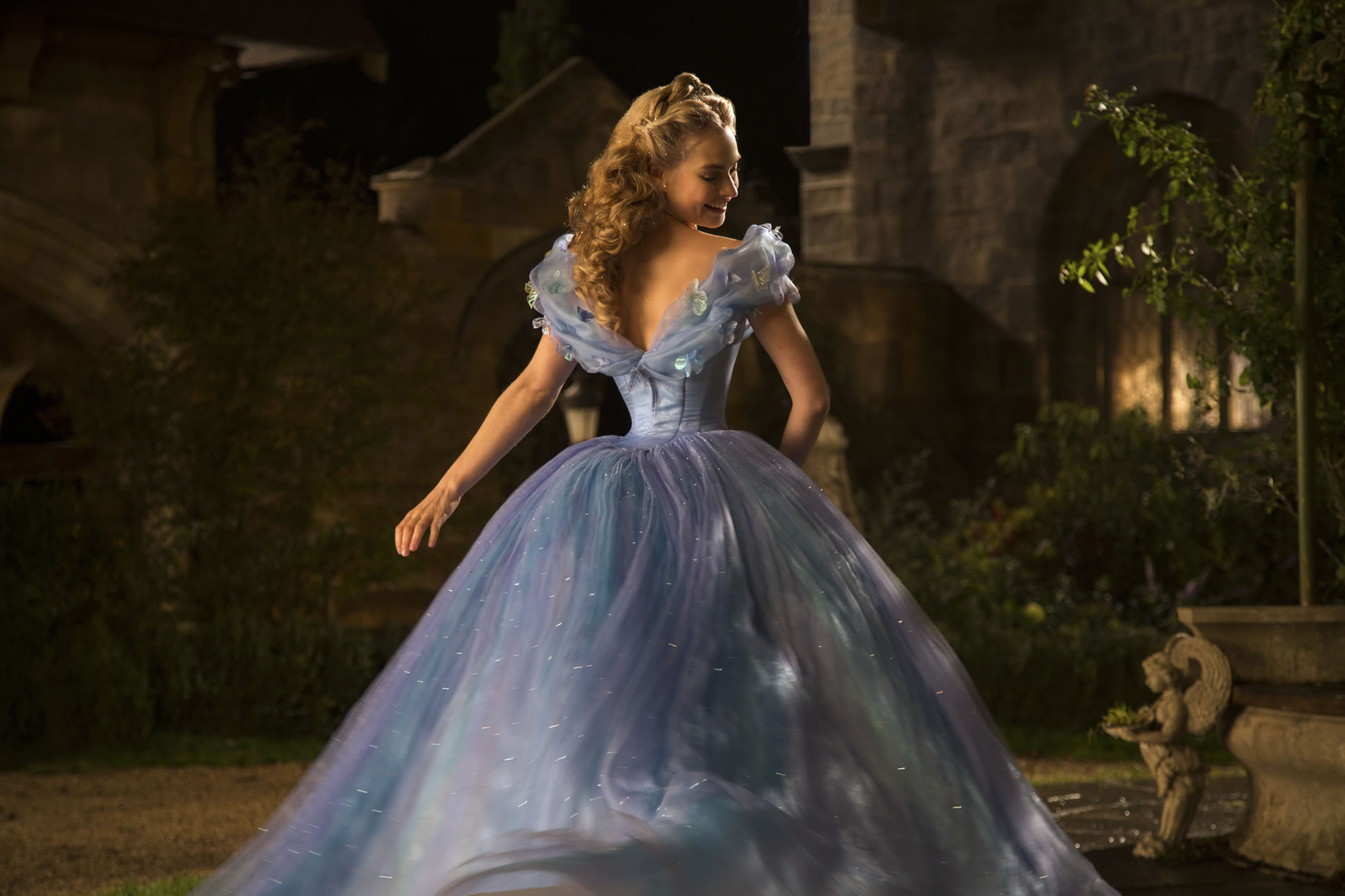
Cinderella (2015)

★★★

Cinderella PosterDirector: Kenneth Branagh

Release Date: March 13, 2015 (US); March 27th, 2015 (UK)

Genre: Drama; Family; Fantasy

Starring: Lily James, Cate Blanchett, Richard Madden

From the larger-than-life comic book strands of Thor to the slick, considered action of Jack Ryan: Shadow Recruit, Kenneth Branagh’s latest outing reflects the director’s willingness to venture down varied paths. Cinderella is certainly more in line with his traditional genre work — Shakespeare and classic novel adaptations — but it also shares the same vibrancy as Branagh’s recent outings. It does not rely heavily on the originality of any specific component; this is as competently classic as you are going to get. Rather, Cinderella works as a fairly fruitful whole.

We all know the story and the film knows we all know the story. Screenwriter Chris Weitz quickly disposes of the origin formalities with a sickly-sweet preamble starring Hayley Atwell and Ben Chaplin as mum and dad, the former filling in any narrative gaps via voice-over (and perhaps underused in retrospect). Mum dies — even on her deathbed, Atwell’s mother looks a brush of hair away from being ready to attack the day — and dad tragically follows suit, leaving not-yet-Cinder-Ella at the mercy of her bullying stepfamily. “Have courage and be kind” is the motto by which she must adhere, and adhere she does.

Since the fairy tale’s ins and outs are common knowledge, you expect to see something new from this Branagh-led incarnation, or at the very least something old told exceedingly well. It is more of the latter, if not entirely either. The screenplay typically weaves class and identity into the story: Prince Charming (Richard Madden) wishes to sell his own personality and not his superfluous value to Cinderella (Lily James), while Cinderella has no obvious desire to wed royalty, only to wed the kind apprentice she just met in the forest. Meanwhile, necessary excess — the grand carriage, the stunning gowns, the sheer beauty — is combated by Branagh and co. through emphasising other factors: courage, kindness, honesty, and humour.

Cinderella is so morally upstanding she opts to live her life in the company of insensitive rogues simply to uphold a promise made to her parents, to honour their memory through the upkeep of their residence. Lily James plays the fairy tale stalwart with such commitment and invitation; only a cast iron soul would find her demeanour off-putting. Cinderella is at times naive to the point of ridicule, but you always believe in her good nature regardless. And there is a commendable individuality to the lady-in-waiting: she seems in control, even when her fate is essentially dungeon-dwelling, control embodied by the not-so-subtle power she has over the prince (via love) and the more subtle power she has over her stepfamily (via her love for the prince).

Speaking of whom, Lady Tremaine (Cate Blanchett), Anastasia (Holliday Grainger) and Drisella (Sophie McShera) make a suitably nasty counterweight. “She too had known grief, but she wore it wonderfully well,” we hear of Tremaine, Blanchett evoking a devious allure while robed in blacks and dark turquoises. The trio usher a culture of gambling and partying into Cinderella’s civilised household upon arrival, antics mirroring their deceptive tendencies. Along with Grainger and McShera’s proverbial stepsisters, Blanchett could have easily arrived for shooting directly from the set of A Series of Unfortunate Events. Like Jim Carrey, she chews the scenery, hams it up and more with success.

Her understudies are perhaps too cartoonish though they do provide occasional comic relief. Richard Madden has a better time of it and does very well in what could have been a tough role. You might expect a pristine rich boy to promote aggravation through smugness even unintentionally so, but Madden is far from that as Prince Charming, down-to-earth and somewhat — somewhat — relatable. And if not, he is definitely likeable. And also named Kit, coincidentally (Nonso Anozie shows up, another Game of Thrones connection). Conversely, some characters are not quite as assured in delivery. Stellan Skarsgård’s Grand Duke, for instance, bends morally without warning.

Patrick Doyle provides a score that sways from the bombast of brass to light, frothy strings. It matches the allure of the story’s royal ball, which in and of itself takes on even greater aplomb than is perhaps expected. The sequence wears the extravagance of Baz Luhrmann’s Great Gatsby, beckoned forth by fireworks and golden décor. Haris Zambarloukos’ camera loves Cinderella, as it should, and shows her in sparkling form even when she is doing the washing or ash-strewn from stoking fires.

In the end it does amount to something pretty conventional, but Branagh ensures a consistent level of quality is maintained in spite of the narrative’s recognisable outlay. This is a piece very much aware of its fairy tale heartbeat and it values said heartbeat accordingly. Sure, some of the conversations characters share are on the saccharine side and the thematic rituals are a bit too broad, but Cinderella is a thoroughly well-made and enjoyable live action expedition.

Cinderella - Lily James

Images credit: IMP Awards, Collider

Images copyright (©): Walt Disney Studios Motion Pictures

Deadpool (2016)

★★★

Deadpool PosterDirector: Tim Miller

Release Date: February 10th, 2016 (UK); February 12th, 2016 (US)

Genre: Action; Adventure; Comedy

Starring: Ryan Reynolds, Morena Baccarin, Ed Skrein

When you strip away the humour, the action and the madcap characters, Ryan Reynolds’ decade-long pet project is a standard revenge tale. Reynolds plays Wade Wilson, a cocky mercenary who becomes the seemingly invincible — and significantly cockier — Deadpool following an immoral experiment designed to cure his cancer. To make matters worse, Ajax (Ed Skrein, honouring his Britishness through elongated pauses and exaggerated vowels), the man who dished out said experimentation, now has it in for Wilson’s on/off lover, Vanessa (Morena Baccarin). What we’ve got then is an unethical Robin Hood whose payback meter is on the brink of breaking point. Quite straightforward really.

Justly, a slow motion opening sequence ushers in the prevailing two-fingered mood. Rather than the names of the actors involved, we’re graced with the generic roles they will be playing: “A gratuitous cameo, a British villain, a hot chick.” Such blanket roles form part of an assault on the genre, supported by profanity-laden wisecracks. That’s all Deadpool is really, one giant gag. The jokes are self-referential to no end, and many of them aren’t even jokes — invoking names like McAvoy and Stewart, for instance, doesn’t take that much effort. A Detroit quip suggests smarter thoughts are at play, but they seem drowned out by an unflappable need to guffaw at anything genital-related.

Yet on the visual side of things, the film exceeds its own humorous expectations. Laughter might be hard to come by verbally, but visually director Tim Miller has crafted a goldmine: from an early shot of Deadpool popping his head out of the window of an overturned vehicle to arguably the movie’s funniest moment, a joke based around a mask. The latter works because Miller and cinematographer Ken Seng are careful in its construction, opting to tease us by positioning their camera at a certain angle. Another effective shot sees Wilson journey to his torture destination aboard a stretcher, creepily reimagining a similar scene in Jacob’s Ladder.

Perhaps the greatest flaw in Deadpool isn’t anything to do with the film itself, but its retrospectively overcooked marketing campaign. If you consider not just the punchlines but also the build up to those punchlines, there are probably around 30 or 40 minutes of Deadpool that anyone who has seen the trailers (which is everyone) will be familiar with. This means the jokes land with less oomph in the cinema, if any oomph at all — you could argue the best jokes are those that generate a laugh irrespective of how they are heard, which isn’t the case here. Here, repetition sucks the life out of would-be key moments, such as the opening vehicular mayhem or the standoff between Deadpool’s crew and Ajax’s gang.

By railing against the typical genre trappings, you would expect the film to at least offer something different upon nearing its conclusion. There is a joke about International Women’s Day that takes issue with uneven gender roles — a problem not completely eradicated on the superhero movie front — after which I found myself anticipating Deadpool’s response, for the film to maybe lead the way in making a statement. But it never does. Of the three main females on-screen, one is a wordless brute (Gina Carano), another is a moody teenager (Brianna Hildebrand), and the third is a prostitute (Morena Baccarin). And they remain as such: at no point do we see any of them deviate from their characters’ genericisms.

That was quite a lot of negativity, but Deadpool is undoubtedly an enjoyable twist on the genre and a piece that boasts its fair share of genuinely entertaining moments. The action is vigorous, any pulling of punches outlawed. It is a fairly brutal adaptation that certainly earns its stateside R rating; as violence goes, this has more in common with Marvel’s Daredevil than anything from the studio’s recent cinematic portfolio. A word too for an inventive closing credits sequence that implores you stick around, which is just as well given the post-credits scene is also cracking, an homage to one of cinema’s very best anti-authority comedy outings.

The movie wouldn’t be half as good without Ryan Reynolds, who looks and sounds like he is having a blast in spandex, his condescending voice a perfect match for the provocatively annoying character. The actor’s kid-in-a-candy-shop exuberance pollutes the air and spreads throughout the audience. It is a testament to Reynolds’ physical abilities that he manages to evoke Deadpool’s unique personality despite spending most of the flick beneath a mask. Mutant Wilson, by the way, looks like a terrifying cross between Freddy Kruger and the monstrous figure from Sunshine, so the mask is definitely a good call.

I’ll be the first to hold my hands up: in a packed screening room, my mellower reactions were consistently drowned out by uproarious laughter. This is a film that many have anticipated for a long time and it appears to have pleased the vast majority. There is clearly a desire to reflect the source material, which is admirable if a tad foolhardy. Maybe it’s the rebellious streak, or perhaps the cathartic undoing of distinctly poorer previous superhero incarnations (see X-Men Origins: Wolverine and Green Lantern). Thanks to Ryan Reynolds, at least Deadpool offers something a bit different.

Deadpool - Ryan Reynolds

Images credit: IMP Awards, Collider

Images copyright (©): 20th Century Fox

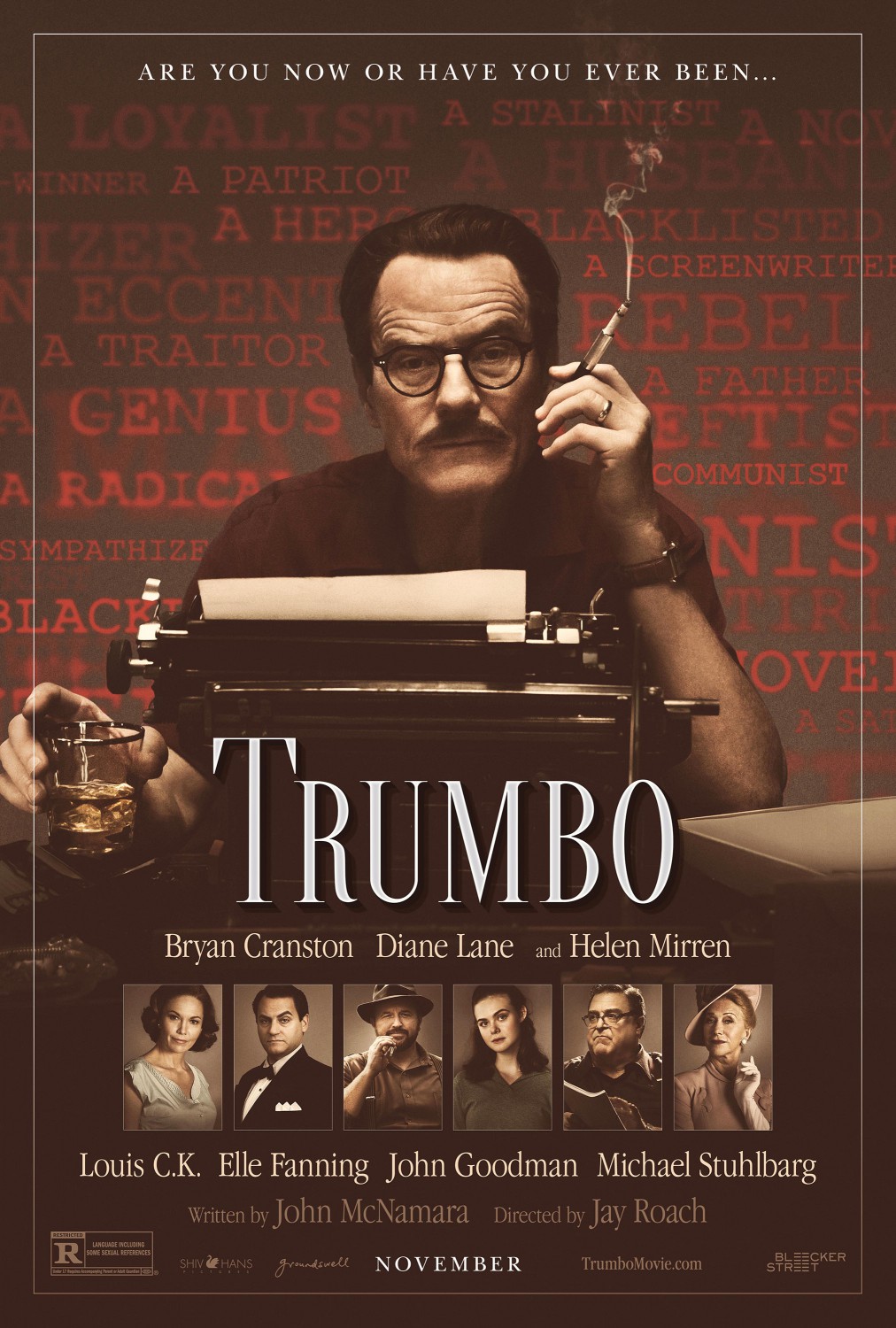
Trumbo (2016)

★★★

Trumbo PosterDirector: Jay Roach

Release Date: November 25th, 2015 (US); February 5th, 2016 (UK)

Genre: Biography; Drama

Starring: Bryan Cranston, Diane Lane, Helen Mirren

Trumbo is about two things: the trials and tribulations of a successful screenwriter, and the cultural acceptance of an uncommon political discourse. We spend time examining both, but never truly get into the meaty centre of either. Said screenwriter is Dalton Trumbo (Bryan Cranston), a creative caught up in a battle of black-and-white politics; it’s us versus them and US versus Russia. “The Blacklist was a time of evil,” he bemoans, and it probably was. Fighting against tonally light content, we don’t see that evil.

It is mid-20th century America and Hollywood has been torn in two, ambiguous grey areas nowhere to be seen (certainly not in this filmic incarnation). There are those with ties to Communism and ideals driven by wealth distribution, none more so than the aforementioned Trumbo. Then there are the others — studio heads, directors, actors — who bear defiant patriotism, unwavering in their hatred for the Communist agenda. The turbulent ripples become clear, crossing the personal-professional divide almost instantly: “[Trumbo is] among us. Sure as hell ain’t one of us,” says one director, and he ain’t referring to movie guilds.

Director Jay Roach employs newsreels that lambast Communism by throwing the words “radical” and “anti-democratic” around. Trumbo himself, though grouchier as the film wears on, is a beacon of idealism: the imaginative writer, accepting, and willing to give the benefit of the doubt to those on the other side of the fence. When he’s not doing that, Trumbo is storytelling — we see him awaken in a bathtub and pick up his pen as if he hadn’t stopped for a snooze break. He ponders thoughts before his typewriter, smoke clouding his headspace, evoking a sense of artistic megalomania. Cranston plays him well, naturally manoeuvring between cartoonish cheer and patchy introversion.

The movie moves with welcome momentum, but there is a lack of bite in each narrative stroke. That the rabble of screenwriters charged with Communist associations are, at worst, fairly wealthy white males ought to be more of an issue given the film’s discriminatory context, but that is only brushed over during a brief conversation between Trumbo and fellow writer Arlen Hird (Louis C.K.) — the civil rights movement becomes a meagre agent of friction between father and daughter, forgotten after a heart-to-heart. In fairness, unfair haranguing by Supreme Court magistrates does show us how little progress we have made in terms of political jousting and partisan stubbornness.

You would think the criminalisation of the Hollywood Ten (as the writers are collectively known) would have a creative impact on the film industry, but we don’t really see any immediate consequences. Irrespective of politics, incarceration means a loss of talent and that loss is skimmed over even after Trumbo and co. are released from prison and subsequently blacklisted. The workaround is fairly obvious: sell one’s work under somebody else’s name. Trumbo does just that, penning and then passing on the critically acclaimed Roman Holiday (1953) to his untainted screenwriter pal Ian McLellan Hunter (a typically effective Alan Tudyk).

It’s when he decides to work with B movie studio exec Frank King (John Goodman) as a script curator that we see some sort of occupational impact — these films are shoddy, far from Trumbo’s intellectual norm. As King puts it, “Quality minimum; quantity maximum”. Goodman’s arrival ushers in a Coen touch, a bout of heightened satire and craziness, and probably the film’s best moments too (a baseball-bat-wielding Goodman is a sight to behold). This stuff is enjoyable, though you do get the sense the filmmakers are too caught up in moulding an accessible film to carve out something significant.

What this means for the characters, and Trumbo especially, is a lack of piercing emotional rigour during moments of plight. Forced to strip off all of his clothes, Trumbo’s entry into jail is clearly demeaning and disheartening, however it should be tinged with so much more emotional verve. But up until that point there is no gravitas urging you to sympathetically invest in the scribe. Trumbo’s only emotional ties are those the film does not really have to earn: to his family, including daughter (Elle Fanning) and wife Cleo. Fanning shows spark and in spite of her fairly thankless role — wife and mother — Diane Lane manages to imbue Cleo with a dose of likeability.

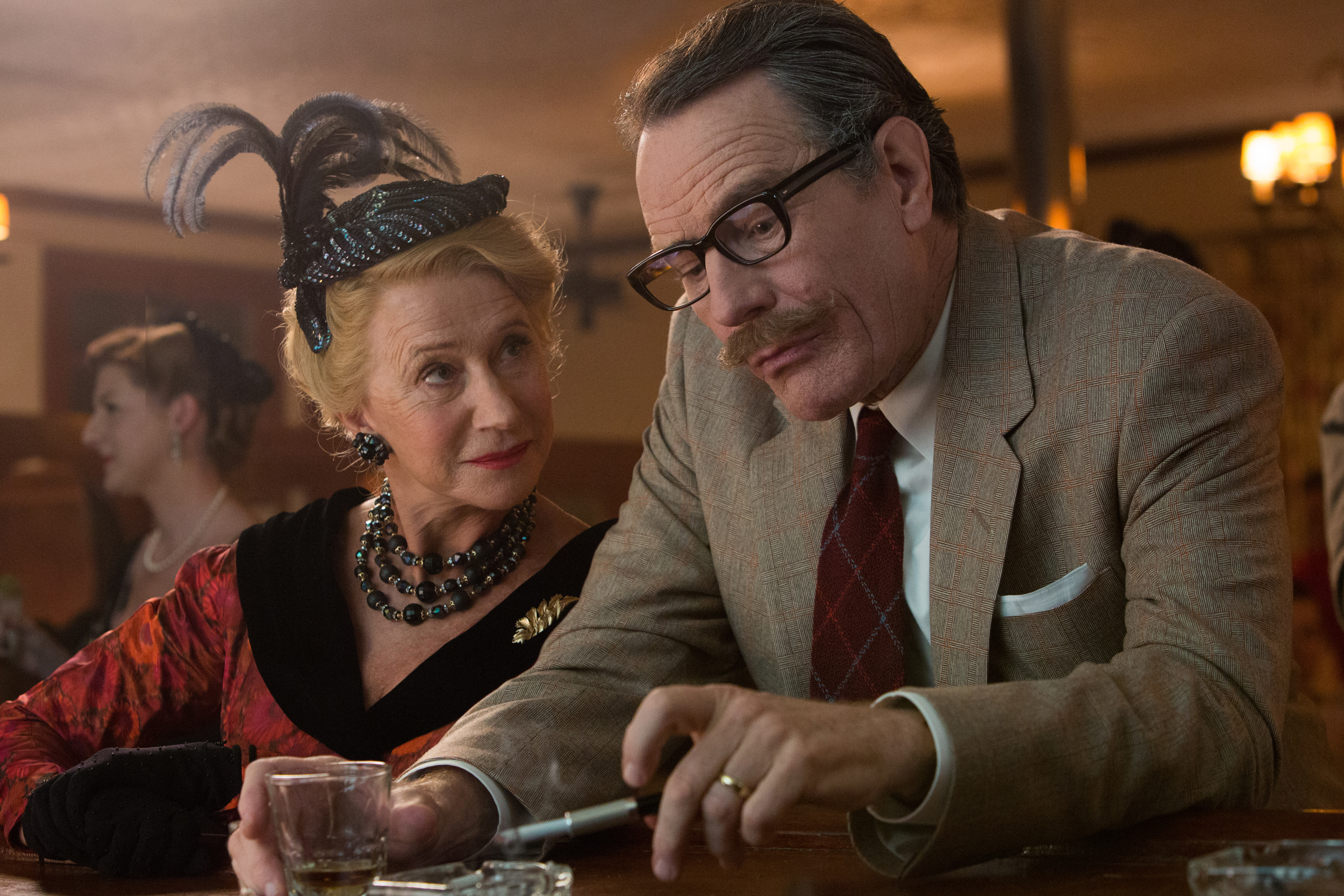
Helen Mirren channels her inner Rita Skeeter as Hedda Hopper, the media’s harshest Communist critic. “Bad box office? No, bad politics,” she says, more concerned with political allegiance than money which, given her job relies on a thriving Hollywood, is quite something. John Wayne is arguably her biggest ally from within the industry, played here with brutish aplomb by David James Elliot. Perhaps somewhat surprisingly, other big anti-Communist thinkers such as Joseph McCarthy are tiptoed around, Roach opting instead to focus on Hollywood figures.

On the aesthetic face, lots of high-waisted trousers and charcoal fedoras help to amplify the time period. Pathé-esque newscasts look real — some are, such as one depicting a John F. Kennedy film critique (two thumbs up) — while Roach’s use of newspaper prints to relay the national agenda is a nifty touch. These visual styles culminate in a retro flavour that generates more authenticity; it’s no Carol, but it’s good. Vowels are even offloaded with deeper verve. Cranston’s Trumbo sounds like someone who once resided in one of those old, grainy video recordings from many decades past.

Screenwriter John McNamara has a lot to juggle content-wise so perhaps the hit-and-miss nature of Trumbo shouldn’t come as much of a surprise — Kirk Douglas (Dean O’Gorman) and Otto Preminger (Christian Berkel) arrive without warning as the film reaches its scattergraph finale, name-checking Kubrick and negotiating screen credits. The film is essentially a trivial overview of a much more interesting period in US and Hollywood history than is given credit. But Trumbo is wholly watchable and Cranston commendably holds the screen, amounting to a piece worth its papery weight in entertainment.

Trumbo - Cranston & Mirren

Images credit: IMP Awards, Collider

Images copyright (©): Bleecker Street

Spotlight (2016)

★★★★★

Spotlight PosterDirector: Tom McCarthy

Release Date: November 25th, 2015 (US); January 29th, 2016 (UK)

Genre: Biography; Drama; History

Starring: Michael Keaton, Mark Ruffalo, Rachel McAdams, Brian d’Arcy James, Liev Schreiber

At the inception of Tom McCarthy’s Spotlight, The Boston Globe newspaper is in the process of appointing its new editor, Marty Baron (Liev Schreiber). Despite this change, there remains a prevailing emphasis on ensuring the retention of local flavour. More than that actually; in upholding a local backbone prompted by the paper’s titular investigative team and its head man, Walter “Robby” Robinson (Michael Keaton). The aforementioned Baron, blunt yet adept, arrives without any notion of hedonistic aplomb, a trait that reflects McCarthy’s exceptional outing as a whole.

Sometimes the film that resonates most is the one draped in assured, quality simplicity. Though some might disagree with the loftiness of my ranking, such simplicity is what endeared me so much to Stephen Spielberg’s Bridge of Spies. And it’s a similar simple touch that paves the path for Spotlight, a film so rich and so thrilling. McCarthy directs with a stillness, allowing his actors to act and their words to burn into the audience’s psyche without distraction. This trust affords the Spotlight team — Baron, Robby, Michael Rezendes (Mark Ruffalo), Sasha Pfeiffer (Rachel McAdams), Ben Bradley Jr. (John Slattery), and Matt Carroll (Brian d’Arcy James), all real life journalists who, at the turn of the millennium, took the Catholic Church to task over child abuse allegations — a platform to build their case.

Often, the camera diverts our attention towards battered notepads and scribbling hands, distinguishing the individual personalities within the team: tougher to read, Rezendes jots down notes underneath a table while interviewing a victim whereas Pfeiffer writes in plain view, her inclinations clearer and her projection softer. The former is a bundle of journalistic energy, constantly on the move and posing point-counterpoints. Rezendes is immensely dedicated to his craft — they all are, refreshingly — but perhaps more so to aiding the course of justice. He and Robby discuss the need for leisure time and Robby points out Rezendes’ only leisure time is his daily jog to work.

These reporters are studious, careful. They take their time to iron every crease, collating date from victims, legal papers and even Globe archives. It’s true investigative journalism executed with thoroughness, so much so that we feel drawn into the process. The tone is almost anti-Sorkin: there’s an air of justifiable caution on display here that Sorkin’s TV journalism jaunt The Newsroom bypassed in favour of addictive urgency. Both methods work, but the slower approach suits Spotlight’s sensitive subject matter far more (it also implores you to listen, therefore stretches of dialogue are easier to follow than those penned by Sorkin).

McCarthy and co-writer Josh Singer ground such a grand story in local truths — the religious corruption infects a familiar neighbourhood. In any other situation this sort of coincidence might feel contrived, but not here where the sheer breadth of wrongdoing is so painstakingly relayed. Locality doesn’t immunise the team from significant global events; it’s 2001 therefore 9/11 is unavoidable, especially since journalism is our vantage point, and the attack drives all resources away from the child abuse scandal. Gamesmanship between rival city papers further funds McCarthy’s realistic portrayal of the job. If those realities aren’t enough, the reporting process at least thrives on-screen. (Even the aesthetic fits the journalistic groove, tinged with a greyish palette that matches the occupational ambiguity. It feels like a newsroom; we even see a printing press in action.)

Much like The Big Short, which also follows a brand of unethical discovery, Spotlight pointedly plants its ballpoint on one side of the debate. “Knowledge is one thing. But faith, faith is another,” says Cardinal Law (Len Cariou), leader of the diocese, with more than a hint of guiltlessness. McCarthy and co. are not against Catholicism but rather the structural inadequacies of certain segments of the Church, and their evidence is inadmissible. The team announce their respective affiliations to the religion (very little), undermining accusations of bias and offering up a tiny slice of their otherwise unexplored personal lives. And that’s how it should be. After all, this is an investigation and investigations should, ideally, lack personality.

Forget stopping short at admonishing priests, lawyers are also targeted for their mistakes (Jamey Sheridan and Billy Crudup play immoral attorneys opposite Stanley Tucci’s more upstanding lawman). Nor does journalism itself receive a free pass. This is as much a celebration of the profession as anything else, but in order to celebrate there has to be a level of humility. We see political jousting both within the Globe offices and outwith, during which we learn of costly past mistakes. Ignorance is the main allegation and this honesty resonates, adding roundedness to these real life characters who are far from impervious to perfection.

Speaking of which, those in charge of casting ought to be acclaimed for amassing such terrific depth. Apart from a solitary outburst of pent-up rage from Rezendes, powerfully delivered by Ruffalo, the performances are universally restrained. They’re quietly indelible too: Schreiber displays an uncanny knack for convincing without extravagance while McAdams, nominated for an Oscar, bears a warmth free from condescension. Of everyone, Keaton is the one who oozes most occupational comfort (as he should, given he plays the group’s editor), his aura exceedingly knowledgeable.

For this to work, the Spotlight team have to purvey a sense of well-oiled camaraderie and they absolutely do. The same can be said for McCarthy’s film, though to speak of his work just in terms of proficiency would be demeaning. It is proficient; it’s also socially reflective and genuinely gripping. Holes are punched in great institutions with justification, but you won’t find any holes in the story. For all the right reasons, Spotlight may well make you fall in love with journalism.

Spotlight - Cast

Images credit: IMP Awards, Collider

Images copyright (©): Open Road Films

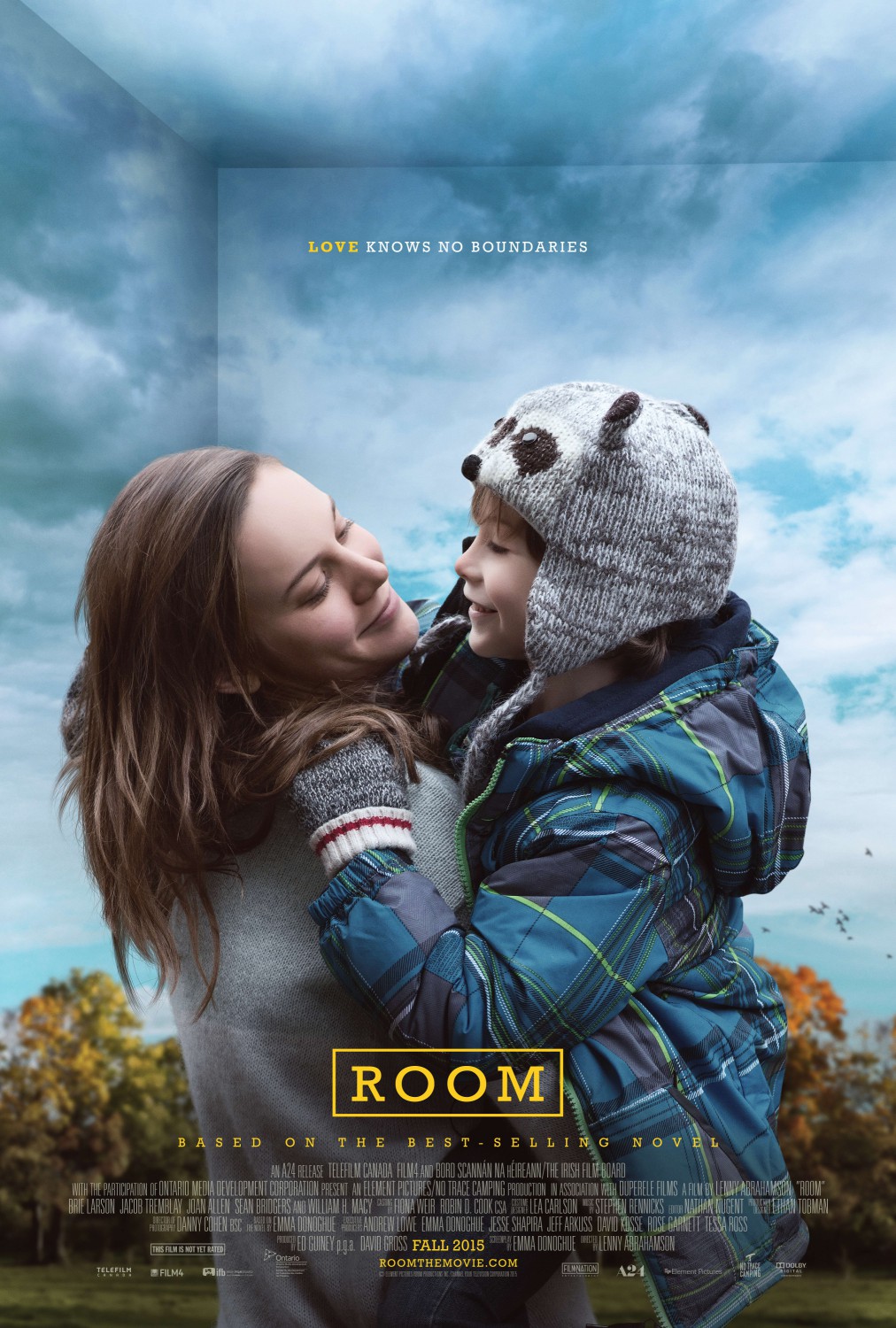
Room (2016)

★★★★★

Room PosterDirector: Lenny Abrahamson

Release Date: January 15th, 2016 (UK); January 22nd, 2016 (US)

Genre: Drama

Starring: Brie Larson, Jacob Tremblay

Room is a beautiful film. It’s heartbreaking and humorous and touching. It is fearless, it is personal, it is real. It’s also difficult to discuss without making reference to at least one crucial plot point. If you have seen the trailer, you’ll know which reveal I’m alluding to and will hopefully stick around for the subsequent discussion. Otherwise, it would be best to see the film without any prior knowledge and then revisit this review thereafter. Should you choose to do that, just know you are about to see one of the best movies of the year.

It follows young mother Joy (Brie Larson) who has spent years trapped in a grimy shed alongside her son Jack (Jacob Tremblay). Jack only knows the shed, christened Room, having been born there. He believes Room is the whole world; she knows it is not. They survive on amenities provided by their captor Old Nick (Sean Bridger) and have a few other basic items such as a bath and a television. “TV persons are flat and made of colours,” Jack marvels, exemplifying his troubling lack of knowledge breadth. He also refers to the toilet as “Toilet” and the lamp as “Lamp”, these inanimate objects having taken on the role of living organisms.

We feel part of Jack’s imagined landscape, its closed-in vastness, established through impeccable production design and crafty cinematography. Mouldy utensils bear foodstuffs that arrive via magic (since Jack is unaware of the outside world, he believes Old Nick’s existence is bred from some sort of sorcery) and stains flood the floor — a large mess near the bed is probably the spot Joy gave birth. Danny Cohen rarely, if ever, captures the entirety of Room in one shot, instead segmenting the area into various micro-locales (the bed, the wardrobe, the kitchen) and this gives off a false sense of capacity. However, when Room feels too falsely spacious, Cohen re-establishes its compactness by intimately honing in on Joy and Jack’s faces.

Joy does everything in her power to shield Jack from Old Nick. Whereas she must grapple with daily pain, her son innocently sees light in abject darkness: “Ma, I’m a dragon,” he exclaims when a lack of powered heating grants him icy breath. Fairy tales have clearly influenced the youngster — Alice in Wonderland and the Biblical fable of Samson are invoked — and these stories take on an even grander meaning given the horrendously isolated context within which they are told. Like his previous film, Frank, this newest offering from Lenny Abrahamson champions the power of imagination; such interactions between mother and son offer fleeting moments of relief, further compounded by the duo’s genuine chemistry.

For someone whose only other screen credit is Smurf’s 2, Jacob Tremblay carries a sense of timing that consistently threatens perfection. His actions reverberate with such authenticity, both in instances of thoughtful restraint and in outbursts brought on by his inability to understand his mother’s truth-telling. The young star’s facial performance is particularly strong: Tremblay is always present and never at all disconnected from the film’s envisioned reality. Hey, you ask for one endearing child performance and then two come along at once — Noah Wiseman is similarly effective in The Babadook, another mother-son tale spun via horror. There is also Ellar Coltrane’s turn in the early parts of Boyhood. So that’s three.

Though fun, awards are far from the definitive benchmarks of quality, therefore to speak of them in such terms is frivolous and, truthfully, a bit demeaning. But I would be doing honesty a disservice if I did not declare my readiness to anoint Brie Larson Best Actress by the 10-minute mark. You instantly see Joy’s exhaustion and feel as though you know her story. Larsen maintains a hunched posture and rolls her eyes with such desperation in the wake of Jack’s childish behaviour. Jack is unaware of the somewhat natural order his mother is trying to uphold (baking a birthday cake, exercising on a frequent basis), which only serves to stab at Joy’s sanity a pinch more.

See, the natural order has been flipped and tortured. Jack’s safe haven is a dark wardrobe, a place we normally associate with childhood fear. Such complexity calls for a smart, concise screenplay and Emma Donoghue answers, exploring reality and surreality with magnificent poise. Given Donoghue has adapted her own novel, such a deep understanding is unsurprising. Her use of words is something to behold; Joy quickly corrects “room” to “space” when referring to Room’s lack of physical area — to Jack, the word “room” means the entire universe, an improper definition that completely undermines Joy’s point. Verbal unpackings such as this further fund Joy’s helplessness, but they also embolden her love for Jack. She is willing to adapt to surreality in spite of her mental anguish.

We do get that exhilarating, terrifying escape sequence and it concludes with a powerfully moving embrace between mother and son, a moment of raw emotional discharge worthy, I think, of any motion picture. The aesthetic thereafter reflects Jack’s disorientation in his new world and Abrahamson takes almost as much time to acclimatise as his young protagonist: lights shine with a confusing haze; movements are jerky; noises are amplified beyond proportion. We patiently watch as Jack tests these new waters and, quite incredibly, it’s a delight: considering we are over halfway through by this point, to watch a character complete rudimentary tasks like walking downstairs and for the film to remain engaging is a testament to the Donoghue’s rich writing.

Without expunging any more detail than necessary, a degree of darkness stalks mother and son into the real world. The film goes to a place that less assured outings would almost certainly have avoided and should be commended for doing so. It is worth noting Joan Allen’s beautifully delicate turn as Joy’s mother, Nancy, opposite Larson and Tremblay — there is so much to admire about Abrahamson’s piece but these central performances ultimately hold the key to its success. Forget saccharine, this is a film thoroughly teeming with earned emotion. Room, at times, floored me.

Room - Brie Larson &; Jacob Tremblay

Images credit: IMP Awards, Collider

Images copyright (©): A24

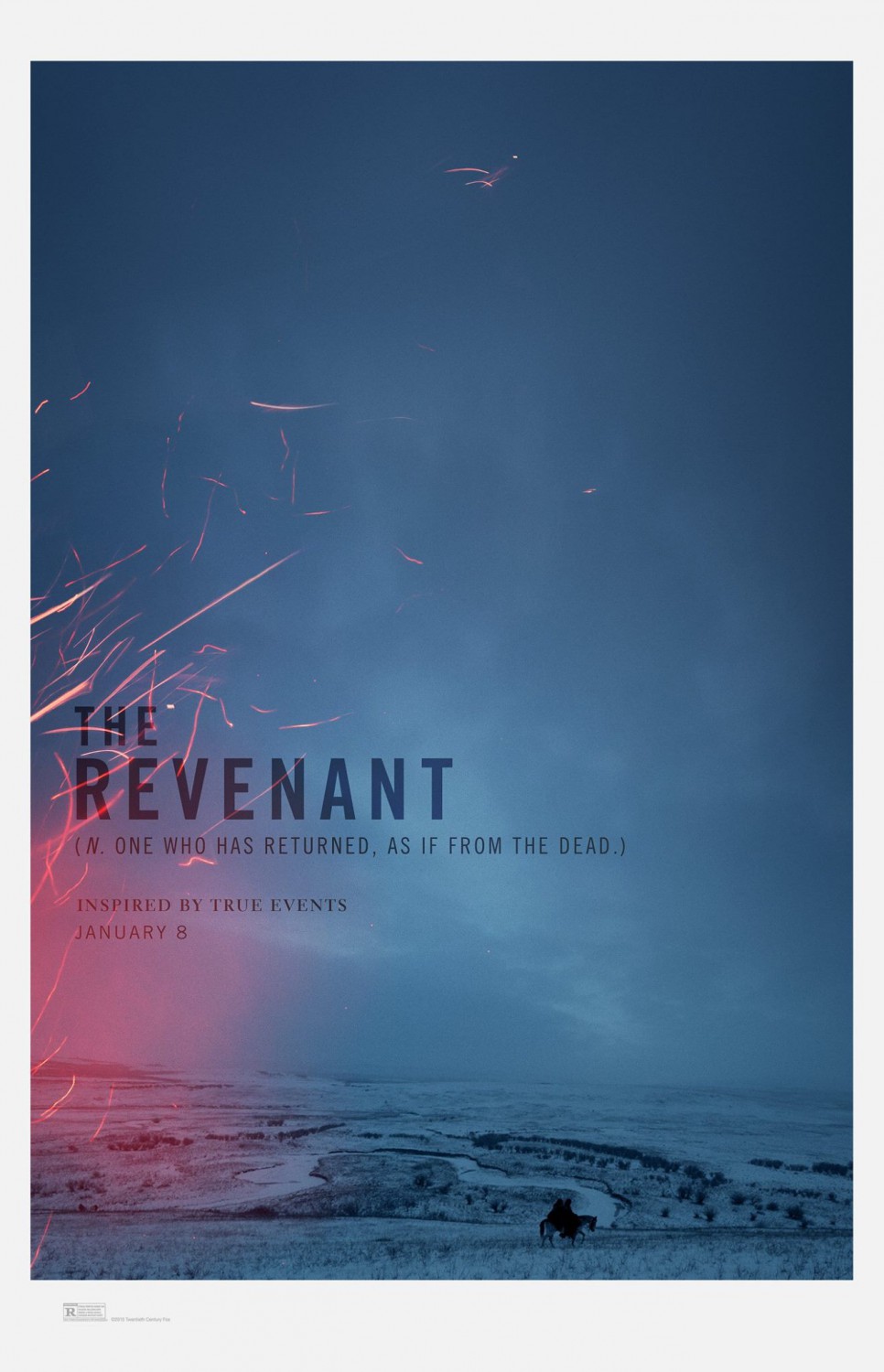
The Revenant (2016)

★★★★

The Revenant Poster 1Director: Alejandro González Iñárritu

Release Date: January 8th, 2016 (US); January 15th, 2016 (UK)

Genre: Adventure; Drama; Thriller

Starring: Leonardo DiCaprio, Tom Hardy, Will Poulter

Before The Revenant, cinematographer extraordinaire Emmanuel Lubezki shot Birdman with such technical wizardry he garnered significant critical acclaim. The floating, stalking style he employed throughout the film manifested itself in the paranoid exterior of Birdman’s central character Riggan Thomson (Michael Keaton). Alejandro González Iñárritu’s newest epic is a visual feast that again transcends simple splendour, similarly mirroring the harrowing and heartening journey of its protagonist, Hugh Glass (Leonardo DiCaprio).

A brutal insurgence sets the unflinching tone while also highlighting the perversely wonderful landscape. Lubezki tags this opening sequence, which goes on for many minutes, with a nauseating sense of disorientation: arrows splice necks indiscriminately as bodies burn and blister. The conditions are pretty horrid and only get worse, and the audience is not let off lightly — Lubezki’s cinematography might occasionally disperse beauty but when the tough times assume focus, you’re right there with the unlucky Glass (at one point waves literally batter the camera lens).

Describing Glass as unlucky is an understatement. Having led a band of fur trappers around the northern regions of America, a bear attack renders the hunter severely incapacitated. His camp, behind on their expedition following decimation at the hands of a group of Arikara Native Americans searching for their chief’s daughter, collectively decide to leave him in the hands of his half-native son Hawk (Forrest Goodluck), the inexperienced Jim Bridger (Will Poulter), and John Fitzgerald (Tom Hardy). Fitzgerald, consumed by antipathy and greed, subsequently leaves for Glass for dead.

As such, ongoing themes of retribution (“Revenge is in the creator’s hands”) and guilt (“We all saw it,” says Fitzgerald, trying to redirect blame) loom large. The two coalesce to fund this overriding examination of karma’s role in nature — having invaded the Arikara natives’ land, western hunters find themselves either dead, nearly dead, or morally dying. Even Domhnall Gleeson’s character, the captain of the expedition and arguably one of the more righteous on-screen characters, is burdened by a sense injustice and guilt. The Arikara natives, meanwhile, represent karma in human form, defending their honour and fighting capital-driven colonialism: they are judge, jury and executioner.

The aforementioned bear assault is impressive and harrowing, so much so that Glass’ survival actually beggars belief. You really need to buy into Iñárritu’s oft-included spiritual strand at this point and accept that there is some sort of superior healing going on (spirituality later manifests as a dove emerging from the chest of Glass’ deceased wife and as a perched black crow awaiting death). Given his abject surroundings, numerous gaping wounds and eventual solitude, it is miracle that Glass pulls through — to compound the matter, he wears a bearskin coat which reminds us of his survival instinct.

DiCaprio is great, as has become the norm, but the version of Hugh Glass we meet in The Revenant isn’t all that interesting. That we feel anything more than natural sympathy for the fur trapper is a testament to the actor’s rugged portrayal and, crucially, his commitment. Not the method actory stuff like raw bison chewing or raw carcass sheltering, but the emotional commitment DiCaprio shows from start until finish, by which point he did manage to coax some eye-welling out of me. And that’s pretty good going given we only really see the broken, vengeful side of Glass: he carves Fitzgerald’s name into the landscape as a motivational tool to stay alive.

Hardy itches and grunts his way through a performance that might strike some as scenery chewing (there’s a lot of scenery ripe for chewing), but that genuinely had me gripped. He is uncomfortably magnetic playing a truly evil man who does not appear to have any primal strength, only a lawless prerogative and a heartlessness bred out of self-centred durability. Menace blazes from his eyes: “You just have to blink [to die],” he informs a hurt Glass, fully aware the latter’s eyes cannot possibly hold out. Iñárritu shot in sequence and it shows: you can see weariness increasingly impede upon the actors to the point that they mightn’t even be acting. Will Poulter is also excellent as Fitzgerald’s innocent understudy, a spark of humanity among the viciousness.

Snowy forest locales are reminiscent of Edward Zwick’s Defiance, and are just as haunting too. Skyward shots of trees are frequent, depicting a barrage of tentacles ready to strike and engulf those below. Despite the general vastness, the film has a claustrophobic feel denoting no reprieve and no escape. Lubezki shows white mountainscapes and ice-carpeted valleys akin to those in The Fellowship of the Ring, though the visuals extend beyond scope, incorporating harshness and wince-inducing iconography to great effect. The score, a joint effort from Ryuichi Sakamoto and Alva Noto, is invasive and chilling — this time it is The Return of the King that springs to mind (see Sméagol’s transformation into Gollum) as eerie whistles build disconcerting tension.

In essence, what we’ve got is Max Mad: Fury Road without the exhilarating zing and character depth. The Revenant is a challenging watch, but not necessarily challenging to process. The themes are broad and like Alfonso Cuarón’s Gravity, there is an anomalous quality at play in that the film feels both narratively weightless and technically marvellous. You might consider this Iñárritu’s version of 21st century silent cinema; often suffocated by a lack of engaging verbiage, the movie’s main protagonist never feels fully formed. But for what The Revenant is and for what it is trying to do, this Wild Wild North tale has a tendency to stun.

The Revenant - Leo DiCaprio

Image credit: IMP Awards, Collider

Images copyright (©): 20th Century Fox

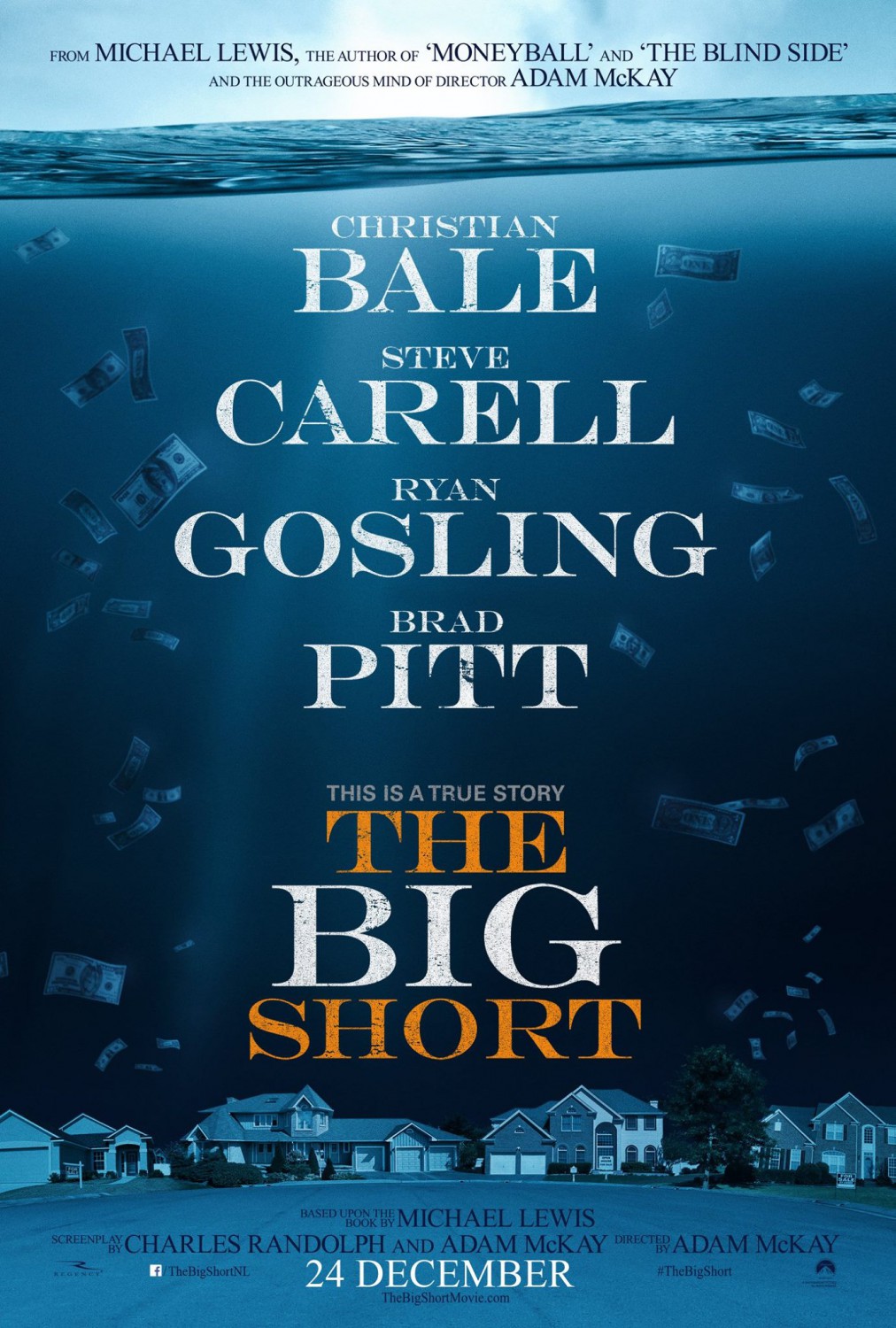
The Big Short (2016)

★★★★

The Big Short PosterDirector: Adam McKay

Release Date: December 23rd, 2015 (US); January 22nd, 2016 (UK)

Genre: Biography; Drama

Starring: Steve Carell, Christian Bale, Ryan Gosling, Brad Pitt

The Big Short recalls the audacious actions of “a few outsiders and weirdos”, a group of like-minded money men who managed to accurately predict the 2008 global financial crash years in advance. Sure, it may not sound like the most enthralling venture, but it is. Adam McKay’s outing finds its footing somewhere between the maniacal antics of The Wolf of Wall Street and J.C. Chandor’s sobering Margin Call, lined with humour and born out of blood-boiling truth. Warning: it is a piece wholeheartedly set in its ways — if you are on the side of the bankers, this ain’t for you (nor, frankly, is decency).

Christian Bale plays Michael Burry, real life hedge fund supremo and heavy metal lover. Eccentric, his brain scorched by numbers and spreadsheets (the film is based on a book by Moneyball author Michael Lewis and it shows), Burry spots a flaw in the structure of the American housing market and, since nobody will take his findings seriously, he opts to invest in said market’s eventual collapse. “This is Wall Street Dr. Burry. If you offer us free money, we’re going to take it,” says one Goldman Sachs representative with glee in her heart and cash in her eyes.

Following an industry-driven family tragedy, Mark Baum has more emotional investment that anyone in Burry’s prediction. Coaxed on by a prowling vendetta against the world, Steve Carell is terrific in the role (there’s not a bum note generally, but Carell is the stand out). You really get the sense this is a guy who wholly detests the fraudulent system, and you feel a shared sense of injustice. However, Baum’s attempt to profit from the system’s downfall — and by proxy the plight of millions of innocent livelihoods — eats away at him, this internal struggle projected with weariness by Carell’s bruised eyes.

Ryan Gosling offers his two (million) cents as the sort of guy who practices catchy lines under his breath in preparation for important meetings — this sets up a hilarious money smelling quip. Gosling is financial trader Jared Vennett, a dick, but a dick with a point. Another Burry believer, he often breaks the fourth wall to explain what’s going on, funding his smarmy exterior in the process. The straight-to-camera dialogue works because the film is relentlessly preaching to us anyway. He and Baum work together but are opposing forces in personality terms: Baum amusingly no-sells Vennett’s macho demeanour while Vennett takes no notice, only interested in his rising bank balance.

Of the four headline names, Brad Pitt has the quietest role: Ben Rickert, having been chewed up and spat out by the banking industry, now abides by a pseudo-apocalyptic philosophy (“Seeds are gonna be the new currency”). Rickert is cajoled by understudies Charlie (John Magaro) and Jamie (Finn Whittrock) and subsequently returns to the field as their unshowy mentor, won over by Burry’s cataclysmic pattern. The presence of Pitt affords some weight to an arc that might have otherwise felt inconsequential given its unoriginal through line — it gets caught in the shadow of the other two, more prominent narrative strands.

McKay and co-writer Charles Randolph’s screenplay admirably juggles all of these hefty personalities, men collectively singing from the same ledger, without homogenising them. Nor does the script hold its protagonists to some sort of impenetrable moral standard — after all, irrespective of their true target, these guys are actively seeking to profit from the misfortune of both rich bankers and struggling Americans. McKay and Randolph frequently add layers to the plot, though when the film threatens to go beyond our intellectual comprehension it is saved by offbeat explanatory segments (chartered by the likes of Margot Robbie and Selena Gomez playing themselves).

It is abundantly clear who the villains are and the film knows that. But The Big Short also recognised the need to remind us of the primary culprits and does so by throwing around masses of Wall Street jargon, creating a divide between the folk who speak said language on a daily basis and everybody else. These are people who deviously undercut their customers and then guffaw about doing so in the safety of luxury afterwards — Max Greenfield and Billy Magnussen play the worst on-screen offenders, two mortgage brokers painted with broad strokes by necessity. They believe the joke is on everyone else when it’s obviously on them.

There are plenty of other jokes too, gags inspired by wit and executed with piercing zest (McKay and Randolph even manage to take a jab at artistic licence by openly owning up to small bouts of fabrication). This overarching smartness does alienate one small story section, namely the jarring appearance of a soon-to-be ailing homeowner. The film is too clever for something so blunt, especially given its tendency to avoid emotional manipulation elsewhere. You might argue the scene puts a face on the economic turmoil, but having lived through the crisis the audience will already be thoroughly aware of the consequences. It does at least serve up an eerie visual of a housing wasteland that evokes Chernobyl connotations.

Hank Corwin’s editing encourages a rampant effervescence that is more or less employed throughout; from an opening montage that outlines the inception of the disaster, to various images of music videos, celebrities, models, and cash spliced together — all symbols of corporate America, of the new American Dream sold by capitalism, a false dream. The choppiness can be a bit disorienting but it does induce urgency and even a degree of mess, fitting since it reflects the impending financial calamity.

As characters debate the legitimacy of Burry’s predictions the camera wanders freely between their faces, upholding both the kinetic energy of the fast-moving industry and said industry’s unpredictable nature. When all the desks have been cleared and all the cheques resentfully written, The Big Short unveils its prognosis: that those involved, the guilty bankers eventually given legal clearance, were either blindly stupid or corrupted by immorality. It is a sombre conclusion but one we always knew was coming. Having laughed a lot, you’ll leave angry — and you’re supposed to.

The Big Short - Steve Carell & Ryan Gosling

Images credit: IMP Awards, Collider

Images copyright (©): Paramount Pictures