The Blogscars!

Well that pithy attempt at a punny title went awry.

Don’t worry, this is not a post on injured bloggers, or deformed blogs for that matter.

Credit: Oscars.org

Hey! It’s award season, and I’ve been nominated for my first blog award…

The Liebster Award!

I feel like I’ve just starred in Jerry Maguire and won Best Supporting Actor, only the Blog Gods have given me more than two minutes to exclaim my thank yous. Or perhaps that’s just down to my lack of being constrained by a rapidly flowing, live three hour televised window.

This is all very suave. I don’t really know what I’m doing, a bit like Jacqueline Bisset at this year’s Golden Globes. Okay, maybe not that bad. Or externally influenced. I digress, taking my lead from the business’ best and most bumbling in doing so; this isn’t about me, this is about all of you brilliant people – and occasional spam-bots – who read my film ramblings. Particularly, a huge thanks to the wonderful Cara over at Silver Screen Serenade whose insightful, funny and positively effervescent blog is a must read for film fans, television nuts and life folks in general! Check it out now if you haven’t already done so (though I’m sure you have). I’m also following Cara’s awards blog layout, because it’s far too nifty to ignore.

The Liebster Award rules, then:

  • Nominated bloggers must link back to the blogger who nominated them.
  • Nominees must answer the eleven questions set out by their nominator.
  • Nominated bloggers must also select eleven other terrific blogs with less than 200 followers – though a few of mine are a little above that figure – nominate, and then prescribe them eleven tantalising questions (or, make up some head-shakingly unimaginative queries, as I have done).
  • If nominated, you cannot nominate the person who originally nominated you.

Anyone else starting to verbally trip over that nonimate, err, nominate word?

Enough about rules, down with the machine! etc.

Let’s get going with Cara’s questions, all about FAVOURITES:

1. Vacation spot?

Being Scottish, I’ve spent many a holiday abroad over in Spain (we’re very particular, apparently). I did go to America a few years back though, when I played football (soccer), and absolutely loved it. The whole team went over; we paired off and lived with American families for most of the trip, and I was based in a wooded, pristine Pennsylvania neighbourhood. After spending a day in New York, I eulogise over returning.

2. Color?

Red, as you can probably tell looking at my blog’s header and logo!

3. Dessert?

Shockingly, I’m not a big dessert guy (or a big guy in general, so it’s not really that shocking after all) but I do enjoy vanilla ice-cream stacked on top of a warm chocolate fudge cake every now and again.

4. Black-and-white movie?

It’s a Wonderful Life, without question. That film is delightful.

5. Superhero?

I’ve never read a comic book, so purely based on films and television shows, Batman. Chris Nolan made Batman cool again. Don’t ruin it Snyder.

6. TV show?

This is a tough one. I watch far too much TV, and often have upwards of ten different series’ recorded and ready to watch. I’m gonna have three, because ‘down with the machine!’ etc., remember? Two that aren’t on anymore but are crazily different and therefore I cannot separate: Friends and LOST. I got into Friends over in the States actually. We watched it almost every night and I became glued, such a smartly humorous, charming show. LOST, I watched from start to finish as it aired on the tele. It gets a bad rap for the finale, but it absolutely had me going. A truly stupendous first season. Of the current shows on air, it’s gonna have to be The Walking Dead. I’m intrigued by the whole zombie/apocalypse (and zombie apocalypse) genre. Having said all of that, True Detective begins over here tomorrow and I’m big on Matt McCon at the moment – we’re on a nickname basis.

7. Book?

I don’t read as much as I should, but off the top of my head I’m going to pick The Hobbit. It’s all very adventurous, and funny, and good-natured.

8. Beatles song?

“Let It Be”. Sorry for being so generic!

9. Dog breed?

Labrador, like the little guy in those Andrex adverts!

10. Beverage?

I’m a sucker for Citrus Oasis, or any other orangey drink. Alcohol-wise, I’ve only really ever tried Budweiser, and haven’t consumed alcohol since!

11. Nerdy franchise (Harry Potter, Lord of the Rings, Marvel, etc.)?

Nerdy franchise? Hmm, evidently I’m quite a nerd when it comes to anything in the film (and television) Milky Way, but The Lord of the Rings is my favourite film trilogy/franchise so I’ll go with that!

Now, here are the magnificent 11 I’d like to give a shout-out to!

Since I’m all about the big screen, I’m going to compile a completely random, totally unserious list of film questions. Now then, should you guys choose to accept them (and please don’t feel the need to if it’s not your thing, or you’ve already been nominated!) here are my 11 quick-fire questions:

  1. Name one film that you have yet to see, but should’ve seen by now.
  2. Do you keep a list of every film you watch, and when?
  3. What is the first film that comes to mind when you read the following word: Guitar?
  4. What is your favourite Leo DiCaprio film?
  5. Name a film that you personally dislike, but that everyone else seems to love.
  6. What is your first film-related memory?
  7. Do you listen to any film podcasts, or radio shows, or watch any television review shows?
  8. Does the phrase “Hello to Jason Isaacs” mean anything to you?
  9. Was The Phantom Menace really THAT bad?
  10. What is your favourite film that is underappreciated elsewhere?
  11. When you hear the name Shia LaBeouf, what type of meat springs to mind? 

Have fun!

Oh, and if I’ve utterly messed all of this up and ruined the award-chain, I will repent at the feet of the Blog Gods for the rest of eternity.


Dallas Buyers Club (2014)

★★★★

Director: Jean-Marc Vallée

Release Date: November 22nd, 2013 (US); February 7th, 2014 (UK)

Genre: Biography; Drama; History

Starring: Matthew McConaughey, Jared Leto, Jennifer Garner

About halfway through his moral readjustment and self-health stabilisation, Matthew McConaughey’s Ron Woodroof proclaims “Welcome to the Dallas Buyers Club”. It’s an off-beat moment in a fairly straightforward film (narratively speaking anyway). Woodroof, harassed by his own need and stricken circumstances, develops a strictly symptomatic relief program for AIDS, one that will help many others in a similar situation to his own. At its simplest the ‘club’ is a business, a money-making scheme to fund his own wellbeing. He’s a cowboy, a hustler, after all. But deep down it’s more than that. In his own plight against the horrible illness that Woodroof has mysteriously obtained, this homophobic, probably racist and really quite vile man has found humanity. So when he says, “Welcome to the Dallas Buyers Club,” of course he has dollar signs gleaming in his eyes and subsistence flowing through his limbs, but he also has a heart that beats in favour of survival. Not just his survival… everyone’s survival.

The macho Ron Woodroof dabbles in more than his fair share of alcohol, cocaine and women — behaviour that comes across more intrinsic than sporadic in his neck of the woods. He’s invincible, at least in his own mind. Recently though, coughing spurts have become common and dizzy spells just as a frequent, so when Woodroof collapses and shortly thereafter finds out he has contracted AIDS it’s less surprising than it is sad. Told nonchalantly he has around thirty days to live by Dr. Sevard (Dennis O’Hare), Ron initially dismisses the revelation as ridiculous, only to eventually succumb to reality. Often finding exuberance in the good-natured Dr. Eve Saks (Jennifer Garner), Ron uses his resourcefulness — he’s an electrician — to devise a plan of survival, one that also incorporates Rayon (Jared Leto), an extravagant and kind transgender woman whose shining demeanour aids Ron’s attitude as much as his health.

Dallas Buyers Club works on a number of levels, but the film’s most outstanding achievement centres on a pair of performances. First, Matthew McConaughey truly is extraordinary as the depleted Woodroof (the actor went as far as to lose 40 pounds for the role). He’s never made out to be a hero, not in the conventional manner anyway, and McConaughey never tries to sell him as such. When we first meet Ron he’s pretty loathsome, yet even this early on there’s a charismatic spark that seems to grow brighter and brighter the longer Ron lives. McConaughey often reigns in the sentimental tone; his persona is such that emotion, grace and vulnerability are not instinctive traits. Yet he still persuades you to unequivocally vie for him. Undoubtedly, his relationship with Rayon aids this audience connection. Jared Leto is utterly unrecognisable in appearance, but seeps total authenticity through the dress and make-up. He strikes a fine balance in the role, punchy and effeminate but never stumbling towards caricature mode. Together, and apart, the duo make you believe in these people, in their struggles and in their staunch resistance to the cards life has dealt.

There’s an interesting ‘corporate versus the little guy’ battle going on too. Essentially, this is your proverbial ‘Hollywood’ addition to a film wrapped up in a far from glamorous topic. The grappling-against-the-system element succeeds though, both in furthering Ron’s personal redemption and also injecting the story with a greater scope, a wider base to juggle on. Set in the mid-1980s, knowledge about combating AIDS is lousy at best (“Can I read a copy of the study?”; “No it’s still being written.”) therefore the most promising bet appears to be an antiviral named AZT, a drug flaunted and prescribed in high test dosages by the FDA (Food and Drug Administration), but one not entirely beneficial to patients. Ron discovers the non-truths, triggering his idea of a Dallas Buyers Club aimed at providing alternative medicines for sufferers. This fuels another morality fire, one which debates who is in the wrong: the multinational juggernauts selling false lies for cash, or the independent virus victim selling club memberships for life? FDA agent Richard Barkley (Michael O’Neill) is often the obstacle in Ron’s path only there’s a peculiar parallel that both men share. The duo are embezzled in the art of profiteering. However it’s what drives the men respectively that separates them, a moral compass that could not be more contradicting.

The film is based on a true story but envelops an artistic licence that sees it become something of a spiritual successor to Milk, and venturing further back Philadelphia, at least in terms of legal battles and humanistic principles. When Woodroof resolutely and poignantly exclaims, “I say what goes in my body, not you,” it resonates on both of these levels, particularly in regards to individuality and acceptance. There’s very little music going on the background to nudge your emotions in a certain direction. Instead your despairs and joys are all products generated from the poise of performance and presentation of story. A tough story at times, but one that is never told in an exploitative manner. Even still, director Jean-Marc Vallée seldom dismisses the presence of humour in telling the tale. Often these laughs emerge from McConaughey’s sly pretence and ingenuity — his character’s belief that he can get away with absolutely anything (including impersonating a priest) is endemic.

Dallas Buyers Club deals expertly with a painful subject, resultantly ensuring proceedings are far less demanding to watch in comparison to how tough they could easily have been. This is in no small part down to the performances of Jared Leto and Matthew McConaughey, the latter’s portrayal never shirking away from his characters shortcomings and non-heroic demeanour. Yet, you engage with the man so much that even as the shaky final scene of appreciation plays out, any personal misgivings are forgotten.

August: Osage County (2014)

★★

Director: John Wells

Release Date: January 10th, 2014 (US); January 24th, 2014 (UK)

Genre: Drama

Starring: Meryl Streep, Julia Roberts

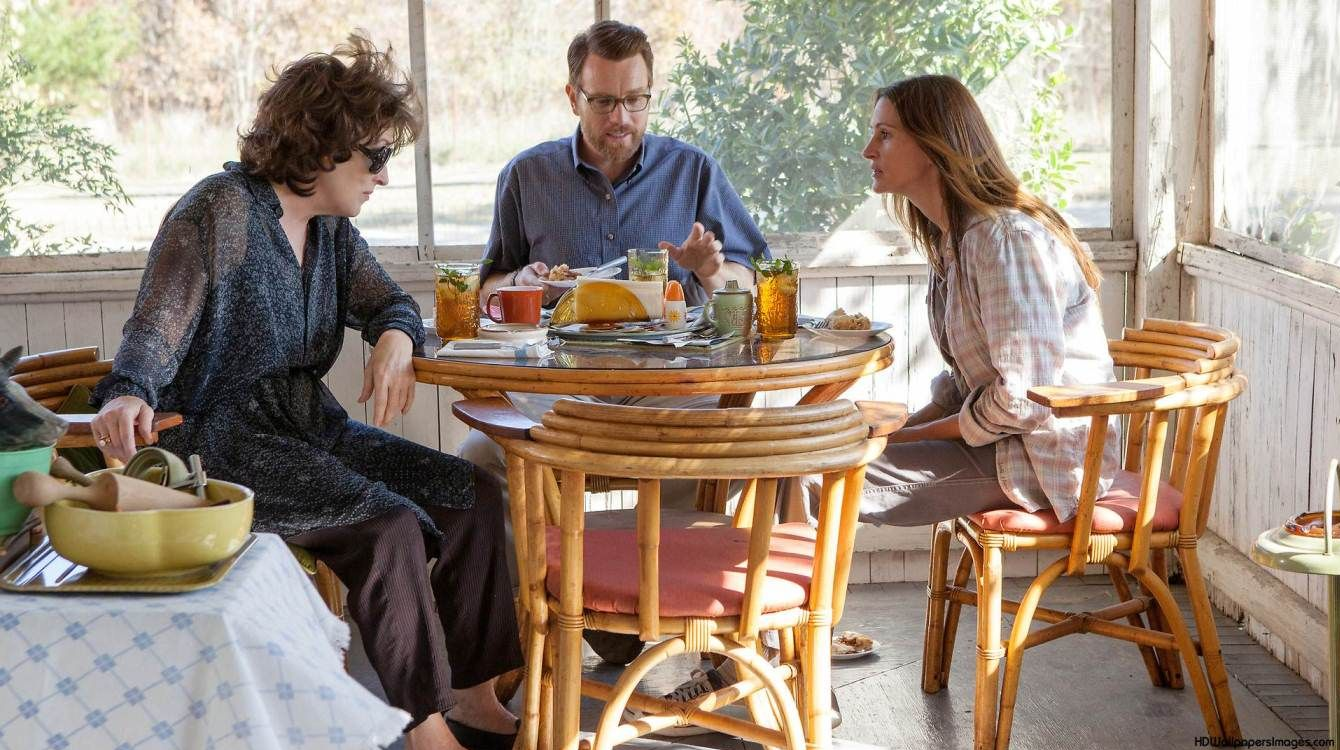
Family reunions are often tarred with the ‘awkward’ label. And they can be, particularly if the participators share a common animosity. Or at the very least are in any way unfamiliar with each other. Both former and latter are absolutely the case here, only the stench of awkwardness is far from enough. To this family awkwardness encompasses simply the petulant appetiser before an enormous main course; a main course that presents a Sunday roast of hysterics, abrasion and arguments. The Weston family collectively exist in a pit of dysfunction. Sadly though, there’s far too much of it going on. Too much acting, too much shouting, too much loudness. In fact this film is so incredibly over the top it even reduced Sherlock to a blubbering idiot.

Welcome to Osage County. Presumably it’s August.

Upon learning about the apparent suicide of her father, Barbara (Julia Roberts) travels to her parents’ residence for the funeral and accompanying strenuous family congregation. Mother Violet (Meryl Streep) has mouth cancer, an affliction that never halts her ability to rattle out words nor does it subdue the uncontrollable pill-popping antics she vicariously partakes in. As she denounces her Native American maid’s right to refer to her own heritage, it becomes apparent that Violent isn’t a very likeable person. Perhaps she has every right to detest the world given her stricken circumstances, and if so who can hold such insignificant spiting against her? It could even be the drugs taking control and shoving each negative cell in her body to the forefront. But then her sister Mattie Fae (Margo Martindale) doesn’t exactly strike a chord of positivity either, relentlessly berating her own son for flaws overwhelmingly less vindictive than her own. And Violet’s aforementioned daughter Barbara, although at times a great deal more pleasant than mother and aunt, constantly finds herself battling against a future envisioning the same resentful tone as her elders. Only she’s already halfway there.

Therein lies one of two main problems that hampers this drama: it becomes increasingly difficult to pinpoint a character that you can actually relate to, one that you don’t feel guilty empathising with. As the saga plunges deeper and deeper into an abyss of loud shrieks and scalding off-the-cuff remarks, more and more family members are picked off by hate. It’s like a horror film, only instead of a mass-murdering antagonist the villain is a murky cloud of hostility, and instead of people perishing at the swing of a gleaming axe they choke on said whirling cloud and in turn lose any redeemability. Meryl Streep goes all out as the patriarch and is very good at being very bad, but her frenzies cast a shadow over other more genuine lower-key offerings from the likes of Julianne Nicholson and Chris Cooper, as Ivy and Charles respectively (ironically, the only sort of appealing characters on show). Yet even aside from all the noise and palaver, none of the people on screen are extensively interesting. You’d do well to connect with someone who is brash and a tad evil. At best it’s fun for a while, but by the time Streep has smoked her seventh cigarette and Roberts has blown her fourth gasket it all becomes a bit boring.

The screenplay is adapted from Tracy Letts’ critically lauded Pulitzer Prize–winning play of the same name and this provides the nucleus for significant problem number two. Everything feels quite artificial, almost agonisingly forced (tick off the proverbial stage props as you go: dinner table for ultimate congregation scene, porch for nighttime reminiscence scene). Few laughs are on offer, partly because the script can be whimsical but mainly due to the physical nature of delivery required for success. You can clearly see why the hair-raising approach works on stage, where the interaction with audiences who are part of a communally emotive atmosphere surely aids matters too. On screen though the execution is wooden meaning conversational exchanges — of which there are many — wear quickly. Having run out of relevant anecdotes, Streep and co streamline into discussing dying birds and more topics which feebly bear contrived relevance to their situation.

There’s no substance to the dialogue. Petty attempts at stirring the thought-provoking pot (or perhaps cauldron in Violet’s case) backfire as words fall on deaf ears: “Die after me, I don’t care what you do… just survive” might hold some sort of emotional resonance in a John Hughes film, but here it just sounds like terrible advice from a mother to her teenage daughter. Speaking of questionable behaviour, why do some members of the family grasp so tightly to the courtesy of grace at the dinner table, when they’ve just conducted a post-funeral fashion extravaganza? The film often appears to be trying to assure its own direction and often fails. One moment it’s a black comedy, the next a family drama, shortly thereafter a sentimental life-lesson. At one point I was certain the film blaring in view was some sort of Anchorman/Thor hybrid. Turns out Ewan McGregor just has a dodgy accent (“You’re a pain in the ass!”).

It does wave a few white flag-esque redeemable qualities in fairness. A charming soundtrack interweaves amongst the chaos, one which deviates from pleasant to sombre depending on which mode the narrative has shifted to. The extended family dinner is probably the best sequence on display, and is a very good one at that. Only here do each of the characters get to evolve their varying dynamics with other family members. It is the one time where you are absolutely certain proceedings are going to erupt at any given moment, yet the film deviously keeps you guessing and engaged for an extended period of time. The performances on the whole are excellent, if a smidgen awards-gesturing at times. Heck it even conveys the know-how to be funny on the one or two occasions laughs permeate the volatility (reasoning behind Abigail Breslin’s desire to get home is particularly apt).

August: Osage County is just about as messy as the family it thrusts on screen. Half of the characters are undesirable, whilst the other half’s presence merely equates to making up the numbers. There’s a lot of acting going on — bouts of which are very good — but sadly performances aren’t the be all and end all when it comes to engaging an audience.

Tomatoes at the ready.

Blue Jasmine (2013)

★★★

Director: Woody Allen

Release Date: August 23, 2013 (US); September 27th, 2013 (UK)

Genre: Comedy; Drama

Starring: Cate Blanchett, Sally Hawkins, Alec Baldwin, Peter Sarsgaard

Upon its release Blue Jasmine received rave reviews from viewers and, after a few months hovering around cinema screens and iffy online streams, is variably considered a return to form from the eccentric Woody Allen. I’m not extensively versed in Allen-lore, not nearly as much as i ought to be considering his lofty status in Hollywood and abroad. That being said, whilst his newest offering brims with scintillating performances (two Oscar nominated deliveries stand out in particular) the content, narrative and direction all add up to something a bit… bland. It’s a difficult story to consume and a tricky one tell, a story that shouldn’t insist on generating humour as often as it tries, particularly when there’s non to be shared. It’s possible that I just don’t get it; that the quirky, erudite versus blue-collar joust is something not entirely compatible with this 20-year-old. More than that though, Allen seems to be trying overly hard as he attempts to deliver on one too many fronts, leaving the intended humour absent and the compulsory drama simmering. But only just simmering.

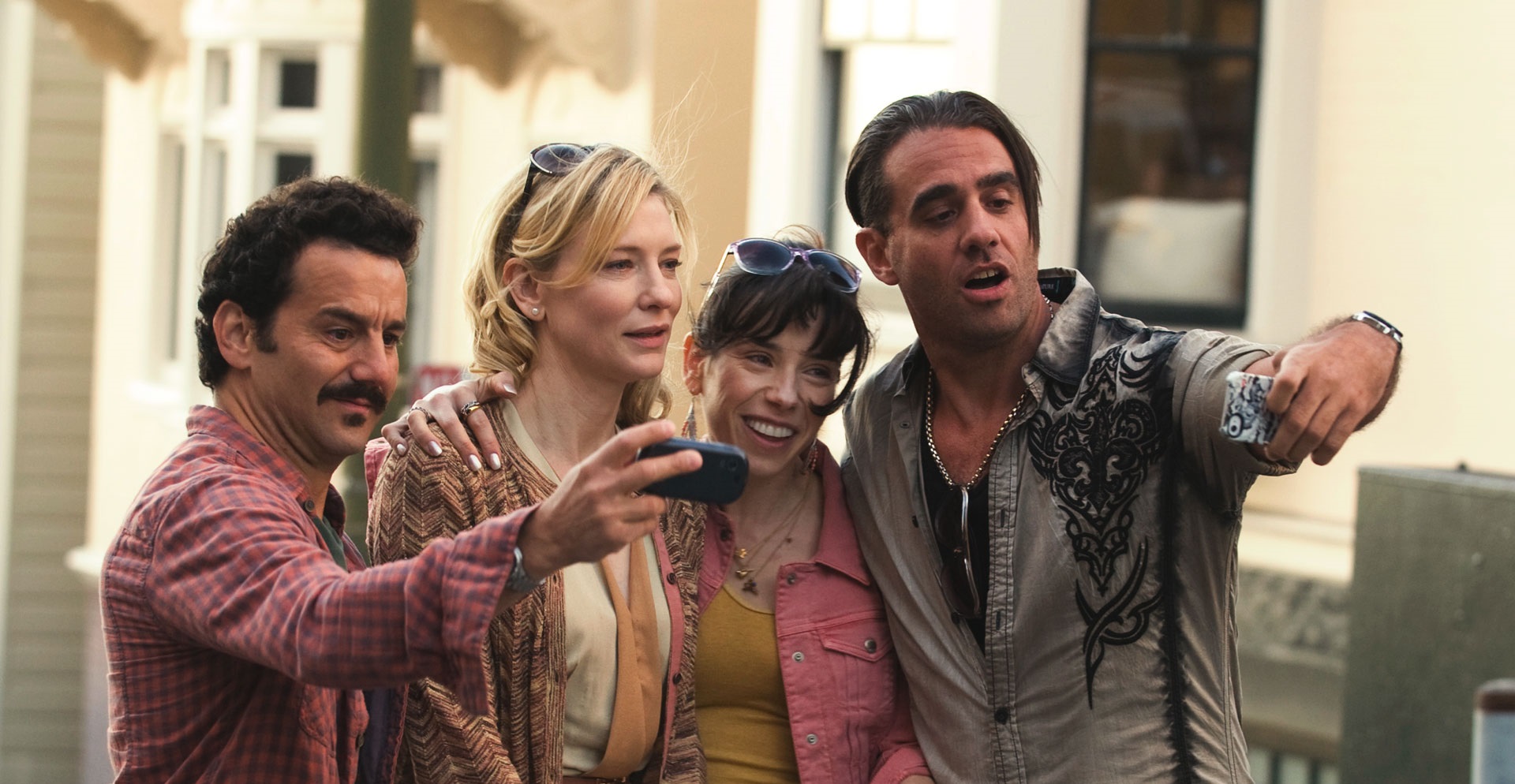
Jasmine (that’s Jasmine, not Jeannette) Francis is an upper-class socialite from New York who finds herself mentally, physically and financially drained following separation from her unashamed husband, Hal (Alec Baldwin). She isn’t used to earning, to maintaining herself and her life outwith superficial externals such as high-brow struts and an aristocratic ambience. Only it’s not an ambience, it’s an annoyance. An annoyance that has haunted her sister Ginger (Sally Hawkins) ever since childhood, when their foster parents favoured Jasmine’s superior “genes”. In her time of need, Jasmine (Cate Blanchett) moves to San Francisco to live and survive by Ginger who remains frustrated over a misshaped business deal proposed by Hal, amongst a number of other issues related to her now spiralling sister.

Evidently there’s a lot going on, yet too often the happenings are overly trivial — discussions reigned in on antiques for example — and therefore aren’t substantial enough to fully engage the viewer. Perhaps that’s the point, that Jasmine is such a one-dimensional and flawed character, therefore the film should be too. This approach doesn’t catch on though as Jasmine and many of the other people on screen are very difficult to relate to. At one point Ginger points out the obvious: “When Jasmine don’t wanna know something, she gotta habit of looking the other way.” In a sense the narrative follows this mantra too — just when there’s a glimmer of something intriguing on the horizon the road suddenly detours back to stagnant repetitiveness.

And it certainly is repetitive. As their lives together progress and various agents enter and exit (boyfriends mainly), Jasmine constantly scalds Ginger for her poor taste in unworthy men. First it’s Augie, a working-class and slightly optimistic guy held down by the harsh realities of life. Chili follows, a mechanic who unlike Augie treats Ginger with respect even if at times his exuberance gets the better of him. Jasmine relentlessly disapproves, neglecting her own prior misdemeanours when it comes to settling with the right partner. In fact, her wrongful rejection of Chili is probably the only time Jasmine is not thinking about herself: she often reminisces about sailing around San Tropez in front of her less fortunate sister who has hardly travelled America never mind the world; she flies first class on her way to Ginger, even though she has no money, which is the main reason for her relocation; in fact Jasmine removes herself from all tasks unbecoming of her (“I never pay attention to house business affairs”). Combined, this makes it incredibly difficult for the viewer to like or even sympathise with Jasmine, which is essentially the downfall of the film as the camera stalks her every move and not much else.

Allen juxtaposes the past and present as life events interchange; from detailing the breakdown of Jasmine and Hal’s marriage to the breakdown of Jasmine herself. Occasionally happenings on screen are tough to watch, but it is often the case that these demanding moments are followed by attempts at humour thrown in as the embodiment of a panicky life-jacket, almost as if the film is fearful of advancing that extra step into Jasmine’s oblivion (which would’ve worked better than the half black comedy, half drama on show). For example, after a tortuous altercation pitting Ginger and Jasmine against an enraged Chili, Jasmine is seen quickly shaking off any resultant cobwebs as she searches for her ringing phone in a nonchalant manner. This woman has recently lost the love of her life in onerous circumstances — wouldn’t she be affected more by this attack with potentially mirroring connotations on her sister?

There is success emitted from Allen’s alternating timeline approach though, as the method distinctly displays the degree of culture clash between Jasmine and Ginger. Jasmine has had everything handed to her on a silver platter. Now that life has crumbled, her anxiety over what’s next conveys exactly how behind she is in the experience of every day normality: she wants to return to school (to study what?); will study fashion or interior design (can’t use a computer); takes computer classes (has no money to afford); accepts the “medial” job that she never wanted, the job that the vast majority of those around her do on a daily basis.

As average as the film is, there’s absolutely no denying the power and sheer struggle evoked by Cate Blanchett as Jasmine. It’s not even a case of the film’s downfalls making her performance glow even brighter, no, Blanchett’s display would stand out in any offering. Even though you don’t really like the character, it’s impossible not to be drawn in by Blanchett’s depiction of painful demise as Jasmine slowly loses all sense of wherewithal and dignity. The portrayal is uncomfortable to watch at times and it should be that way. Without Blanchett at the helm, the film might have teetered worryingly close to Diana territory.

Sally Hawkins also deserves plaudits for her starkly contrasting role as the less fortuitous sister; likeable and empathetic as she establishes and maintains a strong sense of empowerment throughout the film’s progression. In an abnormal role from his usual work, Peter Sarsgaard is astute and pompously slick as the yin to Jasmine’s yang. Their first meeting is actually one of the film’s better moments, where the pair enter a self-congratulatory word-off as they divulge many an “I” and “my husband and myself”. It’s arrogant and self-absorbed nonsense, and it completely works because these characters come across as utterly undesirable just as they are supposed to in that moment.

Blue Jasmine is a film where nobody really seems to be listening to each other (“Pay attention Augie”), where characters are solely focused on getting their two — or 20 — cents in, meaning proceedings feel too feeble. The darkly comic moments don’t really fit in, and the emotionally wrought sections seldom have the desired effect. It’s no surprise that that actors are receiving awards nominations left right and centre as opposed to the film itself. While it is far from terrible, there’s a lot of onus on Cate Blanchett to make the picture worthwhile. Thankfully, in doing her worst, she does her absolute best.

Oscars 2014 — Early Predictions

On March 2nd the film industry will pay tribute to the greatest cinematic achievements of the past year. The best of the best. The cream of the crop. For the most part, anyway. The Academy Awards always generate a hefty amount of hype – with Harvey Weinstein on the prowl there’s no surprise there! – and perhaps more so this year than in the recent past given the relatively open landscape in just about all the heavy-hitting categories.

The Academy announced their nominations for each category earlier today, so let’s go through some of them and pick out a few potential winners.

I haven’t seen all of the films listed yet, which means a portion of the following bout of foreshadowing will be partly down to instinct and partly taking into consideration where the main bouts of buzz are landing. Heck, we can come back and amend stuff nearer the time… once I’ve consumed all the films. Ahem.


The Nominations

Best Picture

American Hustle

Captain Phillips

Dallas Buyers Club

Gravity

Her

Nebraska

Philomena

12 Years a Slave

The Wolf of Wall Street

– What will win: 12 Years a Slave

– What I want to win: Undecided

– What should’ve been nominated: Blue is the Warmest Colour


Best Actor

Christian Bale

Bruce Dern

Leonardo DiCaprio

Chiwetel Ejiofor

Matthew McConaughey

– Who will win: Chiwetel Ejiofor

– Who I want to win: Leonardo DiCaprio

– Who should’ve been nominated: Tom Hanks


Best Actress

Amy Adams

Cate Blanchett

Sandra Bullock

Judi Dench

Meryl Streep

– Who will win: Cate Blanchett

– Who I want to win: Cate Blanchett

– Who should’ve been nominated: Adèle Exarchopoulos


Best Supporting Actor

Barkhad Abdi

Bradley Cooper

Michael Fassbender

Jonah Hill

Jared Leto

– Who will win: Jared Leto

– Who I want to win: Barkhad Abdi


Best Supporting Actress

Sally Hawkins

Jennifer Lawrence

Lupita Nyong’o

Julia Roberts

June Squibb

– Who will win: Jennifer Lawrence

– Who I want to win: Undecided


Best Director

David O. Russell

Alfonso Cuarón

Alexander Payne

Steve McQueen

Martin Scorsese

– Who will win: Alfonso Cuarón

– Who I want to win: David O. Russell


Best Original Screenplay

American Hustle

Blue Jasmine

Dallas Buyers Club

Her

Nebraska

– What will win: American Hustle

– What I want to win: American Hustle

– What should’ve been nominated: Inside Llewyn Davis


Best Adapted Screenplay

Before Midnight

Captain Phillips

Philomena

12 Years a Slave

The Wolf of Wall Street

– What will win: 12 Years a Slave

– What I want to win: Undecided


Best Documentary Feature

The Act of Killing

Cutie and the Boxer

Dirty Wars

The Square

20 Feet From Stardom

– What will win: The Act of Killing

– What I want to win: The Act of Killing

– What should’ve been nominated: Blackfish


On an interesting side note, every year the Oscars devote a part of the ceremony to a certain theme. Last year for instance, a variety of musical numbers were unfurled on stage (remember Seth MacFarlane’s “Boob Song”?) paying tribute to film music.

This year the theme is ‘Movie Heroes’. That’s everyone from the normal person on the street, to the surgeon saving a life, to those larger-than-life superheroes we’ve come to know and love.

His film won Best Picture last year… I wonder if a certain newly appointed masked crusader will unveil his bat-wings this time around.