Locke (2014)

★★★★

Locke PosterDirector: Steven Knight

Release Date: April 18th, 2014 (UK); April 25th (US)

Genre: Drama; Thriller

Starring: Tom Hardy

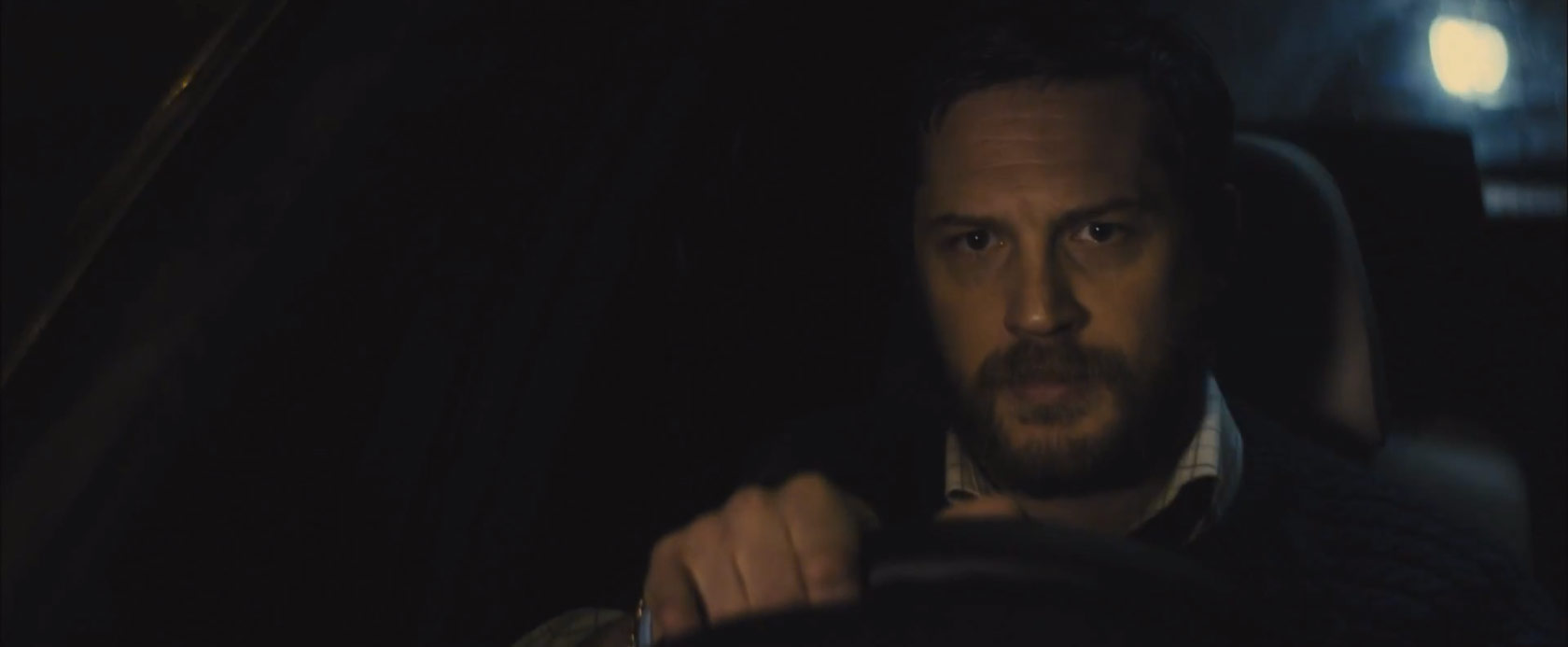
For Ivan, every bump in the road signifies another life collision. As he gazes through the car window, eyes lamenting, a struggling reflection cast before us, we recognise him as a decent human being in the midst of self-inflicted calamity. Phone calls offer a moment of salvation: relief, anger, humour, misery. But still, salvation from lawless thought. Often, Ivan — a man of structure — joins up the dots in his own life by relating an ingrained knowledge and valuing of cement and stability to the current unsavoury predicament in which he finds himself, and occasionally the driver turns to an empty back seat in order to converse with his deceased father. It’s in these moments of spiritual bartering that Locke struggles to maintain order. Remember, Ivan is a man of structure and the film thrives not through obvious semiotic links, but by way of his empirical, rubble-gathering conversations. Not to mention an exceptional solo performance.

As the night’s misty ambience shrouds his car, construction boss Ivan Locke (Tom Hardy) finds himself driving away from a highly imperative job at work through circumstances stemming from a past action that was not at all beyond his control. From home, his son continues to phone and commentate the latest football match, and from work, higher-ups and lower-downs transmit more bad than good news. But it is a situation on the periphery of his normal day-to-day existence that has Ivan abandoning domestic and occupational ship tonight. A birth — one primed to send a stake through his life.

Locke is about as ambitious as any film can get within the confines of a car and boasting a solitary character hampered by a snivel-inducing cold. Plot doesn’t really exist, at least not in its customary tangible form that encourages the camera to follow the actions of different people, to different places, in order to relay new actions. Rather here, any quintessential plot twist or narrative advancement lies at the mouth of Tom Hardy, whose words and facial expressions both have a defining hand in dictating every element of the film. At its core then, in order to be a success Locke perilously relies on a compelling central performance. And it certainly gets one.

At no point does the cinematic spotlight retreat from Tom Hardy. The Londoner has nowhere to hide — just like the man he is portraying, the car is his temporary prison; a voluntary prison, one that both Hardy and Ivan choose to enter. (His name, Locke, hints at confinement.) Further complicating matters, the actor must relay a rich Welsh accent for film’s entirety. It’s put up or shut up time and at no point are we crying out for Hardy to shut up. His dialogues caressed by a wonderfully thick cadence, the man behind the wheel not only garners audience sympathy, but also demands a degree of exasperation by way of an incessant need to fix everything (not to mention a prior noteworthy error in judgement). When Ivan converses with his son Eddie, voiced by Tom Holland, we can hear the compatible trust and loyalty between the pair. Misguided trust? No, not all. Ivan is too genuine in repentance. Yet when we ear-drop in on a discussion between Ivan and Donal, a colleague, it is obvious that the former’s practical desire to amend is being dispersed in the wrong direction. (“I want to talk about a practical next step,” he repeats.) That is, towards his job and not his family.

In establishing Ivan as an ambiguous sort, Hardy leaves it up each individual eavesdropper on his journey to decide whether or not his moral compass is shattered, cracked or still intact. Writer/director Steven Knight plays a role in formulating the character, of course, but Hardy’s delivery must be spot on otherwise the film is doomed. The lead is wearing so many different hats too: father, husband, son, consulter, instructor, peace-keeper. There’s not a single moment of respite in sight, not until he reaches his destination and by then, we’ll be gone. Hardy must relentlessly alter appearance without taking a breath. His character Ivan says it himself: “I have a list of things I have to do tonight when I’m driving.” Carrying wholesale weight on his shoulders, the actor remains poised throughout. If he hadn’t already appeared as Eames in Inception, or as Bane in The Dark Knight Rises, this is the type of performance that would’ve propelled Tom Hardy up an acting echelon or two. Instead, it’ll simply cement his lofty place.

In a film as minimally scoping as Locke, a slow and effective plot that builds towards an emotive, tense crescendo is necessary to go alongside a commanding central performance. When Ivan converses with air over his own mistakes and resultantly flip-flops between placing blame on his father and on himself, the outing loses some tension-building momentum. The character is one stimulated by integrity — a structurally damaging change in cement for his building enrages him, and he is left disheartened by a self-generated misdemeanour, two varying instances of corrupt integrity that affect Ivan. Whenever a phone call ends, the car dashboard re-manifests as an electronic satnav, telling us all we need to know about Ivan’s life and where it is headed: straight ahead, approaching isolation, dictated by others. Simple aesthetic insights such as the one offered by said satnav are alluring, unlike the occasional obvious and over-egged metaphysical spiels that don’t do Locke any favours.

Unlike Buried, a film that spends its runtime trapped within a coffin alongside Ryan Reynolds, there’s ultimately no concrete pay-off. Perhaps this has something to do with the aforementioned philosophical interceptions in narrative, jarring much pressure-building. It is also conceivable that Knight writes himself into a tricky conclusion, where there is no justification for an unambiguous ending. This isn’t necessarily a negative — credit must go to Knight for sticking his neck on the line and making a film as experimental as Locke, particularly in an era pillaged by financial behemoths where even low-budget productions cough up allocations of around £10 million. (Locke was made for less than £2 million.) At heart, it is the typical redemption story, only without any typical advantageous factors apart from dialogue — no emphatic score, or distressed damsel, or soaring visual palette. Not even an outright hero. The closest we get to unbridled tension comes during conversations between Locke and any other voice, rather than an empty back seat. Confusion rears and urgency arises, compounded by the screeching sound of sirens and flashing lights from police cars that intermittently race past in the outside world.

Ivan’s journey to London is an exercise in personal demon exorcism, and you are the judge in this tale of uncertainty. One thing is for certain though — Locke is a damn good attempt at something different. Narratively-speaking, the film doesn’t scintillate as much as it wishes to. Performance-wise, it just might.
Locke - Hardy

Images credit: IMP Awards, Vulture

Images copyright (©): A24

The Hunger Games (2012)

★★★★

The Hunger Games PosterDirector: Gary Ross

Release Date: March 23rd, 2012 (UK and US)

Genre: Adventure; Science-fiction; Thriller

Starring: Jennifer Lawrence, Josh Hutcherson, Liam Hemsworth, Woody Harrelson, Elizabeth Banks

As District 12 native Gale peers pensively across a carpet of dense woodland, we know his thoughts are centred only on Katniss and what could’ve been. Many miles yonder, the Games are about to begin and the odds aren’t in Ms. Everdeen’s favour. In fact, the odds aren’t in anybody’s favour. The green canopy before him is an “escape” that Gale and Katniss have always cohesively pondered. Now, it’s likely too late. There isn’t much respite from this sense of pertinent dread throughout The Hunger Games. Themes of oppression, manipulation and artifice consume proceedings, each element tackled maturely and with a degree of intelligence. Though it’s based on Suzanne Collins’ teen-aimed novel of the same name, The Hunger Games beckons forth a far wider audience, a psyche that no doubt assists in creating close to an indelible franchise curtain-raiser.

In a dystopian future, the nation of Panem is segregated into 12 districts and a commercially rich Capitol. President Snow (Donald Sutherland) is Capitol overseer, and his methods of maintaining ‘order’ in society rely heavily on a tournament of death called the Hunger Games. Katniss Everdeen (Jennifer Lawrence) survives week by week in District 12, the poorest area of Panem, though since volunteering in place of her younger sister to take part in the 74th annual Hunger Games, survival has become a rare commodity. Alongside fellow district resident Peeta Mellark (Josh Hutcherson), Katniss now must participate in a maniacal free-for-all where there can be only one survivor.

An assured opening sets the stage for what is to come. The first act carries eerie subtlety, etching discomfort; a melancholic hum, almost vigil-esque, is interrupted by the hollow sound of a horn ushering in inevitable death. Later on, this underlying notion of distress plateaus as a 30 second countdown intermittently signals the immediacy of inhumane violence for Katniss. We see portions of District 12 that are hopefully its worst parts as anything poorer would imply extreme poverty — it is a place that could easily be mistaken for the downtrodden Ozark dwellings of Winter’s Bone, only unfrozen. Instantly an air of durability emerges, within which citizens have learned to fend for themselves. Katniss and Gale hunt in forbidden zones in order to feed their families, the former exclaiming, “Is this real?!” upon the sight of bread.

Shortly thereafter, the Reaping takes place and the Hunger Games players are selected. Booming screens represent a watchdog elite, the Capitol, whose justification for staging an animalistic melee is to protect those whom they rule over: “This is how we remember our past, this is how we safeguard our future.” It’s clear who the “our” in said statement denotes (and who it does not). The film’s inaugural goings-on are excellent, presenting an ideological enemy that bares no echelon of morality. We are already desperate to see those being held down rise up and, as promise dwindles, this desire escalates. President Snow refrains from showing face until events have advanced further and, in truth, has very little impact on the film as an active villain. His affects on events are delivered far more insidiously, his sophisticated whisper carrying indulgence, and this only serves to fuel a fire of loathing against the autocratic Capitol.

Having conjured up a seemingly impermeable enemy and a downbeat atmosphere bathed in truth — knowing these cruelties are very palpable factors in the real world makes them even tougher to comprehend — director Gary Ross must then offer a beacon of hope for viewers to grab hold. Occasional splashings of humour temporarily alleviate the heavy tone, but it’s Katniss who is the primary body of resistance. Jennifer Lawrence’s portrayal of Katniss, moreover. Sculpted from the get-go as necessarily protective of her loved ones, Katniss’ strength stems from a hereditary place, ultimately one that resonates with viewers. She’s unaware of but not impervious to pain when her family is at risk (an early finger-stabbing scene cements this). With those paternal foundations in the bank, Jennifer Lawrence adds rigour and ambiguity — we’re never entirely sure where her loyalties lie away from District 12 — though in distancing herself from other characters, she never distances herself from the audience. It’s a tremendous performance in a clinical role, and Lawrence deserves a lot of credit.

Tom Stern’s cinematography resembles his work in Mystic River, chartering gritty immediacy which, alongside instances of on-point editing, generates a jolting disquiet in the face of in-game brutality. Bloody splurges are uncommon and therefore more impactful upon manifestation (included in the 15 certificate version, they make events in the arena seem more visceral). In contrast, Capitol life is artificial; the pre-game festivities are produced, and giant screens relay betting markets for the benefit of already wealthy residents, who wear extravagant attire and hide their faces with make-up. The filmmakers rightfully abstain from going down a commercial route though, instead engraving the tournament as an antidote of perverse enjoyment for Capitol civilians. After all, “it’s a television show” according to Haymitch, one of Katniss’ few allies, himself flawed as a result of the Games: his heart promotes authenticity, but his head is hampered by alcohol.

Woody Harrelson balances Haymitch’s principle-jousting effectively and appears to be having a blast in the process. As does Elizabeth Banks, playing Effie Trinket, an eternally positive Capitol export whose drastic appearance and bubbly mindset do not connotate evilness as much as they do ignorance. Rather, malevolence froths from Donald Sutherland’s President Snow. Delivering a performance of poise, Sutherland compels the audience to detest Snow more and more with every muttering. Josh Hutcherson is solid as Peeta Mellark, though he does sporadically tow the corny line. A nod must also go to Stanley Tucci, whose Caesar Flickerman is the face of the Capitol, an ebullient television presenter. Tucci injects so much charisma that it’s difficult to dislike Caesar, though your teeth will grit upon hearing his pronunciation of the “Hungaaa Games”.

The film does suffer slightly from a quite lethargic middle act, particularly as it comes on the back a swift and purposeful opening. Throughout many of the training centre scenes, there’s a less-than-sure ambience and events begin to meander. We know Peeta is in the shadow of Katniss, no need for him to explain it over the dinner table. In comparison, the outing’s conclusion feels rushed, almost as if the filmmakers can’t wait to end proceedings and move onto the second instalment.

The Hunger Games is a decisive franchise opener. Shepherded by an accomplished lead performance, the film tackles issues carrying present day prominence in a manner feasible to most audiences. Like an arrow through an apple, Katniss must be emphatic when striking an enemy whose guard is down, when they’re not paying attention. They mightn’t be watching, but you should.

The Hunger Games - Katniss

Images credit: IMP Awards, What Culture

Images copyright (©): Lionsgate

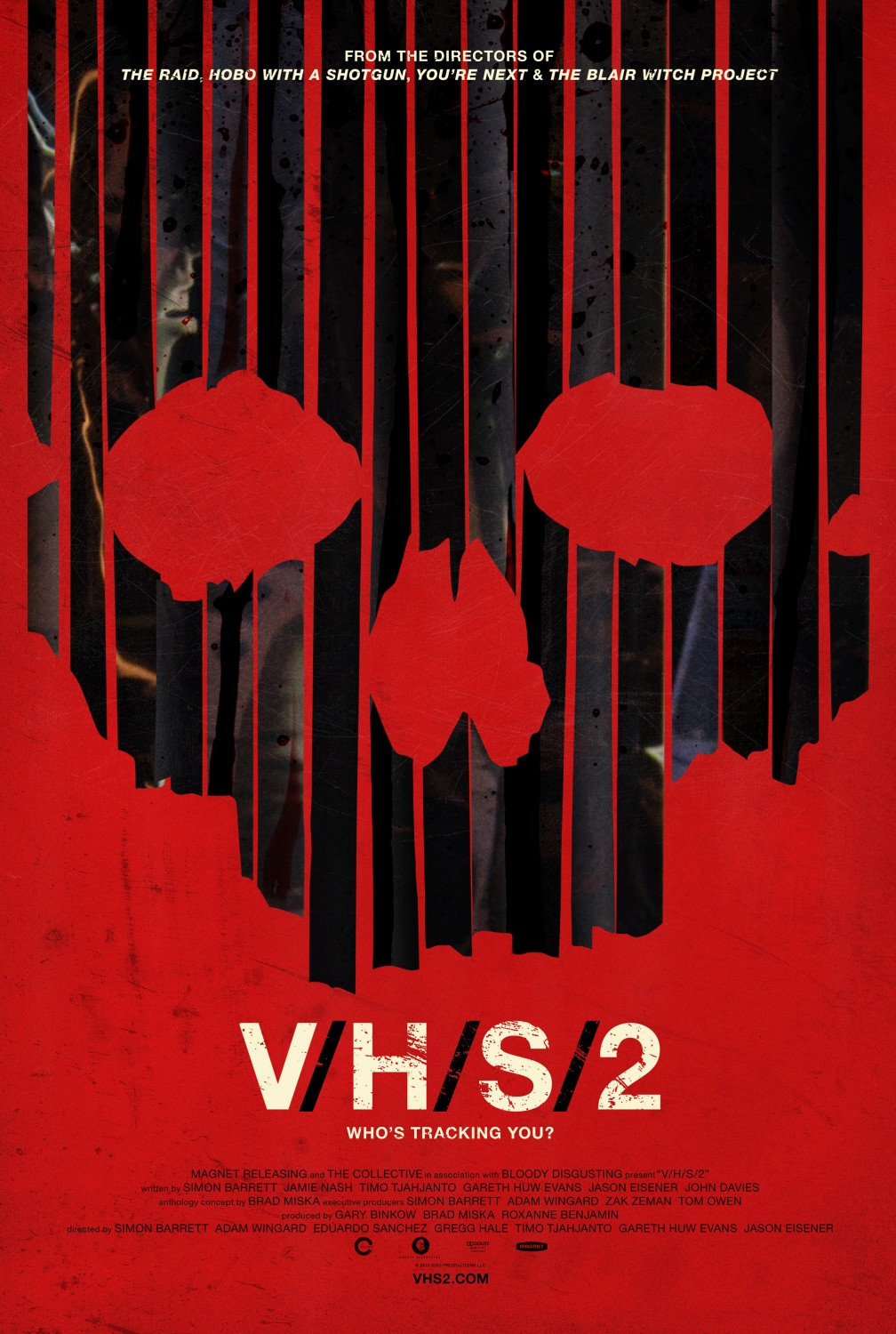
V/H/S/2 (2013)

★★

V/H/S/2 PosterDirectors: Various

Release Date: July 12th, 2013 (US limited) October 14th, 2013 (UK)

Genre: Horror; Thriller

Starring: Various

If 2012’s V/H/S failed to capture the adulation of those brave enough to tough it out, then there’s not much hope for this follow up. A film as uninspired as the title shepherding it suggests, V/H/S/2 has five opportunities to succeed yet, more often than not, chooses to beckon forth eternal disappointment through dullness. In fact, only via the purposeful mind of Gareth Evans does this horror outing really imbue a horrifying tingle. Otherwise, a terminal sense of ‘been there done that’ seeps from the screen, so much so that you’d be forgiven for thinking the segments in this piece are outtakes from the first film. Having been given a measly 20 minutes or so to showcase their talents, each of the seven directors (some segments are co-directed) ought to have vehemently lived by the mantra that denotes a maximisation of their minutes. Somebody inform the postal service because that memo certainly got lost in the mail.

Sewn together by a frame narrative identical both in execution and content to its visual sibling from the first film, V/H/S/2 relays four other slices of spook, apparently. To begin we see Clinical Trials, a ghost story that haunts viewers solely by way of its surprisingly lacklustre content. Next, A Ride in the Park combines the visceral sheen of The Walking Dead and District 9’s moral pickings, though would bite the proverbial hand off for either’s ingenuity. Safe Haven is the film’s saving grace, and there’s absolutely nothing safe nor graceful about Gareth Evans’ co-offering. Finally, extraterrestrials meet pyjamas in Alien Abduction Slumber Party, but this one just ain’t as fun as it should be.

Undoubtedly, the least effective short is actually the one that plays most often. Tape 49, as it is known, is like that annoying bout of buffering that occasionally interrupts whichever film you’re watching on Netflix, increasingly fuelling frustration upon third, fourth and fifth rearing. Directed by Simon Barrett, the Whac-A-Mole invariably shines a light on Larry (Lawrence Michael Levine) and his partner Ayesha (Kelsy Abbott), a pair of investigators doing some — wait for it — investigating into the disappearance of a college student. Upon reaching his last know location, a run-down and darkened house, the duo come across a series of televisions emitting static and ushering forth video tape viewing. Implemented as an anchor for the rest of the film, Tape 49 employs the exact same scare (or not) tactics as those seen in V/H/S, rendering the short exhaustingly ineffectual. Already, the remaining segments are at a disadvantage as they first must overcome the lingering cobwebs of Barrett’s effort, before advancing with their own agendas.

Admirably, Safe Haven complies in this regard. Malik (Oka Antara), news crew in tow, enters the residence of an unorthodox Indonesian Cult whose leader, the ‘father’ (Epy Kusnandar), has a severe ethics problem when it comes to the treatment of his followers. Inevitably, events suddenly go awry as the brainwashed group’s true intentions are revealed. Alongside Timo Tjahjanto, director Gareth Evans unleashes a tenacious bloodbath that supersedes every other piece of the V/H/S/2 puzzle. The directorial duo are productive in their utilisation of the found footage concept, generating an uncomfortable air of chaos through the style’s incorporation. Beginning fairly tepidly, you begin to worry that Safe Haven will conform to the generic inequalities of what has come before, but it’s not long before the horror short explodes (literally) into a viscous Jonestown rehash, carrying eerie imagery and brutal immediacy. This is what The Raid would look like if it was a horror movie: violent, relentless and utterly bonkers.

Adam Wingard’s Clinical Trials succeeds in conjuring up ghostly figures, but nothing else. Wingard was the overseer to V/H/S’s version of Tape 49, but his previous experience in the genre does nothing to aid proceedings here. The director also stars in his own segment, as a man who has chosen to take part in a social experiment that sees his sightless eye be replaced by a recording device. Upon returning home post-operation, the man is unceremoniously haunted by a ramshackle bunch of manifestations. Rather than coming across as an efficient stand-alone horror short, Clinical Trials plays more like the opening of Paranormal Activity 6. Though the eye-camera is a neat ploy in avoiding the often impractical continuous use of a handheld camera, there ain’t much to be seen through its lens. Jump-scares don’t frighten, nor do any of the creepily intended figures — conversely, one resembles the twin girls from The Shining, and another is unquestionably the overweight garden zombie from Shaun of the Dead. At one point, a woman shows up requesting a beer. Nope, me neither.

The remaining two slices of horror pie are equally average. Eduardo Sánchez of The Blair Witch Project teams with Gregg Hale and together they offer A Ride in the Park, or, The Walking Dead-lite. After trading dialogue more grotesque in its shallowness than any of the limb crunching about to occur (“You ride that bike more than you ride me”), a cyclist gets bitten by a zombie and subsequently becomes one. There are a couple of noteworthy elements to this piece: the directors’ twist on the found footage point of view, and an intentionally hilarious exchange of glances between a trio of undead — though, this humorous moment does jar with the tone of destitute dread set throughout the entire film. Jason Eisener’s Alien Slumber Party is comparable in delivery to A Ride in the Park, but rather than zombies attacking people, it’s aliens. While the creatures from outer-space do proceed broodingly, the segment is hampered by way of a retreat back to outdated scares through loud trumpeting noises and reddish-green flashing lights.

V/H/S sprung from the horror basements of talented pretenders to Craven, Lynch and Romero’s dark throne, and is a justified piece of cinema in that regard. Despite boasting a similarly talented array of budding directors, V/H/S/2 suffers from an overabundance in sameness. The effort is clearly there and, technically, most segments are delivered with verve. However, only the duo of Evans and Tjahjanto have something substantial to offer. Put simply, it’s not enough.

V/H/S/2 - Safe Haven

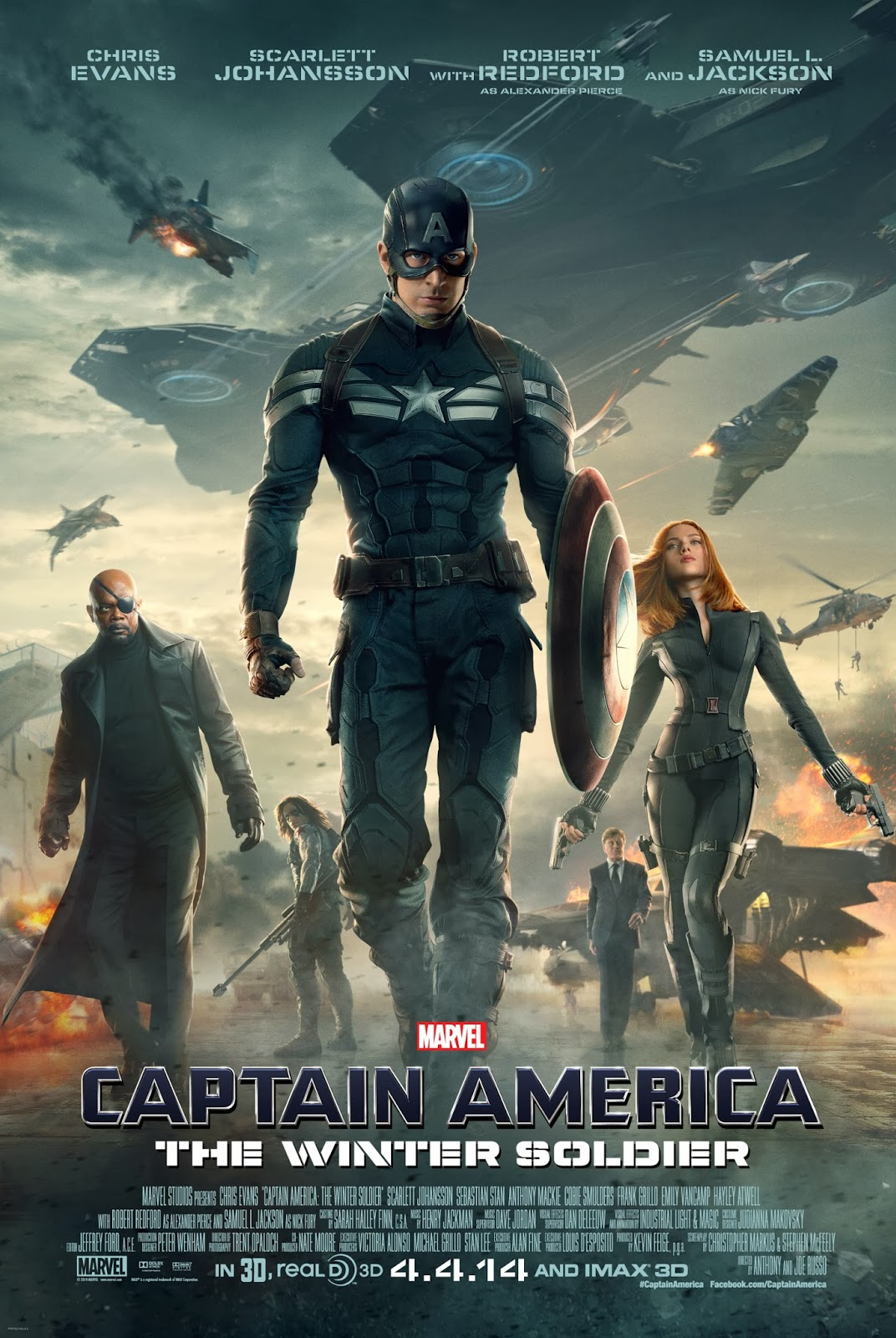
Captain America: The Winter Soldier (2014)

★★★★

Captain America: The Winter Solider PosterDirectors: Anthony and Joe Russo

Release Date: March 26th, 2014 (UK); April 4th, 2014 (US)

Genre: Action; Adventure; Science fiction

Starring: Chris Evans, Scarlett Johansson, Samuel L. Jackson, Anthony Mackie

Anthony Mackie’s aerial hero Sam Wilson clarifies his role in combat: “I’m more of a soldier than a spy.” It’s a statement that undoubtedly applies to the all guns blazing Falcon, but not one that echoes alongside Captain America: The Winter Soldier. In a bolder move than perhaps initially perceived, brothers Anthony and Joe Russo decide to direct this latest Marvel instalment down a noticeably unrecognisable runway, one without the usual witty pizazz or golden godly attire. Instead, we find ourselves immersed in a more familiar world where threats come from secretive suits and moral ambiguity challenges heat of the moment decision-making. An ever-increasing commonality on the annual cinematic calendar, superhero jaunts must beware genericism. Captain America: The Winter Soldier heeds this notion by placing storytelling on a pedestal, and the result is the genre’s best outing since The Avengers.

Having traded barbershop quartets for iPhones, Steve Rogers (Chris Evans) is struggling to comprehend modern society. Shield in hand and other hand in the enemy’s face, as Captain America, Rogers is unwavering — if there’s a mission to be done, it’s his job to carry out the orders without fail. However, when the star-spangled armour is removed and his protection against life and its cynicisms subsequently foiled, Rogers finds himself at odds with not only those close to him, but also at his own inherent ideals too. With the walls of surveillance closing in and S.H.I.E.L.D. director Nick Fury’s (Samuel L. Jackson) warning to trust nobody a prominent klaxon bellowing around his mind, the bastion of righteousness must suddenly contend with another menace: the aptly named Winter Soldier (Sebastian Stan).

Unlike most other Marvel epics, The Winter Soldier adheres to a distinctly retro vibe; in execution, in tone and in narrative. Of course the same could be said of The First Avenger but, unlike the film set amidst World War II, Captain America’s second sole venture onto the big screen sees him fiddle around in a 2014 that is rife with wisps of the past. Phrases such as “nuclear war” are tossed around and it’s not long before the technical beat of Bourne sounds off. Rather than bombastic CGI gorging, the film shuttles forth through subtle tension. It has the basis of a spy thriller, an espionage tale pitting foes against each other in a semiotic battle where the meaning behind a threat holds as much reverence as its actual implementation.

The filmmakers astutely conjure up an air of uncertainty that sees hostile clouds slowly gather as a plethora of characters interact with each other. We know only to trust Cap, who is suffering the same principle-related dichotomy that any of us would succumb to if thrown in a similar situation. At heart he’s still the same scrawny chap from 1942, and is entirely relatable in that sense (his normality rather than his age). This amalgamation of Cold-War-esque strain is emphasised at no better moment than during a lift scene where, as more gun-wielding combatants enter and the number of suspects grows, one single trickle of sweat represents a hazy downpour from those aforementioned clouds of hostility. The overriding tonal shift works because it is different from what we normally see at the reels of Marvel (and normally enjoy too). In actual fact, The Winter Soldier is of similar mould to Christopher Nolan’s Dark Knight trilogy, as gritty realism effectively grounds and familiarises proceedings.

In an interesting twist, though the Cold War vibe presents an encapsulating avenue into the film for viewers, said time period absolutely remains a modern one for Captain America. The unethical derivative of modernity combined with fears over infiltration acts as an almost tumultuous double whammy for Steve Rogers, who is experiencing the worst of two eras. A lot of emphasis is placed on character development which means the audience is able to develop a sincere connection towards Rogers who, in the previous film, was a bit of a one-trick pony. This time around, Captain America is the perfect foil for the narrative in question, one hoisted aloft by defection and deception. He’s the symbol of freedom and justice, but how can one be fair in a morally jarring modern society? Rogers walks through a museum, showing signs of still living in the past much like his seemingly outdated moral attitude (“It’s just not the same”). One recognisable element though, is conflict, and The Winter Soldier himself reflects the soulless nature of contemporary life. As a villain he’s solid, if not a tad uninspired, though Sebastian Stan does occasionally stimulate an aura of peril.

The mind-strewn superhero himself, Chris Evans emits an authentic sense of noble disenfranchisement, but refrains from thrusting his character too far in the wrong direction. Unlike S.H.I.E.L.D., his stance is never compromised. Evans is a very watchable presence, much akin to Scarlett Johansson whose skilled spy Black Widow is a peculiarly compliant foil to Captain America. Johansson’s poise suits her ruthless agent, and here she is given a wider emotional spectrum to hit. Though originally introduced as part of the Iron Man thread, Black Widow is better suited to Captain America. Robert Redford shows up as S.H.I.E.L.D. seniority, a tangible throwback to those 1970s political war outings from which the film finds inspiration. His role not quite as physically tormenting as in All Is Lost, Redford appears to be enjoying the healthier hands-in-pockets approach here. Other noteworthy faces include Anthony Mackie, who injects humour and energy as Falcon, and Samuel L. Jackson whose Nick Fury sees more action than ever before.

One or two issues do arise as the film trundles on, notably a moment of universal conformity against a particular someone displayed throughout the ranks of S.H.I.E.L.D., an instant acceptance that feels slightly inharmonious when considered in context with the cohesive events of previous Marvel films. Though The Winter Soldier upholds a down-to-earth narrative for most of its overly long runtime, the last 30 minutes do usher in a quintessentially grandiose superhero battle. Perhaps a more nuanced final act might have rocketed the film within touching distance of The Dark Knight territory in terms of quality, but the concluding action is exciting and does not overstay its welcome regardless. The anxiety-driven tone contributes to the film’s wholly apparent lack of humour, which is a slightly disappointing but likely unavoidable cost.

“I thought the punishment was supposed to come after the crime,” rebuffs Captain America upon hearing about S.H.I.E.L.D.’s new anti-criminality methods. Buoyed by connotations of yesteryear, Captain America: The Winter Soldier presents a pertinent rhetoric on modern society by placing its titular hero in a moral joust of ethics that are tainted at best. Admirable, different, and admirably different.

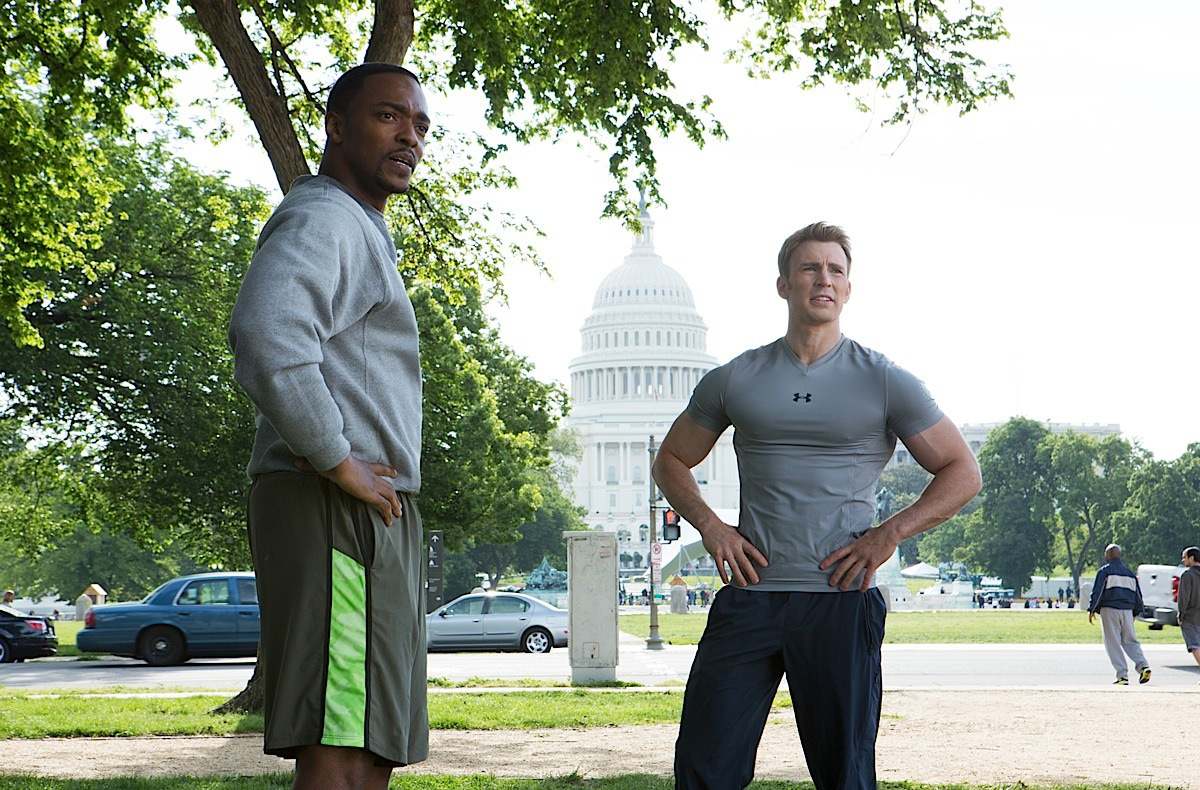
Captain America: The Winter Soldier - Chris Evans

Images credit: IMP Awards, Collider

Images copyright (©): Walt Disney Studios Motion Pictures

The Conspiracy (2012)

★★

The Conspiracy PosterDirector: Christopher MacBride

Release Date: August 23rd, 2013 (US limited); October 11th, 2013 (UK)

Genre: Horror; Thriller

Starring: Aaron Poole, James Gilbert

The Conspiracy struts its way on screen like a middleweight boxer ready to unleash a one-two combination. The first jab is swift and fairly unrelenting. As the film begins we peer skywards, eyes fixated on a pair of tall building not dissimilar in style and size to the World Trade Center. The brooding tone is set; a faux-documentary tale ushering in the notion of elitist secrecy and hidden agenda. We reside in a globe ripe with conspiracy theorists and theories, undoubtedly. For a short while, the impact of jab number one lingers. Unfortunately, the second swing can be seen coming a mile off. From feeling slightly spooked due to the prior injection of pseudo-realism, we now enter a particularly tiresome realm known as found footage horror. Intrigue gone, not even a vaguely haunting final act can save The Conspiracy. In the end, blurred lines only serve to expose.

Aaron (Aaron Poole) and Jim (James Gilbert) are two documentary filmmakers looking to delve into the world of dishonest suits. They meet up with Terrance (Alan C. Peterson) — a conspiracy nut whose maniacal preachings have been doing the rounds on the internet — with intentions firmly set on relaying his story to the world. However when Terrance inconspicuously vanishes, the only remnants left behind are his DIY newspaper wall-charts. The duo’s subsequent search for answers leads them closer to an alarming truth, and further from the security of normality.

Director Christopher MacBride attains a solid opening half hour through well-dug foundations. In a transparent age where every decision is questioned and every answer analysed, his film manages to strike with a fistful of relevancy, at least for a while. Messing around on chat-rooms, Aaron and Jim embody the modern web-surfer whose bible takes the form of a Wi-Fi connection and a computer screen. As they mingle online, a curious sentiment arises: if a conspiracy theory is born out of somebody’s buzzing and immaterial imagination, how can it be disproved? This dichotomy captures our attention and even throws a temporary blanket over the poor acting on display. The occasional shimmy of odd wit breaks through a not-so-subtly humorous poise at times: “So what are you guys using this for?” asks a shopkeeper as he sells the nosy pair a couple of hidden cameras. In a perversely amusing twist, the two no longer seem to care much for missing pal Terrance, the whole point of their documentary originally. It’s when Aaron and Jim start getting followed that proceedings take a turn for the generic.

As the largely dour and unsurprising reveal comes to fruition, the wheels come off. Rather than an inquisitive socio-political engagement, The Conspiracy morphs into a standard horror flick. Up until now, the documentary presentation has justified its found footage approach, but upon emittance of clarity motioning that things are not quite as straightforward as they seem — they really are, in truth — said approach loses value. As soon as the narrative starts to resemble The Blair Witch Project, bouts of infectious groaning can be heard resounding from the throats of viewers the world over. Or maybe that was just residual noise from the handheld camera.

The horror aspect struggles to horrify. Sure, we’re subject to an unsettling few minutes, but it’s not enough. That aforementioned blanket of security covering some terrible acting goes up in flames, exposing amateur hour. Effectively, all of the good work done in establishing a documentary platform unravels in lieu with the film’s wavering focus, so much so that you begin to question the success of the opening 30 minutes. On reflection, scenes that previously passed without too much sincerity interrogation (we were along for the ride at that time) now reek of coincidence; a guy on bike just so happens to show up in the same place more than once, and the partner of one of the chaps just so happens to invade goings-on as the duo are testing concealed camera equipment.

Frustratingly, the narrative concept may well have had some legs if the switch in prerogative from conspiracy documentary to ritualistic horror wasn’t presented so jarringly. Are we meant to believe that every conspiracy has a secret organisation behind it? Associating mysterious societies with business leaders and the like is a corny ploy too; as if all of these oligarchic bank managers and stockbrokers choose to spend their evenings dressed up as The Undertaker while scampering around forests playing games of Cowboys & Indians. Whereas the use of archived 9/11 and Kennedy assassination footage within the documentary-esque context is warranted, the employment of these particular images begins to feel a tad exploitative as the film shifts viewpoint.

Though it begins with a sense of intrigue and purpose, The Conspiracy soon face-plants in a subpar horror hole. With greater focus and better component parts, perhaps Christopher MacBride could have unearthed a gem. However, as the credits began to roll I was left simply wishing for the return of Terrance who, over the course of an hour, had become the new archetype of sanity.

A mean feat indeed.

The Conspiracy - Terrance

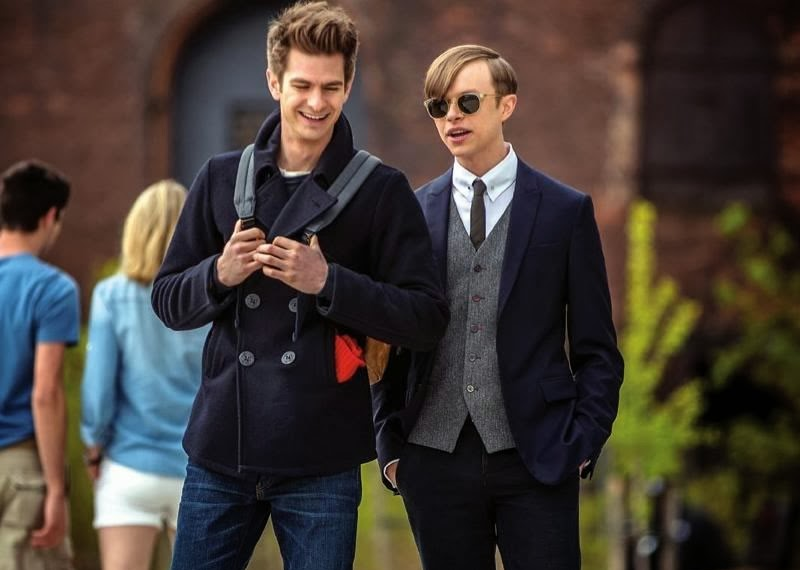
The Amazing Spider-Man 2 (2014)

★★★

Director: Marc Webb

Release Date: April 16th, 2014 (UK); May 2nd, 2014 (US)

Genre: Action; Adventure; Fantasy

Starring: Andrew Garfield, Emma Stone, Dane DeHaan, Jamie Foxx

As Spider-Man majestically manoeuvres around an invisible pathway above New York City, camera in tow as if magnetised to his every flip, swing and twirl, we hear him articulate one witty quip after another. An air of intertwined energy and humour instantly sweeps across the screen, exponentially infectious; we are watching a superhero flick after all. Fun is the order of the day, only it arrives at a cost and in 2014 a structured sense of direction can too be quite pricey. It should come as no surprise then that, as Spidey encounters one enemy after another, proceedings take a slightly messy turn. Almost two hours and 30 minutes pass fairly quickly, but as time ticks and Spidey’s checklist grows you get the sense that ongoing events would benefit from separation into two shorter films.

Buoyed by his latest victory over Dr. Connors, Peter Parker (Andrew Garfield) has become an ever-present on the streets of NYC, fighting off crime with aplomb and tactile guile whilst wearing the red of blue of his arachnid alter-ego. Beneath the surface, Parker has an awful lot on his plate: graduation, a relationship, mysterious parentage and an increasingly widening plethora of bad guys to deal with. Haunted by visions of his girlfriend’s dead father, Parker is at a moral crossroads as to whether he should continue dating Gwen (Emma Stone) and there still exists a shroud of uncertainty surrounding the motives of his father and mother. That’s not even to mention the blue-skinned Electro (Jamie Foxx) running rampant around the city, and he’s not the only one. Phew.

It’s almost a given nowadays that the combination of a gargantuan cinema screen and the latest summer blockbuster will yield exhilarating action and visual spectacle. On current evidence said expectation is justified. The Amazing Spider-Man 2 opens vibrantly and brims with commotion thereafter. Bolstered by some impressive digital creation and Daniel Mindel’s cinematography, each lively sequence retains an outstanding quality that keeps us engaged regardless of any plot misgivings. Notably, splurges of slow motion webbing are enticing and a transformation sequence towards the conclusion shepherds connotations of the magnificent scene in An American Werewolf in London.

One of the saga’s best branches stems from a trunk of genuine chemistry shared between its leading duo, Andrew Garfield and Emma Stone. The pair are a couple in that thing we tend to call ‘real life’ every so often and their inherent connection flourishes on screen, even more so than in the first film. Garfield continues to cement himself as a better Spider-Man than Tobey Maguire, who was hardly a damp squib in the role. The Englishman can hardly contain his wit at times, a trait wholly welcome in the superhero genre. Stone’s Gwen Stacy is ushered further into the limelight here and her performance alongside Garfield merits the busier workload. They jointly visit the entire emotional spectrum, a standout stop being an especially dramatic scene towards the end. It’s apparent that director Marc Webb and his cohorts are invested in these two characters and this is a positive sheen that rubs off on us viewers.

Beyond Stone and her beau, performances are generally excellent. Dane DeHaan is particularly impressive as Parker’s best friend and Oscorp inheritor Harry Osborn, his facial expressions often insinuating mischief. He resembles a young Leonardo DiCaprio here more than ever — the voice, the hair, the mannerisms — and certainly has the talent to attain DiCaprio’s enviable portfolio. Jamie Foxx stars as the primary villain Electro, though is unrecognisable post-mutation. The character’s mindset drastically alters from one of blunder to one of forcefulness and Foxx handles the switch solidly despite the villain’s lack of conviction. Another unrecognisable face lost amongst the unnecessarily long list of antagonists is Paul Giamatti, who hams it up to the Nth degree as Aleksei Sytsevich.

Giamatti’s comedic purveyance is hit-and-miss, but by and large splashings of humour strike the correct spots. Comedy has become an essential element in the superhero formula, and getting it right undoubtedly provides a sturdy springboard for any subsequent action. Quality over quantity is key; brisk spells of funny are on the menu here and these bursts resultantly set the desired tone, ensuring wisecracking comedy doesn’t overpower the drama but simultaneously exists as more than simply a relief mechanism. Whether he’s arguing against the “laundry sheriff” or awkwardly atoning for making Gwen late (“I’m sorry to bother you my fair lady”) Andrew Garfield is often the source of amusement. Heck, he even generates a laugh out of the ill Spider-Man gag.

This is a far more entertaining watch than The Amazing Spider-Man, but it does adhere to the modern Marvel formula. The studio has been churning out at least two films annually over the past few years with more projects pencilled in until 2028, perhaps an indication that we are getting too much, too soon, too often. As time develops and these films come and go, it is become increasingly difficult to reinvent the superhero wheel and there are faint smatterings of this problem to be found in The Amazing Spider-Man 2. The film is on a similar level to Thor: The Dark World in terms of pure enjoyment, but unlike the Norse tale (which channels simplicity for the most part) Spidey part two gorges excessively.

This overabundance is a problem. Far too many things are going on. By the end of the film, there are at least five villains (admittedly, of varying importance) and a few characters so far out on the periphery of proceedings that their presence is called into question. Felicity Jones is criminally underused as Harry’s assistant Felicia and one can only hope that she has a greater role in part three. A random doctor plucked straight from 1960s Soviet Russia shows up at one point and his exaggerated demeanour is one step too far. A hefty percentage of the dialogue also gets caught up in discussions over physics. Modern day blockbusters should carry an intelligent weight, absolutely, but that notion doesn’t extend to rehashing school science lessons.

Reciting implausibilities within the context of a superhero film may not be the wisest of moves, but there is a difference between principal abnormality — that is, our main heroes displaying unimaginable powers — and plain absurdity. An early fight scene that takes place on an aircraft embodies preposterousness, as both a human being and his laptop withstand a free-falling, ripped apart plane. How on earth does the device manage to retain an internet connection?

Though The Amazing Spider-Man 2 becomes entangled in a complicated web of narrative strands, a healthy dose of thrilling action and toxic humour funds endless amounts of enjoyment. Andrew Garfield and Emma Stone seal their place among the best couples going in the genre, and as the latter’s Gwen Stacy recites her valedictorian speech (“Make your [life] count for something”) we are appreciatively reminded of those familiar superhero themes: empowerment, belief, and laundry jokes.

Olympus Has Fallen (2013)

★★

Director: Antoine Fuqua

Release Date: March 22nd, 2013 (US); April 17th, 2013 (UK)

Genre: Action; Thriller

Starring: Gerard Butler, Aaron Eckhart, Morgan Freeman, Dylan McDermott

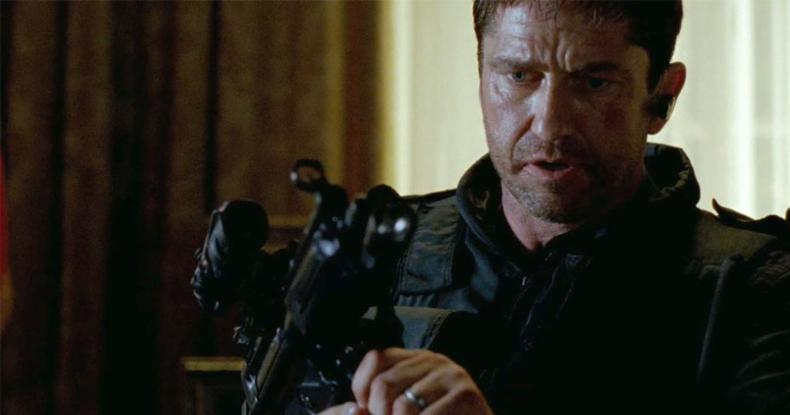
As far as attacks on the White House go, Olympus Has Fallen trudges its way across the vast lawn with a disappointingly uninspired plod. Bluntly, it’s a film that just doesn’t get much right. Antoine Fuqua’s take on the internal threat to homeland and presidential security saga struggles in areas where it should thrive — notably notions of simplicity — before subsequently becoming entangled in a tonal muddle as it oddly tries to venture into the faux-documentary realm without any conviction. The latter, coupled alongside some shoddy looking CGI attempts, creates a distinctly undesirable televisual shimmer; for $70 million it all feels slightly cheap. Without the macho zest of Gerard Butler, this may very well have been a complete disaster.

The walking embodiment of a tragic evening in the life of both men, Secret Service agent Mike Banning (Gerard Butler) has been removed from Presidential protection duties as the mere sight of him rekindles harrowing memories in the fraught mind of President Asher (Aaron Eckhart). Now chained to a desk job in an office only a few blocks from the White House, the hardy soul is again summoned to defend nation and state as a result of terrorist infiltration. With the Leader of the Free World at the mercy of North Korean guerrilla forces and the very real prospect of US nuclear destruction on the table, Mike sees a chance not to simply become a hero — that’s not enough — but at redemption.

Sounds reasonably straightforward, right? The age-old tale of man (or woman), pride and mind wounded, given the opportunity to reclaim fortitude and settle a previous score. Mike Banning’s journey epitomises this narrative. Heck, he even has the inherently restorative wife in his corner (she’s a nurse); their relationship strained by past decisions and Mike’s resultant self-serving of personal blame when there really isn’t any to be gobbled. Adhering to a well-versed formula is not necessarily a bad thing as long as the adherence is sincere and peppered with an occasional murmuring of intuition. Only, you’re more likely to find a needle in haystack than intuition around these parts.

On one hand, the simplicity is executed sloppily, furnishing a sense of genericism over what could’ve been enjoyable modesty. Visual discrepancies bear the brunt of detriment here — the opening act is hampered by a flow of images that closer resemble the presentation of a video game than a Hollywood film. Later, drones waver around the sky without appearing fully embedded in the landscape, hinting at some sort of blending issue. The graphical inadequacies do sort themselves out when the action slows down and digital enhancement is dumped for more conventional techniques. Yet on the other hand, director Antoine Fuqua unveils vague ramblings of a documentary-style aesthetic. We often watch as labels appear inconspicuously beside characters on screen, each textual nugget informing us of the individual’s name and occupation. It chimes as an attempt to induce a sense of realism or to imply a degree of truth (because not much else is believable), but instead feels lazy. Boasting a portfolio of films including the likes of Training Day, Fuqua is evidently better than this.

Narratively, we don’t get off on the best foot. Driving in blizzard conditions as horrendous as those depicted in the opening act hints at senselessness, particularly given the President of the United States is a passenger. Instantly there arises a lingering anxiety that this will only be the first in a long line of foolish happenings and, true to form, shortly thereafter a conveyor belt of outrageous decision-making is set in motion (at one point the order is given to shoot down aircraft over a busy Washington DC). Nonsense often generates humour, but in a film that preposterously takes itself far too seriously nonsense wholly reduces any semblance of sympathy for the characters on-screen, which is a pretty significant problem given the horrendous predicament that many find themselves in.

A severe tonal struggle exists between the intended air of sobriety and seriousness, and a plot that reeks retro strands: North Korean bad guys, invading and controlling, targeting the President and threatening nuclear catastrophe. It’s a throwback and, to a degree, a fairly camp one. Unsurprisingly, a clear victor fails to emerge between the pair of duelling tones, as the serious ploy comes across as slightly over-egged and the nostalgic effect only exists in principle. As a result the film is devoid of both tension and giggles, unless you get a kick out of lines such as, “They’ve taken the White House!” (a greater helping of which certainly would not have negatively impacted proceedings.)

Performances are almost universally uninspired, with the exception of Gerard Butler’s effort. As Mike Banning, Butler manages to inject a small helping of gusto whenever he is present on-screen and also during breaks from under-his-breath muttering. The role is ultimately one-dimensional but that’s no more than required, fuelling the simplicity fire. It’s also a dimension more than most of the other deliveries. As President Asher, Aaron Eckhart has very little to do other than conjure the occasional grimace which, incidentally, looks the same irrespective of whether or not he’s missing out on ice-cream or being held hostage by terrorists. Perhaps the most problematic character is Dylan McDermott’s Secret Service agent Dave Forbes whose moral dynamic flip-flops around more than a fish out of water. Female persons are inexcusably shunted to background; the likes of Radha Mitchell, Ashley Judd and Melissa Leo are less than secondary factors. Morgan Freeman ought to get back to be being God.

Olympus Has Fallen unfortunately stumbles and falls from the get-go, struggling to regain any semblance of steady-footedness thenceforth. A decent Gerard Butler performance cannot prevent the inevitable stern wave of unnecessarily harsh undertones from washing away any potential puddles of fun. It’s not great.

Calvary (2014)

★★★★

Director: John Michael McDonagh

Release Date: April 11th, 2014 (UK); August 1st, 2014 (US)

Genre: Comedy; Drama

Starring: Brendan Gleeson, Chris O’Dowd, Kelly Reilly, Aidan Gillen

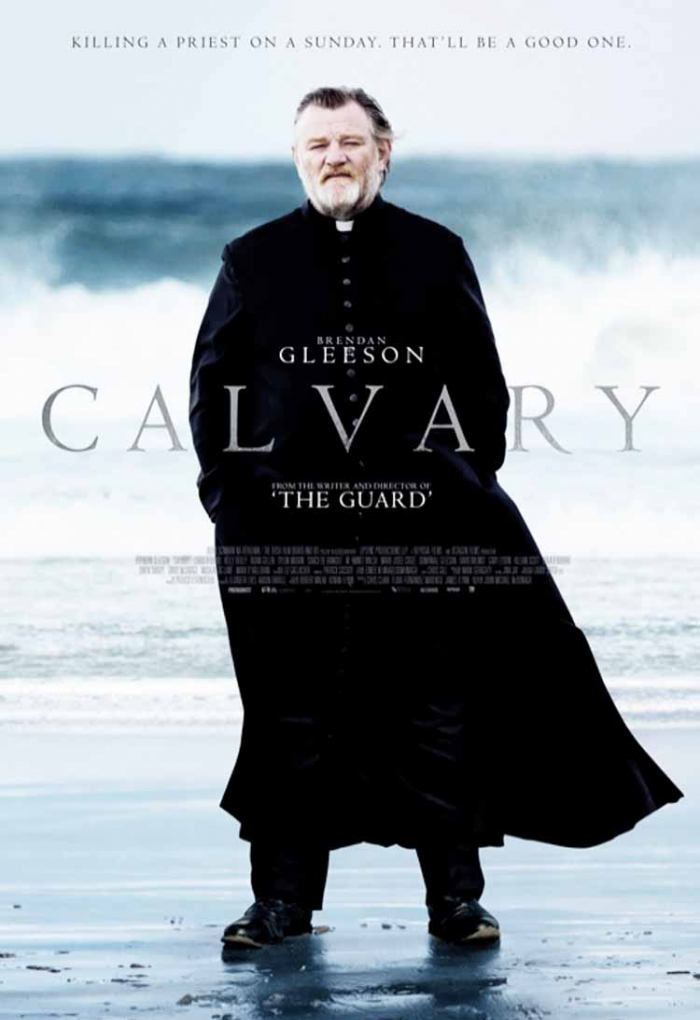
John Michael McDonagh’s second venture into the directorial settee is a significant improvement on his fun but ultimately forgettable 2011 debut The Guard. In Calvary, many previously utilised elements are retained — namely Brendan Gleeson, dark comedic undertones and Ireland — but an additional steadfast formula heralding both intrigue and earnestness offers robust support to these familiarities. This time around we’re essentially presented with the makings of a whodunit mystery, only nothing has been ‘done’ yet. It’s a ploy that keeps you guessing, one that forges with bleak humour and traces of hearty emotion (just about) resultantly presenting a film worthy of the talent displayed on-screen and the guile emitted from those off-screen.

As one of the more considerate residents of Sligo, Father James Lavelle (Brendan Gleeson) often finds himself at the quarrelsome mercy of those whose problems determine their lives. His priesthood is undoubtedly a factor in this invariable trust too, only said profession is one James mightn’t be too fond of presently given his life has just been threatened by a troubled voice emanating from the other side of a confession booth. “Sunday week” is seemingly his final calling, because that way he’ll have a few days to get his affairs in order. How thoughtful.

Perhaps Calvary’s greatest strength is that it manages to successfully fluctuate between a variety of modes without losing its primary sense of direction. Most obvious is the blackly comedic tone that hollowly reverberates throughout proceedings. It should come as no surprise to those well-versed in the work of the McDonagh siblings — brother Martin wrote and directed the wonderfully downbeat In Bruges — that laughs are placed on a pedestal above the occasional murmurings of insensitivity here, but each quip is genuine in nature and far from callous. The film is akin to a live-action version of Guess Who? as numerous distinct personifications manifest on screen. At one point James is informed, “Playing you though now, that might be interesting,” enforcing this odd feeling of different characters role-playing. Many of the actors are funny in their caricature mannerisms, but there are a few who especially stand out by way of effortlessly humorous portrayals. Killian Scott is particularly amusing as the naive Milo, his stoic facial expressions accentuating a comical deadpan delivery (“The war on terror has no borders”). The ignorant doctor of Sligo, Frank Harte is gauged efficiently by Aidan Gillen; funny, intimating and overtly suspicious all in equal measure.

Brendan Gleeson carries the weight of the film upon his shoulders for its entirety (the camera hardly wanders from his bearded jawline) and evokes a sense of attachment in tandem with the viewer from the get-go. It’s not necessarily sympathy that we feel — James peculiarly appears in control of his own destiny despite the threat on his life — but rather it is the priest’s accommodating presence to those around him that warmly rubs off on us with an amiable sheen. Aside from the comedy then, is a story about a man attempting to come to terms with his profession, his faith and effectively his own life. James is unable to assemble the frantic thoughts racing through his own head never mind those of others, yet he still tries: “Everything’s fine”, he says almost systematically before realising his own desperate predicament, “I mean no, everything’s not fine”.

As the film progresses director John Michael McDonagh raises the currently prominent issue of priesthood stigma, motioning towards prejudgement and the idea of tarring all with the sins of a few — we become more aware of James as a human being, somebody dealing with more problems than any it seems. A notably poignant scene towards the fraught conclusion embodies the sentiment of forgiveness and wholly captures a sincerely heartfelt air that McDonagh absolutely appears to have intentionally sought out. Calvary exhibits a serious tone that never becomes overbearing thanks largely to a number of chuckle-worthy happenings, but a serious tone that demands consideration nonetheless.

The third side of Calvary’s narrative triangle is the aforementioned murder mystery element, and it too meshes well with the other components. From the exceedingly off-kilter opening, the film garners intrigue as a tension builds. There are constant references to sinning, to death and wrong-doing, remarks almost always aimed indirectly at James (“Evil thoughts floating around”). These serve as frequent reminders amongst the raft of humour and seriousness that there is a conundrum demanding solution. Though some characters occupy characteristics too obvious to be genuinely threatening, McDonagh’s dialogue-driven plot ensures that just about anybody could be the instigator of violence. Maybe the knife-wielder is Dylan Moran’s upper-class hedonist Fitzgerald, or perhaps it is Kelly Reilly’s distressed Fiona Lavelle who has her hand on the trigger — there are more than enough candidates offered up to consistently make us doubt ourselves as we attempt to play detective alongside Father James. One thing is for sure: as wide-shots of vast drumlins are shown leering over the town of Sligo, a progressively uneasy mentality begins to unfairly haunt our lead.

After an exceedingly well-executed hour and a half that sufficiently garners enough pent-up curiosity, Calvary does sadly struggle to keep a lid on proceedings during the final act. Events come across as slightly rushed without meaningful conviction, and one or two questions remain unanswered — though not in a self-inquisitive way, but rather completely unnecessarily.

With the exception of a far from catastrophic concluding blot, Calvary admirably manages to juggle humour, intrigue and seriousness without compromising any element. Presently, after the completion of two native outings, John Michael McDonagh isn’t all that far from replicating his brother’s In Bruges-esque achievement, a pretty darn good feat in itself.

The Raid: Redemption (2011)

The brilliant Alex has allowed me to be part of his Foreign Favourites series – check it out! – and I have complied with a review of The Raid: Redemption. Thanks again Alex, have a read if you’re interested!

alexraphael's avatarAlex Raphael

There have been all kinds of benefits to doing the Foreign Favourites series. There has been a fantastic reviews of films,  the opportunity to show off some fantastic reviewers and even more inspiration to see more great films.  I haven’t been aware of Adam of Consumed by Film for too long but his site is awesome. Detailed film reviews, TV features, topical film commentary and his quotation of Ferris Bueller in his About Page is a very persuasive argument as to why you should check his site out

Before I get going, I’d like to offer my many thanks to Alex for letting me be a part of his terrific Foreign Favourites film series. There have been some really excellent reads so far. The Raid 2: Berandal is out April 11th buds!

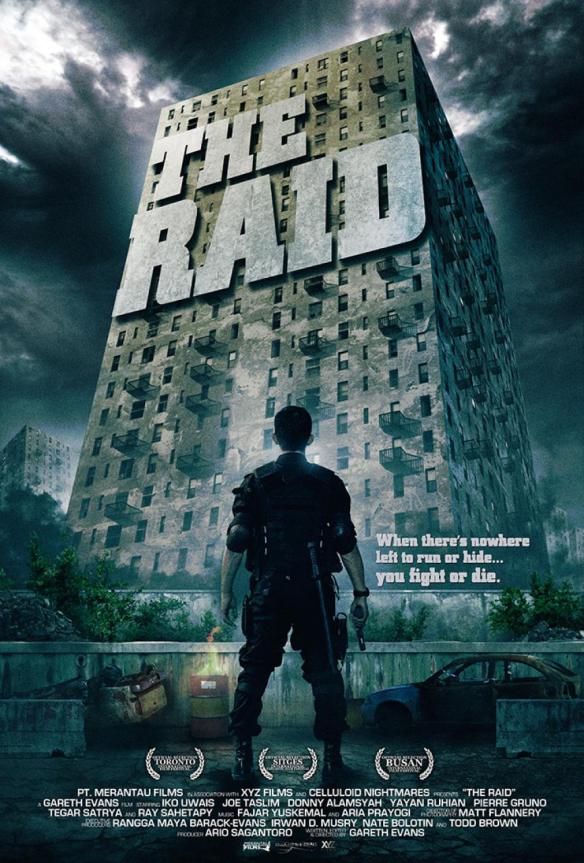
The Raid film poster

Quick Synopsis: A group of highly skilled SWAT officers find themselves on the brink of disaster as they attempt to…

View original post 878 more words