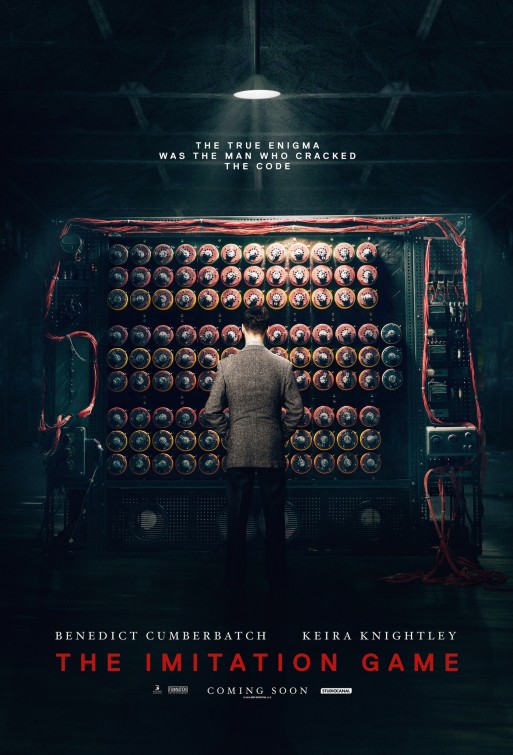
The Imitation Game (2014)

★★★

The Imitation Game PosterDirector: Morten Tyldum

Release Date: November 14th, 2014 (UK); December 25th, 2014 (US)

Genre: Biography; Drama; Thriller

Starring: Benedict Cumberbatch, Keira Knightley

I saw The Imitation Game last year and was too caught up in other work to jot down some thoughts in a semi-coherent manner. This review, then, comes significantly later than it should have and, despite still possessing a few pages of notes designed to jog the memory, I’m now struggling to recall much of the film. That’s the main problem here. The Imitation Game is just unmemorable. It’s not a time issue either — the piece left as much to be desired back in December as it does now. Of course, the story of Alan Turing is an incredibly memorable one but that has nothing to do with this film per se (rather, it’s because his life actually happened and was shocking in and of itself).

Benedict Cumberbatch plays Turing, a British mathematician and cryptanalyst courted by his country to solve the seemingly impenetrable Nazi Enigma code. The film takes place at the peak of World War II, but you wouldn’t have guessed it if not for the occasional reference. At one point, problem solving team member Peter (Matthew Beard) refers to that big battle thing happening far from the otherwise serene Bletchley Park: “There are actual soldiers out there trying to win an actual war.” We don’t see enough, or at the very least feel enough, of this supposed ongoing war. It’s as if all the events on-screen are unfolding on a remote island as opposed to an island entrenched in a horrendous, deadly human struggle.

Returning to more local matters, we watch as a whole host of obstacles are thrown in front of Turing — those well-known ones related to his private life, but also professional obstacles that simply do not make sense. Charles Dance’s Commander Alistair Denniston, who is overseeing the operation at Bletchley Park, essentially becomes a less brutal version of Tywin Lannister as he dishes out ultimatums to Turing and his team, threatening to shut down their potentially life-saving efforts. “Our patience has expired,” he groans. But why? Surely it’d be wise to keep the process going irrespective of how long success is taking. The film doesn’t address this awkward stance enough, and as such we’re left with a weird sense of internal squabbling that doesn’t chime well given the war climate.

For the most part, emotionally devastating moments — at least, that’s what they should be — are presented in a fairly generic manner. Graham Moore’s screenplay lacks imagination. A ship sinking debate is one of the more morally dubious scenes but you can see the ambiguity coming from a mile off. Since the film is based on a true story it is very possible that parts such as the one referred to above are reflected with genuine truthfulness, their blunt coincidence thus horrible to even consider. However, Moore and director Morten Tyldum set up the majority of these would-be taut interactions too easily. The ship sinking argument feels like a Hollywood moment when it should be the complete antithesis – dirty and righteously murky.

There is a lot fuelling the narrative and as such the film begins to confuse itself as it juggles a number of different layers (any codebreakers around to sort this mess out?). We touch upon the intricacies of gender politics, man versus machine, sexual orientation and the war climate, each with varying impetus. The technological struggle between Turing’s team and the Enigma machine is intriguing, and when Tyldum focuses on the mathematician’s private life the piece flourishes with authenticity and solemn gravitas. To its credit, The Imitation Game does effectively capture the painstaking conclusion to Turing’s life. Perhaps singling out only two elements instead of trying to engage with a handful of themes would’ve yielded something more concise and coherent for Tyldum.

Having said all that, the performances from many of the cast are very good — one or two are particularly noteworthy — and these keep the piece bubbling over (they also undoubtedly had a hand in shooting the film into wide-netted Oscar contention). Cumberbatch bumbles as well as ever playing the intellectually gifted Turing, whilst at the same time empowering the periodically unaccommodating man with increasing resilience and vigour. He is the perfect fit for the role and Cumberbatch really comes into his own when reflecting the weightier points of Turing’s life.

Matthew Goode, Allen Leech and Matthew Beard complete the team of puzzle solvers. The latter duo don’t have as much to do but as Hugh Alexander, Goode carries out the brazen and often unimpressed act to a T. It is Keira Knightley, though, who has the most impact opposite Cumberbatch. She plays Cambridge graduate Joan Clarke who develops a close bond with Turing throughout the film. In lesser hands the role might’ve fallen foul of poor characterisation but Knightley has steel in her eyes, Joan often the person bearing the strongest will.

The film doesn’t really match up to the awards recognition it has been receiving over the past few months, but it does manage to be a suitably uplifting-turned-demoralising piece. I reckon that has more to do with Turing’s real life struggles than how the picture depicts them. Maybe The Imitation Game isn’t as dreary as I recall, but I’m not recalling much.
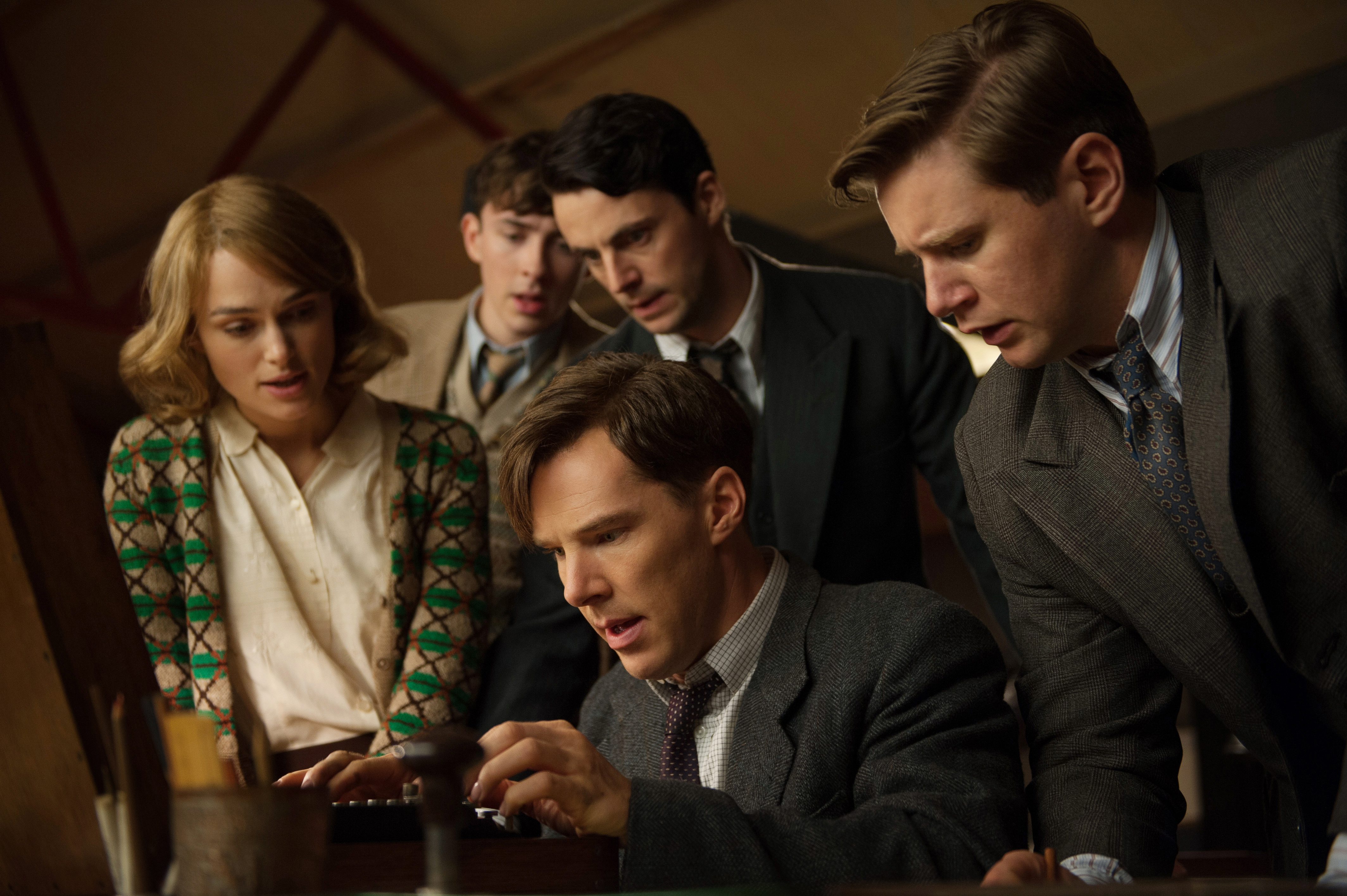
The Imitation Game - Cast

Images credit: IMP Awards, Collider

Images copyright (©): StudioCanal, The Weinstein Company

Whiplash (2015)

★★★★

Whiplash PosterDirector: Damien Chazelle

Release Date: October 10th, 2014 (US limited); January 16th, 2015 (UK)

Genre: Drama; Music

Starring: Miles Teller, J.K. Simmons

Towards the beginning of Whiplash, Andrew, the film’s central character, chats away to his father as they crunch on popcorn whilst taking in a film at the cinema. Astonishingly, despite this double-misdemeanour Andrew isn’t the worst human being we see throughout the one hundred minutes. He doesn’t even come close, in truth. That honour goes to the talented drummer’s insane music instructor. Terence Fletcher is the teacher whose class we all sat in tight-lipped for fear of scolding. This guy puts Matilda’s Trunchbull to shame. The problem for Andrew is that he wants to become “one of the greats”, and gaining Fletcher’s approval might just send him along that path.

A first year student at one of New York’s most prestigious music academies, it is apt that we first meet Andrew as he’s drumming away. This is also when we encounter Fletcher for the first time, who happens upon Andrew mid-session and then leaves seemingly unimpressed. The same scene more or less plays out with varying intensity across the remainder of Whiplash — a brooding Fletcher brashly critiquing Andrew’s skill — and yet the film never loses steam. This is testament to a fierce screenplay, dazzling editing and slick direction, but most significantly to the performances of both J.K. Simmons and Miles Teller.

Simmons imbues his monstrous autocrat with unflinching poise — Fletcher is like an experienced hunter aware of everything going on around him. The actor’s timing chimes with absolute precision, his sweeping hand signals in rhythm with every “not my tempo” jibe. There is real menace behind Simmons’ eyes as he acts, an authentic rage that places his character beyond the usual eccentric teacher type. Fletcher invites Andrew to join his elite studio band (the student’s previous practice band comes across as a soft, bubbly playground in comparison) and is civil towards him at first. It’s obvious the niceties aren’t going to remain a permanent factor in their relationship, but it’s still a shock when Fletcher hurls a chair at his new recruit before slicing him apart with piercing insults.

Writer-director Damien Chazelle manages all of this fury by including the occasional moment of hilarity, and these often come by way of Fletcher’s razor sharp put-downs. You could play a game of ‘most degrading insult’ bingo and never run out of source material (my favourite is “weepy willow shit sack”). Andrew is usually on the receiving end of the worst of these and Miles Teller reflects the toll the taunts take via scrunched-up facial expressions and reciprocatory anger. As the film progresses he grows paler, his hair more bedraggled and dark bags forming under tired eyes. Fletcher never breaks sweat, of course. It appears to be quite the physically demanding performance too; as Teller relentlessly hammers out sequence after sequence of drum beats, all you can think about is the searing lactic acid building up in his arms.

We are on Andrew’s side from the get-go and remain there even as he develops the dickish attitude that first spawns on screen when he severs romantic ties with directionless student Nicole, played with charm by Melissa Benoist. The abrupt conclusion to their relationship is a shame as, on the off chance we do get a spot between Benoist and Teller, their interaction is a pleasurable change of pace. Tom Cross’ impactful editing comes to the fore during a flurry of super sweet date scenes and super intense practice scenes invariably relayed in juxtaposition.

The nuances fuelling both men’s desires reverberate with uneven success. On the one hand, a surprisingly emotive speech has us questioning whether Fletcher in is it to develop world class musicians or world class music. The moment adds another, more humanistic layer to the otherwise wholly maniacal instructor. Though the matter is eventually resolved, Fletcher’s ferocity flares through and it is right that it does so. Andrew’s back-story is a tad more conventional — he’s the odd family member out — and as such the character is a bit more generic.

No matter, the two actors share an awkward-yet-sizzling chemistry that suits the personas they are playing. Fletcher costs his young counterpart a lot: relationships, family life, a social life, even blood. And still we completely believe the attraction felt by Andrew in regards to impressing his fiendish teacher. A duel between the pair towards the end of the film is utterly mesmerising, exemplifying Whiplash’s technical proficiencies as well as its superb acting in one glorious finale.

At only his second attempt Damien Chazelle has constructed a really exciting film, one that is unsurprisingly propped up by a soundtrack incorporating pulpy beats and bluesy flows. It is engrossing, focused and quite the positive mark on a promising young filmmaker’s portfolio. Hey, Damien and co? Good job.

Whiplash - Teller and Simmons

Images credit: IMP Awards, Collider

Images copyright (©): Sony Pictures Classics

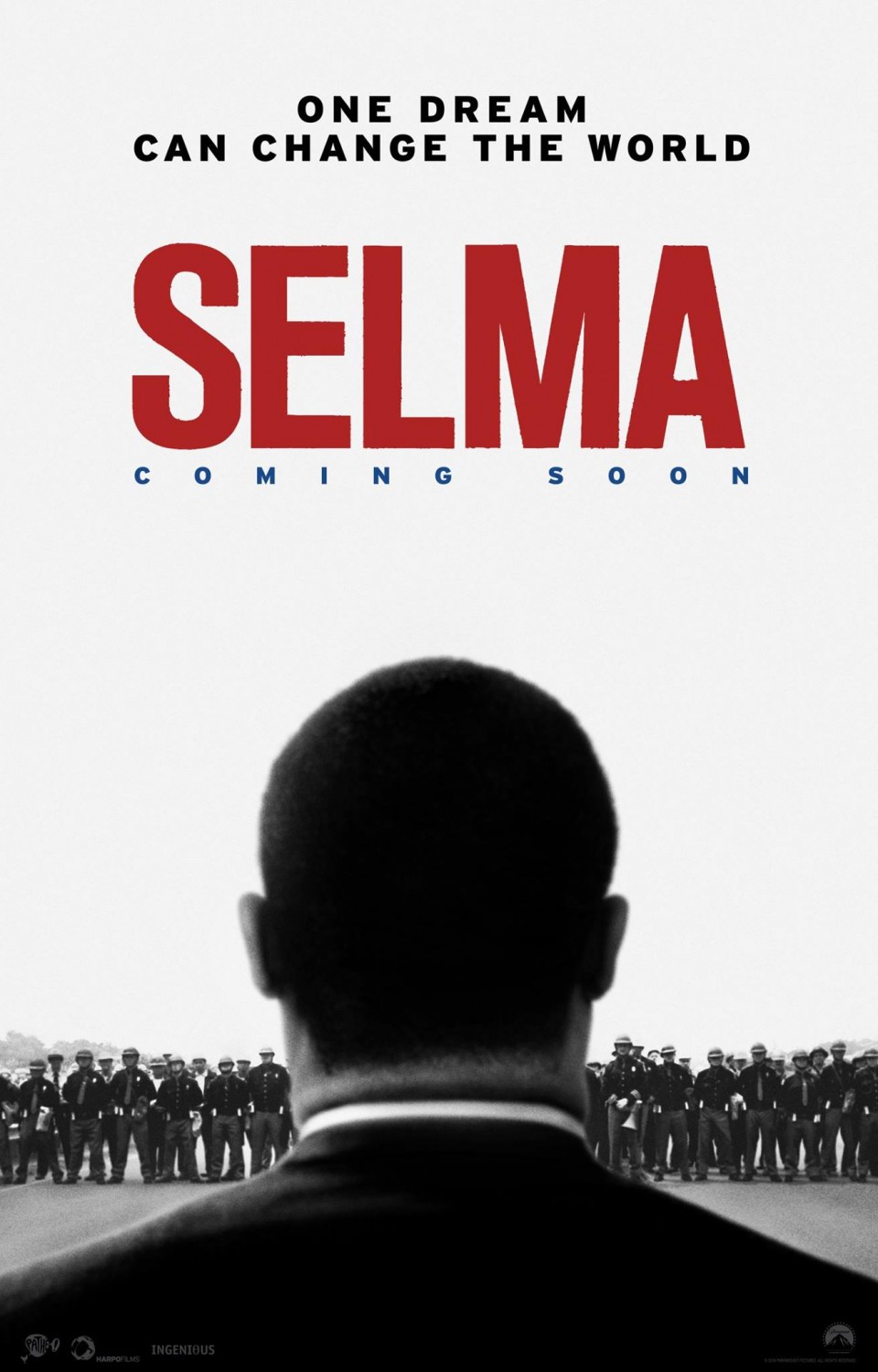
Selma (2015)

★★★★

Selma PosterDirector: Ava DuVernay

Release Date: January 9th, 2015 (US); February 6th, 2015 (UK)

Genre: Biography; Drama; History

Starring: David Oyelowo, Tom Wilkinson, Carmen Ejogo

Carrying on the awards-fetching tradition that tends to follow flicks of biographical and historical heritage (a tradition particularly in vogue at this year’s Oscars) is Selma. We all know the argument by now: ‘the only reason this weighty film about that important figure doing those serious things has been made is purely to fill the brazen palms of those involved with golden statuettes’. As a general rule I don’t really toe that line. There are too many external factors that’d have to align for a filmmaker to predict prizes before even rolling a camera, and then successfully follow through with that prediction. Oscar bait. It’s a bit of a nonsense assumption anyway. Selma is a film first and foremost, about struggle and perseverance and dignity.

Movies aren’t made to be awarded then, but when the turn of the year approaches and the air begins to smell that bit more Weinsteiny, it’s still an exciting time for cinephiles the world over. And it can be a kick in the teeth when evidently deserving performances aren’t given at least a nod of appreciation by those all-knowing folks in Hollywood. David Oyelowo’s shunning by the Academy is as bewildering as it is unfair on the Brit. He plays Martin Luther King, Jr., minister and activist at the helm of the African-American Civil Rights Movement in the middle of last century.

Director Ava DuVernay’s film centres on Dr. King and his collaborative attempt alongside other SCLC members to gain voting rights for black US citizens in the 1960s. As such, success hinges upon how effectively Oyelowo embodies the famous fellow. In some ways, playing a prolific figure such as King might be easier because his presence has continued to circulate in some form for so many years and his mannerisms and tones therefore exist in great volume, essentially forming a vault of primary sources for the actor to refer to. Having said that, there’s very little room for error because the man is so recognisable — if you’re watching Selma, you’re probably pretty well-versed in the humanitarian’s past. The audience knows King and Oyelowo has to convince, not after 30 minutes or 60 minutes but after 10 seconds, that he is King.

Goodness me, he convinces. Oyelowo’s portrayal is very similar to Eddie Redmayne’s manifestation as Stephen Hawking in The Theory of Everything, not because the roles reflect each other in too many ways but because each actor completely dissolves into the persona he is playing. The magnetic charisma is there, shining through particularly during speeches delivered with power and precision, but Oyelowo also conveys a vulnerability in King that humanises the god-like leader. Moments of self-doubt creep in and harness his stubbornness; this unusually burdened appearance can be seen in a prison cell conversation or an emotional debate between husband and wife.

At this point it’s also worth noting some really solid work done by Oyelowo’s supporting cast, namely Carmen Ejogo as Coretta Scott King and Tom Wilkinson as President Lyndon B. Johnson. King and Coretta’s relationship is frosty when we meet them, the latter certainly an admirer of her husband’s moral graft but not as keen on any potentially nasty consequences. “I don’t joke about that”, she says after he quips about dying in the line of protest. Ejogo’s Coretta is strong-willed but clearly at odds with the viable threat posed to her family.

On the other hand, King’s combative rapport with the US head of state is driven by ethical politics. Wilkinson plays the President with that familiar governmental defensiveness — sympathetic to a degree but only really in favour of King because he’s not “one of those Malcolm X types”. It’s a shame we don’t get to see more of Malcolm X (Nigel Thatch plays him in one short scene) as the clash in styles between he and his activist colleague could’ve added another layer to the film’s fairly cut-and-dry morality. Henry G. Sanders’ heartbreaking turn as a pained grandfather is as affecting as anything else on screen. Unfortunately Tim Roth hams it up a too much as the Governor of Alabama, his performance lacking somewhat in authenticity when pitted up against the others.

As alluded to previously, there are a few heavyweight vocal diatribes laced throughout the film but DuVernay smartly avoids employing the famous “I Have a Dream” speech. Instead the material is fresher and Oyelowo is afforded the chance to inject less high profile dialogues with his own portentous verve. Thus there’s never a preachy air but rather a story bound by the bluntness of immorality, one that holds a mirror up against an inconceivable blotch on our history whilst also hauling shocking relevance today.

Despite the obvious humanity failure on display, DuVernay manages to avoid the gloominess of the subject and instead directs with spirit. A bubbling, soulful soundtrack compiled by Jason Moran — which reminded me of a Coen/T-Bone Burnett concoction, oddly — gives energy to proceedings. This vibrant approach means when the Selma to Montgomery protest marches from which the film pivots occur, their impact is heightened. The notorious Bloody Sunday walk across the Edmund Pettus Bridge is harrowing in its depiction but also sublimely executed; raw brutality is interspersed with a white reporter’s increasingly disturbed commentary and reactions of abhorrence from around America brought on by television broadcasts.

It might’ve been largely overlooked by awards shows but Selma isn’t a film that should be ignored by those who love accomplished filmmaking. Indeed, Ava DeVernay’s moving dramatisation of oppression in society fifty years ago reaffirms a life lesson that some are failing to abide by even in 2015. For that reason alone Selma is a film worth seeing.

Selma - David Oyelowo

Images credit: IMP Awards, Collider

Images copyright (c): Paramount Pictures, 20th Century Fox, StudioCanal

American Sniper (2015)

★★

American Sniper PosterDirector: Clint Eastwood

Release Date: January 16th, 2015 (UK and US)

Genre: Action; Biography; Drama

Starring: Bradley Cooper, Sienna Miller

The problem with American Sniper is not necessarily that it’s controversial — though that train of thought is somewhat justified — but that it’s rather dull. In regurgitating a story set almost entirely during the worst of the conflict in Iraq post-9/11, and one based upon real events, you’d expect director Clint Eastwood to have something potent to say about war. At the very least, it’d be fair to expect a consistently taut human drama. We get neither from American Sniper, a film weighed down by overt patriotism and silly writing.

Bradley Cooper (now the recipient of three consecutive acting nominations at Academy Awards) stars as US Navy Seal Chris Kyle, a former rodeo cowboy so pained by news reports of terrorist attacks on his home soil that he enlists to fight abroad. It’s nothing more than a solid performance from Cooper, certainly not one on the same level as his two previous Oscar nominated stints in both Silver Linings Playbook and American Hustle.

As the film progresses the bulked up actor’s role becomes an increasingly emotionless one, and consequentially quite thankless. Buying into the personal struggles of a man who spends his time in a place littered with death and despair — he, frankly, contributing to the mess — is a struggle in and of itself. This isn’t a critique of the real Chris Kyle, nor Cooper, and instead of the poorly conceived writing underpinning proceedings.

Adapted from Kyle’s own autobiography, Jason Hall delivers a screenplay severely lacking in nous or subtlety. Bearing no stance on the Iraq War that hasn’t already been exhausted on the big screen, or any screen, what we’re left with instead is a film trying desperately to convince itself that war is necessary. Men, women and children are all cast under the same umbrella marked “our enemy” and though this non-discriminatory outlook may well be a sporadically accurate reflection of reality, the film never suggests such a thing. Many of those whom the US soldiers meet in Iraq are carrying weapons with a view to kill. The suggestion is all civilians have been evacuated from the area of conflict, thus the ones who remain aren’t innocent. The fact that this wholesale evacuation hasn’t taken place compounds a lazily devised screenplay; as such, locals are placed on a morality gauge ranging from untrustworthy to terrorist.

In between head-scratching scenes that show Kyle conversing with his wife in the middle of a war zone — his attention should probably be on shooting all those baddies, right? — there’s a cat and mouse game playing out. An enemy shooter referred to as Mustafa (Sammy Sheik) is essentially the domestic Chris Kyle. Granted, the film is called American Sniper and therefore isn’t a piece that was ever going to pay as much attention to the non-American sniper, but the lack of dispersed humanisation is off putting. Kyle’s rapidly burgeoning Call of Duty kill count is celebrated with gusto amongst his peers whereas any damage done by Mustafa is vehemently denounced as the work of a “savage”. Of course it’s savagery, but there’s hardly even a nod towards the ambiguity of Kyle’s actions — when the film does venture down this route it only juggles the immorality of child-killing as opposed to people-killing.

The picture is at its most tense and best when Kyle is staring down the barrel of his deadly weapon, honing in on said infants and fuelled by uncertainty. Unfortunately any good work is undone by a laughably glorifying final sniper showdown. Intrigue edges up a tad when we’re back on home soil, where the military man feels more and more out of place as each tour ends. Sienna Miller plays his wife but doesn’t get enough to do as the narrative always chooses to follow Kyle when he goes overseas. She’s good though, infusing a bit of steel into Taya whilst also relaying the mental and physical exhaustion brought on by her husband’s constant displacement. Miller just about manages to overcome her unnecessarily bit-part function.

It’s this lack of urgency that hampers American Sniper, more so than any controversial portrayal or underwhelming performance. You’d expect it to be well made, and it is, but it doesn’t have the musky atmosphere of a Hurt Locker or the gruelling presentation of a Fury, nor does it bear the rich characterisation of those films. Tom Stern’s projection of a war zone is almost conventional, which is surprising given the cinematographer’s accomplished portfolio (Mystic River, Million Dollar Baby, The Hunger Games). Eastwood doesn’t do an awful lot to alleviate this encroaching mundanity, he generating a tone that stops short at implying the possibility of danger lurking around every pile of rubble.

American Sniper has done extremely well at the US box office and, despite a more conservative reception over here in the UK, has undeniably been a success — particularly when its financial clout is coupled with awards recognition. This review is a bit superfluous in that regard, but I don’t think it’s without merit. It is entirely probably that the patriotic element is something that works well in America but not as well elsewhere. We all suffer as equals through blandness though, and this is bland filmmaking.

American Sniper - Bradley Cooper

Images credit: IMP Awards, Collider

Images copyright (©): Warner Bros. Pictures

Boyhood (2014)

★★★★★

Boyhood PosterDirector: Richard Linklater

Release Date: July 11th, 2014 (UK); August 15th, 2014 (US)

Genre: Drama

Starring: Ellar Coltrane, Lorelei Linklater, Ethan Hawke, Patricia Arquette

For many, Boyhood is the latest film to define a generation. They’re right, but it doesn’t hold fort at just one generation. The beauty in Richard Linklater’s 12-year undertaking is its accessibility, its exclusivity. This is a film that will surely speak to many different people from many different age groups. It could have easily been named Girlhood, or Fatherhood, or Motherhood because it is all of those things. As an early-90s kid myself, Linklater’s piece plays like the ultimate reflection of growing up, and clocking in at 165 minutes it feels like one of cinema’s finest works.

It’s 2002 and six-year-old Mason Jnr (Ellar Coltrane) is living with his older sister Samantha (Lorelei Linklater) and their mother Olivia (Patricia Arquette). While the siblings annoy each other with Britney Spears renditions and blame games, mum is actively striving to open up new avenues and offer them a better life. We watch the family move (a frequent occurrence) across Texas to accommodate Olivia’s studies, at which point dad Mason Snr (Ethan Hawke) reappears.

This manoeuvring of people and place is what drives Boyhood. Every character is jockeying for something and even though the piece spans 12 years and a variety of locations, that something often remains constant. From the moment we meet little Mason staring ponderously at the sky, it is apparent that we’re in the presence of a youngster not entirely resolved on which path he wants to take in life. He’s just a child at this point but Mason’s lack of enlightenment soon evolves into indecision as relates to the future; photography does take prominence, but it is tough to tell if his heart is truly in picture-taking. As the years roll on, Coltrane carries Mason’s ambiguity with increasing fervour. It’s just enough to generate intrigue and mirror reality — a darkroom chat in school highlights that angsty unmoved-yet-not-entirely-disengaged trait common in teenagers — but not so much as to push us or those around him away.

His sister Samantha is different. Despite the camera’s fondness for Mason Jnr, Samantha gets ample screen time to evolve and as a result her desire for independence gains more clarity. She is the older of the two and therefore tends to champion a greater degree of worldly awareness over her brother; one of the most cringeworthy scenes is also one of the most endearing, where Mason Snr communicates strategies to avoid teenage pregnancy. Lorelei Linklater sells the awkwardness brilliantly, though in truth her chat with Ethan Hawke was probably just as embarrassing in real life.

Hawke is stellar as dad Mason Snr, embodying the character whose behaviour differs most between the opening and closing frames. That’s not to say he becomes the antithesis of his younger self, but rather a more seasoned version with the same emotional clout. One of Linklater’s greatest triumphs in making Boyhood is affording his characters a robust sense of identity across the 12 years. Above anything else, Mason Snr simply wishes to be a good father and it is such a joy watching him thrive in the role. He is never a bad father per se but the underlying guilt harpooned to him as a result of his separation from Olivia is palpable, so much so that he makes humorous yet immature jokes in front of his children to dodge the subject (“Your mother is a piece of work, I think you know that by now”).

Olivia, on the other hand, is wound up fairly tightly, she fulfilling most of the parenting duties whilst her ex-husband works away in Alaska, frozen from reality. Unlike with the others, we need to wait until Olivia’s final words to really grasp hold of what she has been pursuing over the years. Patricia Arquette delivers those last few lines with the utmost sincerity and pain, and at that point we realise her character’s embedded desire has always been for something more. Having lived a life for her children, it becomes clear to Olivia that she wants to live for herself, at least just a little. It is the most heartbreaking point in a film roused by heartfelt moments, one that poignantly captures parenthood for the uninitiated such as myself.

Each of the aforementioned characteristics and motivations are universal, the kind that we can all relate to either personally or in passing. Appropriately, in a film about relationships it is the interactions between individuals that really inject spark and vitality. Linklater always means to coax emotion from the scenes he creates, be it in the form of infectious laughter, genuine solemnity or, as is often the case, foolproof charm. We get as much out of Olivia’s longing for normality as she watches her children drive away for the weekend as we do from a car-set conversation where the siblings reverse their father’s parental diatribe back onto him. The chemistry between all four main actors is indelible.

One thing that Boyhood ain’t is heavy. The filmmakers’ efforts — greatly aided by Sandra Adair’s fluent editing — encourage a true sense of lightness. When we’re not chuckling at the absurdity of now outdated pop culture trends (I’ll take Harry Potter over Soulja Boy any day of the week), wit comes in the form of almost caper-ish humour; the sneaky removal of a pro-McCain signpost wouldn’t look out of place in a Coen brothers comedy, nor would the appearance of a staunch Republican neighbour just seconds before: “Do I look like a Barack Hussein Obama supporter?”

I watched Boyhood at home on Blu-ray. After the credits finished rolling, the disc reverted back to its main menu where the option to view a special feature was supplemented by a montage of Mason growing up, Family of the Year’s song “Hero” playing in tandem. It was like watching the film all over again, tear-jerking and life-affirming. Boyhood is bigger than any perceived gimmick. It’s a film for all the family about all the family. It’s proper cinema.

Boyhood - Ethan Hawke Ellar Coltrane & Lorelei Linklater

Images credit: IMP Awards, Collider

Images copyright (©): ICF Films

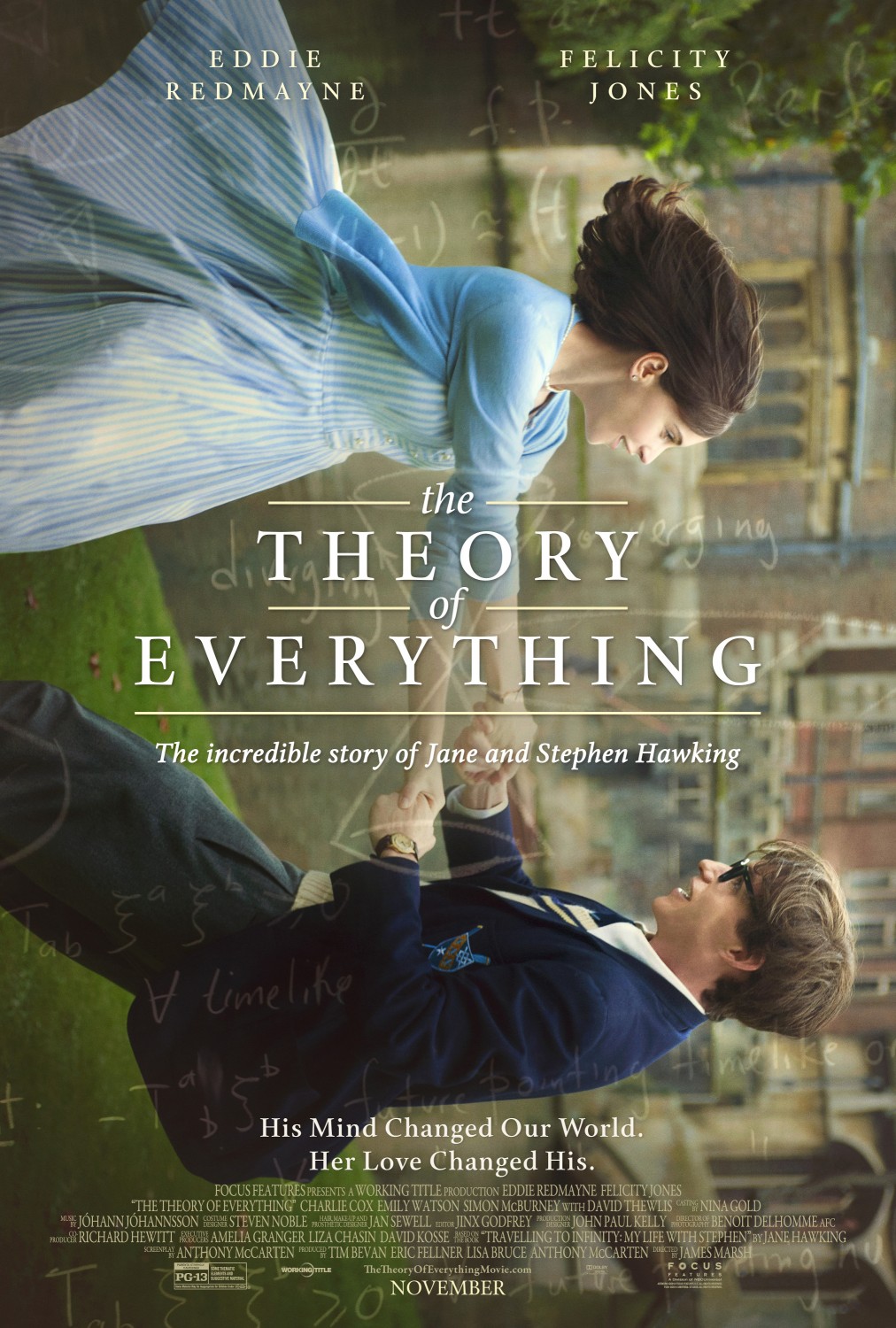
The Theory of Everything (2015)

★★★★

The Theory of Everything PosterDirector: James Marsh

Release Date: November 26th, 2014 (US); January 1st, 2015 (UK)

Genre: Biography; Drama; Romance

Starring: Eddie Redmayne, Felicity Jones

In The Theory of Everything Stephen Hawking (Eddie Redmayne) spends a lifetime trying to figure out the inception of our very existence. For all intents and purposes he succeeds in doing so. Or maybe he doesn’t. Maybe it doesn’t matter. This really depends on your own beliefs. James Marsh’s film ventures down a similar path to that of its central figure as it attempts to fulfil various thematic nodes: love story, tale of human adversity, science exhibition and so on. As these strands weave together to form Stephen’s story they don’t always feel complete. Or maybe they do. Maybe it doesn’t matter. This really depends on your own expectations.

Providing those expectations aren’t bound up by a need to see something totally flawless, The Theory of Everything should cover all bases sufficiently. Most of us are aware of Stephen Hawking; certainly of his illness if not the physicist’s scientific endeavours. The film takes us through Stephen’s adult life, from his first inclinations that something is wrong with his body to the writing of his best-selling book, A Brief History of Time.

But it becomes clear as the picture develops that Marsh’s vision isn’t necessarily weighed down by either disability or science, and instead the director wants to tell the story of a relationship. As such, The Theory of Everything becomes a co-biopic, its emphasis as much on the obvious struggles of Stephen as on the less obvious trials of his long time wife Jane (Felicity Jones). It’s because of this, and because the filmmaker only has two hours to capture a life of enormity, that key elements fall by the wayside. Shortly after Stephen is diagnosed with motor neuron disease — a scene shot so intimately by cinematographer Benoît Delhomme that the devastation is doubled — we learn that he only has two years left to live. Though, in a move that indicates the director’s desire to fit more stuff in, the film nonchalantly evades the two year mark.

It is an unenviable problem to have, one that leaves Stephen’s relationship with Elaine Mason (Maxine Peake) a little underfed, but the (admittedly necessarily) overstretched journey does afford us more than just an insight into the Hawking family. The early interactions between Stephen and Jane are reminiscent of those shared by Celine and Jesse in Richard Linklater’s Before… trilogy; he is quite awkward and she timid, but before long they are strolling around picturesque locales discussing the source of humankind. Both are defined by entirely separate ideologies too, Jane being a believer God and an arts student, Stephen an advocate for method and science. “I have a slight problem with the celestial dictatorship premise,” he says and from then we’re totally drawn into the pair’s capricious relationship.

In a manner of speaking, The Theory of Everything draws its pulpy interior from a clash of science and faith. Yet the film never exploits this duel beyond repair and instead uses it as an underlying catalyst for its central love story. Stephen, despite his adoration for the subject, is increasingly pillaged by science, his health deteriorating by the frame. He even defies the presence of a doctor, much to the chagrin of his wife. On the other hand Jane finds herself silently enraptured by the life she might’ve had as she and her husband spend more and more time with Jonathan Jones (Charlie Cox), a choir conductor whom Jane meets at church. The influence of the couple’s branching schools of thought is slight but entirely profound, a notion particularly felt when Stephen momentarily submits his incessant ignorance of God and then begins to backtrack. “Are you actually going to allow me to have this moment?” Jane asks.

Much of the praise the film have received thus far has been directed towards the performances of both Eddie Redmayne and Felicity Jones, and for good reason. It’s almost a foregone conclusion that in 2015 these actors will deliver excellence on screen, but the level the pair operate at here is truly magnificent. Redmayne does all the hard graft as Stephen, completely embodying the physicist’s eventual symbolic manifestation. It’s a role without a safety net and Redmayne should be commended for his artistic bravery as well as his tremendous portrayal. Jones is every bit as good, her subtlety and finesse perfectly complementing the physicality in Redmayne’s enactment. She’s more than simply a supplement though, Jones accentuating the strength of Jane through her pained-yet-defiant facial range. Supporting work from the likes of Charlie Cox and David Thewlis is also strong, though it is Redmayne and Jones who stand out significantly.

The Theory of Everything is at its best when Eddie Redmayne and Felicity Jones are united, projecting performances that are totally different but equally effective and affecting. The film is delightfully funny too, and not at all bogged down by disconsolation. And hey, if it’s good enough for Stephen Hawking, it’s good enough for me.

The Theory of Everything - Redmayne and Jones

Images credit: IMP Awards, Collider

Images copyright (©): Focus Features, Universal Pictures

WWE: The Royal Fumble (2015)

★★

Film folks, we’ll return to our regularly scheduled programming shortly.

I want to talk about that old rasslin’ thing for a moment. I’ve watched wrestling for over fifteen years and, just as it’d be stupid for me to claim uber knowledge in how to direct or write a movie, it’d also be stupid for me to claim that I know better than the people who slave away with pens and paper behind the scenes in WWE. Those guys and girls have probably been constructing stories within and outwith the world of pro wrestling for most of their professional lives. But I do think that a decade and a half of persistent viewing has chiselled at least a small amount of know-how into my brain as relates to the genre.

Everything was going swimmingly during the Royal Rumble last night. Sure, the hour-long tag team extravaganza was a bit much, but the Philly crowd were loud and made sure the show remained entertaining to watch — on a side note, let’s not forget that without an interactive and energetic audience like the one last night, the first half of this show wouldn’t have been nearly as good. Brock Lesnar, John Cena and Seth Rollins then had an outstanding triple threat match. All three guys were brilliant in their roles (Lesnar as the ruthless monster, Cena as the seasoned threat, Rollins as the imperious upstart) and Brock looked stronger than ever picking up the victory.

Rumble - WWE title

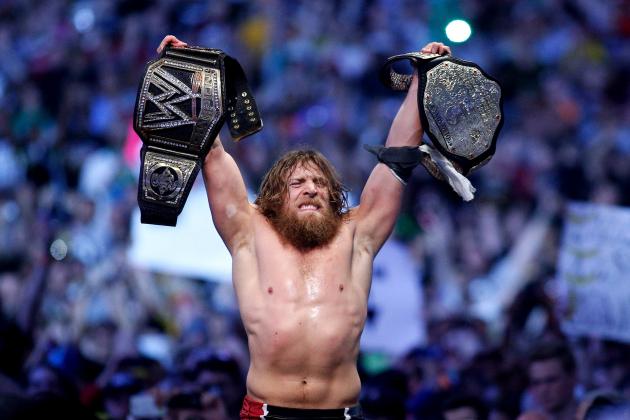
The Royal Rumble match itself started incredibly well too. We saw the return of Bubba Ray Dudley — once again, a deafening reaction from the Philly crowd elevated the moment — and there was a cool spot involving the Wyatt Family. Then Daniel Bryan arrived and the place exploded. Going into the match Bryan and Roman Reigns were the two clear favourites (murmurings of The Rock’s presence gave him a late boost).

I’m not going to lie: I wanted Bryan to win, and why shouldn’t I have? Randy Orton jokes aside, he is the guy that I love to watch more than anyone. Having said that, I — like many other Bryan fans on Twitter — was pretty much consigned to the fact that for the second year running he wasn’t going to pick up the victory and Reigns would receive that honour (or poised chalice) instead. Which, honestly, is fine. WWE needs new stars. Badly. Reigns could be a star. He looks fantastic, is young, can get better in the ring and can improve promo-wise too. Roman Reigns winning the Royal Rumble is not the problem.

Now, after last year’s debacle where Bryan was kept out of the Rumble match and the crowd booed eventual winner Dave Batista out of the building, fans had every right to believe that somewhere backstage the conglomerate of writers would come up with a smart plan of action. One that could get Bryan out of the Rumble without lauding heat on Reigns. As I mentioned earlier I’m not trying to book wrestling here, but I have watched long enough to know that what happened after Bryan’s entrance was abysmally conceived.

D-Bry was the eleventh wrestler/superstar eliminated. The fans in the arena, who for all intents and purposes had helped make the show as great as it had been up until that point, hated it. Just like last year they booed and hissed and chanted for Bryan and chanted for CM Punk and demanded refunds. Roman Reigns then entered shortly thereafter and they booed him too. Reigns would go on to win the match as expected, eliminating two proverbial giants and the undefeated Rusev in the end. Philly hated it. I hated it. Many people on Twitter hated it (some didn’t).

Bryan out

There are people in WWE who have been part of wrestling for decades. Triple H is smart guy. Vince has run the biggest wrestling company since before time. Yet for some reason nobody backstage suspected this toxic outpouring — or, at least, nobody important enough did. Of course fans were going to hate on Bryan getting eliminated because they love him; he never lost his WWE title, he’s the best babyface on the roster and he’s bloody amazing at doing that wrestling thing that sometimes happens. Of course fans were going hate on Reigns winning because a lot of them dislike the direction he’s going in; he’s cutting promos containing embarrassing content, he wears terrible gear and he is being booked just like John Cena who a lot of fans also dislike. Incidentally, none of this is Reigns’ fault.

Reigns entering at a point when Bryan’s elimination was fresh in the audience psyche and then going on to show superhuman abilities by eliminating three monsters was never, ever going to end with gargantuan smiles and patted backs for all involved. And having The Rock arrive to (unsuccessfully) give Reigns some shine compounds the overarching point: for some reason, the WWE creative team are feeding Reigns burgers and pizzas when his body is still at the baby food stage. At the Royal Rumble last night, they pulled the rug from under him by booking his victory terribly.

The Philly fans have been getting a lot of stick online for their negative reaction to the whole fiasco, as are us cry-babies on the internet. “They should stop watching if they don’t like it”; “it’s about more than just the IWC”; “stop moaning, it’s only wrestling”. As much as I felt bad for Roman Reigns, I do think the crowd were totally justified in delivering their outpouring of hostility. People have as much right to complain about shocking booking as they do complain about complainers.

Rumble - Rock Reigns

There is a prevalent notion that the IWC are a small ragtag band of scallywags who whine in darkened rooms on their WWE Network-compatible devices (in fact, that sounds about right). I don’t know the answer to this one, but I wonder how many of the four million RAW viewers fit the scallywag bill. Besides, it’s not just the smart-marks who love Daniel Bryan. More people are behind him than they are Roman Reigns. Surely as a company that wants to sell tickets and Networks and make money, you push your most popular star with greater purpose than your semi-popular stars, especially while the popular one is still in his prime.

CM Punk spoke to Colt Cabana last year and told him about a conversation he once had with Ryback, where he said: “you either tell me right now you’re dumb as fuck and you suck or you did it on purpose”. Does Vince hate his fans? Does he allow this level of ignorance on purpose? Or are those running the company just dumb as… well, you know. The booking at the Royal Rumble suggests the latter. The problem isn’t Roman Reigns, it’s the feeble and fruitless creative effort.

It is just wrestling. But having invested fifteen years of my life into it, I’m not so keen on walking away. Like me, I suspect lots of the IWC fans are long-term viewers with many years of investment. There’s no need to abandon something just because you don’t like it. If I’d stopped watching anything Matthew McConaughey was in after Sahara, I’d never have seen Interstellar or Mud or True Detective.

The reason this whole booking catastrophe has infuriated so many so much is because it has never been so plainly obvious that something in the creative department is terminally wrong. This means there’s an inherent lack of faith in how storylines are booked, and therefore a lack of faith in the future. Sure, WrestleMania will still be great. WWE will still alleviate our pain with special moments, but it’ll never be consistent and there is nothing more frustrating than watching ponderous and unnecessary inconsistency play out in front of your eyes.

And where the hell was Randy Orton?

Bryan

Images credit: WWE, Bleacher Report

Foxcatcher (2015)

★★★★★

Foxcatcher PosterDirector: Bennett Miller

Release Date: January 9th, 2015 (UK)

Genre: Biography; Drama; Sport

Starring: Channing Tatum, Steve Carell, Mark Ruffalo

You could single out any number of attributes and relate them to Bennett Miller’s directorial portfolio, but depth wouldn’t be one. The New Yorker has created four films since 1998 and, at a rate of one film every four or five years, Miller obviously doesn’t take job choices lightly. After a seldom seen documentary feature called The Cruise (1998) and his critically acclaimed biographical drama Capote (2005), Miller tried his hand at exploring the inner workings of American sport on the big screen. Moneyball (2011) was polished and affecting, but never set out to irritate because it was never meant to be that kind of story, just as baseball isn’t that kind of sport.

Foxcatcher, on the other hand, is that kind of story. Whereas Moneyball told a consumable tale that reflected the everyday popularity of baseball, Miller’s latest piece bathes in the sweaty discomfort and disassociation of wrestling. It’s uncensored, but subtly so. It’s damn good too.

Mark Schultz (Channing Tatum) is an amateur wrestler. We first meet him as he somewhat timidly relays semi-encouraging words to a less than half full hall of school children. Perhaps timidness is the wrong adjective. Mark isn’t necessarily a shy person, but his inability to open up is reflected in his distanced demeanour. All he knows is an everyday, basic existence. And amateur wrestling. Tatum excels as the hard-boiled grappler, his physicality more than matched by a powerhouse emotional range that develops alongside the story. He hobbles as you’d imagine a wrestler would, and wears sweatpants and an unforgiving exterior in and out of the gym, unlike the more outgoing Dave.

Dave Schultz (Mark Ruffalo) is Mark’s older brother, the man Mark is filling in for during the opening scene. Dave is also an Olympic champion and, for one reason or another, the more popular brother. Ruffalo brings an awkward charm to the role; we’re instantly drawn to him as he graciously interacts with American wrestling officials, Ruffalo dragging his toes as he shakes hands as if to highlight an inert clumsiness. The siblings train shortly thereafter, and Foxcatcher unleashes its first taste of the brutish sport — as Dave gets the better of Mark the latter lashes out, emphasising Mark’s simmering displeasure towards his overshadowing older brother.

Both men receive the opportunity to head up an all-American wrestling team at Foxcatcher farm, funded by John du Pont (Steve Carell). “Du Pont, a dynasty of wealth and power”, are the words that echo from a History Channel-esque montage about the rich family. Mark accepts, aspiration outweighing alertness, whereas family man Dave rejects. Though the film breeds an air of morbidity from the outset, it really kicks into gear upon the arrival of a terrifying looking du Pont. The three primary actors deliver wholly, but it is Carell’s skin-crawling turn as the internally maniacal financier that’ll stick in the memory and continue to probe long after the final pinfall. Assisted by facial prosthetics more suited to the latest House of Wax horror instalment, Carell maintains false poise that’s ready to burst. He’s devilish and utterly detestable.

Miller’s film teases the inevitability of chaos bred from a relationship between the three men, but refrains from delivering on the fact until the final act. Much of the first hour and a half of Foxcatcher instead focuses on the relationship between du Pont and Mark, a partnership that is clearly on iffy terrain from go. Their first face to face meeting at the farm is one of a catalogue of tension filled moments; du Pont sells his wrestling project to Mark (the multimillionaire wants to foster a gold medal batch of grapplers) under the guise of honour and patriotism. Rob Simonsen and West Dylan Thordson’s score is noticeably absent here as we hang on du Pont’s every word in tandem with Mark.

Although the screenplay relays a number of striking lines — “Horses are stupid. Horses eat and shit, that’s all they do” is a particular stand-out that comes from the mouth of du Pont, breeder of amateur wrestlers — the piece doesn’t necessarily rely on words to succeed. Rather, it’s about tension and ambiguity and the toxic atmosphere burning the three men involved. The overarching moodiness serves a purpose, but it is also a necessity given the real life framework. Foxcatcher resembles David Fincher’s Gone Girl in many ways, though the Gillian Flynn-penned film alleviates tension via brief moments of humour, unlike Foxcatcher. This incessantly serious approach works given the context, and Miller’s tactful management of the potentially tricky sullenness is a true masterclass in pressure-building on screen.

Taking all of the above into consideration, it’s unsurprising that the camera refuses to shy away from raw moments — shots are dynamic when showing matches and totally still otherwise. Greig Fraser’s cinematography effectively positions the audience in amongst any wrestling and as such captures the fleshy warring in full flow. Both Tatum and Ruffalo ought to be commended on their very immersive abilities, and it’s also worth noting the most horrifying celebratory expression in recent memory from Carell after a victory.

The culmination is game of pawn playing, a deliberation of moral values, and of blind understanding. Three men are at the forefront, their rapport with each other and with amateur wrestling challenged. Foxcatcher might only be Bennett Miller’s fourth film in almost 20 years, but it is absolutely his most accomplished.

Foxcatcher - Carell & Tatum

Images credit: IMP Awards, Collider

Images credit (©): Sony Pictures Classics

Birdman (2015)

★★★★★

Birdman PosterDirector: Alejandro González Iñárritu

Release Date: November 14th, 2014 (US); January 1st, 2015 (UK)

Genre: Comedy; Drama

Starring: Michael Keaton, Emma Stone, Edward Norton

What, exactly, has happened to our actors? Michael Keaton obsesses over this moral quandary for the entirety of Alejandro González Iñárritu’s Birdman, challenging each viewer’s own perception in the process. The best films are often those grounded in a sense of intellect, those which hold their audience in high enough regard to pose questions carrying significant weight. Here, it is performance art or, more specifically, the film industry that is placed under a 21st-century-swathed microscope. As the camera stalks an internally raving Keaton, we’re asked to consider the state of the movie business in 2015. Where did it all go wrong? Who is to blame? Don’t worry about causing offence. Iñárritu sure doesn’t.

Keaton plays Riggan Thomson, an ageing actor in pursuit of artistic redemption, a quest that currently finds him at the helm of a Broadway play. Thomson formerly played Birdman, a Batman-esque superhero whose feathered escapades brought the actor more cash than critical admiration. Though the film is set in a theatre, it becomes obvious that Iñárritu’s focus is the changing landscape of cinema. His script is smart, strategically splicing moments of rich humour in amongst an overarching spiel about the industry that’ll tickle those with a keen interest — like us movie dabblers.

Accordingly, Birdman ventures down two separate reels. When it is not exploring the limitations set by corporate culture, the film considers the power relations contained within visual art as it pits artist against critic; though both themes are intrinsically linked. The most prominent issue — uncultured suits designing and enforcing limits — is what bothers Riggan most, for the actor cannot escape his old Birdman character. At various points, Emmanuel Lubezki’s stunning cinematography shows off a Birdman film poster peering over Riggan’s shoulder, a constant reminder of past success. This spectre even manifests audibly as a Christian Bale-toned voice in Riggan’s head, and later physically too, signalled by a deliciously pulpy beat.

For the wannabe theatre star, superheroes are too easy and the superhero genre is a sell-out, both literally and figuratively. Michael Fassbender in X-Men? Jeremy Renner in another Avengers flick? Riggan’s dismay is palpable. As real world Hollywood prepares for a five-year comic book brawl at the cinema, the superhero debate has never been more relevant and is therefore a totally engaging hook. Riggan’s fear that he will never amass to anything more than a spandex-laden pigeon could be the same fear echoing through the minds of those actors currently trapped in the seemingly endless Marvel and DC cinematic universes.

As an audience swept up in the numerous products spawned by these behemoth film companies, the challenge for us becomes one of understanding Riggan’s watery mindset. Creating a critically laudable play is imperative in order for the actor to move on. “It’s important to me… it’s my career,” he says. His daughter, played brilliantly by Emma Stone, sets him straight: “It’s not important, okay?! You’re not important! Get used to it.” As a recovering drug addict Sam is not so hot herself, which makes her the most relatable person on screen. Her words cut deep too, suggesting a very real sense of melancholy for those plagued by the monopolised movie landscape.

That is probably why Riggan hires Mike (Edward Norton) as a last minute cast replacement, despite some reservations. Norton is terrific as the button-pusher who we sort of hate due to his deviousness, yet whose talent is admirable. In one of many excellent quips — the film is dialogue heavy, but Iñárritu and his co-writers never seem to lose textual steam — Mike sums up the dilemma stabbing away at Riggan’s mental stability: “Popularity is the slutty little cousin of prestige.” Keaton’s purveyance of instability is often electrifying and, even if Riggan never reclaims his former limelight, Keaton already has. At various points, both he and Norton must act as actors playing theatrical thespians on stage, which sounds incredibly difficult yet both excel.

Not satisfied with exposing those directly involved, Birdman soon sinks its claws into industry critics. We periodically encounter the power struggle between filmmaker and reviewer, and it becomes clear that as well as sell-out actors, sell-out journalists are in demand too — the Perez Hilton types, asking about the value of facial surgery and pig semen rather than proper actory stuff. The film’s best scene sees one such power-play in action: Riggan and a highly regarded theatre critic (Lindsay Duncan) spit truthful obscenities across the bar, before coming to the conclusion that they both need each other to thrive. It resembles a politically charged Game of Thrones interaction set in King’s Landing, and is as good as one too.

Having written and directed a film that essentially bashes the modern film industry (admittedly, with rationale), Iñárritu’s masterstroke is his use of comedy to diffuse, and somewhat dilute, his overtly critical narrative. In lesser hands, both aforementioned themes could pave way for dourness, for an overbearing attitude fuelled by sanctimony, but the director uses comedy to get around this problem and instead makes it part of the in-joke. Birdman may well be a true reflection of the industry today, but it is still damn funny. Perhaps we are laughing out of disbelief (that’s THREE-ZERO superhero movies on the way), but I’d like to think it is because Birdman is witty, true, bearing meaty roles, and successful. And not a superhero film.

It is worth again mentioning the exceptional work of cinematographer Emmanuel Lubezki. The entire film presents itself as a one-take product and, rather than becoming gimmicky, Lubezki ensures that the method energises the piece without overruling it. Shots are framed with precision and give us the chance to connect thematic dots, such as the journey of the aforementioned Birdman poster — its position on the wall coincides with Riggan’s spiralling thoughts. There is zip and tenacity, and a genuine sense of theatre/film set chaos.

What has happened to our actors, then? Apparently they used to play a superheroes, but then fell out of favour. Now one is back and, alongside his prodding director, Michael Keaton is on top form again. I love superhero films, but this is bloody good too — and I think that is the point.

Birdman - Keaton and Norton

Images credit: IMP Awards, Collider

Images copyright (©): Fox Searchlight Pictures