Insidious: Chapter 2 (2013)

★★

Insidious Chapter 2 PosterDirector: James Wan

Release Date: September 13th, 2013 (UK and US)

Genre: Horror; Thriller

Starring: Rose Bryne, Patrick Wilson, Ty Simpkins

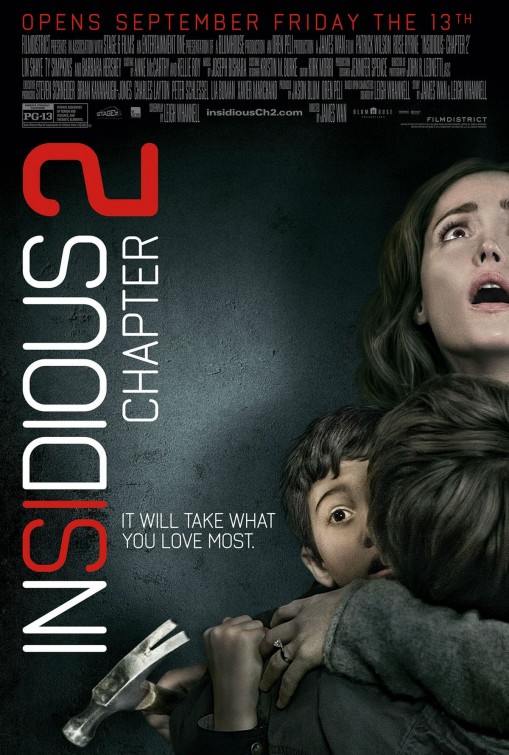
The second instalment in James Wan’s scary adventure opens with a game of ‘Hot and Cold’, where Participant A uses temperature to gauge Participant B’s closeness to a particular destination. Only, it should be rechristened ‘Manufacturing Scares’ because that’s exactly what the game is implemented for. In fact, the moment is indicative of Insidious: Chapter 2 as a whole, a film that lacks invention and overly relies on horror commonalities. Before the final credits roll we watch as characters partake in a Ouija circle, find a ghostly videotape and visit an abandoned hospital. (Guess what? It’s haunted). Discounting the occasional splurge of genuinely creep imagery, Chapter 2 is much the same as the first chapter but without the benefit of a new-born shine.

After a brief venture down memory lane — the origin of Josh Lambert’s (Patrick Wilson) uncanny ability is relayed — we realign with the present where the Lambert household isn’t exactly settled. The grizzly death of paranormal investigator Elise (Lin Shaye) has caused a stir, and Renai’s (Rose Bryne) subsequent questioning by a police detective in regards to her husband Josh’s potential involvement in Elise’s demise is also inducing internal strain; he seems different, evidently cockier. Her beau’s strange demeanour ain’t even the worst of it: the evil spirits are back and once again preying on Renai’s family.

If retreading old ground was an Olympic sport, Insidious: Chapter 2 would be blaring out the US national anthem with a gold medal hanging not-so-proudly around its camera lens. The title sequence is a carbon copy of what came before; aided by a congregation of piercing strings, blood red letters boom on screen and form the once foreboding INSIDIOUS inscription. It is sort of scary but the impact is far lesser here than was felt at the beginning of the premier output. Said string instrumental is part of the same score as before and, again, might have been quite unsettling if not for its overuse.

The familiarities aren’t simply local though, they arrive from afar. Chapter 2 has a number of its hands in a number of stagnant terror traits — James Wan meshes together haunted houses, desolate hospitals, alarming photographs and more in a hodgepodge horror pie that more resembles eight undercooked slices than a well-done whole. We’ve seen it all before, just one film ago in fact, and Chapter 2 struggles to stand upright on its own as a result.

The various elements don’t converse fluently either. If the first half is often predictable, the second is occasionally undecipherable. It’s a mess, really. Leigh Whannell’s screenplay devolves into a plethora of timelines and various existences. The writer dusts off his acting chops when a singular focus might have served proceedings better. Older and younger selves meet, but they don’t really. (Or do they?) Jocelin Donahue joins in at this point but her previous genre achievements fail to rub off this time around. Indeed, as far as haunted house epidemics go, The House of the Devil is in another league. Some effort is made to tie up loose ends, it’s just a shame that these loose ends end up in a tangle. As far as the film’s predictability goes, we tend to know the plan before the characters do: “If only Elise were here to help us.” If only. Watch out for two tin cans and a string as well. Something spooky oughta happen there.

Given the film carries a tone that pangs with dishevelled nostalgia, it’s probably to nobody’s surprise that some of the acting is camp. Patrick Wilson plays Josh Lambert but with a noticeable sprinkle of added aplomb to his voice, so much so that you’d think something was wrong with the father/husband. Despite his attempt to be eerie and serious, Wilson’s allure edges ever closer to humorous as the film progresses. It’s not meant to be funny, but it is. Rose Byrne is always reliable and provides a solid anchor for the uninspired narrative. Ty Simpkins also has more to offer than first time around, though admittedly he did spent the previous instalment almost entirely in a coma. Leigh Whannell and Angus Simpson’s comedic duo is a completely jarring inclusion. Unlike Wilson’s turn as Josh, the pair are supposed to funny but spend their time on screen spouting cringe-worthy material.

Though infrequent, James Wan does unveil some of the well-furnished horror magic that he has deftly applied in the past. Much like in The Conjuring, Wan finds prosperity in some seriously disturbing imagery. Hairs raise as menacing-eyed, widely-grinning faces flash before us for only a split second, but it’s enough to leave a dent in our previously unscathed fright-barometer. Moments such as this one catch us off-guard, however unlike the inferior jump scares that consume the rest of Chapter 2, these images are themselves intrinsically ominous and therefore contextually justified. The film actually bares a well-oiled look and one of its better moments comes near the beginning: a slow pan from pitch black into a moody, dark room. Lugging a plot that can barely hold itself together without succumbing to old ways and characters that don’t really command our attention, Wan’s dexterity when it comes to imagery is at least one spooky success.

Insidious: Chapter 2 spends an hour playing with second-hand toys before it takes to doodling with permanent markers and resultant mess-making. Aside from teaching us not to have babies (they’re a real nuisance when ghouls attack) and treating us to one or two authentic frights by way of scary visuals, Wan’s outing is purposeless.

At one point Josh says, “All you have to do is ignore them and they’ll go away”. I’ve stopped listening.

Insidious Chapter 2 - Ty

Images credit: IMP Awards, Collider

Images copyright (©): FilmDistrict, Stage 6 Films
Chernobyl Diaries (2012)

★★

Chernobyl Diaries PosterDirector: Bradley Parker

Release Date: May 25th, 2012 (US); June 22nd, 2012 (UK)

Genre: Horror; Thriller

Starring: Devin Kelly, Olivia Taylor Dudley, Jesse McCartney, Jonathan Sadowski

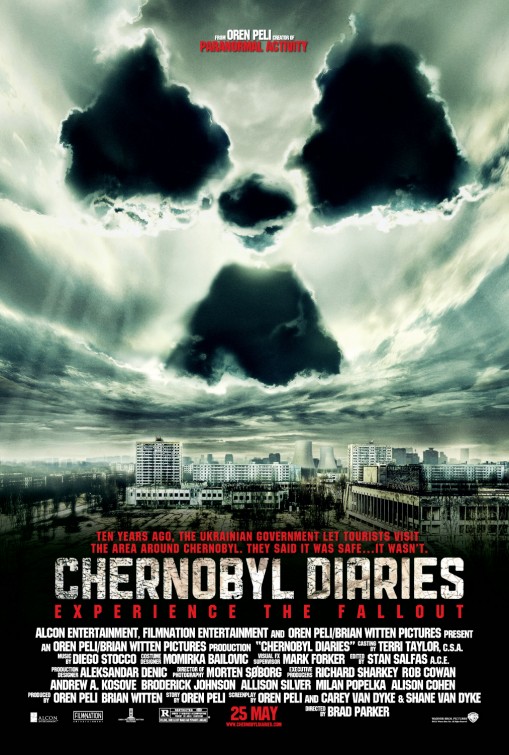
When does the term ‘B movie’ become an excuse rather than a justification? Somewhere, surrounded by low-budgets and gooey prosthetics, Roger Corman has an answer to that particular musing. Chernobyl Diaries veils itself as a B movie with its microscopic financials and horror genre tidings, yet it relents from purveying the ingenious soul of said cinematic crop. Director Bradley Parker manages to conjure up an ominous mood — the setting, if you hadn’t already guessed, is Chernobyl — and his primarily indie cast run with the creep-factor for a while, however they ultimately can’t overcome a dreary screenplay that succumbs to the generic scare code. Radiation levels might be increasing, but imagination is struggling to level out from a downward spiral.

Midway through their travels across Europe, Chris (Jesse McCartney), his girlfriend Natalie (Olivia Taylor Dudley) and tag-along Amanda (Devin Kelly) decide to stop off in Kiev to congregate with Chris’ brother Paul (Jonathan Sadowski). Living up to his brash reputation, Paul suggests that the group should take up some extreme venturing, to Pripyat, an abandoned village on the edge of the radiation-infested Chernobyl nuclear reactor. Upon arrival though, it appears that their ghost town is anything but.

It’s this particular setting from which all of the film’s success emits. Though events aren’t shot on actual location — production took to Hungary and Serbia due to the issues posed by surrounding levels of radiation in Chernobyl — Morten Søborg’s cinematography still manages to capture the inevitable haunting of a post-disaster scene. Makeshift Pripyat is like an eerie still-life painting without the life as it languishes in a wonderfully spooky state of urban decay. Hand print markings are shown painted on walls, created by urgent escape and presumably made of blood. Shattered picture frames represent lost livelihoods, the town having emptied in just two days.

Before we reach our destination there’s enough time for a stop off at an exclusion zone checkpoint where the travelling group incur the scathing stare of an intimidating military man as he circles their van to the sound of piercing strings. Not to mention, the occasional sighting of a radiation warning sign. What we see might not be the real Pripyat in the shadow of Chernobyl, but it sure feels that way; the landscape appears genuine, the remnants of nuclear disaster still lingering in the air and therefore, as our bunch of explorers begin their tour, an authentic sense of danger exudes. The horror narrative is armed with instant credibility, edgy and real, but this sadly turns out to be only the film’s only credibility.

Suggestion is often worse than implementation. Implying that something terrible is about to happen or that there could be a spectre lurking in the wings can, and regularly does, induce a great deal of fear. The faux-Chernobyl location provides a disquieting assist that isn’t capitalised on, much to chagrin of the audience, we being an expectant mob after the film’s promising start. Instead of revving the already unsettling mood, Bradley Parker encourages a steadfast meandering towards convention. People are chased by hungry dogs and figures appear in windows, but it’s nothing that hasn’t failed to scare us before. Proceedings never leave ground level and, with the exception of a rumbling animal appearance, fail to truly frighten. Sure you might jump once or twice, but these heart-racing moments have a lazy source. Shattering silence with a loud noise will always naturally create a cheap reaction. Doing so on film is eternally unimaginative and a problem in modern horror.

Speaking of contemporary cracks in the genre, Chernobyl Diaries is as guilty as any when it comes to less-than-average characterisation. The screenplay, written by Paranormal Activity architect Oren Peli and brothers Shane and Carey Van Dyke (of that bloodline), parades characters who collectively boast less of a dimension than a horizontal line. There’s the sensible one Chris, played by musician Jesse McCartney, whose wariness about the Pripyat expedition is an apprehensive foreshadowing of what is to come. His brother Paul is the inciter of mischief, and it just so happens that he manages to get his sibling into yet more trouble — this time though, it might be terminal, so best get some moral repenting done, eh?

Paul is played by Jonathan Sadoswki and both he and McCartney do a decent job at handling their poorly-written characters. In fact most of the remaining cast members are also fine, but they’re also forced to join the aforementioned duo in shilling a dead horse. An exception could be made for Dimitri Diatchenko who plays iffy outing guide Yuri, and who rattles off every line as if he’s reading directly from an exposition-laden script: “We’re now entering the exclusion zone.” It’s highly probable that Diatchenko is indeed an extreme tour leader moonlighting as an actor for one time only. (Turns out he’s been in everything from Indiana Jones to Family Guy.)

Chernobyl Diaries wishes to garner the cult notoriety of a B movie but, in the end, its foundations aren’t sufficiently durable. The set-up arouses an eerie mood prompted by location and is promising. However, this is merely a superficial canvas that fails to disguise the remaining descent into a lack of ingenuity. Truthfully there ain’t a whole lot to say about this, which is the fundamental problem.

It tries to combine the rubble of a fairly recent disaster and postmodern nuclear stigma with slasher scares and atmospheric nip, and it should simply be better.

Chernobyl Diaries - Devin Kelley

Images credit: IMP Awards, Collider

Images copyright (©): Warner Bros.

The Purge (2013)

★★★

The Purge PosterDirector: James DeMonaco

Release Date: May 31st, 2013 (UK); June 7th, 2013 (UK)

Genre: Horror; Science-fiction; Thriller

Starring: Ethan Hawke, Lena Headey, Adelaide Kane, Max Burkholder

The Purge opens promisingly: a cascade of slowly enveloping surveillance feeds show a timeline of violence, both unadulterated and raw. It sets the scene, year 2022, the images depicting acts of inhumanity committed on the one night that they’re legal. The feed hints at a lack of security, infusing a sense of realism and close proximity to home whilst also suggesting what we’re about to see is 21st century brutality. But that’s not quite what follows. Despite a promising start, James DeMonaco’s film, although mindfully suggestive and thoroughly polished, never really fulfils the ambitions towards which it initially embarks.

With crime rates and unemployment figures astonishingly low, the United States is seemingly in good hands under the New Founding Fathers of America. It’s not these results that are worrying though, rather, that the country’s social achievements have come by way of a demonstrably violent method: the Purge. The Sandin family are amongst those who financially benefit from the twelve hour anything goes societal melee, father James (Ethan Hawke) having struck gold with his house security system. When his son Charlie (Max Burkholder) lets in a wounded Purge victim things start to go wrong; the latter’s pursuing attackers are led straight to the family home carrying spiteful demands.

The moral jousting embodied by Charlie is one that the film looks to delve into from the beginning, doing so with true intentions if not true conviction. The Sandin’s are a rich family who discuss carb intake at the dinner table and live in a lavish house that represents the prosperity of James’ sales pitches. Essentially, the Purge funds them. Individually they’re fairly affable folk, but collectively the Sandin’s aren’t exactly an authentic reflection of life. Instead, the quartet are like the gloss over a scratched surface. Even though the allotted night of crime has ushered in decreasing unemployment and a reduction in year round violence, the poor are still those who suffer when suffering occurs — take Charlie’s wounded invitee, for instance.

The ambiguity over whether or not we should root for, or even like, the Sandin family unfurls disorderly as the film progresses, but this initial notion of papering over the cracks stays rooted firmly within the narrative, indicating an inbuilt societal prerogative that is advantageous to wealth. In a way events displayed throughout The Purge are merely a continuation of the world today and DeMonaco — who also wrote the screenplay — tries to shill this allegorical pursuit, however is eventually overruled by a lack of vigour. The twisted morality emitted from our central family resonates with the trials and tribulations of Macon Blair’s Dwight in Blue Ruin. For both he and James Sandin, it boils down to an age-old dilemma: how far would you go to protect your family? Whereas Blue Ruin effectively portrayed a blunt and grisly reality, The Purge doesn’t quite have the same stark intensity. Although it simmers like a fine broth, the end product isn’t all that satisfying.

Yet, intrinsically linked to the moral juggling are the makings of a successful look at post-contemporary crime and violence. Proceedings have a familiar Hunger Games-esque tinge to them; one night of inhumanity for the apparent sake of all humanity. The idea of a 12-hour law-free zone is absolutely ridiculous, but there’s something perversely plausible about it. We listen along with wife Mary as news commentaries discuss the logistical need for the Purge, while “have a safe night” is common neighbourhood lingo. Disorder is the norm, at least for a brief period of time, a concept that the film profitably depicts as eerily recognisable. DeMonaco also adds creepiness though discomforting erudite imagery (upper class young adults unorthodoxly peering up at a peephole), given this is paraded as a horror film after all — though it’s far more confident in the thriller aspect. There’s also a relentless murmuring sound that carefully ratchets up the tension as events advance.

In the end, alongside a lack of should-be applicable harshness, the film succumbs to being far too unrealistic. The improbable main plot point isn’t an issue — we’re along for the ride from the get-go — however there’s an incredible influx of coincidence going on. For one, the attackers outside are undisturbed for a significant amount of time despite being exposed to the crime-ridden streets. Also, people just so happen to walk directly into the line of fire on a number of occasions. (Listen out for where daughter Zoe’s decides to hide.) “Things like this are not supposed to happen in our neighbourhood,” chimes one character who seemingly never received the bleak tonal memo, opting for cheap black humour instead.

Notwithstanding some shoddy dialogue, the performances are universally well-oiled. Lena Headey is the best of the bunch as wife Mary, never coming across as unlikeable despite playing a character who could have towed the swanky line. Headey even manages to channel the purposeful poise she heeds in Westeros. As her husband James, Ethan Hawke holds up his end of the bargain. His reliability does outbid any ingenuity, though in truth he’s not given an awful lot to work with other than convention. Adelaide Kane and Max Burkholder are engaging as the duo’s children Zoe and Max, and Rhys Wakefield does his best impression of a peculiar, skin-crawling villain.

The Purge is better than just cheap thrills and jumpy scare-tactics. Director James DeMonaco attempts to inject the increasingly fledgling horror genre with a degree of thought-provocation, and success up until a point. High in concept and high in potential value, this doesn’t quite muster up the strength to be high in quality, but it shouldn’t be shunned for trying.

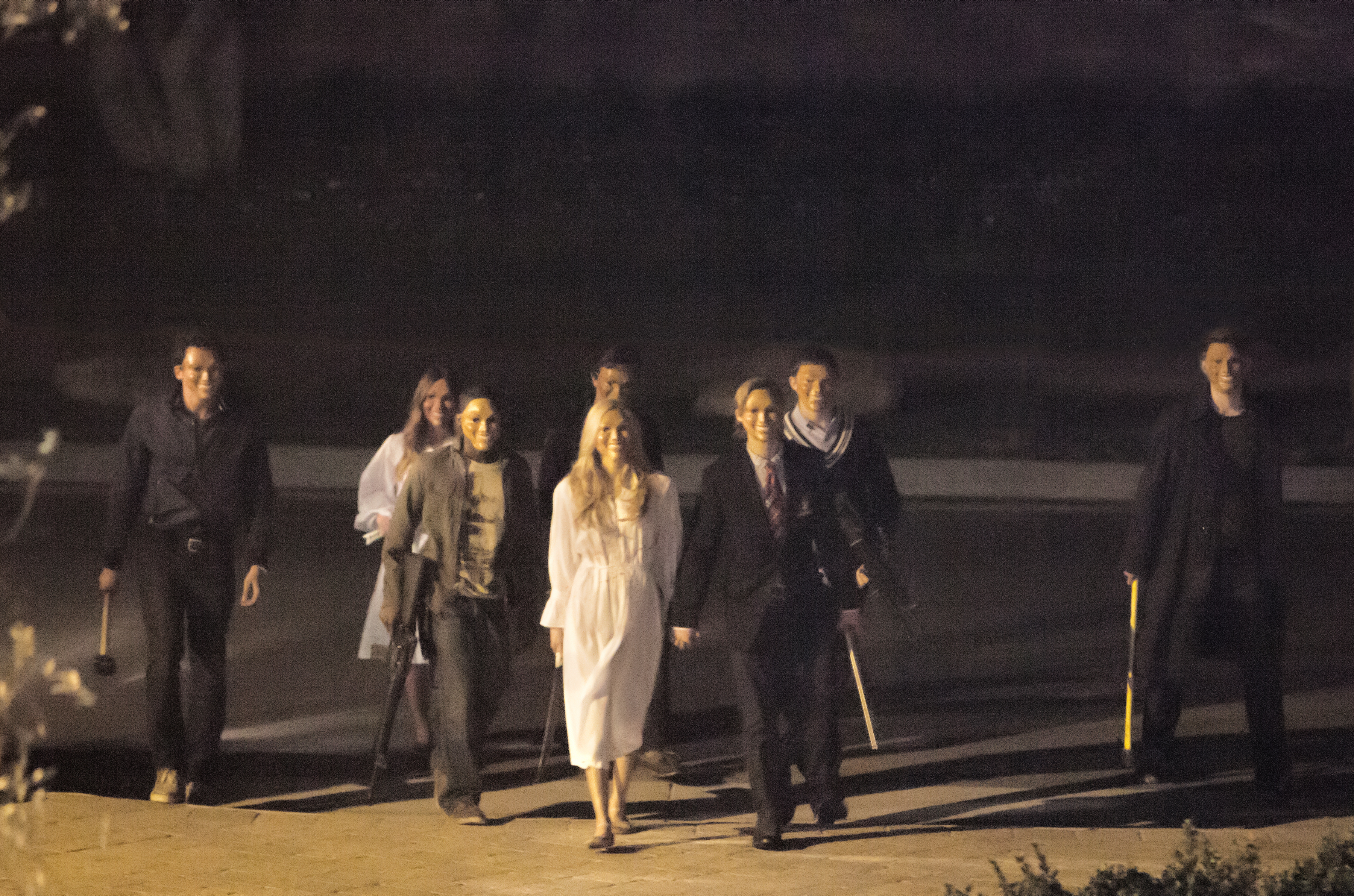
The Purge - Mob

Images credit: IMP Awards, Collider

Images copyright (©): Universal Pictures

Edge of Tomorrow (2014)

★★★★

Edge of Tomorrow PosterDirector: Doug Liman

Release Date: May 30th, 2014 (UK); June 6th, 2014 (US)

Genre: Action; Science-fiction

Starring: Tom Cruise, Emily Blunt

The key to any film baring a looped narrative is the provision of compelling characters. Or, at the very least, engaging performances. Bill Murray in Groundhog Day and Jake Gyllenhaal in Source Code, for instance. Two aptly mentioned films each of which share an obvious connection with Edge of Tomorrow, Doug Liman’s newest creation that sees the former’s witty humour and the latter’s pulsating mystery combine with a Vantage Point-esque tactical retreading to devise a two hour thrill ride. Tom Cruise and Emily Blunt energetically shepherd proceedings through any potentially damaging plot miscues, coming out the other side battle-worn but not out-battled. The jigsaw doesn’t quite fit together with uniform perfection but assembling it is pretty damn fun. In fact, this might be Tom Cruise’s best outing in a decade.

Major William Cage (Tom Cruise) awakens in familiar surroundings: an army barracks at Heathrow Airport, the word “maggot” ringing in his ear. It’s the near future and Earth is under attack. Aliens known as ‘Mimics’ — experts in adapting to combat human strategy — lead the invasion, and Cage’s interaction with one of the beasts has sent him spiralling into a time loop. A glorified military advertiser, the Major must train both body and mind with the aid of war machine Rita Vrataski (Emily Blunt) in order to quell the fighting and save humankind.

Edge of Tomorrow presents an often pondered scenario, then repeats until fluency reigns. If you were to throw a pebble into a river, would the water change course forever or eventually restore its old pathway? In this case, we swap pebble for soldier and water for war. There’s no grand idea to ponder, at least not a new one, but sometimes sticking with a winning formula ushers forth success and Liman’s film proves that. What the director does infuse, if not originality, is vitality; a freshness that cleanses with bounce and intrigue upon repetition. We watch as Cage lives out the same day countless times over, yet there’s never a sense that what we’re seeing is merely bland duplication. Quite the opposite actually. For every familiar bellow from Master Sergeant Farrell there’s a modicum of change. A card game hidden under bedsheets, for instance. Smartly, sameness becomes a weapon for both Cage and the viewer: he, attempting to win a war, and us, trying to put the puzzle pieces together. Every time he dies, we start over. Undeniably, there’s a method to the litany. (“An enemy that knows the future can’t lose.”)

The way the narrative plays out is akin to that of a video game. There’s a peculiar humour that comes with the frustration of being unable to bypass a certain stage, a mental headache that, once you finally advance to the next level, beckons in excitement. What’ll happen next? This is the sort of mind-jogging that Christopher McQuarrie’s screenplay dazzles with, and it’s sort of infectious. “What do we do now?” asks Rita. “I don’t know, we never got this far,” replies Cage with sparkling glee, the audience almost expecting him to follow up with a knowing wink in the camera’s direction.

The pair driving proceedings are having as good a time as any, which helps. Both Tom Cruise and Emily Blunt get stuck in, be it whilst careering through a mass of monstrous treachery or delivering gags with precise timing and just as much effort. The camera stalks Cruise throughout the entire film yet we never tire of seeing his face — admittedly, it is rather amusing watching the Hollywood star’s reactions as he perishes in a variety of ways. Blunt chalks in another talent-affirming performance as the ironclad Full Metal Bitch, getting the better of her co-star more often than not. It’s also worth noting Bill Paxton’s hammed up turn as the aforementioned Farrell, his numerous communications with Cruise increasing in hilarity as time progresses.

Quite surprisingly, Edge of Tomorrow detours down comedy alley a whole lot, hitting more than its fair share of home-runs. There are a number of intense battle scenes that are harsher in meaning than actual visual depiction, but these are balanced out by smatterings of light relief. James Herbert and Laura Jenning’s rapid editorial input comes in handy here, ensuring that there are never any lulls: while we’ve only just let out a guffaw at Cage’s prophetic qualities, the film is on to the next optical spectacle or witty bantering. Cruise and Blunt conjure up a dynamic that not only feels authentic, but that also sparks with comic prowess. The whole thing is quite ridiculous in a way and the film acknowledges so. Since it doesn’t take itself too seriously, we can relax and let the occasional disbelief slide. Playfulness supersedes sternness, and it’s for the best.

That’s not to say Edge of Tomorrow is bulletproof, because it ain’t. The plot teeters along a knife edge at times, hampered by its mass and volume. There’s a lot to take in and not all of it immediately makes sense, such as how easy it is to become encased within a time loop. (Not to mention Rita’s relationship with the concept — she could re-enter the groundhog procedure at any point, surely.) State of the art combat suits are developed to give humans a greater fighting chance against the aliens, yet these technologically superior battle weapons are juiced by batteries. There must not be any electric motor charging sockets around future London. Finger out, Boris.

Doug Liman’s track record since The Bourne Identity is sketchy at best, but this offering is a sure-fire career reviver. His direction is more or less spot on, striving for humour rather than overbearing solemnity. The film’s leading duo deliver on numerous fronts, injecting a fresh lease of life when necessary. The periphery can be a tad rough at times but Edge of Tomorrow will most certainly claim a lofty spot atop a vast amount of summer success lists, at least for the foreseeable future.

Edge of Tomorrow - Cruise and Blunt

Images credit: IMP Awards, Collider

Images copyright (©): Warner Bros.

Man of Steel (2013)

★★

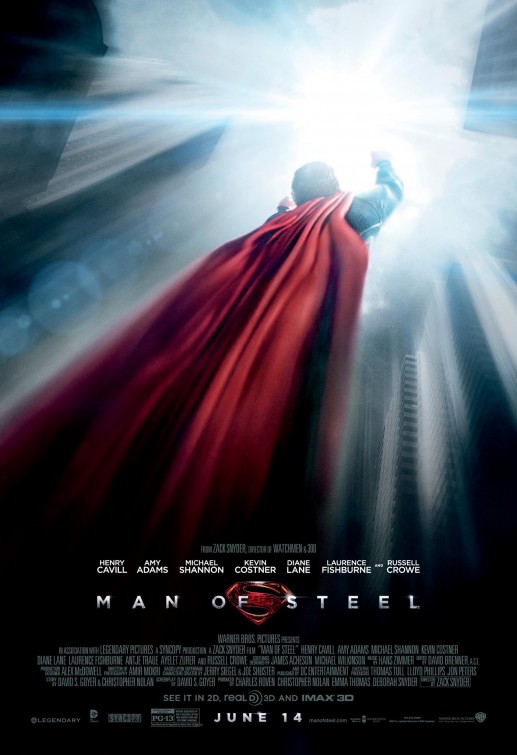
Man of Steel PosterDirector: Zack Snyder

Release Date: June 14th, 2013 (UK & US)

Genre: Action; Adventure; Fantasy

Starring: Henry Cavill, Amy Adams, Michael Shannon

Batman fans, close your ears. It’s time to come clean: Zack Snyder has a very iffy track record. For every ingenious graphic novel re-imagining there’s a hollow sucker punch. Presently, we can only cross our limbs loyal to Nolan and hope for a Snyder hit in 2016, but if his upcoming superhero face-off is anything like Man of Steel, it’d be best to quell those dreams. This Superman reboot isn’t anything to scream about, not unless those screams are riddled with unsavoury expletives. There are one or two great moments that only serve to thicken Snyder’s woes, acting as snippets of what could have been. Rather, what we see is disjointed, all-too-familiar and far too reliant on CGI. Never has a superhero gallivant felt like nothing more than just an opening act. And a pretty measly one, at that.

Having been sent to Earth by his parents during the destruction of planet Krypton, Clark Kent (Henry Cavill) has grown up as an outsider surrounded by humanity. Displaying otherworldly powers, Clark eventually discovers the truth behind his own origin but is encouraged to retain secrecy. That is, until General Zod (Michael Shannon) threatens to harvest Earth and terraform the planet for the benefit of his and Clark’s Kryptonian race. Buoyed on by a robust moral code and assurances from journalist Lois Lane (Amy Adams), the newly christened Superman must live up to his moniker.

In its primitive stages, Man of Steel is caressed by a solid narrative basis. We watch Clark’s early journey through life, sometimes in the form of flashbacks that are invariably effective. His struggles to adapt are pitted against an authentic prerogative to help others. As a child he rescues a bus-full of school compatriots yet instantly reverts back into an attitude funded by reclusion. It’s not instantly clear why, but we soon realise. (“People are afraid of what they don’t understand.”) The superhero genre is fully literate when it comes to principle-juggling and any subsequent strands of righteousness, therefore these elements ought to be employed with a twist. Sadly this one’s on the straight and narrow.

Despite being touted as one of 2013’s biggest extravaganzas prior to release, the outing carries an inertness that compromises any ingenuity. David S. Goyer’s screenplay is bombarded by exposition from the get-go, so much so that what we’re watching feels like an hour long prelude to proceedings when in fact, said time frame is the opening to the main event. There’s a lot of talk about genetic codices. Other than his commonly applied Superman title, our lead has two further names bestowed upon him: Clark and Kal-El. He also seemingly vacuums his way through an inordinate amount of jobs, from fisherman to military aider. All of this time spent building up the central character is unnecessary. As opposed to presenting Superman/Clark/Kal-El within a context of effective simplicity, Goyer’s script tends to opt for overcomplicating matters.

By the time we meet love interest Lois Lane the film has gone through a descriptive rigour. From what appears to be an unduly long opening act, events meander into a CGI-stuffed conclusion, equally unnecessary in length. A whole central act is missing, one that should cement our character’s mindsets and throw up internal hostilities. Lois goes from an investigative reporter interested in Clark’s uncanny abilities to his romantic concern after only a single scene — if not for Amy Adams’ charm infusion, her character would’ve been as pithy as they come. This is a two hour film that flies by, but not in a fun-induced fully-engrossing manner. Instead, lost narrative chunks highlight a lack of meaty content. Forget drama, the filmmakers’ seem satisfied with generic set-up and action.

And there is a lot of action. On occasion, the film sends out pleas for resuscitation through energetic sequences and flamboyant visual turns. Apart from all the bombastic alien light shows and exotic explosions (did somebody invite Michael Bay over?) Man of Steel purveys a gritty realism that actually works in its favour. Snyder utilises shaky cam and a monochromatic colour pallet as a means to present Superman within realistic boundaries, an attempt to show the apparently indestructible being as quite possibly human after all. It’s a shame that CGI-gorging eventually prevails in a display of all-encompassing consumption. One fight scene towards the end is particularly unforgivable in its obvious computerisation. Realism is substituted for video game-esque exaggerations, removing rather than endearing us to goings-on. Perhaps Snyder is indulging himself here — he certainly loves his ‘low, rapidly approaching blast of wind’ camera shots.

Michael Shannon is a left-field choice to play the main villain General Zod, but a choice that transpires to be the best thing about Man of Steel. His arrival on Earth is greeted with discomforting eeriness, the “You are not alone” telecast proving to be one of the film’s most successful moments in terms of emotional circulation. Sporting a peculiar white goatee, Shannon is domineering as Zod, facial expressions stoic and purposeful, overcoming the infrequent dialogue faux-pas. (“Release the world engine” might be the least intimidating line a villain has ever uttered when in the process of launching a deadly attack.) Dawning the red cape, Henry Cavill also does well. It’s a huge role and he isn’t afforded much to sink his teeth into, but the Brit relays just enough of a charismatic glimpse to signal a productive future. Russell Crowe manifests every now and then as Superman’s biological father, his efforts wholesome but not entirely effective. Frostiness battles affection, and the former usually wins.

Zack Snyder’s Superman revival is weighed down by a tendency to streamline towards convention. The film is essentially a carbon copy of Kenneth Branagh’s Thor, only it severely lacks the Norse God’s raucous charm and humour. Here, superficial reigns supreme. Wearing more than few chinks in the armour, Man of Steel is a bit of a dud.

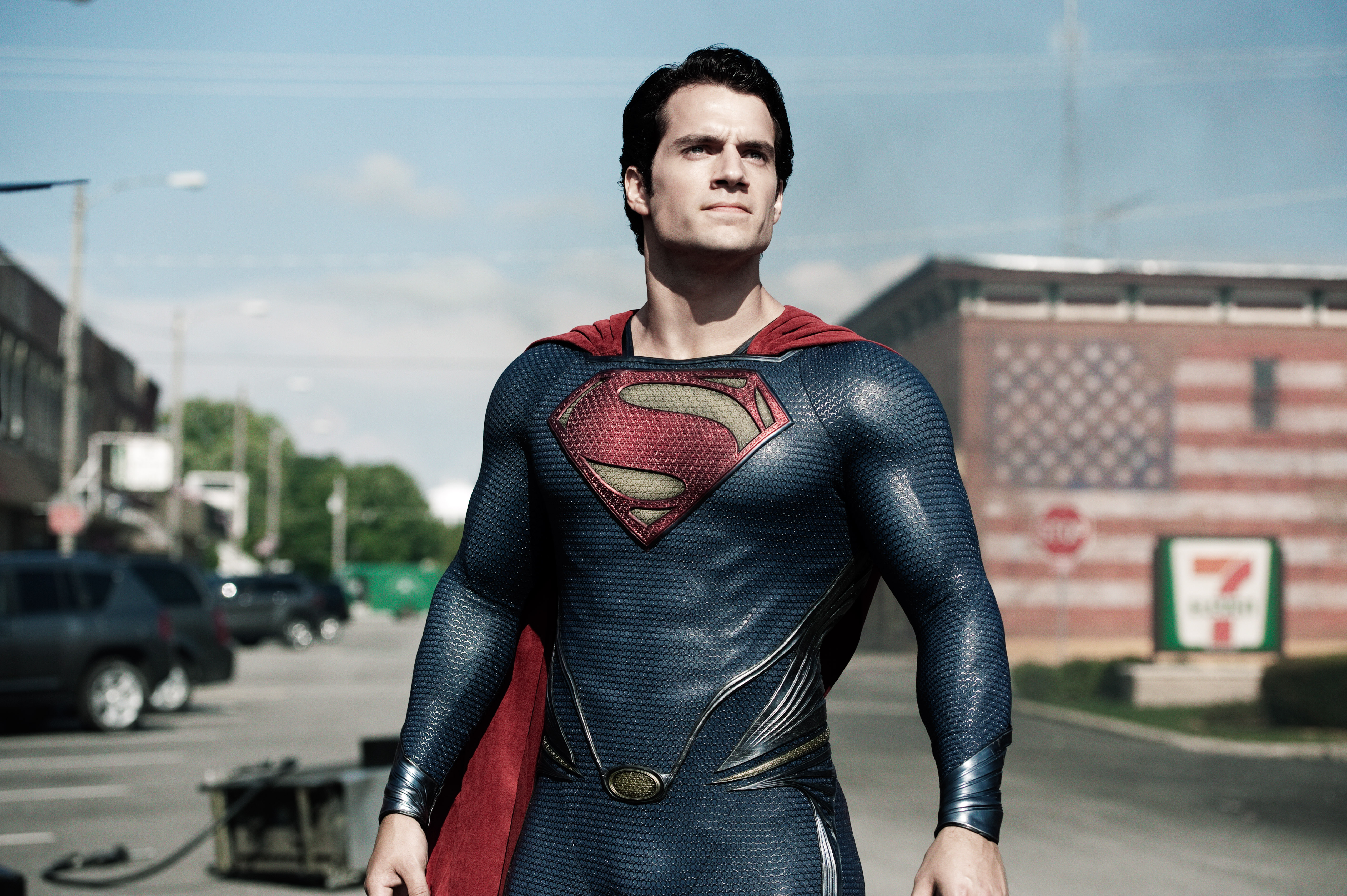
Man of Steel - Henry Cavill

Images credit: IMP Awards, Collider

Images copyright (©): Warner Bros.

Godzilla (2014)

★★★

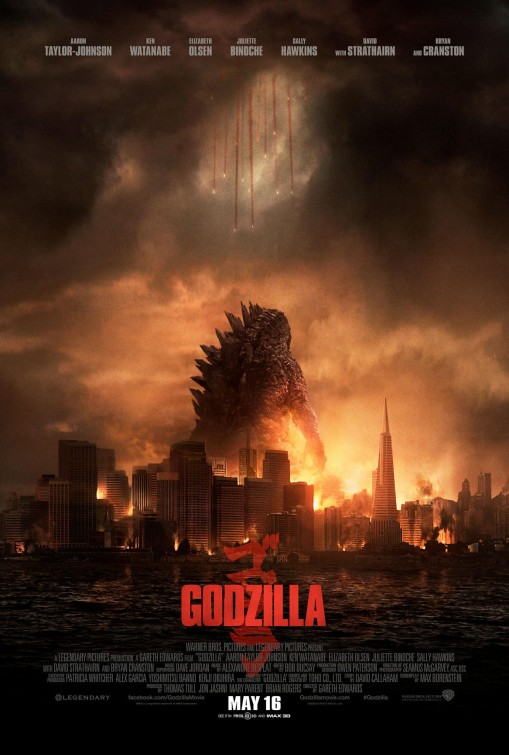
Godzilla (2014) PosterDirector: Gareth Edwards

Release Date: May 15th, 2014 (UK); May 16th, 2014 (US)

Genre: Action; Adventure; Science-fiction

Starring: Aaron Taylor-Johnson, Bryan Cranston, Elizabeth Olsen, Ken Watanabe

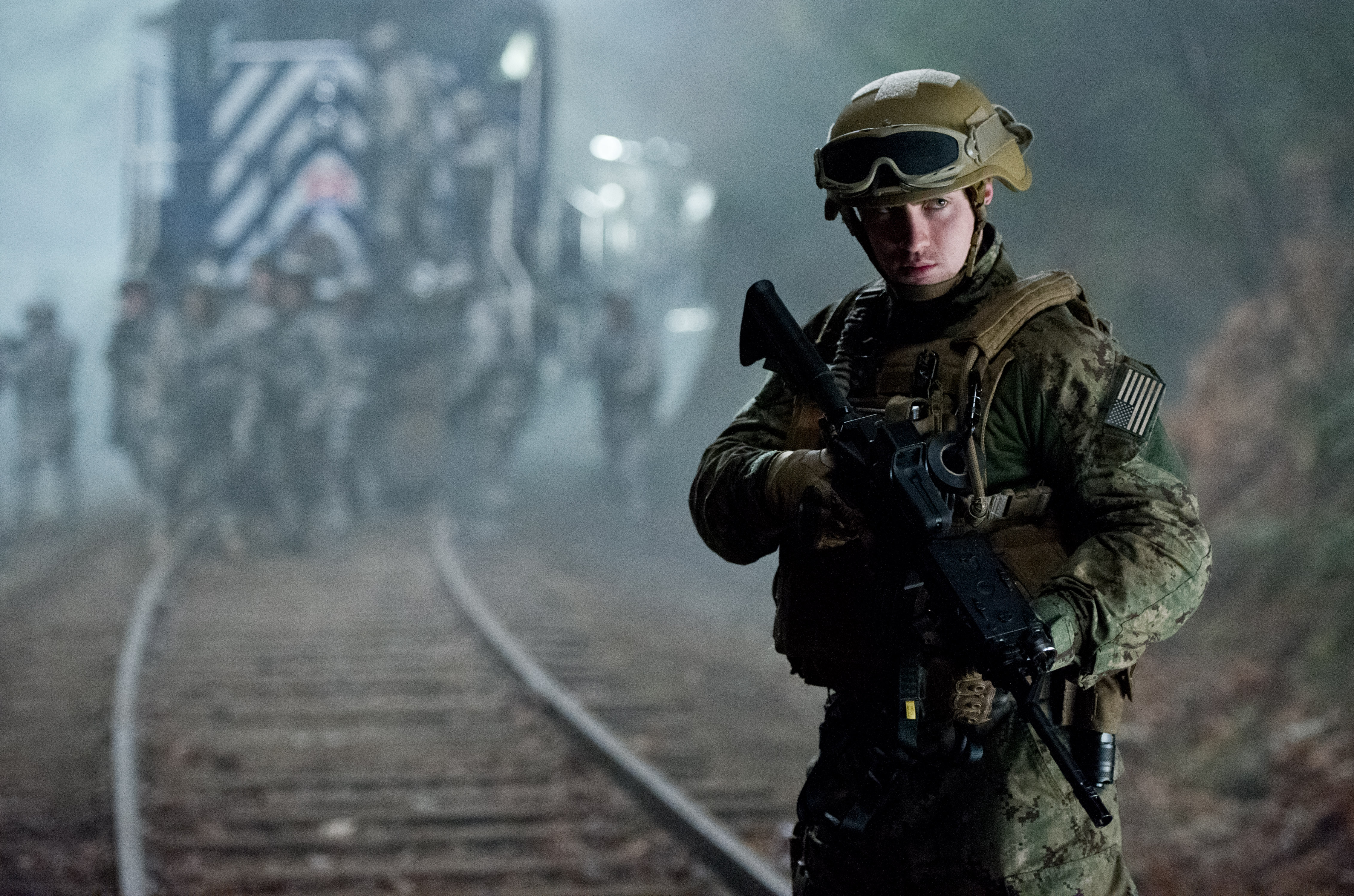
On a scale respectively topped and tailed by Gareth Edwards’ Monsters and Roland Emmerich’s Godzilla, the former’s reincarnation of the latter beast is perched around the middle. In other words, Godzilla 2014 is something of a disappointment. Not a bad film, far from it. In fact its technical aspects are better than many a modern blockbuster has to offer. Edwards’ contemporary version of the giant kaiju is both reminiscent and magnificent, and it bellows a rumbling roar that’ll have your popcorn flying and Coke Zero spilling. The problem isn’t when he’s on screen, but when he’s not. The director’s intentions are clear and commendable: to gather tension in preparation for that first monster reveal. But while said anxieties are simmering the characters must carry the torch and they, unfortunately, are burned by a deficiency in multi-dimension.

Having attempted to destroy the creature known as Godzilla half a century ago with the aid of nuclear weaponry, civilisation now faces another threat in the form of Massive Unidentified Terrestrial Organisms (MUTO). Physicist Joe Brody (Bryan Cranston) believes that a 1999 earthquake in Janjira, Japan is actually a government cover-up rather than a natural disaster, shielding from view the mistakes of humankind. His son Ford (Aaron Taylor-Johnson) heads out to Japan after hearing of his father’s arrest and witnesses first-hand the validity of Joe’s argument in the form of a creature wreaking havoc on everything in its path.

Clocking in at just over two hours, Godzilla is a game of two halves. The first hones in on the people involved and their actions, whereas the second explodes into a big-budget blockbuster bonanza. For a long time we don’t see Godzilla, instead teased only by murmurings and the occasional fin shot. In the monster’s place are a number of characters set to fulfil a variety of uninspired roles and, sadly, none of them really matter. Aaron Taylor-Johnson’s Ford isn’t a compelling lead and it’s not just him either. Ford is our latch, the constant human presence who we are supposed to invest in: he has the loyalty chops as a US Navy officer, whilst his young family denotes a common identity and demands empathy. But we’ve seen it all before. There’s nothing particularly special about him, nor anyone else. Ford’s wife is a nurse and she spends her limited screen time frantically pushing hospital gurneys and panicking over the phone.

It doesn’t help that those portraying these inconsequential characters are a talented bunch, their talents frustratingly wasted to all intents and purposes. Elizabeth Olsen, the aforementioned wife, is fairly fresh off of exceptional work in the likes of Martha Marcy May Marlene, but here she’s diminished to nothing more than husband-fodder. Bryan Cranston plays Ford’s father and probably delivers the best performance as his character’s flesh is allowed to grow, but even he struggles to be memorable. It’s less of a shame than a surprise really, given Edwards’ track record when it comes to delivering engaging presences on-screen. Perhaps we’ve become attuned to gorging our way through masses of CGI and rip-roaring action when blockbuster season hits and in that sense, well-rounded human beings aren’t necessarily top of the menu. However, given the nature of this narrative in particular — one that endeavours to build before letting loose — audience captivation must begin with the characters as they are the primary load carriers.

The story itself is customary and therefore doesn’t offer much in the way of support to its participants. We watch an awful lot of Tab A into Slot B shenanigans — there’s to-ing and fro-ing aplenty — but again, we’re only really here to see gargantuan beasts collide. Right? On occasion the film does delve into the semantics of its historical monstrous figure and in those moments Edwards is in control. The opening sequence sets an ominous tone as the theory of natural selection is enshrined by images of nuclear testing and bolstered by a booming sound. Not long after, Japan’s misfortune sees it become the site of both natural and human-made catastrophe; we view both a volcano and a nuclear power plant as they loom forebodingly over family homes and a local school. Somewhere amongst the raft of uninteresting characters and impressive effects is a serious satirical backbone that denounces the domineering attitude of humanity. (“The arrogance of man is thinking nature is in our control and not the other way around.”) Edwards brings a semblance of dignity and respect to the nuclear-nature fable, two traits totally lost throughout the franchise’s 1998 meltdown, and this version would benefit further from purveying greater impetus in this regard.

The director’s obvious admiration is also wholly captured in Godzilla’s visual manifestation. The reptile is a mishmash of classic and modern, wearing a familiar scaly attire that has been furnished by digital implants to make the creature look as grotesquely fearsome as ever (and, thankfully, as un-tyrannosaurus rex-like as possible). The reptile itself is going through post-Emmerich debilitation syndrome and Edwards successfully paves the way for phase one of recovery. The filmmaker who now infamously created his previous outing whilst curtailed by a minute budget of only $500,000, is eager to unleash the grander financial backing afforded to him here and to the Brit’s credit, he absolutely makes the most out of the cash available. From an early mine visual through to the final showdown, no skyscraper is left standing and each demolition job is almost as fun as the last. The ghostly infestations of urban decimation seen in Monsters are carried into this outing, destroyed landscapes as disconcerting as they are imposing. The film is also capped off by one of the year’s best scenes: a HALO jump that is both haunted by eerie hums and utterly scintillating in execution.

Gareth Edwards’ Godzilla is an odd concoction. His decision to reveal the monster later in the game is a good idea. A great one in fact. But the minutes subsequently left action-depraved must then be filled by goings-on that are even more engaging, and the characters offered are simply unable to comply. Perhaps high expectations are to blame but, more than anything else, Godzilla is an opportunity missed.

Godzilla - ATJ

Images credit: IMP Awards, Collider

Images copyright (©): Legendary Pictures, Warner Bros.

The Wolverine (2013)

★★★

The Wolverine PosterDirector: James Mangold

Release Date: July 25th, 2013 (UK); July 26th, 2013 (US)

Genre: Action; Adventure; Fantasy

Starring: Hugh Jackman, Tao Okamoto, Rila Fukushima

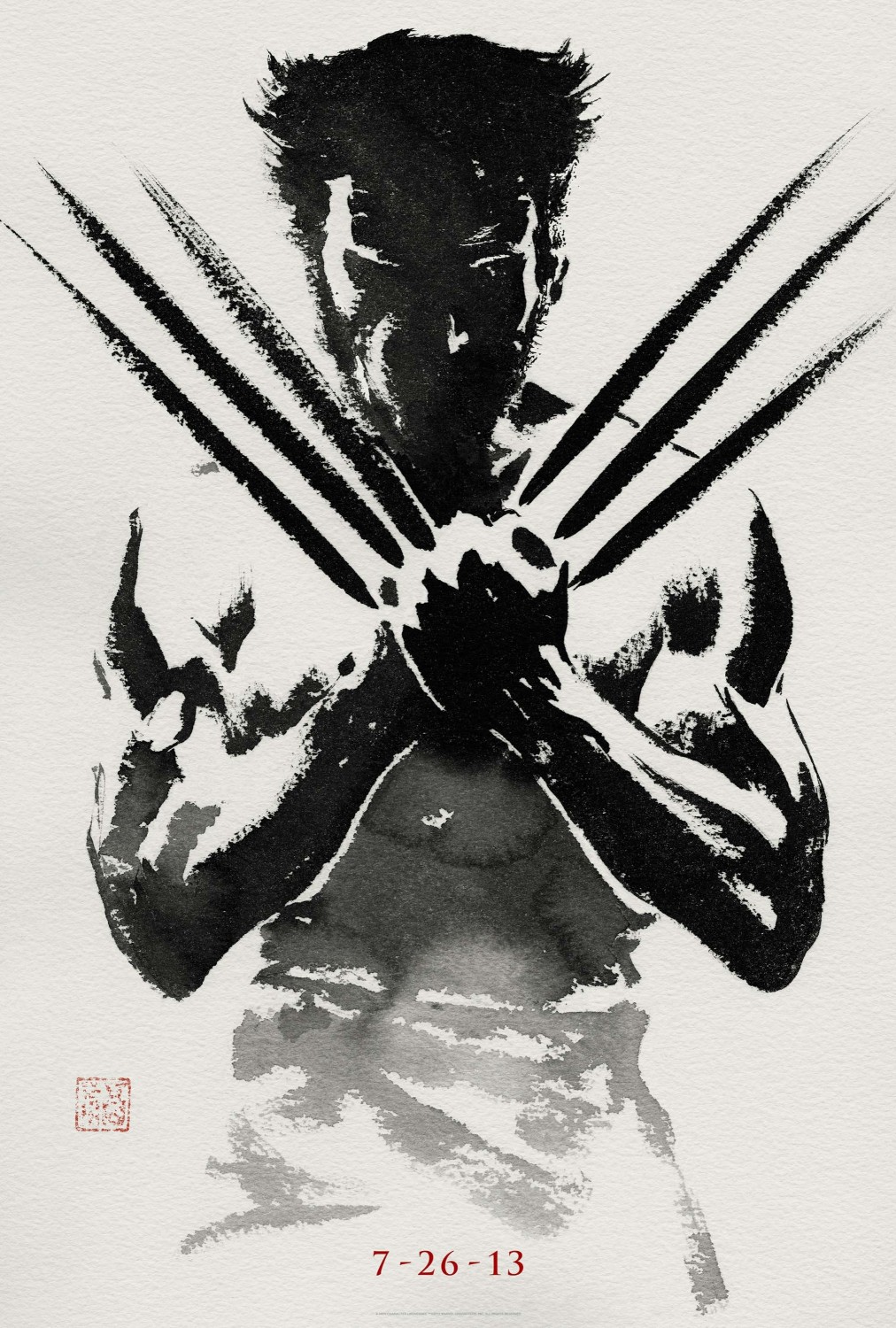
Wolverine is a tough customer, but even he struggled to chop his way through Gavin Hood’s frankly disappointing attempt at a Wolvie origin story (unsurprisingly, the only of its kind). Step forward James Mangold, of Walk the Line fame, a man who seemingly boasts a better grasp of X-Men lore. But the refreshing thing about his film, The Wolverine, isn’t necessarily anything to do with comic-book compatibility — having never read them I wouldn’t know. Rather, this outing flavours the antics of its familiar hero with a style and sleekness. The setting has changed and for the better. In a way, this is the past meeting the future before Days of Future Past and it’s good up until a point. Unfortunately, Mangold’s infusion of difference carries an expiry date and The Wolverine goes bad before the credits roll.

Now ticking by the hours amongst bears and sporting a wild-man look that sees a ragged beard and matching hair, Logan (Hugh Jackman) has more or less shelved the Wolverine persona. That is, until he is approached by the mysterious prophetic mutant Yukio (Rila Fukushima), representative of a dying officer whom Logan saved during the Nagasaki bombings in 1945. Upon reaching Japan, Logan finds himself embroiled in a game of morality in which his powers of eternal being are the highly sought after prize.

Early on a checkout woman asks, “You’re not a hunter are you?” to which Logan replies solemnly, “Not anymore”. With every crack and crevice of the redemption story already explored, particularly when it comes to superhero-esque flicks, The Wolverine opts to go down a slightly different route. The basis is set in stone — Wolverine must reacclimatise to life without his deceased wife Jean Grey as he continues to battle demons of immortality — but the delivery is somewhat altered. What we are watching is a film-noir crime thriller that bubbles with tension and gleams stylishly. Decorative villas host men wearing fashioned suits armed with polished weaponry. Wolverine’s claws appear shinier than ever before. Its efficient visuality won’t come as a surprise to those who know of director James Mangold’s previous work. (Walk the Line and 3:10 to Yuma are wonderfully constructed optical specimens). The film is a moment in time, a spin-off concocted from James Bond DNA. Wolverine: The Japan Years. This glossy air infuses vitality, at least for a while.

Mark Bomback and Scott Frank’s screenplay succeeds in tandem and for just as long as Ross Emery’s cinematography. Surrounded by new characters, Wolverine, previously left beaten and worn-out by his last solo run, just about regains his panache (though there’s still a way to go in this aspect). Modern meets tradition as Jackman’s mutant, juggling recognisable morals, finds himself in a contemporary setting; imbued by technology and the bright lights of Tokyo. Weapons vary from the time-honoured bow and arrow to the upgraded Uzi. The violence-oriented syndicate Yakuza, well-versed in global cinema — they’ve even got their own genre in Japan — are given a current update, forced into rapid pursuits throughout the hyper mobile urban machine that is Japan. Mariko, granddaughter of Logan’s WWII ally Yashida, must contend with a conventional arranged marriage, but even these are given a modern makeover by way of corporate intentions. The film’s mixture of 21st century comic-bookishness and past histories is a compatible one; we feel comfortable and connected to a familiar face in Wolverine, but also rejuvenated by a new climate.

Unfortunately, it’s a climate that eventually succumbs to a torrential downpour of sameness. At around the half-way point a romance blazes, the same one that we’ve spent the past hour begging not to. It’s that usual love story that seems to be written into the contract of every blockbuster, and this time it simply ain’t believable. Nor does it aid the narrative’s progression. Instead, the romantic exploits are blasé and distracting, if nothing else. Not only does the pace simmer to an unsatisfying canter as it supports these non-necessities, the love aspect also dampens Wolverine’s domineering aura. Jackman isn’t to blame, quite the opposite, he’s the one who rekindles a degree or two of verve through his blunt humour and hard-working personality. The Aussie is a very watchable presence — it’s a character issue that arises, as opposed to a performance one.

The piece tonally scampers around too, though this favours rather than hinders goings-on. On one hand, we have a dark underbelly that sees Logan possess a semi-suicidal state of mind. He must endure the mental scars of previous actions, and his inherent prerogative to save lives — such as preventing Mariko from jumping off a cliff — doesn’t exactly rub off on himself. (“You are a soldier… [you seek] an honourable death.”) Yet the seriousness never really wields unfathomable weight. In one sense, this means the film can’t be taken as earnestly in dramatic terms, but it does usher forth a loosening up, combining entertainment with solid if not wholesome sentimental musings. One of the film’s best scenes is also its most bonkers: a brawl atop a moving train severely tows the line of realism, and it’s damn fun to watch.

As previously mentioned, Jackman does his best Wolverine impression, but it is just that. His quick-wittedness and excellent comedic timing coalesce with the film’s at times briskly humorous breeze. (“I feel violated,” states a clean Logan.) Rila Fukushima is energetic as recruiter Yukio and, along with Tao Okamoto, brings a much appreciated newness to the screen. Svetlana Khodchenkova plays Viper, one slice of a villainous pie, exuding intelligence and power in the role. She’s the quintessential Bond character transferred over to Marvel, classically camp and elegantly sexy.

The first half of this is something to admire: formalities are given life through hushed slickness and a collision of tradition versus modernity. It’s a shame that The Wolverine ultimately bears the brunt of genericism, but Mangold’s solid effort shouldn’t be discounted by any means.

The Wolverine - Hugh Jackman

Images credit: IMP Awards, Collider

Images copyright (©): 20th Century Fox

X-Men: Days of Future Past (2014)

★★★★

X Men Days of Future Past PosterDirector: Bryan Singer

Release Date: May 22nd, 2014 (UK); May 23rd, 2014 (US)

Genre: Action; Adventure; Fantasy

Starring: James McAvoy, Michael Fassbender, Hugh Jackman, Jennifer Lawrence

Whereas Matthew Vaugh’s franchise revitaliser X-Men: First Class gained plaudits for its cast-iron story told with an injection of slickness and youthful energy, this next stop in mutant-ville is something quite different indeed. Ambition is the word that instantly springs to mind; from the moment livelihood-altering time travel is suggested (though it’s more mind travel) until the film’s final buzz-inducing reel, X-Men: Days of Future Past presents a whirlwind of famous faces enraptured in a spider’s web of plot, humour and enticing entertainment. Along the way Bryan Singer’s instalment exhumes a few hiccups, particularly as well-versed characters get caught up in allegiance purgatory, and the film’s lack of transparency when it comes to who wears the most villainous shoes is a problem too. But d’you know what? It’s tough to get anywhere without ambition, and this Inception-cum-Minority Report outing sprinkled with comic book enthusiasm has enormous ambition. Unsurprisingly then, it gets somewhere.

It’s 2023 and the world is being pillaged by Sentinel robots that bare only grudges, towards mutants and humans alike. Long-time enemies Professor X (Patrick Stewart) and Magneto (Ian McKellen) congregate with a number of X-Men and hatch a plan to send Wolverine’s (Hugh Jackman) mind south, back to 1973, in an attempt to cut the Sentinel problem at its source — that is, Mystique’s (Jennifer Lawrence) assassination of Bolivar Trask (Peter Dinklage). Wolverine’s solitary hope in regards to changing the course of history lies in tandem with a united mutant front, where differences are pushed to the side for the greater good. Only, this proves to be an obstacle for Professor X and Magneto’s younger selves, the duo irrevocably at odds over morality.

Days of Future Past purveys an ever-increasing sense of magnitude. As the film progresses we entertain thoughts of grandeur, that this might be a final hurrah for some. There are so many faces on screen that the loss of simply just one begins to feel unlikely. Many will succumb, we feel, and this undoubtedly instils a weighty load atop proceedings. At one point Trask urges the need for his Sentinel program: “A common enemy against the ultimate enemy… extinction.” The line represents this all-or-nothing undercurrent that drives events, ushering forth supreme unpredictability. The most engaging X-Men films are those that contort whichever mutant-human relationship is in fashion during said time period, and here we begin to see the inner-workings of primitive convolution.

Much like its predecessor, Days of Future Past wears the international climate within which the film is primarily set like a rain jacket on a cloudy day: posing relevant questions and suitably prepared for any proceeding answers. We’ve advanced a few decades since First Class and are now thoroughly engulfed a Vietnam War culture where blame is tossed left and right like a hot potato and international relations are frazzled at best. Musings over corporate-compelled destruction of the mutant race are a reflection of US military intervention across Asia. Discussions between the suit-wearing brass are centred on geopolitics, the language bolstering accusation and condemnation. (“You will have lost two wars in one lifetime.”) Despite an inordinate helping of fantastical powers such as shape-shifting and object manipulation — a stadium relocation is equally as impressive as it daunting — the shrouding of events in familiar histories gives the film vital realism that otherwise might be lost. At various points, Newton Thomas Sigel’s cinematography shape-shifts into stock footage of JFK assassination ilk, further furnishing authenticity.

Action sequences that spawn from the aforementioned clash of mutant and humankind are exhilarating. Carrying a wonderful visual gloss, these moments serve to get the heart pumping and, admirably, never oust the film’s emotional prerogative. Though, the same cannot be said for plot goings-on. It’s not universally indecipherable, however the narrative does falter on occasion. As Wolverine awakens in 1973, “First Time I Ever Saw Your Face” consciously lamenting with poignancy in the air around him, there’s a struggle between reality and non-reality that never fully realises closure. His present self is dropped into the past, but where is his past self? The Wolverine character hits a stumbling block or two as the film progresses. His main objective is to rally the X-troops, but that’s about it. Afterwards, the mutant mainstay becomes something of a generic piece in the puzzle. An impeding notion arises, therefore, that him being selected to go back in time is more of a Hugh Jackman star power issue as opposed to a Wolverine character arc issue. “You sent back the wrong man,” says the Aussie.

Nonetheless it is the characters who generally hold the key to success. A few have never been better relayed on screen. As young Charles Xavier, James McAvoy steals the show in a performance of initial enduring frailty and disillusionment. He has lost everything, yet refrains from morphing into a charity case. Rather, our sympathy is earned through the Scot’s heart-wrenching depiction of a broken man, one of McAvoy’s best turns to date. A scene between he and his older manifestation is arguably the best of the entire piece, a memorable moment made so with the aid of Patrick Stewart. On the flip side, Michael Fassbender’s domineering Magneto is cold and calculated; we never truly know where his allegiance lies. The impressiveness in Fassbender’s performance comes by way of a subtle regret that he exudes, a nuance that holds greater verve as Magneto embraces his thirst for resolution. Jennifer Lawrence is icy as Mystique, her desire for revenge both ambiguous and purposeful.

Though Mystique engages in a number of villainous acts, she’s never intended to be the definitive villain. In fact there is no real categorical antagonist here. The closest we get is Peter Dinklage’s suit-wearing scientist Bolivar Trask, though his infrequent appearances on screen tend to hinder any evil momentum. “Trask is the enemy,” we are informed and, although his Sentinel program is born from an unsavoury mindset, Dinklage never really comes across as the heinous bad guy that he probably should. Days of Future Past is layered with humour, often successful attempts too, and Quicksilver speeds off with many of the funniest moments. Evan Peters emits wit as quick as his feet, striking up a comedic dynamic with the dry banter of Hugh Jackman’s Wolverine. Listen out for Jim Croce’s “If I Could Save Time in a Bottle” and look out for the ensuing scene; intuitive excellence.

Despite a small helping of problems associated with narrative, X-Men: Days of Future Past manages to leave a lasting impression on us, an emotional impact bred by the people involved and the morals that they relay. This has a special aura surrounding it, a magnitude that usurps its few flaws. Regardless, we ought to applaud scoping aim, particularly when the aimer just about hits bullseye.

I suspect Singer and company have been practising their darts.

X-Men Days of Future Past - James McAvoy and Michael Fassbender

Images credit: IMP Awards, Collider

Images copyright (©): 20th Century Fox

After Earth (2013)

After Earth PosterDirector: M. Night Shyamalan

Release Date: May 31st, 2013 (US); June 7th, 2013 (UK)

Genre: Action; Adventure; Science-fiction

Starring: Jaden Smith, Will Smith

M. Night Shyamalan has a grand idea. His mind urging him forth, he embarks upon creating a film shepherded by characters who are inherently devoid of emotion. It’s not that emotional attachment is hard to come by, rather, that these people strive valiantly to become absolutely emotionally detached. An inspired scheme. Someone give the Academy a call. Only, hold the phone for a moment. A bunch of characters whose individual and collective M.O. is to be uninterested and, subsequently, uninteresting? I digress, our gallant director must have a couple of top actors lined up who’ll be able to effectively balance this indifference with microscopic poignancy. Is that the Academy on hold- wait a minute. Will Smith, a quintessential purveyor of emotion — be it comedic or dramatic — and his extremely unseasoned son, are our emotionless duo? Who wrote this thing? Ah.

Unable to harness his impassioned outbursts, Kitai (Jaden Smith) is rejected by the cadets. He’s physically capable, but an inability to ‘ghost’ — hide one’s feelings in order to battle the Ursas, creatures that can smell fear — puts a dampener on Kitai’s attempts to impress his father Cypher (Will Smith). The pair share a disgruntled relationship that is a product of Cypher’s long stays away from home and Kitai’s self-condemning attitude in regard to his sister’s death. Midway through a family bonding trip, their spacecraft crashes on the now uninhabited Earth, leaving Cypher injured and Kitai as the duo’s only chance of survival.

An Ursas is loose and Kitai must repress emotion. Prepare for 100 minutes awkwardly depicting a person’s attempt to be boring. This premise is After Earth’s most debilitating problem, of which there are many. Renowned for his twists, we’re crying out for an M. Night Shyamalan tide-turner in the face of events that struggle to spark and ultimately dissolve into a sea of monotony. Devoid of any nuances designed to connect character and viewer, the film tries to infuse heaps of sentiment by way of inventing a dramatic predicament; the crash forces an incapacitated father to rely on his son who is mentally unequipped for the dangers ahead. But straight away this concept flails without emotional gravitas. There’s no tension as happenings are hampered by a lack of realism: surrounded by an almost universally dead crew, it’s inconceivable that Kitai would escape a plane crash without so much as a skin laceration. Heck, even dad Cypher’s broken leg sounds pretty welcoming considering he has just been zapped by whirling turbulence. (Always wear your seat belt kids.) After Earth is as diluted as science-fiction gets, plain-tasting and without scope. Look away now Stanley.

Neither Will nor Jaden is afforded much in the way of a relatable character, but the senior Smith should know better. Cypher does a lot of sensing — a trait that seems to come with the reticent territory from which he spawns — and it’s a shame that Will was unable to sense just how hopeless After Earth promised to be before putting pen to contract. In this sense the actors are more idiotic than their characters, but it’s not a foregone conclusion by any means. At one point, junior notices that a significant portion of his breathing equipment has been destroyed and opts not to tell senior. Why? Who knows? Maybe it’s because he’s scared of his father’s reaction to wasted Jammie Dodgers. At least by lying Kitai is awake and therefore offering some sort of interaction with the audience rather than sleeping, a popular action of his that consumes at least half of the runtime and subsequently jars an already wobbly narrative flow. Though in fairness, if it wasn’t for an inordinate amount of caffeine, he mightn’t have been the only one dozing. Perhaps I should have indulged in some of Cypher’s painkillers – y’know, the tablets that he decides not to take for fear of drowsiness before succumbing to his unconscious anyway?

There’s an overbearing sense of woodenness going on too, and it’s not simply the vast array of trees that now cover an unpopulated Earth. Everything is very mechanical: the way people walk, the way people speak, and especially the way people act. Will and Jaden were authentic as a pair in The Pursuit of Happyness, their family connection purveyed with total wholeheartedness. In that outing we believed in them as father and son, not simply because that is reality, but because the two transferred their reality to the screen in a genuine manner. Here, it’s difficult to gain sight of this beneficial legitimacy as two poorly construed characters terminally intrude, along with a script that occasionally has us reconsidering The Phantom Menace for Best Original Screenplay (“I will guide you, it’ll be like I’m right there with you,” says assured father to timid son).

In seeking emotionless vigour, both Will and Jaden act as if they’ve just been told that McDonald’s is out of Big Macs whilst incurring the wrath of a food-demanding hangover; faces unwaveringly sorrowful, eyebrows lapsing and pupils heavy, emotionless but also purposeless. Next time nobody ought to invite Tony Montana over to any script-writing sessions, then we might see a film with dialogue that hasn’t been tanned by a machine gun. Cypher informs Kitai, “You are not a ranger,” before ordering his non-ranger son around a little more, probably in a similar vein to that which he instructs his rangers. These holes devour our lead actors and leave them stranded, unable to escape. It’s worth noting that there are one or two faint bids at humour, chuckle-inducing to a point, but gags that primarily urge us to contemplate the reasoning behind Shyamalan’s decision to present his piece with such a dreary and serious tone in the first place — a tone that, it turns out, doesn’t succeed in being all that serious anyway.

This recipe for disaster might boast a visual sheen that is moderately impressive — if not invariably cut-and-paste when it comes to Mordor-esque volcanoes — but it tanks in every other department. There are bad films, however there aren’t too many $130 million bad films. After Earth scores high in said category and, given its lofty price tag, that’s pretty unforgivable.

After Earth - Jaden

Images credit: IMP Awards, Collider

Images copyright (©): Columbia Pictures