Blue Ruin (2014)

★★★★★

Blue Ruin PosterDirector: Jeremy Saulnier

Release Date: April 25th, 2014 (US limited); May 2nd, 2014 (UK)

Genre: Thriller

Starring: Macon Blair

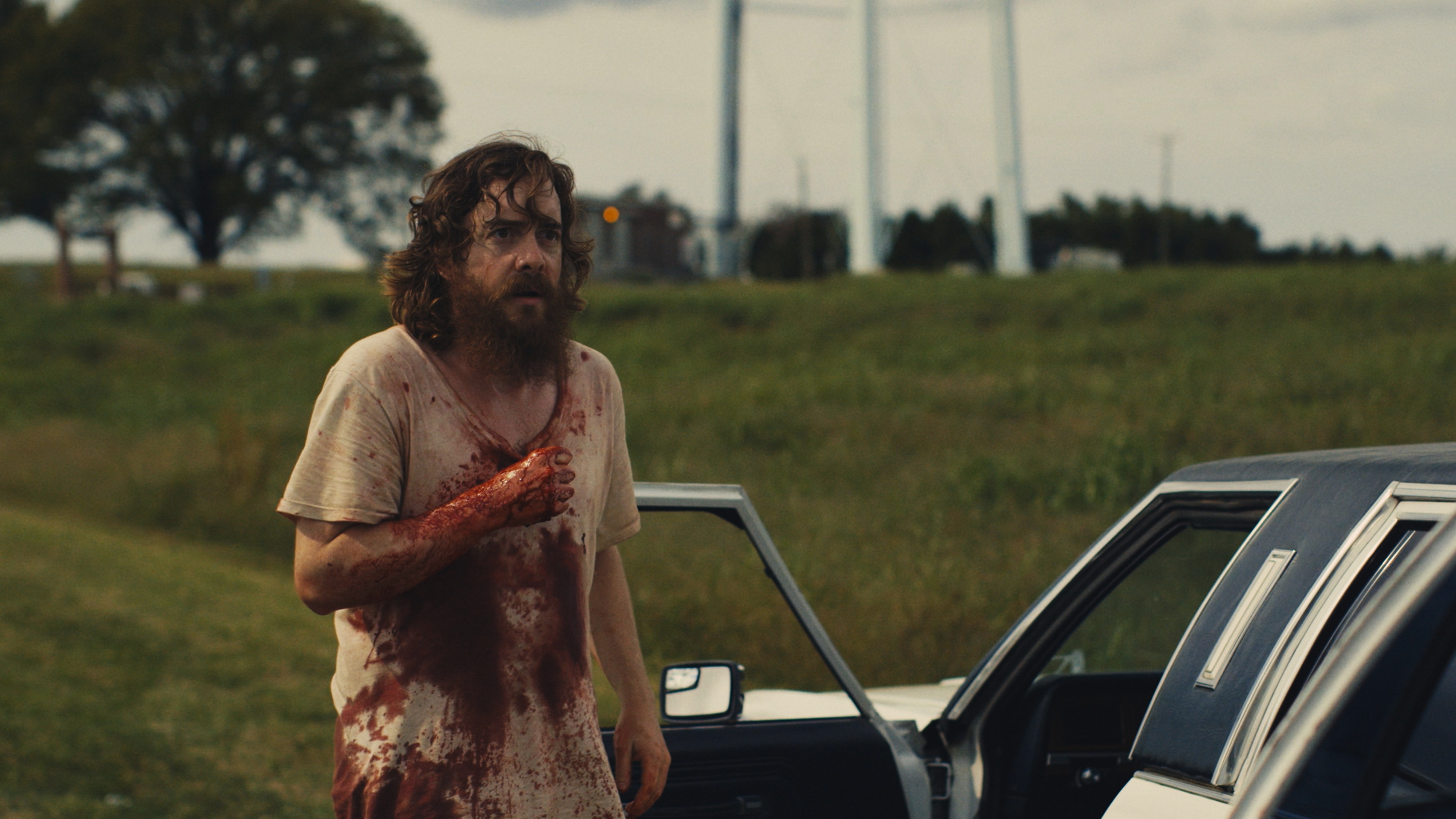
Sitting shielded by penetrable furniture, rifle in hand, Dwight is the embodiment of unrelenting fear and all-consuming retribution. It’s a scene we’ve already watched play out, no more than an hour ago, yet the horrors of Blue Ruin remain just as prominent. Jeremy Saulnier presents a film as blunt as they come in terms of both violence and message; people do bad things, and other people do even worse things as a result. This isn’t humanity’s finest hour, but it’s a damn good one for the visually-affluent filmmaker. If it wasn’t for an outstanding lead turn courtesy of Macon Blair, Blue Ruin would be an impermeable one-man show — Saulnier is writer, cinematographer and director. The pair make quite a duo though, their film a juxtaposition of wonderfully rustic imagery and violently fraught undercurrents. Still clutching his weapon Dwight notices the approaching car headlights, and we realise vehicular beams have never felt so brooding.

Living on the beach, Dwight (Macon Blair) has become a part of the slum-like scenery: bearded, scruffy and wearing only ripped clothing. His 1996 Pontiac — one of Dwight’s only possessions — represents his worn out, rusty self. We don’t know much about him, that is until information gets out regarding the release of Wade Cleland, the accused killer of Dwight’s parents. Like a seldom used tap recently turned on, Dwight’s meandering outlook spurts forth previously concentrated resentment and alters into one driven by the waters of revenge. Consequences are inconsequential until the deed is done, and then they becoming everything.

If the Coen brothers were to create a horror film, you get the feeling that it wouldn’t veer too far from the look and feel of Blue Ruin. Saulnier’s outing never gloats, the subject matter doesn’t allow it, but as one spectacularly furnished competent part after another is relayed on screen you’d be remiss to forgive any slight indication of back-patting. Each element is crafted and honed to appease the next. Visually, the film is visceral and uncompromising in savage outbursts, whilst retaining an organic authenticity during moments of recalculation. The violence is nasty and vulgar, but wholly fitting within the pessimistic context communicated. Otherwise, empty landscapes yield no place for refuge.

Depending on whether Dwight is loading a gun or being enveloped by solitude, the audio either reinforces purpose with metallic verve or reverberates a husky, crackling air. Regardless, the film consistently sounds magnificent. On occasion, we hear a drone of similar ilk to the noise emitted from a lightsaber, only it’s not lively beaming energy, it is rampant tension — the sound of Dwight’s desperation. As Blue Ruin patiently simmers with unease, Dwight hurries, trying to flee from the horrors affronting him but running directly into them instead. Perhaps he does so with a semblance of perverse acceptance compelled by retribution. It’s this ambience of apprehension that keeps us completely fixated to events for ninety minutes, fingernails bearing the brunt.

Technical prowess should come as no surprise, Saulnier is a cinematography graduate after all and his execution here is faultless. However, this is not a case of several parts being greater than the whole. Rather, the excellent individual nuances on display converge together, unfurling a film that should be admired for the having the courage of its convictions. It is almost as if the filmmaker’s precision is intended to mirror Dwight’s own meticulous mindset, one that evolves as he himself develops into an unconventional central character. Forget your anti-heroes, there aren’t any to be found here. Dwight most certainly was a normal customer in the past, but now he bears a murderous foreboding that relentlessly lingers over him: “I’d forgive you if you were crazy, but you’re not… you’re weak,” says a family member upon realising the consequences of Dwight’s ruthless actions. Blue Ruin doesn’t offer anybody to cheer for. There is no right, only wrong, yet you still find yourself caught between a rock and a hard place, rooting for Dwight. Not for him to kill but for him to escape. Moments of light humorous relief are prescribed, though are suitably drowned out by a stern tone.

Subsequently, we’re presented with a fresh take on the revenge thriller. Immorality is convoluted (“It had to be legal”), so much so that you’ll come away with an addictive need to recollect and rethink proceedings. The aforementioned achievements of Saulnier are telling, but Macon Blair’s central turn as Dwight is just as imperative to the film’s success. He articulates wholesome credibility as a man whose demons are within arm’s reach; his performance is full of panic and chaotic determination. During a conversation, the vengeance-seeker admits he is not “used to talking this much” and it is true that Blair spends a significant amount of time acting with observable emotion. As the film progresses, each breath gets hoarser and more sweat permeates. Blair’s raw roadside vomiting exemplifies the incomprehensible situation in which his character finds himself. Yet in spite of this, a genuine anguish escapes from Blair’s eyes, forcing us to empathise with Dwight.

At one point Dwight pays for much-needed items with blood-stained money, unable to explain himself (“I, uh… I…”), the scene illustrating his confused and compromised state of mind. The film itself is far from confused though, purposeful in revealing humanity’s evil side and assured by a dedicated lead performance. Even with only four hours sleep and a hand-cramping geography exam in the bank, Blue Ruin’s noteworthy candidness had me fully attentive. If this doesn’t wake you up, nothing will.
Blue Ruin - Blair

Images credit: IMP Awards, Collider

Frank (2014)

★★★

Frank PosterDirector: Lenny Abrahamson

Release Date: May 9th, 2014 (UK); August 22nd, 2014 (US)

Genre: Comedy; Drama; Mystery

Starring: Michael Fassbender, Domhnall Gleeson, Maggie Gyllenhaal

As wannabe musician Jon strings together lines so monotonously hilarious in an attempt to spur lyrical inspiration, you get the sense that Frank is about to deliver (just ask the lady in the red coat). And it does deliver to a point. When it strikes a comical chord, the reverberating guffaws tend to be high in pitch and volume. Not to mention the outing’s headline act: a stupendous bodily performance from Michael Fassbender. But there’s something not quite right, a node of irony that occasionally jars indulgently. When wackiness overrules narrative, a handful of disengaging characters remain. Utterly bizarre beyond its frames, Lenny Abrahamson’s outing is as much Talk to Frank as it is Frank Sidebottom.

A keyboard player languishing in his own pit of disenfranchisement, Jon (Domhnall Gleeson) finds himself taking the faux-piano reigns as part of an eclectic band. Frank (Michael Fassbender) is the lead singer, his psychedelic sound usurped only by the group’s psychedelic demeanour and his own terminal cartoon-head. At first, Jon is perplexed by just about everything the band has to offer. However, as he is dragged further into their unorthodox make-up by manikin-loving manager Don (Scoot McNairy), the keyboardist remembers his toils as a struggling musician and engages in a game of manipulation and admiration.

Though the antics are told from Jon’s point of view, the titular Frank is wholeheartedly the film’s star and this is in no small part down to Michael Fassbender. Stripped of any ability to facially exhibit emotion (an element quickly acknowledged in a humorous manner) Fassbender suitably readjusts in a display of manoeuvres that are as admirable as they are chucklingly peculiar. Like bees to honey, the band whiz to Frank’s side in a constant plea for attention, particularly Jon and Maggie Gyllenhaal’s stern Clara. Frank is the cream of the crop to them, both of whom aspire to gain his level of musical insight and, in the same vein, we look to him as the central figure of goings-on.

Fassbender’s vocal expression is intentionally difficult to pinpoint, an element that bolsters the mystery surrounding Frank — it also adds verve to his singing which sees one scene towards the end particularly stand out. It’s not necessarily Fassbender’s face that garners any amount of intrigue — we already know what the Irishman looks like — rather, it’s his character’s motivations. (“What goes on inside that head, inside that head?”) Even then, the reason behind the lead singer’s mask-wearing becomes irrelevant as Fassbender’s actions whilst wearing the head gear become increasingly engaging and unpredictable. A man without a face, but not without allure. Face hidden by a large head, if we didn’t already know it was Michael Fassbender we’d be absolutely certain it was an actor of extraordinary talent anyway.

Despite being too whimsical in dramatic delivery, Jon Ronson and Peter Straughan’s screenplay is often very funny. From shoddy song creation, to blunt feedback, to hurling objects at one another, there is undoubtedly a plethora of laughs to be had. Though, whilst striving for humour the outing progressively trundles through a sea of perplex. In itself, a film without conventional boundaries is not necessarily a bad film — conversely, though innately different, Valhalla Rising is surreal and still very good — but Frank suffers as it dips in and out of madness, resultantly losing tonal focus. Unless it can be found obscured underneath a papier mâché head, there’s no real on display plot here, not one of intuitive significance anyway. This is the story of a band locked away in a cabin writing an album. The attachment must therefore lie with those on screen and, out-with Frank himself, there aren’t many hooks.

Jon is our mediator of mania; he’s the ‘normal one’ in an abnormal setting. Despite Domhnall Gleeson’s best efforts, the character isn’t all that interesting; an inevitable outcome given those in Jon’s immediate vicinity — a fake head wearer, a wrathful theremin player, a manikin admirer — but the keyboardist is just a tad too plain and subsequently sticks out like a sore thumb. Even when he does generate a semblance of interest, it’s at the expense of likeability: as Twitter followers increase, affinity decreases. Clara presents an even greater problem. She’s dismissive and abrasive and this isolates Maggie Gyllenhaal’s persona. Rather than becoming part of the crazy prerogative, Clara exists disparagingly on the outside. Between plods of hysteria, the film puts all of its eggs into Frank’s basket, a lot for a faceless anomaly to take on. When inadvertently the most amiable presence is one wearing a mask, something ain’t quite right.

On another problematic note, Frank attempts to juggle the trials and tribulations of modernity and music, before incorporating issues of mental health towards the conclusion. We often hear of musicians hiding away in isolation as they congregate ideas for the next album in an attempt to avoid the hyper-connected external world, and this is exactly the case here. Frank and company occupy the confines of a wilderness cabin for months on end, though ironically they’re concealing their music from a non-existent expectancy — nobody knows who they are. Heck, nobody knows how to pronounce the band’s name (Soronprfbs, if you want to have a go) highlighting their incessant need to stand out in an overpopulated industry. The lead singer adopting a giant fake head is probably enough regardless. Jon invariably narrates proceedings via Twitter, a nuance that sears as an unneeded attempt by the filmmakers to make Frank more current. Perhaps those like myself without much musical inclination, other than downloading the latest hit from The Killers or Katy Perry, will struggle to relate to Frank’s attempt at industry irony. Abrahamson’s late bid to relate Frank’s concealment and musical idiosyncrasy with mental instability, though well-meaning, is pillaged by a lack of cohesion.

In response to Jon’s apparent anguish, a bystander confesses, “I thought it was supposed to be funny”. This retortion reflects Frank, a film that is inherently humorous yet unsuccessfully aims for melancholic satire. Are we meant to laugh or cry? I’m not entirely sure. The song plays boldly and certainly hits an occasional high note, but unfortunately suffers from a muddled beat in the long run.

Frank - Frank

Images credit: Movie Review World, Guardian

Images copyright (©): Magnolia Pictures

The King of Comedy (1983)

★★★★★

The King of Comedy PosterDirector: Martin Scorsese

Release Date: February 18th, 1983 (US limited)

Genre: Comedy; Drama

Starring: Robert De Niro, Jerry Lewis

From the moment Robert De Niro’s eccentric autograph-hunter Rupert Pupkin hops his way inside the limousine of talk show host Jerry Langford, The King of Comedy sizzles with motor mouth-induced panache. This isn’t the cynical nor the blunt outing that we have come to expect from Martin Scorsese. Instead, it is a light entry into comedy hall of fame, one that flaunts a relevant satirical backbone and a truly impervious performance from the director’s right-hand man De Niro. Proceedings are aided by a snappy screenplay, energetic direction and brisk editing, but this is absolutely a one-man show. Elements of subtle psychosis are explored through the pitfalls of rejection but, at heart, The King of Comedy is simply journey of hilarious wit, De Niro its perfect driver.

Rupert Pupkin’s (Robert De Niro) dream is to become a successful comedian plying his trade on a personal talk show. He spends many a day persistently practising routines and his evenings glued to the rear entrance of stage-doors, impatiently awaiting the signature of a celebrity (you get the sense anyone will do). Upon receiving a bout of half-hearted vindication from Jerry Langford (Jerry Lewis) and a less than half-hearted promise that Langford will consider his talents, Rupert believes he has finally achieved the break he has been after. Only, the aspirer’s ambition far outweighs his common sense.

Robert De Niro has never been funnier. Rupert exists on the opposite end of the mentalist spectrum from Travis Bickle, though De Niro portrays each persona with equal amounts of verve and precision. Just like Travis, Rupert demands our utmost attention and more, though this time it’s as a direct result of an incessant need to talk his way into and out of every situation. De Niro effortlessly channels a man who always appears to be precariously teetering on the brink of a nervous breakdown, yet someone who still retains a peculiar air of discipline. His mannerisms are exceptional, displaying the actor’s decisive comedic timing. Interactions with Jerry’s receptionist are particularly sterling, not to mention an awkward card reading scene that encapsulates Rupert’s mantra: purposeful without structure. The film is less interesting when De Niro is absent from the screen, not because the remaining elements are poor, but because De Niro’s presence is simply that enticing.

Paul D. Zimmerman’s screenplay scorches with immensely delivered dialogue. It throws up a satirical funny bone that harbours the on-going effects of celebrity obsession, on both the obsessive and those being obsessed over. Rupert is an in-over-his-head autograph collector (“The more scribbled the name, the bigger the fame”), but his problem is a far greater one: he’s a frenetic attention-seeker. If it’s not a woman, it’s a talk show host, or even a wall covered in painted figures resembling an applauding audience — the latter is one of the film’s most disconcerting and telling moments, echoing the infallible pitfalls of rejection. Though admirably gag-full, The King of Comedy also ushers in an eerie strand that strikes an even greater nerve as we learn more about our wannabe comedian. For a split second, the culture of mania becomes humane.

We begin to feel sorry for Rupert, who is ignored by all those whom he admires. When Rupert sees the walls in Jerry’s office are painted red, desperation asserts that he wears a red tie during the next visit — anything to impress. The film encourages us to get on board with a man who feels hard done by in life and who subsequently uses this as justification to overbear. Rejection manifests in similar forms to those of modern denial; “company policy” loopholes, an assistant reverberating condescending tones and emitting dissociative remarks. There’s no doubting De Niro’s impact in terms of making his character user-friendly, but credit must also go towards how Scorsese and company present the character. After all, it’s easier to engage and spend time with somebody who you like, as opposed to a person less cherished.

At its most rampant when De Niro is in view, The King of Comedy peaks by way of the humour expelled. Believing the hype — mainly his own — Rupert exclaims extraordinary fact after extraordinary fact in such a nonchalant manner that we begin to wonder whether or not they’re actually true (“That’s Woody Allen… he’s a friend of mine”). Other amusing sequences include Rupert’s uncanny resilience that sees him consistently refer to strangers by first name as if on a first-name basis — he’s a bit like the annoying drunk seemingly frozen in time and on repeat. Even his attire is so silly that it garners laughter: from the uncoordinated suit and tie to the pristine hair and questionable moustache. Listen out for De Niro’s dynamite “MAM!” too.

It’s blatantly obvious that Scorsese cares about his characters, particular his lead here whom he treats with affection and injects with more well-roundedness than is custom for such a psychotic individual. This caressing nature is reflected in the film’s overall image, one far from the brutal shades of grey seen in Goodfellas or the not so subtle shades of black and white in The Wolf of Wall Street. Typical of Scorsese, The King of Comedy does arrive in tandem with an inert pizazz, though not the glossy kind seen in the aforementioned outings, but rather an artificial glamour mirroring the inauthentic essence of show business on display. Proceedings rumble as they near the inevitable and dramatic conclusion, which sees an utterly outstanding monologue that tows the line between funny and pained. It’s the golden bow on a succinctly wrapped present.

The other performances range from very good to decent. Jerry Lewis is Jerry Langford, a man devoid of any cheer despite his lofty position in comedy. Ironically, the same spot a lively Rupert vies for. Though he plays the quintessential victim, Lewis’ pinpoint dismissive delivery assists in spinning the traditional roles. We cannot help but side with the guy who is trying his damnedest to etch some semblance of enthusiasm from his successful counterpart. Sandra Bernhard isn’t quite as effective as Rupert’s fellow maniac Masha, though her character suffers from being too one-dimensional, an issue increasingly flagged up in the presence of a well-rounded Rupert. In fairness, the pair display quite the frazzled dynamic when together.

Though it’s not as scoping as many of his other outings, The King of Comedy is definitely one of Martin Scorsese’s best and most intriguing. Spearheaded by Robert De Niro doing his best funny-man-cum-insane impression, the outing spawns diatribes of electricity and opts to stand out from the crowd of convention. “Better to be king for a night than schmuck for a lifetime.”

The King of Comedy - De Niro

Images credit: IMP AwardsThe Guardian

Images copyright (©): 20th Century Fox

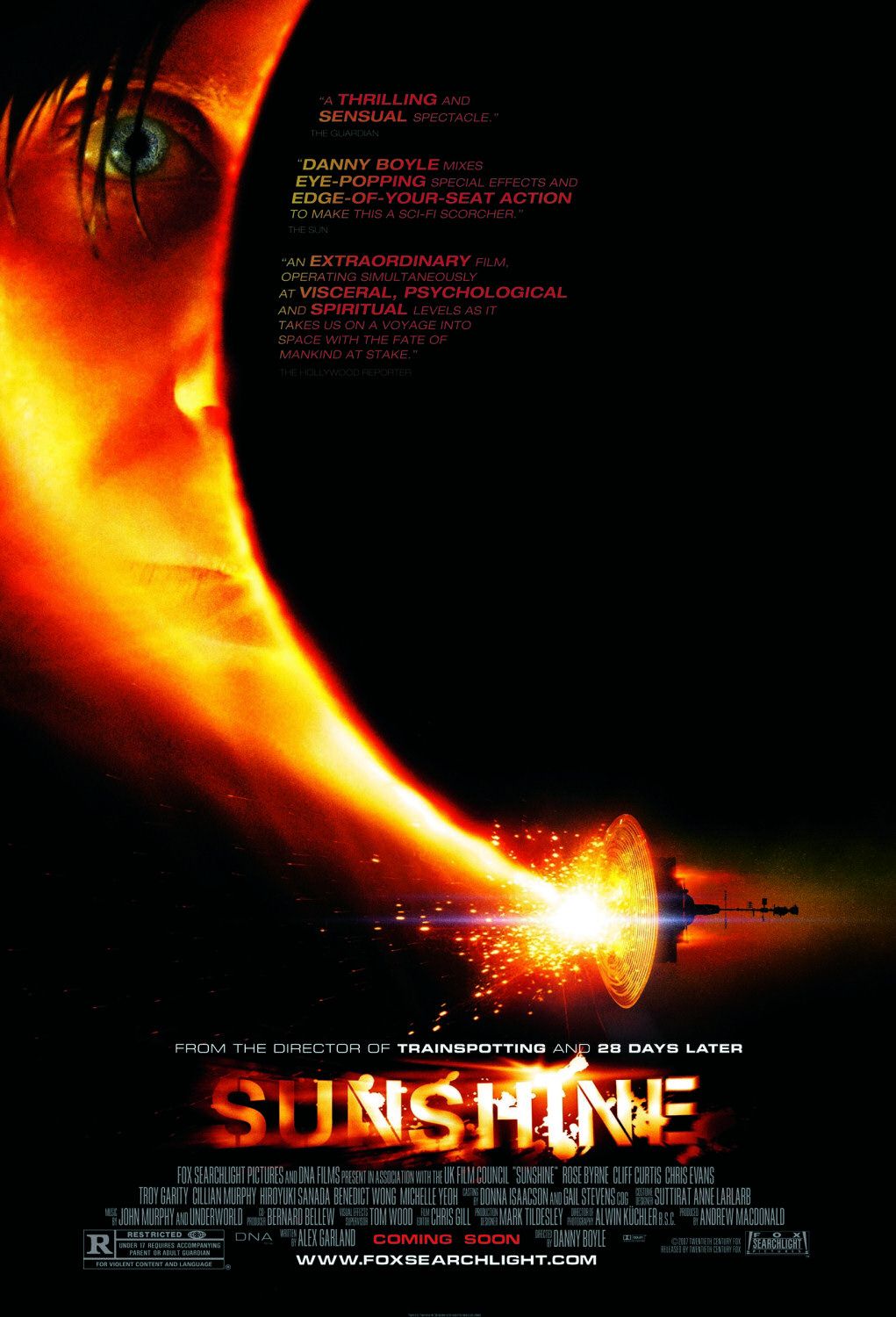
Sunshine (2007)

★★★★★

Sunshine PosterDirector: Danny Boyle

Release Date: April 5th, 2007 (UK); July 20th, 2007 (US limited)

Genre: Adventure; Science-fiction; Thriller

Starring: Cillian Murphy, Rose Bryne, Chris Evans, Michelle Yeoh

Quite appropriately, Sunshine spends a significant amount of time focusing on the eyes of its pawns. Sometimes a pair will fill the entire screen, strained with sentiment either good or bad, though often the latter. On occasion, they will fight menacingly through an iffy transmission from another spacecraft and act as a warning. The Sun allures them with its fiery aesthetic and unwavering appeal. Without hesitation, characters ask, “What do you see?” in moments of impending demise as if nothing else matters in the universe. Look, even, at the poster. Yielding a blazing visual palette and dreamt up by the mind’s eye of screenwriter Alex Garland, the film is a sci-fi celebration, though you won’t see much celebrating. Riddled with mystery and psychological incoherence, Danny Boyle’s Sunshine floats very close to the sublime.

It is 2057 and an ominous solar winter has a stranglehold on Earth. Aboard Icarus II, a team of eight personnel are voyaging to the dying Sun with one aim: to reignite it. Carrying a nuclear payload, the crew only have one chance to hit their target and, given the operation’s purely theoretical prerogative, those odds aren’t as robust as the situation warrants. Upon discovering the location of Icarus I — a prior failed mission — physicist Capa (Cillian Murphy) recommends taking a detour in order to attain another bomb, and another attempt.

Though his portfolio doesn’t suggest much science-fiction enthusiasm, Danny Boyle’s admiration for the genre fireballs from the screen here. There are elements of seminal space cinema splashed all over Sunshine. From the vision of 2001: A Space Odyssey, to the fraught psychology depicted in Solaris, to Event Horizon’s incessantly doomed outlook, Boyle’s take on sci-fi pays homage to a plethora of greats. But it does more than that. This isn’t simply a historical Pick ‘n’ Mix of stars and planets, rather it incorporates the genre’s best components with subtlety and proceeds to tell a new story. We do not witness Capa and company enter a separate desolate spacecraft and subsequently become overwhelmed by thoughts of Event Horizon because Boyle does not allow it. The Brit always has control and his film always has us transfixed, not by inter-genre nods, but by an ever-enveloping tension and disconcerting mystique — in truth, the film refrains from sparing us any time to consider references until long after the credits have rolled (I’m recounting citations right now).

The director employs traits familiar to him, such as gritty realism and terminal dejection, and combines them with far more expansive notions that pit science against religion. In between philosophical conversations (“A new star born out of a dying one, I think it will be beautiful — no, I’m not scared”) crew members discuss the practicalities of their predicament: oxygen supply levels, or the Sun’s angle. Astronauts aside, we cannot relate to the quandary in which those aboard Icarus II find themselves, but we can ascribe to the pragmatic mindset that they often reverberate. The characters are normal people. Yes, they are each excessively intelligent and well-versed in specialist areas. But despite floating many miles above in space, they remain grounded — we have to take each individual at face value as none of their past lives are explained. You can forget surnames too: Cassie, Harvey and Mace will do just fine. These are ordinary people in an extraordinary circumstance, decision-making dictated by scenario and each individual just as vulnerable as any of us would be.

The characters’ incomplete personal logs contribute to another of the film’s successful narrative strands: a growing sense of tension. This is not a horror film yet it bears a variety of horrifying aspects, one of which is personnel ambiguity. Since we only know that which is in front of our eyes and nothing more, it is plausible to us that any member of the team could snap at any given moment. Boyle explores isolation and the subsequent psychological trauma faced by those disconnected from civilisation, a concept captured magnanimously by one character’s reaction to the decimation of a homely, naturalistic oxygen garden. As Icarus II advances closer to its destination (“Entering the dead zone”) a haunting strain is emitted, one that is eerie and difficult to pinpoint. Searle, the vessel’s doctor, becomes increasingly transfixed by the Sun which appears to be hauling the spacecraft ever-nearer to imminent death.

A slight tonal shift occurs in tandem alongside the crew’s interactions with the ill-fated Icarus I. From a tantalising slow-burner, proceedings deviate towards disorientating terror. The final act is probably the film’s weakest, but it is by no means a weak offering. If anything, the conclusion ushers in greater mythological tendencies spearheaded by religious impetus (in Greek mythology, Icarus flew too close to the Sun). Perhaps it is only fitting that a narrative adjacent to the heavens should juggle Godly morals. Nevertheless Boyle, a man with religious associations himself, ensures that Sunshine does not become overburdened by spirituality and instead strikes a wholesome balance between the film’s various thematic veins.

A scorching visual gloss is as all-encompassing as it is magnificent. The dark and inherently inanimate interior of Icarus II seems to not only seep from the crew’s mellow demeanour, but also abets an air of warped uncertainty. Battling to infect the spacecraft’s overcast insides is the Sun; rays burning with unlimited effervescence, so much so that you will be rolling up those sleeves in a desperate plea for cool air. Accompanying the wonderful cinematography is John Murphy’s tender-yet-lofty score that shines brightest towards the Sunshine’s concluding chapter.

Cillian Murphy leads the way as Capa, whose contemplative nature suggests that only he is truly aware of the task’s magnitude. The skill here is in generating a sense of normality and the best plaudit that can be awarded to Murphy — a generally charming presence — is that he emphatically portrays a professional physicist. Capa may partake in a few scuffles with Chris Evans’ Mace, but other than that he is plainly a physicist driven by nuclear properties and measurements. The aforementioned Chris Evans does well in a slightly different role as the morally strict engineer whose sole focus is the success of the mission. The other noteworthy performance comes from Rose Byrne as vessel pilot Cassie. Bryne develops a solid equilibrium between strong-willed and sensitive, and also strikes up a believable dynamic with Murphy, one that would undoubtedly be romantic in another environment.

Capa’s opening monologue outlines one purpose: “To create a star within a star.” Boasting admirable scope, a tense and engaging atmosphere, and a variety of well-oiled thematic roots relevant to the genre, Sunshine is undoubtedly a star turn from Danny Boyle.

Sunshine - Cast

Images credit: IMP Awards, Rotten Tomatoes

Images copyright (©): Fox Searchlight Pictures

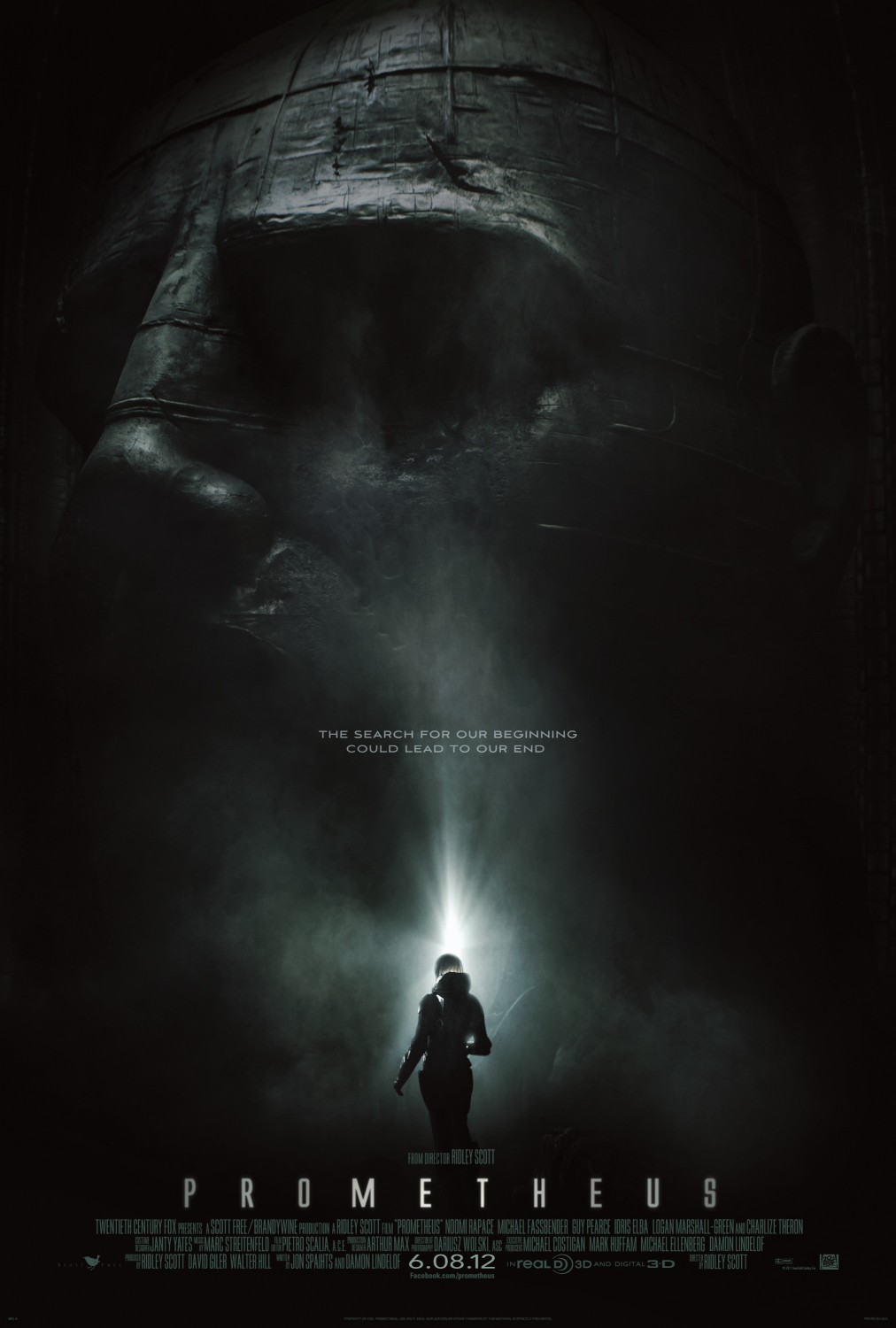
Prometheus (2012)

★★★★★

Prometheus PosterDirector: Ridley Scott

Release Date: June 1st, 2012 (UK); June 8th, 2012 (US)

Genre: Adventure; Mystery; Science-fiction

Starring: Noomi Rapace, Michael Fassbender, Charlize Theron, Idris Elba

Is Prometheus really that bad? Ridley Scott’s loose prequel to Alien digs an enormous hole and subsequently fills it with even grander musings; of humankind, creation, belief and life. It then plunges nose first into said crater, now as deep as the questions posed, before admirably clambering back to fresh air armed with purpose and answers. During this ascension we marvel at spectacle, engage in mystery, taste small bites of action, are disconcerted by horror and ponder classic science-fiction. To a certain extent Prometheus truly is a genre-splicer, but the outing always has its reels firmly planted in the wonders of sci-fi, exactly where they should be. In an era when summer often denotes the arrival of popcorn-churners, Prometheus survives on the front-line, waving the flag for intelligent and thought-provoking cinema.

Elizabeth Shaw (Noomi Rapace) and Charlie Holloway (Logan Marshall-Green) are archaeologists on the brink of silencing the most emphatic of all historical debates: who created us? The year is 2093 and a team of seventeen personnel including Elizabeth and Charlie have just landed on LV-233, a moon prominent in a number of ancient diagrams discovered by the duo. Aboard their vessel funded by Weyland Corporation is David (Michael Fassbender), a robot whose appearance resembles that of a human being, and whose thought process is occupied exclusively by sense. The landscape that enshrouds the team bustles with unknown activity, enticing the crew’s inbuilt need to forage, which they do unwittingly and at their own peril.

Zipping up his spacesuit, David is confronted by Charlie who queries the need for the machine to dawn such protective attire. “I was designed like this because you people are more comfortable interacting with your own kind. If I didn’t wear a suit, it would defeat the purpose,” retorts David, summing up the philosophy of Prometheus in a single answer. The crew are on a voyage to meet their maker, but in doing so unknowingly present a case denouncing the ignorance of humanity. Collectively, we see ourselves as the pinnacle species yet we are wholly unjustified in our complacency. Damon Lindelof’s script explores how we not only rely on other genetic divisions — plants for medicine, animals for food, machines for everyday ease, Gods for belief — we even mistreat them.

Humanity’s naive demeanour is reflected in Charlie’s actions: he howls like a domineering wolf upon reaching a huge stone dome situated atop the uncharted moon, and proceeds to remove his helmet without approval, seemingly above any potential atmospheric ramifications. The film is an eye-opening critical analysis of human behaviour and although the results stop short at shining a positive light on us, they do beckon forth an important topic of discussion.

David’s response also reflects the insightfulness and opulence of Lindelof’s script, one that is not afraid enter to a room packed full of grandiose ideas, and is then brave enough to exit whilst leaving the door ajar. The occasional question is left unanswered which is absolutely fine (but we need some answerable continuity in the upcoming sequel). No issue remains unchallenged though, much to the filmmakers’ credit. Scenes prompted by deliberations over the various characters’ motives and beliefs are subtly tantalising; one involving David, Charlie and a snooker table particularly stands out.

These moments never overstay their welcome as they flirt with extravagant perceptions that are inherently connected to the science-fiction genre. Entering said realm we expect to contemplate life, the universe and everything and Prometheus encourages us to do exactly that. (“Where do we come from? What is our purpose? What happens to us when we die?”) Thankfully events refrain from boiling over into an indulgent territory; the aforementioned questions — unending in scale — are questions that cross our mind often and the significant consideration on show is warranted.

Reflective themes in the bank, Prometheus turns towards tension-ratcheting atmospherics. Alien is in part a horror franchise, there it is imperative that Scott’s prequel retains prequel retains an element of fear to complement the titbits of recognisable Xenomorph mythology on display. Marc Streitenfeld’s jarring soundscape is the genesis of discomfort; sequences that take place inside the aforementioned dome are accompanied by a chilling congregation of distant screaming. This eerie ambience disorientates us. The characters panic. A search buoyed by ambitious questions seeking conclusive answers yields unsettling possibilities. Never has the notion of being stranded in space upon an unknown entity felt so terrifying.

Then brass horns prevail, baring a deep verve that reflects the profundity of proceedings. The film’s stunning visual scale is just that, and its impressive execution qualms any potential worries over digital misfiring. Space vessels flow effortlessly, emitting a sense of authenticity as they embed into the landscape. At times, Prometheus’ sheen resembles that of Nicolas Winding Refn’s psychedelic Valhalla Rising; shots of unnaturally rapidly convulsing clouds remind us that we are in a foreign and undoubtedly hazardous environment. The weather too, another reminder that humankind is not the dominant species.

One element that doesn’t quite acclimatise is the occasional spouting of humour. Some may argue that without a light-hearted adage every now and again, the film would be taking itself too seriously. However, the ideas being batted back and forth along the outing’s grand narrative arc warrant a serious tone. Fifield and Millburn — geologist and biologist respectively — are the stock comic relief duo and though Sean Harris and Rafe Spall are solid in their roles, the characters are wholly unnecessary. In truth, the duo’s presence on the ship doesn’t really make sense — they’re buffoons, why would a multi-million dollar corporation hire them? If humour prevails at any point, it’s through Idris Elba’s suave poise and effortlessly blunt attitude as captain Janek.

There are no disastrous performances here by any means, nor are there any bad ones, but Michael Fassbender stands streets ahead of everyone else. One of two surprisingly ambiguous characters (the other being Charlize Theron’s practical Meredith Vickers, whose ethical mindset rides on a Ferris wheel throughout) Fassbender resonates a peculiar charm as robot David, whilst instantaneously channelling the nonchalant precision of HAL 9000 from 2001: A Space Odyssey. Much like HAL, David’s actions take an increasingly perturbed turn; the combination of Fassbender’s astute portrayal and Lindelof’s creation of an opaque character adds up to compelling viewing. Noomi Rapace is another noteworthy performer as expedition leader Elizabeth Shaw. Her pained abdominal acting will have you grasping your stomach and wincing.

This dialogue-driven piece demands total engagement for just over two hours and justifies the attention it seeks. There’s a mountain of ideas here to sink your teeth into and, trust me, your jaw won’t ache. Scott’s film is a modern cinematic gem. Is Prometheus really that bad? No, it’s really that good.

Prometheus - Fassbender and Rapace

Images credit: IMP AwardsCollider

Images copyright (©): 20th Century Fox

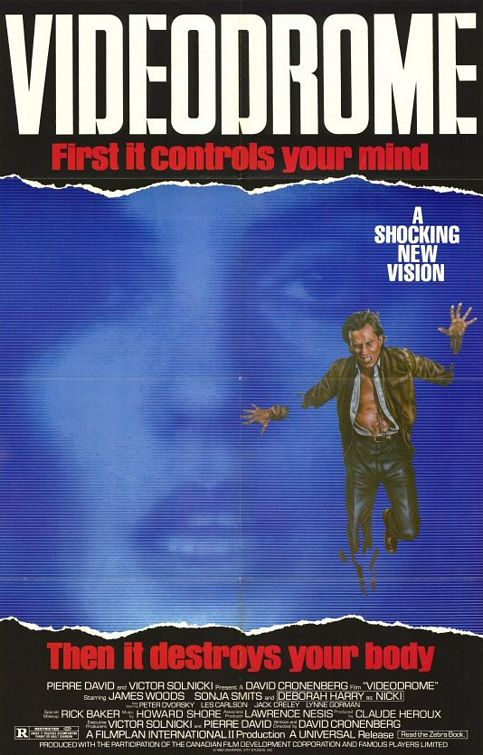
Videodrome (1983)

★★

Videodrome PosterDirector: David Cronenberg

Release Date: February 4th, 1983 (US); November 25th, 1983 (UK)

Genre: Horror; Science-fiction

Starring: James Woods, Deborah Harry, Sonja Smits

If David Cronenberg was as good at picking lottery numbers as he is at predicting the future, then he’d absolutely be a millionaire by now. No, a billionaire. You know that modern culture of consumption to which we all find ourselves enslaved, the same one that probably has you reading this on an electronic device? (Email, Twitter, Facebook, and Netflix later, perhaps?) It’s all here, in Videodrome, only thirty years early. Cronenberg unfurls a prophetic prosecution of television that feels even more relevant in 2014 than it likely did back in the early eighties, when small-screen dominance was probably just an anxiety-wrapped possibility. Videodrome, therefore, is steeped in a philosophy of purpose and accuracy, one that is interesting to consider within our contemporary context. Unfortunately, the film itself struggles to keep up with the ideas developed. Perhaps it’s because we’ve seen it all before, but Videodrome is just a bit… boring.

Max Renn (James Woods) is the kind of guy Sigmund Freud would’ve been had Freud awoken a century later and veered closer to the sexual in psychosexual. He runs CIVIC-TV, a television station based in Toronto that relays unorthodox programming, and is on the look-out for something new to up the ante, something different. Luckily for Max — or perhaps unluckily — he stumbles across a feed airing uncoordinated brutality, called Videodrome. What appears to be sensationalist artifice quickly takes on a disconcerting meaning, and begins to invade more of Max’s existence than desired.

“Television is reality and reality is less than television,” retorts Brian O’Blivion, a professor who professes only through the televisual medium. His character is the essence of Cronenberg’s agenda: a victim of media gobbling. O’Blivion has dedicated a significant portion of his own life to the study of human obsession when it comes to television in particular, employing the visual instrument ultimately as a means not to an end, but to a forever. If O’Blivion is the essence, then his creation Videodrome is the agent of consumption. Though the exhibits on screen are morally questionable, perhaps even legally ambiguous, our leading man Max is increasingly drawn towards goings-on. And not only Max, his romantic interest Nicki too. She, having seen Videodrome, desires only to become a part of it. To be infused in a new televisual reality. Up until this point, there’s a precise and engaging ideology being explored, one that is embedded firmly in the fabric of modern times. (We’re so absorbed by television that we now watch people watching it). The domineering TV pull is a wholly engaging stance and Cronenberg deserves credit, given how accurately Videodrome mirrors today’s norms.

Eventually, notions of mass societal control, planted memories and geopolitical monopolies come into play as Cronenberg’s condemnation of the television culture expands — in truth, perhaps too many strands are added. The tone switches from one of warning to one driven by preachy sound waves. Instead of a cautionary tale about how an inanimate object can become empirical upon leeching itself onto humanity, Videodrome advances down a route of denunciation as it attempts to make our minds up for us. We watch and listen as characters discuss standing firm against “savage new times”; society having to be “pure, direct and strong”; and a “cesspool TV station” whose viewers are “rotting civilisation away from the inside”. The message is clear: beware any abnormal pseudo-violent tendencies in order to avoid them flowing into real life. A noble message, had it not come by way of a fictional film.

A film, incidentally, coughing up splurges of violence from beginning until end. Torsos pave way for VCR slots and hands take on the form of guns. These images are nasty and gooey, yet not as memorable as Cronenbergian bloodshed normally is. The body horror prosthetics are as slimy and grimy as ever, but don’t quite fit the reality-imbued mould proposed by the film. There’s no denying the clarity illustrating this as an inherently Cronenberg creation: grotesque bodily malfunctions, a techno-infection prerogative, the socio-political framework, some inconclusive chronologies. Yet, unlike many of the Canadian’s previous outings, Videodrome manifests without much gusto. It feels a tad worn. Though the ideas mentioned earlier are engaging, perhaps they only really draw a fresh appeal because of their prematurity. These ideas of global consumption have been tossed to-and-fro relentlessly over the last few decades; only recently Transcendence hit cinemas, a film that takes this notion a step further by physically infusing technology with a human being.

James Woods is good as the disingenuous-cum-traumatised CEO Max Renn. He’s not a very likeable chap — not many of the characters are, another issue intertwined within the film’s ever-growing list of problems — yet Woods ushers forth enough of a switch in morality to justify some form of sympathy. As Max’s love interest and radio host Nicki Brand, Deborah Harry doesn’t have an awful lot to do, nor does her character boast any redeemable qualities, instead only a flip-flopping ethical stance. (“I think we live in over-stimulated times… and I think that’s bad,” explains Nicki, before chatting up Max whilst wearing a red dress.) Sonja Smits has a cup of tea as O’Blivion’s daughter Bianca, whereas O’Blivion himself Jack Creley implores us to listen through his direct and sincere vocal delivery.

David Cronenberg encourages discussion about issues of media consumption that herald even more relevance within the context of today’s cultural and societal posture. However, as Videodrome progresses and happenings lose practical clarity, the film too squanders precision and veracity by introducing extra narrative elements that preach to us rather than alongside us. Never mind, I think I’ve got an episode of Gogglebox to catch up on.

Videodrome - James Woods

Images credit: IMP Awards, Collider

Images copyright (©): Universal Pictures

The East (2013)

★★★

The East PosterDirector: Zal Batmanglij

Release Date: June 28th, 2013 (UK)

Genre: Drama; Thriller

Starring: Brit Marling, Alexander Skarsgård, Ellen Page, Toby Kebbell

“You put your first choice in the middle, because putting it last is expected,” asserts private intelligence boss Sharon. The line is intended as a foreshadowing of upcoming covert antics, but unfortunately ultimately applies to The East in a more fundamental manner. After a strong opening compounded by some tense half-way happenings, the film conforms to conjecture as it nears conclusion. Tonally, we spend a lot of time in the right place. There’s a significant plot issue though, one that tows the line between too obvious and too presumptuous and that never really finds a happy medium. It’s a notable flaw, but one that isn’t terminal thanks to Brit Marling’s glue-like principal performance and an ever bubbling cauldron of questions.

With anti-corruption and pro-repercussion faction The East dishing out their own brand of justice on corporations that they deem highly unethical, undercover agent Jane (Brit Marling) finds herself dawning disguise in order to infiltrate and impede. Now known as Sarah — she is working covertly after all — the intelligence officer finds herself almost immediately drawn to the cult’s in-house authentic methods, not to mention the diverse personnel on show; from curious leader Benji (Alexander Skarsgård), to the well-meaning Doc (Toby Kebbell). Questions arise baring inconclusive answers and a mist of uncertainty soon shrouds notions of right or wrong.

It’s clear that director Zal Batmanglij and Brit Marling (they co-wrote the screenplay together) are both invested in spouting a nuanced rhetoric and raising contemporary queries here. And for around fifty minutes, the duo are fruitful in their efforts. From polished corporate desks to some gritty journeying inside a dark carriage, Sarah’s initial intrusion attempts land her amidst the unknown. She is unknown too; apart from determination and smarts, we don’t have much of inclination as to where the dial on her moral compass points. Far from east, presumably. There’s not an awful lot of dialogue in the opening act, further funding a disorienting sensation that often aligns itself with the cult-seeking occupation. This means plot exposition is at a premium which, for those well-versed in the surveillance-thriller genre, is flattering. Though, the average movie-goer mightn’t take too kindly towards the film’s preconceived expectation that its audience’s knowledge berth refutes narrative explanation.

Dilemmas spark early on, presenting a mind map of questions that spawn from one central musing: who are the real bad guys? In an age where recycling is embedded into the domestic environment, where we instantly charge multinational suits with having a financially-driven ethos and where our opinions clash murkily over Twitter hashtags, The East’s main inquest floats around a pool of ambiguity. For a while, this creates an uneasy atmosphere where trust is difficult to assert. We are inclined to vote for Sarah because she is the main persona, unorthodoxly charming, a do-gooder working for a company whose motto is to defend us. Yet it’s a private firm, Hiller Brood, the exact kind targeted by The East.

The East, a group of rebels whose incentives on the surface are valiant and contemporary, aimed at exposing corruption: Doc informs those who will listen about deceitful loopholes such as side-effects printed on drugs, the text we barely ever read, warnings that exist solely as a mechanism to deflect blame from manufacturer to consumer (“That’s how they rape you, in broad daylight”). But the cult’s methods are dubious and they carry the idiom of terrorism, a word we are programmed to vehemently oppose. Undoubtedly, Batmanglij and company are on to something; a modern hoodish thriller supported by an infusion of geopolitics and cult behaviour. Sarah’s experiences within the group consume most of the overly-long runtime and, unsurprisingly, the best interactions are those displayed during the film’s better early half. A family dinner is particularly creepy — leader Benji resembles Jesus with his scruffy beard and long brown hair as he sits at the head of the table, his disciples scattered around waiting to comply, candles flickering and fighting off darkness.

Despite a promising inception, The East eventually disposes of its affecting restraint and increasingly succumbs to a please-the-masses mindset. From beaming an off-kilter aura akin to that of Batmanglij’s previous outing Sound of My Voice, proceedings undergo an unnecessary tonal shift and begin to closer resemble the slick blueprints of something like 21. Instead of seeing odd rituals, we watch The East group cohesively strategise and execute plans that become progressively silly as goings-on advance. A polished and shrewd heist-like presentation often carries dangerous affection — we tend to revel in well-executed wrong-doing (think Ocean’s trilogy). This is certainly not the type of admiration that should be associated with secretive and brooding cults, yet it’s the kind seeking approval here. After establishing a plethora of ambiguous players, it’s almost as if the film is trying to make our mind up for us by attempting to manufacture likeability, even though The East aren’t a particularly amiable bunch.

Worse than that, searing plot-holes begin to undermine the cult’s mystic air: they don’t do any significant background checks on new members and allow people to leave base for extended periods of time, two missteps that do not align with the meticulous planning that goes on prior to delivering their threats. Very early on a member finds out that Sarah is not who she claims to be, yet said person places more trust in the threatening stranger than her pseudo-family. How the clan has survived without being unmasked, either publicly or at least to the authorities, is anyone’s guess. Answers evade me.

Notwithstanding these shortcomings, the film is held together by an excellent central performance from Brit Marling. Unlike in Sound of My Voice, Marling portrays the afflicted rather the allusive and does so with some gusto (she practised freeganism before filming in order to gain a more realistic character perspective). The actor always transmits an enchanting scent and always seems at home when working with a degree or two of obscurity. Throughout, she must juggle two different personalities — the investigative agent and the cogent clique comrade — and manages to do so while evolving Sarah’s outlook rather than sacrificing her continuity. The narrative may jar, but Marling’s character definitely does not. Ellen Page plays Izzy, who is most affected by the plot’s occasionally far-fetched demeanour. Alexander Skarsgård is good as Benji, injecting an eerie charisma that, inevitably, cannot be sustained. Doc is the most genial cult member, and it is to Toby Kebbell’s credit that we don’t feel relentless sympathy for him — in spite of his predicament, Doc comes across as strong rather than weak.

Zal Batmanglij and Brit Marling try in vein to recapture the ritualistic mystique that reverberated through their previous collaboration, Sound of My Voice. The duo get too caught up in plot endeavours though, birthing a disconcerting genre mishmash. Nonetheless, The East remains a solid outing thanks to Marling’s engaging performance and a handful of relevant societal reflections.

The East - Brit Marling

Images credit: IMP Awards, Collider
Images copyright (©): Fox Searchlight Pictures

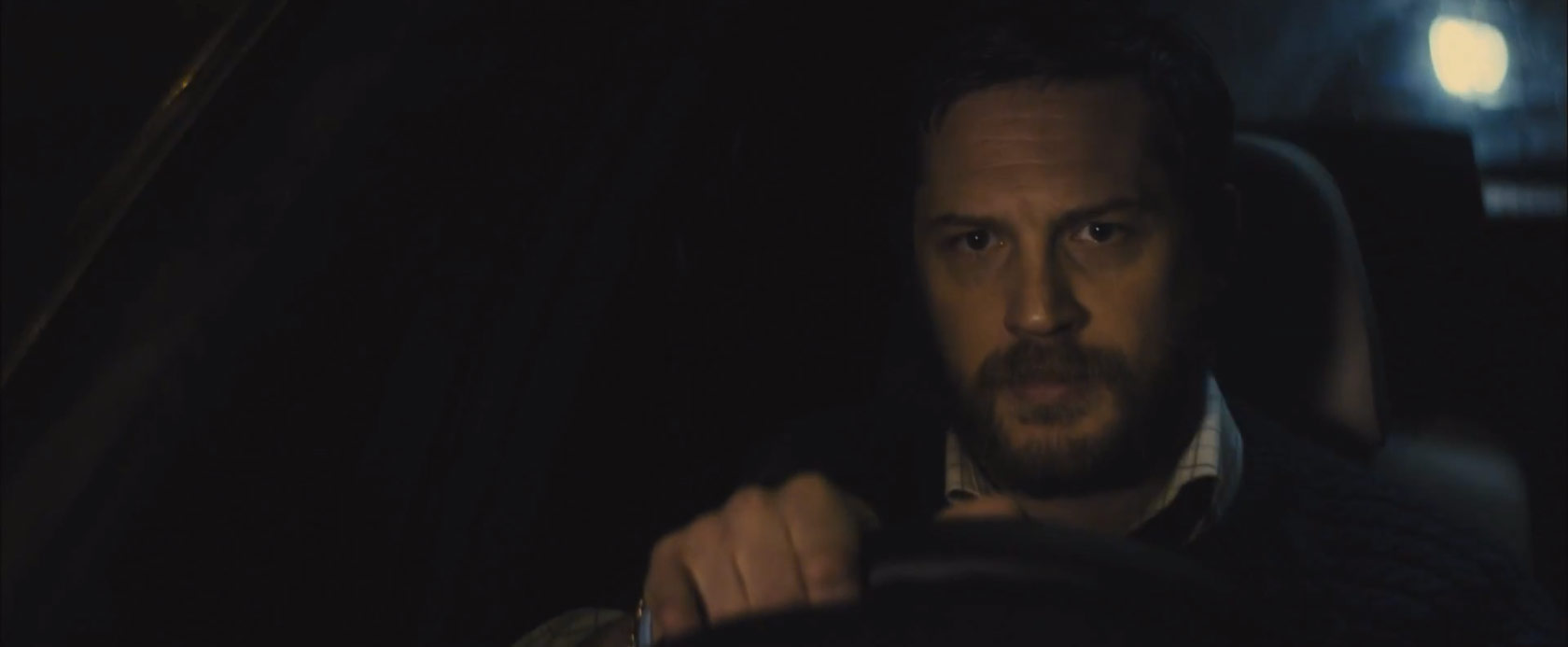
Locke (2014)

★★★★

Locke PosterDirector: Steven Knight

Release Date: April 18th, 2014 (UK); April 25th (US)

Genre: Drama; Thriller

Starring: Tom Hardy

For Ivan, every bump in the road signifies another life collision. As he gazes through the car window, eyes lamenting, a struggling reflection cast before us, we recognise him as a decent human being in the midst of self-inflicted calamity. Phone calls offer a moment of salvation: relief, anger, humour, misery. But still, salvation from lawless thought. Often, Ivan — a man of structure — joins up the dots in his own life by relating an ingrained knowledge and valuing of cement and stability to the current unsavoury predicament in which he finds himself, and occasionally the driver turns to an empty back seat in order to converse with his deceased father. It’s in these moments of spiritual bartering that Locke struggles to maintain order. Remember, Ivan is a man of structure and the film thrives not through obvious semiotic links, but by way of his empirical, rubble-gathering conversations. Not to mention an exceptional solo performance.

As the night’s misty ambience shrouds his car, construction boss Ivan Locke (Tom Hardy) finds himself driving away from a highly imperative job at work through circumstances stemming from a past action that was not at all beyond his control. From home, his son continues to phone and commentate the latest football match, and from work, higher-ups and lower-downs transmit more bad than good news. But it is a situation on the periphery of his normal day-to-day existence that has Ivan abandoning domestic and occupational ship tonight. A birth — one primed to send a stake through his life.

Locke is about as ambitious as any film can get within the confines of a car and boasting a solitary character hampered by a snivel-inducing cold. Plot doesn’t really exist, at least not in its customary tangible form that encourages the camera to follow the actions of different people, to different places, in order to relay new actions. Rather here, any quintessential plot twist or narrative advancement lies at the mouth of Tom Hardy, whose words and facial expressions both have a defining hand in dictating every element of the film. At its core then, in order to be a success Locke perilously relies on a compelling central performance. And it certainly gets one.

At no point does the cinematic spotlight retreat from Tom Hardy. The Londoner has nowhere to hide — just like the man he is portraying, the car is his temporary prison; a voluntary prison, one that both Hardy and Ivan choose to enter. (His name, Locke, hints at confinement.) Further complicating matters, the actor must relay a rich Welsh accent for film’s entirety. It’s put up or shut up time and at no point are we crying out for Hardy to shut up. His dialogues caressed by a wonderfully thick cadence, the man behind the wheel not only garners audience sympathy, but also demands a degree of exasperation by way of an incessant need to fix everything (not to mention a prior noteworthy error in judgement). When Ivan converses with his son Eddie, voiced by Tom Holland, we can hear the compatible trust and loyalty between the pair. Misguided trust? No, not all. Ivan is too genuine in repentance. Yet when we ear-drop in on a discussion between Ivan and Donal, a colleague, it is obvious that the former’s practical desire to amend is being dispersed in the wrong direction. (“I want to talk about a practical next step,” he repeats.) That is, towards his job and not his family.

In establishing Ivan as an ambiguous sort, Hardy leaves it up each individual eavesdropper on his journey to decide whether or not his moral compass is shattered, cracked or still intact. Writer/director Steven Knight plays a role in formulating the character, of course, but Hardy’s delivery must be spot on otherwise the film is doomed. The lead is wearing so many different hats too: father, husband, son, consulter, instructor, peace-keeper. There’s not a single moment of respite in sight, not until he reaches his destination and by then, we’ll be gone. Hardy must relentlessly alter appearance without taking a breath. His character Ivan says it himself: “I have a list of things I have to do tonight when I’m driving.” Carrying wholesale weight on his shoulders, the actor remains poised throughout. If he hadn’t already appeared as Eames in Inception, or as Bane in The Dark Knight Rises, this is the type of performance that would’ve propelled Tom Hardy up an acting echelon or two. Instead, it’ll simply cement his lofty place.

In a film as minimally scoping as Locke, a slow and effective plot that builds towards an emotive, tense crescendo is necessary to go alongside a commanding central performance. When Ivan converses with air over his own mistakes and resultantly flip-flops between placing blame on his father and on himself, the outing loses some tension-building momentum. The character is one stimulated by integrity — a structurally damaging change in cement for his building enrages him, and he is left disheartened by a self-generated misdemeanour, two varying instances of corrupt integrity that affect Ivan. Whenever a phone call ends, the car dashboard re-manifests as an electronic satnav, telling us all we need to know about Ivan’s life and where it is headed: straight ahead, approaching isolation, dictated by others. Simple aesthetic insights such as the one offered by said satnav are alluring, unlike the occasional obvious and over-egged metaphysical spiels that don’t do Locke any favours.

Unlike Buried, a film that spends its runtime trapped within a coffin alongside Ryan Reynolds, there’s ultimately no concrete pay-off. Perhaps this has something to do with the aforementioned philosophical interceptions in narrative, jarring much pressure-building. It is also conceivable that Knight writes himself into a tricky conclusion, where there is no justification for an unambiguous ending. This isn’t necessarily a negative — credit must go to Knight for sticking his neck on the line and making a film as experimental as Locke, particularly in an era pillaged by financial behemoths where even low-budget productions cough up allocations of around £10 million. (Locke was made for less than £2 million.) At heart, it is the typical redemption story, only without any typical advantageous factors apart from dialogue — no emphatic score, or distressed damsel, or soaring visual palette. Not even an outright hero. The closest we get to unbridled tension comes during conversations between Locke and any other voice, rather than an empty back seat. Confusion rears and urgency arises, compounded by the screeching sound of sirens and flashing lights from police cars that intermittently race past in the outside world.

Ivan’s journey to London is an exercise in personal demon exorcism, and you are the judge in this tale of uncertainty. One thing is for certain though — Locke is a damn good attempt at something different. Narratively-speaking, the film doesn’t scintillate as much as it wishes to. Performance-wise, it just might.

Locke - Hardy

Images credit: IMP Awards, Vulture

Images copyright (©): A24

The Hunger Games (2012)

★★★★

The Hunger Games PosterDirector: Gary Ross

Release Date: March 23rd, 2012 (UK and US)

Genre: Adventure; Science-fiction; Thriller

Starring: Jennifer Lawrence, Josh Hutcherson, Liam Hemsworth, Woody Harrelson, Elizabeth Banks

As District 12 native Gale peers pensively across a carpet of dense woodland, we know his thoughts are centred only on Katniss and what could’ve been. Many miles yonder, the Games are about to begin and the odds aren’t in Ms. Everdeen’s favour. In fact, the odds aren’t in anybody’s favour. The green canopy before him is an “escape” that Gale and Katniss have always cohesively pondered. Now, it’s likely too late. There isn’t much respite from this sense of pertinent dread throughout The Hunger Games. Themes of oppression, manipulation and artifice consume proceedings, each element tackled maturely and with a degree of intelligence. Though it’s based on Suzanne Collins’ teen-aimed novel of the same name, The Hunger Games beckons forth a far wider audience, a psyche that no doubt assists in creating close to an indelible franchise curtain-raiser.

In a dystopian future, the nation of Panem is segregated into 12 districts and a commercially rich Capitol. President Snow (Donald Sutherland) is Capitol overseer, and his methods of maintaining ‘order’ in society rely heavily on a tournament of death called the Hunger Games. Katniss Everdeen (Jennifer Lawrence) survives week by week in District 12, the poorest area of Panem, though since volunteering in place of her younger sister to take part in the 74th annual Hunger Games, survival has become a rare commodity. Alongside fellow district resident Peeta Mellark (Josh Hutcherson), Katniss now must participate in a maniacal free-for-all where there can be only one survivor.

An assured opening sets the stage for what is to come. The first act carries eerie subtlety, etching discomfort; a melancholic hum, almost vigil-esque, is interrupted by the hollow sound of a horn ushering in inevitable death. Later on, this underlying notion of distress plateaus as a 30 second countdown intermittently signals the immediacy of inhumane violence for Katniss. We see portions of District 12 that are hopefully its worst parts as anything poorer would imply extreme poverty — it is a place that could easily be mistaken for the downtrodden Ozark dwellings of Winter’s Bone, only unfrozen. Instantly an air of durability emerges, within which citizens have learned to fend for themselves. Katniss and Gale hunt in forbidden zones in order to feed their families, the former exclaiming, “Is this real?!” upon the sight of bread.

Shortly thereafter, the Reaping takes place and the Hunger Games players are selected. Booming screens represent a watchdog elite, the Capitol, whose justification for staging an animalistic melee is to protect those whom they rule over: “This is how we remember our past, this is how we safeguard our future.” It’s clear who the “our” in said statement denotes (and who it does not). The film’s inaugural goings-on are excellent, presenting an ideological enemy that bares no echelon of morality. We are already desperate to see those being held down rise up and, as promise dwindles, this desire escalates. President Snow refrains from showing face until events have advanced further and, in truth, has very little impact on the film as an active villain. His affects on events are delivered far more insidiously, his sophisticated whisper carrying indulgence, and this only serves to fuel a fire of loathing against the autocratic Capitol.

Having conjured up a seemingly impermeable enemy and a downbeat atmosphere bathed in truth — knowing these cruelties are very palpable factors in the real world makes them even tougher to comprehend — director Gary Ross must then offer a beacon of hope for viewers to grab hold. Occasional splashings of humour temporarily alleviate the heavy tone, but it’s Katniss who is the primary body of resistance. Jennifer Lawrence’s portrayal of Katniss, moreover. Sculpted from the get-go as necessarily protective of her loved ones, Katniss’ strength stems from a hereditary place, ultimately one that resonates with viewers. She’s unaware of but not impervious to pain when her family is at risk (an early finger-stabbing scene cements this). With those paternal foundations in the bank, Jennifer Lawrence adds rigour and ambiguity — we’re never entirely sure where her loyalties lie away from District 12 — though in distancing herself from other characters, she never distances herself from the audience. It’s a tremendous performance in a clinical role, and Lawrence deserves a lot of credit.

Tom Stern’s cinematography resembles his work in Mystic River, chartering gritty immediacy which, alongside instances of on-point editing, generates a jolting disquiet in the face of in-game brutality. Bloody splurges are uncommon and therefore more impactful upon manifestation (included in the 15 certificate version, they make events in the arena seem more visceral). In contrast, Capitol life is artificial; the pre-game festivities are produced, and giant screens relay betting markets for the benefit of already wealthy residents, who wear extravagant attire and hide their faces with make-up. The filmmakers rightfully abstain from going down a commercial route though, instead engraving the tournament as an antidote of perverse enjoyment for Capitol civilians. After all, “it’s a television show” according to Haymitch, one of Katniss’ few allies, himself flawed as a result of the Games: his heart promotes authenticity, but his head is hampered by alcohol.

Woody Harrelson balances Haymitch’s principle-jousting effectively and appears to be having a blast in the process. As does Elizabeth Banks, playing Effie Trinket, an eternally positive Capitol export whose drastic appearance and bubbly mindset do not connotate evilness as much as they do ignorance. Rather, malevolence froths from Donald Sutherland’s President Snow. Delivering a performance of poise, Sutherland compels the audience to detest Snow more and more with every muttering. Josh Hutcherson is solid as Peeta Mellark, though he does sporadically tow the corny line. A nod must also go to Stanley Tucci, whose Caesar Flickerman is the face of the Capitol, an ebullient television presenter. Tucci injects so much charisma that it’s difficult to dislike Caesar, though your teeth will grit upon hearing his pronunciation of the “Hungaaa Games”.

The film does suffer slightly from a quite lethargic middle act, particularly as it comes on the back a swift and purposeful opening. Throughout many of the training centre scenes, there’s a less-than-sure ambience and events begin to meander. We know Peeta is in the shadow of Katniss, no need for him to explain it over the dinner table. In comparison, the outing’s conclusion feels rushed, almost as if the filmmakers can’t wait to end proceedings and move onto the second instalment.

The Hunger Games is a decisive franchise opener. Shepherded by an accomplished lead performance, the film tackles issues carrying present day prominence in a manner feasible to most audiences. Like an arrow through an apple, Katniss must be emphatic when striking an enemy whose guard is down, when they’re not paying attention. They mightn’t be watching, but you should.

The Hunger Games - Katniss

Images credit: IMP Awards, What Culture

Images copyright (©): Lionsgate