The Hobbit: The Desolation of Smaug (2013)

★★★★

Director: Peter Jackson

Release Date: December 13th, 2013 (UK/US)

Genre: Action; Fantasy

Starring: Martin Freeman, Ian McKellen, Richard Armitage, Benedict Cumberbatch, Orlando Bloom, Evangeline Lilly

Peter Jackson’s carrot-wielding Bree resident looks knowingly at the screen before sidling along the rainy, muddy Middle-earth town. Moments later the smoky, beer-filled room of the Prancing Pony inn hosts dwarf-heir Thorin as he glances wearily around clutching his axe in preparation for any potential attack. Gandalf the Grey sits opposite him, enticing us with familiar wispy tones, underplayed confidence and Lord of the Rings lingo (“We’ve been blind… and in our blindness the enemy has returned”).

We’re back. No, it’s not quite the Middle-earth from a decade ago — or, narratively, decades later — but it was never going to be. Rather, The Desolation of Smaug signals a return to the comfort of Peter Jackson’s pre-Lord of the Rings universe, and already proceedings seem more urgent than last time around.

Following their narrow escape from the Misty Mountains and temporary fending off of Orc war chief Azog, Bilbo (Martin Freeman) and his company of dwarfs find themselves splintered from Gandalf (Ian McKellen), who must investigate the state and whereabouts of an evil necromancer boasting powers that are ever-growing. As they part ways for the time being, Gandalf suggests that the best way to continue on their journey towards the Lonely Mountain and Erebor, is for the group to travel through a dishevelled, haunting forest, rather than treading two-hundred miles north and going around it. In the first film, the dwarfs and Bilbo most certainly would’ve taken the long route, and would definitely have sung an out-of-place song about picking mushrooms or making fire en route. Many of the previous instalment’s shortcomings (long-comings, even) are brushed to the side this time though, as the film hurtles along at a splendidly speedy pace, with plenty of action and wit to serve.

In fact, the variety of creature encounters and battle sequences give The Desolation of Smaug a much needed burst of energy from the get-go, unlike An Unexpected Journey which never really hit any kind of stride until Bilbo’s magnetic encounter with Gollum. Sadly Gollum does not feature here, however Bilbo does partake in a similarly dynamic conversation with Smaug the dragon, a meeting which is surprisingly full of more humour than tension. Martin Freeman comes into his own as the Hobbit Baggins, and along with a new found purpose through which his character evolves, Freeman also offers more than a handful of genuinely laugh-out-loud moments. His hurried, fidgety approach works expertly as he is often seen placing his cohorts before himself, exemplified during the tremendous barrel scene. However Bilbo’s engaging back-and-forth with Smaug sits effortlessly at the pinnacle of Freeman’s performance. Benedict Cumberbatch plays the dragon and, unlike Gandalf who possesses an assuring whispery tone, delivers his speeches deceitfully and slyly, as the words echo off the screen.

For a film (and trilogy) entitled “The Hobbit” we really could’ve done with more of said small being. At over two hours and 40 minutes (nine minutes shorter than the previous film) there is bountiful time for director Peter Jackson to tell the story of Bilbo finding the Ring and how the poisoned chalice affects him, however the film only breezes over the developing relationship between Hobbit and Ring. Rather, The Desolation of Smaug puts greater emphasis on the relationship triangle which incorporates a returning-to-the-franchise Legolas (Orlando Bloom), new-to-the-franchise Tauriel (Evangeline Lilly) and already-in-the-franchise Kili (Aidan Turner). The return of a makeup-laden Legolas is smart move on Jackson’s part as both the elf and Tauriel are the primary vehicles of energy, dispatched by way of exhilarating, fun-to-watch battle sequences; we even see Legolas skate via Orc rather than shield, as he did in The Two Towers. However unlike the romance sub-plot featured throughout the original trilogy (both book and film), the love triangle here feels very forced and artificial. Its creation was conceived exclusively for the big screen, but the film does not need it for added drama or emotion — that is already there as part of Bilbo’s journey.

The Desolation of Smaug is too long, although at no time does it noticeably falter as a consequence. There is more than enough going on to keep the audience attentive, and as a result the film looks more like a film than it does a congregation of set-pieces. Along with the reduced frame-rate (in most cinemas, back from 48 frames per second to 24) the swift advancement of proceedings prevents the viewer from becoming bored and spending their time staring at background objects that look exceedingly prop-like in a higher frame-rate environment — this hampered part one. The typically Lord of the Rings wide-shots which span over landscapes are beautifully shot and film’s computer-generated additions mesh in well. In an interesting move by Jackson, we see a number of mirroring scenes which serve both as a warning of evil times to come, and as a chance to reflect. For instance, Bilbo twanging the spider web and alerting many spiders a la Pippin knocking the metal armour down a shaft, in turn waking the goblins in Moria, and Thorin’s emphatic “What say you?” in his Aragorn-esque speech demanding affirmation, are two examples. Perhaps the most poignant of all though, is the elderly dwarf Balin’s declaration of his admiration for Hobbits, “It never ceases to amaze me, the courage of Hobbits,” which he unveils with the same authenticity as Gandalf does towards Frodo early in The Fellowship of the Ring.

Peter Jackon’s passion for the subject matter seeps through in abundance here and his decision to split the cinematic adaptation of The Hobbit into three films looks a great deal more justified by the end of The Desolation of Smaug (though there’s still a way to go). Martin Freeman shines as Bilbo Baggins in a sequel which, although still has its downsides, succeeds its predecessor both narratively and in content.

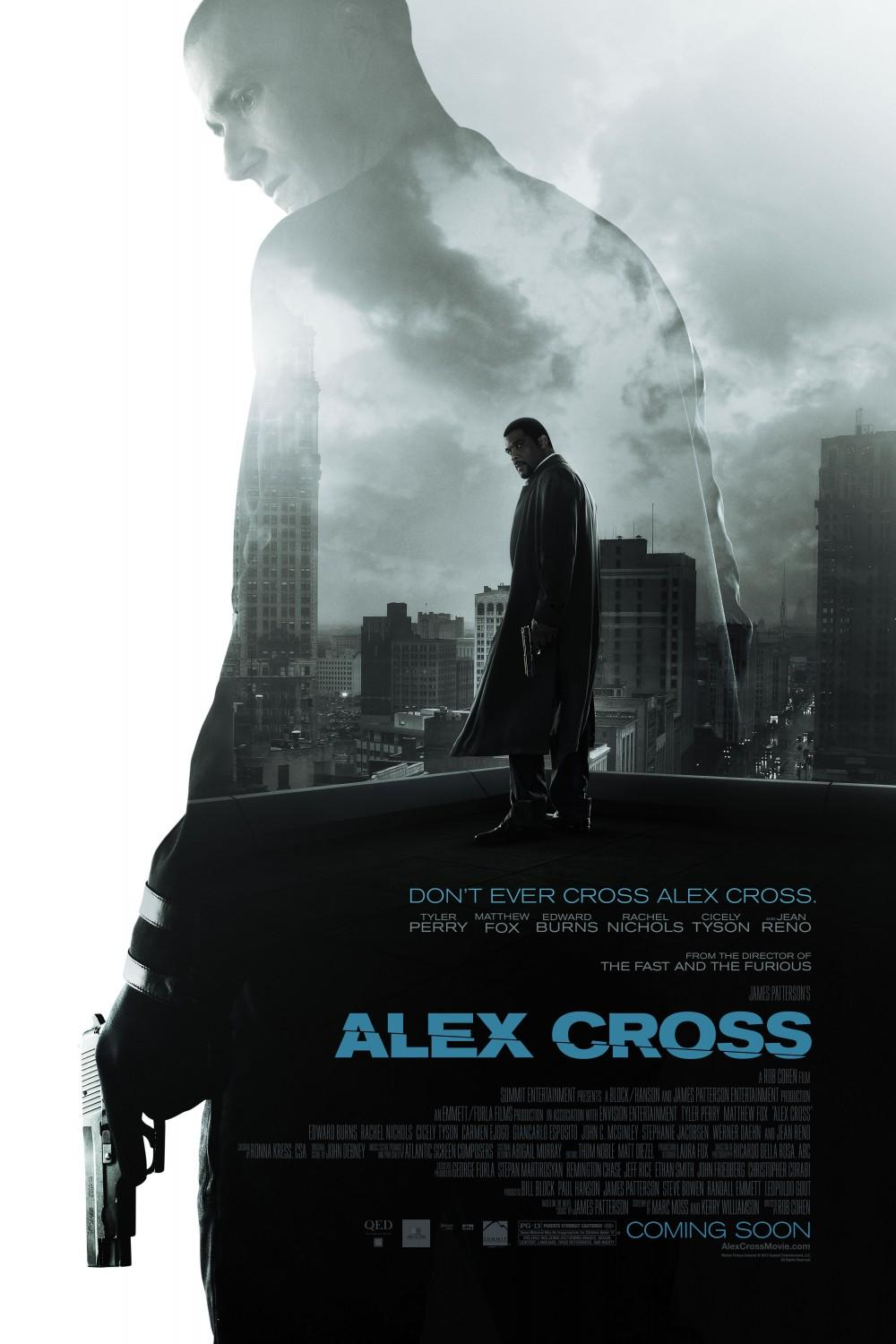
Alex Cross (2012)

Director: Rob Cohen

Release Date: October 19th, 2012 (US); November 30th, 2012 (UK)

Genre: Action; Crime; Mystery

Starring: Tyler Perry, Matthew Fox, Edward Burns

Idris Elba probably wouldn’t have been able to overcome the painfully generic plot or the less-than-enthusiastic dialogue here, but at least he would’ve added some degree of watchability as the lead. Initially cast as Detroit lieutenant Alex Cross, Elba inevitably dropped out and was replaced by Tyler Perry (perhaps Elba caught wind of the script). It’s not that the fairly unknown Perry doesn’t try, or even that Matthew Fox’s outlandish Derren Brown-lookalike villain is overly-wacky (at least he diverges slightly from the unequivocal pit of monotony). Rather, Alex Cross offers nothing we haven’t seen before, and nothing we haven’t seen done much, much better.

Alex Cross is a police lieutenant, psychologist, father, husband and soon-to-be FBI profiler (if he takes the job… he’s going to take the job, right?). Along with his partner Tommy (Edward Burns), Cross is assigned a case that involves tracking down a viscous hitman known only as Picasso (Matthew Fox), who is wanted for murder. Picasso’s objectives are murky at best — what is his definitive goal? Is he targeting Cross? Why is he cage fighting? — but Fox’s bizarre portrayal of the maniac skinhead is just about enough to divert attention in the early parts. However the road of attentiveness must reopen at some point, and when it does the villain’s nonsensical behaviour is exposed with shortcomings flailing all over the tarmac.

Maybe Picasso’s purpose did become clear towards the conclusion, but i cannot recall any explanation with confidence, and this indicates one of the glaring problems present: the film is incredibly unmemorable. Some particularly dreary outings are noted for their particular dreariness (take Oliver Hirschbiegel’s Diana, for instance) however Alex Cross fails to even fall into that category. If mild pepper eating was a contest, Alex Cross would represent the second mildest pepper on the menu — what’s the point in trying the pepper of penultimate blandness when there’s a mellower one there that’ll probably be even more tasteless and will leave your mouth drier, but hey, at least it’ll be a conversation starter the next time a friend asks about the least-hot pepper you’ve ever eaten (and that will happen). There is a distinct deficiency in direction, an inspiration inadequacy. The only characteristic prominent in abundance is mediocrity at its lacklustre worst.

To go in tandem with the vacuum of creativity on display is a collection of head-scratchingly obvious dialogue and a number of coincidences that would give Bilbo Baggins single-handedly slaying an army of orcs a run for its money in the ‘inability to suspend audience disbelief’ category. After spending a significant portion of the film looking for leads on the whereabouts of Picasso, Cross lets us know, “I’m just looking for leads”. At one point Cross and his team are trying their damnedest to convince hotel security that an important German businessman staying there is in danger due to a criminal at large, and then out of nowhere a criminal at large whose target is a German businessman appears. These are only two examples of a severe lack of urgency; urgency both away from the action/thriller norms, and in terms of effort put in by the creative minds.

The criminality unfortunately ceases from stopping there: tension is non-existent; some CGI effects are off (watch out for the flaming man); excessive camera-jerking during fight scenes makes it extremely difficult to follow the action; characters are either underused, underdeveloped or utterly unnecessary (the female prisoner at the beginning, what was that all about?). Perhaps the greatest crime of all is giving Giancarlo Esposito, who exhales charisma, a whimsical two-minute cameo… and it’s still probably the best part of the film.

No, the most entertaining aspect of the film is actually an external story attached to it, completely unrelated to the narrative piece itself: Alex Cross was shown on a number of United Airlines flights travelling around America, resulting in several passenger complaints due to its inappropriate placement on board and subsequent screening in the company of underage children. Director Rob Cohen, offering his sympathies and apologies to those involved, gave his two cents as he explained the PG-13 rating meant it should not be shown in general cabin areas. Trust me Rob, the non-child compatibility is far from why Alex Cross should not be shown on flights.

As scathing as this review is, and let’s be honest, nobody involved in Alex Cross will give this a glance never mind a care, I feel it is warranted given the filmmakers spent $35 million on its creation. Gareth Edwards shot his 2010 debut Monsters for less than $500,000, and it is a galaxy ahead of Rob Cohen’s output here. Edwards is currently directing Godzilla, arguably the most anticipated blockbuster set for release next summer. Cohen might be in the running for an Alex Cross sequel.

“This is over right?”

“No it ain’t Tommy, it ain’t over.”

I wish it was.

Ray (2004)

★★★

Director: Taylor Hackford

Release Date: October 29th, 2004; January 21st, 2005 (UK)

Genre: Biography; Drama; Music

Starring: Jamie Foxx, Kerry Washington, Sharon Warren

Ray Charles’ drive and charisma gave him a larger-than-life persona, so big that even a severely musically deficient 20-year-old knows who he is. Unfortunately, and indeed surprisingly, Taylor Hackford’s biographical drama about the electric man struggles to maintain the energy that Charles himself boasted in abundance. This is by no means down to Jamie Foxx’s sizzling turn as the title character, or the foot-stomping, arm-swinging music splashed throughout, but instead is a result of a pretty dreary and repetitive narrative presenting a story that deserves so much better.

We see music in his eyes. His effortless piano-playing hands are reflected in those iconic sunglasses. Ray Charles is at one with sound. This is the opening shot of Ray and if you didn’t know already, you do now — he is the music man. The film details the rise of Ray Charles Robinson, a young boy who became a pioneering musician after a childhood ravaged by tragedy and loss. Growing up in the 1930s on a Northern Florida plantation, young Ray and his brother are cared for by their head-strong mother as they bounce with liveliness amongst the dust. The duo share a close bond and get up to just about as much mischief as any other child does, but it is the tragic loss of his brother that kick-starts the chain of events which will eventually see Ray completely blind and hugely successful. His mother, played magnificently by Sharon Warren, teaches Ray that his deficiency is only such at the surface, that he needs to learn to live and strive on his own (“Remember you’re going blind, but you ain’t stupid”). Warren may just be the star-turn behind Foxx here, as she movingly portrays a woman who is a beacon of strength driven by frailty, and justifies the inclusion of countless conveniently placed flashbacks.

Ray’s childhood in Florida is depicted throughout the drama by way of a number of flashbacks, and these provoke part of the film’s main problem. Unlike the rhythm heard from Charles’ music, Hackford wrestles unsuccessfully in his attempts to generate and maintain a rhythm on-screen. From the get-go proceedings are frantically hurrying forward, making it difficult to catch a breath never mind work out where and when we are. One moment a young Ray Robinson is shown as he grows up, the next he is moving away to school and then before you know it Ray Charles is belting out soulful music to the needy masses. The film is long — overly long at two and a half hours — and by the time the first sixty minutes are up, the audience has seen just about everything there is to see… so we see it all again. Charles develops a drug habit, he plays a gig, he records a song, he takes some more drugs, he buys a house, another gig, recording studio, perhaps the odd forced flashback for narrative continuity, and so on. The film begins to drag, which is a shame considering its subject matter defined entirely the opposite: pizazz and meaning.

Another obstacle in the film’s way is its over-wrought lightheartedness. Besides the death of Ray’s brother (the resonance of which gets lost amongst the rapid progression of proceedings), there is too much feel-goodness going on. Of course, the underlying message that Ray’s blindness should not hamper him, nor should it make us feel sorry him, is a wholly positive one and should be placed on a pedestal for the viewer to see and hopefully learn from. His wife Bea (Kerry Washington) enforces this notion of positivity: “How can I pity someone I admire?”

That being said, the life lived by Charles was without doubt a tumultuous one, one which incorporated extensive drug use and adultery, and these issues are sidelined to an extent in favour of jovial music and exuberance. Often arguments end in laughter when they need not. Perhaps this genuinely was part of the man’s all-round demeanour — his music certainly alludes to joyfulness. However, creative license appears to be prevalent as intentions to make Charles look like a bad guy are non-existent. Again, considering its enormous run-time, delving into the depths of some of the more unattractive issues in Charles’ existence would’ve benefited the film — when a smidgen of Ray’s post-addictive exterior is displayed it is tough to watch and this is more of what the film needs in order to really tell his story. Charles does not need to look like a bad guy — by all accounts he wasn’t one — but rather a good guy who done a few pretty bad things.

On the plus side, Jamie Foxx knocks the proverbial ball out the park and then some in his performance as the soul singer. In a similar vein to Joaquin Phoenix’s turn as Johnny Cash in Walk the Line, Foxx truly brings Ray Charles to life on screen. The key to his successful embodiment is just that: an outstanding use of body movement and facial expressions. Unable to deliver the goods through his eyes, which often provide the backbone to showing emotion, Foxx incorporates all of Charles’ movements and intricacies by way of a rasping shriek or emblazoned smile. It is evident that Foxx has worked hard to achieve what he does, and his award-winning achievements are magnetic.

The film is beautifully shot by cinematographer Pawel Edelman, who was nominated for an Academy Award in recognition of his work on The Pianist, and maybe his offerings in Ray should have earned him a second nomination. Alongside Foxx’s charismatic performance and a collection of delightful music, Edelman’s expert, scene-setting shoots provide Ray with all of its energy and charm, in spite of the dreary screenplay. Regardless of how repetitive it might get, or any imagination-scarcity it might suffer, you cannot help but smile when Ray Charles learns how to play “Mess Around” on the piano.

Ray is not a bad film by any means; it provides the vehicle for an incredible embodiment of one of the most influential men in music history courtesy of Jamie Foxx, and also accommodates a number of grin-inducing moments alongside an exclusively feel-good message. The film is let down, however, by a lack of creativity in the narrative department, turning the story of an incredible man’s inspiring journey into a bouncy-castle of repetition before long.

By the end, or even the middle, it sort made me just want to go and watch Walk the Line again.

Man on Wire (2008)

★★★★★

Director: James Marsh

Release Date: August 1st, 2008 (UK)

Genre: Documentary; Biography

Everybody hates the dentist. Everybody except Philippe Petit.

The Twin Towers were a symbol of innovation. A duo of iron giants, they stood over New York reminding the world that anything was, is, possible. Writing about the pair of incredible architectural feats in the past tense is probably something, even 12 years on, nobody will ever get used to.

It is this melting pot of romanticism and tragedy that surrounds the Twin Towers which gives Man on Wire an extra layer of emotional weight. But even without that, even minus the tinge of sadness you get upon remembering the towers are no longer around, Man on Wire is an absolute triumph.

The documentary recounts a story that you probably wouldn’t believe if it were a narrative film. Philippe Petit is an ordinary man, a French high-wire walker whose aspirations exceed the ordinary and go up. A long way up. Supported by his congregation of close friends, he strives to reach impossible heights and to walk on top of the world. It’s 1968, and Petit finds himself flicking through a magazine in a dentist’s waiting room when he comes across an article promoting the impending construction of the world’s tallest buildings: the World Trade Center. Petit rushes out of the dentist. He doesn’t need to get his teeth checked. He’s going to walk between the Twin Towers.

Director James Marsh lets the story of Petit and his cohorts (because it is their story too) play out both through real-time interviews with the participants and by way of caper-like reconstructions of the day. The heist-esque portrayal of Petit’s attempts to the reach the top of one of the towers generates mischief and even comedy at times, particularly when Petit himself is describing his game of hide-and-seek with the guards in the building. Petit and co are, by all accounts, going against the law as the sneak their way into the buildings as maintenance men, and the group refrain from shying away from this as they retell their tale.

The lightheartedness achieved by Marsh is admirable (though the thought of walking across a wire suspended at 1,368ft does generate a nervous chuckle), however the film truly hits its stride through the group’s emotional, passionate narration of their incredible journey. Philippe and his friends, girlfriend, and colleagues all seem invested in their story — how can they not be? As the preparations develop, Petit’s metaphorical dream builds. Ironically, the main barrier in his way is the lack of physical existence of his goal: the towers do not reach completion until 1973, five years after the Frenchman darted out a dentist’s waiting room with dazzled eyes. Throughout the film, the purpose of the towers (which obviously lies in commerce, work, and the proverbial “American Dream”) becomes somewhat twisted towards Philippe’s ambition. Just for a moment the construction of the towers seems solely to be for one man to ascend and walk across them: “Of course, that’s why the towers are there… for Philippe.”

The group’s preparations take them to Sydney, Australia and the Notre-Dame Cathedral, where a suspended Philippe walks across the Sydney Harbour Bridge and the Cathedral respectively. The second traverse sees Philippe stride above an ongoing mass, almost in a God-like manner. The underlying connotations of dreams and reaching the clouds play out as the documentary progresses, further reinforcing just how overly-ambitious Petit is. His counterparts react differently as they recount their roles in the preparations and the event itself; we see genuine outbursts of emotion ranging from tears to laughter. At times there is a frustrated sense of animosity between the members of Petit’s troupe, adding to the intense drama — is this one man’s dream for himself, or a group’s dream for one man?

As the film nears its nail-biting conclusion — and nail-biting might just be an understatement — it hits the audience with an unexpected burst of poignancy. We want Philippe to succeed, to fulfil his dream, to fulfil the dream those close to him share vicariously. Marsh intersperses the drama with astonishing ‘home-video’ footage taken of Philippe as his air-walking escapades reach spine-tingling heights (the Frenchman even draws images of his previous wire-walks on a wall of one of the towers, as if to remind himself that they are part of a natural progression). The Twin Towers are displayed often and with purpose, reminding us about the sheer scale of Philippe’s dream.

And then Philippe Petit dances at the top of the world. From below he is as small as his name proposes and even smaller still as the remarkable man obtains a pair of gigantic steel legs. The moment is extraordinary; it is profound. But it is also effortless. The tension relieves and the documentary captures a truly emotionally evocative moment. This is the real Philippe, in complete isolation, suspended above a busy world. He elates, “I must be a castaway on a desert island of my dreams”.

Man on Wire delivers bundles of heart and soul, provided by way of James Marsh’s wonderfully diced concoction of Philippe and company telling their story, backed up by grainy, very real home-video footage and jaunty re-enactments. The title of film suggests simplicity, and in a sense the visual of Philippe Petit lying in mid-air between the Twin Towers is just that, but his journey to the sky is something quite extraordinary.

Captain Phillips (2013)

★★★★★

Director: Paul Greengrass

Release Date: October 11th, 2013 (US); October 16th, 2013 (UK)

Genre: Action; Adventure; Biography

Starring: Tom Hanks, Barkhad Abdi

Having directed films such as The Bourne Ultimatum and United 93, Paul Greengrass is no stranger to generating drama and thrilling audiences. In Captain Phillips, Greengrass combines the very best elements from his previous outputs and creates a relentlessly intense and enthralling tale of an ordinary man in an extraordinary situation.

The film tells the true story of Captain Richard Phillips, who was taken hostage by Somali pirates while steering his cargo ship across the Indian Ocean in 2009. Tom Hanks stars as the troubled captain and delivers his best performance in thirteen years. The two-time Academy Award winner’s thoroughly convincing portrayal of the jaded mariner turned distressed captive is incredible — his astounding role in the emotionally-charged final few minutes of proceedings should seal Oscar number three come March.

In addition to Hanks’ performance are the surprisingly realistic offerings from the four previously untried actors playing Somali pirates. The group are imposing and chaotic, with Barkhad Abdi standing out in particular as the leader, and the quartet’s pursuit of the American-based vessel amplifies an already danger-fuelled atmosphere struck up by eerily droning music and Phillips’ on-edge demeanour (“We’re going along the Horn of Africa, right?”).

More than simply a story of immediate survival, the film also has a political and moral backbone. We see two very contrasting lifestyles in the opening shots: one shows a worn-out family man about to leave his wife on another extended job; the other depicts a struggling community whose only means of survival is criminal activity. Greengrass infuses these extremely current issues into the main plot-line to add another real-life layer of drama to the impassioned events.

Technically magnificent and emotionally draining, Captain Phillips boasts award-worthy lead performances and is without doubt one of the very best films this year.

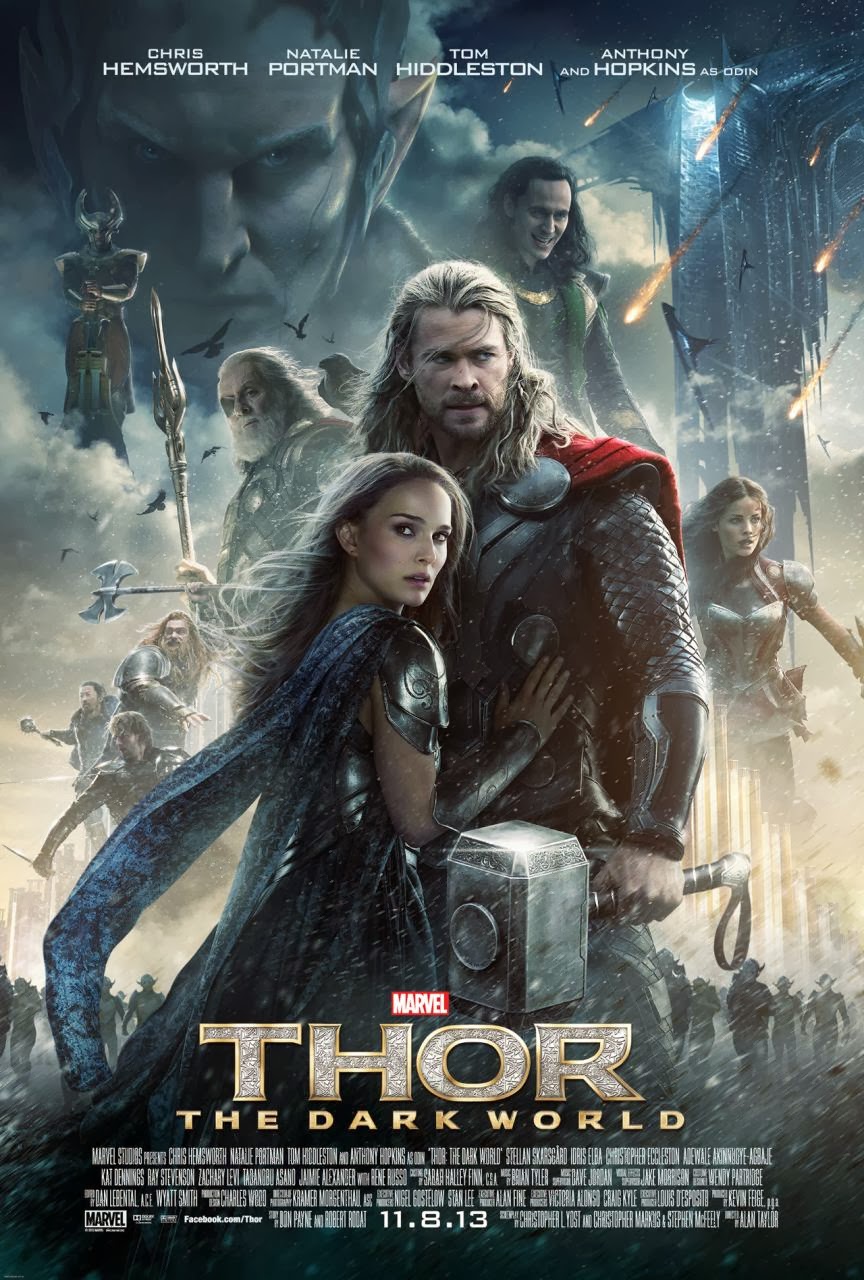
Thor: The Dark World (2013)

★★★★

Director: Alan Taylor

Release Date: October 30th, 2013 (UK); November 8th, 2013 (US)

Genre: Action; Adventure; Fantasy

Starring: Chris Hemsworth, Tom Hiddleston, Natalie Portman

After Iron Man 3’s failure to ignite Marvel: Phase Two into top gear, Thor: The Dark World signals a brisk return to form for the franchise king as the film quenches any Mandarin-shaped spectres. Regardless of a few questionable plot elements, the second instalment of Thor brims with fun and is the epitome of rip-roaring cinematic entertainment, perhaps even bettering much of Marvel’s pre-Avengers universe.

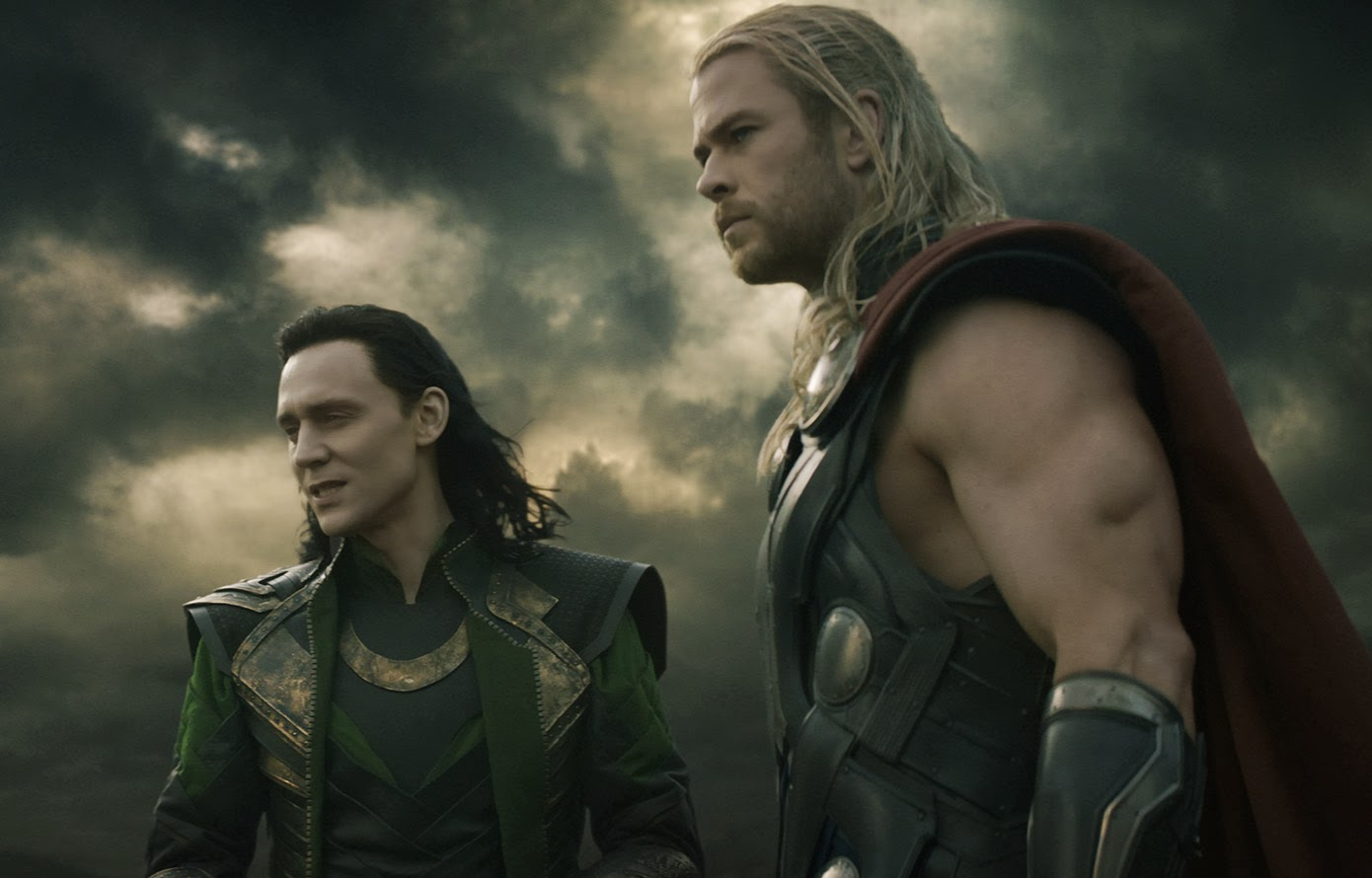
With the impending arrival of the evil Alien-inspired Dark Elves — led by an utterly unrecognisable Christopher Eccleston — Chris Hemsworth’s Asgardian hero Thor must put aside much of the loathing he is entrenched in and team with his imprisoned brother Loki in order to save the Nine Realms.

Tom Hiddleston returns as the devious Loki and is a joy to watch when he is present on screen (which is certainly not enough) in another scene-stealing performance. There is a slight shift in the central relationship this time round: from the son of Odin and his mortal love interest Jane Foster (Natalie Portman), to the natural-yet-severed dynamic between the brothers, and this certainly amps up the tension. Portman doesn’t have as much to do this time around and, much like Thor in the previous film, finds herself in unusual surroundings. The novelty of seeing Foster wander around Asgard doesn’t quite reach the same level of playfulness as bearing witness to the God of Thunder eating breakfast in a New Mexico diner.

The film simultaneously manages to be darker, wittier and more enjoyable as it rises above the satisfying level set by that of its predecessor. Director Alan Taylor takes a slightly different approach than Thor’s (2011) Kenneth Branagh, as he powers every nuance of the film with Mjolner and tongs. Taylor, who has recently worked on the hit television series Game of Thrones, delves into the fantasy world even more with encapsulating Lord of the Rings-esque costumes and landscapes aplenty. Stir in Brian Tyler’s grandiose score — which haunts as much as it packs a punch — and you’ve got the perfect concoction of post-Middle Earth entertainment.

Even the very occasional influx of sap quickly evaporates by way of some creepy imagery and a brooding underlying tone which was missing previously. Genuine danger manifests around the Dark Elves spearheaded by Eccleston’s Malekith — the villain’s name boasts a snake-like quality as it slithers off the tongue.

Proceedings threaten to boil over into mind-boggling territory come the final showdown, but a frantic pace and exhilarating action mesh together successfully as a means of retaining the audience’s attention.

The direction of Thor: The Dark World is set early on as action engulfs events (“Is that why everything is on fire?”) and by the time the realm-interchanging plot starts to confuse a little, the aesthetically supreme film has already delivered in pure enjoyment.

The Hunger Games: Catching Fire (2013)

★★★★★

Director: Francis Lawrence

Release Date: November 21st, 2013 (UK); November 22nd, 2013 (US)

Genre: Action; Adventure; Science-fiction

Starring: Jennifer Lawrence, Josh Hutcherson, Liam Hemsworth

They always say it. It’s almost an unwritten rule in franchise filmmaking. Premature reviewing at its most uninspiring. “The sequel will never beat the original.” Of course I am paraphrasing here and my source is general social cinematic norms rather than cold, hard evidence. But it is certainly true that sequels have a lot to live up to, particularly when they find themselves following on the heels of a successful franchise opener.

Interestingly, even after The Hunger Games delivered thought-provoking sub-plots, new Hollywood superstars and overall cinematic enjoyment in abundance, the onset of Catching Fire has been met with optimism and even more positive hype than its predecessor. Of course there’s pressure, but there hasn’t really been any noticeable apprehension over a potential disaster in regards to the second big-screen adaptation of Suzanne Collins’ novels.

And why should there be?

Under new leadership, with fresh faces and even fresher faces, Catching Fire forcefully retains all of the progress made by The Hunger Games and elevates the franchise to new heights. The film is weightier, slicker, more intense, and once again boasts a number of glowing performances. Francis Lawrence (no relation) directs an orchestra lead by The Girl on Fire as they collectively strike all of the correct notes, creating a sequel which has its volume up loud as it transmits a clear message of hope and defiance.

A short time after their unprecedented joint-victory in the 74th annual Hunger Games, Katniss Everdeen (Jennifer Lawrence) and Peeta Mellark (Josh Hutcherson) are distant with each other and the world around them, and are preparing to embark on a Victory Tour. Still reeling psychologically from her experiences in the games, Katniss finds herself thrown directly under President Snow’s evil spotlight as he strives to quench any potential district-driven rebellion against his autocratic Capitol. The film opens moodily, reflecting the ominous on-edge feeling amongst the district-dwellers that the previous instalment developed so well. Its physical scope travels far and wide with landscapes displaying an icy exterior mirroring that of the mechanical, desensitised hierarchy — an unrelenting mechanism represented at its most negligent by the metal claw disposing of the deceased.

Perceived by the oppressed as a beacon of hope against fear, Katniss and Peeta are subject to re-entry into the Hunger Games tournament, this time alongside fellow victors from the past in a master-plan devised by recently introduced Head Gamemaker Plutarch Heavensbee. Philip Seymour Hoffman makes his Hunger Games debut as Heavensbee, demonstrating Darth Vader-esque inequalities at times. His deceiving, snake-like delivery is as skin-crawling as it should be. Katniss represents all that is right in a world riddled by wrong, therefore she must be stopped and placing her back into the murderous tournament is Snow’s means of doing so. After all, “Nobody ever wins the Games”.

There is an underlying sense of good versus evil here, but more significantly a battle of hope versus fear. Katniss defines hope, regardless of whether she herself believes it, and having been plagued by fear for seventy-five years, the people of Panem are finally bearing witness to a means of resistance. This notion of defiance plays out in various subconsciously related instances as the film progress; be it through Gale’s encounter with the viscous and ironically-named Peacekeepers, or Cinna’s symbolic garment creations. The actors, writers and director each fulfil their role in successfully creating a dynamic which sees the audience entirely on the side of Katniss, without proceedings ever balling over into a territory of jadedness. Any semblance of an upper-hand gained by the resistance is a triumphant one.

Jennifer Lawrence once again shines as Katniss (sometimes literally) as she steers the bow-wielding heroine through the emotionally wrought rigours, and is quite simply a delight to watch on screen. Her steady evolution from a reluctant and isolated victim of the games to a determined leader is unblemished. Both Liam Hemsworth and Josh Hutcherson have more to do this time around and Hutcherson’s volunteer scene is perhaps the most poignant of the piece.

Newcomers Jena Malone and Sam Claflin embody the characteristics of past victors Johanna Mason and Finnick Odair to a T, with both the latter’s charm and the former’s abrasiveness in full flow. “Attitude” is the new “mahogany” for Elizabeth Banks’ Effie, who is as flamboyant as before but who also delivers movingly on occasion. An abundance of tension lies beneath the pretension of the Capitol resident — she essentially becomes a token of distinction between the harmless ignorant and pure tyranny, a tyranny of cruelty displayed by Donald Sutherland as President Snow. The ensemble cast deliver performances devoid of weakness, providing Catching Fire and the lead actors a solid backbone to impress from.

A common criticism aimed at The Hunger Games was the extensive use of shaky cam by director Gary Ross, intended to bring a sense of immediacy and danger to proceedings (which, incidentally, it did). Francis Lawrence opts for far less of the bumbling camera work this time around, instead focusing on the contrast between the expansive, free landscapes and capturing the troubled, constrained essence of the Katniss and company. These contrasts diverge further from just the narrative, as melodic instrumentals battle the thumping, grandiose Capitol soundtrack.

Catching Fire is far more encompassing that its predecessor, both visually and thematically, and as a consequence of delving further into the themes of oppression, resistance and trust, it carries more burden that the first instalment. Distressing scenes are almost commonplace in a distressing universe. Francis Lawrence has done exceptionally well in getting a 12A rating for his film here in the UK, and should also be commended for pushing the envelope when it would’ve been far simpler to develop a film containing less weighty elements than those Catching Fire rightly and necessarily displays.

The film is the most anticipated sequel of the year — possibly one of the most anticipated of the last number of years — and it without doubt lives up to its title. The Hunger Games conglomeration certainly is catching fire, and on this evidence who knows when its spark will burn out.

Gravity (2D) (2013)

★★★

Director: Alfonso Cuarón

Release Date: October 4th, 2013 (US); November 7th, 2013 (UK)

Genre: Drama; Science-fiction; Thriller

Starring: Sandra Bullock, George Clooney

Alfonso Cuarón’s Gravity has been lauded with praise from audiences and critics alike since its recent big screen release, being labelled groundbreaking, pioneering cinema. Emphatically described as immersive and emotive. Even breathtaking. Perhaps so much so that no space-set extravaganza will ever be the same again, purely because space on film in the future has a Gravity-esque brass ring to aspire to.

This abundance of praise, however, has been attributed primarily to Gravity in its 3D format (heck, even Mark Kermode thoroughly enjoyed this version). The jury is therefore still out on Gravity in its classic, run-of-the-mill 2D version. Does the trend-setting cinematography and floaty camera work succeed at all in two-dimensions? Is the film as engrossing and all-encompassing without the plethora of protruding debris and George Clooney-ness?

Quite simply, the answer to these questions is no. Not a resounding no, but a no nonetheless. And this flares up a number of issues, the most significant being whether or not Gravity in 3D is, more-so than any other three-dimensional film to date, essentially a theme park thrill ride in a cinema. Perhaps even — put in the plainest of terms — a gimmick. This is not necessarily a negative — film critic Danny Leigh on BBC’s Film 2013 mentioned that the film which Gravity reminded him most of was the Lumière Brothers’ L’arrivée d’un train en gare de La Ciotat (known in the UK as Train Pulling into a Station).

First shown in 1895, the film is a short 50-second piece depicting a steam train’s arrival at a bustling station. The first of its kind, the oncoming train apparently startled audience members and sent them fleeing in fear of the vehicle. The Lumière Brothers, themselves pioneers in the art of filmmaking, perceived cinema and the cinematic experience as a physical one, where audience members would be totally entranced and involved in what they were seeing. This was the birth of cinema and back then cinema was an out-of-body experience.

Fast-forward over a century and, by all accounts, this wholly enveloping feeling has returned as Gravity in 3D. But the same cannot be said for Gravity in 2D. The film sees Sandra Bullock’s Ryan Stone on her first space shuttle mission, partnering spacewalk veteran Matt Kowalski (Clooney) on his final mission (you can see where this one is going). After hearing news of a Russian satellite accident, the pair are bombarded with the resultant debris and metal, leaving them separated, low on oxygen and in desperate need of a safe return to Earth — to gravity.

Gravity (2D) looks stunning. The intricately manoeuvring astro-camera delicately shifts around the blackness, almost giving off the sense that the viewer is up there with the mission team (it probably does relay this sensation entirely, in 3D). The screen displays the magnificence of planet Earth in its fullest form and the film, as a purely flat visual output, looks simply awesome. So awesome that the philosophical Kowalski comments on the “beauty” a number of times.

Bullock is good as Dr. Stone, a woman who has recently lost her child and finds solace in the emptiness of space — an emptiness that no doubt has engulfed her for what feels like millennia, and that has left her devoid of any genuine happiness or enthusiasm for life. George Clooney does George Clooney very well, bursting with unbridled charisma and charm. The pair, and Bullock in particular, do genuinely come across as actors who have gone hell-for-leather and to ensure that there is a completely organic impression emitted from their space-set performances, an organic understanding that the film itself does incredibly well to generate (a generation likely far greater in 3D) as it was obviously unable to shoot on location.

Here is where Gravity (2D) returns from cloud nine to the bleak pavements of earth: the narrative is nothing more than just alright. Much of the film sees the astronauts glide around space for a period of time before colliding with a number of space stations and shuttles as they search for a route back to Earth. The novelty of watching these small, inconsequential beings wander at times aimlessly around the dark beyond wears off fairly early on, and unfortunately the dialogue is too commonplace and puffy to keep the audience attentive. There are bountiful amounts of clichés (“I’ve got a bad feeling about this”) and a number of deep-rooted conversations about existence and life (foetal position alert) recycled from sci-fi B-movies. The film is self-aware of this, and it would seem that the 3D version of Gravity does not need to worry about plot because the entrenching nature of proceedings means viewers are too busy being wowed by that new, exciting feeling of immersion in space alongside the characters.

Here lies the fundamental dispute that the 2D versus 3D debate boils down to: Gravity (2D) is a visually wonderful, but narratively generic drama about people in space trying to return home, whereas Gravity (3D) is a revolutionary experience in watching and becoming part of a film — it is pure cinema, the essence of what the Lumière Brothers envisioned all those years ago.

There is a moment towards the end of Gravity (2D) where the camera pans above a number of objects travelling very rapidly over the Earth. Even in two-dimensions this is a spine-tingling moment, and it evokes a final 15 minutes that is tense, goosebump-inducing and quite simply brilliant. These final moments probably equate to every moment in Gravity (3D). If that truly is the case, Alfonso Cuarón has done something pretty special indeed. The director has vehemently pushed for the film to be seen in all its three-dimensional glory, on the biggest screen, and it seems that is exactly how it should be seen.

I’m off to the IMAX.

Crazy Heart (2009)

★★★★

Director: Scott Cooper

Release Date: February 5th, 2010 (US); March 5th, 2010 (UK)

Genre: Drama; Music; Romance

Starring: Jeff Bridges, Colin Farrell, Maggie Gyllenhaal

Folkish melodies and acoustic guitar strums are the backbone of Scott Cooper’s Crazy Heart, a charming tale about a worn out country musician who finds hope and inspiration in a new, unexpected romance as he tries to get his career — and life — back on track.

Jeff Bridges is Otis “Bad” Blake, an ageing country singer/songwriter devoid of much enthusiasm unless alcohol is present. Maybe he lived a more frivolous and extravagant lifestyle in his younger years, but nowadays his tours consist primarily of small town bars and bowling alleys. If he makes it through a set list without choking on a beverage or vomiting in a bin, he’s probably having a pretty good day. Bridges is excellent as Blake and delivers equally well in conversation as he does in song. Maggie Gyllenhaal’s youthful journalist Jean Craddock is a recent divorcee who catches the eye of Blake and emblazons him with a new lease of life. The two actors strike up a a very equitable dynamic and make a seemingly unrealistic relationship, a believable one.

Just as Blake and Craddock’s romance progresses and the country man’s life and career both begin to reattach themselves to the rails, Blake encounters a number of alcohol induced demons, including a number of unsavoury incidents involving a car accident and Craddock’s four-year-old son, whom Blake has come to care dearly for. These issues increasingly drive a wedge between the pair and as their relationships begins to unravel, the film starts to lurch over the edge, peering cautiously into the depths of despair and darkness. Teetering on the edge of the abyss is as far as the drama gets however, as the film does not quite have the courage of its convictions.

And that is the main problem with Crazy Heart (perhaps the only problem). Too often characters are faced with a level of pain and anguish which, if prompted a little more, would generate additional degrees of empathy and frustration for them — and Blake in particular — from the audience. For a man who is surviving mainly on scraps and minuscule effort, who finds a beacon of light through love and family and who then goes on to throw all of that joy and security away by making stupid decisions, Blake seems to be dealing with life relatively well. Yes, he has a drinking problem, but he has the same drinking problem at the beginning of the film as he does after the collapse of his relationship. Scott Cooper is very close to writing and directing a perfect fable of loss and redemption, but the tone of Crazy Heart lingers a touch too high when it should be free-falling a great deal lower – Darren Aronofsky’s The Wrestler is an example of a film that shares many similar narrative elements with Crazy Heart, but which hits depths lower than Cooper’s film and is all the better for it, albeit more heart-wrenching.

However, what Crazy Heart does not have in depth-plummeting ordeals, it makes up for in wonderful characters, tremendous performances and an incredible plethora of music. Produced in part by Coen favourite T-Bone Burnett, the soundtrack to the film has bounce and soul and meaning; it is no surprise that the film’s headline song “The Weary Kind” went on to win the Academy Award for Best Original Song. Often the songs develop the characters, be it through Colin Farrell’s rendition of “Gone, Gone, Gone” establishing his young, successful Tommy Sweet, or Jeff Bridges’ interpretation of “Fallin’ & Flyin'”, which perfectly describes both the singer’s previous ambitions and current realisations (“Funny how fallin’ feels like flyin’ for a little while”). Burnett’s musical involvement in filmmaking rarely signals disappointment, and his work here is another shining example of getting it right.

Jeff Bridges is the stand out performer in a film where much of the focus is on him, delivering a performance which returned the second of the film’s two Academy Awards in 2010. He is a part of just about every scene, yet his presence is always welcome and never wearisome. Bridges emits near-defeat and hopeful optimism in equal measure when required, his emotions often dictated by the outcome of interactions with the protégé-turned-star Sweet or the smitten Craddock. Robert Duvall even makes an appearance as Blake’s lifelong friend Wayne, contributing melodically to match.

When the foot stomping ends and the guitar strings go silent, Crazy Heart simmers down to a very enjoyable film that boasts an exceptional lead performance and is littered with great songs, each of which do their job in encapsulating the moment. It doesn’t quite hit the perfect note all of the time, but it is not a long way off.