CBF’s Genre Toppers: Mystery

Guess what the next genre is? It is a mystery, isn’t it? No, it really is a mystery. Okay, enough of the shockingly bad jokes.

Not one of the more prominent genres, mystery tends to flirt around the edges of just about every other genre, without actually sticking out. However, there are a number of films which are defined by their mystery element. Personally, I am drawn towards films containing a mysterious element over most other types of films — mainly in the hope that such a film will keep me guessing all the way until the end.

Mystery films tend to be hit or miss — either the outcome of whatever mystery is going on is surprising or shocking or entertaining, or it is not. It will be to nobody’s surprise, then, that the five films on my list I consider to be five hits.

I have decided to change the format slightly from my previous Genre Toppers posts. The reasoning behind this is that I think reading large paragraphs over and over again can sometimes get a bit tedious, so hopefully this change will keep things more interesting. This newer format seems to work well with the mystery genre in particular, but who knows — I may use it again in the future.

Zodiac (2007)

From the acclaimed director David Fincher, Zodiac tells the story of one of San Francisco’s most notorious serial killers, known only as the Zodiac. Boasting a strong cast containing Robert Downey Jr, Jake Gyllenhaal and Mark Ruffalo, the film depicts the events surrounding the police investigation into the murders carried out during the 1960s and 1970s, and why the murders were occurring.

Where The Mystery Lies

Who is the serial killer known as the Zodiac, and what do the cryptic clues being sent to the police mean?

Three Top Five Clinching Reasons

Fincher’s target audience: Interestingly, Zodiac is David Fincher’s second-highest rated film on Rotten Tomatoes with 90% of critics enjoying it (second only to The Social Network at 96%), whereas it is Fincher’s lowest revenue-taking film, grabbing only (yeah, only) around $85 million worldwide. Why? Primarily because Fincher aimed the film towards a typically older audience, rather than playing up its slasher element and in turn appeasing only “16-year-old boys,” as Fincher put it.

“Hey, hey Jake — I’m Iron Man.” “Yeah, whatever Rob.”

Style and the 70s: Obviously I was not around in the late 1960s/early 1970s in order fully understand what those years were like, but Fincher certainly goes a long way to making sure Zodiac captures the tone and style of them. Everything from smoky newsrooms to wacky attires are in full display here, and although the film lasts over two and half hours, it is worth watching at that length just to enjoy the cinematography.

Delightful dialogue: The performances from the three leads in Zodiac are very convincing, and this is helped in no small part by the deliberate and encapsulating script the actors exchange between each other. Fincher has a knack for using excellent, well-crafted scripts (take Se7en and The Social Network as two prime examples) and Zodiac is no different. Gyllenhaal, Downey Jr and Ruffalo do the film and its words justice — in fact, the positive audience reaction combined with the lack of a well-rounded ending proves just how well the actors and writers have done to make the film so enjoyable.

Final Words

A slick, stylish and slow burning mystery drama, Zodiac keeps audiences interested through its exceptionally well-strung dialogue and interesting performances.

Exam (2009)

Released in 2009 and directed, written and produced by Stuart Hazeldine, Exam takes place in an alternative history and is set almost entirely in one room where a group of eight very different people must use their initiative to gain the employment they each desperately desire.

Where The Mystery Lies

The eight candidates are given one piece of paper and are told that the exam only consists of one question… but what is that question, and what is the correct answer?

Three Top Five Clinching Reasons

Unknown cast: A problem a film can sometimes face when it boasts a worldwide star is that the audience do not believe that such a level of star can actually be the character they are portraying (particularly if the character is a normal, everyday person). Exam benefits from a relatively unknown cast — apart from Colin Salmon, although he does not appear very often throughout the film, making his character seem even more important and separate from the candidates. The candidates themselves each bring their own nuances to the table, coming across as genuine employment seekers and making the film much more believable and engrossing.

“Phones to the front please.”

Simplicity is key: As you can probably gather from the synopsis above, the plot of Exam is very simple: eight candidates, one job, one question. That is it. Not only does this make the film easy to follow, it places more emphasis on the situation the characters find themselves in and adds focus to the characters themselves (in essence, this film is a character profile). The mystery is also heightened because it is not confusing — rather, it is intriguing.

Perfect pacing: Hazeldine ensures the film does not dwell on particular plot points, moving things along before they become stagnant, and coming back to events if need be. Again, this keeps the flow of the film just about right and ensures the audience’s attention is grasped and maintained. Also, the progression of the plot and the characters are both very well handled, generating more and more tension until the atmosphere becomes just about unbearable.

Final Words

Exam is the perfect example of how to make a small, low budget film with a simple plot and still be able to keep it intriguing, leaving the audience on the edge of their seats.

Sherlock Holmes (2009)

Guy Ritchie helms this reboot of the Sherlock Holmes franchise, starring Robert Downey Jr as Holmes, Jude Law as Watson and Rachel McAdams as former adversary Irene Adler. The story follows Holmes and Watson as they attempt to uncover the perpetrator of a series of violent murders and prevent this perpetrator from taking over the British Empire.

Where The Mystery Lies

Holmes and Watson must decipher how their familiar foe plans to control the British Empire — but how has the murderer returned from his apparent execution?

Three Top Five Clinching Reasons

At home with Holmes: Robert Downey Jr plays an enormous part in how enjoyable this film is — his portrayal of Sherlock Holmes is one of wit, intelligence, controlled chaos and downright hilarity. We are all used to seeing Downey Jr in charismatic roles (as Iron Man, for example) and here he seems completely in his comfort zone, which shows by way of  his mesmerising depiction of Holmes — rivalled only by Benedict Cumberbatch’s portrayal in the hit television series, Sherlock. But not all the praise must be solely heaped on Downey Jr, as Jude Law is very effective in working as a buffer for Holmes to play off of. Mark Strong is as menacing as always playing the villain of the piece and Rachel McAdams is delightful as Irene Adler.

“That tie doesn’t suit you.”

Visually unique: The cinematographers and set designers deserve a vast amount of compliments for their old-fashioned-yet-energetic set pieces. It is a tremendous achievement in making London appear as it did back in the 19th century, but at the same time upholding a sense of freshness. Craftsmanship at its finest, if you ask me. Also, the slow motion fight sequences look effortlessly assembled and add an extra dimension to the film.

Action-packed: Guy Ritchie certainly does not hold back in terms of fight scenes (there are plenty) and explosions (they are in there too). At its simplest, Sherlock Holmes is an entertaining action film with plenty of well-choreographed physical encounters and a fast-moving plot which keeps the action going and prevents the film from losing its momentum. The action takes place everywhere too — from underground to occult chambers to the top of massive cranes.

Final Words

Quick-witted, funny, sometimes silly, but always entertaining — Sherlock Holmes is just about everything you expect from a Robert Downey Jr-led film.

Shutter Island (2010)

Based on the novel by Dennis Lehane, Shutter Island sees Martin Scorsese team up with Leonardo DiCaprio for the first time since The Departed in 2006, and the fourth time overall (soon to be a fifth, with The Wolf Of Wall Street hitting cinemas in late 2013). DiCaprio stars alongside Mark Ruffalo as two U.S. Marshals — Teddy Daniels and Chuck Aule respectively — who attempt to uncover the mysterious happenings on Shutter Island.

Where The Mystery Lies

Daniels and Aule must find out the whereabouts of a missing patient, but what is the real reason they have been summoned to the island? (That is all you are getting, sorry!)

Three Top Five Clinching Reasons

Creating a separation: The chemistry between DiCaprio and Ruffalo is very underrated here, in my opinion. It is obvious that the two are outstanding actors, which is once again apparent in this film, but they also work exceedingly well together, in turn creating a sense of disconnect between themselves and the rest of the residents of Shutter Island. This is essential to the story, and thus the performances from both DiCaprio and Ruffalo (and also Ben Kingsley to be fair, who plays Dr. John Cawley) are a key part to the success of Shutter Island.
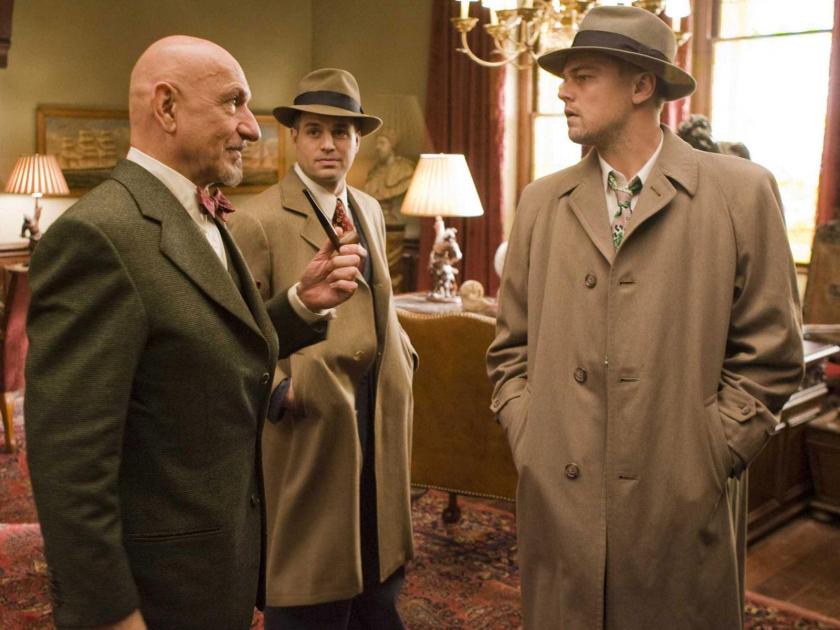
“We have no wi-fi here.”

Shudder Island: There is an eerie and unnerving atmosphere generated throughout this film, and the creep factor increases as the film delves further and further into the mysterious happenings on the island. The film switches for brief moments to an almost comedic tone, but that tone is swept away by dread almost as soon as it begins. The unnerving atmosphere is aided, of course, by the sense that the two U.S. Marshals, although called to island by those on it, are alone and not wanted.

Musical mayhem: Another major player in the eerie atmosphere, the musical involvement in Shutter Island is as close to perfect as possible. From the foghorn sounding booming interludes throughout, to the seemingly out-of-place uplifting belts of opera (which completely add to the intentional confusion and lack of transparency during the film), the score is outrageous-yet-brilliant.

Final Words

I am a big fan of when DiCaprio and Scorsese work together because they always deliver, and Shutter Island is no different — in fact, it is my personal favourite output produced by the combination of the two.

The Prestige (2006)

From the man who brought us The Dark Knight trilogy and Inception, comes The Prestige, starring Hugh Jackman, Christian Bale and Scarlett Johansson. Jackman and Bale play two previously partnering magicians who have turned fierce rivals after an accident split the pair up. It is the ultimate battle of wit and nerve as each magician aims to better the other by creating and performing the greatest illusion of all time.

Where The Mystery Lies

It is a film about magic, right? Well, not entirely. Although a mystery element does exists and runs throughout — just how did he do it? (Again, that is all you are getting — I really cannot give too much away here!)

Three Top Five Clinching Reasons

Coming full circle: It would be a crime for me to sit here and write about what happens during the climax, because it is masterfully accomplished on-screen in my eyes. Everything from the beginning through to the main act (pun sort of intended), to the dialogue during the film build up to a quite extraordinary revelation, and one which I got nowhere near figuring out. I do not want to overhype the ending so much so that it will be an inevitable let down no matter what, but trust me, it is very good and it perfectly polishes off the non-linear plot the film possesses.

“Heads, i win. Tails, you lose.”

Caring about characters: Nolan allows each character to breathe (much like he does in the majority of his other films) and this allows each actor — even those whose characters only play a minor role — to fully develop their role and ensure the audience can become emotionally invested in them. The dynamic between the two duelling magicians, Robert Angier (Hugh Jackman) and Alfred Borden (Christian Bale) is electric at times, and the lengths they go in order to get one up on each other become believable due to the hatred Jackman and Bale successfully generate. Less prominent characters such as Michael Caine’s stage engineer, John Cutter, and Rebecca Hall’s Sarah Borden, Alfred’s wife, add further layers to the main duo, whilst Scarlett Johnasson’s Olivia Wenscombe acts as a spanner in the works.

More than just magic: As I mentioned above, although The Prestige contains a lot of magic, that is not the primary focus of the film. For me, the primary focus is the tumultuous relationship between two men and all that their relationship embodies, in terms of trust (or lack thereof), deceit and jealousy. Using magic as a background their relationship and these characteristics bolsters the overall plot, but it is the three aforementioned factors which give The Prestige substance.

Final Words

When talking about mystery the first destination is always magic, and The Prestige is Christopher Nolan’s way of pulling a rabbit out of the hat — just when you think he is being slightly over-ambitious, he absolutely nails it.


So there you have it, five excellent mystery films. Here are some honourable mentions:

Final Destination (2000) — Okay, this one is a bit of a cheat (pun intended). But in all seriousness, although Final Destination is technically a gross-out horror, it does have that mystery element to it ensuring that it does not just become a gore-fest. Which is basically does anyway. I tried.

Phone Booth (2002) — Similar to Exam in the sense that it is primarily set in one location, Phone Booth is intense and pacey, with a decent lead performance from Colin Farrell and an extra creepy voice-only performance from Kiefer Sutherland.

The Da Vinci Code (2006) — At approaching three hours long, The Da Vinci Code had a fair amount of people almost sleeping, but I enjoyed it quite a bit. Tom Hanks is a guy I could watch acting all day long.

A Perfect Getaway (2009) — This is about an hour of really disconcerting build-up surrounding three couples, one of which has a murderous streak. Then it goes a bit too action-like and loses some momentum. Regardless, a solid whodunit outing.

Devil (2010) — The mystery genre does tend to attract those single-location films, and we have another here, in Devil. Five people, one elevator and one devil… but who? A rare M. Night Shyamalan appearance in my blog.

Myths at the Movies

Myths don’t necessarily have to be true. In fact, more often than not they are false. The attraction of a myth, at least for me, is not that it is true, but rather the mystery surrounding its authenticity. The sort of ‘imagine if that actually happened?’ feeling. Some are scary, others funny, and many just plain stupid.

Recently, I have found myself traversing across the internet in search of popular movie myths (I have a lot of spare time on my hands). The myths in question range from the unnervingly accurate, to the outright preposterous. For something a bit different, I am going to write about a few of these wacky myths. You may have already heard of some of them, but hopefully there’ll be a few new ones for you to absorb.

The Wizard of Flaws

One of the most popular film myths, and one that has been around for years, is the Munchkin suicide myth from The Wizard of Oz (1939).

Apparently, if you look closely enough, at the point during the film where Dorothy and her companions are skipping along the road you can see a Munchkin’s silhouette hanging from a tree. I know what you are thinking: why start off by writing about something so horrible? Fear not. The suicidal Munchkin actually turned out to be a rather large bird stretching its rather large wings. As a matter of fact, the Munchkin actors had yet to arrive on set for filming by that point. This myth garnered so much momentum that BBC News picked up the story back in 2006. Here’s the scene on YouTube, along with a user’s attempt to debunk the myth completely.

It is all a little confusing, but I think it’s safe to say that this myth is nothing more than just that — a myth.

Exorcising The Exorcist

Up next we have a whole host of myths associated with just the one film (and a scary one at that), The Exorcist (1973). Some of these are not really myths at all — the vast majority of them are true.

“It looks colder in there than out here.”

Stories from the set claim that director William Friedkin went to abnormal lengths to create an organic scare-factor: he kept the room that Regan (the daughter at the centre of the film, played by Linda Blair) slept in — and where a large percentage of the film was shot — at freezing cold temperatures, inviting icicles to form around the girl’s face. Friedkin also fired live ammunition behind priest Damien Karras (Jason Miller) in order to get a sufficient fright out of him. The director even slapped Father William O’Malley (a real life priest who also played one) in the face right before an emotional scene. I’ve heard of method acting, but method directing? Sheesh.

That ain’t all from the set of The Exorcist as far as myths go. Remember the freezing room? Friedkin ought to have invoked even lower temperatures; after filming finished, a studio fire caused the whole house to burn down — only, Regan’s bedroom remained unscathed. There are even those — evangelist Billy Graham — who believe the celluloid rolls of film still harbour evil. The final, and most unfortunate, myth aligned with The Exorcist suggests that any person involved in production will be cursed for life. Jack MacGowran and Vasiliki Maliaros, who played a film director and a mother respectively, sadly passed away before The Exorcist was released in cinemas. Eerily, both actors’ characters die in the film too.

Weird, right? Perhaps a mixture of truth and exaggeration, but The Exorcist remains one of the most mythical films in existence.

In The Jungle

On to something a bit more cheery then, as we take a trip to Africa where some unsuitable hidden messages can be found loitering in The Lion King (1994), or so it may seem.

A nighttime scene shows a sad Simba slumping down onto the mossy ground below. That slump sends various bits and pieces from the turf up into the air, only for the fragments to spell out the letters “S-E-X”. Well, well, well. Those Lion King animators sure do have dirty minds. Or perhaps they innocently intended to spell out “S-F-X” in order to pay homage to the sound department. Certainly, the mother whose child alerted her to the ambiguous wordage didn’t see the term as a friendly inter-crew acknowledgement.

This one could go either way. It is difficult to make out each letter from the video above. Hey, maybe somebody who has seen The Lion King in 3D can let us know?

The Rescuers need Rescued

Sticking with the world of animation for the time being, let’s take a look at another potentially egregious myth. If you think spelling out “sex” was bad, just wait until you see what someone managed to sneak into The Rescuers (1977).

“Don’t look, there’s something over there that hasn’t been drawn by a pencil!”

That’s correct, the innocent film about two little mice who just want to help other little mice. It just so happens that, on their way to rescuing those other mice, our two heroes unwittingly pass something not quite as animated as the rest of the film (well, it’s not animated in the literal sense at least). Hanging from a window in the background behind our furry friends is an image of a topless woman. How did it get there? I guess we’ll never know. It could be that someone in post-production slipped the image into the film. Or maybe it was simply a complete accident (yeah… right).

One thing that we can be absolutely certain about is that this myth is completely true — all you need is a pair of working eyes to see it. Though it appears even well-functioning eyes were absent back in 1977 because it took Disney until 1999 to correct their X-rated mishap. A bit late to the party if you ask me.

Ill-diana Jones

Harrison Ford is arguably most well-known for his exploits as Indiana Jones, from where our next myth emanates. This is definitely a favourite of mine.

During the filming of Raiders of the Lost Ark (1981), the unfortunate Ford had developed a nasty case of dysentery, making him more popular with the bathroom than the film set. Ford, required to execute an almost four-page-long fight scene with a scimitar warrior, asked director Steven Spielberg if he could film the scene a little differently. And that he did just that — take a look.

Simple. Effective. Hilarious. Spielberg enjoyed the new version so much that he ensured it made the final cut. Good old dysentery.

Slash and Burn

The Texas Chain Saw Massacre (1974). The myth here is that the events depicted in the film actually happened. Eugh.

“Wait. You’re telling me some us these myths are true?”

That’s correct — a chainsaw-wielding family of cannibals who slaughtered and ate their victims, actually existed (hopefully past tense is applicable). This is also backed up by the film’s home video release synopsis which reads, “This film is an account of a tragedy which befell a group of five youths…” and, “This video cassette is based on a true incident…” The low-quality, seedy and grainy aesthetic of the movie actually backs up this myth.

The question is: was this just a ploy used by the filmmakers to darken the reputation of the film and get it noticed? Maybe. But it turns out some of the events on-screen do have connotations with a real life serial killer named Ed Gein, from Wisconsin. He was something of a mama’s boy and he did murder people, which is as far as the similarities go. The characters are fictional, the setting is fictional, and the chainsaw undertakings are probably somewhat fictional too. I hope.

Three Men, a Baby and a Ghost Boy

After all of that chainsaw stuff, I think it is best to end on a slightly more positive note. Or rather, a slightly more stupid note.

He’s behind you.

For this myth we must branch off over to the set of Three Men and a Baby (1987), and the myth of the child ghost. Spooky. Indeed, the tale goes that a young boy was killed on the set of the film and that, just for a laugh, he decided that he wanted to be a part of the final cut — positioning himself behind a curtain during this scene to the right.

See? That’s him alright. The young boy who met his untimely demise on the set of one of the biggest films of 1987, and whose death was obviously swept under the rug to avoid any backlash. Not quite. It’s actually just a cardboard cutout of actor and star of the film Ted Danson, a prop meant to be used elsewhere in the film that was accidentally left on set. Those damn tricky cardboard cut-outs; you can never predict what they might get up to in their spare time, but pretending to be a ghost boy is a new low.

I love myths in general, so when they’re combined with cinema it grants them an additional layer of intrigue. Hopefully you enjoyed reading about some film myths and — like me — spent some time laughing at the sheer idiocy of some of them. If you know of any more then please feel free to share them in the comments section below. Thanks!

Shockingly Good Television

Warning: There will be spoilers (and blood, probably).

Bear with me here, for I am still reeling from last night’s instalment of Game of Thrones (“The Rains of Castamere”). Having recorded the episode to watch later, I browsed through Twitter only to discover an outcry of shock, fury, tears and every other emotion that is not necessarily a positive one. ‘The Red Wedding’ as I believe it is commonly known as amongst dedicated fans of the show (the ones who know everything about everyone, like those guys on Sky Atlantic’s Thronecast — very impressive) certainly lived up to the hype and proved itself to be one of the most shocking television moments I have ever witnessed. If you do not watch Game of Thrones you are missing out — and are also probably a bit fed up with the content that the internet has relentlessly regurgitated over the last day or two.

Therefore, rather than another top five films from me today, I have decided to pick my most shocking television moments. I must stress that I have not seen every television show in the world (in actual fact, I really have not seen that much — particularly older shows), therefore if a stand-out scene from the television show that you watch is not included then it is probably because I have not seen it yet — I have never seen Dexter or Breaking Bad, for example. No, these are the most shocking moments from the shows that I have watched. Also, they are in no particular order, because that would call for more effort than I can muster up after last night’s Game of Thrones malarkey.

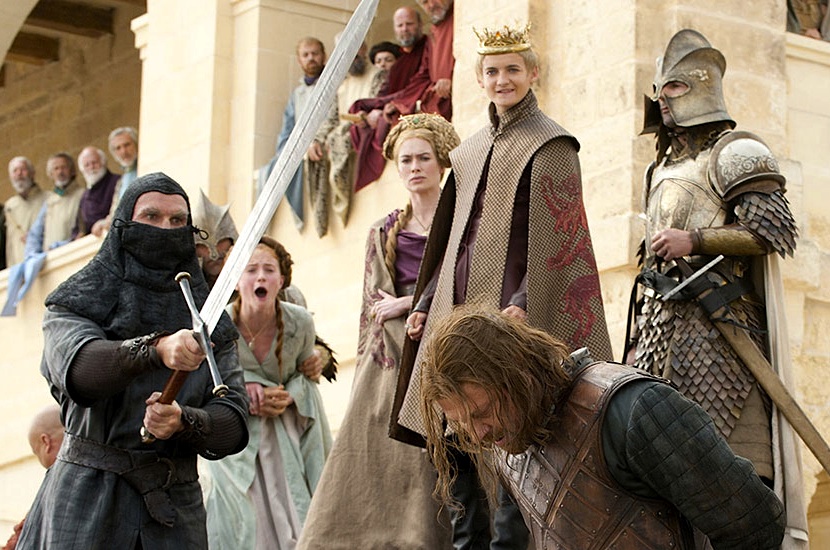
Ned Stark’s beheading — Game of Thrones

(Season: 1, Episode: 9 — “Baelor”)

“I hope that’s a rubber sword.”

After being betrayed at the hands of the Lannisters following Robert Baratheon’s death, Eddard Stark, Lord of Winterfell, is executed in front of a clamouring crowd at King’s Landing.

This was the audience’s first warning from author George R.R. Martin and show creators David Benioff and D. B. Weiss to stop watching if we did not approve of the death of main characters – because it is going to happen. A lot, evidently. There are three things make this so shocking: the shows willingness to kill off main characters without hesitation; the presence of Ned Stark’s two daughters, Sansa and Arya, at the execution; and King Joffrey’s ruthlessness and lack of mercy towards Stark, even after the latter had confessed to treason and sworn allegiance to the Lannisters. That Joffrey is a bugger. The only unsurprising aspect of this death is that it was at the expense of Sean Bean.

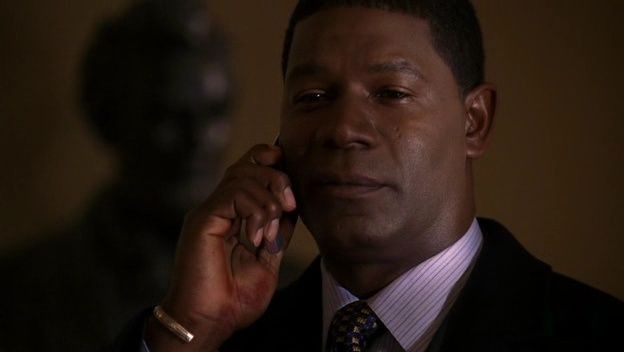
Jack is ordered to kill Ryan Chappelle — 24

(Season: 3, Episode: 18 — “Day 3: 6:00 a.m. — 7:00 a.m.”)

“Dude, i missed.”

As a result of their inability to find terrorist Stephen Saunders in time, Jack Bauer is ordered to kill CTU’s Regional Division Director, Ryan Chappelle.

Although he was never the most popular character in the show, the death of Ryan Chappelle was certainly despairing, not to mention unexpected. This cemented Bauer as a man willing to do whatever needed to be done in order to save the majority. The direct involvement of the President of the United States, David Palmer — he was the one who assigned the task to Bauer — makes this all the more shocking. Chappelle’s revelation that he had no friends or close family, along with Jack’s apology for failing Chappelle, only added to the sombre nature of this scene, telling fans of the show that, sometimes, the bad guys really do get their own way.

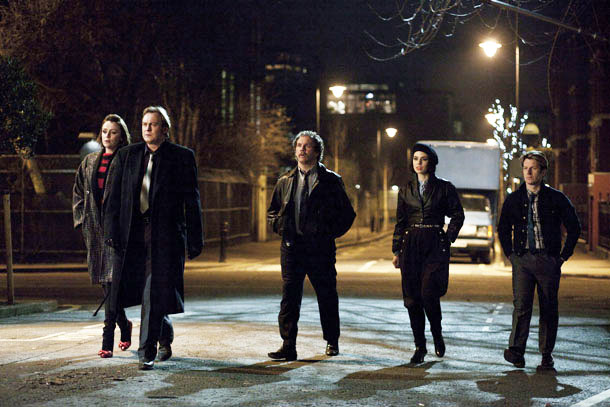
Life on Mars/Ashes to Ashes are both set in limbo — Ashes to Ashes

(Season: 3, Episode: 8 — “Episode 8”)

“Pub?”

It is revealed that Detective Gene Hunt and the rest of the police officers (including Alex Drake and Sam Tyler) are all dead and left lingering a form of purgatory.

This one caught me off guard, mainly because I was expecting a completely different ending (one which I cannot remember — it was three years ago). It turns out that every episode in both Life on Mars and Ashes to Ashes is actually a depiction of “restless” police officers who are, unknowingly, seeking a way to “move on” — symbolised by ‘The Railway Arms’ pub. Hunt is the only character who has known this from the beginning, and has been acting as a guide for newly bereaved officers. The limbo explanation is not the most shocking on the list, but it was a nice twist and a fitting end to the show.

Rick kills Shane — The Walking Dead

(Season: 2, Episode: 12 — “Better Angels”)

“That’s not how you play Statues!”

Knowing that a troubled Shane is about to kill him, Rick is forced to turn the tables and act first against his best friend.

The death of Shane at the hands of Rick is arguably the most shocking, and heartbreaking scene, to come out of The Walking Dead thus far. Again, the death of a main character plays a part in the shocking nature of this scene, but the emotional attachment to both characters is also a major player. The audience had known that something was brooding between the pair since the beginning of season one as a result of Shane’s affair with Rick’s wife Lori, but for it to result in the death of Shane was certainly alarming. The proof is in the pudding as far as ratings go, because as a result of Shane’s untimely demise, the episode after this one (Episode 13, “Beside the Dying Fire”) drew over nine million viewers, up from just under seven million this time around, and breaking all sorts of records at the time.

Dr. Thredson is Bloody Face — American Horror Story: Asylum

(Season: 2, Episode: 5 — “I am Anne Frank (Part 2)”)

“I’m too old for this.”

Lana discovers that the man who has helped her escape the asylum, Dr. Thredson, is actually the brutal serial killer, Bloody Face.

Throughout the second season of American Horror Story, the burning question had been: who is Bloody Face? Though many were accused, it was Kit Harrington, a young man blamed for the disappearance of his wife, who was singled out eventually. It sort of made sense (well, apart from the audience more or less knowing it was not Kit due to events broadcast at the beginning of the season) that he was the killer, right? Wrong. It turns out Bloody Face was actually the doctor assigned to help both Kit and Lana, Dr. Thredson. In case you have never seen American Horror Story before and are unaware, it really is, well — mental. This is definitely not the most shocking event on the list, but having Zachary Quinto portray an evil, nasty and downright creepy serial killer was a touch of genius at the pens of the writers.

The flashback is actually a flashforward — Lost

(Season: 3, Episode: 22/23 – “Through the Looking Glass”)

“I left my shaving kit on the island… WE HAVE TO GO BACK!”

Jack’s apparent flashbacks throughout the episode are revealed to be flashforwards, divulging that he and Kate have both escaped from the island somehow.

“We have to go back!” And just like that, Lost hits another home run. This one really blew me away. Known for its signature flashbacks throughout the first two seasons, and majority of the third, Lost creators J.J. Abrams and Cartlon Cuse, masterfully lulled viewers into a false sense of security as Jack’s flashbacks in the finale of season three turned out to be flashforwards, revealing that he and Kate (who is meeting Jack in the scene) were off the island. For the first time in 72 episodes, the audience finds out that some characters have left the island – the whole aim of the characters in the show in the first place. In true Lost fashion, viewers were left with an almighty cliffhanger, with so mention questions remaining unanswered: How did they get off the island? Who else is off the island? Why does Jack really want to go back? And so on. By a distance this is one of the most shocking and surprising moments on this list — it still gets me to this day!

David Palmer’s assassination — 24

(Season: 5, Episode: 1 — “Day 1: 7:00 a.m. — 8:00 a.m.”)

“I want to play a game.”

As he is discussing his memoirs with his brother, David Palmer is shot in the neck by a sniper, and killed.

The assassination of former President David Palmer kicked off season five with a massive bang. Not only was he very popular amongst fans (at least in my view), it also appeared as if the show was gearing up for another season dominated, in part, by his presence. But it was not to be. There are a number of elements linked to Palmer’s assassination which made it so shocking: the attempted murder of fellow prominent individuals in the show, Chloe O’Brien, Tony Almeida and Michelle Dessler (the latter was successfully eliminated) and the revelation at the end of the season that the man behind the orders was current President, Charles Logan. This one came out of absolutely nowhere, particularly for me as I did not watch the series when it aired (presumably word had gotten out that Dennis Haysbert, the actor portraying David Palmer, was leaving the show). 24 had a knack for surprises, but this was certainly one of the most shocking.

Carrie blows her cover in front of Brody — Homeland

(Season: 2, Episode: 4 — “New Car Smell”)

*I’m too good – she’ll never find out.*

Having been unsuccessful at getting Brody to admit he is working with a terrorist, Carrie storms into his hotel room and exclaims she knows who he is and what he is doing, before Brody is taken into custody.

It was fairly obvious that something similar to this was going to occur at some point over the course of the season, but not as early on as episode four. Carrie, believing Brody is on to her after a briefly showing anger during a conversation between the two of them, ends up storming up to his hotel room — with nobody else around — and blowing her cover in front of him. This was a tremendous moment in the shows short history, as the audience was provided with another amazing performance from Claire Danes (and Damian Lewis). As I mentioned a moment ago, this happened so early on in the season that it was hard to believe — at the time I wondered how the writers were going to fill another eight episodes. Thankfully the scene was more than warranted, as the happenings in this episode ended up prefacing events which occurred in the best episode of Homeland thus far — “Q&A”.

Ross says the wrong name at the altar — Friends

(Season: 4, Episode: 24 — “The One with Ross’s Wedding”)

“Wait… you’re not called Rachel?”

As he is in the middle of saying his vows during his wedding to Emily, Ross accidentally blurts out Rachel’s name instead.

Of all the names, Gellar. This was probably a lot more awkward than it was shocking, but it still was shocking nonetheless. The most unexpected moments are often left for the end of an episode, or better yet, the end of a season, and this one closed season five — leaving viewers reeling. The Ross/Rachel dynamic was more or the less the core of Friends throughout the shows existence, and I am willing to bet that the vast majority of fans did not want Ross to marry Emily when this episode aired (in 1999 I was watching Scooby-Doo, not Friends… I still watch Scooby-Doo), so when it looked like there was nothing else stopping the marriage from happening, Ross, in all his glory, surprised everyone — including himself — saving the day in return. Another great moment which kept the audience guessing and left them in high anticipation of season six, I am sure.

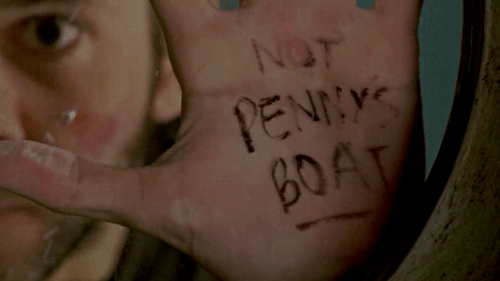
Charlie’s death — Lost

(Season: 3, Episode: 22/23 — “Through the Looking Glass”)

I have nothing.

Charlie sacrifices himself to save Desmond, after turning off the transmission blocker and potentially saving everyone else on the island.

The finale of Lost season three really was a shocker alright. In fact, this particular moment is the most shocking in my experience of watching television shows, more so due to who was involved and what was happening to him, rather than it happening out of nowhere. Around the middle of season three it became apparent that Desmond could see into the future and had foreseen Charlie’s death. After Desmond had saved Charlie various times, everyone (well, me) began to believe that Charlie no longer had death in his foreseeable future. That was, until that damn Jack needed somebody to swim to an underwater Dharma station and turn off the transmission blocker. But again, after Charlie had swam down (followed by Desmond) and turned off the jammer, it appeared that he was in the clear. That was, until that damn Mikhail started flooding the station with water. Unselfishly, Charlie locked the door of the room he was occupying in the station in order to contain the flooding, whilst at the same time warning Desmond that the boat near the island was not Penny’s. A highly emotional moment. Somebody pass the tissues.

The end of Matt Smith as The Doctor — Doctor Who

(Christmas Special 2013)

It has not happened yet, but when it does I will weep.

I know Matt. I feel the same way.

So there they are, some of the most shocking television moments I have witnessed. Little Mo clobbering Trevor with an iron was another one that did not quite make it. As I wrote earlier, I have not seen every television show that has ever existed, and therefore I imagine there will probably be a second part to this blog post when I have watched more — hopefully including scenes from shows like Boardwalk Empire, Sons of Anarchy and Dexter.

Comment below with the small screen moments that shocked you the most if you like!

CBF’s Genre Toppers: Comedy

After spending most of the day trying to fix my laptop (and succeeding, evidently) I think some laughs are in order. Therefore, it is time for five funny comedies! Everybody loves to laugh and there are not many better places to go than the cinema to be prompted in that direction. I have been a fan of comedy for as long as I can remember and the great thing about the genre is that it does not discriminate — everybody enjoys it.

Anyway, let the hilarity ensue!

Johnny English (2003)

I am okay with this.

Released in 2003 and directed by Peter Howitt, Johnny English stars the incomparable Rowan Atkinson as the title character and the only British spy left in action after an attack on MI5. English — confident, yet lacking in the intelligence department — is tasked with finding the perpetrator of the attack and recovering the stolen Crown Jewels, with assistance from the far more capable Interpol Agent Lorna Campbell (Natalie Imbruglia).

This is the one of the first comedy films that I can remember watching and laughing uncontrollably at throughout. Rowan Atkinson really is a comedic genius, with everything from his facial expressions to his timing absolutely spot on here. The film acts as a sort of parody of James Bond, and Atkinson is exceedingly good at making the audience root for a rather unintelligent, out-of-depth British spy. There are a few particularly funny scenes (the sewers), but in general the film is bursting with laughs. Natalie Imbruglia does a fairly good job at portraying English’s more sensible partner, although the apparent romance between the two is a little far-fetched (I guess that is comedy though, right?). John Malkovich hits just about all the right notes as the villain of the piece with his dodgy French accent (it only adds to the humour) and sublime hair.

Johnny English does not attempt to take itself too seriously and this works in its favour as the film delivers barrels of laughs and entertainment.

Silver Linings Playbook (2012)

“Come on! Bin bags make great clothes, we could sell millions of these!”

The first film to be nominated in all four acting categories at the Academy Awards since 1981, David O. Russell’s Silver Linings Playbook stars Jennifer Lawrence and Bradley Cooper as recently widowed sex addict Tiffany Maxwell and bipolar Pat Solitano, respectively. After being released from a psychiatric ward, Pat’s primary aim is to reconcile with his ex-wife who wants nothing to do with him. Meanwhile, having just lost her husband Tiffany has her focus on an upcoming dance competition. After the two meet, they agree to help each other out with Tiffany ensuring Pat’s letters reach his ex-wife, as long as he partners Tiffany in her dance competition.

Well that was a long synopsis. The first thing to say here is Jennifer Lawrence is the greatest living being and Bradley Cooper have tremendous chemistry which more or less makes this film as good (and funny) as it is. They work so well together, in fact, that they are working together on another two future films, one of which David O. Russell is back directing. Lawrence is absolutely on fire at the moment (no pun intended) and can do wrong, and Cooper has put in a steady stream of really great performances in recent films such as, The Place Beyond the Pines and Limitless. It is no surprise, therefore, that the foundation of all things good about Silver Linings Playbook is in the dynamic between the duo. Combine that with a witty, energetic and sensitive script, along with magnificent supporting actors like Robert De Niro and Jacki Weaver and you have a very funny but also very moving film.

Much has been said about this film’s careful depiction of mental illness and how positively it is put across on-screen, but purely in terms of comedy, Silver Linings Playbook is up there with the funniest films in recent years.

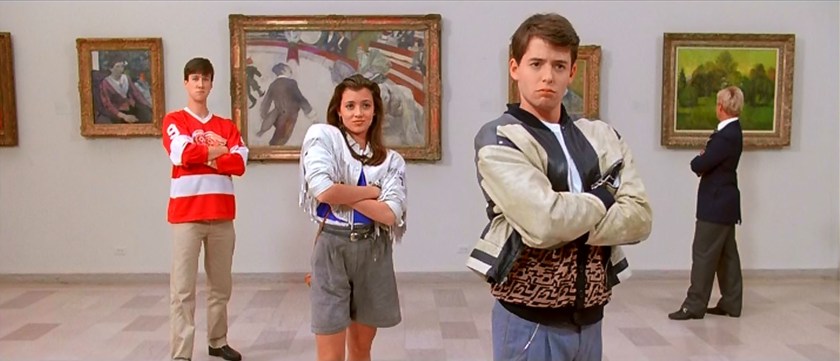
Ferris Bueller’s Day Off (1986)

“For the hundredth time, the camera’s this way!”

Next, we take a trip back to 1986 where Ferris Bueller’s Day Off has just graced cinemas around the world, garnering much critical acclaim. Matthew Broderick stars as Ferris Bueller, a teenager who decides to take a day off school (imagine that?) with his girlfriend Sloane (Mia Sara) and best friend Cameron (Alan Ruck), where they go out and explore their freedom whilst simultaneously attempting to avoid the school principal in any way they can.

It took me a long time to get around to seeing this film, which is regrettable because it is one of the best feel-good comedies out there in my view. In terms of sheer laughs, Ferris Bueller’s Day Off probably is not the funniest on my list, but it certainly is the funnest. Be it the inventive ways the trio try to avoid the principal or the principal himself’s various ordeals throughout, this film grasps the ‘be positive’ attitude more than any other I have seen. Broderick, Sara and Ruck work well together in the three prominent roles, with Broderick keeping the audience on their toes as he breaks the fourth wall a number of times — this I thought was an interesting ploy used by director John Hughes and one which worked well. Jeffrey Jones is hilarious as the principal (or ‘Dean of Students’) and makes a more than adequate nemesis opposite the trio.

John Hughes has a brilliant knack for comedies and Ferris Bueller’s Day Off is definitely one his more heartfelt, if not one of his funniest.

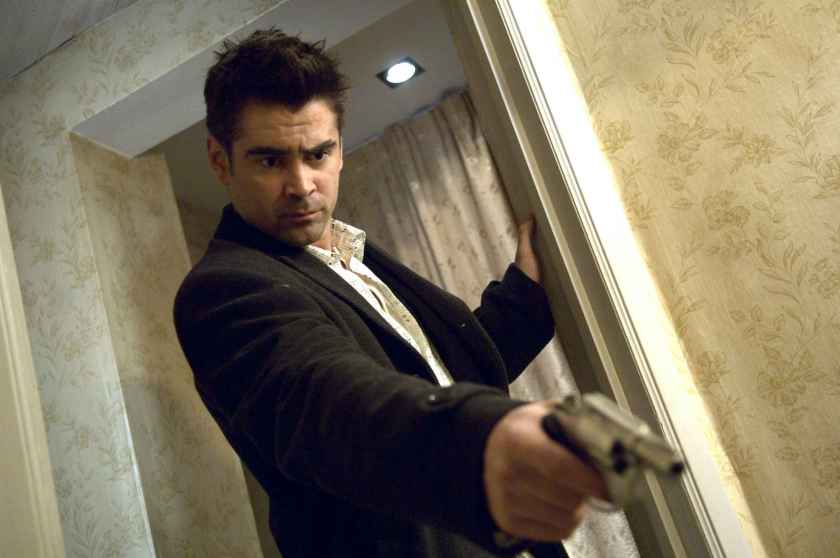
In Bruges (2008)

Directed by Martin McDonagh, In Bruges was released in cinemas back in 2008. It stars Colin Farrell and Brendan Gleeson as two Irish hitmen who are relocated to Bruges, Belgium after a hit goes wrong. But what they believe to be another job turns out to be something else entirely.

“Man, you’re small.”

Since its release in 2008, In Bruges has gone on to claim cult status and is regarded as a classic by many. McDonagh’s brand of black comedy is in full force here, and both Colin Farrell and Brendan Gleeson deliver it with ease. The two leads are hilarious in their roles, playing off each other to great effect and both generating much empathy from the audience, particularly Farrell whose character, Ray, has played an accidental role in the murder of a child. McDonagh’s sense of direction comes through in abundance here, with each character playing an important part in the film and each scene executed with finesse. The Bruges setting is beautiful and greatly adds to the poetic nature of the script and the fairy tale aspect of the film. Although this is primarily a comedy, there are a few touching moments which take the film above and beyond the comedy genre. Ralph Fiennes and Clemence Poesy are both effective in, metaphorically, very different supporting roles — the former about order and conviction while the latter exudes freedom and new beginnings.

In his directorial debut, Martin McDonagh has created a gem in In Bruges: often hilarious and occasionally touching, this is a winner.

O Brother, Where Art Thou? (2000)

O Brother, Where Art Thou? opened in cinemas in 2000 and is directed by the Coen brothers, Joel and Ethan (although Ethan is uncredited). Set amid the Great Depression in 1930s America, it stars George Clooney, John Turturro and Tim Blake Nelson as three convicts — Ulysses, Pete and Delmar, respectively — who escape capture in order to search for hidden treasure, whilst evading a lawman who is in pursuit.

“My ears are burning. Can anybody smell smoke?”

This is just fantastic. I first watched this in school (school finally comes up trumps) and have been a big fan ever since. The rural Mississippi setting creates a dusty, woody atmosphere (which is by no means a bad thing), shoving the three leads right into the heart of the hardships of the depression in 1930s America. With nothing but themselves and their brains — well, Ulysses’ brain — to keep them on the correct path, they must rely on trust and luck more than anything else. The Coen brothers, as I have mentioned in one of these blogs previously, have an exceptional eye for selecting locations to film and, more than any other film on this list, the dusty plains of rural Mississippi are unequivocally suited to the mood and script of O Brother, Where Art Thou? In terms of the script, it is witty, wacky and insightful and is delivered with nothing but enthusiasm by Clooney, Turturro and Nelson. Of course, I cannot forget about John Goodman, who is very funny playing the brash, obnoxious Bible salesman “Big Dan” Teague. There are plenty of laughs woven throughout the film and they all hit the mark without going overboard — this film is out there at times, but not too far out there. Finally, the soundtrack is rich and hugely satisfying, giving the film a nice twang.

O Brother, Where Art Thou? is another corker from the Coen brothers, full of quips and ambition. It is a triumph in filmmaking in my opinion.


Here are a few honourable mentions, films that I really like but not quite as much as the aforementioned five:

Planes, Trains and Automobiles (1987) — The original comedy road trip film, Planes, Train and Automobiles sees Steve Martin and John Candy unwittingly team up in order to find a way home for Thanksgiving, but not without a few mishaps on the way.

American Pie (1999) — The raucous teen comedy which paved the way for more like it, the original American Pie is by far the funniest and probably the least offensive. You do not need to be offensive to be funny, right?

Bruce Almighty (2003) — Jim Carrey is in full comedic flow (facial expressions and all) in Bruce Almighty as he portrays an unlucky guy who is given God’s job for a week. Chaos, commence.

Dodgeball: A True Underdog Story (2004) — Alongside Johnny English, Dodgeball: A True Underdog Story is one of my long-standing favourite comedy films, and it is still as funny now as it was back in 2004. Yes, it is still dodging those wrenches.

The Hangover (2009) — Hopefully Kermode won’t see this.

Which films make you laugh the most?

CBF’s Genre Toppers: Thriller

Today I am focusing on some of my favourite films in the thriller genre. Just before I begin, I would like to be clear on how I make the distinction between thriller and action, because sometimes they seem to mesh into one. This is just my own personal way of telling both genres apart and there really is no right or wrong answer here — you may think something completely different!

Firstly, the main similarities between the two genres are the typically a fast-paced plot and, more often than not, a heroic character fighting off a villainous one in one way or another. For me, the separation tends to occur in the tone of the film. For example, a thriller seeks out suspense and jeopardy as the driving force, whereas an action film is all about excitement and liveliness. Also — and again this is just the way I see it — action films tend to be more light-hearted than thrillers (not always, but generally).

Anyway, on to five greats!

Skyfall (2012)

The newest film on the list, Skyfall was released in October 2012 and declared instantly by the vast majority of viewers to be the best Bond film ever. Helmed by Sam Mendes and with Daniel Craig reprising his role as James Bond, the film follows Bond’s relationship with M (Judi Dench) throughout his investigation of a violent attack on MI6 at the hands of former agent Raoul Silva (Javier Bardem) who is out for revenge.

“Looks like it’s gonna rain.”

As I mentioned earlier, Skyfall has been touted as the best Bond film ever by audiences and critics alike, and has now grossed well over $1 billion which makes it — as of writing — the eighth highest grossing film of all time. That tells you that Sam Mendes done something right. In fact, he done just about everything right in this emotional roller coaster ride. For the first time, the audience is invited into the ins and outs of the relationship between Bond and M which makes this instalment more weighty and heartfelt, yet it still maintains that slickness that has always been associated with the franchise. Mendes has a stellar cast at his disposal — joining Daniel Craig (who plays his best Bond to date opposite Judi Dench, in my opinion) in Skyfall are newcomers to the franchise Ralph Fiennes, Ben Wishaw and Naomie Harris who each add their own nuances to the film (Wishaw is particularly good as Q). However, the star of the show is Javier Bardem with his charismatic, extravagant portrayal of villain Raoul Silva. On a par with Mads Mikkelsen in Casino Royale (we will just ignore Quantum of Solace for now) Bardem is hugely effective opposite Craig and the two flourish as a result.

Although Bond has become a genre on its own essentially, Skyfall claims a spot in my top thriller films for its crisp, free-flowing script and interesting characters.

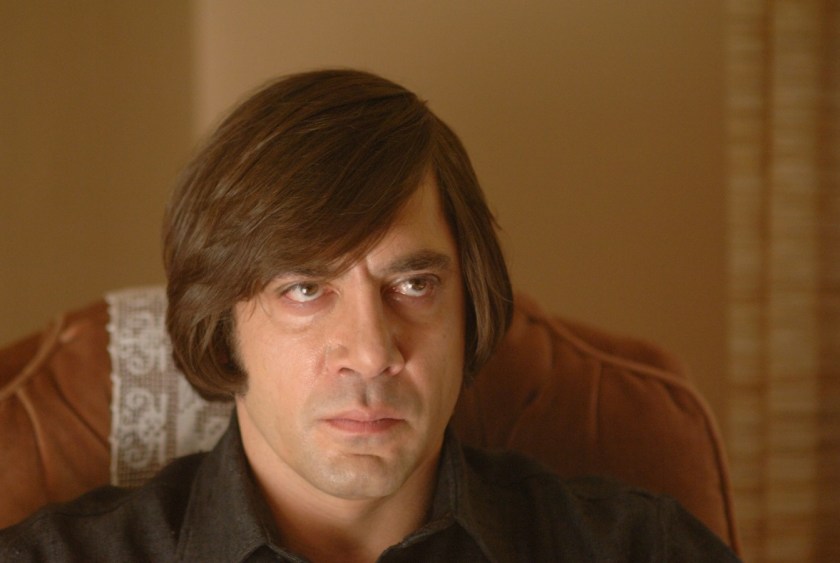
No Country For Old Men (2007)

“Do not insult my hair again.”

No Country For Old Men is an Academy Award winning 2007 film directed by Joel and Ethan Coen (or just the Coen brothers). The plot surrounds Josh Brolin’s character, hunter Llewelyn Moss after he uncovers over $2 million worth of cash at a drug deal gone wrong and is pursued as a result by vicious hitman Anton Chigurh (Javier Bardem) who has been hired to recover the stolen cash. Meanwhile, almost retired sheriff, Ed Tom Bell (Tommy Lee Jones) finds himself thrust directly into the cat-and-mouse chase between the two.

It is not often the Coen Brothers get it wrong and, true to form, No Country For Old Men is a knockout. This marks Javier Bardem’s second appearance on my list, and for the second time he steals the show. Bardem is excellent at portraying a psychotic, emotionless killer and his aura throughout the film adds to the creepy, on-the-edge, thriller-ish atmosphere. Both Josh Brolin and Tommy Lee Jones are terrific in their depictions of a desperate war veteran and a straight-to-the-point county sheriff respectively. The 1980s Texas setting truly adds to the grit (wink) and once again proves just how good a pair of eyes the Coen Brothers have at selecting locations for their films — have a look at Fargo and O Brother, Where Art Thou? if you do not believe me.

No Country For Old Men is captivating and intense, just two of the many characteristics which make it a very enjoyable thriller.

Argo (2012)

“Screw the Oscars, man”

Ben Affleck’s third directorial feature, political thriller Argo, opened in cinemas a few weeks before Skyfall in October 2012 and stars Affleck, Alan Arkin and Bryan Cranston. The film is a dramatisation of the Iranian hostage crisis in the 1980s where six fugitive American diplomats require assistance in the form of extraction out of Iran from CIA specialist Tony Mendez (Ben Affleck).

I cannot wait for Affleck’s next film, because this one is absolutely outstanding. Argo defines the thriller genre — every characteristic required to make this film a success is in there. Gripping, intense, polished and stylish, Argo delivers on all fronts. For a political thriller, the plot is not difficult to follow, yet it remains shrewd and without any glaring mishaps. One of the more surprising elements here, particularly following the terrifying opening sequence, are the pockets of dark comedy splattered throughout the film which by no means feel out of place. Affleck manages to equate the frantic goings-on with enough dark humour to ensure the film does not become too lifeless or overbearing. Each of the performances from the cast are solid, with Alan Arkin standing out in particular, but the constantly flowing nature of the plot is the key to this film’s success.

How Ben Affleck was snubbed by the Oscars (he did not receive a nod in the Best Director category) is beyond me. Argo is a must-see film and definitely one of the best released in 2012.

Inception (2010)

Directed by Christopher Nolan, the summer blockbuster of 2010, Inception, stars a jam-packed ensemble cast lead by Leonardo DiCaprio, who receives his support from the likes of Ellen Page, Tom Hardy, Joseph Gordon-Levitt, Cillian Murphy and Marion Cotillard (the list goes on). DiCaprio plays Dom Cobb, an extractor — or plainer terms, a thief — who enters his subject’s dreams in order to carry out an extraction. When he is offered the chance to see his children again, Cobb must assemble a team of specialists together in order to plant an idea into his target’s (Cillian Murphy) subconscious — a process known as inception.

“My bad.”

I am probably going be referring to film critic Mark Kermode a lot during this next paragraph, because his review of Inception is one of the best I have heard. Massive summer blockbusters are sometimes tarred (often justifiably) as being big money-making schemes with very little for their audience, who have become accustomed to seeing films where absolutely nothing happens other than some pointless, soulless action sequences (I am looking at you Michael Bay). Kermode attributes this to a small percentage of filmmakers perhaps assuming their audience is too ‘dumb’ to be able to watch a film and at the same time… think. Yes, think. It really is absurd, but it does appear to happen. Look at Transformers for example: the whole franchise is nothing more than robots hitting each other, which is fine once (I suppose), but not over and over again until it becomes so intolerable it hurts to watch. Inception, however, is a perfect example of a massive blockbuster that provides enough action and thrills to appease everyone, but also makes its audience think during the film — and it worked, because the film has taken over $825 million. Why? Because people appreciate that Christopher Nolan is looking out for his audience and making films that will challenge them, but that are also highly enjoyable (The Dark Knight trilogy being another example). Also, because Inception had a number of different layers to it (both literally and figuratively) and because people enjoyed it, some then had to go back and see it again in order for them to fully understand it! That does not mean those people are dumb, quite the opposite in fact: it means they are thinking.

But I digress. Inception is a show-stopping thriller stuffed full of ideas, great performances, amazing visual effects, comedic moments and even some emotion (look it up, Bay).

Blood Diamond (2006)

“Is my accent really that bad?”

The oldest film on my list (albeit not very old), Blood Diamond is another political thriller starring Leonardo DiCaprio. This time he accompanied by Djimon Hounsou and Jennifer Connelly in a Sierra Leone setting. At the height of the Sierra Leone civil war (1996-2001), smuggler Danny Archer (DiCaprio) teams with a local fisherman (Hounsou) and a reporter (Connelly) in an attempt to seek out and gain possession of a large diamond, with each of the three boasting different motives.

Leonardo DiCaprio (incidentally, my favourite actor) gets a bad rap for his South African accent in this film — it sounds great to me, but maybe I am touch biased. I doubt that. The performances are very strong, with all three protagonists providing a combination of fury, optimism, emotion and anguish to accompany the desperate situation they find themselves in (particularly DiCaprio and Hounsou). The story moves at greater-than-steady pace which provides the thriller-ish aspect which the film has in abundance, with Edward Zwick’s narrative ensuring the audience remains grasped throughout. Part of the formula which contributes to Blood Diamond’s success in my eyes, is its realism as it depicts some of the hardships most civilians staying in Sierra Leone (and elsewhere) were going through during the civil war. A few of the scenes are harrowing, not in a particularly gory way, but because they dramatise atrocities occurring around the world. I would say, however, that Zwick does not make these scenes exploitative in away way — they are an essential part of the story. On a last note, the African setting is absolutely stunning and almost becomes a character itself during the film.

Blood Diamond really hits home in its realistic nature, and at the same time serves up a gripping tale of two very different men with one common goal.


And now for some honourable mentions:

Se7en (1995) — This is a very accomplished horror story about two men tracking down a serial killer who leaves them clues in the form of the Seven Deadly Sins… only, with people involved. Morgan Freeman and a young Brad Pitt excel in their roles.

The Talented Mr. Ripley (1999) — At times you get obsession, then you get Matt Damon in The Talented Mr. Ripley. What opens as a fairly innocent thriller closes with just enough menace to fill anyone for a day. Or a lifetime.

Inside Man (2006) — A very underrated film in my opinion, Inside Man sees the charismatic Denzel Washington tasked with rescuing a bunch of civilians caught up in a bank robbery masterminded by Clive Owen. Very intriguing action with a wonderful twist.

Taken (2008) — I think just about everybody has seen Taken — it’s on the TV at least once every week (and weirdly, it costs exactly three pounds in just about every shop in Scotland). Often brutal, always entertaining and the birth Liam Neeson: action star.

Wrecked (2010) — A small, independent thriller starring Adrien Brody as a man who wakes up in the middle of a forest after a car accident he cannot remember anything about. Interesting, dramatic and unique.

Source Code (2011) — This may make an appearance on another list, but as a thriller it just about misses out my top five. Therefore, I will refrain from saying much more for now (but it is very, very good).

What are some of your favourite thriller films?


(Note: Mark Kermode reviews each week’s new film releases between 2-4pm on Fridays with Simon Mayo on BBC Radio 5live, so check them out if you like films, or flappy hands. You will not regret it.)

CBF’s Genre Toppers: Superhero

Superhero films, much like any other genre, have been around for decades — dating back to around the Second World War and even further according to some accounts. However it has only really been since the turn of the 21st century that superhero films have found their place in the cinema, where they are now some of the most successful films ever made, both critically and commercially.

The following are five of my favourite superhero films, all of which, unsurprisingly, were produced in the last decade.

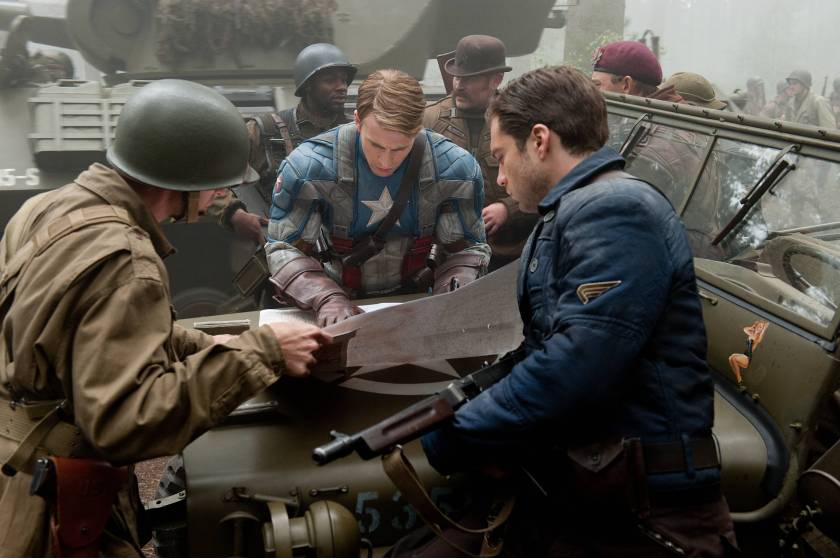
Captain America: The First Avenger (2011)

“So where’s the nearest Subway?” “Dude, it’s 1942.”

Released in 2011 as part of the Marvel Cinematic Universe and one of the prequels to The Avengers, Captain America: The First Avenger stars Chris Evans as Steve Rodgers, a small man who is transformed into a super-soldier known as Captain America in order to aid the war effort (the film is set during the Second World War — which now has two mentions already in this post!). With the assistance of Hayley Atwell and Tommy Lee Jones, Captain America must prevent Hitler’s Head of Arms — played by Hugo Weaving — from acquiring unlimited energy to fuel masses of highly volatile weaponry.

Although not the most entertaining Avenger — we’ll see him later — Captain America, at least in my eyes, is the most interesting. Unlike the other films under the Marvel umbrella, Captain America: The First Avenger is set in the past which clearly gives it a distinction the other films do not have. Director Joe Johnston administers a much-needed injection of colour and vibrancy to the Captain America franchise, utilising the war setting magnificently, attaching emotion to the film and endowing depth to each individual character. As opposed to other superhero films, for example Thor, the plot is not cut-and-dry and the nostalgic setting combined with very worthy performances from the cast amounts to an entertaining film.

Captain America: The First Avenger is underrated in my opinion — there is enough action, depth and freshness for it to be placed up there among the best superhero films of recent years.

The Avengers (2012)

What is a best-of list without the biggest superhero film of all time? Having been brooding around and popping up throughout each of its predecessors, The Avengers finally hit screens in the summer of 2012 and blew every other superhero film out of the water financially. Directed by sci-fi mastermind Joss Whedon and stuffed full of all the usual Marvel superheroes (Iron Man, Thor, Captain America, Hulk and so on), The Avengers follows, well… the Avengers on their quest to stop the evil Loki (Tom Hiddleston) and his army of monsters from forcing the Earth under his control.

When I went to see this film, I experienced it in 3D and with moving chairs and all sorts. While the 3D was disappointing, the whole moving chairs phenomenon really added to what is a film full of massive set-pieces (New York, for one) and action sequences. Whereas Captain America beforehand was a little tentative in regards to action and more focused on the story of one man, The Avengers is all about running, jumping, flying, exploding, crashing, banging and comedy. Whedon prevails through the daunting task of getting all of the characters enough screen time to warrant their appearance in the film, as everyone from Iron Man to Phil Coulson to Black Widow plays an essential role. Collectively, the performances from the cast are humorous and serious when need-be (mainly humorous though), but the stand out actor in this film is Mark Ruffalo, who is outstanding and by far the best Hulk yet.

Overall, The Avengers amounts to just about everything you expect when you go to see a superhero film at the cinema. It is extremely fun.

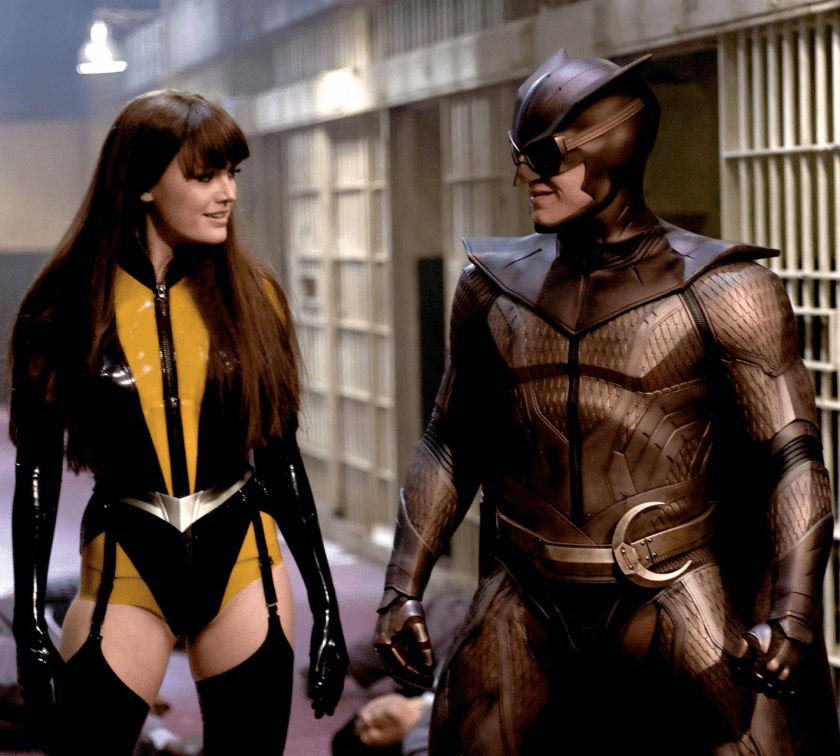
Watchmen (2009)

“I’m telling you, i am the Batman.”

After the publication of the comic and years of development issues, Watchmen finally graced cinema screens in 2009 under the guidance of Zack Snyder. Starring an ensemble cast consisting of the likes of Patrick Wilson, Jackie Earle Haley and Malin Akerman, the plot is set in an alternative Cold War timeline in 1985, where a group of retired vigilantes are the targets of a conspiracy in the United States, forcing them to band together one more time to uncover and expose the shifty goings-on.

Not long removed from his bloody, visual epic 300, Zack Snyder carries some familiar elements with him in the creation of Watchmen: it is one of the most violent films the superhero genre has seen (in that sense, it stays truer to the comic) and is also one of the most visually intriguing, feeling like you are genuinely watching a graphic novel play out on-screen. When it was released the film divided opinion among audiences, with some critics proclaiming that it is too close to the source material and thus the plot is too contrived and thus unable to breathe. Others appreciated the true nature of the film and that it did not shy away from the violence depicted in the graphic novel, which many superhero films tend to do in order to reach a wider audience (in terms of cinema, an 18 certificate alienates a large percentage of the potential audience a film may acquire had that film received a 15 rating). For me, having never read the Watchmen graphic novel, the film is a success and the characters — although blotchy in places — are encapsulating, particularly Rorschach who is portrayed sublimely by Jackie Earle Haley.

Visceral and ambitious, Watchmen successfully offers a different perspective on the superhero genre in the 21st century.

Iron Man (2008)

“I need to pee again.”

The first instalment in the Marvel Cinematic Universe, Iron Man, hit cinemas in 2008 to widespread critical acclaim. Directed by Jon Favreau and starring Robert Downey Jr as extravagant billionaire Tony Stark, the film follows Stark’s unavoidable creation and eventual utilisation of the Iron Man suit, along with his new-found philosophy to use the suit against evil.

Iron Man is as close to a perfect superhero film as you can get, without actually being perfect: a charismatic lead, a simple-yet-effective plot, a smart and witty script and entertaining action. Unfortunately its only downfall is a significant one — the villain. Jeff Bridges does a fine job as the sleazy, egotistical partner-turned-adversary to Iron Man, but the character itself is not very interesting and is flawed in places. Regardless, the focus of the film is on Robert Downey Jr and his portrayal of the title character. Downey delivers a cocky, effortless and witty performance, yet still provides enough humanity and emotion to make the audience sympathise with an otherwise pretty obnoxious billionaire. Supporting characters like Pepper Potts (Gwyneth Paltrow) and Lt. Colonel James Rhodes (Terrence Howard) offer the extra support Stark requires in order to achieve the correct balance between overly brash, and sentimental. The two Iron Man sequels are not quite as good as their predecessor, but it would be a mean feat to achieve such status again.

The first offering from Marvel and by far the best, Iron Man almost has the correct concoction of elements to create the perfect superhero film.

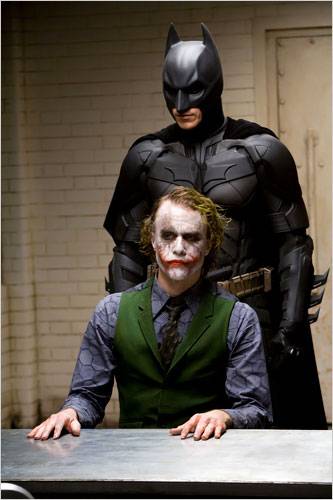
The Dark Knight (2008)

“This isn’t awkward at all.”

Although I have The Dark Knight stated above as my favourite superhero film of all time, the trilogy as a whole should be at the summit. The only reason they are not is because this post would probably become a bit repetitive and boring. It would be like watching Saw 4 and then realising Saw 5 is on its way. So while much of the focus here will be on The Dark Knight, I am really including Batman Begins and The Dark Knights Rises as my top superhero films of all time too.

Directed by the majestic Christopher Nolan and released in 2008, The Dark Knight stars Christian Bale as Bruce Wayne/Batman and follows on from the events in Batman Begins. Wayne (as Batman), teaming with police lieutenant James Gordon (Gary Oldman) and district attorney Harvey Dent (Aaron Eckhart), take down an unrivalled number of criminals and bring them to justice. This causes The Joker (Heath Ledger) to devise a plot aiming to bring Gotham to its knees and reduce its heroes to nothing more than the level of The Joker himself.

I mentioned just a moment ago that Iron Man comes so close to being the perfect superhero film. For me, The Dark Knight fills that spot. Everything about this film hits the bullseye. From the dark, unnerving atmosphere to the themes embroidered into the plot to the incomparable performance from the late Heath Ledger as The Joker (a performance that earned him an Academy Award in 2009). Ledger’s Joker is unpredictable, viscous and intelligent, and is arguably the greatest villain of all time in a superhero film (you will get no argument from me though). Although Ledger steals the show, Christian Bale more than holds his own as Batman — cool and stylish on the outside, but unsure and under pressure on the inside. The two bounce off of each other with immaculate chemistry. The sheer volume of characters in the film has been questioned by viewers (such as the need for Aaron Eckhart’s Harvey Dent), but for me every character plays an essential part to the story — incidentally, Maggie Gyllenhaal is far more suited to playing Rachel Dawes than Katie Holmes was in Batman Begins. Hans Zimmer once again provides the haunting soundtrack, which adds more substance to the already eerie atmosphere.

A film about values and hope, The Dark Knight is not just a great superhero film, it is an outstanding piece of cinema. The Dark Knight is the superhero film we needed, but probably not the superhero film we deserved. Sorry, I just could not help myself.


Okay, so now for a few honourable mentions. These films are great too:

Batman (1966) — A feature-length film inspired by the Batman television series, Batman: The Movie takes more of a comedy angle than a violent one, with Adam West and Burt Ward reprising their roles as Batman and Robin respectively. Comical, over-the-top fun.

The Incredibles (2004) — The only animated film on the list, The Incredibles achieved universal acclaim from critics and audiences alike after its release. An entertainment-fest about a family of superheroes out to save the world.

Kick-Ass (2010) — Right from the opening scene (poor kid) all the way to the closing dialogue, Kick-Ass is a hilarious superhero comedy for an older audience. Nicholas Cage is actually good in this film. Just about.

Thor (2011) — A few eyebrows may have been raised when the director of Hamlet and Henry V was announced as the man at the helm of the superhero film, Thor, but Kenneth Branagh answered any questions by providing a flashy, amusing and solid re-introduction to the Thor character.

X-Men: First Class (2011) — This was pretty close to getting into my top five. Not only is the film encapsulating, energetic and youthful, it is also extraordinarily performed — particularly James McAvoy as Professor X and Michael Fassbender as Magneto.

CBF’s Genre Toppers: Horror

Horror is a vast genre that encompasses a wide variety of sub-topics and thus it is difficult to whittle down such a large volume of films to a few personal favourites. Therefore, rather than pick five horror films of similar ilk, I have decided to select five different styles of horror film. Of the five, some will have similar characteristics, whilst others will not — that is just the nature of horror — but this way I have at least attempted to vary each pick.

I would also like to mention that I’m fairly new to the horror craze having not really been attracted to the genre before 2010. But everything is well now, I have seen the light. Or dark, I guess.

Eden Lake (2008)

Eden Lake is a British horror film released in 2008 starring Kelly Reilly and Michael Fassbender as a couple seeking a peaceful, idyllic retreat. After settling in Eden Lake in the English countryside, their hopes for a relaxing break are quickly dashed when a group of unruly, violent youths decide to interfere.

This was filmed and released before Fassbender had really hit the big time and both his performance alongside Kelly Reilly’s (who recently starred in Flight with Denzel Washington) are one of the two reasons behind the success of this film. Not only are their performances convincing — which is often lost in horror — they are also harrowing, and this correlates nicely with the second proponent of this film’s success: it really is a horrifying watch. Rather than relying on scares, director James Watkins focuses on realism — even though the events of this film are somewhat rare, their depiction is realistic and they unfortunately do occur. The horror is delivered through the authentic nature of the film and, as a result, it is often an agonising and disturbing watch. Although it is gory at times, the gore is not over the top and did not take my focus away from the film, which again can be a detriment to some horror outings.

This is the kind of horror that gets to me most, when the events happening throughout the film are not illogical or far-fetched, but instead plausible, and that is what Eden Lake is all about.

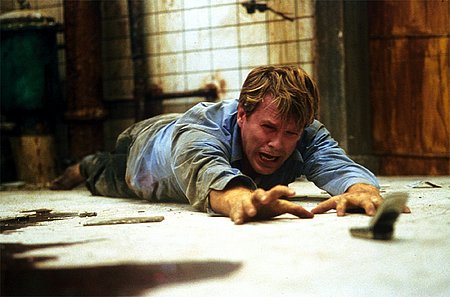
Saw (2004)

“I’m so hungry — I just want to order a pizza!”

From the realistic to the highly unrealistic, 2004 delivered the beginnings of the gruesome, and eventually repetitive, Saw franchise. Although the Saw films did in the end amount to gore and nothing else, the original Saw — filmed independently before being swept up by Lionsgate — was not only intriguing and encapsulating, it was also smart. That is correct, a smart horror film — they do actually exist.

I do not think I need to outline the plot of Saw as I imagine most people who are reading this are already aware of the premise (two men stuck in a room: how did they get there, who put them there, what have they got in common? and so on). All I will say is that this is a prime example of a horror film that can appeal to both fans of blood and guts and also to those who want more of a challenge when watching a film. It is without doubt a shame that the later additions to the franchise were so disappointing, but at the end of the day those films all stemmed from the success of the first — so I cannot complain really.

Not as gory as the later films, but far more intelligent and gripping, director James Wan has created a genius piece of cinema in regards to Saw.

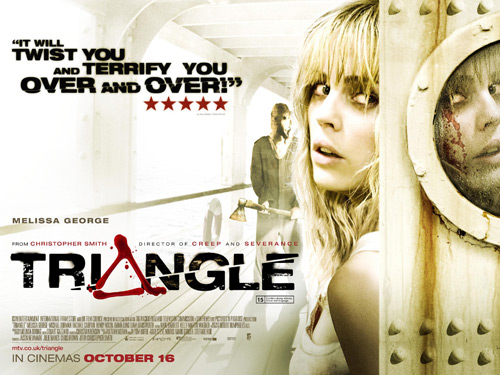
Triangle (2009)

Another British horror film, Triangle, directed by Christopher Smith and starring Melissa George and Liam Hemsworth, is of psychological descent. Released in 2009, the film follows Melissa George and a group of friends who get caught up in an electrical storm while on a boat trip. Fearing for their lives, they spot an oncoming cruise ship and climb on board… but all is not what it seems.

I had never heard of Triangle before I was recommended it by a friend — it was not commercially successful at all, grossing around a measly £260,000 on its opening weekend. I can only attribute this to a lack of publicity for the film or not enough people knowing about Triangle, because critically it was lauded. Melissa George is tremendous as the lead and the likes of Liam Hemsworth solidly support her. The twist completely caught me off-guard and film as a whole is scary and haunting. Smith manages the psychological aspect of the horror exceptionally well, ensuring the pace of film is upheld and there is no lull in the proceedings.

Daring, thought-provoking and creepy — Triangle exemplifies great psychological horror.

The Texas Chain Saw Massacre (1974)

“I’m here to apply for the vacant lumberjack position.”

Billed as one of the most shocking films ever made when it opened in cinemas in 1974, The Texas Chain Saw Massacre is still as scary and intense in the present day. The film follows a group of friends who find themselves being hunted by a family of maniacal cannibals out in rural Texas. Directed by Tobe Hooper and starring a relatively unknown cast at the time, the film was banned in many countries across the world as it was claimed the film was too difficult for audiences to watch.

Everything about this film is terrifying: the antagonists, the setting, the atmosphere, and the music all adds up to an extremely chilling and unnerving experience. Perhaps the films’ greatest achievement is hardly using any violence whatsoever to create the horror, but rather forcing the audience into an uncomfortable viewing environment as a result of its consistently edgy plot created by a sense of helplessness the characters feel and the predicament we see them in. Then there is also that scene in the minivan with the hitchhiker — what is going on there? This film has a huge upside in that it is timeless. There have been many remakes, sequels and prequels (Texas Chainsaw splattered cinemas back in January of this year) but the original remains the cornerstone of horror in my opinion.

The Texas Chain Saw Massacre has gone on to be revered as one of the greatest horror films ever made and rightly so, it is an excruciating horror classic.

Scream (1996)

For me, the best all-round slasher film ever made is the first Scream film. Directed by horror king Wes Craven and starring Neve Campbell, Courtney Cox and David Arquette, the film is set in the fictional town of Woodbury where a series of violent murders have been committed by an unknown assailant dressed all in black with a “Ghostface” mask on.

Scream has it all: scares, laughs, intrigue and cleverness. Released in 1996, it is often credited as the film that revitalised the slasher genre after a massive loss of interest in them throughout the 1980s and early 1990s. Films such as I Know What You Did Last Summer and Urban Legend were born out of this re-emergence of slasher horror due to the success of Scream.  The script is witty and jumpy, harping back to old slasher classics like Friday the 13th and Halloween, and even incorporating the ‘rules of horror’ and ‘horror clichés’ in a satirical form. The classic whodunit format plays out both in an engrossing and comedic manner, whilst the cast perform their individual roles very well. One of the greatest upsides of not just Scream, but the franchise as a whole, is the consistency throughout the films. Unlike Saw before where the repetition of plot points became too much as the films progressed, the Scream franchise just about manages to overcome that repetition problem. Although I admit the third instalment gets a little jaded towards the end, the return to Woodbury ten years on in Scream 4 felt fresh — and creepy — once again.

The collective Scream franchise is tremendous in my view, but the first Scream film was a resounding success critically, commercially and in every other way. What else can I say: Scream might just top the horror genre for me.


Just before I end I’d like to relay a few honourable mentions:

The Birds (1963) — How can I write a horror blog post without including the master of suspense, Alfred Hitchcock, in some way? The Birds is just that: full of suspense.

The Shining (1980) — Perhaps one of the most iconic images in cinematic history is Jack Nicholson sticking his head through a bathroom door he has just axed apart and exclaiming, “Heeere’s Johnny!”

The Silence of the Lambs (1991) — The ultra-creepy portrayal of Hannibal Lecter by Anthony Hopkins is one of the scariest performances of all time, not to mention Jodie Foster’s exceptional take on a young FBI agent tasked to take advice from Lecter in order to catch another serial killer.

All the Boys Love Mandy Lane (2006) — Though not considered to be anywhere close to one of the best horror films of all time, I was pleasantly surprised by how much I enjoyed this. A group of teens stuck in the middle of nowhere being stalked by a crazy guy — what more do you want?

Funny Games (2007) — I have not seen Haneke’s original Austrian version, only the 2007 US remake. If what I am hearing about the original being better is true, I cannot wait to see it because this is harrowing — but in an impressive way.

The Cabin in the Woods (2012) — This was the closest of the lot to making into my top five, and maybe it should be there. It divides opinion like Marmite, but The Cabin in the Woods is a highly entertaining horror film with an unbelievable twist. I will say no more. Just watch it.

Please feel free to list your top five in the comments section if you wish!

Genre Toppers

Having spent the past few days thinking about different ideas and topics to write about, I have come up with a new ‘feature’, if you will.

Instead of primarily relaying new film announcements or reviewing recent film releases (which I will still do, obviously) I think it is time to write about my some of favourite films that I have had the pleasure of viewing throughout my nineteen years of existence.

However, rather than just creating a generic top ten list, I have decided to focus on particular genres and decipher my favourite films encompassed by each genre. I have yet to decide how many genres I will include, but you can count on the usual ones being in there (drama, horror, sci-fi, action, comedy and so on).

The plan is to lay out five top films in each genre and then give a sort of ‘mini-review’ of each film, basically outlining why I like the film so much.

Watch out for my first genre list which will be available to read either later today or tomorrow, and will be titled something like “CBF’s Genre Toppers: (insert genre)”. CBF stands for Consumed by Film, but you already knew that.

The word ‘genre’ is really getting on my nerves now.

The World’s End (Out July 19th, 2013)

Having just watched it I feel obliged to point you in the direction of the brand new trailer for the latest and final part of Edgar Wright’s Three Flavours Cornetto trilogy, The World’s End.

Starring Simon Pegg and Nick Frost, who previously worked together with Wright on the hilarious rom-zom-com Shaun of the Dead (2004) and wonderfully outlandish action-comedy Hot Fuzz (2007), The World’s End welcomes four new faces to complete a stellar cast: Martin Freeman, Paddy Considine and Eddie Marsan join Pegg and Frost’s characters in a reunion and quest around their old hometown to once again attempt the legendary pub-crawl which ends, coincidentally, with The World’s End pub. Also along for the ride is the terrific Rosamund Pike, who recently starred alongside Tom Cruise in the film adaptation of Lee Child’s 2005 novel One Shot — Jack Reacher.

“Britain’s next new boy-band? There’s only ‘one direction’ we’re going boys — the pub.”

The trailer gives off the same vibes as Shaun of the Dead and Hot Fuzz, ensuring that we are in for another treat at the hands of the magnificent Wright, Pegg and Frost. Witty dialogue, intriguing drama, engrossing action, effortless chemistry: it certainly sounds like the customary formula which has produced two great films in the past at the hands of the aforementioned trio.

Hitting cinemas in the UK on July 19th, 2013, The World’s End is a must-see in my opinion, and it looks and sounds like it promises to be another hit for Edgar Wright and the two comical geniuses, Simon Pegg and Nick Frost.

Below is the recently released trailer, enjoy!