Dawn of the Planet of the Apes (2014)

★★★★★

Dawn of the Planet of the Apes PosterDirector: Matt Reeves

Release Date: July 11th, 2014 (US); July 17th, 2014 (UK)

Genre: Action; Drama; Science-fiction

Starring: Andy Serkis, Jason Clarke, Gary Oldman, Keri Russell

It’s always darkest before the dawn, or so the saying goes. Well, if Matt Reeves’ film is the culmination of a dawning ape species, then said saying is spot on. Dawn of the Planet of the Apes — we’ll stick to Dawn from now on — is frequently unsettling. Coalescing magnificently with arguably the best-looking visual palette since Middle Earth (every raindrop on fur is accounted for) is a story that sizzles with poise and acute direction. When the lesser of the film’s two halves is still approaching five stars, you know there is a winner playing out on screen.

Rise was a deft and engaging prelude that focused keenly on human-animal relations and biological moralities, but Dawn is more than that. Those traits are still prevalent of course, however Reeves invokes an emotional core by affording his actors the chance to tell a story. And whether it is the ping of Michael Giacchino’s score or the rugged outlook purveyed by Michael Seresin’s cinematography, it’s clear we are back in familiar territory. Apes fans rejoice. Apes newbies prepare. All eyes on the next branch, this one is swinging straight back to 1968.

A decade has passed since the fall of humankind due to viral infection. In San Francisco, a group of seemingly immune people have merged in an attempt to reignite the flame of civilisation, but this uprising is severely threatened when a few of the survivors inadvertently set foot in a developed ape colony. Caesar (Andy Serkis) is colony’s conscience-driven leader who hopes for peace, something that the two separate cultures may never be able to attain.

Fraught with tension, Dawn relentlessly teases a monumental clash. The contrast between two societies — apes and humans — is startling yet not unfamiliar. For better or worse, we watch as a total role reversal unfolds: people live hidden away with basic supplies, whereas apes roam landscapes carrying out practices akin to those originally implemented by human beings. They hunt. They safeguard. They educate. They even wear protective face masks during birth. Armed with subtitled grunts filling in for words, the opening quarter of an hour details this thriving lifestyle as it lulls us into a rhythm of admiration. The following gunshot that dully interrupts with immediacy not only acts as a wedge between life sources, it also represents their inability to coexist.

It takes human intervention to negatively hamper the structure of being that has been mustered by these hominoids. Dawn, then, is a cautionary parable about the disease of humanity; once we infect, we destroy. Reeves tactfully employs this overarching theme — the various characters on both sides of the Golden Gate Bridge openly discuss the merits and demerits of war, necessary primarily due to our own invasive attitude. (“Fear makes others follow.”) As the analysis plays out on screen we’re challenged to weigh up combat as a fundamental prerequisite. Is it? Reeves is firmly in the camp that denounces war and its resultant mess, and it’s hard to argue when his presentation is so compellingly and affectingly relayed. No issues arise when the script occasionally hints at predictability because of the hearty motifs and strands that weave throughout.

In fact, Dawn is all the more interesting because it is about the apes. They are the beginning, middle and end. Unlike Rise — which rightly honed in on human beings and their attempt to control animals — this second instalment sheds more light and dark on ape life. Given this, we’re allocated far more time to see the intricacies of the primate’s in-house relations and potential fallouts. And so, Andy Serkis, the spotlight is yours. The actor famed for his consistently dazzling motion capture acrobatics once again vaults into the skin of Caesar, and subsequently groans out a career defining performance. Each sinew matters because Serkis is inclined to make each sinew matter. Though he plays Caesar with air of perpetual dominance (“Ape not kill ape”) Serkis’ humility shines through. To many he’s simply a voice with no face, that guy who done the thing as Gollum. I certainly wouldn’t begrudge any formal recognition headed his way. What he does is acting, plain and simple. Utterly brilliant, too, and this role is his reward. It’s also ours.

Serkis’ powerful performance is made all the more tantalising by way of Dawn’s visuality. The film looks incredible. Motion capture settles into its surroundings as well as ever and the attention to detail routinely impresses. The apes might as well be authentic, drafted in from Hollywood’s premier acting zoo. San Francisco manifests gloomily, mirroring the prevailing mood of both the narrative and the characters involved. Reeves also harkens back to the tremor-like scariness of two previous outings, Cloverfield and Let Me In, by letting proceedings breathe a foreboding breath or two — the film’s curtain jerker is a genuinely ominous hunting scene. Mature heads also prevail when it comes to violence, which isn’t common, therefore smatterings of red spring with greater gravitas.

Toby Kebbell is Koba, Caesar’s second-in-command. The Brit’s mannerisms are so convincing that you’d be forgiven for thinking Koba is another Serkis creation. On the human front, Gary Oldman’s Dreyfus is the most captivating character. He’s a staunch defender of stretching ethical limits in order to prevail and, despite being fed a little less screen time than other major players, Oldman effectively channels his persona’s mindset. Jason Clarke lands the James Franco role as the human whom Caesar develops a bond with. The Aussie’s efforts are admirable and, more often than not, sufficiently potent.

Dawn, then, is one of 2014’s best films thus far. This reboot of the Apes franchise may yet prove to be a mightily formidable cinematic set once complete, but for now we can at least bide our time equipped with the knowledge that, as a standalone piece, part two has already achieved a status of grandiosity.

Bravo.
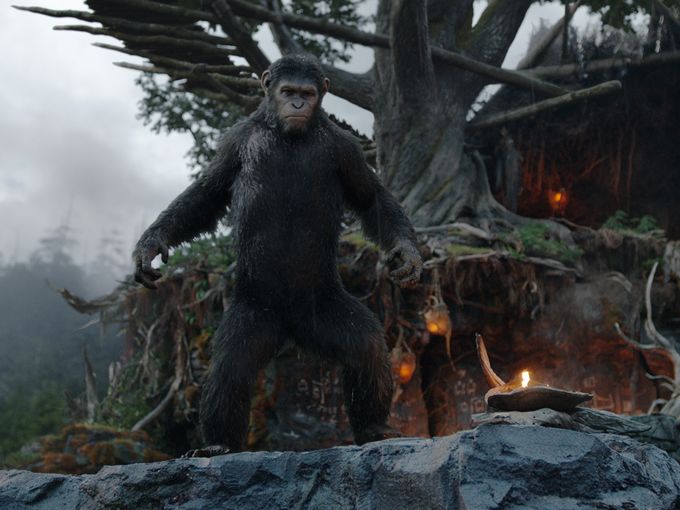
Dawn of the Planet of the Apes - Caesar

Images credit: IMP Awards, Collider

Images copyright (c): 20th Century Fox

Transformers: Revenge of the Fallen (2009)

Transformers Revenge of the Fallen PosterDirector: Michael Bay

Release Date: June 19th, 2009 (UK); June 24th, 2009 (US)

Genre: Action; Adventure; Science-fiction

Starring: Shia LaBeouf, Megan Fox

When it comes to giant robots hitting each other, this is more horrific and dim than Pacific Rim. After being punched illegally below the belt last time, we’ve carelessly staggered back for round two where everything is bigger, louder and even more insulting. Transformers: Revenge of the Fallen, then, hones in on a once universal toy that has moved on from mild swearing to juvenile leg humping. Michael Bay’s second instalment looks neat for a while but once the materialistic disguise wears away we’re left with an outing that makes up for in immaturity what it loses in efficiency.

There is no structure here. No beginning, middle and end. It’s just a mass of special effects that progressively squanders specialness and a bunch of indecipherable machines who relentlessly fritter away parts. At two and a half hours long and over $200 million spent, Revenge of the Fallen simply isn’t good enough.

A few years have passed since the events in Transformers. Sam (Shia LaBeouf) is heading off to college, Mikaela (Megan Fox) is fixing vehicles and the Decepticons are looking for another reason to attack. Fortunately, a piece of the cube from the last film innocuously falls from an old T-shirt in Sam’s closet (imagine that!), setting in motion a series of events involving odd symbolic visions, the Pyramids of Giza, Optimus Prime and stealing the Sun. Or something.

Humans and Autobots now work together as part of a military NEST branch that targets Decepticons. Straight away, we see Autobots project the form of attractive females. A few scenes and countless soaring fireballs later (Bay can only withstand five minutes without including an explosion this time) the focus shifts to Megan Fox suggestively bending over a motorcycle, because that’s how mechanics roll in her neck of the woods. At least we know where we stand. The Transformers trademark has transformed from a children’s plaything to an adrenaline-fuelled macho void, and for absolutely no justifiable reason. Bay even uses college sex as an excuse to unleash his beloved brand of action-packed booms. His woman characters — because, let’s be honest, nobody else would dehumanise the female gender like this — are sold as nothing more than window dressing to pull in adolescents who know no better. Rachael Taylor’s smart scientist is out, services no longer required. Too intelligent obviously. Her substitute is Isabel Lucas, who exists solely to have a thing for Shia LaBeouf. Do the Oscars give out an award for misogyny?

The film is even more of a mess than its predecessor. From start to finish proceedings play out as a constant battle where the only people who care about civilian fatalities less than us are the filmmakers. “Worldwide casualties are in the neighbourhood of 7000,” we hear before the outing hastily returns to what’s important (loud bangs). The conclusion of this continuous war is a human versus robot encounter that is outrageously implausible even within the context of maximum implausibility. Though, it is rather poetic that the main monster here takes the form of an enormous hoover, particularly given Revenge of the Fallen is a total moral-vacuum. A National Security Advisor shows up at one point to explain the details of what happened previously. The moment actually works on two pathetic levels: both as a quick fix for those who avoided the first film and as a driving force for this film’s narrative. Essentially, Bay relies on simplifying that which is already simple because he feels it’s the only way his audience can understand the plot.

The piece even begins to suffer in the only area where it normally impresses. Sure, the visuals are pristinely executed and rather impressive for a while, but the mystique soon dissolves in favour of splurging cinematic yuck. A spread of music videoitis is rife; the camera simply cannot sit still and instead consistently circles characters in tandem with puppet string musical interludes. There’s never a hair out of place as good looking people appear even better looking and the average Joe doesn’t exist. We’re even rewarded with moments of slow motion, bestowing a longer life span upon the explosions. Ben Seresin’s cinematography is so obviously trying to impress that it manifests as desperate. And still, sequences unfurl with ugliness — watch out for the Decepticons landing sloppily on Earth.

Revenge of the Fallen is actually at its best when the Transformers aren’t around, when what’s playing out on screen is an awkward family comedy. Driven by stupid humour, the sequences involving Sam and his parents are the most entertaining. Kevin Dunn and Julie White offer brief junctures of light relief as Mr and Mrs Witwicky. (In truth, these sparsely spread few seconds go down like a glass of ice cold water in the desert). Shia LaBeouf annoys a tad more than in the first film, but it’s unfair to chastise him for the all-encompassing faults strangling a severely lacking script. Megan Fox has even less to do than in the first flick, if that’s possible.

It might not be a total money-making scheme yet — that’s the next one — but Revenge of the Fallen is undoubtedly the grandest black hole in a star-destroying franchise. Nothing’s salvageable from the wreckage. This is cinematic homicide and Michael Bay is guilty as charged.

Transformers Revenge of the Fallen - Shia LaBeouf and Megan Fox

Images credit: IMP Awards, Collider

Images copyright (©): Paramount Pictures

Transformers (2007)

★★

Transformers PosterDirector: Michael Bay

Release Date: July 3rd, 2007 (US); July 27th, 2007 (UK)

Genre: Action; Adventure; Science-fiction

Starring: Shia LaBeouf, Megan Fox, Josh Duhamel

It’s Transformers week everybody! Indeed, unlike you lucky people across the Atlantic who’ve had a whole seven days to digest Michael Bay’s latest installment of metal mayhem, for us cinema folk here in the UK Transformers: Age of Extinction is hot off the press. I’ve not seen it yet. (Admittedly, the robustness of the word “yet” in that sentence is questionable.) To tell you the truth, I’m not a great admirer of Bay’s adopted franchise. It all started in 2007.

Sam Witwicky (Shia LaBeouf) is a stereotypical boy teenager. He’s into cars, girls and late-19th century exploration. Perhaps that last attribute isn’t the most applicable to a male adolescent, but it’s part of an eccentric mosaic that sets Sam apart from the rest. It could simply be a feeble plot point, but who am I to judge. Certainly, Sam has a crush on his classmate Mikaela Banes (Megan Fox) but the only way he’s going to get her attention is with an engine.

Turns out his new car is a Transformer. There’s a multitude of other stuff going on — political struggles, technological misfire, a band of surviving soldiers in Qatar (that’s in the Middle East, by the way), the arrival of evil Decepticons, the arrival of friendly Autobots — but at its most basic, and this film is rather basic, Transformers is about giant robots punching and kicking and wheeling each other.

Director Michael Bay cannot contain himself. His immaturity spills out across the screen from the get-go: a gravelly, deep voice kicks off proceedings ushering in the overly macho tone; an array of snazzy camera angles each act as a sales pitch for the next military helicopter; it only takes six and half minutes for the first (and second, third, fourth) explosion to shake the screen. Bay absolutely has a way with visuality. He’s able to create carnage that looks impressive and that sounds impressive. But it’s all very movie trailer-esque, as if we’re watching a feature length advert for the next blockbuster only it’s stuck on a loud, grating loop.

Substance would take a back seat if the back seat still existed — Megatron probably crushed it. He, or it, is the villain. Adversary of the human-appreciating Optimus Prime who arrives promptly with his band of misfit car pretenders to save the day. They’re robots though, and they’re not blanketed in enough development to make us care. Nor are the human characters and, although the likes of Shia LaBeouf and Megan Fox (she’s far from the worst thing in this film) amass their very best collective effort to generate some sort of viewer connection, one doesn’t exist.

It could be that goings-on shimmer with an unhealthy sheen of artifice. The CGI looks good but ultimately acts as a momentary veil over the real problem: shallowness. There are four female characters dotted throughout the almost two and a half hour runtime. That’s about one for every six male. (At least, males with lines.) We’ve got two mothers who seldom appear, a smart analyst played efficiently by Rachael Taylor who’s treated as though she’s dumb despite being the smartest of the pack, and Megan Fox whose role is almost entirely based on her cosmetic allure. The US President doesn’t make a full-body appearance but we do hear him mutter some chauvinist line to a flight attendant — oops, there’s a fifth female.

There’s arguably an even larger issue at hand here and it’s to do with us, the audience. But what audience? It’s eternally tough to care about giant car shape-shifters because they do little else but fight, so in that sense Transformers might not be for me. I’m not into meaningless vehicular smackdown, that’s fine. It’s a film for kids then, one for the younger boys and girls who do get a genuine kick out of that sort of thing. Only there’s Megan Fox bending over car bonnets. And hold on a minute, those child-friendly robots have started swearing now. It’s only mild here, but the defamation of what once was a children’s 80s cartoon flick and toy line is catapulted into the next stratosphere in Transformers 2 and 3. There obviously is an audience for the franchise, it’s already made over two billion dollars worldwide, but the respect between filmmaker and his viewership is seemingly only half-mutual. (Come on Michael, we know Qatar is in the Middle East).

The aforementioned runtime is also unnecessary, particularly when scenes involving irrelevant clothes removal and lamppost handcuffing take up five minutes of screen time. This is the director at optimum indulgence. It’s more boring than annoying. In Michael Bay’s material world where only good-looking people exist and big booming fireballs carry more weight than sturdy narrative, Transformers is probably a masterpiece. In the real world, it’s a film that alienates the young audience it should be targeting in favour of a guaranteed cash prize.

Early on Mikaela’s jock boyfriend says, “Oh no, this is not a toy”. He’s talking about a car and he’s completely right. Transformers ain’t a toy anymore. The innocence is gone.

Note: This was originally posted over at Movie Pilot, where you’ll find more articles and reviews from myself, plus the occasional poll. We all love polls, right?

Transformers - Michael Bay

Images credit: IMP Awards, Collider

Images copyright (©): DreamWorks, Paramount Pictures

White House Down (2013)

★★★

White House Down PosterDirector: Roland Emmerich

Release Date: June 28th, 2013 (US); September 13th, 2013 (UK)

Genre: Action; Drama; Thriller

Starring: Channing Tatum, Jamie Foxx, Maggie Gyllenhaal

White House Down is bonkers. The President of the United States wears white trainers; kids can get through security with an easily obtainable Chocolate-Factory-esque ticket; Channing Tatum has an 11-year-old daughter. Madness. Indeed, profusely fun madness. Roland Emmerich’s film will never win an Oscar for Best Original Screenplay — or anything, truthfully — but at no point does it set out to. Unlike the director’s genre-relevant 1998 attempt at Godzilla, a film still languishing in a pit of sheer idiocy, his most recent action-packed attempt promotes an infectious need to have fun. Spearheaded by a pair of goofy opposites, White House Down is more thumbs up.

In the midst of a tour of the White House set up to appease his politics-loving daughter Emily (Joey King), John Cale (Channing Tatum) suddenly finds himself as the sole agent against a group of terrorist insurgents. The Capitol police officer, fresh off an unsuccessful job interview, must formulate a plan to shield the President (Jamie Foxx) from intended harm whilst also saving the many hostages in danger, one of whom is Emily.

Perhaps unsurprisingly, this big budget summer popcorn bonanza is flawed. The screenplay written by James Vanderbilt sorely misses narrative intuition. During its predictably mellow opening act we can pretty much piece together the various components as the make themselves known on screen. In that dimly lit room over there is a shifty-looking group of janitors. Our lead has just been scorched for an insufficiency in trustworthiness. He missed his daughter’s recent talent show too. (She’s just popped off to the toilet alone.) Man, if only there was a way he could redeem himself. Wait, what is that sweaty, nervous chap doing with a concealed trolley? Those are only a handful of the film’s commonplace elements. This might be perfectly fine escapism, but it wouldn’t hurt to add a slither of acumen occasionally.

Its unwillingness to deviate from the cookie-cutter norm aside, there are other issues. The fact that characters aren’t well-defined in general is likely a factor, but it should be noted that females don’t necessarily get a fair swing at things. Yes, Joey King’s youngster Emily is a girl who, on more than one occasion, displays intellect far greater than many of her male compatriots — Joey is great, by the way — but the significance is that she’s a child rather than a female. Maggie Gyllenhaal plays one of the President’s assistants and early on looks like she might be thrown into the action, but is told to go home before impact. (“And that’s an order.”) Two others are fodder for Tatum’s macho-cool father: Rachelle Leferve, criminally underused as Cale’s ex-wife, and Jackie Greary as his current partner, or something. It’s not brilliant, but then, character development takes a universal back seat.

On a more positive note, White House Down is a heck of a good time. Foxx and Tatum are together throughout the vast majority of goings-on, their companionship a comedic revelation. The two couldn’t be more unbelievable as President Sawyer and would-be service agent, but the lack of realism is their collective selling point. In truth, Foxx plays Sawyer as a bit of a bumbling idiot who makes smoking jokes in a time of crisis and doesn’t know what YouTube is. It’s exceedingly difficult not to laugh out loud as he sticks his head out of a moving limousine, rocket launcher in hand. Often, Cale manifests as the saner of the pair, but he too gets in a helping of humorous quips. Both actors succeed at elevating the lazy script, at least in terms of its comical output. Their dynamic is utterly absurd but wholly endearing. Unlike its White House disaster counterpart Olympus Has Fallen, which fails because it takes itself too seriously, Emmerich’s piece is far more audaciously light-hearted.

Discretion isn’t on the menu. We nod knowingly at Independence Day references, guffaw fully aware at pictures of a flaming White House and are reminded that bombs are dangerous by their accompanying rapidly booming theme song. But it’s easy to accept these inclusions that would otherwise incur a barrage of sighs, because Emmerich directs with energy and a carefree nature that is sort of charming. At over two hours the film bustles by fairly quickly and the director should be commended for ensuring that proceedings consistently retain a sense of alluring anarchy. One of the funniest moments sees a character throw the phrase “military-industrial complex” into the bubbling cauldron of crazy. Its flippancy is ironic and probably intentionally so.

Though coated in numerous explosions — of which the film insists on singling each out, as if in confession — White House Down actually looks rather splendid. The visual palette is both impressive and excessive; fireballs erupt skywards from grandiose helicopter crashes, whereas on ground level Tatum and company fight it out in clashes layered with grittiness. It’s a testament to special effects team that high ocular consistency is obtained. Like Michael Bay, but entertaining.

Roland Emmerich wins the 2013 big screen battle of American homeland threat by quite some distance. His film certainly struggles to engage in fresh ideas and lacks far too much in the depth department to be considered as anything more than surface splendour, but it’s never boring. There’s no high-and-mighty movement going on here; this is popcorn-chewing, Coke-Zero-slurping cinema at its tastiest.

White House Down - Channing Tatum

Images credit: IMP Awards, Collider

Images copyright (©): Columbia Pictures

22 Jump Street (2014)

★★★

22 Jump Street PosterDirectors: Phil Lord & Christopher Miller

Release Date: June 6th, 2014 (UK); June 13th, 2014 (US)

Genre: Action; Comedy; Crime

Starring: Channing Tatum, Jonah Hill

As simply a comedy film, 22 Jump Street lands its fair share of guffaws. And this is primarily offspring of the humour genre: from acting upon the comedic strengths of its leading pair to unwaveringly owning up to sequel-dom, Phil Lord and Christopher Miller’s second trek down Jump Street fulfils many a Mark Kermode six laugh test. Yet, albeit competently amusing and even occasionally side-splitting, the outing ceases to be complete. Though the directors’ panache for funny bellows through, their film isn’t consistently hilarious. Not many are. Necessary then, is another anchor to steady the ship when proceedings aren’t quite as raucous; a sturdy narrative perhaps. Sadly, the one presented to us is rather flimsy when it comes to chapters that aren’t laden with jokes.

The final bell having rung on their undercover high school lives, Schmidt (Jonah Hill) and Jenko (Channing Tatum) now find themselves caught up in a whole new world: college. Their location is the only difference though, given the partners are once again involved in a narcotics mystery. The new drug is called WHYPHY and has already seen to one student’s untimely demise. Whilst attempting to sideline nostalgic football dreams and romantic engagements, Schmidt and Jenko must also overcome any strains in their own relationship in order to solve the criminal dealings before things get any further out of hand.

Opting for humongous sign-waving as opposed to measly eye-winking, 22 Jump Street isn’t exactly flippant in self-referential deliberation. After an opening montage that takes us through the key scenes of its predecessor — Previously, on 21 Jump Street… — we soon find ourselves camped alongside Schmidt and Jenko in Nick Offerman’s office where Offerman’s Chief Deputy Hardy is openly counteracting the potential pitfalls of sequel syndrome by facing the fact head on. (“Do the same thing as last time, everyone’s happy.”) It’s back to the old headquarters for our two agents then, though the base has conveniently moved across the road. In the background preparations are under way for the construction of 23 Jump Street.

There aren’t any thoughtless attempts to evolve the Jump Street apple cart and the film vociferously makes us aware of that. Though in doing so, Phil Lord and Christopher Miller’s creation (or recreation) takes on a disguise of irony that is inherently funny. It uses this self-referential prerogative as a weapon, to cut through any sequel-related audience apprehensions and subsequently endear itself to us. We are constantly reminded that our expectations should be low, or at least no higher than last time around, for what’s about to come is a mirror image. The ruse works; we’re too busy laughing at the source’s jokes — driving through a cash machine — to fully consider the mechanics of the source itself. Essentially, by admitting the sequel is going to be much the same as the original, 22 Jump Street is a more engaging proposition because it serves and then effectively manipulates our preconceptions.

That’s just one running gag. The film motions forward in its prejudicial tirade by tapping into assumed college culture too. The volatile drug is aptly named WHYPHY, pronounced Wi-Fi, and it’s no coincidence that the side effects are a temporary buzz followed by likely danger. Notions surrounding internet addiction are vaguely pertinent but never wholly realised. We discover that the student majoring in art is unlikely to make any money when she graduates (who knew?) and there are also an obscene amount of “Bros” and “Dudes” verbally volleyed between the football players. College satire isn’t the film’s strongest comical outlet.

Indeed, the funniest moments throughout 22 Jump Street are delivered by the two leads. Both Jonah Hill and Channing Tatum are comfortable in their roles and the duo’s dynamic prevails as a result. It’s refreshing to see Hill continue along a path that he obviously loves navigating despite having tasted the golden allure of critical success. The peaks of his dramatic work — most of those roles are infused with humour anyway — would suggest that he’s probably a highly sought after fellow, but he seemingly still has much to offer in this genre.

Hill plays the socially awkward Schmidt across from Tatum’s Jenko, whose smarts are inversely proportional to his skill at football. The two funniest scenes involve each man without the other; it’s Schmidt’s slam poem versus Jenko’s slowly simmering realisation, and the difficulty in picking a winner is an indication of how funny both actors are in equal measure. Ice Cube, who returns as Captain Dickson, should also be noted for his hugely enjoyable turn as their always animated boss. Ride Along might have crashed and burned, but the man of many trades has shown he can be infectiously amusing when delivering superior material.

Unfortunately, the dramatic narrative between Schmidt and Jenko is a problem. Unlike the smart use of self-reference, there’s nothing shrewd about the less than budding brotherly developments between the two. Their collective arc is annoyingly mundane and, although this could be construed as another of the film’s this-is-a-sequel-so-don’t-expect-much contributions, it falls far short of the entertainment mark. The troll-like concept is funny in its manifestation as a running gag with frequent pit stops, but it fails to reward when blending into an overly schmaltzy and all too familiar story. In this instance there aren’t any jokes to veil Schmidt and Jenko’s generic bond and when attempted wisecracks are communicated, they fall on deaf ears. (The open investigation malarkey is a bit cringe-inducing due to its lack of invention and continued implementation.)

Two-hour-long gags aside, was it worth creating a sequel? I’d say so. Though not nearly as snappy or galvanising as The Lego Movie, Lord and Miller’s latest offering does trump their first visit to Jump Street. The deliberation now centres on where the franchise is headed next, if anywhere. It looks like the filmmakers have shot themselves in the foot regarding the prospect of a third film. (That sequel quip won’t work twice.) We’ll just have to wait and see.

There’s no uncertainty here. If this review of 22 Jump Street is at least moderately successful, I’ll consider writing another one. Fair warning: It’ll be exactly the same.

22 Jump Street - Hill, Tatum, Cube

Images credit: IMP Awards, Collider

Images copyright (©): Columbia Pictures, Metro-Goldwyn-Mayer

Edge of Tomorrow (2014)

★★★★

Edge of Tomorrow PosterDirector: Doug Liman

Release Date: May 30th, 2014 (UK); June 6th, 2014 (US)

Genre: Action; Science-fiction

Starring: Tom Cruise, Emily Blunt

The key to any film baring a looped narrative is the provision of compelling characters. Or, at the very least, engaging performances. Bill Murray in Groundhog Day and Jake Gyllenhaal in Source Code, for instance. Two aptly mentioned films each of which share an obvious connection with Edge of Tomorrow, Doug Liman’s newest creation that sees the former’s witty humour and the latter’s pulsating mystery combine with a Vantage Point-esque tactical retreading to devise a two hour thrill ride. Tom Cruise and Emily Blunt energetically shepherd proceedings through any potentially damaging plot miscues, coming out the other side battle-worn but not out-battled. The jigsaw doesn’t quite fit together with uniform perfection but assembling it is pretty damn fun. In fact, this might be Tom Cruise’s best outing in a decade.

Major William Cage (Tom Cruise) awakens in familiar surroundings: an army barracks at Heathrow Airport, the word “maggot” ringing in his ear. It’s the near future and Earth is under attack. Aliens known as ‘Mimics’ — experts in adapting to combat human strategy — lead the invasion, and Cage’s interaction with one of the beasts has sent him spiralling into a time loop. A glorified military advertiser, the Major must train both body and mind with the aid of war machine Rita Vrataski (Emily Blunt) in order to quell the fighting and save humankind.

Edge of Tomorrow presents an often pondered scenario, then repeats until fluency reigns. If you were to throw a pebble into a river, would the water change course forever or eventually restore its old pathway? In this case, we swap pebble for soldier and water for war. There’s no grand idea to ponder, at least not a new one, but sometimes sticking with a winning formula ushers forth success and Liman’s film proves that. What the director does infuse, if not originality, is vitality; a freshness that cleanses with bounce and intrigue upon repetition. We watch as Cage lives out the same day countless times over, yet there’s never a sense that what we’re seeing is merely bland duplication. Quite the opposite actually. For every familiar bellow from Master Sergeant Farrell there’s a modicum of change. A card game hidden under bedsheets, for instance. Smartly, sameness becomes a weapon for both Cage and the viewer: he, attempting to win a war, and us, trying to put the puzzle pieces together. Every time he dies, we start over. Undeniably, there’s a method to the litany. (“An enemy that knows the future can’t lose.”)

The way the narrative plays out is akin to that of a video game. There’s a peculiar humour that comes with the frustration of being unable to bypass a certain stage, a mental headache that, once you finally advance to the next level, beckons in excitement. What’ll happen next? This is the sort of mind-jogging that Christopher McQuarrie’s screenplay dazzles with, and it’s sort of infectious. “What do we do now?” asks Rita. “I don’t know, we never got this far,” replies Cage with sparkling glee, the audience almost expecting him to follow up with a knowing wink in the camera’s direction.

The pair driving proceedings are having as good a time as any, which helps. Both Tom Cruise and Emily Blunt get stuck in, be it whilst careering through a mass of monstrous treachery or delivering gags with precise timing and just as much effort. The camera stalks Cruise throughout the entire film yet we never tire of seeing his face — admittedly, it is rather amusing watching the Hollywood star’s reactions as he perishes in a variety of ways. Blunt chalks in another talent-affirming performance as the ironclad Full Metal Bitch, getting the better of her co-star more often than not. It’s also worth noting Bill Paxton’s hammed up turn as the aforementioned Farrell, his numerous communications with Cruise increasing in hilarity as time progresses.

Quite surprisingly, Edge of Tomorrow detours down comedy alley a whole lot, hitting more than its fair share of home-runs. There are a number of intense battle scenes that are harsher in meaning than actual visual depiction, but these are balanced out by smatterings of light relief. James Herbert and Laura Jenning’s rapid editorial input comes in handy here, ensuring that there are never any lulls: while we’ve only just let out a guffaw at Cage’s prophetic qualities, the film is on to the next optical spectacle or witty bantering. Cruise and Blunt conjure up a dynamic that not only feels authentic, but that also sparks with comic prowess. The whole thing is quite ridiculous in a way and the film acknowledges so. Since it doesn’t take itself too seriously, we can relax and let the occasional disbelief slide. Playfulness supersedes sternness, and it’s for the best.

That’s not to say Edge of Tomorrow is bulletproof, because it ain’t. The plot teeters along a knife edge at times, hampered by its mass and volume. There’s a lot to take in and not all of it immediately makes sense, such as how easy it is to become encased within a time loop. (Not to mention Rita’s relationship with the concept — she could re-enter the groundhog procedure at any point, surely.) State of the art combat suits are developed to give humans a greater fighting chance against the aliens, yet these technologically superior battle weapons are juiced by batteries. There must not be any electric motor charging sockets around future London. Finger out, Boris.

Doug Liman’s track record since The Bourne Identity is sketchy at best, but this offering is a sure-fire career reviver. His direction is more or less spot on, striving for humour rather than overbearing solemnity. The film’s leading duo deliver on numerous fronts, injecting a fresh lease of life when necessary. The periphery can be a tad rough at times but Edge of Tomorrow will most certainly claim a lofty spot atop a vast amount of summer success lists, at least for the foreseeable future.

Edge of Tomorrow - Cruise and Blunt

Images credit: IMP Awards, Collider

Images copyright (©): Warner Bros.

Man of Steel (2013)

★★

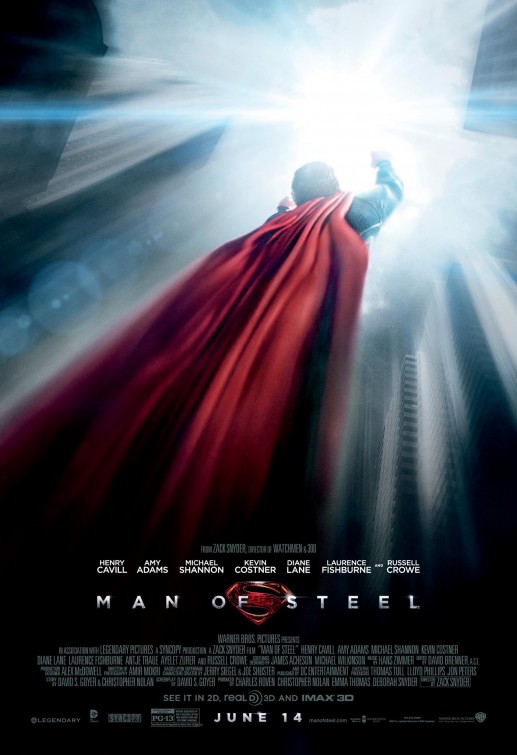
Man of Steel PosterDirector: Zack Snyder

Release Date: June 14th, 2013 (UK & US)

Genre: Action; Adventure; Fantasy

Starring: Henry Cavill, Amy Adams, Michael Shannon

Batman fans, close your ears. It’s time to come clean: Zack Snyder has a very iffy track record. For every ingenious graphic novel re-imagining there’s a hollow sucker punch. Presently, we can only cross our limbs loyal to Nolan and hope for a Snyder hit in 2016, but if his upcoming superhero face-off is anything like Man of Steel, it’d be best to quell those dreams. This Superman reboot isn’t anything to scream about, not unless those screams are riddled with unsavoury expletives. There are one or two great moments that only serve to thicken Snyder’s woes, acting as snippets of what could have been. Rather, what we see is disjointed, all-too-familiar and far too reliant on CGI. Never has a superhero gallivant felt like nothing more than just an opening act. And a pretty measly one, at that.

Having been sent to Earth by his parents during the destruction of planet Krypton, Clark Kent (Henry Cavill) has grown up as an outsider surrounded by humanity. Displaying otherworldly powers, Clark eventually discovers the truth behind his own origin but is encouraged to retain secrecy. That is, until General Zod (Michael Shannon) threatens to harvest Earth and terraform the planet for the benefit of his and Clark’s Kryptonian race. Buoyed on by a robust moral code and assurances from journalist Lois Lane (Amy Adams), the newly christened Superman must live up to his moniker.

In its primitive stages, Man of Steel is caressed by a solid narrative basis. We watch Clark’s early journey through life, sometimes in the form of flashbacks that are invariably effective. His struggles to adapt are pitted against an authentic prerogative to help others. As a child he rescues a bus-full of school compatriots yet instantly reverts back into an attitude funded by reclusion. It’s not instantly clear why, but we soon realise. (“People are afraid of what they don’t understand.”) The superhero genre is fully literate when it comes to principle-juggling and any subsequent strands of righteousness, therefore these elements ought to be employed with a twist. Sadly this one’s on the straight and narrow.

Despite being touted as one of 2013’s biggest extravaganzas prior to release, the outing carries an inertness that compromises any ingenuity. David S. Goyer’s screenplay is bombarded by exposition from the get-go, so much so that what we’re watching feels like an hour long prelude to proceedings when in fact, said time frame is the opening to the main event. There’s a lot of talk about genetic codices. Other than his commonly applied Superman title, our lead has two further names bestowed upon him: Clark and Kal-El. He also seemingly vacuums his way through an inordinate amount of jobs, from fisherman to military aider. All of this time spent building up the central character is unnecessary. As opposed to presenting Superman/Clark/Kal-El within a context of effective simplicity, Goyer’s script tends to opt for overcomplicating matters.

By the time we meet love interest Lois Lane the film has gone through a descriptive rigour. From what appears to be an unduly long opening act, events meander into a CGI-stuffed conclusion, equally unnecessary in length. A whole central act is missing, one that should cement our character’s mindsets and throw up internal hostilities. Lois goes from an investigative reporter interested in Clark’s uncanny abilities to his romantic concern after only a single scene — if not for Amy Adams’ charm infusion, her character would’ve been as pithy as they come. This is a two hour film that flies by, but not in a fun-induced fully-engrossing manner. Instead, lost narrative chunks highlight a lack of meaty content. Forget drama, the filmmakers’ seem satisfied with generic set-up and action.

And there is a lot of action. On occasion, the film sends out pleas for resuscitation through energetic sequences and flamboyant visual turns. Apart from all the bombastic alien light shows and exotic explosions (did somebody invite Michael Bay over?) Man of Steel purveys a gritty realism that actually works in its favour. Snyder utilises shaky cam and a monochromatic colour pallet as a means to present Superman within realistic boundaries, an attempt to show the apparently indestructible being as quite possibly human after all. It’s a shame that CGI-gorging eventually prevails in a display of all-encompassing consumption. One fight scene towards the end is particularly unforgivable in its obvious computerisation. Realism is substituted for video game-esque exaggerations, removing rather than endearing us to goings-on. Perhaps Snyder is indulging himself here — he certainly loves his ‘low, rapidly approaching blast of wind’ camera shots.

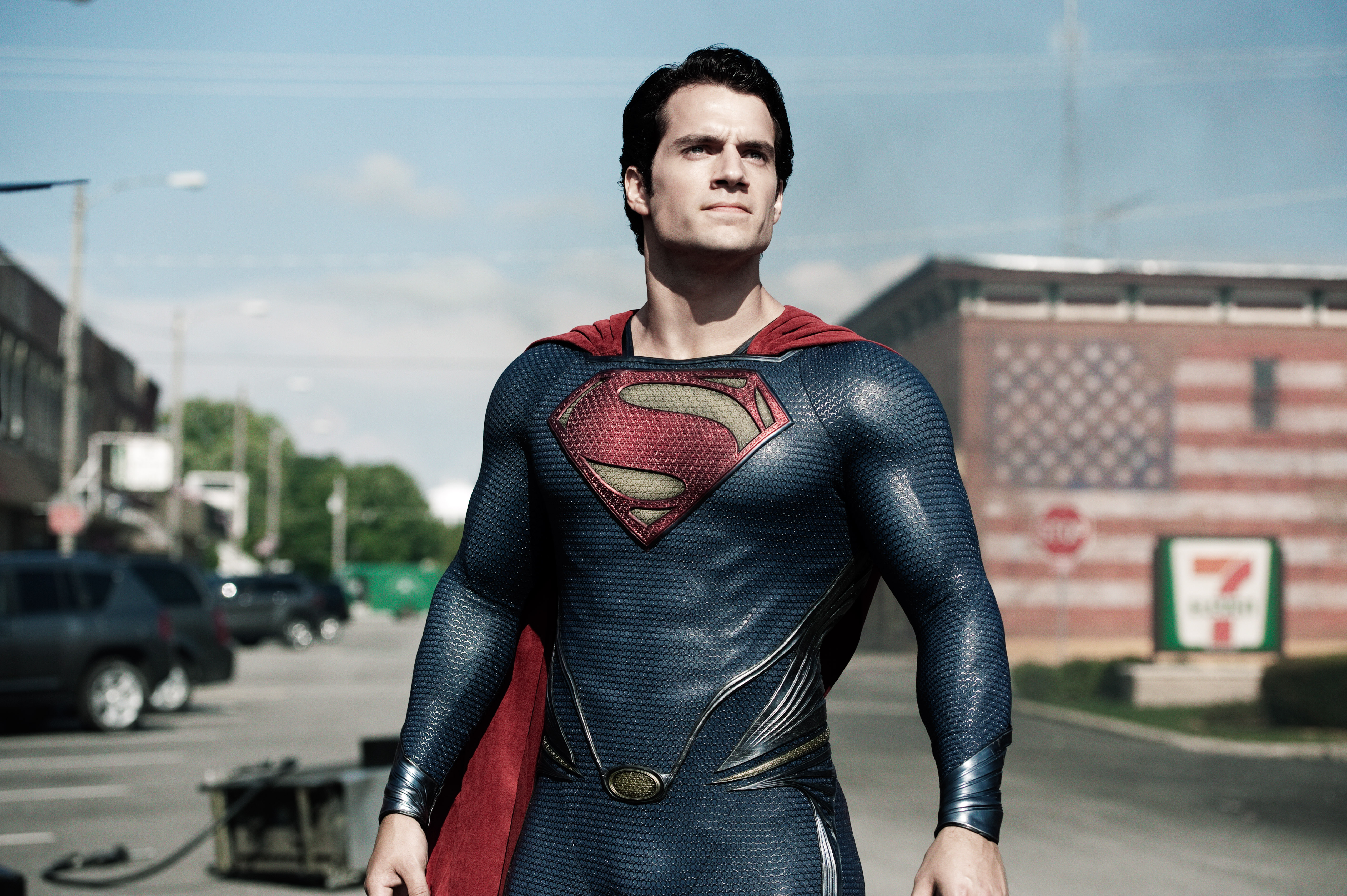
Michael Shannon is a left-field choice to play the main villain General Zod, but a choice that transpires to be the best thing about Man of Steel. His arrival on Earth is greeted with discomforting eeriness, the “You are not alone” telecast proving to be one of the film’s most successful moments in terms of emotional circulation. Sporting a peculiar white goatee, Shannon is domineering as Zod, facial expressions stoic and purposeful, overcoming the infrequent dialogue faux-pas. (“Release the world engine” might be the least intimidating line a villain has ever uttered when in the process of launching a deadly attack.) Dawning the red cape, Henry Cavill also does well. It’s a huge role and he isn’t afforded much to sink his teeth into, but the Brit relays just enough of a charismatic glimpse to signal a productive future. Russell Crowe manifests every now and then as Superman’s biological father, his efforts wholesome but not entirely effective. Frostiness battles affection, and the former usually wins.

Zack Snyder’s Superman revival is weighed down by a tendency to streamline towards convention. The film is essentially a carbon copy of Kenneth Branagh’s Thor, only it severely lacks the Norse God’s raucous charm and humour. Here, superficial reigns supreme. Wearing more than few chinks in the armour, Man of Steel is a bit of a dud.

Man of Steel - Henry Cavill

Images credit: IMP Awards, Collider

Images copyright (©): Warner Bros.

Godzilla (2014)

★★★

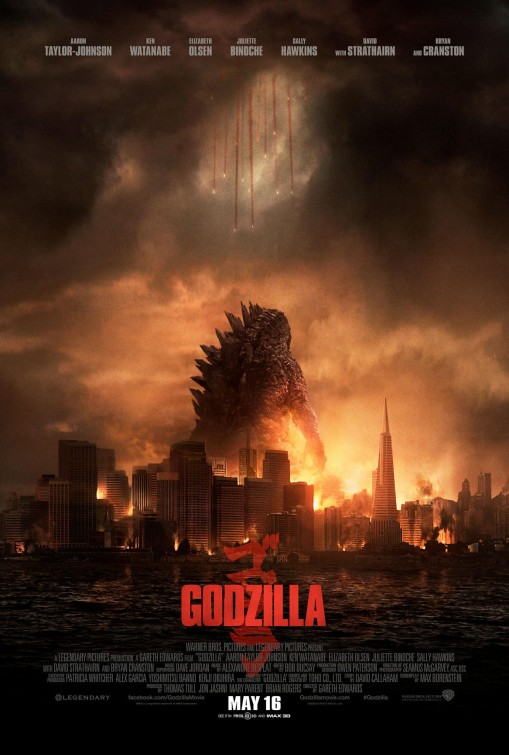
Godzilla (2014) PosterDirector: Gareth Edwards

Release Date: May 15th, 2014 (UK); May 16th, 2014 (US)

Genre: Action; Adventure; Science-fiction

Starring: Aaron Taylor-Johnson, Bryan Cranston, Elizabeth Olsen, Ken Watanabe

On a scale respectively topped and tailed by Gareth Edwards’ Monsters and Roland Emmerich’s Godzilla, the former’s reincarnation of the latter beast is perched around the middle. In other words, Godzilla 2014 is something of a disappointment. Not a bad film, far from it. In fact its technical aspects are better than many a modern blockbuster has to offer. Edwards’ contemporary version of the giant kaiju is both reminiscent and magnificent, and it bellows a rumbling roar that’ll have your popcorn flying and Coke Zero spilling. The problem isn’t when he’s on screen, but when he’s not. The director’s intentions are clear and commendable: to gather tension in preparation for that first monster reveal. But while said anxieties are simmering the characters must carry the torch and they, unfortunately, are burned by a deficiency in multi-dimension.

Having attempted to destroy the creature known as Godzilla half a century ago with the aid of nuclear weaponry, civilisation now faces another threat in the form of Massive Unidentified Terrestrial Organisms (MUTO). Physicist Joe Brody (Bryan Cranston) believes that a 1999 earthquake in Janjira, Japan is actually a government cover-up rather than a natural disaster, shielding from view the mistakes of humankind. His son Ford (Aaron Taylor-Johnson) heads out to Japan after hearing of his father’s arrest and witnesses first-hand the validity of Joe’s argument in the form of a creature wreaking havoc on everything in its path.

Clocking in at just over two hours, Godzilla is a game of two halves. The first hones in on the people involved and their actions, whereas the second explodes into a big-budget blockbuster bonanza. For a long time we don’t see Godzilla, instead teased only by murmurings and the occasional fin shot. In the monster’s place are a number of characters set to fulfil a variety of uninspired roles and, sadly, none of them really matter. Aaron Taylor-Johnson’s Ford isn’t a compelling lead and it’s not just him either. Ford is our latch, the constant human presence who we are supposed to invest in: he has the loyalty chops as a US Navy officer, whilst his young family denotes a common identity and demands empathy. But we’ve seen it all before. There’s nothing particularly special about him, nor anyone else. Ford’s wife is a nurse and she spends her limited screen time frantically pushing hospital gurneys and panicking over the phone.

It doesn’t help that those portraying these inconsequential characters are a talented bunch, their talents frustratingly wasted to all intents and purposes. Elizabeth Olsen, the aforementioned wife, is fairly fresh off of exceptional work in the likes of Martha Marcy May Marlene, but here she’s diminished to nothing more than husband-fodder. Bryan Cranston plays Ford’s father and probably delivers the best performance as his character’s flesh is allowed to grow, but even he struggles to be memorable. It’s less of a shame than a surprise really, given Edwards’ track record when it comes to delivering engaging presences on-screen. Perhaps we’ve become attuned to gorging our way through masses of CGI and rip-roaring action when blockbuster season hits and in that sense, well-rounded human beings aren’t necessarily top of the menu. However, given the nature of this narrative in particular — one that endeavours to build before letting loose — audience captivation must begin with the characters as they are the primary load carriers.

The story itself is customary and therefore doesn’t offer much in the way of support to its participants. We watch an awful lot of Tab A into Slot B shenanigans — there’s to-ing and fro-ing aplenty — but again, we’re only really here to see gargantuan beasts collide. Right? On occasion the film does delve into the semantics of its historical monstrous figure and in those moments Edwards is in control. The opening sequence sets an ominous tone as the theory of natural selection is enshrined by images of nuclear testing and bolstered by a booming sound. Not long after, Japan’s misfortune sees it become the site of both natural and human-made catastrophe; we view both a volcano and a nuclear power plant as they loom forebodingly over family homes and a local school. Somewhere amongst the raft of uninteresting characters and impressive effects is a serious satirical backbone that denounces the domineering attitude of humanity. (“The arrogance of man is thinking nature is in our control and not the other way around.”) Edwards brings a semblance of dignity and respect to the nuclear-nature fable, two traits totally lost throughout the franchise’s 1998 meltdown, and this version would benefit further from purveying greater impetus in this regard.

The director’s obvious admiration is also wholly captured in Godzilla’s visual manifestation. The reptile is a mishmash of classic and modern, wearing a familiar scaly attire that has been furnished by digital implants to make the creature look as grotesquely fearsome as ever (and, thankfully, as un-tyrannosaurus rex-like as possible). The reptile itself is going through post-Emmerich debilitation syndrome and Edwards successfully paves the way for phase one of recovery. The filmmaker who now infamously created his previous outing whilst curtailed by a minute budget of only $500,000, is eager to unleash the grander financial backing afforded to him here and to the Brit’s credit, he absolutely makes the most out of the cash available. From an early mine visual through to the final showdown, no skyscraper is left standing and each demolition job is almost as fun as the last. The ghostly infestations of urban decimation seen in Monsters are carried into this outing, destroyed landscapes as disconcerting as they are imposing. The film is also capped off by one of the year’s best scenes: a HALO jump that is both haunted by eerie hums and utterly scintillating in execution.

Gareth Edwards’ Godzilla is an odd concoction. His decision to reveal the monster later in the game is a good idea. A great one in fact. But the minutes subsequently left action-depraved must then be filled by goings-on that are even more engaging, and the characters offered are simply unable to comply. Perhaps high expectations are to blame but, more than anything else, Godzilla is an opportunity missed.

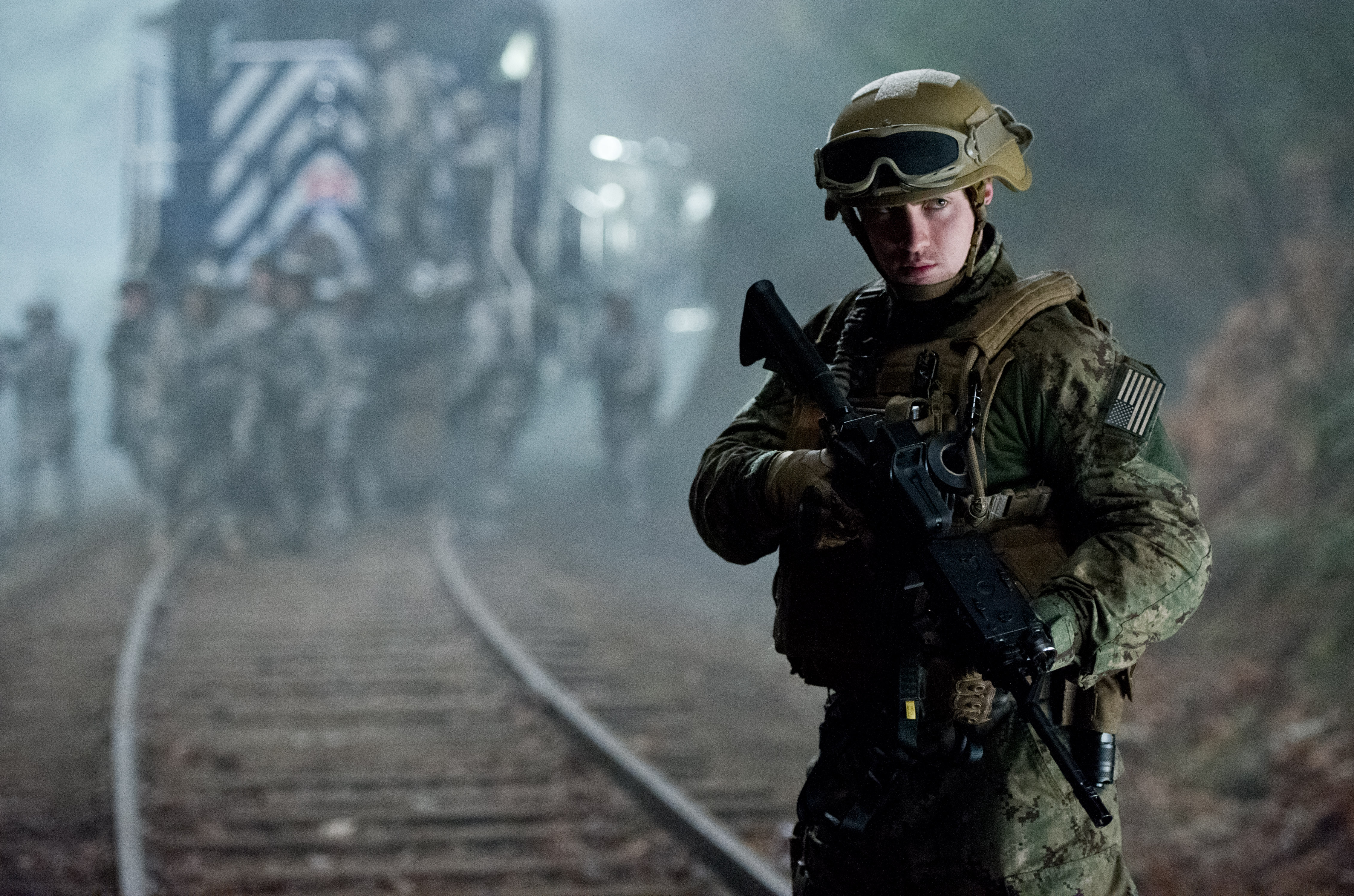
Godzilla - ATJ

Images credit: IMP Awards, Collider

Images copyright (©): Legendary Pictures, Warner Bros.

The Wolverine (2013)

★★★

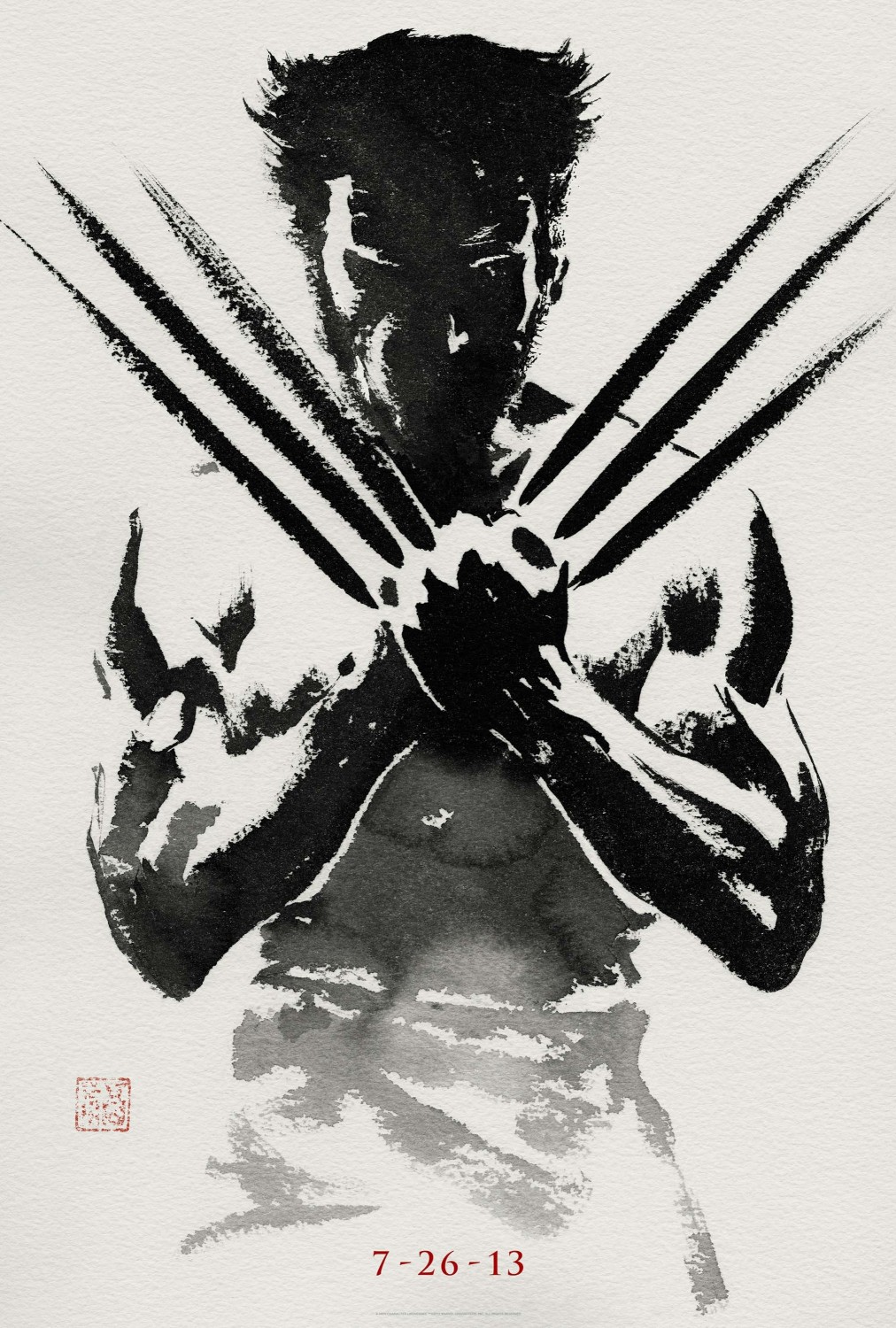
The Wolverine PosterDirector: James Mangold

Release Date: July 25th, 2013 (UK); July 26th, 2013 (US)

Genre: Action; Adventure; Fantasy

Starring: Hugh Jackman, Tao Okamoto, Rila Fukushima

Wolverine is a tough customer, but even he struggled to chop his way through Gavin Hood’s frankly disappointing attempt at a Wolvie origin story (unsurprisingly, the only of its kind). Step forward James Mangold, of Walk the Line fame, a man who seemingly boasts a better grasp of X-Men lore. But the refreshing thing about his film, The Wolverine, isn’t necessarily anything to do with comic-book compatibility — having never read them I wouldn’t know. Rather, this outing flavours the antics of its familiar hero with a style and sleekness. The setting has changed and for the better. In a way, this is the past meeting the future before Days of Future Past and it’s good up until a point. Unfortunately, Mangold’s infusion of difference carries an expiry date and The Wolverine goes bad before the credits roll.

Now ticking by the hours amongst bears and sporting a wild-man look that sees a ragged beard and matching hair, Logan (Hugh Jackman) has more or less shelved the Wolverine persona. That is, until he is approached by the mysterious prophetic mutant Yukio (Rila Fukushima), representative of a dying officer whom Logan saved during the Nagasaki bombings in 1945. Upon reaching Japan, Logan finds himself embroiled in a game of morality in which his powers of eternal being are the highly sought after prize.

Early on a checkout woman asks, “You’re not a hunter are you?” to which Logan replies solemnly, “Not anymore”. With every crack and crevice of the redemption story already explored, particularly when it comes to superhero-esque flicks, The Wolverine opts to go down a slightly different route. The basis is set in stone — Wolverine must reacclimatise to life without his deceased wife Jean Grey as he continues to battle demons of immortality — but the delivery is somewhat altered. What we are watching is a film-noir crime thriller that bubbles with tension and gleams stylishly. Decorative villas host men wearing fashioned suits armed with polished weaponry. Wolverine’s claws appear shinier than ever before. Its efficient visuality won’t come as a surprise to those who know of director James Mangold’s previous work. (Walk the Line and 3:10 to Yuma are wonderfully constructed optical specimens). The film is a moment in time, a spin-off concocted from James Bond DNA. Wolverine: The Japan Years. This glossy air infuses vitality, at least for a while.

Mark Bomback and Scott Frank’s screenplay succeeds in tandem and for just as long as Ross Emery’s cinematography. Surrounded by new characters, Wolverine, previously left beaten and worn-out by his last solo run, just about regains his panache (though there’s still a way to go in this aspect). Modern meets tradition as Jackman’s mutant, juggling recognisable morals, finds himself in a contemporary setting; imbued by technology and the bright lights of Tokyo. Weapons vary from the time-honoured bow and arrow to the upgraded Uzi. The violence-oriented syndicate Yakuza, well-versed in global cinema — they’ve even got their own genre in Japan — are given a current update, forced into rapid pursuits throughout the hyper mobile urban machine that is Japan. Mariko, granddaughter of Logan’s WWII ally Yashida, must contend with a conventional arranged marriage, but even these are given a modern makeover by way of corporate intentions. The film’s mixture of 21st century comic-bookishness and past histories is a compatible one; we feel comfortable and connected to a familiar face in Wolverine, but also rejuvenated by a new climate.

Unfortunately, it’s a climate that eventually succumbs to a torrential downpour of sameness. At around the half-way point a romance blazes, the same one that we’ve spent the past hour begging not to. It’s that usual love story that seems to be written into the contract of every blockbuster, and this time it simply ain’t believable. Nor does it aid the narrative’s progression. Instead, the romantic exploits are blasé and distracting, if nothing else. Not only does the pace simmer to an unsatisfying canter as it supports these non-necessities, the love aspect also dampens Wolverine’s domineering aura. Jackman isn’t to blame, quite the opposite, he’s the one who rekindles a degree or two of verve through his blunt humour and hard-working personality. The Aussie is a very watchable presence — it’s a character issue that arises, as opposed to a performance one.

The piece tonally scampers around too, though this favours rather than hinders goings-on. On one hand, we have a dark underbelly that sees Logan possess a semi-suicidal state of mind. He must endure the mental scars of previous actions, and his inherent prerogative to save lives — such as preventing Mariko from jumping off a cliff — doesn’t exactly rub off on himself. (“You are a soldier… [you seek] an honourable death.”) Yet the seriousness never really wields unfathomable weight. In one sense, this means the film can’t be taken as earnestly in dramatic terms, but it does usher forth a loosening up, combining entertainment with solid if not wholesome sentimental musings. One of the film’s best scenes is also its most bonkers: a brawl atop a moving train severely tows the line of realism, and it’s damn fun to watch.

As previously mentioned, Jackman does his best Wolverine impression, but it is just that. His quick-wittedness and excellent comedic timing coalesce with the film’s at times briskly humorous breeze. (“I feel violated,” states a clean Logan.) Rila Fukushima is energetic as recruiter Yukio and, along with Tao Okamoto, brings a much appreciated newness to the screen. Svetlana Khodchenkova plays Viper, one slice of a villainous pie, exuding intelligence and power in the role. She’s the quintessential Bond character transferred over to Marvel, classically camp and elegantly sexy.

The first half of this is something to admire: formalities are given life through hushed slickness and a collision of tradition versus modernity. It’s a shame that The Wolverine ultimately bears the brunt of genericism, but Mangold’s solid effort shouldn’t be discounted by any means.

The Wolverine - Hugh Jackman

Images credit: IMP Awards, Collider

Images copyright (©): 20th Century Fox