The Conspiracy (2012)

★★

The Conspiracy PosterDirector: Christopher MacBride

Release Date: August 23rd, 2013 (US limited); October 11th, 2013 (UK)

Genre: Horror; Thriller

Starring: Aaron Poole, James Gilbert

The Conspiracy struts its way on screen like a middleweight boxer ready to unleash a one-two combination. The first jab is swift and fairly unrelenting. As the film begins we peer skywards, eyes fixated on a pair of tall building not dissimilar in style and size to the World Trade Center. The brooding tone is set; a faux-documentary tale ushering in the notion of elitist secrecy and hidden agenda. We reside in a globe ripe with conspiracy theorists and theories, undoubtedly. For a short while, the impact of jab number one lingers. Unfortunately, the second swing can be seen coming a mile off. From feeling slightly spooked due to the prior injection of pseudo-realism, we now enter a particularly tiresome realm known as found footage horror. Intrigue gone, not even a vaguely haunting final act can save The Conspiracy. In the end, blurred lines only serve to expose.

Aaron (Aaron Poole) and Jim (James Gilbert) are two documentary filmmakers looking to delve into the world of dishonest suits. They meet up with Terrance (Alan C. Peterson) — a conspiracy nut whose maniacal preachings have been doing the rounds on the internet — with intentions firmly set on relaying his story to the world. However when Terrance inconspicuously vanishes, the only remnants left behind are his DIY newspaper wall-charts. The duo’s subsequent search for answers leads them closer to an alarming truth, and further from the security of normality.

Director Christopher MacBride attains a solid opening half hour through well-dug foundations. In a transparent age where every decision is questioned and every answer analysed, his film manages to strike with a fistful of relevancy, at least for a while. Messing around on chat-rooms, Aaron and Jim embody the modern web-surfer whose bible takes the form of a Wi-Fi connection and a computer screen. As they mingle online, a curious sentiment arises: if a conspiracy theory is born out of somebody’s buzzing and immaterial imagination, how can it be disproved? This dichotomy captures our attention and even throws a temporary blanket over the poor acting on display. The occasional shimmy of odd wit breaks through a not-so-subtly humorous poise at times: “So what are you guys using this for?” asks a shopkeeper as he sells the nosy pair a couple of hidden cameras. In a perversely amusing twist, the two no longer seem to care much for missing pal Terrance, the whole point of their documentary originally. It’s when Aaron and Jim start getting followed that proceedings take a turn for the generic.

As the largely dour and unsurprising reveal comes to fruition, the wheels come off. Rather than an inquisitive socio-political engagement, The Conspiracy morphs into a standard horror flick. Up until now, the documentary presentation has justified its found footage approach, but upon emittance of clarity motioning that things are not quite as straightforward as they seem — they really are, in truth — said approach loses value. As soon as the narrative starts to resemble The Blair Witch Project, bouts of infectious groaning can be heard resounding from the throats of viewers the world over. Or maybe that was just residual noise from the handheld camera.

The horror aspect struggles to horrify. Sure, we’re subject to an unsettling few minutes, but it’s not enough. That aforementioned blanket of security covering some terrible acting goes up in flames, exposing amateur hour. Effectively, all of the good work done in establishing a documentary platform unravels in lieu with the film’s wavering focus, so much so that you begin to question the success of the opening 30 minutes. On reflection, scenes that previously passed without too much sincerity interrogation (we were along for the ride at that time) now reek of coincidence; a guy on bike just so happens to show up in the same place more than once, and the partner of one of the chaps just so happens to invade goings-on as the duo are testing concealed camera equipment.

Frustratingly, the narrative concept may well have had some legs if the switch in prerogative from conspiracy documentary to ritualistic horror wasn’t presented so jarringly. Are we meant to believe that every conspiracy has a secret organisation behind it? Associating mysterious societies with business leaders and the like is a corny ploy too; as if all of these oligarchic bank managers and stockbrokers choose to spend their evenings dressed up as The Undertaker while scampering around forests playing games of Cowboys & Indians. Whereas the use of archived 9/11 and Kennedy assassination footage within the documentary-esque context is warranted, the employment of these particular images begins to feel a tad exploitative as the film shifts viewpoint.

Though it begins with a sense of intrigue and purpose, The Conspiracy soon face-plants in a subpar horror hole. With greater focus and better component parts, perhaps Christopher MacBride could have unearthed a gem. However, as the credits began to roll I was left simply wishing for the return of Terrance who, over the course of an hour, had become the new archetype of sanity.

A mean feat indeed.

The Conspiracy - Terrance

The Amazing Spider-Man 2 (2014)

★★★

Director: Marc Webb

Release Date: April 16th, 2014 (UK); May 2nd, 2014 (US)

Genre: Action; Adventure; Fantasy

Starring: Andrew Garfield, Emma Stone, Dane DeHaan, Jamie Foxx

As Spider-Man majestically manoeuvres around an invisible pathway above New York City, camera in tow as if magnetised to his every flip, swing and twirl, we hear him articulate one witty quip after another. An air of intertwined energy and humour instantly sweeps across the screen, exponentially infectious; we are watching a superhero flick after all. Fun is the order of the day, only it arrives at a cost and in 2014 a structured sense of direction can too be quite pricey. It should come as no surprise then that, as Spidey encounters one enemy after another, proceedings take a slightly messy turn. Almost two hours and 30 minutes pass fairly quickly, but as time ticks and Spidey’s checklist grows you get the sense that ongoing events would benefit from separation into two shorter films.

Buoyed by his latest victory over Dr. Connors, Peter Parker (Andrew Garfield) has become an ever-present on the streets of NYC, fighting off crime with aplomb and tactile guile whilst wearing the red of blue of his arachnid alter-ego. Beneath the surface, Parker has an awful lot on his plate: graduation, a relationship, mysterious parentage and an increasingly widening plethora of bad guys to deal with. Haunted by visions of his girlfriend’s dead father, Parker is at a moral crossroads as to whether he should continue dating Gwen (Emma Stone) and there still exists a shroud of uncertainty surrounding the motives of his father and mother. That’s not even to mention the blue-skinned Electro (Jamie Foxx) running rampant around the city, and he’s not the only one. Phew.

It’s almost a given nowadays that the combination of a gargantuan cinema screen and the latest summer blockbuster will yield exhilarating action and visual spectacle. On current evidence said expectation is justified. The Amazing Spider-Man 2 opens vibrantly and brims with commotion thereafter. Bolstered by some impressive digital creation and Daniel Mindel’s cinematography, each lively sequence retains an outstanding quality that keeps us engaged regardless of any plot misgivings. Notably, splurges of slow motion webbing are enticing and a transformation sequence towards the conclusion shepherds connotations of the magnificent scene in An American Werewolf in London.

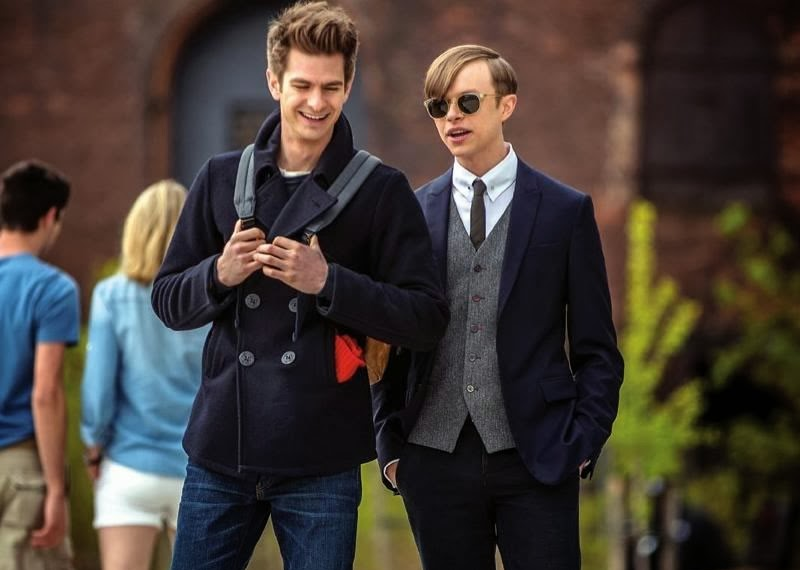
One of the saga’s best branches stems from a trunk of genuine chemistry shared between its leading duo, Andrew Garfield and Emma Stone. The pair are a couple in that thing we tend to call ‘real life’ every so often and their inherent connection flourishes on screen, even more so than in the first film. Garfield continues to cement himself as a better Spider-Man than Tobey Maguire, who was hardly a damp squib in the role. The Englishman can hardly contain his wit at times, a trait wholly welcome in the superhero genre. Stone’s Gwen Stacy is ushered further into the limelight here and her performance alongside Garfield merits the busier workload. They jointly visit the entire emotional spectrum, a standout stop being an especially dramatic scene towards the end. It’s apparent that director Marc Webb and his cohorts are invested in these two characters and this is a positive sheen that rubs off on us viewers.

Beyond Stone and her beau, performances are generally excellent. Dane DeHaan is particularly impressive as Parker’s best friend and Oscorp inheritor Harry Osborn, his facial expressions often insinuating mischief. He resembles a young Leonardo DiCaprio here more than ever — the voice, the hair, the mannerisms — and certainly has the talent to attain DiCaprio’s enviable portfolio. Jamie Foxx stars as the primary villain Electro, though is unrecognisable post-mutation. The character’s mindset drastically alters from one of blunder to one of forcefulness and Foxx handles the switch solidly despite the villain’s lack of conviction. Another unrecognisable face lost amongst the unnecessarily long list of antagonists is Paul Giamatti, who hams it up to the Nth degree as Aleksei Sytsevich.

Giamatti’s comedic purveyance is hit-and-miss, but by and large splashings of humour strike the correct spots. Comedy has become an essential element in the superhero formula, and getting it right undoubtedly provides a sturdy springboard for any subsequent action. Quality over quantity is key; brisk spells of funny are on the menu here and these bursts resultantly set the desired tone, ensuring wisecracking comedy doesn’t overpower the drama but simultaneously exists as more than simply a relief mechanism. Whether he’s arguing against the “laundry sheriff” or awkwardly atoning for making Gwen late (“I’m sorry to bother you my fair lady”) Andrew Garfield is often the source of amusement. Heck, he even generates a laugh out of the ill Spider-Man gag.

This is a far more entertaining watch than The Amazing Spider-Man, but it does adhere to the modern Marvel formula. The studio has been churning out at least two films annually over the past few years with more projects pencilled in until 2028, perhaps an indication that we are getting too much, too soon, too often. As time develops and these films come and go, it is become increasingly difficult to reinvent the superhero wheel and there are faint smatterings of this problem to be found in The Amazing Spider-Man 2. The film is on a similar level to Thor: The Dark World in terms of pure enjoyment, but unlike the Norse tale (which channels simplicity for the most part) Spidey part two gorges excessively.

This overabundance is a problem. Far too many things are going on. By the end of the film, there are at least five villains (admittedly, of varying importance) and a few characters so far out on the periphery of proceedings that their presence is called into question. Felicity Jones is criminally underused as Harry’s assistant Felicia and one can only hope that she has a greater role in part three. A random doctor plucked straight from 1960s Soviet Russia shows up at one point and his exaggerated demeanour is one step too far. A hefty percentage of the dialogue also gets caught up in discussions over physics. Modern day blockbusters should carry an intelligent weight, absolutely, but that notion doesn’t extend to rehashing school science lessons.

Reciting implausibilities within the context of a superhero film may not be the wisest of moves, but there is a difference between principal abnormality — that is, our main heroes displaying unimaginable powers — and plain absurdity. An early fight scene that takes place on an aircraft embodies preposterousness, as both a human being and his laptop withstand a free-falling, ripped apart plane. How on earth does the device manage to retain an internet connection?

Though The Amazing Spider-Man 2 becomes entangled in a complicated web of narrative strands, a healthy dose of thrilling action and toxic humour funds endless amounts of enjoyment. Andrew Garfield and Emma Stone seal their place among the best couples going in the genre, and as the latter’s Gwen Stacy recites her valedictorian speech (“Make your [life] count for something”) we are appreciatively reminded of those familiar superhero themes: empowerment, belief, and laundry jokes.

Olympus Has Fallen (2013)

★★

Director: Antoine Fuqua

Release Date: March 22nd, 2013 (US); April 17th, 2013 (UK)

Genre: Action; Thriller

Starring: Gerard Butler, Aaron Eckhart, Morgan Freeman, Dylan McDermott

As far as attacks on the White House go, Olympus Has Fallen trudges its way across the vast lawn with a disappointingly uninspired plod. Bluntly, it’s a film that just doesn’t get much right. Antoine Fuqua’s take on the internal threat to homeland and presidential security saga struggles in areas where it should thrive — notably notions of simplicity — before subsequently becoming entangled in a tonal muddle as it oddly tries to venture into the faux-documentary realm without any conviction. The latter, coupled alongside some shoddy looking CGI attempts, creates a distinctly undesirable televisual shimmer; for $70 million it all feels slightly cheap. Without the macho zest of Gerard Butler, this may very well have been a complete disaster.

The walking embodiment of a tragic evening in the life of both men, Secret Service agent Mike Banning (Gerard Butler) has been removed from Presidential protection duties as the mere sight of him rekindles harrowing memories in the fraught mind of President Asher (Aaron Eckhart). Now chained to a desk job in an office only a few blocks from the White House, the hardy soul is again summoned to defend nation and state as a result of terrorist infiltration. With the Leader of the Free World at the mercy of North Korean guerrilla forces and the very real prospect of US nuclear destruction on the table, Mike sees a chance not to simply become a hero — that’s not enough — but at redemption.

Sounds reasonably straightforward, right? The age-old tale of man (or woman), pride and mind wounded, given the opportunity to reclaim fortitude and settle a previous score. Mike Banning’s journey epitomises this narrative. Heck, he even has the inherently restorative wife in his corner (she’s a nurse); their relationship strained by past decisions and Mike’s resultant self-serving of personal blame when there really isn’t any to be gobbled. Adhering to a well-versed formula is not necessarily a bad thing as long as the adherence is sincere and peppered with an occasional murmuring of intuition. Only, you’re more likely to find a needle in haystack than intuition around these parts.

On one hand, the simplicity is executed sloppily, furnishing a sense of genericism over what could’ve been enjoyable modesty. Visual discrepancies bear the brunt of detriment here — the opening act is hampered by a flow of images that closer resemble the presentation of a video game than a Hollywood film. Later, drones waver around the sky without appearing fully embedded in the landscape, hinting at some sort of blending issue. The graphical inadequacies do sort themselves out when the action slows down and digital enhancement is dumped for more conventional techniques. Yet on the other hand, director Antoine Fuqua unveils vague ramblings of a documentary-style aesthetic. We often watch as labels appear inconspicuously beside characters on screen, each textual nugget informing us of the individual’s name and occupation. It chimes as an attempt to induce a sense of realism or to imply a degree of truth (because not much else is believable), but instead feels lazy. Boasting a portfolio of films including the likes of Training Day, Fuqua is evidently better than this.

Narratively, we don’t get off on the best foot. Driving in blizzard conditions as horrendous as those depicted in the opening act hints at senselessness, particularly given the President of the United States is a passenger. Instantly there arises a lingering anxiety that this will only be the first in a long line of foolish happenings and, true to form, shortly thereafter a conveyor belt of outrageous decision-making is set in motion (at one point the order is given to shoot down aircraft over a busy Washington DC). Nonsense often generates humour, but in a film that preposterously takes itself far too seriously nonsense wholly reduces any semblance of sympathy for the characters on-screen, which is a pretty significant problem given the horrendous predicament that many find themselves in.

A severe tonal struggle exists between the intended air of sobriety and seriousness, and a plot that reeks retro strands: North Korean bad guys, invading and controlling, targeting the President and threatening nuclear catastrophe. It’s a throwback and, to a degree, a fairly camp one. Unsurprisingly, a clear victor fails to emerge between the pair of duelling tones, as the serious ploy comes across as slightly over-egged and the nostalgic effect only exists in principle. As a result the film is devoid of both tension and giggles, unless you get a kick out of lines such as, “They’ve taken the White House!” (a greater helping of which certainly would not have negatively impacted proceedings.)

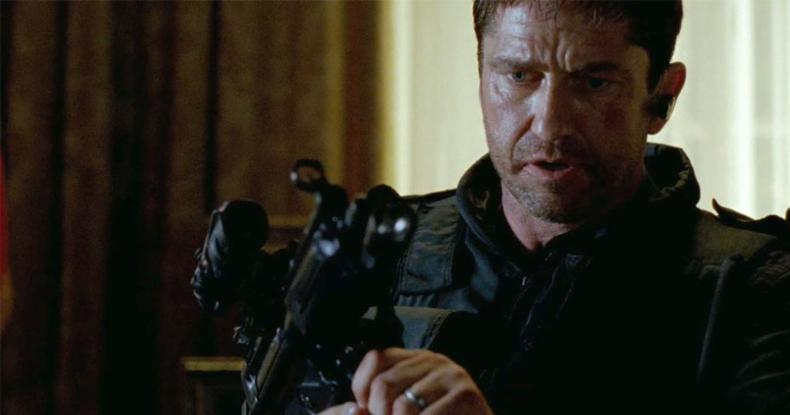
Performances are almost universally uninspired, with the exception of Gerard Butler’s effort. As Mike Banning, Butler manages to inject a small helping of gusto whenever he is present on-screen and also during breaks from under-his-breath muttering. The role is ultimately one-dimensional but that’s no more than required, fuelling the simplicity fire. It’s also a dimension more than most of the other deliveries. As President Asher, Aaron Eckhart has very little to do other than conjure the occasional grimace which, incidentally, looks the same irrespective of whether or not he’s missing out on ice-cream or being held hostage by terrorists. Perhaps the most problematic character is Dylan McDermott’s Secret Service agent Dave Forbes whose moral dynamic flip-flops around more than a fish out of water. Female persons are inexcusably shunted to background; the likes of Radha Mitchell, Ashley Judd and Melissa Leo are less than secondary factors. Morgan Freeman ought to get back to be being God.

Olympus Has Fallen unfortunately stumbles and falls from the get-go, struggling to regain any semblance of steady-footedness thenceforth. A decent Gerard Butler performance cannot prevent the inevitable stern wave of unnecessarily harsh undertones from washing away any potential puddles of fun. It’s not great.

Calvary (2014)

★★★★

Director: John Michael McDonagh

Release Date: April 11th, 2014 (UK); August 1st, 2014 (US)

Genre: Comedy; Drama

Starring: Brendan Gleeson, Chris O’Dowd, Kelly Reilly, Aidan Gillen

John Michael McDonagh’s second venture into the directorial settee is a significant improvement on his fun but ultimately forgettable 2011 debut The Guard. In Calvary, many previously utilised elements are retained — namely Brendan Gleeson, dark comedic undertones and Ireland — but an additional steadfast formula heralding both intrigue and earnestness offers robust support to these familiarities. This time around we’re essentially presented with the makings of a whodunit mystery, only nothing has been ‘done’ yet. It’s a ploy that keeps you guessing, one that forges with bleak humour and traces of hearty emotion (just about) resultantly presenting a film worthy of the talent displayed on-screen and the guile emitted from those off-screen.

As one of the more considerate residents of Sligo, Father James Lavelle (Brendan Gleeson) often finds himself at the quarrelsome mercy of those whose problems determine their lives. His priesthood is undoubtedly a factor in this invariable trust too, only said profession is one James mightn’t be too fond of presently given his life has just been threatened by a troubled voice emanating from the other side of a confession booth. “Sunday week” is seemingly his final calling, because that way he’ll have a few days to get his affairs in order. How thoughtful.

Perhaps Calvary’s greatest strength is that it manages to successfully fluctuate between a variety of modes without losing its primary sense of direction. Most obvious is the blackly comedic tone that hollowly reverberates throughout proceedings. It should come as no surprise to those well-versed in the work of the McDonagh siblings — brother Martin wrote and directed the wonderfully downbeat In Bruges — that laughs are placed on a pedestal above the occasional murmurings of insensitivity here, but each quip is genuine in nature and far from callous. The film is akin to a live-action version of Guess Who? as numerous distinct personifications manifest on screen. At one point James is informed, “Playing you though now, that might be interesting,” enforcing this odd feeling of different characters role-playing. Many of the actors are funny in their caricature mannerisms, but there are a few who especially stand out by way of effortlessly humorous portrayals. Killian Scott is particularly amusing as the naive Milo, his stoic facial expressions accentuating a comical deadpan delivery (“The war on terror has no borders”). The ignorant doctor of Sligo, Frank Harte is gauged efficiently by Aidan Gillen; funny, intimating and overtly suspicious all in equal measure.

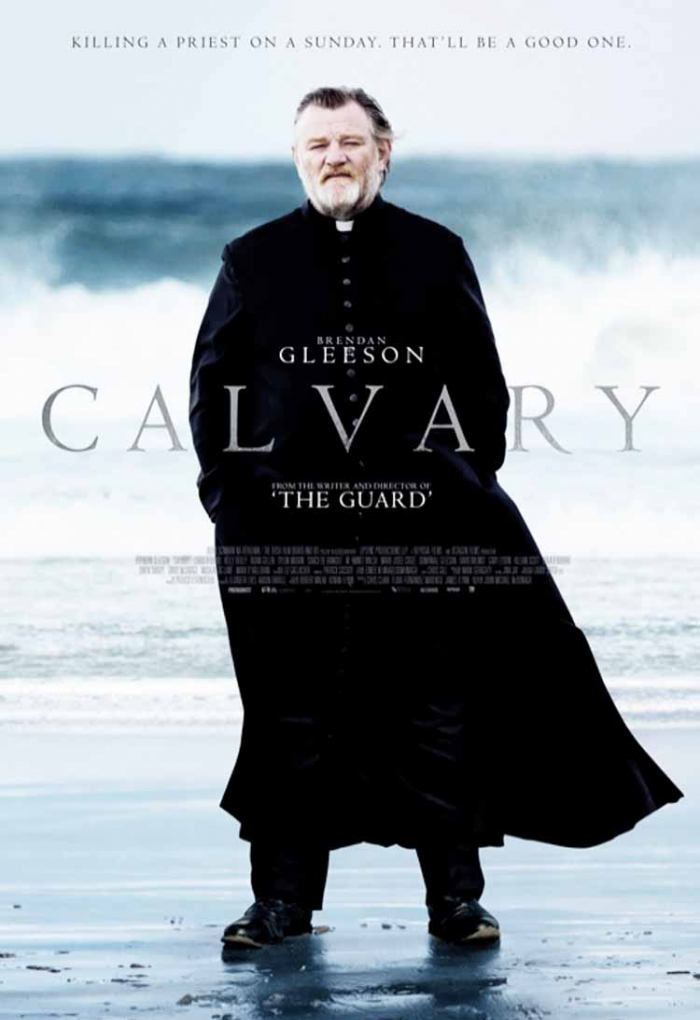
Brendan Gleeson carries the weight of the film upon his shoulders for its entirety (the camera hardly wanders from his bearded jawline) and evokes a sense of attachment in tandem with the viewer from the get-go. It’s not necessarily sympathy that we feel — James peculiarly appears in control of his own destiny despite the threat on his life — but rather it is the priest’s accommodating presence to those around him that warmly rubs off on us with an amiable sheen. Aside from the comedy then, is a story about a man attempting to come to terms with his profession, his faith and effectively his own life. James is unable to assemble the frantic thoughts racing through his own head never mind those of others, yet he still tries: “Everything’s fine”, he says almost systematically before realising his own desperate predicament, “I mean no, everything’s not fine”.

As the film progresses director John Michael McDonagh raises the currently prominent issue of priesthood stigma, motioning towards prejudgement and the idea of tarring all with the sins of a few — we become more aware of James as a human being, somebody dealing with more problems than any it seems. A notably poignant scene towards the fraught conclusion embodies the sentiment of forgiveness and wholly captures a sincerely heartfelt air that McDonagh absolutely appears to have intentionally sought out. Calvary exhibits a serious tone that never becomes overbearing thanks largely to a number of chuckle-worthy happenings, but a serious tone that demands consideration nonetheless.

The third side of Calvary’s narrative triangle is the aforementioned murder mystery element, and it too meshes well with the other components. From the exceedingly off-kilter opening, the film garners intrigue as a tension builds. There are constant references to sinning, to death and wrong-doing, remarks almost always aimed indirectly at James (“Evil thoughts floating around”). These serve as frequent reminders amongst the raft of humour and seriousness that there is a conundrum demanding solution. Though some characters occupy characteristics too obvious to be genuinely threatening, McDonagh’s dialogue-driven plot ensures that just about anybody could be the instigator of violence. Maybe the knife-wielder is Dylan Moran’s upper-class hedonist Fitzgerald, or perhaps it is Kelly Reilly’s distressed Fiona Lavelle who has her hand on the trigger — there are more than enough candidates offered up to consistently make us doubt ourselves as we attempt to play detective alongside Father James. One thing is for sure: as wide-shots of vast drumlins are shown leering over the town of Sligo, a progressively uneasy mentality begins to unfairly haunt our lead.

After an exceedingly well-executed hour and a half that sufficiently garners enough pent-up curiosity, Calvary does sadly struggle to keep a lid on proceedings during the final act. Events come across as slightly rushed without meaningful conviction, and one or two questions remain unanswered — though not in a self-inquisitive way, but rather completely unnecessarily.

With the exception of a far from catastrophic concluding blot, Calvary admirably manages to juggle humour, intrigue and seriousness without compromising any element. Presently, after the completion of two native outings, John Michael McDonagh isn’t all that far from replicating his brother’s In Bruges-esque achievement, a pretty darn good feat in itself.

Jurassic Park (1993)

★★★★

Director: Steven Spielberg

Release Date: June 11th, 1993 (US); July 16th, 1993 (UK)

Genre: Adventure; Science-fiction

Starring: Sam Neill, Laura Dern, Jeff Goldblum, Richard Attenborough

Who knew rippling water could be so menacing? Steven Spielberg’s early 90s dino classic swings from a slyly humorous thrill-ride to a tense environmental duel harbouring geopolitical connotations. Visually enticing beyond its years, the opening of Jurassic Park’s gates ushers forth a landmark in technological achievement on screen with effects that wouldn’t look too far out of place amongst the CGI blockbuster behemoths of today. There are one or two missteps along the way, most notably a paternal plot strand that feels forced rather than instinctive and an outrageous accent that seeps from the mouth of Richard Attenborough which at times threatens to boil over into caricature territory. Subtlety mightn’t be on the menu (that spot is reserved for human beings) and nor should it be in this rip-roaring tale of imagination, immorality and animatronics.

After a worker is killed by an errant Velociraptor, lawyer Donald Gennaro (Martin Ferraro) converges on Jurassic Park, an island owned by entrepreneur John Hammond (Richard Attenborough) and inhabited by cloned dinosaurs. Hammond simultaneously invites doctors Alan Grant (Sam Neill) and Ellie Sattler (Laura Dern), a palaeontologist and palaeobotanist respectively, to join the certification jaunt knowing the pair have more than keen interest in the fossil business. Mathematician Ian Malcolm (Jeff Goldblum) gets wind of the goings-on too and accompanies the party on their venture around the island that is prospected to open publicly in the near future. They ought to fix that fencing first though.

From the moment our ragtag band of explorers and suits reach their ill-fated destination, David Koepp’s screenplay based on Michael Crichton’s novel — also a co-writer here — strikes up a juxtaposition bearing an awesome visual gloss, but with a dirty underbelly. We first see the immense dinosaurs roaming across the landscape at the same time as Dr. Grant and company, the creatures’ awe-inspiring repertoire generating a sense of splendour. However, it’s not long before crass ignorance and abject misconduct take over; touring car doors are missing locks, the park is understaffed, a disinterested slob controls central safety measures and flimsy wired fencing is implemented as a harnessing mechanism. In essence, the park is a sham.

This notion of lawlessness disguised as grandeur is developed further as it latches onto certain characters. In a scene pivotal to the narrative’s apparent wary message, the group settle around a sleek table to discuss degrees of wrong. Is humanity’s imperious domination over nature — mirrored by CEO John Hammond’s genetic manipulation and cloning — immoral? Effectively, is this the rape of the natural world, to paraphrase mathematician Ian? Financial gain is presented as the ultimate destination for some (“We will have a coupon day or something”) whereas it’s the inherent allure of discovery for others. Spielberg refrains from indirectness here, instead placing his cards on the table and facing the query head on. The film asks questions that are perhaps even more relevant to this day, and doesn’t shirk away from picking sides. It’s a mature approach that, coupled with a visual affluence, successfully challenges the viewer to consider external prosperity gained at the cost of nefarious biochemical control and human tyranny over nature.

Tonally, Spielberg hammers a balance between the geopolitical and the humorous. Admirably, there’s no shortage of the latter as we see a witty, banterous dynamic rear between the various characters on display. As resident number-cruncher Ian, Jeff Goldblum scoops and skilfully delivers many of the funniest quips. Goldblum’s timing is terrific and the film would’ve benefited further if he had garnered more screen time towards the conclusion. Sam Neill’s Dr. Alan Grant relays humour cut from a blunter cloth, and his pseudo-Indiana Jones demeanour — the attire, the adventurous mind, the standoffish personality — is a tad camp, but amusing when paired alongside Ian, his polar opposite. In fact, an ongoing campiness exists throughout the film, embodied by zoomed-in camera shots on shocked faces and the occasional line cheesy in obviousness (“They’re approaching the tyrannosaur pen”).

The only significant issue Jurassic Park must contend with is a sub-plot that is unnecessary in existence and contrived in execution. John Hammond’s grandchildren arrive mid-way through, and it just so happens that they find themselves under the care of Dr. Grant, who dislikes children (“They smell”). Though the actors do a fine job and present a duo of child characters who are not in any way annoying, their inclusion feels primarily like a method solely intent on generating sympathy where sympathy is superfluous to requirements. At a stretch, it is conceivable to consider that the intention behind these characters is to reflect civilisation’s should-be protective instinct towards nature, though there is already enough weight behind this particular cog.

Other than Richard Attenborough’s disastrous Scottish accent that chimes more off-putting than funny, the remaining performances invariably contribute peripheral goofiness and/or tension. Laura Dern is Dr. Ellie Sattler and endears from start until finish. Samuel L. Jackson’s hard-headed poise is particularly humorous, playing a cigarette smoking engineer who oversees many of the park’s operations. Computer geek Dennis Nedry (paha) grumbles in his chair and bumbles in the rain — pathetic fallacy is almost a character on its own — and funny man Wayne Knight portrays this ineptness as well as anybody. And aside from the accent, Attenborough does well as the increasingly flaying visionary whose plans are progressively falling apart.

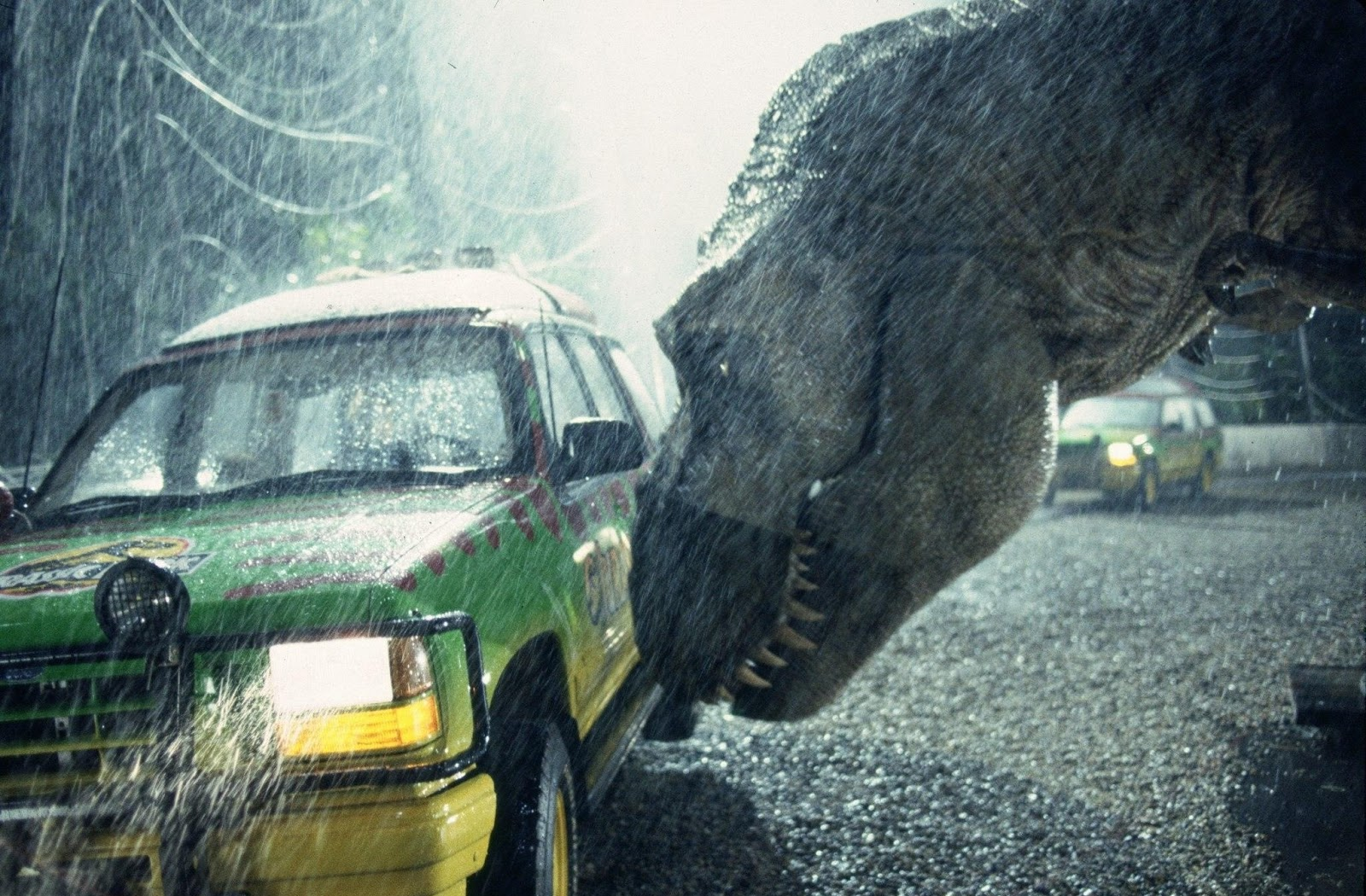
When we aren’t laughing or contemplating moralities, a brooding atmosphere grabs hold and gains momentum as the film evolves. The T-Rex reveal is timely; held back long enough to allow simmering anxiety and in turn create a mystique that bellows danger upon the dinosaur’s appearance. Cinematographer Dean Cundey captures the mechanical appearance of the park where metal fences, armoured vehicles, durable weapons and giant food dispensers retract from the dinosaurs’ animatronic motions, subsequently accentuating their perceived fluidity. Some scintillating sound work complements the tremendous visual array and bolsters said ominous atmosphere.

“We never had control, that’s the illusion!” bellows Dr. Sattler as proceedings begin to go awry. The line effectively sums up an inquisitive narrative that denounces immorality, but also wholly contradicts the efforts of Spielberg and co who absolutely always have control and resultantly chisel out an optical cinematic milestone.

Midnight in Paris (2011)

★★★

Director: Woody Allen

Release Date: June 10th, 2011 (US); October 7th, 2011 (UK)

Genre: Comedy; Fantasy; Romance

Starring: Owen Wilson, Rachel McAdams, Marion Cotillard

As images of modern Paris caressed by romanticising tones that blare heartily from a trumpet fade in and out of vision, we are made aware of perceived idealism and hereditary sentiment. The French capital has forever been associated with society’s most esteemed virtues; desires of art and literature and fashion and love, a variety of tropes that amalgamate together as one in Woody Allen’s Midnight in Paris. You may find yourself all at sea, or at least caught by the tide as events unfold on screen if, like myself, you’re not a quintessential artiste, or a fashionista, or a literary encyclopaedia. Perhaps some form of salvage anchor exists for those who have experienced the aura of Paris. For this artless dodger though, Allen’s highly nuanced nostalgic whim certainly paints a beautiful picture, but ultimately fails to connect.

For Gil Pender (Owen Wilson), achieving success as a Hollywood screenwriter isn’t enough. He wishes to expand his artistic portfolio by penning a novel, but is unfortunately struggling to gather any inspiration. That’s where a wander to Paris offers respite, therefore off the back of a vacation funded by his wife Inez’s (Rachel McAdams) parents, Gil sees hope. Only, hope isn’t all he sees. Having escaped both the drones of an obnoxious family friend and his other half’s party manifesto, Gil finds himself slap-bang amongst the dazzling costumes and enigmatic personalities of an era he vociferously admires, the 1920s. It could be the wine, or perhaps Gil’s quest for inspiration has genuinely uncovered the Lost Generation.

Illuminated by quarantined nostalgia, Midnight in Paris firmly sinks its reels into a refined foundation. Gil champions the past, whereas others are either sceptical over his ambition or simply put-off by his tendency to reminisce. He lusts over the 1920s, wishing nature had granted him a spot at the dinner table of said time period. The main character in Gil’s novel works in a “nostalgia shop,” essentially reflecting the writer’s non-peripheral outlook on life. For 15 minutes, the presentation of a man who seemingly has everything going his way — affluence, a beautiful wife and a prosperous career — but remains unable to shake the cobwebs of a non-romantic reality, carries some weight.

Unfortunately the narrative somewhat spontaneously retreats a century backwards and kick-starts a conveyor belt of the intellectual. We meet Hemingway, the Fitzgeralds, Dalí and a whole host of other scholars, artists, and fanciful knick-knacks. As Gil interacts with his heroes the problem is never clearer: these people are his heroes, not the audience’s — that would be to assume all Woody Allen outings are observed by a precise denomination, a notion that’s simply untrue given Midnight in Paris made over $150 million at the box office. Traits that may be recognised by artistically knowledgeably viewers otherwise play unsuccessfully to puzzled minds. Perhaps this is not a fault on the filmmaker’s end and an issue that instead lies squarely with those, like myself, who are less well-versed in the lives of Hemingway and company. Not every film is shot through a universal lens. Sadly for us common folk, much of Midnight in Paris renders superfluous as more vague faces appear spouting diatribes that are relayed with concealed significance. The phrase “we should quit the idle chatter” reverberates without implementation.

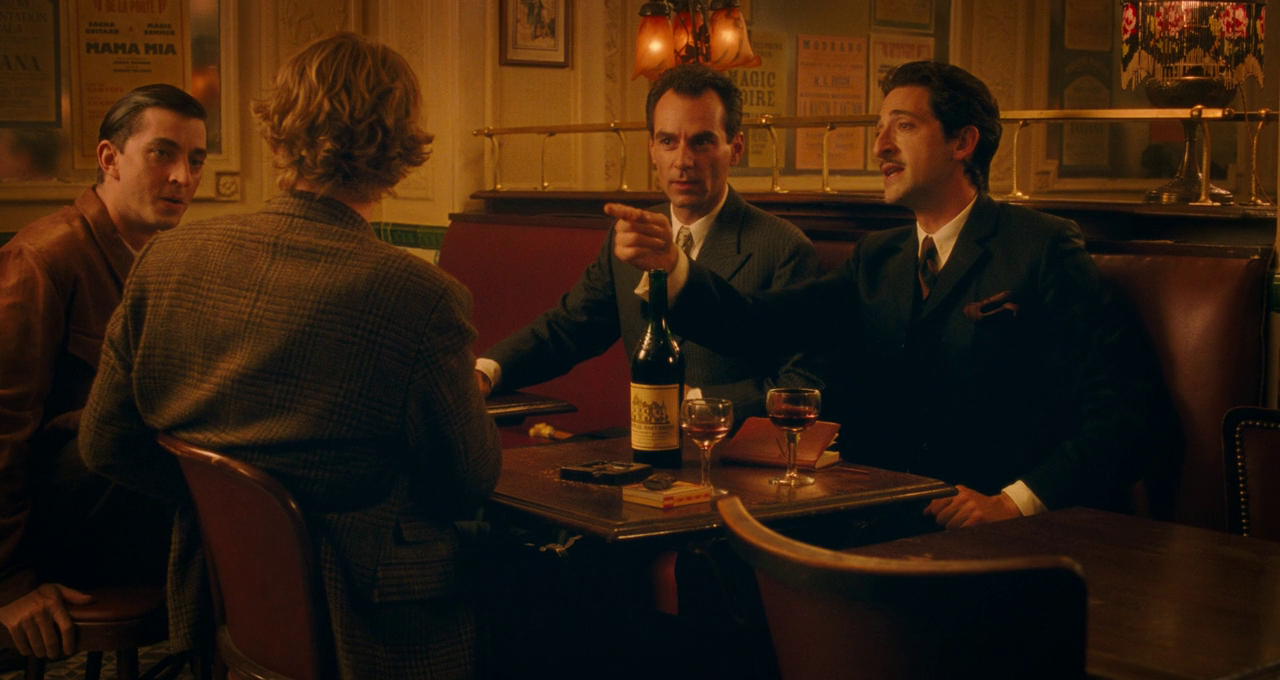
Allen formulates a familiar whimsical tone that brims full of quirkiness. Abiding by this eccentric slant on proceedings, the highbrow collection of 1920s (and earlier) historical figures are all portrayed without too much sincerity. The actors take to the screen like a hungry herd of cattle, displaying enough scenery chewing to clear any field of its green sheen. Everyone seems to be having a blast and although the various classical persons fluctuate in terms of how decipherable they are, an infectious joviality often washes over proceedings. Tom Hiddleston couples with Alison Phil as F. Scott Fitzgerald and wife Zelda respectively, and both are undoubtedly enjoying playing dress-up; Phil in particular accentuates those vowels. Kathy Bates shows up as Gertrude Stein, delighting as ever on cue. Adrien Brody hams it up more than any other as Salvador Dalí in a truly humorous display that overrules any notion of personal ignorance.

The film plays up the juxtaposition of modern American consumerist Paris versus romantic Renaissance-laden Paris, a contradiction embodied emphatically by Gil and his wife Inez. Owen Wilson is very good as the inspiration deprived writer turned wide-eyed child in a candy store, whose dream to live in Paris is far from the mind of Rachel McAdams’ Inez. Inez is the typical tourist who sees Paris merely in its present day form as a temporary drop-out zone, and not for its natural inbuilt beauty — unlike her husband, she hates how the city looks in the rain. McAdams is fine in her role too, but struggles for breath at times given the nature of her one-dimensional character. The pair’s relationship is never really believable, a sentiment raised by Marion Cotillard’s Adriana in between escapades of Basil Exposition (“I dropped in from 2010″… “You DID?!”).

Shot by cinematographer Darius Khondji, the film basks in a wonderfully rich texture that is quite the opposite of the quaint plot which invariably ducks and dives. Too many on screen presences mean a few are lost in the shuffle; antiques dealer Gabrielle feels like a character without conviction, and Inez’s mother, other than manifesting as a dead ringer for Cate Blanchett’s Jasmine a decade on, has very little to do. After traipsing through party after party full of observant pundits you begin to wonder why nobody is picking up on Gil’s 21st century fashion sense.

Midnight in Paris’ admirable intentions are there for all to see, but perhaps only a few will fully comprehend. That is not to say the film is lacking in watchability, for a host of energetic performances alongside a narrative that accommodates more than a trace of intrigue through its humorous comparison in culture certainly offers delight in small doses.

The House of the Devil (2009)

★★★★

Director: Ti West

Release Date: October 30th, 2009 (US limited)

Genre: Horror

Starring: Jocelin Donahue, Tom Noonan, Greta Gerwig

Ti West must have endured the most haunted of houses during his childhood, because only through first-hand experience can somebody gain, preserve and later paint such an enticing scary picture. Both a thematic precursor to his 2011 spook-gala The Innkeepers and a nostalgic nod to horror in general, The House of the Devil serves up a cauldron full of tension and idiosyncratic peculiarities. Framed within a B movie context where babysitters are in danger, wooden houses creak with undesirable exaggeration and a grainy glaze smoulders from the screen, the film embodies the work of a director smart enough to create a piece that stands out in its maturity whilst also retaining key horror tropes. West admirably holds back in an area where many others have succumbed to generic jump-scares and gore, instead teasing and withholding clarification before building to a timely, creepy crescendo. Paying homage to the haunted house flicks of the 70s and 80s, The House of the Devil concludes the greatest fear is that which cannot be explained, and sometimes the unexplainable thrives inside four walls.

Struggling for cash and trying to fend off a landlady breathing down her neck, Samantha (Jocelin Donahue) throws her name in the babysitting hat. After an odd conversation or two over the phone, she accepts a job offer at short notice given the monetary incentive. Upon reaching her office for the night — a secluded manor hidden amongst the arching trees and a wispy fog — Samantha meets the voice on the other end of her phone calls, Mr. Ulman (Tom Noonan), whose edgy nature reflects the pair’s recent kooky interactions. In fact, Mr. Ulman’s demeanour ain’t the only bizarre manifestation, and it looks like Samantha is in for a long night. Pizza, anybody?

Undoubtedly, The House of the Devil’s greatest strength is its restraint; both from divulging all of the answers immediately, and from rashly conceding to the genericism that has hampered the land of fright — or not — in recent years. Here, mystery shrouds all. Noises echo without a source. Light switches don’t exist in their usual spot on the wall. From the get-go, and even more so when goings-on reach the ill-fated haunted house, there extrinsically exists an offbeat ambiance. Ti West generates a tone that always promises an explosion of manic torment — we’re fully aware that things could kick-off at any moment — but one that relentlessly goads the viewer as tension creeps higher and higher. An inspired tactic, really.

Jeff Grace’s score drones one moment, as if signalling an inert-yet-eerie mundanity, before tingling the ears with sharp bursts that are of the genre but difficult to pinpoint. The cinematography too, relayed by Eliot Rockett, adds to an underlying sense of confusion as the camera stalks Samantha around the house, watching her, waiting for something to frighten; for a head to grace a mirror, or a silhouette to find the shadows, or a figure to appear from behind a door. Samantha often peers from windows and, as the camera pans backwards, we see her for the stranded victim that she is, unbeknown, trapped inside a house that evoked warnings signs way before the front door rattled its hinges to greet our protagonist.

West successfully bolsters this unwavering feeling of mystery and disorientation by suggesting a splatter-fest early on, and subsequently reshuffling the narrative towards the aforementioned suspense-fuelled happenings. Certainly, The House of the Devil avoids any universal horror trap holes, yet the film still reverberates B movie vibes that are welcomed rather than denounced. The premise hardly emits intuition, whereas the execution does entirely and therein lies the success. Characters find a place on the caricature spectrum and remain there throughout; the tall Mr. Ulman’s exasperated oddness contrasts his wife’s sheik, Gothic appearance — it’s not lost on the viewer that she ascends from the basement — and Samantha’s goofy friend Megan is seemingly only able to speak hokily (“How d’ya like them apples?”). Upon conclusion we are greeted by grimy yellow credits, though not before a series of exceedingly haunting flashing imagery. Off-putting in the hands of another, these familiar tropes work effectively here because they coincide with West’s unusually, expertly, tentative approach.

Though not as concise as the narrative, and also slightly constrained by common characters, the performances are solid. Leading the way as Samantha, Jocelin Donahue displays the type of defiant resolve towards the beginning that ends up getting you in trouble, before steadily warping into a paranoid employee. If only she’d listened to her mate Megan, played by Greta Gerwig, whose “it’s too good to be true” caution warrants observation. Gerwig doesn’t have an awful lot to do here, though going by her recent work there’s no questing the Californian’s acting prowess. The most enjoyable performance is evasive and intriguing, delivered by Tom Noonan as Mr. Ulman. Noonan’s unassured motions are the source from which mystery and unusualness sprinkle, aided by his knack for not directly answering questions (“No, not exactly…”). Mary Woronov has little to do as Mrs. Ulman, and A. J. Bowen also makes a fruitless appearance, consolidating the problem that sees one character too many materialise. Listen out for the voice of Girls favourite Lena Dunham.

Ti West is purposeful in direction, creating an atmosphere of ascending dread and hopeless lunacy. His meticulous input sees fear spawn from peculiarity, so much so that even nuances such as the tallness of a stranger promotes creep, and this execution thrives alongside a grin-inducing B movie panache. The House of the Devil is an appreciative mishmash of horror; from haunted house to satanic ritual to psychological thriller, with a gloss of gore. Wait until the end too, for when that inevitable crescendo hits, there may yet be a surprise in store.

This Is 40 (2013)

★★

Director: Judd Apatow

Release Date: December 21st, 2012 (US); February 14th, 2013 (UK)

Genre: Comedy

Starring: Leslie Mann, Paul Rudd

The Valentine’s Day film always goads suspicion. Like releasing a Christmas flick in December, a children’s adventure during mid-term, or a horror movie on Halloween, the legitimacy of the proverbial February 14th film (the date This Is 40 was released in the UK) often comes into question, at least in these semi-cynical eyes. How would it fare in cinemas on any other generic weekend? A moot point really, particularly in terms of critically assessing the piece. But the decision to hold out for a specific release date lends its hand to a lack of confidence in the product in the first place. And sadly, when it comes to Judd Apatow’s This Is 40, a confidence deficit is only one of many headaches. Misdirection, grating characters and a badly written screenplay sit atop a list of negative traits associated with a comedy that’s only occasionally funny, and ought to thank its lucky stars that some semblance of watch-ability is retained through the accommodating faces of Leslie Mann and Paul Rudd.

Seemingly happily married, but unhappily ageing, Pete (Paul Rudd) and Debbie (Leslie Mann) live with their two young daughters. They must be pretty well-off too as Debbie owns a boutique and Pete runs his own record label; a venture he probably undertook to get away from his wife every now and again, or maybe it was to embellish himself in a false sense of youthful hipness. It’s not that he doesn’t care for Debbie, but there’s only so much baseless moaning a human can endure. Debbie has just turned 38 — that’s forty to every other sane person — and cannot handle the overbearing, horrifying toll it is taking on her. Only nobody really cares about her age. Especially not the audience. And that’s the problem.

Going into a film titled “This Is 40” you are absolutely aware of the self-opulence about to be hurled your way, but that doesn’t soften any blows from water balloons filled with whine (and not the alcoholic kind) as they relentlessly strike your face. Debbie cannot fathom waking up to the big four-oh, which is a petty mindset in itself but might have had some comedic legs within the boundaries of structured character development and a cohesive narrative. However she’s too jolly too often, making it difficult to engage with any semblance of sympathy that may or may not exist. Debbie lies on medical forms to hide her age, yet she doesn’t even bother to use a consistent date of birth. Further tarnishing matters is her relationship with husband Pete, one that skips foot-by-foot between hot coals of happiness and hatred quicker than the first penis joke is sounded. The duo get up to generic antic after generic antic, from hash-cookie gorging to awkward family gatherings that are no longer awkward. Heck, the film itself struggles to identify any prerogative – “The sort of sequel to Knocked Up,” reads the poster.

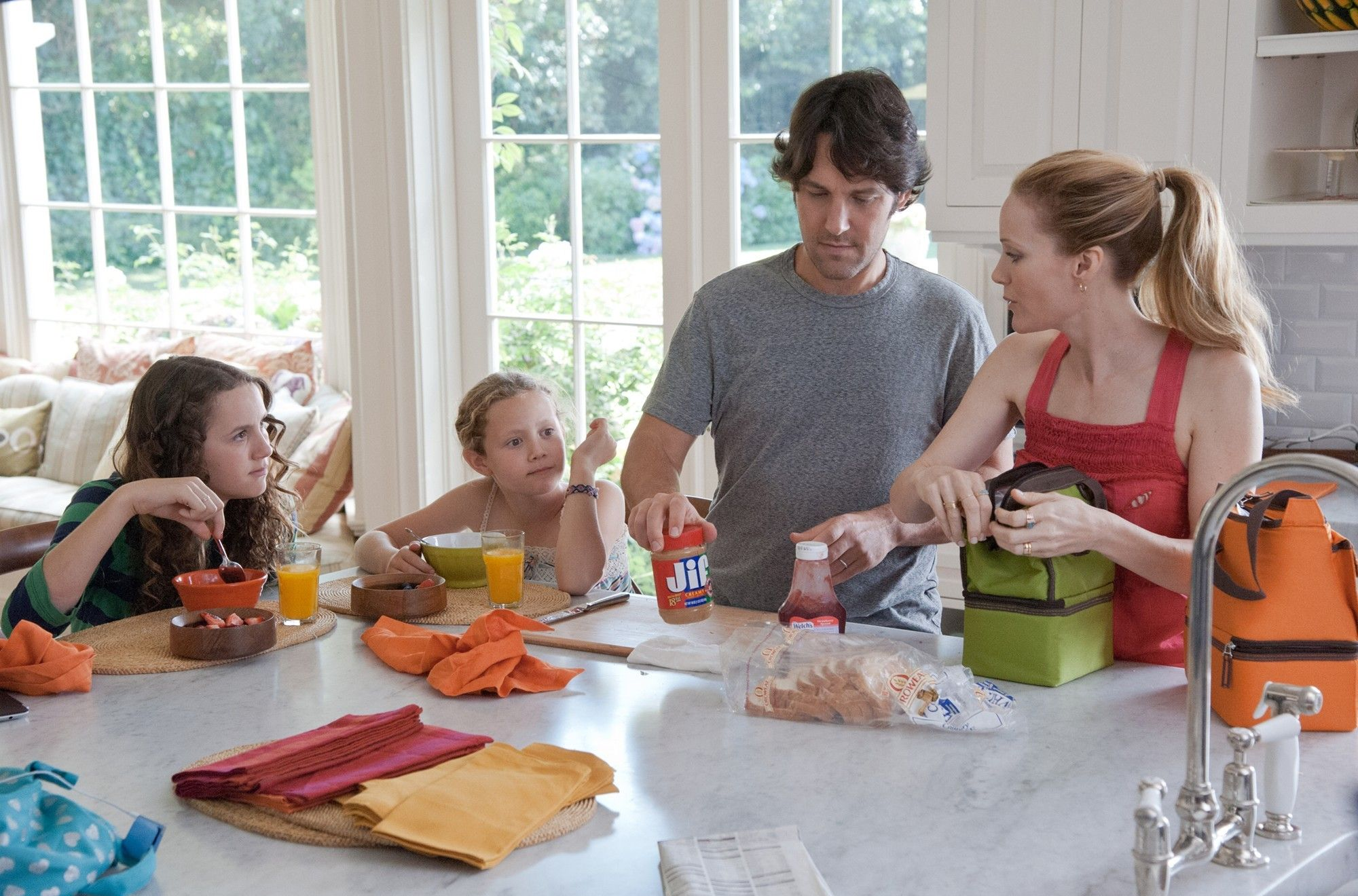
The best character is Sadie, Pete and Debbie’s eldest daughter, because she is easy to relate to; when met with end-of-the-world stipulations we concur with her inexperienced spitefulness, knowing it’s not terminal. There’s a significant difference between a 13-year-old cursing the earth over a Lost ban enforced by her parents, and a grown-up churlishly denouncing her existence over age. Besides, if someone prevented me from watching Lost, I’d lose the plot too (“It’s not frying my brain, it’s blowing my mind”). Interestingly, This Is 40 is an Apatow family affair: Judd directs, Leslie stars, and their two children Maude and Iris act.

Another nail in the coffin is hammered tediously by way of a fairly uneventful plot. Although comedies are driven first and foremost by gags, quips and puns, a baseline story must be present in order to provide a buffer. Nothing happens in the opening 30 minutes (of an unnecessarily long two hour runtime), other than the establishment of how great the family before our eyes have it in life. Both daughters amble around with iPads, the two parents drive their own glimmering cars, the house is spacious and homely, Pete spends his time gorging on delicious-looking cakes and Debbie eats out with her father at up-scale restaurants. Sounds pretty good to me. And other than the groan-inducing issue of getting older that pitifully tries to veil itself as a narrative, no authentic dramas arise until proceedings are too far gone (by that time, the JJ Abrams condemnation has played out and there’s no way back into my good books). Historically Apatow has been hit-or-miss in the director’s chair, and neither his directorial nor his writing skills are up to standard here.

Thankfully, there are a few positives. Even though many characters are lifeless, they benefit enormously from embodiment by a pair of very likeable actors. Paul Rudd is up there with the best comedic performers around today, someone whose timing and wit often exceed the material in front of him. Pete is not the most annoying character, but without the spark provided by Rudd he’d likely be the most boring — instead, that accolade goes to camera-fodder Desi, played by Megan Fox, whose existence in the film seems only to advocate prostitution because it affords you a nice car. Leslie Mann, although straddled by the gripe-ridden Debbie, once or twice manages to valiantly charm her way through an annoying character and relax into that recognisable humorous self in moments of respite. Chris O’Dowd is criminally underused as an employee at Pete’s record company, but manages to be funny when given the chance. Melissa McCarthy, Lena Dunham and Jason Segel also find time for a cup of coffee. Oh, and there’s a very funny Simon & Garfunkel joke. I’m out.

Hampered by shoddy characters, all too familiar comedy tropes and a messy narrative, This Is 40 ain’t even good enough to be a one star film. Occasional murmurs of humour seep through, and likeable faces shield the piece from too much brutal disharmony, but a lot more is required. Sadly, neither man(n) can save this one: Ant nor Leslie.

Fargo (1996)

★★★★★

Directors: Joel and Ethan Coen

Release Date: April 5th, 1996 (US); May 31st, 1996 (UK)

Genre: Crime; Drama; Thriller

Starring: Frances McDormand, Steve Buscemi, William H. Macy

A jack of all trades, and perhaps one of the best. Shuttled forth by a bleakly comedic narrative, Fargo occasionally amps up the awkward, tie-loosening tension before ploughing right and left into a caveat of blunt criminality. There’s an inherently dramatic element too, the underbelly of bumbling luck and the ultimate tale of karma. The Coen brothers boast a unique style; precise in their crafting and often ironic in their delivery, a deliriously absorbing mantra that stretches far and wide here. Characters gargle seemingly innocuous lines of dialogue, yet a nonchalant poise often demands bouts of laughter. And therein lies the film’s most admirable quality: it makes you guffaw through moments of sadism, but never denounces you for doing so. The sibling duo at the helm aren’t overly serious in their direction (only when required), yet still manage to divulge a genuine sense of authentic story-telling. In Fargo, every scene holds a certain weight and although engagement with the particulars is at the viewer’s discretion, there’s never a sense of an overbearing burden. Yaaaa.

In Fargo, North Dakota, police chief Marge Gunderson (Frances McDormand) — a woman as cheerful as she is pregnant — is called to a road-side accident harbouring two casualties. Only it’s not an accident, and is instead part of a series of unfortunate events set alight by car salesman Gerry Lundegaard (William H. Macy) in an attempt to recoup much needed cash for his family. A master plan that would garner appreciation from the likes of John Kramer, Gerry hires a pair of quintessential henchmen to kidnap his wife and subsequently demand an $80,000 ransom, the spoils of which would be shared between the trio of plotters. Only Gerry is deviously untangling his own personal puppeteering strings, ready to juggle them against his father-in-law in an attempt to gain one million dollars from the extravaganza. In Gerry’s anxiety-plastered eyes, family comes first… and last.

There’s an ever-present aura that wilfully jaunts around any Coen film. It’s easy to spot, deliberate in implementation but astutely subtle as to never degrade proceedings. Drawing upon the experience of 16 previous films, seeing the words “Joel and Ethan Coen” sprawl across the screen nowadays prompts an intrinsic knowledge that meticulous sardonicism will soon be lingering. Released when their three-decade-old filmmaking odyssey was eighteen years younger, Fargo might just be the sibling duo’s most complete diamond of irony. Some films might be more wholesome in their flippant ideology, for example O Brother, Where Art Thou? and its caper-esque comedic quality, whereas others will undoubtedly offer greater absorbency through numerous interpretations and delightful tones, such as Inside Llewyn Davis. You’d be hard-pressed to come up with another Coen creation as genre-splicing as Fargo though, for this conglomeration of classification is what cinema is all about.

In a Minnesotan setting bitten by frost and populated with oddities constantly attempting to cover their innocuous tracks (“I don’t vouch for him”) the Coen brothers present and develop a number of wholly recognisable characters. Carl Showalter and Gaear Grimsrud are the absolute epitome of a caricature criminal partnership: the snivelling manipulator, out of his depth but armed with a motor mouth, and the dumb brute, purposeful only in violent outbursts or foul language. Gerry Lundegaard is the struggling businessman who ventures further into the ocean of uncertainty than he should, and is all the more blundering for it. His father-in-law Wade Gustafson has more money than patience, and decreases in accessibility when he knows his cash is at risk (“A lotta damn money” is one of the funniest gags). These characters are familiar, but they are also affectionately handled and escorted through a variety of tonal preoccupations, from comedy to crime to drama, constantly forging energy and slap-stick-like commotion. Our child-bearing detective Marge is the only figure who detours from the norm; noticeably pregnant, deliriously good-humoured and actively chasing murderers are three traits that do not often mesh together. This hodgepodge collection of characters coupled alongside a narrative that explodes with vibrancy, will refrain from giving you enough time to reflect on what just happened before it makes you ponder what’s going to happen next.

Yet, in spite of a growing sense of madness, the Coens always appear fully in control. Although the narrative is idiosyncratic — one minute a Steve Buscemi facial expression will have your jaw aching and the next a gunshot will leave you in shock — there is a point, a certain method, to all on-screen antics. The craziness of each character reflects the madness of his or her actions, prompting us to consider the length of a person’s sanity during tough times, whilst simultaneously sending out a nod towards the wondrous scope of cinema. Masterfully, the Coens develop a blunt and sadistic sense of realism amongst the hilarities. Fargo details karma as a rapid mule with more bite than the cold landscape from which it festers. In this tale of people playing people playing people, only the people face the consequences.

Shepherded by Roger Deakins’ icy cinematography, the arctic setting becomes a player of its own as it seeps into every other aspect of the film. Most characters endure cold minds. Lasting shots of mundaneness appear frozen to the screen. There’s a stiff lack of motivation, embodied emphatically by Marge’s police partner who can only conjure up phrases such as, “Watch your step Margie,” and, “You okay Margie?” as the heavily pregnant woman inspects dead bodies. Even the comedy is frosty — plotting and kidnapping is carried out in an atmosphere far more jovial than intense. Though, the funny buck stops at murder, an action presented more chillingly and viscerally than any other.

Regular Coen contributors Frances McDormand and Steve Buscemi are once again on hand and, alongside William H. Macy, deliver terrific performances. Humour is the common denominator for the trio, though the source varies. For McDormand, an incessant politeness in the face of violence and misnomer creates a peculiar dynamic. McDormand’s poise throughout sees Marge one step ahead of the game, even when she’s a day or two behind the others. Entirely the opposite, then, is Macy as the bumbling goof businessman Gerry. Gerry’s idiocy is built from a spectrum of nervous facial expressions and worried posturing; an unassured plight that sees no positive solution. He’s anxious to a T, but so dud-like that you sort of expect his ridiculous plan to come off in a spectacularly inadvertent fashion. The third of three great performances derives from the acting chops of Steve Buscemi, whose raging demeanour funds a big-mouthed little guy not far removed from Tommy DeVito. He relentlessly contradicts himself and thus withholds attracting seriousness, but it’s obvious that Buscemi is having a blast with the role and fun is infectious. It also helps that he gets many of the funniest quips.

The Coen brothers leave nothing to chance and inject Fargo with fastidious application — it’s no surprise that a wintry white landscape pronounces vivid red blood. The film will keep you guessing, is littered with humour and completely embraces the medium from which it thrives. In doing so, it even has the wherewithal to reflect on the outrageousness of its characters’ wrong-doings.

In the often correct words of Roger Ebert, “Films like Fargo are why I love the movies”.