Frances Ha (2013)

★★★★

Frances Ha PosterDirector: Noah Baumbach

Release Date: May 17th, 2013 (US limited); July 26th, 2013 (UK)

Genre: Comedy; Drama; Romance

Starring: Greta Gerwig

There isn’t really a plot to Noah Baumbach’s low-key indie drama Frances Ha. Certainly not one of any conventional sort. We are thrown straight into the life of our central protagonist, the eponymous Frances (Greta Gerwig), without a proper introduction. From opening to closing she spends her time apartment hunting (this is the film’s central crisis), though Frances doesn’t seem all that worked up about her uncertain predicament. The screenplay, penned by Gerwig and Baumbach, is very loose — you get the feeling there was a lot of improvisation during filming.

And yet the whole thing bumbles along with excitable charm and an internal confidence born, perhaps, out of experience. It could be a Woody Allen venture: title cards pop up every so often detailing the various locations Frances attempts to settle (primarily around New York), and the nomad herself fits Allen’s ditzy mould. When she isn’t spending time with her best mate, who sports glasses with enormous lenses by the way, Frances is training to become a dancer. Unfortunately she ain’t quite up to the required standard and, in New York, triers don’t get paid: “I can’t even get outta the house on my feet”.

Characters often mumble incoherences, blabbing one minute about unaffordable rent bills and the next about finger injuries. In reality, despite what Aaron Sorkin would have us believe, we probably spend much of our time conversing in a similar fashion. Not that Baumbach’s film reflects real life: there is a scene where our luckless protagonist gallantly offers to pay the bill following a meal with a potential boyfriend (the body of her previous beau is still warm at this point), only for her card to be declined. Rather than letting Adam Driver’s Lev Shapiro — if that is his real name — do the honours, Frances bolts out of the restaurant and scampers around the neighbourhood looking for a cash point. She finds one eventually, reappearing at the table with some money and a randomly bloodied arm.

You laugh because the whole scenario is utterly bonkers, and it is one that cements the film’s reputation as a bible for clumsy folk. Frances Ha is like the Friends movie finally realised, only every character is Phoebe. This hodgepodge of kookiness is actually fairly endearing and lends itself to the overarching notion of misadventure. It transpires Frances is actually a pretty good dancer (“You were great tonight”), but her instructor opts to cut her from the Christmas play anyway. Is Frances the unluckiest person alive or is she simply too unprepared, her moment-to-moment style of living an inescapable and fruitless trap? Regardless, you stick with her because she refuses to give up her creative passion. That is admirable.

These underplayed indie outings are often left wide open when it comes to accusations of baselessness, and there is a sense that Baumbach only shot in black-and-white because there happened to be a spare roll lying around. But I don’t think the film aspires to be intentionally pithy. Indeed, there is a pithiness in the sense that it’s a quirky drama without an A-to-B plot and C-to-D script, but that’s just how it is in Baumbach’s New York. Another apartment dweller, Benji (Michael Zegen), wants to write for Saturday Night Live and suitably spends his days watching movies, presumably because procrastination is the key to comedic success.

Greta Gerwig plays Frances with a childlike innocence: she sleeps with the door ajar; she turns to her parents in a time of need; she engages in play fights with other resistant lodgers. There is even a moment where the camera cuts to her teaching a group of youngsters ballet, and she looks right at home. Grinning with a genuine smile, Gerwig superbly manages to captivate through a waft of potential annoyance, and as such you see and sympathise with the fragility bubbling beneath Frances’ surface.

Elegantly inelegant, the daydreamer relentlessly apologises to people when she’s probably only at fault two-thirds of the time. Solutions are right there at her fingertips yet she keeps washing her hands — a temporary job at the dance studio that would earn her some cash becomes available, but she is initially too impulsive (fed up with speculative opportunities?) to accept. The supporting players all contribute too, particularly Grace Gummer whose dissociative air is a terrific counterbalance to Gerwig’s friendliness.

Paul McCartney and David Bowie are part of a soundtrack that hops tactfully from in vogue pop to classical strings to early Hollywood-era romance. Sam Levy’s cinematography bears a trace of Wes Anderson — the camera often adopts a still frame that zips back and forth between characters in conversation. The film is generally mad, makes little sense, and exists in a hyper-surreal world where people do silly things and still manage to get by. But it is addictive and funny and sweet, and that’s all that matters really.

Frances Ha - Cast

Images credit: IMP Awards, Collider

Images copyright (©): ICF Films

Jaws (1975)

★★★★★

Jaws PosterDirector: Steven Spielberg

Release Date: June 20th, 1975 (US); December 26th, 1975 (UK)

Genre: Adventure; Drama; Thriller

Starring: Roy Scheider, Robert Shaw, Richard Dreyfuss

It is probably fair to say Jaws cemented Steven Spielberg’s status as a prominent athlete in the movie-making race. Released in 1975, the film ushered in a fresh era of monster flicks. Those hallmarks that we deem familiar in the genre today made their mainstream debut in Spielberg’s classic: the inaugural attack and subsequent denial; the saviour who is the only one bearing initial clarity; the prevention plan executed atop a wave of mayhem.

It is a blueprint that studios and filmmakers have followed since — the pitch for Alien famously included the tagline “Jaws in space” — primarily because the structure indiscriminately appeals to audiences. You only have to glance back at the last two summers to see the formula play out in Gareth Edwards’ Godzilla and Colin Trevorrow’s Jurassic World. Speaking of summer, Jaws is often also touted as the first seasonal blockbuster (it broke box office records upon release in the US). The catch? This blockbuster is one of those intelligently composed things.

Following the watery demise of a teenage girl via shark attack, the residents of Amity Island find themselves on high alert. Chief Martin Brody (Roy Scheider) is tasked with developing a solution, but when the problem takes the form of a person-guzzling creature solutions are hard to come by. Bill Butler’s camera focuses directly on the words “shark attack” as Brody punches them into the death certificate of the aforementioned teen, the surrounding silence signifying both the solemnity at hand and the imminent danger. Everybody is a potential target because, on Amity Island, everybody is water-bound.

The locale is a “summer town [that] needs summer dollars,” according to Mayor Larry Vaughn (Murray Hamilton). Speaking to an agitated Brody, he continues, “You yell shark and we’ve got a panic on our hands on the 4th of July.” Though his use of the word panic is probably a reference to any incoming tourists, chances are he is more concerned about panic on the business front. It’s commercialism versus well-being, a duel unethically buffeted by a mayor who slinks around in a bright suit looking like a candy floss vendor selling treats that appear appetising but are ultimately bad for your health. And it’s Brody who takes the brunt of his poor decision-making: after a grieving mother vents her fury to Brody’s face, the film evolves into a tale of redemption and vengeance.

A smart and often snarky screenplay accommodates various themes and elevates Jaws well beyond popcorn entertainment (though it can be just that if you want it to). Originally written by Peter Benchley, the screenplay was reshaped by Carl Gottlieb, adapting his own novel, as filming got under way. And to his credit Spielberg values the duo’s writing just as much as he does tension building and aquatic action. This means there is wit in abundance, “we’re gonna need a bigger boat” being the obvious calling card. It is more than just a throwaway line though — the iconic scene quite brilliantly combines comedy, timing, and terror.

The shark seems to strike out of the blue. Though precautions are in place (shutting down beaches etc.) everything seems a bit rushed, a bit chaotic, as if the appearance of the creature is a wholly uncommon event. A rubbery meteor thrashing into an otherwise idyllic seaside lifestyle. Then there are the constant distractions — while Brody tries to keep an eye on swimmers, a plethora of unwary residents inundate him with random musings. And when the islanders catch a bogus shark, the local photographer is too busy taking photos for anyone to notice it’s the wrong fish.

Like an old Wild West villain, the shark has a $3,000 bounty placed on its fin. We don’t see it for a long time, but we do catch a glimpse of the consequences left in the monster’s wake: a crab-strewn arm; a volcanic bloodbath; various images of unevenly dissected limbs. You can do nothing but watch as its grey silhouette stalks the dangling legs of helpless victims whose idea of a beach vacation involves more relaxation and less chomping. Simmering in the background is this domestic strand about a father trying to introduce his sons to a dangerous world, juggling the virtues of the sea with the violence of its inhabitants.

There is a masculine theme at play too, and it particularly rears when boatman Quint (Robert Shaw) shows up, gruff and tough, parading a confidence and idly disrespecting those around him. But there is more to Quint, a clouded morality that swims beneath the surface. Robert Shaw delivers a revelatory monologue with a look on his face that denotes unsubtly disguised horror in one of the film’s more serene, excellent scenes. He joins Brody and oceanographer Matt Hooper (Richard Dreyfuss) on a voyage to oust the shark and as the three guys get grimier and drunker, you constantly wonder just how exactly they’re going to conquer the aqua beast.

Jaws’ score is often heralded for its tense beat that builds to a crescendo, but it also bears a swooping grandiosity that marks the film’s action-adventure element. Sharp high notes chirp along pleasantly, notes that composer John Williams would go on to recycle for the first few Harry Potter outings. The film isn’t an out-and-out horror flick but it does dabble in gruesome visuals and a playfully heart pounding atmosphere.

There is a bit of dip in stress levels just before the final act plays out, but you let it slide as Spielberg has spent so long admirably refraining from bluster, favouring human drama instead. Led by the quintessential everyman Chief Brody, his regular qualities superbly highlighted by Roy Scheider, Jaws manifests as a clever genre-chewer that still boasts significant bite 40 years on.

Jaws - Cast

Images credit: IMP Awards, The Guardian

Images copyright (©): Universal Pictures

Brooklyn (2015)

★★★★

Brooklyn PosterDirector: John Crowley

Release Date: November 4th, 2015 (US); November 6th, 2015 (UK)

Genre: Drama; Romance

Starring: Saoirse Ronan, Emory Cohen, Domhnall Gleeson

When we first meet Eilis Lacey (Saoirse Ronan) she is about to work a shift for store owner Miss Kelly — aptly nicknamed Nettles Kelly, played with spite by Bríd Brennan — who apparently enjoys making the young Irish lass’ life a misery. So when Eilis’ local priest sets in motion a plan that’ll take her across the pond, you expect to see a burst of excitement, relief even, emanate from our protagonist. Yet the prevailing emotion is guilt, over leaving her mother and older sister, over leaving her home, even over leaving her downbeat customer service job.

And this guilt never truly dissipates at any point during Brooklyn, John Crowley’s richly romantic immigrant drama. A shipmate on the stomach-lurching trip to the US manifests as a friendly face full of relaxing advice: “The mistake was coming home from America in the first place”. Her caring attitude reminds us of Eilis’ older sister Rose, who is movingly played by Fiona Glascott. Glascott, along with Saoirse Ronan and Emory Cohen, should be a main player during the upcoming awards season.

Upon arriving in Brooklyn, Eilis begins work as a seller in an upmarket department store, supervised by Miss Fortini (Jessica Paré) who fits somewhere between Nettles Kelly and The Devil Wears Prada’s Anne Hathaway on the strict spectrum. Eilis quickly realises she is an errant tadpole swimming in a giant urban ocean. She’s just a normal girl after all, someone who yawns at church and rolls her eyes when discussing boys. Yves Bélanger inserts a few mirror shots of Eilis, her reflection lost and alone amongst a rabble of strangers, their faces either hidden from view or burry.

She is scared to commit, perhaps a consequence of her rough separation from Ireland — an emotional packing scene between her and Rose is subtly powerful — or maybe because she is unsure of herself in this grand new world. However everything changes after two key events: the obvious, her meeting Tony Fiorello (Cohen), and the less obvious, a reaffirming experience at a holiday dinner for the homeless (Irish immigrants who built America, who founded opportunity for millions of others though their unselfish hard graft). At times Nick Hornby’s screenplay dabbles in romantic extremes, and when one of the immigrants sings a familiar song that leaves Eilis in tears, your sentimental barometer rages.

Tony doesn’t talk much because he loves listening to Eilis’ voice. He’s like James Dean, only less rebellious, and has the perfectly poised wavy hairdo and charming, cocky grin to match. The chemistry between the two sparks with authenticity, thanks in no small part to both actors. Cohen is readymade for 50s living and the manner in which he carefully interrogates his muse is unflinchingly amiable. Ronan is also excellent, for the most part reigning in her exterior while also managing to evoke an entire range of emotions, from longing to hope, and despair to joy.

We meet Tony’s youngest brother at a Fiorello family dinner, the kid a comedic firecracker with slapstick sensibilities. Laughs arrive on fairly regular basis throughout Brooklyn and the vast majority of them are mined around the dinner table (Crowley and co. could be on to a new subgenre). As head of the boarding where Eilis stays during her time in New York, Julie Walters is frequently the pivot from which laughter swings, often humorously shutting down the film’s very own ugly sisters — they’re actually beautiful, and not related — who constantly spew mischievous mealtime jibes.

Eilis’ commitment issues are especially highlighted in the presence of Tony, though she never looks disconnected, just slightly standoffish. We will her to take the plunge, not through malice, but because the pair are clearly meant to be together. The idealistic core that shapes their relationship reflects Felicity Jones and Eddie Redmayne’s rapport in The Theory of Everything. It’s not physical thing, nor even an emotional one; there is a sensitive pressure surrounding Jones and Redmayne’s companionship that isn’t necessarily prevalent here. Rather, both partnerships evoke a pleasant tenderness and both are as far from saccharine as is possible.

As Eilis’ confidence grows, her happiness shoots up and her outfits become brighter. Just as she is riding the crest of an enormously positive wave, a significant event sends the water crashing. We revisit Ireland and meet another potential love interest in Jim Farrell (Domhnall Gleeson). Those who have seen the trailer will know about Jim’s appearance, though upon spending some time with Tony you begin to wonder exactly how Brooklyn is going to successfully introduce a serviceable competitor for Eilis’ affections. Well it does, and the casting of the intrinsically unlikeable Domhnall Gleeson is why. Gleeson, by the way, seemingly repels poor films.

We revisit the theme of guilt born out of love and loneliness: when Eilis returns to Ireland everyone wants her to stay. To marry. To work. Distance can be both an enemy and a friend. Unfortunately the enemy consistently lingers like a spectre whereas the friend only visits fleetingly. From a tadpole in an ocean, back in Ireland Eilis looks like a misplaced New Yorker. She now has two homes and misses them both.

There is nothing flashy going on in Brooklyn, which is testament to John Crowley’s trust in the material — a solid screenplay, an unobtrusive score, a talented cast. The material, as it transpires, is delightful.

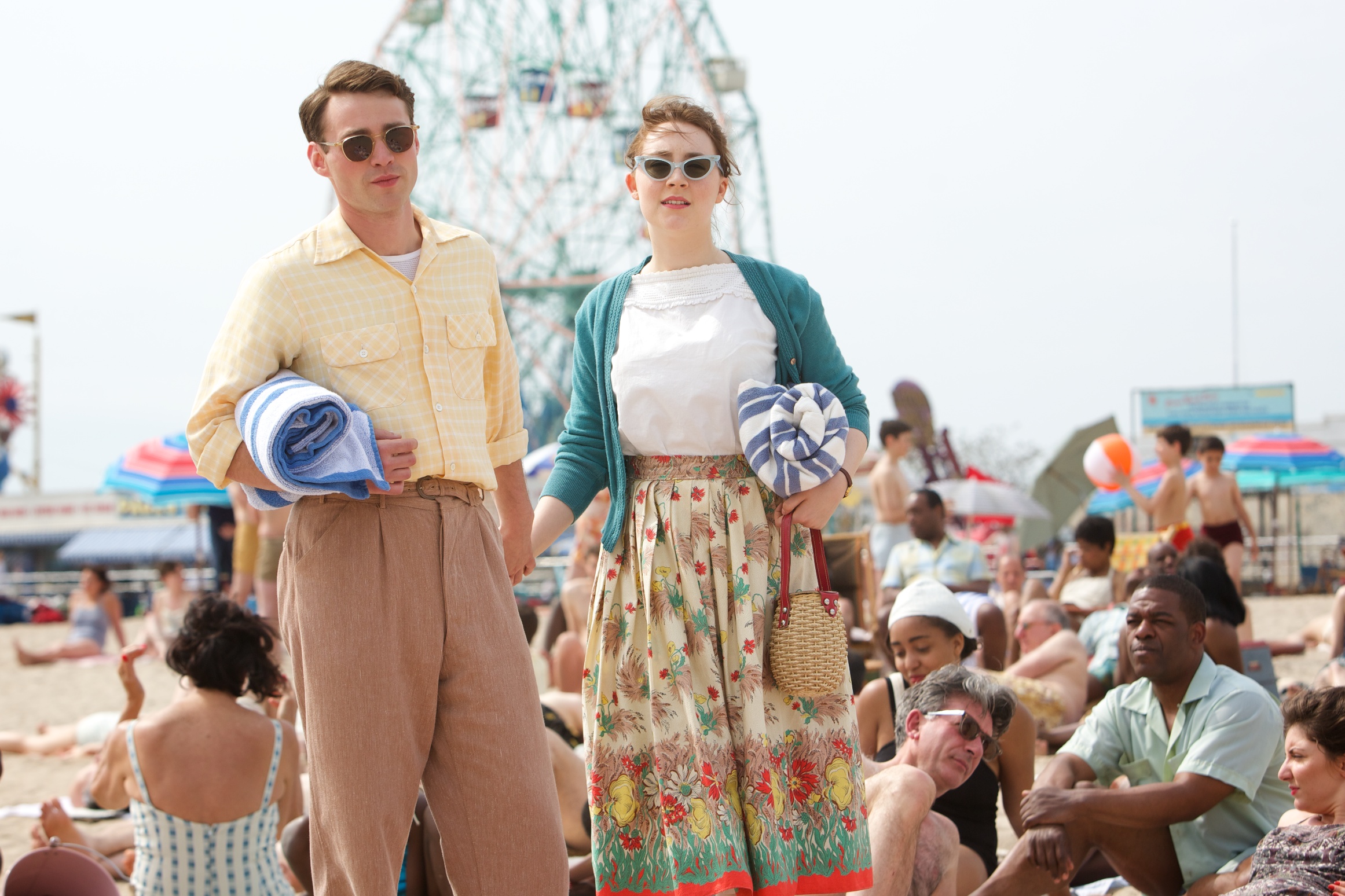
Brooklyn - Emory Cohen & Saoirse Ronan

Images credit: IMP Awards, Collider

Images copyright (©): Lionsgate, Fox Searchlight Pictures

All Eyes on The Force Awakens Cast in Official New Posters

Star Wars The Force Awakens Poster Rey

Star Wars The Force Awakens Poster Finn

Star Wars news klaxon! Those behind The Revenant’s marketing campaign recently stepped things up a notch with the release of two brand new, ominous character posters. Now 2015’s most anticipated movie, and The Revenant’s stiffest competitor this winter, is getting in on the artistic act.

Disney and Lucasfilm previously sent moviegoers the world over into a unified frenzy (or two) over a couple of exceedingly well-crafted trailers, and now the studio behemoths have opted to gift us a handful of superb character posters for The Force Awakens. The images don’t say much, a principle wholeheartedly in keeping with J.J. Abrams’ tight-lipped directorial approach thus far.

What we do know is this: the film is set around 30 years after Return of the Jedi and stars Daisy Ridley as Rey, a self-sustaining scavenger whose life takes an adventurous turn when John Boyega’s Finn shows up in stormtrooper gear — presumably he ain’t dressed up for Halloween. Oscar Isaac, Domhnall Gleeson, Adam Driver, Lupita Nyong’o, and Andy Serkis join familiar faces Harrison Ford, Carrie Fisher, and Mark Hamill to form a seriously exciting cast.

Star Wars The Force Awakens Poster Kylo

Rey, Finn, Han Solo, Princess Leia, and Kylo Ren (Driver) all have solo head shots, though there is nothing as of yet for Isaac’s Poe Dameron or Gleeson’s General Hux. Isaac can at least rest easy in the knowledge that his character unequivocally has the best name. Luke Skywalker is once again conspicuous by his absence, having already missed out trailer-wise. Read into that what you will.

Intriguingly, each poster shows its respective character’s right eye being obstructed by a weapon, or a beam of light in Leia’s case. I’m mystified by the visual symmetry on offer though I’m sure its symbolism will wreak havoc upon the galaxy at some point. For now we can only mull over any underlying message and anticipate what could end being the biggest film of all time. Avatar might have the Na’vi, but it doesn’t have a Chewbacca.

Star Wars: Episode VII — The Force Awakens is out December 17th in the UK and December 18th in the US. My heart merrily bleeds for you America.

Star Wars The Force Awakens Poster Han

Star Wars The Force Awakens Poster Leia

Images credit: IMP Awards

Images copyright (©): Walt Disney Studios Motion Pictures

Leonardo DiCaprio and Tom Hardy Look Menacing in Latest Posters for The Revenant

The Revenant Poster 1

Nothing says Guaranteed Oscar Nominee like an A-list cast putting themselves through production hell (and the odd carcass) in the name of their craft. And if that isn’t enough, you might point towards a practically wordless trailer that promotes a truly stunning atmosphere. Now Alejandro Gonázlez Iñárritu’s The Revenant has a pair of striking posters to go with its already heavyweight level pre-release platform.

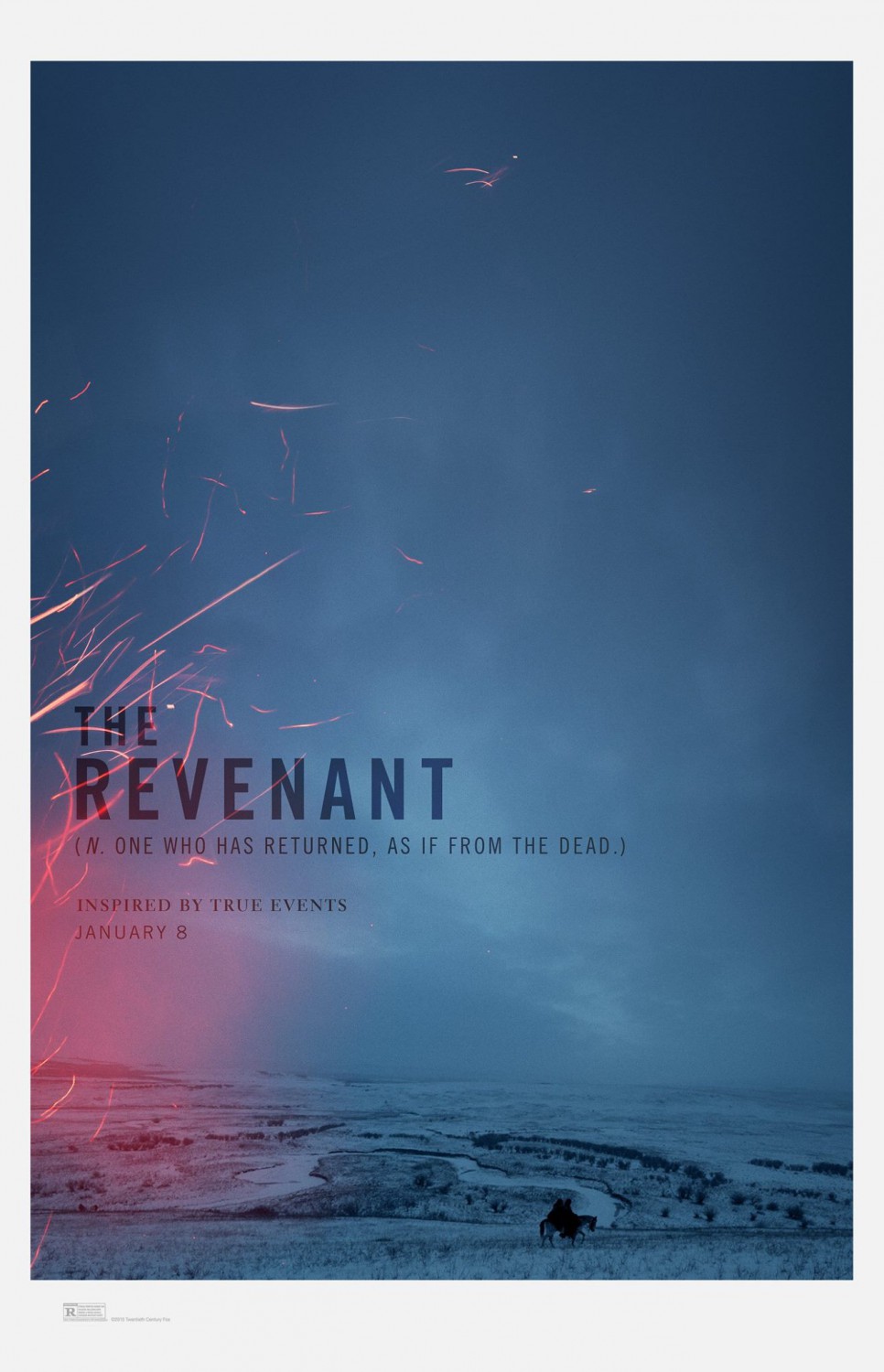
Having previously issued a poster bereft of everything apart from a frozen landscape image and a captioned title, 20th Century Fox has now unveiled two new glossy sheets bearing the grizzled expressions of stars Leonardo DiCaprio and Tom Hardy. Though a great poster isn’t always a calling card for a great film, some effort on the artistic front can go quite a long way: it fuels excitement, funds intrigue, and at worst is nice to gawk at.

Posters for Iñárritu’s films often hone in on the faces of individuals, indicting complexity and some sort of purpose. That makes sense given the writer-director has a history of working with layered characters who exist in aggravating circumstances — see Birdman’s Riggan Thomson or anybody in Babel — and by the looks of things that isn’t going to change when The Revenant gallops into town.

The Revenant Poster 2

DiCaprio plays Hugh Glass, a 19th century fur trapper who seeks revenge having been left for dead by those in his company, one of whom is Hardy. The posters separate the acting duo and show them staring menacingly into the distance, their faces carpeted by hair and snow. Perhaps they are staring at each other. Luminous orange sparks can be seen permeating the wintry environment, and you can be sure there’ll be more of those flying when the two hunters inevitably clash.

Domhnall Gleeson (Ex Machina, Star Wars: Episode VII — The Force Awakens) and Will Poulter (The Maze Runner) are also involved, and Birdman cinematographer Emmanuel Lubezki is back behind the camera. Scenes were filmed in various locations around Canada and in southern Argentina.

Only time knows whether or not Iñárritu and co. will be in the Oscar mix come February next year (let’s hope they are for DiCaprio’s sake) but the marketing for The Revenant would certainly have you believe big and compelling things are on the icy horizon.

The Revenant is out Christmas Day in the US and January 15th in the UK.

The Revenant Poster 3

Images credit: IMP Awards

Images copyright (©): 20th Century Fox

Crash of the Titans: The Decline of the Actor

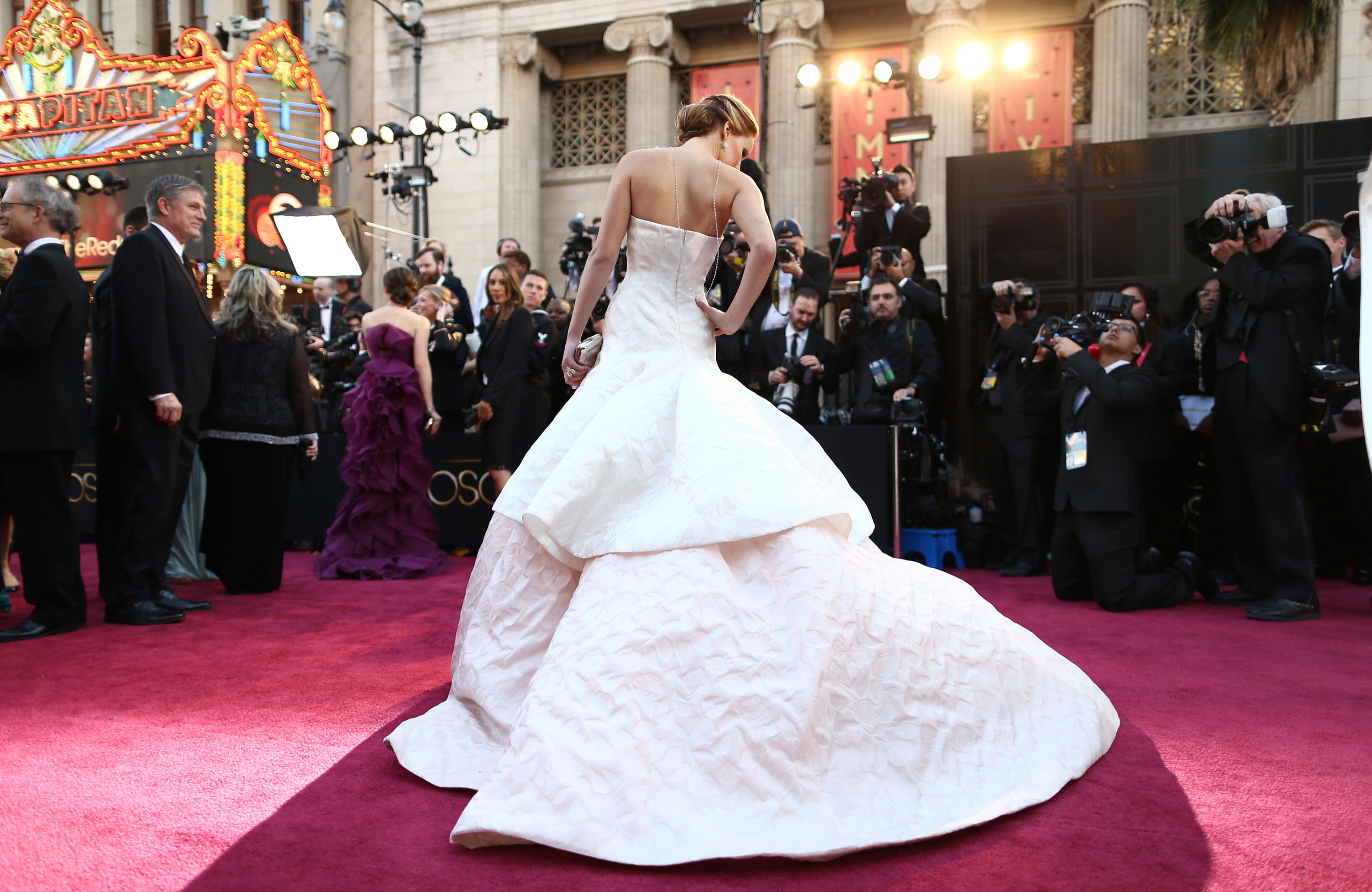
Stars - J Law 2

Following a dour weekend stateside for new film releases, that ever-intrusive question is banging around the cinemasphere again: What has happened to our movie stars? Now more than ever films are sold to audiences through an expertly crafted marketing gaze, and it seems the most effective marketing strategy for studios these days is to repeat that which was once successful.

Through no fault of their own, actors are no longer truly bankable; even the biggest and best have financial flops lingering in their back catalogues like an unwanted infection. The same could be said for directors, many of whom have helmed a financial disappointment. If you’re not Steven Spielberg or Martin Scorsese, chances are you’re not getting top billing on the poster. In fact hiring less well-known directors to oversee large productions is becoming an increasingly popular trend in Hollywood.

Instead, distributors are all wrapped up in promoting a marketable product these days. It’s partly why franchises are in vogue; they have a ready-made narrative structure in place and are therefore easier to sell. Skyfall currently flies the most successful British film ever made banner and, as good as his performance is in the film, chances are people didn’t scramble to their nearest cinema to catch a glimpse of Daniel Craig. They went for James Bond, the character, the familiar entity. Jennifer Lawrence is arguably the world’s most in demand actor, a reputation she has carved out for herself by being very good in two huge movie series (The Hunger Games and X-Men).

In the US, this past weekend saw name-value take another hit: Bradley Cooper and Sandra Bullock both had films released, and both films succumbed to poor box office returns. Cooper stars in Burnt, a culinary drama that took as little as $5 million, while Bullock’s vehicle is the political comedy Our Brand Is Crisis. The latter only managed to recoup $3.2 million of its $28 million budget. As those films struggled, grander ventures such as The Martian continued to reign supreme — thankfully, Ridley Scott’s sci-fi jaunt is one of the year’s best (another, in fairness, is franchise reboot Mad Max: Fury Road).

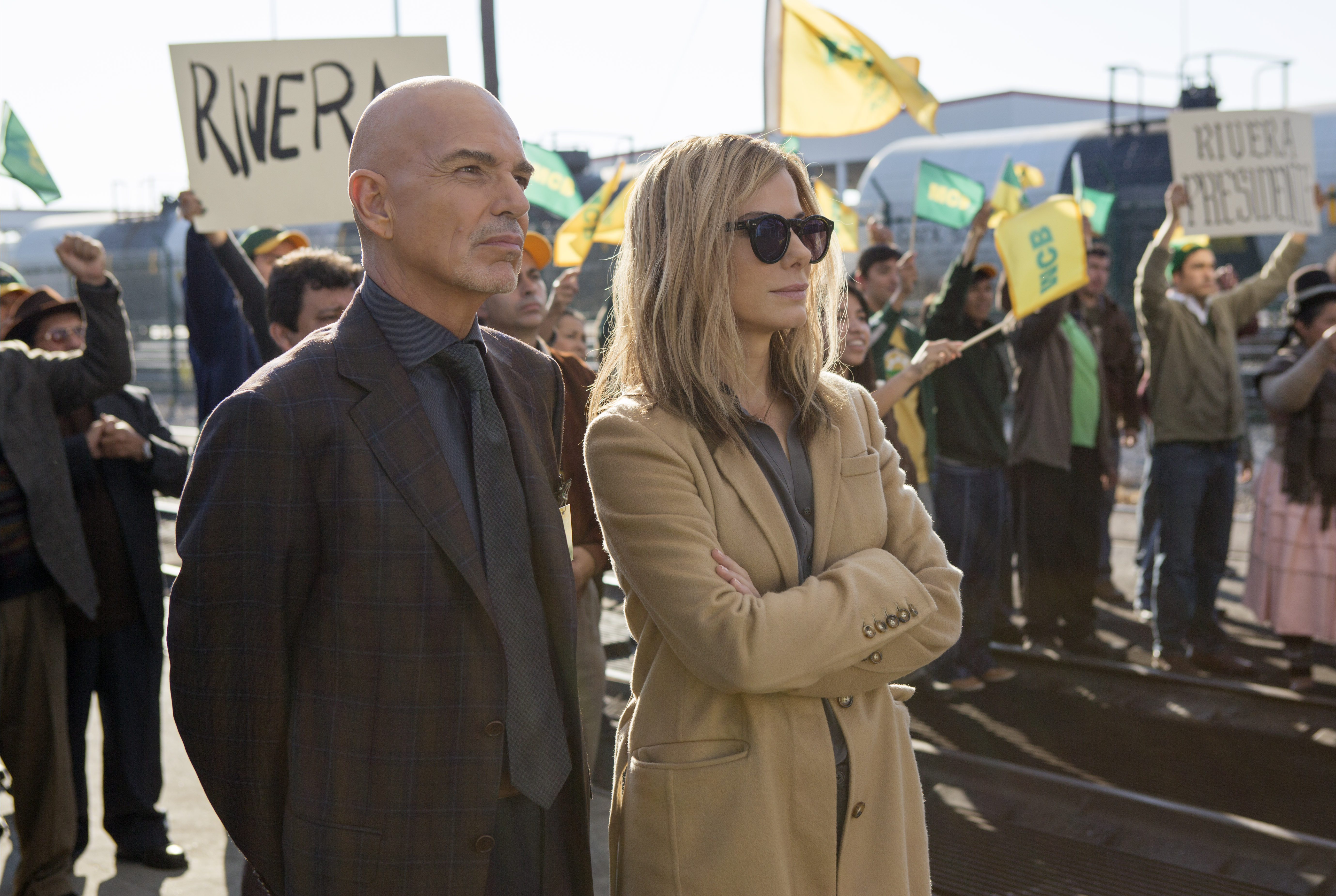
Stars - Sandra Bullock

While middle-of-the-road outings such as Burnt and Our Brand Is Crisis feel the weight of their franchise-less, big budget-less predicaments, the past 12 months have brought us this lot: Jurassic World, Fast & Furious 7, Avengers: Age of Ultron, and Minions, four sequels (or prequel in the case of Minions) that greatly emphasised their pre-existing worlds during the sales pitch. Heck, Jurassic World went full throttle and unveiled distinctly recognisable posters to the world before incorporating an updated version of John Williams’ wonderful score in its trailer. Those movies, incidentally, are four of cinema’s largest ever grossers.

If the waning power of the actor wasn’t so explicitly obvious before, Suffragette may well have totally pulled the plug. Focus Features heavily promoted Meryl Streep’s involvement in the project alongside main players Carey Mulligan and Helena Bonham Carter, even though the iconic actor only appears on screen for a handful of minutes. Presumably, the studio expected her name-value to grasp the consumer’s attention and subsequently increase viewership. Unfortunately, the film has only grossed $11.6 million up until now (it’s in its fourth week), $2.4 million short of its initial budget.

There are pros and cons to our present age of sequel-dom. On the one hand, we get to see exhilarating and smart blockbuster outings such as the aforementioned Mad Max: Fury Road and also Marvel’s Ant-Man, these films succeeding in spite of their pre-established identities. But we also have to sit through monstrosities such as Transformers: Revenge of the Fallen, a film that when issued back in 2009 arrived on the silver screen warmed by the security blanket of a guaranteed audience. A film, sadly, that hardly values quality.

There are exceptions to rule — some may call them diminishing lights amongst the bleak darkness — and one of those might be The Revenant. Granted the upcoming film will be riding the Oscar wave, particularly given its director Alejandro González Iñárritu is fresh off a golden statuette victory himself. But even films touched by the shiny sheen of an Academy Award nomination rarely yield monster returns — the 2015 crop harvested a circumstantially low intake — and it’s worth noting that these often host the flashiest names too. Steve Jobs, starring Michael Fassbender, is another potential awards-hauler performing poorly.

Stars - Leo DiCaprio

But back to The Revenant. There is an argument to be made that any financial success incurred by The Revenant will lie solely at the feet of its genuine A-list star, Leonardo DiCaprio. One of the last original flicks to make any real cash was Christopher Nolan’s Inception, also starring DiCaprio, though to claim that movie’s monetary success was exclusively down to said actor’s involvement would be a stretch. A genuine exception might be Spring Breakers, starring Selena Gomez and Vanessa Hugdens who, at the time, were Disney starlets. It made over $30 million on a $6 million budget.

A24 Films delivered Spring Breakers to audiences back in 2013 and since then the studio has prioritised freshness (though its movies don’t always boast big names). Its highest grossing picture thus far is Ex Machina, which featured relative newcomers Oscar Isaac, Domhnall Gleeson, and Alicia Vikander. Conversely, Under the Skin starring Avenger Scarlett Johansson failed to regain even half of its initial outlay. American Hustle, of the non-A24 Films variety, done well at the box office under the guidance of a conglomeration of star power: Christian Bale, Jennifer Lawrence, Bradley Cooper, Amy Adams, and Jeremy Renner were all involved.

Is it a good thing? Recent history suggests that the demise of the actor as a wholesale draw has meant most studios see the establishment of a brand as the only way forward. If true this approach cannot be healthy, as it would almost certainly encourage a lack of diversity in cinema (many will claim cinema is already lacking diversity). You might argue Gravity, starring Bullock and George Clooney, is an example of a film that was beefed up by its two major stars, but even that was marketed largely as an immersive and stunning cinematic experience. Clooney himself felt the brunt of ebbing clout when audiences opted not to see Tomorrowland: A World Beyond this past summer.

None of this should come as a surprise. The days of the star system are gone and in their place we have a society that subscribes to Netflix not to see a particular film, but because it’s Netflix. A Will Smith-led Bad Boys can no longer make over $140 million based solely on Will Smith’s appearance. The solution, if there is one, is an entirely different matter, though perhaps actors don’t need one. Perhaps studios and audiences just need to have more confidence in original movie-making.

Stars - Bradley Cooper

Images credit: Metro, Collider

Images copyright (©): Warner Bros. Pictures, 20th Century Fox, The Weinstein Company

Spectre (2015)

★★★★

Spectre PosterDirector: Sam Mendes

Release Date: October 26th, 2015 (UK); November 6th, 2015 (US)

Genre: Action; Adventure; Thriller

Starring: Daniel Craig, Léa Seydoux, Christoph Waltz, Ralph Fiennes

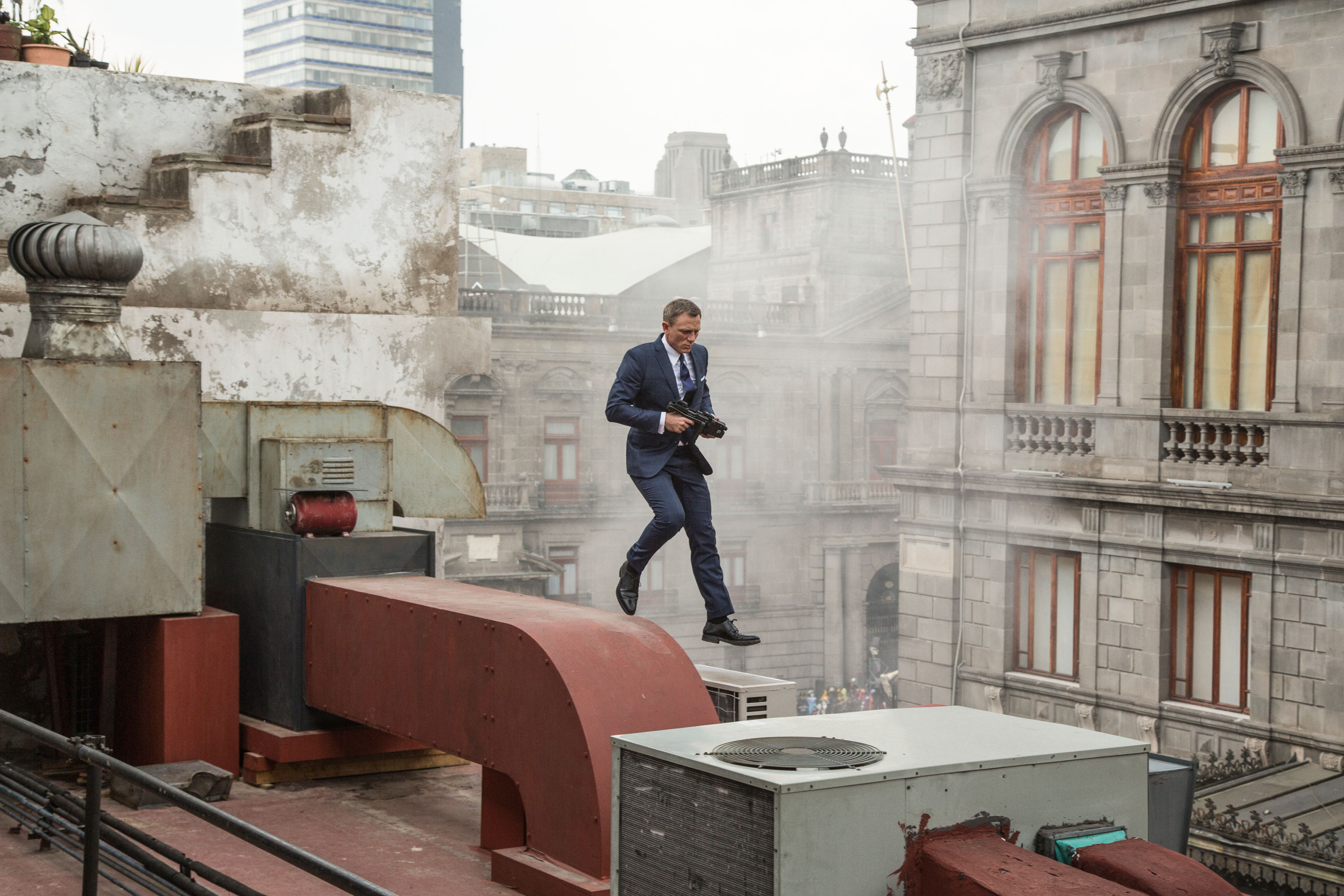
Emmanuel Lubezki’s cinematography was all the rage at the Oscars earlier this year, and Hoyte van Hoytema has tapped into the technical furore. Spectre begins with a Birdman-esque gallivant through a musty Mexican city, hollow drum beats slowly drowned out by the fluid orchestral waves of Monty Norman’s classic Bond theme as proceedings manoeuvre away from Day of the Dead festivities and towards 007’s (Daniel Craig) ensuing mission. Bond shoots at his target, Marco Sciarra (Alessandro Cremona), causing an enormous explosion that ought to terminate the wrongdoer. But just when you think it’s mission complete, Sciarra escapes. We momentarily meander back into the slow-moving parade before barrelling skywards aboard an out-of-control helicopter.

Director Sam Mendes is clearly having fun playing with our expectations, teasing tonally and pacing-wise. It is a super sequence in mechanical terms, but also a celebration of Bond: throughout the five-minute long take we see spying, shooting, surviving, and seducing. And, deviously, the film eliminates a would-be model Bond villain in record time — at one point the camera catches Sciarra looking like a cross between Jaws and Raoul Silva.

The main title montage then springs into life, this particular incarnation both encapsulating and artistically rich, affording meaning to Sam Smith’s otherwise uncertain lyrics. Perennial opening credits creator Daniel Kleinman delivers a montage that is all about retracing familiar steps, and Spectre does a lot of backwards walking. Bond, no longer in favour at a spatially revamped MI6, finds himself working outwith the espionage structure of government moderniser Max Denbigh (Andrew Scott), aided covertly by Moneypenny (Naomie Harris) and Q (Ben Wishaw).

The film is an entirely different prospect to Skyfall; this, in many ways, is Bond back to basics. Somewhat shunned by the morose undercurrent of its predecessor, Spectre revisits the franchise’s sly vein of humour. Ben Wishaw continues to grow into the role of Q, his pinpoint comedy timing affording the character greater charm. We dash all over the globe, though admirably the outing never succumbs to the artificial sheen of a travel brochure. Snowscapes make a comeback — there’s something to be said for beautiful blanket-white mountain locales and Bond often speaks fluently in this regard.

Just when you think the film won’t eclipse its previous action set piece, an even bigger and better one explodes on screen. Heck, we even get a hulking villain in Hinx, the bruiser given personality by Dave Bautista whose terminally arrogant-cum-ominous grin suggests total control. He brawls with Bond aboard a train in a punch-up that looks and sounds brutal — words such as vigour and pulp spring to mind as you begin to think Hinx might actually be a Terminator.

Some shots could have easily been borrowed from a Sergio Leone western, prompting quite the departure from what is otherwise a modern espionage jaunt. These pit Bond as the ageing gunslinger, a field agent feeling the brunt of a very real existential crisis provoked by Denbigh’s mechanical tactics, but also an operative who is still able to get the job done. Taunted by Franz Oberhauser (Christoph Waltz) who, like Denbigh, is also plugged into the new world, Bond must confront the ghosts of his past in order to remain operationally relevant.

See, while reviving the franchise’s historical spirit, Spectre also roots itself in present day amenities. Denbigh is the corporate stooge infecting our treasured institutions, the guy who wants to take MI6 “out of the Dark Ages”. He heads up the Centre for National Security, or “George Orwell’s worst nightmare,” as M (Ralph Fiennes) puts it, a base designed to undemocratically scrutinise the globe. His vision is all-encompassing, a desk-based surveillance system that identifies and eliminates potential targets. Keyword: potential.

As Bond battles enemies in the field, seeing Fiennes and Scott engage in a dual over career politics is a warranted change of pace and one that never ceases to intrigue. A paranoid air arises based on the premise that any misstep might be critical, and this trope no longer only applies to Bond. The argument relayed by the old guard, essentially, is that espionage is too cloudy to be conducted in an impersonal manner.

This clash between old and new also incorporates Waltz’s Oberhauser, though the less said about him the better. He struts on screen encased in a cloud of shadow, Hoytema’s cinematography imbuing the character with immense mystique. We know exactly what Christoph Waltz looks like and yet we can’t help but wonder what sits beneath the darkness. Interactions between Oberhauser and Bond are few and far between and you do find yourself yearning for more, but perhaps the restraint employed by Mendes and his team of writers (John Logan, Neal Purvis, Robert Wade, and Jez Butterworth all contribute) is what funds the tantalising energy surrounding both men.

Romantic (or unromantic) strands are still odd and awkward to sit through, especially in 2015. Bond’s infallibility when it comes to courting women remains a key characteristic that is tough to get along with, though his relationship with Lea Séydoux’s Madeleine Swan is at least sort of understandable — Madeleine is, after all, the daughter of spy. His fleeting flirtation with Monica Bellucci, playing a grieving widow, isn’t quite as logical.

A word finally on Daniel Craig, who looks like he is once again enjoying himself after the stunning solemnity of Skyfall. Spectre may or may not be his last tux session. Either way there is no denying the actor’s quite remarkable achievement since donning the attire in Casino Royale: imperfectly humanising a foolproof iron man. I’m not so convinced viewers these days aspire to live the life of Bond, and that is a good thing.

Spectre - Daniel Craig

Images credit: IMP Awards, Collider

Images copyright (©): Metro-Goldwyn-Mayer Pictures, Columbia Pictures

Back to the Future (1985)

★★★★

Back to the Future PosterDirector: Robert Zemeckis

Release Date: July 3rd, 1985 (US); December 4th, 1985 (UK)

Genre: Adventure; Comedy; Science fiction

Starring: Michael J. Fox, Christopher Lloyd

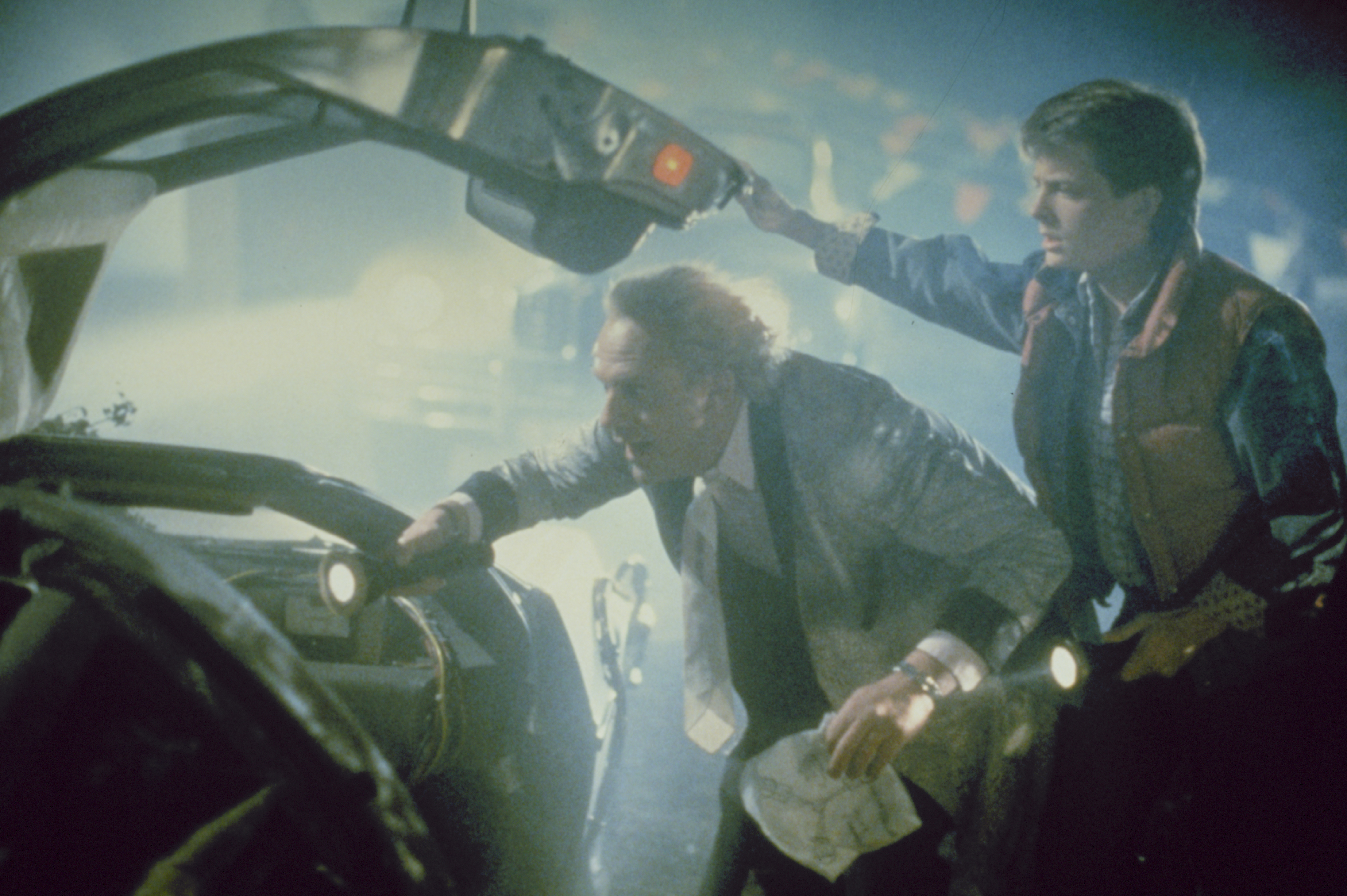
From the moment Dean Cundy trails his camera around Emmett “Doc” Brown’s (Christopher Lloyd) cantankerous home, clickety-tickety gadgets clicking and ticking in all directions, you just know Back to the Future is going to be a film that values wacky invention and rich characterisation. The plethora of loud clocks, the iffy tin openers, the monster amps, they all reflect Doc’s personality: budding, buzzing, and entirely unpredictable. And we haven’t even met him yet.

It’s Marty McFly (Michael J. Fox) whom we first encounter, tripping over Doc’s seemingly infinite housebound bits and bobs, somehow looking both uncomfortably out of place and at ease with his bonkers surroundings. We know then that the pair share an uncommon bond and that, for the remaining two hours, its lack of plausibility doesn’t matter. These opening 10 minutes, penned by director Robert Zemeckis and co-writer Bob Gale, are brilliant. Those that follow are pretty good too.

We initially find ourselves slap-bang in the mid-1980s, Huey Lewis and the News’ “Power of Love” beefing up the Zeitgeist with pop rock verve. The special effects are goofy but in charming sort of manner, electric lights fizzing and squawking. When we shift to the 1950s soon after, the visual palette takes on a post-war retro tint: glass bottles of Coca-Cola, tall chocolate milkshakes, unabashedly shiny vehicles. Doc and Marty are to blame for said shift, the former having transformed his DeLorean into a time travelling machine and the latter having taken the time-sensitive plunge.

Marty is a bit cocky, a bit arrogant. He’s a rebel with a cause: to change history. Zemeckis and Gale set up the various pay-offs early on — Biff (Thomas F. Wilson), the adult bully who needs some comeuppance; the Hill Valley Preservation Society’s attempts to save the town clock tower that, coincidentally, was struck by lightning 30 years ago. We know how story facets such as these will play out, but other rules are established only to be rewritten. In 1955, Marty takes his father George’s (Crispin Glover) place in a car accident, blacking out and subsequently awaking in his mother’s teenage bedroom. She, unaware Marty is her son, tries to seduce him.

The aforementioned notion would provoke cringe in many other outings, but Back to the Future gets away with it because the air is so madcap. Michael J. Fox’s nervous energy around his young mum Lorraine (Lea Thompson) is both hilarious and touching: “You shouldn’t drink because… you might regret it later in life,” he informs his mother, a future alcoholic. Crossover traits from the 50s and 80s afford Marty a freshness in both settings — traits such as booming teenage culture, motor car appreciation, and the imminent popularity of rock music. The film even paints Marty as the brainchild behind Chuck Berry’s “Johnny B. Goode”, and you can’t help but admire its odd legitimacy.

On the other hand, Doc is introduced under an air of mystery. We hear his voice, eccentric and agitated, over the phone long before we meet him in person. The barmy inventor reverses noisily on-screen, smoke pillowing wherever there is space, his frazzled hair and radioactive suit vindicating our original preconceptions. Christopher Lloyd unveils an intense stare that promotes excitement rather than intimidation. His character is like an affable Count Olaf, if Count Olaf was a mad scientist and affable. You accept Doc and Marty’s offbeat camaraderie as standard practice because the two actors have natural, unkempt chemistry. They drive the film with as much intent and enthusiasm as they drive the DeLorean.

Elsewhere, Back to the Future spends time taking potshots at 1950s culture and politics because doing anything else would be against time travel law. In a not-so-solid burst of intuition, Marty decides the only way to convince past Doc (there are a few incarnations of one or two characters which can be a tad confusing) that he has arrived from the future is by reeling off 1980s characteristics, and subsequently names Ronald Reagan as the current US President. “Ronald Reagan, the actor? Ha!” Doc shoots back, a response that probably would have held weight back then, when Reagan was more likely to be found on a Hollywood movie set than inside the Oval Office.

It is practically impossible not to enjoy this film. With almost as many quotable lines as Casablanca, it’s essentially Grease on physics-defying  wheels. Zemeckis creates a heightened ambience that encourages nothing but authentic, irreverent chaos. Suburban madness was a movie-making norm in the 1980s, and Back to the Future is as wonderfully mad as it gets.

Back to the Future - Doc & Marty 2

Images credit: IMP Awards, Collider

Images copyright (©): Universal Pictures

Clooney and the Coens, Together Again?

O Brother Where Art Thou - Clooney 2

According to Deadline, George Clooney is set to reteam with the Coen brothers on Suburbicon, a noir-drama penned by the sibling duo. It appears Clooney will be taking up the directorial reigns, the silver-haired silver screen star having already successfully overseen the making of other outings such as his beautifully crafted 2005 piece, Good Night, and Good Luck.

The screenplay has been languishing in the bowels of Hollywood, or Coen-wood, for at least a decade — Empire reported on Clooney’s potential involvement as far back as 10 years ago — but now the stars seem to have finally aligned for the trio. Clooney and the Coens have been working together since 2000 when the actor starred in O Brother, Where Art Thou?, an uproarious Depression Era take on Homer’s Odyssey. Only the Coen brothers could conceive a Depression Era take on Homer’s Odyssey. Their collaborative portfolio portfolio also includes Intolerably Cruelty (2003) and Burn After Reading (2008).

Clooney & Coens

Despite the lengthy waiting period, details remain fairly sketchy regarding Suburbicon’s plot, though I suspect it’ll have something to do with crazed unicorns wreaking havoc on a quiet suburban locale. Whatever the case may be, should Deadline’s report come to fruition Clooney will certainly be hoping for a more positive critical outcome than that fostered by his last directorial product, The Monuments Men.

Joel and Ethan will direct Clooney again in their latest upcoming venture Hail, Caesar! which is set for release early next year and could figure prominently throughout awards season. The film harkens back to 1950s Hollywood and will see Clooney star as big name actor Baird Whitlock who is kidnapped mid-production. Fixer Josh Brolin is the man called in to solve the should-be entertaining mystery. Scarlett Johansson, Ralph Fiennes, Jonah Hill, and Frances McDormand are among a host of other actors involved.

If the trailer is anything to go by Hail, Caesar! will be another gloriously shot brash comedy with sardonic skin. In other words, one you ought not to miss. Channing Tatum is playing an actor playing a sailor — look at that grin for goodness’ sake!

Hail Caesar - Channing Tatum

Images credit: Indiewire, Vanity Fair, Collider

Images copyright (©): Walt Disney Studios Motion PicturesUniversal Studios