Prometheus (2012)

★★★★★

Prometheus PosterDirector: Ridley Scott

Release Date: June 1st, 2012 (UK); June 8th, 2012 (US)

Genre: Adventure; Mystery; Science-fiction

Starring: Noomi Rapace, Michael Fassbender, Charlize Theron, Idris Elba

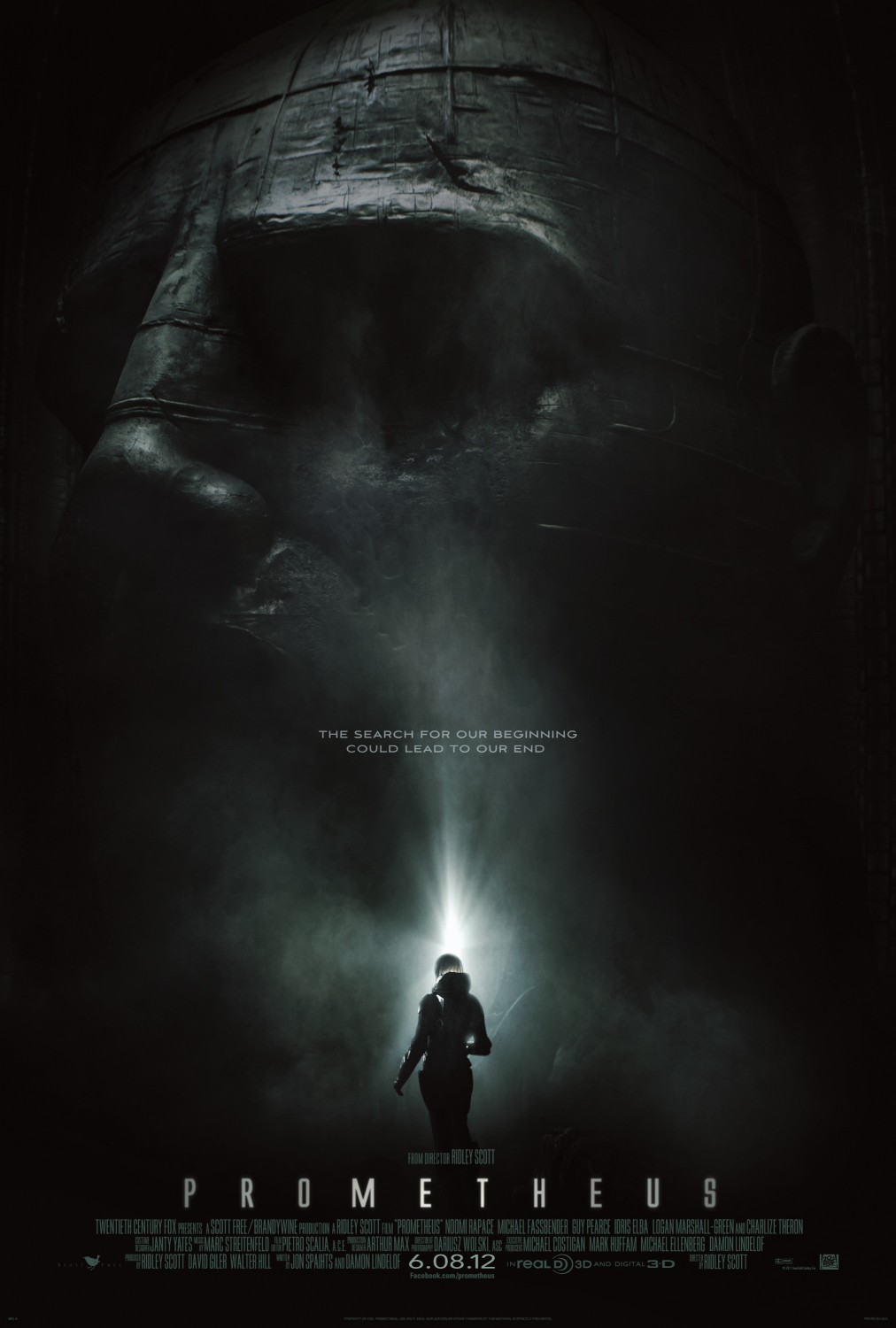
Is Prometheus really that bad? Ridley Scott’s loose prequel to Alien digs an enormous hole and subsequently fills it with even grander musings; of humankind, creation, belief and life. It then plunges nose first into said crater, now as deep as the questions posed, before admirably clambering back to fresh air armed with purpose and answers. During this ascension we marvel at spectacle, engage in mystery, taste small bites of action, are disconcerted by horror and ponder classic science-fiction. To a certain extent Prometheus truly is a genre-splicer, but the outing always has its reels firmly planted in the wonders of sci-fi, exactly where they should be. In an era when summer often denotes the arrival of popcorn-churners, Prometheus survives on the front-line, waving the flag for intelligent and thought-provoking cinema.

Elizabeth Shaw (Noomi Rapace) and Charlie Holloway (Logan Marshall-Green) are archaeologists on the brink of silencing the most emphatic of all historical debates: who created us? The year is 2093 and a team of seventeen personnel including Elizabeth and Charlie have just landed on LV-233, a moon prominent in a number of ancient diagrams discovered by the duo. Aboard their vessel funded by Weyland Corporation is David (Michael Fassbender), a robot whose appearance resembles that of a human being, and whose thought process is occupied exclusively by sense. The landscape that enshrouds the team bustles with unknown activity, enticing the crew’s inbuilt need to forage, which they do unwittingly and at their own peril.

Zipping up his spacesuit, David is confronted by Charlie who queries the need for the machine to dawn such protective attire. “I was designed like this because you people are more comfortable interacting with your own kind. If I didn’t wear a suit, it would defeat the purpose,” retorts David, summing up the philosophy of Prometheus in a single answer. The crew are on a voyage to meet their maker, but in doing so unknowingly present a case denouncing the ignorance of humanity. Collectively, we see ourselves as the pinnacle species yet we are wholly unjustified in our complacency. Damon Lindelof’s script explores how we not only rely on other genetic divisions — plants for medicine, animals for food, machines for everyday ease, Gods for belief — we even mistreat them.

Humanity’s naive demeanour is reflected in Charlie’s actions: he howls like a domineering wolf upon reaching a huge stone dome situated atop the uncharted moon, and proceeds to remove his helmet without approval, seemingly above any potential atmospheric ramifications. The film is an eye-opening critical analysis of human behaviour and although the results stop short at shining a positive light on us, they do beckon forth an important topic of discussion.

David’s response also reflects the insightfulness and opulence of Lindelof’s script, one that is not afraid enter to a room packed full of grandiose ideas, and is then brave enough to exit whilst leaving the door ajar. The occasional question is left unanswered which is absolutely fine (but we need some answerable continuity in the upcoming sequel). No issue remains unchallenged though, much to the filmmakers’ credit. Scenes prompted by deliberations over the various characters’ motives and beliefs are subtly tantalising; one involving David, Charlie and a snooker table particularly stands out.

These moments never overstay their welcome as they flirt with extravagant perceptions that are inherently connected to the science-fiction genre. Entering said realm we expect to contemplate life, the universe and everything and Prometheus encourages us to do exactly that. (“Where do we come from? What is our purpose? What happens to us when we die?”) Thankfully events refrain from boiling over into an indulgent territory; the aforementioned questions — unending in scale — are questions that cross our mind often and the significant consideration on show is warranted.

Reflective themes in the bank, Prometheus turns towards tension-ratcheting atmospherics. Alien is in part a horror franchise, there it is imperative that Scott’s prequel retains prequel retains an element of fear to complement the titbits of recognisable Xenomorph mythology on display. Marc Streitenfeld’s jarring soundscape is the genesis of discomfort; sequences that take place inside the aforementioned dome are accompanied by a chilling congregation of distant screaming. This eerie ambience disorientates us. The characters panic. A search buoyed by ambitious questions seeking conclusive answers yields unsettling possibilities. Never has the notion of being stranded in space upon an unknown entity felt so terrifying.

Then brass horns prevail, baring a deep verve that reflects the profundity of proceedings. The film’s stunning visual scale is just that, and its impressive execution qualms any potential worries over digital misfiring. Space vessels flow effortlessly, emitting a sense of authenticity as they embed into the landscape. At times, Prometheus’ sheen resembles that of Nicolas Winding Refn’s psychedelic Valhalla Rising; shots of unnaturally rapidly convulsing clouds remind us that we are in a foreign and undoubtedly hazardous environment. The weather too, another reminder that humankind is not the dominant species.

One element that doesn’t quite acclimatise is the occasional spouting of humour. Some may argue that without a light-hearted adage every now and again, the film would be taking itself too seriously. However, the ideas being batted back and forth along the outing’s grand narrative arc warrant a serious tone. Fifield and Millburn — geologist and biologist respectively — are the stock comic relief duo and though Sean Harris and Rafe Spall are solid in their roles, the characters are wholly unnecessary. In truth, the duo’s presence on the ship doesn’t really make sense — they’re buffoons, why would a multi-million dollar corporation hire them? If humour prevails at any point, it’s through Idris Elba’s suave poise and effortlessly blunt attitude as captain Janek.

There are no disastrous performances here by any means, nor are there any bad ones, but Michael Fassbender stands streets ahead of everyone else. One of two surprisingly ambiguous characters (the other being Charlize Theron’s practical Meredith Vickers, whose ethical mindset rides on a Ferris wheel throughout) Fassbender resonates a peculiar charm as robot David, whilst instantaneously channelling the nonchalant precision of HAL 9000 from 2001: A Space Odyssey. Much like HAL, David’s actions take an increasingly perturbed turn; the combination of Fassbender’s astute portrayal and Lindelof’s creation of an opaque character adds up to compelling viewing. Noomi Rapace is another noteworthy performer as expedition leader Elizabeth Shaw. Her pained abdominal acting will have you grasping your stomach and wincing.

This dialogue-driven piece demands total engagement for just over two hours and justifies the attention it seeks. There’s a mountain of ideas here to sink your teeth into and, trust me, your jaw won’t ache. Scott’s film is a modern cinematic gem. Is Prometheus really that bad? No, it’s really that good.

Prometheus - Fassbender and Rapace

Images credit: IMP AwardsCollider

Images copyright (©): 20th Century Fox
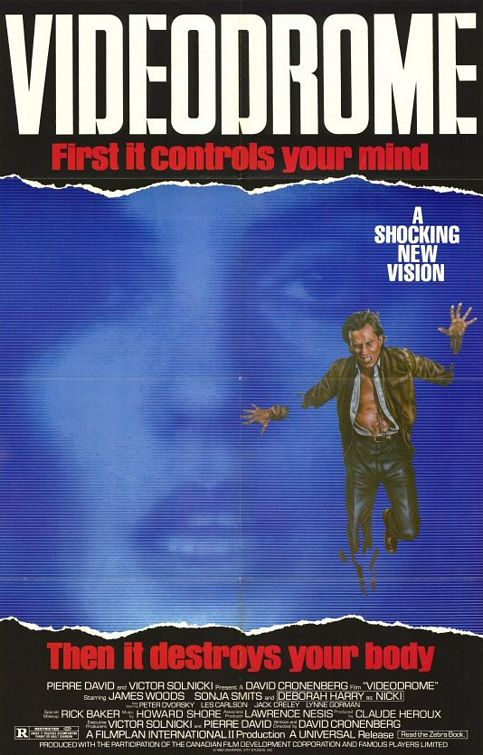
Videodrome (1983)

★★

Videodrome PosterDirector: David Cronenberg

Release Date: February 4th, 1983 (US); November 25th, 1983 (UK)

Genre: Horror; Science-fiction

Starring: James Woods, Deborah Harry, Sonja Smits

If David Cronenberg was as good at picking lottery numbers as he is at predicting the future, then he’d absolutely be a millionaire by now. No, a billionaire. You know that modern culture of consumption to which we all find ourselves enslaved, the same one that probably has you reading this on an electronic device? (Email, Twitter, Facebook, and Netflix later, perhaps?) It’s all here, in Videodrome, only thirty years early. Cronenberg unfurls a prophetic prosecution of television that feels even more relevant in 2014 than it likely did back in the early eighties, when small-screen dominance was probably just an anxiety-wrapped possibility. Videodrome, therefore, is steeped in a philosophy of purpose and accuracy, one that is interesting to consider within our contemporary context. Unfortunately, the film itself struggles to keep up with the ideas developed. Perhaps it’s because we’ve seen it all before, but Videodrome is just a bit… boring.

Max Renn (James Woods) is the kind of guy Sigmund Freud would’ve been had Freud awoken a century later and veered closer to the sexual in psychosexual. He runs CIVIC-TV, a television station based in Toronto that relays unorthodox programming, and is on the look-out for something new to up the ante, something different. Luckily for Max — or perhaps unluckily — he stumbles across a feed airing uncoordinated brutality, called Videodrome. What appears to be sensationalist artifice quickly takes on a disconcerting meaning, and begins to invade more of Max’s existence than desired.

“Television is reality and reality is less than television,” retorts Brian O’Blivion, a professor who professes only through the televisual medium. His character is the essence of Cronenberg’s agenda: a victim of media gobbling. O’Blivion has dedicated a significant portion of his own life to the study of human obsession when it comes to television in particular, employing the visual instrument ultimately as a means not to an end, but to a forever. If O’Blivion is the essence, then his creation Videodrome is the agent of consumption. Though the exhibits on screen are morally questionable, perhaps even legally ambiguous, our leading man Max is increasingly drawn towards goings-on. And not only Max, his romantic interest Nicki too. She, having seen Videodrome, desires only to become a part of it. To be infused in a new televisual reality. Up until this point, there’s a precise and engaging ideology being explored, one that is embedded firmly in the fabric of modern times. (We’re so absorbed by television that we now watch people watching it). The domineering TV pull is a wholly engaging stance and Cronenberg deserves credit, given how accurately Videodrome mirrors today’s norms.

Eventually, notions of mass societal control, planted memories and geopolitical monopolies come into play as Cronenberg’s condemnation of the television culture expands — in truth, perhaps too many strands are added. The tone switches from one of warning to one driven by preachy sound waves. Instead of a cautionary tale about how an inanimate object can become empirical upon leeching itself onto humanity, Videodrome advances down a route of denunciation as it attempts to make our minds up for us. We watch and listen as characters discuss standing firm against “savage new times”; society having to be “pure, direct and strong”; and a “cesspool TV station” whose viewers are “rotting civilisation away from the inside”. The message is clear: beware any abnormal pseudo-violent tendencies in order to avoid them flowing into real life. A noble message, had it not come by way of a fictional film.

A film, incidentally, coughing up splurges of violence from beginning until end. Torsos pave way for VCR slots and hands take on the form of guns. These images are nasty and gooey, yet not as memorable as Cronenbergian bloodshed normally is. The body horror prosthetics are as slimy and grimy as ever, but don’t quite fit the reality-imbued mould proposed by the film. There’s no denying the clarity illustrating this as an inherently Cronenberg creation: grotesque bodily malfunctions, a techno-infection prerogative, the socio-political framework, some inconclusive chronologies. Yet, unlike many of the Canadian’s previous outings, Videodrome manifests without much gusto. It feels a tad worn. Though the ideas mentioned earlier are engaging, perhaps they only really draw a fresh appeal because of their prematurity. These ideas of global consumption have been tossed to-and-fro relentlessly over the last few decades; only recently Transcendence hit cinemas, a film that takes this notion a step further by physically infusing technology with a human being.

James Woods is good as the disingenuous-cum-traumatised CEO Max Renn. He’s not a very likeable chap — not many of the characters are, another issue intertwined within the film’s ever-growing list of problems — yet Woods ushers forth enough of a switch in morality to justify some form of sympathy. As Max’s love interest and radio host Nicki Brand, Deborah Harry doesn’t have an awful lot to do, nor does her character boast any redeemable qualities, instead only a flip-flopping ethical stance. (“I think we live in over-stimulated times… and I think that’s bad,” explains Nicki, before chatting up Max whilst wearing a red dress.) Sonja Smits has a cup of tea as O’Blivion’s daughter Bianca, whereas O’Blivion himself Jack Creley implores us to listen through his direct and sincere vocal delivery.

David Cronenberg encourages discussion about issues of media consumption that herald even more relevance within the context of today’s cultural and societal posture. However, as Videodrome progresses and happenings lose practical clarity, the film too squanders precision and veracity by introducing extra narrative elements that preach to us rather than alongside us. Never mind, I think I’ve got an episode of Gogglebox to catch up on.

Videodrome - James Woods

Images credit: IMP Awards, Collider

Images copyright (©): Universal Pictures

V/H/S/2 (2013)

★★

V/H/S/2 PosterDirectors: Various

Release Date: July 12th, 2013 (US limited) October 14th, 2013 (UK)

Genre: Horror; Thriller

Starring: Various

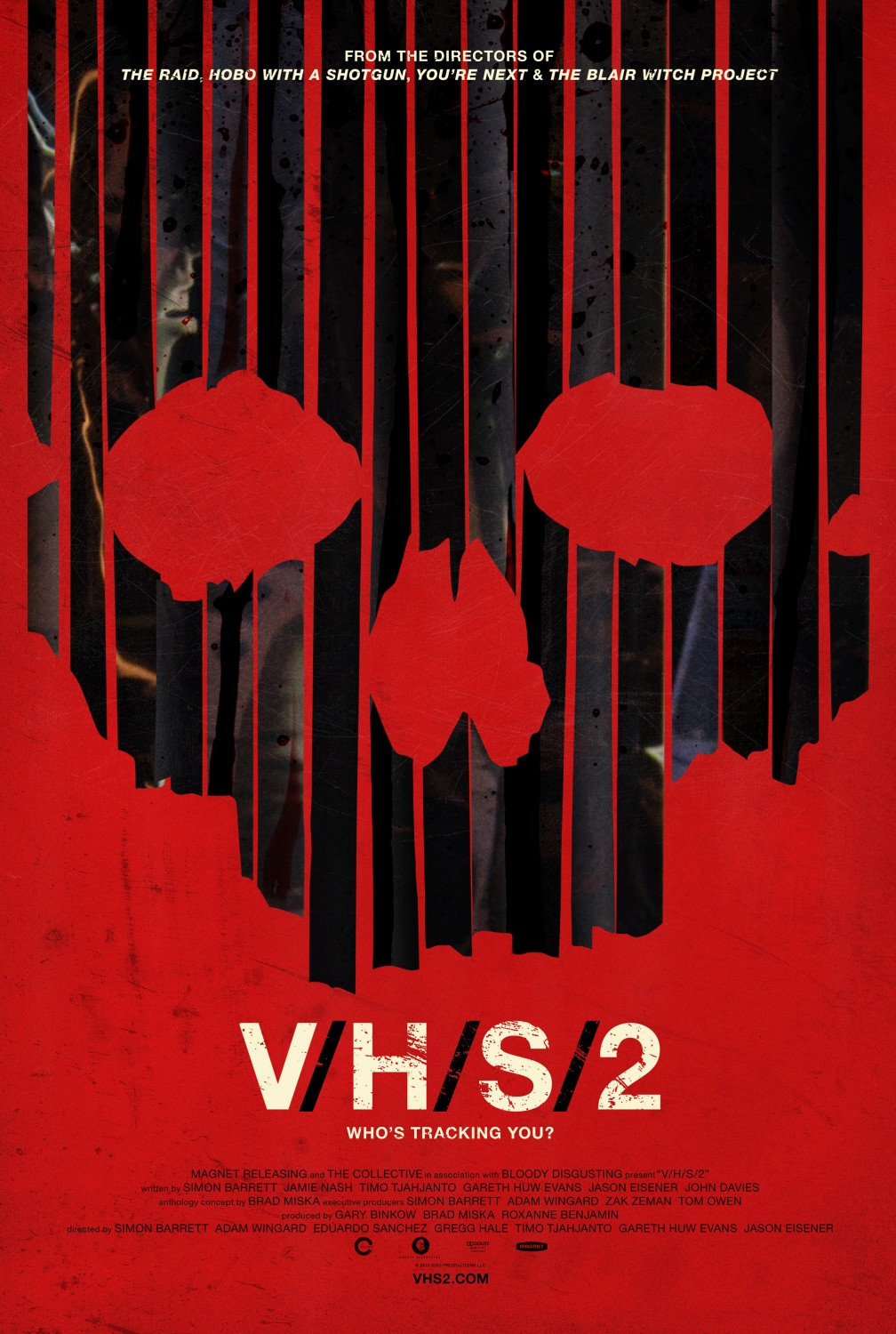
If 2012’s V/H/S failed to capture the adulation of those brave enough to tough it out, then there’s not much hope for this follow up. A film as uninspired as the title shepherding it suggests, V/H/S/2 has five opportunities to succeed yet, more often than not, chooses to beckon forth eternal disappointment through dullness. In fact, only via the purposeful mind of Gareth Evans does this horror outing really imbue a horrifying tingle. Otherwise, a terminal sense of ‘been there done that’ seeps from the screen, so much so that you’d be forgiven for thinking the segments in this piece are outtakes from the first film. Having been given a measly 20 minutes or so to showcase their talents, each of the seven directors (some segments are co-directed) ought to have vehemently lived by the mantra that denotes a maximisation of their minutes. Somebody inform the postal service because that memo certainly got lost in the mail.

Sewn together by a frame narrative identical both in execution and content to its visual sibling from the first film, V/H/S/2 relays four other slices of spook, apparently. To begin we see Clinical Trials, a ghost story that haunts viewers solely by way of its surprisingly lacklustre content. Next, A Ride in the Park combines the visceral sheen of The Walking Dead and District 9’s moral pickings, though would bite the proverbial hand off for either’s ingenuity. Safe Haven is the film’s saving grace, and there’s absolutely nothing safe nor graceful about Gareth Evans’ co-offering. Finally, extraterrestrials meet pyjamas in Alien Abduction Slumber Party, but this one just ain’t as fun as it should be.

Undoubtedly, the least effective short is actually the one that plays most often. Tape 49, as it is known, is like that annoying bout of buffering that occasionally interrupts whichever film you’re watching on Netflix, increasingly fuelling frustration upon third, fourth and fifth rearing. Directed by Simon Barrett, the Whac-A-Mole invariably shines a light on Larry (Lawrence Michael Levine) and his partner Ayesha (Kelsy Abbott), a pair of investigators doing some — wait for it — investigating into the disappearance of a college student. Upon reaching his last know location, a run-down and darkened house, the duo come across a series of televisions emitting static and ushering forth video tape viewing. Implemented as an anchor for the rest of the film, Tape 49 employs the exact same scare (or not) tactics as those seen in V/H/S, rendering the short exhaustingly ineffectual. Already, the remaining segments are at a disadvantage as they first must overcome the lingering cobwebs of Barrett’s effort, before advancing with their own agendas.

Admirably, Safe Haven complies in this regard. Malik (Oka Antara), news crew in tow, enters the residence of an unorthodox Indonesian Cult whose leader, the ‘father’ (Epy Kusnandar), has a severe ethics problem when it comes to the treatment of his followers. Inevitably, events suddenly go awry as the brainwashed group’s true intentions are revealed. Alongside Timo Tjahjanto, director Gareth Evans unleashes a tenacious bloodbath that supersedes every other piece of the V/H/S/2 puzzle. The directorial duo are productive in their utilisation of the found footage concept, generating an uncomfortable air of chaos through the style’s incorporation. Beginning fairly tepidly, you begin to worry that Safe Haven will conform to the generic inequalities of what has come before, but it’s not long before the horror short explodes (literally) into a viscous Jonestown rehash, carrying eerie imagery and brutal immediacy. This is what The Raid would look like if it was a horror movie: violent, relentless and utterly bonkers.

Adam Wingard’s Clinical Trials succeeds in conjuring up ghostly figures, but nothing else. Wingard was the overseer to V/H/S’s version of Tape 49, but his previous experience in the genre does nothing to aid proceedings here. The director also stars in his own segment, as a man who has chosen to take part in a social experiment that sees his sightless eye be replaced by a recording device. Upon returning home post-operation, the man is unceremoniously haunted by a ramshackle bunch of manifestations. Rather than coming across as an efficient stand-alone horror short, Clinical Trials plays more like the opening of Paranormal Activity 6. Though the eye-camera is a neat ploy in avoiding the often impractical continuous use of a handheld camera, there ain’t much to be seen through its lens. Jump-scares don’t frighten, nor do any of the creepily intended figures — conversely, one resembles the twin girls from The Shining, and another is unquestionably the overweight garden zombie from Shaun of the Dead. At one point, a woman shows up requesting a beer. Nope, me neither.

The remaining two slices of horror pie are equally average. Eduardo Sánchez of The Blair Witch Project teams with Gregg Hale and together they offer A Ride in the Park, or, The Walking Dead-lite. After trading dialogue more grotesque in its shallowness than any of the limb crunching about to occur (“You ride that bike more than you ride me”), a cyclist gets bitten by a zombie and subsequently becomes one. There are a couple of noteworthy elements to this piece: the directors’ twist on the found footage point of view, and an intentionally hilarious exchange of glances between a trio of undead — though, this humorous moment does jar with the tone of destitute dread set throughout the entire film. Jason Eisener’s Alien Slumber Party is comparable in delivery to A Ride in the Park, but rather than zombies attacking people, it’s aliens. While the creatures from outer-space do proceed broodingly, the segment is hampered by way of a retreat back to outdated scares through loud trumpeting noises and reddish-green flashing lights.

V/H/S sprung from the horror basements of talented pretenders to Craven, Lynch and Romero’s dark throne, and is a justified piece of cinema in that regard. Despite boasting a similarly talented array of budding directors, V/H/S/2 suffers from an overabundance in sameness. The effort is clearly there and, technically, most segments are delivered with verve. However, only the duo of Evans and Tjahjanto have something substantial to offer. Put simply, it’s not enough.

V/H/S/2 - Safe Haven

The Conspiracy (2012)

★★

The Conspiracy PosterDirector: Christopher MacBride

Release Date: August 23rd, 2013 (US limited); October 11th, 2013 (UK)

Genre: Horror; Thriller

Starring: Aaron Poole, James Gilbert

The Conspiracy struts its way on screen like a middleweight boxer ready to unleash a one-two combination. The first jab is swift and fairly unrelenting. As the film begins we peer skywards, eyes fixated on a pair of tall building not dissimilar in style and size to the World Trade Center. The brooding tone is set; a faux-documentary tale ushering in the notion of elitist secrecy and hidden agenda. We reside in a globe ripe with conspiracy theorists and theories, undoubtedly. For a short while, the impact of jab number one lingers. Unfortunately, the second swing can be seen coming a mile off. From feeling slightly spooked due to the prior injection of pseudo-realism, we now enter a particularly tiresome realm known as found footage horror. Intrigue gone, not even a vaguely haunting final act can save The Conspiracy. In the end, blurred lines only serve to expose.

Aaron (Aaron Poole) and Jim (James Gilbert) are two documentary filmmakers looking to delve into the world of dishonest suits. They meet up with Terrance (Alan C. Peterson) — a conspiracy nut whose maniacal preachings have been doing the rounds on the internet — with intentions firmly set on relaying his story to the world. However when Terrance inconspicuously vanishes, the only remnants left behind are his DIY newspaper wall-charts. The duo’s subsequent search for answers leads them closer to an alarming truth, and further from the security of normality.

Director Christopher MacBride attains a solid opening half hour through well-dug foundations. In a transparent age where every decision is questioned and every answer analysed, his film manages to strike with a fistful of relevancy, at least for a while. Messing around on chat-rooms, Aaron and Jim embody the modern web-surfer whose bible takes the form of a Wi-Fi connection and a computer screen. As they mingle online, a curious sentiment arises: if a conspiracy theory is born out of somebody’s buzzing and immaterial imagination, how can it be disproved? This dichotomy captures our attention and even throws a temporary blanket over the poor acting on display. The occasional shimmy of odd wit breaks through a not-so-subtly humorous poise at times: “So what are you guys using this for?” asks a shopkeeper as he sells the nosy pair a couple of hidden cameras. In a perversely amusing twist, the two no longer seem to care much for missing pal Terrance, the whole point of their documentary originally. It’s when Aaron and Jim start getting followed that proceedings take a turn for the generic.

As the largely dour and unsurprising reveal comes to fruition, the wheels come off. Rather than an inquisitive socio-political engagement, The Conspiracy morphs into a standard horror flick. Up until now, the documentary presentation has justified its found footage approach, but upon emittance of clarity motioning that things are not quite as straightforward as they seem — they really are, in truth — said approach loses value. As soon as the narrative starts to resemble The Blair Witch Project, bouts of infectious groaning can be heard resounding from the throats of viewers the world over. Or maybe that was just residual noise from the handheld camera.

The horror aspect struggles to horrify. Sure, we’re subject to an unsettling few minutes, but it’s not enough. That aforementioned blanket of security covering some terrible acting goes up in flames, exposing amateur hour. Effectively, all of the good work done in establishing a documentary platform unravels in lieu with the film’s wavering focus, so much so that you begin to question the success of the opening 30 minutes. On reflection, scenes that previously passed without too much sincerity interrogation (we were along for the ride at that time) now reek of coincidence; a guy on bike just so happens to show up in the same place more than once, and the partner of one of the chaps just so happens to invade goings-on as the duo are testing concealed camera equipment.

Frustratingly, the narrative concept may well have had some legs if the switch in prerogative from conspiracy documentary to ritualistic horror wasn’t presented so jarringly. Are we meant to believe that every conspiracy has a secret organisation behind it? Associating mysterious societies with business leaders and the like is a corny ploy too; as if all of these oligarchic bank managers and stockbrokers choose to spend their evenings dressed up as The Undertaker while scampering around forests playing games of Cowboys & Indians. Whereas the use of archived 9/11 and Kennedy assassination footage within the documentary-esque context is warranted, the employment of these particular images begins to feel a tad exploitative as the film shifts viewpoint.

Though it begins with a sense of intrigue and purpose, The Conspiracy soon face-plants in a subpar horror hole. With greater focus and better component parts, perhaps Christopher MacBride could have unearthed a gem. However, as the credits began to roll I was left simply wishing for the return of Terrance who, over the course of an hour, had become the new archetype of sanity.

A mean feat indeed.

The Conspiracy - Terrance

The House of the Devil (2009)

★★★★

Director: Ti West

Release Date: October 30th, 2009 (US limited)

Genre: Horror

Starring: Jocelin Donahue, Tom Noonan, Greta Gerwig

Ti West must have endured the most haunted of houses during his childhood, because only through first-hand experience can somebody gain, preserve and later paint such an enticing scary picture. Both a thematic precursor to his 2011 spook-gala The Innkeepers and a nostalgic nod to horror in general, The House of the Devil serves up a cauldron full of tension and idiosyncratic peculiarities. Framed within a B movie context where babysitters are in danger, wooden houses creak with undesirable exaggeration and a grainy glaze smoulders from the screen, the film embodies the work of a director smart enough to create a piece that stands out in its maturity whilst also retaining key horror tropes. West admirably holds back in an area where many others have succumbed to generic jump-scares and gore, instead teasing and withholding clarification before building to a timely, creepy crescendo. Paying homage to the haunted house flicks of the 70s and 80s, The House of the Devil concludes the greatest fear is that which cannot be explained, and sometimes the unexplainable thrives inside four walls.

Struggling for cash and trying to fend off a landlady breathing down her neck, Samantha (Jocelin Donahue) throws her name in the babysitting hat. After an odd conversation or two over the phone, she accepts a job offer at short notice given the monetary incentive. Upon reaching her office for the night — a secluded manor hidden amongst the arching trees and a wispy fog — Samantha meets the voice on the other end of her phone calls, Mr. Ulman (Tom Noonan), whose edgy nature reflects the pair’s recent kooky interactions. In fact, Mr. Ulman’s demeanour ain’t the only bizarre manifestation, and it looks like Samantha is in for a long night. Pizza, anybody?

Undoubtedly, The House of the Devil’s greatest strength is its restraint; both from divulging all of the answers immediately, and from rashly conceding to the genericism that has hampered the land of fright — or not — in recent years. Here, mystery shrouds all. Noises echo without a source. Light switches don’t exist in their usual spot on the wall. From the get-go, and even more so when goings-on reach the ill-fated haunted house, there extrinsically exists an offbeat ambiance. Ti West generates a tone that always promises an explosion of manic torment — we’re fully aware that things could kick-off at any moment — but one that relentlessly goads the viewer as tension creeps higher and higher. An inspired tactic, really.

Jeff Grace’s score drones one moment, as if signalling an inert-yet-eerie mundanity, before tingling the ears with sharp bursts that are of the genre but difficult to pinpoint. The cinematography too, relayed by Eliot Rockett, adds to an underlying sense of confusion as the camera stalks Samantha around the house, watching her, waiting for something to frighten; for a head to grace a mirror, or a silhouette to find the shadows, or a figure to appear from behind a door. Samantha often peers from windows and, as the camera pans backwards, we see her for the stranded victim that she is, unbeknown, trapped inside a house that evoked warnings signs way before the front door rattled its hinges to greet our protagonist.

West successfully bolsters this unwavering feeling of mystery and disorientation by suggesting a splatter-fest early on, and subsequently reshuffling the narrative towards the aforementioned suspense-fuelled happenings. Certainly, The House of the Devil avoids any universal horror trap holes, yet the film still reverberates B movie vibes that are welcomed rather than denounced. The premise hardly emits intuition, whereas the execution does entirely and therein lies the success. Characters find a place on the caricature spectrum and remain there throughout; the tall Mr. Ulman’s exasperated oddness contrasts his wife’s sheik, Gothic appearance — it’s not lost on the viewer that she ascends from the basement — and Samantha’s goofy friend Megan is seemingly only able to speak hokily (“How d’ya like them apples?”). Upon conclusion we are greeted by grimy yellow credits, though not before a series of exceedingly haunting flashing imagery. Off-putting in the hands of another, these familiar tropes work effectively here because they coincide with West’s unusually, expertly, tentative approach.

Though not as concise as the narrative, and also slightly constrained by common characters, the performances are solid. Leading the way as Samantha, Jocelin Donahue displays the type of defiant resolve towards the beginning that ends up getting you in trouble, before steadily warping into a paranoid employee. If only she’d listened to her mate Megan, played by Greta Gerwig, whose “it’s too good to be true” caution warrants observation. Gerwig doesn’t have an awful lot to do here, though going by her recent work there’s no questing the Californian’s acting prowess. The most enjoyable performance is evasive and intriguing, delivered by Tom Noonan as Mr. Ulman. Noonan’s unassured motions are the source from which mystery and unusualness sprinkle, aided by his knack for not directly answering questions (“No, not exactly…”). Mary Woronov has little to do as Mrs. Ulman, and A. J. Bowen also makes a fruitless appearance, consolidating the problem that sees one character too many materialise. Listen out for the voice of Girls favourite Lena Dunham.

Ti West is purposeful in direction, creating an atmosphere of ascending dread and hopeless lunacy. His meticulous input sees fear spawn from peculiarity, so much so that even nuances such as the tallness of a stranger promotes creep, and this execution thrives alongside a grin-inducing B movie panache. The House of the Devil is an appreciative mishmash of horror; from haunted house to satanic ritual to psychological thriller, with a gloss of gore. Wait until the end too, for when that inevitable crescendo hits, there may yet be a surprise in store.

Shaun of the Dead (2004)

★★★★

Director: Edgar Wright

Release Date: April 9th, 2004 (UK); September 24th, 2004 (US)

Genre: Comedy; Horror

Starring: Simon Pegg, Nick Frost

It has been almost 10 years since we first met the instantly relatable yet spatially anarchic Pegg, Frost and Wright trio. Since 2004, their fumes of hilarity have glazed earlobes the world over, excellence exhaled from the likes of Hot Fuzz. But before Pegg and Frost had an unruly, conspiring cultist town to deal with, the duo wielded shovels and cricket bats in a war against zombies. The epitome of wholesome comedy-horror, Shaun of the Dead wittingly embraces society’s increasing individuality and detachment — a hapless trait infused even more in today’s world — before sending it spiralling in a zombie rage. The zombie adage it apt too, a smart comparison that evokes humour because the notion cuts so close to the bone. Perhaps a few characters are too incidental to warrant their on screen presence, but part one of the Three Flavours Cornetto trilogy is damn tasty regardless.

Working in an electronics shop where he commands disrespect, and still living with his overweight, uninspired room-mate Ed (Nick Frost), Shaun (Simon Pegg) is pitifully meandering through life, unwilling to commit and unable to justify. His girlfriend Liz (Kate Ashfield) bemoans Shaun’s discrepancies, in particular a monotonous infatuation with the local pub, the Winchester. As Shaun spends many a day lethargic amongst the comatose masses, juggling fractious relations between Ed and another house guest, and failing to win over the love of his life, he must be pretty certain that it cannot get any worse. Only, it can. Zombie worse.

Simon Pegg and Nick Frost front this raucous outing, and their gag-full chemistry is one of the prevailing positives. As down-on-his-luck lead man Shaun, Pegg exudes the everyday. His demeanour is casual, occasionally showing the slightest hint of enthusiasm, only to be shot down by an ungrateful colleague or a disappointed friend. Even Shaun’s motivational methods leave a lot to be desired (“There’s no ‘I’ in team, but there is an ‘I’ in meat pie”). You can see part of yourself in Shaun; well-meaning but gobbled up by a generically infectious culture, and Pegg’s bedraggled showing is suitably so. Though when the going gets heroic, Pegg is just as believable. His camaraderie with Nick Frost acts as the driving force behind the film’s intelligent wit. Frost portrays Ed, who’s a bit of a git. Ed is sort of like Shaun, only a lot further along the waster-scale. Rude and lazy, he seemingly exists only as the semi-loveable pain in Shaun’s backside, though he does emit a semblance of smarts every so often. The duo bounce comedic mouthfuls off each other for the duration, and they never get stuck in a rut. If the key to comedy is timing, these two have the art of early arrival down to a T.

At the forefront of Shaun of the Dead — which often harks knowingly back to zombie classics such as George A. Romero’s Dead series and Sam Raimi’s maniacal Evil Dead — is this concept of reviewing society as a failed collective unit. Although the zombie undead are the primary antagonists throughout, the narrative is really about the zombie alive — us humans. Director Edgar Wright, who also co-wrote the clever script with Pegg, smartly highlights numerous zombie-esque characteristics of the modern being: from waking up still tired after a late night, to ambling around streets unaware of anything other than oneself, to sitting slumped and mouth-gaping in tune with the other morsels on public transport. And each of these distastes are depicted before any actual zombie shows up. Wright’s almost satirical outlook on our isolated existence is smart, and is actually the most horrifying realisation that comes to fruition during the film, as opposed to the limb-deprived monsters. “The only thing that will redeem mankind is cooperation,” proclaims Shaun, an admission boasting more truth than realistic application.

Unlike the slow zombies afoot, Shaun of the Dead advances at a brisk pace and never threatens to dwell on a gag for longer than necessary. In fact, many of the funniest lines are quipped as humorous sound bites, again playing off the excellent chemistry between the front pair. Moreover, lengthy jokes interspersed throughout the zom-com tend to work (for example, a certain rifle in a pub) meaning each pay-off feels validated. There aren’t many things more frustrating than a film-long gag that loses steam before reaching the station, or worse, breaks down on arrival. The meaningful pace adopted by the filmmakers ensures proceedings are camp, as the people involved don’t take the goings-on super seriously, generating a healthy spirit throughout. Of course, there’s a genuine societal pondering going on as aforementioned, but encasing this sincerity is a plethora of over-the-top gut removals and blood splattering. Perhaps the most outrageous scene of the lot involves three humans, as many pool cues, a zombie and an oddly beat-by-beat consistent rendition of Queen’s “Don’t Stop Me Now”. Why outrageous? Because we’re having such a good time.

The tremendous Bill Nighy appears inconsistently as Shaun’s apparently disapproving step-dad, but should have a bigger role. Nighy’s lack of connection with Shaun acts as an embodiment of the film’s appraisal of civilisation, whilst at the same time provides the funniest moments external to those involving Pegg and Frost. His lack of sufficient screen time rankles even more so in the presence of peripheral characters Diane and David, played by Lucy Davis and Dylan Moran respectively. Both Davis and Moran are fine in their roles, but Moran’s spiteful, bitter David is unlikeable and therefore not worth investing in. His constant appearance coincides with hardly any character development, and therefore acts as a regular surplus to requirements reminder. Generic isn’t necessarily bad, especially considering the film’s self-awareness. However irrelevance is bad, and both David and Diane are just that. Kate Ashfield remains appealing as Liz even when denying Shaun, which is a testament to her solid performance. Peter Serafinowicz partakes in a small role as the grumpy room-mate, relinquishing more than one hilarious and angry diatribe.

Edgar Wright’s Shaun of the Dead delivers on two levels: as an accessible cautionary tale denouncing a cultural phenomenon of zombie-like monotony in society, and as a camp, witty and downright amusing banterfest with a splurge of chopping, ripping and cutting. Imperfections are not absent, but nor are they wholly adverse, and the excellent script maintains a rollicking pace throughout. Anyone for a Cornetto?

World War Z (2013)

★★★

Director: Marc Forster

Release Date: June 21st, 2013 (UK and US)

Genre: Action; Adventure; Horror

Starring: Brad Pitt, Mireille Enos

As Brad Pitt’s UN investigator Gerry Lane swoops over the city of Jerusalem encased in an enormous fortified wall, you are reminded of all that is wrong with World War Z. There’s a lingering generic-ism abound, one that stockily lumbers around without promise nor priority. When Drew Goddard, Damon Lindelof, Matthew Michael Carnahan and whoever else’s script this is attempts to overcome these commonalities, the film struggles to successfully juggle its grandiose ideas and instead is blighted by one or two gaping plot holes. Yet, before Gerry’s helicopter settles on the dusty plains below, you’re also privy to World War Z’s great elements. The magnificent visual landscapes on show. A sense of urgency that not only ensures problems are swiftly left hanging far behind, but also relents in tandem with the film’s menacing creatures. And also Brad Pitt himself, whose screen presence is a welcome, wholly capable one supported robustly by Mireille Enos. Occasionally frustrating, often energetic; World War Z ain’t all that bad actually.

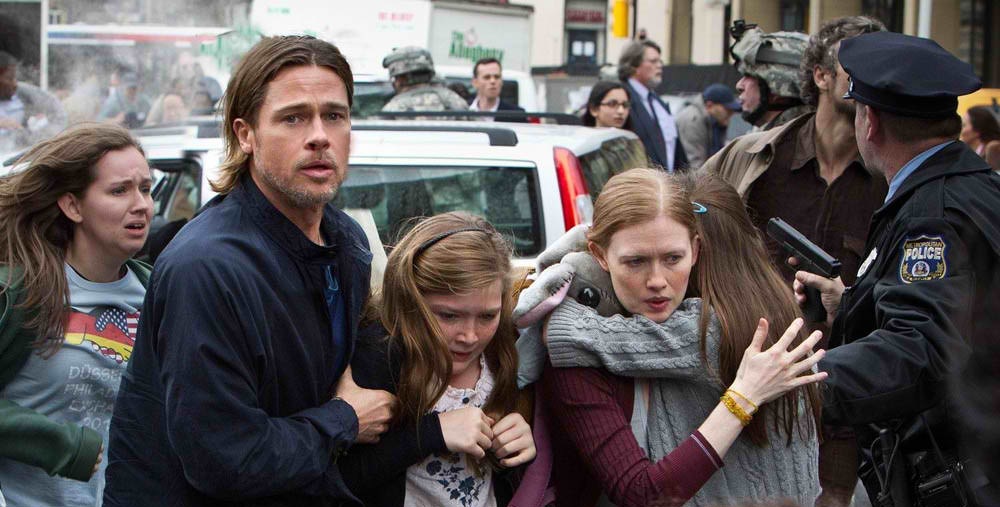
Having allayed his United Nations requisites in order to spend quality time with his family, a commute-turned-zombie attack must be the last thing on Gerry Lane’s (Brad Pitt) mind as he drives his wife Karin (Mireille Enos) and two daughters through a busy Philadelphia street. You get the sense he misses his old investigative job though, therefore it’s unsurprising that Gerry is speedily roped back into a life of danger and heroism, recruited by UN Deputy Secretary-General Thierry Umutoni (Fana Mokoena) to find the origins of the harrowing virus. Where did it come from? How can it be harnessed? These are apt, important questions demanding rapid answers in the narrative context, but questions that don’t quite elevate the film to any significant height.

World War Z, then, suffers two-fold. One on hand its familiar formula reeks of a sterility, whilst characters and plot advancements are constrained by the formalities of the pandemic sub-genre. Instantly, the screen reels off a variety of intertwined media, life, death, disease images in a montage designed to propel the likelihood of ecological threat in a shrinking world. It’s quite clichéd, but just about works as a warning (or confirmation) detailing the film you’re about to watch. Then a hair-strewn Brad Pitt appears, assuring his daughter that he’s done with the ‘leaving home’ business and is now employed solely in the confines of his own four walls — of course those busy, reminiscing eyes say something a little different. And after five minutes, you know exactly what you’re going to get: a rampant, solid action flick. This isn’t necessarily a negative, a ‘rampant, solid action flick’ will often conveniently fill up a few hours. What works, works, right? At times though, there’s an inherent over-predictability that, shuffled in lesser hands, could be construed as laziness (a taped arm will probably get bitten; a family left behind will more than likely come off worse for wear; a semi-retired family man will leave loved ones in the time of need).

These oh-so-common nuances do not affirm laziness though, because it’s evident that the conglomerate of director Marc Forster, actors and writers do care about the film they’re unstably constructing. Here’s the second problem then. In caring, and in striving to cast aside generic formulae, the film unwittingly jumps around, up, down and all over. Big surface ideas fall foul of gaping discrepancies, and there isn’t really a specific overarching tone, rather a number of intermittent murmurings. As a tormented, abrasive group of zombie-humans trample through the streets of Jerusalem, you’re watching (and probably enjoying) that ‘rampant, solid action flick’. But later, when Doctor Who appears and, stopping short at TARDIS-ing back in time, signals an atmospheric switch to one attempting Danny Boyle-esque tension. That’s not forgetting the splatterings of humour (the “Mother Nature is a serial killer” diatribe is oddly built on comic undertones) and misplaced masculine camaraderie throughout. Individually these tonal constructs are more hit than miss, but collectively the mishmash is a tad sloppy.

There’s also a significant plot-contrivance that perhaps stems from this rewrite plague that the film suffers from. The whole of Jerusalem is surrounded and protected by a gigantic wall, the idea being that Israeli officials were aware of the forthcoming viral attack and therefore planned ahead. The reason we are given explaining their premature knowledge is that these officials worked on the basis of a ’10th Man’ theory — where the assumption is that this 10th man (of a consistent group of 10, obviously) would always disagree with every unanimous decision agreed upon by the other nine, and then work to prevent the seemingly unpredictable. Essentially, this time the 10th man came across the virus, and that’s how Israel was alerted early. The issue then is, firstly, are we to believe that this earth-shattering discovery was successfully kept secret from the rest of the world? Secondly, if the 10th man always goes against the grain harvested by the other nine, wouldn’t his subsequent research always uncover (and thus prevent) past tragedies, therefore no global, human-based, disaster would ever have happened? Come on.

I digress. This is not a bad film, it’s only because the plot could’ve been tighter and the tone could’ve been structured and therefore the film could’ve been far better, that its weaknesses divulge frustration. For it looks incredible. Each visual is well-developed and astutely executed. In particular, there’s a tidal wave attack scene that’s ominous, turbulent and exceedingly well done. There’s also a sizeable amount of looking down at burnt, destroyed cities going on, although the terrific special effects anoint this a positive rather than a negative trait. And all of the fast-paced, energetic actions sequences deliver. In fact, Forster makes a point to move away from the early stereotypical set-up by quickly flashing the aforementioned disaster-threatening montage and then driving head-first into a bellowing helping of action.

These popcorn scenes do provide the majority of the film’s strengths, however on a few occasions there is a sense that Forster et al are striving to do more with the morality of said pandemic. A dancing moral stance that could’ve gone further, but one that flickers intelligently ever so often. This virus has spread worldwide, but what happens to civilizations in areas without sufficient protection, areas not ready and alert in their security measures? At one point we’re told “[it’s] pretty obvious nobody back home read it” in response to questioning over an email that circulated eleven days prior with the word “zombie” embedded. Is this a thinly veiled reference towards prior real-life mistreatment of threatening politically-bound documents? And are these creatures really zombies, or affected, compromised humans? They still wear human features, only now are assisted by growling eyes.

In an interview, Brad Pitt recalled his reasoning for seeking out the source material (of which his production company Plan B Entertainment secured the screen rights to). Effectively, something for his younger sons to watch and enjoy — apparently they like zombies. World War Z suffers from a number of faults, but it also boasts a few excellent aspects too and, at the end of the day, has been made with good intentions.

Hey, I’ll have whatever Brad Pitt’s children are having.

Mama (2013)

★★★

Director: Andrés Muschietti

Release Date: January 18th, 2013 (US); February 22nd, 2013 (UK)

Genre: Horror; Thriller

Starring: Jessica Chastain, Nikolaj Coster-Waldau, Megan Charpentier

Although no director’s chair with his name on existed during filming, Mama has Guillermo del Toro’s fingerprints laden all over it. He is an executive producer this time, and the del Toro checklist brims with ticks in reference to this solid fantasy-horror outing that benefits a great deal from the presence of Jessica Chastain. Details are intricate and refined; visuals spring off the screen with life; harmonious sounds glide around with an air of mysticism. And just like in some of del Toro’s previous work (such as Pan’s Labyrinth and Don’t be Afraid of the Dark) the plot centres around an engaging, young female — only Mama demands two of them.

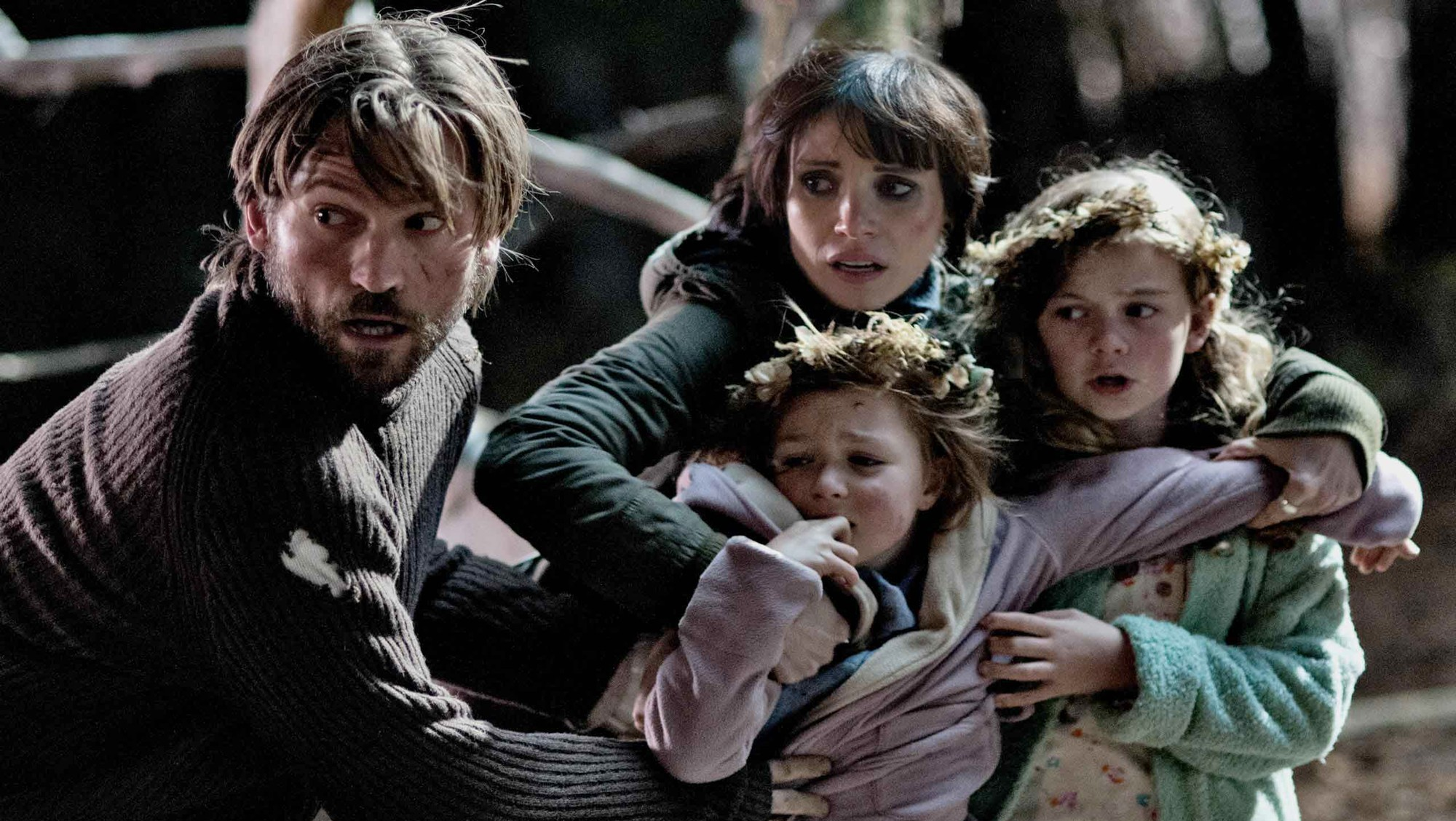
After murdering his wife and business colleagues then crashing his car in the snowy wilderness, troubled Jeffery is killed by a mysterious force that appears to be protecting his two daughters, Victoria and Lilly, from sharing a similar fate to that of their mother. Sometime later, a search for the missing girls funded by Jeffery’s twin brother Lucas (Nikolaj Coster-Waldau) proves successful and the two sisters are slowly reintegrated back into society under the parentage of Lucas and his rocker girlfriend Annabel (Jessica Chastain). However as time passes it becomes clear through consistently strange and distant behaviour that all is still not right with the girls.

Long gone are the days of atmospheric mind annihilation delivered by The Texas Chain Saw Massacre, or even nerve shredding tension served up during Alien. In 2013, you’d do well to uncover a film boasting these cherished characteristics of psychological horror and this is partially why we are subject to so many remakes and/or reboots. Creative ideas are at a premium (though not entirely obsolete) therefore the average mainstream horror output seems to be upping the technical anti as a compromise. Therefore Mama is a horror film that isn’t actually all that frightening, but is entirely watchable.

Why is it watchable? Proficiency in the visual department is partly responsible. The outside setting is rich. Old croaky shacks look and sound, well, old and croaky. First time director Andrés Muschietti bolsters the story with enticing monochrome-like flashbacks (or are they visions?) which are eerie and exceedingly well executed. Even the inclusion of a creature which would not be out of place surrounded by group of Dementors aboard the Hogwarts Express can be forgiven, as it moulds in appealingly amongst Guillermo del Toro’s fantasy visualisations. The illustrative prowess displayed throughout certainly adds a degree or two of watchability.

However, more than any optical standard set, the reason Mama deserves the attention of passers-by is Jessica Chastain. In a role that at first glance may seem a world away from her normal portrayals, Chastain’s rock ‘n’ roll chick Annabel actually shares a number of similarities with the actor’s previous characters. Although she is the sturdy anti-mother who squirms at the idea of pregnancy to begin with, Chastain soon becomes maternal and protective over the children, much like her venture into motherhood as Samantha in Take Shelter. Staunchly independent, yet perhaps not entirely equitable to the task, there are instances of Zero Dark Thirty‘s headstrong Maya here too. Forced into a situation out-of-her depth, there’s even a measure of insecurity present, akin to Rachel in The Debt. These qualities merge to create a character who is emotionally sympathetic and empathetic, and this is key in horror — we need to want Annabel to succeed in the face of uncompromising danger. Chastain is tremendous (though, when isn’t she?) and develops an unshaken dynamic with her two young co-stars who also do a stellar job. Nikolaj Coster-Waldau is even on hand to provide charm and stability along a potentially rickety road.

Of course the primary aim of any horror film is to scare, and the fact that Mama fails to do so often enough is a significant problem. The issue stems from perseverance with too many over-wrought elements aligned with the scare-fest genre. Not paying attention to odd happenings soon develops into ‘why does nobody believe me?’ until the ‘don’t go in the closet’ saga revs its rusty engine. There is a haunted house; a venture into some frozen, dark woods; heck we’ve even got time for a solitary cabin hidden in the trees (Bruce Campbell, eat your heart out!). When a semblance of fright is unveiled it’s always by way of unnatural stillness and haunting imagery. Sadly though, the BOOS! are back before long and don’t hold the same fear factor they did thirty years ago. A lack of innovation in this highly important aspect does let the film down, particularly when just about everything else is good.

As crazy as it sounds, maybe Mama would’ve been better off as a drama rather than a horror. It gets all the non-scary bits right, but is unable to juggle the workload and deliver what the viewers really want — frights and screams. Mama’s limbs are looking healthy, but her torso could be doing with a diet to rid all excess clichés.

Just don’t tell her that.

Evil Dead II (1987)

★★★★

Director: Sam Raimi

Release Date: March 13th, 1987 (US); June 26th, 1987 (UK)

Genre: Comedy; Horror

Starring: Bruce Campbell, Sarah Berry, Dan Hicks, Kassie DePaiva

The second instalment of Sam Raimi’s highly regarded Evil Dead franchise, Evil Dead II (or Evil Dead II: Dead By Dawn to be precise) takes a slightly different route as far as tone goes to that unearthed in Evil Dead. Here, Raimi chooses to essentially recreate the original and utilise the film as a comical nod to horror in general. With a shortage of laughs never in question and Bruce Campbell at the helm once again, Evil Dead II ticks all of the classic horror boxes in a knowing way. Unfortunately, this shift of focus to comedy shreds a great of the scare-factor away that the original provided so well, meaning the film succeeds as an amusing satire, but fails to deliver as a scary horror. Luckily, a scary horror is not what it is meant to be.

Evil Dead II begins in a similar vein to its predecessor, as Ash Williams (Bruce Campbell) travels with his girlfriend Linda to an old cabin in the woods. Soon after they arrive (that is, very soon after) Ash and his girlfriend are attacked by an evil spirit resulting in the death of Linda and Ash becoming partially possessed. Meanwhile, the daughter of the cabin owners, Annie Knowby, is also on her way to the forest retreat alongside her boyfriend and father’s associate Professor Ed Getley. The duo come across southern Jake and his partner Bobby Joe, who join them on their journey to impending madness and gore.

Much of what occurs on-screen during Evil Dead II is designed almost as a parody of horror, and is in place simply to make the audience laugh. From the outset Raimi puts his characters through the everyday (or, more suitably, every-night) rigours of horror: we see a spooky cabin in a dense forest; the demise of a loved one; a suspect bridge (the destruction of which would leave those who have crossed-over in isolation); a dark cellar; Gothic books with ancient text; and all of that makes up the opening half hour. When the focus is centred on these self-acknowledging elements the film works, and works effectively.

Not only is the setting clichéd and the set-pieces part of horror lore, so too are the characters, each of whom boast individual qualities. The heroic protagonist, the charming damsel-in-distress, the goofy idiot and his self-centred partner — they are all present. Evil Dead II‘s obvious satirical drive and the fact that it does not take itself seriously are the two proponents which make the comedy aspect of the film a resounding success. Raimi knows he is pandering to an aware audience, thus, when the additional ancient passages which must be recited to disperse the evil spirits are thrown into the unwelcoming cellar, or when a hapless Bobby Joe scampers out into the demon-infested forest without so much as a moment of rationalisation, a simultaneous chuckle can be heard from both the filmmaker and the audience — communally, we all get it.

Without a doubt, Evil Dead II trumps its precursor as far as comedy goes, but it is a far cry from its predecessor in terms of actual horror. As each scenario becomes increasingly humour-filled and events display the usual scary movie elements, the film quickly loses any lingering tension which would typically be present. Unlike The Evil Dead — which survived and made its name by way of its relentless atmosphere that ranged from discreetly eerie to outright frightening — Evil Dead II struggles to strike up any semblance of an underlying chilling tone. The overarching comedy out-muscles any potential horror during scenes, generating laughter where there would normally be scares. With that being said, the film is not trying to be scary. On the odd occasion that it does reach for a proverbial jump-scare, it does so because those scares have become a staple of horror.

Bruce Campbell’s Ash is as equally at home in amongst the comical nature of Evil Dead II as he was alongside the spookiness of Evil Dead. In fact, his outlandish antics and hilarious facial expressions are even more welcome this time around as they offer more to the film and, in unison with the satire, provide genuine laughs. The duel Ash is involved in early on with his possessed hand delivers outrageous merriment, the resonance of which holds up throughout the film. The supporting cast, on the other hand, do not offer as much comedy — at least not intentionally. Much of their involvement consists of loud screeching and accentuated vowels. Ash’s antics make up the trunk of the film, while the remaining cast are simply the supporting branches. A few snapped twigs have little effect on the strength of a tree, right?

With low production values and ridiculous-looking gore, Evil Dead II sets a comical tone from the get-go as it knowingly places clichéd horror characters in a classic scary setting and through common frightful situations. The shift in focus from terror to comedy negates any usual scares and turns them into echoes of laughter. Often, when a horror film of any ilk is not at all scary, something is not quite right.

However in the case of Evil Dead II, it could not be more right.