The Last Days on Mars (2013)

★★

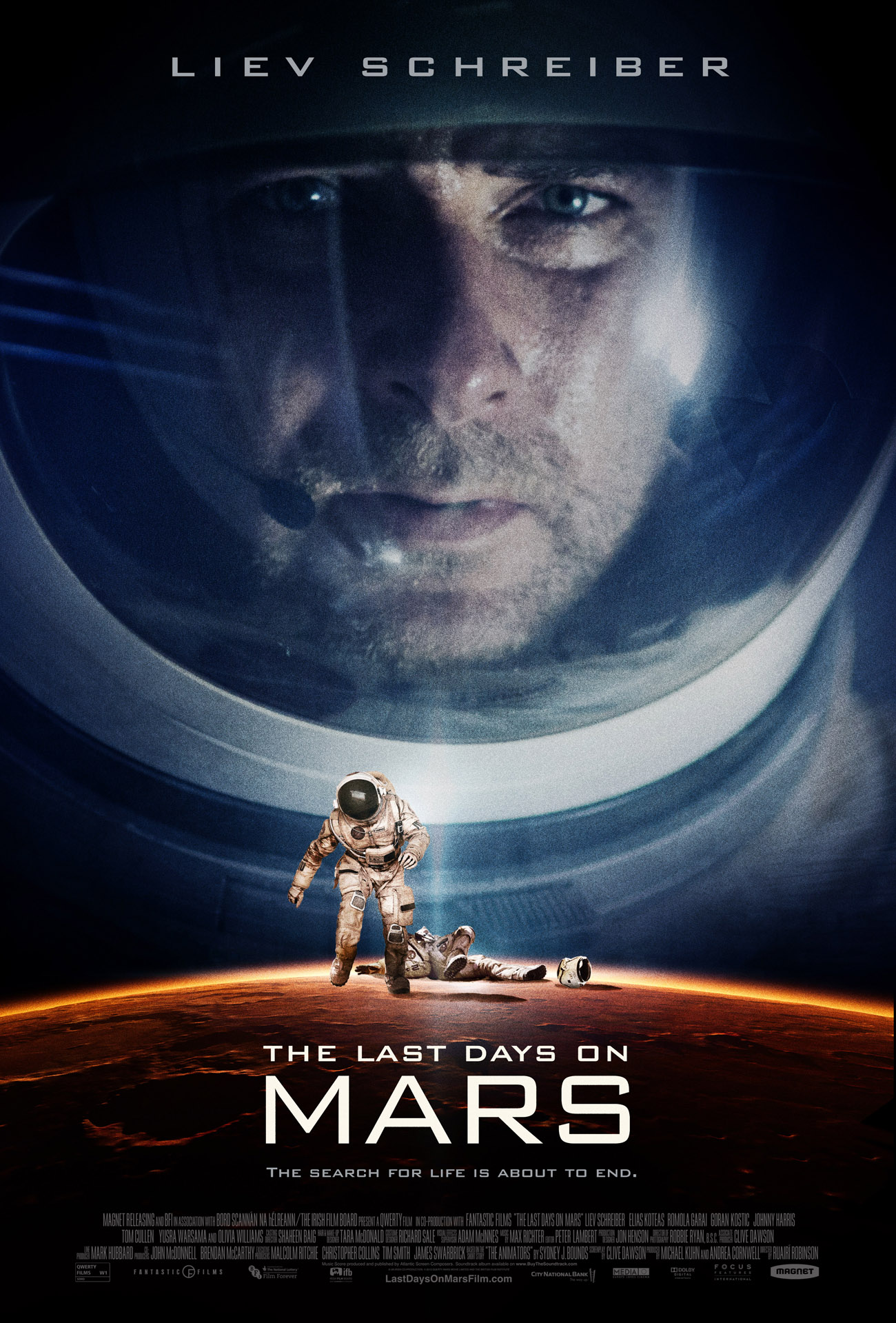
The Last Days on Mars PosterDirector: Ruairí Robinson

Release Date: September 19th, 2013 (UK); December 6th, 2013 (US limited)

Genre: Horror; Science-fiction; Thriller

Starring: Liev Schreiber, Elias Koteas, Olivia Williams

The Last Days on Mars begins with a fairly promising sequence that sees two characters attempt to navigate an approaching dust storm. They bat around bouts of small talk, clean-sounding due to the atmospheric vacuum, quickly establishing their roles in the process. The air is quite eerie, uncanny almost. For five minutes, Ruairí Robinson’s outing works. Unfortunately, for ninety minutes it doesn’t. This subtle, edgy poise rapidly loses out to a flimsy skeleton; plot, characters and decision-making all broken and seemingly unmendable. On the Sunshine scale, The Last Days on Mars drifts miles yonder of Event Horizon before landing worryingly close to Apollo 18. Eek.

Thirty years or so from now, a team of scientists stationed on Mars are less than a day away from extraction. The incoming Aurora spacecraft is set to shuttle the crew back to Earth, but not before Marko (Goran Kostić) can covertly investigate some odd bacteria that he has come across. His findings are extraordinary, indicating the primitive existence of some new life form. However the nature of said discovery proves to be horrifying, and subsequently puts the remainder of the team in immediate danger.

In translating to the big screen, sci-fi historically carries a fairly patchy record. One element that has consistently shone though, is how the genre permeates atmospherically. Vastness is vast, and filmmakers are essentially unlimited given the nature of space potential. The Last Days on Mars makes fine work of the opportunities on offer, parading a visual spectrum that is encapsulating for the most part, and an aura that meanders tactfully between normal and creepy. Cinematographer Robbie Ryan delivers more than any other, affording the piece its one true success story. It’s only fair to point out Max Richter’s occasionally disconcerting score too, his musical interludes apparently effective enough to land him recent gigs as part of The Leftovers and As Above, So Below.

Annoyingly, this eerie-cum-wondrous soundscape signals the end of all things positive. The film tries too hard to be a slasher when the setting is far better suited to a probing approach. For some reason director Robinson cannot wait to show off his monster, and as a result the reveal comes sooner than expected. Scare factor crumbling, we turn to chaotic, jerking camera movements surrounded by pitch black darkness, all fruitful cinematography gone. Slotted indiscreetly amongst the outpouring of brash-yet-monotonous horror are snippets of philosophical musings.

It is as if the filmmakers, having mismanaged or simply forgotten the science-fiction element of their piece, feel the best solution lies with invariably adding earthy monologues. (“Do you think any part of us survives after death?” says one character, the notion shot down in a flicker as the next creature attacks). At one point we float over into unintentionally hilarious territory as the group argue about existing and dying over a deceased corpse that is showing signs of life. Sci-fi should engage its audience by channelling smart reflections and themes with gravitas, but the faint attempts displayed here reek of laziness.

The cast, quite well known despite the small budget, haven’t a hope in the world. Or in any world. Liev Schreiber leads as the claustrophobic Vincent and is granted the most material to work with. Once we’ve given up hope in terms of trying to figure out why a person afraid of small spaces would select space travel as his profession — he refers to their shuttle as a “coffin” — we’re left with hardly any inkling as to who Vincent and the other crew members are. The human characters are so poorly mapped out that it’s a wonder all of the actors found the set. It becomes an eternal struggle to care about any of them, or their fates, simply because we don’t know anything about the group. Mission psychologist Robert is the first one to lose his mind. Tedious.

Clive Dawson’s screenplay isn’t much better. Aside from the lack of scares and occasional deep thoughts, the narrative trundles along without vigour and fuelled by coincidence. The entire set-up hinges on a chain reaction of monumental contrivances: having spent a whole six months on Mars the team just so happen to discover this evil bacteria hours before they jet off home and the only reason said bacteria makes it on board is because a petulant crew member decides to look up the location of an errant mate and subsequently finds him at the site of the bacterial breeding ground. It is ridiculous and unashamedly so.

Perhaps the most grating factor of the lot is the fact that The Last Days on Mars could have been fun hour and a half. It never shows any signs of restraint or wisdom, thus the film was never going to be a serious sci-fi jaunt. But there is room for some B movie silliness. Though the whole thing is ravaged by a disappointing and ineffective requisite to walk the line tonally, a few looser ends here and there would undoubtedly have induced waves of low end but high value madness. It would’ve been a welcome turn of events for most of the cast — including well-travelled names such as Olivia Williams and Elias Koteas — who are instead left to suffer through cringeworthy speeches and poorly written characters.

The Last Days on Mars has been done immensely better before. It’s not necessarily that this is a horrible film, because it isn’t. Robinson’s piece is certainly bereft of many working parts but I’ve seen much worse. The movie is unavoidably boring though, and lazy. It wallows. With the ingredients laid before us — brimming with promise — it should, at the very least, be shooting for the stars and missing. Yet, The Last Days on Mars relents from even aiming skywards.
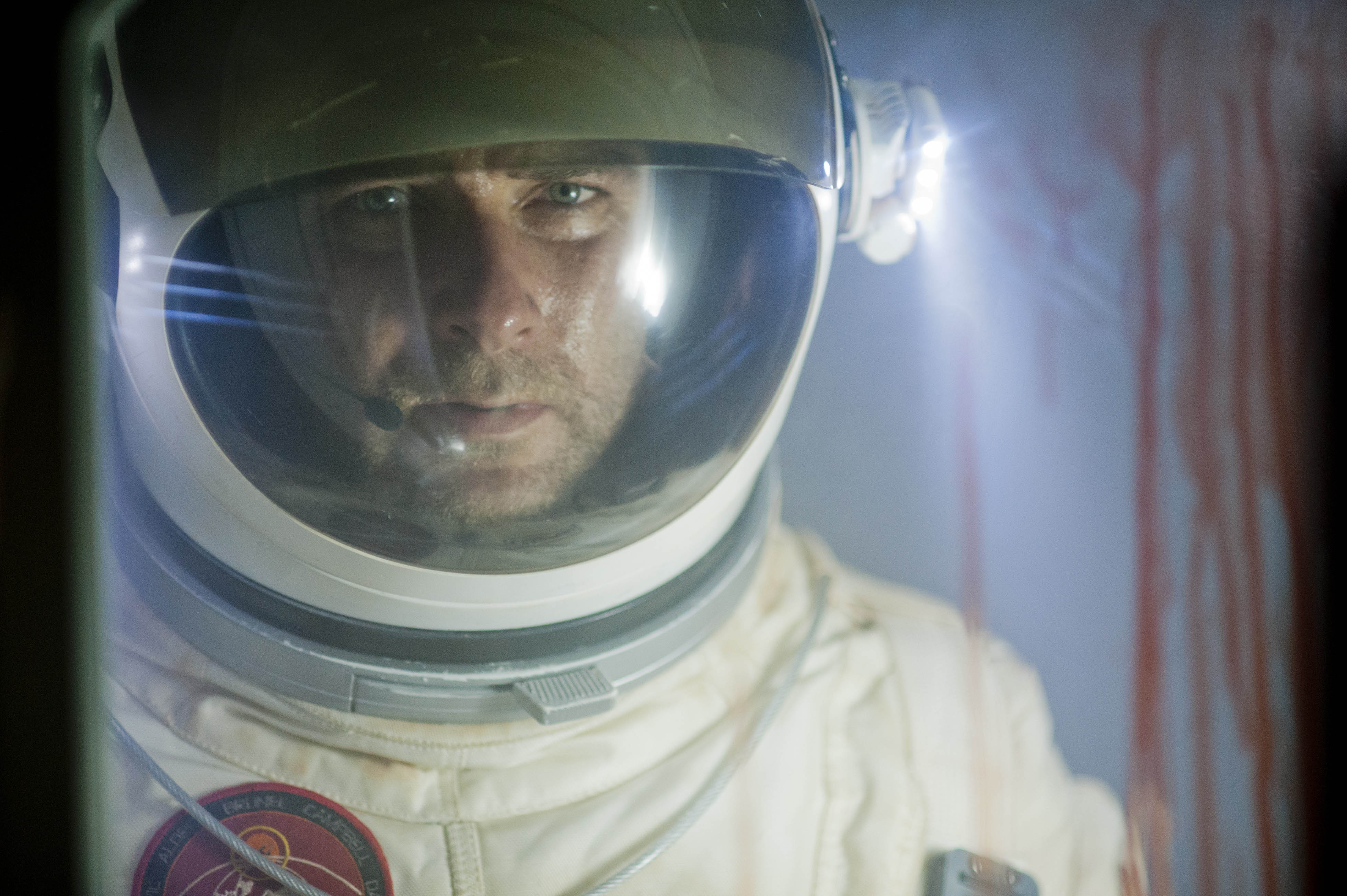
The Last Days on Mars - Liev

Images credit: Collider

Images copyright (©): Universal Pictures, Focus Features, Magnet Releasing

Guardians of the Galaxy (2014)

★★★★★

Guardians of the Galaxy PosterDirector: James Gunn

Release Date: July 31st (UK); August 1st (US)

Genre: Action; Adventure; Science-fiction

Starring: Chris Pratt, Zoe Saldana, Dave Bautista, Bradley Cooper, Vin Diesel

As far as pure cinema goes, Guardians of the Galaxy has all the boxes covered. Sure, we’ve been running on the fumes of superhero momentum for a few years now and with a behemoth such as Marvel Studios behind the film, entering expecting entertainment is an entirely justifiable frame of mind. But James Gunn’s picture never rests on any laurels, it is not satisfied with simply entertaining. Guardians of the Galaxy sets out to interact with the paying customer, to re-establish the genre whilst also refining it. There are laughs, plenty of ’em. Societal threads designed to make us think. And real characters, most importantly. This isn’t just a great addition to the Marvel ranks, it is also a great piece of cinema.

Having lived twenty-six years of his life aboard a scavenger spaceship, Peter Quill (Chris Pratt) somewhat innocuously finds in his possession a universe altering orb. The artefact is highly sought after, by none more so than Thanos (Josh Brolin). In an attempt to scupper the success of a threatening deal made between Thanos and Kree radical Ronan the Accuser (Lee Pace), Quill joins forces with an alien, a warrior, a tree humanoid and a raccoon. Chaos? Ensue.

Balance is pivotal, just ask the bloke in prison with only one leg. Gags, thrills and seriousness are all elements that see plenty of daylight under the astute guidance of James Gunn, a decision that wholly benefits the director’s film. It is tough too, cementing each individual strand without compromising the whole, a concoction Iron Man 3 failed to measure correctly (and look what happened there). Guardians of the Galaxy never stumbles into said pitfall and instead thrives on variation. If the essence of tip-top filmmaking is versatility, we’re looking at a lofty outing. As an audience overly saturated with superhero escapades, we need more. A divergence from the, albeit rather fun, company line. We need space adventures and fresh motives, and both are on the menu here.

As Peter Quill and co’s gallivanting adventures scamper between wondrously constructed civilisations, it becomes increasingly difficult to decipher what might happen next. Mystery and intrigue swivel in and flurry around proceedings, at which point our minds are buzzing with a thirst for more. 10 films into Marvel’s Cinematic Universe, this burst of authentic suspense is truly welcome, particularly at a time when the formula is beginning to wane. And it’s not just the raucous air that commands a sense of thought; Gunn and co-writer Nicole Perlman also include a frequently rearing class allegory, pitting different species side-by-side in disharmony and challenging social boundaries.

And if you’re just here for a laugh, you could do a whole lot worse. The film is hilarious, and it knows so. There’s a prevailing camaraderie between audience and filmmaker; collectively, we know this is all a bit absurd — a tree with a conscience, a raccoon with a rocket launcher — so why not revel in the madness? Brilliant one-liners (“Pelvic sorcery”) make way for equally funny banterous group deliberations. Despite oozing a retro vibe, the film still bears more than a semblance of accessibility. Newcomers will leave filled to the brim on “bro” lingo, whereas the more mature amongst us can lap up Footloose references — of all people, Kevin Bacon becomes one the best running gags on screen this side of 2014. Or, like me, you can inelegantly giggle at everything. Guardians of the Galaxy has a heart, one that beats for all-comers.

At the epicentre of its heart is a ramshackle gaggle of misfits. Forget cookie-cutter characters, these five are dense to the nth degree. Chris Pratt plays Peter Quill — though he prefers Star-Lord — and is the glue that holds the guardians together. Pratt is on a mission to stardom himself, and his performance here is another indication of the leading man’s talent. He injects Quill with some soul and, rather than becoming the conventional male hero, embarks down a slightly less glamorous yet equally loveable path. No doubt buoyed on by his Parks and Recreation experience, Pratt also has comic timing down to a T. Zoe Saldana is Gamora, the kick ass alien who is sort of Thanos’ daughter but sort of not. Saldana has already proven her worth on the blockbuster stage and her mystique is integral as it affords the group an ambiguous streak.

Perhaps the most impactful performance emerges from wrestler turned actor Dave Bautista. No doubt, his skills inside a ring prove handy when it comes to fulfilling a number of exciting fight sequences, but it is the big man’s sincerity that really shines through. Drax takes everything literally — a trait that often tickles the funny bone — but he is never presented as stupid. He’s had a tough time in life and he is a tough guy, but Drax is also an endearing presence and Bautista deserves huge credit for ensuring that this is case. Groot is the Hodor at large, partnered alongside the spitfire raccoon, Rocket. Bradley Cooper’s voice work is both persuasive and energetic. A wit-off between Tony Stark and Rocket must be in the pipeline. The aforementioned quintet mesh together like a rugged patchwork quilt: rough and probably a bit dirty, but entirely warming.

Unlike The Avengers, Guardians of the Galaxy is not an all guns blazing affair. There are a lot guns and they do embark on a hefty amount blazing, but that comes with the territory. We get the sense that the engine is only revved half-way, that the future is dangling the promise of a whole lot more. And that is thrilling. We’re only in the introductory phase of this particular relationship and, while the sparklers are sizzling now, fireworks undoubtedly lie ahead. The comparatively small-scale feel, then, is really charming and quite emotive. Subsequently a deeper connection with the characters ignites. The film’s mischievously dated soundtrack has a hand in generating this personable aura. Its compilation is a masterstroke, making for a number of unorthodoxly funny mishmash sequences — Cherry Bomb is particularly rollicking.

Going forward, one thing is a certainty: if this is Marvel’s new prerogative, then rest assured that next time the comic book logo appears on screen we’ll be in good hands. “If there’s one thing I hate it’s a man without integrity,” rings out early on. I’d like to think that Guardians of the Galaxy is gender-neutral and I’m convinced it is bursting with integrity. It’s also Marvel’s best film to date.

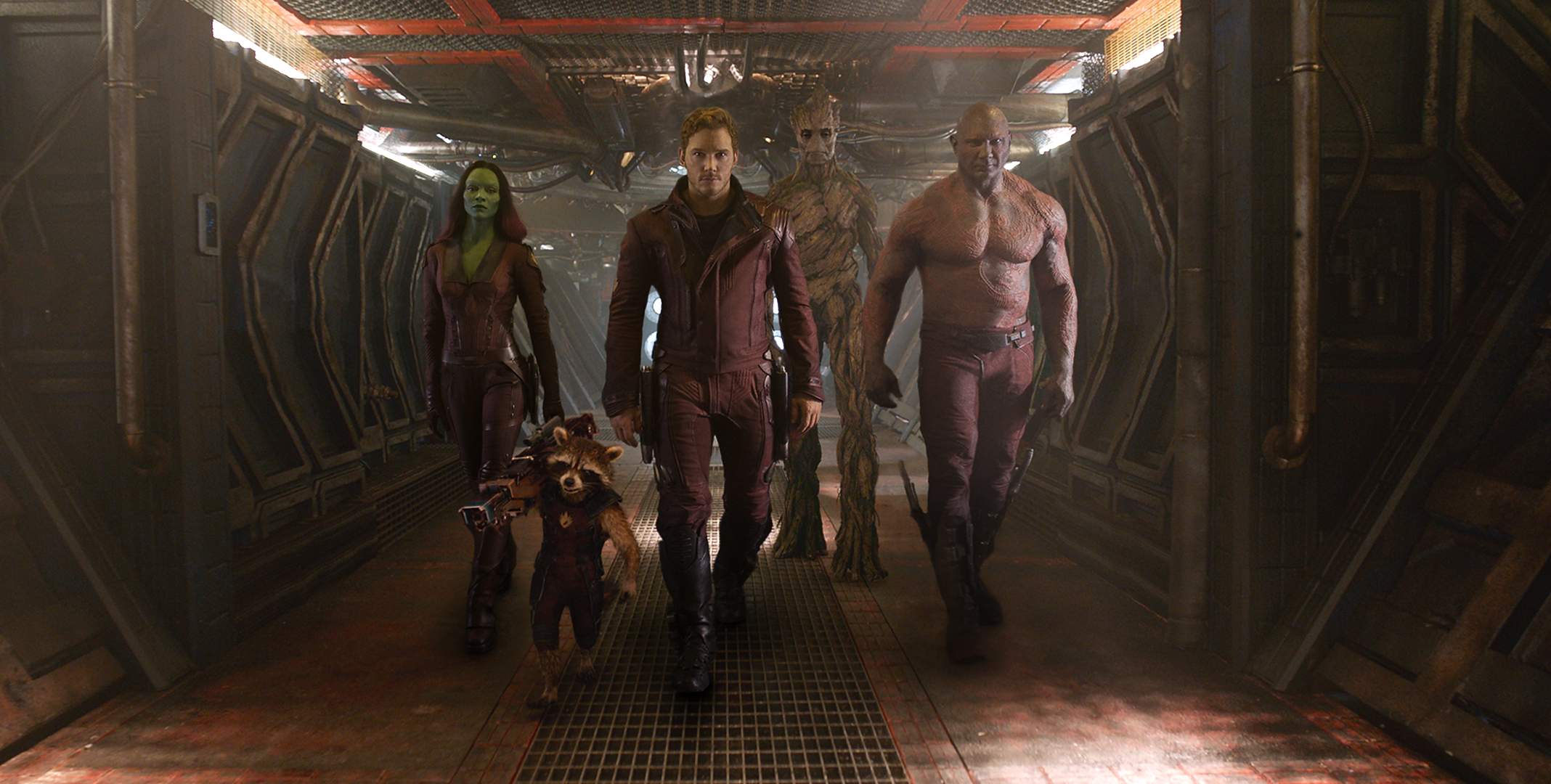
Guardians of the Galaxy - Cast

Images credit: IMP Awards, Collider

Images copyright (©): Walt Disney Studios Motion Pictures

Independence Day (1996)

★★★

Independence Day PosterDirector: Roland Emmerich

Release Date: July 3rd, 1996 (US); August 9th, 1996 (UK)

Genre: Action; Adventure; Science-fiction

Starring: Will Smith, Jeff Goldblum, Bill Pullman

Two years before his monstrous monstrosity Godzilla, Roland Emmerich hit the streets of Washington DC to tackle an alien invasion. Time — and a great deal more effort — would go on to prove extraterrestrial superiority over the giant lizard, though that’s not a particularly astounding declaration. Just how effective is Independence Day? If popcorn-munching and Coke Zero-slurping is your kind of thing then the global disaster flick works a treat. Don’t expect any intellectual poise for there’s hardly an ounce to be had. But that’s not a problem — you wouldn’t show up to Comic-Con looking for a Jane Eyre panel. Emmerich zaps many of the right notes here and, despite the modern datedness of a visual palette once heralded as ground breaking, Independence Day cajoles along boisterously.

The unexpected arrival of alien spaceships only a few days premature of July 4th sends the United States into disarray. Major cities are under immediate threat causing the peoples within them to scatter. With less than a spoonful of hope to consume, President Thomas J. Whitmore (Bill Pullman) finds himself seeking aid from somewhat unconventional sources; specifically, ambitious pilot Steven Hiller (Will Smith) and nutty computer expert David Levinson (Jeff Goldblum).

Technology finds its way into the heart of on-screen antics more often than not. Alien or otherwise, this is sort of a love letter to technological innovation. The grandiose ships planted neatly above cityscapes not only hover with pristine accuracy, they also completely wipe out the land below with bellowing power. It’s technological warfare and the otherworldly beings have the upper hand, even when it comes to pertinent human made artefacts. (“They’re using our satellites against us.”)

But this appreciation of and for innovation speaks to a higher purpose relayed across the exceedingly long two and a half hours. Though the implementation is fairly blasé in terms of a ponderous deficit in depth, the film does propose the age-old alien versus human musing that has captured the imagination of pop culture since Neil Armstrong and of cinema since Stanley Kubrick, more or less. Emmerich and co-writer Dean Devlin’s script struggles to delve anywhere past the glossy surface — in truth, it can be really glossy — but the vigilant thinkers amongst us are still able to briefly consider some interesting possibilities as events roll across the screen.

Initially, we’re fed a distinct juxtaposition: disparate humans manifest, from the amusing to the serious to the disbelieving, whereas the stoic extraterrestrials are collectively brooding and sophisticated. It’s not until further down the heavily destroyed road that similarities strike; aliens, though technologically adept, can be just as frail as humanity. The suggestion of familiarity is intriguing but it doesn’t receive enough focus to fully unravel.

That’s because Independence Day rockets along with energy and sappy joy. Let’s be honest: the President’s Independence Day speech is amiably absurd, even more so than preceding the alien invasion. (“Perhaps it’s fate that today is the Fourth of July, and you will once again be fighting for our freedom.”) This mightn’t boast the scholarly prowess of a 2001 or even the tingling tension of an Alien, but it does come armed with fun and humour. Maybe it’s simply the childhood beer-goggles still clouding my judgement 15 years on, however it seems like the 90s was a time for chaos and frantic comedy on the silver screen. I’m thinking Space Jam. Jurassic Park. Home Alone. These films each share the same semblance of bumbling pandemonium as Independence Day, a trait that is rather infectious.

Admittedly, it is true that the quartet of aforementioned films come equipped with the stock aloof goof. We’ve essentially got two here, though Jeff Goldblum’s David Levinson is a tad more measured than his father Julius. (“‘All you need is love’ — John Lennon, smart man… shot in the back.”) The two bounce off each other with amusing distrust yet above the familial cabin fever, they’re a healthy duo and probably the best characters. Will Smith is as charismatic as ever, it’s the lack of well-roundedness that lets him down. His character Steven Hiller, along with most others, suffers from genericism syndrome. At least the guys fare better than the girls, the few of whom don’t have an awful lot to do.

Granted, this isn’t a spectacular examination of the human psyche or anything, it’s pure entertainment with a spectacular visual array. Unfortunately almost 20 years has passed and this once award winning ocular jigsaw has become penetrable. There are a number of clunky moments — the tunnel fireball stands out — but it’d be unfair to criticise a film for ageing.

One area that ought to attract some denunciation though is the prevailing lack of threat, an element that is sorely needed in order to usher in the full effect of disaster. There’s hardly any depth to the story, nor is there any strand of worry interwoven throughout proceedings which is odd given we watch the decimation of huge cities. Personal anxiety should arise, but never really does. Exposing the audience to so much carnage early on sanitises the remainder of the film — we know the worst has come and gone and the characters themselves aren’t really worth investing in, thus there is no obvious agent of emotion to clutch dearly.

Nevertheless, that is not Independence Day’s primary prerogative. Emmerich directs a film that should command greater emotional gravitas given the velocity of proceedings, but when push comes to shove this does what it sets out to do with exuberance and laughter. In fairness, compared to Godzilla, this is Citizen Kane.

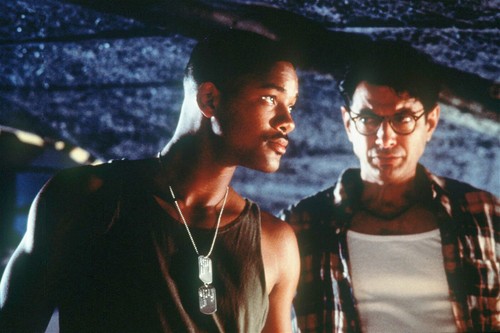
Independence Day - Smith and Goldblum

Images credit: IMP Awards, Collider

Images copyright (©): 20th Century Fox

Dawn of the Planet of the Apes (2014)

★★★★★

Dawn of the Planet of the Apes PosterDirector: Matt Reeves

Release Date: July 11th, 2014 (US); July 17th, 2014 (UK)

Genre: Action; Drama; Science-fiction

Starring: Andy Serkis, Jason Clarke, Gary Oldman, Keri Russell

It’s always darkest before the dawn, or so the saying goes. Well, if Matt Reeves’ film is the culmination of a dawning ape species, then said saying is spot on. Dawn of the Planet of the Apes — we’ll stick to Dawn from now on — is frequently unsettling. Coalescing magnificently with arguably the best-looking visual palette since Middle Earth (every raindrop on fur is accounted for) is a story that sizzles with poise and acute direction. When the lesser of the film’s two halves is still approaching five stars, you know there is a winner playing out on screen.

Rise was a deft and engaging prelude that focused keenly on human-animal relations and biological moralities, but Dawn is more than that. Those traits are still prevalent of course, however Reeves invokes an emotional core by affording his actors the chance to tell a story. And whether it is the ping of Michael Giacchino’s score or the rugged outlook purveyed by Michael Seresin’s cinematography, it’s clear we are back in familiar territory. Apes fans rejoice. Apes newbies prepare. All eyes on the next branch, this one is swinging straight back to 1968.

A decade has passed since the fall of humankind due to viral infection. In San Francisco, a group of seemingly immune people have merged in an attempt to reignite the flame of civilisation, but this uprising is severely threatened when a few of the survivors inadvertently set foot in a developed ape colony. Caesar (Andy Serkis) is colony’s conscience-driven leader who hopes for peace, something that the two separate cultures may never be able to attain.

Fraught with tension, Dawn relentlessly teases a monumental clash. The contrast between two societies — apes and humans — is startling yet not unfamiliar. For better or worse, we watch as a total role reversal unfolds: people live hidden away with basic supplies, whereas apes roam landscapes carrying out practices akin to those originally implemented by human beings. They hunt. They safeguard. They educate. They even wear protective face masks during birth. Armed with subtitled grunts filling in for words, the opening quarter of an hour details this thriving lifestyle as it lulls us into a rhythm of admiration. The following gunshot that dully interrupts with immediacy not only acts as a wedge between life sources, it also represents their inability to coexist.

It takes human intervention to negatively hamper the structure of being that has been mustered by these hominoids. Dawn, then, is a cautionary parable about the disease of humanity; once we infect, we destroy. Reeves tactfully employs this overarching theme — the various characters on both sides of the Golden Gate Bridge openly discuss the merits and demerits of war, necessary primarily due to our own invasive attitude. (“Fear makes others follow.”) As the analysis plays out on screen we’re challenged to weigh up combat as a fundamental prerequisite. Is it? Reeves is firmly in the camp that denounces war and its resultant mess, and it’s hard to argue when his presentation is so compellingly and affectingly relayed. No issues arise when the script occasionally hints at predictability because of the hearty motifs and strands that weave throughout.

In fact, Dawn is all the more interesting because it is about the apes. They are the beginning, middle and end. Unlike Rise — which rightly honed in on human beings and their attempt to control animals — this second instalment sheds more light and dark on ape life. Given this, we’re allocated far more time to see the intricacies of the primate’s in-house relations and potential fallouts. And so, Andy Serkis, the spotlight is yours. The actor famed for his consistently dazzling motion capture acrobatics once again vaults into the skin of Caesar, and subsequently groans out a career defining performance. Each sinew matters because Serkis is inclined to make each sinew matter. Though he plays Caesar with air of perpetual dominance (“Ape not kill ape”) Serkis’ humility shines through. To many he’s simply a voice with no face, that guy who done the thing as Gollum. I certainly wouldn’t begrudge any formal recognition headed his way. What he does is acting, plain and simple. Utterly brilliant, too, and this role is his reward. It’s also ours.

Serkis’ powerful performance is made all the more tantalising by way of Dawn’s visuality. The film looks incredible. Motion capture settles into its surroundings as well as ever and the attention to detail routinely impresses. The apes might as well be authentic, drafted in from Hollywood’s premier acting zoo. San Francisco manifests gloomily, mirroring the prevailing mood of both the narrative and the characters involved. Reeves also harkens back to the tremor-like scariness of two previous outings, Cloverfield and Let Me In, by letting proceedings breathe a foreboding breath or two — the film’s curtain jerker is a genuinely ominous hunting scene. Mature heads also prevail when it comes to violence, which isn’t common, therefore smatterings of red spring with greater gravitas.

Toby Kebbell is Koba, Caesar’s second-in-command. The Brit’s mannerisms are so convincing that you’d be forgiven for thinking Koba is another Serkis creation. On the human front, Gary Oldman’s Dreyfus is the most captivating character. He’s a staunch defender of stretching ethical limits in order to prevail and, despite being fed a little less screen time than other major players, Oldman effectively channels his persona’s mindset. Jason Clarke lands the James Franco role as the human whom Caesar develops a bond with. The Aussie’s efforts are admirable and, more often than not, sufficiently potent.

Dawn, then, is one of 2014’s best films thus far. This reboot of the Apes franchise may yet prove to be a mightily formidable cinematic set once complete, but for now we can at least bide our time equipped with the knowledge that, as a standalone piece, part two has already achieved a status of grandiosity.

Bravo.

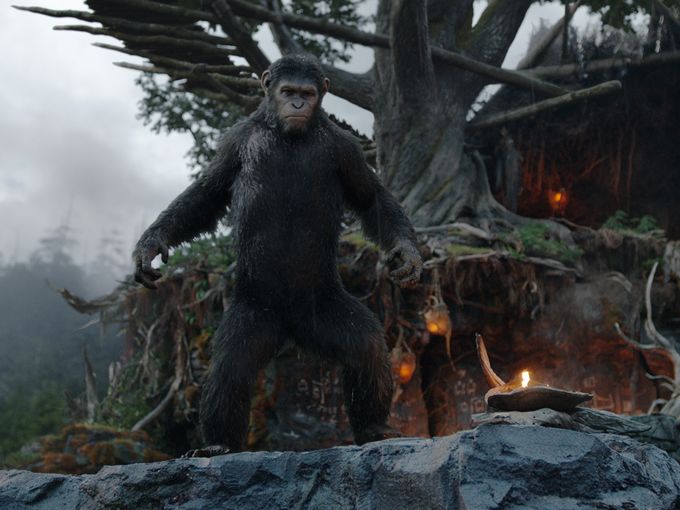
Dawn of the Planet of the Apes - Caesar

Images credit: IMP Awards, Collider

Images copyright (c): 20th Century Fox

The Mist (2007)

★★★★

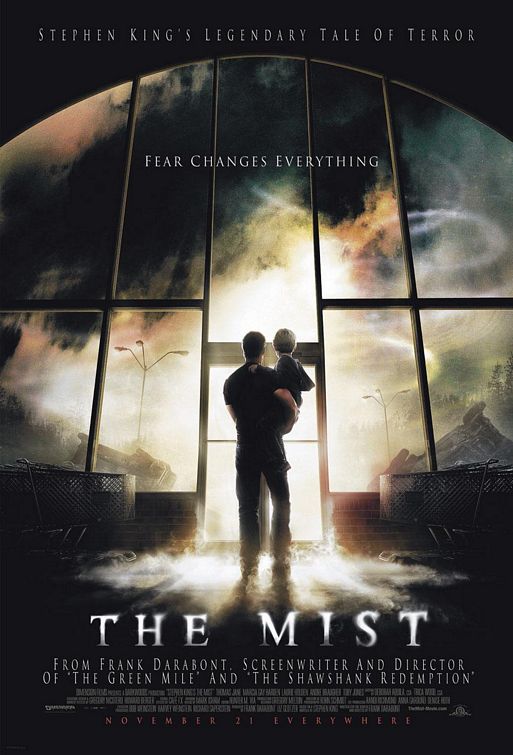
The Mist PosterDirector: Frank Darabont

Release Date: November 21st, 2007 (US); July 4th, 2008 (UK)

Genre: Horror; Science-fiction; Thriller

Starring: Thomas Jane, Laurie Holden, Marcia Gay Harden, Toby Jones

The Mist trundles along quite tediously throughout its opening 10 minutes. The acting is overplayed and stodgy, relationships are too obvious and the dialogue is half way towards egregious. Then we head into town, to the supermarket, where Toby Jones appears and everything subsequently kicks off. Mr. Jones probably isn’t the reason for the immediate turn around in quality, though I’d be willing to bet he is part of it. Rather, it’s Frank Darabont’s screenplay that ushers forth this change. Those first few scenes were likely crummy on purpose, as a means to lure us into a false sense of security. Because otherwise there’s no security here. Things get worse before getting worse still. The Mist fails to attain horror perfection but what it does do is generate a very authentic sense of social familiarity surrounded by science-fiction monstrosities. And that is impressive.

After a freak storm runs rampant in a small town, various residents decide to visit the local supermarket and stock up on supplies. Among them are David Drayton (Thomas Jane) and his son Billy (Nathan Gamble), however their grocery trip soon devolves into chaos as danger-infested mist sweeps across the area. The group now trapped and anxious, it soon becomes clear that the mist isn’t the only simmering menace.

Before the crisis has grown legs, we dip in and out of numerous brief conversations that take place around the supermarket. It’s akin to a smattering of personality tastings, writer and director Frank Darabont teasing us with the potential for clashes that may or may not arise. Shortly thereafter, a warning klaxon moans out with a distressing echo and a bloody-faced man runs maniacally into the store. (“Something in the mist!”) This sequence is an excellent preparatory slice that establishes the tone going forward: brooding and culturally influenced. See, though this is an outstanding horror candidate, it’s not necessarily scary because of the fog or the monsters that roam inside. The Mist is frightening due to its stark portrayal of humanity come undone. Just how far will humankind plunge in its most testing moment?

The populace picture that follows isn’t exactly pristine; what threatens to simply be a scare-fest swiftly matures into a community drama driven by the unravelling of social status feuds. The supermarket houses a wide range of contrasting citizens, some characters amped up to 11 but all recognisable nonetheless. Debates slowly simmer before raging on with a high intensity and it is the product of these disagreements that horrifies us. Darabont’s screenplay adeptly includes religion, politics and class — they’re all in here. Whilst the religious element frequently takes a front seat, the director skilfully navigates any possible obstacles of audience alienation by placing utmost focus on the people. Though religion is the vehicle for hate, it’s not the agent. Humanity is, and this is an attack on folk being bad within the context of desperation. Collective counterculture in its most horrendous form.

What we have then is a patient and precise narrative, one that knows when to reveal and when to refrain. Fairly early on, we worry that the monster in the mist has been unveiled too soon, a worry that quickly proves to be unjustified. The aliens aren’t necessarily the issue. In some ways the mist is a metaphor for the cloudiness of humanity; enter the swelling smog and things can only get worse, or avoid it — in other words, promote honesty amongst your peers — and life will be alright. Toby Jones’ Ollie says it best: “As a species we’re fundamentally insane. Put more than two of us in a room, we pick sides and start dreaming up reasons to kill one another. Why do you think we invented politics and religion?”

Jones is really good. His character is the most normal, a typical assistant manager who’s a tad overweight and generous with his time. He strikes up an alliance with Thomas Jane’s painter David and a number of other hopeful victims. Jane is a solid lead on the journey, so much so that his dependability factor is eventually usurped by a genuinely powerful emotional outburst. Laurie Holden plays primary school teacher Amanda, her relationship with David one that hints at romance without ever acting upon anything. It is worth pointing out the lack of romance throughout the film: aside from a speedily adjourned kiss there’s none to be had, perhaps another indication of the overarching negative vibe. The most effective performance emanates from Marcia Gay Harden as local religious nut Mrs. Carmody. Harden throws herself full pelt into the role, as someone who degenerates from harmlessly deranged to eerily psychotic to absurdly vile. Although there are a large number of peripheral characters, the potency of a few outweighs the flimsiness of many.

On a technical level, The Mist is efficiently purveyed. Rohn Schmidt’s cinematography shows traces of his work on The Walking Dead (ironically, he’s only one of many here who would eventually swap mist for zombies) and reflects the terror of events succinctly. It’s sufficiently gory without being too upfront, and the alien creatures look rather impressive. The camera makes an effort too, its aggressive movements creating a very chaotic atmosphere. On the other hand music hardly conjures a bar, Darabont instead finding solace in silence and substantial dialogue.

Having said that, the implementation of Dead Can Dance’s “The Host of Seraphim” to hauntingly serenade the film’s final scene is an inspired decision. Much has been made about The Mist’s conclusion. In brief, the ending works. It’s real life, if real life involved aliens and hopelessness. Admirably — and somewhat horrendously — there is no shirking away. But the less said about it the better.

The Mist currently stands as Frank Darabont’s last directorial effort and it’s a worthy swan song. This should come as no surprise given the filmmaker’s track record — The Shawshank Redemption and The Green Mile, to name but a few. The Mist is a methodological piece, one that unfolds with great purpose and honesty. It might encase humanity in an exceedingly gloomy shell, but in the dire circumstances presented who’s to say that this forecast is unfounded?

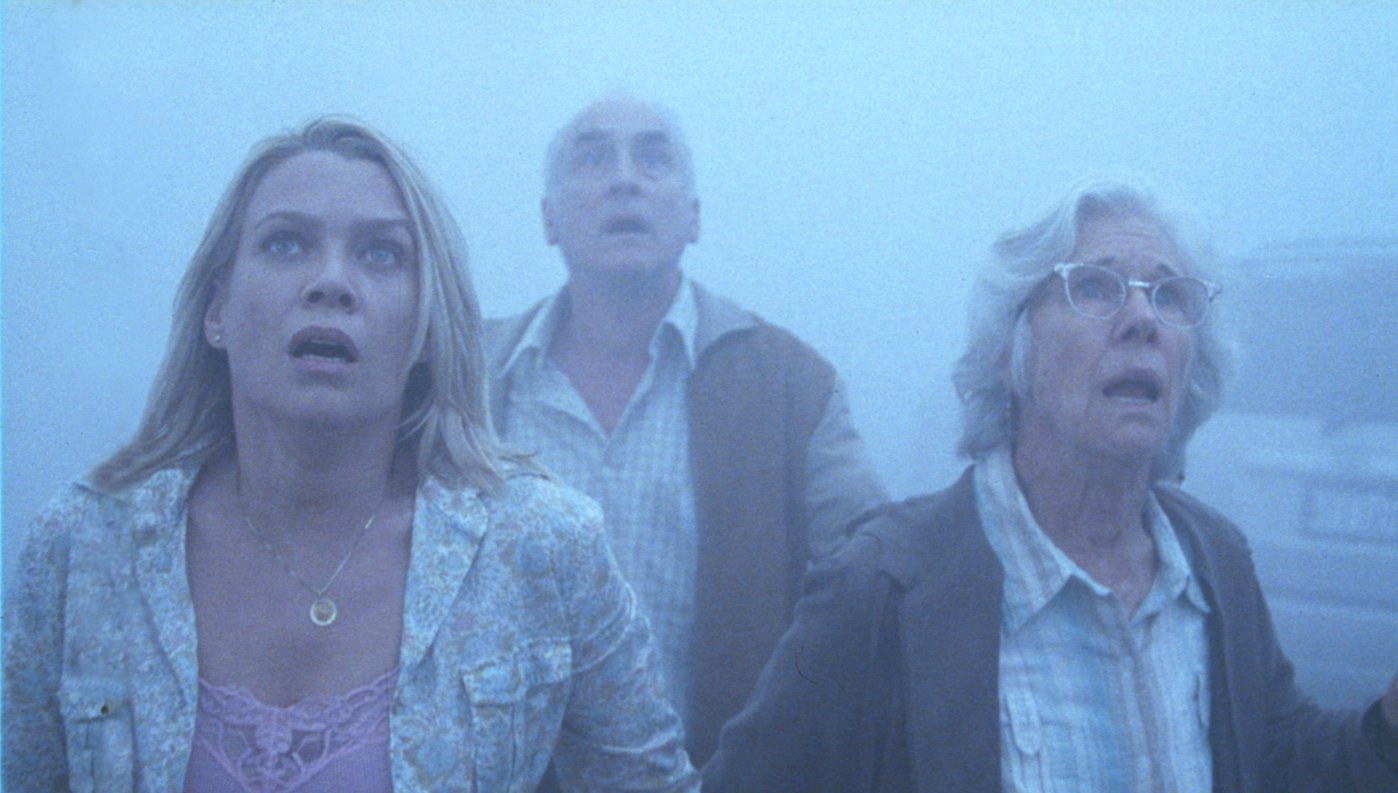
The Mist - Laurie Holden

Images credit: IMP Awards, Horrorphile

Images copyright (©): Metro-Goldwyn-Mayer, Dimension Films

Transformers: Revenge of the Fallen (2009)

Transformers Revenge of the Fallen PosterDirector: Michael Bay

Release Date: June 19th, 2009 (UK); June 24th, 2009 (US)

Genre: Action; Adventure; Science-fiction

Starring: Shia LaBeouf, Megan Fox

When it comes to giant robots hitting each other, this is more horrific and dim than Pacific Rim. After being punched illegally below the belt last time, we’ve carelessly staggered back for round two where everything is bigger, louder and even more insulting. Transformers: Revenge of the Fallen, then, hones in on a once universal toy that has moved on from mild swearing to juvenile leg humping. Michael Bay’s second instalment looks neat for a while but once the materialistic disguise wears away we’re left with an outing that makes up for in immaturity what it loses in efficiency.

There is no structure here. No beginning, middle and end. It’s just a mass of special effects that progressively squanders specialness and a bunch of indecipherable machines who relentlessly fritter away parts. At two and a half hours long and over $200 million spent, Revenge of the Fallen simply isn’t good enough.

A few years have passed since the events in Transformers. Sam (Shia LaBeouf) is heading off to college, Mikaela (Megan Fox) is fixing vehicles and the Decepticons are looking for another reason to attack. Fortunately, a piece of the cube from the last film innocuously falls from an old T-shirt in Sam’s closet (imagine that!), setting in motion a series of events involving odd symbolic visions, the Pyramids of Giza, Optimus Prime and stealing the Sun. Or something.

Humans and Autobots now work together as part of a military NEST branch that targets Decepticons. Straight away, we see Autobots project the form of attractive females. A few scenes and countless soaring fireballs later (Bay can only withstand five minutes without including an explosion this time) the focus shifts to Megan Fox suggestively bending over a motorcycle, because that’s how mechanics roll in her neck of the woods. At least we know where we stand. The Transformers trademark has transformed from a children’s plaything to an adrenaline-fuelled macho void, and for absolutely no justifiable reason. Bay even uses college sex as an excuse to unleash his beloved brand of action-packed booms. His woman characters — because, let’s be honest, nobody else would dehumanise the female gender like this — are sold as nothing more than window dressing to pull in adolescents who know no better. Rachael Taylor’s smart scientist is out, services no longer required. Too intelligent obviously. Her substitute is Isabel Lucas, who exists solely to have a thing for Shia LaBeouf. Do the Oscars give out an award for misogyny?

The film is even more of a mess than its predecessor. From start to finish proceedings play out as a constant battle where the only people who care about civilian fatalities less than us are the filmmakers. “Worldwide casualties are in the neighbourhood of 7000,” we hear before the outing hastily returns to what’s important (loud bangs). The conclusion of this continuous war is a human versus robot encounter that is outrageously implausible even within the context of maximum implausibility. Though, it is rather poetic that the main monster here takes the form of an enormous hoover, particularly given Revenge of the Fallen is a total moral-vacuum. A National Security Advisor shows up at one point to explain the details of what happened previously. The moment actually works on two pathetic levels: both as a quick fix for those who avoided the first film and as a driving force for this film’s narrative. Essentially, Bay relies on simplifying that which is already simple because he feels it’s the only way his audience can understand the plot.

The piece even begins to suffer in the only area where it normally impresses. Sure, the visuals are pristinely executed and rather impressive for a while, but the mystique soon dissolves in favour of splurging cinematic yuck. A spread of music videoitis is rife; the camera simply cannot sit still and instead consistently circles characters in tandem with puppet string musical interludes. There’s never a hair out of place as good looking people appear even better looking and the average Joe doesn’t exist. We’re even rewarded with moments of slow motion, bestowing a longer life span upon the explosions. Ben Seresin’s cinematography is so obviously trying to impress that it manifests as desperate. And still, sequences unfurl with ugliness — watch out for the Decepticons landing sloppily on Earth.

Revenge of the Fallen is actually at its best when the Transformers aren’t around, when what’s playing out on screen is an awkward family comedy. Driven by stupid humour, the sequences involving Sam and his parents are the most entertaining. Kevin Dunn and Julie White offer brief junctures of light relief as Mr and Mrs Witwicky. (In truth, these sparsely spread few seconds go down like a glass of ice cold water in the desert). Shia LaBeouf annoys a tad more than in the first film, but it’s unfair to chastise him for the all-encompassing faults strangling a severely lacking script. Megan Fox has even less to do than in the first flick, if that’s possible.

It might not be a total money-making scheme yet — that’s the next one — but Revenge of the Fallen is undoubtedly the grandest black hole in a star-destroying franchise. Nothing’s salvageable from the wreckage. This is cinematic homicide and Michael Bay is guilty as charged.

Transformers Revenge of the Fallen - Shia LaBeouf and Megan Fox

Images credit: IMP Awards, Collider

Images copyright (©): Paramount Pictures

Transformers (2007)

★★

Transformers PosterDirector: Michael Bay

Release Date: July 3rd, 2007 (US); July 27th, 2007 (UK)

Genre: Action; Adventure; Science-fiction

Starring: Shia LaBeouf, Megan Fox, Josh Duhamel

It’s Transformers week everybody! Indeed, unlike you lucky people across the Atlantic who’ve had a whole seven days to digest Michael Bay’s latest installment of metal mayhem, for us cinema folk here in the UK Transformers: Age of Extinction is hot off the press. I’ve not seen it yet. (Admittedly, the robustness of the word “yet” in that sentence is questionable.) To tell you the truth, I’m not a great admirer of Bay’s adopted franchise. It all started in 2007.

Sam Witwicky (Shia LaBeouf) is a stereotypical boy teenager. He’s into cars, girls and late-19th century exploration. Perhaps that last attribute isn’t the most applicable to a male adolescent, but it’s part of an eccentric mosaic that sets Sam apart from the rest. It could simply be a feeble plot point, but who am I to judge. Certainly, Sam has a crush on his classmate Mikaela Banes (Megan Fox) but the only way he’s going to get her attention is with an engine.

Turns out his new car is a Transformer. There’s a multitude of other stuff going on — political struggles, technological misfire, a band of surviving soldiers in Qatar (that’s in the Middle East, by the way), the arrival of evil Decepticons, the arrival of friendly Autobots — but at its most basic, and this film is rather basic, Transformers is about giant robots punching and kicking and wheeling each other.

Director Michael Bay cannot contain himself. His immaturity spills out across the screen from the get-go: a gravelly, deep voice kicks off proceedings ushering in the overly macho tone; an array of snazzy camera angles each act as a sales pitch for the next military helicopter; it only takes six and half minutes for the first (and second, third, fourth) explosion to shake the screen. Bay absolutely has a way with visuality. He’s able to create carnage that looks impressive and that sounds impressive. But it’s all very movie trailer-esque, as if we’re watching a feature length advert for the next blockbuster only it’s stuck on a loud, grating loop.

Substance would take a back seat if the back seat still existed — Megatron probably crushed it. He, or it, is the villain. Adversary of the human-appreciating Optimus Prime who arrives promptly with his band of misfit car pretenders to save the day. They’re robots though, and they’re not blanketed in enough development to make us care. Nor are the human characters and, although the likes of Shia LaBeouf and Megan Fox (she’s far from the worst thing in this film) amass their very best collective effort to generate some sort of viewer connection, one doesn’t exist.

It could be that goings-on shimmer with an unhealthy sheen of artifice. The CGI looks good but ultimately acts as a momentary veil over the real problem: shallowness. There are four female characters dotted throughout the almost two and a half hour runtime. That’s about one for every six male. (At least, males with lines.) We’ve got two mothers who seldom appear, a smart analyst played efficiently by Rachael Taylor who’s treated as though she’s dumb despite being the smartest of the pack, and Megan Fox whose role is almost entirely based on her cosmetic allure. The US President doesn’t make a full-body appearance but we do hear him mutter some chauvinist line to a flight attendant — oops, there’s a fifth female.

There’s arguably an even larger issue at hand here and it’s to do with us, the audience. But what audience? It’s eternally tough to care about giant car shape-shifters because they do little else but fight, so in that sense Transformers might not be for me. I’m not into meaningless vehicular smackdown, that’s fine. It’s a film for kids then, one for the younger boys and girls who do get a genuine kick out of that sort of thing. Only there’s Megan Fox bending over car bonnets. And hold on a minute, those child-friendly robots have started swearing now. It’s only mild here, but the defamation of what once was a children’s 80s cartoon flick and toy line is catapulted into the next stratosphere in Transformers 2 and 3. There obviously is an audience for the franchise, it’s already made over two billion dollars worldwide, but the respect between filmmaker and his viewership is seemingly only half-mutual. (Come on Michael, we know Qatar is in the Middle East).

The aforementioned runtime is also unnecessary, particularly when scenes involving irrelevant clothes removal and lamppost handcuffing take up five minutes of screen time. This is the director at optimum indulgence. It’s more boring than annoying. In Michael Bay’s material world where only good-looking people exist and big booming fireballs carry more weight than sturdy narrative, Transformers is probably a masterpiece. In the real world, it’s a film that alienates the young audience it should be targeting in favour of a guaranteed cash prize.

Early on Mikaela’s jock boyfriend says, “Oh no, this is not a toy”. He’s talking about a car and he’s completely right. Transformers ain’t a toy anymore. The innocence is gone.

Note: This was originally posted over at Movie Pilot, where you’ll find more articles and reviews from myself, plus the occasional poll. We all love polls, right?

Transformers - Michael Bay

Images credit: IMP Awards, Collider

Images copyright (©): DreamWorks, Paramount Pictures

Edge of Tomorrow (2014)

★★★★

Edge of Tomorrow PosterDirector: Doug Liman

Release Date: May 30th, 2014 (UK); June 6th, 2014 (US)

Genre: Action; Science-fiction

Starring: Tom Cruise, Emily Blunt

The key to any film baring a looped narrative is the provision of compelling characters. Or, at the very least, engaging performances. Bill Murray in Groundhog Day and Jake Gyllenhaal in Source Code, for instance. Two aptly mentioned films each of which share an obvious connection with Edge of Tomorrow, Doug Liman’s newest creation that sees the former’s witty humour and the latter’s pulsating mystery combine with a Vantage Point-esque tactical retreading to devise a two hour thrill ride. Tom Cruise and Emily Blunt energetically shepherd proceedings through any potentially damaging plot miscues, coming out the other side battle-worn but not out-battled. The jigsaw doesn’t quite fit together with uniform perfection but assembling it is pretty damn fun. In fact, this might be Tom Cruise’s best outing in a decade.

Major William Cage (Tom Cruise) awakens in familiar surroundings: an army barracks at Heathrow Airport, the word “maggot” ringing in his ear. It’s the near future and Earth is under attack. Aliens known as ‘Mimics’ — experts in adapting to combat human strategy — lead the invasion, and Cage’s interaction with one of the beasts has sent him spiralling into a time loop. A glorified military advertiser, the Major must train both body and mind with the aid of war machine Rita Vrataski (Emily Blunt) in order to quell the fighting and save humankind.

Edge of Tomorrow presents an often pondered scenario, then repeats until fluency reigns. If you were to throw a pebble into a river, would the water change course forever or eventually restore its old pathway? In this case, we swap pebble for soldier and water for war. There’s no grand idea to ponder, at least not a new one, but sometimes sticking with a winning formula ushers forth success and Liman’s film proves that. What the director does infuse, if not originality, is vitality; a freshness that cleanses with bounce and intrigue upon repetition. We watch as Cage lives out the same day countless times over, yet there’s never a sense that what we’re seeing is merely bland duplication. Quite the opposite actually. For every familiar bellow from Master Sergeant Farrell there’s a modicum of change. A card game hidden under bedsheets, for instance. Smartly, sameness becomes a weapon for both Cage and the viewer: he, attempting to win a war, and us, trying to put the puzzle pieces together. Every time he dies, we start over. Undeniably, there’s a method to the litany. (“An enemy that knows the future can’t lose.”)

The way the narrative plays out is akin to that of a video game. There’s a peculiar humour that comes with the frustration of being unable to bypass a certain stage, a mental headache that, once you finally advance to the next level, beckons in excitement. What’ll happen next? This is the sort of mind-jogging that Christopher McQuarrie’s screenplay dazzles with, and it’s sort of infectious. “What do we do now?” asks Rita. “I don’t know, we never got this far,” replies Cage with sparkling glee, the audience almost expecting him to follow up with a knowing wink in the camera’s direction.

The pair driving proceedings are having as good a time as any, which helps. Both Tom Cruise and Emily Blunt get stuck in, be it whilst careering through a mass of monstrous treachery or delivering gags with precise timing and just as much effort. The camera stalks Cruise throughout the entire film yet we never tire of seeing his face — admittedly, it is rather amusing watching the Hollywood star’s reactions as he perishes in a variety of ways. Blunt chalks in another talent-affirming performance as the ironclad Full Metal Bitch, getting the better of her co-star more often than not. It’s also worth noting Bill Paxton’s hammed up turn as the aforementioned Farrell, his numerous communications with Cruise increasing in hilarity as time progresses.

Quite surprisingly, Edge of Tomorrow detours down comedy alley a whole lot, hitting more than its fair share of home-runs. There are a number of intense battle scenes that are harsher in meaning than actual visual depiction, but these are balanced out by smatterings of light relief. James Herbert and Laura Jenning’s rapid editorial input comes in handy here, ensuring that there are never any lulls: while we’ve only just let out a guffaw at Cage’s prophetic qualities, the film is on to the next optical spectacle or witty bantering. Cruise and Blunt conjure up a dynamic that not only feels authentic, but that also sparks with comic prowess. The whole thing is quite ridiculous in a way and the film acknowledges so. Since it doesn’t take itself too seriously, we can relax and let the occasional disbelief slide. Playfulness supersedes sternness, and it’s for the best.

That’s not to say Edge of Tomorrow is bulletproof, because it ain’t. The plot teeters along a knife edge at times, hampered by its mass and volume. There’s a lot to take in and not all of it immediately makes sense, such as how easy it is to become encased within a time loop. (Not to mention Rita’s relationship with the concept — she could re-enter the groundhog procedure at any point, surely.) State of the art combat suits are developed to give humans a greater fighting chance against the aliens, yet these technologically superior battle weapons are juiced by batteries. There must not be any electric motor charging sockets around future London. Finger out, Boris.

Doug Liman’s track record since The Bourne Identity is sketchy at best, but this offering is a sure-fire career reviver. His direction is more or less spot on, striving for humour rather than overbearing solemnity. The film’s leading duo deliver on numerous fronts, injecting a fresh lease of life when necessary. The periphery can be a tad rough at times but Edge of Tomorrow will most certainly claim a lofty spot atop a vast amount of summer success lists, at least for the foreseeable future.

Edge of Tomorrow - Cruise and Blunt

Images credit: IMP Awards, Collider

Images copyright (©): Warner Bros.

Sunshine (2007)

★★★★★

Sunshine PosterDirector: Danny Boyle

Release Date: April 5th, 2007 (UK); July 20th, 2007 (US limited)

Genre: Adventure; Science-fiction; Thriller

Starring: Cillian Murphy, Rose Bryne, Chris Evans, Michelle Yeoh

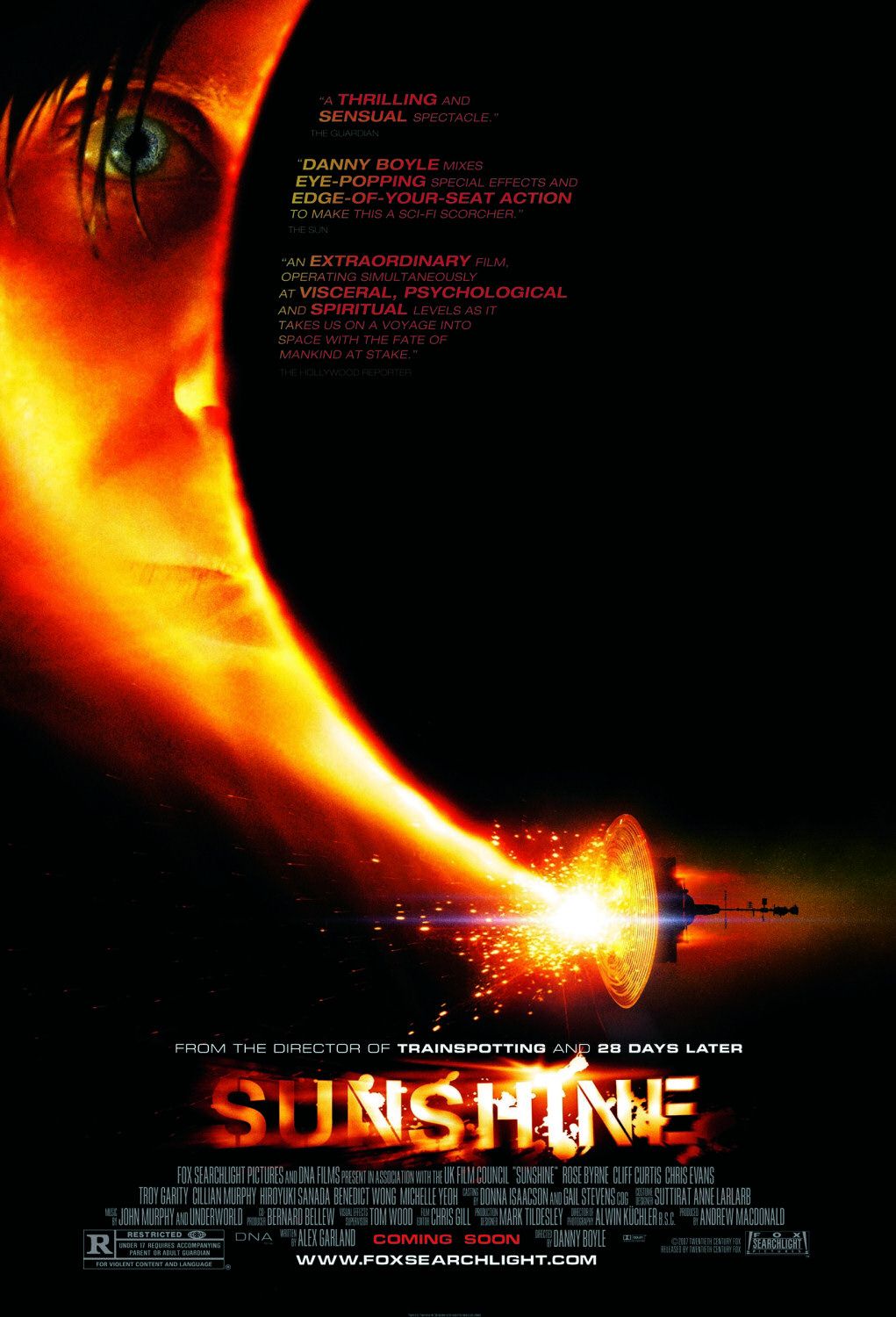
Quite appropriately, Sunshine spends a significant amount of time focusing on the eyes of its pawns. Sometimes a pair will fill the entire screen, strained with sentiment either good or bad, though often the latter. On occasion, they will fight menacingly through an iffy transmission from another spacecraft and act as a warning. The Sun allures them with its fiery aesthetic and unwavering appeal. Without hesitation, characters ask, “What do you see?” in moments of impending demise as if nothing else matters in the universe. Look, even, at the poster. Yielding a blazing visual palette and dreamt up by the mind’s eye of screenwriter Alex Garland, the film is a sci-fi celebration, though you won’t see much celebrating. Riddled with mystery and psychological incoherence, Danny Boyle’s Sunshine floats very close to the sublime.

It is 2057 and an ominous solar winter has a stranglehold on Earth. Aboard Icarus II, a team of eight personnel are voyaging to the dying Sun with one aim: to reignite it. Carrying a nuclear payload, the crew only have one chance to hit their target and, given the operation’s purely theoretical prerogative, those odds aren’t as robust as the situation warrants. Upon discovering the location of Icarus I — a prior failed mission — physicist Capa (Cillian Murphy) recommends taking a detour in order to attain another bomb, and another attempt.

Though his portfolio doesn’t suggest much science-fiction enthusiasm, Danny Boyle’s admiration for the genre fireballs from the screen here. There are elements of seminal space cinema splashed all over Sunshine. From the vision of 2001: A Space Odyssey, to the fraught psychology depicted in Solaris, to Event Horizon’s incessantly doomed outlook, Boyle’s take on sci-fi pays homage to a plethora of greats. But it does more than that. This isn’t simply a historical Pick ‘n’ Mix of stars and planets, rather it incorporates the genre’s best components with subtlety and proceeds to tell a new story. We do not witness Capa and company enter a separate desolate spacecraft and subsequently become overwhelmed by thoughts of Event Horizon because Boyle does not allow it. The Brit always has control and his film always has us transfixed, not by inter-genre nods, but by an ever-enveloping tension and disconcerting mystique — in truth, the film refrains from sparing us any time to consider references until long after the credits have rolled (I’m recounting citations right now).

The director employs traits familiar to him, such as gritty realism and terminal dejection, and combines them with far more expansive notions that pit science against religion. In between philosophical conversations (“A new star born out of a dying one, I think it will be beautiful — no, I’m not scared”) crew members discuss the practicalities of their predicament: oxygen supply levels, or the Sun’s angle. Astronauts aside, we cannot relate to the quandary in which those aboard Icarus II find themselves, but we can ascribe to the pragmatic mindset that they often reverberate. The characters are normal people. Yes, they are each excessively intelligent and well-versed in specialist areas. But despite floating many miles above in space, they remain grounded — we have to take each individual at face value as none of their past lives are explained. You can forget surnames too: Cassie, Harvey and Mace will do just fine. These are ordinary people in an extraordinary circumstance, decision-making dictated by scenario and each individual just as vulnerable as any of us would be.

The characters’ incomplete personal logs contribute to another of the film’s successful narrative strands: a growing sense of tension. This is not a horror film yet it bears a variety of horrifying aspects, one of which is personnel ambiguity. Since we only know that which is in front of our eyes and nothing more, it is plausible to us that any member of the team could snap at any given moment. Boyle explores isolation and the subsequent psychological trauma faced by those disconnected from civilisation, a concept captured magnanimously by one character’s reaction to the decimation of a homely, naturalistic oxygen garden. As Icarus II advances closer to its destination (“Entering the dead zone”) a haunting strain is emitted, one that is eerie and difficult to pinpoint. Searle, the vessel’s doctor, becomes increasingly transfixed by the Sun which appears to be hauling the spacecraft ever-nearer to imminent death.

A slight tonal shift occurs in tandem alongside the crew’s interactions with the ill-fated Icarus I. From a tantalising slow-burner, proceedings deviate towards disorientating terror. The final act is probably the film’s weakest, but it is by no means a weak offering. If anything, the conclusion ushers in greater mythological tendencies spearheaded by religious impetus (in Greek mythology, Icarus flew too close to the Sun). Perhaps it is only fitting that a narrative adjacent to the heavens should juggle Godly morals. Nevertheless Boyle, a man with religious associations himself, ensures that Sunshine does not become overburdened by spirituality and instead strikes a wholesome balance between the film’s various thematic veins.

A scorching visual gloss is as all-encompassing as it is magnificent. The dark and inherently inanimate interior of Icarus II seems to not only seep from the crew’s mellow demeanour, but also abets an air of warped uncertainty. Battling to infect the spacecraft’s overcast insides is the Sun; rays burning with unlimited effervescence, so much so that you will be rolling up those sleeves in a desperate plea for cool air. Accompanying the wonderful cinematography is John Murphy’s tender-yet-lofty score that shines brightest towards the Sunshine’s concluding chapter.

Cillian Murphy leads the way as Capa, whose contemplative nature suggests that only he is truly aware of the task’s magnitude. The skill here is in generating a sense of normality and the best plaudit that can be awarded to Murphy — a generally charming presence — is that he emphatically portrays a professional physicist. Capa may partake in a few scuffles with Chris Evans’ Mace, but other than that he is plainly a physicist driven by nuclear properties and measurements. The aforementioned Chris Evans does well in a slightly different role as the morally strict engineer whose sole focus is the success of the mission. The other noteworthy performance comes from Rose Byrne as vessel pilot Cassie. Bryne develops a solid equilibrium between strong-willed and sensitive, and also strikes up a believable dynamic with Murphy, one that would undoubtedly be romantic in another environment.

Capa’s opening monologue outlines one purpose: “To create a star within a star.” Boasting admirable scope, a tense and engaging atmosphere, and a variety of well-oiled thematic roots relevant to the genre, Sunshine is undoubtedly a star turn from Danny Boyle.

Sunshine - Cast

Images credit: IMP Awards, Rotten Tomatoes

Images copyright (©): Fox Searchlight Pictures