Mama (2013)

★★★

Director: Andrés Muschietti

Release Date: January 18th, 2013 (US); February 22nd, 2013 (UK)

Genre: Horror; Thriller

Starring: Jessica Chastain, Nikolaj Coster-Waldau, Megan Charpentier

Although no director’s chair with his name on existed during filming, Mama has Guillermo del Toro’s fingerprints laden all over it. He is an executive producer this time, and the del Toro checklist brims with ticks in reference to this solid fantasy-horror outing that benefits a great deal from the presence of Jessica Chastain. Details are intricate and refined; visuals spring off the screen with life; harmonious sounds glide around with an air of mysticism. And just like in some of del Toro’s previous work (such as Pan’s Labyrinth and Don’t be Afraid of the Dark) the plot centres around an engaging, young female — only Mama demands two of them.

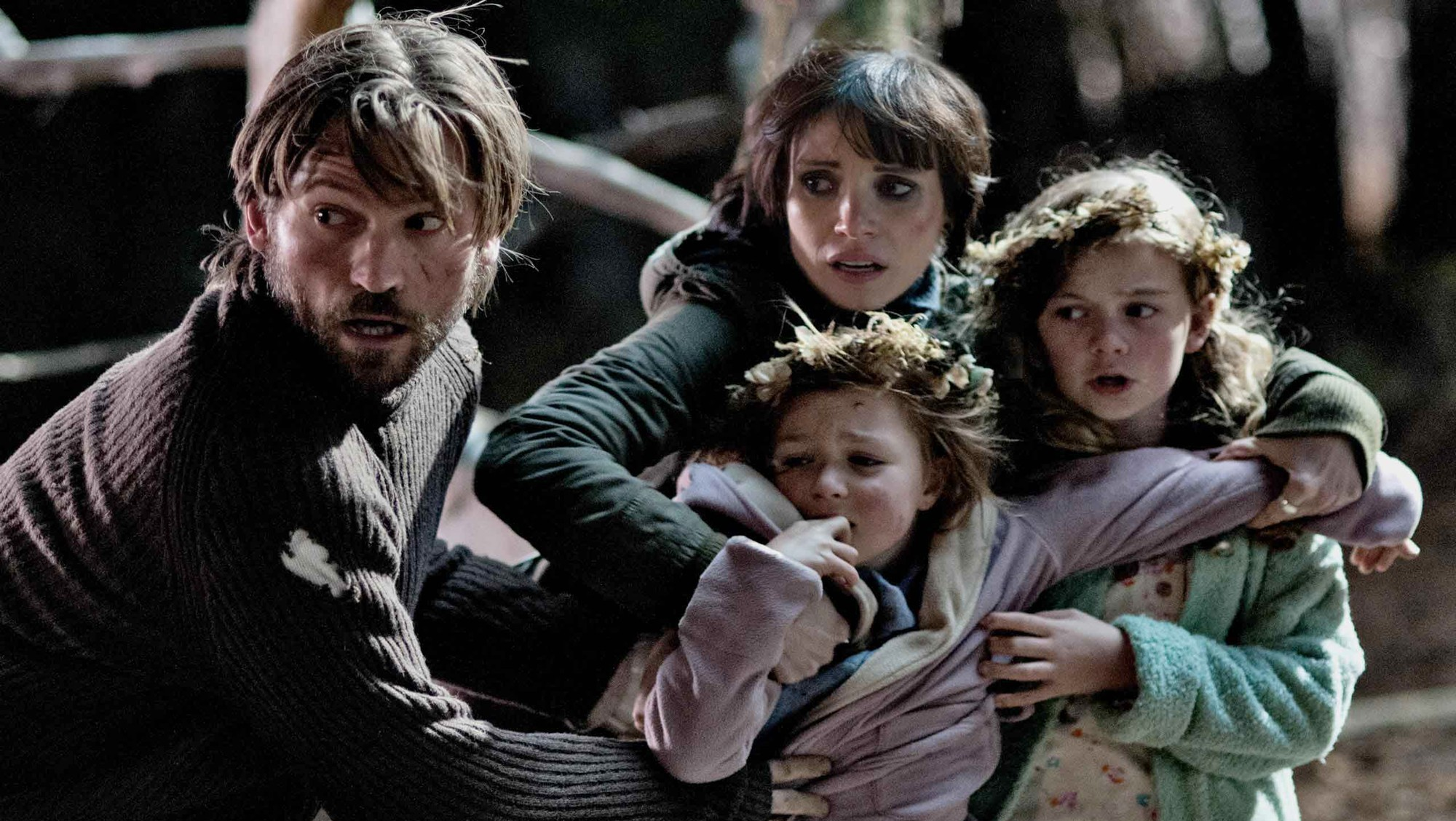
After murdering his wife and business colleagues then crashing his car in the snowy wilderness, troubled Jeffery is killed by a mysterious force that appears to be protecting his two daughters, Victoria and Lilly, from sharing a similar fate to that of their mother. Sometime later, a search for the missing girls funded by Jeffery’s twin brother Lucas (Nikolaj Coster-Waldau) proves successful and the two sisters are slowly reintegrated back into society under the parentage of Lucas and his rocker girlfriend Annabel (Jessica Chastain). However as time passes it becomes clear through consistently strange and distant behaviour that all is still not right with the girls.

Long gone are the days of atmospheric mind annihilation delivered by The Texas Chain Saw Massacre, or even nerve shredding tension served up during Alien. In 2013, you’d do well to uncover a film boasting these cherished characteristics of psychological horror and this is partially why we are subject to so many remakes and/or reboots. Creative ideas are at a premium (though not entirely obsolete) therefore the average mainstream horror output seems to be upping the technical anti as a compromise. Therefore Mama is a horror film that isn’t actually all that frightening, but is entirely watchable.

Why is it watchable? Proficiency in the visual department is partly responsible. The outside setting is rich. Old croaky shacks look and sound, well, old and croaky. First time director Andrés Muschietti bolsters the story with enticing monochrome-like flashbacks (or are they visions?) which are eerie and exceedingly well executed. Even the inclusion of a creature which would not be out of place surrounded by group of Dementors aboard the Hogwarts Express can be forgiven, as it moulds in appealingly amongst Guillermo del Toro’s fantasy visualisations. The illustrative prowess displayed throughout certainly adds a degree or two of watchability.

However, more than any optical standard set, the reason Mama deserves the attention of passers-by is Jessica Chastain. In a role that at first glance may seem a world away from her normal portrayals, Chastain’s rock ‘n’ roll chick Annabel actually shares a number of similarities with the actor’s previous characters. Although she is the sturdy anti-mother who squirms at the idea of pregnancy to begin with, Chastain soon becomes maternal and protective over the children, much like her venture into motherhood as Samantha in Take Shelter. Staunchly independent, yet perhaps not entirely equitable to the task, there are instances of Zero Dark Thirty‘s headstrong Maya here too. Forced into a situation out-of-her depth, there’s even a measure of insecurity present, akin to Rachel in The Debt. These qualities merge to create a character who is emotionally sympathetic and empathetic, and this is key in horror — we need to want Annabel to succeed in the face of uncompromising danger. Chastain is tremendous (though, when isn’t she?) and develops an unshaken dynamic with her two young co-stars who also do a stellar job. Nikolaj Coster-Waldau is even on hand to provide charm and stability along a potentially rickety road.

Of course the primary aim of any horror film is to scare, and the fact that Mama fails to do so often enough is a significant problem. The issue stems from perseverance with too many over-wrought elements aligned with the scare-fest genre. Not paying attention to odd happenings soon develops into ‘why does nobody believe me?’ until the ‘don’t go in the closet’ saga revs its rusty engine. There is a haunted house; a venture into some frozen, dark woods; heck we’ve even got time for a solitary cabin hidden in the trees (Bruce Campbell, eat your heart out!). When a semblance of fright is unveiled it’s always by way of unnatural stillness and haunting imagery. Sadly though, the BOOS! are back before long and don’t hold the same fear factor they did thirty years ago. A lack of innovation in this highly important aspect does let the film down, particularly when just about everything else is good.

As crazy as it sounds, maybe Mama would’ve been better off as a drama rather than a horror. It gets all the non-scary bits right, but is unable to juggle the workload and deliver what the viewers really want — frights and screams. Mama’s limbs are looking healthy, but her torso could be doing with a diet to rid all excess clichés.

Just don’t tell her that.
Anchorman 2: The Legend Continues (2013)

★★

Director: Adam McKay

Release Date: December 18th, 2013 (UK & US)

Genre: Comedy

Starring: Will Ferrell, Paul Rudd, Steve Carell, David Koechner, Christina Applegate

The screen flashes suddenly with the vintage-looking figure of Ron Burgundy nestled behind his giant news desk. The anchor begins reciting a number of promotional plugs for Anchorman 2: The Legend Continues, a diatribe that fails on the whole to pack a humorous punch. Why an advertisement for the second instalment of Anchorman is playing before a screening of the second instalment of Anchorman is a mystery on its own, however the likeness of the promo in comparison to the film itself is unfortunately similar. Burgundy and his cohorts’ reunion is only occasionally funny, certainly not funnier than its overrated predecessor, and definitely not funny enough.

After many years anchoring together on a prestigious New York news station, Ron Burgundy (Will Ferrell) and wife Veronica Cornerstone (Christina Applegate) are separated after she is promoted and he fired. This causes friction between the pair, primarily due to Ron’s massive ego, and is the catalyst for the demise of their relationship. Ron finds himself cast away from the news industry until approached to anchor at the premier 24-hour news station, GNN, in tandem with Brick (Steve Carell), Fantana (Paul Rudd) and Champ (David Koechner).

As the wise man once said, “Sooo…”

The band are back together and tonally it’s a lot more of the same, only we’ve seen and heard most of it before. Whereas the first Anchorman film is renowned for its multiple catchphrases which seem to be rehashed by fans more often than the days of the week come around, Anchorman 2 is filled with a lot of loud noises. For some reason, director Adam McKay decides to go with high-pitched squeals and abrasive shouting rather than well executed gags. Some of these are pretty funny — Steve Carell gets the best loud noises, and the best lines — but after half an hour the screeching and wailing becomes tiring and unimaginative, with each instance feeling increasingly like a cop-out. Perhaps the pressure to deliver more iconic “I’m in a glass case of emotion” moments played on the minds of Ferrell and McKay, who co-wrote the film together, and this comes across at times as the script feels like it has been written by someone putting their anxiety to paper… literally. There are a few genuinely funny moments (Carell talking about a shadow and doing the weather) but these are overshadowed by the boring stuff. I’m not a massive fan of the first film, and it’s entirely conceivable that the over-dramatic style of comedy on show in Anchorman 2 is exactly what fans of Anchorman want, but it’s simply not enough.

More frustrating than the lack of the laughs present is the seemingly absent general direction of proceedings, and more specifically, a great satirical opportunity missed. The film jumps around a lot — we go from wife and kid to making bets with other anchors to doing 24-hour news to ice-skating to lighthouses — and, even with the two-hour runtime (which is too long for this kind of comedy), events feel crammed together and rushed. Focus is placed elsewhere when it should be streamlined towards delving into Burgundy’s antics whilst working on a constantly broadcasting news station. We only fleet around the topic of how non-news becomes desired news (“It’s total crap and they can’t stop watching”) when this should make up the majority of the story. Reporting non-news is a very current problem and surrounds mainstream media today as much as it did during the inception of rolling news, therefore further exploration into the subject would have been relevant, funnier and ultimately justified. Less relenting racism, more smart satire please — saying “black” twelve times in a row isn’t all the hilarious anyway.

Although Ferrell is the star of the show by many accounts, Steve Carell outshines the lead and everybody else here much like he did the first time around. Carell is very funny inside and outside the movies, and his off-the-cuff, spontaneous comedy really works in the Anchorman setting. The character he plays, Brick Tamland, is probably the easiest to laugh at because he emits aimless stupidity often, but Carell ensures Brick doesn’t become a parody of the man we watched in the previous instalment (which sort of happens to Burgundy). Paul Rudd who, alongside Carell, is one of my favourite comedy actors, can’t overcome the dreary material his pretty naff character Brian Fantana is given, which is a shame. In regards to Ferrell, he is okay as Burgundy although his performance feels too much like Will Ferrell playing Ron Burgundy when it should appear far more natural. The scenes between him and his son come across as very dated, and lines such as “I hurt my pee-pee” are eye-rolling. That being said, Ferrell can sing to a shark every day for the next 40 years and I’ll probably laugh on each occasion.

Anchorman 2: The Legend Continues is not horrible, but it certainly is a disappointing outing given the heaps of accompanying hype. After half an hour it was difficult to process anything other than reliving the excellence of Blackfish, and by the end it was a struggle to comprehend anything other than wondering how much money was wasted on pointless cameos. The legend may have continued, but the comedy couldn’t quite keep up.

Hey Ron, maybe it’s time to call it a Burgun-day.

Seduced and Abandoned (2013)

★★

Director: James Toback

Release Date: November 8th, 2013 (UK)

Genre: Documentary

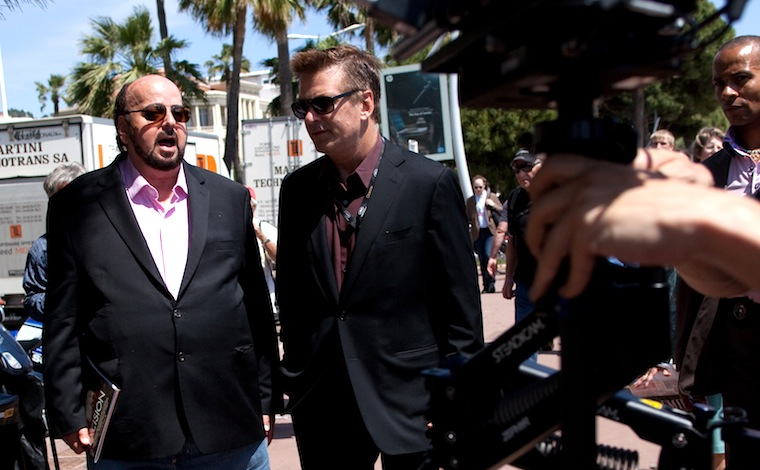
Relaxing in royalty. Swapping stories with A-list film stars. Soaking in the baking sunshine of Cannes. All in a decent days work for director James Toback and his cohort Alec Baldwin. Yet, the subject matter of Seduced and Abandoned (as the title may hint at) is the harshness of the film industry.

Don’t call me Shirley.

The thing is, this is most likely all just a part of the act. Toback and Baldwin probably aren’t really being serious here. And if that’s the case, then Seduced and Abandoned is a pretty entertaining, but wholly depth-deprived traipse around the world of cinema (and more). However if the duo are being genuine in their plight to finance an exotic thriller; in their quest to unearth the financial backing difficulties; in their attempts to convey film as a purely short-term industry — all of this as a means towards highlighting their own battles against adversity — then the duo themselves have a problem. And that problem has nothing to do with money-men or hesitant co-stars.

The documentary follows director James Toback and actor Alex Baldwin around the 2012 Cannes Film Festival as they simultaneously attempt to successfully pitch a far-fetched film idea at a variety of industry heads, whilst also using said time with their colleagues to discuss the trials and tribulations of the business (and just about anything else really). Less than a minute into proceedings and we’re already swimming around the less-than-serious territory as the pair talk about divorce while a scene from The Getaway blares in the foreground. Ho Ho Ho. This is astutely followed by a bout of reverent back-patting as the words “I trust you” ring out several times. I certainly hope Neve Campbell doesn’t trust them — the duo’s proclamation not to exclude her from their potential film in the heat of pressure from higher-ups (or “throw her under the bus”) wanes fairly quickly. In all fairness, they don’t Tippex her out completely, and being downgraded from a major to a minor role isn’t all that bad really, is it? Well done for avoiding that bus Neve. Hey, wait! Watch out for that… car.

It’s obvious early on that Toback and Baldwin aren’t totally sincere in their attempts to make this all-promising film. The numerous interviews asking script-readers about scripts, money-men about money and actors about acting as part of their exotic-romance-fantasy project are all probably genuine in an informative sense; in attempting to uncover the structures in place and barriers surrounding film-making. However, the meetings which play out on screen are most certainly not whole-hearted and true in a ‘coming soon to a screen near you’ notion. There’s nothing plausible about them. Toback wears sunglasses indoors and in the presence of greats such as Bernardo Bertolucci for goodness sake: who would take the guy seriously? In a semi-satirical context therefore, the film is quite entertaining, albeit devoid of any stinging backbone.

Having said that, although primarily ironic in its presentation, Seduced and Abandoned does raise one or two thought-provoking idiosyncrasies. During their discussions with big movie stars and important head-honchos — people like Francis Ford Coppola, Martin Scorsese, Ryan Gosling and Jessica Chastain are featured — an interesting ‘big film vs. small film’ sentiment develops. This holds an even greater degree of reverence in the backdrop of the Cannes Film Festival, as festivals are renowned for generally hailing the more microscopic, art-house, independent and often international productions. Cannes itself, for instance, has awarded its highest honour to films such as Blue is the Warmest Colour (France), Amour (Austria) and The Tree of Life (USA) recently. None of these films were massive box-office draws and two are courtesy of European cinema rather than American or British, yet they all gained the Cannes Palme d’Or. Toback and Baldwin explore the issue of marketability versus story as they speak to investors (what will make us the most money as opposed to what will engage the audience?) and examine an ever evolving audience demand to see a cast of stars instead of just one during cinema trips. It is in these conversations that the documentary delivers, although deliveries are too few and far between.

Toback and Baldwin spend a portion of the film laughing and joking with Ryan Gosling who tells a number of hardship-filled stories about moving to Los Angeles as an inexperienced actor, and the difficulties in getting ahead of everyone else who had the same aspirations as he did. Bearing in mind Gosling is arguably the biggest movie star on the planet at the moment, his recollections tread on hallowed turf for the most part, essentially compounding the hypothetical, humorous approach taken by Toback and Baldwin over a serious one. That being said, Gosling is actually very funny.

While the grandiose music trumpets through the credits, you are left in no doubt regarding Seduced and Abandoned‘s intentions, instead wondering just how much the film really has to say about the industry it may or may not thrive in. It’s quite entertaining and occasionally thought-provoking, but in all honesty it doesn’t say an awful lot. The big versus small comparison is intriguing, however Francis Ford Coppola’s words ring true when it comes to everything else: “The other stuff isn’t important.”

Berberian Sound Studio (2012)

★★★★★

Director: Peter Strickland

Release Date: August 31st, 2012 (UK); June 14th, 2013 (US limited)

Genre: Drama; Horror; Thriller

Starring: Toby Jones, Antonio Mancino, Cosimo Fusco

Set in an Italian film studio during the height of Giallo movie-making, it is perfectly fitting that Berberian Sound Studio delivers reels of chills, thrills and spills. Amazingly, it does so without succumbing to the trappings of eye-rolling ‘jump scares’ or masses of gore and guts. Instead, director Peter Strickland patiently allows his piece to breathe before exhaling mesmerising psychological torment. But this isn’t just a brilliantly executed horror film. To say so would be doing the intricately crafted weaves of story telling a disservice. Berberian Sound Studio is an appreciation of the mechanics behind film creation; it is a staunch head shake in the direction of misogynistic bigwigs and overpowering assistants; it is a commentary detailing the struggle and neglect of fame-deprived sound engineers and the like. As the climax dawns, each of these elements come together to create a slow-burning but entirely scintillating mosaic that wishes to glance back fondly, denounce universally and terrify immediately.

Gilderoy (Toby Jones) is a British foley artist recruited by Italian director Santini (surname only) and producer Francesco to provide an audio track for Santini’s next giallo film, The Equestrian Vortex. Drafted to a foreign land and surrounded by equally foreign filmmaking customs, Gilderoy gradually succumbs to the madness of horror. The seeds of mania are planted soon after he arrives and introduces himself to his fellow crew members, as Gilderoy’s request for monetary reimbursement is consistently shunned or diverted, often at self-absorbed mouth of Francesco (Cosimo Fusco). Not only does this signal doubt in Gilderoy’s mind, it is also the first of many gestures towards mistreatment on set. Gilderoy later has a run-in with his cocky director who corrects the sound man’s admission that this is his first experience working on a horror film: “This is not a horror film, this is a Santini film.”

Female actors are subject to overly harsh treatment as they provide voice-overs, to the point of physical damage from relentless takes of screaming and shrieking. Another crew member — frequently present in the sound studio — hardly says a word, indicating a lack of inclusion in the process and perhaps symbolising a lack of dispersed acknowledgement throughout the industry. In fact, the only time any attention is paid towards Gilderoy is during a power cut, when sight is hampered and sound is the only prevailing mode of entertainment. The film’s potency in its upfront portrayal of disingenuous higher-ups (not necessarily directors) commands significant consideration. Is this hierarchical and at times maniacal process of filmmaking warranted if a successful product spawns as a result? It could certainly be argued that Alfred Hitchcock’s very well documented directorial style on set was effective in that it produced genuine emotion from the likes of Tippi Hedren in The Birds, but that most certainly doesn’t mean it is morally justified.

Strickland’s focus on the questionable side of filmmaking is all the more striking when viewed alongside an equal measure of love and affection on display, aimed towards the movie creation process. Intriguing and entirely justified, paralleling the universally positive and occasionally negative side of the industry shines more light on the wonderful mechanics of it all, but also shrouds some events in darkness. Impeccably shot by Nicholas Knowland, the film gives off an air of satisfaction amongst chaos. Gilderoy, whose initial preconception was that the job entailed generating sounds for a film about horses, utilises a whole manner of fruit and veg in his foley work, in turn accurately and grossly mimicking squashed guts, sliced limbs and broken bones. Yet there still remains a sense of achievement as he completes each sound to great effect, and this aura of accomplishment wades its way throughout Berberian Sound Studio as a metaphorical love letter to Giallo movies, and more broadly filmmaking in general.

Vintage film reels and wall charts are eventually incorporated into the madness, as these physical, common instruments of filmmaking begin to entrance Gilderoy. This notion of psychological torment being imitated through reel (rather, real) life provides a bridge enabling proceedings to cross into hair-raising horror, as everyday inanimate objects begin to take on a existence of their own. Instances of creepy imagery, of which there are plenty, would only overstay their welcome had they not been delivered so horrifyingly well (that flashing “Silenzio” and those voice-over artists in action are both incredibly unsettling). Sound becomes ever flowing and each wave of noise is amplified, but not in an attempt to collect cheap frights from the audience. As the film moves into its final act it becomes more and more difficult to process what is genuine and what isn’t, a trap Gilderoy is consumed by also. Toby Jones’ efforts as the out-of-depth Gilderoy should be commended; his underplayed, soft-spoken delivery gives the mania surrounding his character an even greater voice and Jones’ performance is even exceptionally poignant at times.

In only his second feature film, Peter Strickland has unleashed a multi-faceted tale of hysteria and madness, propelled by horror and laced with appreciation. Each of these individual elements mesh together sublimely, indicating an even brighter future for the filmmaker. Horror aficionados will love Berberian Sound Studio, and there’s a good chance everyone else will too.

The Hobbit: The Desolation of Smaug (2013)

★★★★

Director: Peter Jackson

Release Date: December 13th, 2013 (UK/US)

Genre: Action; Fantasy

Starring: Martin Freeman, Ian McKellen, Richard Armitage, Benedict Cumberbatch, Orlando Bloom, Evangeline Lilly

Peter Jackson’s carrot-wielding Bree resident looks knowingly at the screen before sidling along the rainy, muddy Middle-earth town. Moments later the smoky, beer-filled room of the Prancing Pony inn hosts dwarf-heir Thorin as he glances wearily around clutching his axe in preparation for any potential attack. Gandalf the Grey sits opposite him, enticing us with familiar wispy tones, underplayed confidence and Lord of the Rings lingo (“We’ve been blind… and in our blindness the enemy has returned”).

We’re back. No, it’s not quite the Middle-earth from a decade ago — or, narratively, decades later — but it was never going to be. Rather, The Desolation of Smaug signals a return to the comfort of Peter Jackson’s pre-Lord of the Rings universe, and already proceedings seem more urgent than last time around.

Following their narrow escape from the Misty Mountains and temporary fending off of Orc war chief Azog, Bilbo (Martin Freeman) and his company of dwarfs find themselves splintered from Gandalf (Ian McKellen), who must investigate the state and whereabouts of an evil necromancer boasting powers that are ever-growing. As they part ways for the time being, Gandalf suggests that the best way to continue on their journey towards the Lonely Mountain and Erebor, is for the group to travel through a dishevelled, haunting forest, rather than treading two-hundred miles north and going around it. In the first film, the dwarfs and Bilbo most certainly would’ve taken the long route, and would definitely have sung an out-of-place song about picking mushrooms or making fire en route. Many of the previous instalment’s shortcomings (long-comings, even) are brushed to the side this time though, as the film hurtles along at a splendidly speedy pace, with plenty of action and wit to serve.

In fact, the variety of creature encounters and battle sequences give The Desolation of Smaug a much needed burst of energy from the get-go, unlike An Unexpected Journey which never really hit any kind of stride until Bilbo’s magnetic encounter with Gollum. Sadly Gollum does not feature here, however Bilbo does partake in a similarly dynamic conversation with Smaug the dragon, a meeting which is surprisingly full of more humour than tension. Martin Freeman comes into his own as the Hobbit Baggins, and along with a new found purpose through which his character evolves, Freeman also offers more than a handful of genuinely laugh-out-loud moments. His hurried, fidgety approach works expertly as he is often seen placing his cohorts before himself, exemplified during the tremendous barrel scene. However Bilbo’s engaging back-and-forth with Smaug sits effortlessly at the pinnacle of Freeman’s performance. Benedict Cumberbatch plays the dragon and, unlike Gandalf who possesses an assuring whispery tone, delivers his speeches deceitfully and slyly, as the words echo off the screen.

For a film (and trilogy) entitled “The Hobbit” we really could’ve done with more of said small being. At over two hours and 40 minutes (nine minutes shorter than the previous film) there is bountiful time for director Peter Jackson to tell the story of Bilbo finding the Ring and how the poisoned chalice affects him, however the film only breezes over the developing relationship between Hobbit and Ring. Rather, The Desolation of Smaug puts greater emphasis on the relationship triangle which incorporates a returning-to-the-franchise Legolas (Orlando Bloom), new-to-the-franchise Tauriel (Evangeline Lilly) and already-in-the-franchise Kili (Aidan Turner). The return of a makeup-laden Legolas is smart move on Jackson’s part as both the elf and Tauriel are the primary vehicles of energy, dispatched by way of exhilarating, fun-to-watch battle sequences; we even see Legolas skate via Orc rather than shield, as he did in The Two Towers. However unlike the romance sub-plot featured throughout the original trilogy (both book and film), the love triangle here feels very forced and artificial. Its creation was conceived exclusively for the big screen, but the film does not need it for added drama or emotion — that is already there as part of Bilbo’s journey.

The Desolation of Smaug is too long, although at no time does it noticeably falter as a consequence. There is more than enough going on to keep the audience attentive, and as a result the film looks more like a film than it does a congregation of set-pieces. Along with the reduced frame-rate (in most cinemas, back from 48 frames per second to 24) the swift advancement of proceedings prevents the viewer from becoming bored and spending their time staring at background objects that look exceedingly prop-like in a higher frame-rate environment — this hampered part one. The typically Lord of the Rings wide-shots which span over landscapes are beautifully shot and film’s computer-generated additions mesh in well. In an interesting move by Jackson, we see a number of mirroring scenes which serve both as a warning of evil times to come, and as a chance to reflect. For instance, Bilbo twanging the spider web and alerting many spiders a la Pippin knocking the metal armour down a shaft, in turn waking the goblins in Moria, and Thorin’s emphatic “What say you?” in his Aragorn-esque speech demanding affirmation, are two examples. Perhaps the most poignant of all though, is the elderly dwarf Balin’s declaration of his admiration for Hobbits, “It never ceases to amaze me, the courage of Hobbits,” which he unveils with the same authenticity as Gandalf does towards Frodo early in The Fellowship of the Ring.

Peter Jackon’s passion for the subject matter seeps through in abundance here and his decision to split the cinematic adaptation of The Hobbit into three films looks a great deal more justified by the end of The Desolation of Smaug (though there’s still a way to go). Martin Freeman shines as Bilbo Baggins in a sequel which, although still has its downsides, succeeds its predecessor both narratively and in content.

Alex Cross (2012)

Director: Rob Cohen

Release Date: October 19th, 2012 (US); November 30th, 2012 (UK)

Genre: Action; Crime; Mystery

Starring: Tyler Perry, Matthew Fox, Edward Burns

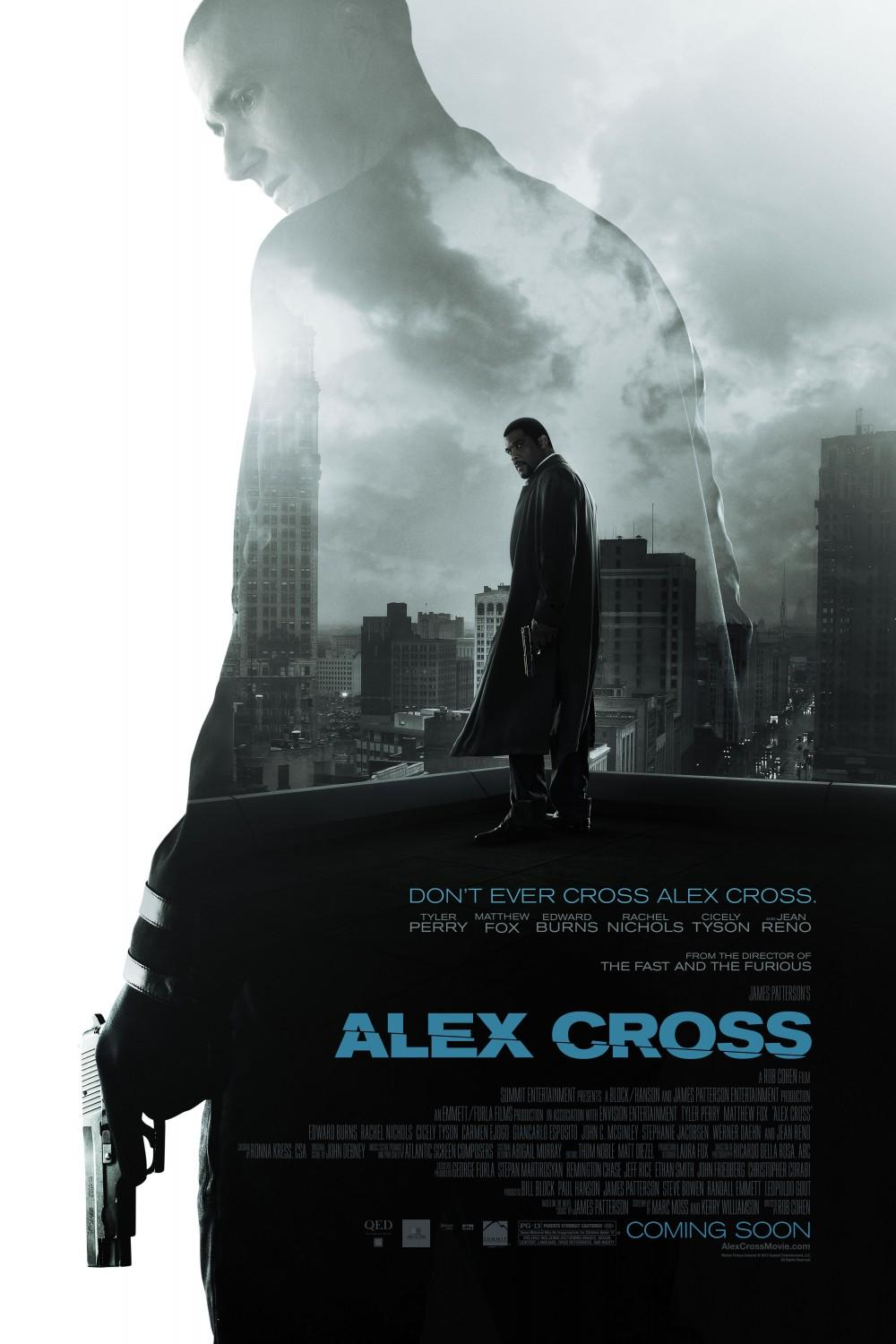
Idris Elba probably wouldn’t have been able to overcome the painfully generic plot or the less-than-enthusiastic dialogue here, but at least he would’ve added some degree of watchability as the lead. Initially cast as Detroit lieutenant Alex Cross, Elba inevitably dropped out and was replaced by Tyler Perry (perhaps Elba caught wind of the script). It’s not that the fairly unknown Perry doesn’t try, or even that Matthew Fox’s outlandish Derren Brown-lookalike villain is overly-wacky (at least he diverges slightly from the unequivocal pit of monotony). Rather, Alex Cross offers nothing we haven’t seen before, and nothing we haven’t seen done much, much better.

Alex Cross is a police lieutenant, psychologist, father, husband and soon-to-be FBI profiler (if he takes the job… he’s going to take the job, right?). Along with his partner Tommy (Edward Burns), Cross is assigned a case that involves tracking down a viscous hitman known only as Picasso (Matthew Fox), who is wanted for murder. Picasso’s objectives are murky at best — what is his definitive goal? Is he targeting Cross? Why is he cage fighting? — but Fox’s bizarre portrayal of the maniac skinhead is just about enough to divert attention in the early parts. However the road of attentiveness must reopen at some point, and when it does the villain’s nonsensical behaviour is exposed with shortcomings flailing all over the tarmac.

Maybe Picasso’s purpose did become clear towards the conclusion, but i cannot recall any explanation with confidence, and this indicates one of the glaring problems present: the film is incredibly unmemorable. Some particularly dreary outings are noted for their particular dreariness (take Oliver Hirschbiegel’s Diana, for instance) however Alex Cross fails to even fall into that category. If mild pepper eating was a contest, Alex Cross would represent the second mildest pepper on the menu — what’s the point in trying the pepper of penultimate blandness when there’s a mellower one there that’ll probably be even more tasteless and will leave your mouth drier, but hey, at least it’ll be a conversation starter the next time a friend asks about the least-hot pepper you’ve ever eaten (and that will happen). There is a distinct deficiency in direction, an inspiration inadequacy. The only characteristic prominent in abundance is mediocrity at its lacklustre worst.

To go in tandem with the vacuum of creativity on display is a collection of head-scratchingly obvious dialogue and a number of coincidences that would give Bilbo Baggins single-handedly slaying an army of orcs a run for its money in the ‘inability to suspend audience disbelief’ category. After spending a significant portion of the film looking for leads on the whereabouts of Picasso, Cross lets us know, “I’m just looking for leads”. At one point Cross and his team are trying their damnedest to convince hotel security that an important German businessman staying there is in danger due to a criminal at large, and then out of nowhere a criminal at large whose target is a German businessman appears. These are only two examples of a severe lack of urgency; urgency both away from the action/thriller norms, and in terms of effort put in by the creative minds.

The criminality unfortunately ceases from stopping there: tension is non-existent; some CGI effects are off (watch out for the flaming man); excessive camera-jerking during fight scenes makes it extremely difficult to follow the action; characters are either underused, underdeveloped or utterly unnecessary (the female prisoner at the beginning, what was that all about?). Perhaps the greatest crime of all is giving Giancarlo Esposito, who exhales charisma, a whimsical two-minute cameo… and it’s still probably the best part of the film.

No, the most entertaining aspect of the film is actually an external story attached to it, completely unrelated to the narrative piece itself: Alex Cross was shown on a number of United Airlines flights travelling around America, resulting in several passenger complaints due to its inappropriate placement on board and subsequent screening in the company of underage children. Director Rob Cohen, offering his sympathies and apologies to those involved, gave his two cents as he explained the PG-13 rating meant it should not be shown in general cabin areas. Trust me Rob, the non-child compatibility is far from why Alex Cross should not be shown on flights.

As scathing as this review is, and let’s be honest, nobody involved in Alex Cross will give this a glance never mind a care, I feel it is warranted given the filmmakers spent $35 million on its creation. Gareth Edwards shot his 2010 debut Monsters for less than $500,000, and it is a galaxy ahead of Rob Cohen’s output here. Edwards is currently directing Godzilla, arguably the most anticipated blockbuster set for release next summer. Cohen might be in the running for an Alex Cross sequel.

“This is over right?”

“No it ain’t Tommy, it ain’t over.”

I wish it was.

Ray (2004)

★★★

Director: Taylor Hackford

Release Date: October 29th, 2004; January 21st, 2005 (UK)

Genre: Biography; Drama; Music

Starring: Jamie Foxx, Kerry Washington, Sharon Warren

Ray Charles’ drive and charisma gave him a larger-than-life persona, so big that even a severely musically deficient 20-year-old knows who he is. Unfortunately, and indeed surprisingly, Taylor Hackford’s biographical drama about the electric man struggles to maintain the energy that Charles himself boasted in abundance. This is by no means down to Jamie Foxx’s sizzling turn as the title character, or the foot-stomping, arm-swinging music splashed throughout, but instead is a result of a pretty dreary and repetitive narrative presenting a story that deserves so much better.

We see music in his eyes. His effortless piano-playing hands are reflected in those iconic sunglasses. Ray Charles is at one with sound. This is the opening shot of Ray and if you didn’t know already, you do now — he is the music man. The film details the rise of Ray Charles Robinson, a young boy who became a pioneering musician after a childhood ravaged by tragedy and loss. Growing up in the 1930s on a Northern Florida plantation, young Ray and his brother are cared for by their head-strong mother as they bounce with liveliness amongst the dust. The duo share a close bond and get up to just about as much mischief as any other child does, but it is the tragic loss of his brother that kick-starts the chain of events which will eventually see Ray completely blind and hugely successful. His mother, played magnificently by Sharon Warren, teaches Ray that his deficiency is only such at the surface, that he needs to learn to live and strive on his own (“Remember you’re going blind, but you ain’t stupid”). Warren may just be the star-turn behind Foxx here, as she movingly portrays a woman who is a beacon of strength driven by frailty, and justifies the inclusion of countless conveniently placed flashbacks.

Ray’s childhood in Florida is depicted throughout the drama by way of a number of flashbacks, and these provoke part of the film’s main problem. Unlike the rhythm heard from Charles’ music, Hackford wrestles unsuccessfully in his attempts to generate and maintain a rhythm on-screen. From the get-go proceedings are frantically hurrying forward, making it difficult to catch a breath never mind work out where and when we are. One moment a young Ray Robinson is shown as he grows up, the next he is moving away to school and then before you know it Ray Charles is belting out soulful music to the needy masses. The film is long — overly long at two and a half hours — and by the time the first sixty minutes are up, the audience has seen just about everything there is to see… so we see it all again. Charles develops a drug habit, he plays a gig, he records a song, he takes some more drugs, he buys a house, another gig, recording studio, perhaps the odd forced flashback for narrative continuity, and so on. The film begins to drag, which is a shame considering its subject matter defined entirely the opposite: pizazz and meaning.

Another obstacle in the film’s way is its over-wrought lightheartedness. Besides the death of Ray’s brother (the resonance of which gets lost amongst the rapid progression of proceedings), there is too much feel-goodness going on. Of course, the underlying message that Ray’s blindness should not hamper him, nor should it make us feel sorry him, is a wholly positive one and should be placed on a pedestal for the viewer to see and hopefully learn from. His wife Bea (Kerry Washington) enforces this notion of positivity: “How can I pity someone I admire?”

That being said, the life lived by Charles was without doubt a tumultuous one, one which incorporated extensive drug use and adultery, and these issues are sidelined to an extent in favour of jovial music and exuberance. Often arguments end in laughter when they need not. Perhaps this genuinely was part of the man’s all-round demeanour — his music certainly alludes to joyfulness. However, creative license appears to be prevalent as intentions to make Charles look like a bad guy are non-existent. Again, considering its enormous run-time, delving into the depths of some of the more unattractive issues in Charles’ existence would’ve benefited the film — when a smidgen of Ray’s post-addictive exterior is displayed it is tough to watch and this is more of what the film needs in order to really tell his story. Charles does not need to look like a bad guy — by all accounts he wasn’t one — but rather a good guy who done a few pretty bad things.

On the plus side, Jamie Foxx knocks the proverbial ball out the park and then some in his performance as the soul singer. In a similar vein to Joaquin Phoenix’s turn as Johnny Cash in Walk the Line, Foxx truly brings Ray Charles to life on screen. The key to his successful embodiment is just that: an outstanding use of body movement and facial expressions. Unable to deliver the goods through his eyes, which often provide the backbone to showing emotion, Foxx incorporates all of Charles’ movements and intricacies by way of a rasping shriek or emblazoned smile. It is evident that Foxx has worked hard to achieve what he does, and his award-winning achievements are magnetic.

The film is beautifully shot by cinematographer Pawel Edelman, who was nominated for an Academy Award in recognition of his work on The Pianist, and maybe his offerings in Ray should have earned him a second nomination. Alongside Foxx’s charismatic performance and a collection of delightful music, Edelman’s expert, scene-setting shoots provide Ray with all of its energy and charm, in spite of the dreary screenplay. Regardless of how repetitive it might get, or any imagination-scarcity it might suffer, you cannot help but smile when Ray Charles learns how to play “Mess Around” on the piano.

Ray is not a bad film by any means; it provides the vehicle for an incredible embodiment of one of the most influential men in music history courtesy of Jamie Foxx, and also accommodates a number of grin-inducing moments alongside an exclusively feel-good message. The film is let down, however, by a lack of creativity in the narrative department, turning the story of an incredible man’s inspiring journey into a bouncy-castle of repetition before long.

By the end, or even the middle, it sort made me just want to go and watch Walk the Line again.

Man on Wire (2008)

★★★★★

Director: James Marsh

Release Date: August 1st, 2008 (UK)

Genre: Documentary; Biography

Everybody hates the dentist. Everybody except Philippe Petit.

The Twin Towers were a symbol of innovation. A duo of iron giants, they stood over New York reminding the world that anything was, is, possible. Writing about the pair of incredible architectural feats in the past tense is probably something, even 12 years on, nobody will ever get used to.

It is this melting pot of romanticism and tragedy that surrounds the Twin Towers which gives Man on Wire an extra layer of emotional weight. But even without that, even minus the tinge of sadness you get upon remembering the towers are no longer around, Man on Wire is an absolute triumph.

The documentary recounts a story that you probably wouldn’t believe if it were a narrative film. Philippe Petit is an ordinary man, a French high-wire walker whose aspirations exceed the ordinary and go up. A long way up. Supported by his congregation of close friends, he strives to reach impossible heights and to walk on top of the world. It’s 1968, and Petit finds himself flicking through a magazine in a dentist’s waiting room when he comes across an article promoting the impending construction of the world’s tallest buildings: the World Trade Center. Petit rushes out of the dentist. He doesn’t need to get his teeth checked. He’s going to walk between the Twin Towers.

Director James Marsh lets the story of Petit and his cohorts (because it is their story too) play out both through real-time interviews with the participants and by way of caper-like reconstructions of the day. The heist-esque portrayal of Petit’s attempts to the reach the top of one of the towers generates mischief and even comedy at times, particularly when Petit himself is describing his game of hide-and-seek with the guards in the building. Petit and co are, by all accounts, going against the law as the sneak their way into the buildings as maintenance men, and the group refrain from shying away from this as they retell their tale.

The lightheartedness achieved by Marsh is admirable (though the thought of walking across a wire suspended at 1,368ft does generate a nervous chuckle), however the film truly hits its stride through the group’s emotional, passionate narration of their incredible journey. Philippe and his friends, girlfriend, and colleagues all seem invested in their story — how can they not be? As the preparations develop, Petit’s metaphorical dream builds. Ironically, the main barrier in his way is the lack of physical existence of his goal: the towers do not reach completion until 1973, five years after the Frenchman darted out a dentist’s waiting room with dazzled eyes. Throughout the film, the purpose of the towers (which obviously lies in commerce, work, and the proverbial “American Dream”) becomes somewhat twisted towards Philippe’s ambition. Just for a moment the construction of the towers seems solely to be for one man to ascend and walk across them: “Of course, that’s why the towers are there… for Philippe.”

The group’s preparations take them to Sydney, Australia and the Notre-Dame Cathedral, where a suspended Philippe walks across the Sydney Harbour Bridge and the Cathedral respectively. The second traverse sees Philippe stride above an ongoing mass, almost in a God-like manner. The underlying connotations of dreams and reaching the clouds play out as the documentary progresses, further reinforcing just how overly-ambitious Petit is. His counterparts react differently as they recount their roles in the preparations and the event itself; we see genuine outbursts of emotion ranging from tears to laughter. At times there is a frustrated sense of animosity between the members of Petit’s troupe, adding to the intense drama — is this one man’s dream for himself, or a group’s dream for one man?

As the film nears its nail-biting conclusion — and nail-biting might just be an understatement — it hits the audience with an unexpected burst of poignancy. We want Philippe to succeed, to fulfil his dream, to fulfil the dream those close to him share vicariously. Marsh intersperses the drama with astonishing ‘home-video’ footage taken of Philippe as his air-walking escapades reach spine-tingling heights (the Frenchman even draws images of his previous wire-walks on a wall of one of the towers, as if to remind himself that they are part of a natural progression). The Twin Towers are displayed often and with purpose, reminding us about the sheer scale of Philippe’s dream.

And then Philippe Petit dances at the top of the world. From below he is as small as his name proposes and even smaller still as the remarkable man obtains a pair of gigantic steel legs. The moment is extraordinary; it is profound. But it is also effortless. The tension relieves and the documentary captures a truly emotionally evocative moment. This is the real Philippe, in complete isolation, suspended above a busy world. He elates, “I must be a castaway on a desert island of my dreams”.

Man on Wire delivers bundles of heart and soul, provided by way of James Marsh’s wonderfully diced concoction of Philippe and company telling their story, backed up by grainy, very real home-video footage and jaunty re-enactments. The title of film suggests simplicity, and in a sense the visual of Philippe Petit lying in mid-air between the Twin Towers is just that, but his journey to the sky is something quite extraordinary.