The Girl with All the Gifts (2016)

★★★★

The Girl with All the Gifts PosterDirector: Colm McCarthy

Release Date: September 23rd, 2016 (UK)

Genre: Drama; Horror; Thriller

Starring: Sennia Nanua, Gemma Arterton, Paddy Considine, Glenn Close

Kids are taking over the world. Well, the worlds of pop culture and weighty entertainment. If it’s not a bunch of Spielbergian curiousos charming viewers eight times over in Stranger Things, it’s Jacob Tremblay comfortably matching his demonstrably more experienced counterparts with a powerhouse performance in Room. Today Sennia Nanua joins the not-so-Mickey-Mouse-Club, her turn as a next generation zombie-human in The Girl with All the Gifts at once endearing and domineering. And even a little amusing. That’s quite the trifecta.

Colm McCarthy brings M.R. Carey’s (credited as Mike Carey) mid-apocalyptic world to the silver screen, a world severely stunted by some sort of biological doomsday. Carey’s novel of the same name garnered much praise, which, when coupled alongside his extensive comic book writing portfolio, suggests he is doing something right. The penman may yet want to consider a screenwriting career if this is his default standard. He presents Melanie (Sennia Nanua), a child with fleshy cravings and the ability to interact as normal. When we first meet her she is hidden away in some sort of military base with many of her kind — her ‘classmates’ — and a selection of adult soldiers, scientists, and teachers. It’s not initially clear what the purpose of the locale is: a zone of Freudian experimentation usurping social and ethical norms, or a shelter from the horrors outside?

We quickly learn it is a bit of both, though the striking image of children wearing orange jumpsuits and strapped to wheelchairs feeds the former narrative (these sequences are probably not unintentionally dissimilar in a visual sense to familiar scenes in A Clockwork Orange). That it soon becomes clear said treatment is decidedly less harsh than what is going on elsewhere ought to give you an indication of the type of material we are dealing with. I hesitate to reveal more of the initial plot; not because doing so would spoil the film but because piecing together the early moral dilemmas as they play out on-screen is both a challenging and rewarding experience. Needless to say the setting soon changes and The Girl with All the Gifts transforms into a Monsters-esque road trip.

But back to Melanie, the film’s central presence. She is essentially a blank slate, or a dry sponge for lack of a better description, in that she desires knowledge as well as body parts and absorbs information with incredible endurance. Her favourite teacher is Helen Justineau (Gemma Arterton), a sort of Miss Honey figure who brightens up their bleak bunker home inhabited otherwise by those who refer to the children as “abortions” and treat them with contempt bred, perhaps understandably, from wariness. This attitude prevails throughout the film to varying degrees, some characters afraid but sympathetic, others driven solely by the scientific possibilities the zom-kids present. Dr. Caroline Caldwell (Glenn Close) is one of the latter, a medical professional who sees Melanie not as a human being but as a resource and a pathway to a potential cure. “They present as children, you know my opinion on that,” she insists. Emphasis on “present”.

Close excels as a pseudo-antagonist, stirring intentions born out of necessity rather than anything particularly sinister. Caldwell only dons the antagonist role because Carey’s writing characterises Melanie not as a resource but as an innocent child, his characterisation authenticated by Nanua’s poise. We feel compelled to side with Melanie because we can relate to her kindness and her appearance. Caldwell feels compelled to do her duty as a scientist in an endangered world running out of scientific solutions, which isn’t evil per se. Whenever zombies are involved comparisons with The Walking Dead are inevitable, but whereas that show has adopted a broadly romanticised us-versus-them approach, this feels more arduous, moral implications blurrier. It’s interesting precisely because there is no clear answer.

This world has seen the worst and now exists in a state of post-shock where terror no longer marinates. Now is the time for practicality, a mindset embodied by Caldwell: without hesitation she investigates the contents of a pram being pushed by a ‘hungry’ — an actual zombie, brainless — not put off by danger but rather spurred on by “gathering data, which is part of [her] mission statement”. Justineau, meanwhile, is clearly more concerned about the welfare of Melanie than her own, apparently consigned to whatever fate lies ahead. Arterton has the emotional burden to carry, her frequently exhausted expression not a consequence of physical exertion (she is more than capable in the field) but of her problematic attachment to Melanie.

The piece hits some of the usual genre beats but does so with enough quality to sustain a level of intrigue. We’ve witnessed the basic premise play out in films such as 28 Days Later and World War Z and, just like in those films, military personnel have a hand in proceedings here. What separates The Girl with All the Gifts from the pack, though, is its almost subliminal tone of humour. It’s an understated lightheartedness that feels genuine in a broken society already acclimatised to its brokenness. At one point Melanie, having just fed on some animals, blood tattooed onto her face, jovially reveals she is no longer hungry and the others can only look on in a collective state of horrified discombobulation. Paddy Considine’s Sgt. Eddie Parks benefits most from the humorous touch, able to escape an incoming hard-man caricature and develop into a rounded figure.

For those seeking the usual zombie fare, The Girl with All the Gifts has you covered. It’s as bloody and gory and gnarly as it is thought-provoking. Cristobal Tapia de Veer’s score spans the mood spectrum, incurring a feeling of discomfort with invasive brass entries. I was reminded of Shutter Island’s brooding soundtrack. With air raid sirens fulfilling the threat-based requirements, the sounds of trees swishing harmoniously and birds gently humming reflect the film’s thoughtful mantra. Nature, too, is character, sparse streets having been attacked by overgrown greenery, turning South East England into Pripyat, Ukraine. McCarthy’s film makes brilliant use of its £4 million production budget, and is well worth the price of admission.

The Girl with All the Gifts - Sennia Nanua

Images credit: IMP AwardsThe Guardian

Images copyright (©): Warner Bros.
Blair Witch (2016)

★★

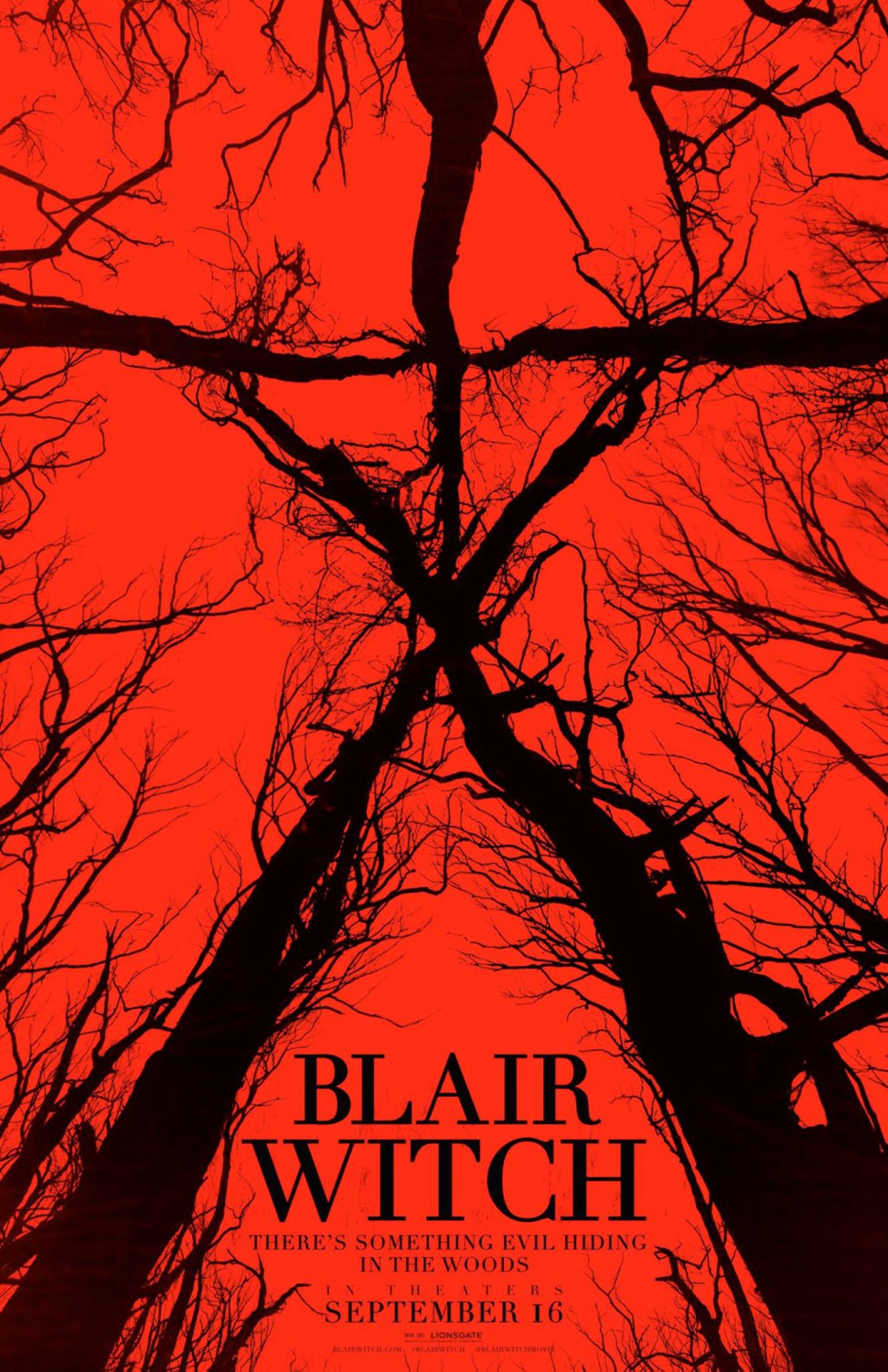
Blair Witch PosterDirector: Adam Wingard

Release Date: 15th September, 2016 (UK); 16th September, 2016 (US)

Genre: Horror; Thriller

Starring: Callie Hernandez, James Allen McCune, Valorie Curry

Netflix, for all of its cultural zeitgeist curating — yes, Stranger Things is wonderful and, yes, we should ramble on about it forever (or at least until the next new series hits in a few weeks) — is at its best when fulfilling the promise of its roots. In other words, when it functions as a library of untapped gems. I watched one of those gems a few weeks ago, a found footage film with a science fiction setting and horror proclivities, and a good one at that. Aside from strong performances and an increasingly eerie atmosphere, Sebastián Cordero’s Europa Report champions a found footage style that minimises the head-spinning amateur wobbliness we often have to endure, but which also maintains the unsettling sense of privacy invasion that found footage, at its best, should enact. Europa Report, released in 2013, struggled to find a theatrical audience.

Yet, here we are. Another found footage horror release towing the subgenre line, another mainstream commodity (though surprisingly not another box office victory). Filmmaking team Adam Wingard and Simon Barrett have cultivated, certainly in my eyes, an admirable reputation for undercutting genre tropes and flavouring their films with semi-satire. You’re Next isn’t perfect but it does throw bombs at horror clichés with amusing success. Even better, The Guest upholds taut thriller tendencies as it encourages us to revel in the villainy of its not-so-cookie-cutter lead. Therefore it is odd that Blair Witch, the duo’s newest offering, often falls so far by the witty, intelligent wayside.

We’ll start with the story: a group of nice-looking adventurers with age on their side travelling somewhere they shouldn’t because they reckon it is a good idea when everyone sat in the screening room and standing in the foyer knows it isn’t. The GallowsAs Above, So Below. Area 51. That sort of thing. Blair Witch sees the brother of The Blair Witch Project’s Heather Donahue head to the forests of Maryland in search of his missing sister whom he reckons is still alive. James (James Allen McCune) is joined by documentarian pal Lisa (Callie Hernandez) and their friends Peter (Brandon Scott) and Ashley (Corbin Reid).

The film revisits the final moments of The Blair Witch Project at the beginning, instantly alerting us to the grainy aesthetic of the original horror; in fact, one of this instalment’s redeeming features is its occasional use of an old camcorder to document events, a visual reminder of what came before. Elsewhere, the film uses up-to-date high-definition technology including earpieces embedded with mini cameras and a drone to shoot from above (the drone is never used to its full potential, barely fluttering above the forest foliage). Very little happens for half an hour, the characters merely learning how to work their equipment before heading to their destination. Although this isn’t time spent particularly interestingly, these minutes do at least paint those on-screen in a fairly genial light. James and Lisa are particularly amiable, neither pushy nor arrogant, both a far cry from genre caricatures.

It’s not until we the reach the Burkittsville creep-land that things begin to take a turn for the haphazard. The group arrange to meet with a couple wielding knowledge of the area in the hope that they will lead them to their desired location and then depart. But of course Lane (Wes Robinson) and Talia (Valorie Curry), indiscreetly hiding their collective kookiness, want to stick around as part of the deal. Because every scary excursion has to accommodate someone (or some people in this instance) willing to spout his/her supernatural inclinations at every opportunity. I should also note that by this point we’ve already heard one member of the party poke fun at the idea Heather is still alive. And shortly thereafter, another member of the party injures her foot. Which effectively means no running from The Bad Stuff.

There are spooky campfire tales, noises in the night, Wicker-Man-esque stick symbols, and folks wandering off alone. The inclusion of so many blatant tropes would be fine if the film then countered with either some brazen self-awareness (like in You’re Next), or at the very least a handful of genuine scares. But it’s not scary, in part because the camera contorts too violently in moments of would-be tension, disorientating us — yes — but never affording us the chance to engage with or understand what is happening on-screen. And I don’t think there is an awful lot of self-aware hilarity going on either. When the proverbial hits the fan, Lisa et al. appear much too freaked out for any of streaks of amusement to stick. I suppose the actors do offer the infrequent helping of light relief (Scott’s reaction to an infected cut), but in truth there is nothing for us to be momentarily relieved from.

The best scene actually involves said cut and, you guessed it, an unhealthy serving of oozetastic body-horror. Kudos to the prop masters and makeup artists for provoking legitimate yelps of disgust (at least that’s how the scene played with most of the audience in my screening). Elsewhere, a tree-climbing sequence places Foley workers in the foreground, branches creaking and murmuring to delightful effect, part of an OTT noise-fest that would make Toby Jones proud.

As the story advances, Blair Witch adopts more of a monster movie mantra, distinguishing itself from the paranormal tensions of its predecessor. We see glimpses of the creature, removing the disconcerting veil of uncertainty that covered the original and boosted its chilling potential. The ingredients fail to click, or maybe they just aren’t strong enough. Any potshotting nods, instances where the filmmakers look to knowingly nudge their well-versed audience, translate poorly. Besides, the film’s overabundant use of familiar genre commands would almost certainly render satirical swipes moot (see Deadpool). Wingard and Barrett will doubtless be back with something devilishly sweeter. This one just irks because it is a sequel to the prototypical found footage horror, the one that reinvented the game for better or worse, and it is timidly generic.

Blair Witch - Valorie Curry

Images credit: IMP Awards, Collider

Images copyright (©): Lionsgate

Finding Dory (2016)

★★★★

Finding Dory PosterDirectors: Andrew Stanton & Angus MacLane

Release Date: June 17th, 2016 (US); July 29th, 2016 (UK)

Genre: Animation; Adventure; Comedy

Starring: Ellen DeGeneres, Albert Brooks, Ed O’Neill

You know the story by now: if something is successful and breeds enjoyment, chances are that something will have a successor. Gratification, after all, is a part of life. And it’s a significant part of the Hollywood experience too. When Finding Nemo director Andrew Stanton initially heard rumblings from Disney bosses about the possibility of a sequel to his 2003 underwater triumph, he balked at the prospect. But, as revealed in a 2013 interview with the Los Angeles Times, he has since had a change of heart, the director now willing to accept sequels are good for business. They pave a path for financial gratification. It’s up to filmmakers like Stanton, therefore, to ensure franchise entities are built atop the correct foundations. That is, sturdy storytelling and not paper money.

Which brings us to Finding Dory, Stanton’s tentatively conceived follow up to Finding Nemo and a sequel built, for the most part, atop the correct foundations. Whereas the previous outing cast Nemo (now voiced by Hayden Rolence) adrift, Finding Dory unsurprisingly sends Dory (Ellen DeGeneres) on a disorienting sprint across the ocean as she attempts to reunite with her long lost parents. Nemo’s father Marlin (Albert Brooks) is again part of the rescue mission, frustrated by Dory’s manic forgetfulness but caring and determined to see her safe return.

That Dory’s short-term memory loss again weaves its way into the humour bulk without negligence is commendable. Stanton and co-writer Victoria Strouse carefully craft amusing sequences that can only exist as a result of Dory’s amnesia — pick out any of her interactions with octopus Hank (Ed O’Neill) — but that refrain from using said amnesia as a target. The moments also work because they have us laughing alongside Dory; she recognises that in certain situations there is amusement to be drawn from her misfortune. “Don’t be such a Dory, Dory,” the blue-tang exclaims following a bout of forgetfulness. But being such a Dory is what endears her to us, and what helps make the film an enjoyable watch.

Nor do the writers stop short at humour; we are encouraged throughout to sympathise with Dory’s predicament. The main story unfolds around a handful of flashbacks which, though repetitive in content, familiarise us with Dory’s mother (Diane Keaton) and father (Eugene Levy). We know who to look out for, but for a period you do wonder whether or not Dory will recognise her family. Little happens during these splashes of the past, each snippet designed mainly to generate a sense of familial bond rather than develop our protagonist’s personality. It’s a decent idea that does at least propel this notion of love overriding hardship even if it doesn’t stimulate much drama.

This means much of Dory’s gravitas is derived not from the narrative, but from the recording studio. Ellen, her amiable voice honed over years of daytime talk show hosting, again affords Dory a wonderfully receptive sound. Let’s be honest: it wouldn’t take a whole lot of wayward writing to turn a forgetful, high energy former sidekick into a main character primed to get on our nerves, but Ellen’s easy listening ambience ensures nothing of the sort even threatens to happen.

Now, though, to the pièce(s) de résistance: Idris Elba and Dominic West as a pair of lazy sea lions. The actors nail the grumpiness of their animated companions, immediately punctuating the screen with a Cockney arrogance that brims with devious intent. They defy the fast-talking mantra laid bare elsewhere in the film: whereas Dory, Marlin, and the rest rattle off words as if they are in a Scorsese picture, the sea lions settle for a more chilled manner. They reserve their vocal velocity for Gerald (Torbin Xan Bullock), a fellow flipper who on numerous occasions attempts to climb atop their resting rock: the duo’s subsequent “Off! Off! Off!” war cry is hilarious.

The sea lions, named Fluke and Rudder for those keeping score, turn up during Marlin and Nemo’s search for Dory at a marine institute. The lions are a highlight, clearly, but our time spent with Marlin and Nemo generally isn’t as interesting as our time spent with Dory. (Perhaps this should not come as much of a surprise given the wild goose chase arc is essentially what we saw play out in Finding Nemo.) The marine institute does welcome more engaging action though, especially since this is the point at which the film whips out its Pixar badge, recalling the likes of Toy Story as it depicts the turbulent ingenuity evoked by a bunch of non-humans navigating a human locale.

I should note the animation itself, especially since the marine section of the film is where we really get to witness the visual prowess contained within the Pixar design ranks. Animation by nature provides a platform for unlimited imagination, but when working within a human world it can also pose something of an adaptation challenge. Getting the right balance between recognisable realism and kooky fantasy is key, as is not seeping into uncanny valley territory when promoting those imaginative tendencies — while it is crucial we see an octopus disguised as a baby in a pram, it is also imperative nobody is freaked out by the resultant visual. And while the antics are out there, the landscape itself shimmers with authenticity. The water texture is wonderful, for instance, especially when viewed from above ground.

Finding Dory is not as emotionally gripping as recent Pixar efforts — the comparison is strained, I admit, but this isn’t on the level of an Inside Out. Nor is it as thematically resonant: there is a point when we arrive at the marine institute where you think the writers are about to delve into the whole Sea World saga, but that thought never gets off the ground. Moments of wit are aplenty throughout though, and while there doesn’t seem to be enough story left for another adventure (unless we’re talking sea lion spin-offs), Stanton and co-director Andrew MacLane have commendably rinsed just about all they can from the series. Heck, they even mould the word “carp” into a one-liner with year-best potential. Incredible.

Finding Dory - Dory

Images credit: IMP Awards, Collider

Images copyright (©): Walt Disney Studios Motion Pictures

David Brent: Life on the Road (2016)

★★★★

David Brent Life on the Road PosterDirector: Ricky Gervais

Release Date: August 19th, 2016 (UK)

Genre: Comedy; Music

Starring: Ricky Gervais, Ben Bailey Smith

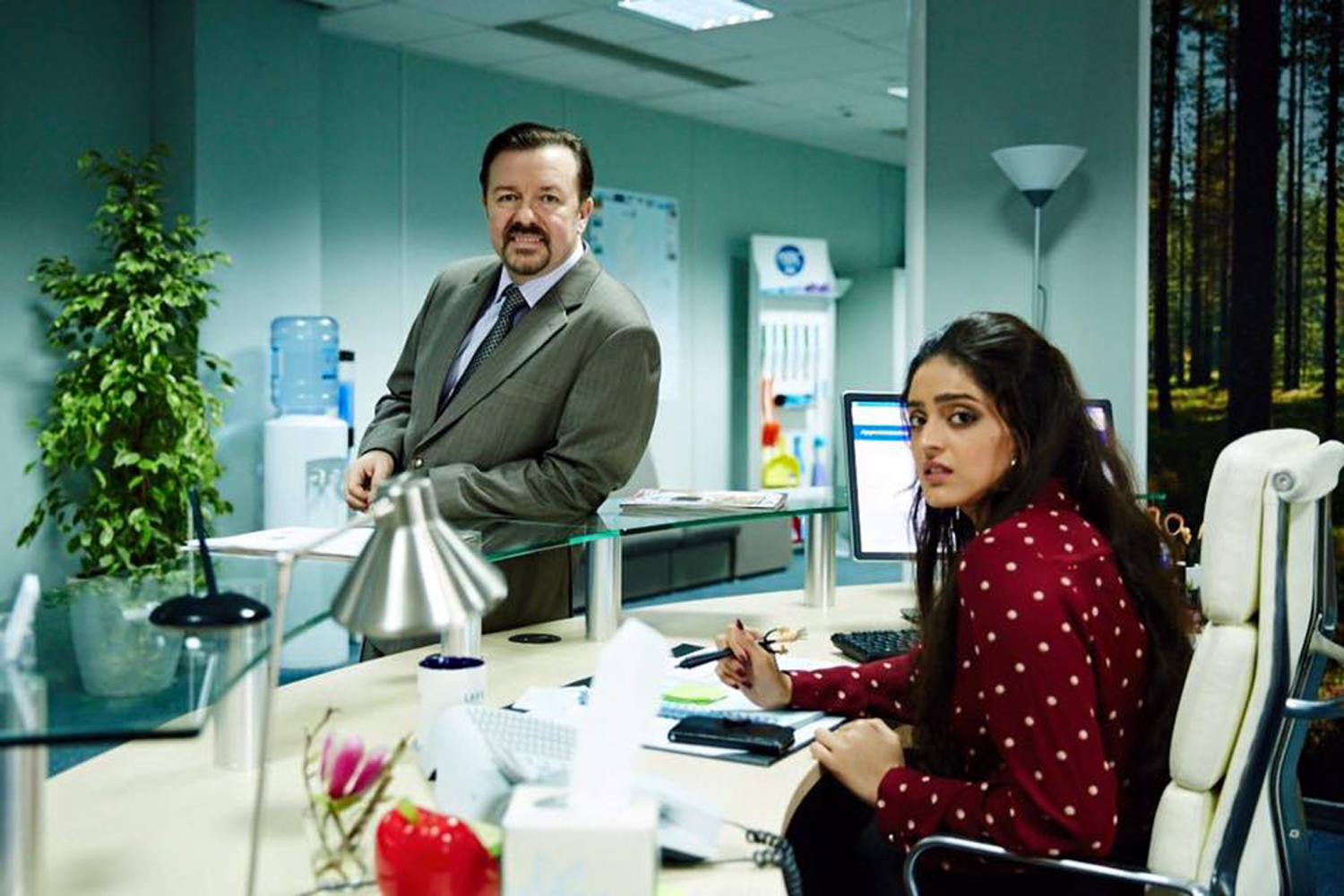
Sometimes you simply cannot help but laugh, and those are the times Ricky Gervais preys upon. If you have ever heard him podcast with fellow humour stirrer Stephen Merchant and their patter pawn Karl Pilkington, or if you happened to catch any of the writer-director’s previous television efforts (I’m thinking Life’s Too Short or, to a lesser extent, Derek) you’ll already be aware of Gervais’ innate desire to prod away at that which ought not to be prodded. His brand of toe-curling hilarity gained notoriety via The Office, a post-millennium docudrama that ran for only two series and a Christmas special. In it he played David Brent, manager unextraordinaire, whose lack of social awareness suffocated his clamour for acceptance. People loved The Office, and still do — it won a Golden Globe in 2003, a first for a British production — which makes Gervais’ decision to bring Brent back some 13 years later a risky one. Revisiting royalty can be a dangerous game.

And yet you forget about the potential pitfalls almost instantly as we learn of Brent’s plan to take his cringe on the road (hence the title). He ain’t getting any younger therefore now is as good a time as any to chase those rock star dreams. This is a positive because it gives the story more scope, removing us from the office environment that still entraps Brent: nowadays he works as a sales subordinate having fallen down the corporate pecking order. More importantly, it affords Brent new surroundings within which to thrive, new locales outwith the world of laptops and staplers, and new scenarios ripe for brutal awkwardness.

Brent decides to relaunch his musical ambitions under the guise of his old band moniker, Forgone Conclusion, only this new incarnation does little but emphasise Brent’s middle-aged reality: his new band mates are a bunch of indie instrumentalists and rapper Dom Johnson (Ben Bailey Smith), whose career Brent has co-opted and unwittingly held back. None of them display any sort of warmth towards Brent, apart from Dom who sort of sympathises with his desperate interior. The others refuse to have a drink with their lead singer after gigs and even fall silent whenever he enters the room. Brent, of course, makes light of the whole scenario, putting this lack of interaction down to his band members giving him, their star man, his own space.

And you laugh. You laugh because it’s Brent. Because he attracts wince-inducing guffaws like a garden light does moths. He sings about anything and everything, lyrics often just words assembled in a somewhat rhythmic manner. Or, better yet, lyrics about respecting those with a disability that fail to follow through when sewn together. In Brent’s mind his tunes are supposed to empower their subjects — following a live rendition of “Please Don’t Make Fun of the Disableds”, the singer appreciatively nods towards a man in a wheelchair — though to the naked ear they are offensive. But only to the naked ear, to those uninitiated in Brent lore. Because those of us familiar with his antics know there is a lack of malice. We are never laughing at the subjects of Brent’s songs because he isn’t harvesting them for humour. They are never the target. Whether he genuinely cares about those whom he sings about or whether it’s just a case of adhering to the social justice mantra of the day is irrelevant.

We know how good Gervais is at playing Brent because we’ve seen him do it before. It helps that the character is entirely his own creation, essentially Gervais turned up to 11, but the actor still has to act. The most important factor is timing and Gervais dictates the pace, both in front of and behind the camera. Early on we hear Brent brag about his love for all kinds of females before hesitating and subsequently neglecting black women (presumably because he is so out of touch and fears any utterance of the word “black” will incur racism accusations). The hesitation is pinpoint; we sort of see it coming and yet Gervais still surprises us. There is also his patented Sigh-Laugh, the perfect vocal representation of a man flapping around in comic quicksand and sinking further after each gag. In some instances you can pick out the streams of improv, those moments where Gervais is clearly rambling on, digging Brent an increasingly deeper hole. His co-stars — especially Jo Hartley and Mandeep Dhillon, playing amiable co-workers — do well to keep straight faces (I suspect the outtakes will be worth seeing).

The cringe isn’t always humorous. Life on the Road taps into serious issues, such as the effect adverse mental health can have on one’s self-worth. Brent, we learn, has struggled in the time between The Office and now, and that struggle still lingers in the form of fame addiction. He pays for everything, literally buying into a false pretence: numerous pensions are cashed in order to fund the tour and socialising with the band comes at a cost, yet Brent persists, aimlessly wasting money in pursuit of adulation.

It makes you wonder why fame appeals to him so much. Part of it, presumably, is to make up for his own flaws. But Brent also wants out, away from an office environment that he no longer recognises. The business world has changed since Wernham Hogg and is now populated by brash, arrogant macho types (you know the sort). Jokes have become fossilised, unless they are genuinely offensive, and self-interest is the new corporate currency. You quickly realise that it is Brent who has given colour to this dingy landscape, albeit wonkily, and his cohorts realise it to. Dom maintains a sense of frustration over his counterpart’s uselessness but is appreciative of Brent’s drive. Ben Bailey Smith, incidentally, pitches the mediator role with great effect.

Procuring this authentic sympathy for the man is a fine balancing act, and the film doesn’t always uphold that balance. Notably, a radio interview goes pear-shaped for Brent both within and outwith the walls of the narrative: he is supposed to be there to plug his tour and sell tickets but is instead constantly put down by the station’s nasty host. While in real life it may be true that some radio hosts couldn’t care less about the exploits of their guests (Gervais would know given he worked in the field), they at least play the game and feign interest. No such thing happens here, and the anchor’s contemptuous attacks on Brent feel contrived.

But one misstep across 90 minutes is pretty good going. Gervais shows us the difference between using humour as a somewhat misguided path towards acceptance, and using it without underlying compassion — it isn’t funny, for instance, when a band member calls a woman fat, nor is it supposed to be. Fans of The Office will enjoy the awkwardness (I didn’t miss the likes of Martin Freeman and Mackenzie Crook, though others might). There is also a heartfelt message bubbling below the comedic furore, one that encourages us to try as Brent does, but to value ourselves in spite of any subsequent successes or failures. “I like making people laugh. I like making people feel,” says the eponymous giggler. Sometimes you simply cannot help but laugh. And sometimes you simply cannot help but feel, even for David Brent.

David Brent Life on the Road - Gervais

Images credit: IMP AwardsEvening Standard

Images copyright (©): Entertainment One