Captain Phillips (2013)

★★★★★

Director: Paul Greengrass

Release Date: October 11th, 2013 (US); October 16th, 2013 (UK)

Genre: Action; Adventure; Biography

Starring: Tom Hanks, Barkhad Abdi

Having directed films such as The Bourne Ultimatum and United 93, Paul Greengrass is no stranger to generating drama and thrilling audiences. In Captain Phillips, Greengrass combines the very best elements from his previous outputs and creates a relentlessly intense and enthralling tale of an ordinary man in an extraordinary situation.

The film tells the true story of Captain Richard Phillips, who was taken hostage by Somali pirates while steering his cargo ship across the Indian Ocean in 2009. Tom Hanks stars as the troubled captain and delivers his best performance in thirteen years. The two-time Academy Award winner’s thoroughly convincing portrayal of the jaded mariner turned distressed captive is incredible — his astounding role in the emotionally-charged final few minutes of proceedings should seal Oscar number three come March.

In addition to Hanks’ performance are the surprisingly realistic offerings from the four previously untried actors playing Somali pirates. The group are imposing and chaotic, with Barkhad Abdi standing out in particular as the leader, and the quartet’s pursuit of the American-based vessel amplifies an already danger-fuelled atmosphere struck up by eerily droning music and Phillips’ on-edge demeanour (“We’re going along the Horn of Africa, right?”).

More than simply a story of immediate survival, the film also has a political and moral backbone. We see two very contrasting lifestyles in the opening shots: one shows a worn-out family man about to leave his wife on another extended job; the other depicts a struggling community whose only means of survival is criminal activity. Greengrass infuses these extremely current issues into the main plot-line to add another real-life layer of drama to the impassioned events.

Technically magnificent and emotionally draining, Captain Phillips boasts award-worthy lead performances and is without doubt one of the very best films this year.

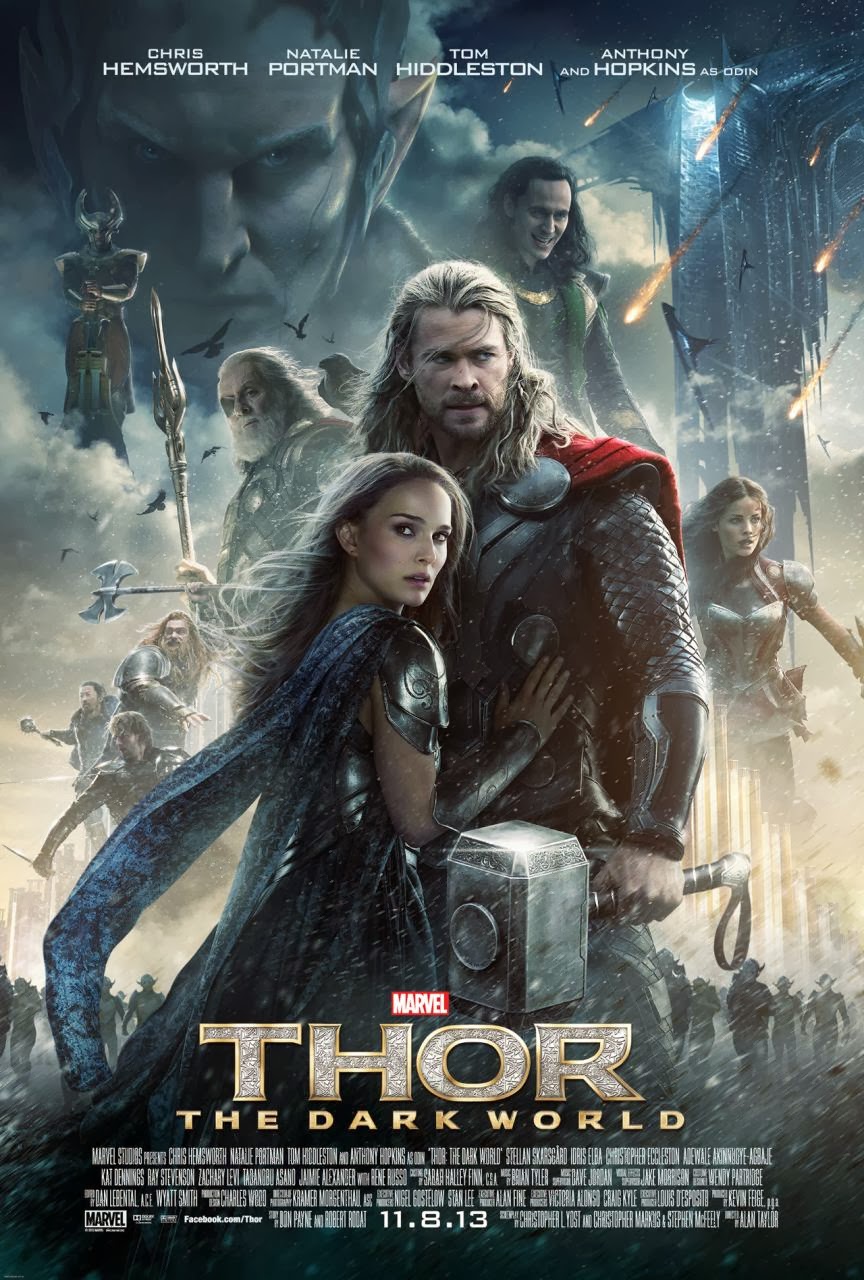
Thor: The Dark World (2013)

★★★★

Director: Alan Taylor

Release Date: October 30th, 2013 (UK); November 8th, 2013 (US)

Genre: Action; Adventure; Fantasy

Starring: Chris Hemsworth, Tom Hiddleston, Natalie Portman

After Iron Man 3’s failure to ignite Marvel: Phase Two into top gear, Thor: The Dark World signals a brisk return to form for the franchise king as the film quenches any Mandarin-shaped spectres. Regardless of a few questionable plot elements, the second instalment of Thor brims with fun and is the epitome of rip-roaring cinematic entertainment, perhaps even bettering much of Marvel’s pre-Avengers universe.

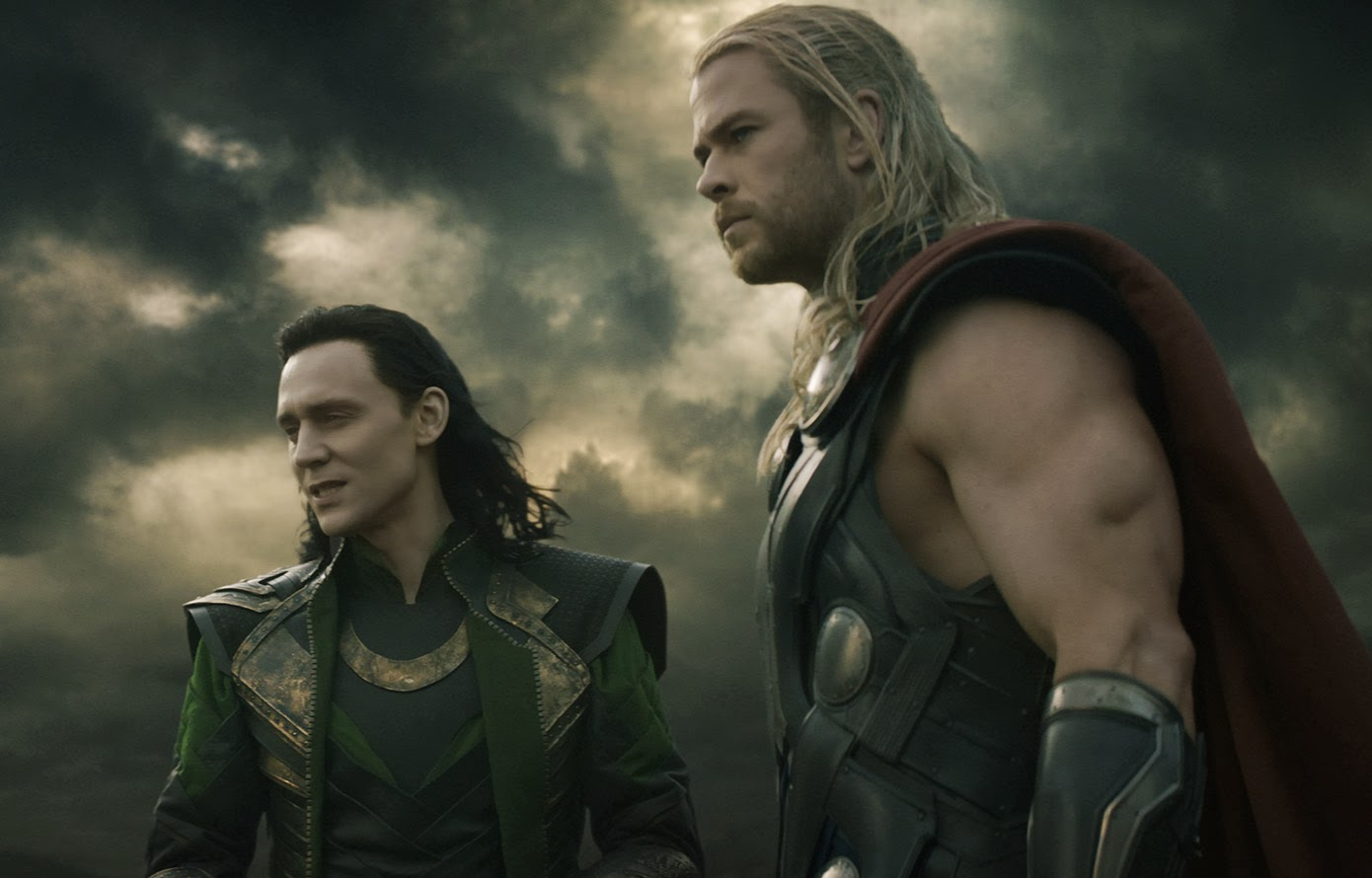
With the impending arrival of the evil Alien-inspired Dark Elves — led by an utterly unrecognisable Christopher Eccleston — Chris Hemsworth’s Asgardian hero Thor must put aside much of the loathing he is entrenched in and team with his imprisoned brother Loki in order to save the Nine Realms.

Tom Hiddleston returns as the devious Loki and is a joy to watch when he is present on screen (which is certainly not enough) in another scene-stealing performance. There is a slight shift in the central relationship this time round: from the son of Odin and his mortal love interest Jane Foster (Natalie Portman), to the natural-yet-severed dynamic between the brothers, and this certainly amps up the tension. Portman doesn’t have as much to do this time around and, much like Thor in the previous film, finds herself in unusual surroundings. The novelty of seeing Foster wander around Asgard doesn’t quite reach the same level of playfulness as bearing witness to the God of Thunder eating breakfast in a New Mexico diner.

The film simultaneously manages to be darker, wittier and more enjoyable as it rises above the satisfying level set by that of its predecessor. Director Alan Taylor takes a slightly different approach than Thor’s (2011) Kenneth Branagh, as he powers every nuance of the film with Mjolner and tongs. Taylor, who has recently worked on the hit television series Game of Thrones, delves into the fantasy world even more with encapsulating Lord of the Rings-esque costumes and landscapes aplenty. Stir in Brian Tyler’s grandiose score — which haunts as much as it packs a punch — and you’ve got the perfect concoction of post-Middle Earth entertainment.

Even the very occasional influx of sap quickly evaporates by way of some creepy imagery and a brooding underlying tone which was missing previously. Genuine danger manifests around the Dark Elves spearheaded by Eccleston’s Malekith — the villain’s name boasts a snake-like quality as it slithers off the tongue.

Proceedings threaten to boil over into mind-boggling territory come the final showdown, but a frantic pace and exhilarating action mesh together successfully as a means of retaining the audience’s attention.

The direction of Thor: The Dark World is set early on as action engulfs events (“Is that why everything is on fire?”) and by the time the realm-interchanging plot starts to confuse a little, the aesthetically supreme film has already delivered in pure enjoyment.

The Hunger Games: Catching Fire (2013)

★★★★★

Director: Francis Lawrence

Release Date: November 21st, 2013 (UK); November 22nd, 2013 (US)

Genre: Action; Adventure; Science-fiction

Starring: Jennifer Lawrence, Josh Hutcherson, Liam Hemsworth

They always say it. It’s almost an unwritten rule in franchise filmmaking. Premature reviewing at its most uninspiring. “The sequel will never beat the original.” Of course I am paraphrasing here and my source is general social cinematic norms rather than cold, hard evidence. But it is certainly true that sequels have a lot to live up to, particularly when they find themselves following on the heels of a successful franchise opener.

Interestingly, even after The Hunger Games delivered thought-provoking sub-plots, new Hollywood superstars and overall cinematic enjoyment in abundance, the onset of Catching Fire has been met with optimism and even more positive hype than its predecessor. Of course there’s pressure, but there hasn’t really been any noticeable apprehension over a potential disaster in regards to the second big-screen adaptation of Suzanne Collins’ novels.

And why should there be?

Under new leadership, with fresh faces and even fresher faces, Catching Fire forcefully retains all of the progress made by The Hunger Games and elevates the franchise to new heights. The film is weightier, slicker, more intense, and once again boasts a number of glowing performances. Francis Lawrence (no relation) directs an orchestra lead by The Girl on Fire as they collectively strike all of the correct notes, creating a sequel which has its volume up loud as it transmits a clear message of hope and defiance.

A short time after their unprecedented joint-victory in the 74th annual Hunger Games, Katniss Everdeen (Jennifer Lawrence) and Peeta Mellark (Josh Hutcherson) are distant with each other and the world around them, and are preparing to embark on a Victory Tour. Still reeling psychologically from her experiences in the games, Katniss finds herself thrown directly under President Snow’s evil spotlight as he strives to quench any potential district-driven rebellion against his autocratic Capitol. The film opens moodily, reflecting the ominous on-edge feeling amongst the district-dwellers that the previous instalment developed so well. Its physical scope travels far and wide with landscapes displaying an icy exterior mirroring that of the mechanical, desensitised hierarchy — an unrelenting mechanism represented at its most negligent by the metal claw disposing of the deceased.

Perceived by the oppressed as a beacon of hope against fear, Katniss and Peeta are subject to re-entry into the Hunger Games tournament, this time alongside fellow victors from the past in a master-plan devised by recently introduced Head Gamemaker Plutarch Heavensbee. Philip Seymour Hoffman makes his Hunger Games debut as Heavensbee, demonstrating Darth Vader-esque inequalities at times. His deceiving, snake-like delivery is as skin-crawling as it should be. Katniss represents all that is right in a world riddled by wrong, therefore she must be stopped and placing her back into the murderous tournament is Snow’s means of doing so. After all, “Nobody ever wins the Games”.

There is an underlying sense of good versus evil here, but more significantly a battle of hope versus fear. Katniss defines hope, regardless of whether she herself believes it, and having been plagued by fear for seventy-five years, the people of Panem are finally bearing witness to a means of resistance. This notion of defiance plays out in various subconsciously related instances as the film progress; be it through Gale’s encounter with the viscous and ironically-named Peacekeepers, or Cinna’s symbolic garment creations. The actors, writers and director each fulfil their role in successfully creating a dynamic which sees the audience entirely on the side of Katniss, without proceedings ever balling over into a territory of jadedness. Any semblance of an upper-hand gained by the resistance is a triumphant one.

Jennifer Lawrence once again shines as Katniss (sometimes literally) as she steers the bow-wielding heroine through the emotionally wrought rigours, and is quite simply a delight to watch on screen. Her steady evolution from a reluctant and isolated victim of the games to a determined leader is unblemished. Both Liam Hemsworth and Josh Hutcherson have more to do this time around and Hutcherson’s volunteer scene is perhaps the most poignant of the piece.

Newcomers Jena Malone and Sam Claflin embody the characteristics of past victors Johanna Mason and Finnick Odair to a T, with both the latter’s charm and the former’s abrasiveness in full flow. “Attitude” is the new “mahogany” for Elizabeth Banks’ Effie, who is as flamboyant as before but who also delivers movingly on occasion. An abundance of tension lies beneath the pretension of the Capitol resident — she essentially becomes a token of distinction between the harmless ignorant and pure tyranny, a tyranny of cruelty displayed by Donald Sutherland as President Snow. The ensemble cast deliver performances devoid of weakness, providing Catching Fire and the lead actors a solid backbone to impress from.

A common criticism aimed at The Hunger Games was the extensive use of shaky cam by director Gary Ross, intended to bring a sense of immediacy and danger to proceedings (which, incidentally, it did). Francis Lawrence opts for far less of the bumbling camera work this time around, instead focusing on the contrast between the expansive, free landscapes and capturing the troubled, constrained essence of the Katniss and company. These contrasts diverge further from just the narrative, as melodic instrumentals battle the thumping, grandiose Capitol soundtrack.

Catching Fire is far more encompassing that its predecessor, both visually and thematically, and as a consequence of delving further into the themes of oppression, resistance and trust, it carries more burden that the first instalment. Distressing scenes are almost commonplace in a distressing universe. Francis Lawrence has done exceptionally well in getting a 12A rating for his film here in the UK, and should also be commended for pushing the envelope when it would’ve been far simpler to develop a film containing less weighty elements than those Catching Fire rightly and necessarily displays.

The film is the most anticipated sequel of the year — possibly one of the most anticipated of the last number of years — and it without doubt lives up to its title. The Hunger Games conglomeration certainly is catching fire, and on this evidence who knows when its spark will burn out.

Gravity (2D) (2013)

★★★

Director: Alfonso Cuarón

Release Date: October 4th, 2013 (US); November 7th, 2013 (UK)

Genre: Drama; Science-fiction; Thriller

Starring: Sandra Bullock, George Clooney

Alfonso Cuarón’s Gravity has been lauded with praise from audiences and critics alike since its recent big screen release, being labelled groundbreaking, pioneering cinema. Emphatically described as immersive and emotive. Even breathtaking. Perhaps so much so that no space-set extravaganza will ever be the same again, purely because space on film in the future has a Gravity-esque brass ring to aspire to.

This abundance of praise, however, has been attributed primarily to Gravity in its 3D format (heck, even Mark Kermode thoroughly enjoyed this version). The jury is therefore still out on Gravity in its classic, run-of-the-mill 2D version. Does the trend-setting cinematography and floaty camera work succeed at all in two-dimensions? Is the film as engrossing and all-encompassing without the plethora of protruding debris and George Clooney-ness?

Quite simply, the answer to these questions is no. Not a resounding no, but a no nonetheless. And this flares up a number of issues, the most significant being whether or not Gravity in 3D is, more-so than any other three-dimensional film to date, essentially a theme park thrill ride in a cinema. Perhaps even — put in the plainest of terms — a gimmick. This is not necessarily a negative — film critic Danny Leigh on BBC’s Film 2013 mentioned that the film which Gravity reminded him most of was the Lumière Brothers’ L’arrivée d’un train en gare de La Ciotat (known in the UK as Train Pulling into a Station).

First shown in 1895, the film is a short 50-second piece depicting a steam train’s arrival at a bustling station. The first of its kind, the oncoming train apparently startled audience members and sent them fleeing in fear of the vehicle. The Lumière Brothers, themselves pioneers in the art of filmmaking, perceived cinema and the cinematic experience as a physical one, where audience members would be totally entranced and involved in what they were seeing. This was the birth of cinema and back then cinema was an out-of-body experience.

Fast-forward over a century and, by all accounts, this wholly enveloping feeling has returned as Gravity in 3D. But the same cannot be said for Gravity in 2D. The film sees Sandra Bullock’s Ryan Stone on her first space shuttle mission, partnering spacewalk veteran Matt Kowalski (Clooney) on his final mission (you can see where this one is going). After hearing news of a Russian satellite accident, the pair are bombarded with the resultant debris and metal, leaving them separated, low on oxygen and in desperate need of a safe return to Earth — to gravity.

Gravity (2D) looks stunning. The intricately manoeuvring astro-camera delicately shifts around the blackness, almost giving off the sense that the viewer is up there with the mission team (it probably does relay this sensation entirely, in 3D). The screen displays the magnificence of planet Earth in its fullest form and the film, as a purely flat visual output, looks simply awesome. So awesome that the philosophical Kowalski comments on the “beauty” a number of times.

Bullock is good as Dr. Stone, a woman who has recently lost her child and finds solace in the emptiness of space — an emptiness that no doubt has engulfed her for what feels like millennia, and that has left her devoid of any genuine happiness or enthusiasm for life. George Clooney does George Clooney very well, bursting with unbridled charisma and charm. The pair, and Bullock in particular, do genuinely come across as actors who have gone hell-for-leather and to ensure that there is a completely organic impression emitted from their space-set performances, an organic understanding that the film itself does incredibly well to generate (a generation likely far greater in 3D) as it was obviously unable to shoot on location.

Here is where Gravity (2D) returns from cloud nine to the bleak pavements of earth: the narrative is nothing more than just alright. Much of the film sees the astronauts glide around space for a period of time before colliding with a number of space stations and shuttles as they search for a route back to Earth. The novelty of watching these small, inconsequential beings wander at times aimlessly around the dark beyond wears off fairly early on, and unfortunately the dialogue is too commonplace and puffy to keep the audience attentive. There are bountiful amounts of clichés (“I’ve got a bad feeling about this”) and a number of deep-rooted conversations about existence and life (foetal position alert) recycled from sci-fi B-movies. The film is self-aware of this, and it would seem that the 3D version of Gravity does not need to worry about plot because the entrenching nature of proceedings means viewers are too busy being wowed by that new, exciting feeling of immersion in space alongside the characters.

Here lies the fundamental dispute that the 2D versus 3D debate boils down to: Gravity (2D) is a visually wonderful, but narratively generic drama about people in space trying to return home, whereas Gravity (3D) is a revolutionary experience in watching and becoming part of a film — it is pure cinema, the essence of what the Lumière Brothers envisioned all those years ago.

There is a moment towards the end of Gravity (2D) where the camera pans above a number of objects travelling very rapidly over the Earth. Even in two-dimensions this is a spine-tingling moment, and it evokes a final 15 minutes that is tense, goosebump-inducing and quite simply brilliant. These final moments probably equate to every moment in Gravity (3D). If that truly is the case, Alfonso Cuarón has done something pretty special indeed. The director has vehemently pushed for the film to be seen in all its three-dimensional glory, on the biggest screen, and it seems that is exactly how it should be seen.

I’m off to the IMAX.

About Time (2013)

★★★★

Director: Richard Curtis

Release Date: September 4th, 2013 (UK); November 8th, 2013 (US)

Genre: Comedy; Drama; Science-fiction

Starring: Domhnall Gleeson, Rachel McAdams, Bill Nighy

It does not take long for Richard Curtis’ newest comedy About Time to have viewers grinning from ear-to-ear as any narrative inconsistencies take a back seat, allowing the film’s engaging characters to dominate the screen in a funny, genuine and well-meaning cinematic offering.

The writer and occasional director of romantic comedies such as Four Weddings and a Funeral and Love Actually is no stranger to the genre, but here Curtis adds an extra dose of science-fiction to charge up proceedings. Domhnall Gleeson is Tim, an unpolished 21-year- old whose life takes an unexpected turn — literally — when his father tells him he can travel back in time. Gleeson’s relatively recent rise to prominence means his involvement here is fresh and feels organic, enabling the Irishman’s charm to resonate through both his awkwardness and authenticity.

Rachel McAdams endears as Gleeson’s other half Mary, and the two strike up an infectious dynamic immediately. It says a lot for both that their first scene together — which they spend shrouded in complete darkness — generates an instant connection. Bill Nighy is often the vessel through which emotion is emitted and the relationship he shares with his son Tim is utterly believable; a relationship that the film quite rightly depends on.

About Time is not without problems, although these inconveniences either subtly fix themselves or are quickly shielded by on-screen antics. The music intertwined throughout intentionally toys with the heartstrings (upbeat when happy, melancholic when sad) but nevertheless always finds an acceptable rhythm with events. The Groundhog Day-like premise is not original, but does not need to be when the focus is solely on the characters. Clichés are found wriggling around in various forms (“If we could travel back in time”), but unusually seem welcome.

Curtis ensures that the people depicted in About Time matter, creating a film which is lovable without being glamorous and one that always has its heart in the right place.

Credit: Gala
Credit: Gala

Diana (2013)

Director: Oliver Hirschbiegel 

Release Date: September 20th, 2013 (UK); November 1st, 2013 (US limited)

Genre: Biography; Drama; Romance

Starring: Naomi Watts, Naveen Andrews

Oliver Hirschbiegel’s Diana opens with the droning voice of a news reporter, setting an unenthusiastic tone from the get-go before eventually succumbing to unavoidable tedium. If watching paint dry was a film, it would be better than this.

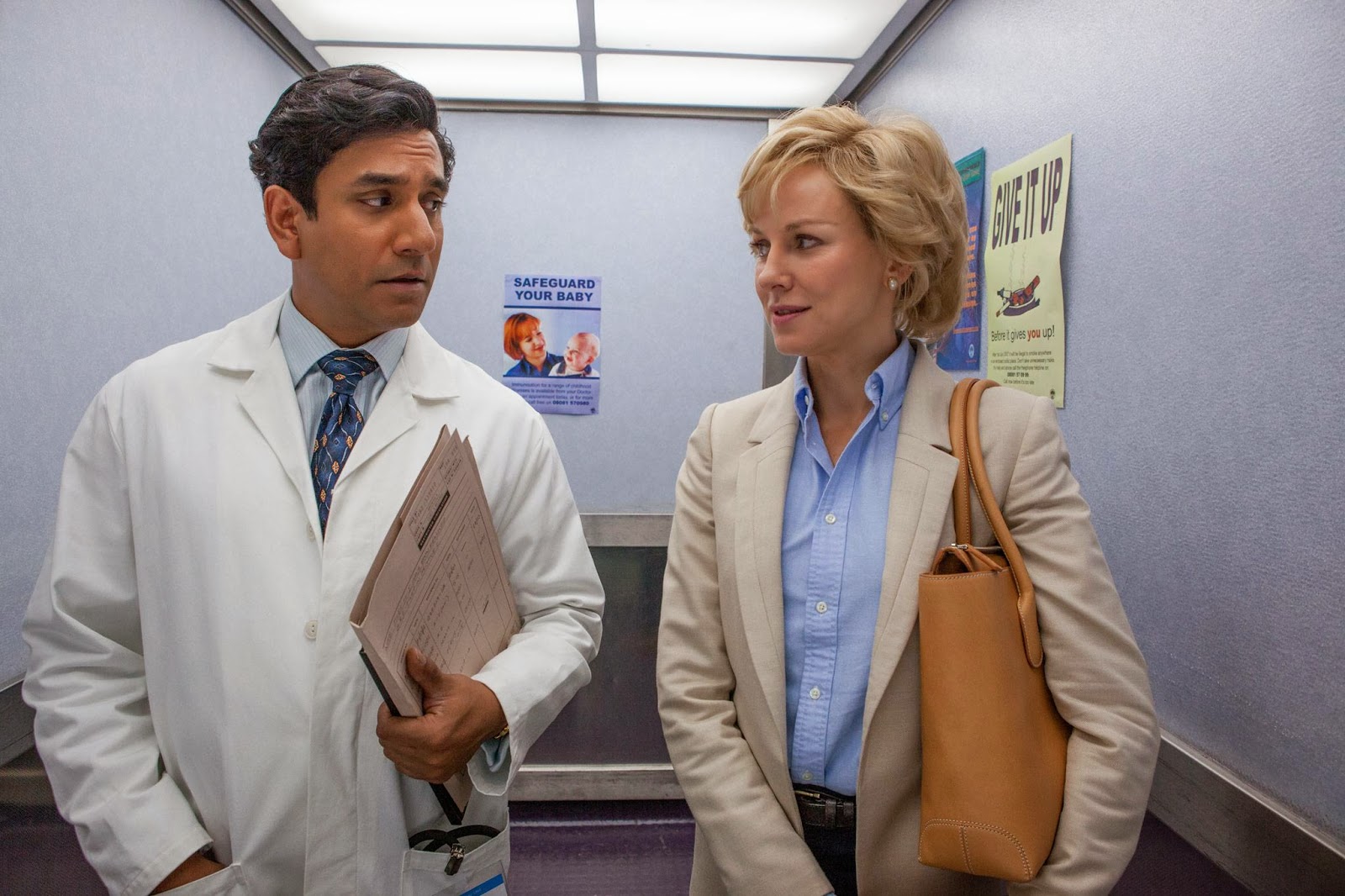
The film follows the final years of Princess Diana’s life, highlighting her relationship with heart-surgeon Hasnat Khan. Naomi Watts stars as Diana, and while her external charm as the Princess is fairly accurate, the English-born actor is hampered by a noticeable deficiency in visual continuity with the woman she is portraying (the introduction of a black wig does not help). Former Lost castaway Naveen Andrews plays love interest Hasnat Khan but he, alongside Watts, fails to overcome the dull script and sappy dialogue, both of which demand a great deal of suspended disbelief to deem credible.

It is surprising that a film directed by Hirschbiegel — whose résumé boasts the critically-acclaimed Downfall — has as little to offer as Diana does (or, evidently, does not). Hirschbiegel’s film-making skills are not paraded in any positive manner whatsoever here, with out-of-place lingering shots constraining the snail-like pace of the film and making it slower still. This lethargy grows as scenes begin to repeat themselves, diverging potential tension elsewhere and creating distinct plot contrivances — Diana and Khan bat the same argument back and forth on at least three occasions.

The pacing is not the only problem. Laughs are at a premium, and it appears the film could not afford any. By the time the Princess has visited a fifth country, the images on screen resemble those of a travel guide rather than a coherent cinematic output. Media reporters and paparazzi become off-putting parodies of their profession. At one point there is even a sudden, unexplained shift forward in time by a year. No explanation is required however, as the missing year would have offered as much intrigue as the rest of the film — none.

Perhaps Diana simply gets bored of itself.

Flight (2012)

★★★★

Director: Robert Zemeckis

Release Date: November 2nd, 2012 (US); February 1st, 2013 (UK)

Genre: Drama; Thriller

Starring: Denzel Washington, Kelly Reilly, Don Cheadle, Bruce Greenwood

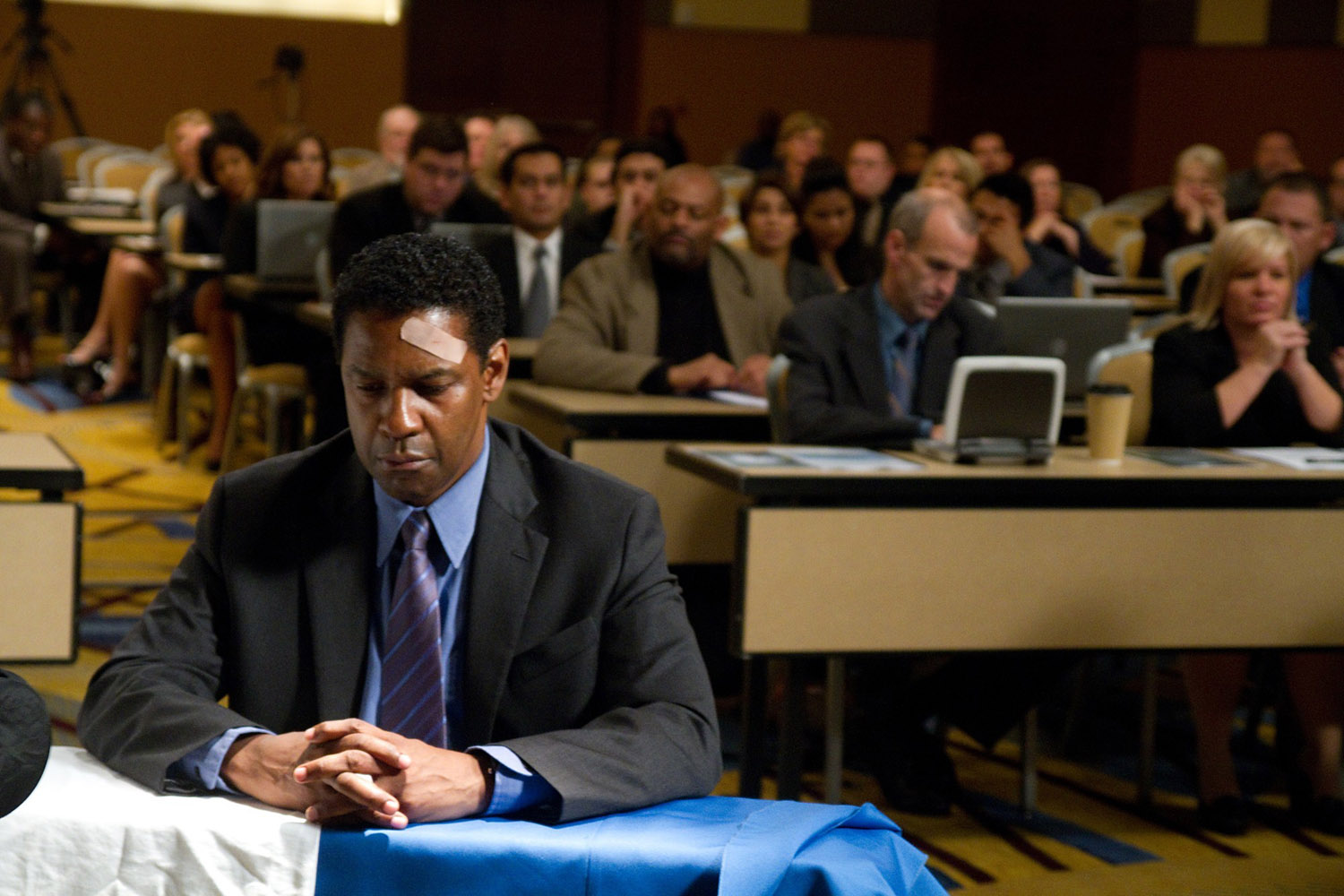
It does not take long for Robert Zemeckis’ Flight to race into full throttle and deliver the intense plane crash scene from which much of the buzz surrounding the film has emanated. However, the film quickly switches gears and ends up spending most of its time delving into a more subtly intense story about a man’s plight against addiction — a ruthless concoction of lies, alcohol and drugs succinctly summed up by the lead character’s quip, “Don’t tell me how to lie about my drinking”. It becomes a dramatic character study rather than an event-driven thriller, and with each extra lie that Denzel Washington’s Whip tells, or additional drink he swigs, you just want to give him a shake and remind the heroic pilot that he can be a decent human being.

Whip Whitaker is a seemingly disenfranchised airline pilot who spends his evenings with co-workers (more specifically, air hostesses) in hotel rooms partaking in substantial alcohol consumption and drug use — and that is only on pre-flight nights. He awakens from his extravagantly unprofessional routine one morning both sleep-deprived and lumbersome, before heading out to captain a flight to Atlanta. After successfully, and somewhat surprisingly, manoeuvring his plane through a bout of rough turbulence, an alcohol-influenced Whip is forced to execute an emergency landing in a field. A plane crash is a once-in-a-thousand-lifetimes event that, for the vast majority of us, is something only experienced through the likes of news reports or documentaries. Zemeckis and cinematographer Don Burgess do a nail-bitingly horrifying job of emulating the chaos, destruction and terror of such an event, far eclipsing the director’s tumultuous Cast Away aviation incident. Washington’s poise is both unsettling and admirable as a captain who is just as dependent on booze and drugs as his passengers are on his flying skills.

Whip awakens in hospital a hero to the public but quietly uncertain and continuously seeking reassurance over his role in the crash. “My [condition] had nothing to do with the plane falling apart,” is often closely followed by, “Nobody could’ve landed that plane like I did”. The film does not shy away from making clear that the doomed aircraft was a result of mechanical failure, but a combination of Whip’s pre-flight misdemeanours and post-crash internal conflict raises doubt. Is there the possibility that Whip’s demons lead to the accident? Zemeckis’ direction plays a role in casting this ambiguity over proceedings, however Washington’s depiction of a man unravelling creates doubt not where there should be none, but where there is none.

The Academy Award winner has the stench of alcohol protruding from him throughout the film and stands out, in particular, in two scenes of mental jousting. The first, soon after cleansing himself and his life of all toxic substances by way of sink or toilet, sees a fidgety Whip down his first drink in the knowledge that he is facing potential criminal prosecution. The second comes towards the end of the film where Whip is surrounded by people, but more alone than ever as he juggles morals in his head. It is testament to Denzel Washington’s acting abilities that he ensures Whip commands sympathy in spite of all of his negative traits. Perhaps this is partially down to those traits tearing away at nobody but Whip himself — “What life?” is how highly he regards his existence. It is eerily fitting that said traits, which without aid are leading to the downfall of the man himself, are also responsible for saving the lives of many others.

Flight is not without faults. The film does an excellent job of creating the Kelly Reilly character, Nicole, who sets off in the same place as Whip but ends up moving in the opposite direction. Reilly is convincing as a manipulable heroin addict trying to turn her life around, and she shares an intriguing if not entirely believable relationship with Whip (although this lack of believability is probably the point). However her character fails to really go anywhere. There is also a very noticeable comedy element which rears its jokey head every so often, and every so often it fails to fit in with dark nature of events. Or at least is should fail. Bizarrely, the humour provides some welcome light relief, with John Goodman often the vehicle of funny. Don Cheadle and Bruce Greenwood succeed in their semi-conflicting roles (both are there to help Whip, but only one shows affection towards him). James Badge Dale also makes a scene-stealing cameo as a dying man in the hospital and delivers film’s best one-liner after receiving a carton of cigarettes from Whip.

Ultimately, Flight sets out to tell the story of a man struggling through addiction while encased in special circumstances, and it does this very well. Denzel Washington’s engrossing performance at times teeters on the incredible, and just like the Coke can that follows Whip around his hotel room reminding him of what he cannot have, Washington’s prominence on screen provides another reminder of just how great a performer he is. Not that anybody needed reminding.

Into The Abyss (2011)

★★★★★

Director: Werner Herzog

Release Date: November 11th, 2011 (US limited); March 30th, 2012 (UK)

Genre: Documentary; Crime

Werner Herzog opens his haunting documentary, Into The Abyss, by conducting an interview with a reverend. During the short conversation between the pair, Herzog asks the reverend about a confrontation with a squirrel, which provokes an analogy entailing how the man of faith is unable to prevent death row inmates from dying. The individual in question, Richard Lopez, often spends the final moments of a death row inmate’s life with them, powerless to stopping their demise. The issue of death in real life and as capital punishment dominates the remainder of the documentary and acts as the subtext to a powerful and harrowing piece of work from Herzog.

Into The Abyss hones in on one particular case and the subsequent fallout. Herzog interviews Michael Perry, a man convicted of murdering Sandra Stotler in her home back in October 2001, and who is set to be put to death by the state of Texas in eight days. Perry maintains his innocence, instead positioning the blame on his accomplice Jason Burkett, who is serving a life sentence. Burkett, along with friends, family members, acquaintances and officials, give their thoughts on the dreadful situation — which also saw Stotler’s son Adam and his friend Jeremy killed — and on the cause for execution. Rather than focus on guilt or innocence, Herzog sets out to discover the reasoning behind why a human being kills, the role of the death penalty and the relationship between the two in regards to morality and rationality.

Werner Herzog is among the most influential filmmakers of any generation. During Into The Abyss, his inquisitiveness and fearlessness provide the basis for Herzog to delve into the subject matter without any influential bias. He asks tough questions, but not in the general sense. The German does not want to know if the accused believe that they are innocent, or if they do, why (although these details unconsciously become apparent). Herzog’s primary aim is centred on the present, on why people commit such atrocities, on the death penalty and its subsequent effects. He gently prods his interviewees and always appears to have their utmost respect. In documentary filmmaking, the relationship between the interviewer and their subject is key. It is paramount that there is an element of trust between the pair, otherwise questions become burdening and answers will be insincere. Throughout Into The Abyss, Werner Herzog’s effective interviewing abilities work so well that even when he is asking seemingly irrelevant questions (about a squirrel, for instance) he still receives an unmistakably relevant answer.

Much of the documentary plays out in a low-key manner. Herzog never appears on camera, his questions are often short and to-the-point and he allows for a quiet, unsettling atmosphere to generate through silently lingering shots — either of his sombre interviewees or of disturbing police footage from October 2001. The audience is always shown the aftermath of events, be that of a stolen car that has been left abandoned as it becomes a part of nature in an overgrown, wooded area or where cookie dough remains uncooked on a kitchen workshop. This notion that something out-of-the-ordinary has happened and all that is left is an unquestionable stillness plays well with the overarching theme which encapsulates the irrationality of murder and the abnormality of punishing murder by taking another life, along with the innate silence that follows. Although Herzog states at the beginning that he is against the death penalty, there is never an incline of bias one way or the other. Each of the individual interviewees have a different answer in regards to whether they believe punishment by way of death is acceptable, and each view is presented fully and concisely.

The documentary delivers interviews with a host of individuals who have been affected either by the specific case, or capital punishment in general. Through these, the importance of life and living slowly begins to peer out ahead of the cloudy subject of death. This is particularly true in regards to Herzog’s conversation with the father of Jason Burkett, who is also serving a lengthy prison sentence. Burkett’s father, worn out by drug use, alcohol abuse and the tribulations of the ordeal involving his son, talks about his insufficiencies as a father and partially blames himself for the murders as a result of his self-admitted failures. In doing so, he vicariously stresses the gift of living and offering a chance to others. Fred Allen, who formerly worked as a captain of a death house team, also speaks to Herzog. Allen’s experiences and the strain of his previous job sees him offer a valuable contribution to the death penalty debate — to which his affiliation has now shifted. These are just two of a number of conversations fragmented throughout, conversations which fluctuate from touching to troublesome to hopeful, but which are striking and poignant nonetheless.

Questions have been raised by viewers of Into The Abyss regarding why Herzog ignores significant facts aligned with the case. The most prominent of these issues that the director chooses to disregard is the omission of any mention or input from a key witness, Kristen Willis. The consensus amongst those critics and audience members who feel that this is a problem whittles down to questioning the legitimacy of the piece in regards to it not communicating the full and complete story. This is undoubtedly the case. Leaving out a significant fact in a documentary that is revising a murder case will definitely raise questions over the film’s content and the filmmaker’s true intentions.

However, Into The Abyss is not a revision of the triple-murder case, and it never intends to be. It is apparent that Herzog has deliberately refrained from raising the issue of Kristen Willis because his intention and his vision for the documentary is not to create a CSI-type, purely factual recount of a crime. No, Herzog clearly has a purpose beyond the actualities: he wants to explore the moral equation, the emotions connected with murder and state-induced-death, and most importantly Herzog sets out to discover who and why as opposed to what and when. If a piece of information (regardless of its significance to proceedings) is not relevant to the ambition of the documentary, then surely its inclusion is not necessary.

Werner Herzog’s unprejudiced outlook and calm demeanour enable him to delve into the reasoning behind why people kill and the effects of killing, by way of emotional, genuine interviews and from a variety of viewpoints, leaving the answers up to audience interpretation. Regardless of any existing complaints surrounding missing information, there is no doubt that Into The Abyss is an incredibly profound piece of work.

Credit: The Atlantic

The Master (2012)

★★★★

Director: Paul Thomas Anderson

Release Date: September 21st, 2012 (US); November 16th, 2012 (UK)

Genre: Drama

Starring: Joaquin Phoenix, Philip Seymour Hoffman, Amy Adams

From the inquisitive mind of Paul Thomas Anderson comes The Master, a beautifully shot depiction of the relationship between two external polar opposites — a worn-out, angry war veteran and an intellectual, charismatic cult leader — along with the gradual realisation that both men are internally very similar. Paul Thomas Anderson truly has a gift for filmmaking, for creating worlds that engulf audiences and for establishing characters who seem increasingly real and infuriatingly flawed-yet-admirable — even at the occasional expense of sense and structure. In The Master, Anderson has just that again as, although confused at times, the film is encapsulating and driven by three uniquely masterful performances.

The Master tells the story of Freddie Quell, a former Navy officer and current alcoholic and sex addict, who is unable to find his place in the post-war society. After struggling through a number of jobs, none of which he is able to adjust and settle in to, Quell wakes up one morning on a boat guided by Lancaster Dodd, a charismatic individual who is the leader of a philosophical entity known as “The Cause”. Enticed by the opportunity and awe-struck by Dodd’s uncanny allure and knowledge, Quell embarks on a journey of rediscovery and recovery, all the while Dodd’s beckoning light begins to flicker.

At one point, Philip Seymour Hoffman’s Lancaster Dodd says, “For without [scepticism] we’d be positives and no negatives, therefore zero charge.” Fittingly, this is not only the case for Dodd and his cleansing techniques, but it is also true in terms of The Master as a whole. There are moments of doubt in regard to where Anderson is attempting to direct proceedings and the film does take its time to get itself together, but without these uncertainties the likes of Hoffman, Phoenix and Adams would have a lot less to sink their teeth into. The film is a look into acceptance and readjustment; a commentary on belief and the power of cult-dynamic; a take on the societal and personal issues of consumerism and sex appeal which have existed in different forms for decades. Somehow all of these elements must find a way to jostle into position at the forefront of what is going on, and there are occasions where goings-on become slightly over-run and confused as a result. However, these aforementioned issues are necessary as they each act as a vehicle for the various characters to develop alongside.

The Master kicks-off in a somewhat obscure manner as Freddie Quell, played by Joaquin Phoenix, is in the process of acclimatising to life after the war. The pace of the film is very slow in these opening minutes and it is not until Quell meets Dodd that the film really gets into its stride. The first ‘processing’ scene — where Dodd subjects a restless Quell to uncomfortable and hard-hitting personal questions — is utterly scintillating. The unassuming poise Hoffman portrays against Phoenix’s eagerness is encapsulating and sets the tone for much of what is come between the pair. This scene is just about the first time the two have appeared opposite each other on screen, and it has a hint of a De Niro-Pacino Heat-esque feel to it. As the film progresses, an edgy atmosphere develops and events always seem to be on the cusp: either of violence, or laughter, or anger. This atmosphere is aided by an extrinsic stillness projected from the camera, and lingering shots that, if left a second or two longer, would probably see things kick-off — this is certainly the case on one occasion.

The Master, if nothing else, boasts performances worthy of its title. Paul Thomas Anderson always seems to grind out the absolute best from his actors and this is once again the case here. Joaquin Phoenix is uncomfortable to watch for much of the film, which is exactly how his addiction-fuelled, uncompromising war veteran should be seen. From the outset, almost everything about Freddie Quell is undesirable, such as his excessive consumption of alcohol or his noticeably hunched-back, which is in dire need of straightening (much like his head). The genius in Phoenix’s portrayal is that he deceitfully and gradually positions Quell as man who draws much sympathy from the audience, even whilst retaining these unwanted traits.

Of course, in Philip Seymour Hoffman and Amy Adams, Phoenix has two wonderfully gifted actors to interact with. Hoffman’s Lancaster Dodd seemingly has the answer to all of Quell’s problems and comes across as a hypnotic saviour. The two share a father-son dynamic as Phoenix’s character spends most of his time spellbound by the unmistakable intellect emitted by Hoffman’s Dodd, whose genuineness is always in question. Amy Adams plays Peggy Dodd, and her nonchalant, suppressed attitude is both endearing and eerie — particularly in comparison to her husband’s grandiose demeanour. The supporting cast made up of Ambyr Childers, Rami Malek and Jesse Plemons amongst others are all equally accommodating, but it is the three mentioned in detail who shine. It is no surprise that Phoenix, Hoffman and Adams were each nominated for Academy Awards for their respective roles — the only surprise is The Master left the 2013 ceremony empty handed.

A challenging enactment of a broken man trying to readjust to post-war surroundings, The Master is another Paul Thomas Anderson success story. Nourished by extensively well-written characters performed emphatically and accompanied by mesmerising cinematography, The Master is just one additional degree of clarity away from masterful.

Credit: Huffington Post