The Breakfast Club (1985)

★★★★★

The Breakfast Club PosterDirector: John Hughes

Release Date: February 15th, 1985 (US); June 7th, 1985 (UK)

Genre: Comedy; Drama

Starring: Emilio Estevez, Michael Anthony Hall, Molly Ringwald, Judd Nelson, Ally Sheedy

Society, redrawn as high school in The Breakfast Club, understands its five student detainees in the simplest, most convenient terms: Brain, Princess, Criminal, Athlete, Basket Case. To this lot, Saturday detention is the worst possible way they could spend their premier day of week. But it becomes the best possible endeavour soon enough — during this time, they figure out life. The Breakfast Club sees writer-director John Hughes at his very best, thriving atop apparently mundane ground and creating a parable of conscience and conscientiousness that utterly soars.

Watching the group uphold perceived convention is hilarious: Bender (the criminal, played by Judd Nelson) and Brian (the brain, Michael Anthony Hall) simultaneously begin to remove their jackets before catching eyes, at which point the latter gives in to the former’s steely glare and halts immediately. Brian passes his subsequent non-removal off as a swift re-evaluation of the room temperate — suddenly it is too cold to be without a coat. There’s the assumption that Andy (the athlete, Emilio Estevez) and Claire (the princess, Molly Ringwald) are dating, or at least that they ought to be. Meanwhile, Allison (the basket case, Ally Sheedy) spends at least half an hour chewing her nails.

Lunch adheres to the same stereotypical premise: one eats sushi with a wooden placemat; one unloads a full refrigerator of food; one swaps a ham filling for a sugar and crisp concoction; one scoffs on crustless peanut butter and jelly sandwiches; one has nothing at all. It’s all on purpose of course. The narrative necessitates this establishment of falseness, and Hughes obliges purely so he can tear said falseness apart as the film unfolds. It isn’t a straightforward ride into the land of truth — the students annoy each other incessantly and chip away at their various flaws before there is any substantial breakthrough. The breakthrough, when it does finally arrive, takes the form of a totally gripping 20-minute centrepiece discussion played beautifully by all five actors (they excel throughout).

As assistant head teacher Richard Vernon, Paul Gleason evokes a self-absorbed Ben Horne vibe. Just like said Twin Peaks character, Vernon is the ultimate corporate villain, a bully. He engages in name-calling and literally pushes the group around in an attempt to assert his authority. Gleason’s performance is exaggerated, but the point remains: the school principal is just as bad, if not worse, than his younger acquaintances yet for some reason society dictates otherwise. Parents receive it in the neck too. No adult is safe because no adult ‘gets it’, with the exception of school janitor Carl (John Kapelos), who commands a reprieve as his job suggests he isn’t one of the corporate rule-makers.

The five teens cannot help but stick up for one another during unfair inquisitions; they collectively concoct an alibi defending Bender after he sneaks out of a locked room and tumbles through the ceiling, causing a ruckus. Though their egos haven’t wholly meshed by this point, they each know who the real enemy is. Bender gets most of the flack, especially from Vernon who has clearly given up on his student. Even though the troublemaker isn’t all that likeable, we sympathise with him because at this point nobody else has, not at home nor in school, and that is why he acts out.

It wouldn’t be a John Hughes film without effective comedy. Pinpoint visual gags accompany those of the vocal variety: “Who has to go to the lavatory?” asks Vernon, and five hands shoot up instantaneously. Vernon actually rattles off a whole host of brilliant lines, including the delightfully playful, “Grab some wood there, bub” (again aimed at Bender). The film jaunts along with unruly energy, matching the 80s teenage bombast evoked in movies such as Risky Business — Andy even shows off some classic Cruisian dance moves.

The Breakfast Club is right up there alongside Richard Linklater’s School of Rock as one of the very best classroom flicks. And just like School of Rock, a very real case of stickittothemaneosis meaningfully pulses through its veins. Rebellion is the on the curriculum and these kids pass with flying colours. For further details, refer to the film’s finale: one of the most empowering final sequences in movie history fittingly serenaded by Simple Minds’ “Don’t You (Forget About Me)”. We won’t.

The Breakfast Club - Cast

Images credit: IMP Awards, Variety

Images copyright (©): Universal Pictures

Beasts of No Nation (2015)

★★★

Beasts of No Nation PosterDirector: Cary Joji Fukunaga

Release Date: October 16th, December (UK & US)

Genre: Drama; War

Starring: Abraham Attah, Idris Elba

Beasts of No Nation, concocted almost single-handedly by Cary Joji Fukunaga — or that guy who brought us True Detective season one — has been touted as potential player at next year’s Academy Awards. The catch? It would be the first Netflix original to rub shoulders with Hollywood’s elite on their golden night. Its online distribution platform may well be the future of entertainment (hopefully not exclusively), but the film itself is rooted in the past and present, telling a story of violent civil war in West Africa.

Fukunaga (director, screenwriter, cinematographer) patiently paints youngster Agu (Abraham Attah) and his family with endearing strokes: once a teacher, his father is now a humanitarian clearing land for refugees; his mother evokes a loving aura, carrying out maternal and manual tasks with a smile; and his aloof big brother is your typical teenager, obsessed with muscle mass, girls, and having a laugh. Agu himself is smart egg, a kid full of sneaky creativity. He deconstructs his father’s TV and rebrands the empty frame an “imagination television” hoping someone will fork out some cash or food for it.

Granted, there is a significant military presence in the unnamed village and displaced groups are struggling to find a place to settle, but life for Agu is fairly good given the circumstances. That is, until war truly makes its presence felt. “Nothing is ever for sure and everything is always changing,” narrates Agu. And everything does change, horrifyingly so. Separated from his family, Agu finds himself lost in the bush and about to unwillingly travel down a path paved in unethical stone. For at this point Idris Elba’s Commandant swaggers on-screen, an eerily charismatic rebel leader who hypnotises with words, poisoning the minds of those too inexperienced to think for themselves. Elba suitably commands, persuasive in posture and delivery.

Head of the Native Defence Force, his followers parade a faux-macho exterior, wagging weapons and wearing the surrounding landscape as a battle uniform. Agu, now with nowhere else to go, falls in line and begins his training as a child soldier. As words such as “family” and “father” ring out, you can see Agu’s resistance collapsing and his loyalties shifting towards Commandant’s bloody policy. The latter trains his young army to understand stringent battle formations and inflict uncompromising punishments, all the while a soundtrack of propaganda wails out in the background. The soldiers also play football, albeit more aggressively than normal, a fleeting reminder of their humanity.

Once in battle mode, the situation turns to abhorrence: one particular execution is horrid, but thankfully (admirably) Fukunaga doesn’t gratuitously linger on the visual. It’s not that type of film. Rather, Beasts of No Nation wants to convey the very real dehumanisation of children via war and mind-warping. The sieges that we see are so impersonal, so chaotic, that it is difficult to tell who is killing and who is dying — and that’s the point. One such invasion is painted red even before blood has been shed, ominously predicting the inevitable while also projecting the drugged-up mindsets of the invading adolescents.

Fukunaga’s lens work gives character to the jungle; shots of mossy foliage landscapes wonderfully signify the denseness of the locale, parading this idea that there is no escape, not even for the rebels. It is a notion best captured early on as Agu attempts to escape a band of gun-toting killers: Fukunaga pulls his camera back, carefully revealing the contrast between the vibrant jungle ahead and the smoke-filled decimation in the youngster’s rear view. The environment transcends reality: the aforementioned coaching sequences, engulfed by mist, are loosely reminiscent of those swampy Dagobahian sessions in The Empire Strikes Back.

Blood Diamond is a clear cousin: the setting, the narrative, the relationship between Agu and his family — these are all shared characteristics. But Fukunaga’s piece doesn’t have said outing’s heart. While the lack of direct Western involvement is entirely justified (character or plot-wise), the lack of a determined, soulful saviour hurts. In Blood Diamond, that saviour is Djimon Hounsou. He plays the father of a young child solider and his stunning performance imbues Edward Zwick’s film with hope and humanity, traits that are somewhat lacking on this occasion. You find yourself yearning for a Hounsou-esque force in Beasts of No Nation, particularly as Commandant’s poisonous grip over Agu gains momentum, but there simply isn’t one.

There is also very little grace — some might argue rightfully — and this causes you to pull away from proceedings. Without a father figure valiantly attempting to save his son, there is nothing really to tow you back in. Abraham Attah is a true revelation as Agu, his transformation from bright boy to corrupt soldier disheartening, but also lacking in any semblance of goodwill. Emmanuel Nii Adom Quaye is equally as good as Strika, another fighter with whom Agu bonds, yet unfortunately the duo don’t share enough screen time to truly generate a sense of collective humaneness.

I think the film is too long. Scenes reap repetition by the 80-minute mark, though this could be a measure employed intentionally to emphasise the gruelling nature of war. Fortunately, it does begin to incorporate some political elements in the third act; we hit an urban centre where Commandant engages in a verbal joust with another NDF head honcho. As they barter back and forth over payment, leadership, and resource deployment, The Last King of Scotland springs to mind. Had Fukunaga cherry-picked a tad more from his aforementioned genre ancestors, he could have been onto a classic.

Beasts of No Nation - Elba & Attah

Images credit: IMP Awards, Collider

Images copyright (©): NetflixBleecker Street

Tangerine (2015)

★★★

Tangerine PosterDirector: Sean Baker

Release Date: July 10th, 2015 (US); November 13th, 2015 (UK)

Genre: Comedy; Drama

Starring: Kitana Kiki Rodriguez, Mya Taylor

The first thing you notice in Sean Baker’s Tangerine is its rapid-fire manifesto. Editing, pacing, score, dialogue — everything is turned up to 11, including the sepia-tinted aesthetic. It looks a bit like how a Coldplay music video would if Coldplay ever tapped into their underground urban side, boasting heightened tones and the occasional influx of technicolour vibrancy. Discussions between characters — especially our two main protagonists, sex workers Sin-Dee Rella (Kitana Kiki Rodriguez) and Alexandra (Mya Taylor) — aren’t quite comprehensive chats, more vulgar sound bites.

The very simple plot revolves around the search for Sin-Dee’s pimp-turned-boyfriend Chester (James Ransone) who has been outed by Alexandra as a cheat. Sin-Dee, having spent the last month in prison, is on the warpath, tearing through makeshift sex dens and doughnut joints in her breakneck quest for answers. Mirroring films such as Locke and Collateral, Tangerine thrives on its simplistic premise that unfolds within a contained locale (the streets of Downtown LA) and, like in those outings, vehicles become key mediators — much of the unsophisticated magic takes place in cars.

Unlike the more polished aforementioned flicks, Sean Baker’s proposition is rugged and boisterous, thanks in part to its headline duo. They may not be A-list stars, but Kitana Kiki Rodriguez and Mya Taylor both completely convince as captivating on-screen presences. Rodriguez is spiky as the wittily named Sin-Dee whereas Taylor’s Alexandra relays a much calmer demeanour; she clearly doesn’t want any drama, though she is clearly also hanging around with the wrong ticked off prostitute. (Just in case we weren’t already aware, at one point Alexandra literally stands before a crossroads and chooses the quieter route.)

Later, we see her deliver a classically romanticised vocal performance before paying the venue manager for his troubles, and not vice-versa. She wants to be a singer, her desperation evident in this solemn scene that harks back to Girlhood’s “Diamonds” sequence. Alexandra’s trans identity adds some fuel to the narrative — we see men, including Armenian taxi driver Razmik (Karren Karagulian), give into their intimate urges while also trying to uphold some degree of self-perceived normality — but otherwise it’s beside the point. If there is any point to be made it’s that, by optioning good roles for trans actors, Tangerine represents what will hopefully become a proportional improvement.

We spend a fair chunk of time with the aforementioned Razmik and, while it isn’t time wasted per se, there is a sense it is time mishandled. He wheels around a bunch of not-so-eclectic residents in his taxi (one customer’s pet has just died, another inebriated duo disgustingly vomit everywhere) and you are left wondering why Los Angeles has suddenly run out of interesting folk. Perhaps it is just LA, but the film seems to exist in a world where nobody cares about anything or anyone, which kind of adds to the pillaging tenacity. Unfortunately, this also hampers your emotional involvement: there is no moral code, enemies fight all over town and then smoke a bong together in a seedy bathroom.

When characters aren’t communicating via swearwords, they deliver sporadic helpings of humour: a short-changed guy validates his craving for sex with a “come on, it’s Christmas”. Tangerine straddles the line between comedy and drama and just when you think things are about to get weighty, there is an influx of amusement. I think the piece is tonally muddled though: scenes exploring the woes of prostitution, of which there are many, could be presented as either lightly comedic or darkly dramatic, but the film opts for both and subsequently invokes a confusing disconnect. It’s tough to sympathise with a character who rampages through the streets towing a hostage one moment, and then supports her dream-chasing mate the next.

It is common knowledge that the film was shot using the iPhone 5s, not that you ever really notice. Indeed you do feel like you are on street level among the myriad of personalities, but that’s not exactly something the iPhone can claim exclusivity over. City of God, shot using conventional equipment, manages to generate the same immersive pretence for instance. Baker and Radium Cheung both have cinematography credits (Baker also co-wrote the film with Chris Bergoch) and their collaborative effort is effective — a car wash scene is particularly excellent, filmed with invention and amusement in mind.

“Los Angeles is a beautifully wrapped lie,” bemoans Razmik’s annoying mother-in-law. Her statement rings true as the film reaches its conclusion: a neon-infused Spring Breakers synth vibe serenades characters whose worlds are sort of in tatters, probably not unexpectedly given the tumultuous nature of their jobs. There is hope, but by this point I wished I had been given more of a mandate to care.

Tangerine - Cast

Images credit: IMP AwardsThe Guardian

Images copyright (©): Magnolia Pictures

Carol (2015)

★★★★

Carol PosterDirector: Todd Haynes

Release Date: November 20th, 2015 (US); November 27th, 2015 (UK)

Genre: Drama; Romance

Starring: Cate Blanchett, Rooney Mara

A fateful glance across a shop floor ignites this grandly passionate yet earnestly personal love story. It is that classic meeting of the eyes moment, and eyes end up playing a huge part Todd Haynes’ tale — store clerk Therese’s (Rooney Mara) are expectant and uncertain whereas socialite Carol’s (Cate Blanchett) mask a painful truth. The two women subsequently have a conversation: “Shopping makes me nervous,” confesses the latter. “Working here makes me nervous,” replies Therese. Really their nerves are a product of each woman’s attraction to the other, the initial spark of excitement that could burn out or, potentially, flicker into something more fiery.

For many, Therese will be the more relatable of the two. She is the amateur embarking on a new adventure, full of excitement and trepidation. A femme fatale with a conscience, Carol must juggle instinct and desire against her past experiences. We’ll get to that. On a surface level, the film is practically faultless. Therese dons comfy woolly hats and patchwork scarves. Conversely, Carol is always decked out in the finest looking garments, and while she attends sophisticated parties entertained by brass bands, her soon-to-be other half drinks down the local. The aesthetics, though nice to look at, are completely beside the point. In fact, class and social standing are hardly acknowledged — the barrier holding back romance is society’s unwillingness to accept human nature.

Adapted from Patricia Highsmith’s The Price of Salt, the screenplay is at times too self-aware. Words don’t feel forced, but convenience does play its part: initiated by her male friend, Therese happens to have a spur-of-the-moment conversation about attraction shortly after meeting Carol. At worst, the script is a product of its naive time period and perhaps this makes it a bit less emotionally involving than something like Blue is the Warmest Colour (a film that can more easily evade ideas of social vilification and instead channel its energy into character-driven ideals).

On the flip side, these abrupt conversations about perceived cultural faux pas work because they incorporate notions of identity, and the film is an exploration of exactly that: Therese is still searching for her identity and has nothing to lose; Carol knows who she is, but is losing everything as a result. We often see the former gazing longingly out of shaded car windows, her face hidden beneath layers of sleet or rain, the suggestion being we’ve yet to see the real her. A delectable soundtrack matches the mood at any given time — Billie Holiday’s “Easy Living” is a particular highlight. The film is dripping in romantic overtures, it has to be, but there is a sincerity at play aided by grounded performances that steer the piece clear of potential sappiness.

And Carol, like John Crowley’s Brooklyn, is at its very best when its two muses are together on screen. With poise and consideration, their chemistry develops naturally. Whereas Carol is outwardly confident, oozing the sultry vibe of classic Hollywood star, Therese looks and sounds like a student taking extra lessons from her tutor during lunch break — she is initially on edge, bumbling, unsure of her standing with Carol. The characterisation is far from black-and-white though; both women evolve and devolve as their relationship gains and loses momentum.

Carol, for instance, is a bit of a mess herself, elegance shielding her crumbling home life. This fractured domesticity constantly gets in the way, even when she and Therese take a festive road trip (like Die Hard, this could end up being another go-to Christmas flick that isn’t actually about Christmas). The desires of husband Harge (Kyle Chandler) constantly linger and, sure enough, he bursts into view at the most inopportune moments. Chandler spends the entirety of proceedings with a grimace tattooed to his face. Harge isn’t a bad guy in fairness, but his attempts to hamper Carol’s relationship with her daughter, whom she loves dearly, are unsavoury. Sarah Paulson also shows up as Carol’s confidant, Abby, and is excellent as the realist with a heart.

Edward Lachman’s crackling cinematography warms us to the wintry 1950s cityscape. His camera glides around our central protagonists as they test the amorous fumes with slight touches, the lens fully aware sparks are flying and waiting for the right moment to engage — when intimacy inevitably erupts it’s expertly judged and as far from gratuitous as can be. The framing is also a joy to watch: one particular still shot splits the screen in half, on the left depicting Carol behind a doorway and on the right emphasising a picture of a ship caught in stormy waters. These instances are indicative of an outing clearly in love with the filmmaking process, and there is even a nod to the projectionists of yesteryear (and those valiant few still standing). Aspiring screenwriters get a shout-out too: “What I wanna do is write, that’s why I watch movies.”

If cinema interests you in any way, chances are you’re already well aware of the buzz surrounding both Cate Blanchett and Rooney Mara and don’t need me to bolster an already sturdy case. Director Todd Haynes knows his actors are the driving force behind Carol’s success and rightly lets them get on with it. For what it is worth, the two are collectively and individually excellent: Mara’s subtle development is a joy to watch and a legal scene played with heartbreaking authenticity by Blanchett is the type that wins awards. The Aussie ought to invest in another trophy cabinet.

Carol - Rooney Mara & Cate Blanchett

Images credit: IMP Awards, Collider

Images copyright (©): The Weinstein Company, StudioCanal

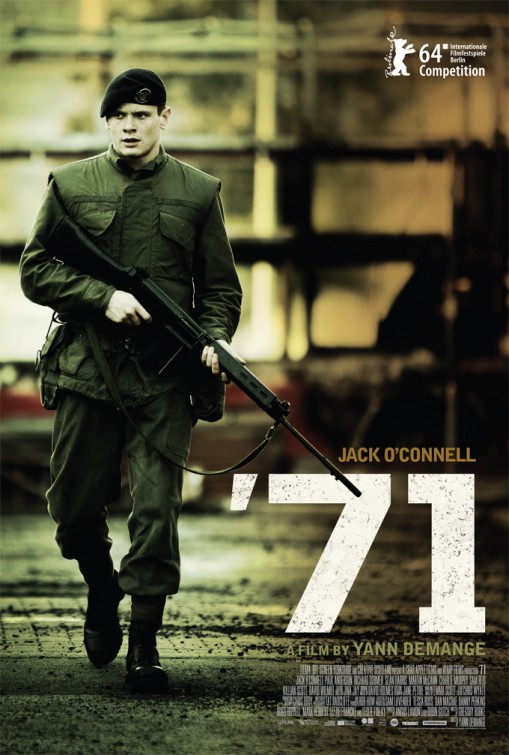
’71 (2014)

★★★★

'71 PosterDirector: Yann Demange

Release Date: 10th October, 2014 (UK); February 27th, 2015 (US limited)

Genre: Action; Drama; Thriller

Starring: Jack O’Connell, Sean Harris, Richard Dormer, Charlie Murphy

Yann Demange’s ’71 centres on the exploits of a British Army regiment deployed in Belfast shortly after the onset of The Troubles. More precisely, it tails separated officer Gary Hook (Jack O’Connell) as he roams the city’s broken pavements during one of the most volatile periods in Northern Ireland’s history. “Catholics and Protestants living side by side at each other’s throats,” is the takeaway from a brief history lesson. What follows is an all too resonant practical class.

The lesson also informs us of the Falls Road, Belfast’s very own Berlin Wall, and the flats that occupy said road — turns out these have been rented with force by the Irish Republican Army (IRA), the Catholic side of the conflict. Hook’s regiment is allied with the Protestant side, though working relationships do exist between less extreme members of each division. The British Army are in Belfast to alleviate homegrown conflict, apparently, but when an arms raid goes wrong Hook finds himself alone and in dire straits.

The streets look suitably war-scarred: plumes of black smoke emanating from bombed artefacts constantly pollute the air and the pavements are stained with charred rubble. At the beginning of the film, we see the squad’s intense training regime via a collection of vignettes kinetically sewn together by editor Chris Wyatt (his efforts emphasise just how gruelling the occupation is). These vignettes also promote teamwork, endurance, and the need to fulfil objectives no matter the cost. When the action kicks off, the implementation of such a tough training schedule is quickly justified — a Children of Men-esque chase sequence through decrepit buildings missing internal walls and any sense of homeliness attests to that.

Both factions are shown to be as bad as each other. Soldiers treat women and children (and men) unethically while IRA crowds attack them with bricks, and worse. An atmosphere of hatred fills the screen and the film bloodily obliges, depicting barbarous acts with gruesome consequences. Even apparent teammates struggle to get along: danger is literally around every corner, funded mostly by Provisional IRA youths who refuse to take direction from David Wilmot’s senior IRA member. There isn’t enough time to sufficiently define secondary characters, though Wilmot is effective. So too is Sean Harris, who facially muscles his way through the piece as British Army Captain Sandy Browning.

I was reminded of Lexi Alexander’s football hooligan drama Green Street throughout: pubs recalibrated as bases; untameable urban infection; youngsters shadily mentored; unruly masses bombarding boulevards. The difference is ’71 works on a more striking level because the stakes are far higher. Despite this, good also prevails on both sides. “You’re just a piece of meat to them,” says one kind-hearted stranger to Hook, referring to the latter’s army superiors. Said stranger is Eamon (Richard Dormer), a passer-by who treats Hook in his home with the help of his daughter (Charlie Murphy) despite their ideological differences. He’s right too; faceless pawns dominate both sides in a personal war fought through impersonal battles.

Corey McKinley has a short and feisty stint as a young Loyalist child, adding a dash of humour to proceedings. Jack O’Connell conveys enough humanity through his actions and speech for us to root for him, though his goodness is primarily bolstered by the evil prerogative of those around him. In focusing its efforts almost exclusively on its cat-and-mouse narrative, the film’s straightforward approach doesn’t leave much room for deep thought, though a few thematic layers are in there for those after something more extensive to chew on (shades of grey, violence breeding violence etc).

David Holmes’ pulsating score ratchets up the existing tension to an even greater level — this tension, coupled with the film’s revenge-thriller element, reflects Jeremy Saulnier’s taut indie darling Blue Ruin. And much like Blue Ruin, ’71 benefits from some assured directorial guidance. Demange flirts with psychological horror (a chilliness assisted in large part by the eerie nighttime setting), but the film is a thriller at heart and a damn good one.

It can be difficult to keep track of the various warring factions’ motives and the conclusion doesn’t offer much in the way of a relieving resolution (given the film is set at the beginning of The Troubles, this can’t really be helped). “It was a confused situation,” rings out towards the end and ’71 attests to exactly that in its presentation of an unstable Northern Ireland. The film itself is far from confused though, playing with a confident directness and winning as a result.

'71 - Jack O'Connell

Images credit: IMP Awards, Collider

Images copyright (©): StudioCanal

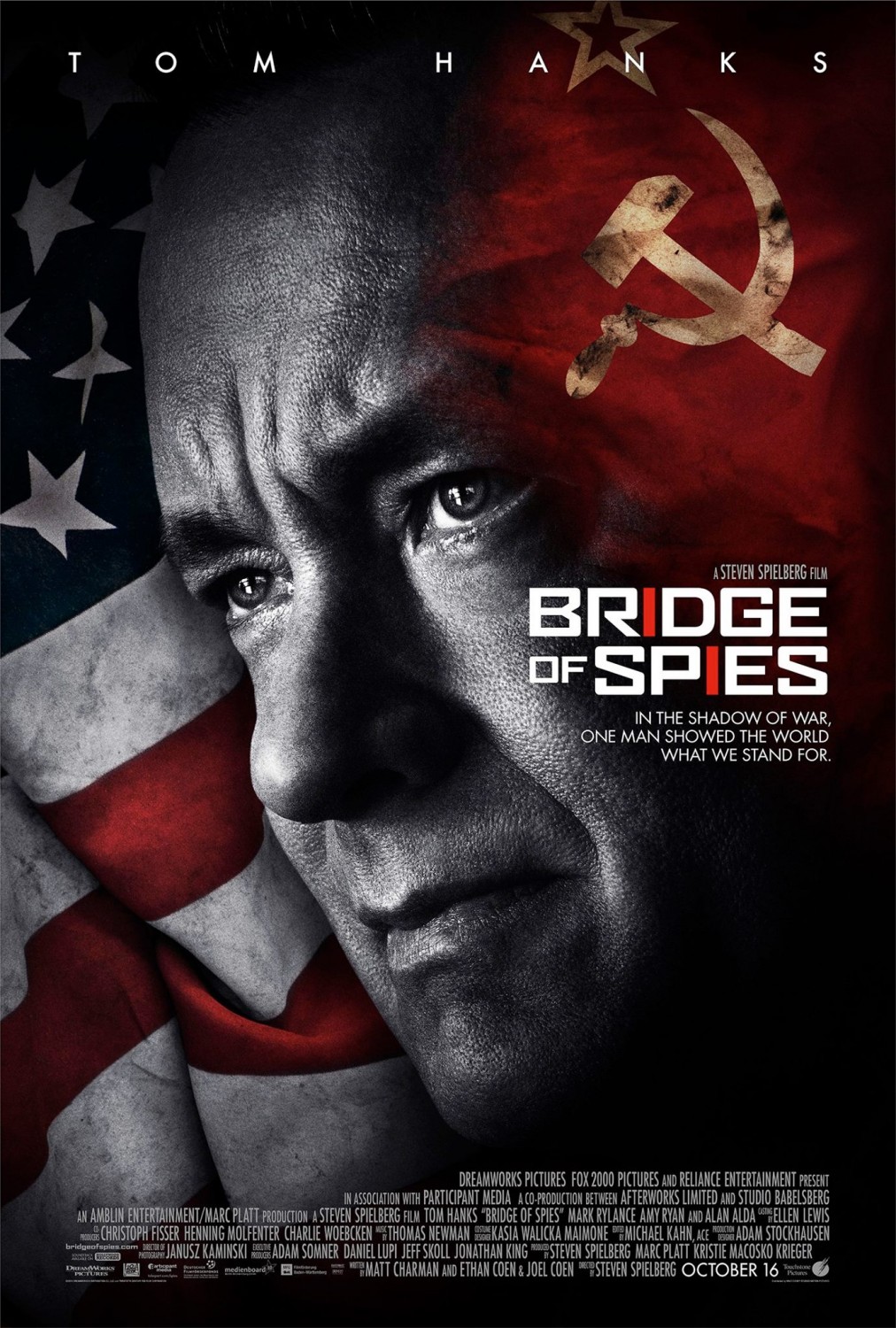
Bridge of Spies (2015)

★★★★★

Bridge of Spies PosterDirector: Steven Spielberg

Release Date: October 16th, 2015 (US); November 27th, 2015 (UK)

Genre: Biography; Drama; History

Starring: Tom Hanks, Mark Rylance

Silence dominates the opening moments of Bridge of Spies. Rudolf Abel (Mark Rylance) is the target, tailed by a swarm of men wearing fedoras. The possible KGB operative remains stony-faced — his dirty nails suggesting foul play — as he retrieves a silver coin which, after much tinkering and magnifying, opens to reveal a tiny folded message. It’s the late-1950s and the Cold War is at its peak. The US is feeling the after-effects of the Rosenbergs. McCarthyism is rife. Trials and conspiracies dominate the landscape. Director Steven Spielberg even insists upon showing us the construction of the Berlin Wall and the ensuing chaos in Germany. It’s that kind of movie.

Back in the US, a country scarred mentally rather than physically by rising tensions, we meet lawyer James Donovan. Donovan is clearly a smart man, and we don’t simply know this because he’s being played by Tom Hanks; we also see him outwit a fellow professional during a metaphor-heavy conversation about bowling pins and tornadoes. He has a way with words, and reverberates a diplomacy that wholly fits his occupation. For this reason Donovan ends up defending Abel in court, a job his superior suggests will be straightforward given guilt is unequivocal. Simply put, “It’s a patriotic duty”. “Everyone will hate me, but at least I’ll lose”, quips Donovan. It’s also that kind of movie.

See, Donovan is a beacon of ethical clarity in a murky world, and that’s why we endorse him with so much fondness. He relentlessly holds injustice to account in the name of his client despite the subsequent threat faced by himself and his family. It is right to defend a potentially wrong man, but is it feasible to do so under such conditions? Perhaps not, yet the upstanding advocate defends anyway. On the topic of family, Spielberg’s admiration and respect for children once again shines through during a talk between Donovan and his son — the latter, though young, hurdles naivety by understanding war is a possibility, and has intelligently worked out the potential radius of an atom bomb in preparation.

Bridge of Spies isn’t a boots-on-the-ground war film though. Rather, it is one that pits apparently important men around tables as they discuss the probability of battle without ever having to actively engage themselves. If anything, events on screen are propelled by a “war of information,” and we get lots of just that via high-stakes-cum-low-key rounds of dialogue. Donovan is at the centre of it all and often finds himself in no man’s land, devoid of support. He faces a grouchy judge in his quest for fairness, and a grouchy US too: locals stare at him with contempt when they realise he is the one defending the Soviet and Donovan unjustly becomes a rash on the domestic landscape.

That’s not how we see it though. Hanks offers more than just A-list reliability; he negotiates political wrinkles and unfair judgement with everyman aplomb. When two Americans face prosecution and trade deals are optioned, Hanks irons out any narrative complications with charm and a coherent tongue. There is nobody better at playing this type of role. On the opposing side, Mark Rylance affords Abel true mystery. The uncouth detachment that the infiltrator purveys could just be an act — he is a foreign agent, after all. But there is a constant kindness to Abel’s words, embodied by his “standing man” speech that reveals itself to be a masterclass in subtlety, beautifully delivered by Rylance.

A rustic production design blankets the movie in a 50s sheen. People use typewriters, wear grey trench coats, and smoke cigars. Yet there is an unavoidable modern truth at the fore too. “This Russian spy came here to threaten our way of life,” barks one particularly cheesed off American lawman, a statement that could easily be reshaped and applied to the climate of cultural blame within which we currently reside. Matt Charman and the Coen brothers’ screenwriting examines what borders mean in conjunction with matters of law (and, by proxy, matters of humanity). This forms another sturdy basis from which we can empathise with the characters on screen (Donovan, for instance, believes Abel has the right to a proper trial even though he isn’t an American citizen).

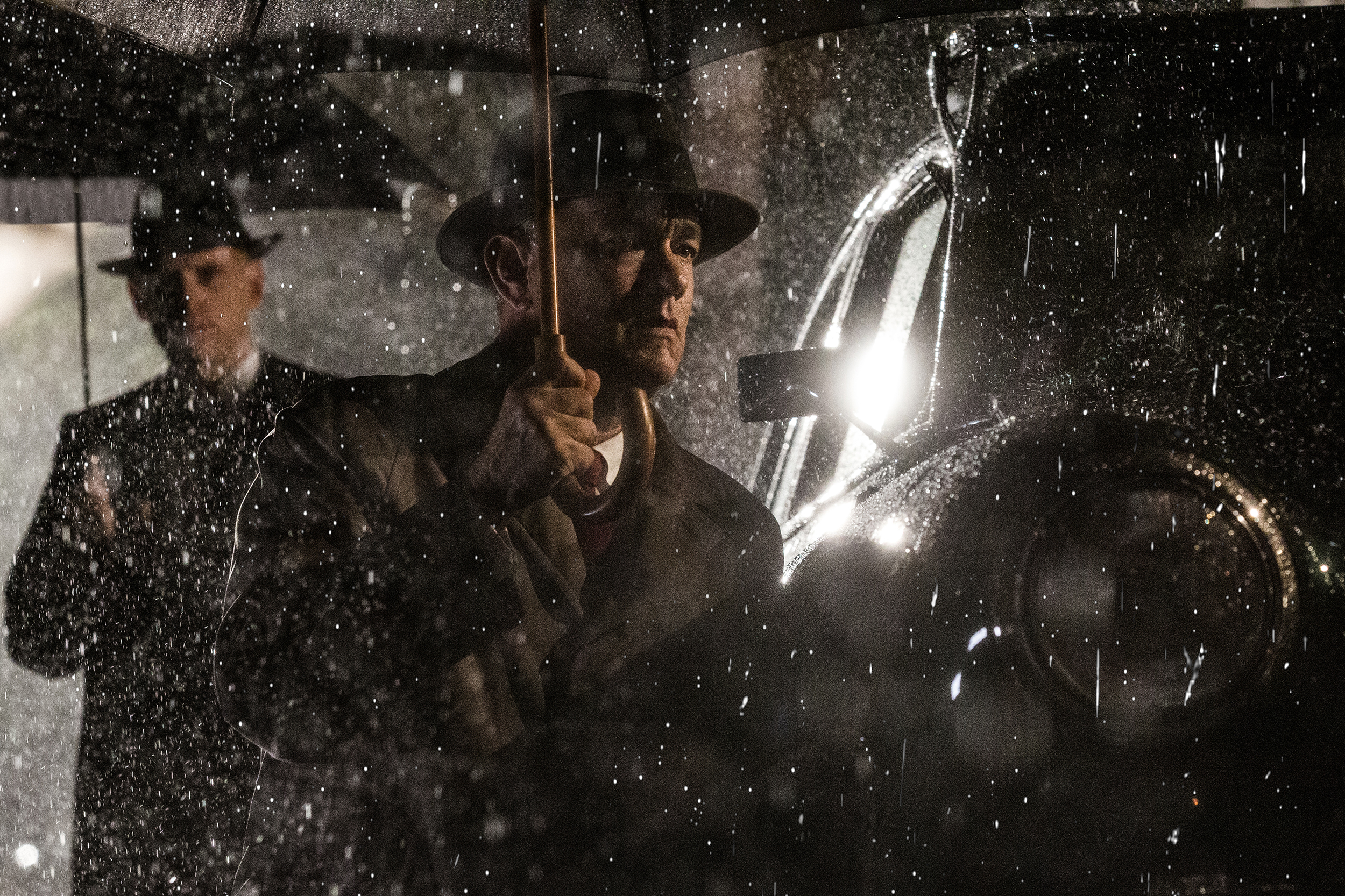
Spielberg harks back to Road to Perdition with his use of heavy rainfall, dripping umbrellas, and general murkiness. But also, oddly, bouts of light humour and fleeting courtroom trips recall Rob Reiner’s A Few Good Men. The Coen brothers’ screenplay inflections are those moments of dry comedy, generously spread throughout to loosen the dramatic belt while still giving room to the film’s weighty subject matter. Upon arrival in Germany for tetchy negotiations, Donovan takes up residence in a dingy apartment as his partners, conveniently unable to assist on the ground, are cosied up in the local Hilton hotel.

The gags are a treat, but the imminent possibility of peril seldom retreats. In fact, it grows stronger when we reach East Berlin; a shot from inside a train passing over the Berlin Wall highlights the difference between the fairly controlled west and the decimated east, forming a potential ‘before’ and ‘after’ picture for Donovan should he slip up and fuel the war bid. It is not as tense as, say, Sicario, but the threat of war does teeter on a knife edge and you can just about see each sway amongst the chilly mist.

Thomas Newman contributes a beautiful score that inspires and haunts as it reflects the changing landscapes: homely US, arctic Germany. In typical Spielbergian fashion, Newman’s score also tugs at our heartstrings, either through its grandiose scope (Saving Private Ryan occasionally springs to mind) or, as is the case towards the film’s conclusion, a simple piano melody. It almost goes without saying in 2015 but Spielberg himself is on fine form as he juggles a whole host of characters — Amy Ryan, Jesse Plemons, Sebastian Koch, and many more ably support — and a potentially tricky script with sure-fire handiness.

It’s not excessively complex filmmaking, nor is it in any way underfed. There is a clear start point, a clear end point (a lovely one at that), and an admirable confidence in the material. Bridge of Spies is a wonderful, eloquent piece of cinema, delivered by a directorial giant unafraid to promote the practice of principles, and actors who clearly cherish the process. It’s the kind of film that makes going to the pictures worthwhile. It’s that kind of movie.

Bridge of Spies - Tom Hanks

Images credit: IMP Awards, Collider

Images copyright (©): Walt Disney Studios Motion Pictures, 20th Century Fox

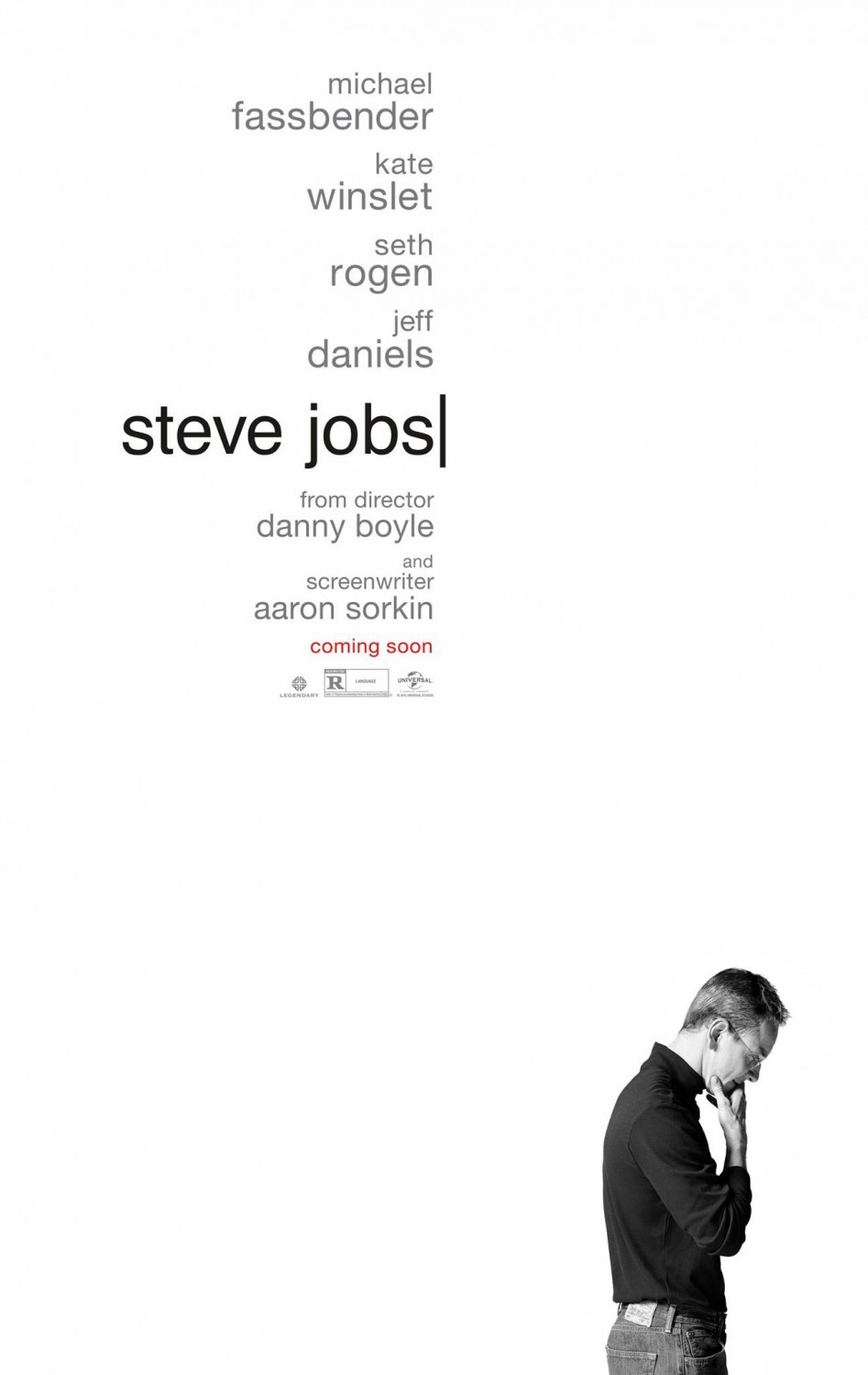
Steve Jobs (2015)

★★★★

Steve Jobs PosterDirector: Danny Boyle

Release Date: October 23rd, 2015 (US); November 13th, 2015 (UK)

Genre: Biography; Drama

Starring: Michael Fassbender, Kate Winslet, Seth Rogen, Jeff Daniels

That it has taken the combined efforts of a handful of cinema’s specialists to create a portrait of Apple co-founder Steve Jobs, he himself a specialist in complexity, is somewhat fitting. Others have tried and subsequently missed the mark. Perhaps films such as Joshua Michael Stern’s Jobs lacked the raw materials to match the man, languishing instead in a pit of shallow personification. Shallowness is certainly not a characteristic that Danny Boyle’s pseudo-biopic (it’s more of a triple snapshot than a life journey) can be accused of. For his direction supports a piercing Aaron Sorkin script, the screenwriter’s words delivered with panache by an in form Michael Fassbender.

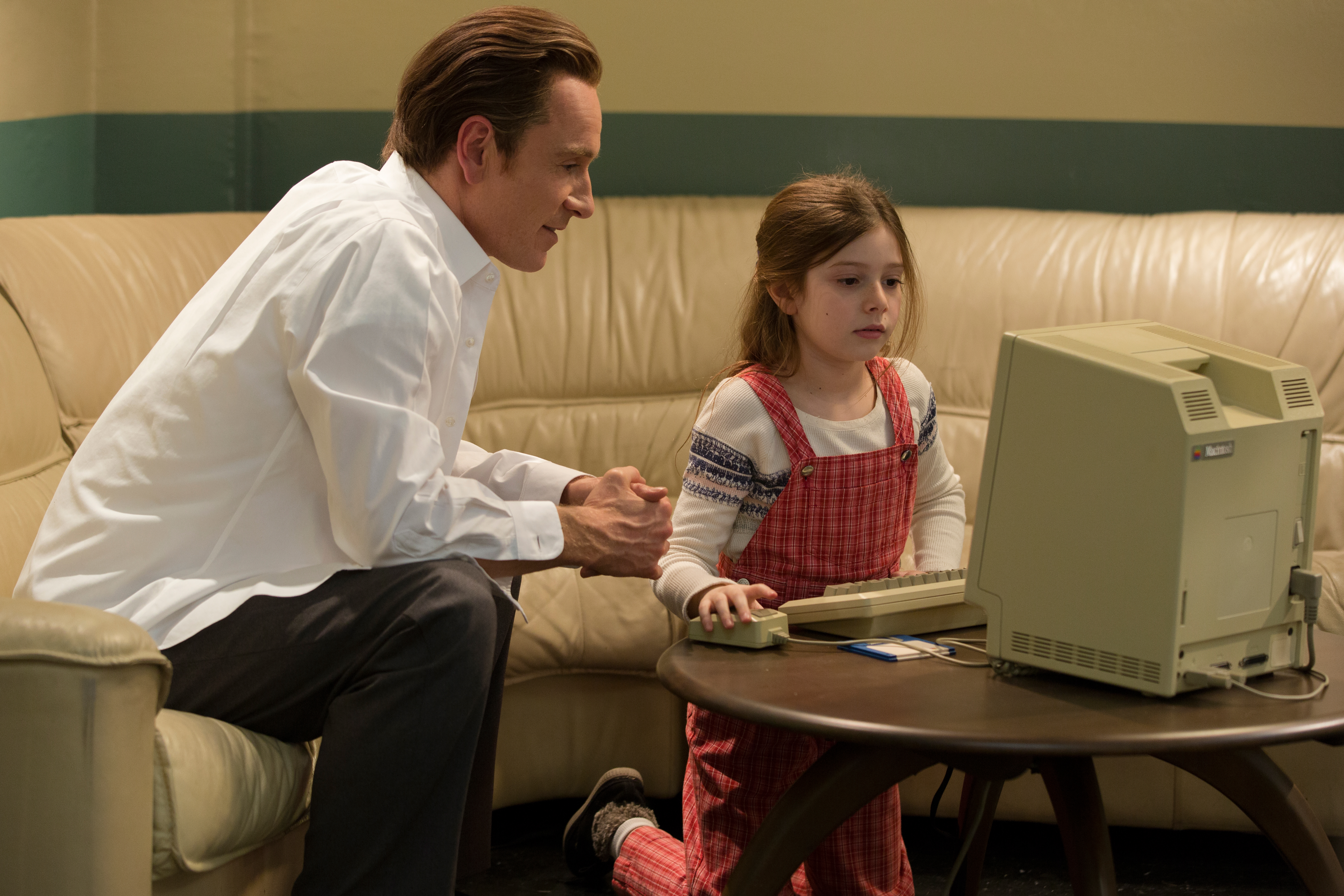
Steve Jobs stalks two primary areas of its protagonist’s life: technology and family. Most of us are aware of his technological feats, but here we see the visionary fear familial commitment, something Sorkin demonstrates early on. Backstage before the 1984 Apple Macintosh launch — the first of three elongated launch sequences; the 1988 NeXT Computer and 1998 iMac unveilings are the others — we watch as Jobs coldly interacts with his young daughter Lisa (played by Mackenzie Moss, Ripley Sobo, and Perla Haney-Jardine depending on the era) and her mother Chrisann Brennan (Katherine Waterston).

Brennan is disgusted at Jobs’ lack of humanity, that his daughter is living on benefits as his business thrives. The conversation switches to an earlier Apple product, the Lisa, and Jobs maintains his unflappable detachment by stressing that there is no titular connection between said machine and his child: “Nothing was named after you. It’s a coincidence”. We don’t believe the revelation, but emotional compromise isn’t how his mind functions. For a man whose existence is sustained via precision and calculation, coincidence doesn’t seem to fit. Perhaps that is why Jobs distances himself from his offspring; he cannot deal in uncertainty.

Sorkin temporarily counters this glacial mantra by having Jobs reel off other acts of kindness, but even those are wrapped up in a commercial blanket. Donating computers to schools for underprivileged kids (good publicity is great publicity after all), for instance. Meanwhile, only after a significant amount of pestering from Brennan does he agree to fund his own kid’s future. They somewhat bond after Lisa uses the Macintosh to doodle, a positive step born out the youngster taking an interest in something her father has created, and not vice-versa. It is a relationship that improves with time, Fassbender’s delicate touch increasingly indicating greater compassion.

There’s a shot around the halfway mark that is reminiscent of the one in Skyfall where techno-villain Raoul Silva can be seen ambling towards Bond from afar, camera frozen. Here, Apple CEO John Sculley (Jeff Daniels, brilliantly recapturing his Newsroom malaise) adopts the role of Silva and Jobs of Bond, though it is part of an extended montage delivered with a kinetic, stylish drive. This is probably the most Danny Boyle-esque the film gets, as elsewhere the director sits back and lets Sorkin’s electric screenplay absorb us. An unrelenting barrage of words does mean the verbiage can occasionally be tough to follow, and instances of humour are rarely afforded time to breath, but it really is a wicked script.

Alwin H. Küchler’s fluid lens work invokes Dutch tilts and floats alongside Jobs, funding his unique air. People constantly fuss around him, his demands fortuitously sky high right before product launches. This takes a little suspension of disbelief — chances are he never faced such family drama prior to the Macintosh introduction — but you do eventually begin to believe the hype. The man is like a rock star, a faultless salesman, and an underhanded criminal mastermind all at once. The cult of Apple is apparent too, with staff members “oohing” and “ahhing” during practice sessions. We even see Jobs wash his feet in some sort of messianic ritual.

The inventor dips in and out of the company for various reasons as the film progresses. When he ends up back with Apple for the movie’s final third, the iMac inauguration, Jobs is at his most charismatic and humorous. Fassbender affords him a chirpier exterior, or so it seems, cracking jokes and congratulating staff members for fixing problems (this clearly mirrors an earlier scene during which he unfairly admonishes an employee). It’s worth pointing out at this point that following his performances both here and in Macbeth, Fassbender ought to start dusting off the awards circuit apparel. The Irish star captures Jobs’ imperfect allure, but it is how the actor wins our empathy that truly astounds.

The spikiness remains. Issues with his now teenage daughter arise again, and it becomes apparent that the entrepreneur’s success is directly related to his relationship with Lisa. When the latter is fractured, the former is non-existent. You get the sense Jobs has spent a career over-egging one rather than focussing on both, and he realises it too: “What you make isn’t supposed to be the best part of you,” says close confidant Joanna Hoffman (a wonderful Kate Winslet), often the mediator between calm and crisis. The three time-sensitive snapshots collectively tell a succinct story and, though they are a tad repetitive, watching the layers unravel is a rewarding experience.

Daniel Pemberton delivers a technologically-infused score that sounds, oddly, like the Jaws theme sped up with light beeps replacing dense strokes. A Zimmer-like quality looms large late on, reflecting our central figure’s faux-heroic transformation. Camera filters change with each passing season, incorporating both rustic woodiness and a crisp sheen. The surrounding textures alter too — plastics make way for glass as the old oblong age evolves into a pre-Millennium new age that favours smoothness (see the difference between the rectangular Macintosh and the curved iMac).

Steve Jobs’ world makes sense to him but nobody else, and the film clearly expresses that. There are verbal jousts too with former partner Steve Wozniak (Seth Rogen), most of which highlight Jobs’ ignorance. But this is not a hatchet job. It is not a character assassination. Boyle’s picture is instead a contained examination of a convoluted man, a piece that refrains from taking sides and, in truth, never really suggests there were any sides to take in the first place.

Steve Jobs

Images credit: IMP Awards, Collider

Images copyright (©): Universal Pictures

The Hunger Games: Mockingjay — Part 2 (2015)

★★★★

The Hunger Games Mockingjay Part 2 PosterDirector: Francis Lawrence

Release Date: November 19th, 2015 (UK); November 20th, 2015 (US)

Genre: Adventure; Science fiction

Starring: Jennifer Lawrence, Josh Hutcherson, Liam Hemsworth

The Hunger Games: Mockingjay — Part 2 is an empowering film, and it was likely always going to be that. However, there is no denying the impact that recent tragic events have had on further funding its overarching message of hope. Movie-making, of course, manifests as a trivial pursuit when considered alongside matters of life and death. It’s a luxury, a pastime, a hobby, a passion. But it’s also a love, a source of joy, a triumph, an escape. Cinema is one of life’s most important unimportant things, and when it reflects reality in any form — big or small — cinema is arguably at its most engaging.

The Hunger Games franchise has always had its finger on the pulse of geopolitics and society; the struggle that Katniss (Jennifer Lawrence) faces, against tyranny and barbarism, is also the struggle that many people in this world are currently caught up in. You can feel the heightened reverence as you watch, and those behind the series — from Gary Ross to Francis Lawrence, from Suzanne Collins to Danny Strong and Peter Craig — deserve credit for bringing those aforementioned weighty themes to the forefront of young adult fiction.

The film opens with Katniss hoarsely attempting to say her name, battling against the damage inflicted by Peeta (Josh Hutcherson) towards the end of the previous film. Instantly the outing is reinforcing its central notion of a silenced body fighting against said silence and not giving into an oppressive society. President Snow (Donald Sutherland) is the oppressor in Panem, Katniss the symbolic body speaking out. As Snow and his cohorts sit around lavish dining tables, eating and drinking and toasting their own unsavoury greed, Mockingjay — Part 2 initiates the conclusive rebellion.

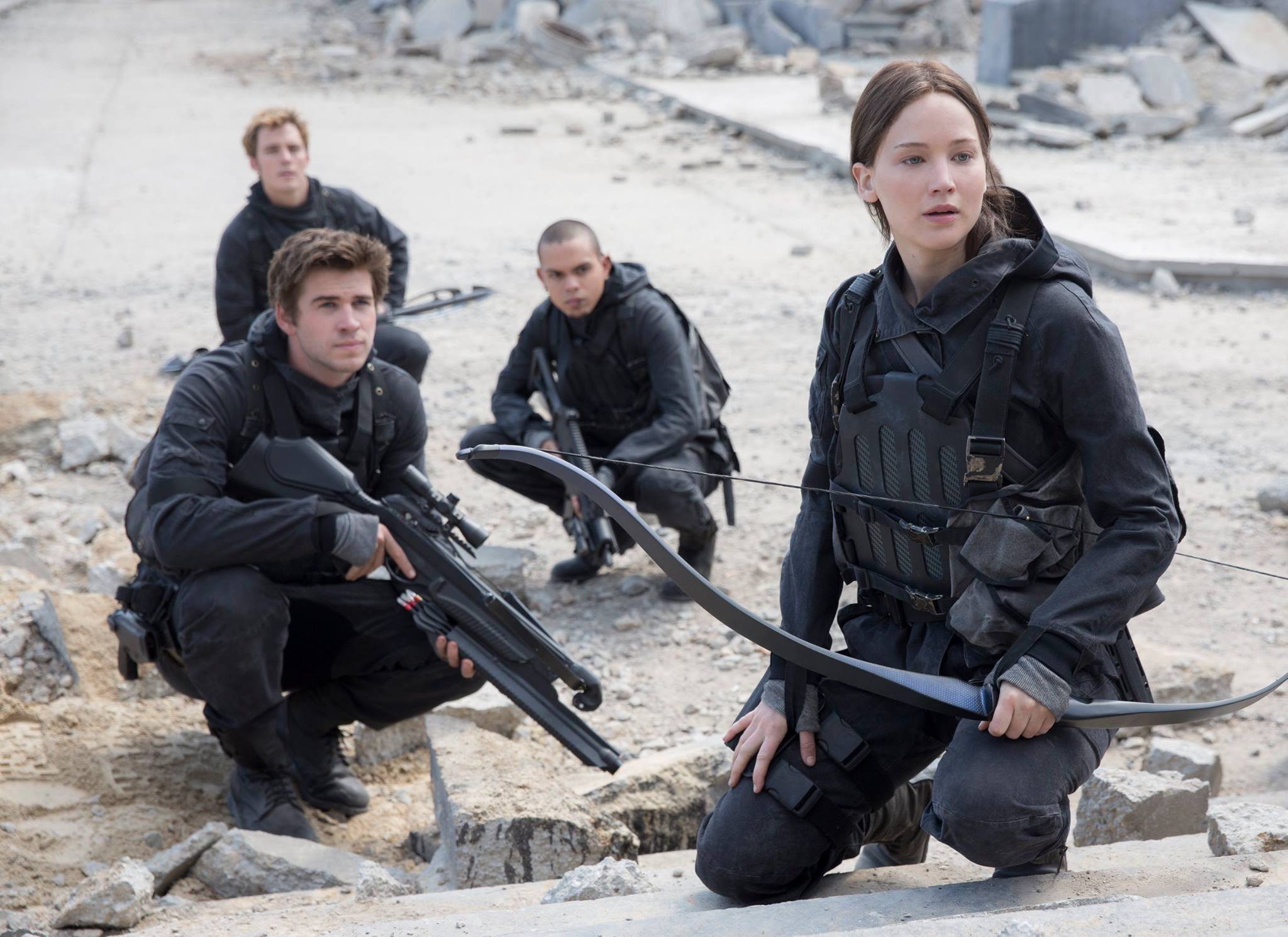
We know there won’t be any messing about when the title card appears on screen, white letters bluntly protruding from a black background. But the moral structure of this tale isn’t as clear-cut. “It’s war Katniss. Sometimes killing isn’t personal,” says Gale (Liam Hemsworth), whose righteousness has apparently seen better days. For the rebels, cause is supposed to take precedent over spectacle — The Hunger Games and Catching Fire particularly honed in on the consequences of the latter via their televised Gaming exploits — but there are even those in Katniss’ team who adhere specifically to marvel. This blurred morality keeps us on our toes as characters waver on who to trust.

Even Katniss, leader of the rebellion, feels harnessed by the warring tactics invoked by her superiors: “It doesn’t matter what you want,” Haymitch (Woody Harrelson) spits. The film has a grey palette that is quite distinct from the flashiness of earlier films, but that is similar to the chalky aesthetic of something like Saving Private Ryan. Katniss, Gale and co. are part of an insurgent team that takes to the booby trapped Capitol in an effort to fuel their cause and, perhaps, deal with Snow. We think back to Saving Private Ryan again as the rebels carefully navigate the urban decay, threat constantly hanging over the screen like a dark shadow. It really feels like the final battle, especially following Mockingjay — Part 1’s more subdued, poised, and frankly justified prerogative.

Fans of The Walking Dead will see familiarities in the Capital-set roulette game, where death could befall anybody at any moment; as such we sit through nerve-shredding uncertainty. A genuinely scary sewer sequence is coincidentally similar to a scene in Maze Runner: The Scorch Trials, only this one bears even more edgy ferocity. The underground monsters here are spawns of World War Z’s sprinters and The Descent’s crawlers. Neither Francis Lawrence nor his writers shirk away from tough subject matters which means death, a lot of it, is inevitable. It’s a brave mantra and an honest one in my view (i.e. not exploitative), though there is a truly horrifying moment that some might find too tough for a film rated 12A.

We do get small glimpses of cheer: the wedding of Finnick Odair (Sam Claflin) and Annie Cresta (Stef Dawson), for instance, ushers in a deluge of celebratory dancing. War thoughts never abate though; Katniss and Johanna Mason (Jena Malone) watch the festivities from afar as they debate their separate roles in the rebellion. It’s a scene akin to one in The Return of the King where Gandalf and Aragorn discuss the probability of Frodo’s success while Merry and Pippin party nearby. The brooding calm before the inevitable storm. The screenplay also investigates how individuals scarred by war operate. Johanna, for example, is dependent on drugs. Avox cameraman Pollux (Eldon Henson) bears not only physical but also mental ailments. And Peeta spends much of his time conflicted, Josh Hutcherson playing the tortured soul with a sense of purpose.

Given the large cast involved, some characters only appear fleetingly: Caesar Flickerman (Stanley Tucci), to mediate the revamped Hunger Games with despicable aplomb; Plutarch Heavensbee (Philip Seymour Hoffman), affording the film greater substance with a simple glance; Effie Trinket (Elizabeth Banks), humanised to the point of no return; Primrose Everdeen (Willow Shields), a key player in generating emotion; and President Alma Coin (Julianne Moore), a burst of thunder amongst the clouded moral spectrum.

There are a few fairly minor problems, namely that the all-seeing Snow constantly believes Katniss has met her demise when it is clear she hasn’t and, without tempting spoilers, the unfair and somewhat puzzling fate of one key character (no death involved). The final half hour is unexpected in many ways — some good, some not-so-good — but it at least ought to be hailed for not conforming to a prerequisite narrative. It’s also worth pointing out that this is an action movie that manages to dazzle without sacrificing its politically-infused roots, which must be worth something in 2015.

Fittingly, we end with a nod to Jennifer Lawrence. Mockingjay — Part 2 packs an emotional punch because it has good writing and good direction, but those are only conduits for a performer and Lawrence’s performance here, just as it has been throughout the entire series, is wholly affecting. She absolutely is a filmmaker’s dream, both talented and marketable. But her commitment, her discernibility, also makes Lawrence a film-watcher’s dream, and it is through her leadership that this smart, pertinent blockbuster franchise has flourished.

The Hunger Games Mockingjay Part 2 - Katniss & Gale

Images credit: IMP Awards, Collider

Images copyright (©): Lionsgate

Frances Ha (2013)

★★★★

Frances Ha PosterDirector: Noah Baumbach

Release Date: May 17th, 2013 (US limited); July 26th, 2013 (UK)

Genre: Comedy; Drama; Romance

Starring: Greta Gerwig

There isn’t really a plot to Noah Baumbach’s low-key indie drama Frances Ha. Certainly not one of any conventional sort. We are thrown straight into the life of our central protagonist, the eponymous Frances (Greta Gerwig), without a proper introduction. From opening to closing she spends her time apartment hunting (this is the film’s central crisis), though Frances doesn’t seem all that worked up about her uncertain predicament. The screenplay, penned by Gerwig and Baumbach, is very loose — you get the feeling there was a lot of improvisation during filming.

And yet the whole thing bumbles along with excitable charm and an internal confidence born, perhaps, out of experience. It could be a Woody Allen venture: title cards pop up every so often detailing the various locations Frances attempts to settle (primarily around New York), and the nomad herself fits Allen’s ditzy mould. When she isn’t spending time with her best mate, who sports glasses with enormous lenses by the way, Frances is training to become a dancer. Unfortunately she ain’t quite up to the required standard and, in New York, triers don’t get paid: “I can’t even get outta the house on my feet”.

Characters often mumble incoherences, blabbing one minute about unaffordable rent bills and the next about finger injuries. In reality, despite what Aaron Sorkin would have us believe, we probably spend much of our time conversing in a similar fashion. Not that Baumbach’s film reflects real life: there is a scene where our luckless protagonist gallantly offers to pay the bill following a meal with a potential boyfriend (the body of her previous beau is still warm at this point), only for her card to be declined. Rather than letting Adam Driver’s Lev Shapiro — if that is his real name — do the honours, Frances bolts out of the restaurant and scampers around the neighbourhood looking for a cash point. She finds one eventually, reappearing at the table with some money and a randomly bloodied arm.

You laugh because the whole scenario is utterly bonkers, and it is one that cements the film’s reputation as a bible for clumsy folk. Frances Ha is like the Friends movie finally realised, only every character is Phoebe. This hodgepodge of kookiness is actually fairly endearing and lends itself to the overarching notion of misadventure. It transpires Frances is actually a pretty good dancer (“You were great tonight”), but her instructor opts to cut her from the Christmas play anyway. Is Frances the unluckiest person alive or is she simply too unprepared, her moment-to-moment style of living an inescapable and fruitless trap? Regardless, you stick with her because she refuses to give up her creative passion. That is admirable.

These underplayed indie outings are often left wide open when it comes to accusations of baselessness, and there is a sense that Baumbach only shot in black-and-white because there happened to be a spare roll lying around. But I don’t think the film aspires to be intentionally pithy. Indeed, there is a pithiness in the sense that it’s a quirky drama without an A-to-B plot and C-to-D script, but that’s just how it is in Baumbach’s New York. Another apartment dweller, Benji (Michael Zegen), wants to write for Saturday Night Live and suitably spends his days watching movies, presumably because procrastination is the key to comedic success.

Greta Gerwig plays Frances with a childlike innocence: she sleeps with the door ajar; she turns to her parents in a time of need; she engages in play fights with other resistant lodgers. There is even a moment where the camera cuts to her teaching a group of youngsters ballet, and she looks right at home. Grinning with a genuine smile, Gerwig superbly manages to captivate through a waft of potential annoyance, and as such you see and sympathise with the fragility bubbling beneath Frances’ surface.

Elegantly inelegant, the daydreamer relentlessly apologises to people when she’s probably only at fault two-thirds of the time. Solutions are right there at her fingertips yet she keeps washing her hands — a temporary job at the dance studio that would earn her some cash becomes available, but she is initially too impulsive (fed up with speculative opportunities?) to accept. The supporting players all contribute too, particularly Grace Gummer whose dissociative air is a terrific counterbalance to Gerwig’s friendliness.

Paul McCartney and David Bowie are part of a soundtrack that hops tactfully from in vogue pop to classical strings to early Hollywood-era romance. Sam Levy’s cinematography bears a trace of Wes Anderson — the camera often adopts a still frame that zips back and forth between characters in conversation. The film is generally mad, makes little sense, and exists in a hyper-surreal world where people do silly things and still manage to get by. But it is addictive and funny and sweet, and that’s all that matters really.

Frances Ha - Cast

Images credit: IMP Awards, Collider

Images copyright (©): ICF Films