Mad Max: Fury Road (2015)

★★★★★

Mad Max Fury Road PosterDirector: George Miller

Release Day: May 14th, 2015 (UK)

Genre: Action; Adventure; Science fiction

Starring: Tom Hardy, Charlize Theron, Nicholas Hoult

Vehicles have always played a huge part in the Maxverse and veteran director George Miller decides to hammer this point home in Mad Max: Fury Road. Various characters are seen to cherish steering wheels, hauling them around in the same way Bruce Spence’s Gyro Captain clung onto a spoon in Mad Max 2. His spoon could pick at leftover tinned food, a novelty apparently long gone. Small-scale scavenging is out. This is a world dominated by distance, by grandeur, by gasoline. The spoon has become the steering wheel.

Or, maybe such pensiveness doesn’t exist within these characters. Maybe they just love to thunder across the desert. Maybe they can’t wait to get on the road. Miller certainly can’t.

After a brief prologue from Max explaining his post-apocalyptic mantra (“A man reduced to a single instinct: survive”) we hurtle into a half hour opening sequence that obliterates anything remotely resembling action we might have seen in previous films. These thirty minutes of total carnage, of collapsed worldbuilding, shoot past in an aluminium whirlwind, leaving your eyes watering and heart bellowing. It’s almost as if Miller has been waiting three decades to get something off his chest.

The plot is simple but by no means inadequate: Max (Tom Hardy) finds himself in an unlikely partnership alongside Imperator Furiosa (Charlize Theron) as the pair attempt to evade the monarchical clutches of Immortan Joe (Hugh Keays-Byrne), a slave-keeping cultish leader. The destination, or “Green Place”, dreamt up by the formerly shackled wives of Joe, is unknown. It is more or less a mystery, the characters unable to shed much light and, as such, we are left in the dark. This doesn’t matter, the journey does.

The best thing, unquestionably, about the franchise has always been Miller’s ingenious and realistic-looking action sequences. They are here in abundance, bearing the hallmarks of even greater ingenuity and somehow appearing just as authentic. Oil trucks are christened “War Rigs” and subsequently live up to the name. Amazingly, the majority of effects are practical, in line with the director’s penchant for traditional movie-making. As such, praise should be heaped upon the many stunt performers whose death-defying efforts play a key role in raising the stakes.

We are constantly reminded of the urgency facing Max, Furiosa and company: as the camera pans back towards the chasing pack, all we can see is an ominous mirage, a giant metallic silhouette in the distance. The threat is real and incoming, energised by a booming score that carries more than a hint of Brian May’s earlier franchise work. Other throwbacks to past films include: Master-Blaster-esque siblings (one of whom is former WWE wrestler Nathan Jones), and the occasional lower front bumper camera shot. There’s even that familiar feeling of disorientation, where the screen is so rammed full of carnage that deciphering who is fighting who becomes a task.

Of course, absurdity is tossed around like a hot potato. From vehicles in the form of mechanical hedgehogs, to an electric guitarist who looks like a cross between The Silence from Doctor Who and Klaus Kinski’s Nosferatu, Miller has all bases covered. This includes humour: “Of all the legs, you had to shoot the one that was attached to his favourite”. Nicholas Hoult’s Nux is the ideal amalgamation of odd and funny, his obsession with the Gates of Valhalla both amusing and touching. Hoult absolutely throws himself at the role, which is arguably the best of his career.

Probably for the first time, Max truly is mad. He’s no more than a splash of white body paint away from being one of Joe’s skeletal followers, growling incoherently and shifting his gun aim maniacally. Hardy sometimes deviates verbally back into Bane-mode, but he is mighty impressive as the iconic loner. The Welshman is gruff, a far cry from Mel Gibson’s portrayal in the inaugural instalment and possibly more interesting too.

Hugh Keays-Byrne, the man behind Gibson’s nemesis in Mad Max, returns as new villain Immortan Joe. Perhaps it is not by coincidence that Joe’s world-weary appearance could very well be that of Toecutter after toiling for decades in the scorching desert. Imagine the sunburn? “Do not, my friends, become addicted to water,” Joe preaches to the subservient crowds upon affording them momentary respite from thirst. His voice croaks like the Uruk-hai from The Lord of the Rings, and he is almost as scary too.

In a film overflowing with eccentric and domineering characters, Imperator Furiosa is two things: a warrior and a realist. She handles herself in battle while aiding the escape of five enslaved wives, who are also each pretty handy when it comes to fighting and smarts (and who all somehow manage to keep their white clothing miraculously clean). Rosie Huntington-Whiteley is especially good, steely and determined, as Joe’s pregnant prized possession. The women drive this movie; Max is along for the ride through coincidence, but it is the female characters who initiate the chase because they value life.

“Out here everything hurts,” Furiosa states bluntly. Crucially, Theron does not play her as totally wound up — she is reasonable, and willing to work in a team because it is the right course of action. As a result, the relationship between her, Max and the rest of their ragtag band imbues believability. Some might accuse these characters of being too cordial too soon. They are all survivors though, in a harsh world, with a common enemy.

Without trying to sound overly hyperbolic, Mad Max has hit a new stratosphere. You can just about see Beyond Thunderdome — a perfectly fine outing, by the way — squirming in the corner. The direction, how the film has been pieced meticulously together only to then be blown apart, is all a work of art (in many other genres this would likely demand awards recognition). John Seale’s cinematography is wonderful — a night assault has the dreading echo and gloomy manifestation of something straight from Saving Private Ryan.

A Furiosa moment towards the end should, in time, cement its place in action movie lore alongside the likes of “Yippee-ki-yay motherfucker” and “Hasta-la-vista baby”. This is seminal cinema. The 80s had Die Hard. The 90s, Terminator 2: Judgement Day. Give it 20 years and we’ll be talking about Mad Max: Fury Road as the go-to action jaunt of the early 21st century.

Mad Max Fury Road - Hardy and Theron

Images credit: IMP Awards, Collider

Images copyright (©): Warner Bros. Pictures

Unfriended (2015)

★★★

Unfriended PosterDirector: Levan Gabriadze

Release Date: April 17th, 2015 (US); May 1st, 2015 (UK)

Genre: Horror; Thriller

Starring: Shelley Hennig, Moses Jacob Storm, Will Peltz

Sitting in the cinema, half regretting my decision to see another potentially uninspired scare-free jaunt, half suppressing those cynical emotions, it became impossible to avoid the endless stream of horror trailers. Insidious: Part 3 — Even More Insidious (I think). A Poltergeist remake (Poltertwice, I think). There were probably others. To judge a film before seeing it is unfair and ultimately pointless, however the trailers all shared that annoyingly familiar ‘quiet, quiet, quiet… BANG!’ effect. It was obvious then that Unfriended needed to bring something fresh to an often exploited genre.

Much like The Blair Witch Project was back in 1999, Levan Gabriadze’s film is, for the most part, refreshingly different. Not afraid to embrace its target audience, the entire 83 minutes are relayed to popcorn-crunching teens and young date-nighters via computer screen. As a result, Unfriended is able to manoeuvre around the usual formalities and upload some genuine moments of terror. The monitor format is a novelty but it is one that surely reverberates with many viewers who feverishly delete search histories and spend far too long formulating replies to mates.

The computerised approach neatly ties in with the overarching theme too: cyber bullying. A group of high school students reconvene over Skype for what appears to be common nightly arrangement. It is Blaire’s (Shelley Hennig) screen through which we gaze, making her the central character and also the least offensive. She is online with her boyfriend Mitch (Moses Jacob Storm), and three others — Jess (Renee Olstead), Ken (Jacob Wysocki) and Adam (Will Peltz).

As the insufferable clan — for once, it looks like they’re supposed to be insufferable — banter back and forth, an unknown caller joins the conversation. Unable to fend off the uninvited, the group grow increasingly wary. As it turns out, this is the first anniversary of the death of Blaire’s childhood pal Laura Barns, who committed suicide after a bout of bullying. Is the appearance of this immovable online intruder a coincidence? Unlikely. Bad stuff is about to go down.

From the moment we log into proceedings there is a sense of unease. The Universal Pictures logo freezes up, doing that pixely thing your laptop screen does when you’ve left Netflix on pause for too long before eventually pressing play again. Avoid the impulse to charge out and complain about more shoddy projectionist work though — Unfriended is simply getting into its techno-distortion mentality. There is a lot more pixel interference to come.
This is a film aimed at the younger audience, and its attempt to relay an anti-bullying message is noted (though the chat in class tomorrow will probably be about blenders and Blaire’s iffy iTunes content). For a while it does feel like an R-rated public service announcement; like one of those road safety talks in school where you know the speaker, having finished flagging up things you shouldn’t do when behind the wheel, is about to reveal a harrowing true story involving a nearby accident. In Unfriended the thing you shouldn’t do is be a bully and the harrowing accident(s) is shortly forthcoming. Fortunately, by then PSA-mode is on the back burner.

We Millennials are an easy lot to scare — “Laura Barns” has unsurprisingly become a top YouTube and Google search — but the disconcerting atmosphere that lingers throughout Unfriended is authentic. Though this is still a Scream-esque roulette of death, the delivery unique. The computer screen framing method is overcrowding, leaving nowhere to look as group members are set for the chop. The first casualty is the most unsettling — this person’s still image left to linger on screen, subsidised by an oddness and a feeling that something isn’t right. As the evening wears on, Gabriadze incorporates a few subtle elements that bolster the drive for believability. For instance Blaire’s mouse cursor becomes an indicator of panic, moving more rapidly when she feels threatened.

Sadly, annoyingly, the generic pitfalls are there: dumb characters (they aren’t initially aware that it’s the anniversary of their friend’s death) and lazy scares. Blaire, despite her apparent internet savviness, doesn’t know what an online troll is. In 2015. And why don’t these people just simultaneously scamper to a nearby neighbour’s house for help? Perhaps the idea is that they’re all too sucked in by the grisly online culture to remove themselves from it, but even that seems a bit far-fetched in a life or death scenario. They also all appear to live alone, though to be fair that isn’t unrealistic given their prevailing lack of personableness.

It is entirely likely that the characters are supposed to be somewhat lame — they are bullies after all — however the shift towards lazily constructed frights is disappointing. A death involving a blender does pang you right in the sternum with a dollop of discomfort, but it is only momentary. Only brief and unimaginative, scaring you in the same way a random fire alarm blaring would. The aforementioned creepy images lodge into our headspace because they’re given more time to fester on screen, and because there often is something alarming about peculiarity.

The actors, who essentially spend an hour and a half manufacturing disturbed faces and loud shrieks through webcams, are perfectly fine. One asserts, “What we’ve done here will live forever,” capturing the film’s ethos in a nutshell. It is a pertinent message. Don’t be a bully, period. Don’t stock up on future regret through social media misuse either. In that sense Unfriended is scary, but it is also- ah, hold on. I have an incoming Skype call.

Unfriended - Cast

Images credit: IMP Awards, Collider

Images copyright (©): Universal Pictures

Avengers: Age of Ultron (2015)

★★★★

Avengers Age of Ultron PosterDirector: Joss Whedon

Release Date: April 23rd, 2015 (UK); May 1st, 2015 (US)

Genre: Action; Adventure; Science-fiction

Starring: Robert Downey Jr., Chris Evans, Chris Hemsworth, Scarlett Johansson, Jeremy Renner, Mark Ruffalo

When Marvel rolls into town, you can absolutely expect two things: sarcastic humour and blistering action. The first phase of Kevin Feige’s super-cinema initiative had both of these in abundance. Iron Man brought the wit, Thor the hoopla and while Hulk mainly sulked, Captain America struck a balance between fun and funny. Phase Two, especially since The Winter Soldier, has provided something even more. Sure, those characteristics are still plentiful but now that the franchise’s myriad of characters have had time to flex their muscles — or branches — storytelling has the stage.

In a way, Avengers: Age of Ultron is the perfect amalgamation of everything MCU-related up until now. It is formulaic in the sense that you know the narrative structure before the lights go down: early energetic sequences designed to engross, a meatier, more reserved middle section, and finally a ball-busting finale. That’s not just superhero cinema, that’s action cinema. The antithesis of formulaic, however, is how director Joss Whedon almost manages to divulge equal spotlight to the most star-studded cast on the silver screen.

We re-rendezvous with the Spandexed Six during a battle in the frosty forests of Eastern Europe, where ardent anti-swearer Steve Rodgers (Chris Evans) is calling the shots. The raid is a success, thankfully, with the Avengers managing to obtain Loki’s sceptre. It’s an opening scene worthy of closing many a superhero jaunt, packed with effervescent camera work and some fist-pumping teamwork: Cap and Thor’s shield-hammer double team manoeuvre is a particular highlight. The Asgardian receives the least amount of screen time, certainly it feels that way, which is a shame as Chris Hemsworth’s gallant personification has become a wholesome source of entertainment.

As it turns out, Loki’s magic stick is the final piece Tony Stark needs to initiate his Ultron program, a system designed to defend the world from extraterrestrial threat. Stark’s unfiltered approach, driven by his insistence on protecting others and living up to expectations, ends in disaster when the artificially intelligent Ultron (James Spader) embarks on a violent purge of humankind.

The film fragments its characters when they’re not in the process of resisting their machine-bodied, prescient enemy. Hawkeye finally gets his chance to shine as a result, and Jeremy Renner hits the mark when it comes to emotional beats and wry comedy. A scene towards the end is one of the funniest of the entire franchise, this down as much to the actor as the writing. It pits Hawkeye, bow in hand, directing murmured threats towards a companion (“Nobody would know”). Nobody would.

The bowman has largely been ignored up until this point because he is just that, a supremely skilled man with bow. By inconspicuously embracing this notion, Whedon and company essentially break the third wall. Under the guidance of many others, playing the ‘normal guy challenging adversity’ card might have come across as cheesy and cheap, but Renner’s earnestness encourages us to believe in the character.

Draped in American patriotism and outdated chivalry, Captain America once could have flailed in the same situation — embodying an unrealistic symbol of humanity. Fortunately, since his initiation back in 2011 Chris Evans has injected palpable authenticity into Cap, and here we watch Evans evolve into a true leader with stature and assuredness. Even the egotistic Stark quips, “Actually, he’s the boss”. The piece is littered with Civil War previews built upon the duo’s clashing ideologies, paving the way for another Captain America instalment currently brimming with potential.

Age of Ultron, despite the customary destructiveness, is actually at its most compelling when it hones in on the people involved. It’s basically a quarter of a billion dollar psych evaluation, with relationships tightened or, as above, hollowed. Mark Ruffalo maintains his best-Hulk-yet aura, often sharing solid romantic screen time with Scarlett Johansson’s Black Widow. Elizabeth Olsen and Aaron Taylor-Johnson are the latest lover-to-sibling converts, following on from Shailene Woodley and Ansel Elgort. The Godzilla co-stars play Wanda and Pietro Maximoff respectively, both welcome additions despite some shaky accent work.

As the main villain, James Spader has stumbled into an almost impossible task. Tom Hiddleston’s Loki managed to eclipse convention by being devious and charismatic in equal measure. Computer generated Ultron is a bad entity, plain and simple, and Spader’s croaky voice is packed full of calm menace, which works really well. But comparison, perhaps unfairly so, is inevitable and the character isn’t as enticing on screen as Loki.

The main problem abound throughout Age of Ultron is a familiar one: in handling so many characters, Whedon must oversee the lighting of touchpaper for multiple story arcs. You can feel the film seeping at the seams on occasion, with so much being rammed into such a short window (though, ironically, two and a half hours is normally an overindulgent runtime). Resultantly, some of the goings-on are left underfed. Hot off heels of Alex Garland’s probing science-fiction parable Ex Machina, the AI story told between Ultron and the Vision here isn’t quite as fascinating as recent evidence suggests it could have been.

Not consigned to resting on its opening sequence laurels, the piece ups the ante even more during a blistering, if somewhat disorienting, conclusion. You do get the sense that the stakes are shuffling their way up a notch the longer the clash between our Avengers and Ultron’s robot army goes on. By the time Brian Tyler and Danny Elfman’s booming score coalesces with Ben Davis’ now signature circular shot, goosebumps are flourishing. We’ve seen it before, and yet it carries no less weight this time around.

This is a Marvel film first and foremost, and a properly pulsating one at that. We live in a cynical world when it comes to big budget blockbuster movies, and at $300 million this is a very big budget blockbuster movie. But it’s one that doesn’t discriminate against proper storytelling and intelligent character development in favour of the extra exploding vehicle. Prompted by a build-up where hype levels usurped dollar bills, Age of Ultron matches expectations — at least, for my money.

Avengers Age of Ultron - Cast

Images credit: IMP Awards, Collider

Images copyright (©): Walt Disney Studios

Force Majeure (2015)

★★★

Force Majeure PosterDirector: Ruben Östlund

Release Date: April 10th, 2015 (UK)

Genre: Drama

Starring: Johannes Bah Kuhnke, Lisa Loven Kongsli

As far as family vacations go, this is one for the ‘iffy’ pile. Force Majeure unfurls a day-by-day account of a couple’s wintry retreat to the French Alps where, as it turns out, avalanches are the least of their worries. We join Ebba (Lisa Loven Kongsli) and Tomas (Johannes Bah Kuhnke) as they ski with their two children atop vast snow ranges, surrounded by ominous looking mountains. An eerie atmosphere driven by the mechanical squawks of equipment dominates early, but it soon becomes clear that there isn’t anything conventionally disconcerting going on here.

The titular “superior force” indeed exists, but not exactly in the way you would think. Director Ruben Östlund delivers a bait-and-switch disaster piece, one entirely without action and instead built upon the perceived consequences of disaster. Had the Swede focused primarily on the drama element, Force Majeure would almost certainly be one of the year’s most suspenseful and unnerving films (it still manages to be both of those, to a lesser degree).

After a seemingly enjoyable first day, our spotlighted family sit down with other holiday-makers to enjoy an outdoor lunch. An innocuous explosion unsettles everyone and, despite Tomas’ insistence that nobody is in danger, mounds of snow begin pillaging towards the restaurant. The scene is intense, but it is the characters’ instinctive reactions to potential fatality that provides the pivot from which Östlund’s parable spins.

What we end up with thereafter is a sniping ninety minute liquidation of family life and patriarchal values, completely fuelled by this avalanche experience. It becomes an anecdotal reference point, recounted particularly by Ebba in awkward situations. Through her increasingly disturbed exterior, Lisa Loven Kongsli manages to rekindle much of the earlier scene’s tension when conversing with others. The topic is somewhat over-egged by the end of a discussion between Ebba, Tomas and two acquaintances (one of whom is Game of Thrones’ Kristofer Hivju, he in a somewhat familiar setting). It’s an unnecessarily long sequence that, resultantly, veers close to overdoing Östlund’s message. “I can’t take this seriously anymore, we’ve been going on for hours,” says one of the party. Touché.

The characters themselves are quite annoying, but they’re meant to be. Nobody exits with an outright air of self-preservation, though Ebba is clearly supposed to garner the most sympathy. Tomas, played well by Johannes Bah Kuhnke, manoeuvres from an apparently unfocused husband to a crumbling mess. Bearing tonal continuity, the various characters niggle away under your skin with the same irritation as the events unfolding around them. Wisely, screen time for the children is kept to a minimum.

Alongside this overtly sombre underbelly, Östlund opts to incorporate a satirical layer that serves only to butt helmets with the aforementioned seriousness. If you can forgive a wintry gag: it’s as if the director is trying to put on a pair of skis when he’s already wearing snowboard boots. The nudging comedy isn’t nearly as effective, instead often awkward and confused — an outpouring of emotion from Tomas seems like something that should be taken seriously, but the prevailing attempt at satire renders it somewhat amusing.

Force Majeure wanders into a tonal snowstorm on occasion: is it meant to be piercing and tough, or self-aware and playful? The accompanying subtitles are funnier than most of the attempts at humour, which is a blessing in disguise (though ultimately damning). It is worth noting a crowd-gathered-around-a-mobile scene that does successfully evade the tonal ambivalence, generating a chuckle or two.

In an attempt to bridge this gap between witty satire and ponderous drama, the film succumbs to some heavy-handed storytelling — a conversation between Ebba and her frivolous friend about the pros of an open relationship is too coincidental, then ends up going nowhere anyway. This clumsiness reaches a crescendo during the concluding moments, presenting an ending that is ridiculously on-the-nose. Any tonal reservations notwithstanding, Östlund shows throughout that he is a smart writer with interesting ideas related to perceived societal norms. Why the filmmaker choose to pen such a careless finale is baffling, as it completely undermines much of dramatic effect laid out in earlier scenes.

There is no disputing Fredrik Wenzel’s brilliantly engrossing cinematography, nor the equally impressive sound design. A sense of discomfort and discombobulation gradually grows from elements such as worrisome wooden creaks and an odd sci-fi night-scape. A Clockwork Orange is the obvious musical touchstone and Wenzel’s patient, scoping shots are certainly Kubrickian, though whether the famous director’s influence goes beyond style is up for debate.

Force Majeure is an intriguing film, perhaps on the cusp of something really biting. However, its tonal imbalance distracts a great deal from the thought-provoking drama on display. Anything the film might say about parenting, peer trust, and human instinct is left frozen by an oddly misfired ending. Much like Tomas, it seems Östlund shouldn’t have let his guard down.

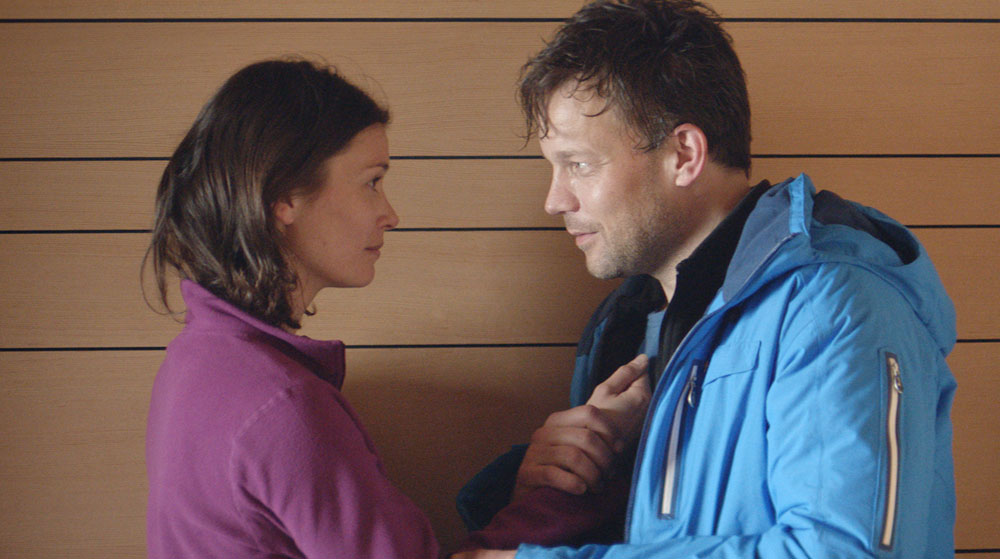
Force Majeure - Lisa Loven Kongsli & Johannes Kuhnke

Images credit: IMP Awards, Collider

Images copyright (©): TriArt Film

Chappie (2015)

★★

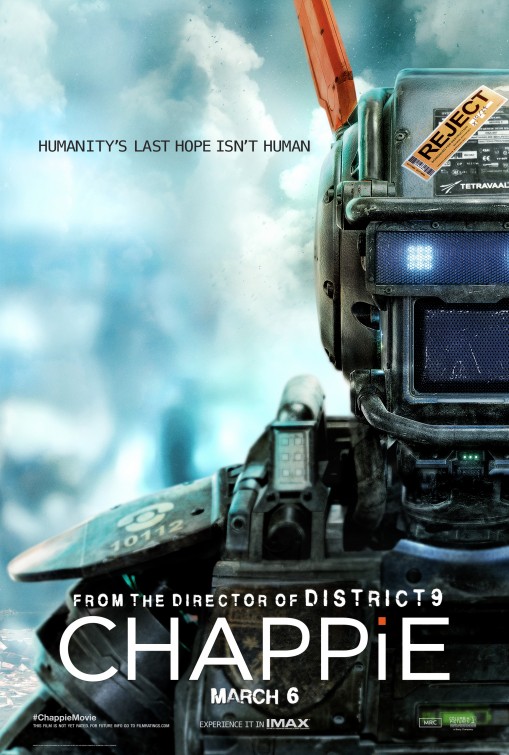
Chappie PosterDirector: Neill Blomkamp

Release Date: March 6th, 2015 (UK and US)

Genre: Action; Science-fiction; Thriller

Starring: Shartlo Copley, Dev Patel, Hugh Jackman

As Chappie gets under way atop a wave of rolling news clips and documentary-style snippets, there’s a vague familiarity in the air. We soon meet Dean (Dev Patel), a quirky and smart employee, and shortly thereafter encounter the film’s titular robot (Sharlto Copley). The two become entrenched in a rebellion against corporate injustice, where agendas are warped by power and economics. There is a CEO overlord (Sigourney Weaver) with iffy morals and a brash militant understudy (Hugh Jackman) with iffier intentions, and it doesn’t take long for our artificially intelligent robot to intertwine with humanity’s complexities.

If you can hear any bells ringing in your mind at this point, it is because Chappie is another Neill Blomkamp film wrapped up in the woes of society and class and science. It’s District 9. It’s even sort of Elysium. The thematic content isn’t bad at all — the director has proven in the past that exploring societal issues can be a rewarding experience. Rather, Blomkamp’s third film struggles because it doesn’t differentiate itself from his previous two.

Nor does Chappie click tonally. We’re in a constant kinetic flux, the tone jumbled and jumping around too much, a problem embodied by our central machine who manifests as a bubbly toddler one minute and a gun-wielding lunatic the next. The robot doesn’t garner enough empathy to start with because he (it’s male, apparently) has never been a human. But the disconnect is ultimately established due to Chappie’s lack of identity. A human character can get away with this lack of identification because we can relate to a person more than a robot. It is possible for an AI character to do the same — Alicia Vikander manages without personality in Ex Machina — but not in this instance. Chappie, voiced fairly well by Sharlto Copley, is at his most engaging when he’s acting up; a car-jacking scene is one of the film’s few brilliant moments, almost as culturally reflective as it is hilarious.

Generally though, the bits and pieces that make up the film are all a bit weird. As former soldier Vincent, Hugh Jackman (despite being an entertaining watch) looks like he is about to film a Steve Irwin biopic. The South African duo, a musical group known as Die Antwoord, don’t fit into the gritty urbanised world. They belong in a Tim Burton fantasy adventure, though on the basis of their performances here, that won’t be happening any time soon. For some reason, Sigourney Weaver — who will be teaming up with Blomkamp again for his upcoming Alien revival — is underused as a plain company figurehead.

On the more reality-mirroring side of things, we see capitalist manipulation: “It’s expensive, it’s big and it’s ugly,” is the reply Vincent receives as he tries to sell army-ready machines to the army (we’re subsequently left to wonder why money isn’t being thrown at him). A thematic favourite of Blomkamp, machine intelligence versus human ideology, fuels an underbelly that is certainly justified given the postmodern technological surroundings, yet never really amounts to much. Had they not been made in such close proximity to one another, you would be forgiven for thinking the folks behind Chappie were privy to Wally Pfister’s Transcendence in relation to ideas on concluding. Despite that movie’s many shortcomings, it is actually better and more accomplished than Chappie.

On an aesthetic front, the post-industrial setting is a good one, however instead of being a vehicle for entrapment, the relentlessly murky and dank atmosphere quickly becomes a trend-setter for the bland story unfolding (pathetic fallacy gone wrong). There are some impressive slow motion shots employed during the action sequences that reverberate well with the film’s technological arc. In fact, Trent Opaloch’s cinematography is a success — in purely visual terms the film does its job. Opaloch worked on Blomkamp’s previous two outings as well as The Winter Soldier, and his notable efforts have earned him a spot on the next Captain America film too.

Unfortunately, the visual aspect can’t quite rescue Chappie from a messy final third. The film slowly saunters along towards a fairly energetic conclusion but by then we’re sitting wondering why we should care. There are so many different parties involved in the action at the end that it feels like the battle of the five armies all over again. In screenplay terms, this wholly contrived finale is just about the final nail in a coffin of banality and nonsensicalness.

Chappie isn’t a bad film, but at some point Blomkamp needs to change things up or else risk artistic homogenisation. He is obviously a talented filmmaker; the simple fact that his films have something pertinent to say about how we live, have lived and might live is testament to his skill level. But after two solid outings, Chappie feels like a step backwards. It’s almost as if the director who once challenged the norm has conformed to it.

Chappie - Jackman

Images credit: IMP Awards, Collider

Images copyright (©): Columbia Pictures
WWE: MomentMania (2015)

★★★★

I tend to write these WWE reviews in the form of an overarching blether, without much structure. They’re not even really reviews, just general thoughts on the state of the product at the conclusion of a particular pay-per-view. WrestleMania happened last night – y’know, that wrestling event sort of familiar to non-fans? The one all over television, bearing more taglines than Shawn Michaels? (My personal favourite is ‘showcase of the immortals’). A lot happened, and there’s inevitably a lot to talk about. For that reason, I’m going to do this match-by-match.

Some updated thoughts are given in bold brackets after each main show match review.

Tag Title Fatal 4-Way

This was fun. There were eleven people involved in a variety of spots, and the match flowed well considering the potential chaos. Kidd and Cesaro retained.

Winner: Kidd & Cesaro

Rating: 3 (White)

WM - Tag

Andre the Giant Memorial Battle Royal

NXT’s own Hideo Itami won a tournament over the weekend to enter this match, but maybe he should’ve stayed in Orlando. I’m not entirely sure why they had him in this; he never got an entrance and was eliminated early via Big Show, who eventually went over (ironically, by not going over). Nor am I entirely sure why they went with Show as the victor. Cole mentioned he’d never won a battle royal before, so perhaps they wanted to impart some legitimacy on the giant for future reference. However, this should’ve belonged to Mizdow. His split with Miz was rightly predictable and well executed. Cesaro was also over huge. Vince must not watch the pre-shows.

Winner: Big Show

Rating: 2 (White)

WM - Mizdow

Intercontinental Title Ladder Match

Daniel Bryan opened the show to a huge ovation (presumably Vince missed this too). The most affable man on the planet went on thereafter to win the title. Dean Ambrose took a nasty bump through a ladder, and it turns out R-Truth is in fact a wrestler. The crowd were damn loud during this, especially for Dolph Ziggler and our favourite bearded warrior. All of the guys deserve credit given the painfully tough environment. Look, it’s great and all that they’re lumping the IC title on the best wrestler in the world, but he shouldn’t be in this spot. 70,000 people were going crazy for him. Hey, whatever.

(UPDATE: These multi-man ladder matches are always dangerous and the guys involved deserve plaudits for taking risks. This one was as good as the old WrestleMania MITB ladder car crashes and, even though he shouldn’t have been in this position, Bryan winning and getting his moment was the right decision.)

Winner: Daniel Bryan

Rating: 4 (White)

WM - Bryan

Randy Orton vs. Seth Rollins

This was a solid match. I think a lot of us were hoping that this one would steal the show – the guys over at Inside The Ropes talked about Orton needing a WrestleMania moment, and this could’ve been it. I don’t think the bout was quite at that level, but the ending was exceptionally well executed. Orton reversed a Curb Stomp into an RKO (from outta nowhere!!!) and it was bloody delightful. I love the RKO, it’s my favourite finisher, and Orton is constantly thinking of new ways to execute it. I’m hoping for a stellar rematch at Extreme Rules in Chicago.

(UPDATE: I’m still reeling over that RKO. Presumably these guys will go at it again next month, presumably for the title. If so, I can’t wait.)

Winner: Randy Orton

Rating: 3 (White)

WM - Rollins

Sting vs. Triple H

Sting – who entered first to a weird Japanese drum thing – must’ve been rethinking his contract terms as he watched Triple H do the full Terminator shabang. It divided opinion on Twitter, but I really liked the presentation even though it was a mega babyface entrance. Perhaps that’s just the movie lover in me. The match itself wasn’t really a match. DX and the nWo showed up, which was cool and super over with the crowd. Triple H’s leg looked badly bruised, so maybe this was a way to compensate and save both guys some time in-ring. Triple H went over because he can’t lose to a 56 year old and Vince can’t have WWE lose to WCW. Come on guys. For me, this undid some of the work they put in.

(UPDATE: In hindsight, I probably done these two a disservice. It was actually a decent match. Sting still should’ve gone over. Triple H started the night as a heel, switched to babyface with the handshake, and then went heel again later. That’s either poor booking or an ego thing. Regardless, I’ve upped this to three stars.) 

Winner: Triple H

Rating: 3 (White)

WM - HHH

AJ Lee & Paige vs. The Bella Twins

Not the divas match we all hoped for, primarily because they didn’t get enough time, which is a shame. AJ and Paige won. For future reference, maybe WWE should cut the ten minute musical act that nobody cares about and, y’know, #GiveDivasAChance.

(UPDATE: They needed more time.)

Winners: AJ Lee & Paige

Rating: 2 (White)

WM - AJ

Rusev vs. John Cena

Rusev trampled all over Triple Terminator with his insanely devious tank entrance, accompanied by the brilliant Lana. Cena got the patriotic montage treatment and the crowd still booed him. This was hard-hitting, as expected, but not as good as their match at Fastlane. Cena added another move to his repertoire (surely we’ve hit double figures by now) – the Cena Stunner! Austin was surely grinning from ear to ear, with sincerity too. The finish was quite damp. It only took one Attitude Adjustment to end the Russian/Bulgarian’s streak. I do like Cena as US champ though. Hopefully he and D-Bry and decriminalise the secondary titles now.
(UPDATE: That tank entrance was an absolute winner. This felt much the same upon second viewing. Kudos to Lana for her spot on ‘it wasn’t me’ reaction after the shoe throw. Rusev is very good, I really hope they keep him strong.)

Winner: John Cena

Rating: 3 (White)

WM - Rusev

Triple H/Steph & Rock/Ronda Segment

Triple H and Steph hit the ring and HHH became a heel again (after shaking hands with Sting earlier). The Rock appeared because that’s what he does these days. He’s been at every WrestleMania since 27 (as a host, a main-eventer and a surprise). I love The Rock, and I always will, but I’m sort of over the whole shtick now. It’s the same every time: Michael Cole loses his mind; Rock takes forever to walk to the ring; he stands silently waiting for a Rocky chant; he practices for his appearance on Catchphrase, and so on. Thankfully, he tagged in Ronda Rousey and she saved the segment. I can’t see her wrestling Steph any time soon, sadly. Rousey has a fight lined up and is, presumably, under contract to UFC.

(UPDATE: This went longer than any of the matches – twenty-five minutes – when it really didn’t have to. Steph was devilishly on point. I missed The Rock skip miming after his fallopian tube joke, which is hilarious. The pop for Rousey was brilliant. She’s a star, big time.)

WM - Rousey

Bray Wyatt vs. Undertaker

Neither entrance looked as good as they would have in darkness. It’s amazing how much stock we – or at least I – put in entrances. I prefer east coast outdoor venues and indoor stadiums, but it’s not a massive issue. Begone, light! Taker looked great, probably the best visually since he shaved off his hair in 2012. Bray Wyatt’s entrance was apparently an audition for the horror Wizard of Oz remake. The crowd were quite quiet during this, certainly at the beginning, which is understandable given the length of the show and the heat. Wyatt executed his spider walk and then melted to the mat before an up-sitting Deadman in what was an outstanding moment. Taker pinned Wyatt after a second Tombstone (only one AA to defeat Rusev though). This was a fine match, but Wyatt winning would’ve been more exciting and daring.

(UPDATE: I think Taker has almost cornered himself at WrestleMania given his amazing track record when it comes to match quality in the last decade. This was better than last year, but nowhere near the level of the HBK or even HHH bouts. Much like Rusev, I hope they don’t drop the ball with Wyatt now. Give him something with depth and he’ll make it work.)

Winner: Undertaker

Rating: 3 (White)

WM - Taker

Roman Reigns vs. Brock Lesnar

Unsurprisingly, the people weren’t that enamoured by Roman. Brock was a mega babyface. Reigns shouldn’t have been in this spot: he’s not particularly likeable; he’s not over; and he has yet to exceed upper mid-card level. Brock’s early F5 was rousing and the stadium exploded. It’s almost as if the crowd ingested all of those roasting sunshine rays and subsequently discharged them all over Roman. He was booed big time. This match was suplex city again but Reigns kept laughing, presumably as he realised how not-over he was.

The story seemed obvious from the get-go: Lesnar to beat up Roman just like he beat up Cena, but Roman to overcome it. After an ass-whipping, Rollins’ music hit. He cashed in and pinned Reigns. I didn’t see this coming at all – in fact, I thought Rollins was going to fail and take the pinfall to get rid of the briefcase spectre and keep the Reigns/Lesnar feud going. I like that Lesnar wasn’t pinned. Unanswered questions are abound: Who is the number one contender? Is Lesnar? Or Orton? Where does Reigns go? There was a heck of a lot riding on this match and, to WWE’s credit, they adapted. Hardly anybody wanted to see Reigns leave as champ, therefore he didn’t. I would’ve preferred Brock going over but I understand the thinking, and Rollins is phenomenal.

(UPDATE: I underrated this. Wrestling is about drama and suspension of disbelief, and they dramatically fooled me. It was a little too similar to the Cena SummerSlam match, but this one had even more at stake. “Suplex City bitch!” is ready-made merchandise money. Brock is WWE’s biggest asset and he should be booked as such until he decides to lace up the boots. Reigns done well here too – his comeback was (terrifyingly) excellent. Rollins has that main event aura. I updated this to four stars.)

Winner: Seth Rollins

Rating: 4 (White)

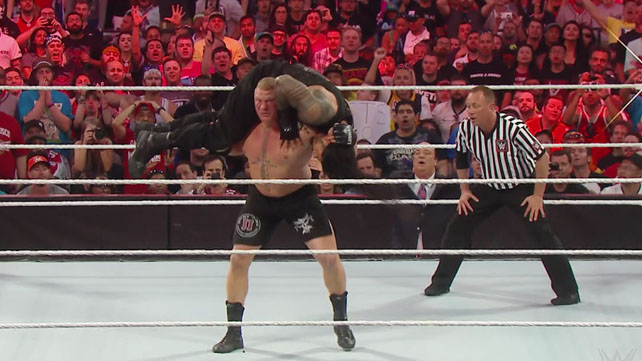
WM - Brock

This WrestleMania was all about the special moment, and maybe that’s how it should be. Mizdow’s breakaway. Bryan winning. Various entrances. DX versus nWo. Ronda Rousey. Spider walk versus sit-up. Rollins’ cash-in. Those were all thrilling moments built upon either forsaken hope or unshaken nostalgia. The in-ring action wasn’t anything to write home about though. For me, the wrestling never quite piqued. The opener and main event worked best, the former for its anxiety-driven excitement and the latter for its raw drama. The crowd in San Jose seemed to enjoy the show a lot, which is important because those folks paid heaps of cash to be there. As a home viewer, I think it was good. Occasionally great.

(UPDATE: To be fighting it out with WM17 and WM19 as one of the best ever, I think the show needed a few classic matches. There weren’t any bad bouts to be fair, only good matches and greater moments. I normally avoid 0.5 scores, so even though the show was probably 3.5 stars, I’ll give it the benefit of the doubt and round up to 4.)

On January 26th, 2014 CM Punk tweeted: “The view never changes”. This tweet, and all that followed, really hurt.

On January 27th, 2015 Seth Rollins tweeted: “I am the light at the end of the tunnel”. He was right. How exciting.

WM - Seth

Images credit: WWE

WWE: FastPain (2015)

★★★

Ouch. See that pain chipping away at your lower back? That’s the unwanted product of a pothole-filled Road to WrestleMania. WWE could’ve smoothed over the tarmac last night. HA! Wishful thinking, I know. Instead, whoever drove the car through Fastlane — sorry, WWE Fastlane — just rolled down the window and marked a big, black line under weeks of dreadful storytelling post-Royal Rumble.

Let’s recap. When Daniel Bryan returned from injury before the Royal Rumble and announced his involvement in the rumble match itself, the story that made the most sense at that point was Bryan versus Brock Lesnar. The talented, hard-working fan favourite against the dominant, viscous monster. Roman Reigns went on to win the rumble and that was that. Fine. From then, the next two months should have been spent building up Reigns as a credible and respectable threat to Lesnar, with Daniel Bryan nowhere in sight. Two RAWs later, Bryan’s in the title picture.

With one section of the audience rooting for Bryan and the other rooting for Reigns, the only justifiable scenario coming out of Fastlane should have been a triple threat match at WrestleMania 31 — where every fan who had invested emotion into either Bryan, Reigns or Lesnar would still have that same investment come March 29th. Fastlane is over and we’ve now got a WrestleMania main event involving a babyface who half of the audience won’t cheer for and a monster heel (one probably leaving the company) who half of the audience will applaud vociferously. And last year’s WrestleMania headliner — and opener, because Bryan is that good — is totally directionless with only five weeks to go until this year’s WrestleMania.

Fastlane - Bryan and Reigns

Sure the Royal Rumble was a royal shambles but at least the outcome, the end result on the night, made sense. Roman Reigns winning the Royal Rumble match worked from a story perspective. It wasn’t the best story they could have told but it was still a perfectly decent route to venture down. Daniel Bryan’s inclusion in the rumble match was the spoiling factor. The booking sucked, not the premise.

Fast forward to Fastlane and the whole scenario is a mess. We’ve had Royal Rumble winner Reigns gladly give up his ticket to stardom for a match against Bryan; Bryan being offered the chance to main event WrestleMania by his good buddy Triple H (you know, the same guy who fought tooth and nail to keep D-Bry out of the main event last year); and Brock Lesnar out doing some gardening because they haven’t been able to do much with him without an opponent. Ignoring the obvious story complications, the supposed vindication for Reigns versus Bryan doesn’t even make sense. Daniel Bryan — the ultimate underdog — should not be the guy who is used to get the much bigger, much stronger Roman Reigns over.

Reigns defeated Bryan clean at Fastlane and then the two shook hands. Bryan poked his opponent’s chest whilst saying, and I quote, “you better kick his ass,” referring obviously to fellow booking this rubbish. IWC smark marky markers everywhere, that is our cue to start cheering Roman Reigns. Be civil guys. The match was excellent and it’s absolutely logical therefore for people to bemoan complainers such as myself. We did get to see a brilliant match after all. But the issue is how the match came to fruition, the repercussions of the match and the likelihood that we’ll see booking disasters similar to this one again in the future.

I’m not going to defend Reigns much because I don’t think there’s much to defend. Yes, he done very well last night and, yes, he absolutely could be a big star. But as of this moment, he’s not that good. He’s not WrestleMania headliner/opener good. He’s not even WrestleMania headliner good. The match at Fastlane was great because Daniel Bryan wrestled in it and Roman Reigns just about managed to keep up. If the Samoan Boss Man had wrestled Sheamus, or Orton, or even Cena, I really don’t think the bout would have been half as entertaining.

Fastlane - Hand Shake

Fastlane was a bit of a dud show in general. The crowd weren’t on great form — no Slammy for you Memphis. Randy Orton’s return was one of the high points and I’m looking forward to seeing his match against Seth Rollins at WrestleMania. Orton isn’t everyone’s cup of tea but he does tend to have excellent matches with smaller guys (Christian, Bryan and Rollins himself all spring to mind). Bray Wyatt delivered the most exciting moment of the night as he finally called out the Undertaker. This one has a ring-load of potential. Check out Inside The Ropes for some genuinely thrilling thoughts on how to book that programme, and lots of other top chat too — they’re always on the ball.

I’m not entirely sure what to make of Sting and Triple H. I never watched WCW so the whole ‘defending the honour of a now defunct promotion’ angle doesn’t resonate with me at all. Hey, if they’d waited a few more years Sting could have showed up looking to defend the honour of a lifeless TNA. Kidding. The worry for me is that Sting versus Triple H will play out much like Brock versus Triple H did at WrestleMania 29. There is still time to generate more buzz.

However, it looks like there won’t be enough time to rescue Roman Reigns before the big showdown, at least not fully. If booked correctly, he could have had an army of followers vying for him to win the title. Now at least half of that army are too busy mourning Bryan’s mistreatment. As for the bearded warrior — he’s the most popular guy in company, but we shouldn’t let that silly insignificance get in the way of any undermining that needs to be done, right?

He literally is the Boyhood of wrestling: under-appreciated by those inaccessible elites but loved for his authenticity and talent by us lowly peasants. I’m off to watch the WWE Network and buy a Sting t-shirt.

Fastlane - Bryan

Images credit: WWE

Oscars 2015 — Final Predictions

Oscars 2015

Don’t we all just love the Oscars? It’s an evening of maniacal celebration, of gratuitous back-patting, of cringe-worthy speech-making and of hosts trying to grasp the latest social trend – I’m looking at you, selfie Ellen. The folks over in Hollywood might “really like” Sally Field, but they’re not quite as fond of Selma or Nightcrawler, and goodness knows how fond they are of American Sniper (hopefully not as much as many fear).

All joking aside, Academy Awards night is a big one for the film industry. The movies nominated are, for the most part, pretty damn good too and should be heralded on a grand stage. Tonight’s ceremony is looking fairly clear-cut in most categories, but there are still a few ambiguities to be sorted.

Better get on with some predictions then. Click on the appropriate film titles for reviews.

Best Picture

American Sniper

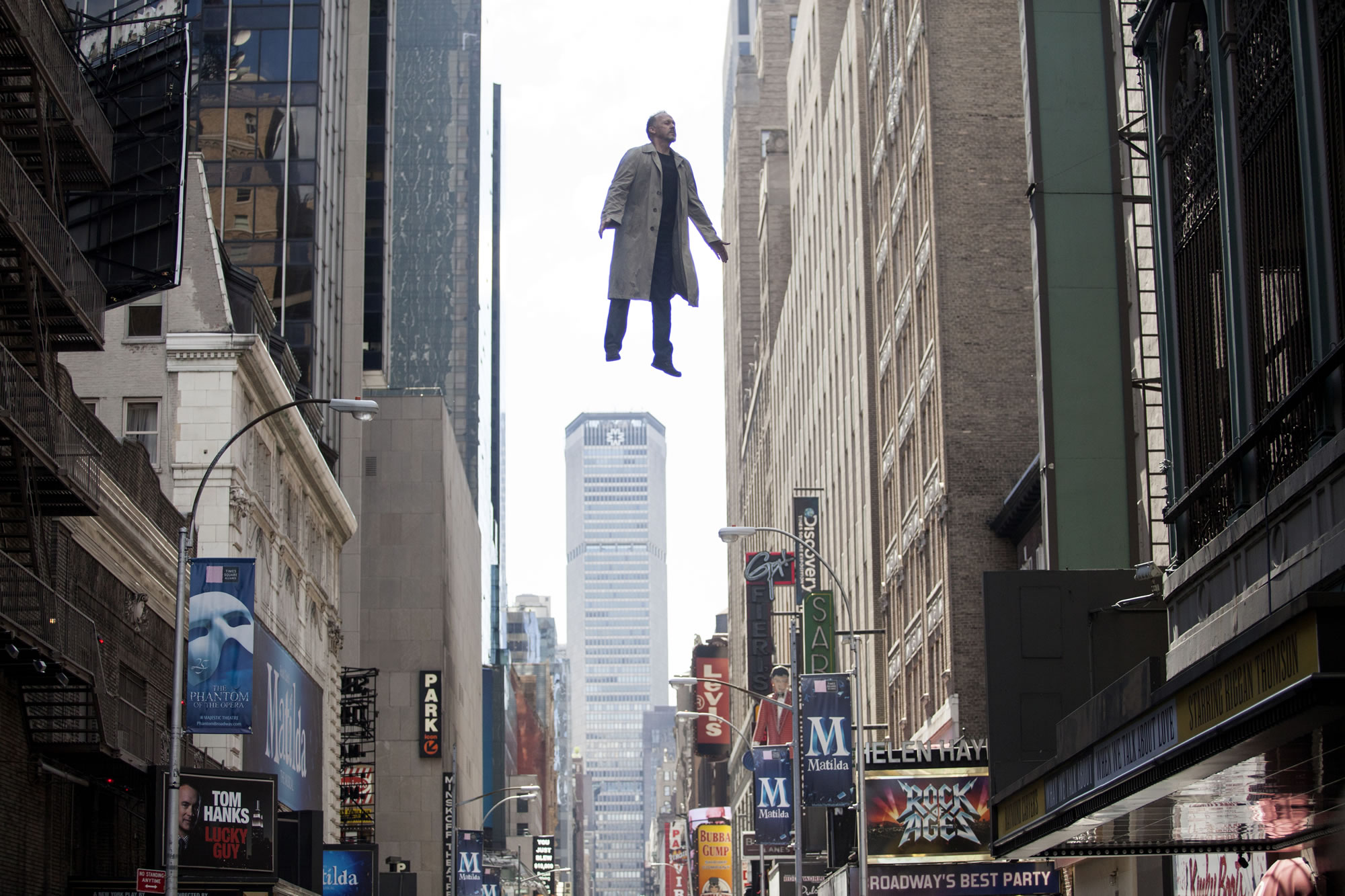
Birdman

Boyhood

The Grand Budapest Hotel

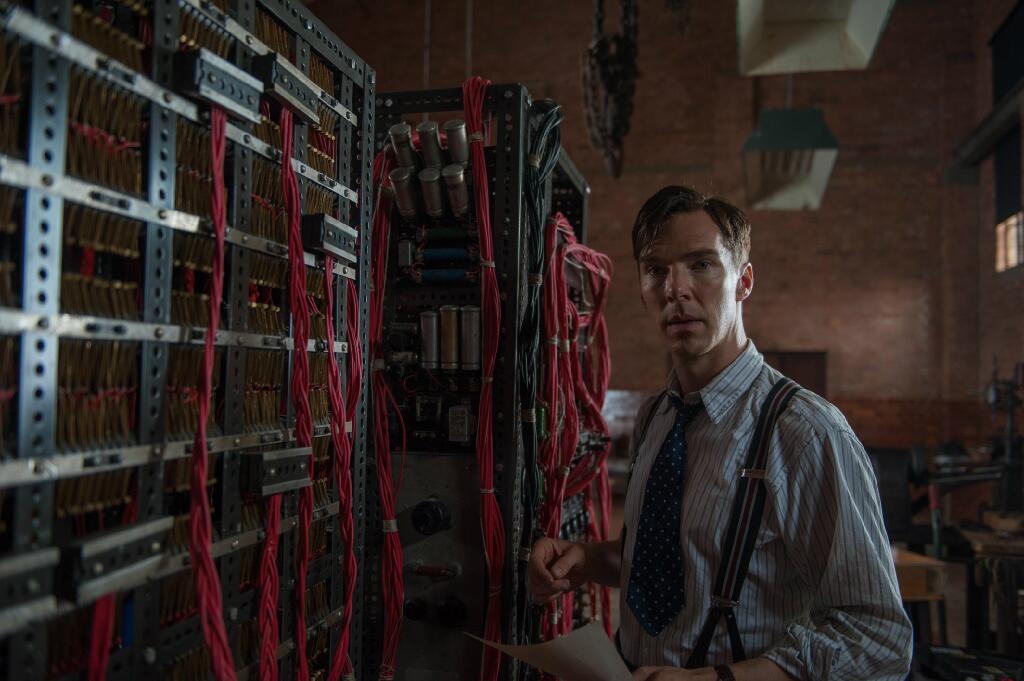
The Imitation Game

Selma

The Theory of Everything

Whiplash

– Will win: Boyhood

– Should win: Boyhood

– Should’ve been nominated: Interstellar

Oscars 2015 - Boyhood

Best Director

Alejandro G. Iñárritu (Birdman)

Bennett Miller (Foxcatcher)

Morten Tyldum (The Imitation Game)

Richard Linklater (Boyhood)

Wes Anderson (The Grand Budapest Hotel)

– Will win: Alejandro G. Iñárritu

– Should win: Richard Linklater

– Should’ve been nominated: Christopher Nolan (Interstellar), Jeremy Saulnier (Blue Ruin)

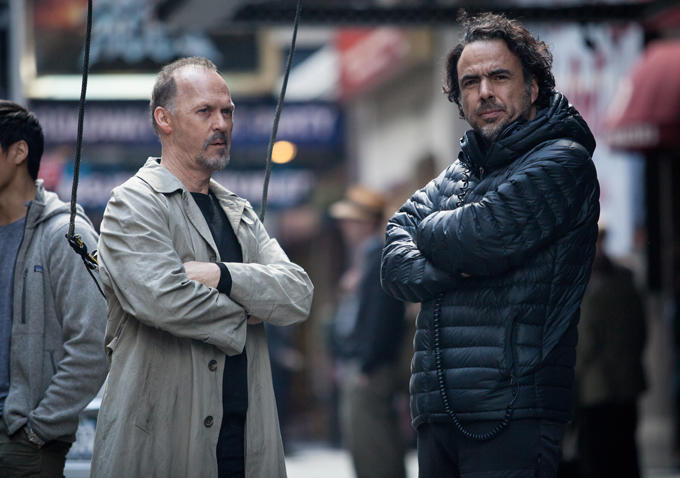
Oscars 2015 - Inarritu

Best Actor

Benedict Cumberbatch (The Imitation Game)

Bradley Cooper (American Sniper)

Eddie Redmayne (The Theory of Everything)

Michael Keaton (Birdman)

Steve Carell (Foxcatcher)

– Will win: Michael Keaton

– Should win: Eddie Redmayne

– Should’ve been nominated: David Oyelowo (Selma), Jake Gyllenhaal (Nightcrawler)

Oscars 2015 - Keaton

Best Actress

Felicity Jones (The Theory of Everything)

Julianne Moore (Still Alice)

Marion Cotillard (Two Days, One Night)

Reese Witherspoon (Wild)

Rosumand Pike (Gone Girl)

– Will win: Julianne Moore

– Should win: Rosamund Pike

– Should’ve been nominated: Emily Blunt (Edge of Tomorrow)

Oscars 2015 - Moore

Best Supporting Actor

Edward Norton (Birdman)

Ethan Hawke (Boyhood)

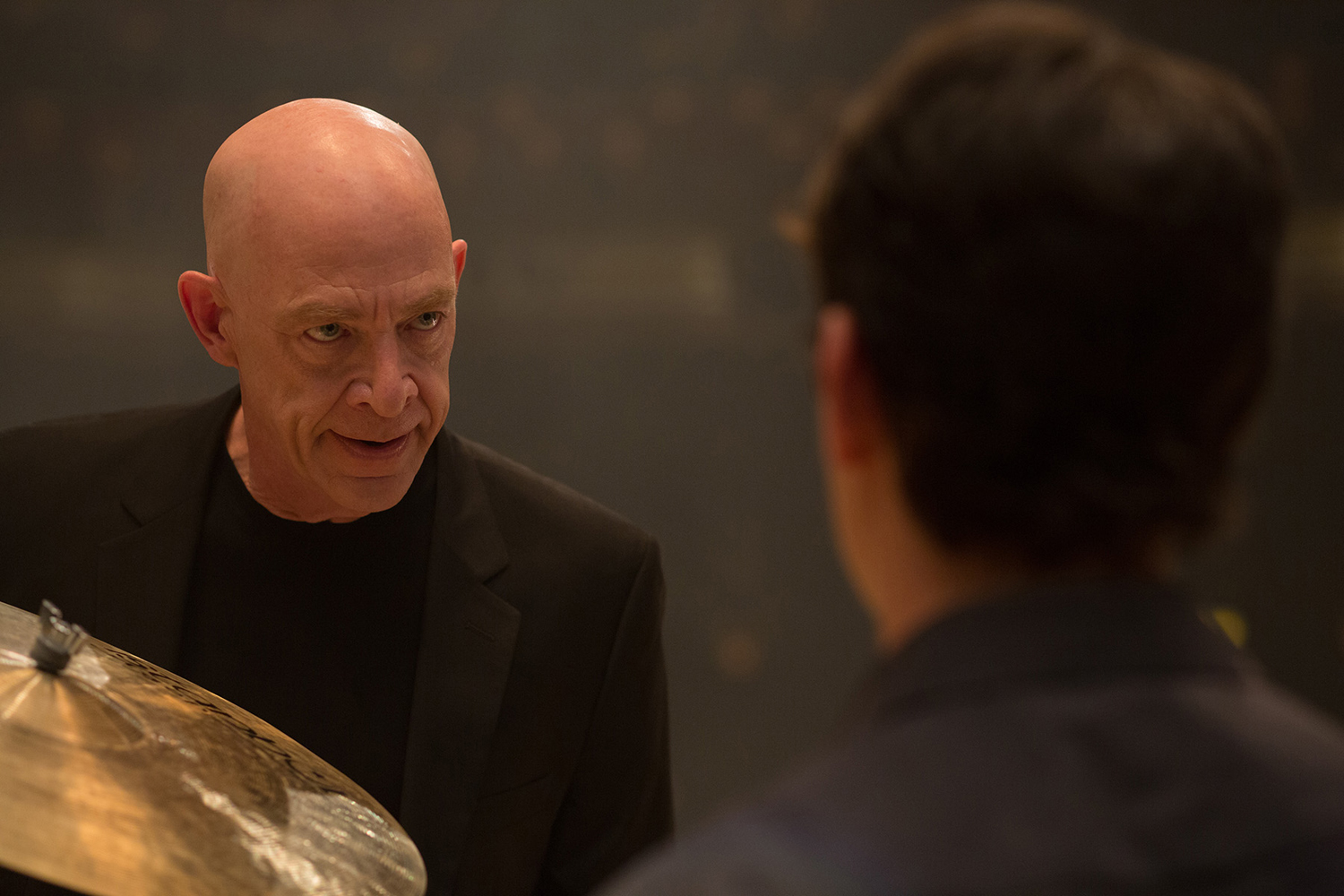
J.K. Simmons (Whiplash)

Mark Ruffalo (Foxcatcher)

Robert Duvall (The Judge)

– Will win: J.K. Simmons

– Should win: J.K. Simmons

– Should’ve been nominated: Channing Tatum (Foxcatcher), Andy Serkis (DotPotA)

Oscars 2015 - Simmons

Best Supporting Actress

Emma Stone (Birdman)

Keira Knightley (The Imitation Game)

Laura Dern (Wild)

Meryl Streep (Into the Woods)

Patricia Arquette (Boyhood)

– Will win: Patricia Arquette

– Should win: Patricia Arquette

– Should’ve been nominated: Carrie Coon (Gone Girl)

Oscars 2015 - Arquette

Best Adapted Screenplay

American Sniper

The Imitation Game

Inherent Vice

The Theory of Everything

Whiplash

– Will win: The Imitation Game

– Should win: Whiplash

– Should’ve been nominated: Gone Girl

Oscars 2015 - TIG

Best Original Screenplay

Birdman

Boyhood

Foxcatcher

The Grand Budapest Hotel

Nightcrawler

– Will win: Birdman

– Should win: Boyhood

– Should’ve been nominated: Guardians of the Galaxy

Oscars 2015 - Birdman

Final Thoughts

It looks as though the only real tussle – and it’s a big one – will be between Boyhood and Birdman for Best Picture. They’ll probably split the top award and Best Director between them, though Boyhood and Linklater deserve both.

Michael Keaton might yet nab Best Actor from Eddie Redmayne and despite the bookies favouring the Brit after his BAFTA triumph, I fancy the American to win in the US (cynical me).

As far as the other three acting categories go, Julianne Moore, J.K. Simmons and Patricia Arquette are all shoe-ins. The latter two fully deserve to win. Still Alice still hasn’t hit cinemas over here in the UK therefore I have yet to see Moore’s performance, but I just can’t look past Rosamund Pike’s stunning turn in Gone Girl. Pike should win. She won’t.

The biggest snubs of the year are probably Interstellar and Nightcrawler. David Oyelowo absolutely should be contention for Best Actor (he should probably win it, in truth) but at least Selma has top table nomination. With ten possible slots in the Best Picture category, the dismissal of Interstellar and Nightcrawler is unjustified.

Carrie Coon should feel aggrieved to be missing out on a Best Supporting Actress nomination, as should Channing Tatum in the Best Supporting Actor – or even Best Actor – category. It has been a strong year for the actors to be fair. And a word too for Blue Ruin, one of 2014’s less well-known masterstrokes.

If you’re watching, enjoy the show!

Oscars 2015 Best Picture

Images credit: ColliderHollywood Reporter, Indiewire

The Grand Budapest Hotel (2014)

★★★

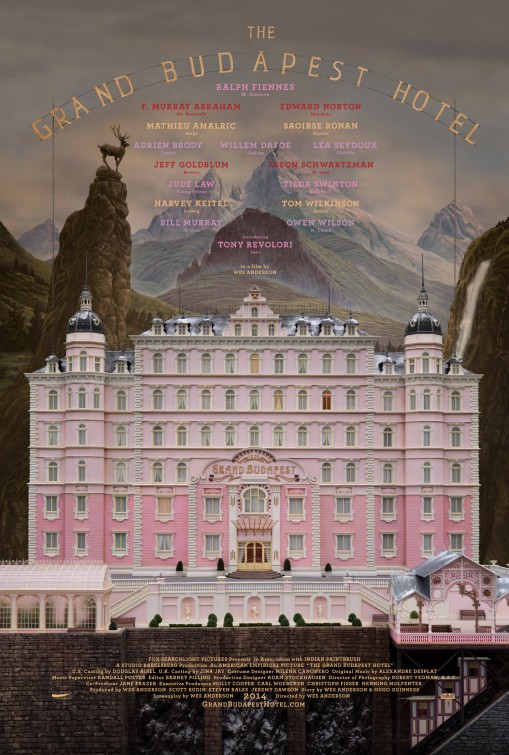
TGBH PosterDirector: Wes Anderson

Release Date: March 7th, 2014 (UK); March 28th, 2014 (US)

Genre: Adventure; Comedy; Drama

Starring: Ralph Fiennes, Tony Revolori

It goes without saying that Wes Anderson rustles up his films to appease a desired taste and The Grand Budapest Hotel, despite its universal recognition on the awards circuit, is another fine delicacy. That’s not a bad thing, especially if you’ve previously been a fan of Anderson’s work. Cards on the table: I haven’t seen enough to really form a stalwart opinion on the director. Moonrise Kingdom was a charm-fest and although The Grand Budapest Hotel doesn’t quite match up for my inexperienced liking, it is still a fun one hundred minutes.

This is the story of a much admired hotel concierge and his invaluable lobby boy. Not for the first time we watch a Wes Anderson flick that is tremendously well crafted, with everyone from prolific cinematographer Robert Yeoman to those in the costume department really pulling up trees to make the outing a visual feast for the audience. It rattles on without so much as a chink, fluent and meticulous in full flow. Walls are painted the right shade of blonde or pink to suit the mood at any given moment, and we watch the madness unfold as if perched on a stand measured to a ninety degree angle with the utmost precision (at one point a character fixes a lopsided painting to maintain this custom).

The piece is a real gem to look at — you could easily spend the entire run-time focused on how minor details play out in the background without as much as a glance towards the immediate plot and still be pretty satisfied. Different aspect ratios are employed at different points in the film, from the older traditional 4:3 to current traditional 1.85:1. It’s fairly enjoyable watching hotel concierge Monsieur Gustave (Ralph Fiennes) and his young partner in crime Zero (Tony Revolori) scamper around, but the purpose of the varying ratios gets somewhat lost as time passes.

There is an almost slapstick element to the film, one that totally suits its colourful, comic-ey surroundings. Every movement is overly emphasised, from running with knees aloft to plate-setting. The characters are all sky high on the eccentric scale — Tilda Swinton appears as an elderly lover and we even get Harvey Keitel in especially nutty convict form. The sheer volume of famous faces that show up, many of whom only appear for a scene or two, is a testament to Anderson’s strongly regarded reputation around acting circles, as well as the jovial atmosphere apparently present on set. This star-studded Hollywood collective helps fund a comedic tone — funniest when it breaks the mould with common insults (“that little prick!”; “who’s got the throat-slitter?”) as opposed to long-winded monologues, some of which can be a tad egregious.

And The Grand Budapest Hotel can be difficult to get into, simply because the screenplay’s ferocious nature doesn’t offer as much as a breather for the audience to adjust and then readjust. It might be a personal thing, in fact it almost certainly is, but the constant velocity can be off-putting (despite it enabling much of the sharp humour). As a viewer, you’re either strapped in and along for the ride or still weighing up the height of the roller coaster. For me it’s a bit too tall.

Much of the film’s allure emanates from the charismatic Gustave, played brilliantly by Fiennes. Fairly short of previous comedy chops — he was part of In Bruges, though his performance in the Martin McDonagh piece was far darker — Fiennes is quite the surprise here. He gets the funniest gags (“you know the drill then? Zip it”) and the actor plays the popular Gustave with an amusing air of receptive non-discrimination; he engages with everyone equally, from jail mates to lobby boys to militant inspectors.

Tony Revolori is a fine assistant to Fiennes on screen, and the two strike up quite the odd chemistry. Members of Anderson’s large cast move in and out of shot as if through a revolving door — Edward Norton, Bill Murray, Saoirse Ronan, Adrien Brody, Willem Dafoe, Léa Seydoux all show face, to name but a few. The film isn’t as fun when we’re not watching Gustave and Zero in tandem, but thankfully they’re together for most of the piece.

The question remains: is there anything going on beneath the surface, or is it all just that — surface? The director doesn’t appear too fussed about incorporating deep meaning and there is nothing necessarily wrong with that. He is more than an aesthetic filmmaker, as evidenced by the humour on show here, but his approach does to an extent alienate those without wholesome affection for it. There isn’t really a plot, rather a whole host of five minute segments incorporating many different Hollywood stars.

As such The Grand Budapest Hotel is an enjoyable spectacle, rampantly good fun on occasion, but not much more than that.

TGBH - Fiennes and Revolori

Images credit: IMP Awards, Collider

Images copyright (©): Fox Searchlight Pictures