Release Date: September 4th, 2013 (UK); November 8th, 2013 (US)
Genre: Comedy; Drama; Science-fiction
Starring: Domhnall Gleeson, Rachel McAdams, Bill Nighy
It does not take long for Richard Curtis’ newest comedy About Time to have viewers grinning from ear-to-ear as any narrative inconsistencies take a back seat, allowing the film’s engaging characters to dominate the screen in a funny, genuine and well-meaning cinematic offering.
The writer and occasional director of romantic comedies such as Four Weddings and a Funeral and Love Actually is no stranger to the genre, but here Curtis adds an extra dose of science-fiction to charge up proceedings. Domhnall Gleeson is Tim, an unpolished 21-year- old whose life takes an unexpected turn — literally — when his father tells him he can travel back in time. Gleeson’s relatively recent rise to prominence means his involvement here is fresh and feels organic, enabling the Irishman’s charm to resonate through both his awkwardness and authenticity.
Rachel McAdams endears as Gleeson’s other half Mary, and the two strike up an infectious dynamic immediately. It says a lot for both that their first scene together — which they spend shrouded in complete darkness — generates an instant connection. Bill Nighy is often the vessel through which emotion is emitted and the relationship he shares with his son Tim is utterly believable; a relationship that the film quite rightly depends on.
About Time is not without problems, although these inconveniences either subtly fix themselves or are quickly shielded by on-screen antics. The music intertwined throughout intentionally toys with the heartstrings (upbeat when happy, melancholic when sad) but nevertheless always finds an acceptable rhythm with events. The Groundhog Day-like premise is not original, but does not need to be when the focus is solely on the characters. Clichés are found wriggling around in various forms (“If we could travel back in time”), but unusually seem welcome.
Curtis ensures that the people depicted in About Time matter, creating a film which is lovable without being glamorous and one that always has its heart in the right place.
Release Date: September 20th, 2013 (UK); November 1st, 2013 (US limited)
Genre: Biography; Drama; Romance
Starring: Naomi Watts, Naveen Andrews
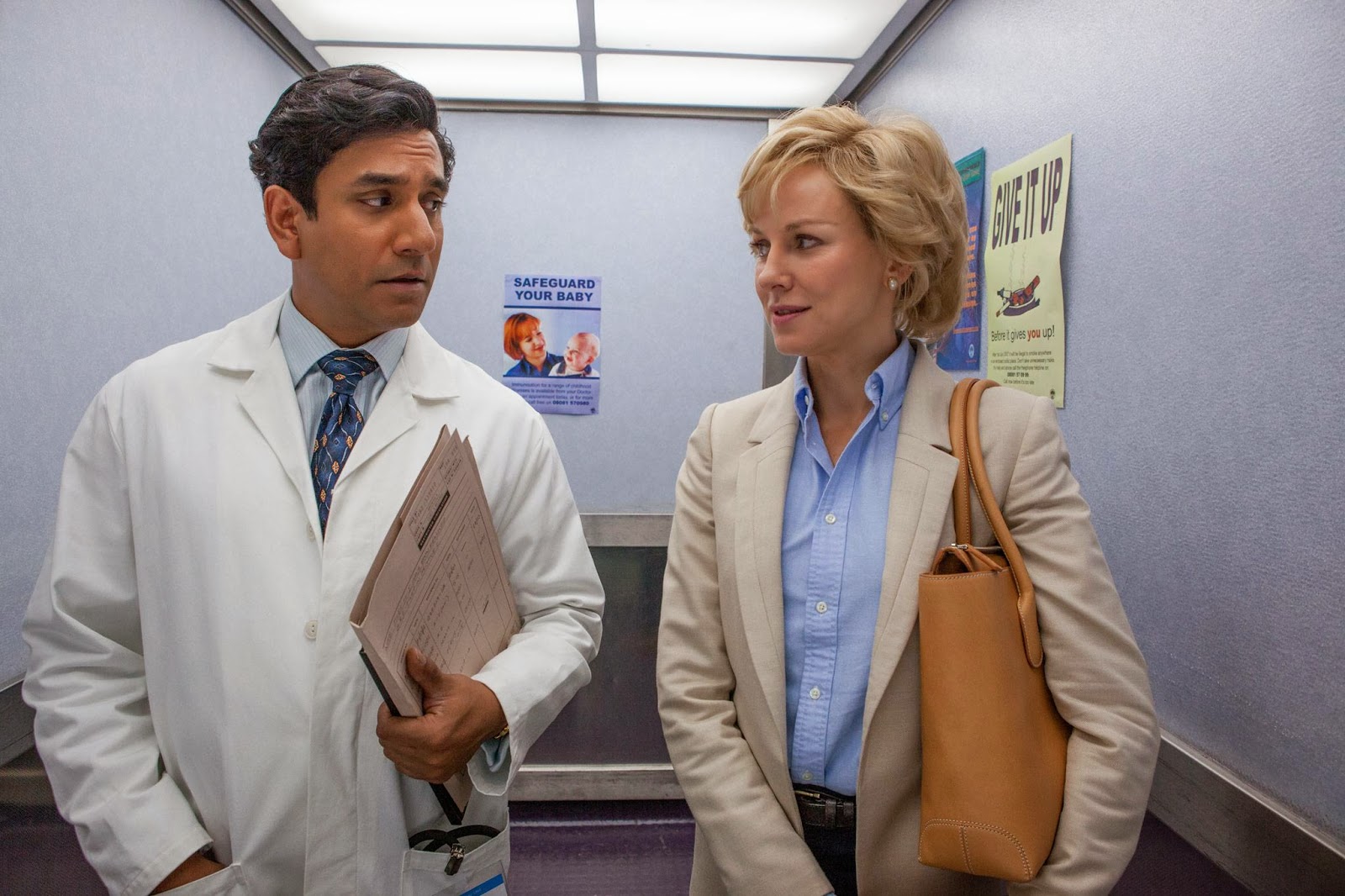
Oliver Hirschbiegel’s Diana opens with the droning voice of a news reporter, setting an unenthusiastic tone from the get-go before eventually succumbing to unavoidable tedium. If watching paint dry was a film, it would be better than this.
The film follows the final years of Princess Diana’s life, highlighting her relationship with heart-surgeon Hasnat Khan. Naomi Watts stars as Diana, and while her external charm as the Princess is fairly accurate, the English-born actor is hampered by a noticeable deficiency in visual continuity with the woman she is portraying (the introduction of a black wig does not help). Former Lost castaway Naveen Andrews plays love interest Hasnat Khan but he, alongside Watts, fails to overcome the dull script and sappy dialogue, both of which demand a great deal of suspended disbelief to deem credible.
It is surprising that a film directed by Hirschbiegel — whose résumé boasts the critically-acclaimed Downfall — has as little to offer as Diana does (or, evidently, does not). Hirschbiegel’s film-making skills are not paraded in any positive manner whatsoever here, with out-of-place lingering shots constraining the snail-like pace of the film and making it slower still. This lethargy grows as scenes begin to repeat themselves, diverging potential tension elsewhere and creating distinct plot contrivances — Diana and Khan bat the same argument back and forth on at least three occasions.
The pacing is not the only problem. Laughs are at a premium, and it appears the film could not afford any. By the time the Princess has visited a fifth country, the images on screen resemble those of a travel guide rather than a coherent cinematic output. Media reporters and paparazzi become off-putting parodies of their profession. At one point there is even a sudden, unexplained shift forward in time by a year. No explanation is required however, as the missing year would have offered as much intrigue as the rest of the film — none.
Release Date: November 2nd, 2012 (US); February 1st, 2013 (UK)
Genre: Drama; Thriller
Starring: Denzel Washington, Kelly Reilly, Don Cheadle, Bruce Greenwood
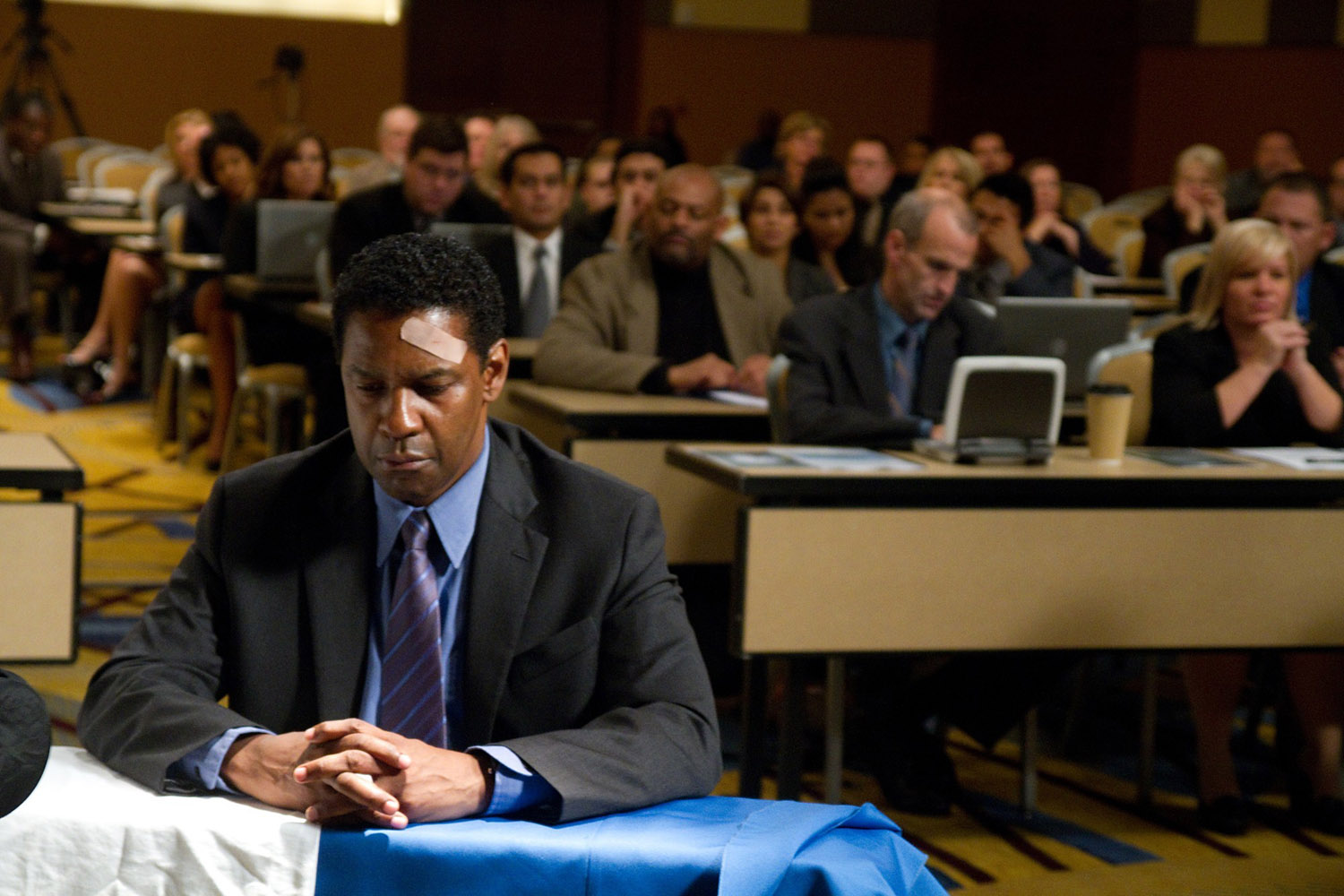
It does not take long for Robert Zemeckis’ Flight to race into full throttle and deliver the intense plane crash scene from which much of the buzz surrounding the film has emanated. However, the film quickly switches gears and ends up spending most of its time delving into a more subtly intense story about a man’s plight against addiction — a ruthless concoction of lies, alcohol and drugs succinctly summed up by the lead character’s quip, “Don’t tell me how to lie about my drinking”. It becomes a dramatic character study rather than an event-driven thriller, and with each extra lie that Denzel Washington’s Whip tells, or additional drink he swigs, you just want to give him a shake and remind the heroic pilot that he can be a decent human being.
Whip Whitaker is a seemingly disenfranchised airline pilot who spends his evenings with co-workers (more specifically, air hostesses) in hotel rooms partaking in substantial alcohol consumption and drug use — and that is only on pre-flight nights. He awakens from his extravagantly unprofessional routine one morning both sleep-deprived and lumbersome, before heading out to captain a flight to Atlanta. After successfully, and somewhat surprisingly, manoeuvring his plane through a bout of rough turbulence, an alcohol-influenced Whip is forced to execute an emergency landing in a field. A plane crash is a once-in-a-thousand-lifetimes event that, for the vast majority of us, is something only experienced through the likes of news reports or documentaries. Zemeckis and cinematographer Don Burgess do a nail-bitingly horrifying job of emulating the chaos, destruction and terror of such an event, far eclipsing the director’s tumultuous Cast Away aviation incident. Washington’s poise is both unsettling and admirable as a captain who is just as dependent on booze and drugs as his passengers are on his flying skills.
Whip awakens in hospital a hero to the public but quietly uncertain and continuously seeking reassurance over his role in the crash. “My [condition] had nothing to do with the plane falling apart,” is often closely followed by, “Nobody could’ve landed that plane like I did”. The film does not shy away from making clear that the doomed aircraft was a result of mechanical failure, but a combination of Whip’s pre-flight misdemeanours and post-crash internal conflict raises doubt. Is there the possibility that Whip’s demons lead to the accident? Zemeckis’ direction plays a role in casting this ambiguity over proceedings, however Washington’s depiction of a man unravelling creates doubt not where there should be none, but where there is none.
The Academy Award winner has the stench of alcohol protruding from him throughout the film and stands out, in particular, in two scenes of mental jousting. The first, soon after cleansing himself and his life of all toxic substances by way of sink or toilet, sees a fidgety Whip down his first drink in the knowledge that he is facing potential criminal prosecution. The second comes towards the end of the film where Whip is surrounded by people, but more alone than ever as he juggles morals in his head. It is testament to Denzel Washington’s acting abilities that he ensures Whip commands sympathy in spite of all of his negative traits. Perhaps this is partially down to those traits tearing away at nobody but Whip himself — “What life?” is how highly he regards his existence. It is eerily fitting that said traits, which without aid are leading to the downfall of the man himself, are also responsible for saving the lives of many others.
Flight is not without faults. The film does an excellent job of creating the Kelly Reilly character, Nicole, who sets off in the same place as Whip but ends up moving in the opposite direction. Reilly is convincing as a manipulable heroin addict trying to turn her life around, and she shares an intriguing if not entirely believable relationship with Whip (although this lack of believability is probably the point). However her character fails to really go anywhere. There is also a very noticeable comedy element which rears its jokey head every so often, and every so often it fails to fit in with dark nature of events. Or at least is should fail. Bizarrely, the humour provides some welcome light relief, with John Goodman often the vehicle of funny. Don Cheadle and Bruce Greenwood succeed in their semi-conflicting roles (both are there to help Whip, but only one shows affection towards him). James Badge Dale also makes a scene-stealing cameo as a dying man in the hospital and delivers film’s best one-liner after receiving a carton of cigarettes from Whip.
Ultimately, Flight sets out to tell the story of a man struggling through addiction while encased in special circumstances, and it does this very well. Denzel Washington’s engrossing performance at times teeters on the incredible, and just like the Coke can that follows Whip around his hotel room reminding him of what he cannot have, Washington’s prominence on screen provides another reminder of just how great a performer he is. Not that anybody needed reminding.
Release Date: October 11th, 2006 (Spain); November 24th, 2006 (UK); January 19th, 2007 (US)
Genre: Drama; Fantasy; War
Starring: Ivana Baquero, Sergi López, Maribel Verdú
From the all-encompassing mind of Guillermo del Toro comes Pan’s Labyrinth: a tale about imagination and innocence; a fable comparing the evil we do know against the good that we do not; a story about a young girl whose reality is not quite in sync with those around her. Del Toro’s filmmaking abilities are completely transparent here as he creates a fantasy world that is utterly encapsulating. Not only is the narrative a success, so too is the technical prowess displayed throughout. In one word, Pan’s Labyrinth is not far from timeless.
In 1944 following the Spanish Civil War, Spain is crippled by fascism. Ofelia, a young girl influenced by fantasy stories and fairy tales, travels with her pregnant mother to a fascist command centre in rural Spain. The leader of the centre is Captain Vidal, an authoritative fiend who is also the father of the mother’s unborn child, and whose brutality juxtaposes Ofelia’s virtuous curiosity. It is clear from the beginning that Ofelia’s imagination is the driving force behind her energy and exuberance — as soon as she sees an unusual creature her precious books (and her hat) hit the ground as she heads off in pursuit. This early scene in essence epitomises the film, conveying Ofelia’s disconnect with the real world in favour of her intrigue towards one that is only found in fairy tales.
Ivana Baquero stars as the aforementioned Ofelia, and is outstanding as the young, wide-eyed dreamer. Much of the success of the film rests on her shoulders — she must pivot between the harsh, murky reality where her mother is ill, and the wondrous, mysterious realm presented to her by a faun she meets. “Is that you?” the faun exclaims emphatically, as though it has been waiting an eternity to ask. Ofelia learns from the mythical creature that she is in fact a princess separated from her kingdom. This first interaction between Ofelia and the faun is a telling one, as the girl appears more at home now than at any other previous point in the film. Her reality is fantasy. Unlike anybody else placed in the same situation, Ofelia does not get startled when she meets a creature not-of-this-earth, and instead introduces herself as calmly and invitingly as she would a family member: “My name is Ofelia. Who are you?” the girl wonders gently.
The warring backdrop is far from Ofelia’s mind throughout Pan’s Labyrinth, as it appears Del Toro is highlighting the separation of good and evil. This separation is at its most prevalent by way of the glaring comparison between the monstrous Captain Vidal — who represents tyranny and abnormality — and the faun — whose description of himself as “the mountain, the woods and the earth” is more natural and pure than anything Vidal represents. The film’s ‘good versus evil’ branch also plays in tune with Del Toro’s more violent approach to a story which would normally be directed towards a young audience. Blood, guts and broken bones all see the light of day here and given the prominent fairy tale aspect of the narrative, the enterprising inclusion of such elements is surprising (recalling leg-hacking in Shrek or head-munching in Cinderella is proving a tad difficult). The presence of such a degree of violence is completely warranted however, as it represents the harsh, unwanted situation that Ofelia’s real life presents her with, a real life that in itself does not capture the youngster’s interest.
Sergi López is utterly menacing as Captain Vidal, who is the epitome of vulgarity. López’s presence is overarching in every scene, be that whether he is towering over the relentlessly inquisitive Ofelia, or ordering around his housekeeper Mercedes, with as little compassion as he can muster. Mercedes, played by Maribel Verdú, acts as a beacon of hope in amongst the madness, as she works for the captain against her beliefs in order to spy for a group of rebels situated in the surrounding forests. Verdú successfully juggles sadness with fierce determination, creating a character who the audience roots for alongside Ofelia. Numerous mythical beings and some genuinely creepy monsters (one in particular renders stealing buffet food a no-go zone) are expertly displayed on-screen in awesome detail, both visually and audibly.
In Pan’s Labyrinth, Guillermo del Toro has created a film that is wonderful to look at and tremendous to listen to. Del Toro delivers a multitude of characters and creatures, some to love, others to despise and a few to cower away from. Most significantly however, the Mexican director tells a story that is not overawed by style, and one which looks set to keep on championing imagination for decades to come.
Identity is a prevalent and important theme interwoven around Persepolis, as the prominent juggling of identity faced by the central character, Marji, results in her lifestyle, motives and ideals constantly meandering through the unsettled revolutionary waters of late 20th century Iran. Based on Marjane Satrapi’s autobiographical graphic novel, the film combines overarching realism, titbits of humour and elements of struggle in a war-stricken Iran, along with encapsulating comic book-style animation, to create an often harrowing but always compelling tale of growing up through suppression and oppression.
Set both pre and post-revolution — from the late 70s to the early 90s — Persepolis focuses on the childhood and primitive adult years of co-director Marjane Satrapi, whose middle-class family is part of the struggle for peace and equality in Iran. From an early age, Marji is predisposed to influence from her parents in regards to the political events in her country. She soon finds herself staunchly marching around the house and loudly proclaiming, “Down with the Shah!” If that is not enough, she writes a good-will list of rules to be adhered to in the future. Marji dreams of being a prophet and is often seen conversing with God or her absent grandmother, who acts as a beacon of right throughout the film. It is evident that as a child Marji is full of enthusiasm, but has yet to grasp the severity of goings-on in Iran — only loosely following her parents’ and grandmother’s ideals.
The release of Marji’s uncle, Anoush, from political imprisonment sees him return home, in turn generating the first real spark of political inspiration in Marji. Anoush showers Marji with incredible tales of his struggle against the regime. It is here that the first true sense of identity arrives in the young girl; shortly after, she and her friends are seen chasing the son of a “communist-killing” officer down the street with nails. The comic book style of the film comes into significant effect for the first time here as Marji and her friends break into sinister-looking grins whilst they purposefully hound their target. The obvious humour evoked by way of the comical artwork in the scene juxtaposes the menacing group of young, easily-influenced children who reflect a dangerously manipulated society in general. It is clear that Marji is a long way from complete identification, as her proposed method of retaliation against the boy — or the authoritarian government — is violence, rather than her family’s peace-driven ideals.
As Marji grows into her teens and older, her self-identification becomes stronger. She becomes more outspoken and confident. She dabbles in punk-rock and wears clothing perceived to be unsuitable for a female. She attends ‘black-markets’, where vendors are selling everything from Stevie Wonder cassettes to playing cards to nail polish. The secrecy around selling these normally highly common, everyday items highlights the overly-harsh and suppressed lives Marji and other residents of Iran are facing. Woman are essentially forced to cover entire bodies in garments out in public. There is no freedom of expression — a trait which Marji is becoming increasingly aware of and willing to utilise. As Persepolis progresses and Marji enters her 20s, the situation in Iran becomes tighter and increasingly restricted — the struggle to maintaining an identity proves to be more and more difficult to overcome and uphold for Marji. During some time spent in Austria, of which she is not fond of, Marji is asked where she is from. “France,” is her timid reply.
The film flies along at a rapid pace, as around 15 years of Marji’s life plays out on screen. Even with this quick flow to it, Persepolis remains compelling and insightful, and never becomes difficult to follow or understand. The film does run into a problem, however, when it unavoidably leaps over large sections of time. There is one scene involving Marji, God and Karl Marx where this rushed feel to proceedings is clearly evident, as the scene is in need of more time to develop in order to enable Marji’s dire situation to play out in its entirety. This would further highlight the overwhelming effect of the struggles she has faced from such a young age — Marji is devoid of any identity, and her woes here are a result of that. The scene in question does still find time to conjure up another moment of genuinely funny comedy. Unfortunately, this comical moment would have been better placed in any other part of the film, rather than this heavy one.
Persepolis is co-directed by Vincent Paronnaud, who joins Marjane Satrapi in telling an honest, believable story. Although written and directed by Satrapi, there is no obvious bias towards the central character (Satrapi herself). For example, Marji is portrayed in a number of situations as the wrong-doer and the film does not shy away from this. Instead it takes another character, more often than not the grandmother, to talk some sense into Marji. “IN-TE-GRI-TY, does that word mean anything to you young lady?” the grandmother — with whom many of the best scenes involve — exclaims disapprovingly in one situation. These instances display the film as completely realistic and genuine. The audience forgives Marji for any negativity or flares of anger, because she has suffered amongst these uncompromising traits her entire life.
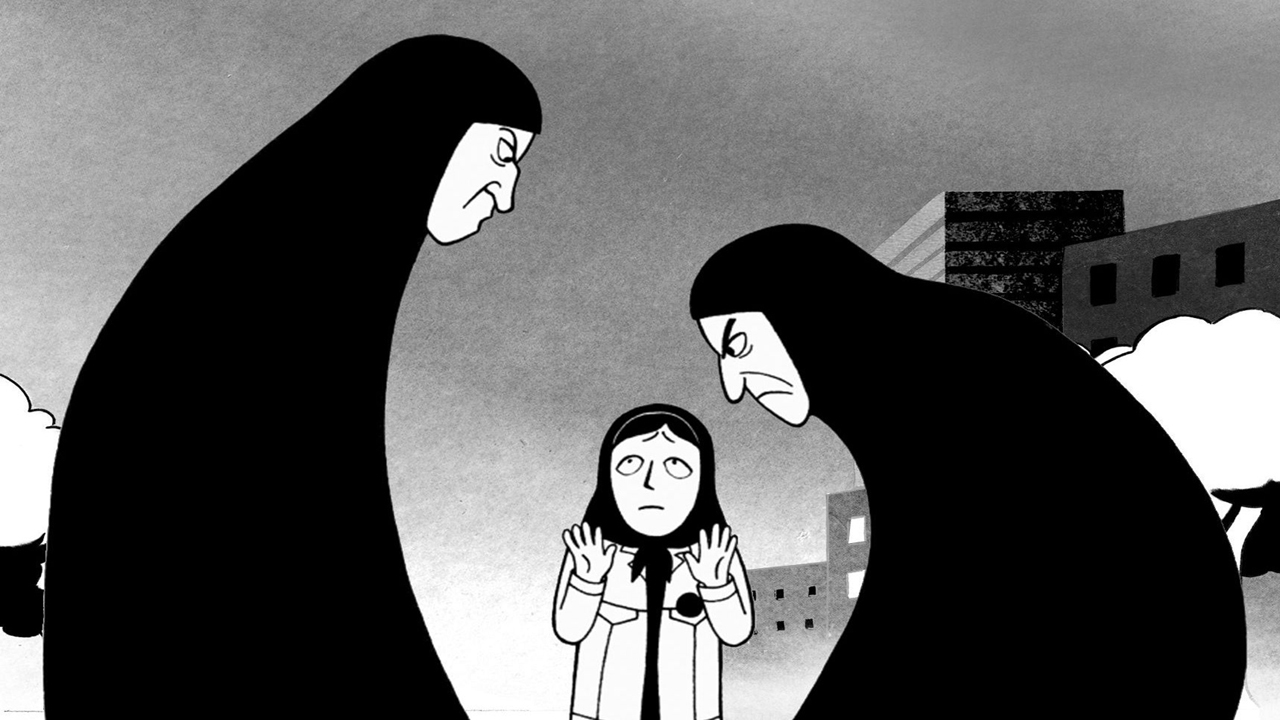
Events are predominately presented in black-and-white. This is an attempt by Marjane Satrapi to ensure that the characters and places do not come across as foreign — Satrapi has mentioned that her aim was to stress the very real possibility that any country around the world could fall victim to such afflicted circumstances. The black-and-white element works on another, perhaps less obvious level too. It makes the gloom appear gloomier. The woman, dressed entirely in black, appear merely as two eyes, a nose and a mouth, without any real semblance of energy or identity. People and places seem very distant. There is an explicit lack of modernity — something society normally associates with individuality and freedom. In this sense, the cinematography does a solid job in ensuring, at times, that the bleakness is truly bleak.
Although it faces one or two issues in terms of a narrative overload, Persepolis benefits from the unusual comic-book style it bears and triumphs both logistically and thematically. It is not only a penetrating look at the Iranian Revolution and the political instability of late 20th century Iran, but it also intuitively tells a story of struggle and the strength of identity.
Release Date: January 24th, 1941 (UK); September 5th, 1941 (US)
Genre: Drama; Mystery
Starring: Orson Welles, Joseph Cotten, Dorothy Comingore, Everett Sloane
“Rosebud.”
Since the release of Orson Welles’ Citizen Kane all the way back in 1941, that term has been analysed and re-analysed. It has been torn apart and put back together again. It has been evaluated in reference to each individual scene in the film, regardless of significance. Rosebud, the word proclaimed by Kane at the very beginning of the movie and the very end of his life, has become something of a symbol of mystery and intrigue in the film industry throughout the 70-plus years since its first uttering. Orson Welles, by way of a single word articulated from the mouth of one of his characters amid his first feature film as a director, has helped revolutionise filmmaking and storytelling. Citizen Kane is a sublime piece of work, a masterpiece, driven by a simple phrase that encompasses so much, yet means very little at all.
Citizen Kane retells the life, career and legacy of wealthy newspaper magnate Charles Foster Kane (Orson Welles), doing so through a combination of flashbacks recounting significant events, along with divulging tales from those who knew him, told in the present. Shortly after the death of Kane, it becomes the utmost priority of newsreel reporter Jerry Thompson to find out the meaning behind the influential man’s last word in the hope that he will learn something subtle-yet-meaningful about the extraordinary life lived by Kane.
There is not much to be said about Citizen Kane that has not already been said, and said far more eloquently than anything which is about to be written by myself. From the innovative cinematography delivered by Gregg Toland, to the trend-setting diversion from linear storytelling by director Orson Welles, to the array of impeccably delivered performances at the hands of the main cast members and all those in between, Citizen Kane truly is the Mona Lisa of cinema. The film works on every level, be it as a narrative about unknowingly losing grasp of innocence, or a compelling drama about finding out the significance of a single phrase. Welles is as much a stalwart behind the camera as he is in-front, achieving as close to perfection in both fields as cinematic history has to offer.
At the centre of events is the curious and mysterious word uttered by Kane at the very cusp of his existence: Rosebud. Just as soon as the snow globe exits Kane’s ailing grasp and the echoes of his secretive phrase have finished, news reporters around the world set their sights on becoming the first to uncover the true meaning behind Kane’s life, and in turn, Kane himself. “It is not enough to tell us what a man did. You have to tell us who a man was,” says one newspaper editor. The bustling nature of proceedings is in full flow, as smoky rooms concealing the faces of such media-men play host to many a conversation about who, where and how the true meaning behind Rosebud will be discovered. From the get-go this highlights the importance of Charles Forster Kane and the impact the newspaper magnate had on society — the period 1895 to 1941 is described in reference to Kane: “All of these years he covered, many of these he was.”
Shortly afterwards sees the introduction of the non-linear aspect of the film, as flashbacks stretching as far back as Kane’s early years begin. His childhood is primarily spent in a cold, wealth-deprived area of Colorado, where Kane is upbeat as a youngster and enjoys sledging in the snow. The positive attitude he boasts is maintained throughout his early adult years as Kane defies the wishes of his business-driven guardian Mr Thatcher and chooses a “fun” career in the newspaper industry rather than a money-focused empirical reign. It is clear that Charles Foster Kane is a beacon of intuition and enthusiasm in his younger years, with Orson Welles oozing confidence, intelligence and initiative as the title character. The quick-witted performance adopted by Welles is perfect for Kane, who maintains his perceptiveness as his life thunders on.
It is this innocence that Kane evokes as a child, and even to an extent as a youthful business entrepreneur, that plays a key role in the underlying Rosebud saga. As the newspaper magnate’s existence wears on, his ideas become more and more exuberant (turning an average singer into a stage star) and his relationships increasingly flail (entailing both his family and friends). His life is consumed by the news, both internally and externally, and the once composed, progressive entrepreneur begins to evolve into the brash and bold character that the opening title credits suggest. Kane never dreamt of money, only to be loved, as attested to by his closest friend. Perhaps this is a direct result of his relocation away from his parents as a child. When the love and admiration dwindles, so too does Kane’s predicament. Again, Welles is magnificent as he unveils a completely contradictory side of Charles Foster Kane to that seen at the beginning of the film. Only at the very conclusion does the implication of Rosebud take hold, as Citizen Kane comes full circle in telling the story of a once happy individual whose security has become overwrought with pressure and who seeks one final glimpse at what he once had.
Orson Welles embodies Charles Foster Kane like nobody else could, and delivers two impeccable performances (or three, if you count his role as director). Not only is Welles focused and driven as the lead, he is also very funny on occasion, which is in no small part down to the quick-witted nature of the character and performance. Alongside Welles, the likes of Joseph Cotton and Everett Sloane stand out as Kane’s best friend Jedediah Leland and loyal employee Mr. Bernstein, respectively. Dorothy Comingore gives a bubbly performance as Kane’s second wife and aspiring opera star Susan. Another outstanding contribution nod must go the way of cinematographer Gregg Toland, whose innovative camera work allows the audience to see what they themselves want to see, and whose inventive techniques back in 1941 have helped to pave the way for modern filmmaking as it is prescribed today.
At one point during the film Kane says, “I don’t think there’s one word that can describe a man’s life”. In essence, this is true. Although the driving force behind Citizen Kane is the grand search to discover what Rosebud means, the true story of the film is simply in retelling the incredible life of a man subconsciously pursuing that what he once had a long time ago.
Release Date: January 21st, 2005 (US); January 25th, 2005 (UK)
Genre: Comedy; Drama; Romance
Starring: Paul Giamatti, Thomas Haden Church, Virginia Madsen, Sandra Oh
Alexander Payne’s critically acclaimed Sideways is best described by the wonderful Roger Ebert as a “human comedy” because it is inherently funny in that you will laugh regardless of how you feel or where you are, and because it is about engrossing and affecting human beings. None of the four featured characters are perfect, some less so than others, yet on varying levels they all merit more than a degree or two of admiration; even though the two males in particular do the wrong thing too often. In Miles’ case, his inability to move on or tell the truth relentlessly hampers himself, whereas Jack’s carelessness and naivety frequently has a negative impact on those closest to him.
Miles Raymond (Paul Giamatti) spends most of his time teaching wearily, writing unsuccessfully, or drinking wine because it is the only thing he knows for certain that he is consistently capable of doing. A wine-aficionado, Miles decides to take his soon-to-be-married best friend and former college room-mate, Jack (Thomas Haden Church), on a week-long wine-tasting expedition as a final farewell to single life. Jack used to be a fairly successful actor but now plies his trade doing voice-over work for television adverts. Both men are opposites: Miles is quiet and very often lifeless in comparison to his overly energetic best friend. The one thing that both men have in common though is their shared struggle in accepting what they have (Jack) or what they no longer have (Miles).
One of the most endearing elements of Sideways is the relationship which Miles and Jack share. Externally, the duo appear to have very little in common, yet much like the wine they are drinking, there is a vintage dynamic between the pair. This strikes in the premature stage of their road trip as Jack’s first words to Miles are, “Where the fuck were you, man?” It is not before long, however, that both men are effortlessly trading life-stories and bonding over an expensive, rare bottle of wine. Jack is reassuring, but Miles is worried that the book he has written will not be accepted by the publishing company. From the outset, it is apparent that the film is in good hands as Paul Giamatti and Thomas Haden Church generate a believable on-screen chemistry. For every quiver of uncertainty from Giamatti, Church responds just as you expect a best friend would — quickly and decisively.
It is not long before the men reach their destination in the Santa Ynez Valley, at a restaurant which Miles eats in regularly on his trips, called The Hitching Post. Miles is recently divorced from his wife, who has moved on and is getting married again. A waitress at the restaurant, Maya (Virginia Madsen), knows Miles from previous visits and it soon becomes apparent through his inability to hold a conversation with Maya that Miles’ likes her, but does not have the conviction to do anything about it. Perhapsthis is because he shows no signs of getting over his wife. During another morning spent wine-tasting, the men run in to Stephanie (Susan Oh) and discover that she is a friend of Maya’s. Miles’ reluctance once again prevails as he is forced into a double-date with the quartet, whereas Jack’s over-exuberance is in full effect. With his marriage taking place in just a few days, he selfishly desires one last fling, highlighting his struggle to be happy with the cards he has been dealt.
Both men’s problems are derived partly from their lack of clarity with each other. The duo have been close friends for a lifetime and it is apparent that more often than not their focus has been solely on themselves rather than on trying to sort out the other’s problem. Miles is fully aware of Jack’s misdemeanours — he is having an affair with another woman days before his marriage — but Miles too busy struggling with his own relationship-less inadequacies to notice. On the flip side, Jack seemingly has been too tentative in the past when it comes to trying to get Miles to realise that he must let go of what he can no longer hold on to. The two woman that the men meet on the trip are key players in the goings-on: Stephanie, unaware of Jack’s impending marital status, acts as an appealing alternative, and Maya is the cure to many of Miles’ problems if only he would take the time to focus on her.
Even amongst the abundance of drama and difficulty, Sideways still finds a great deal of time to be funny and witty. This is in no small part down to the combination of a well-written script, the rapport between those involved and a jaunty, caper-like soundtrack. The two leading men find themselves in their fair share of comical situations, be that whilst playing a round of golf or when trying to retrieve a missing wallet. These absurd antics remain humour-filled despite the heavy emotional element which surrounds film, showcasing the versatility of not only the actors, but also of the director Alexander Payne and co-writer Jim Taylor.
The performances in Sideways are second-to-none. Thomas Haden Church delivers the perfect foil to his partner-in-crime’s unenthusiastic disposition as he is suitably loud and obnoxious, yet maintains a level of subtle affection towards the other characters. Sandra Oh is headstrong and teasing opposite Haden Church, playing her significant part in the proceedings solidly. Much like you would not necessarily picture Paul Giamatti’s Miles and Thomas Haden Church’s Jack as best friends, it is even more unlikely that Giamatti and Virginia Madsen’s characters would share affection. However both actors make it utterly likely. One scene in particular stands out between the pair and involves Giamatti gingerly describing why he admires the pinot noir grape so much: “it is hard grape to grow”; “not a survivor”; “needs constant care and attention”; “only somebody who really takes the time to understand pinot’s potential, can then coax it into its fullest expression.” He is describing himself, and Madsen’s gracefully delivered, touching reply makes for an extraordinary exchange.
It is no wonder Sideways was nominated for five Academy Awards, winning Best Adapted Screenplay. Alexander Payne creates compelling characters who increasingly flourish in their surroundings and as they come to understand each other. It is funny, moving, sad, and hopeful all at the same time, as it tells the story of people who are lost, but who just need each other in order to find themselves again.
Release Date: November 11th, 2011 (US limited); March 30th, 2012 (UK)
Genre: Documentary; Crime
Werner Herzog opens his haunting documentary, Into The Abyss, by conducting an interview with a reverend. During the short conversation between the pair, Herzog asks the reverend about a confrontation with a squirrel, which provokes an analogy entailing how the man of faith is unable to prevent death row inmates from dying. The individual in question, Richard Lopez, often spends the final moments of a death row inmate’s life with them, powerless to stopping their demise. The issue of death in real life and as capital punishment dominates the remainder of the documentary and acts as the subtext to a powerful and harrowing piece of work from Herzog.
Into The Abyss hones in on one particular case and the subsequent fallout. Herzog interviews Michael Perry, a man convicted of murdering Sandra Stotler in her home back in October 2001, and who is set to be put to death by the state of Texas in eight days. Perry maintains his innocence, instead positioning the blame on his accomplice Jason Burkett, who is serving a life sentence. Burkett, along with friends, family members, acquaintances and officials, give their thoughts on the dreadful situation — which also saw Stotler’s son Adam and his friend Jeremy killed — and on the cause for execution. Rather than focus on guilt or innocence, Herzog sets out to discover the reasoning behind why a human being kills, the role of the death penalty and the relationship between the two in regards to morality and rationality.
Werner Herzog is among the most influential filmmakers of any generation. During Into The Abyss, his inquisitiveness and fearlessness provide the basis for Herzog to delve into the subject matter without any influential bias. He asks tough questions, but not in the general sense. The German does not want to know if the accused believe that they are innocent, or if they do, why (although these details unconsciously become apparent). Herzog’s primary aim is centred on the present, on why people commit such atrocities, on the death penalty and its subsequent effects. He gently prods his interviewees and always appears to have their utmost respect. In documentary filmmaking, the relationship between the interviewer and their subject is key. It is paramount that there is an element of trust between the pair, otherwise questions become burdening and answers will be insincere. Throughout Into The Abyss, Werner Herzog’s effective interviewing abilities work so well that even when he is asking seemingly irrelevant questions (about a squirrel, for instance) he still receives an unmistakably relevant answer.
Much of the documentary plays out in a low-key manner. Herzog never appears on camera, his questions are often short and to-the-point and he allows for a quiet, unsettling atmosphere to generate through silently lingering shots — either of his sombre interviewees or of disturbing police footage from October 2001. The audience is always shown the aftermath of events, be that of a stolen car that has been left abandoned as it becomes a part of nature in an overgrown, wooded area or where cookie dough remains uncooked on a kitchen workshop. This notion that something out-of-the-ordinary has happened and all that is left is an unquestionable stillness plays well with the overarching theme which encapsulates the irrationality of murder and the abnormality of punishing murder by taking another life, along with the innate silence that follows. Although Herzog states at the beginning that he is against the death penalty, there is never an incline of bias one way or the other. Each of the individual interviewees have a different answer in regards to whether they believe punishment by way of death is acceptable, and each view is presented fully and concisely.
The documentary delivers interviews with a host of individuals who have been affected either by the specific case, or capital punishment in general. Through these, the importance of life and living slowly begins to peer out ahead of the cloudy subject of death. This is particularly true in regards to Herzog’s conversation with the father of Jason Burkett, who is also serving a lengthy prison sentence. Burkett’s father, worn out by drug use, alcohol abuse and the tribulations of the ordeal involving his son, talks about his insufficiencies as a father and partially blames himself for the murders as a result of his self-admitted failures. In doing so, he vicariously stresses the gift of living and offering a chance to others. Fred Allen, who formerly worked as a captain of a death house team, also speaks to Herzog. Allen’s experiences and the strain of his previous job sees him offer a valuable contribution to the death penalty debate — to which his affiliation has now shifted. These are just two of a number of conversations fragmented throughout, conversations which fluctuate from touching to troublesome to hopeful, but which are striking and poignant nonetheless.
Questions have been raised by viewers of Into The Abyss regarding why Herzog ignores significant facts aligned with the case. The most prominent of these issues that the director chooses to disregard is the omission of any mention or input from a key witness, Kristen Willis. The consensus amongst those critics and audience members who feel that this is a problem whittles down to questioning the legitimacy of the piece in regards to it not communicating the full and complete story. This is undoubtedly the case. Leaving out a significant fact in a documentary that is revising a murder case will definitely raise questions over the film’s content and the filmmaker’s true intentions.
However, Into The Abyss is not a revision of the triple-murder case, and it never intends to be. It is apparent that Herzog has deliberately refrained from raising the issue of Kristen Willis because his intention and his vision for the documentary is not to create a CSI-type, purely factual recount of a crime. No, Herzog clearly has a purpose beyond the actualities: he wants to explore the moral equation, the emotions connected with murder and state-induced-death, and most importantly Herzog sets out to discover who and why as opposed to what and when. If a piece of information (regardless of its significance to proceedings) is not relevant to the ambition of the documentary, then surely its inclusion is not necessary.
Werner Herzog’s unprejudiced outlook and calm demeanour enable him to delve into the reasoning behind why people kill and the effects of killing, by way of emotional, genuine interviews and from a variety of viewpoints, leaving the answers up to audience interpretation. Regardless of any existing complaints surrounding missing information, there is no doubt that Into The Abyss is an incredibly profound piece of work.
Release Date: March 13th, 1987 (US); June 26th, 1987 (UK)
Genre: Comedy; Horror
Starring: Bruce Campbell, Sarah Berry, Dan Hicks, Kassie DePaiva
The second instalment of Sam Raimi’s highly regarded Evil Dead franchise, Evil Dead II (or Evil Dead II: Dead By Dawn to be precise) takes a slightly different route as far as tone goes to that unearthed in Evil Dead. Here, Raimi chooses to essentially recreate the original and utilise the film as a comical nod to horror in general. With a shortage of laughs never in question and Bruce Campbell at the helm once again, Evil Dead II ticks all of the classic horror boxes in a knowing way. Unfortunately, this shift of focus to comedy shreds a great of the scare-factor away that the original provided so well, meaning the film succeeds as an amusing satire, but fails to deliver as a scary horror. Luckily, a scary horror is not what it is meant to be.
Evil Dead II begins in a similar vein to its predecessor, as Ash Williams (Bruce Campbell) travels with his girlfriend Linda to an old cabin in the woods. Soon after they arrive (that is, very soon after) Ash and his girlfriend are attacked by an evil spirit resulting in the death of Linda and Ash becoming partially possessed. Meanwhile, the daughter of the cabin owners, Annie Knowby, is also on her way to the forest retreat alongside her boyfriend and father’s associate Professor Ed Getley. The duo come across southern Jake and his partner Bobby Joe, who join them on their journey to impending madness and gore.
Much of what occurs on-screen during Evil Dead II is designed almost as a parody of horror, and is in place simply to make the audience laugh. From the outset Raimi puts his characters through the everyday (or, more suitably, every-night) rigours of horror: we see a spooky cabin in a dense forest; the demise of a loved one; a suspect bridge (the destruction of which would leave those who have crossed-over in isolation); a dark cellar; Gothic books with ancient text; and all of that makes up the opening half hour. When the focus is centred on these self-acknowledging elements the film works, and works effectively.
Not only is the setting clichéd and the set-pieces part of horror lore, so too are the characters, each of whom boast individual qualities. The heroic protagonist, the charming damsel-in-distress, the goofy idiot and his self-centred partner — they are all present. Evil Dead II‘s obvious satirical drive and the fact that it does not take itself seriously are the two proponents which make the comedy aspect of the film a resounding success. Raimi knows he is pandering to an aware audience, thus, when the additional ancient passages which must be recited to disperse the evil spirits are thrown into the unwelcoming cellar, or when a hapless Bobby Joe scampers out into the demon-infested forest without so much as a moment of rationalisation, a simultaneous chuckle can be heard from both the filmmaker and the audience — communally, we all get it.
Without a doubt, Evil Dead II trumps its precursor as far as comedy goes, but it is a far cry from its predecessor in terms of actual horror. As each scenario becomes increasingly humour-filled and events display the usual scary movie elements, the film quickly loses any lingering tension which would typically be present. Unlike The Evil Dead — which survived and made its name by way of its relentless atmosphere that ranged from discreetly eerie to outright frightening — Evil Dead II struggles to strike up any semblance of an underlying chilling tone. The overarching comedy out-muscles any potential horror during scenes, generating laughter where there would normally be scares. With that being said, the film is not trying to be scary. On the odd occasion that it does reach for a proverbial jump-scare, it does so because those scares have become a staple of horror.
Bruce Campbell’s Ash is as equally at home in amongst the comical nature of Evil Dead II as he was alongside the spookiness of Evil Dead. In fact, his outlandish antics and hilarious facial expressions are even more welcome this time around as they offer more to the film and, in unison with the satire, provide genuine laughs. The duel Ash is involved in early on with his possessed hand delivers outrageous merriment, the resonance of which holds up throughout the film. The supporting cast, on the other hand, do not offer as much comedy — at least not intentionally. Much of their involvement consists of loud screeching and accentuated vowels. Ash’s antics make up the trunk of the film, while the remaining cast are simply the supporting branches. A few snapped twigs have little effect on the strength of a tree, right?
With low production values and ridiculous-looking gore, Evil Dead II sets a comical tone from the get-go as it knowingly places clichéd horror characters in a classic scary setting and through common frightful situations. The shift in focus from terror to comedy negates any usual scares and turns them into echoes of laughter. Often, when a horror film of any ilk is not at all scary, something is not quite right.
However in the case of Evil Dead II, it could not be more right.
 Director: Richard Curtis






 Consumed By Film