White House Down (2013)

★★★

White House Down PosterDirector: Roland Emmerich

Release Date: June 28th, 2013 (US); September 13th, 2013 (UK)

Genre: Action; Drama; Thriller

Starring: Channing Tatum, Jamie Foxx, Maggie Gyllenhaal

White House Down is bonkers. The President of the United States wears white trainers; kids can get through security with an easily obtainable Chocolate-Factory-esque ticket; Channing Tatum has an 11-year-old daughter. Madness. Indeed, profusely fun madness. Roland Emmerich’s film will never win an Oscar for Best Original Screenplay — or anything, truthfully — but at no point does it set out to. Unlike the director’s genre-relevant 1998 attempt at Godzilla, a film still languishing in a pit of sheer idiocy, his most recent action-packed attempt promotes an infectious need to have fun. Spearheaded by a pair of goofy opposites, White House Down is more thumbs up.

In the midst of a tour of the White House set up to appease his politics-loving daughter Emily (Joey King), John Cale (Channing Tatum) suddenly finds himself as the sole agent against a group of terrorist insurgents. The Capitol police officer, fresh off an unsuccessful job interview, must formulate a plan to shield the President (Jamie Foxx) from intended harm whilst also saving the many hostages in danger, one of whom is Emily.

Perhaps unsurprisingly, this big budget summer popcorn bonanza is flawed. The screenplay written by James Vanderbilt sorely misses narrative intuition. During its predictably mellow opening act we can pretty much piece together the various components as the make themselves known on screen. In that dimly lit room over there is a shifty-looking group of janitors. Our lead has just been scorched for an insufficiency in trustworthiness. He missed his daughter’s recent talent show too. (She’s just popped off to the toilet alone.) Man, if only there was a way he could redeem himself. Wait, what is that sweaty, nervous chap doing with a concealed trolley? Those are only a handful of the film’s commonplace elements. This might be perfectly fine escapism, but it wouldn’t hurt to add a slither of acumen occasionally.

Its unwillingness to deviate from the cookie-cutter norm aside, there are other issues. The fact that characters aren’t well-defined in general is likely a factor, but it should be noted that females don’t necessarily get a fair swing at things. Yes, Joey King’s youngster Emily is a girl who, on more than one occasion, displays intellect far greater than many of her male compatriots — Joey is great, by the way — but the significance is that she’s a child rather than a female. Maggie Gyllenhaal plays one of the President’s assistants and early on looks like she might be thrown into the action, but is told to go home before impact. (“And that’s an order.”) Two others are fodder for Tatum’s macho-cool father: Rachelle Leferve, criminally underused as Cale’s ex-wife, and Jackie Greary as his current partner, or something. It’s not brilliant, but then, character development takes a universal back seat.

On a more positive note, White House Down is a heck of a good time. Foxx and Tatum are together throughout the vast majority of goings-on, their companionship a comedic revelation. The two couldn’t be more unbelievable as President Sawyer and would-be service agent, but the lack of realism is their collective selling point. In truth, Foxx plays Sawyer as a bit of a bumbling idiot who makes smoking jokes in a time of crisis and doesn’t know what YouTube is. It’s exceedingly difficult not to laugh out loud as he sticks his head out of a moving limousine, rocket launcher in hand. Often, Cale manifests as the saner of the pair, but he too gets in a helping of humorous quips. Both actors succeed at elevating the lazy script, at least in terms of its comical output. Their dynamic is utterly absurd but wholly endearing. Unlike its White House disaster counterpart Olympus Has Fallen, which fails because it takes itself too seriously, Emmerich’s piece is far more audaciously light-hearted.

Discretion isn’t on the menu. We nod knowingly at Independence Day references, guffaw fully aware at pictures of a flaming White House and are reminded that bombs are dangerous by their accompanying rapidly booming theme song. But it’s easy to accept these inclusions that would otherwise incur a barrage of sighs, because Emmerich directs with energy and a carefree nature that is sort of charming. At over two hours the film bustles by fairly quickly and the director should be commended for ensuring that proceedings consistently retain a sense of alluring anarchy. One of the funniest moments sees a character throw the phrase “military-industrial complex” into the bubbling cauldron of crazy. Its flippancy is ironic and probably intentionally so.

Though coated in numerous explosions — of which the film insists on singling each out, as if in confession — White House Down actually looks rather splendid. The visual palette is both impressive and excessive; fireballs erupt skywards from grandiose helicopter crashes, whereas on ground level Tatum and company fight it out in clashes layered with grittiness. It’s a testament to special effects team that high ocular consistency is obtained. Like Michael Bay, but entertaining.

Roland Emmerich wins the 2013 big screen battle of American homeland threat by quite some distance. His film certainly struggles to engage in fresh ideas and lacks far too much in the depth department to be considered as anything more than surface splendour, but it’s never boring. There’s no high-and-mighty movement going on here; this is popcorn-chewing, Coke-Zero-slurping cinema at its tastiest.

White House Down - Channing Tatum

Images credit: IMP Awards, Collider

Images copyright (©): Columbia Pictures

Dear Zachary: A Letter to a Son About His Father (2008)

★★★★

Dear Zachary PosterDirector: Kurt Kuenne

Release Date: January, 2008 (Slamdance Film Festival); February 22nd, 2010 (UK)

Genre: Documentary; Crime; Drama

How does one review a terribly sad personal visual tribute? It’s somewhat ironic that Kurt Kuenne’s diary of tragedy is such a labour of love, the filmmaker having traversed across the United States, Canada and even the United Kingdom to create his piece. But perhaps the irony is misplaced. Undoubtedly, Dear Zachary is profusely powerful and heart-wrenching, but it’s also a story about living. About loving.

Kuenne’s efforts are splashed across every frame (and every videotape stashed inside a box in the back of his vehicle) and it’s apt that by injecting so much passion Kuenne receives even more in return. The man at the centre of events is Andrew Bagby, the director’s dear friend and a victim of inhumanity, but someone who seemingly revelled in quite the opposite.

In early November 2001, Andrew Bagby was murdered. A medical student from California, the reach of his inherent popularity is made evident through the filmmaker’s interviews with a whole host of friends, family and colleagues. We’re informed that the collection of life recollections are for Zachary, Andrew’s unborn son at the time of his death.

There’s no real urgency to critique this film. Nor, truthfully, is there a need. But in a pithily vain attempt, here goes anyway. Technically, it serves a purpose: to clearly and concisely recount a story. We’re plunged into a moment in time, information about the person and subsequent criminal investigation gallivanting left and right. It’s difficult to chew on all of the data first time around which is why Kuenne navigates a narrative roundabout once or twice. The thing is, what we’re learning about is not simply narrative. It’s real life, and that’s why critically assessing events feels a tad unwarranted.

We’re taken completely aback because the story is shocking. We’re overcome by emotion because the account is upsetting. We’re rendered unequivocally resentful because the tragedy is unjust. Kuenne’s direction (in fact his everything: he’s also editor, cinematographer, writer and more) is deft; though we’ve a lot to consume, the presentation is done in such a way that we’re willing to engage and become attached to those on screen. We enter familial homes either side of the Atlantic and feel totally welcome, as if individually invited into them for a brief period of time. While the content is personal, the way in which it’s displayed is personable and therefore, at just over an hour and a half, proceedings seem to fly by.

Rumbling like a pitch black storm cloud alongside both the hearty family memoirs and some joyous and often amusing archive footage that shows Andrew’s attempts at acting for his best friend’s home-made short films, is the harrowing topic of Andrew’s untimely death. Though it feels rather flippant to discuss such a tragedy using obsolete language, this part of the documentary plays out like a fictitious crime-drama. It’s unbelievable. As the minutes tick away each discomforting revelation trumps the one preceding until the film reaches breaking point. If you watch the outing armed with prior knowledge of events, hearing them being discussed by Andrew’s loved ones will undoubtedly be disconcerting. Viewing Dear Zachary without any previous awareness of the subject though, is truly distressing. There’s no hiding that. This is a tough ninety minutes.

Criticising Kurt Kuenne’s intimate gift is not something on the agenda, nor should it be. Having said that, it’d be disingenuous not to point out a specific section that might sit uneasily with some. (As it does with me.) There is one moment that doesn’t altogether mesh well with what surrounds it, given how lovingly the remainder of the film is relayed. A particularly brash montage showing certain images and bolstered by grunge-like music is quite confrontational. Though, perhaps it should be. And there’s no arguing against the fact that its inclusion is absolutely with the filmmaker’s best intentions. Indeed, on the contrary, it represents the contextual horrors aptly.

As the film proceeds, it becomes drastically obvious just how wide Andrew’s web of affection had — and still does — stretch. From his parents, to a former fiancée, to English cousins, to criminal lawyers, a great number of people offer their own universally earnest and affectionate experiences shared with the medical student. The interviews, naturally, have a two-fold effect. In one of the film’s most chilling moments, Andrew’s justifiably distraught father explodes in a fit of sheer loathing and it is in this action, more than any, that we get a stark sense of just how much the tragedy and all resultant enquiries have affected those close to him.

You can’t put a price on a family heirloom and, in essence, Dear Zachary is a preemptive visual legacy. Thus assigning stars almost seems unnecessary. The film is rate-less. It’s Andrew Bagby’s story told by one of his closest friends, and it’s a troublesome watch. Hopefully, rightfully, the positive aspects prevail.

Dear Zachary - Kurt and Andrew

Images credit: IMP Awards, Collider

Images copyright (©): Oscilloscope Laboratories

Frank (2014)

★★★

Frank PosterDirector: Lenny Abrahamson

Release Date: May 9th, 2014 (UK); August 22nd, 2014 (US)

Genre: Comedy; Drama; Mystery

Starring: Michael Fassbender, Domhnall Gleeson, Maggie Gyllenhaal

As wannabe musician Jon strings together lines so monotonously hilarious in an attempt to spur lyrical inspiration, you get the sense that Frank is about to deliver (just ask the lady in the red coat). And it does deliver to a point. When it strikes a comical chord, the reverberating guffaws tend to be high in pitch and volume. Not to mention the outing’s headline act: a stupendous bodily performance from Michael Fassbender. But there’s something not quite right, a node of irony that occasionally jars indulgently. When wackiness overrules narrative, a handful of disengaging characters remain. Utterly bizarre beyond its frames, Lenny Abrahamson’s outing is as much Talk to Frank as it is Frank Sidebottom.

A keyboard player languishing in his own pit of disenfranchisement, Jon (Domhnall Gleeson) finds himself taking the faux-piano reigns as part of an eclectic band. Frank (Michael Fassbender) is the lead singer, his psychedelic sound usurped only by the group’s psychedelic demeanour and his own terminal cartoon-head. At first, Jon is perplexed by just about everything the band has to offer. However, as he is dragged further into their unorthodox make-up by manikin-loving manager Don (Scoot McNairy), the keyboardist remembers his toils as a struggling musician and engages in a game of manipulation and admiration.

Though the antics are told from Jon’s point of view, the titular Frank is wholeheartedly the film’s star and this is in no small part down to Michael Fassbender. Stripped of any ability to facially exhibit emotion (an element quickly acknowledged in a humorous manner) Fassbender suitably readjusts in a display of manoeuvres that are as admirable as they are chucklingly peculiar. Like bees to honey, the band whiz to Frank’s side in a constant plea for attention, particularly Jon and Maggie Gyllenhaal’s stern Clara. Frank is the cream of the crop to them, both of whom aspire to gain his level of musical insight and, in the same vein, we look to him as the central figure of goings-on.

Fassbender’s vocal expression is intentionally difficult to pinpoint, an element that bolsters the mystery surrounding Frank — it also adds verve to his singing which sees one scene towards the end particularly stand out. It’s not necessarily Fassbender’s face that garners any amount of intrigue — we already know what the Irishman looks like — rather, it’s his character’s motivations. (“What goes on inside that head, inside that head?”) Even then, the reason behind the lead singer’s mask-wearing becomes irrelevant as Fassbender’s actions whilst wearing the head gear become increasingly engaging and unpredictable. A man without a face, but not without allure. Face hidden by a large head, if we didn’t already know it was Michael Fassbender we’d be absolutely certain it was an actor of extraordinary talent anyway.

Despite being too whimsical in dramatic delivery, Jon Ronson and Peter Straughan’s screenplay is often very funny. From shoddy song creation, to blunt feedback, to hurling objects at one another, there is undoubtedly a plethora of laughs to be had. Though, whilst striving for humour the outing progressively trundles through a sea of perplex. In itself, a film without conventional boundaries is not necessarily a bad film — conversely, though innately different, Valhalla Rising is surreal and still very good — but Frank suffers as it dips in and out of madness, resultantly losing tonal focus. Unless it can be found obscured underneath a papier mâché head, there’s no real on display plot here, not one of intuitive significance anyway. This is the story of a band locked away in a cabin writing an album. The attachment must therefore lie with those on screen and, out-with Frank himself, there aren’t many hooks.

Jon is our mediator of mania; he’s the ‘normal one’ in an abnormal setting. Despite Domhnall Gleeson’s best efforts, the character isn’t all that interesting; an inevitable outcome given those in Jon’s immediate vicinity — a fake head wearer, a wrathful theremin player, a manikin admirer — but the keyboardist is just a tad too plain and subsequently sticks out like a sore thumb. Even when he does generate a semblance of interest, it’s at the expense of likeability: as Twitter followers increase, affinity decreases. Clara presents an even greater problem. She’s dismissive and abrasive and this isolates Maggie Gyllenhaal’s persona. Rather than becoming part of the crazy prerogative, Clara exists disparagingly on the outside. Between plods of hysteria, the film puts all of its eggs into Frank’s basket, a lot for a faceless anomaly to take on. When inadvertently the most amiable presence is one wearing a mask, something ain’t quite right.

On another problematic note, Frank attempts to juggle the trials and tribulations of modernity and music, before incorporating issues of mental health towards the conclusion. We often hear of musicians hiding away in isolation as they congregate ideas for the next album in an attempt to avoid the hyper-connected external world, and this is exactly the case here. Frank and company occupy the confines of a wilderness cabin for months on end, though ironically they’re concealing their music from a non-existent expectancy — nobody knows who they are. Heck, nobody knows how to pronounce the band’s name (Soronprfbs, if you want to have a go) highlighting their incessant need to stand out in an overpopulated industry. The lead singer adopting a giant fake head is probably enough regardless. Jon invariably narrates proceedings via Twitter, a nuance that sears as an unneeded attempt by the filmmakers to make Frank more current. Perhaps those like myself without much musical inclination, other than downloading the latest hit from The Killers or Katy Perry, will struggle to relate to Frank’s attempt at industry irony. Abrahamson’s late bid to relate Frank’s concealment and musical idiosyncrasy with mental instability, though well-meaning, is pillaged by a lack of cohesion.

In response to Jon’s apparent anguish, a bystander confesses, “I thought it was supposed to be funny”. This retortion reflects Frank, a film that is inherently humorous yet unsuccessfully aims for melancholic satire. Are we meant to laugh or cry? I’m not entirely sure. The song plays boldly and certainly hits an occasional high note, but unfortunately suffers from a muddled beat in the long run.

Frank - Frank

Images credit: Movie Review World, Guardian

Images copyright (©): Magnolia Pictures

The King of Comedy (1983)

★★★★★

The King of Comedy PosterDirector: Martin Scorsese

Release Date: February 18th, 1983 (US limited)

Genre: Comedy; Drama

Starring: Robert De Niro, Jerry Lewis

From the moment Robert De Niro’s eccentric autograph-hunter Rupert Pupkin hops his way inside the limousine of talk show host Jerry Langford, The King of Comedy sizzles with motor mouth-induced panache. This isn’t the cynical nor the blunt outing that we have come to expect from Martin Scorsese. Instead, it is a light entry into comedy hall of fame, one that flaunts a relevant satirical backbone and a truly impervious performance from the director’s right-hand man De Niro. Proceedings are aided by a snappy screenplay, energetic direction and brisk editing, but this is absolutely a one-man show. Elements of subtle psychosis are explored through the pitfalls of rejection but, at heart, The King of Comedy is simply journey of hilarious wit, De Niro its perfect driver.

Rupert Pupkin’s (Robert De Niro) dream is to become a successful comedian plying his trade on a personal talk show. He spends many a day persistently practising routines and his evenings glued to the rear entrance of stage-doors, impatiently awaiting the signature of a celebrity (you get the sense anyone will do). Upon receiving a bout of half-hearted vindication from Jerry Langford (Jerry Lewis) and a less than half-hearted promise that Langford will consider his talents, Rupert believes he has finally achieved the break he has been after. Only, the aspirer’s ambition far outweighs his common sense.

Robert De Niro has never been funnier. Rupert exists on the opposite end of the mentalist spectrum from Travis Bickle, though De Niro portrays each persona with equal amounts of verve and precision. Just like Travis, Rupert demands our utmost attention and more, though this time it’s as a direct result of an incessant need to talk his way into and out of every situation. De Niro effortlessly channels a man who always appears to be precariously teetering on the brink of a nervous breakdown, yet someone who still retains a peculiar air of discipline. His mannerisms are exceptional, displaying the actor’s decisive comedic timing. Interactions with Jerry’s receptionist are particularly sterling, not to mention an awkward card reading scene that encapsulates Rupert’s mantra: purposeful without structure. The film is less interesting when De Niro is absent from the screen, not because the remaining elements are poor, but because De Niro’s presence is simply that enticing.

Paul D. Zimmerman’s screenplay scorches with immensely delivered dialogue. It throws up a satirical funny bone that harbours the on-going effects of celebrity obsession, on both the obsessive and those being obsessed over. Rupert is an in-over-his-head autograph collector (“The more scribbled the name, the bigger the fame”), but his problem is a far greater one: he’s a frenetic attention-seeker. If it’s not a woman, it’s a talk show host, or even a wall covered in painted figures resembling an applauding audience — the latter is one of the film’s most disconcerting and telling moments, echoing the infallible pitfalls of rejection. Though admirably gag-full, The King of Comedy also ushers in an eerie strand that strikes an even greater nerve as we learn more about our wannabe comedian. For a split second, the culture of mania becomes humane.

We begin to feel sorry for Rupert, who is ignored by all those whom he admires. When Rupert sees the walls in Jerry’s office are painted red, desperation asserts that he wears a red tie during the next visit — anything to impress. The film encourages us to get on board with a man who feels hard done by in life and who subsequently uses this as justification to overbear. Rejection manifests in similar forms to those of modern denial; “company policy” loopholes, an assistant reverberating condescending tones and emitting dissociative remarks. There’s no doubting De Niro’s impact in terms of making his character user-friendly, but credit must also go towards how Scorsese and company present the character. After all, it’s easier to engage and spend time with somebody who you like, as opposed to a person less cherished.

At its most rampant when De Niro is in view, The King of Comedy peaks by way of the humour expelled. Believing the hype — mainly his own — Rupert exclaims extraordinary fact after extraordinary fact in such a nonchalant manner that we begin to wonder whether or not they’re actually true (“That’s Woody Allen… he’s a friend of mine”). Other amusing sequences include Rupert’s uncanny resilience that sees him consistently refer to strangers by first name as if on a first-name basis — he’s a bit like the annoying drunk seemingly frozen in time and on repeat. Even his attire is so silly that it garners laughter: from the uncoordinated suit and tie to the pristine hair and questionable moustache. Listen out for De Niro’s dynamite “MAM!” too.

It’s blatantly obvious that Scorsese cares about his characters, particular his lead here whom he treats with affection and injects with more well-roundedness than is custom for such a psychotic individual. This caressing nature is reflected in the film’s overall image, one far from the brutal shades of grey seen in Goodfellas or the not so subtle shades of black and white in The Wolf of Wall Street. Typical of Scorsese, The King of Comedy does arrive in tandem with an inert pizazz, though not the glossy kind seen in the aforementioned outings, but rather an artificial glamour mirroring the inauthentic essence of show business on display. Proceedings rumble as they near the inevitable and dramatic conclusion, which sees an utterly outstanding monologue that tows the line between funny and pained. It’s the golden bow on a succinctly wrapped present.

The other performances range from very good to decent. Jerry Lewis is Jerry Langford, a man devoid of any cheer despite his lofty position in comedy. Ironically, the same spot a lively Rupert vies for. Though he plays the quintessential victim, Lewis’ pinpoint dismissive delivery assists in spinning the traditional roles. We cannot help but side with the guy who is trying his damnedest to etch some semblance of enthusiasm from his successful counterpart. Sandra Bernhard isn’t quite as effective as Rupert’s fellow maniac Masha, though her character suffers from being too one-dimensional, an issue increasingly flagged up in the presence of a well-rounded Rupert. In fairness, the pair display quite the frazzled dynamic when together.

Though it’s not as scoping as many of his other outings, The King of Comedy is definitely one of Martin Scorsese’s best and most intriguing. Spearheaded by Robert De Niro doing his best funny-man-cum-insane impression, the outing spawns diatribes of electricity and opts to stand out from the crowd of convention. “Better to be king for a night than schmuck for a lifetime.”

The King of Comedy - De Niro

Images credit: IMP AwardsThe Guardian

Images copyright (©): 20th Century Fox

The East (2013)

★★★

The East PosterDirector: Zal Batmanglij

Release Date: June 28th, 2013 (UK)

Genre: Drama; Thriller

Starring: Brit Marling, Alexander Skarsgård, Ellen Page, Toby Kebbell

“You put your first choice in the middle, because putting it last is expected,” asserts private intelligence boss Sharon. The line is intended as a foreshadowing of upcoming covert antics, but unfortunately ultimately applies to The East in a more fundamental manner. After a strong opening compounded by some tense half-way happenings, the film conforms to conjecture as it nears conclusion. Tonally, we spend a lot of time in the right place. There’s a significant plot issue though, one that tows the line between too obvious and too presumptuous and that never really finds a happy medium. It’s a notable flaw, but one that isn’t terminal thanks to Brit Marling’s glue-like principal performance and an ever bubbling cauldron of questions.

With anti-corruption and pro-repercussion faction The East dishing out their own brand of justice on corporations that they deem highly unethical, undercover agent Jane (Brit Marling) finds herself dawning disguise in order to infiltrate and impede. Now known as Sarah — she is working covertly after all — the intelligence officer finds herself almost immediately drawn to the cult’s in-house authentic methods, not to mention the diverse personnel on show; from curious leader Benji (Alexander Skarsgård), to the well-meaning Doc (Toby Kebbell). Questions arise baring inconclusive answers and a mist of uncertainty soon shrouds notions of right or wrong.

It’s clear that director Zal Batmanglij and Brit Marling (they co-wrote the screenplay together) are both invested in spouting a nuanced rhetoric and raising contemporary queries here. And for around fifty minutes, the duo are fruitful in their efforts. From polished corporate desks to some gritty journeying inside a dark carriage, Sarah’s initial intrusion attempts land her amidst the unknown. She is unknown too; apart from determination and smarts, we don’t have much of inclination as to where the dial on her moral compass points. Far from east, presumably. There’s not an awful lot of dialogue in the opening act, further funding a disorienting sensation that often aligns itself with the cult-seeking occupation. This means plot exposition is at a premium which, for those well-versed in the surveillance-thriller genre, is flattering. Though, the average movie-goer mightn’t take too kindly towards the film’s preconceived expectation that its audience’s knowledge berth refutes narrative explanation.

Dilemmas spark early on, presenting a mind map of questions that spawn from one central musing: who are the real bad guys? In an age where recycling is embedded into the domestic environment, where we instantly charge multinational suits with having a financially-driven ethos and where our opinions clash murkily over Twitter hashtags, The East’s main inquest floats around a pool of ambiguity. For a while, this creates an uneasy atmosphere where trust is difficult to assert. We are inclined to vote for Sarah because she is the main persona, unorthodoxly charming, a do-gooder working for a company whose motto is to defend us. Yet it’s a private firm, Hiller Brood, the exact kind targeted by The East.

The East, a group of rebels whose incentives on the surface are valiant and contemporary, aimed at exposing corruption: Doc informs those who will listen about deceitful loopholes such as side-effects printed on drugs, the text we barely ever read, warnings that exist solely as a mechanism to deflect blame from manufacturer to consumer (“That’s how they rape you, in broad daylight”). But the cult’s methods are dubious and they carry the idiom of terrorism, a word we are programmed to vehemently oppose. Undoubtedly, Batmanglij and company are on to something; a modern hoodish thriller supported by an infusion of geopolitics and cult behaviour. Sarah’s experiences within the group consume most of the overly-long runtime and, unsurprisingly, the best interactions are those displayed during the film’s better early half. A family dinner is particularly creepy — leader Benji resembles Jesus with his scruffy beard and long brown hair as he sits at the head of the table, his disciples scattered around waiting to comply, candles flickering and fighting off darkness.

Despite a promising inception, The East eventually disposes of its affecting restraint and increasingly succumbs to a please-the-masses mindset. From beaming an off-kilter aura akin to that of Batmanglij’s previous outing Sound of My Voice, proceedings undergo an unnecessary tonal shift and begin to closer resemble the slick blueprints of something like 21. Instead of seeing odd rituals, we watch The East group cohesively strategise and execute plans that become progressively silly as goings-on advance. A polished and shrewd heist-like presentation often carries dangerous affection — we tend to revel in well-executed wrong-doing (think Ocean’s trilogy). This is certainly not the type of admiration that should be associated with secretive and brooding cults, yet it’s the kind seeking approval here. After establishing a plethora of ambiguous players, it’s almost as if the film is trying to make our mind up for us by attempting to manufacture likeability, even though The East aren’t a particularly amiable bunch.

Worse than that, searing plot-holes begin to undermine the cult’s mystic air: they don’t do any significant background checks on new members and allow people to leave base for extended periods of time, two missteps that do not align with the meticulous planning that goes on prior to delivering their threats. Very early on a member finds out that Sarah is not who she claims to be, yet said person places more trust in the threatening stranger than her pseudo-family. How the clan has survived without being unmasked, either publicly or at least to the authorities, is anyone’s guess. Answers evade me.

Notwithstanding these shortcomings, the film is held together by an excellent central performance from Brit Marling. Unlike in Sound of My Voice, Marling portrays the afflicted rather the allusive and does so with some gusto (she practised freeganism before filming in order to gain a more realistic character perspective). The actor always transmits an enchanting scent and always seems at home when working with a degree or two of obscurity. Throughout, she must juggle two different personalities — the investigative agent and the cogent clique comrade — and manages to do so while evolving Sarah’s outlook rather than sacrificing her continuity. The narrative may jar, but Marling’s character definitely does not. Ellen Page plays Izzy, who is most affected by the plot’s occasionally far-fetched demeanour. Alexander Skarsgård is good as Benji, injecting an eerie charisma that, inevitably, cannot be sustained. Doc is the most genial cult member, and it is to Toby Kebbell’s credit that we don’t feel relentless sympathy for him — in spite of his predicament, Doc comes across as strong rather than weak.

Zal Batmanglij and Brit Marling try in vein to recapture the ritualistic mystique that reverberated through their previous collaboration, Sound of My Voice. The duo get too caught up in plot endeavours though, birthing a disconcerting genre mishmash. Nonetheless, The East remains a solid outing thanks to Marling’s engaging performance and a handful of relevant societal reflections.

The East - Brit Marling

Images credit: IMP Awards, Collider

Images copyright (©): Fox Searchlight Pictures

Locke (2014)

★★★★

Locke PosterDirector: Steven Knight

Release Date: April 18th, 2014 (UK); April 25th (US)

Genre: Drama; Thriller

Starring: Tom Hardy

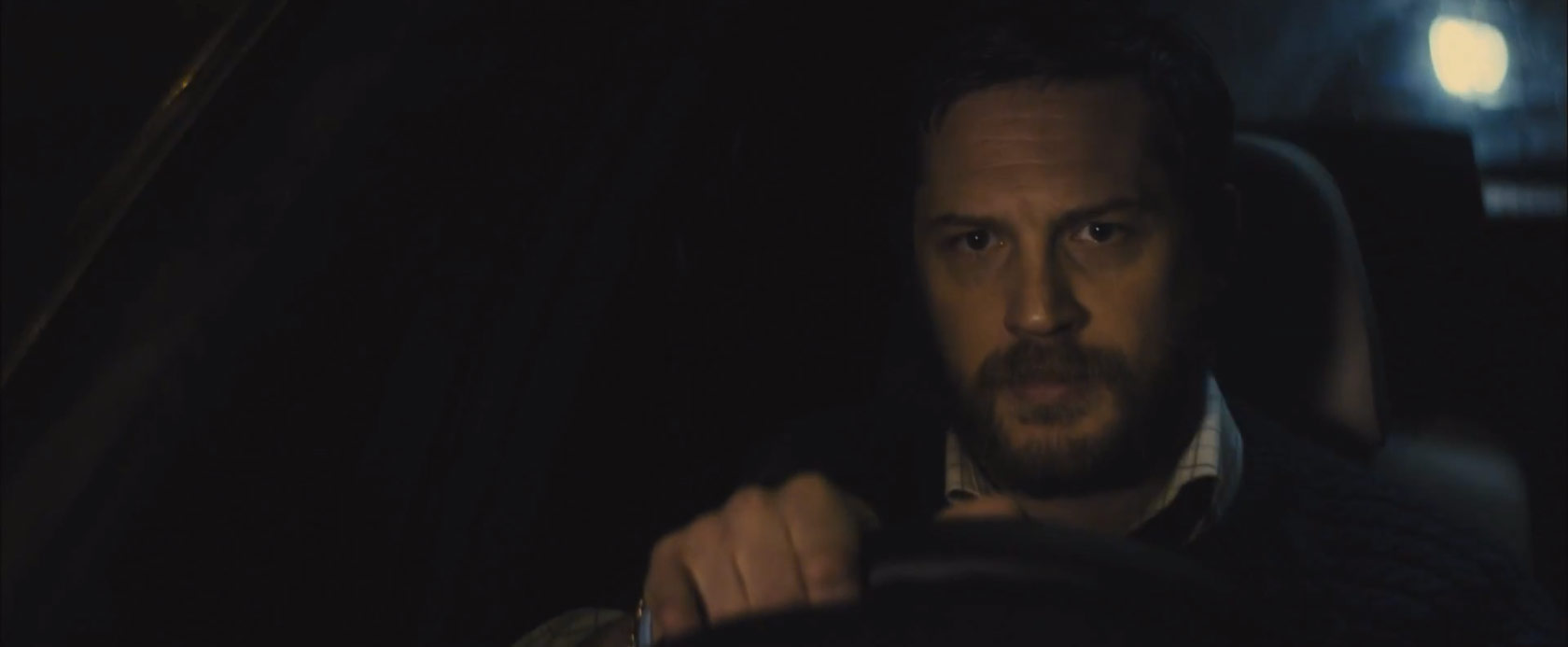
For Ivan, every bump in the road signifies another life collision. As he gazes through the car window, eyes lamenting, a struggling reflection cast before us, we recognise him as a decent human being in the midst of self-inflicted calamity. Phone calls offer a moment of salvation: relief, anger, humour, misery. But still, salvation from lawless thought. Often, Ivan — a man of structure — joins up the dots in his own life by relating an ingrained knowledge and valuing of cement and stability to the current unsavoury predicament in which he finds himself, and occasionally the driver turns to an empty back seat in order to converse with his deceased father. It’s in these moments of spiritual bartering that Locke struggles to maintain order. Remember, Ivan is a man of structure and the film thrives not through obvious semiotic links, but by way of his empirical, rubble-gathering conversations. Not to mention an exceptional solo performance.

As the night’s misty ambience shrouds his car, construction boss Ivan Locke (Tom Hardy) finds himself driving away from a highly imperative job at work through circumstances stemming from a past action that was not at all beyond his control. From home, his son continues to phone and commentate the latest football match, and from work, higher-ups and lower-downs transmit more bad than good news. But it is a situation on the periphery of his normal day-to-day existence that has Ivan abandoning domestic and occupational ship tonight. A birth — one primed to send a stake through his life.

Locke is about as ambitious as any film can get within the confines of a car and boasting a solitary character hampered by a snivel-inducing cold. Plot doesn’t really exist, at least not in its customary tangible form that encourages the camera to follow the actions of different people, to different places, in order to relay new actions. Rather here, any quintessential plot twist or narrative advancement lies at the mouth of Tom Hardy, whose words and facial expressions both have a defining hand in dictating every element of the film. At its core then, in order to be a success Locke perilously relies on a compelling central performance. And it certainly gets one.

At no point does the cinematic spotlight retreat from Tom Hardy. The Londoner has nowhere to hide — just like the man he is portraying, the car is his temporary prison; a voluntary prison, one that both Hardy and Ivan choose to enter. (His name, Locke, hints at confinement.) Further complicating matters, the actor must relay a rich Welsh accent for film’s entirety. It’s put up or shut up time and at no point are we crying out for Hardy to shut up. His dialogues caressed by a wonderfully thick cadence, the man behind the wheel not only garners audience sympathy, but also demands a degree of exasperation by way of an incessant need to fix everything (not to mention a prior noteworthy error in judgement). When Ivan converses with his son Eddie, voiced by Tom Holland, we can hear the compatible trust and loyalty between the pair. Misguided trust? No, not all. Ivan is too genuine in repentance. Yet when we ear-drop in on a discussion between Ivan and Donal, a colleague, it is obvious that the former’s practical desire to amend is being dispersed in the wrong direction. (“I want to talk about a practical next step,” he repeats.) That is, towards his job and not his family.

In establishing Ivan as an ambiguous sort, Hardy leaves it up each individual eavesdropper on his journey to decide whether or not his moral compass is shattered, cracked or still intact. Writer/director Steven Knight plays a role in formulating the character, of course, but Hardy’s delivery must be spot on otherwise the film is doomed. The lead is wearing so many different hats too: father, husband, son, consulter, instructor, peace-keeper. There’s not a single moment of respite in sight, not until he reaches his destination and by then, we’ll be gone. Hardy must relentlessly alter appearance without taking a breath. His character Ivan says it himself: “I have a list of things I have to do tonight when I’m driving.” Carrying wholesale weight on his shoulders, the actor remains poised throughout. If he hadn’t already appeared as Eames in Inception, or as Bane in The Dark Knight Rises, this is the type of performance that would’ve propelled Tom Hardy up an acting echelon or two. Instead, it’ll simply cement his lofty place.

In a film as minimally scoping as Locke, a slow and effective plot that builds towards an emotive, tense crescendo is necessary to go alongside a commanding central performance. When Ivan converses with air over his own mistakes and resultantly flip-flops between placing blame on his father and on himself, the outing loses some tension-building momentum. The character is one stimulated by integrity — a structurally damaging change in cement for his building enrages him, and he is left disheartened by a self-generated misdemeanour, two varying instances of corrupt integrity that affect Ivan. Whenever a phone call ends, the car dashboard re-manifests as an electronic satnav, telling us all we need to know about Ivan’s life and where it is headed: straight ahead, approaching isolation, dictated by others. Simple aesthetic insights such as the one offered by said satnav are alluring, unlike the occasional obvious and over-egged metaphysical spiels that don’t do Locke any favours.

Unlike Buried, a film that spends its runtime trapped within a coffin alongside Ryan Reynolds, there’s ultimately no concrete pay-off. Perhaps this has something to do with the aforementioned philosophical interceptions in narrative, jarring much pressure-building. It is also conceivable that Knight writes himself into a tricky conclusion, where there is no justification for an unambiguous ending. This isn’t necessarily a negative — credit must go to Knight for sticking his neck on the line and making a film as experimental as Locke, particularly in an era pillaged by financial behemoths where even low-budget productions cough up allocations of around £10 million. (Locke was made for less than £2 million.) At heart, it is the typical redemption story, only without any typical advantageous factors apart from dialogue — no emphatic score, or distressed damsel, or soaring visual palette. Not even an outright hero. The closest we get to unbridled tension comes during conversations between Locke and any other voice, rather than an empty back seat. Confusion rears and urgency arises, compounded by the screeching sound of sirens and flashing lights from police cars that intermittently race past in the outside world.

Ivan’s journey to London is an exercise in personal demon exorcism, and you are the judge in this tale of uncertainty. One thing is for certain though — Locke is a damn good attempt at something different. Narratively-speaking, the film doesn’t scintillate as much as it wishes to. Performance-wise, it just might.

Locke - Hardy

Images credit: IMP Awards, Vulture

Images copyright (©): A24

Calvary (2014)

★★★★

Director: John Michael McDonagh

Release Date: April 11th, 2014 (UK); August 1st, 2014 (US)

Genre: Comedy; Drama

Starring: Brendan Gleeson, Chris O’Dowd, Kelly Reilly, Aidan Gillen

John Michael McDonagh’s second venture into the directorial settee is a significant improvement on his fun but ultimately forgettable 2011 debut The Guard. In Calvary, many previously utilised elements are retained — namely Brendan Gleeson, dark comedic undertones and Ireland — but an additional steadfast formula heralding both intrigue and earnestness offers robust support to these familiarities. This time around we’re essentially presented with the makings of a whodunit mystery, only nothing has been ‘done’ yet. It’s a ploy that keeps you guessing, one that forges with bleak humour and traces of hearty emotion (just about) resultantly presenting a film worthy of the talent displayed on-screen and the guile emitted from those off-screen.

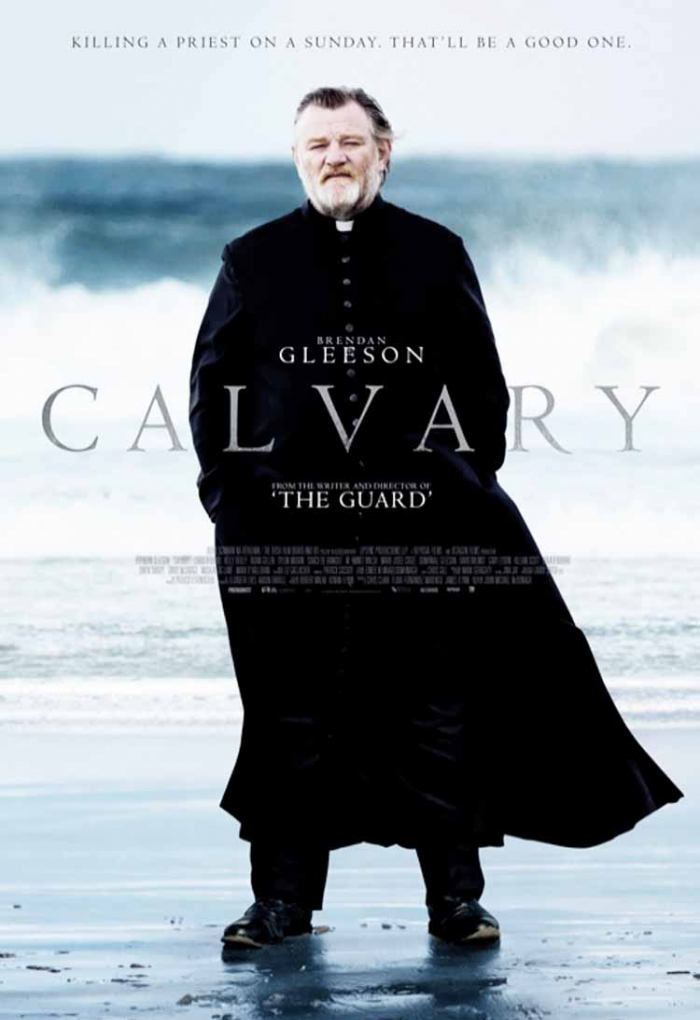
As one of the more considerate residents of Sligo, Father James Lavelle (Brendan Gleeson) often finds himself at the quarrelsome mercy of those whose problems determine their lives. His priesthood is undoubtedly a factor in this invariable trust too, only said profession is one James mightn’t be too fond of presently given his life has just been threatened by a troubled voice emanating from the other side of a confession booth. “Sunday week” is seemingly his final calling, because that way he’ll have a few days to get his affairs in order. How thoughtful.

Perhaps Calvary’s greatest strength is that it manages to successfully fluctuate between a variety of modes without losing its primary sense of direction. Most obvious is the blackly comedic tone that hollowly reverberates throughout proceedings. It should come as no surprise to those well-versed in the work of the McDonagh siblings — brother Martin wrote and directed the wonderfully downbeat In Bruges — that laughs are placed on a pedestal above the occasional murmurings of insensitivity here, but each quip is genuine in nature and far from callous. The film is akin to a live-action version of Guess Who? as numerous distinct personifications manifest on screen. At one point James is informed, “Playing you though now, that might be interesting,” enforcing this odd feeling of different characters role-playing. Many of the actors are funny in their caricature mannerisms, but there are a few who especially stand out by way of effortlessly humorous portrayals. Killian Scott is particularly amusing as the naive Milo, his stoic facial expressions accentuating a comical deadpan delivery (“The war on terror has no borders”). The ignorant doctor of Sligo, Frank Harte is gauged efficiently by Aidan Gillen; funny, intimating and overtly suspicious all in equal measure.

Brendan Gleeson carries the weight of the film upon his shoulders for its entirety (the camera hardly wanders from his bearded jawline) and evokes a sense of attachment in tandem with the viewer from the get-go. It’s not necessarily sympathy that we feel — James peculiarly appears in control of his own destiny despite the threat on his life — but rather it is the priest’s accommodating presence to those around him that warmly rubs off on us with an amiable sheen. Aside from the comedy then, is a story about a man attempting to come to terms with his profession, his faith and effectively his own life. James is unable to assemble the frantic thoughts racing through his own head never mind those of others, yet he still tries: “Everything’s fine”, he says almost systematically before realising his own desperate predicament, “I mean no, everything’s not fine”.

As the film progresses director John Michael McDonagh raises the currently prominent issue of priesthood stigma, motioning towards prejudgement and the idea of tarring all with the sins of a few — we become more aware of James as a human being, somebody dealing with more problems than any it seems. A notably poignant scene towards the fraught conclusion embodies the sentiment of forgiveness and wholly captures a sincerely heartfelt air that McDonagh absolutely appears to have intentionally sought out. Calvary exhibits a serious tone that never becomes overbearing thanks largely to a number of chuckle-worthy happenings, but a serious tone that demands consideration nonetheless.

The third side of Calvary’s narrative triangle is the aforementioned murder mystery element, and it too meshes well with the other components. From the exceedingly off-kilter opening, the film garners intrigue as a tension builds. There are constant references to sinning, to death and wrong-doing, remarks almost always aimed indirectly at James (“Evil thoughts floating around”). These serve as frequent reminders amongst the raft of humour and seriousness that there is a conundrum demanding solution. Though some characters occupy characteristics too obvious to be genuinely threatening, McDonagh’s dialogue-driven plot ensures that just about anybody could be the instigator of violence. Maybe the knife-wielder is Dylan Moran’s upper-class hedonist Fitzgerald, or perhaps it is Kelly Reilly’s distressed Fiona Lavelle who has her hand on the trigger — there are more than enough candidates offered up to consistently make us doubt ourselves as we attempt to play detective alongside Father James. One thing is for sure: as wide-shots of vast drumlins are shown leering over the town of Sligo, a progressively uneasy mentality begins to unfairly haunt our lead.

After an exceedingly well-executed hour and a half that sufficiently garners enough pent-up curiosity, Calvary does sadly struggle to keep a lid on proceedings during the final act. Events come across as slightly rushed without meaningful conviction, and one or two questions remain unanswered — though not in a self-inquisitive way, but rather completely unnecessarily.

With the exception of a far from catastrophic concluding blot, Calvary admirably manages to juggle humour, intrigue and seriousness without compromising any element. Presently, after the completion of two native outings, John Michael McDonagh isn’t all that far from replicating his brother’s In Bruges-esque achievement, a pretty darn good feat in itself.

Fargo (1996)

★★★★★

Directors: Joel and Ethan Coen

Release Date: April 5th, 1996 (US); May 31st, 1996 (UK)

Genre: Crime; Drama; Thriller

Starring: Frances McDormand, Steve Buscemi, William H. Macy

A jack of all trades, and perhaps one of the best. Shuttled forth by a bleakly comedic narrative, Fargo occasionally amps up the awkward, tie-loosening tension before ploughing right and left into a caveat of blunt criminality. There’s an inherently dramatic element too, the underbelly of bumbling luck and the ultimate tale of karma. The Coen brothers boast a unique style; precise in their crafting and often ironic in their delivery, a deliriously absorbing mantra that stretches far and wide here. Characters gargle seemingly innocuous lines of dialogue, yet a nonchalant poise often demands bouts of laughter. And therein lies the film’s most admirable quality: it makes you guffaw through moments of sadism, but never denounces you for doing so. The sibling duo at the helm aren’t overly serious in their direction (only when required), yet still manage to divulge a genuine sense of authentic story-telling. In Fargo, every scene holds a certain weight and although engagement with the particulars is at the viewer’s discretion, there’s never a sense of an overbearing burden. Yaaaa.

In Fargo, North Dakota, police chief Marge Gunderson (Frances McDormand) — a woman as cheerful as she is pregnant — is called to a road-side accident harbouring two casualties. Only it’s not an accident, and is instead part of a series of unfortunate events set alight by car salesman Gerry Lundegaard (William H. Macy) in an attempt to recoup much needed cash for his family. A master plan that would garner appreciation from the likes of John Kramer, Gerry hires a pair of quintessential henchmen to kidnap his wife and subsequently demand an $80,000 ransom, the spoils of which would be shared between the trio of plotters. Only Gerry is deviously untangling his own personal puppeteering strings, ready to juggle them against his father-in-law in an attempt to gain one million dollars from the extravaganza. In Gerry’s anxiety-plastered eyes, family comes first… and last.

There’s an ever-present aura that wilfully jaunts around any Coen film. It’s easy to spot, deliberate in implementation but astutely subtle as to never degrade proceedings. Drawing upon the experience of 16 previous films, seeing the words “Joel and Ethan Coen” sprawl across the screen nowadays prompts an intrinsic knowledge that meticulous sardonicism will soon be lingering. Released when their three-decade-old filmmaking odyssey was eighteen years younger, Fargo might just be the sibling duo’s most complete diamond of irony. Some films might be more wholesome in their flippant ideology, for example O Brother, Where Art Thou? and its caper-esque comedic quality, whereas others will undoubtedly offer greater absorbency through numerous interpretations and delightful tones, such as Inside Llewyn Davis. You’d be hard-pressed to come up with another Coen creation as genre-splicing as Fargo though, for this conglomeration of classification is what cinema is all about.

In a Minnesotan setting bitten by frost and populated with oddities constantly attempting to cover their innocuous tracks (“I don’t vouch for him”) the Coen brothers present and develop a number of wholly recognisable characters. Carl Showalter and Gaear Grimsrud are the absolute epitome of a caricature criminal partnership: the snivelling manipulator, out of his depth but armed with a motor mouth, and the dumb brute, purposeful only in violent outbursts or foul language. Gerry Lundegaard is the struggling businessman who ventures further into the ocean of uncertainty than he should, and is all the more blundering for it. His father-in-law Wade Gustafson has more money than patience, and decreases in accessibility when he knows his cash is at risk (“A lotta damn money” is one of the funniest gags). These characters are familiar, but they are also affectionately handled and escorted through a variety of tonal preoccupations, from comedy to crime to drama, constantly forging energy and slap-stick-like commotion. Our child-bearing detective Marge is the only figure who detours from the norm; noticeably pregnant, deliriously good-humoured and actively chasing murderers are three traits that do not often mesh together. This hodgepodge collection of characters coupled alongside a narrative that explodes with vibrancy, will refrain from giving you enough time to reflect on what just happened before it makes you ponder what’s going to happen next.

Yet, in spite of a growing sense of madness, the Coens always appear fully in control. Although the narrative is idiosyncratic — one minute a Steve Buscemi facial expression will have your jaw aching and the next a gunshot will leave you in shock — there is a point, a certain method, to all on-screen antics. The craziness of each character reflects the madness of his or her actions, prompting us to consider the length of a person’s sanity during tough times, whilst simultaneously sending out a nod towards the wondrous scope of cinema. Masterfully, the Coens develop a blunt and sadistic sense of realism amongst the hilarities. Fargo details karma as a rapid mule with more bite than the cold landscape from which it festers. In this tale of people playing people playing people, only the people face the consequences.

Shepherded by Roger Deakins’ icy cinematography, the arctic setting becomes a player of its own as it seeps into every other aspect of the film. Most characters endure cold minds. Lasting shots of mundaneness appear frozen to the screen. There’s a stiff lack of motivation, embodied emphatically by Marge’s police partner who can only conjure up phrases such as, “Watch your step Margie,” and, “You okay Margie?” as the heavily pregnant woman inspects dead bodies. Even the comedy is frosty — plotting and kidnapping is carried out in an atmosphere far more jovial than intense. Though, the funny buck stops at murder, an action presented more chillingly and viscerally than any other.

Regular Coen contributors Frances McDormand and Steve Buscemi are once again on hand and, alongside William H. Macy, deliver terrific performances. Humour is the common denominator for the trio, though the source varies. For McDormand, an incessant politeness in the face of violence and misnomer creates a peculiar dynamic. McDormand’s poise throughout sees Marge one step ahead of the game, even when she’s a day or two behind the others. Entirely the opposite, then, is Macy as the bumbling goof businessman Gerry. Gerry’s idiocy is built from a spectrum of nervous facial expressions and worried posturing; an unassured plight that sees no positive solution. He’s anxious to a T, but so dud-like that you sort of expect his ridiculous plan to come off in a spectacularly inadvertent fashion. The third of three great performances derives from the acting chops of Steve Buscemi, whose raging demeanour funds a big-mouthed little guy not far removed from Tommy DeVito. He relentlessly contradicts himself and thus withholds attracting seriousness, but it’s obvious that Buscemi is having a blast with the role and fun is infectious. It also helps that he gets many of the funniest quips.

The Coen brothers leave nothing to chance and inject Fargo with fastidious application — it’s no surprise that a wintry white landscape pronounces vivid red blood. The film will keep you guessing, is littered with humour and completely embraces the medium from which it thrives. In doing so, it even has the wherewithal to reflect on the outrageousness of its characters’ wrong-doings.

In the often correct words of Roger Ebert, “Films like Fargo are why I love the movies”.

Philomena (2013)

★★★★

Director: Stephen Frears

Release Date: November 1st, 2013 (UK); November 27th, 2013 (US)

Genre: Drama

Starring: Judi Dench, Steve Coogan

It’s not often you watch a drama about the culmination of a woman’s fifty year search for her long lost son, and end up spending a significant amount of time laughing in the wake of an odd comedy duo. Settle down at the mercy of Stephen Frears’ Philomena though, and that’s exactly what’ll happen. At its heartiest the film flows with a sense of uncertain determination embodied in diverging ways by the two lead characters, but in between these moments of bottled up emotion, at its most organic, Philomena charms in tone and entertains by way of a banterous dynamic. This incredible story pitched excellently is often funny, occasionally shocking and always peculiar in believability, even if it does lose some legitimacy at its conclusion.

Philomena Lee (Judi Dench) stares wholesomely into the eyes of a young gentleman pictured inside a piece of jewellery. It’s her son, Anthony, taken fifty years earlier and placed in the care of an American family. Philomena spent her younger years as part of an Irish Abbey, sent there by her disapproving father in a rebuttal to pregnancy. By chance, recently fired Labour government adviser Martin Sixsmith (Steve Coogan) is in attendance at a party where he is approached by Philomena’s daughter who pleas to have her mother’s tragic tale exposed to the world. It’s a “human interest story”, or for Martin, a way back into the positive glares of journalistic limelight, and so he embarks on a journey of discovery and hope with Philomena.

At the centre of the film is this weird dynamic shared between Philomena and Martin, one driven by religion and faith (or, in Martin’s case, the lack thereof). Having been forcibly separated from her child in an act of apparent punishment, Philomena retains a staunch belief in God and moreover, treats the present day nuns — of which still includes the prominent Sister Hildegard, who was instrumental in said previous events — with respect and without any incrimination. The horrendous actions undertaken in 1951 are presented in a unsavoury manner, as they should be, by both the film itself and just about every character, from tainted journalist to boisterous pub owner (“What about the evil nuns, what’s happening with them?”). Yet Philomena valiantly, admirably, stands by her beliefs and wholly practices the forgiving teachings, ensuring the narrative never plumbs over into anti-Catholic territory.

On the other hand, Martin embodies the typical cynical reporter. He spends half of the time answering his elderly associate’s questions about believing in God (“No”) and the other half truly puzzled by Philomena’s strong-willed demeanour. The journalist, who experiences a moral realignment himself as the film canters on, publicly denounces Philomena’s inbuilt faith having never sincerely lived it — although he was an alter boy once upon a time.

These quizzical debates between the pair provide the catalyst for the film’s good-humoured underbelly. That, in tow with the chuckle-worthy “little old Irish lady” and business-like, trying-to-reignite-him-career journalist, together in America, heralds a jesty atmosphere. The pair are outwardly mismatched, yet they share an intrinsic desire to reclaim a significant loss in their respective lives. For Philomena it’s her son, whereas for Martin it’s his dignity and journalistic aura, which is probably why he constantly contemplates writing a book about Russian history, a cultivated topic if there ever was. His initial detachment broods a condescending resonance towards Philomena, whose fickleness in the face of sarcasm offers a few comedic titbits. While Martin discusses how to approach divulging the story with his callous editor, Philomena amazes over the “the size of the portions!” in America, claiming she always worried about her son’s weight. While fully endorsing laughter, director Stephen Frears never marginalises his at times serious approach to the subject matter, without which the film would lose authenticity given the harrowing happenings occurred in real life, as part of Philomena Lee’s actual existence. A healthy balance is essential, and Frears achieves one.

Our two main protagonists are, in essence, conventional characters — a dour, disenfranchised reporter and an energetic-yet-inconstant wee Irish lady — but given the film is based on a true story, on genuine people, it is right that these characters should be conventional to a degree. That way they are recognisable and relatable, in turn evoking emotion from the audience. Judi Dench is wonderful as Philomena, humming the full dramatic spectrum in the process. She exhibits an ardent perseverance, the same kind that any mother would typify in a search for her child. However, at the same time she always carries that homely quality, a charming awkwardness in a world far bigger than and increasingly alien to her. As Martin Sixsmith, Steve Coogan is the perfect folly, boasting a very valid ‘been there, done that’ attitude. Unlike Dench whose character is a straight-shooter from the off, Coogan often has to reign in his thoughts (probably for fear of a skelp from his elder) as he gradually warms towards Philomena, instantaneously to the audience directing a growing fondness in the direction of Martin and his changing intentions.

Along with Jeff Pope, Steve Coogan brilliantly co-wrote the screenplay based on Martin Sixsmith’s book The Long Lost Child of Philomena Lee. The duo do an exemplary job in adapting book to the screen, a traverse that facilitates this witty, emotionally-tugging film. Nevertheless, there is a problem that arises near the very climax, one captured and dragged by the notion of dramatic licence. Dramatic licence, a function utilised by the industry’s best, creates tension where there may be none, or sprinkles a share of humour if it sorely lacks. In the case of Philomena, the dramatic licence becomes problematic because it goes beyond these constructed trivialities. There is a fabricated scene approaching the conclusion that is designed specifically to be a blow-off moment for Martin, but that resultantly, sadly, envisions a significant falsity. In a way the film takes an emotional liberty, the same kind that it spends ninety minutes preaching against. A disappointing blemish, but arguably the only one.

Martin Sixsmith, worried about his health, is told to run. This same deed is adhered to by Steve Coogan and Judi Dench, who collectively grab hold of Coogan’s delightful — if a tad tainted towards the end — script and run with it, creating waves of charm and seemingly incompatible comedy in the process. First and foremost though, this is a serious and harrowing story, and Frears ensures that it is treated as such. If you journey purely alongside the happenings on screen, not investigative of the climactic authenticity, Philomena might just tinge those emotions; the laughs and the cries.