The Borderlands (2013)

★★★

The Borderlands PosterDirector: Elliot Goldner

Release Date: August 23rd, 2013 (UK Frightfest)

Genre: Horror; Mystery

Starring: Gordon Kennedy, Robin Hill, Aidan McArdle

Elliot Goldner brings a heap of diligence to his directorial debut. The Borderlands is the Brit’s first venture behind the camera, the outing a horror flick that opts for patience over pillaging. Goldner manages the atmosphere well and his film builds to a genuinely creepy crescendo as a result. But the ingredients aren’t all that original, nor are they universally receptive. It is tough to root for obnoxious characters and tougher still to engage in such a familiar situation; we slot into the misty West Country, our time split between a haunted church and flaming sheep. Persevere, though, and be rewarded.

Having been summoned by the local priest, Vatican paranormal investigators Deacon (Gordon Kennedy) and Mark (Aidan McArdle) find themselves trying to disprove a plethora of mysterious happenings. They are joined by Gray (Robin Hill) who, despite being non-religious, sees more weight in the ghostly declarations than his colleagues. That is until what is perceived to be coincidental gradually grows stranger.

The first thing to note is The Borderlands’ lack of originality. This is no spectacular deviation from the horror norm, certainly not in terms of character or overarching story. Candles moving without provocation, noises emanating from walls, a rural location. The characters too, divided by scepticism and belief, are more or less conventional. Deacon, portrayed fairly well by Gordon Kennedy, is the moody Scot bearing a mysterious secret that is no doubt disquietingly aligned to the current job. He won’t share it though, and instead we must succumb to generic small talk that does nothing for the characters. Discussions enveloped in weird histories sort of add to the film’s simmering tension but retread old ground in content.

A beginning that is at best innocuous trundles over into annoying territory the longer our resident tech guy Gray is on screen. You’ll recognise him as the tech guy because the tech guy is always the offbeat one, harmlessly immature and progressively frustrating. Gray laughs at place names and rustles crisp packets in church. “Food, cleanliness and a little bit of naughty,” is one of his more egregious lines. And just on the off chance you missed all of that, we also see him also partaking in a lot of webcam installation. Robin Hill plays Gray without any real panache but the performance serves its purpose. They all do — Luke Neal is perhaps the most efficient as Father Crellick. The problem is that these people are not the most likeable bunch. Mark arrives later on and completes the undesirable investigative trio, he a bit of a bumbler who objects to almost anything. By the time the scary stuff arises, we don’t really care too much for anyone’s safety. (Though, admittedly, the film overcomes this issue in the end.)

After a fairly average, and arguably quite boring, opening half hour — one that occasionally plays out like a peculiarly mundane episode of Big Brother — Goldner amps up the menace. Shouting matches emerge sparingly but time is most often filled by a growing sense of risk. Patience is the film’s most effective employee; the director never panics despite a narrative that is somewhat uneventful, at least in horror terms. The creaky characters become less creaky because the film no longer wholesomely relies on their interactive antics. Dialogue that may have manifested as outlandish beforehand gains a degree of importance, particularly as the end nears. (“That’s nature for you Deacon, big stuff eating little stuff”). By the time the final sequence plays out we are just about glued to the screen in an ocular concoction of fear and intrigue. It is an ambiguous conclusion, but not an alienating one.

The Borderlands’ technical aspects deserve credit too. In between scenes, the camera likes to pull back and take in the spooky country surroundings, every so often reminding us of the characters’ vulnerability due to their presence in a relatively secluded area. A mountain looms in the background with grey, murky clouds swirling overhead relaying somewhat of a foreboding nod. The gloomy cinematography ushers forth a landscape that frequently becomes a character in and of itself. Goldner, who also wrote the piece, is savvy when it comes to his use of the found footage element. Cameras are mounted on walls and characters wear Google Glass-esque lens recorders, covering all bases. Subsequently, what we’re presented with is a hybrid of found footage and classic direction that works well.

Clocking in at just under 90 minutes, The Borderlands is a fairly short film. It squeezes as much horror juice and brooding anticipation out of its runtime as possible and does so without ever revealing too much. Held down by shaky characters and a largely unoriginal story, the outing — though admirable in its atmospheric quality — hinges on a strong conclusion. It delivers.
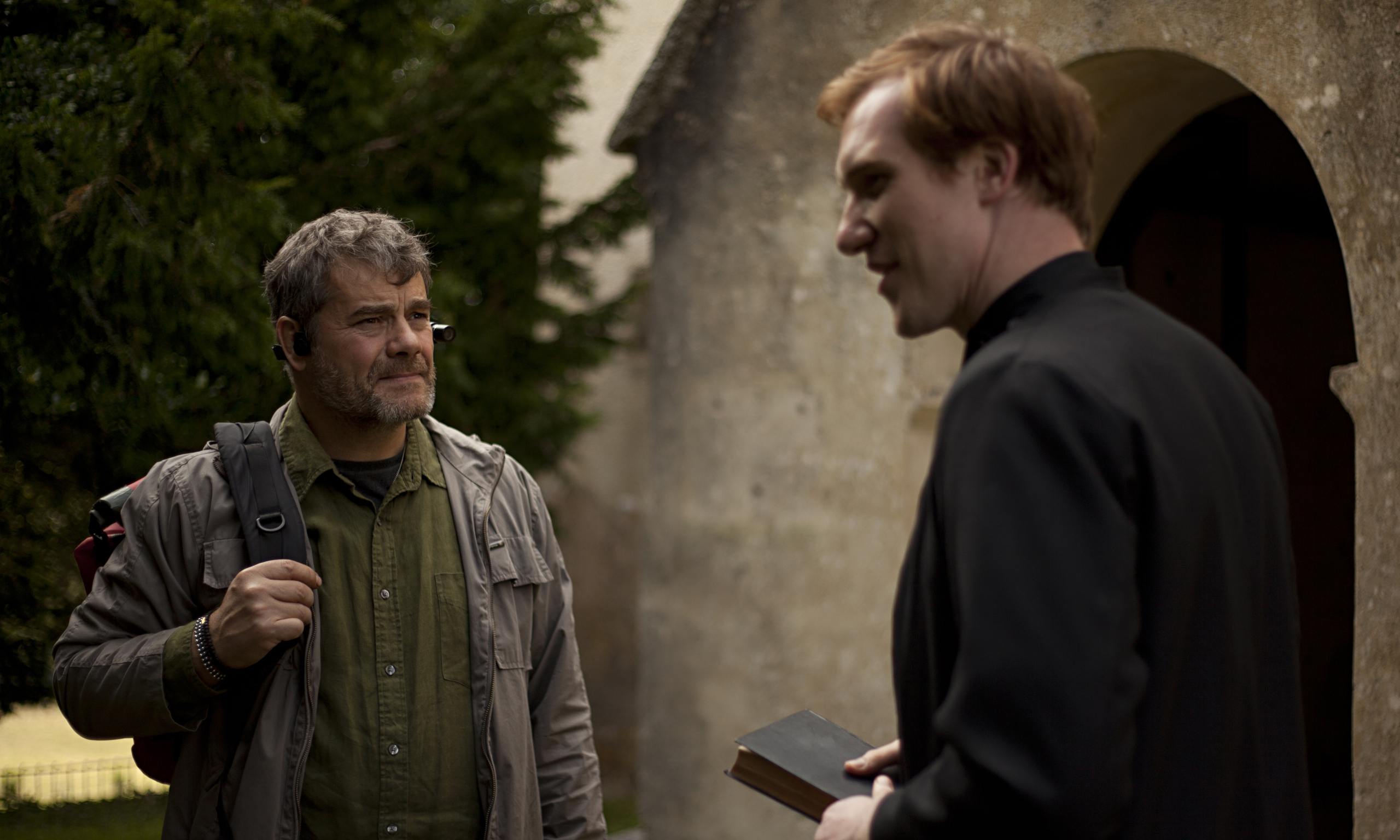
The Borderlands

Images credit: BBFC, Gallery Hip

Images copyright (©): Metrodome Distribution
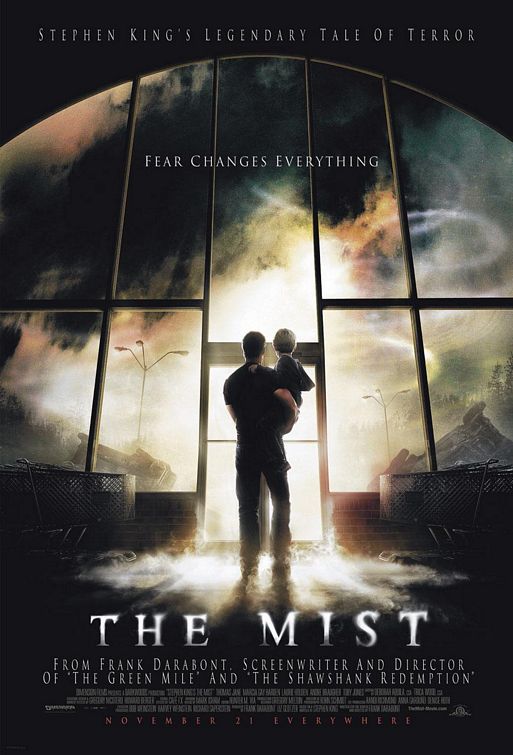
The Mist (2007)

★★★★

The Mist PosterDirector: Frank Darabont

Release Date: November 21st, 2007 (US); July 4th, 2008 (UK)

Genre: Horror; Science-fiction; Thriller

Starring: Thomas Jane, Laurie Holden, Marcia Gay Harden, Toby Jones

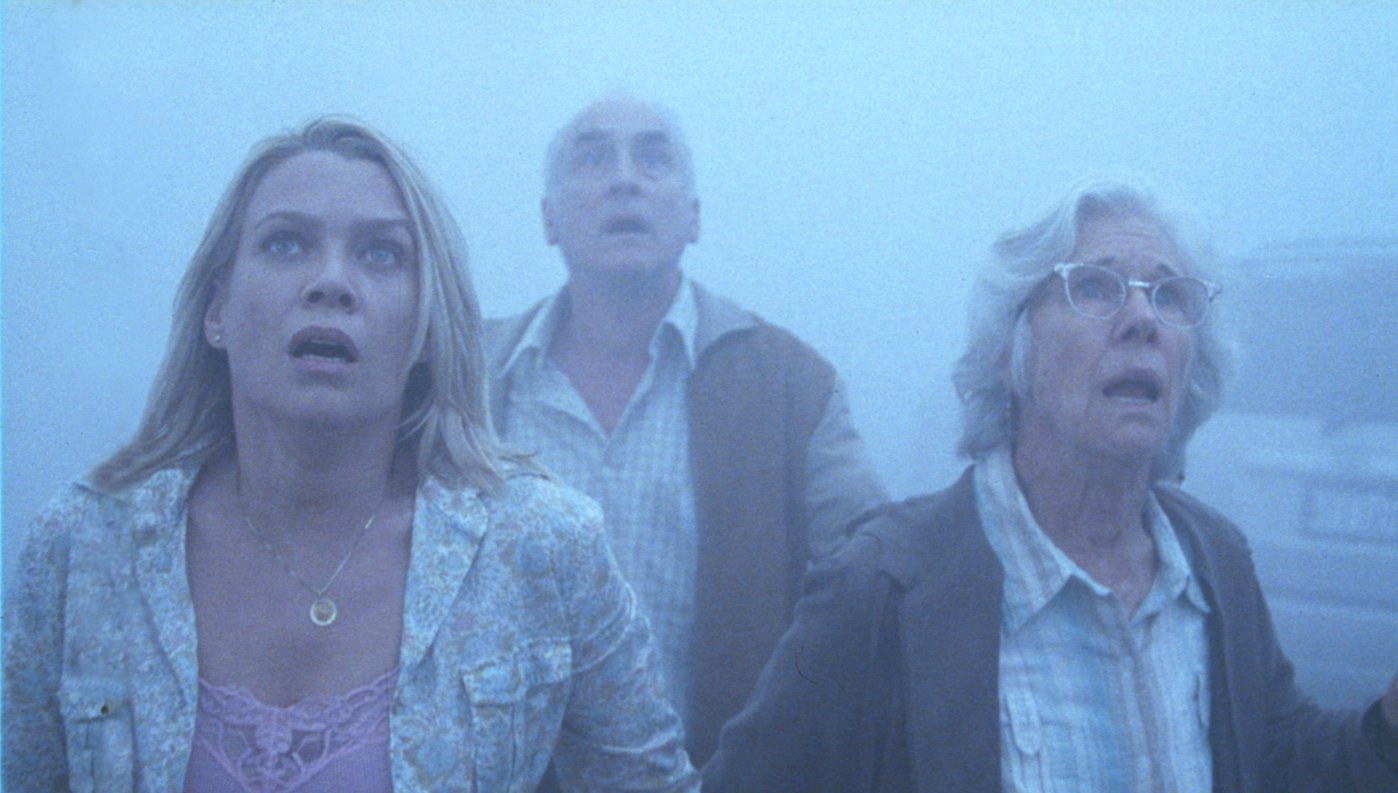
The Mist trundles along quite tediously throughout its opening 10 minutes. The acting is overplayed and stodgy, relationships are too obvious and the dialogue is half way towards egregious. Then we head into town, to the supermarket, where Toby Jones appears and everything subsequently kicks off. Mr. Jones probably isn’t the reason for the immediate turn around in quality, though I’d be willing to bet he is part of it. Rather, it’s Frank Darabont’s screenplay that ushers forth this change. Those first few scenes were likely crummy on purpose, as a means to lure us into a false sense of security. Because otherwise there’s no security here. Things get worse before getting worse still. The Mist fails to attain horror perfection but what it does do is generate a very authentic sense of social familiarity surrounded by science-fiction monstrosities. And that is impressive.

After a freak storm runs rampant in a small town, various residents decide to visit the local supermarket and stock up on supplies. Among them are David Drayton (Thomas Jane) and his son Billy (Nathan Gamble), however their grocery trip soon devolves into chaos as danger-infested mist sweeps across the area. The group now trapped and anxious, it soon becomes clear that the mist isn’t the only simmering menace.

Before the crisis has grown legs, we dip in and out of numerous brief conversations that take place around the supermarket. It’s akin to a smattering of personality tastings, writer and director Frank Darabont teasing us with the potential for clashes that may or may not arise. Shortly thereafter, a warning klaxon moans out with a distressing echo and a bloody-faced man runs maniacally into the store. (“Something in the mist!”) This sequence is an excellent preparatory slice that establishes the tone going forward: brooding and culturally influenced. See, though this is an outstanding horror candidate, it’s not necessarily scary because of the fog or the monsters that roam inside. The Mist is frightening due to its stark portrayal of humanity come undone. Just how far will humankind plunge in its most testing moment?

The populace picture that follows isn’t exactly pristine; what threatens to simply be a scare-fest swiftly matures into a community drama driven by the unravelling of social status feuds. The supermarket houses a wide range of contrasting citizens, some characters amped up to 11 but all recognisable nonetheless. Debates slowly simmer before raging on with a high intensity and it is the product of these disagreements that horrifies us. Darabont’s screenplay adeptly includes religion, politics and class — they’re all in here. Whilst the religious element frequently takes a front seat, the director skilfully navigates any possible obstacles of audience alienation by placing utmost focus on the people. Though religion is the vehicle for hate, it’s not the agent. Humanity is, and this is an attack on folk being bad within the context of desperation. Collective counterculture in its most horrendous form.

What we have then is a patient and precise narrative, one that knows when to reveal and when to refrain. Fairly early on, we worry that the monster in the mist has been unveiled too soon, a worry that quickly proves to be unjustified. The aliens aren’t necessarily the issue. In some ways the mist is a metaphor for the cloudiness of humanity; enter the swelling smog and things can only get worse, or avoid it — in other words, promote honesty amongst your peers — and life will be alright. Toby Jones’ Ollie says it best: “As a species we’re fundamentally insane. Put more than two of us in a room, we pick sides and start dreaming up reasons to kill one another. Why do you think we invented politics and religion?”

Jones is really good. His character is the most normal, a typical assistant manager who’s a tad overweight and generous with his time. He strikes up an alliance with Thomas Jane’s painter David and a number of other hopeful victims. Jane is a solid lead on the journey, so much so that his dependability factor is eventually usurped by a genuinely powerful emotional outburst. Laurie Holden plays primary school teacher Amanda, her relationship with David one that hints at romance without ever acting upon anything. It is worth pointing out the lack of romance throughout the film: aside from a speedily adjourned kiss there’s none to be had, perhaps another indication of the overarching negative vibe. The most effective performance emanates from Marcia Gay Harden as local religious nut Mrs. Carmody. Harden throws herself full pelt into the role, as someone who degenerates from harmlessly deranged to eerily psychotic to absurdly vile. Although there are a large number of peripheral characters, the potency of a few outweighs the flimsiness of many.

On a technical level, The Mist is efficiently purveyed. Rohn Schmidt’s cinematography shows traces of his work on The Walking Dead (ironically, he’s only one of many here who would eventually swap mist for zombies) and reflects the terror of events succinctly. It’s sufficiently gory without being too upfront, and the alien creatures look rather impressive. The camera makes an effort too, its aggressive movements creating a very chaotic atmosphere. On the other hand music hardly conjures a bar, Darabont instead finding solace in silence and substantial dialogue.

Having said that, the implementation of Dead Can Dance’s “The Host of Seraphim” to hauntingly serenade the film’s final scene is an inspired decision. Much has been made about The Mist’s conclusion. In brief, the ending works. It’s real life, if real life involved aliens and hopelessness. Admirably — and somewhat horrendously — there is no shirking away. But the less said about it the better.

The Mist currently stands as Frank Darabont’s last directorial effort and it’s a worthy swan song. This should come as no surprise given the filmmaker’s track record — The Shawshank Redemption and The Green Mile, to name but a few. The Mist is a methodological piece, one that unfolds with great purpose and honesty. It might encase humanity in an exceedingly gloomy shell, but in the dire circumstances presented who’s to say that this forecast is unfounded?

The Mist - Laurie Holden

Images credit: IMP Awards, Horrorphile

Images copyright (©): Metro-Goldwyn-Mayer, Dimension Films

You’re Next (2013)

★★★

You're Next PosterDirector: Adam Wingard

Release Date: August 23rd, 2013 (US); August 28th, 2013 (UK)

Genre: Comedy; Horror; Thriller

Starring: Sharni Vinson, AJ Bowen, Joe Swanberg, Ti West

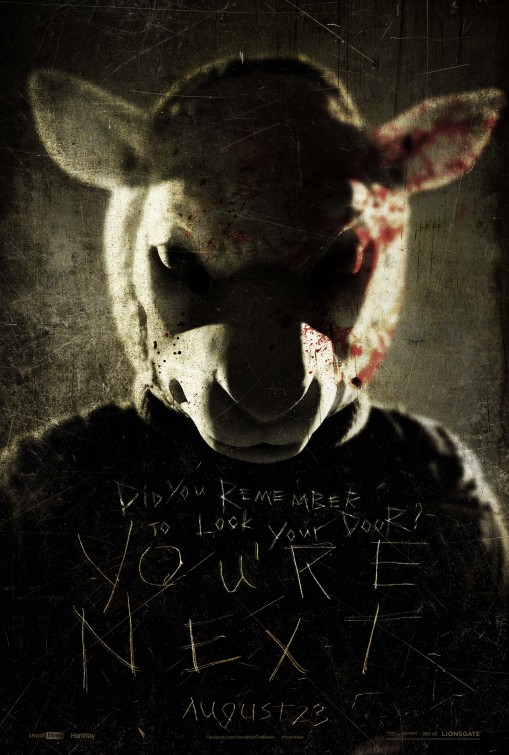
You’re Next is like a chocolate pizza: it’s propped up by two flavoursome ingredients, each one carrying a tenancy to be tasty without the other, but ultimately the hybrid doesn’t quite mesh together. And that’s not the only problem, given the pizza is also undercooked. Perhaps I ought to digress from food-related similes and start making sense. Adam Wingard takes scares and humour and crunches them together without unconditional success, in an attempt to make a witty horror film. He’s a smart director with a knack for the genre, which is why the creative funny parts work so well. But as he winks at us with satirical gags and rule bending, Wingard also slips in a helping of bewildered frights. The result is quite a confused outing, but it’s not without merit.

As far as family get-togethers go, the Davison clan aren’t having much luck. It’s mum and dad’s wedding anniversary therefore the whole crew have been invited over to celebrate. Erin (Sharni Vinson) tags along with her boyfriend Crispian (AJ Bowen), the latter hoping not to be outshined by his more successful kin this time. During dinner and an all too familiar serving of familial squabbling, a rouge arrow zips through the window. Chaos ensues. The Davisons are under attack.

Wingard casts his mate AJ Bowen in the main role opposite the fetching Aussie import Sharni Vinson. Bro points, eh? That’s unfair, because Bowen is actually fairly good at the personally insulted son and brother shtick, but it’s his in-movie partner who exits to the loudest ovation. Vinson is effortlessly charming and likeable, traits not always compatible with female leads in horror outings. Yet it’s her steely determination that convinces most of all; Vinson wears an air of intriguing mystique that coats her character in a bit more depth than is usually on display in these ventures. You’re Next isn’t just one of those ordinarily drab slasher flicks hell-bent on counting change over quality though. Captain Wingard is too canny for that.

The signs are plain to see from the get-go. Mother Aubrey Davison, on medication of course, exemplifies the OTT caricature of paranoia as she squeals and weeps her way through intruder anxiety. Others follow suit; from Joe Swanberg’s older brother Drake channelling his inner-Phil Dunphy (if the Modern Family keepsake was a douche), to the bubbly and seemingly spoilt Aimee played by Amy Seimetz. It’s the haunted house, the home invasion, the slasher. But it’s also the family dramedy wrapped in horror and, whilst the horror part flounders, Wingard’s amusing take on tribal bickering within a horror context truly succeeds. Erin epitomises the antithesis of both a drama-contained girlfriend and a scary movie chick. She’s the organiser, someone whose forward movements give her centre stage rather than a background stint. In way she’s us, shouting at every horror cliché there’s ever been. (Don’t go down to the basement, always carry a weapon, keep the windows boarded.) At one point Erin is informed, “I’ve never seen you act like this before”. “It’s a unique situation,” she replies, the interaction an indication of dissolving horror commonalities.

In some ways the film is a challenge to audiences, asking us to alter our perception and re-evaluate our willingness to accept and chew on genre staleness. A speech towards the end is a backhanded slap directed at those who gorge in genericism, who subsequently ignore the inventive pieces. Wingard has a palpable gripe. His first three films before this one — You’re Next is actually a 2011 piece — were all met with critical success, but aren’t at all well known. Home Sick? Pop Skull? A Horrible Way to Die? I’m certainly lost at sea. It’s time to rise from whatever rut we’re in and consider the hidden gems. Indeed, if they’re as perceptive as this ruby, Wingard has a point.

Unfortunately You’re Next falls flat on its morally-imbued face at times. It’s not scary yet it’s absolutely trying to be. The first attack scene around the dinner table wants desperately to be pulsating but ends up being too over-egged. We’re supposed to become enraptured in the immediacy of a horrifying ambush at home — shaky cam in full flow, drumming music beating emphatically, screams piercing — but it’s all too obvious. Comedy horror can work. An American Werewolf in London, for example, is as humorous as it is nerve-jangling. Here, exists a convolution of aim and execution. Wingard’s aim is valiant and he executes it with fifty percent triumph. The other half, the horror, is out of place. A case of the ‘quiet, quiet, quiet… BANG’ syndrome frequents proceedings. As characters are mercilessly slain we’re left in a state of flux: is this part of the satire, or a genuine attempt to frighten? Apparently the latter.

Having said that, the scare attempts do inevitably shower us with some moments of hearty gruesomeness. The film strikes as being a relative of Berberian Sound Studio, its audio effects as squelchy and excessive as they come. At some points the actors are quite literally swimming in pools of tomato-ey blood and guts. Throat slicing takes prominence, letting the soon-to-be deceased discover a cruel twist of fate in their final moment. It’s likely that the filmmakers are making a point about exorbitant amounts of red unfairly equating to disproportionate amounts of green. (That’s cash, as opposed to hash).

You’re Next fails to scare us because it leads us to believe that conventional horror simply isn’t scary. It’s a shame then that this falls on the conventional side of things when it’s not being astutely satirical. But Adam Wingard does a lot right and, even though his film mixes an incompatible broth too much, too often, it’s intelligent enough to warrant serious consideration. Who knows, this might even be the inaugural step in a new, smarter horror movement.

Maybe not.

You're Next - Baddie

Images credit: IMP Awards, Collider

Images copyright (©): Lionsgate, Icon Productions

Texas Chainsaw (2013)

Texas Chainsaw PosterDirector: John Luessenhop

Release Date: January 4th, 2013 (UK and US)

Genre: Horror; Thriller

Starring: Alexandra Daddario, Tania Raymonde, Trey Songz, Scott Eastwood

Talk about shooting yourself in the foot. Texas Chainsaw, the latest cynically-driven reboot/rehash/retread of Tobe Hooper’s masterful massacre, opens with a montage showing a series of short clips taken from its cinematic elder. We see 1974 Leatherface in all of his gritty glory, revving that infamous metal engine and thrusting it towards a rabble of victims without inducing so much as sliced finger. Ironically, John Luessenhop’s newest creation never exceeds the heights set by its introductory mosaic. The moment simply reminds us of the original’s greatness, a success that was never going to be on the cards for Texas Chainsaw. After all, this is nothing more than another cash ploy exploiting the historical coffers of the ailing franchise.

Upon hearing about the death of a grandmother she didn’t know existed, Heather (Alexandra Daddario) and her mates pack into a minivan and venture over to Texas to pick up her inheritance. The trip conjures up a fifth wheel but other than that nothing of note arises. That is, until they reach Heather’s newly acquired mansion, a place that houses more than just expensive cutlery and creepy family portraits.

Despite expunging a budget of around $20 million, Texas Chainsaw does its absolute best to parade as an amateur visual (mis)treat. Blood splatters imported from the 300 school of imagery are unrealistic and out of sync with the surrounding picture. It’s a struggle not to chuckle awkwardly at Leatherface’s body-chopping skills, or maybe the fault lies not with our masked murderer but with the overworked visuals department. Luessenhop should really have learned from the gory restraint championed by the original — at least that way any potential embarrassments on the CGI front would’ve been kept to a minimum. Besides, a substantial decrease in violence for the sake of violence might actually have equipped the film with a sense of mature purpose, and also saved those sweat-dripping studio bosses a wad of cash. Given the amount spent and available contemporary technology, there’s really no excuse for this 2013 horror film to lazily produce cheap gore.

Even worse than the visual continuity issues at hand are a whole heap of character continuity problems. There’s no avoiding the awfulness of those whose story we’re watching unfold. To phrase it justifiably bluntly, every single person on show is an idiot: the family lawyer who hands Heather her new house keys quite obviously knows there’s something iffy about the place, yet decides to bite his tongue; a police detective follows a trail of blood and wanders directly into mismatched danger, when halting five minutes for back-up would probably have been the more sensible action; whilst attempting to escape, the group decide waiting it out in a minivan that’s on its last wheels is a better idea than high-tailing it on foot. Watching the characters is painfully infuriating, even for a horror flick. Though it should be noted that “it’s a horror movie, what d’you expect?” isn’t a good enough excuse for poor characterisation. There is no excuse. People and plot, cinema’s most basic foundations, both crumbling here.

Texas Chainsaw bursts at the seams with so many genre clichés that we begin to wonder if the screenplay has been written by an actual human being with a subjective mind, or a horror slot machine that lands on cherry every spin. In fact the commonalities can be as local as they come on occasion; on their minivan travels the friends pick up a wanderer. Sound familiar? The symbolism doesn’t necessarily lie in the ‘what’ of this moment, but rather the ‘who’. From an eerily disconcerting hitchhiker 40 years ago, to an insane runaway three decades later, we’ve now been landed with a Calvin Klein model. A sign of the times, perhaps. Ultimately the narrative leans towards a phoning — or cashing — it in attitude and, given the film’s title was rounded off with ‘3D’ during its cinematic run, cashing it in feels like quite an apt description. To give the filmmakers’ some credit, there is an attempt to sever conventional ties in regard to the franchise, but this come across as desperate rather than inspired. Truthfully, the angle only succeeds in tarnishing the authentically terrifying mantra laid out in The Texas Chain Saw Massacre.

Rounding off the dismal outing is a handful of performances each lacking the same inspiration that those behind the camera are devoid of. The material might not be any good, but nobody manages to ascend the steps of unsullied. Alexandra Daddario is Heather and probably comes out less burnt than the others, but her talent far exceeds her display. Watch Daddario in True Detective to see a potential superstar. Heck she even gives a better account of herself in Percy Jackson and the Lightning Thief. Tania Raymonde likely wishes she’d stayed Lost. The only noteworthy point to make about her appearance is the inclusions of an incredibly gratuitous low-from-behind shot that’s only possible because her character ‘chooses’ to walk alongside a moving vehicle. (As opposed to travelling in it, like most normal folk do when they’re headed somewhere.) Trey Songz also shows up but doesn’t do any singing.

Texas Chainsaw is a project driven by financial gain and very little else. It shows, and in just about every aspect too. The film’s execution is sloppy, the narrative is terminally uninspired and most of the characters are borderline abhorrent. We don’t care at the beginning, and we care even less by the end. The only reason we don’t celebrate anyone’s demise is because that’d make us just as bad as them.

Texas Chainsaw - Leatherface

Images credit: IMP Awards, Collider

Images copyright (©): Lionsgate

Insidious: Chapter 2 (2013)

★★

Insidious Chapter 2 PosterDirector: James Wan

Release Date: September 13th, 2013 (UK and US)

Genre: Horror; Thriller

Starring: Rose Bryne, Patrick Wilson, Ty Simpkins

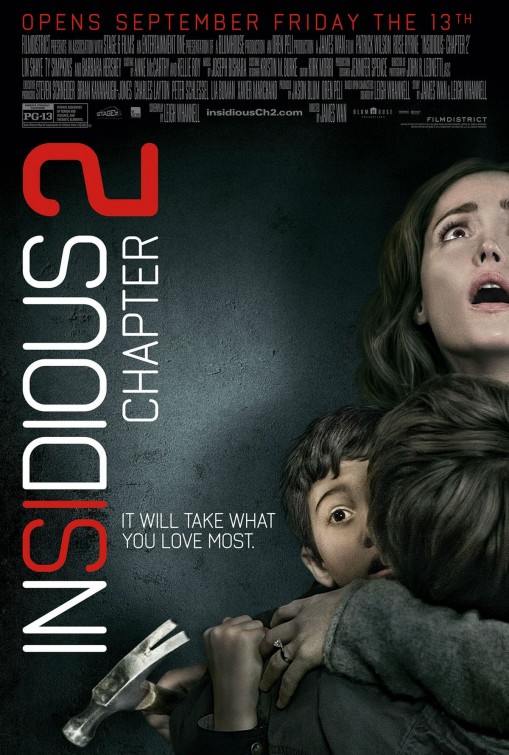
The second instalment in James Wan’s scary adventure opens with a game of ‘Hot and Cold’, where Participant A uses temperature to gauge Participant B’s closeness to a particular destination. Only, it should be rechristened ‘Manufacturing Scares’ because that’s exactly what the game is implemented for. In fact, the moment is indicative of Insidious: Chapter 2 as a whole, a film that lacks invention and overly relies on horror commonalities. Before the final credits roll we watch as characters partake in a Ouija circle, find a ghostly videotape and visit an abandoned hospital. (Guess what? It’s haunted). Discounting the occasional splurge of genuinely creep imagery, Chapter 2 is much the same as the first chapter but without the benefit of a new-born shine.

After a brief venture down memory lane — the origin of Josh Lambert’s (Patrick Wilson) uncanny ability is relayed — we realign with the present where the Lambert household isn’t exactly settled. The grizzly death of paranormal investigator Elise (Lin Shaye) has caused a stir, and Renai’s (Rose Bryne) subsequent questioning by a police detective in regards to her husband Josh’s potential involvement in Elise’s demise is also inducing internal strain; he seems different, evidently cockier. Her beau’s strange demeanour ain’t even the worst of it: the evil spirits are back and once again preying on Renai’s family.

If retreading old ground was an Olympic sport, Insidious: Chapter 2 would be blaring out the US national anthem with a gold medal hanging not-so-proudly around its camera lens. The title sequence is a carbon copy of what came before; aided by a congregation of piercing strings, blood red letters boom on screen and form the once foreboding INSIDIOUS inscription. It is sort of scary but the impact is far lesser here than was felt at the beginning of the premier output. Said string instrumental is part of the same score as before and, again, might have been quite unsettling if not for its overuse.

The familiarities aren’t simply local though, they arrive from afar. Chapter 2 has a number of its hands in a number of stagnant terror traits — James Wan meshes together haunted houses, desolate hospitals, alarming photographs and more in a hodgepodge horror pie that more resembles eight undercooked slices than a well-done whole. We’ve seen it all before, just one film ago in fact, and Chapter 2 struggles to stand upright on its own as a result.

The various elements don’t converse fluently either. If the first half is often predictable, the second is occasionally undecipherable. It’s a mess, really. Leigh Whannell’s screenplay devolves into a plethora of timelines and various existences. The writer dusts off his acting chops when a singular focus might have served proceedings better. Older and younger selves meet, but they don’t really. (Or do they?) Jocelin Donahue joins in at this point but her previous genre achievements fail to rub off this time around. Indeed, as far as haunted house epidemics go, The House of the Devil is in another league. Some effort is made to tie up loose ends, it’s just a shame that these loose ends end up in a tangle. As far as the film’s predictability goes, we tend to know the plan before the characters do: “If only Elise were here to help us.” If only. Watch out for two tin cans and a string as well. Something spooky oughta happen there.

Given the film carries a tone that pangs with dishevelled nostalgia, it’s probably to nobody’s surprise that some of the acting is camp. Patrick Wilson plays Josh Lambert but with a noticeable sprinkle of added aplomb to his voice, so much so that you’d think something was wrong with the father/husband. Despite his attempt to be eerie and serious, Wilson’s allure edges ever closer to humorous as the film progresses. It’s not meant to be funny, but it is. Rose Byrne is always reliable and provides a solid anchor for the uninspired narrative. Ty Simpkins also has more to offer than first time around, though admittedly he did spent the previous instalment almost entirely in a coma. Leigh Whannell and Angus Simpson’s comedic duo is a completely jarring inclusion. Unlike Wilson’s turn as Josh, the pair are supposed to funny but spend their time on screen spouting cringe-worthy material.

Though infrequent, James Wan does unveil some of the well-furnished horror magic that he has deftly applied in the past. Much like in The Conjuring, Wan finds prosperity in some seriously disturbing imagery. Hairs raise as menacing-eyed, widely-grinning faces flash before us for only a split second, but it’s enough to leave a dent in our previously unscathed fright-barometer. Moments such as this one catch us off-guard, however unlike the inferior jump scares that consume the rest of Chapter 2, these images are themselves intrinsically ominous and therefore contextually justified. The film actually bares a well-oiled look and one of its better moments comes near the beginning: a slow pan from pitch black into a moody, dark room. Lugging a plot that can barely hold itself together without succumbing to old ways and characters that don’t really command our attention, Wan’s dexterity when it comes to imagery is at least one spooky success.

Insidious: Chapter 2 spends an hour playing with second-hand toys before it takes to doodling with permanent markers and resultant mess-making. Aside from teaching us not to have babies (they’re a real nuisance when ghouls attack) and treating us to one or two authentic frights by way of scary visuals, Wan’s outing is purposeless.

At one point Josh says, “All you have to do is ignore them and they’ll go away”. I’ve stopped listening.

Insidious Chapter 2 - Ty

Images credit: IMP Awards, Collider

Images copyright (©): FilmDistrict, Stage 6 Films

Chernobyl Diaries (2012)

★★

Chernobyl Diaries PosterDirector: Bradley Parker

Release Date: May 25th, 2012 (US); June 22nd, 2012 (UK)

Genre: Horror; Thriller

Starring: Devin Kelly, Olivia Taylor Dudley, Jesse McCartney, Jonathan Sadowski

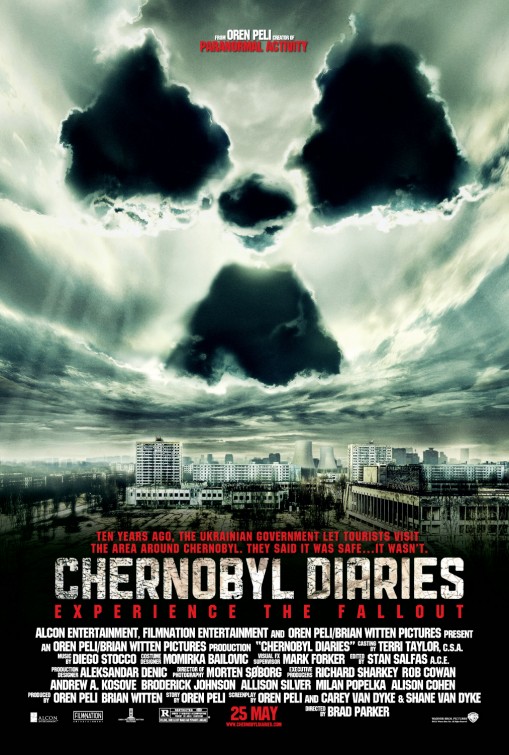
When does the term ‘B movie’ become an excuse rather than a justification? Somewhere, surrounded by low-budgets and gooey prosthetics, Roger Corman has an answer to that particular musing. Chernobyl Diaries veils itself as a B movie with its microscopic financials and horror genre tidings, yet it relents from purveying the ingenious soul of said cinematic crop. Director Bradley Parker manages to conjure up an ominous mood — the setting, if you hadn’t already guessed, is Chernobyl — and his primarily indie cast run with the creep-factor for a while, however they ultimately can’t overcome a dreary screenplay that succumbs to the generic scare code. Radiation levels might be increasing, but imagination is struggling to level out from a downward spiral.

Midway through their travels across Europe, Chris (Jesse McCartney), his girlfriend Natalie (Olivia Taylor Dudley) and tag-along Amanda (Devin Kelly) decide to stop off in Kiev to congregate with Chris’ brother Paul (Jonathan Sadowski). Living up to his brash reputation, Paul suggests that the group should take up some extreme venturing, to Pripyat, an abandoned village on the edge of the radiation-infested Chernobyl nuclear reactor. Upon arrival though, it appears that their ghost town is anything but.

It’s this particular setting from which all of the film’s success emits. Though events aren’t shot on actual location — production took to Hungary and Serbia due to the issues posed by surrounding levels of radiation in Chernobyl — Morten Søborg’s cinematography still manages to capture the inevitable haunting of a post-disaster scene. Makeshift Pripyat is like an eerie still-life painting without the life as it languishes in a wonderfully spooky state of urban decay. Hand print markings are shown painted on walls, created by urgent escape and presumably made of blood. Shattered picture frames represent lost livelihoods, the town having emptied in just two days.

Before we reach our destination there’s enough time for a stop off at an exclusion zone checkpoint where the travelling group incur the scathing stare of an intimidating military man as he circles their van to the sound of piercing strings. Not to mention, the occasional sighting of a radiation warning sign. What we see might not be the real Pripyat in the shadow of Chernobyl, but it sure feels that way; the landscape appears genuine, the remnants of nuclear disaster still lingering in the air and therefore, as our bunch of explorers begin their tour, an authentic sense of danger exudes. The horror narrative is armed with instant credibility, edgy and real, but this sadly turns out to be only the film’s only credibility.

Suggestion is often worse than implementation. Implying that something terrible is about to happen or that there could be a spectre lurking in the wings can, and regularly does, induce a great deal of fear. The faux-Chernobyl location provides a disquieting assist that isn’t capitalised on, much to chagrin of the audience, we being an expectant mob after the film’s promising start. Instead of revving the already unsettling mood, Bradley Parker encourages a steadfast meandering towards convention. People are chased by hungry dogs and figures appear in windows, but it’s nothing that hasn’t failed to scare us before. Proceedings never leave ground level and, with the exception of a rumbling animal appearance, fail to truly frighten. Sure you might jump once or twice, but these heart-racing moments have a lazy source. Shattering silence with a loud noise will always naturally create a cheap reaction. Doing so on film is eternally unimaginative and a problem in modern horror.

Speaking of contemporary cracks in the genre, Chernobyl Diaries is as guilty as any when it comes to less-than-average characterisation. The screenplay, written by Paranormal Activity architect Oren Peli and brothers Shane and Carey Van Dyke (of that bloodline), parades characters who collectively boast less of a dimension than a horizontal line. There’s the sensible one Chris, played by musician Jesse McCartney, whose wariness about the Pripyat expedition is an apprehensive foreshadowing of what is to come. His brother Paul is the inciter of mischief, and it just so happens that he manages to get his sibling into yet more trouble — this time though, it might be terminal, so best get some moral repenting done, eh?

Paul is played by Jonathan Sadoswki and both he and McCartney do a decent job at handling their poorly-written characters. In fact most of the remaining cast members are also fine, but they’re also forced to join the aforementioned duo in shilling a dead horse. An exception could be made for Dimitri Diatchenko who plays iffy outing guide Yuri, and who rattles off every line as if he’s reading directly from an exposition-laden script: “We’re now entering the exclusion zone.” It’s highly probable that Diatchenko is indeed an extreme tour leader moonlighting as an actor for one time only. (Turns out he’s been in everything from Indiana Jones to Family Guy.)

Chernobyl Diaries wishes to garner the cult notoriety of a B movie but, in the end, its foundations aren’t sufficiently durable. The set-up arouses an eerie mood prompted by location and is promising. However, this is merely a superficial canvas that fails to disguise the remaining descent into a lack of ingenuity. Truthfully there ain’t a whole lot to say about this, which is the fundamental problem.

It tries to combine the rubble of a fairly recent disaster and postmodern nuclear stigma with slasher scares and atmospheric nip, and it should simply be better.

Chernobyl Diaries - Devin Kelley

Images credit: IMP Awards, Collider

Images copyright (©): Warner Bros.

The Purge (2013)

★★★

The Purge PosterDirector: James DeMonaco

Release Date: May 31st, 2013 (UK); June 7th, 2013 (UK)

Genre: Horror; Science-fiction; Thriller

Starring: Ethan Hawke, Lena Headey, Adelaide Kane, Max Burkholder

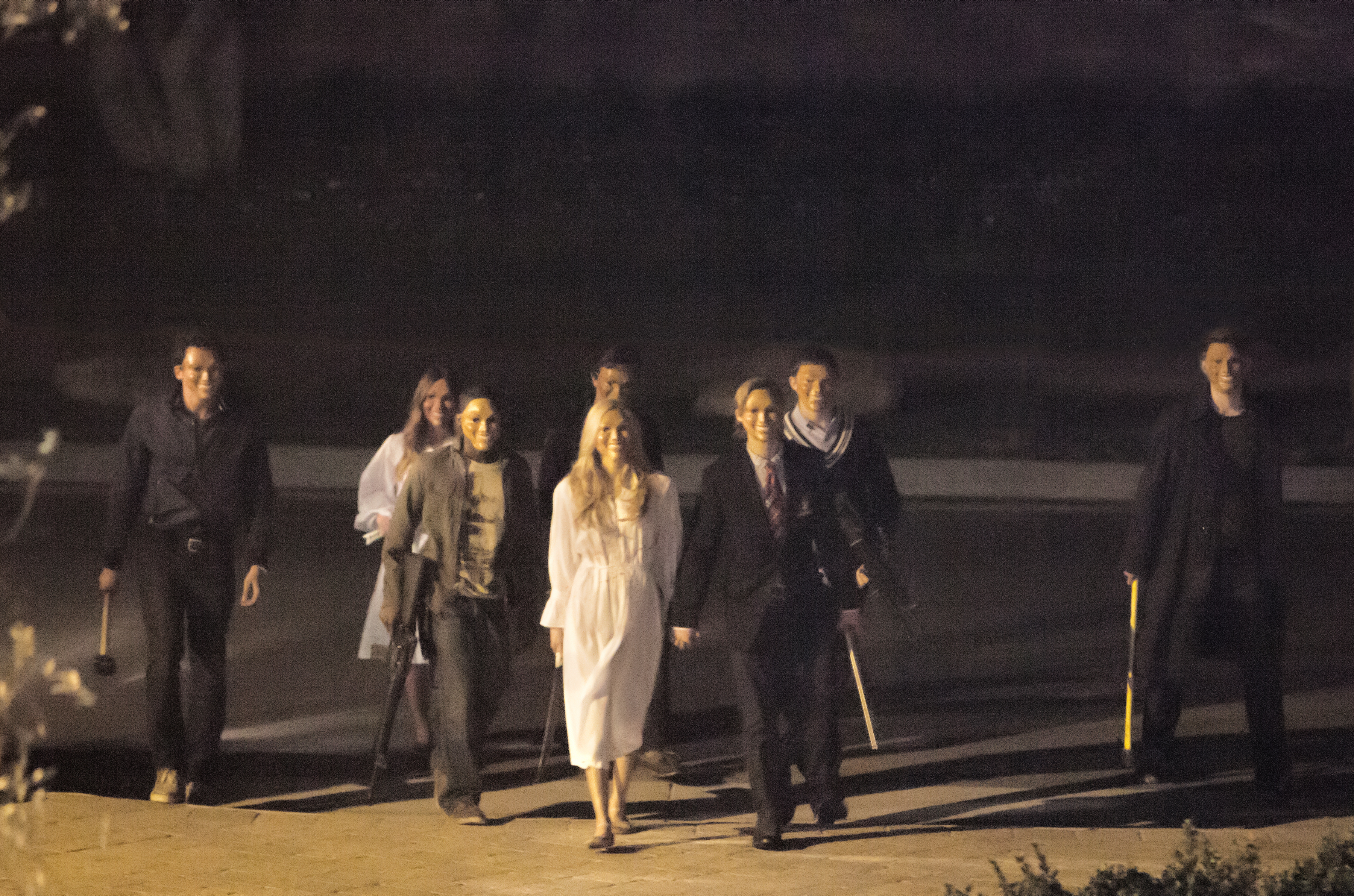
The Purge opens promisingly: a cascade of slowly enveloping surveillance feeds show a timeline of violence, both unadulterated and raw. It sets the scene, year 2022, the images depicting acts of inhumanity committed on the one night that they’re legal. The feed hints at a lack of security, infusing a sense of realism and close proximity to home whilst also suggesting what we’re about to see is 21st century brutality. But that’s not quite what follows. Despite a promising start, James DeMonaco’s film, although mindfully suggestive and thoroughly polished, never really fulfils the ambitions towards which it initially embarks.

With crime rates and unemployment figures astonishingly low, the United States is seemingly in good hands under the New Founding Fathers of America. It’s not these results that are worrying though, rather, that the country’s social achievements have come by way of a demonstrably violent method: the Purge. The Sandin family are amongst those who financially benefit from the twelve hour anything goes societal melee, father James (Ethan Hawke) having struck gold with his house security system. When his son Charlie (Max Burkholder) lets in a wounded Purge victim things start to go wrong; the latter’s pursuing attackers are led straight to the family home carrying spiteful demands.

The moral jousting embodied by Charlie is one that the film looks to delve into from the beginning, doing so with true intentions if not true conviction. The Sandin’s are a rich family who discuss carb intake at the dinner table and live in a lavish house that represents the prosperity of James’ sales pitches. Essentially, the Purge funds them. Individually they’re fairly affable folk, but collectively the Sandin’s aren’t exactly an authentic reflection of life. Instead, the quartet are like the gloss over a scratched surface. Even though the allotted night of crime has ushered in decreasing unemployment and a reduction in year round violence, the poor are still those who suffer when suffering occurs — take Charlie’s wounded invitee, for instance.

The ambiguity over whether or not we should root for, or even like, the Sandin family unfurls disorderly as the film progresses, but this initial notion of papering over the cracks stays rooted firmly within the narrative, indicating an inbuilt societal prerogative that is advantageous to wealth. In a way events displayed throughout The Purge are merely a continuation of the world today and DeMonaco — who also wrote the screenplay — tries to shill this allegorical pursuit, however is eventually overruled by a lack of vigour. The twisted morality emitted from our central family resonates with the trials and tribulations of Macon Blair’s Dwight in Blue Ruin. For both he and James Sandin, it boils down to an age-old dilemma: how far would you go to protect your family? Whereas Blue Ruin effectively portrayed a blunt and grisly reality, The Purge doesn’t quite have the same stark intensity. Although it simmers like a fine broth, the end product isn’t all that satisfying.

Yet, intrinsically linked to the moral juggling are the makings of a successful look at post-contemporary crime and violence. Proceedings have a familiar Hunger Games-esque tinge to them; one night of inhumanity for the apparent sake of all humanity. The idea of a 12-hour law-free zone is absolutely ridiculous, but there’s something perversely plausible about it. We listen along with wife Mary as news commentaries discuss the logistical need for the Purge, while “have a safe night” is common neighbourhood lingo. Disorder is the norm, at least for a brief period of time, a concept that the film profitably depicts as eerily recognisable. DeMonaco also adds creepiness though discomforting erudite imagery (upper class young adults unorthodoxly peering up at a peephole), given this is paraded as a horror film after all — though it’s far more confident in the thriller aspect. There’s also a relentless murmuring sound that carefully ratchets up the tension as events advance.

In the end, alongside a lack of should-be applicable harshness, the film succumbs to being far too unrealistic. The improbable main plot point isn’t an issue — we’re along for the ride from the get-go — however there’s an incredible influx of coincidence going on. For one, the attackers outside are undisturbed for a significant amount of time despite being exposed to the crime-ridden streets. Also, people just so happen to walk directly into the line of fire on a number of occasions. (Listen out for where daughter Zoe’s decides to hide.) “Things like this are not supposed to happen in our neighbourhood,” chimes one character who seemingly never received the bleak tonal memo, opting for cheap black humour instead.

Notwithstanding some shoddy dialogue, the performances are universally well-oiled. Lena Headey is the best of the bunch as wife Mary, never coming across as unlikeable despite playing a character who could have towed the swanky line. Headey even manages to channel the purposeful poise she heeds in Westeros. As her husband James, Ethan Hawke holds up his end of the bargain. His reliability does outbid any ingenuity, though in truth he’s not given an awful lot to work with other than convention. Adelaide Kane and Max Burkholder are engaging as the duo’s children Zoe and Max, and Rhys Wakefield does his best impression of a peculiar, skin-crawling villain.

The Purge is better than just cheap thrills and jumpy scare-tactics. Director James DeMonaco attempts to inject the increasingly fledgling horror genre with a degree of thought-provocation, and success up until a point. High in concept and high in potential value, this doesn’t quite muster up the strength to be high in quality, but it shouldn’t be shunned for trying.

The Purge - Mob

Images credit: IMP Awards, Collider

Images copyright (©): Universal Pictures

Blue Ruin (2014)

★★★★★

Blue Ruin PosterDirector: Jeremy Saulnier

Release Date: April 25th, 2014 (US limited); May 2nd, 2014 (UK)

Genre: Thriller

Starring: Macon Blair

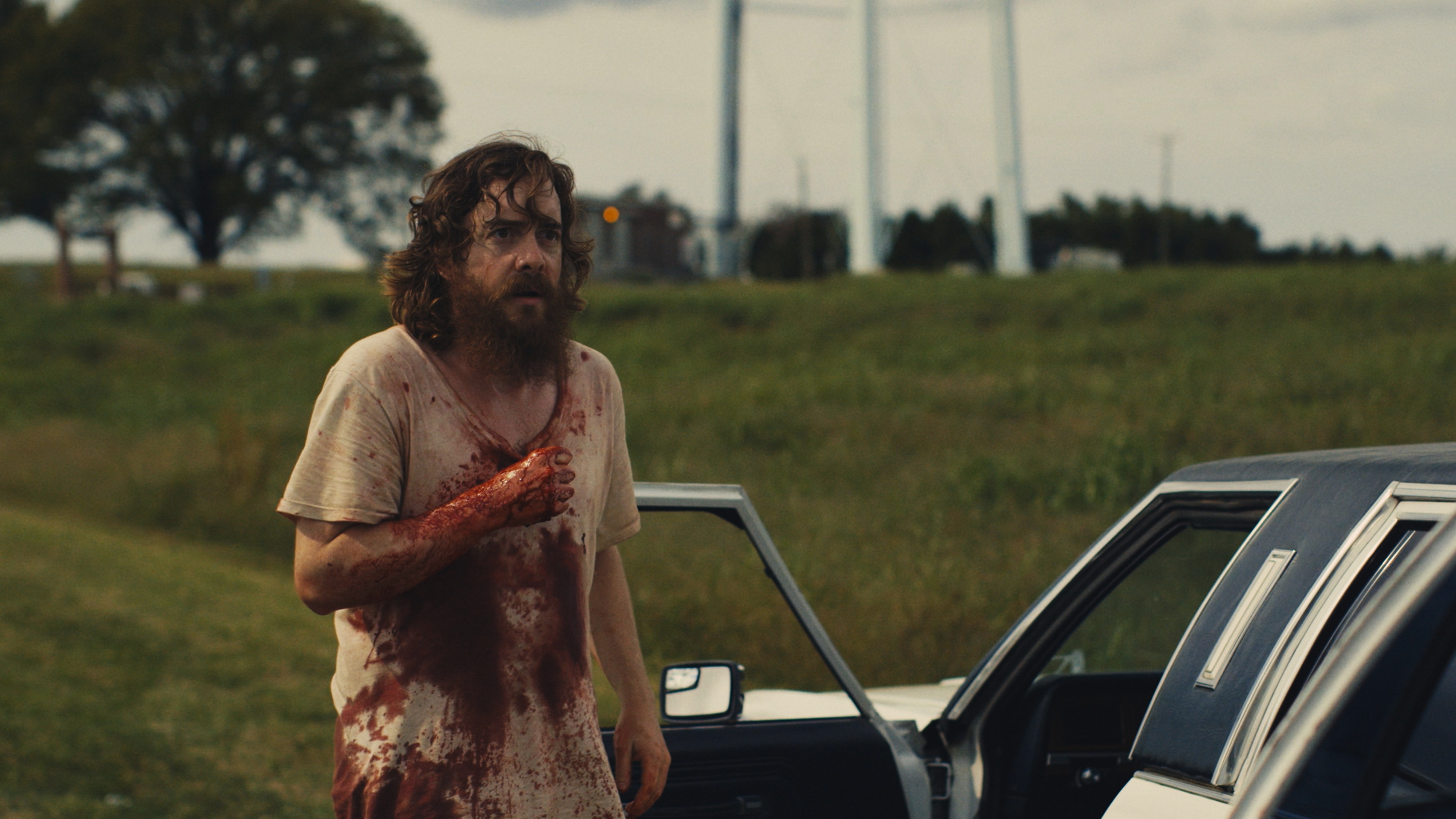
Sitting shielded by penetrable furniture, rifle in hand, Dwight is the embodiment of unrelenting fear and all-consuming retribution. It’s a scene we’ve already watched play out, no more than an hour ago, yet the horrors of Blue Ruin remain just as prominent. Jeremy Saulnier presents a film as blunt as they come in terms of both violence and message; people do bad things, and other people do even worse things as a result. This isn’t humanity’s finest hour, but it’s a damn good one for the visually-affluent filmmaker. If it wasn’t for an outstanding lead turn courtesy of Macon Blair, Blue Ruin would be an impermeable one-man show — Saulnier is writer, cinematographer and director. The pair make quite a duo though, their film a juxtaposition of wonderfully rustic imagery and violently fraught undercurrents. Still clutching his weapon Dwight notices the approaching car headlights, and we realise vehicular beams have never felt so brooding.

Living on the beach, Dwight (Macon Blair) has become a part of the slum-like scenery: bearded, scruffy and wearing only ripped clothing. His 1996 Pontiac — one of Dwight’s only possessions — represents his worn out, rusty self. We don’t know much about him, that is until information gets out regarding the release of Wade Cleland, the accused killer of Dwight’s parents. Like a seldom used tap recently turned on, Dwight’s meandering outlook spurts forth previously concentrated resentment and alters into one driven by the waters of revenge. Consequences are inconsequential until the deed is done, and then they becoming everything.

If the Coen brothers were to create a horror film, you get the feeling that it wouldn’t veer too far from the look and feel of Blue Ruin. Saulnier’s outing never gloats, the subject matter doesn’t allow it, but as one spectacularly furnished competent part after another is relayed on screen you’d be remiss to forgive any slight indication of back-patting. Each element is crafted and honed to appease the next. Visually, the film is visceral and uncompromising in savage outbursts, whilst retaining an organic authenticity during moments of recalculation. The violence is nasty and vulgar, but wholly fitting within the pessimistic context communicated. Otherwise, empty landscapes yield no place for refuge.

Depending on whether Dwight is loading a gun or being enveloped by solitude, the audio either reinforces purpose with metallic verve or reverberates a husky, crackling air. Regardless, the film consistently sounds magnificent. On occasion, we hear a drone of similar ilk to the noise emitted from a lightsaber, only it’s not lively beaming energy, it is rampant tension — the sound of Dwight’s desperation. As Blue Ruin patiently simmers with unease, Dwight hurries, trying to flee from the horrors affronting him but running directly into them instead. Perhaps he does so with a semblance of perverse acceptance compelled by retribution. It’s this ambience of apprehension that keeps us completely fixated to events for ninety minutes, fingernails bearing the brunt.

Technical prowess should come as no surprise, Saulnier is a cinematography graduate after all and his execution here is faultless. However, this is not a case of several parts being greater than the whole. Rather, the excellent individual nuances on display converge together, unfurling a film that should be admired for the having the courage of its convictions. It is almost as if the filmmaker’s precision is intended to mirror Dwight’s own meticulous mindset, one that evolves as he himself develops into an unconventional central character. Forget your anti-heroes, there aren’t any to be found here. Dwight most certainly was a normal customer in the past, but now he bears a murderous foreboding that relentlessly lingers over him: “I’d forgive you if you were crazy, but you’re not… you’re weak,” says a family member upon realising the consequences of Dwight’s ruthless actions. Blue Ruin doesn’t offer anybody to cheer for. There is no right, only wrong, yet you still find yourself caught between a rock and a hard place, rooting for Dwight. Not for him to kill but for him to escape. Moments of light humorous relief are prescribed, though are suitably drowned out by a stern tone.

Subsequently, we’re presented with a fresh take on the revenge thriller. Immorality is convoluted (“It had to be legal”), so much so that you’ll come away with an addictive need to recollect and rethink proceedings. The aforementioned achievements of Saulnier are telling, but Macon Blair’s central turn as Dwight is just as imperative to the film’s success. He articulates wholesome credibility as a man whose demons are within arm’s reach; his performance is full of panic and chaotic determination. During a conversation, the vengeance-seeker admits he is not “used to talking this much” and it is true that Blair spends a significant amount of time acting with observable emotion. As the film progresses, each breath gets hoarser and more sweat permeates. Blair’s raw roadside vomiting exemplifies the incomprehensible situation in which his character finds himself. Yet in spite of this, a genuine anguish escapes from Blair’s eyes, forcing us to empathise with Dwight.

At one point Dwight pays for much-needed items with blood-stained money, unable to explain himself (“I, uh… I…”), the scene illustrating his confused and compromised state of mind. The film itself is far from confused though, purposeful in revealing humanity’s evil side and assured by a dedicated lead performance. Even with only four hours sleep and a hand-cramping geography exam in the bank, Blue Ruin’s noteworthy candidness had me fully attentive. If this doesn’t wake you up, nothing will.

Blue Ruin - Blair

Images credit: IMP Awards, Collider

Sunshine (2007)

★★★★★

Sunshine PosterDirector: Danny Boyle

Release Date: April 5th, 2007 (UK); July 20th, 2007 (US limited)

Genre: Adventure; Science-fiction; Thriller

Starring: Cillian Murphy, Rose Bryne, Chris Evans, Michelle Yeoh

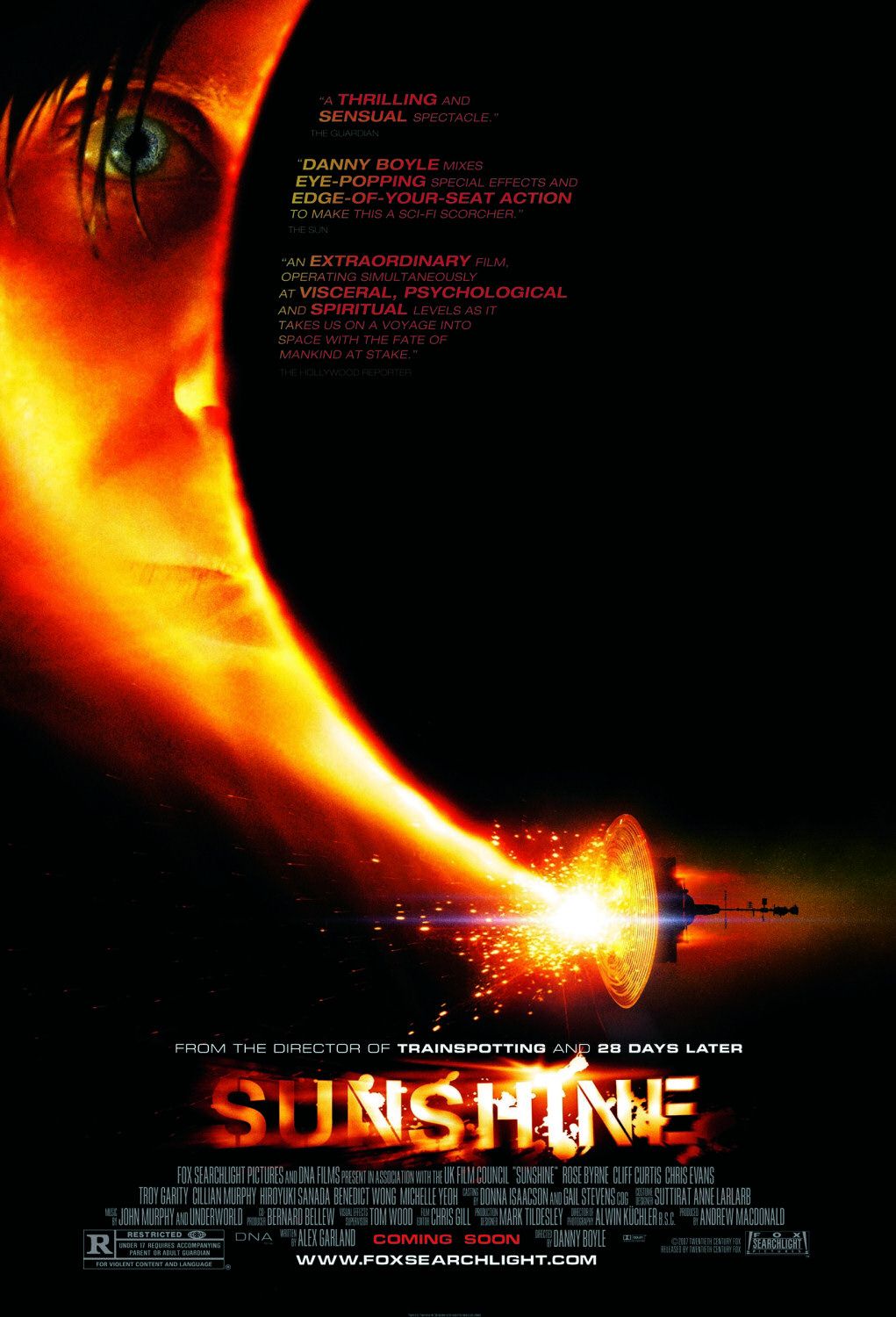
Quite appropriately, Sunshine spends a significant amount of time focusing on the eyes of its pawns. Sometimes a pair will fill the entire screen, strained with sentiment either good or bad, though often the latter. On occasion, they will fight menacingly through an iffy transmission from another spacecraft and act as a warning. The Sun allures them with its fiery aesthetic and unwavering appeal. Without hesitation, characters ask, “What do you see?” in moments of impending demise as if nothing else matters in the universe. Look, even, at the poster. Yielding a blazing visual palette and dreamt up by the mind’s eye of screenwriter Alex Garland, the film is a sci-fi celebration, though you won’t see much celebrating. Riddled with mystery and psychological incoherence, Danny Boyle’s Sunshine floats very close to the sublime.

It is 2057 and an ominous solar winter has a stranglehold on Earth. Aboard Icarus II, a team of eight personnel are voyaging to the dying Sun with one aim: to reignite it. Carrying a nuclear payload, the crew only have one chance to hit their target and, given the operation’s purely theoretical prerogative, those odds aren’t as robust as the situation warrants. Upon discovering the location of Icarus I — a prior failed mission — physicist Capa (Cillian Murphy) recommends taking a detour in order to attain another bomb, and another attempt.

Though his portfolio doesn’t suggest much science-fiction enthusiasm, Danny Boyle’s admiration for the genre fireballs from the screen here. There are elements of seminal space cinema splashed all over Sunshine. From the vision of 2001: A Space Odyssey, to the fraught psychology depicted in Solaris, to Event Horizon’s incessantly doomed outlook, Boyle’s take on sci-fi pays homage to a plethora of greats. But it does more than that. This isn’t simply a historical Pick ‘n’ Mix of stars and planets, rather it incorporates the genre’s best components with subtlety and proceeds to tell a new story. We do not witness Capa and company enter a separate desolate spacecraft and subsequently become overwhelmed by thoughts of Event Horizon because Boyle does not allow it. The Brit always has control and his film always has us transfixed, not by inter-genre nods, but by an ever-enveloping tension and disconcerting mystique — in truth, the film refrains from sparing us any time to consider references until long after the credits have rolled (I’m recounting citations right now).

The director employs traits familiar to him, such as gritty realism and terminal dejection, and combines them with far more expansive notions that pit science against religion. In between philosophical conversations (“A new star born out of a dying one, I think it will be beautiful — no, I’m not scared”) crew members discuss the practicalities of their predicament: oxygen supply levels, or the Sun’s angle. Astronauts aside, we cannot relate to the quandary in which those aboard Icarus II find themselves, but we can ascribe to the pragmatic mindset that they often reverberate. The characters are normal people. Yes, they are each excessively intelligent and well-versed in specialist areas. But despite floating many miles above in space, they remain grounded — we have to take each individual at face value as none of their past lives are explained. You can forget surnames too: Cassie, Harvey and Mace will do just fine. These are ordinary people in an extraordinary circumstance, decision-making dictated by scenario and each individual just as vulnerable as any of us would be.

The characters’ incomplete personal logs contribute to another of the film’s successful narrative strands: a growing sense of tension. This is not a horror film yet it bears a variety of horrifying aspects, one of which is personnel ambiguity. Since we only know that which is in front of our eyes and nothing more, it is plausible to us that any member of the team could snap at any given moment. Boyle explores isolation and the subsequent psychological trauma faced by those disconnected from civilisation, a concept captured magnanimously by one character’s reaction to the decimation of a homely, naturalistic oxygen garden. As Icarus II advances closer to its destination (“Entering the dead zone”) a haunting strain is emitted, one that is eerie and difficult to pinpoint. Searle, the vessel’s doctor, becomes increasingly transfixed by the Sun which appears to be hauling the spacecraft ever-nearer to imminent death.

A slight tonal shift occurs in tandem alongside the crew’s interactions with the ill-fated Icarus I. From a tantalising slow-burner, proceedings deviate towards disorientating terror. The final act is probably the film’s weakest, but it is by no means a weak offering. If anything, the conclusion ushers in greater mythological tendencies spearheaded by religious impetus (in Greek mythology, Icarus flew too close to the Sun). Perhaps it is only fitting that a narrative adjacent to the heavens should juggle Godly morals. Nevertheless Boyle, a man with religious associations himself, ensures that Sunshine does not become overburdened by spirituality and instead strikes a wholesome balance between the film’s various thematic veins.

A scorching visual gloss is as all-encompassing as it is magnificent. The dark and inherently inanimate interior of Icarus II seems to not only seep from the crew’s mellow demeanour, but also abets an air of warped uncertainty. Battling to infect the spacecraft’s overcast insides is the Sun; rays burning with unlimited effervescence, so much so that you will be rolling up those sleeves in a desperate plea for cool air. Accompanying the wonderful cinematography is John Murphy’s tender-yet-lofty score that shines brightest towards the Sunshine’s concluding chapter.

Cillian Murphy leads the way as Capa, whose contemplative nature suggests that only he is truly aware of the task’s magnitude. The skill here is in generating a sense of normality and the best plaudit that can be awarded to Murphy — a generally charming presence — is that he emphatically portrays a professional physicist. Capa may partake in a few scuffles with Chris Evans’ Mace, but other than that he is plainly a physicist driven by nuclear properties and measurements. The aforementioned Chris Evans does well in a slightly different role as the morally strict engineer whose sole focus is the success of the mission. The other noteworthy performance comes from Rose Byrne as vessel pilot Cassie. Bryne develops a solid equilibrium between strong-willed and sensitive, and also strikes up a believable dynamic with Murphy, one that would undoubtedly be romantic in another environment.

Capa’s opening monologue outlines one purpose: “To create a star within a star.” Boasting admirable scope, a tense and engaging atmosphere, and a variety of well-oiled thematic roots relevant to the genre, Sunshine is undoubtedly a star turn from Danny Boyle.

Sunshine - Cast

Images credit: IMP Awards, Rotten Tomatoes

Images copyright (©): Fox Searchlight Pictures