Around the end of March last year, I ventured up to Cineworld in Glasgow and settled down to watch The Hunger Games — code adhered to, of course. The adverts I had seen on the television beforehand had looked fairly interesting and although I was expecting to watch an enjoyable film, I certainly did not expect to like The Hunger Games as much as I did. The film was more or less critically lauded and I have already mentioned in a previous Genre Toppers post that I think The Hunger Games is very good and a film which, when I first watched it back in March 2012, far exceeded my expectations. In fact, after seeing a few times since then, I think it is even better on second and third viewings.
On to today then and switching focus to the future of the franchise with this post, which will hopefully act as an informative and entertaining (okay, perhaps just informative) preview looking ahead to the next instalment of Suzanne Collins’ novels: Catching Fire. Unlike when I went to see the first film, I have read the book which the second is based on and therefore I more less know what is going to happen, thus I have a lot of confidence that Catching Fire will be an even greater success than its predecessor, which took just under $700 million from a budget of just under $80 million. Since then, the franchise has become one of the most actively popular today, and this popularity is only likely to increase as the second instalment nears its release.
The first trailer for Catching Fire was unveiled to the world a few months back and set the scene for another storming outing, which this time will be directed by Francis Lawrence (director of I Am Legend and, more recently, Water for Elephants). The second trailer, released today at the San Diego Comic Con, goes into a bit more detail about the story and we even get a glimpse at some of the new characters. Trailers often give away too much these days, and I do think the new Catching Fire trailer shows quite a lot, but one thing is for certain: it is on an epic scale. Hopefully Francis Lawrence can do what Gary Ross done so well for The Hungers Games, and keep the focus on the characters in a film which will move along at break-neck speed at times.
Please keep those pinky fingers down.
It goes without saying that Jennifer Lawrence is up there with the most-talked about actors on the planet — it also goes without saying that I think she is the most talented out there at present — and she will more than likely pick up from exactly where she left off last time around as Katniss Everdeen, in Catching Fire. Josh Hutcherson is back as her love interest and fellow Hunger Games victor Peeta Mellark, and Liam Hemsworth is sure to see more screen time here as her best friend and another District 12 resident, Gale Hawthorne. Elizabeth Banks, Woody Harrelson and company will also return for Catching Fire, which will also see newcomers such as Sam Claflin and Jena Malone offer their hands in making the film the success which it is bound to be. The newcomer I am most looking forward to seeing is Philip Seymour Hoffman, who is set to portray Plutarch Heavensbee and who comes across delightfully smug and sinister alongside the untouchable Donald Sutherland in the first trailer in particular.
With a somewhat covertly semi-political backdrop accompanied by elements of class-relations and discrimination, combined with characters who the audience care about and will root for and action which should appease the masses, Catching Fire could well be on its way to becoming the biggest film of the year come November, and I for one am certainly looking forward to seeing it on the big screen back in Cineworld in Glasgow.
Below is the brand new trailer for The Hunger Games: Catching Fire.
The Coen brothers’ next offering, Inside Llewyn Davis, sees Oscar Isaac orienteering through the New York folk music scene in the frosty winter of 1961, faced with numerous obstacles preventing him from becoming the musician he aspires to be. Carey Mulligan, Justin Timberlake and Coen brothers’ favourite John Goodman are also involved in the drama led by the somewhat unfamiliar Isaac, who has fleeted around various projects in minor roles over the last few years (such as Robin Hood, Drive and The Bourne Legacy) and who has yet to find himself in that stand-out role which would propel his career to the next level.
Perhaps this is the role.
Carey Mulligan has been fairly busy over the last few years, also having appeared in Drive (albeit in a more prominent role than Isaac), having conjured up a critically acclaimed performance in Shame during the same year, and having recently starred opposite Leonardo DiCaprio in Baz Luhrmann’s take on The Great Gatsby. I would rather not give too much away (even though the trailer does to an extent), but Mulligan is set to portray a character unlike her those we normally see from her. The ever-so-popular Justin Timberlake has just released his third studio album and appears to be combining his musical tendencies with his acting ability in this music-driven drama. Although we do not know too much about his character in Inside Llewyn Davis, Timberlake has more than proven to be a charismatic screen presence in the past, and therefore should fit in aptly in this instance. John Goodman always has something enjoyable to offer in each film he is a part of, be it as the enigmatic “Big Dan” in O Brother, Where Art Though? or more recently, as Hollywood make-up artist John Chambers in Argo, and this time around appears to be no different.
“Hi, I’m here to audition for the lead role in Argo.”
Inside Llewyn Davis, scheduled for a nationwide release in the United States on December 20th, before an agonising months wait for us in the United Kingdom, was screened at the 66th annual Cannes Film Festival in France back in May, where it received mostly positive reviews from critics. The film is being heralded as one in a similar vein to O Brother, Where Art Thou?, staunchly comedic (true to the Coen legacy), yet respectful to the era it faithfully depicts, and melancholic by way of its musical demeanour. In fact, the soundtrack to the film is one influenced by the same man who worked on O Brother’s soundtrack, T-Bone Burnett, suggesting a similar tone to the one provided in the Coens’ 2000 comedy starring George Clooney. Mumford & Sons frontman (and Carey Mulligan’s husband) Marcus Mumford is even set to chip in with a number of songs. Music has always played a significant role in Coen films, therefore I have high expectations for the music set to be provided by Inside Llewyn Davis — it is a film galvanised by music, at the end of the day.
The Cannes Film Festival has been one which has produced many highs for the Coen brothers over the last twenty years, with eight Palme d’Or nominations attached to their films, one of which was a win (Barton Fink in 1991). Even though Inside Llewyn Davis did not win this year, that is not to say it is a step down for the Coens, but rather that the festival went for something different (a lot different, in actual fact — look up Blue Is the Warmest Colour). Inside Llewyn Davis is even being tipped as one to look out for when the awards season comes back around early next year, although this is hardly surprising considering the brother’s films tend to be in the mix as soon as they are released.
I have been looking forward to this one since it was announced months ago, even raving about it on Twitter a few times. Being a big fan of Joel and Ethan, it is always intriguing to follow the progress of their upcoming films, and all of the indications point towards Inside Llewyn Davis being another winner from the pair: set to offer up a rich, mesmeric, humorous tale surrounding a week in one man’s journey towards gaining recognition in the New York music scene.
Below is the most recent trailer for Inside Llewyn Davis. It is fairly lengthy at over two and a half minutes long, and it gives a little more away than I have done here — much like most film trailers these days (Fast & Furious 6 literally gave away the whole film in its trailer) — but it by no means spoils anything. If you want to know a little more and see the characters in action, have a watch.
I have no idea how I managed to miss this one when it was announced. The Counsellor is an upcoming thriller film about a lawyer who gets embroiled in the world of drug trafficking, perhaps a little further than he had hoped, and is set to be released on October 25th in the United States and on November 15th here in the United Kingdom. It sounds like your average crime drama, right? Well, check this out.
The film will be directed by none other than Ridley Scott (who recently enlightened our minds with Prometheus), a man who consistently blends out good to exceptional films and whose dedication to perfecting the visual element of his work is second-to-none. Spanning five decades, his directorial career has cultivated films such as Alien (1970s), Blade Runner (1980s), Thelma & Louise (1990s), Gladiator (2000s) and Prometheus (2010s), as mentioned beforehand, and it does not seem to be slowing down at any rate, with Scott having released almost one film per year since 2000. In my eyes, Scott is one of a handful of directors who the audience can put their wholehearted faith in to create a hugely enjoyable and commercially successful film, in any situation.
The cast of The Counsellor is composed of Michael Fassbender, Brad Pitt, Cameron Diaz, Penelope Cruz, Javier Bardem (need I go on?). Fassbender, who will play the lead character, has been on career ascension like no other since appearing in Hunger in 2008 and then Quentin Tarantino’s Inglorious Basterds a year later, both of which he received mass amounts of praise for his performances in. It does not get much bigger than Brad Pitt when it comes to names in the film industry (or any industry, for that matter), and Cameron Diaz and Penelope Cruz are two very accomplished actors (or actresses, whichever you prefer) who can more than hold their own in just about any film. Javier Bardem has just come off a BAFTA nominated performance for his portrayal of Bond villain Raoul Silva in Skyfall, and it is apparent that has been churning out excellent performance after excellent performance in recent years.
“Is this Transformers?”
The screenplay of The Counsellor has been written by none other than Cormac McCarthy, the author of novels such as the brooding No Country for Old Men and the heart-wrenching The Road (which have been adapted into Academy Award winning and critically successful films, respectively). Even though this will be McCarthy’s first feature-length screenplay, it is obvious that he has a knack for penning exceptionally good literature and it will be intriguing to see how his screenplay comes across directly on film.
The first trailer for The Counsellor has just been released and, although 44 seconds is a hardly a significant amount of time to be making too many judgements on, the film comes across as everything from gritty to slick to atmospheric to precise. It also sounds majestic. Of course, visually it appears a Ridley Scott film as the visuals are, for lack of a better description, ‘top notch’, and we get a brief glimpse of some of the characters involved — Bardem looks like he could be a show stealer in this department. As I just mentioned, this is only a short trailer and therefore it is likely that the full-length one will be made available in the coming months, by which time we will hopefully know a little more about Scott’s next cinematic outing. But for now, check out the short trailer below. And in answer to my somewhat rhetorical question at the beginning: No, not really — in fact, not at all.
A personal favourite of mine, the dystopian genre covers all of those films set in a structured, uncompromising society — the opposite of a utopia. More often than not, the society in question is a less-than-flattering one, or one which favours the minority at the expense of the majority. These films tend to portray suppression in one form or another, with freedoms and rights being brought into question. However this is not always the case, and at times the dystopian aspect is used purely as a setting, rather than the focus of a film.
There are a number of variations on the dystopian setting: it covers anything from a government-ruled society to one dominated by otherworldly beings (or aliens) to a post-apocalyptic civilisation — a word I use lightly. I am taking the basis of a dystopia in its simplest form — that is, the one I described in the first sentence of this post. There will not be any zombie-related films in this list (even though the majority of zombie films are set in some sort of dystopian society) as I think those films deserve a list of their own.
I am going to follow a similar format to the one I used in my mystery genre toppers post. With that settled, I reckon it is time to get started.
Total Recall (2012)
A quick note: I will be covering the newer, 2012 version of Total Recall, because I have not seen the original 1990 version. However, based on comparisons between the two, I am sure the original version is just as, if not more, deserving to be on this list.
Len Wiseman’s remake of the 1990 original, Total Recall stars Colin Farrell as Douglas Quaid, a factory worker who visits Rekall — a place which allows its customers to live the life they wish for a period of time, but in their own mind — only to discover that his ‘desired’ life is his actual one. Thereafter, Quaid goes on a crusade to search for answers and is joined by a familiar woman, Melina (Jessica Biel), whilst at the same time being pursued by the woman he believed to be his wife, Lori (Kate Beckinsale).
Where The Dystopia Is Implemented
The story is set in the year 2084, in the aftermath of a worldwide war which has destabilised the earth. There now exists only two forms of civilisation — the wealthier United Federation of Britain (UFB) and the more desolate Colony (Australia). The only form of transport between the two is a massive elevator which travels through the Earth, known as the Fall.
“Ha! You’re just a couple of Star Wars knock-offs!”
Three Top Five Clinching Reasons
Intricate story: Although the film begins telling one story from the perspective of Colin Farrell’s character, after the Rekall scene, the whole outing essentially turns upside down with the focus now on the same character but in completely different circumstances. The fairly quick plot twist works well for me, as it allows the rest of the film to be primarily about piecing together earlier nonsensical snippets of information. Even though towards the end the film becomes a more stereotypical action flick, Wiseman does an excellent job in the first hour or so in achieving the correct challenging-yet-understandable balance, preventing the plot from being either too complicated or too simple.
Ambiguity: There will be a spoiler in this paragraph, so beware. In the cinematic version of the film, after Quaid and Melina embrace at the end, Quaid glances at a massive Rekall sign which beckons in the distance. On seeing this, I instantly thought that everything after the Rekall scene earlier in the film had all happened in Quaid’s mind. Of course, it is equally likely that Quaid staring at the Rekall sign is merely him acknowledging it saving him (without Rekall, he would still be completely unaware of who he really is). However, in the extended director’s cut, there is no tattoo on his forearm which had been placed there in the earlier Rekall scene. This appears to hint that, since the tattoo is gone, his present existence cannot be a true one, therefore it is an implanted memory and he is still sitting in the Rekall chair. Ah yes, I rather like ambiguous endings.
Awesome action: This is a straightforward one — the action sequences in Total Recall are brilliant. Combined with very impressive visuals, the fight and chase scenes are quick-paced, well-choreographed and exhilarating. Farrell has always been a solid action star, as has Beckinsale, meaning it comes as no real surprise that the quality of action in this film is pretty high, and that is not to mention Wiseman’s previous work with Beckinsale in Underworld and his dip into the Die Hard franchise.
Final Thoughts
Perhaps not better than the original (although that is still up for debate with me), Total Recall offers up all the necessary elements required for a very entertaining action film with an intelligent and well executed plot.
The Book of Eli (2010)
Released in 2010, The Book of Eli stars the ever-reliable Denzel Washington, Mila Kunis and Gary Oldman, and is directed by the Hughes Brothers. Washington plays a lone man, Eli, whose personal mission is to travel across a post-apocalyptic America in order to protect and deliver a special book to a safe place, as he believes this will protect mankind. On his travels, he encounters ruthless Carnegie (Oldman) who rules over a town and is after the book Eli carries.
Where The Dystopia Is Implemented
With no real form of government, the United States is a wasteland left behind by a nuclear apocalypse and is now ruled territoriality by those who have the ammunition to do so.
Three Top Five Clinching Reasons
“Uh, i forgot the bullets.”
Fallout and fallout: Being a huge fan of the Fallout game franchise, I enjoyed The Book of Eli even more because it closely resembles those games. Everything from the wasteland setting, to both the minor and major characters, to the practice and execution of scavenging are all traits familiar to both the film and the games. But even though The Book of Eli so closely resembles Fallout, it never boils over into that unwanted territory where a film becomes a parody of a game, which often happens. We are seldom shown good films which have been based on a game — which is not to say that The Book of Eli is based on “Fallout 3”, because it is probably not.
Hopeless setting: No, not hopeless in the sense that the locations are rubbish and not any good. Hopeless in the sense that they appear to signify just that — a lack of hope for humanity. Set in the dusty, lifeless plains of a tarnished United States, the film conveys a complete lack of energy, which is essential for a post-apocalyptic setting. I am a big fan of these types of films (or television shows, like The Walking Dead) where, after a massive event, civilisation is fractured and scattered around rather than all holed up in one or two locations. It gives the situation an injection of realism, which is often necessary for the post-apocalyptic genre.
Convincing acting: Everybody in this film pulls their weight: Mila Kunis effectively portrays a daughter desperately seeking to get away from her unrelenting father, Gary Oldman, who’s bad performances are as common as pigs flying, and is once again on form here as a dominating, angry leader who lacks compassion. The star of the film however, both literally and figuratively, is Denzel Washington as Eli. Washington gives very little up to the audience in terms of emotion, yet he still manages to make Eli appear to be a good person who the viewer wants to root for (at least I did). There is a constant intrigue surrounding Eli and his relationship with the mysterious book he carries, which adds to the character and film as a whole.
Final Thoughts
The Book of Eli is very often bleak, but through the terrific performance of Washington, maintains a sense of hope and keeps the audience guessing until the very end.
A Clockwork Orange (1971)
Concocted by the incomparable Stanley Kubrick, A Clockwork Orange tells the wacky, unnerving story of delinquent Alex (Malcolm McDowell) who, along with his band of miscreants, or “droogs” as he labels them, traverses the streets of London causing mischief and engaging in “ultra-violence”. The film then follows Alex’s impending arrest and subsequent attempted rehabilitation through a variety of unethical methods.
Where The Dystopia Is Implemented
A Clockwork Orange is set in a futuristic London, where society seems to operate slightly differently from the way society operates in the present day.
“Please, no more Made in Chelsea!”
Three Top Five Clinching Reasons
Kubrick masterclass: Stanley Kubrick is without doubt one of the greatest directors the film industry has ever seen. Often adapting books rather than screenplays, Kubrick tended to focus on elevating key themes in his films and A Clockwork Orange is no different. Kubrick regarded A Clockwork Orange as, “a story of the dubious redemption of a teenage delinquent by condition-reflex therapy. It is, at the same time, a lecture on free-will”. I am nowhere near as critically competent as millions of others out there, but I do love watching and writing about films and, without knowing how Kubrick perceived the film beforehand, his words above are exactly how I perceived the film afterwards. This has nothing to do with me though, this is an example of how exceptionally good Kubrick was at connecting with his audience — an audience of varying film knowledge — through the medium of film.
Malcolm McDowell: McDowell carried the film on his the whole way through, being the primary main character and the only actor who is at the centre of every significant event. I did not think it was possible, but McDowell managed to create, in Alex, a horrible, nasty human-being who I sort of felt sorry for by the middle of the film. Yes, it did not even take as long as the end. His convincing portrayal of a mad-man slowly unravelling and juggling morality is one of the best I have watched on-screen.
Legacy: When A Clockwork Orange was released in cinemas back in 1971, it was withdrawn in the United Kingdom by Kubrick himself after his family were the targets of threats and protests. However it was a big hit in the United States, and to this day is critically lauded and held in very high regard by film-goers the world over. Not only that, but it had a massive impact on the relaxation of violence depicted on the big screen. For one film, A Clockwork Orange has become one of the most controversial-yet-endorsed films in history.
Final Words
I do not have many bad things to say about A Clockwork Orange, rather Kubrick has created a dystopian film which successfully targets and challenges issues far wider than I have even come close to discussing here — providing a social commentary on issues such as youth culture, politics and the economic characteristics of Britain.
Monsters (2010)
Monsters is a science-fiction drama film released in 2010 and directed by Gareth Edwards. It stars Scoot McNairy and Whitney Able as a young photojournalist and wealthy employee’s daughter, respectively, who must attempt to travel across the infected Mexico to the border of the United States, in the midst of an alien-occupation on Earth.
Where The Dystopia Is Implemented
Large parts of the Earth have been occupied and controlled by some sort of alien beings, leaving certain regions, such as Mexico, inaccessible to mankind — or at least, inadvisable to travel through.
Three Top Five Clinching Reasons
“I really shouldn’t have used glue to fix the camera.”
Tiny budget: Gareth Edwards, in his directorial debut and working with a budget of around half a million dollars, makes this film absolutely work. By using cheaper cameras (but still maintaining a high quality) to capture digital images rather than the normal 35mm ones used in film, and filming on locations often without permission, and using passers-by as extras, Edwards was able to keep the costing down — perhaps even lower than half a million dollars. There have been, and will be in the future, many directors who have ten or even one hundred times the budget Edwards had at his disposal for Monsters, and who will not even come close to creating as good a film.
Focus on drama: Very often in science-fiction films, the focus is taken away from the story or relationship between characters and is instead placed on big special effects or loud explosions. It is likely that the small budget had something to do with it, but Edwards manages to keep the primary focus of Monsters on the two main characters portrayed by Scoot McNairy and Whitney Able, and how the relationship between the two develops as the film progresses. The human relationship in a world partly destroyed by aliens is the driving force behind the success of the film.
Simplicity is key: The premise of Monsters is fairly straightforward — two individuals with significantly varying backgrounds must band together in order to get home. This is by no means a downfall though, in fact the easy to follow plot once again allows the viewer to fully concentrate on the two main characters and the situation which they find themselves in, without getting distracted by unnecessary plot twists or contrivances.
Final Words
The less-well-known film on my list, but by far one of the best, Monsters is a triumph in film-making as it shows that with some small financial backing and enough determination, anyone can create a dramatic, engrossing film.
The Hunger Games (2012)
Adapted from the first book in Suzanne Collins’ Hunger Games trilogy, The Hunger Games directed by Gary Ross, is a science-fiction adventure film set in a dystopian existence. Starring Jennifer Lawrence as heroine Katniss Everdeen, it follows her preparation as a tribute in the annual Hunger Games and her progress in the violent televised tournament, along with her relationship with Peeta Mellark, played by Josh Hutcherson.
Where The Dystopia Is Implemented
The film is set in a post-apocalyptic North America, where the land is separated into twelve poorer districts, each of which specialises in serving the wealthy Capitol in a certain way.
“Ha! You lot are just a bunch of Star Wars knock-offs!” Wait.
Three Top Five Clinching Reasons
Plot premise: I am a big fan of the outline and progression of the story in The Hunger Games. Having never read the books before seeing the film, the plot came across to me as very unique (sharing connotations with Battle Royale) and even quite ambitious. The idea that the majority are ruled and made to serve the minority is a commonly utilised premise, however the implementation of the Hunger Games tournament, particularly a tournament aimed at twelve to eighteen year olds, is an effective way to create suspense and drama. There is an underlying notion of resistance and rebellion which runs fairly unnoticed throughout the film, up until a significant moment on-screen (literally) and this gave said moment even more emphasis. All in all, the story and ideas thrown around mesh very well in my eyes.
Ensemble cast: With the combination of a number of, at the time, unknown actors and globally renowned names, The Hunger Games boasts an excellent ensemble cast, and one which involves every character with meaning and on their own merits. More minor characters such as Lenny Kravitz’s Cinna (who oozes coolness and clarity) and Stanley Tucci’s Caesar Flickerman (who oozes charisma and clairvoyance) play essential roles in the story. President Snow is majestically portrayed as a despicable, uncaring leader by Donald Sutherland, acting as a convincing mastermind behind the madness. In terms of the main characters, Josh Hutcherson is very good as the uncertain hero whose confidence is lacking but who only wants to do good and not give into the system. Jennifer Lawrence steals the show as Katniss Everdeen, perfectly balancing the correct amount of determination with a level of emotion shown rarely, but significantly when the time comes.
Appeal to everyone: I think The Hunger Games appeals to just about everyone — it has that adventure and action aspect for the younger audience, but also a more low-lying hostile nature in terms of young people fighting against each other to the death. Although the latter is the case, there is actually very little violence conveyed throughout the film, with circumstantial horror playing a substantial part in the unnerving nature of the film.
Final Words
An exceptional outing in adventure, drama and science-fiction, The Hunger Games sews each of these genres together neatly to create the ultimate depiction of a dystopian society fanciful on the surface, but hell-bent on retribution at heart.
Those are five greats and here are some others worth mentioning:
Battle Royale (2000) — This Japanese thriller directed by Kinji Fukasaku is, in essence, The Hunger Games with more blood and guts. A pretty uneasy and, dare I say, at times funny watch.
I, Robot (2004) — Everybody knows this one: Will Smith versus robots. A lot of robots. A mesh of robotic body parts and entertaining action.
Sin City (2005) — I actually only got round to seeing Sin City last night. Although I am still unsure of what I think about it as a whole, stylistically it is remarkable and overall very intriguing.
In Time (2011) — Starring the well-liked Justin Timberlake and boasted by a very interesting concept, although In Time does not quite reach the heights it potentially could have, it is still a slick outing.
As presumably everybody already knows, the trailer for The Hobbit: The Desolation of Smaug was released yesterday. The Hobbit: An Unexpected Journey, the first of a forthcoming trilogy based on J.R.R. Tolkien’s novel, opened in cinemas back in December of 2012, and has now taken over $1 billion dollars at the box office. With all the fanfare behind the franchise and excitement starting to build already, I think it is fair to say that by this time next year, The Desolation of Smaug will have come close to that figure again, and perhaps have even exceeded it.
An Unexpected Journey, directed by The Lord of the Rings director Peter Jackson, delivered a more light-hearted Middle-earth (in comparison to Middle-earth during The Lord of the Rings trilogy) and it is more than likely that part two of The Hobbit, which Jackson helms again, will be portrayed in a similar vein. For me, this is by no means a bad thing — the book itself is certainly less downbeat than its successors and therefore the film does not need to be either. The problem I had with An Unexpected Journey was its less-than-unexpected runtime, which approached almost three hours. Jackson had stated in interviews before the film was released that he was looking into using excerpts from Tolkien’s other related writings (Unfinished Tales and such), and as it turned out, he used a few more than he probably should have (such as the scene with bumbling wizard Radagast the Brown and his energetic rabbits). Something tells me The Desolation of Smaug will have a similarly long runtime, but at the end of the day if it means I am sitting for an extra hour in a cinema, why should I be complaining?
“Wait, you’re saying these are just… chocolate coins?”
The trailer for The Desolation of Smaug certainly looks more action-packed than the previous instalment, as Martin Freeman’s Bilbo Baggins and his troupe of companions continue on their journey to the Lonely Mountain and an impending meeting with the dragon, Smaug. We see an array of new characters making an appearance in the trailer (such as Lost’s delightful Evangeline Lilly as Tauriel) and old faces returning (the ever-popular Orlando Bloom is back as the, well… ever-popular Legolas). Stephen Fry finally gets his debut in the franchise as the Master of Lake-town and Martin Freeman’s Sherlock compatriot, Benedict Cumberbatch, plays the dragon — who better (than Kanyon… never mind)? Aside from those four, many of the previous actors from An Unexpected Journey are set to reprise their roles, signalling the return of people like Ian McKellen as Gandalf the Grey, Richard Armitage as Thorin Oakenshield and James Nesbitt as Bofur the dwarf. We are even getting the pleasure of another Andy Serkis performance as Gollum.
Particular events outlined in the book which stick out in the trailer include the barrel scene, the company’s arrival and travels through places such as Mirkwood and Dale, and the eventual confrontation with Smaug. We even get a greater glimpse of the dragon right at the end of the trailer (as opposed to just an eye in the previous film). Once again, it appears that the graphics team and visual departments have all worked wonders on the actual viewing aspect of the piece, as the detail exuding from the trailer alone looks magnificent, an element common in Jackson’s films — they tend to be truly cinematic and spectacular (take The Lovely Bones as an example).
One thing is for sure, at the hands of Peter Jackson, regardless of runtime or unnecessary scenes or any number of frames per second, The Hobbit: The Desolation of Smaug is certain to be a visually stunning, exciting and hugely enjoyable watch for all.
Guess what the next genre is? It is a mystery, isn’t it? No, it really is a mystery. Okay, enough of the shockingly bad jokes.
Not one of the more prominent genres, mystery tends to flirt around the edges of just about every other genre, without actually sticking out. However, there are a number of films which are defined by their mystery element. Personally, I am drawn towards films containing a mysterious element over most other types of films — mainly in the hope that such a film will keep me guessing all the way until the end.
Mystery films tend to be hit or miss — either the outcome of whatever mystery is going on is surprising or shocking or entertaining, or it is not. It will be to nobody’s surprise, then, that the five films on my list I consider to be five hits.
I have decided to change the format slightly from my previous Genre Toppers posts. The reasoning behind this is that I think reading large paragraphs over and over again can sometimes get a bit tedious, so hopefully this change will keep things more interesting. This newer format seems to work well with the mystery genre in particular, but who knows — I may use it again in the future.
Zodiac (2007)
From the acclaimed director David Fincher, Zodiac tells the story of one of San Francisco’s most notorious serial killers, known only as the Zodiac. Boasting a strong cast containing Robert Downey Jr, Jake Gyllenhaal and Mark Ruffalo, the film depicts the events surrounding the police investigation into the murders carried out during the 1960s and 1970s, and why the murders were occurring.
Where The Mystery Lies
Who is the serial killer known as the Zodiac, and what do the cryptic clues being sent to the police mean?
Three Top Five Clinching Reasons
Fincher’s target audience: Interestingly, Zodiac is David Fincher’s second-highest rated film on Rotten Tomatoes with 90% of critics enjoying it (second only to The Social Network at 96%), whereas it is Fincher’s lowest revenue-taking film, grabbing only (yeah, only) around $85 million worldwide. Why? Primarily because Fincher aimed the film towards a typically older audience, rather than playing up its slasher element and in turn appeasing only “16-year-old boys,” as Fincher put it.
“Hey, hey Jake — I’m Iron Man.” “Yeah, whatever Rob.”
Style and the 70s: Obviously I was not around in the late 1960s/early 1970s in order fully understand what those years were like, but Fincher certainly goes a long way to making sure Zodiac captures the tone and style of them. Everything from smoky newsrooms to wacky attires are in full display here, and although the film lasts over two and half hours, it is worth watching at that length just to enjoy the cinematography.
Delightful dialogue: The performances from the three leads in Zodiac are very convincing, and this is helped in no small part by the deliberate and encapsulating script the actors exchange between each other. Fincher has a knack for using excellent, well-crafted scripts (take Se7en and The Social Network as two prime examples) and Zodiac is no different. Gyllenhaal, Downey Jr and Ruffalo do the film and its words justice — in fact, the positive audience reaction combined with the lack of a well-rounded ending proves just how well the actors and writers have done to make the film so enjoyable.
Final Words
A slick, stylish and slow burning mystery drama, Zodiac keeps audiences interested through its exceptionally well-strung dialogue and interesting performances.
Exam (2009)
Released in 2009 and directed, written and produced by Stuart Hazeldine, Exam takes place in an alternative history and is set almost entirely in one room where a group of eight very different people must use their initiative to gain the employment they each desperately desire.
Where The Mystery Lies
The eight candidates are given one piece of paper and are told that the exam only consists of one question… but what is that question, and what is the correct answer?
Three Top Five Clinching Reasons
Unknown cast: A problem a film can sometimes face when it boasts a worldwide star is that the audience do not believe that such a level of star can actually be the character they are portraying (particularly if the character is a normal, everyday person). Exam benefits from a relatively unknown cast — apart from Colin Salmon, although he does not appear very often throughout the film, making his character seem even more important and separate from the candidates. The candidates themselves each bring their own nuances to the table, coming across as genuine employment seekers and making the film much more believable and engrossing.
“Phones to the front please.”
Simplicity is key: As you can probably gather from the synopsis above, the plot of Exam is very simple: eight candidates, one job, one question. That is it. Not only does this make the film easy to follow, it places more emphasis on the situation the characters find themselves in and adds focus to the characters themselves (in essence, this film is a character profile). The mystery is also heightened because it is not confusing — rather, it is intriguing.
Perfect pacing: Hazeldine ensures the film does not dwell on particular plot points, moving things along before they become stagnant, and coming back to events if need be. Again, this keeps the flow of the film just about right and ensures the audience’s attention is grasped and maintained. Also, the progression of the plot and the characters are both very well handled, generating more and more tension until the atmosphere becomes just about unbearable.
Final Words
Exam is the perfect example of how to make a small, low budget film with a simple plot and still be able to keep it intriguing, leaving the audience on the edge of their seats.
Sherlock Holmes (2009)
Guy Ritchie helms this reboot of the Sherlock Holmes franchise, starring Robert Downey Jr as Holmes, Jude Law as Watson and Rachel McAdams as former adversary Irene Adler. The story follows Holmes and Watson as they attempt to uncover the perpetrator of a series of violent murders and prevent this perpetrator from taking over the British Empire.
Where The Mystery Lies
Holmes and Watson must decipher how their familiar foe plans to control the British Empire — but how has the murderer returned from his apparent execution?
Three Top Five Clinching Reasons
At home with Holmes: Robert Downey Jr plays an enormous part in how enjoyable this film is — his portrayal of Sherlock Holmes is one of wit, intelligence, controlled chaos and downright hilarity. We are all used to seeing Downey Jr in charismatic roles (as Iron Man, for example) and here he seems completely in his comfort zone, which shows by way of his mesmerising depiction of Holmes — rivalled only by Benedict Cumberbatch’s portrayal in the hit television series, Sherlock. But not all the praise must be solely heaped on Downey Jr, as Jude Law is very effective in working as a buffer for Holmes to play off of. Mark Strong is as menacing as always playing the villain of the piece and Rachel McAdams is delightful as Irene Adler.
“That tie doesn’t suit you.”
Visually unique: The cinematographers and set designers deserve a vast amount of compliments for their old-fashioned-yet-energetic set pieces. It is a tremendous achievement in making London appear as it did back in the 19th century, but at the same time upholding a sense of freshness. Craftsmanship at its finest, if you ask me. Also, the slow motion fight sequences look effortlessly assembled and add an extra dimension to the film.
Action-packed: Guy Ritchie certainly does not hold back in terms of fight scenes (there are plenty) and explosions (they are in there too). At its simplest, Sherlock Holmes is an entertaining action film with plenty of well-choreographed physical encounters and a fast-moving plot which keeps the action going and prevents the film from losing its momentum. The action takes place everywhere too — from underground to occult chambers to the top of massive cranes.
Final Words
Quick-witted, funny, sometimes silly, but always entertaining — Sherlock Holmes is just about everything you expect from a Robert Downey Jr-led film.
Shutter Island (2010)
Based on the novel by Dennis Lehane, Shutter Island sees Martin Scorsese team up with Leonardo DiCaprio for the first time since The Departed in 2006, and the fourth time overall (soon to be a fifth, with The Wolf Of Wall Street hitting cinemas in late 2013). DiCaprio stars alongside Mark Ruffalo as two U.S. Marshals — Teddy Daniels and Chuck Aule respectively — who attempt to uncover the mysterious happenings on Shutter Island.
Where The Mystery Lies
Daniels and Aule must find out the whereabouts of a missing patient, but what is the real reason they have been summoned to the island? (That is all you are getting, sorry!)
Three Top Five Clinching Reasons
Creating a separation: The chemistry between DiCaprio and Ruffalo is very underrated here, in my opinion. It is obvious that the two are outstanding actors, which is once again apparent in this film, but they also work exceedingly well together, in turn creating a sense of disconnect between themselves and the rest of the residents of Shutter Island. This is essential to the story, and thus the performances from both DiCaprio and Ruffalo (and also Ben Kingsley to be fair, who plays Dr. John Cawley) are a key part to the success of Shutter Island.
“We have no wi-fi here.”
Shudder Island: There is an eerie and unnerving atmosphere generated throughout this film, and the creep factor increases as the film delves further and further into the mysterious happenings on the island. The film switches for brief moments to an almost comedic tone, but that tone is swept away by dread almost as soon as it begins. The unnerving atmosphere is aided, of course, by the sense that the two U.S. Marshals, although called to island by those on it, are alone and not wanted.
Musical mayhem: Another major player in the eerie atmosphere, the musical involvement in Shutter Island is as close to perfect as possible. From the foghorn sounding booming interludes throughout, to the seemingly out-of-place uplifting belts of opera (which completely add to the intentional confusion and lack of transparency during the film), the score is outrageous-yet-brilliant.
Final Words
I am a big fan of when DiCaprio and Scorsese work together because they always deliver, and Shutter Island is no different — in fact, it is my personal favourite output produced by the combination of the two.
The Prestige (2006)
From the man who brought us The Dark Knight trilogy and Inception, comes The Prestige, starring Hugh Jackman, Christian Bale and Scarlett Johansson. Jackman and Bale play two previously partnering magicians who have turned fierce rivals after an accident split the pair up. It is the ultimate battle of wit and nerve as each magician aims to better the other by creating and performing the greatest illusion of all time.
Where The Mystery Lies
It is a film about magic, right? Well, not entirely. Although a mystery element does exists and runs throughout — just how did he do it? (Again, that is all you are getting — I really cannot give too much away here!)
Three Top Five Clinching Reasons
Coming full circle: It would be a crime for me to sit here and write about what happens during the climax, because it is masterfully accomplished on-screen in my eyes. Everything from the beginning through to the main act (pun sort of intended), to the dialogue during the film build up to a quite extraordinary revelation, and one which I got nowhere near figuring out. I do not want to overhype the ending so much so that it will be an inevitable let down no matter what, but trust me, it is very good and it perfectly polishes off the non-linear plot the film possesses.
“Heads, i win. Tails, you lose.”
Caring about characters: Nolan allows each character to breathe (much like he does in the majority of his other films) and this allows each actor — even those whose characters only play a minor role — to fully develop their role and ensure the audience can become emotionally invested in them. The dynamic between the two duelling magicians, Robert Angier (Hugh Jackman) and Alfred Borden (Christian Bale) is electric at times, and the lengths they go in order to get one up on each other become believable due to the hatred Jackman and Bale successfully generate. Less prominent characters such as Michael Caine’s stage engineer, John Cutter, and Rebecca Hall’s Sarah Borden, Alfred’s wife, add further layers to the main duo, whilst Scarlett Johnasson’s Olivia Wenscombe acts as a spanner in the works.
More than just magic: As I mentioned above, although The Prestige contains a lot of magic, that is not the primary focus of the film. For me, the primary focus is the tumultuous relationship between two men and all that their relationship embodies, in terms of trust (or lack thereof), deceit and jealousy. Using magic as a background their relationship and these characteristics bolsters the overall plot, but it is the three aforementioned factors which give The Prestige substance.
Final Words
When talking about mystery the first destination is always magic, and The Prestige is Christopher Nolan’s way of pulling a rabbit out of the hat — just when you think he is being slightly over-ambitious, he absolutely nails it.
So there you have it, five excellent mystery films. Here are some honourable mentions:
Final Destination (2000) — Okay, this one is a bit of a cheat (pun intended). But in all seriousness, although Final Destination is technically a gross-out horror, it does have that mystery element to it ensuring that it does not just become a gore-fest. Which is basically does anyway. I tried.
Phone Booth (2002) — Similar to Exam in the sense that it is primarily set in one location, Phone Booth is intense and pacey, with a decent lead performance from Colin Farrell and an extra creepy voice-only performance from Kiefer Sutherland.
The Da Vinci Code (2006) — At approaching three hours long, The Da Vinci Code had a fair amount of people almost sleeping, but I enjoyed it quite a bit. Tom Hanks is a guy I could watch acting all day long.
A Perfect Getaway (2009) — This is about an hour of really disconcerting build-up surrounding three couples, one of which has a murderous streak. Then it goes a bit too action-like and loses some momentum. Regardless, a solid whodunit outing.
Devil (2010) — The mystery genre does tend to attract those single-location films, and we have another here, in Devil. Five people, one elevator and one devil… but who? A rare M. Night Shyamalan appearance in my blog.
Myths don’t necessarily have to be true. In fact, more often than not they are false. The attraction of a myth, at least for me, is not that it is true, but rather the mystery surrounding its authenticity. The sort of ‘imagine if that actually happened?’ feeling. Some are scary, others funny, and many just plain stupid.
Recently, I have found myself traversing across the internet in search of popular movie myths (I have a lot of spare time on my hands). The myths in question range from the unnervingly accurate, to the outright preposterous. For something a bit different, I am going to write about a few of these wacky myths. You may have already heard of some of them, but hopefully there’ll be a few new ones for you to absorb.
The Wizard of Flaws
One of the most popular film myths, and one that has been around for years, is the Munchkin suicide myth from The Wizard of Oz (1939).
Apparently, if you look closely enough, at the point during the film where Dorothy and her companions are skipping along the road you can see a Munchkin’s silhouette hanging from a tree. I know what you are thinking: why start off by writing about something so horrible? Fear not. The suicidal Munchkin actually turned out to be a rather large bird stretching its rather large wings. As a matter of fact, the Munchkin actors had yet to arrive on set for filming by that point. This myth garnered so much momentum that BBC News picked up the story back in 2006. Here’s the scene on YouTube, along with a user’s attempt to debunk the myth completely.
It is all a little confusing, but I think it’s safe to say that this myth is nothing more than just that — a myth.
Exorcising The Exorcist
Up next we have a whole host of myths associated with just the one film (and a scary one at that), The Exorcist (1973). Some of these are not really myths at all — the vast majority of them are true.
“It looks colder in there than out here.”
Stories from the set claim that director William Friedkin went to abnormal lengths to create an organic scare-factor: he kept the room that Regan (the daughter at the centre of the film, played by Linda Blair) slept in — and where a large percentage of the film was shot — at freezing cold temperatures, inviting icicles to form around the girl’s face. Friedkin also fired live ammunition behind priest Damien Karras (Jason Miller) in order to get a sufficient fright out of him. The director even slapped Father William O’Malley (a real life priest who also played one) in the face right before an emotional scene. I’ve heard of method acting, but method directing? Sheesh.
That ain’t all from the set of The Exorcist as far as myths go. Remember the freezing room? Friedkin ought to have invoked even lower temperatures; after filming finished, a studio fire caused the whole house to burn down — only, Regan’s bedroom remained unscathed. There are even those — evangelist Billy Graham — who believe the celluloid rolls of film still harbour evil. The final, and most unfortunate, myth aligned with The Exorcist suggests that any person involved in production will be cursed for life. Jack MacGowran and Vasiliki Maliaros, who played a film director and a mother respectively, sadly passed away before The Exorcist was released in cinemas. Eerily, both actors’ characters die in the film too.
Weird, right? Perhaps a mixture of truth and exaggeration, but The Exorcist remains one of the most mythical films in existence.
In The Jungle
On to something a bit more cheery then, as we take a trip to Africa where some unsuitable hidden messages can be found loitering in The Lion King (1994), or so it may seem.
A nighttime scene shows a sad Simba slumping down onto the mossy ground below. That slump sends various bits and pieces from the turf up into the air, only for the fragments to spell out the letters “S-E-X”. Well, well, well. Those Lion King animators sure do have dirty minds. Or perhaps they innocently intended to spell out “S-F-X” in order to pay homage to the sound department. Certainly, the mother whose child alerted her to the ambiguous wordage didn’t see the term as a friendly inter-crew acknowledgement.
This one could go either way. It is difficult to make out each letter from the video above. Hey, maybe somebody who has seen The Lion King in 3D can let us know?
The Rescuers need Rescued
Sticking with the world of animation for the time being, let’s take a look at another potentially egregious myth. If you think spelling out “sex” was bad, just wait until you see what someone managed to sneak into The Rescuers (1977).
“Don’t look, there’s something over there that hasn’t been drawn by a pencil!”
That’s correct, the innocent film about two little mice who just want to help other little mice. It just so happens that, on their way to rescuing those other mice, our two heroes unwittingly pass something not quite as animated as the rest of the film (well, it’s not animated in the literal sense at least). Hanging from a window in the background behind our furry friends is an image of a topless woman. How did it get there? I guess we’ll never know. It could be that someone in post-production slipped the image into the film. Or maybe it was simply a complete accident (yeah… right).
One thing that we can be absolutely certain about is that this myth is completely true — all you need is a pair of working eyes to see it. Though it appears even well-functioning eyes were absent back in 1977 because it took Disney until 1999 to correct their X-rated mishap. A bit late to the party if you ask me.
Ill-diana Jones
Harrison Ford is arguably most well-known for his exploits as Indiana Jones, from where our next myth emanates. This is definitely a favourite of mine.
During the filming of Raiders of the Lost Ark (1981), the unfortunate Ford had developed a nasty case of dysentery, making him more popular with the bathroom than the film set. Ford, required to execute an almost four-page-long fight scene with a scimitar warrior, asked director Steven Spielberg if he could film the scene a little differently. And that he did just that — take a look.
Simple. Effective. Hilarious. Spielberg enjoyed the new version so much that he ensured it made the final cut. Good old dysentery.
Slash and Burn
The Texas Chain Saw Massacre (1974). The myth here is that the events depicted in the film actually happened. Eugh.
“Wait. You’re telling me some us these myths are true?”
That’s correct — a chainsaw-wielding family of cannibals who slaughtered and ate their victims, actually existed (hopefully past tense is applicable). This is also backed up by the film’s home video release synopsis which reads, “This film is an account of a tragedy which befell a group of five youths…” and, “This video cassette is based on a true incident…” The low-quality, seedy and grainy aesthetic of the movie actually backs up this myth.
The question is: was this just a ploy used by the filmmakers to darken the reputation of the film and get it noticed? Maybe. But it turns out some of the events on-screen do have connotations with a real life serial killer named Ed Gein, from Wisconsin. He was something of a mama’s boy and he did murder people, which is as far as the similarities go. The characters are fictional, the setting is fictional, and the chainsaw undertakings are probably somewhat fictional too. I hope.
Three Men, a Baby and a Ghost Boy
After all of that chainsaw stuff, I think it is best to end on a slightly more positive note. Or rather, a slightly more stupid note.
He’s behind you.
For this myth we must branch off over to the set of Three Men and a Baby (1987), and the myth of the child ghost. Spooky. Indeed, the tale goes that a young boy was killed on the set of the film and that, just for a laugh, he decided that he wanted to be a part of the final cut — positioning himself behind a curtain during this scene to the right.
See? That’s him alright. The young boy who met his untimely demise on the set of one of the biggest films of 1987, and whose death was obviously swept under the rug to avoid any backlash. Not quite. It’s actually just a cardboard cutout of actor and star of the film Ted Danson, a prop meant to be used elsewhere in the film that was accidentally left on set. Those damn tricky cardboard cut-outs; you can never predict what they might get up to in their spare time, but pretending to be a ghost boy is a new low.
I love myths in general, so when they’re combined with cinema it grants them an additional layer of intrigue. Hopefully you enjoyed reading about some film myths and — like me — spent some time laughing at the sheer idiocy of some of them. If you know of any more then please feel free to share them in the comments section below. Thanks!
After spending most of the day trying to fix my laptop (and succeeding, evidently) I think some laughs are in order. Therefore, it is time for five funny comedies! Everybody loves to laugh and there are not many better places to go than the cinema to be prompted in that direction. I have been a fan of comedy for as long as I can remember and the great thing about the genre is that it does not discriminate — everybody enjoys it.
Anyway, let the hilarity ensue!
Johnny English (2003)
I am okay with this.
Released in 2003 and directed by Peter Howitt, Johnny English stars the incomparable Rowan Atkinson as the title character and the only British spy left in action after an attack on MI5. English — confident, yet lacking in the intelligence department — is tasked with finding the perpetrator of the attack and recovering the stolen Crown Jewels, with assistance from the far more capable Interpol Agent Lorna Campbell (Natalie Imbruglia).
This is the one of the first comedy films that I can remember watching and laughing uncontrollably at throughout. Rowan Atkinson really is a comedic genius, with everything from his facial expressions to his timing absolutely spot on here. The film acts as a sort of parody of James Bond, and Atkinson is exceedingly good at making the audience root for a rather unintelligent, out-of-depth British spy. There are a few particularly funny scenes (the sewers), but in general the film is bursting with laughs. Natalie Imbruglia does a fairly good job at portraying English’s more sensible partner, although the apparent romance between the two is a little far-fetched (I guess that is comedy though, right?). John Malkovich hits just about all the right notes as the villain of the piece with his dodgy French accent (it only adds to the humour) and sublime hair.
Johnny English does not attempt to take itself too seriously and this works in its favour as the film delivers barrels of laughs and entertainment.
Silver Linings Playbook (2012)
“Come on! Bin bags make great clothes, we could sell millions of these!”
The first film to be nominated in all four acting categories at the Academy Awards since 1981, David O. Russell’s Silver Linings Playbook stars Jennifer Lawrence and Bradley Cooper as recently widowed sex addict Tiffany Maxwell and bipolar Pat Solitano, respectively. After being released from a psychiatric ward, Pat’s primary aim is to reconcile with his ex-wife who wants nothing to do with him. Meanwhile, having just lost her husband Tiffany has her focus on an upcoming dance competition. After the two meet, they agree to help each other out with Tiffany ensuring Pat’s letters reach his ex-wife, as long as he partners Tiffany in her dance competition.
Well that was a long synopsis. The first thing to say here is Jennifer Lawrence is the greatest living being and Bradley Cooper have tremendous chemistry which more or less makes this film as good (and funny) as it is. They work so well together, in fact, that they are working together on another two future films, one of which David O. Russell is back directing. Lawrence is absolutely on fire at the moment (no pun intended) and can do wrong, and Cooper has put in a steady stream of really great performances in recent films such as, The Place Beyond the Pines and Limitless. It is no surprise, therefore, that the foundation of all things good about Silver Linings Playbook is in the dynamic between the duo. Combine that with a witty, energetic and sensitive script, along with magnificent supporting actors like Robert De Niro and Jacki Weaver and you have a very funny but also very moving film.
Much has been said about this film’s careful depiction of mental illness and how positively it is put across on-screen, but purely in terms of comedy, Silver Linings Playbook is up there with the funniest films in recent years.
Ferris Bueller’s Day Off (1986)
“For the hundredth time, the camera’s this way!”
Next, we take a trip back to 1986 where Ferris Bueller’s Day Off has just graced cinemas around the world, garnering much critical acclaim. Matthew Broderick stars as Ferris Bueller, a teenager who decides to take a day off school (imagine that?) with his girlfriend Sloane (Mia Sara) and best friend Cameron (Alan Ruck), where they go out and explore their freedom whilst simultaneously attempting to avoid the school principal in any way they can.
It took me a long time to get around to seeing this film, which is regrettable because it is one of the best feel-good comedies out there in my view. In terms of sheer laughs, Ferris Bueller’s Day Off probably is not the funniest on my list, but it certainly is the funnest. Be it the inventive ways the trio try to avoid the principal or the principal himself’s various ordeals throughout, this film grasps the ‘be positive’ attitude more than any other I have seen. Broderick, Sara and Ruck work well together in the three prominent roles, with Broderick keeping the audience on their toes as he breaks the fourth wall a number of times — this I thought was an interesting ploy used by director John Hughes and one which worked well. Jeffrey Jones is hilarious as the principal (or ‘Dean of Students’) and makes a more than adequate nemesis opposite the trio.
John Hughes has a brilliant knack for comedies and Ferris Bueller’s Day Off is definitely one his more heartfelt, if not one of his funniest.
In Bruges (2008)
Directed by Martin McDonagh, In Bruges was released in cinemas back in 2008. It stars Colin Farrell and Brendan Gleeson as two Irish hitmen who are relocated to Bruges, Belgium after a hit goes wrong. But what they believe to be another job turns out to be something else entirely.
“Man, you’re small.”
Since its release in 2008, In Bruges has gone on to claim cult status and is regarded as a classic by many. McDonagh’s brand of black comedy is in full force here, and both Colin Farrell and Brendan Gleeson deliver it with ease. The two leads are hilarious in their roles, playing off each other to great effect and both generating much empathy from the audience, particularly Farrell whose character, Ray, has played an accidental role in the murder of a child. McDonagh’s sense of direction comes through in abundance here, with each character playing an important part in the film and each scene executed with finesse. The Bruges setting is beautiful and greatly adds to the poetic nature of the script and the fairy tale aspect of the film. Although this is primarily a comedy, there are a few touching moments which take the film above and beyond the comedy genre. Ralph Fiennes and Clemence Poesy are both effective in, metaphorically, very different supporting roles — the former about order and conviction while the latter exudes freedom and new beginnings.
In his directorial debut, Martin McDonagh has created a gem in In Bruges: often hilarious and occasionally touching, this is a winner.
O Brother, Where Art Thou? (2000)
O Brother, Where Art Thou? opened in cinemas in 2000 and is directed by the Coen brothers, Joel and Ethan (although Ethan is uncredited). Set amid the Great Depression in 1930s America, it stars George Clooney, John Turturro and Tim Blake Nelson as three convicts — Ulysses, Pete and Delmar, respectively — who escape capture in order to search for hidden treasure, whilst evading a lawman who is in pursuit.
“My ears are burning. Can anybody smell smoke?”
This is just fantastic. I first watched this in school (school finally comes up trumps) and have been a big fan ever since. The rural Mississippi setting creates a dusty, woody atmosphere (which is by no means a bad thing), shoving the three leads right into the heart of the hardships of the depression in 1930s America. With nothing but themselves and their brains — well, Ulysses’ brain — to keep them on the correct path, they must rely on trust and luck more than anything else. The Coen brothers, as I have mentioned in one of these blogs previously, have an exceptional eye for selecting locations to film and, more than any other film on this list, the dusty plains of rural Mississippi are unequivocally suited to the mood and script of O Brother, Where Art Thou? In terms of the script, it is witty, wacky and insightful and is delivered with nothing but enthusiasm by Clooney, Turturro and Nelson. Of course, I cannot forget about John Goodman, who is very funny playing the brash, obnoxious Bible salesman “Big Dan” Teague. There are plenty of laughs woven throughout the film and they all hit the mark without going overboard — this film is out there at times, but not too far out there. Finally, the soundtrack is rich and hugely satisfying, giving the film a nice twang.
O Brother, Where Art Thou? is another corker from the Coen brothers, full of quips and ambition. It is a triumph in filmmaking in my opinion.
Here are a few honourable mentions, films that I really like but not quite as much as the aforementioned five:
Planes, Trains and Automobiles (1987) — The original comedy road trip film, Planes, Train and Automobiles sees Steve Martin and John Candy unwittingly team up in order to find a way home for Thanksgiving, but not without a few mishaps on the way.
American Pie (1999) — The raucous teen comedy which paved the way for more like it, the original American Pie is by far the funniest and probably the least offensive. You do not need to be offensive to be funny, right?
Bruce Almighty (2003) — Jim Carrey is in full comedic flow (facial expressions and all) in Bruce Almighty as he portrays an unlucky guy who is given God’s job for a week. Chaos, commence.
Dodgeball: A True Underdog Story (2004) — Alongside Johnny English, Dodgeball: A True Underdog Story is one of my long-standing favourite comedy films, and it is still as funny now as it was back in 2004. Yes, it is still dodging those wrenches.
The Hangover (2009) — Hopefully Kermode won’t see this.
Today I am focusing on some of my favourite films in the thriller genre. Just before I begin, I would like to be clear on how I make the distinction between thriller and action, because sometimes they seem to mesh into one. This is just my own personal way of telling both genres apart and there really is no right or wrong answer here — you may think something completely different!
Firstly, the main similarities between the two genres are the typically a fast-paced plot and, more often than not, a heroic character fighting off a villainous one in one way or another. For me, the separation tends to occur in the tone of the film. For example, a thriller seeks out suspense and jeopardy as the driving force, whereas an action film is all about excitement and liveliness. Also — and again this is just the way I see it — action films tend to be more light-hearted than thrillers (not always, but generally).
Anyway, on to five greats!
Skyfall (2012)
The newest film on the list, Skyfall was released in October 2012 and declared instantly by the vast majority of viewers to be the best Bond film ever. Helmed by Sam Mendes and with Daniel Craig reprising his role as James Bond, the film follows Bond’s relationship with M (Judi Dench) throughout his investigation of a violent attack on MI6 at the hands of former agent Raoul Silva (Javier Bardem) who is out for revenge.
“Looks like it’s gonna rain.”
As I mentioned earlier, Skyfall has been touted as the best Bond film ever by audiences and critics alike, and has now grossed well over $1 billion which makes it — as of writing — the eighth highest grossing film of all time. That tells you that Sam Mendes done something right. In fact, he done just about everything right in this emotional roller coaster ride. For the first time, the audience is invited into the ins and outs of the relationship between Bond and M which makes this instalment more weighty and heartfelt, yet it still maintains that slickness that has always been associated with the franchise. Mendes has a stellar cast at his disposal — joining Daniel Craig (who plays his best Bond to date opposite Judi Dench, in my opinion) in Skyfall are newcomers to the franchise Ralph Fiennes, Ben Wishaw and Naomie Harris who each add their own nuances to the film (Wishaw is particularly good as Q). However, the star of the show is Javier Bardem with his charismatic, extravagant portrayal of villain Raoul Silva. On a par with Mads Mikkelsen in Casino Royale (we will just ignore Quantum of Solace for now) Bardem is hugely effective opposite Craig and the two flourish as a result.
Although Bond has become a genre on its own essentially, Skyfall claims a spot in my top thriller films for its crisp, free-flowing script and interesting characters.
No Country For Old Men (2007)
“Do not insult my hair again.”
No Country For Old Men is an Academy Award winning 2007 film directed by Joel and Ethan Coen (or just the Coen brothers). The plot surrounds Josh Brolin’s character, hunter Llewelyn Moss after he uncovers over $2 million worth of cash at a drug deal gone wrong and is pursued as a result by vicious hitman Anton Chigurh (Javier Bardem) who has been hired to recover the stolen cash. Meanwhile, almost retired sheriff, Ed Tom Bell (Tommy Lee Jones) finds himself thrust directly into the cat-and-mouse chase between the two.
It is not often the Coen Brothers get it wrong and, true to form, No Country For Old Men is a knockout. This marks Javier Bardem’s second appearance on my list, and for the second time he steals the show. Bardem is excellent at portraying a psychotic, emotionless killer and his aura throughout the film adds to the creepy, on-the-edge, thriller-ish atmosphere. Both Josh Brolin and Tommy Lee Jones are terrific in their depictions of a desperate war veteran and a straight-to-the-point county sheriff respectively. The 1980s Texas setting truly adds to the grit (wink) and once again proves just how good a pair of eyes the Coen Brothers have at selecting locations for their films — have a look at Fargo and O Brother, Where Art Thou? if you do not believe me.
No Country For Old Men is captivating and intense, just two of the many characteristics which make it a very enjoyable thriller.
Argo (2012)
“Screw the Oscars, man”
Ben Affleck’s third directorial feature, political thriller Argo, opened in cinemas a few weeks before Skyfall in October 2012 and stars Affleck, Alan Arkin and Bryan Cranston. The film is a dramatisation of the Iranian hostage crisis in the 1980s where six fugitive American diplomats require assistance in the form of extraction out of Iran from CIA specialist Tony Mendez (Ben Affleck).
I cannot wait for Affleck’s next film, because this one is absolutely outstanding. Argo defines the thriller genre — every characteristic required to make this film a success is in there. Gripping, intense, polished and stylish, Argo delivers on all fronts. For a political thriller, the plot is not difficult to follow, yet it remains shrewd and without any glaring mishaps. One of the more surprising elements here, particularly following the terrifying opening sequence, are the pockets of dark comedy splattered throughout the film which by no means feel out of place. Affleck manages to equate the frantic goings-on with enough dark humour to ensure the film does not become too lifeless or overbearing. Each of the performances from the cast are solid, with Alan Arkin standing out in particular, but the constantly flowing nature of the plot is the key to this film’s success.
How Ben Affleck was snubbed by the Oscars (he did not receive a nod in the Best Director category) is beyond me. Argo is a must-see film and definitely one of the best released in 2012.
Inception (2010)
Directed by Christopher Nolan, the summer blockbuster of 2010, Inception, stars a jam-packed ensemble cast lead by Leonardo DiCaprio, who receives his support from the likes of Ellen Page, Tom Hardy, Joseph Gordon-Levitt, Cillian Murphy and Marion Cotillard (the list goes on). DiCaprio plays Dom Cobb, an extractor — or plainer terms, a thief — who enters his subject’s dreams in order to carry out an extraction. When he is offered the chance to see his children again, Cobb must assemble a team of specialists together in order to plant an idea into his target’s (Cillian Murphy) subconscious — a process known as inception.
“My bad.”
I am probably going be referring to film critic Mark Kermode a lot during this next paragraph, because his review of Inception is one of the best I have heard. Massive summer blockbusters are sometimes tarred (often justifiably) as being big money-making schemes with very little for their audience, who have become accustomed to seeing films where absolutely nothing happens other than some pointless, soulless action sequences (I am looking at you Michael Bay). Kermode attributes this to a small percentage of filmmakers perhaps assuming their audience is too ‘dumb’ to be able to watch a film and at the same time… think. Yes, think. It really is absurd, but it does appear to happen. Look at Transformers for example: the whole franchise is nothing more than robots hitting each other, which is fine once (I suppose), but not over and over again until it becomes so intolerable it hurts to watch. Inception, however, is a perfect example of a massive blockbuster that provides enough action and thrills to appease everyone, but also makes its audience think during the film — and it worked, because the film has taken over $825 million. Why? Because people appreciate that Christopher Nolan is looking out for his audience and making films that will challenge them, but that are also highly enjoyable (The Dark Knight trilogy being another example). Also, because Inception had a number of different layers to it (both literally and figuratively) and because people enjoyed it, some then had to go back and see it again in order for them to fully understand it! That does not mean those people are dumb, quite the opposite in fact: it means they are thinking.
But I digress. Inception is a show-stopping thriller stuffed full of ideas, great performances, amazing visual effects, comedic moments and even some emotion (look it up, Bay).
Blood Diamond (2006)
“Is my accent really that bad?”
The oldest film on my list (albeit not very old), Blood Diamond is another political thriller starring Leonardo DiCaprio. This time he accompanied by Djimon Hounsou and Jennifer Connelly in a Sierra Leone setting. At the height of the Sierra Leone civil war (1996-2001), smuggler Danny Archer (DiCaprio) teams with a local fisherman (Hounsou) and a reporter (Connelly) in an attempt to seek out and gain possession of a large diamond, with each of the three boasting different motives.
Leonardo DiCaprio (incidentally, my favourite actor) gets a bad rap for his South African accent in this film — it sounds great to me, but maybe I am touch biased. I doubt that. The performances are very strong, with all three protagonists providing a combination of fury, optimism, emotion and anguish to accompany the desperate situation they find themselves in (particularly DiCaprio and Hounsou). The story moves at greater-than-steady pace which provides the thriller-ish aspect which the film has in abundance, with Edward Zwick’s narrative ensuring the audience remains grasped throughout. Part of the formula which contributes to Blood Diamond’s success in my eyes, is its realism as it depicts some of the hardships most civilians staying in Sierra Leone (and elsewhere) were going through during the civil war. A few of the scenes are harrowing, not in a particularly gory way, but because they dramatise atrocities occurring around the world. I would say, however, that Zwick does not make these scenes exploitative in away way — they are an essential part of the story. On a last note, the African setting is absolutely stunning and almost becomes a character itself during the film.
Blood Diamond really hits home in its realistic nature, and at the same time serves up a gripping tale of two very different men with one common goal.
And now for some honourable mentions:
Se7en (1995) — This is a very accomplished horror story about two men tracking down a serial killer who leaves them clues in the form of the Seven Deadly Sins… only, with people involved. Morgan Freeman and a young Brad Pitt excel in their roles.
The Talented Mr. Ripley (1999) — At times you get obsession, then you get Matt Damon in The Talented Mr. Ripley. What opens as a fairly innocent thriller closes with just enough menace to fill anyone for a day. Or a lifetime.
Inside Man (2006) — A very underrated film in my opinion, Inside Man sees the charismatic Denzel Washington tasked with rescuing a bunch of civilians caught up in a bank robbery masterminded by Clive Owen. Very intriguing action with a wonderful twist.
Taken (2008) — I think just about everybody has seen Taken — it’s on the TV at least once every week (and weirdly, it costs exactly three pounds in just about every shop in Scotland). Often brutal, always entertaining and the birth Liam Neeson: action star.
Wrecked (2010) — A small, independent thriller starring Adrien Brody as a man who wakes up in the middle of a forest after a car accident he cannot remember anything about. Interesting, dramatic and unique.
Source Code (2011) — This may make an appearance on another list, but as a thriller it just about misses out my top five. Therefore, I will refrain from saying much more for now (but it is very, very good).
What are some of your favourite thriller films?
(Note: Mark Kermode reviews each week’s new film releases between 2-4pm on Fridays with Simon Mayo on BBC Radio 5live, so check them out if you like films, or flappy hands. You will not regret it.)
 Around the end of March last year, I ventured up to Cineworld in Glasgow and settled down to watch The Hunger Games — code adhered to, of course. The adverts I had seen on the television beforehand had looked fairly interesting and although I was expecting to watch an enjoyable film, I certainly did not expect to like The Hunger Games as much as I did. The film was more or less critically lauded and I have already mentioned in a previous Genre Toppers post that I think The Hunger Games is very good and a film which, when I first watched it back in March 2012, far exceeded my expectations. In fact, after seeing a few times since then, I think it is even better on second and third viewings.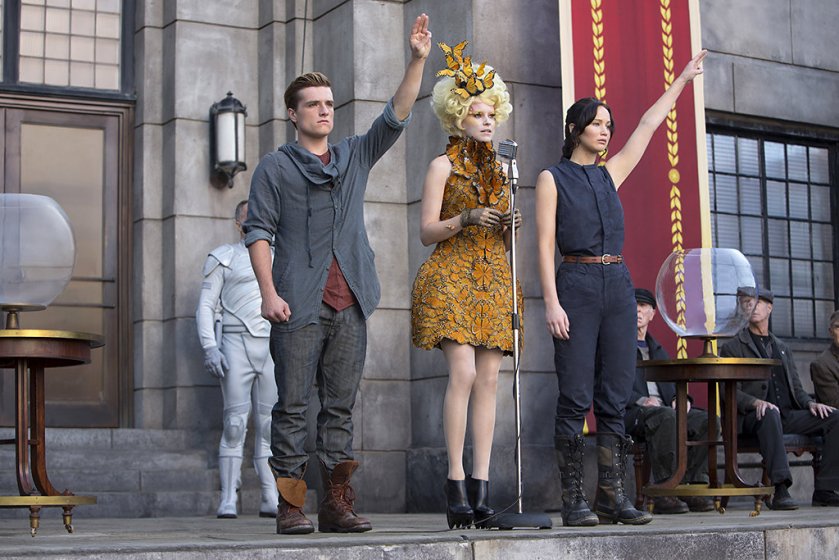


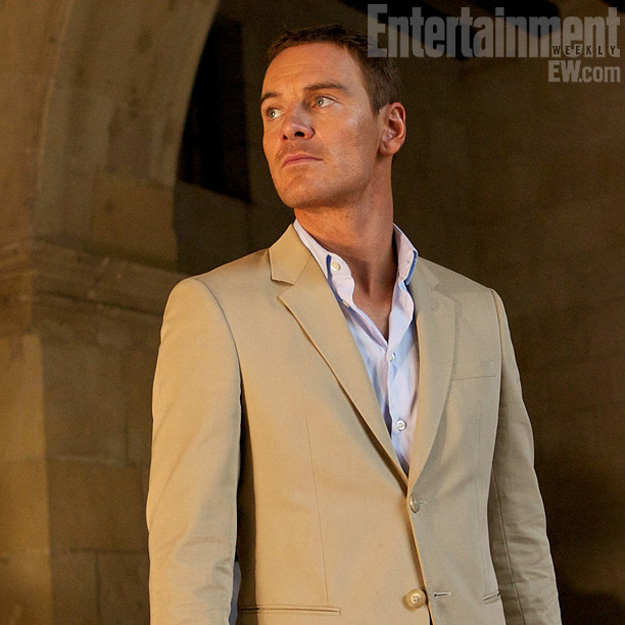
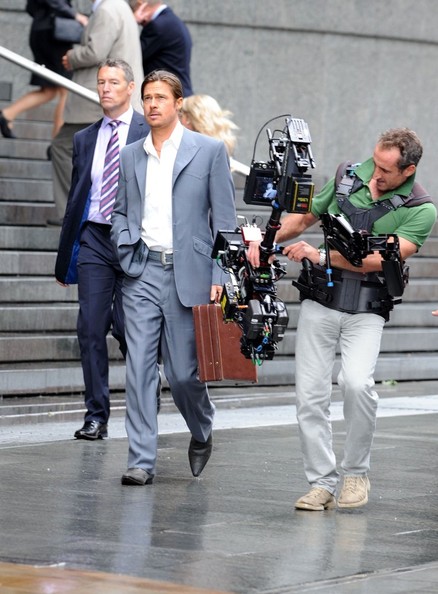
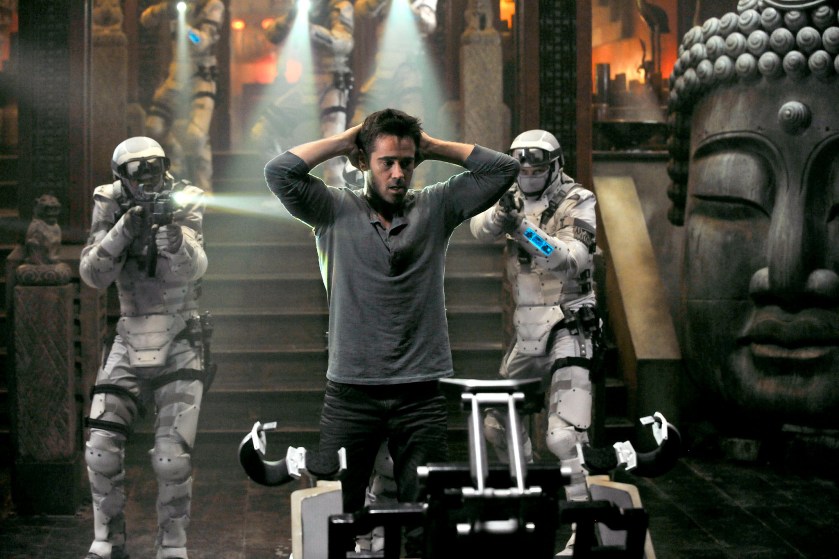


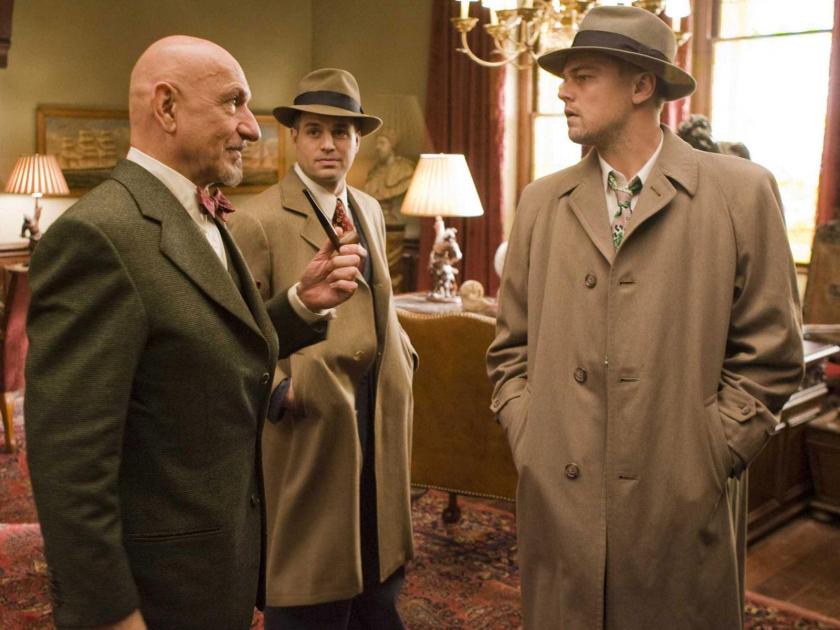


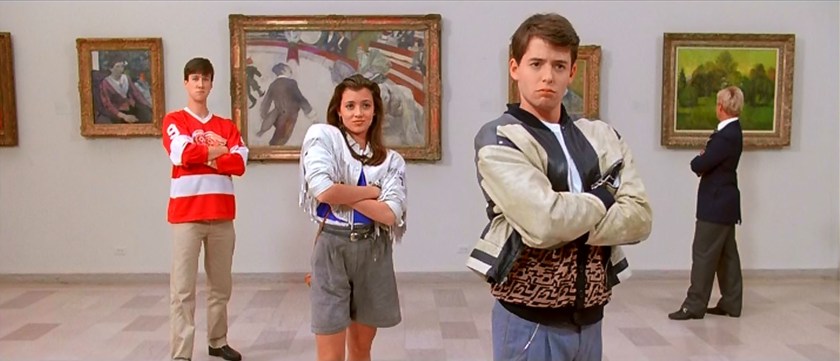
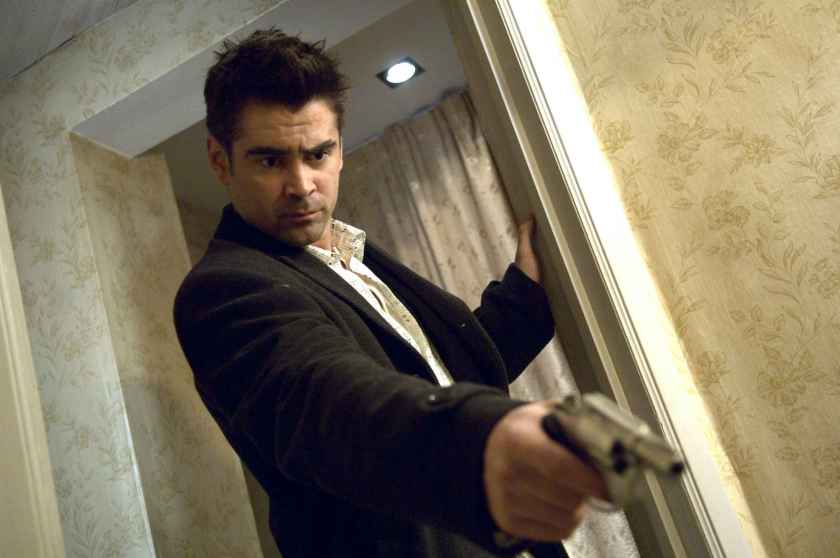


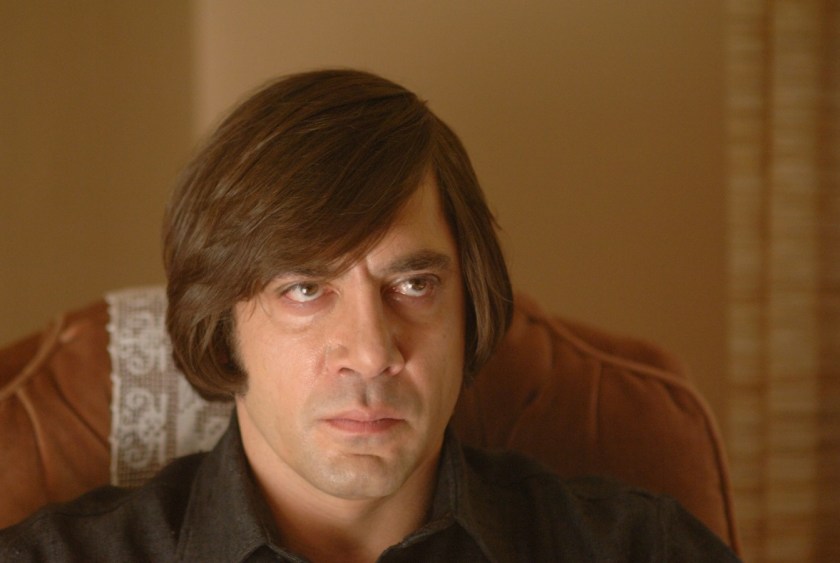


 Consumed By Film