A Good Day to Die Hard (2013)

★★

Director: John Moore

Release Date: February 14th, 2013 (UK and US)

Genre: Action; Crime; Thriller

Starring: Bruce Willis, Jai Courtney

If Jai Courtney wasn’t a younger, less-bald Bruce Willis he probably wouldn’t have been part of A Good Day to Die Hard. Similarly, if Live Free or Die Hard hadn’t scooped up almost $400 million at the box office, six years later we wouldn’t have to sit through this shallowest of John McClane sequels. A total horror-show it ain’t, but apparently some people don’t think cricket is boring and most of us hate that. After a long journey extending all they back to terror in the tower in 1988, there has been a severe breakdown at stop five. Though after two and a half decades spent invariably recycling old material, what more d’you expect?

A less capable, more cigar-and-newspaper-on-a-Sunday-morning appearing John McClane (Bruce Willis) travels to Russia upon hearing that his son has had a run-in with the law having been arrested for an assassination attempt. In reality, Jack (Jai Courtney) is an undercover CIA agent working to bring down dangerous and corrupt government official, Viktor Chagarin, although John doesn’t realise this, probably because of that age thing. An explosion coordinated by Chagarin during the resultant trial allows Jack and whistle-blower Yuri Komarov (Sebastian Koch) to escape custody, and chaos ensues.

The film is stuck between trying too hard to be slyly comedic on one hand and a serious action flick on the other. The original Die Hard got this mix spot on, mainly because the premise was ridiculously exciting, Willis looked interested and Alan Rickman delivered one of the finest villainous performances in recent cinema history. Here the narrative is a poorly executed mess and Willis looks like a guy who has randomly invaded a film set while on his holidays abroad, perhaps thinking it’s all part of a Russian cultural process. There are also more bad-guys on show than laughs, although having said that you’d be hard-pushed to exude more than a handful chuckles.

The plot then. Wearing more holes than an unending golf course, it doesn’t take long to induce a succession of wearisome head-shakes. After essentially saving the world throughout his previous four films, you’d expect John McClane to have a bit of know-how about him when it comes to dealing with machine-gun wielding terrorists. Apparently not anymore: his first conversation with Jack comes nonchalantly in the presence of bullets harpooning all over the place and the odd explosion going off. Ah, it’s probably to do with the age thing. There are far too many contrivances, the most notable being an endless progression of villains, each one ‘badder’ than the next. It gets so ludicrous that McClane himself to switching sides wouldn’t come as a total shock (hey, that sounds like a better film). I think son Jack gets it right as at one point he alludes to, “Making it up as we go”.

Sticking with Jai Courtney, he’s not a bad actor at all. In fact he’s fairly decent in this given the retched dialogue that’s being spluttered about: “But I’m your father”; “And I’m your daughter,” is probably the worst of a bad bunch that collectively cannot be saved by ‘knock, knock’ jokes or even former franchise favourites (“Yippee ki-yay…”). Willis’ spark as McClane is non-existent; the eccentric hero has turned charisma vacuum. Again the script really doesn’t help matters and there aren’t any outlandish sequences that give Willis the platform to be his glorious former action-star self, however the man simply looks like he really cannot be bothered with it all. One of the major let downs of the entire film is how little the super-talented Mary Elizabeth Winstead is utilised. McClane’s daughter was introduced in the previous outing and is relegated to a beginning and end cameo. Her only real contribution is offering McClane an ‘Idiot’s Travel Guide’ before his journey to Russia. That must be another age joke then. Given the lack of intuition on display, her scarcity is even more criminal.

On the plus side the action scenes do look great, having evolved to even grander scale this time around. In particular the helicopter scene at the end is excellently executed and actually gives the film a bit of oomph to clutch onto towards its climax. Unfortunately no visual escapade can save proceedings, and the only other glaring positive to take from A Good Day to Die Hard is that you only have to sit through an hour and a half before checking it off your list of films never to sit through again. The sheer disappointment stems from the franchise’s previous successes, principally the pleasantly surprising Live Free or Die Hard, and therefore there can be no excuses dealt in serving up this newest nonsense.

They say you can’t teach an old dog new tricks. On this evidence you can’t teach an old dog much else either. If only McClane had made do with living free, nevertheless, this is probably a good day for the Die Hard adventure to die hard.

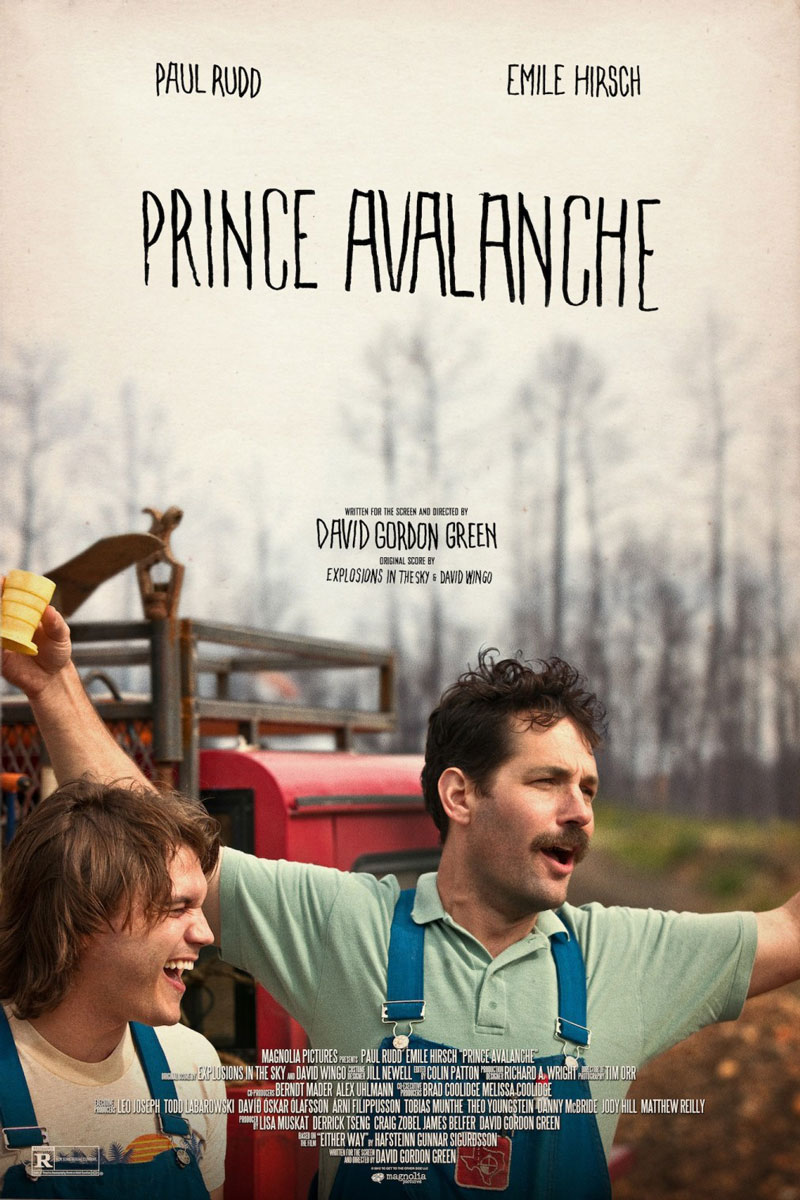
Prince Avalanche (2013)

★★★★

Director: David Gordon Green

Release Date: August 9th, 2013 (US limited); October 18th, 2013 (UK)

Genre: Comedy; Drama

Starring: Paul Rudd, Emile Hirsch

There’s something profound about Prince Avalanche. As of yet I’m not entirely sure what it is. Perhaps the unavoidable sense of insignificance in the wider scheme of things; maybe it’s the occasionally gentle, often idyllic soundtrack; it could even be that gratifying feeling you prescribe to after watching a low-budget, indie-style offering — you know, like you’ve done something good for the little guys. No, I think the sensation is as genuine as the film and the cards it places on the table. Not a King of Clubs, certainly not an Ace. Rather, a Two of Hearts and all the better for it.

Alvin and Lance are both very different. The former writes letters to his sweetheart (the sister of his workmate) and delves in poetry, whereas the latter spends Friday’s eagerly awaiting a weekend on the town and Monday’s trying to piece together events. One thing the men do have in common though is painting traffic lines along a road hidden away by a fire-pillaged wilderness. When we meet them they chant in sound bites, just like colleagues do, but soon enough it’s back to the job: “We gotta lot a’ work to do and it’s a very long road.”

The inconsequential nature of the job wears on the pair, but in doing so highlights the immaterial arena they find themselves haunting. Their work is mundane but their lives are invaluable. It’s 1988 and wildfires have destroyed more than just landscape that Alvin and Lance inhabit. Life has migrated elsewhere, away from a place in which it previously thrived — the only animals left are physically scarred. Other than that, all that remains are Alvin, Lance and their poisonous paint, and even they’re only temporary. This deeply melancholic setting administers a great deal of the film’s character. It also furnishes a few of 2013’s most moving scenes.

Lance is somewhere partying. Alvin spots an elderly woman enclosed in rubble, presumably that used to make up her home. They speak, but we can’t hear much of it. That doesn’t matter anyway; the specifics are personal, it’s the sentiment that matters. The lady was formerly a pilot but she has lost her licence in the fire — proof of her incredible life experiences burnt to nothingness. Director David Gordon Green (Pineapple Express) adds a slight documentary-esque feel to the scene by remaining distant from their conversation. Alvin says his goodbyes and shortly after finds himself re-enacting daily life amongst more bricks and mortar. Abandoned instantly. Out in this natural mural of devastation material things don’t matter.

Lance returns boasting a new watch. The relationship between the men is strained from then on. Paul Rudd (Anchorman) is Alvin, whose rattled demeanour suggests preferred solitude in the wake of Emile Hirsch’s (Into the Wild) Lance, a well-meaning but insecure fellow. The pair, and they are first and foremost a pair here, bicker when necessary — no doubt fuelled by Alvin’s relationship with Lance’s sister — yet still share a subtly warming dynamic. Rudd and Hirsch work well together with Rudd suitably stepping up as the knowing father figure in compliance with Hirsch’s futility.

Cinematographer Tim Orr has shared many film sets with friend David Gordon Green, but you’d be hard pressed to find a more beautifully shot output. Yes, the obvious organic landscape works in his favour but Orr captures it in all its potency — as our two companions’ relationship and understanding develops, we eventually see some telling shots of emerging wildlife amongst the ash. The ambient soundtrack, scored by American post-rockers Explosions in the Sky and composer David Wingo, is exactly the sound you’d expect in this setting and is exactly the sound what you’d want to hear too. Fluid, low-key and poignant, it has listeners sailing along with the two main characters as they toil in the past, suffer the present and paint the future.

There’s even the odd rush of comedy amongst proceedings that are otherwise slightly bleak. An alcohol-fuelled rage for one, and keep an ear open for Paul Rudd’s exclamation, “She’s hooking up with a masseuse? Gross!” Speak for yourself, Mike. Lance LeGault appears every so often as a hardy, abrasive truck driver and is often the vehicle of funny. Perhaps fittingly, much like Alvin and Lance, his story ends movingly but not wholly. It’s left to the viewer to fill in one or two gaps, which works because Prince Avalanche isn’t trying too hard to be anything. At its simplest it doesn’t really matter. But that’s the allure: the film’s inconsequence compounds the importance of everything else around it. In that sense, it echoes Alvin and Lance.

As i write this review, the wanes of Explosions in the Sky and David Wingo caressing my eardrums, everything feels calm. Urgency has been banished. Time will wait its turn. Prince Avalanche is a lot like that, and if you’ve got the patience you’ll enjoy it as much as i did.

“Just do it, it’s good for your soul.”

Preview: The 2014 Cinematic Landscape

Who invited January over?

Yep, the most miserable month of year has reared its ugly head again. However for film fans (and let’s be honest, who isn’t?) the arrival of the dreaded January means two things: One, it’s awards season, so watch out for the heavy hitters making their way around cinemas, and two, it’s time to look forward to another calendar year choc-a-bloc with films ready to burst loose and onto our screens.

I guess we should start looking then…

(All release dates are subject to change, so don’t be booking your holidays around them. Because I know people do that. What? Just me?)


January

The Wolf of Wall Street – Director: Martin Scorsese, Starring: Leonardo DiCaprio

That’s right, having spent the best part of a decade working together, Scorsese and DiCaprio are remaining true to form and battering out another collaboration. This time Leonardo DiCaprio is Jordan Belfort, a New York stockbroker who got rich overnight in the late 1980s. The Wolf of Wall Street is based on a true story and by all accounts, it’s a pretty hectic tale. Jonah Hill and Matthew McConaughey are part of this brash comedy that apparently didn’t go down too well with a few elderly Academy members, as reports suggest Scorsese and the cast were severely heckled after a screening. Sounds like a lot of fun then! Out January 17th in the UK.

Inside Llewyn Davis – Directors: Joel and Ethan Coen, Starring: Oscar Isaac

From the outrageous to the harmonious, Joel and Ethan Coen have rustled up another helping of their highly sought-after Kool-Aid. Set around the wintry Greenwich Village folk scene in 1961, the film depicts a week in the life of Llewyn Davis, an aspiring musician out of luck. This has earned rave reviews on the festival circuit, and could springboard Oscar Isaac into Hollywood stardom. The Coen Brothers are often meticulous in their film-making – details matter as much as one-liners – and with T-Bone Burnett orchestrating the music production, Inside Llewyn Davis may well cause one or two Academy Award-shaped upsets come March. Out January 24th in the UK.


February

Dallas Buyers Club – Director: Jean-Marc Vallée, Starring: Matthew McConaughey

It’s only February and here we are looking at Matthew McConaughey’s second film on the list (and it won’t be his last)! The true renaissance man of cinema has knocked role after role out of the park in recent years, be it as a gritty lawyer in The Lincoln Lawyer, an eccentric stripper in Magic Mike or a pact-making fugitive in Mud, and this is shaping up to be another home run. After being diagnosed with AIDS, hustler Ron Woodroof sees life in a new light, shining brightly on giving back to those in need. Dallas Buyers Club has an air of Milk about it, which can only be a good thing. Also watch out for a supporting performance from Jared Leto that is generating quite a helping of Oscar buzz. Not bad for a singer. Out February 7th in the UK.

The Monuments Men – Director: George Clooney, Starring: George Clooney, Matt Damon

Argo meets Inglorious Basterds. Now that doesn’t sound half-bad, does it? Only, replace stranded United States embassy staff with some art masterpieces, and Diane Kruger with Cate Blanchett, and you’ve got yourself George Clooney’s next directorial venture. It’s quite a change from running for president in The Ides of March, although some political elements look set to remain. Clooney and company are going to have to do exceedingly well to usurp Quentin Tarantino’s take on World War II, however with a cast including Bill Murray anything’s possible. Out February 21st in the UK.

 

March

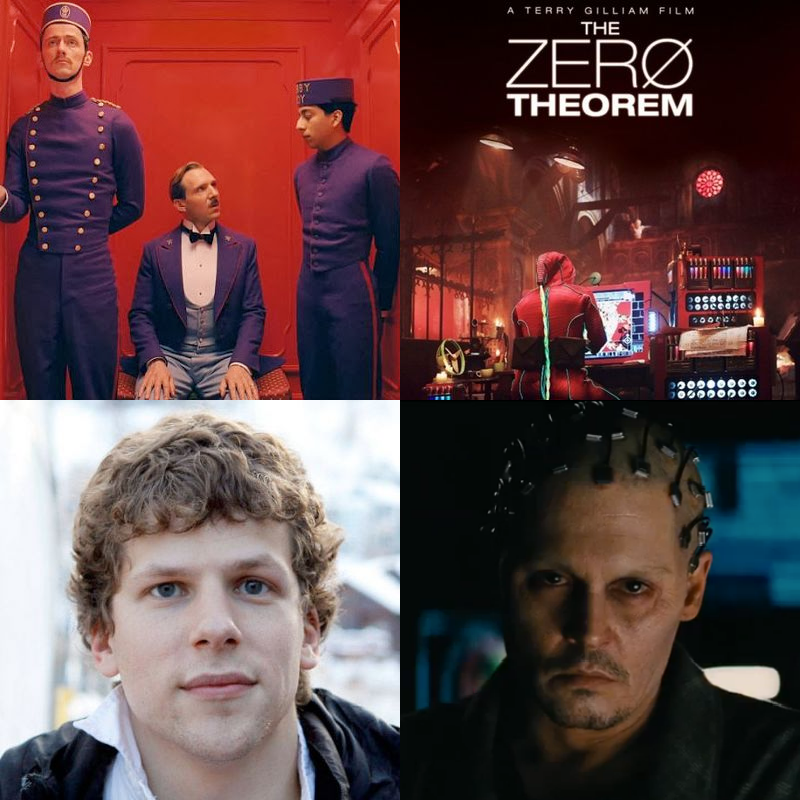
The Grand Budapest Hotel – Director Wes Anderson, Starring: Just about everyone

Wes Anderson and that distinctive directorial style returns with a story about a heralded concierge, a young lobby boy and a stolen painting set in a hotel between World Wars. Anderson must have a phone book brimming with Hollywood stars, each of whom is in his debt. Or maybe he just makes interesting films (yep, probably this one). Bill Murray – hooray again – is joined by Saoirse Ronan, Jude Law, Ralph Fiennes, Tilda Swinton, Edward Norton, Jeff Goldblum and a whole host of other people you’d want to have round for dinner. There’s no doubt this’ll have laughs, but without the naive innocence on show in Moonrise Kingdom, will those laughs be enough to win over audiences? Maybe Anderson has another trick up his sleeve. Or in his hair. Out March 7th in the UK.

The Zero Theorem – Director: Terry Gilliam, Starring: Christophe Waltz

The man behind Monty Python has turned his head to existential science-fiction in this odd-sounding fantasy-drama. About a computer hacker’s search to uncover why and how human beings exist (he should check out The Meaning of Life, by the way), The Zero Theorem even tends towards comedy by the sounds of it. The hacker’s bosses, succinctly named the ‘Management’, strive to distract him by sending a lusty love interest to his place of work. This ‘Management’ lot obviously don’t understand the first rule of um, management – getting results. Surely Christophe Waltz (who plays our lead) won’t deliver results with his attention diverted elsewhere?! This could throw up anything really. Out March 14th in the UK.


April

The Double – Director: Richard Ayoade, Starring: Mia Wasikowska, Jesse Eisenberg

After his coming-of-age debut Submarine was well received by audiences and critics alike, the stone-faced Richard Ayoade has decided for his second film, to direct Jesse Eisenberg… twice. This peculiar outing about a man stalked by his doppelgänger won over viewers when it premièred at the Toronto International Film Festival, and then carried much momentum onto The Culture Show with Mark Kermode during its life at the BFI London Film Festival. Mia Wasikowska is included in the Jennifer Lawrence and Elizabeth Olsen future of cinema party, and if that’s not enough to clinch your attention, Eisenberg versus Eisenberg in a wit-off is something you have to see in 2014. Out April 4th in the UK.

Transcendence – Director: Wally Pfister, Starring: Johnny Depp

He’s the reason most Christopher Nolan films look as wholesome as they do, but now someone else has to do the same for Wally Pfister (good luck Jess Hall!). Transcendence is his first venture into the directorial chair, and therefore could go either way. Given the extraordinary standards set by his previous work though, don’t expect anything to be left to chance. This story of death, life, and uncompromising power has morality at its heart and a string of Nolan’s acting repertoire to provide the beat. Johnny Depp meets Morgan Freeman, Rebecca Hall and Cillian Murphy in what is quite simply a exceptional line-up. Out April 25 in the UK.


May

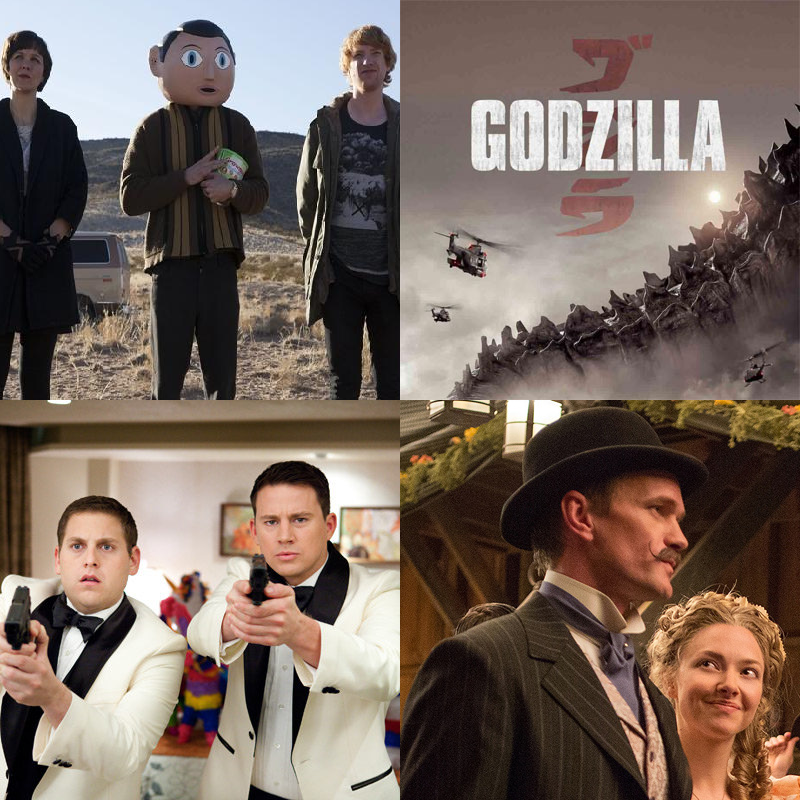
Frank – Director: Lenny Abrahamson, Starring: Domhnall Gleeson, Michael Fassbender

Frank hasn’t been released anywhere yet, therefore we don’t know an awful lot about it. Abrahamson’s last film, What Richard Did, garnered positive reviews from critics, but doesn’t seem to share many similar characteristics with his upcoming piece. About a young musician looking for a break and finding solace in a mysterious, enigmatic band leader who invites him to join, Frank is described as a comedy, a drama and a mystery on IMDb (which is fitting really, because its content certainly is unknown for the most part). Domhnall Gleeson charmed 2013 and Michael Fassbender has developed a reputation greater than most, so we’re in good hands here. It’s also nice to see Scoot McNairy involved, who excelled in Gareth Edwards much talked about debut Monsters. Out May 9th in the UK.

Godzilla – Director: Gareth Edwards, Starring Aaron Taylor-Johnson, Elizabeth Olsen

Speaking of Gareth Edwards, his triumphant 2010 debut has landed him at the helm of the most anticipated blockbuster of the coming summer. Roland Emmerich butchered more than just the Japanese monster in his take on Godzilla fifteen years ago, he also tarnished the immediate legacy of the giant mutant lizard. It looks like Edwards is delving back into the franchise’s original backbone – the trials and tribulations of human nature and greed – which is a good idea in an era where blockbusters have to be intelligent, or its bust. Aaron Taylor-Johnson is a solid lead and Elizabeth Olsen has done a whole lot of right so far in her young career. It must be wary of high expectations, however those expectations are only lofty on the back of Edwards’ previous successes. Out May 16th in the UK.


June

22 Jump Street – Directors: Phil Lord and Chris Miller, Starring: Channing Tatum, Jonah Hill

After the surprising critical and commercial success of the first film, it’s time for Jump Street: The College Years. Undercover cops Channing Tatum and Jonah Hill are set to return and after their prior personal triumphs, the pair find themselves surrounded by fraternities and hipster clubs in college. Joint directors Phil Lord and Chris Miller have two highly marketable films out in 2014 – the first being The Lego Movie – but both have difficult obstacles to overcome. For 22 Jump Street it’s all about bettering the predecessor, and that will be a big ask. Out June 6th in the UK.

A Million Ways to Die in the West – Director: Seth MacFarlane, Starring: Seth MacFarlane, Charlize Theron

Ted worked out well for Seth MacFarlane, so why not turn his head towards the west? After losing the love of his life to cowardliness, a man finds bravery in the form a gunslinger’s wife, only now the gunslinger wants his wife back. This one sounds like referential humour in abundance. Expect many a cowboy gag and acoustic twang. MacFarlane does blunt comedy very well in animated form, and his cross-over into live action was a successful one. Only time will tell if he can strike an even better balance second time around. Out June 6th in the UK.


July

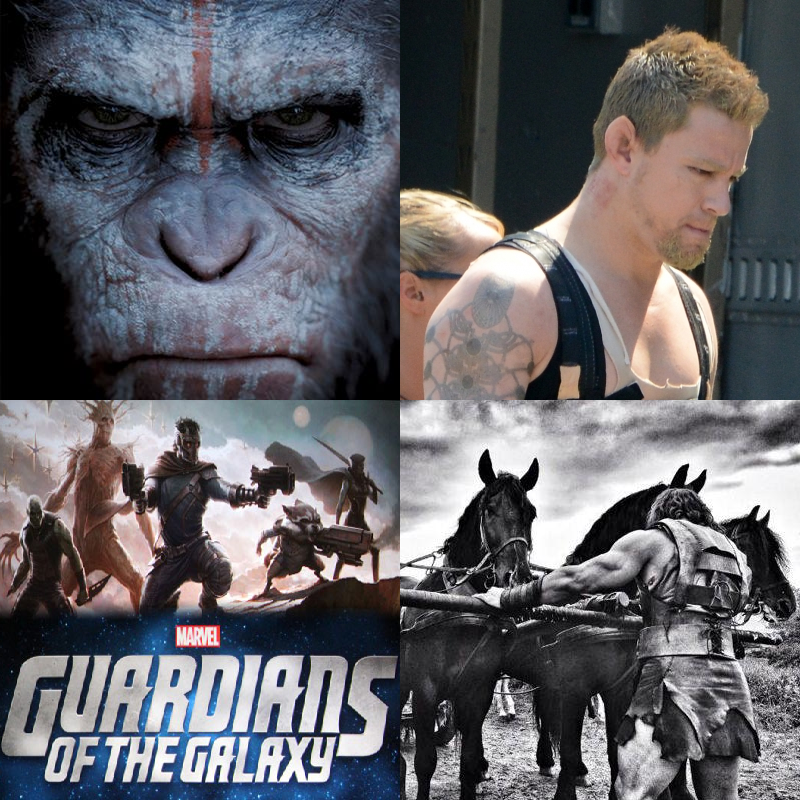
Dawn of the Planet of the Apes – Director: Matt Reeves, Starring: Gary Oldman

Cloverfield director Matt Reeves tries his hand at an Apes sequel, and will do well to live up to standards set by the first. There’s no James Franco (he’s too busy doing weird indie stuff), nor does Freida Pinto return. However, Gary Oldman has been lined up to take the reins and there can be absolutely quarrels with that appointment. Set eight years after Rise of the Planet of the Apes, human survivors of the virus unleashed at the end of the first film bond together in a movement against Caesar’s growing forces. The Picasso of motion-capture acting, Andy Serkis, is back as Caesar in an outing that pertains to being far more action-packed than the first. Out July 17th in the UK.

Jupiter Ascending – Directors: Andy and Lana Wachowski, Starring: Mila Kunis, Channing Tatum

In what appears to be 2014’s Cloud Atlas (and hopefully not 2014’s After Earth) Jupiter Ascending will be strung together by mythology, scintillating visual landscapes and probably some croaky language not-of-this-earth. The human species has fallen mightily, and exists near foot of the evolutionary pyramid, where Mila Kunis cleans toilets for a living. Her unfulfilled existence is about to change however, as she is targeted for assassination by the threatened Queen of the Universe in an attempt to ensure her own longevity. You’ve got to hand it to the Wachowski’s: they’re not afraid to dream and do big. In the same vein as their previous films, this’ll likely split opinion. Out July 25th in the UK.


August

Guardians of the Galaxy – Director: James Gunn, Starring: Lee Pace, Vin Diesel, Bradley Cooper, Zoe Saldana

The Avengers’ cousin, this will be Marvel Cinematic Universe’s second offering of the year after Captain America: The Winter Solider, and the first in its own particular superhero story strand. A group of misfits including a warrior, a tree-human hybrid and a squirrel are recruited by a stranded pilot in space as he attempts to fend off a number of cosmic threats and ensure the galaxy’s survival. Guardians received an electric reception

Guardians received an electric reception at the 2013 San Diego Comic Con and there’s a large degree of buzz surrounding the film. With very little exposure in the run up to its release – unlike The Avengers which was preceded by feature-length films for each character – it may not make as big an impact as expected. Out August 1st in the UK.

Hercules: The Thracian Wars – Director: Brett Ratner, Starring: Dwayne Johnson

Much like the battle of White House destruction supremacy that played out in 2013, this year will have its own inter-Herculean duel as two re-imaginings of the Greek demigod come to fruition. The second and more anticipated of the two will be directed by Brett Ratner and will star the franchise re-energiser himself, Dwayne “The Rock” Johnson, alongside film veterans John Hurt and Ian McShane. Can The Rock layeth the Smacketh-down on both a monstrous warlord and a February release of the same name? Out August 8th in the UK.


September

Posh – Director: Lone Scherfig, Starring: Sam Claflin, Natalie Dormer

At the time of writing, September is looking pretty starved in the film front. It’s sandwiched amongst that awkward post-summer blockbuster, pre-awards season gap, when many people are heading back to work, school or uni. However Danish director Lone Scherfig has this upper-class thriller lined up to hopefully quench our end-of-holiday blues. Sam Claflin and Game of Thrones’ Natalie Dormer will star as new members of the Riot Club at Oxford University. With very little known about Posh, let’s place it somewhere between National Lampoon’s Animal House and Pathology for now. Out September 19th in the UK.


October

Gone Girl – Director: David Fincher, Starring: Rosamund Pike, Ben Affleck

David Fincher has accumulated quite the portfolio of films throughout his career, along with a fair few fans too, so it’ll be interesting to see how this seemingly more straight-forward narrative will go down. Based on a novel of the same name, Gone Girl sees conundrums take precedence as a woman disappears on the day of her wedding anniversary. Fincher doesn’t often disappoint his supporters, and the mystery-thriller element here should be enough for him to juggle with and embroider his own spin. Heck, he’s got Batman as his lead for goodness sake. Out October 3rd in the UK.


November

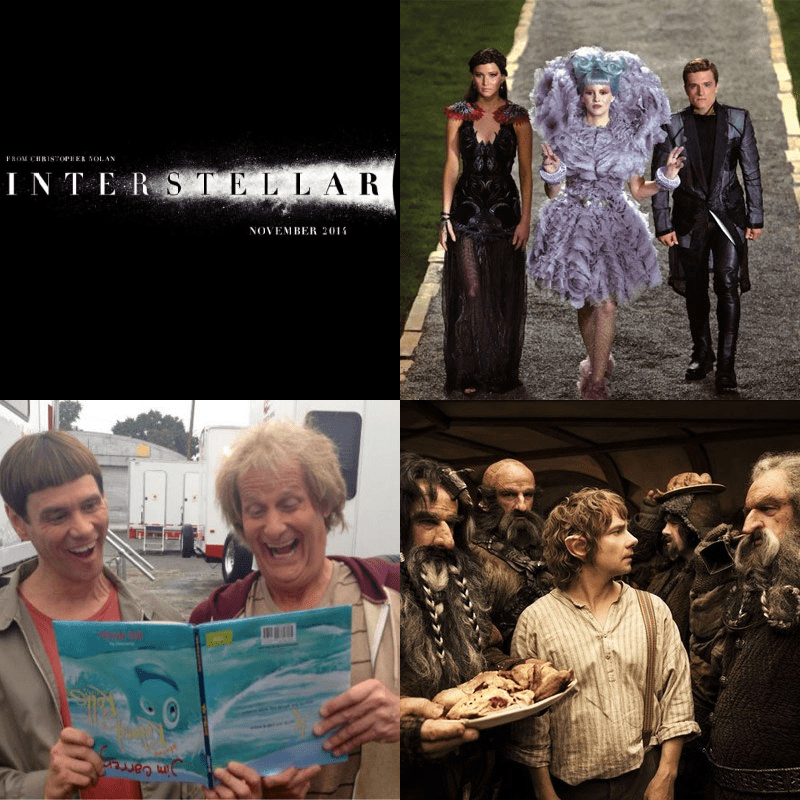
Interstellar – Director: Christopher Nolan, Starring: Anne Hathaway, Matthew McConaughey

In his first film since neatly wrapping up the trials and tribulations of Batman for a while (oh… right) Chris Nolan is taking to space for his next voyage. Hey look, Matthew McConaughey is back again! And this time Double-M is joined by Nolan archivees Anne Hathaway and Michael Caine, plus Jessica Chastain, in a sci-fi tale about discovering the bounds of life and surpassing the un-surpass-able. Ahem. Expect wormholes aplenty and probably even some dimension-hopping, time-travelly stuff too. Nolan hasn’t made a bad film in, well, ever, so Interstellar will open with very high expectations. Will it be stellar? Out November 7th in the UK.

The Hunger Games: Mockingjay – Part 1 – Director: Francis Lawrence, Starring: Jennifer Lawrence

It’s becoming a late-November outing to be thankful for, but with two excellent predecessors, the less-well-regarded Mockingjay (Part 1, to ruffle even more feathers) has hype, expectations and box office records to live up to. Jennifer Lawrence will reclaim the bow for a third time as she helms the rebellion against President Snow and his viscous Capitol. Francis Lawrence infused Catching Fire with more politically current themes, and created an altogether bleaker but better film than first time around – and first time around was pretty damn good. Going by the material in the third book, Francis Lawrence has an even bigger task on his hands here. Part 1 is out November 21st in the UK, with Part 2 to follow a year later.


December

Dumb and Dumber To – Directors: Bobby and Peter Farrelly, Starring: Jim Carey, Jeff Daniels

Anchorman 2 by association, and we’re not off to a great start with the title. Much like the return of the Burgundy-brigade after nine years in December 2013, the dimwits are set to return in December 2014 after twenty years doing absolutely nothing. Not really, both Carey and Daniels are far bigger stars these days, raising the question: will it be harder for audiences to acclimatise to their characters’ now Hollywood stupidity? Fortunately, the Farrelly brothers are once again fronting up the sequel which does actually sound quite funny: the duo are on the hunt for a new kidney, so now is probably a good time to find that long-lost child. Out December 19th in the UK.

The Hobbit: There and Back Again – Director: Peter Jackson, Starring: Martin Freeman, Ian McKellen

And finally, we once again end the year at the end of the Hobbity adventure. Peter Jackson’s extended extension of J. R. R Tolkien’s ‘The Hobbit’ has improved with age, but will probably never please the hardcore Tolkienati. We’ve been there twice and it’s time to go back again as the world finds out the fate of Bilbo, Gandalf and their company of dwarfs, in their joust with Smaug. The amount of book pages remaining is wearing thin, so it’ll be interesting to see how Jackson expands this final instalment across almost three hours (which he’ll surely do). The Hobbit films haven’t really been a patch on The Lord of the Rings trilogy, but I’ll certainly miss Jackson’s endeavours into Middle Earth when the franchise finally nestles up. Out December 19th in the UK.


Some more potential hit or misses:

Jack Ryan: Shadow Recruit (Kenneth Branagh): This year’s Jack Reacher, only Tom Cruise is younger and cooler. Out January.

Non-Stop (Jaume Collet-Serra): Taken on a Plane. Out February.

Nymphomaniac (Lars von Trier): Wherever von Trier goes controversy follows, and this has controversy smothered all over it. Along with a lot of other… stuff. Part I out February, Part II out March.

The Amazing Spiderman 2 (Marc Webb): Three and Four are already confirmed, and although the first regeneration was a success, counting chickens is a dangerous game. Out April.

Chef (Jon Favreau): Favreau’s Iron Man set a yet-to-be-reached bar for the franchise, and he’s back with RDJ in this tasty comedy. Out May.

The Fault in our Stars (Josh Boone): It’s probably time for a summer weep-fest. Out June.

Transformers 4 (Michael Bay): Let’s not even kid ourselves. Unfortunately, out July.

Sin City: A Dame to Kill For (Frank Miller and Robert Rodriguez): The next chapter in this graphic novel-driven saga. Out August.

Search Party (Scott Armstrong): Matthew Abbadon from LOST is in it. Out September.

The Maze Runner (Wes Ball): Brimming with youthful potential, will this be the next Hunger Games? Out October.

Horrible Bosses 2 (Sean Anders): The first was pretty average, but Christophe Waltz has been snapped up for this one. Out November.

Exodus (Ridley Scott): Scott’s movie-making binge continues with this account of Moses, played by Christian Bale. Out December.


What are you looking forward to seeing in 2014? Comment below!

American Hustle (2014)

★★★★

Director: David O. Russell

Release Date: December 20th, 2013 (US); January 1st, 2014 (UK)

Genre: Crime; Drama

Starring: Christian Bale, Amy Adams, Bradley Cooper, Jennifer Lawrence, Jeremy Renner

“Some of this actually happened.”

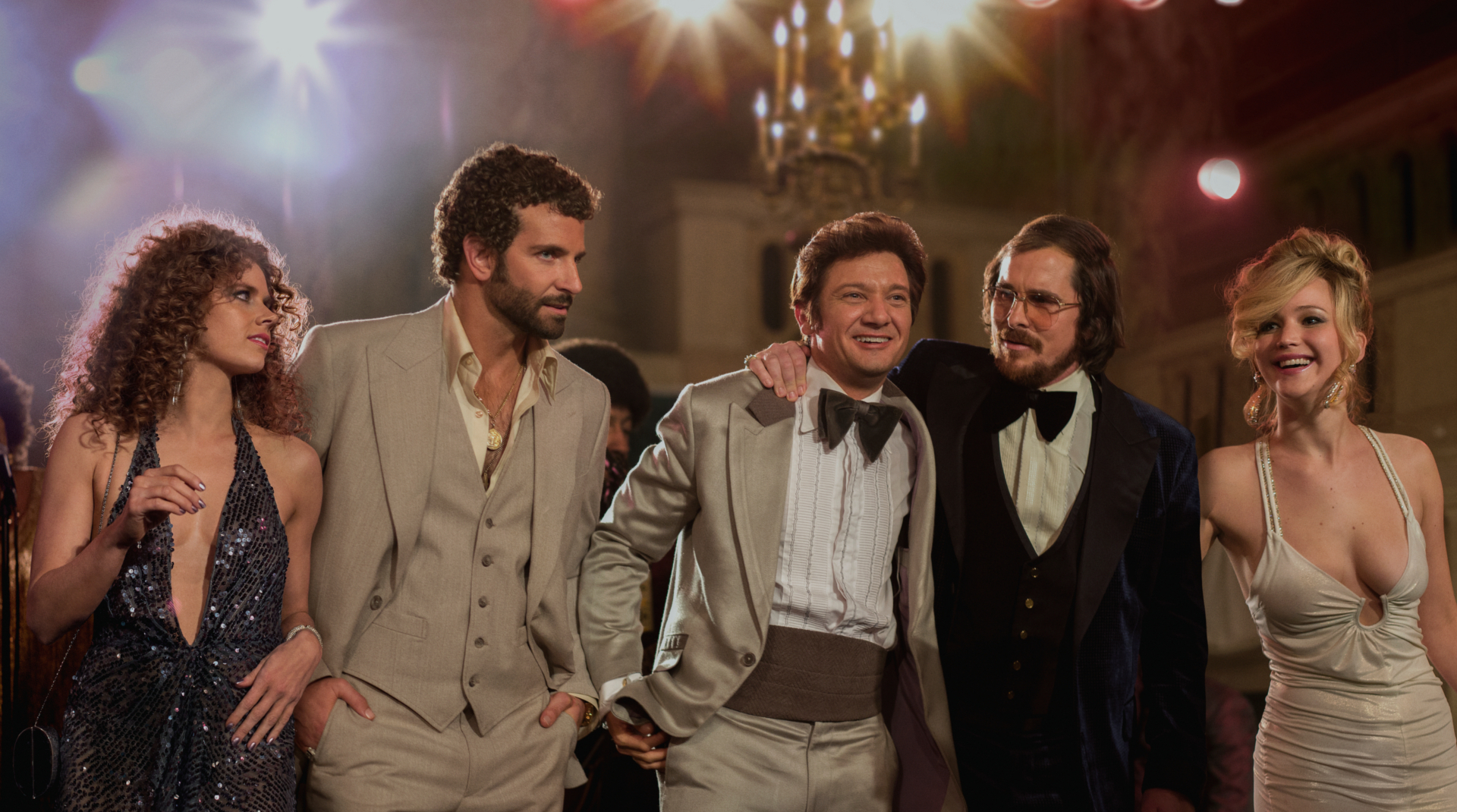
These are the first words you see on screen as American Hustle rolls along the runway in preparation for a turbulent take-off. The next thing, an obtuse, balding Christian Bale spends a good few minutes chained to mirror, meticulously attempting to glue hair to his head. And it’s brilliant. One minute the film is poking fun at itself, the next it’s indulging in extended Hollywood grooming. Whether or not you actually believe that any of what is to come actually happened is irrelevant. Batman is fat and bald. Only he’s not Batman, he’s the first of five characters who, placed in any other film, could easily be dismissed as unlovable. Yet these characters, these jaded and faulting human beings are the epitome of most things great in American Hustle — and trust me, most things are great.

After a string of loan scams gone right, con-man Irving Rosenfeld (Christian Bale) and his partner Sydney Prosser (Amy Adams) are caught cheque-handed by exuberant FBI Agent Richie DiMaso (Bradley Cooper). Along with a reluctant Sydney, who is posing as a Brit with banking connections, Irving is manipulated into joining DiMaso in a plan to take down four potentially corrupt political figures, including the well-meaning New Jersey Mayor, Carmine Polito (Jeremy Renner). If Irving does not oblige, he fears the loss of his adopted son from his marriage with an uncontrollable wife, Rosalyn (Jennifer Lawrence).

First thing’s first: American Hustle serves up an abundance of heart to go along with bountiful amounts of razzmatazz and wild hair-pieces, and this is no small part down to David O. Russell’s focused direction, a direction particularly zoned in on his characters. Since making The Fighter in 2010, Russell has admitted that people are the most important elements of his films, that they infuse soul into his work, and this is certainly true here. At best the plot is slightly overloaded, but then it probably should be given the elaborate scam unfolding on screen. Russell deflects all attention away from these various narrative layers and strands though, and gives his characters the limelight. Unselfishly too — this character-based production style is something that doesn’t always necessarily invite directorial attention, rather the actors take most of the plaudits. However Russell’s passion for people, which is as much on display in both The Fighter and Silver Linings Playbook as it is here, means he most likely doesn’t want all the plaudits no matter how much he deserves them.

It’s not often that a truly A-list cast amalgamates where each actor delivers a tip-top performance. Normally, either there’s not enough material to satisfy so many hungry egos, or a severe case of weary cheque-collecting goes on. This could not be further from the truth in American Hustle, as the five stars bring out the absolute best and most flamboyant in one another. As Irving Rosenfeld, Christian Bale is the centrepiece of events, the instigator of many of the crazy goings-on (whether he likes it or not). “He had this air about him.” Sydney is absolutely correct. At the beginning, you get the feeling Irving is growing tired of his surroundings, he’s let himself go but not so far as to come across as weak — what we see externally is carefully tended (the hair), what we don’t see is tucked away (the stomach). It’s not until the glamorous and vibrant Sydney Prosser glances over into his life that Irving experiences an ambience of regeneration. Adams embodies seduction; she mesmerises the viewer as much as she does Bale and it’s obvious her character Sydney (or is it Evelyn?) has had a lot of practice in hiding charmingly behind a veil of otherness.

Bradley Cooper, who put in a career-best performance in David O. Russell’s previous film, is astoundingly funny as Richie DiMaso. He has the 70s jumping off him: a curly perm, outlandish clothing and that wise-cracking demeanour, one which harks back to more serious crime outputs such as Goodfellas, and even Scarface. DiMaso manoeuvres in the opposite direction to that of Irving — he becomes too cocky, dragged into a world of madness. As American Hustle trumpets on, it becomes an electric game of one-upmanship between Irving, Sydney and DiMaso. Nobody really knows who is playing who. There’s an air of unpredictability about proceedings. All of this makes for more compelling viewing as the sentiment hanging-on-every-word becomes agreeably essential.

Irving’s estranged wife Rosalyn is another firecracker in this celebration of absurdity and Jennifer Lawrence throws herself at the character. She delivers many of the funniest lines very well (“Don’t put metal in the science oven”) yet still manages to evoke heartfelt sympathy. It’s clear Rosalyn is under appreciated, struggles with demons and craves some consistent attention from Irving, or anyone really. To be able to stand on, and subsequently pull off, both sides of fence — the staunchly comedic and starkly vulnerable — is a testament to Jennifer Lawrence’s ability as an actor and storyteller. Newcomer to the David O. Russell school of actors (perhaps the coolest club going in Hollywood) is Jeremy Renner, a welcome addition. As Mayor Polito, Renner is more likeable than ever in a very different role from those he has partaken in recently. His outrageous facial expressions during a sing-a-long with Bale is a standout moment.

Harking back to David O. Russell’s preferred filmmaking style, behind all of the madness, these characters still feel like real people (they listen to each other’s phone calls in the other room for heaven’s sake). None of them really want to be where they are. Perhaps they are wearily sucked in, or can’t seem to find a way out. Better lives, that’s all they’re after. They create attractively unattractive personas in order to acclimatise to the anarchy. Yet you still want to love them in the end. Unlike the plot, which arguably outstays its welcome, not one single character does.

The saying ‘never a dull moment’ has rarely been more fitting. Everything here is so over the top and brash. When names such as Carmine Polito and Victor Tellegio are sprayed around, it’s not hard to imagine the kind of entertainment on show. There absolutely is a sense of indulgence, but it’s more than simply self-indulgence, rather a communal kind between filmmaker and audience. A conversation about coriander and perfume smelling like “flowers, but with garbage” essentially sums up American Hustle: it sort of doesn’t make sense, but the circus-like pandemonium makes the film great because it allows people to thrive and evolve.

I left the cinema thinking American Hustle was a good film, and many hours later it is still growing on me. There is a good chance it will for a long time. It’s euphoria and desolation. Furious and funny. Organised chaos which descends (or ascends) into disorganised chaos. Somewhere along the way, Bradley Cooper, in his most vociferous New Yoik accent says, “You might even get sick of me!” He could be referring to the fabulous five on show (or six, if you include David O. Russell).

If so, honestly Bradley? Not in the slightest.

Trouble with the Curve (2012)

★★★★

Director: Robert Lorenz

Release Date: September 21st, 2012 (US); November 30th, 2012 (UK)

Genre: Drama; Sport

Starring: Clint Eastwood, Amy Adams, Justin Timberlake

Whereas Bennett Miller’s Moneyball laid out the intricacies of baseball and created an engrossing film about the sport for people who don’t know the sport, Trouble with the Curve sees baseball solely as a starting point; as the spark that will go on to ignite a splendid tale of relationships, trust and stubbornness. The cast is excellent and each bring something different to the field, but it’s simplicity that allows Trouble with the Curve to thrive. The low-key approach is very laissez-faire, almost as if the film isn’t striving to make that home-run. Only, it just about gets there anyway.

Gus Lobel (Clint Eastwood) is an elderly scout who has plied his trade at the Atlanta Braves for decades. He has devoted his life to baseball and Gus’ ageing mind is always wandering in search for the next bat. Eyes failing him (a scout’s nightmare) and given one final chance to unearth a diamond, Gus finds himself on the road with his daughter Mickey (Amy Adams) whose success in law suggests more than just strength and independence, as it instead covers up the cracks dealt in a life without her father.

Not an awful lot happens in Trouble with the Curve, but it’s exactly that deficiency in over-doing things that gives the film its mellow charm and warmth. Having its toes dipped in the sports genre, a danger certainly exists where the attraction of glorifying situations and entering an all-too-familiar schmaltz territory is never far off, but director Robert Lorenz ensures sappiness is kept to an absolute minimum, meaning that when it does rear its mushy head, you are obliged to forgive. In a film about overcoming obstacles, it’s definitely more fitting to have some puddles of slush rather than sheets of uncompromising ice.

At the heart of the film are two performances, both of which provide the elevation needed for Trouble with the Curve to stand out from the pack. Clint Eastwood is gravelly, rustic, abrasive, croaky and a whole manner of other blemishes associated with an elderly man who has seen his best years, and who probably wont see much more of the sport he loves and lives. Gus Lobel’s colleagues are often seen exclaiming, “He may be ready for pasture,” “Game’s changed,” and “New blood”, and although he doesn’t hear these put-downs in the open, Eastwood’s defiant yet deep-down defeated demeanour tells you all you need to know about his character’s own perception of a bleak future.

Along, then, comes the simply delightful Amy Adams, who bursts with soul as she injects life into both Eastwood and the film. Although a cagey lawyer-type in the beginning, her relationship with Eastwood develops into an absorbing one: sometimes sad, sometimes funny, but always worth its weight in screen time. Gus and Mickey are far too stubborn to admit defeat (in their eyes, at least) and the film plays with this idea of withholding from loved ones until it might be too late. Mickey is always coiled up in work; her aspirations of getting a promotion in an industry she only entered to please her father are shallow, as he is never there to see her thrive anyway (“Everything’s okay as long we don’t talk”). Gus is distant, embroiled in baseball and relentlessly stutters when attempting to unveil feelings and sentiment towards his daughter. Justin Timberlake portrays former player Johnny Flanagan, someone who was apprehensive in the past about discussing the arm injury that prematurely ended his playing career. Timberlake deserves recognition for his charismatic contribution too, and together the three actors develop brilliant chemistry which ultimately drives the film and sharpens its principals.

In its lack of narrative extravagance, Trouble with the Curve does run the risk of inducing monotony, however the aforementioned engaging characters should be enough to guide you through until the end. Although not as funny as other road-trip films (which it essentially is) there are undoubtedly moments of comedy, a handful of which tread the black humour realm. This is Eastwood’s first non-self-directed acting expedition since a Casper cameo in 1995, and one or two playful sniggers towards age and losing touch with reality are on show — the whole ‘loss of sight’ element might even be a nod towards Eastwood’s real life front-of-camera career wind down.

It is all about the people involved, and thankfully the people involved are excellent company — there are even fun roles for Matthew Lillard and John Goodman, who has been pried from the Coen Brothers’ grip in order to film this. Purity is pivotal throughout Trouble with the Curve; heck, maybe a riskier, more diverse plot would’ve offered surprise and ingenuity. That’s wishful thinking though and, to be honest, probably a disservice to the brilliant effort on show from those involved.

Anyway, it is breakfast time… where’s my pizza?

Mama (2013)

★★★

Director: Andrés Muschietti

Release Date: January 18th, 2013 (US); February 22nd, 2013 (UK)

Genre: Horror; Thriller

Starring: Jessica Chastain, Nikolaj Coster-Waldau, Megan Charpentier

Although no director’s chair with his name on existed during filming, Mama has Guillermo del Toro’s fingerprints laden all over it. He is an executive producer this time, and the del Toro checklist brims with ticks in reference to this solid fantasy-horror outing that benefits a great deal from the presence of Jessica Chastain. Details are intricate and refined; visuals spring off the screen with life; harmonious sounds glide around with an air of mysticism. And just like in some of del Toro’s previous work (such as Pan’s Labyrinth and Don’t be Afraid of the Dark) the plot centres around an engaging, young female — only Mama demands two of them.

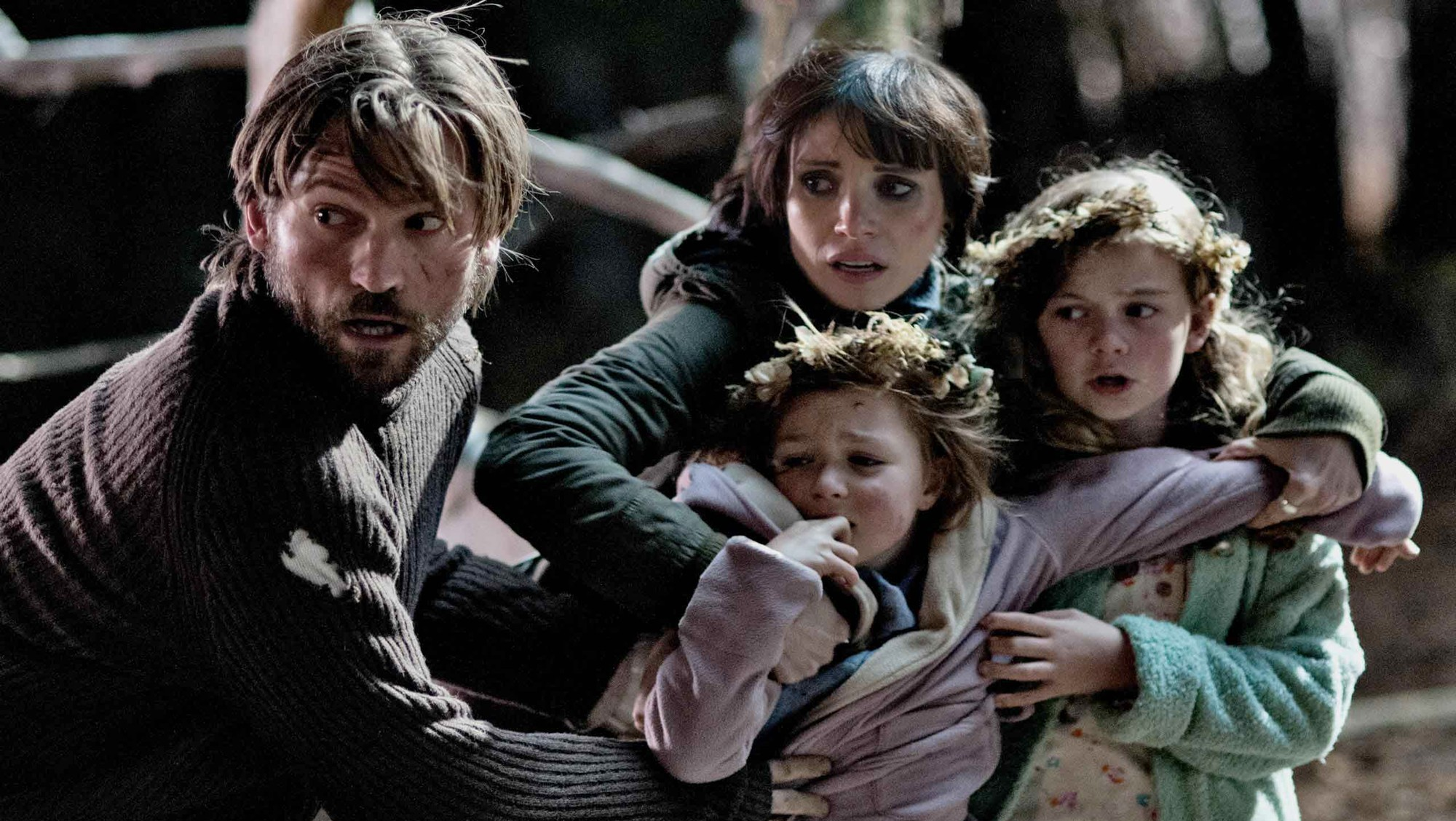
After murdering his wife and business colleagues then crashing his car in the snowy wilderness, troubled Jeffery is killed by a mysterious force that appears to be protecting his two daughters, Victoria and Lilly, from sharing a similar fate to that of their mother. Sometime later, a search for the missing girls funded by Jeffery’s twin brother Lucas (Nikolaj Coster-Waldau) proves successful and the two sisters are slowly reintegrated back into society under the parentage of Lucas and his rocker girlfriend Annabel (Jessica Chastain). However as time passes it becomes clear through consistently strange and distant behaviour that all is still not right with the girls.

Long gone are the days of atmospheric mind annihilation delivered by The Texas Chain Saw Massacre, or even nerve shredding tension served up during Alien. In 2013, you’d do well to uncover a film boasting these cherished characteristics of psychological horror and this is partially why we are subject to so many remakes and/or reboots. Creative ideas are at a premium (though not entirely obsolete) therefore the average mainstream horror output seems to be upping the technical anti as a compromise. Therefore Mama is a horror film that isn’t actually all that frightening, but is entirely watchable.

Why is it watchable? Proficiency in the visual department is partly responsible. The outside setting is rich. Old croaky shacks look and sound, well, old and croaky. First time director Andrés Muschietti bolsters the story with enticing monochrome-like flashbacks (or are they visions?) which are eerie and exceedingly well executed. Even the inclusion of a creature which would not be out of place surrounded by group of Dementors aboard the Hogwarts Express can be forgiven, as it moulds in appealingly amongst Guillermo del Toro’s fantasy visualisations. The illustrative prowess displayed throughout certainly adds a degree or two of watchability.

However, more than any optical standard set, the reason Mama deserves the attention of passers-by is Jessica Chastain. In a role that at first glance may seem a world away from her normal portrayals, Chastain’s rock ‘n’ roll chick Annabel actually shares a number of similarities with the actor’s previous characters. Although she is the sturdy anti-mother who squirms at the idea of pregnancy to begin with, Chastain soon becomes maternal and protective over the children, much like her venture into motherhood as Samantha in Take Shelter. Staunchly independent, yet perhaps not entirely equitable to the task, there are instances of Zero Dark Thirty‘s headstrong Maya here too. Forced into a situation out-of-her depth, there’s even a measure of insecurity present, akin to Rachel in The Debt. These qualities merge to create a character who is emotionally sympathetic and empathetic, and this is key in horror — we need to want Annabel to succeed in the face of uncompromising danger. Chastain is tremendous (though, when isn’t she?) and develops an unshaken dynamic with her two young co-stars who also do a stellar job. Nikolaj Coster-Waldau is even on hand to provide charm and stability along a potentially rickety road.

Of course the primary aim of any horror film is to scare, and the fact that Mama fails to do so often enough is a significant problem. The issue stems from perseverance with too many over-wrought elements aligned with the scare-fest genre. Not paying attention to odd happenings soon develops into ‘why does nobody believe me?’ until the ‘don’t go in the closet’ saga revs its rusty engine. There is a haunted house; a venture into some frozen, dark woods; heck we’ve even got time for a solitary cabin hidden in the trees (Bruce Campbell, eat your heart out!). When a semblance of fright is unveiled it’s always by way of unnatural stillness and haunting imagery. Sadly though, the BOOS! are back before long and don’t hold the same fear factor they did thirty years ago. A lack of innovation in this highly important aspect does let the film down, particularly when just about everything else is good.

As crazy as it sounds, maybe Mama would’ve been better off as a drama rather than a horror. It gets all the non-scary bits right, but is unable to juggle the workload and deliver what the viewers really want — frights and screams. Mama’s limbs are looking healthy, but her torso could be doing with a diet to rid all excess clichés.

Just don’t tell her that.

Anchorman 2: The Legend Continues (2013)

★★

Director: Adam McKay

Release Date: December 18th, 2013 (UK & US)

Genre: Comedy

Starring: Will Ferrell, Paul Rudd, Steve Carell, David Koechner, Christina Applegate

The screen flashes suddenly with the vintage-looking figure of Ron Burgundy nestled behind his giant news desk. The anchor begins reciting a number of promotional plugs for Anchorman 2: The Legend Continues, a diatribe that fails on the whole to pack a humorous punch. Why an advertisement for the second instalment of Anchorman is playing before a screening of the second instalment of Anchorman is a mystery on its own, however the likeness of the promo in comparison to the film itself is unfortunately similar. Burgundy and his cohorts’ reunion is only occasionally funny, certainly not funnier than its overrated predecessor, and definitely not funny enough.

After many years anchoring together on a prestigious New York news station, Ron Burgundy (Will Ferrell) and wife Veronica Cornerstone (Christina Applegate) are separated after she is promoted and he fired. This causes friction between the pair, primarily due to Ron’s massive ego, and is the catalyst for the demise of their relationship. Ron finds himself cast away from the news industry until approached to anchor at the premier 24-hour news station, GNN, in tandem with Brick (Steve Carell), Fantana (Paul Rudd) and Champ (David Koechner).

As the wise man once said, “Sooo…”

The band are back together and tonally it’s a lot more of the same, only we’ve seen and heard most of it before. Whereas the first Anchorman film is renowned for its multiple catchphrases which seem to be rehashed by fans more often than the days of the week come around, Anchorman 2 is filled with a lot of loud noises. For some reason, director Adam McKay decides to go with high-pitched squeals and abrasive shouting rather than well executed gags. Some of these are pretty funny — Steve Carell gets the best loud noises, and the best lines — but after half an hour the screeching and wailing becomes tiring and unimaginative, with each instance feeling increasingly like a cop-out. Perhaps the pressure to deliver more iconic “I’m in a glass case of emotion” moments played on the minds of Ferrell and McKay, who co-wrote the film together, and this comes across at times as the script feels like it has been written by someone putting their anxiety to paper… literally. There are a few genuinely funny moments (Carell talking about a shadow and doing the weather) but these are overshadowed by the boring stuff. I’m not a massive fan of the first film, and it’s entirely conceivable that the over-dramatic style of comedy on show in Anchorman 2 is exactly what fans of Anchorman want, but it’s simply not enough.

More frustrating than the lack of the laughs present is the seemingly absent general direction of proceedings, and more specifically, a great satirical opportunity missed. The film jumps around a lot — we go from wife and kid to making bets with other anchors to doing 24-hour news to ice-skating to lighthouses — and, even with the two-hour runtime (which is too long for this kind of comedy), events feel crammed together and rushed. Focus is placed elsewhere when it should be streamlined towards delving into Burgundy’s antics whilst working on a constantly broadcasting news station. We only fleet around the topic of how non-news becomes desired news (“It’s total crap and they can’t stop watching”) when this should make up the majority of the story. Reporting non-news is a very current problem and surrounds mainstream media today as much as it did during the inception of rolling news, therefore further exploration into the subject would have been relevant, funnier and ultimately justified. Less relenting racism, more smart satire please — saying “black” twelve times in a row isn’t all the hilarious anyway.

Although Ferrell is the star of the show by many accounts, Steve Carell outshines the lead and everybody else here much like he did the first time around. Carell is very funny inside and outside the movies, and his off-the-cuff, spontaneous comedy really works in the Anchorman setting. The character he plays, Brick Tamland, is probably the easiest to laugh at because he emits aimless stupidity often, but Carell ensures Brick doesn’t become a parody of the man we watched in the previous instalment (which sort of happens to Burgundy). Paul Rudd who, alongside Carell, is one of my favourite comedy actors, can’t overcome the dreary material his pretty naff character Brian Fantana is given, which is a shame. In regards to Ferrell, he is okay as Burgundy although his performance feels too much like Will Ferrell playing Ron Burgundy when it should appear far more natural. The scenes between him and his son come across as very dated, and lines such as “I hurt my pee-pee” are eye-rolling. That being said, Ferrell can sing to a shark every day for the next 40 years and I’ll probably laugh on each occasion.

Anchorman 2: The Legend Continues is not horrible, but it certainly is a disappointing outing given the heaps of accompanying hype. After half an hour it was difficult to process anything other than reliving the excellence of Blackfish, and by the end it was a struggle to comprehend anything other than wondering how much money was wasted on pointless cameos. The legend may have continued, but the comedy couldn’t quite keep up.

Hey Ron, maybe it’s time to call it a Burgun-day.

Seduced and Abandoned (2013)

★★

Director: James Toback

Release Date: November 8th, 2013 (UK)

Genre: Documentary

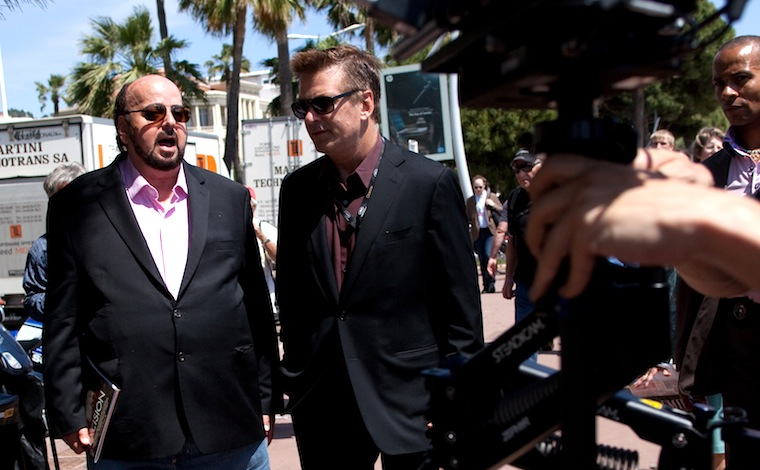
Relaxing in royalty. Swapping stories with A-list film stars. Soaking in the baking sunshine of Cannes. All in a decent days work for director James Toback and his cohort Alec Baldwin. Yet, the subject matter of Seduced and Abandoned (as the title may hint at) is the harshness of the film industry.

Don’t call me Shirley.

The thing is, this is most likely all just a part of the act. Toback and Baldwin probably aren’t really being serious here. And if that’s the case, then Seduced and Abandoned is a pretty entertaining, but wholly depth-deprived traipse around the world of cinema (and more). However if the duo are being genuine in their plight to finance an exotic thriller; in their quest to unearth the financial backing difficulties; in their attempts to convey film as a purely short-term industry — all of this as a means towards highlighting their own battles against adversity — then the duo themselves have a problem. And that problem has nothing to do with money-men or hesitant co-stars.

The documentary follows director James Toback and actor Alex Baldwin around the 2012 Cannes Film Festival as they simultaneously attempt to successfully pitch a far-fetched film idea at a variety of industry heads, whilst also using said time with their colleagues to discuss the trials and tribulations of the business (and just about anything else really). Less than a minute into proceedings and we’re already swimming around the less-than-serious territory as the pair talk about divorce while a scene from The Getaway blares in the foreground. Ho Ho Ho. This is astutely followed by a bout of reverent back-patting as the words “I trust you” ring out several times. I certainly hope Neve Campbell doesn’t trust them — the duo’s proclamation not to exclude her from their potential film in the heat of pressure from higher-ups (or “throw her under the bus”) wanes fairly quickly. In all fairness, they don’t Tippex her out completely, and being downgraded from a major to a minor role isn’t all that bad really, is it? Well done for avoiding that bus Neve. Hey, wait! Watch out for that… car.

It’s obvious early on that Toback and Baldwin aren’t totally sincere in their attempts to make this all-promising film. The numerous interviews asking script-readers about scripts, money-men about money and actors about acting as part of their exotic-romance-fantasy project are all probably genuine in an informative sense; in attempting to uncover the structures in place and barriers surrounding film-making. However, the meetings which play out on screen are most certainly not whole-hearted and true in a ‘coming soon to a screen near you’ notion. There’s nothing plausible about them. Toback wears sunglasses indoors and in the presence of greats such as Bernardo Bertolucci for goodness sake: who would take the guy seriously? In a semi-satirical context therefore, the film is quite entertaining, albeit devoid of any stinging backbone.

Having said that, although primarily ironic in its presentation, Seduced and Abandoned does raise one or two thought-provoking idiosyncrasies. During their discussions with big movie stars and important head-honchos — people like Francis Ford Coppola, Martin Scorsese, Ryan Gosling and Jessica Chastain are featured — an interesting ‘big film vs. small film’ sentiment develops. This holds an even greater degree of reverence in the backdrop of the Cannes Film Festival, as festivals are renowned for generally hailing the more microscopic, art-house, independent and often international productions. Cannes itself, for instance, has awarded its highest honour to films such as Blue is the Warmest Colour (France), Amour (Austria) and The Tree of Life (USA) recently. None of these films were massive box-office draws and two are courtesy of European cinema rather than American or British, yet they all gained the Cannes Palme d’Or. Toback and Baldwin explore the issue of marketability versus story as they speak to investors (what will make us the most money as opposed to what will engage the audience?) and examine an ever evolving audience demand to see a cast of stars instead of just one during cinema trips. It is in these conversations that the documentary delivers, although deliveries are too few and far between.

Toback and Baldwin spend a portion of the film laughing and joking with Ryan Gosling who tells a number of hardship-filled stories about moving to Los Angeles as an inexperienced actor, and the difficulties in getting ahead of everyone else who had the same aspirations as he did. Bearing in mind Gosling is arguably the biggest movie star on the planet at the moment, his recollections tread on hallowed turf for the most part, essentially compounding the hypothetical, humorous approach taken by Toback and Baldwin over a serious one. That being said, Gosling is actually very funny.

While the grandiose music trumpets through the credits, you are left in no doubt regarding Seduced and Abandoned‘s intentions, instead wondering just how much the film really has to say about the industry it may or may not thrive in. It’s quite entertaining and occasionally thought-provoking, but in all honesty it doesn’t say an awful lot. The big versus small comparison is intriguing, however Francis Ford Coppola’s words ring true when it comes to everything else: “The other stuff isn’t important.”

Berberian Sound Studio (2012)

★★★★★

Director: Peter Strickland

Release Date: August 31st, 2012 (UK); June 14th, 2013 (US limited)

Genre: Drama; Horror; Thriller

Starring: Toby Jones, Antonio Mancino, Cosimo Fusco

Set in an Italian film studio during the height of Giallo movie-making, it is perfectly fitting that Berberian Sound Studio delivers reels of chills, thrills and spills. Amazingly, it does so without succumbing to the trappings of eye-rolling ‘jump scares’ or masses of gore and guts. Instead, director Peter Strickland patiently allows his piece to breathe before exhaling mesmerising psychological torment. But this isn’t just a brilliantly executed horror film. To say so would be doing the intricately crafted weaves of story telling a disservice. Berberian Sound Studio is an appreciation of the mechanics behind film creation; it is a staunch head shake in the direction of misogynistic bigwigs and overpowering assistants; it is a commentary detailing the struggle and neglect of fame-deprived sound engineers and the like. As the climax dawns, each of these elements come together to create a slow-burning but entirely scintillating mosaic that wishes to glance back fondly, denounce universally and terrify immediately.

Gilderoy (Toby Jones) is a British foley artist recruited by Italian director Santini (surname only) and producer Francesco to provide an audio track for Santini’s next giallo film, The Equestrian Vortex. Drafted to a foreign land and surrounded by equally foreign filmmaking customs, Gilderoy gradually succumbs to the madness of horror. The seeds of mania are planted soon after he arrives and introduces himself to his fellow crew members, as Gilderoy’s request for monetary reimbursement is consistently shunned or diverted, often at self-absorbed mouth of Francesco (Cosimo Fusco). Not only does this signal doubt in Gilderoy’s mind, it is also the first of many gestures towards mistreatment on set. Gilderoy later has a run-in with his cocky director who corrects the sound man’s admission that this is his first experience working on a horror film: “This is not a horror film, this is a Santini film.”

Female actors are subject to overly harsh treatment as they provide voice-overs, to the point of physical damage from relentless takes of screaming and shrieking. Another crew member — frequently present in the sound studio — hardly says a word, indicating a lack of inclusion in the process and perhaps symbolising a lack of dispersed acknowledgement throughout the industry. In fact, the only time any attention is paid towards Gilderoy is during a power cut, when sight is hampered and sound is the only prevailing mode of entertainment. The film’s potency in its upfront portrayal of disingenuous higher-ups (not necessarily directors) commands significant consideration. Is this hierarchical and at times maniacal process of filmmaking warranted if a successful product spawns as a result? It could certainly be argued that Alfred Hitchcock’s very well documented directorial style on set was effective in that it produced genuine emotion from the likes of Tippi Hedren in The Birds, but that most certainly doesn’t mean it is morally justified.

Strickland’s focus on the questionable side of filmmaking is all the more striking when viewed alongside an equal measure of love and affection on display, aimed towards the movie creation process. Intriguing and entirely justified, paralleling the universally positive and occasionally negative side of the industry shines more light on the wonderful mechanics of it all, but also shrouds some events in darkness. Impeccably shot by Nicholas Knowland, the film gives off an air of satisfaction amongst chaos. Gilderoy, whose initial preconception was that the job entailed generating sounds for a film about horses, utilises a whole manner of fruit and veg in his foley work, in turn accurately and grossly mimicking squashed guts, sliced limbs and broken bones. Yet there still remains a sense of achievement as he completes each sound to great effect, and this aura of accomplishment wades its way throughout Berberian Sound Studio as a metaphorical love letter to Giallo movies, and more broadly filmmaking in general.

Vintage film reels and wall charts are eventually incorporated into the madness, as these physical, common instruments of filmmaking begin to entrance Gilderoy. This notion of psychological torment being imitated through reel (rather, real) life provides a bridge enabling proceedings to cross into hair-raising horror, as everyday inanimate objects begin to take on a existence of their own. Instances of creepy imagery, of which there are plenty, would only overstay their welcome had they not been delivered so horrifyingly well (that flashing “Silenzio” and those voice-over artists in action are both incredibly unsettling). Sound becomes ever flowing and each wave of noise is amplified, but not in an attempt to collect cheap frights from the audience. As the film moves into its final act it becomes more and more difficult to process what is genuine and what isn’t, a trap Gilderoy is consumed by also. Toby Jones’ efforts as the out-of-depth Gilderoy should be commended; his underplayed, soft-spoken delivery gives the mania surrounding his character an even greater voice and Jones’ performance is even exceptionally poignant at times.

In only his second feature film, Peter Strickland has unleashed a multi-faceted tale of hysteria and madness, propelled by horror and laced with appreciation. Each of these individual elements mesh together sublimely, indicating an even brighter future for the filmmaker. Horror aficionados will love Berberian Sound Studio, and there’s a good chance everyone else will too.