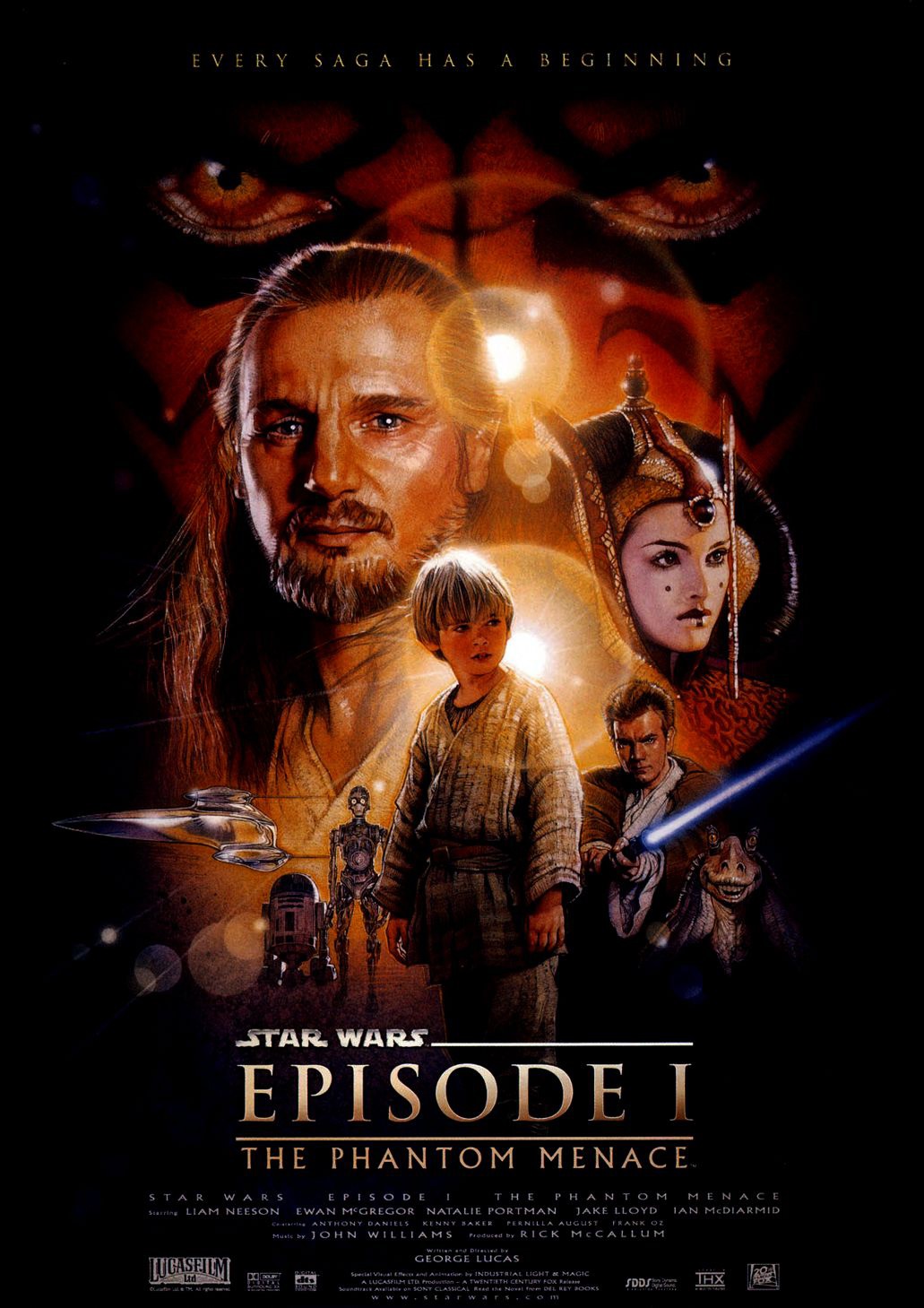
The Phantom Menace marks the beginning of the Star Wars saga, telling the story of Jedi Master Qui-Gon Jinn (Liam Neeson) and his apprentice — or Padawan — Obi-Wan Kenobi (Ewan McGregor) as they attempt to safely transport Queen Padme Amidala (Natalie Portman) from the planet Naboo to the imperial planet Coruscant in order to seek a resolution to trade barriers and disputes between planets. On their travels they meet a young Anakin Skywalker, whom Qui-Gon believes to be the person who will bring balance to the Force, a power threatened by the recently resurfaced dark Sith.
I really do think this film gets a bad rap. Yes, there are one or two ridiculous characters. Yes, the plot needs sharpening. But at the end of the day, this is only the introduction to the saga and more often than not introductory films are more light-hearted and carry less weight than their successors (take The Fellowship of the Ring and The Philosopher’s Stone as two obvious examples). By the same token, as I mentioned in my prequel (I told you it would get better), I have yet to see the original trilogy and my guess is that that has something to do with my somewhat greater appreciation of The Phantom Menace than those many more committed fans around the globe.
“You think i ruin the movie? Aww, poor you.”
What do I like about this suitably light beginning to the saga then? Well, just that. The films are likely to get darker as they progress (I know the next two do) and thus, for me, Lucas has made the correct decision in starting off in a more jaunty manner. Of course, in doing so he has created one character in particular that is despised amongst many fans. Jar Jar Binks (I always thought it was Ja Ja when I was younger) is the character in question, and I do agree that his presence is unnecessary and hurts the film to an extent. With childish phrases and at times incoherent ramblings, the character seems completely out of place — even in the light-hearted setting, which have mentioned a few times now. Do not get me wrong, childish is not always a bad trait, but in this instance it just does not mesh well enough with the rest of the film and the subject matter. Many believe the character merely represented a marketing ploy at the time of release — in terms of creating action figures etc. — and I think that is an argument worth considering. It could also be argued than the introduction of Anakin as a child here is unnecessary and that he should have just been brought into the saga as the older, talented-yet-cocky apprentice he is in Attack of the Clones. This is not as big an issue for me though and I do not think it hurts Anakin as a key character in any significant way going forward.
In terms of the plot and overall story, the film does come across as convoluted at times — the political background being the main culprit here — but again, that is not a huge deal for me as events were easy enough to decipher and, in all honesty, the political background is not really a significant factor in where the entertainment in this film lies. Parts of the narrative which did baffle me though were scenes such as Qui-Gon Jinn escorting the Queen back to the ship on the outskirts of Tatooine, only to then return to the city for Anakin — why not just take Anakin at the same time and save a trip? I did actually enjoy the pod-racing sequence, but it was a tad unrealistic in the sense than Anakin consistently had enough speed in his apparently lesser pod to catch his opponents. But that is just me nit-picking at things. All in all, the story is not bad as an introductory one.
Two good guys versus on bad guy? Something ain’t right here.
The visuals are tremendous in The Phantom Menace. Everything from the space traversing parts to the pod-racing scene to the final battle between the Gungans and the droid army is delivered with gusto and energy, whilst being visually alert and arresting at the same time. Lucas has become a sort of pioneer in special effects due to his efforts with The Phantom Menace, making use of new technologies and computer-generated imagery combined with traditional, original filmmaking techniques to create the various visuals on screen. The action sequences are also well constructed, with the fight between Qui-Gon Jinn, Obi-Wan Kenobi and Darth Maul standing out in particular.
This brings me nicely to my final topic of discussion regarding The Phantom Menace — Darth Maul. I really do think Darth Maul is an under-rated on screen villain. Played by Ray Park (a martial arts champion and stuntman beforehand), Maul not only sounds evil, but also looks like someone up to no good — his look was based on that of the devil. He does not speak very often — I would have preferred it if he did not spoken at all — and this adds to his unfaltering poise and heartless demeanour. A very capable villain to go up against the two heroes of the piece, Darth Maul is one of the film’s greatest successes in my eyes. Liam Neeson stands out amongst the remaining cast members, offering a controlled and likeable performance, and the likes of Natalie Portman and Ewan McGregor portray their respective characters solidly. Was I the only one who did not realise that Keira Knightly played Sabe, Queen Amidala’s decoy? The more you know… or something like that.
So there you have it, my thoughts on The Phantom Menace. A very capable and suitably light-hearted beginning to the Star Wars saga, The Phantom Menace offers an energetic and entertaining introduction to the franchise as a whole as well as the now well-known and much-loved characters it encapsulates. Except Ja(r) Ja(r) Binks.
The Coen brothers’ next offering, Inside Llewyn Davis, sees Oscar Isaac orienteering through the New York folk music scene in the frosty winter of 1961, faced with numerous obstacles preventing him from becoming the musician he aspires to be. Carey Mulligan, Justin Timberlake and Coen brothers’ favourite John Goodman are also involved in the drama led by the somewhat unfamiliar Isaac, who has fleeted around various projects in minor roles over the last few years (such as Robin Hood, Drive and The Bourne Legacy) and who has yet to find himself in that stand-out role which would propel his career to the next level.
Perhaps this is the role.
Carey Mulligan has been fairly busy over the last few years, also having appeared in Drive (albeit in a more prominent role than Isaac), having conjured up a critically acclaimed performance in Shame during the same year, and having recently starred opposite Leonardo DiCaprio in Baz Luhrmann’s take on The Great Gatsby. I would rather not give too much away (even though the trailer does to an extent), but Mulligan is set to portray a character unlike her those we normally see from her. The ever-so-popular Justin Timberlake has just released his third studio album and appears to be combining his musical tendencies with his acting ability in this music-driven drama. Although we do not know too much about his character in Inside Llewyn Davis, Timberlake has more than proven to be a charismatic screen presence in the past, and therefore should fit in aptly in this instance. John Goodman always has something enjoyable to offer in each film he is a part of, be it as the enigmatic “Big Dan” in O Brother, Where Art Though? or more recently, as Hollywood make-up artist John Chambers in Argo, and this time around appears to be no different.
“Hi, I’m here to audition for the lead role in Argo.”
Inside Llewyn Davis, scheduled for a nationwide release in the United States on December 20th, before an agonising months wait for us in the United Kingdom, was screened at the 66th annual Cannes Film Festival in France back in May, where it received mostly positive reviews from critics. The film is being heralded as one in a similar vein to O Brother, Where Art Thou?, staunchly comedic (true to the Coen legacy), yet respectful to the era it faithfully depicts, and melancholic by way of its musical demeanour. In fact, the soundtrack to the film is one influenced by the same man who worked on O Brother’s soundtrack, T-Bone Burnett, suggesting a similar tone to the one provided in the Coens’ 2000 comedy starring George Clooney. Mumford & Sons frontman (and Carey Mulligan’s husband) Marcus Mumford is even set to chip in with a number of songs. Music has always played a significant role in Coen films, therefore I have high expectations for the music set to be provided by Inside Llewyn Davis — it is a film galvanised by music, at the end of the day.
The Cannes Film Festival has been one which has produced many highs for the Coen brothers over the last twenty years, with eight Palme d’Or nominations attached to their films, one of which was a win (Barton Fink in 1991). Even though Inside Llewyn Davis did not win this year, that is not to say it is a step down for the Coens, but rather that the festival went for something different (a lot different, in actual fact — look up Blue Is the Warmest Colour). Inside Llewyn Davis is even being tipped as one to look out for when the awards season comes back around early next year, although this is hardly surprising considering the brother’s films tend to be in the mix as soon as they are released.
I have been looking forward to this one since it was announced months ago, even raving about it on Twitter a few times. Being a big fan of Joel and Ethan, it is always intriguing to follow the progress of their upcoming films, and all of the indications point towards Inside Llewyn Davis being another winner from the pair: set to offer up a rich, mesmeric, humorous tale surrounding a week in one man’s journey towards gaining recognition in the New York music scene.
Below is the most recent trailer for Inside Llewyn Davis. It is fairly lengthy at over two and a half minutes long, and it gives a little more away than I have done here — much like most film trailers these days (Fast & Furious 6 literally gave away the whole film in its trailer) — but it by no means spoils anything. If you want to know a little more and see the characters in action, have a watch.
I have no idea how I managed to miss this one when it was announced. The Counsellor is an upcoming thriller film about a lawyer who gets embroiled in the world of drug trafficking, perhaps a little further than he had hoped, and is set to be released on October 25th in the United States and on November 15th here in the United Kingdom. It sounds like your average crime drama, right? Well, check this out.
The film will be directed by none other than Ridley Scott (who recently enlightened our minds with Prometheus), a man who consistently blends out good to exceptional films and whose dedication to perfecting the visual element of his work is second-to-none. Spanning five decades, his directorial career has cultivated films such as Alien (1970s), Blade Runner (1980s), Thelma & Louise (1990s), Gladiator (2000s) and Prometheus (2010s), as mentioned beforehand, and it does not seem to be slowing down at any rate, with Scott having released almost one film per year since 2000. In my eyes, Scott is one of a handful of directors who the audience can put their wholehearted faith in to create a hugely enjoyable and commercially successful film, in any situation.
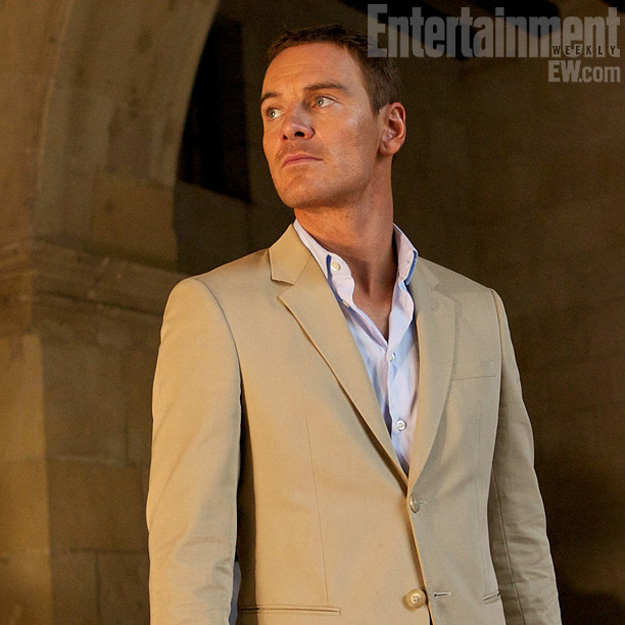
The cast of The Counsellor is composed of Michael Fassbender, Brad Pitt, Cameron Diaz, Penelope Cruz, Javier Bardem (need I go on?). Fassbender, who will play the lead character, has been on career ascension like no other since appearing in Hunger in 2008 and then Quentin Tarantino’s Inglorious Basterds a year later, both of which he received mass amounts of praise for his performances in. It does not get much bigger than Brad Pitt when it comes to names in the film industry (or any industry, for that matter), and Cameron Diaz and Penelope Cruz are two very accomplished actors (or actresses, whichever you prefer) who can more than hold their own in just about any film. Javier Bardem has just come off a BAFTA nominated performance for his portrayal of Bond villain Raoul Silva in Skyfall, and it is apparent that has been churning out excellent performance after excellent performance in recent years.
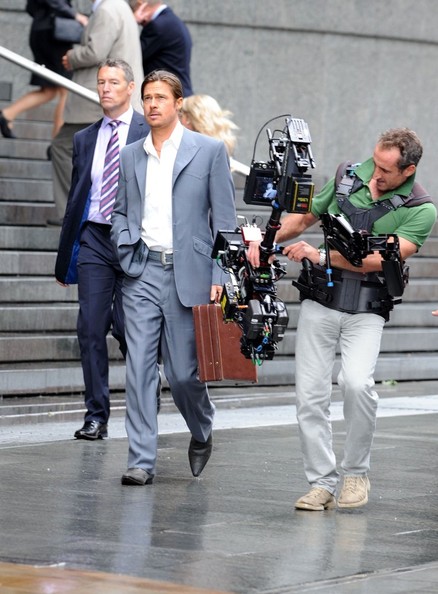
“Is this Transformers?”
The screenplay of The Counsellor has been written by none other than Cormac McCarthy, the author of novels such as the brooding No Country for Old Men and the heart-wrenching The Road (which have been adapted into Academy Award winning and critically successful films, respectively). Even though this will be McCarthy’s first feature-length screenplay, it is obvious that he has a knack for penning exceptionally good literature and it will be intriguing to see how his screenplay comes across directly on film.
The first trailer for The Counsellor has just been released and, although 44 seconds is a hardly a significant amount of time to be making too many judgements on, the film comes across as everything from gritty to slick to atmospheric to precise. It also sounds majestic. Of course, visually it appears a Ridley Scott film as the visuals are, for lack of a better description, ‘top notch’, and we get a brief glimpse of some of the characters involved — Bardem looks like he could be a show stealer in this department. As I just mentioned, this is only a short trailer and therefore it is likely that the full-length one will be made available in the coming months, by which time we will hopefully know a little more about Scott’s next cinematic outing. But for now, check out the short trailer below. And in answer to my somewhat rhetorical question at the beginning: No, not really — in fact, not at all.
Today I am going to talk about a few random bits and pieces — from film news to upcoming releases to recent movies I have watched. I reckon I will do this type of thing more often, rather than relentlessly bore you with four or five separate blog posts. About once or twice a month sounds about right.
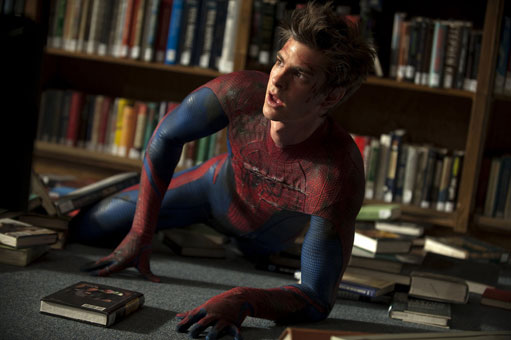
“There goes my plans to do a live-action Garfield The Cat movie.”
Sony recently announced that, not only will we be getting The Amazing Spider-Man 2, but we will also be given extra helpings of the franchise by way of a third in 2016 and even a fourth at some point in 2018. Talk about optimism, eh? Well perhaps rightly so, because I think it is safe to say that, just like last year’s Spidey reboot which garnered over $750 million at the box office, The Amazing Spider-Man 2 is likely to line many a pocket come next year, vindicating the somewhat premature announcement of a further two instalments.
One of the main problems with telling your audience that there will be another two films after the upcoming one, is that it sort of diminishes the importance of the next Peter Parker saga. Surely a Spider-Man film is not a Spider-Man film without Spider-Man, which would more or less exterminate any suspense during upcoming potential death scenes, as we know Spider-Man cannot die (at least, not yet)? Of course, there are ways around this — Alien: Resurrection being a somewhat distant example — therefore I guess the impending, or lack thereof, death of Spider-Man is not a huge issue going into part two. I have every expectation that the outing will be a solid one, much like the first, and will hopefully continue what is shaping up to be a successful reboot of the previously fledgling franchise.
The Amazing Spider-Man 2 is scheduled for release on the 18th April, 2014 in the United Kingdom.
Sticking with the subject of upcoming films for a moment, I would like to talk briefly about a few on the horizon. Firstly, the premier trailer for Martin Scorsese’s The Wolf of Wall Street — where Leonardo DiCaprio plays New York stockbroker Jordan Belfort — hit the internet a few days ago and, to be honest, it is not exactly what I had expected beforehand. My vision of the film was that it would be one focused far more on drama, with a more serious tone (who knows, this may well still be the case) however the trailer seems to give off a refreshingly comical ambience. This sits well with me as, being a big fan of Leonardo DiCaprio and his previous work with Scorsese, I reckon it will be interesting to see the two delve into a more comedic setting for the first time together. The trailer certainly made me laugh, and we are in the more-than-capable hands of a wonderful director and an exceptional cast, so this one should not disappoint.
The Wolf on Wall Street is set for release on the 17th January, 2014 in the United Kingdom.
“It’s good to be The Rock.”
Time for a dip into the rumour market and it turns out that the most electrifying man in sports all of entertainment, Dwayne “The Rock” Johnson (or just The Rock to all the cool people, like me) is being touted as one of the stars of the upcoming Terminator 5 film. The Rock, as he shall be known from here on out in this post, has had an excellent past few years in the film industry, and these have been capped off by a simply outstanding first half of 2013. In fact, the semi-retired professional wrestler, who’s four films this year have already grossed over $1 billion combined, has had a movie in the US box office top ten for the past seventeen weeks in a row — stretching all the way back to late February — and this run does not look like stopping any time soon with Fast & Furious 6 still going strong. The Rock has become something of a franchise resurrect-er recently, having taken stagnant franchises such as Fast & Furious, G. I. Joe and Journey to the… and giving them the shot in the arm required to reinstate themselves again. Being a massive professional wrestling fan myself, I have loved The Rock for over a decade and hope to see his acting career continue to thrive.
Dwayne “The Rock” Johnson stars in Hercules: The Thracian Wars, which is due for release on the 25th July, 2014 in the United Kingdom.
Just a quick note before I continue. Even though I have never watched The Sopranos (I know, I know) it is always extremely sad to hear about the passing of an actor, let alone one of such significance to the world of television. One day, i do hope to watch The Sopranos in order to truly appreciate James Gandolfini, but until then I do not think it is really my place to talk about the man as an actor — although I am sure I do not need to anyway, having read about his greatness on my Twitter feed. All I will say is may he rest in peace.
The other day I re-entered the realm of Netflix, something that was long overdue. I decided to watch a film titled The ABCs of Death, based on what I had heard about it. To begin with, The ABCs of Death is not a film — it is a collection of 26 short stories, each of which convey a depiction of death based a word associated with a letter of the alphabet. The ‘film’ is directed by 26 different directors from all over the world, and thus there is no real narrative to it and the audience already knows the eventual outcome of every short-story — death. There were a few entertaining letters, such as Q and T, and a number of the clips made me laugh due to their sheer ridiculousness — I am thinking H in particular — but on the whole the clips just did not make much sense and some of them were a bit too over-the-top in terms of violence and, well, other stuff. It is one of those things where you kind of have to watch it due to the intrigue, but afterwards — if you are like me — you will probably be regretting wasting over two hours on it.
“Chairs are for wimps.”
I finally got around to watching a few films I had wanted to see for while — The Breakfast Club, A Few Good Men and Broadcast News — and I loved all three of them, particularly The Breakfast Club. John Hughes has a way with making films which ensures they remain relevant so many years on: Ferris Bueller’s Day Off and Planes, Trains & Automobiles are two classics which more than hold up in 2013, and The Breakfast Club is no different. For a courtroom drama, a type of film which can sometimes venture dangerously close to the boring mark, A Few Good Men kept me grasped throughout, with the tension slowly bubbling as the film progressed, and it boasts a number of excellent performances from the likes of Tom Cruise and Jack Nicholson. I watched the television show The Newsroom, starring Jeff Daniels and Emily Mortimer, last summer and in anticipation for this summer’s upcoming season two, I decided to watch Broadcast News, a film about three colleagues and their relationship with each other and their job. It struck me how similar the two are, even though they are created on different platforms, as both contain vibrant, witty scripts and bubbly, likeable characters (Holly Hunter and Emily Mortimer’s characters are incredibly similar).
Oh, and I also got around to seeing Die Hard. I now get the hype surrounding Alan Rickman in this film, although I do not quite get the hype surrounding the film itself. Maybe I should have watched it ten years ago, before being lambasted with similar “Cowboys and Indians” (“in The Towering Inferno,” as Mark Kermode likes to put it) type films over the last decade.
Anyway, I think that will do it for today. If you have any comments just write them below and I look forward to doing some more of these in the future!
A personal favourite of mine, the dystopian genre covers all of those films set in a structured, uncompromising society — the opposite of a utopia. More often than not, the society in question is a less-than-flattering one, or one which favours the minority at the expense of the majority. These films tend to portray suppression in one form or another, with freedoms and rights being brought into question. However this is not always the case, and at times the dystopian aspect is used purely as a setting, rather than the focus of a film.
There are a number of variations on the dystopian setting: it covers anything from a government-ruled society to one dominated by otherworldly beings (or aliens) to a post-apocalyptic civilisation — a word I use lightly. I am taking the basis of a dystopia in its simplest form — that is, the one I described in the first sentence of this post. There will not be any zombie-related films in this list (even though the majority of zombie films are set in some sort of dystopian society) as I think those films deserve a list of their own.
I am going to follow a similar format to the one I used in my mystery genre toppers post. With that settled, I reckon it is time to get started.
Total Recall (2012)
A quick note: I will be covering the newer, 2012 version of Total Recall, because I have not seen the original 1990 version. However, based on comparisons between the two, I am sure the original version is just as, if not more, deserving to be on this list.
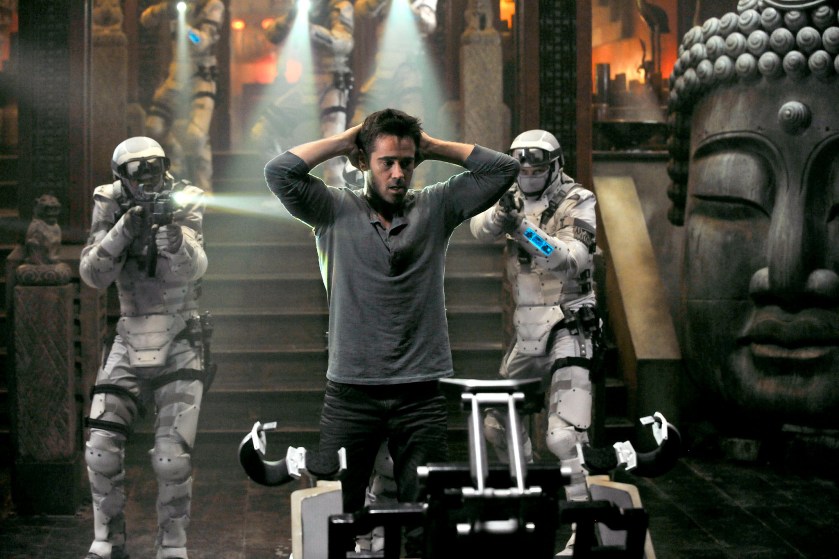
Len Wiseman’s remake of the 1990 original, Total Recall stars Colin Farrell as Douglas Quaid, a factory worker who visits Rekall — a place which allows its customers to live the life they wish for a period of time, but in their own mind — only to discover that his ‘desired’ life is his actual one. Thereafter, Quaid goes on a crusade to search for answers and is joined by a familiar woman, Melina (Jessica Biel), whilst at the same time being pursued by the woman he believed to be his wife, Lori (Kate Beckinsale).
Where The Dystopia Is Implemented
The story is set in the year 2084, in the aftermath of a worldwide war which has destabilised the earth. There now exists only two forms of civilisation — the wealthier United Federation of Britain (UFB) and the more desolate Colony (Australia). The only form of transport between the two is a massive elevator which travels through the Earth, known as the Fall.
“Ha! You’re just a couple of Star Wars knock-offs!”
Three Top Five Clinching Reasons
Intricate story: Although the film begins telling one story from the perspective of Colin Farrell’s character, after the Rekall scene, the whole outing essentially turns upside down with the focus now on the same character but in completely different circumstances. The fairly quick plot twist works well for me, as it allows the rest of the film to be primarily about piecing together earlier nonsensical snippets of information. Even though towards the end the film becomes a more stereotypical action flick, Wiseman does an excellent job in the first hour or so in achieving the correct challenging-yet-understandable balance, preventing the plot from being either too complicated or too simple.
Ambiguity: There will be a spoiler in this paragraph, so beware. In the cinematic version of the film, after Quaid and Melina embrace at the end, Quaid glances at a massive Rekall sign which beckons in the distance. On seeing this, I instantly thought that everything after the Rekall scene earlier in the film had all happened in Quaid’s mind. Of course, it is equally likely that Quaid staring at the Rekall sign is merely him acknowledging it saving him (without Rekall, he would still be completely unaware of who he really is). However, in the extended director’s cut, there is no tattoo on his forearm which had been placed there in the earlier Rekall scene. This appears to hint that, since the tattoo is gone, his present existence cannot be a true one, therefore it is an implanted memory and he is still sitting in the Rekall chair. Ah yes, I rather like ambiguous endings.
Awesome action: This is a straightforward one — the action sequences in Total Recall are brilliant. Combined with very impressive visuals, the fight and chase scenes are quick-paced, well-choreographed and exhilarating. Farrell has always been a solid action star, as has Beckinsale, meaning it comes as no real surprise that the quality of action in this film is pretty high, and that is not to mention Wiseman’s previous work with Beckinsale in Underworld and his dip into the Die Hard franchise.
Final Thoughts
Perhaps not better than the original (although that is still up for debate with me), Total Recall offers up all the necessary elements required for a very entertaining action film with an intelligent and well executed plot.
The Book of Eli (2010)
Released in 2010, The Book of Eli stars the ever-reliable Denzel Washington, Mila Kunis and Gary Oldman, and is directed by the Hughes Brothers. Washington plays a lone man, Eli, whose personal mission is to travel across a post-apocalyptic America in order to protect and deliver a special book to a safe place, as he believes this will protect mankind. On his travels, he encounters ruthless Carnegie (Oldman) who rules over a town and is after the book Eli carries.
Where The Dystopia Is Implemented
With no real form of government, the United States is a wasteland left behind by a nuclear apocalypse and is now ruled territoriality by those who have the ammunition to do so.
Three Top Five Clinching Reasons
“Uh, i forgot the bullets.”
Fallout and fallout: Being a huge fan of the Fallout game franchise, I enjoyed The Book of Eli even more because it closely resembles those games. Everything from the wasteland setting, to both the minor and major characters, to the practice and execution of scavenging are all traits familiar to both the film and the games. But even though The Book of Eli so closely resembles Fallout, it never boils over into that unwanted territory where a film becomes a parody of a game, which often happens. We are seldom shown good films which have been based on a game — which is not to say that The Book of Eli is based on “Fallout 3”, because it is probably not.
Hopeless setting: No, not hopeless in the sense that the locations are rubbish and not any good. Hopeless in the sense that they appear to signify just that — a lack of hope for humanity. Set in the dusty, lifeless plains of a tarnished United States, the film conveys a complete lack of energy, which is essential for a post-apocalyptic setting. I am a big fan of these types of films (or television shows, like The Walking Dead) where, after a massive event, civilisation is fractured and scattered around rather than all holed up in one or two locations. It gives the situation an injection of realism, which is often necessary for the post-apocalyptic genre.
Convincing acting: Everybody in this film pulls their weight: Mila Kunis effectively portrays a daughter desperately seeking to get away from her unrelenting father, Gary Oldman, who’s bad performances are as common as pigs flying, and is once again on form here as a dominating, angry leader who lacks compassion. The star of the film however, both literally and figuratively, is Denzel Washington as Eli. Washington gives very little up to the audience in terms of emotion, yet he still manages to make Eli appear to be a good person who the viewer wants to root for (at least I did). There is a constant intrigue surrounding Eli and his relationship with the mysterious book he carries, which adds to the character and film as a whole.
Final Thoughts
The Book of Eli is very often bleak, but through the terrific performance of Washington, maintains a sense of hope and keeps the audience guessing until the very end.
A Clockwork Orange (1971)
Concocted by the incomparable Stanley Kubrick, A Clockwork Orange tells the wacky, unnerving story of delinquent Alex (Malcolm McDowell) who, along with his band of miscreants, or “droogs” as he labels them, traverses the streets of London causing mischief and engaging in “ultra-violence”. The film then follows Alex’s impending arrest and subsequent attempted rehabilitation through a variety of unethical methods.
Where The Dystopia Is Implemented
A Clockwork Orange is set in a futuristic London, where society seems to operate slightly differently from the way society operates in the present day.
“Please, no more Made in Chelsea!”
Three Top Five Clinching Reasons
Kubrick masterclass: Stanley Kubrick is without doubt one of the greatest directors the film industry has ever seen. Often adapting books rather than screenplays, Kubrick tended to focus on elevating key themes in his films and A Clockwork Orange is no different. Kubrick regarded A Clockwork Orange as, “a story of the dubious redemption of a teenage delinquent by condition-reflex therapy. It is, at the same time, a lecture on free-will”. I am nowhere near as critically competent as millions of others out there, but I do love watching and writing about films and, without knowing how Kubrick perceived the film beforehand, his words above are exactly how I perceived the film afterwards. This has nothing to do with me though, this is an example of how exceptionally good Kubrick was at connecting with his audience — an audience of varying film knowledge — through the medium of film.
Malcolm McDowell: McDowell carried the film on his the whole way through, being the primary main character and the only actor who is at the centre of every significant event. I did not think it was possible, but McDowell managed to create, in Alex, a horrible, nasty human-being who I sort of felt sorry for by the middle of the film. Yes, it did not even take as long as the end. His convincing portrayal of a mad-man slowly unravelling and juggling morality is one of the best I have watched on-screen.
Legacy: When A Clockwork Orange was released in cinemas back in 1971, it was withdrawn in the United Kingdom by Kubrick himself after his family were the targets of threats and protests. However it was a big hit in the United States, and to this day is critically lauded and held in very high regard by film-goers the world over. Not only that, but it had a massive impact on the relaxation of violence depicted on the big screen. For one film, A Clockwork Orange has become one of the most controversial-yet-endorsed films in history.
Final Words
I do not have many bad things to say about A Clockwork Orange, rather Kubrick has created a dystopian film which successfully targets and challenges issues far wider than I have even come close to discussing here — providing a social commentary on issues such as youth culture, politics and the economic characteristics of Britain.
Monsters (2010)
Monsters is a science-fiction drama film released in 2010 and directed by Gareth Edwards. It stars Scoot McNairy and Whitney Able as a young photojournalist and wealthy employee’s daughter, respectively, who must attempt to travel across the infected Mexico to the border of the United States, in the midst of an alien-occupation on Earth.
Where The Dystopia Is Implemented
Large parts of the Earth have been occupied and controlled by some sort of alien beings, leaving certain regions, such as Mexico, inaccessible to mankind — or at least, inadvisable to travel through.
Three Top Five Clinching Reasons
“I really shouldn’t have used glue to fix the camera.”
Tiny budget: Gareth Edwards, in his directorial debut and working with a budget of around half a million dollars, makes this film absolutely work. By using cheaper cameras (but still maintaining a high quality) to capture digital images rather than the normal 35mm ones used in film, and filming on locations often without permission, and using passers-by as extras, Edwards was able to keep the costing down — perhaps even lower than half a million dollars. There have been, and will be in the future, many directors who have ten or even one hundred times the budget Edwards had at his disposal for Monsters, and who will not even come close to creating as good a film.
Focus on drama: Very often in science-fiction films, the focus is taken away from the story or relationship between characters and is instead placed on big special effects or loud explosions. It is likely that the small budget had something to do with it, but Edwards manages to keep the primary focus of Monsters on the two main characters portrayed by Scoot McNairy and Whitney Able, and how the relationship between the two develops as the film progresses. The human relationship in a world partly destroyed by aliens is the driving force behind the success of the film.
Simplicity is key: The premise of Monsters is fairly straightforward — two individuals with significantly varying backgrounds must band together in order to get home. This is by no means a downfall though, in fact the easy to follow plot once again allows the viewer to fully concentrate on the two main characters and the situation which they find themselves in, without getting distracted by unnecessary plot twists or contrivances.
Final Words
The less-well-known film on my list, but by far one of the best, Monsters is a triumph in film-making as it shows that with some small financial backing and enough determination, anyone can create a dramatic, engrossing film.
The Hunger Games (2012)
Adapted from the first book in Suzanne Collins’ Hunger Games trilogy, The Hunger Games directed by Gary Ross, is a science-fiction adventure film set in a dystopian existence. Starring Jennifer Lawrence as heroine Katniss Everdeen, it follows her preparation as a tribute in the annual Hunger Games and her progress in the violent televised tournament, along with her relationship with Peeta Mellark, played by Josh Hutcherson.
Where The Dystopia Is Implemented
The film is set in a post-apocalyptic North America, where the land is separated into twelve poorer districts, each of which specialises in serving the wealthy Capitol in a certain way.
“Ha! You lot are just a bunch of Star Wars knock-offs!” Wait.
Three Top Five Clinching Reasons
Plot premise: I am a big fan of the outline and progression of the story in The Hunger Games. Having never read the books before seeing the film, the plot came across to me as very unique (sharing connotations with Battle Royale) and even quite ambitious. The idea that the majority are ruled and made to serve the minority is a commonly utilised premise, however the implementation of the Hunger Games tournament, particularly a tournament aimed at twelve to eighteen year olds, is an effective way to create suspense and drama. There is an underlying notion of resistance and rebellion which runs fairly unnoticed throughout the film, up until a significant moment on-screen (literally) and this gave said moment even more emphasis. All in all, the story and ideas thrown around mesh very well in my eyes.
Ensemble cast: With the combination of a number of, at the time, unknown actors and globally renowned names, The Hunger Games boasts an excellent ensemble cast, and one which involves every character with meaning and on their own merits. More minor characters such as Lenny Kravitz’s Cinna (who oozes coolness and clarity) and Stanley Tucci’s Caesar Flickerman (who oozes charisma and clairvoyance) play essential roles in the story. President Snow is majestically portrayed as a despicable, uncaring leader by Donald Sutherland, acting as a convincing mastermind behind the madness. In terms of the main characters, Josh Hutcherson is very good as the uncertain hero whose confidence is lacking but who only wants to do good and not give into the system. Jennifer Lawrence steals the show as Katniss Everdeen, perfectly balancing the correct amount of determination with a level of emotion shown rarely, but significantly when the time comes.
Appeal to everyone: I think The Hunger Games appeals to just about everyone — it has that adventure and action aspect for the younger audience, but also a more low-lying hostile nature in terms of young people fighting against each other to the death. Although the latter is the case, there is actually very little violence conveyed throughout the film, with circumstantial horror playing a substantial part in the unnerving nature of the film.
Final Words
An exceptional outing in adventure, drama and science-fiction, The Hunger Games sews each of these genres together neatly to create the ultimate depiction of a dystopian society fanciful on the surface, but hell-bent on retribution at heart.
Those are five greats and here are some others worth mentioning:
Battle Royale (2000) — This Japanese thriller directed by Kinji Fukasaku is, in essence, The Hunger Games with more blood and guts. A pretty uneasy and, dare I say, at times funny watch.
I, Robot (2004) — Everybody knows this one: Will Smith versus robots. A lot of robots. A mesh of robotic body parts and entertaining action.
Sin City (2005) — I actually only got round to seeing Sin City last night. Although I am still unsure of what I think about it as a whole, stylistically it is remarkable and overall very intriguing.
In Time (2011) — Starring the well-liked Justin Timberlake and boasted by a very interesting concept, although In Time does not quite reach the heights it potentially could have, it is still a slick outing.
The Allstate Arena in Chicago, Illinois last night played host to the long-awaited return of Chicago’s own CM Punk. The Second City Saint, absent from WWE television since April 15th, took to the stage with the ever-reliable Chris Jericho for the third time in just over a year, and the two put on a clinic (there will probably be a lot of wrestling clichés in this).
In one of the most enjoyable Pay-Per-Views of the year, if not thee most enjoyable, we were treated to seven matches (plus a pre-sh… kick-off match), three title changes, a double-turn and one massive Attitude Adjustment.
This is my first wrestling review of any kind, so bear with me. Here we go!
To ‘kick-off’ proceedings, we get the show-formerly-known-as-the-pre-show, featuring an expert panel consisting of the Big Show, R-Truth and Cody Rhodes, and hosted by Josh Matthews. The quartet start by discussing the upcoming Three Stages of Hell match for the WWE Title between John Cena and Ryback.
Seeing the world’s largest athlete (who is currently out injured) was quite cool, but I cannot help but feel a little annoyed that Cody Rhodes is being wasted on a panel when he really should be on the card. Also, I do not mind Josh Matthews, but where on earth was Renee Young?!
Kick-off. Sheamus defeats Damien Sandow, in a singles match.
The crowd is lively as Sheamus makes his way to the ring (Sandow was relegated to no entrance status, which is a shame). The match starts off in a physical manner, which the two maintained throughout, and was probably one of the better pre-show bouts since the introduction of the concept. Chicago is firmly behind Sandow throughout, cheering loudly every time he gains some offence. Sheamus hits White Noise, closely followed by a Brogue Kick and picks up the victory.
A good match which allowed to fans to get warmed up for the night ahead.
Match Length – 10:25
Rating:
Just as soon as the kick-off finishes, Payback gets underway with commentary from the usual trio of Michael Cole, Jerry ‘The King’ Lawler and JBL, who hype up the night ahead.
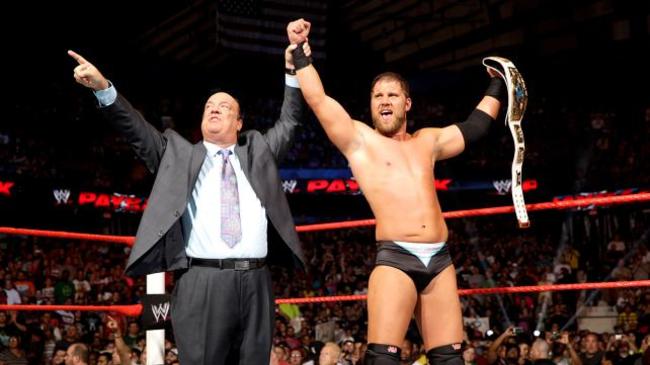
1. Curtis Axel defeats The Miz and Wade Barrett (c), in a triple threat match for the Intercontinental Title.
“Look! We’re on TV!” courtesy Bleacher Report
Up first is the triple threat match for Wade Barrett’s Intercontinental Title, which originally included Fandango who had to pull out due to a concussion. His replacement, Curtis Axel receives a significant cheer upon his entrance, whereas the crowd are indifferent towards Miz and Barrett (which is unsurprising considering where both men are at).
The three competitors trade time in the ring to begin with, before some standard triple threat action. The match begins to pick up as soon as Axel (who is accompanied by Paul Heyman) hits his father’s PerfectPlex on Barrett, much to the delight of Chicago, only for Miz to break-up the pinfall. Miz then locks Barrett in the Figure-Four Leg Lock and looks destined to pick up the win, however Axel inventively covers Barrett’s shoulders to the mat for a three count and wins the title.
This was a very nice moment, seeing Axel win the IC Title on Father’s Day. Also, a good opener to the show.
Match Length – 10:36
Rating:
We get a Mark Henry promo conveying his return on the upcoming Monday Night RAW (17th June). Interestingly, it appears Mark Henry is thinking about announcing his retirement on RAW, however this could be some sort of swerve. I am a big fan of Henry, especially in a monster heel role, so I hope he sticks around.
Axel and Heyman are seen celebrating backstage, before being interrupted by Triple H who stares down Axel. Vince McMahon appears and congratulates Axel on his win, ushering him and Heyman away in the process. McMahon plugs Triple H vs. Curtis Axel live on RAW, but HHH claims he is not feeling it and walks away, much to McMahon’s dismay. It will be interesting to see where this goes — I am still clinging to the very minute chance that Shane-O-Mac will return. Here comes the moneeeeeey…
2. AJ defeats Kaitlyn (c), in a singles match for the Divas Title.
“Smile!” Courtesy of Diva Dirt
After some very decent build-up (something out of the ordinary for a divas match these days), these two former best friends are set to meet for the Divas Title. Michael Cole mentions on commentary that Kaitlyn was fined ten thousand dollars for slapping a referee on Smackdown — hey, at least it was not half a million… I wonder if Sheamus has squared that up with WWE yet.
This begins with a trip to the outside, where Kaitlyn throws AJ over the announce table (guess which one?). After regaining control, AJ hits Kaitlyn with various kicks, followed by her belt, which Kaitlyn had removed earlier. Kaitlyn has the opportunity to win the match after a spear, but takes too long taunting AJ, resulting in AJ locking in the very cool looking Black Widow submission to win the Divas Title for the first time.
This was by far the best divas match seen on WWE television for a long time, and these two work well together. Hopefully this program continues for a while.
Match Length – 9:56
Rating:
After the match ends, Kaitlyn remains in the ring visibly upset, to which the ruthless Chicago crowd boos loudly. Layla then comes out to comfort Kaitlyn, only for the ruthless Chicago crowd to boo at even louder (this was quite funny actually).
Backstage, a group of divas attempt to console Kaitlyn but she ignores them and walks away.
The first Money in the Bank promo airs — Sunday, July 14th in Philly!
Cole then sends us back over to the Payback panel. Big Show puts over Heyman’s alliance with Axel, whereas R-Truth believes Axel stole the victory. Big Show then blames Kaitlyn for “taking her eye off the ball”, to which the others agree.
This is followed by another Wyatt Family promo. I cannot wait.
3. Dean Ambrose (c) defeats Kane, in a singles match for the United States Championship.
“Smell my armpit, Kane.”
These two, along with Orton, Daniel Bryan and the other members of The Shield, have been having tremendous matches on both RAW and Smackdown over the past month. This looked like an interesting match-up on paper, but I do not think the two very different styles quite meshed together as well as we all hoped.
Ambrose is going into the match as US Champion, and commentary states that he will hope it is not three-for-three in terms of title changes thus far tonight. Ambrose seems to be favoured among the crowd as he enters the ring, but Kane has some fans too. Ambrose works on Kane’s leg, which is always nice to see — targeting an opponent’s body part has become something of a lost art in recent years. After a slow start, the match begins to pick up after Ambrose slaps Kane a number of times across the face, angering the Big Red Machine. Kane loses focus as a result, which allows Ambrose to hit a DDT on the outside to which Kane cannot recover from. Ambrose retains the US Title by way of a count-out.
This one was a slow-burner for the most part, especially after the opening matches. It will be intriguing to see what happens with The Shield after their first pin-fall loss as a team on Smackdown this past week.
Match Length – 9:34
Rating:
Out of absolutely nowhere we are shown a video package signalling the highly-anticipated return of the whole f’n show ROB VAN DAM! And better yet, he will return at MONEY IN THE BANK! And even better yet, Money in the Bank will take place in none other than the home of ECW — PHILADELPHIA! The crowd in Chicago love it, and begin the first of many “RVD” chants which continue throughout the remainder of the show. I did not think I would be this happy to see RVD return to WWE, but I love that it caught me off-guard and also the circumstances surrounding his impending return.
4. Alberto Del Rio defeats Dolph Ziggler (c), in a singles match for the World Heavyweight Championship.
With Jack Swagger out of the picture due to a hand injury, that triple threat Ladder match is looking less and less likely to happen. Ziggler is about to wrestle his first match back since receiving a concussion at the, well, feet of Swagger. This one is for the World Heavyweight Championship. Ziggler receives a huge ovation from the Chicago crowd which, if it is not obvious by now, is made up significantly of ‘hardcore’ wrestling fans.
That hurt.
The match gets underway with the crowd chanting loudly for Ziggler (and RVD, by the way). Del Rio spends a lot of the match doing damage to Ziggler’s head after his concussion, another instance of wrestlers taking advantage of a body part. Ziggler, the referee and the commentary team continue to play up the fact that the match may need to be called off, however Ziggler refuses to let that happen. Big-E then gets ejected from ringside after an altercation with Del Rio, who continues to work on Ziggler’s head and upper back, seemingly getting more aggressive as the match progresses.
After a number of close two counts and a very nice looking reverse superplex from the top rope, Del Rio begins to get frustrated at his inability to gain the three-count. Ziggler then hits the Zig-Zig out of nowhere, but is unable to capitalise due to his head injury. This allows Del Rio to deliver a swift kick to Ziggler’s head and pin him to become the new World Heavyweight Champion.
I enjoyed this match because it told a story and was consistent throughout. It appears that WWE are looking at a double-turn with Ziggler becoming a babyface and Del Rio returning to his heel persona, which I reckon is for the best. Del Rio did not really work as a face, and Ziggler could go over huge as one. I expect Dolph to regain the belt at Money in the Bank.
Match Length – 13:49
Rating:
The panel begin to discuss Del Rio in heel terms. Del Rio then comes back out onto the stage and cuts a promo with heelish tendencies, putting over how he deserves to be World Heavyweight Champion. The crowd progressively become hostile towards him. Interestingly, this is the same building where the Austin/Bret Hart WrestleMania 13 double-turn occurred.
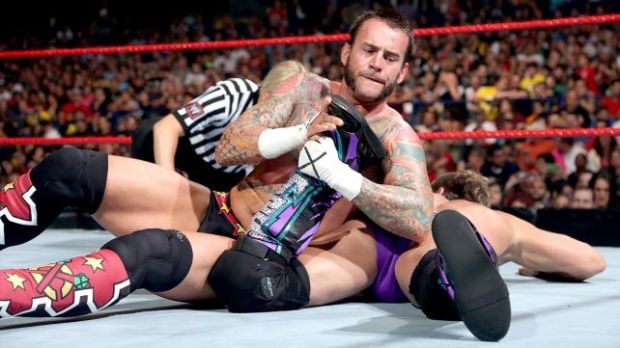
5. CM Punk defeats Chris Jericho, in a singles match.
The return of CM Punk is what everybody has been waiting for. After a two month lay-off, the crowd in Chicago are itching to see their home-town anti-hero make his entrance. But first, Chris Jericho makes his way to the ring to a decent reaction — nothing as hostile as what John Cena received at Money in the Bank two years prior. Cult of Personality then rings out around the Allstate Arena, and after twenty seconds of waiting, the crowd erupts at the sight of The Best in the World.
It’s clobberin’ time.
“How long was i gone? I forget how to pin.”
The atmosphere is incredible and “CM Punk” chants are thrown batted the arena with impetus. Punk, incidentally, is sporting Hugh Jackman’s sideburns. The match begins with various mat-wrestling moves and lock-ups which I am not qualified enough to describe. The Chicago Black Hawks logo dawns on Punk’s trunks (that rhymed). “Let’s Go Black Hawks” chants right on cue. Jericho locks in the Wall of Jericho, with Punk managing to reverse it into a standing Anaconda Vice, before dragging Jericho to the mat. Heyman screams “TAP!” but Jericho makes it to the bottom rope. Punk sets up the Go To Sleep, but is inadvertently distracted by Heyman, allowing Jericho to counter into another Walls of Jericho.
Punk escapes, and Jericho follows up with a Code-Breaker out of nowhere, forcing Punk to kick-out at two. The crowd is eating up everything these two do, particularly Punk. After a flying Macho Man elbow off the top rope, Punk signals for the GTS and hits it, but Jericho kicks-out. Chicago wants another! We then see a suicide dive to the outside from Punk on Jericho, and Punk climbs to the top rope. Jericho catches Punk mid-air with another Code-Breaker but Punk manages to kick-out at two and nine-tenths! Tremendous action! Punk punches his way out of a Walls of Jericho with brute force, before hitting two GTS’s and picking up the victory in his hometown. Chicago explodes.
This was match of the night by far, and will quite possibly pick up the Match of the Year nod at the Slammy’s in December. These two are two of the best in the business right now, and this was their best outing together. My money’s worth and more.
Match Length – 21:21
Rating:
After the match, Punk seems to be a little frustrated with Heyman who almost cost him the victory at one point. It appears as if the two are separating, especially after this video on WWE.com.
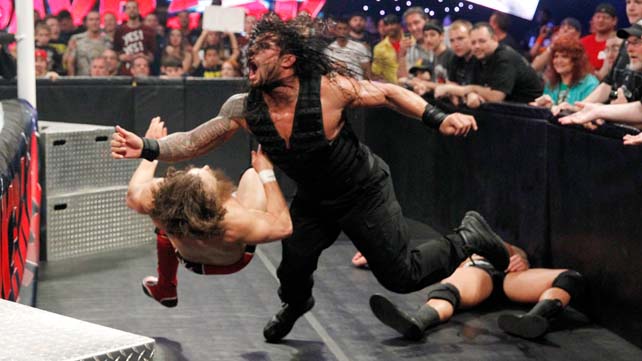
6. The Shield (Seth Rollins and Roman Reigns) (c) defeat Daniel Bryan and Randy Orton, in a tag team match for the Tag Team Titles.
Just Roman around.
We are thrust straight into the Tag Team Title match. The Shield enter first. Daniel Bryan gets a large pop accompanied by sea of “YES!” chants. Daniel Bryan is probably the most over and most entertaining performer on the planet at the moment.
Bryan begins with Reigns at a quick pace. The Shield perform a number of quick tags and double-team moves, highlighting their teamwork. Michael Cole says Orton and Bryan are “the oddest couple since Daniel Bryan and Kane”. I laughed. The crowd is right behind Bryan, who tags in Orton. Orton hits his mid-rope DDT on Reigns and Rollins, and performs a mid-air powerslam on the latter. We hear more “RVD” chants as the crowd do not seem too burned out from the previous bout, which is a testament to them.
After a missed dive to the outside which hits Orton, Bryan executes an awesome looking double-arm superplex off the top rope on Rollins who manages to kick-out at two. Bryan and Rollins in particular seem to work exceptionally well together. Reigns breaks up a No Lock and attempts to spear Orton, who jumps out of the way causing Bryan to take the hit. Orton then RKO’s Reigns, but Rollins throws him out of the ring and delivers a mid-air foot-stomp on Bryan to retain the titles for his team.
These guys always put on entertaining matches and this one was no different. It looks like Bryan is moving on to a WWE Title program soon, but I would not be surprised if we see Bryan vs. Orton at Money in the Bank first.
Match Length – 12:10
Rating:
7. John Cena (c) defeats Ryback, in a Three Stages of Hell match for the WWE Title.
This is a Three Stages of Hell match for the WWE Title. The first stage is a Lumberjack match, followed by a Tables match, and then an Ambulance match if need-be (but only if needed remember). The lumberjacks make their way to the ring and everybody from Antonio Cesaro (that is correct, as a lumberjack) to JTG is present. Both Cena and Ryback receive boos during their introductions.
“I believe i can fly!” Courtesy of Cage Side Seats
— Stage 1: Lumberjack match
This is essentially your bog-standard Lumberjack match. Ryback dominates the majority of the bout, throwing Cena to the outside numerous times for the lumberjacks to attack him. The audience appear a little bored, or maybe just extremely (pun intended) excited to see Rob Van Dam return, as there are more “RVD” chants. Eventually, Ryback is thrown to the outside and all the lumberjacks begin a massive brawl, before Cena executes a flying star jump off the top rope onto them all — the crowd like it. Ryback gets Cena back into the ring and hits the Shellshocked to take fall one.
— Stage 2: Tables Match
The lumberjacks disappear and we won’t see JTG until next January (does he even get a slot in the Rumble?). Ryback goes for a table straight away and brings one into ring. He takes Cena out with a spear and is graced with “Goldberg” chants, which are becoming more common than “What?” chants these days. Cena manages to get Ryback on his shoulders for the Attitude Adjustment, but Ryback flips the table before Cena can put him through it. After numerous failed attempts to kill Cena by throwing steel steps at him, Ryback receives the AA through a table and the match is tied at one a piece (I did not see that one coming).
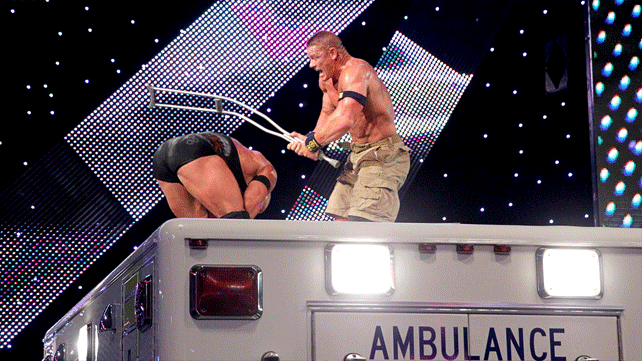
— Stage 3: Ambulance Match
“You’re gonna need one of these in a minute.”
Ryback no-sells the AA through a table and even forgets the table match has ended as he slams Cena through the announce table. He does not even send Cena through the correct one, as Carlos Cabrera and Marcelo Rodriguez are so delighted at the survival of their table that they throw a fiesta in the background. That did not really happen. The third fall gets underway and Ryback carries Cena towards the ambulance, before the following series of events take place: Ryback is pushed head-first into the ambulance, Ryback punches through the ambulance window, Ryback is slammed into the ambulance again, Ryback is Irish-whipped into the ambulance door which falls off, Ryback is hit by Cena with said door, Ryback begins tearing apart the ambulance, Ryback is back-dropped (almost fatally) onto the ambulance hood, Ryback is hit with the ambulance lights, Ryback receives the AA through the ambulance roof. Moral of the story? Ryback sucks.
Cena wins the final ‘fall’ and retains his WWE Title. I would absolutely love to see him defend the title against Daniel Bryan in the near future. Hopefully, the Cena/Ryback feud is over and both men can move on to other things.
Match Length – 24:38
Rating:
After match Cena celebrates with the WWE title and the ambulance drives away to conclude the show. I guess there was a post-show afterwards, but I fell asleep — the cons of watching in the United Kingdom.
Overall, I thought the show had more ups than downs — in fact, it was void of downs almost entirely. CM Punk vs. Chris Jericho was just about the perfect match, the tag team match was entertaining, RVD is returning and we got a better-than-normal divas bout. I really liked the double-turn too. Another huge plus was that each match received a decent amount of time to breathe and develop — the shortest contest was just under 10 minutes. And regardless of all of that, the Chicago crowd were tremendous and really added to the show as a whole.
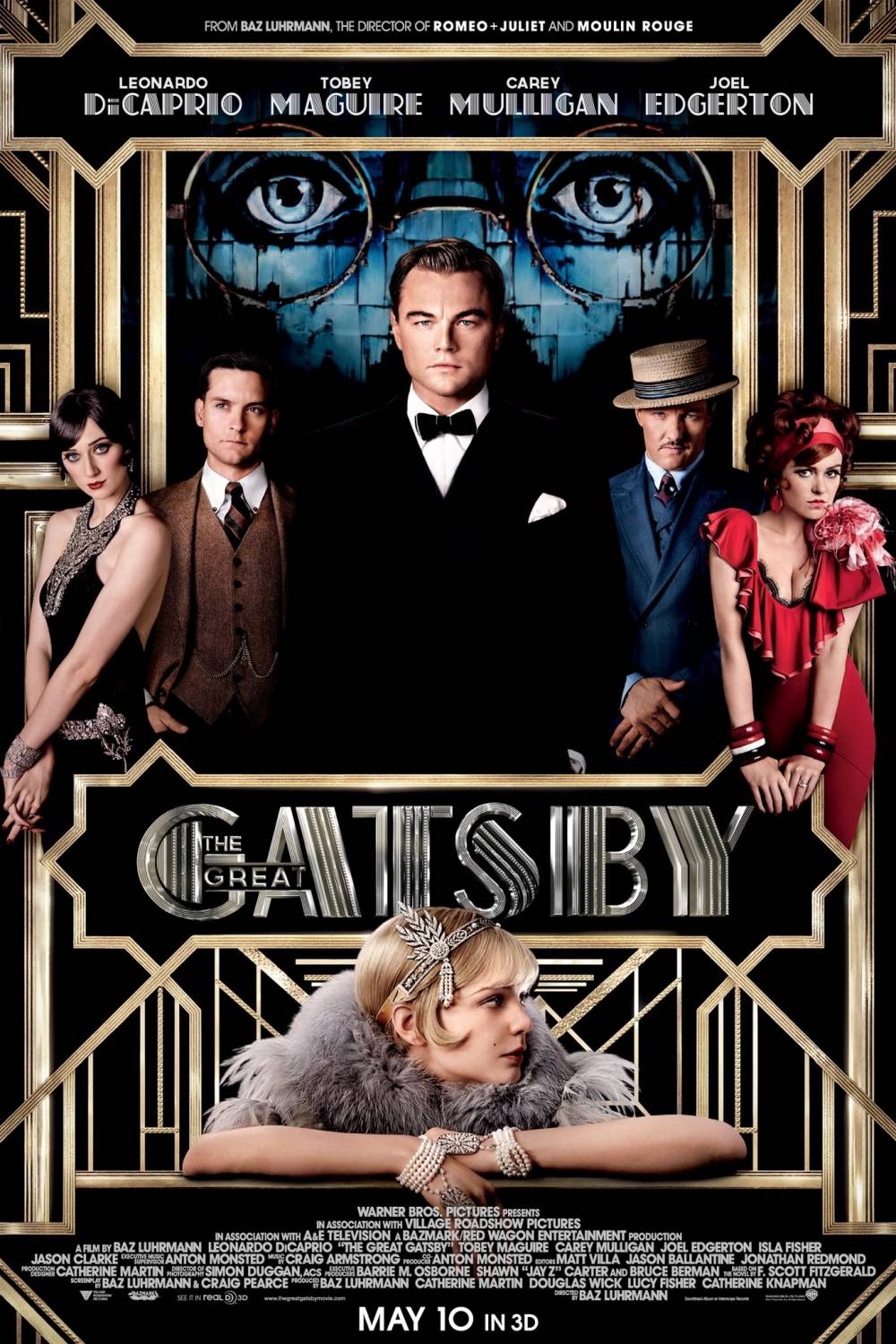
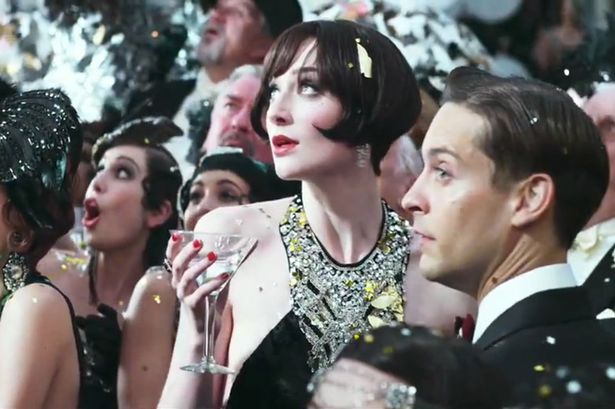
As Baz Luhrmann’s adaptation of the famous F. Scott Fitzgerald novel, The Great Gatsby stars Leonardo DiCaprio as the title character, Jay Gatsby, a very wealthy-yet-mysterious man seeking to rekindle his relationship with the woman he has loved for years, Daisy Buchanan (Carey Mulligan). The story is narrated by war veteran Nick Carraway (Tobey Maguire), who recalls his life living next door to Gatsby whose parties — attended by those from all over the country and overflowing with alcohol, entertainers and fireworks — are products of the Roaring Twenties, where the stock markets on Wall Street were booming and morale was at an all-time high post-World War I.
The Great Gatsby, or more aptly, ‘The Very Good Gatsby’, has Baz Luhrmann’s influence etched all over it, which by no means is a bad thing. Luhrmann, who had previously worked with DiCaprio on Romeo + Juliet, and whose recent directorial credits have included historical epic Australia and the extravagant Moulin Rouge!, certainly knows how to put on show — and more than anything else, The Great Gatsby is a spectacle. Everything from the acting to the set pieces to the costume design to the cinematography is set to full throttle here, as Luhrmann shows no restraint in his direction. And it needs to be this way: the man whose life the film centres on is an over-the-top, charismatic individual and therefore a film without extravagance would not have worked as well. Luhrmann puts the “Great” in The Great Gatsby, because had this film been anything different, it would probably have just been “Gatsby”.
“Jay Gatsby sure is tall.”
At a fairly substantial two hours and 20 minutes (or so) long, The Great Gatsby never really seems to let the pace drop which is a credit to Luhrmann and the writers, as too many lulls in the proceedings would have turned the film into a less-than-dramatic portrayal of a wealthy individual’s life. Personally, I feel that between the half hour and hour mark, there were a few extra-long party scenes which may have benefited from being trimmed down a little, but as I mentioned beforehand this may have taken a snippet of the excessive nature of the film away, a nature which The Great Gatsby relies on to be a success. The difference between, for example, The Hobbit: An Unexpected Journey (which, do not get me wrong, I enjoyed a lot) and The Great Gatsby is that just about every scene Luhrmann directs in Gatsby fulfils a necessary purpose in the plot, whereas An Unexpected Journey includes scenes which are, though entertaining, completely unneeded.
Since last working with Baz Luhrmann on Romeo + Juliet, Leonardo DiCaprio has moulded himself into one of the best actors in Hollywood at present (the best, for my money) and delivers another convincing, flamboyant performance as Jay Gatsby — a man who, on the exterior seems to have it all and lives the picturesque, glamorous life, whereas on the inside is broken and partially empty without the woman he has missed for five years. The mystique surrounding Gatsby during the first twenty minutes to half an hour of the film is very well executed, as he is a man seldom seen but mentioned very often, and spoke about with passion and awe. Tobey Maguire does a fine job carrying the film throughout the opening half hour or so, however as soon as DiCaprio arrives on the screen the film appears to move up another level (if that is even possible in a Baz Luhrmann offering). DiCaprio exudes importance and slickness as Gatsby and, as someone who has never read the book, completely sold me on the character. Tobey Maguire narrates the film very effectively and his voice never seems to make the film drag at any point. His on-screen acting is solid, much like it normally is, with himself and DiCaprio developing an intriguing dynamic throughout the piece (it is cool to see the two share the big screen together, having been very close friends since the early nineties). Carey Mulligan is elegance personified, balancing the correct amount of strength and frailty between her scenes with Gatsby and her husband, Tom Buchanan (Joel Edgerton — who is part of a very strong supporting cast boasting the likes of Isla Fisher).
“Good day, old spore.” “For the hundredth time it’s ‘sport’ – not ‘spore’!”
Much has been said about the modern soundtrack to the film which contains the likes of Jay-Z, Beyoncé and Lana Del Ray. Personally, I did not see a problem with it, in fact it gave The Great Gatsby an extra oomph which 1920s music would more than likely have withheld from offering. Although the film is set over ninety years ago, Luhrmann’s narrative provides modernity and the cinematography creates a classic-yet-fresh vibe throughout. The costume design harks back to the Roaring Twenties (I remember them well) without making the characters look outdated, and this is down to the bright colours — that pink suit Gatsby is wearing is a show-stealer — and the intricate details of each piece of clothing. The set design throughout the film is to the highest standard which helps to create that party atmosphere associated with Gatsby — by contrast, the Valley of Ashes (an industrial works situated between New York City and Long Island) has all the grit, sweat and coal required to reinforce that everything must begin from the bottom and work its way up, echoing the life of Gatsby.
Without giving any spoilers away (yes, there will be people who know nothing about with plot — much like myself beforehand), in a film where hope appears to dwindle throughout — and I stress ‘appears’ — the final few scenes were very well delivered in my eyes, with Tobey Maguire’s narration concluding the film in a seamless manner. The very philosophical final few moments essentially provide the basis for what has gone on throughout the film, which, at heart, is much more about desire and soul than extravagance and dazzling lights.
“Think we get to keep the car?”
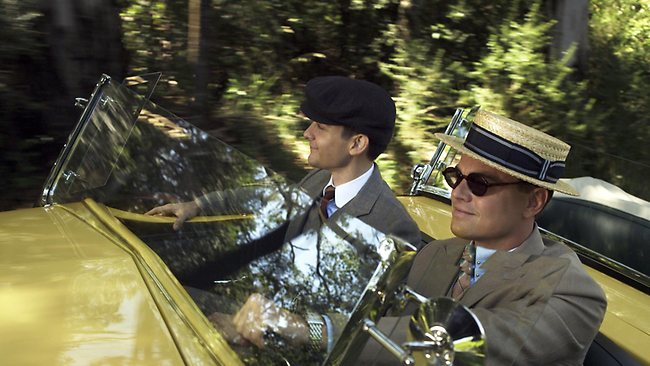
One criticism which I do have is that, on a few occasions, the editing seems a touch off (when Gatsby and Carraway are in the car), but this is more of an annoyance than a significant error. Overall, in regards to such criticism as the film prefers style over substance, I do not believe this to be the case and that the substance is in there, just not always as apparent due to the overload of style. For rather than meaning the style completely overawes the substance, it signals that Luhrmann has done a tremendous job in creating a mysterious and distant Gatsby on the outside, who has bolted up his emotion on the inside — much like Gatsby is looking to rediscover that emotion he has long withheld since losing Daisy, the viewer must find the substance in the film for themselves.
Baz Luhrmann has been vindicated in summoning another Gatsby out of the ashes, as The Great Gatsby is a well-directed mesh of extravagance, emotion and booming life throughout the 1920s, all patched together triumphantly by way off Tobey Maguire’s narration as Nick Carraway, and wonderfully acted at the hands of the likes of Leonardo DiCaprio.
As presumably everybody already knows, the trailer for The Hobbit: The Desolation of Smaug was released yesterday. The Hobbit: An Unexpected Journey, the first of a forthcoming trilogy based on J.R.R. Tolkien’s novel, opened in cinemas back in December of 2012, and has now taken over $1 billion dollars at the box office. With all the fanfare behind the franchise and excitement starting to build already, I think it is fair to say that by this time next year, The Desolation of Smaug will have come close to that figure again, and perhaps have even exceeded it.
An Unexpected Journey, directed by The Lord of the Rings director Peter Jackson, delivered a more light-hearted Middle-earth (in comparison to Middle-earth during The Lord of the Rings trilogy) and it is more than likely that part two of The Hobbit, which Jackson helms again, will be portrayed in a similar vein. For me, this is by no means a bad thing — the book itself is certainly less downbeat than its successors and therefore the film does not need to be either. The problem I had with An Unexpected Journey was its less-than-unexpected runtime, which approached almost three hours. Jackson had stated in interviews before the film was released that he was looking into using excerpts from Tolkien’s other related writings (Unfinished Tales and such), and as it turned out, he used a few more than he probably should have (such as the scene with bumbling wizard Radagast the Brown and his energetic rabbits). Something tells me The Desolation of Smaug will have a similarly long runtime, but at the end of the day if it means I am sitting for an extra hour in a cinema, why should I be complaining?
“Wait, you’re saying these are just… chocolate coins?”
The trailer for The Desolation of Smaug certainly looks more action-packed than the previous instalment, as Martin Freeman’s Bilbo Baggins and his troupe of companions continue on their journey to the Lonely Mountain and an impending meeting with the dragon, Smaug. We see an array of new characters making an appearance in the trailer (such as Lost’s delightful Evangeline Lilly as Tauriel) and old faces returning (the ever-popular Orlando Bloom is back as the, well… ever-popular Legolas). Stephen Fry finally gets his debut in the franchise as the Master of Lake-town and Martin Freeman’s Sherlock compatriot, Benedict Cumberbatch, plays the dragon — who better (than Kanyon… never mind)? Aside from those four, many of the previous actors from An Unexpected Journey are set to reprise their roles, signalling the return of people like Ian McKellen as Gandalf the Grey, Richard Armitage as Thorin Oakenshield and James Nesbitt as Bofur the dwarf. We are even getting the pleasure of another Andy Serkis performance as Gollum.
Particular events outlined in the book which stick out in the trailer include the barrel scene, the company’s arrival and travels through places such as Mirkwood and Dale, and the eventual confrontation with Smaug. We even get a greater glimpse of the dragon right at the end of the trailer (as opposed to just an eye in the previous film). Once again, it appears that the graphics team and visual departments have all worked wonders on the actual viewing aspect of the piece, as the detail exuding from the trailer alone looks magnificent, an element common in Jackson’s films — they tend to be truly cinematic and spectacular (take The Lovely Bones as an example).
One thing is for sure, at the hands of Peter Jackson, regardless of runtime or unnecessary scenes or any number of frames per second, The Hobbit: The Desolation of Smaug is certain to be a visually stunning, exciting and hugely enjoyable watch for all.
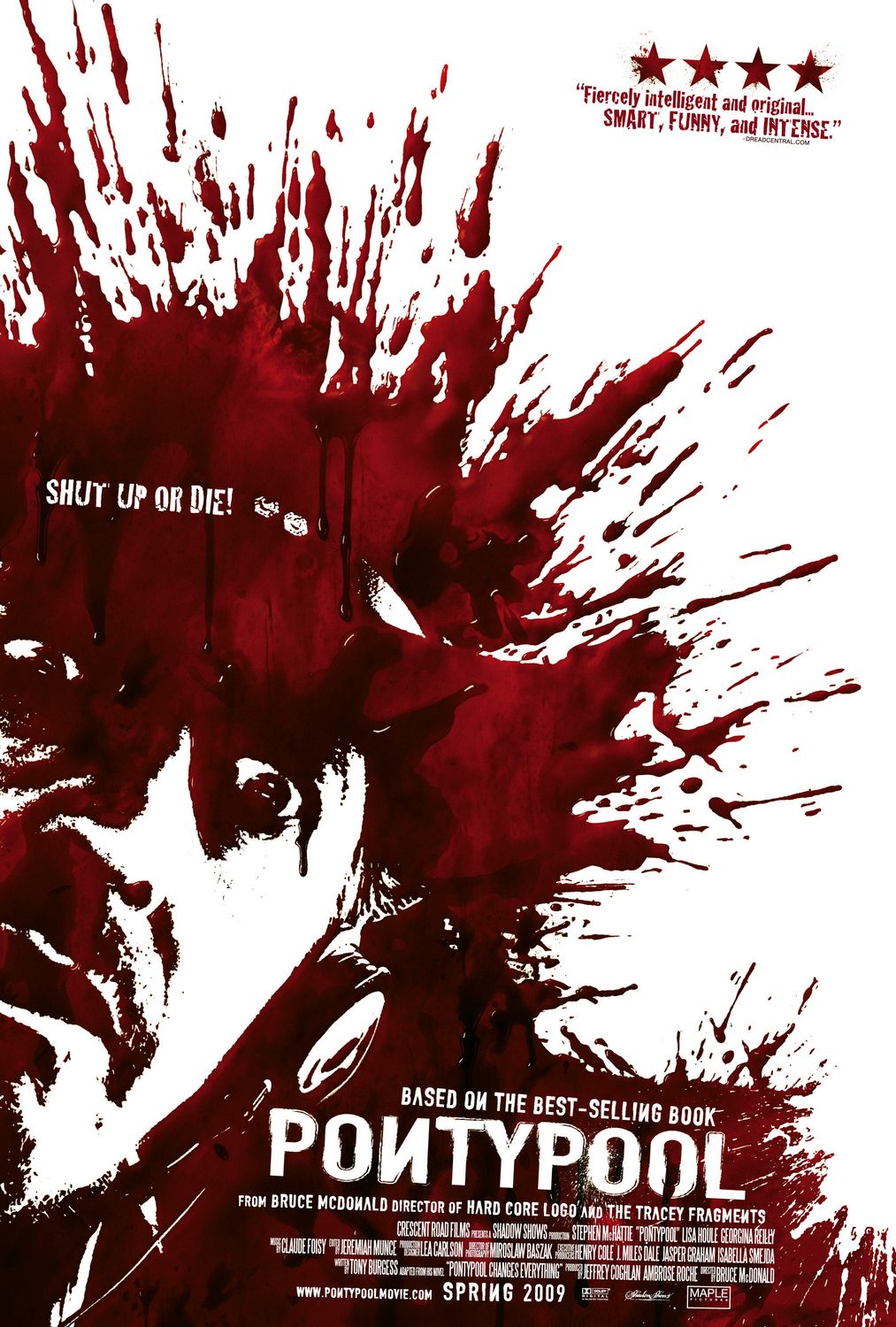
Release Date: March 6th, 2009 (Canada); October 16th, 2009 (UK)
Genre: Horror; hriller
Starring: Stephen McHattie, Lisa Houle, Georgina Reilly
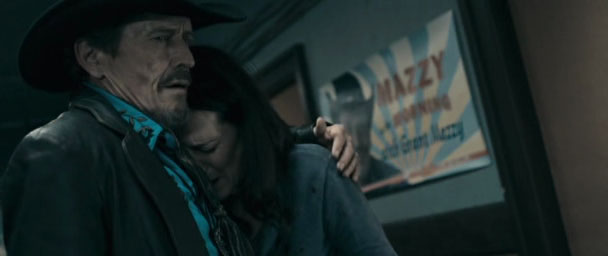
Set in the small town of Pontypool, Ontario, radio host Grant Mazzy (Stephen McHattie) drives through blizzard-like conditions to work and on the way has an odd encounter with a woman who repeats muffled sounds over and over. When he reaches his radio broadcasting station, he is joined by the station manager, Sydney Briar (Lisa Houle) and the technical assistant, Laurel-Ann Drummond (Georgina Reilly) before going about his day-to-day activities. After an average, less-than-noteworthy few hours of news, Grant receives information from the station’s helicopter reporter, Ken Loney (Rick Roberts) that an apparently violent mob has infiltrated the office of one of the town’s doctors. From then on, it becomes apparent to Grant and the others that something is not quite right with the ‘mob’ in question, and the radio employees’ situation quickly becomes one of doubt, fear and worry.
Originally screened at the Toronto International Film Festival in 2008, Pontypool is a completely different take on the zombie/post-apocalyptic genre. Whereas the focus of such films tend to be on gore and exhilarating action, Pontypool certainly is exhilarating, but far more in the psychological sense than in anything to do with flying body parts. The first thing to say about this film is that it is set, for the most part, in one location — the radio station — which benefits the film hugely. Director Bruce McDonald could very well have taken his cameras to various locations and opted for visual scares, but instead he centres the slow building and uneasy atmosphere on dialogue alone. Having the film play out in one location, and through the eyes of the three characters in the radio station, also places the viewer in the station with the characters — as opposed to he/she being repeatedly removed from film due to it jumping all over the place.
“Kevin, I told you not to watch ‘The Red Wedding’.”
Having shot the film in a single location, McDonald is able to fully develop his main characters and show off their every emotion while they receive word about various horrible events taking place elsewhere in the town. Stephen McHattie pulls out an over-the-top, yet thoroughly entertaining performance as a tiring radio presenter who seems to irritate more than anything else. The over-the-top element of McHattie’s performance ensures that the film does not slip completely into a downbeat, hopeless realm and even gives Pontypool a slightly humorous tone at times. His somewhat distant nature at the beginning quickly unravels as the situation dawns on McHattie and his colleagues. Lisa Houle is decent in her portrayal of a considerably controlling station manager. Her character grows as the plot develops, and for her first film role (she is married to McHattie, I wonder how she got this gig?) she puts in a solid effort which is sometimes let down by her less-than-believable attempts at displaying grief. Each of the supporting actors step up to the plate when called to do so meaning there really is no weak link in the cast.
“Let me guess, she watched it too?”
I am not entirely sure what McDonald had in mind when he was making Pontypool, in terms of what he wanted audiences to take from it, but I would love to know. For me, it is clearly a film about how we, as society and as individuals, are so wound up and led on by dialogue — regardless of who or what the source is. The film evokes connotations about how governments rule us and how the influence, and existence, of a global media order thrives on our reaction and acceptance of what they tell us. Throughout the film, our lead characters are relentlessly relayed news and it is their reaction to each snippet of news (one of acceptance over ignorance) that the film is built on — their lack of dismissal means the viewer goes on a journey of weariness, anxiety and fright alongside the radio trio. For all the viewer and characters know, the information they are receiving could be a hoax — again, the ploy by McDonald to keep the focus of the film in one location is essential here — but without seeing what is going on externally, they (and we) end up putting faith in unfounded knowledge. Sounds vaguely familiar, right?
“You all watched it? Brilliant.”
In terms of logistics: visually, at a budget of around one and half million dollars, Pontypool looks great and includes some neat gory, non-CG effects. I noted a few paragraphs prior that the film chooses atmosphere over gore for scares, but what is a zombie film without a few zombies and some blood and guts? Pontypool is far from loaded with the aforementioned though, which is a good thing because it certainly would have been easy for McDonald to set the film off in a clichéd zombie-fest direction during the last thirty minutes or so, but his avoidance to do so benefits the overall product greatly. The script is well written and smooth, particularly in the first half of the film where words are the primary purveyor of scares. The lack of drag (not that kind) during the film is a testament to the writers’ ability to keep their writing slick and interesting.
Just like in my Star Trek Into Darkness review, I am going to avoid giving away too much here (I reckon I should just get rid of the whole spoiler thing anyway, it is slightly disrespectful to the film industry I think), however I will say that the ending worked for me. I have no idea what was going on during the post-credits scene though, somebody will need to fill me in on that one.
Pontypool is a unique film in that it successfully combines the zombie genre with psychological horror, offering up a thought-provoking and generally gripping thriller in the process.
 Director: George Lucas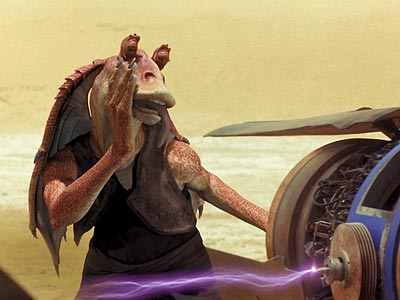














 Consumed By Film