Joy (2016)

★★★★

Joy PosterDirector: David O. Russell

Release Date: December 25th, 2015 (US); January 1st, 2016 (UK)

Genre: Comedy; Drama

Starring: Jennifer Lawrence, Bradley Cooper, Robert De Niro, Édgar Ramírez

Hey, look. Another film starring Jennifer Lawrence and another star turn from Jennifer Lawrence. The can-do-no-wrong actor is back alongside Bradley Cooper and Robert De Niro in Joy, all three under the familiar guidance of director David O. Russell. This is better than their last collaboration, American Hustle, solely because it pits Lawrence in the driver’s seat. It’s not better written, nor better shot. It is simply better shepherded by its central player, whose is clearly one of the best performers cinema currently has to offer.

She plays Joy Mangano, a multifaceted individual struggling to keep her domestic life on the straight and narrow. Her grandmother Mimi (Diane Lane) narrates in parts, telling us about Joy’s childhood and what the youngster had before divorce sent things by the wayside: family, pets, love, a non-idealistic attitude (“I don’t need a prince”). Now a grown women, Joy still doesn’t need a prince nor is she an idealist, but the inventor could do with a degree of leeway in terms of luck.

Mum Terri (Virginia Madsen) is obsessed with television, unwilling to interrupt her bed-based viewing for anything apart from the bare essentials. Like the lone passive smoker living in a cigarette guzzling household, you can see the obsession rubbing off on Joy. In Terri, O. Russell seems to be highlighting our inherent desire to live vicariously through others, and why this can be both good and bad (which is rich coming from a movie). We learn early on that Terri’s TV-induced laziness -cum-ineptitude meant she failed to get her daughter a patent for a potentially profit spinning invention years back.

See, Joy is an inventor. At least she should be. Unfortunately, her house has taken the form of a hotel for relatives. Whenever she visits her father’s (Robert De Niro) vehicle repair shop, the ideas woman walks past men taking aim at empty glass bottles. It’s as if her dreams and aspirations are shot to pieces every time she spends time with her family: Joy does the washing; Joy does the plumbing; Joy does the bedtime reading; Joy does the cooking. Joy even has to mediate verbal jousts between dad and ex-husband, Tony (Édgar Ramírez). Home life is a mess.

And yet there isn’t that same underlying darkness present in O. Russell’s latest offering that was there in, say, The Fighter. This threatens to leave the story hanging, particularly during the opening hour when the family shenanigans bear a fun streak despite boasting life-halting ramifications — heck, Joy and Tony are “the best divorced couple in America”. Lawrence does wear exhaustion well though, allowing only brief bursts of spark to shine through. It is obvious that Joy is the level-headed one, admirably unshowy despite having the intuitive capacity to back up any arrogance. The rest of them are oddballs.

De Niro’s recent filmography doesn’t exactly reflect his irresistible earlier stuff, but he does work well alongside present company. The veteran is as good here as he has been in a while, snarky and showing pinpoint comedic timing. Tony grates a little, especially when we see him in his basement setting without any character depth towards the start, but he fares better as the film advances. He is a singer and, like Joy, the screenplay wants to protect him — O. Russell has penned a celebration of creativity after all.

The film trundles along appealingly, though without too much in the way of bite or real depth. That changes in the second act, when the Miracle Mop takes shape and sales pitches are invoked. Cooper turns up as a distanced TV exec with more business acumen than generosity. Energy levels heighten as he shows Joy around the QVC studio. The piece comes to life and starts to really feel like a David O. Russell production: Melissa Rivers barters before our eyes as her late mother (uncannily by the way); words suddenly have urgency; a western twang sounds out; the camera swoops left and right as ringing telephones carry the frantic calls of seduced customers.

Real life Mangano has the spotlight but the film is really an amalgamation of many exceptional tales (“Inspired by true stories of daring women” are the first worlds we see on-screen), and as such you sometimes get the sense our central character is too good to be true — when she needs Miracle Mop personnel, Joy hires a bunch of female immigrants and turns her father’s male workplace into a sort of gender-balanced haven. Lawrence absolutely makes it work though: like her character’s family, the camera relentlessly pesters the actor, worried it might miss a moment of her brilliance.

Linus Sandgren’s cinematography is crisp but the film does parade an idiosyncrasy in the way it is structured. We get flashbacks that serve to fill some life gaps, but then there are these silly dream sequences dressed up as episodes of a melodramatic soap opera. They feel more suited to American Hustle than Silver Linings Playbook, and given Joy falls tonally on the side of the latter, the sequences don’t really mesh well with the surrounding drama and are ultimately superfluous.

Like American Hustle, it is a film that ages well; certainly, there were moments that had me feeling a bit blasé about the whole thing, but then it won me over and continued to do so even hours after the credits had rolled. Sure you can telegraph certain plot points, but you aren’t really paying for plot: you’re paying for Joy and Jen. The movie is about a functional mop. Isabella Rossellini appears as a bonkers love interest. There is a hotel room standoff involving a guy wearing a cowboy hat for goodness’ sake. What’s not to like?

Joy - Jennifer Lawrence

Images credit: IMP Awards, Collider

Images copyright: 20th Century Fox

The Breakfast Club (1985)

★★★★★

The Breakfast Club PosterDirector: John Hughes

Release Date: February 15th, 1985 (US); June 7th, 1985 (UK)

Genre: Comedy; Drama

Starring: Emilio Estevez, Michael Anthony Hall, Molly Ringwald, Judd Nelson, Ally Sheedy

Society, redrawn as high school in The Breakfast Club, understands its five student detainees in the simplest, most convenient terms: Brain, Princess, Criminal, Athlete, Basket Case. To this lot, Saturday detention is the worst possible way they could spend their premier day of week. But it becomes the best possible endeavour soon enough — during this time, they figure out life. The Breakfast Club sees writer-director John Hughes at his very best, thriving atop apparently mundane ground and creating a parable of conscience and conscientiousness that utterly soars.

Watching the group uphold perceived convention is hilarious: Bender (the criminal, played by Judd Nelson) and Brian (the brain, Michael Anthony Hall) simultaneously begin to remove their jackets before catching eyes, at which point the latter gives in to the former’s steely glare and halts immediately. Brian passes his subsequent non-removal off as a swift re-evaluation of the room temperate — suddenly it is too cold to be without a coat. There’s the assumption that Andy (the athlete, Emilio Estevez) and Claire (the princess, Molly Ringwald) are dating, or at least that they ought to be. Meanwhile, Allison (the basket case, Ally Sheedy) spends at least half an hour chewing her nails.

Lunch adheres to the same stereotypical premise: one eats sushi with a wooden placemat; one unloads a full refrigerator of food; one swaps a ham filling for a sugar and crisp concoction; one scoffs on crustless peanut butter and jelly sandwiches; one has nothing at all. It’s all on purpose of course. The narrative necessitates this establishment of falseness, and Hughes obliges purely so he can tear said falseness apart as the film unfolds. It isn’t a straightforward ride into the land of truth — the students annoy each other incessantly and chip away at their various flaws before there is any substantial breakthrough. The breakthrough, when it does finally arrive, takes the form of a totally gripping 20-minute centrepiece discussion played beautifully by all five actors (they excel throughout).

As assistant head teacher Richard Vernon, Paul Gleason evokes a self-absorbed Ben Horne vibe. Just like said Twin Peaks character, Vernon is the ultimate corporate villain, a bully. He engages in name-calling and literally pushes the group around in an attempt to assert his authority. Gleason’s performance is exaggerated, but the point remains: the school principal is just as bad, if not worse, than his younger acquaintances yet for some reason society dictates otherwise. Parents receive it in the neck too. No adult is safe because no adult ‘gets it’, with the exception of school janitor Carl (John Kapelos), who commands a reprieve as his job suggests he isn’t one of the corporate rule-makers.

The five teens cannot help but stick up for one another during unfair inquisitions; they collectively concoct an alibi defending Bender after he sneaks out of a locked room and tumbles through the ceiling, causing a ruckus. Though their egos haven’t wholly meshed by this point, they each know who the real enemy is. Bender gets most of the flack, especially from Vernon who has clearly given up on his student. Even though the troublemaker isn’t all that likeable, we sympathise with him because at this point nobody else has, not at home nor in school, and that is why he acts out.

It wouldn’t be a John Hughes film without effective comedy. Pinpoint visual gags accompany those of the vocal variety: “Who has to go to the lavatory?” asks Vernon, and five hands shoot up instantaneously. Vernon actually rattles off a whole host of brilliant lines, including the delightfully playful, “Grab some wood there, bub” (again aimed at Bender). The film jaunts along with unruly energy, matching the 80s teenage bombast evoked in movies such as Risky Business — Andy even shows off some classic Cruisian dance moves.

The Breakfast Club is right up there alongside Richard Linklater’s School of Rock as one of the very best classroom flicks. And just like School of Rock, a very real case of stickittothemaneosis meaningfully pulses through its veins. Rebellion is the on the curriculum and these kids pass with flying colours. For further details, refer to the film’s finale: one of the most empowering final sequences in movie history fittingly serenaded by Simple Minds’ “Don’t You (Forget About Me)”. We won’t.

The Breakfast Club - Cast

Images credit: IMP Awards, Variety

Images copyright (©): Universal Pictures

Tangerine (2015)

★★★

Tangerine PosterDirector: Sean Baker

Release Date: July 10th, 2015 (US); November 13th, 2015 (UK)

Genre: Comedy; Drama

Starring: Kitana Kiki Rodriguez, Mya Taylor

The first thing you notice in Sean Baker’s Tangerine is its rapid-fire manifesto. Editing, pacing, score, dialogue — everything is turned up to 11, including the sepia-tinted aesthetic. It looks a bit like how a Coldplay music video would if Coldplay ever tapped into their underground urban side, boasting heightened tones and the occasional influx of technicolour vibrancy. Discussions between characters — especially our two main protagonists, sex workers Sin-Dee Rella (Kitana Kiki Rodriguez) and Alexandra (Mya Taylor) — aren’t quite comprehensive chats, more vulgar sound bites.

The very simple plot revolves around the search for Sin-Dee’s pimp-turned-boyfriend Chester (James Ransone) who has been outed by Alexandra as a cheat. Sin-Dee, having spent the last month in prison, is on the warpath, tearing through makeshift sex dens and doughnut joints in her breakneck quest for answers. Mirroring films such as Locke and Collateral, Tangerine thrives on its simplistic premise that unfolds within a contained locale (the streets of Downtown LA) and, like in those outings, vehicles become key mediators — much of the unsophisticated magic takes place in cars.

Unlike the more polished aforementioned flicks, Sean Baker’s proposition is rugged and boisterous, thanks in part to its headline duo. They may not be A-list stars, but Kitana Kiki Rodriguez and Mya Taylor both completely convince as captivating on-screen presences. Rodriguez is spiky as the wittily named Sin-Dee whereas Taylor’s Alexandra relays a much calmer demeanour; she clearly doesn’t want any drama, though she is clearly also hanging around with the wrong ticked off prostitute. (Just in case we weren’t already aware, at one point Alexandra literally stands before a crossroads and chooses the quieter route.)

Later, we see her deliver a classically romanticised vocal performance before paying the venue manager for his troubles, and not vice-versa. She wants to be a singer, her desperation evident in this solemn scene that harks back to Girlhood’s “Diamonds” sequence. Alexandra’s trans identity adds some fuel to the narrative — we see men, including Armenian taxi driver Razmik (Karren Karagulian), give into their intimate urges while also trying to uphold some degree of self-perceived normality — but otherwise it’s beside the point. If there is any point to be made it’s that, by optioning good roles for trans actors, Tangerine represents what will hopefully become a proportional improvement.

We spend a fair chunk of time with the aforementioned Razmik and, while it isn’t time wasted per se, there is a sense it is time mishandled. He wheels around a bunch of not-so-eclectic residents in his taxi (one customer’s pet has just died, another inebriated duo disgustingly vomit everywhere) and you are left wondering why Los Angeles has suddenly run out of interesting folk. Perhaps it is just LA, but the film seems to exist in a world where nobody cares about anything or anyone, which kind of adds to the pillaging tenacity. Unfortunately, this also hampers your emotional involvement: there is no moral code, enemies fight all over town and then smoke a bong together in a seedy bathroom.

When characters aren’t communicating via swearwords, they deliver sporadic helpings of humour: a short-changed guy validates his craving for sex with a “come on, it’s Christmas”. Tangerine straddles the line between comedy and drama and just when you think things are about to get weighty, there is an influx of amusement. I think the piece is tonally muddled though: scenes exploring the woes of prostitution, of which there are many, could be presented as either lightly comedic or darkly dramatic, but the film opts for both and subsequently invokes a confusing disconnect. It’s tough to sympathise with a character who rampages through the streets towing a hostage one moment, and then supports her dream-chasing mate the next.

It is common knowledge that the film was shot using the iPhone 5s, not that you ever really notice. Indeed you do feel like you are on street level among the myriad of personalities, but that’s not exactly something the iPhone can claim exclusivity over. City of God, shot using conventional equipment, manages to generate the same immersive pretence for instance. Baker and Radium Cheung both have cinematography credits (Baker also co-wrote the film with Chris Bergoch) and their collaborative effort is effective — a car wash scene is particularly excellent, filmed with invention and amusement in mind.

“Los Angeles is a beautifully wrapped lie,” bemoans Razmik’s annoying mother-in-law. Her statement rings true as the film reaches its conclusion: a neon-infused Spring Breakers synth vibe serenades characters whose worlds are sort of in tatters, probably not unexpectedly given the tumultuous nature of their jobs. There is hope, but by this point I wished I had been given more of a mandate to care.

Tangerine - Cast

Images credit: IMP AwardsThe Guardian

Images copyright (©): Magnolia Pictures

Frances Ha (2013)

★★★★

Frances Ha PosterDirector: Noah Baumbach

Release Date: May 17th, 2013 (US limited); July 26th, 2013 (UK)

Genre: Comedy; Drama; Romance

Starring: Greta Gerwig

There isn’t really a plot to Noah Baumbach’s low-key indie drama Frances Ha. Certainly not one of any conventional sort. We are thrown straight into the life of our central protagonist, the eponymous Frances (Greta Gerwig), without a proper introduction. From opening to closing she spends her time apartment hunting (this is the film’s central crisis), though Frances doesn’t seem all that worked up about her uncertain predicament. The screenplay, penned by Gerwig and Baumbach, is very loose — you get the feeling there was a lot of improvisation during filming.

And yet the whole thing bumbles along with excitable charm and an internal confidence born, perhaps, out of experience. It could be a Woody Allen venture: title cards pop up every so often detailing the various locations Frances attempts to settle (primarily around New York), and the nomad herself fits Allen’s ditzy mould. When she isn’t spending time with her best mate, who sports glasses with enormous lenses by the way, Frances is training to become a dancer. Unfortunately she ain’t quite up to the required standard and, in New York, triers don’t get paid: “I can’t even get outta the house on my feet”.

Characters often mumble incoherences, blabbing one minute about unaffordable rent bills and the next about finger injuries. In reality, despite what Aaron Sorkin would have us believe, we probably spend much of our time conversing in a similar fashion. Not that Baumbach’s film reflects real life: there is a scene where our luckless protagonist gallantly offers to pay the bill following a meal with a potential boyfriend (the body of her previous beau is still warm at this point), only for her card to be declined. Rather than letting Adam Driver’s Lev Shapiro — if that is his real name — do the honours, Frances bolts out of the restaurant and scampers around the neighbourhood looking for a cash point. She finds one eventually, reappearing at the table with some money and a randomly bloodied arm.

You laugh because the whole scenario is utterly bonkers, and it is one that cements the film’s reputation as a bible for clumsy folk. Frances Ha is like the Friends movie finally realised, only every character is Phoebe. This hodgepodge of kookiness is actually fairly endearing and lends itself to the overarching notion of misadventure. It transpires Frances is actually a pretty good dancer (“You were great tonight”), but her instructor opts to cut her from the Christmas play anyway. Is Frances the unluckiest person alive or is she simply too unprepared, her moment-to-moment style of living an inescapable and fruitless trap? Regardless, you stick with her because she refuses to give up her creative passion. That is admirable.

These underplayed indie outings are often left wide open when it comes to accusations of baselessness, and there is a sense that Baumbach only shot in black-and-white because there happened to be a spare roll lying around. But I don’t think the film aspires to be intentionally pithy. Indeed, there is a pithiness in the sense that it’s a quirky drama without an A-to-B plot and C-to-D script, but that’s just how it is in Baumbach’s New York. Another apartment dweller, Benji (Michael Zegen), wants to write for Saturday Night Live and suitably spends his days watching movies, presumably because procrastination is the key to comedic success.

Greta Gerwig plays Frances with a childlike innocence: she sleeps with the door ajar; she turns to her parents in a time of need; she engages in play fights with other resistant lodgers. There is even a moment where the camera cuts to her teaching a group of youngsters ballet, and she looks right at home. Grinning with a genuine smile, Gerwig superbly manages to captivate through a waft of potential annoyance, and as such you see and sympathise with the fragility bubbling beneath Frances’ surface.

Elegantly inelegant, the daydreamer relentlessly apologises to people when she’s probably only at fault two-thirds of the time. Solutions are right there at her fingertips yet she keeps washing her hands — a temporary job at the dance studio that would earn her some cash becomes available, but she is initially too impulsive (fed up with speculative opportunities?) to accept. The supporting players all contribute too, particularly Grace Gummer whose dissociative air is a terrific counterbalance to Gerwig’s friendliness.

Paul McCartney and David Bowie are part of a soundtrack that hops tactfully from in vogue pop to classical strings to early Hollywood-era romance. Sam Levy’s cinematography bears a trace of Wes Anderson — the camera often adopts a still frame that zips back and forth between characters in conversation. The film is generally mad, makes little sense, and exists in a hyper-surreal world where people do silly things and still manage to get by. But it is addictive and funny and sweet, and that’s all that matters really.

Frances Ha - Cast

Images credit: IMP Awards, Collider

Images copyright (©): ICF Films

Back to the Future (1985)

★★★★

Back to the Future PosterDirector: Robert Zemeckis

Release Date: July 3rd, 1985 (US); December 4th, 1985 (UK)

Genre: Adventure; Comedy; Science fiction

Starring: Michael J. Fox, Christopher Lloyd

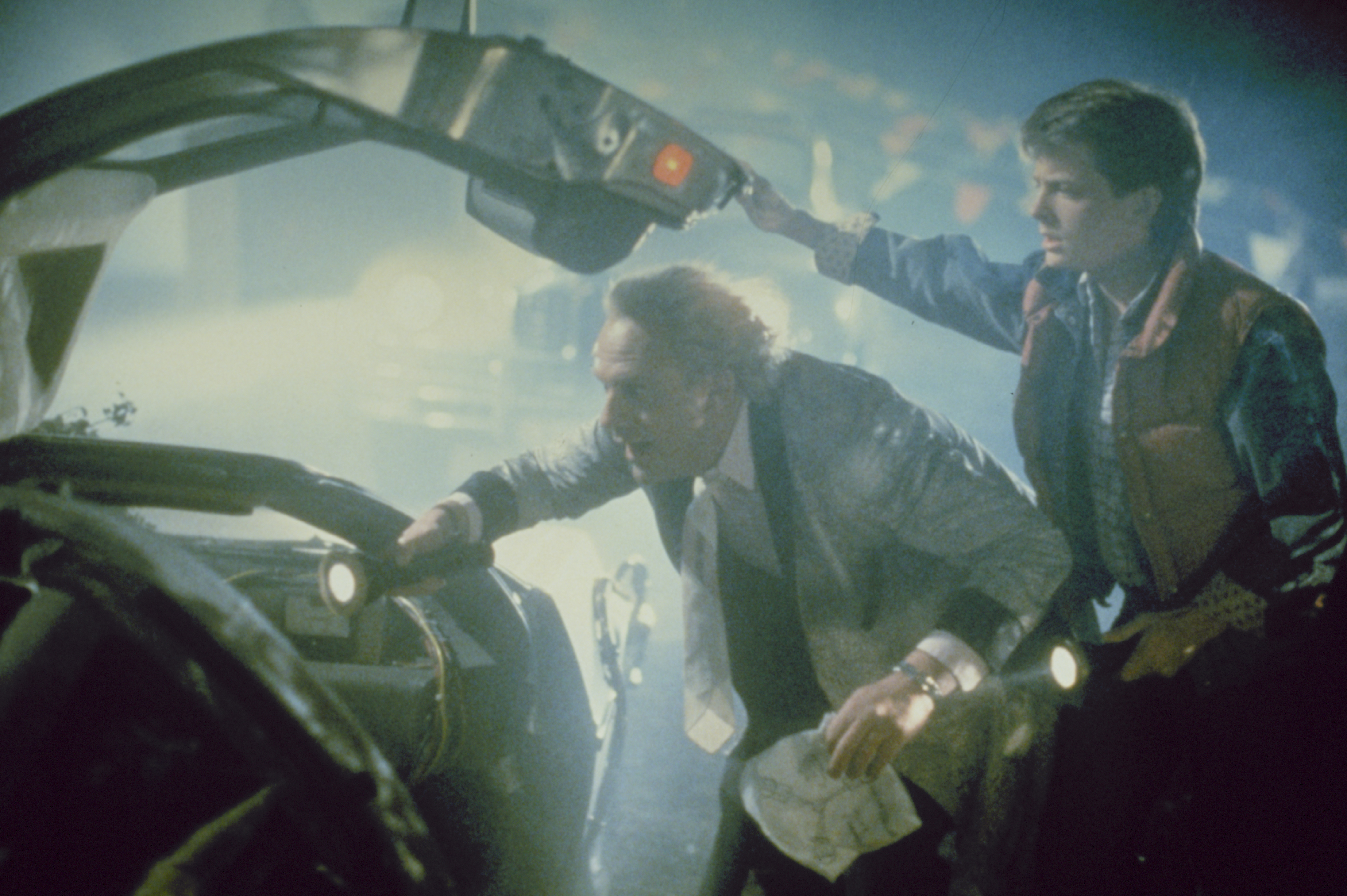
From the moment Dean Cundy trails his camera around Emmett “Doc” Brown’s (Christopher Lloyd) cantankerous home, clickety-tickety gadgets clicking and ticking in all directions, you just know Back to the Future is going to be a film that values wacky invention and rich characterisation. The plethora of loud clocks, the iffy tin openers, the monster amps, they all reflect Doc’s personality: budding, buzzing, and entirely unpredictable. And we haven’t even met him yet.

It’s Marty McFly (Michael J. Fox) whom we first encounter, tripping over Doc’s seemingly infinite housebound bits and bobs, somehow looking both uncomfortably out of place and at ease with his bonkers surroundings. We know then that the pair share an uncommon bond and that, for the remaining two hours, its lack of plausibility doesn’t matter. These opening 10 minutes, penned by director Robert Zemeckis and co-writer Bob Gale, are brilliant. Those that follow are pretty good too.

We initially find ourselves slap-bang in the mid-1980s, Huey Lewis and the News’ “Power of Love” beefing up the Zeitgeist with pop rock verve. The special effects are goofy but in charming sort of manner, electric lights fizzing and squawking. When we shift to the 1950s soon after, the visual palette takes on a post-war retro tint: glass bottles of Coca-Cola, tall chocolate milkshakes, unabashedly shiny vehicles. Doc and Marty are to blame for said shift, the former having transformed his DeLorean into a time travelling machine and the latter having taken the time-sensitive plunge.

Marty is a bit cocky, a bit arrogant. He’s a rebel with a cause: to change history. Zemeckis and Gale set up the various pay-offs early on — Biff (Thomas F. Wilson), the adult bully who needs some comeuppance; the Hill Valley Preservation Society’s attempts to save the town clock tower that, coincidentally, was struck by lightning 30 years ago. We know how story facets such as these will play out, but other rules are established only to be rewritten. In 1955, Marty takes his father George’s (Crispin Glover) place in a car accident, blacking out and subsequently awaking in his mother’s teenage bedroom. She, unaware Marty is her son, tries to seduce him.

The aforementioned notion would provoke cringe in many other outings, but Back to the Future gets away with it because the air is so madcap. Michael J. Fox’s nervous energy around his young mum Lorraine (Lea Thompson) is both hilarious and touching: “You shouldn’t drink because… you might regret it later in life,” he informs his mother, a future alcoholic. Crossover traits from the 50s and 80s afford Marty a freshness in both settings — traits such as booming teenage culture, motor car appreciation, and the imminent popularity of rock music. The film even paints Marty as the brainchild behind Chuck Berry’s “Johnny B. Goode”, and you can’t help but admire its odd legitimacy.

On the other hand, Doc is introduced under an air of mystery. We hear his voice, eccentric and agitated, over the phone long before we meet him in person. The barmy inventor reverses noisily on-screen, smoke pillowing wherever there is space, his frazzled hair and radioactive suit vindicating our original preconceptions. Christopher Lloyd unveils an intense stare that promotes excitement rather than intimidation. His character is like an affable Count Olaf, if Count Olaf was a mad scientist and affable. You accept Doc and Marty’s offbeat camaraderie as standard practice because the two actors have natural, unkempt chemistry. They drive the film with as much intent and enthusiasm as they drive the DeLorean.

Elsewhere, Back to the Future spends time taking potshots at 1950s culture and politics because doing anything else would be against time travel law. In a not-so-solid burst of intuition, Marty decides the only way to convince past Doc (there are a few incarnations of one or two characters which can be a tad confusing) that he has arrived from the future is by reeling off 1980s characteristics, and subsequently names Ronald Reagan as the current US President. “Ronald Reagan, the actor? Ha!” Doc shoots back, a response that probably would have held weight back then, when Reagan was more likely to be found on a Hollywood movie set than inside the Oval Office.

It is practically impossible not to enjoy this film. With almost as many quotable lines as Casablanca, it’s essentially Grease on physics-defying  wheels. Zemeckis creates a heightened ambience that encourages nothing but authentic, irreverent chaos. Suburban madness was a movie-making norm in the 1980s, and Back to the Future is as wonderfully mad as it gets.

Back to the Future - Doc & Marty 2

Images credit: IMP Awards, Collider

Images copyright (©): Universal Pictures

The Man from U.N.C.L.E. (2015)

★★★

The Man from UNCLE PosterDirector: Guy Ritchie

Release Date: August 14th, 2015 (UK & US)

Genre: Action; Adventure; Comedy

Starring: Henry Cavill, Armie Hammer, Alicia Vikander

If you have a particular preference for buddy cop movies set in 1960s Eastern Europe (technically it is Western Europe but the prevailing Cold War atmosphere favours the former) starring a Brit playing an American, an American playing a Russian and Swede playing a German, The Man from U.N.C.L.E. is absolutely your kind of film. For those whose tastes spread more generally, Guy Ritchie’s latest adaptation is still an enjoyable and, for the most part, enticing action flick.

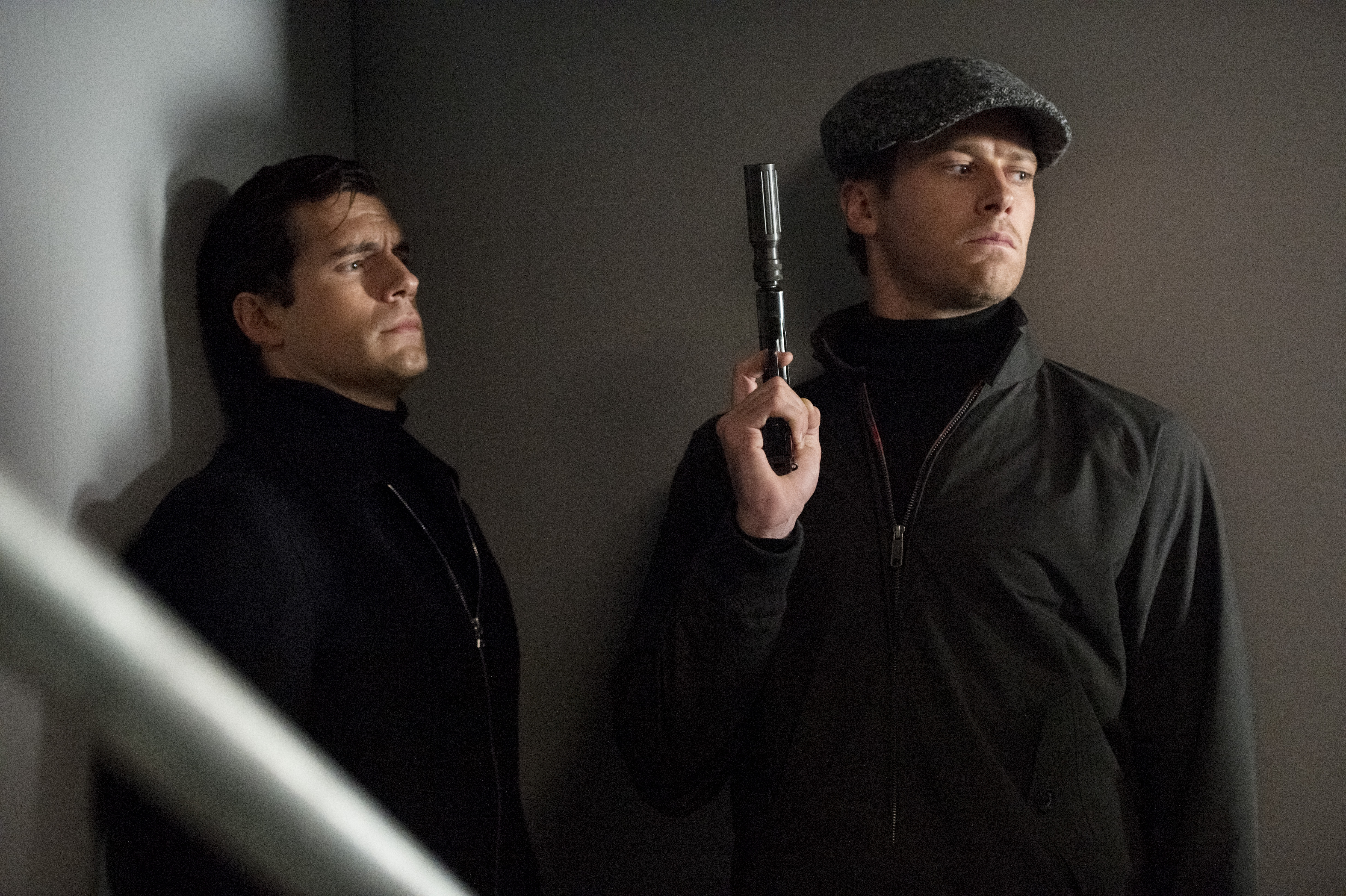
The director’s trademark style is plain to see — though in no way plain — from the beginning. We are introduced almost immediately to Henry Cavill’s Napoleon Solo, an exceedingly well kept CIA agent whose mission takes him to East Berlin where he must track down mechanic Gaby Teller (Alicia Vikander). KGB handyman Illya Kuryakin (Armie Hammer) is also after Teller, whose family has ties to a complicated plot involving Nazi experimentation and nuclear weaponry.

An opening duel between the opposing operatives lights the fuse on a two hour game of one-upmanship. It’s almost comic book-ish, with kinetic pans across bleak urban locales and camera zooms in towards an extended car chase providing much verve. This early sequence in particular harkens back to Ritchie’s Sherlock Holmes series, the dark and shadowy inflections of Victorian London incorporated again here, reflecting our two protagonists’ use of stealth and smarts as they attempt to gain the upper hand (shades of grey and black diagonally segment Solo’s face in scrumptious Hitchcockian fashion). The rest of the movie is mostly bright, its colour palette part of the confident — arrogant, even — bulbous energy.

Solo is no Han, though he and Teller do share a smidgen of Han and Leia’ feistiness (none of the romance). The agent exudes sarcasm and is a smarmy git, but Cavill’s cool swagger draws our affection; at one point Solo, in the midst of passing out, perfectly positions a few pillows beneath his head. The characterisation isn’t always this strong — Vikander’s seemingly distant chess piece stumbles through a faltering arc during which her actions are never really vindicated. The most egregiousness part is Teller and Kuryakin’s will-they-won’t-they relationship which feels too blasé for a film that is trying to be clever and slick.

There is a confident flow to proceedings when the two male leads are bantering back and forth. They are spies by trade but also convince as fashionistas, socialites and passive fiancés (well, sort of). Aside from the excellent opening, a team-up mission that both men wish to keep a secret is the film’s most entertaining occasion. It’s like an affair that neither operative wants to go public, and you buy into the individually-driven egotism each man displays.

Both actors assume their roles — Cavill as the upmarket Bond, Hammer as the brutish Bourne — with ease, a notion perhaps best embodied by a gadget-off at the beginning of said mission that sees Solo’s technical prowess out-muscled by Kuryakin’s straight-to-the-point mantra. The entire heist is a fine experiment in combative wit and told-you-so derision.

At one point we see then-President John F. Kennedy within the confines of a television screen, a reminder that events are unfolding in a paranoid and antagonistic setting. Ritchie needed to inject more of this uneasy tone, and should’ve taken a page out of The Winter Soldier’s book in doing so. It should be noted that John Mathieson’s crisp cinematography does evoke an effective era look, richly textured and striking in delivery.

But as snazzy a period piece as it is, the movie shares the same unfortunate lack of interest in exploring the suspicious undercurrents of its period as Mission: Impossible — Rogue Nation. We only really get broad East versus West strokes. The violence is kept to a minimum, which hampers any prevailing danger — greater bite would have upped the ante. It doesn’t have to be Fury, but an additional layer of grit would’ve assisted in shifting the characters from comic sketches to real-ish people.

There is an awful lot of exposition laced throughout too — the film disguises this information overload by getting most of it out the way in a snappy manner, zipping through newspaper clippings and newsreels during action lulls. “Whoever has that disk will simply be the most powerful nation in the world,” one character informs us before reaching through the screen and administering a collective elbow nudge to the audience.

The plot is quite messy. A plethora of agents, spies and turncoats are all invoked though many arrive without a sufficient backstory, or with a rushed one at best. Take the Vinciguerras for example, a villainous power couple who only seem to radiate villainy because they happen to be a power couple. As such it becomes increasingly difficult not only to engage with whichever talking head is around, but also to follow the intricacies of who is motivated to do what and why.

Hugh Grant shows up every now and again as Waverly (because he’s British — he even mutters the line, “Yes please. Thank you very much,” to compound the polite British stereotype). But Grant is so poised and brilliant in the role that it works. He’s a scene-stealer, possibly the best aspect of the movie. Now there’s at least one man from U.N.C.L.E. who deserves a sequel.

The Man from UNCLE - Cavill & Hammer

Images credit: IMP Awards, Collider

Images copyright (©): Warner Bros. Pictures

Inside Out (2015)

★★★★★

Inside Out PosterDirector: Pete Docter

Release Date: June 19th, 2015 (US); July 24th, 2016 (UK)

Genre: Animation; Adventure; Comedy

Starring: Amy Poehler, Mindy Kaling, Bill Hader, Phyllis Smith, Lewis Black

If you’ve spent years agonising over the possibility of a live action Numskulls film — and let’s face it, who hasn’t? — you’re finally in luck. Inside Out takes the premise of said comic strip and imbues it with a visual vitality not always achievable on paper. But more than that, the film smartly and effectively explores the social complexities of growing up, and does so amidst a level of confidence not relayed from Pixar since Toy Story 3. One thing is absolutely certain: the creative minds behind the studio’s latest imagination emporium are no numbskulls.

The film follows youngster Riley (Kaitlyn Dias), whose bright and bubbly exterior matches her consistently joyful interior. See, Joy (Amy Poehler) is Riley’s overriding emotion, she having commandeered a monopoly on her host’s mind since birth. A sudden shift in locale from her beloved, chilly Minnesota to an unhomely San Francisco disturbs the eleven-year-old’s mental hierarchy, leaving Anger (Lewis Black), Disgust (Mindy Kaling), and Fear (Bill Hader) in charge.

As you can probably imagine, this loss of cheerful guidance sends Riley down a path of greater isolation in already isolating surroundings. Happy core memories — which power five primary islands, including Family Island and Goofball Island — are tinged with solemnity via Sadness (Phyllis Smith), whose clumsiness catapults her and Joy away from the central hub. You buy into the film’s simple story, desperately urging the odd couple back to Headquarters, even if the various structural nodes take a while to fully grasp.

The inside of Riley’s head assumes a life of its own, where reality has been remodelled with a rainbow-like gloss. Fittingly, we find out it’s a movie studio (aptly called Dream Productions) that is responsible for the creation of dreams. With her rectangular hair and sharp glare, Riley’s dream auteur resembles Scarefloor clerk Roz from Monsters, Inc. Pete Docter, who helmed Mike and Sulley’s fun frightfest, also directs here and does so with incessant invention, answering questions about how the mind is constructed before we even get the chance to think them up. At one point the action calls for a dream to become a nightmare, and as such Dream Productions’ feature film evolves into a horror movie starring a huge scary clown.

Inside Out often takes its visual cues from Toy Story, both materially and comically. Just as that franchise portrays Slinky, a stretch toy, in Sausage Dog form, here Anger wears a shirt and tie combo normally associated with workers who are fed up with their job and full of scorn. Anger is also the lead emotion inside Riley’s father’s head, a playful jab at male stereotypes; men are either grumpy, preoccupied by sports or hilariously militaristic when it comes to getting things done at the last minute. We stalk the camera during a superbly written family dinner scene as it invades the inner workings of mother and father (voiced by Diane Lane and Kyle MacLachlan), showing their respective reactions towards Riley’s morose attitude.

Fear is unabashedly spontaneous, in a state of terminal alarm and never boring to watch — Bill Hader just about steals the show with his squawking audio performance. Joy glows, whereas Sadness is a murky blue colour, small and forever huddled up. Phyllis Smith’s voice work as the latter channels Saturday Night Live’s Debbie Downer to perfection. Disgust, obviously, carries the poise and style of a fashion expert.

Throughout we constantly weigh up whether the emotions are controlling Riley, or if it’s Riley who is controlling her emotions. On occasion you can’t help but give into the sprightly visual splendour and the barrage of smart gags, but even in these moments the film steers well clear of all that is routine. For adults Inside Out could be a hypothetical examination of mental illness, or simply a voyage into the psychologically transformative nature of ageing. For children it’s also about growing up, only the immediacy of events on screen are sure to hit home with greater verve. The film affords young viewers an optical veracity that likely mirrors their ongoing experiences.

Pixar hasn’t shied away from misfortune in the past — see the first ten minutes of Up, or the abandonment arc in Toy Story 3 — and the studio continues to respect its audience by maintaining that mature philosophy here. Joy is undoubtedly a positive influence on Riley’s life, but her mistrust of Sadness is telling. The establishment of a ‘Circle of Sadness’ is a somewhat autocratic control mechanism thought up by Joy to restrict Riley’s emotional output. Joy doesn’t want her young anchor to ail, not realising the process of ailing plays a crucial role in a person’s development.

Docter and co-writers Meg LeFauve and Josh Cooley champion lightheartedness in equal measure, matching seriousness with amusement: less imperative memories are tossed away at the onset of teenagehood, at which point bouts of important knowledge (US Presidents, piano skills) succumb to materiality (the perfect boyfriend). The funniest running gag, which centres on an annoying advert with a catchy theme song, is irksomely on point. This mixture of slapstick, witty and child friendly — though not childish — comedy gives the movie a peppy air. “That’s it, I fold,” bemoans a Jelly Bean-esque builder whose house made of cards keeps collapsing.

Long-term memory is visualised as a gigantic maze library. The filmmakers even explore abstract thought; the realisation of our overly analytical side (something writers can relate to), where notions and ideas and truths are deconstructed and subsequently flattened to the point of nothingness. It’s a brilliantly incisive scene that implores us not to be too self-critical or too self-diagnostic.

The primary message throughout Inside Out is a reassuring one. Sometimes it’s okay to be sad. Or angry, or fearful, or disgusted. These are feelings that will eventually subside and offer in their place a stepping stone to happiness, and to other, more complex and interesting emotions. Docter’s film is rich in subtext, one of those that you should watch again and again and could pick apart all day thereafter. This warrants examination both inside and out.

Inside Out - Emotions

Images credit: IMP Awards, Collider

Images copyright (©): Walt Disney Studios Motion Pictures

Ted 2 (2015)

★★

Ted 2 PosterDirector: Seth MacFarlane

Release Date: June 26th, 2015 (US); July 8th, 2015 (UK)

Genre: Comedy

Starring: Mark Wahlberg, Seth MacFarlane, Amanda Seyfried

After another so-so opening narration dulcetly delivered by Patrick Stewart, Ted 2 dives into a random dance scene. It’s somewhere between peculiar and unexciting, like a Twin Peaks dream sequence but with all the giant men and shimmying dwarves removed in favour of industrial, high-concept choreography. The scene sort of reflects the film as a whole — a rudimentary and rude affair, though not especially interesting or funny. There’s a just because attitude prevalent throughout, where things happen, y’know, just because.

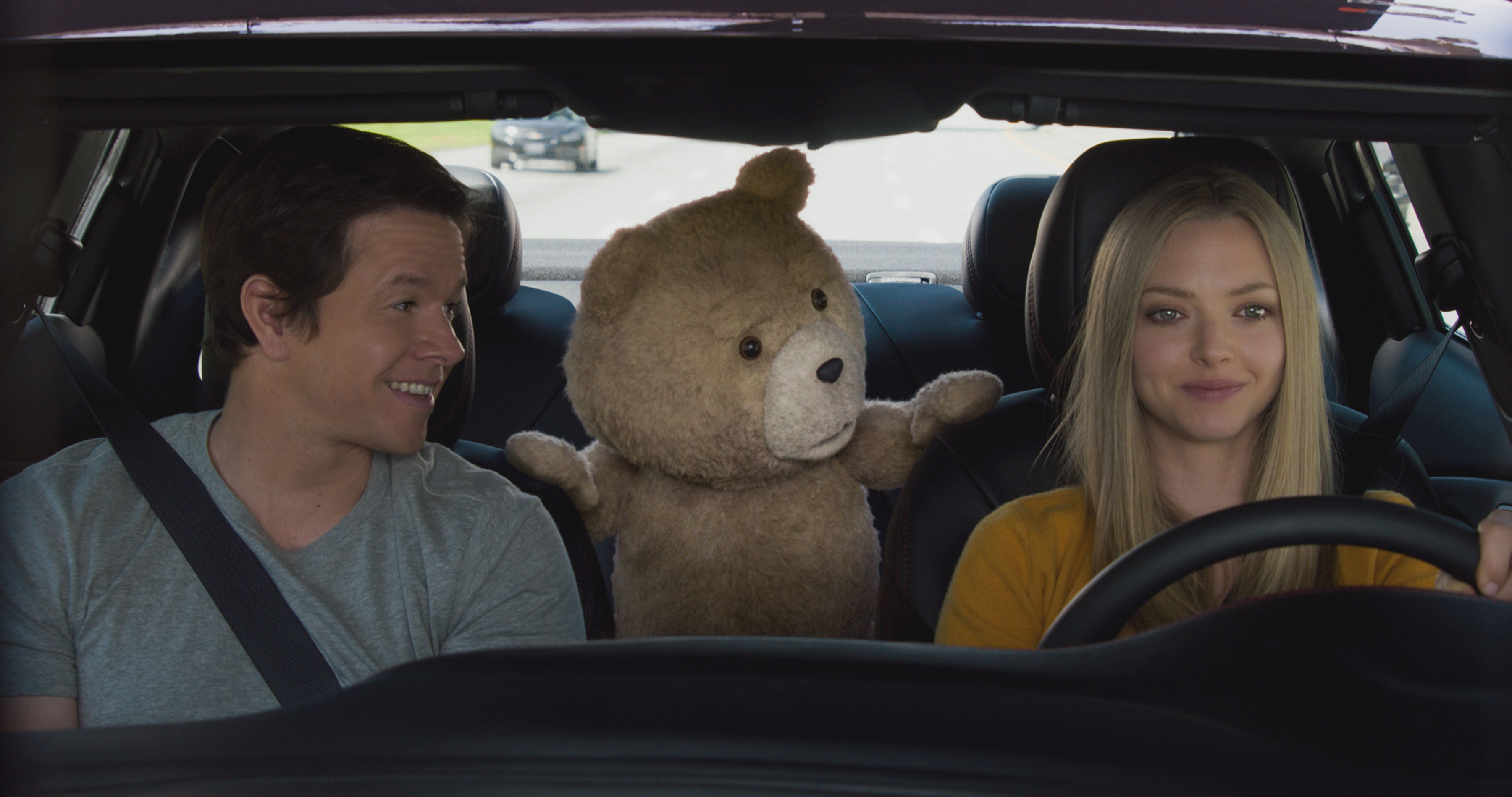
Mark Wahlberg is back as John Bennett, no longer in a relationship with Mila Kunis’ character from the first film. In fairness, writer-director Seth MacFarlane avoids taking shots at Kunis’ non-appearance (it’s probably the only easy route he sidesteps). The utility man voices Ted, whose attempt to start a family with his new wife Tami-Lynn (Jessica Barth) brings into question his humanness.

Though Ted 2 has a few — I counted three — genuinely guffawful moments, MacFarlane’s script just isn’t up to scratch. Often the best comedy outputs are those which pierce the soul of society, but there is hardly anything here that threatens to combine humour, intellect and relevance. In what feels like a hurried, anxiety-fuelled quest to toss lazy gags at an ideas board, gay sex jokes and clichéd story arcs become default bullseyes.

After much romantic toing and froing, MacFarlane realises that he needs to get his A-listers — Wahlberg and Amanda Seyfried — together pronto, therefore he has them literally smash through an isolated barn at night. What follows is a campfire sing-along (thankfully someone brought their guitar on the four hour road trip), a lot of deep eye staring, and a sleepover under the stars. Or, simply put, more dreary clichés than anyone can handle.

Going into Ted 2 you have to expect an onslaught of harshness because that’s the kind of comedy MacFarlane knows. It is true that comedy should be democratic in its aim, unafraid to throw punches at touchy subject matters in the right context. Whereas there is no place for a Bill Cosby quip in a frothy family piece, that echelon of joke can work in a smart, R-rated setting. But when the jokes aren’t funny — and they mostly aren’t — any protective mist dissolves and MacFarlane’s unfortunate scapegoats are left in full view.

Homosexual jests are a mainstay, and nerd culture takes a hit too. We even hear a particularly iffy remark about feeding a special needs child. Because it’s not funny, there is nothing to harness the underlying cruelty. Mainly however, MacFarlane’s script evades controversy and is instead just lazy. A scene involving Liam Neeson, where he tries to buy children’s cereal at the supermarket, embodies this staleness. Neeson, playing himself, doesn’t know if buying children’s cereal is legal, so he speaks in his recognisably hushed voice to avoid raising attention. It’s Liam Neeson though. He’s a tough guy yet he likes juvenile food. Get it?

Other tired gags include a FOX News parody that is only funny if you dislike FOX News (I giggled), and Ted insinuating he once spent time as a prostitute to make ends meet. When the film works in a comedic sense it uses fresher avenues as a basis, i.e. taking pot-shots at the probable woes faced by improv artists on a nightly basis. Even simple yet exquisitely timed irreverent humour can prove prosperous, such as an incident involving glass table. We just don’t get enough of these moments.

Ted’s height works for cinematographer Michael Barrett, who occasionally manages to shoot the bear from behind Tami-Lynn when the duo are conversing. Fitting. The film is technically well-made, and the computer-generated Ted blends effectively with his surroundings. MacFarlane, having juggled just about every other aspect of filmmaking, gives it his best as the voice of Ted, though why he chose a Bostonian Peter Griffin sound is still baffling.

As the returning foe, Giovanni Ribisi is the most enjoyable actor to watch. He plays the creepy Donny, this time employed by Hasbro as a janitor, his sly performance reminiscent of the scheming zoo keeper from Friends (which Ribisi also guest starred in). Amanda Seyfried is another engaging screen presence, playing against type — sort of — as a recreationally drugged up lawyer. She doesn’t have much to do; her law skills are increasingly sidelined with icky romance preferred. Mark Wahlberg is fine too but his elevated stupidity is less amusing this time around. Someone involved must have dirt on Morgan Freeman.

In an attempt to balance levity with gravity, meagre topical references to US race relations and minority struggles are somewhat invoked during Ted’s court battle. However the writing isn’t smart enough, and as such all we’re left with is a magical teddy bear using a lawyer to argue his humanity in court. Only when Ted presses his chest button and an automated “I love you” message rings out does he — and everyone else — realise he is a toy. It’s that kind of suspend-your-disbelief movie, but there is nobody or nothing to believe in. Thus attempts to satirically mirror weighty societal issues fall flat.

Picking out movie references passes the time, although you get the sense that these are part of an indecisive and fragmented script. There is Raging Bull — Ted wears a dirty vest at the dinner table as he engages in plate-throwing shouting match with Tami-Lynn; Jurassic Park — one of the film’s few humorous moments replaces amazing dinosaurs with amazing marijuana plants; The Breakfast Club — we see some sideways shuffling in the library as part of a musical montage; and Pulp Fiction — Ted and John are shot from below as the gawk at Tom Brady’s glowing genitals. In reflection, a ninety minute outing made up entirely of movie references would have been more fun to sit through.

Ted 2 is a generally humourless, invariably bland sequel though, one that will probably make a truckload at the box office (it hasn’t, reassuringly). “We’re giving you the tools buddy. Come on, make some fucking comedy!” Ted bellows at one point. If MacFarlane values personal artistic merit, he should heed his own advice.

Ted 2 - Cast

Images credit: IMP Awards, Collider

Images copyright (©): Universal Pictures

Spy (2015)

★★★★

Spy PosterDirector: Paul Feig

Release Date: June 5th, 2015 (UK & US)

Genre: Action; Comedy; Crime

Starring: Melissa McCarthy, Rose Byrne, Jude Law, Jason Statham

When James Bond saunters into town, his pristine Armani suit hiding any number of high tech weapons, hair nestled to the last strand, there often isn’t an awful lot of room for laughter. To solve: swap Bond for Melissa McCarthy and his Armani suit for her grey cardigan. Paul Feig’s Spy is many things, but first and foremost the writer-director has made a film that ridicules other films through sharp satire and vulgarity. It is ridicule born out of admiration, though mercy is somewhat lacking.

Susan (Melissa McCarthy) works for the CIA as Agent Bradley Fine’s (Jude Law) office-based earpiece. She is self-depreciating and lacking in confidence, which makes it easy for those who she obsequiously admires to take advantage of her skills. When Fine runs into trouble while trying to locate a nuclear device, Susan ditches her hesitant psyche and volunteers to observe potential bomb supervisor Rayna Boyanov (Rose Byrne) in the field.

Feig romanticises the spy genre before sticking a bullet in it. The contractual car chase sequence (there are two actually) matches slick low camera angles with precise steering, but is ultimately a nightmare for Susan who desperately needs a seatbelt. Later on a spot appears to be free at Boyanov’s poker table — of course the baddie plays poker — but Susan’s efforts to join are scuppered when she finds out the spot is reserved. The humour is fairly light-hearted, particularly during the first hour as the underlying stupidity of the genre unravels before our eyes.

Topical jokes about Jurassic Park bats eventually secede from the ongoing shenanigans, ironically at around the same time tough guy Agent Rick Ford starts rearing his hilariously bloated head. The influence of Jason Statham pours into the screenplay and the film thereafter becomes a hotbed of amusing profanity. Statham does a tremendous heightened impersonation of himself and steals the show in the process: eyes constantly bulging, words packed with punch.

He instigates a lot of “fucks” too — an additional thirty minutes and Spy might have given The Wolf of Wall Street a run for its sweary money. Solitary f-bombs increase in quantity as the film progresses, universally well-delivered but not as gratifying as Statham’s completely baseless, hyperbolic remarks (he claims to have survived a car crash on top of a moving train while on fire, or something). Ford is a reflection of the nutty stunts and brash egos prevalent throughout the Bond franchise, but he’s only one branch on the film’s satirical tree.

We travel with Susan to numerous glamorous cities, visiting Paris and Rome and Budapest, Robert Yeoman’s cinematography consistently painting each locale with a prosperous gloss. If this wasn’t so obviously a spy outing you’d be forgiven for confusing the whole thing with a holiday brochure. Early on, some cotton wool-wrapped admin staff marvel at all the incredible gadgets: hoverboards, Aston Martins, palm-sensitive weaponry. None of that for Susan though. She receives some security disabling aerosol disguised as anti-fungal spray.

Spy incorporates a large volume of female characters whose attributes range from quiet, to funny, to powerful, to supremely effective in combat. Rose Byrne hams it up with delectable aplomb as Boyanov. She’s a nefarious villain, indisputably, but she is also smart and sexy. Allison Janney snaps away as Susan’s boss, always ahead of the curve. Even as the goofy best friend, Miranda Hart gets in on the action. Susan is the antithesis of convention personified. She’s all of the above, but also kind and proficient when it comes to terminating bad eggs. McCarthy retains her Bridesmaids crassness and is such an affable screen presence.

The men don’t fair quite so well. They are smutty, degrading, idiotic and full of ridiculous non-truths. Good spies are actually bad spies, they’re apparently just good at being dicks. “I like things that are easy,” says Fine, referring both to the control he has over Susan and her penchant for making his job exceedingly less difficult. Peter Serafinowicz turns up the creep factor as chauffeur Aldo, essentially a reimagining of Bond with his sleaziest characteristics intensified.

At one point Janney’s character tuts, “Women,” and it feels like a nod towards the unfortunate consequences of institutional misogyny found within classically male-dominated workplaces — especially Hollywood, and spy films, where women have often been (and sometimes still are) defined as plot points rather than well-rounded characters. This time some of the men are purposefully shallow. They do have redeeming qualities — Fine isn’t really a rubbish person, he’s simply indicative of a groan-inducing fake macho culture — but here the gender roles are well and truly (and refreshingly) reversed.

The violence is comical, reminiscent of those splattery outbursts in Hot Fuzz. A tremendous kitchen fight scene spiritually resembles the supermarket brawl in Edgar Wright’s movie, with baguettes, lettuce and hand-piercing knives all used in an inventive manner. Not every gag hits the mark, especially ones driven by aimlessness rather than intelligent wit; Susan invades an outdoor techno entertainment event and chases around a slightly chubby Elton John-lookalike, with the whole endeavour feeling a bit lazy. That’s not the norm though. The film has a lot in common with the underrated Johnny English when it comes to silly comedy.

The plot gets increasingly convoluted as more deals are struck and more bosses are revealed, but that is sort of the point. It’s part of the overarching joke. You’ll see Spy for the humour, which is adept and plentiful. But the film also has its finger on the cultural pulse, ready to pull the trigger on irreverent gender roles and uneven social standards via a barrage of well-earned laughs.

Spy - Melissa McCarthy

Images credit: IMP Awards, Collider

Images copyright (©): 20th Century Fox