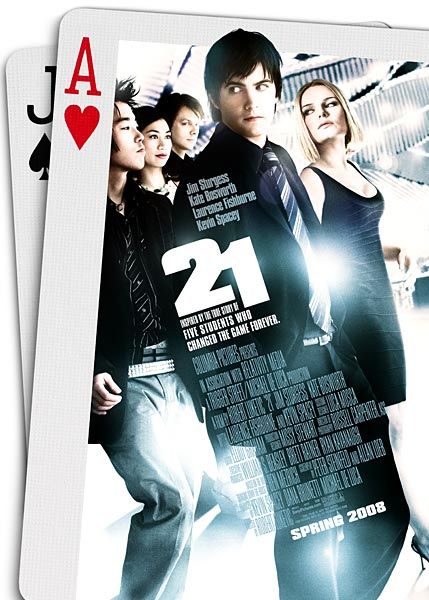
21 (2008)

★★

21 PosterDirector: Robert Luketic

Release Date: March 28th, 2008 (US); April 11th, 2008 (UK)

Genre: Crime; Drama; Thriller

Starring: Jim Sturgess, Kevin Spacey, Kate Bosworth

When it comes to playing cards there are two ways a trick can go wrong. A plethora of impressive skills, perhaps including some nifty sleight of hand, culminating in unexpected disaster. That’s the first. The finale is disappointing, but at least you get the temporary thrill of expectation. The second revolves around a bland illusion. When a trick hits all of the correct spots yet fails to sparkle. 21 is a bland card trick. Its deceptively pacey opening hints at promise however, when the hands have been laid and the chips counted, Robert Luketic’s film amounts to nothing more than a serviceable few hours.

Inspired by true events, 21 tells the tale of six MIT students and their advantageous teacher who coalesce together in order to pull off card counting blackjack victories. Ben Campbell (Jim Sturgess) is the team’s newest recruit, having joined in a desperate attempt to fund his Harvard dream. Though the Las Vegas voyagers get off to a successful start, rising tensions begin to chisel away at the group’s policy that denounces in-game emotion, and their cover is threatened.

If you struggled to follow any of the poker lingo in the opening paragraph, 21 will probably have you pulling your hair out after half an hour. (I’m almost bald now). The first few frames are snappy and strategy-led, though quite unnecessary given the content is repeated later on. In short, infrequent bursts, detailing the logistics of what our characters are doing is fine. The nature of the narrative needs some exposition to keep the film bubbling along. But we hear about rules and game play so often, and without vindication too. The film isn’t about blackjack — it isn’t about anything really — blackjack is simply a means to an end. That is how the characters see things (“It’s just business”) and it should be how we see them too. Unfortunately, writers Peter Steinfeld and Allan Loeb get too caught up in the explanation part that they forget about storytelling. It’s all a blur, really: stat crunching, pluses, minuses, attributing animals to numbers. Who cares?

This need to accurately relay the ins and outs of the gambling world leaves little room for narrative clarity, ushering forth an enormous helping of laziness. Coincidence is rampant from the get-go; “The Robinson is going to someone who dazzles,” a Harvard representative informs Ben, giving him his only motivation to cheat. If that wasn’t cheap enough, the interviewer goes on to tell Ben he needs more life experience. Money and life experience, huh? If only there was a quick-fix solution to both. Good thing our lead is intelligent as well, otherwise we’d be spending almost two hours — a ridiculously long run time — watching him pay his way to Harvard in a suit store. We never really believe in Kevin Spacey’s teacher by day, Vegas kingpin by night either. You’d think a flustered student would have ratted him out by now. Navigating the outing’s incredulity becomes increasingly arduous as the events dive deeper.

Kevin Spacey is pretty good though. Perhaps there is an element of phoning it in going on, but the actor’s charisma works wonders for his character even if it does accentuate the mundanity of those around him. His delivery strikes as quite perceptive on occasion. Presumably he is aware of the invariably groan-inducing dialogue. (“Ben, let the car drive by itself,” says Micky after hearing about his student’s attempt to create a self-driving car). The other performers tough it out, but they can’t overcome the bland material. Jim Sturgess is okay as the main player, never threatening to erupt from his character’s generic chains. It is worth pointing out Josh Gad, who is quite amusing as Ben’s obnoxious best mate.

The characters join the plot in the doldrums of commonality. We’ve seen it all before: the group member who succumbs to jealousy; the friend left hanging in the lurch; the suave leader with ulterior motives; the hard-to-get girl whose beauty matches her romantic indecision. Sure, 21 looks alright when the gang reach Las Vegas but even then there are so many aerial shots that we begin to wonder if the director simply has no idea what to do next. Since there is inability to conjure up any emotional connection, the filmmakers recruit surface elements to grab our attention. The bright lights and quick edits fail to yield pizazz, and even a fairly sparky soundtrack feels diluted amongst the mechanical air.

Laurence Fishburne shows up every now and again and effectively sums up the film’s failures. He plays casino security chief Cole Williams, and his moral stance is never really unfurled. Cole hates the incoming modernisation — he’s an old school guy, preferring film to digital — and the soon to be implemented facial recognition software is sure to leave him out of a job. The guy is a dick though, more or less working the antagonist role opposite our card counting clan. It is conceivable that Cole’s ambiguity is a reflection of dubious actions elsewhere, and gambling in general, but that is probably awarding too much credit to an otherwise uninspired production. So we don’t care about him.

21 is eternally insipid. Everything from plot to character diversity reeks of carefulness, even the group’s motto is tedious. (“Don’t get caught counting”). Kevin Spacey provides the occasional spark that the piece seeks dearly. It wishes to dazzle, some might say, but eventually peters out. I’m still trying to figure out why an underground gambling hub exists in a Chinese restaurant.

21 - Cast

Images credit: IMP Awards, Vulture

Images copyright (©): Columbia Pictures

Drinking Buddies (2013)

★★★

Drinking Buddies PosterDirector: Joe Swanberg

Release Date: August 23rd, 2013 (US limited); November 1st, 2013 (UK)

Genre: Drama; Romance

Starring: Olivia Wilde, Jake Johnson, Anna Kendrick

If I knew anything about alcohol, I’d compare Drinking Buddies to an ice cold brew: refreshing and momentarily absolving, but certainly nothing impactful in the long run. Guzzle too much and you’ll wake up with a dizzied demeanour, clutching at the faint straws of last night’s antics. You probably wouldn’t want to indulge these characters for too long either, else their credible charm will devolve into a more septic annoyance. Director Joe Swanberg finds an amiable balance though and subsequently delivers a film that is controlled despite its obvious air of improvisation. But much like that 11th beer, Drinking Buddies just doesn’t feel necessary. There is a gaping plot contrivance, one that’s really difficult to ignore.

As co-workers at a Chicago-based brewery, Kate (Olivia Wilde) and Luke (Jake Johnson) spend more time with each other than they do their respective partners. The duo even manage to squeeze evening bar gallivants alongside other staffers into their laid back schedules. A double date weekend away ushers in a few new home truths — at least one more than we’re already aware of — whilst also cementing the obvious, that these two should be a couple.

So why aren’t they? Drinking Buddies calmly shuffles along for 90 minutes and for at least 85 of those we ponder that exact sentiment. The notion promoting Kate and Luke as a terminally separate item is quite unbelievable, so much so that the amour scales eventually bowl over into absurdity. At its heart the film is a ‘will they, won’t they?’ story that seems destined for a conclusion within reach but beyond common sense. Kate and Luke are both drinkers, they’re both jokers, both laid back. The two even work at the same craft brewery. Better still, the duo’s respective partners are more suited to a relationship with each other as opposed to their current situation. Anna Kendrick is Jill, who likes to hike and muse over philosophical idioms. She’s not much of a bevy merchant. Inconspicuously, neither is Kate’s boyfriend Chris.

The plot, though straightforward and immersive enough, struggles to overcome the grandiose fabrication staring it right in the face. We spent far too much time frustrated, pleading with the characters to face the overt facts. Not frustrated in an enticing manner, rather, gratingly so. It is a shame because Swanberg — who also wrote, edited and co-produced — drives home a genuine sense of believability when it comes to his characters. We recognise the people and we like them, but their situation is borderline nonsense.

There is an impetus to improvise and, for the most part, a justifiable one. Although proceedings occasionally teeter down an overly spontaneous route where natural is irritatingly substituted in favour of awkward (a conversation during a mundane forest hike, for example) this mantra that puts the ball in the actors’ court is a welcome one. The indie tint is prevalent and actually very agreeable; visually, Drinking Buddies manifests as cosy if not at all flashy. Nor should it be flashy. The filmmaker squeezes a lot out of his $500,000 budget by tending towards simplicity, a decision that also coalesces neatly with Swanberg’s attempts to enforce purity.

Much of what is happening hinges on the talents of Drinking Buddies‘ cast and they universally deliver. Olivia Wilde leads as Kate, constantly dawning shades in order to convince us she is hungover. Kate could easily be unlikeable — she is sort of clingy and relentlessly fails to take control of situations — but Wilde’s effortless allure grants her unlimited lives. Stepping away from the wrestling ring for a moment, Jake Johnson turns up as the other half of the film’s dynamic duo, Luke. Johnson has a slightly easier job than Wilde but delivers wholesomely nonetheless; Jake is cool (he has a beard) and eternally collected. The flick is at its most mobile when these two share the screen, their chemistry constantly sizzling. Anna Kendrick is also thrown in at the deep end — Jill is the character who is sort of ruining what inevitably would be a picturesque relationship. Yet, we still get along with her. Kendrick’s stock is on a rapid ascent and it is clear why.

Simmering irrepressibly beneath the love quadrangle is alcoholism, a damning and serious issue. Though the tone fluctuates between frothy romance and light wit, the subject of alcoholism subconsciously rears every so often — it would, at the end of the day this is a piece about people working with drink and drinking after work — and Swanberg handles it well. He has to. Kate is definitely the serial gulp offender and it is consequently unsurprising that her personal life is the one falling apart. The director aptly manages said topic by raising awareness without stumbling into burdensome territory.

There is no avoiding the almost fatal error in Drinking Buddies’ narrative. The film’s strive to be authentic butts heads with its stubbornness when it comes to characters’ romantic tendencies. Put that to one side though, and Joe Swanberg’s light-hearted indierrific outing will certainly quench your thirst.

Drinking Buddies - Olivia Wilde & Jake Johnson

Images credit: IMP Awards, Collider

Images copyright (©): Magnolia Pictures

Filth (2013)

★★★

Flith PosterDirector: Jon S. Baird

Release Date: October 4th, 2013 (UK); May 30th, 2014 (US)

Genre: Comedy; Crime; Drama

Starring: James McAvoy

Filth might apply to the tumultuous antics of Jon S. Baird’s lead character, or it may simply be an indicator of Detective Bruce Robertson’s often questionable appearance. (And, likely, prevailing stench). Though, perhaps Filth’s title is a deeper reflection of one man and his increasingly deteriorating mental state; his conscious but not conscientious plummet down into the murky swallows of inhumanity.

James McAvoy is the star of the show, his portrayal of Bruce both admirable and disgusting in equal measure. But just as the (sort of) law man frequently gets sucked back and guzzled by the sewage of life during moments of potential rehabilitation, Baird’s film drowns in its own merits. Whereas individual factors are successful, the piece as a whole lacks continuity. It’s tough to hate a funny chap. It’s also tough to love a chap you hate.

Bruce Robertson (James McAvoy) is as corrupt as that virus ready to spring from the latest suspiciously titled email in your inbox. He is deceitful, devious and dishonest, but only he knows that. Which is a real plus, given Bruce has his eyes firmly glued to the new detective inspector position available. On the downside, the Scot’s relentless convolution of kindness has itself convoluted Bruce’s mental capacity. In other words, he could be on the verge of a massive breakdown.

Filth is one for those fond of the Trainspotting genre — heck, there is even a not so subtle nod towards said film. (When there is a toilet around, “Don’t fall in.”) It is based on another novel by Scottish author Irvine Welsh and retains the same out-to-offend sheen as was merrily paraded throughout Trainspotting; though one would imagine if you’re watching this you’re probably part of the target audience and therefore unlikely to be offended. Our lead character this time is a right git. Bruce’s morning cereal is a bowl of cocaine and vodka, and he’ll only sleep with someone if she’s the wife of a mate. His moral compass is infinitely spinning out of control. Most importantly, Bruce knows how to play the game. And we sort of morbidly appreciate him for that.

It helps that he is quite amusing. The first we see of Bruce is a baggy-eyed figure striding down an Edinburgh street, fingers pressed firmly in his ears as bagpipes sound. “There’s no place like home,” he retorts and from then we’re somewhat disagreeably cajoled under his unflattering spell. As the man wearing Bruce’s stinking clothes, you would inherently expect James McAvoy to play a huge part in that enticement and he absolutely does. He fits into Baird’s adopted world perfectly, lingo down to a tee. Moments shared with Jamie Bell veer close to hilarious with one particular spiel near the beginning particularly well executed, and the actor’s disparaging glances are especially sterling. McAvoy’s stock in Hollywood continues to rise and Filth is yet another effective vehicle shepherding his talents.

Almost as suddenly as they explode awkwardly on screen, the laughs are invariably substituted for a hodgepodge conglomeration of nonsensical dream sequences and scenes intended to be wrought with emotion. There is a wholly serious edge going on here, something more sinister, but these junctures of sincerity are undercut by the weirdness. Jim Broadbent shows up as an aloof psychiatrist armed with creepily elongated vowels and to the fanfare of A Clockwork Orange-esque melodies. His appearance is funny when it shouldn’t be as it represents Bruce’s mental implosion. Surface interactions with fellow officers and other sadistic actions are amusing because, at these precise points, we are only aware of Bruce as a dodgy fellow. As proceedings dissolve into his frail psychological state, laughter isn’t really applicable and subsequently the tone jars.

It is a shame too, because McAvoy makes these disturbing moments work to an extent. A scene between the actor and Imogen Poots is the most poignant, and best, of the film but there is a danger that some impact is lost due to this tonal inconsistency. It also becomes challenging to stick with Bruce. In one sense, his unrepentant demeanour when he knows his actions are driving him into the ground is quite tragic. But then we struggle to care because the guy is a dick. The character’s ambiguous moral standing feels more like an excuse than a justification. At one point he stares into a mirror and sees himself as a pig — Bruce knows he is a horrible person and the film should have played more on this rather than insisting on peculiarities.

The film is a conveyor belt of British screen savvy. Eddie Marsan gets the most time as part of a supporting cast accommodating the likes of Martin Compston, Shirley Henderson, Joanne Froggatt, Katie Dickie and Iain De Caestecker. Imogen Poots is criminally underused as one of Bruce’s promotion chasing enemies and, as Bunty, Shirley Henderson is essentially playing an X-rated Moaning Myrtle. It is a packed, if somewhat slightly ineffectively utilised, cast.

Bruce’s mantra is simple: “Because ah can’t fuckin’ help ma self.” In some ways director Jon S. Baird shares a similar sentiment, one that contributes as much to the film’s success as it does its downfall. Filth is funny, you’ll giggle often. However we’re also encouraged to chuckle at less appropriate moments and, despite the excellent efforts afforded by James McAvoy, this over-eagerness greatly hampers the piece.

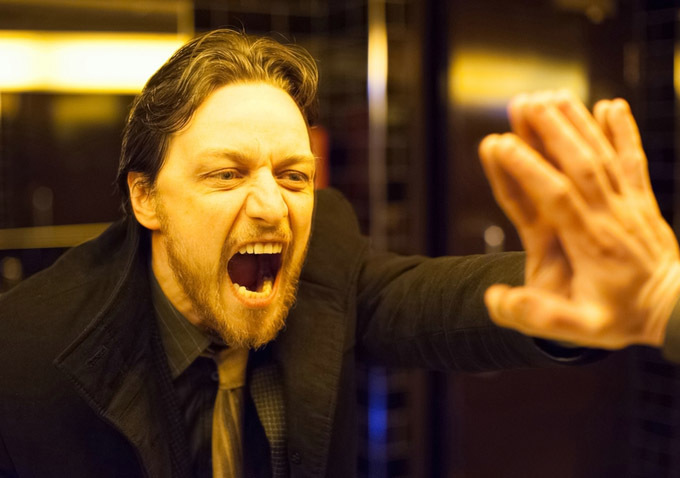
Filth - McAvoy

Images credit: IMP Awards, Collider

Images copyright (©): Lionsgate

Only God Forgives (2013)

Only God Forgives PosterDirector: Nicolas Winding Refn

Release Date: July 19th, 2013 (US limited); August 2nd, 2013 (UK)

Genre: Crime; Drama; Thriller

Starring: Ryan Gosling, Kristin Scott Thomas

When Gareth Evans’ The Raid hit cinemas a few years ago, the film brought with it an urgent sense of bludgeoning violence and hard-hitting combat. Unflinching and at times eye-scrunching, The Raid was also heralded as a bloody masterstroke. The fights were astoundingly well choreographed and, though it wasn’t the most prominent element, the story meant something. Rightly, Evans’ film felt the accommodating brunt of financial and critical adulation, ushering forth a sequel.

Only God Forgives is the antithesis of all things great about The Raid. It fails to yield any semblance of narrative, instead opting to parade a bunch of hateful characters throughout a maze of disorientating sequences. And it is brutal, gratuitously so. The unsubstantiated violence is the worst part.

Julian (Ryan Gosling) runs a Muay Thai club in Bangkok, but uses it as a veil to cover his successful drug smuggling business. After his brother is savagely murdered, Julian finds himself caught up in a storm of hate and vengeance. His spiteful mother Crystal (Kristin Scott Thomas), having made the trip to Thailand on the back of her son’s death, orders Julian to seek out his brother’s killer and attain revenge, a demand the American expatriate isn’t too overjoyed about.

Unlike in his previous disparately blood-fuelled outings Valhalla Rising and Drive, director Nicolas Winding Refn follows a half-fulfilled mantra here; one that pits grisly style over any form of substance other than the red stuff. The chain of grotesqueness begins almost before the opening credits, as we see murder compensate for more murder. Whereas the likes of both Valhalla Rising and Drive relayed a method to their differing levels of violent outburst — a curious soul and a pulsating beat, respectively — Only God Forgives squanders any opportunity to inject a sense of purpose. Essentially, it is violence for the sake of violence. There is no prevailing message. At one point Kristin Scott Thomas’ character despicably murmurs, “I’m sure he had his reasons,” when she catches wind of a particularly awful revelation. I’m sure Refn has his reasons too, but they are few and far between here.

When the film is not painfully boring it is an uncomfortable watch for all the wrong reasons — certainly, it’s not distressing in an adrenaline-driven way. This is partially due to the uncompromising and baseless brutalities on show, but it is also down to the palette of characters present before us. Either we hate them — and we hate most of them — or they are treated woefully. The females either represent a gaping hole searing through the heart of humanity (in the case of Crystal), or they’re token prostitutes (in the case of everyone else). Refn is painting just one picture that seeks to represent just one slice of humankind, which is fine. But must that picture really be as degrading to women as this is?

The guys aren’t let off lightly either. Ryan Gosling plays Julian, perhaps the least reprehensible of the lot. He has something of a moral backbone, one that stops short of unjust killing. (We’re into that territory, where murder must be separated into unjust and “ach, well maybe he deserved it”). Instead Julian funds his tumultuous conscience by running a drug smuggling operation and, more or less, employing a woman to be his puppet. The character stuffiness does absolutely nothing for Gosling. He’s trapped in a body too similar to the driver in Drive: emotionless, straight-backed but this time without that unorthodox charisma. Despite portraying genuine evil Kristin Scott Thomas is at least afforded the ability to be the only fluid person stuck among a meandering rabble of perceived luminaries. Crystal is a horrible person but she does move in a three-dimensional manner. The rest could pass for robots.

Refn’s customary art house injection arrives by way of the film’s visual appeal. Only God Forgives tries to manifest as a nifty, slick-looking film and cinematographer Larry Smith actually performs commendably. It does look good. Vogue photo shoots also look good, which is exactly what this is — a 90-minute photo op with a Halloween theme set in Thailand. The camera constantly looms around with precision, latching onto folk who are often standing as if giving prior notice; poised, posing and ready for their cover shot. Superficiality reigns supreme, a notion backed up the incessant air of boredom disguised as arty silence.

Aside from the early gore fest, the picture’s opening thirty minutes are bereft of any intrigue, subsequently setting the desolate tone moving forward. Ryan Gosling stares blankly into space. Characters walk so slowly. The violence might be gratuitous, but this carry on is borderline self-indulgent. Even the ambient music — an element Refn often gets spot on — is a little underwhelming. It certainly doesn’t make staring at wallpaper any more interesting. (Though staring at wallpaper might be more interesting than Only God Forgives.)

Nicolas Winding Refn tries to combine the successful strands of two previous outings — Valhalla Rising’s disconcerting climate and Drive’s brute force — yet ends up with the worst possible result. If we are taking this outing as a primary source, attributing Refn with a bleak view of humankind is probably fair. We’re all unmerciful maniacs.

Apparently only God forgives. Well hopefully God won’t see this, else we’ll be living in a world without forgiveness.

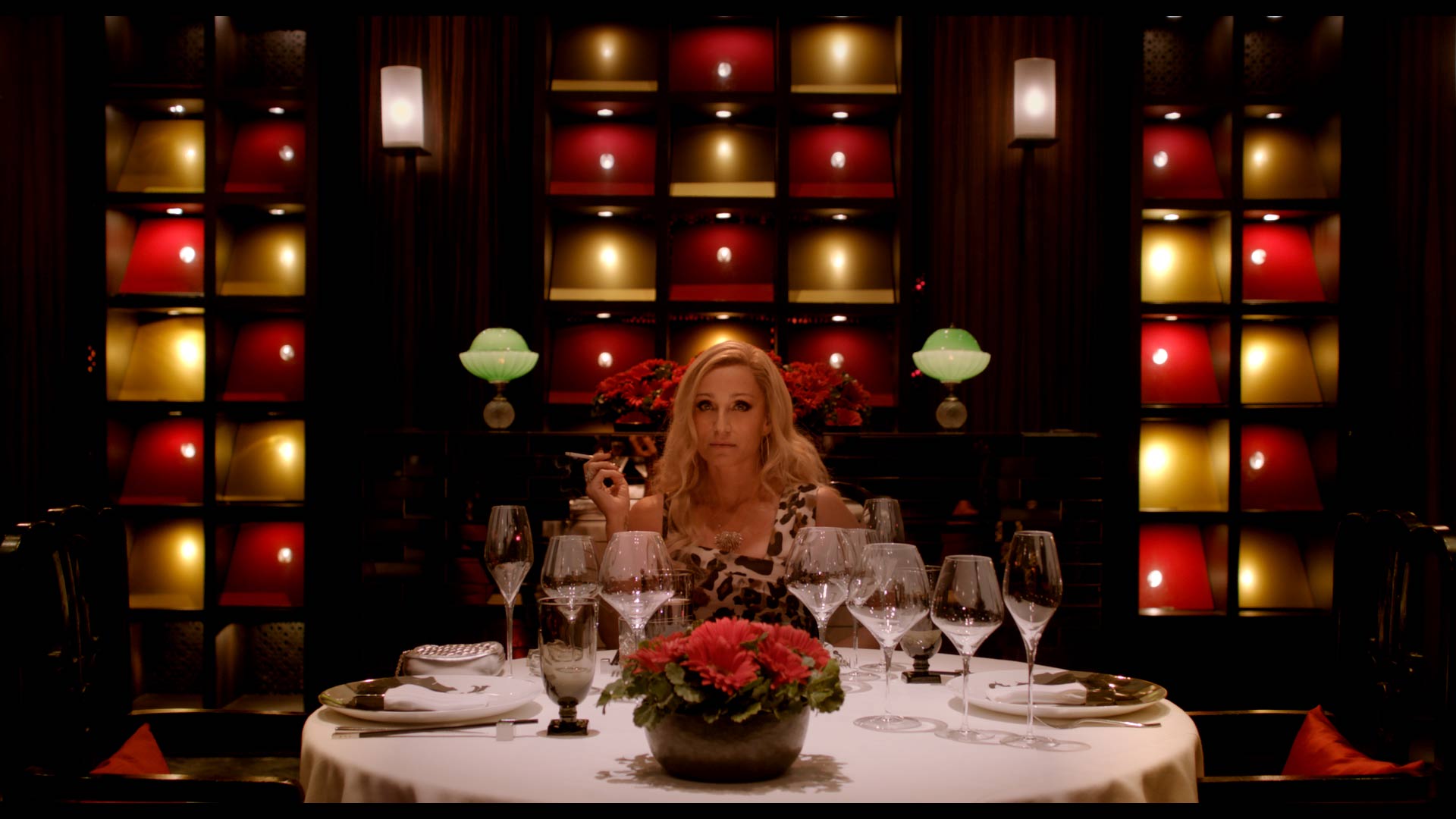
Only God Forgives - Kristin Scott Thomas

Images credit: IMP Awards, Collider

Images copyright (©): Radius-TWC, Lionsgate

Runner Runner (2013)

★★

Runner Runner PosterDirector: Brad Furman

Release Date: September 27th, 2013 (UK); October 4th, 2013 (US)

Genre: Crime; Drama; Thriller

Starring: Justin Timberlake, Ben Affleck, Gemma Arterton

At some point near the beginning of Runner Runner, Justin Timberlake’s snappy student Richie Furst says, “Make no mistake, if you’re betting something, you’re gambling”. In this solitary sentence the character sums up the film within which he aimlessly meanders. It’s such a throwaway line, one that is so obvious it becomes irrelevant. Much like the whole of Brad Furman’s utterly conventional outing. But more than that, the words resonate with truth. Runner Runner isn’t betting on anything other than the knowledge that its audience is well-versed in poker lingo. There is no gambling going on here, only playing it safe. And safety is really boring.

Having blown his big break in Wall Street, Richie Furst (Justin Timberlake) is now ploughing his way through college. Unable to afford the master’s jump, Richie gambles all of his savings in a game of online poker and comes up short. Though, it turns out he’s been conned by Ivan Block (Ben Affleck), a rich business tycoon whom Richie endeavours to tell off in Costa Rica.

For a film centred on gambling — a concept pillared by unpredictability — Runner Runner is endlessly predictable. It relies on cheap normalities more often than not, and subsequently fails to sizzle in any way. Proceedings kick-off with yet another montage comprised of news reports, an introductory method that is becoming increasingly common in contemporary cinema. It’s too easy. Writing partners Brian Koppelman and David Levien contribute a screenplay bereft of originality and stained by familiarity; we watch the typical story of a guy with a gift (this time it’s intellect) who decides to throw everything away by dabbling in unethical stuff. Where does this bustling need to be edgy come from? A troubled parent of course (this time it’s the father), a dad who lived beyond his means and not with his son’s best interests at heart.

We struggle to engage with the film then, primarily due to the trampled road down which it blindly ventures, and behind many better pieces that have gone before. Timberlake himself has starred in a more focused slick-fest, The Social Network, a flick that Runner Runner seemingly aspires to be. That film had Aaron Sorkin’s witty script and David Fincher’s scintillating direction, whereas this would claw at the chance to boast half of the aforementioned duo’s inventiveness. Unless we’re quoting lines to demonstrate an incessantly plodding nature, the dialogue is severely unmemorable. It is a shame too, for a more enterprising approach might have made this a sleek addition to The Social Network or even Ocean’s Eleven brand. Yet, it’s not even on 21’s table.

And it is not as if the filmmakers aren’t trying to add a stand-out quality, they just frequently miss the mark. Richie wanders into a nightclub fairly early on where there is an obvious attempt to infuse events with style. Camera glued to the travelling student, an array of luminous colours give way to a myriad of energetic tunes. What should be glossy instead feels forced and unnatural. The moment is too music video-esque. In fact the whole presentation is laced with this sense of unimportance — chopping a few scenes wouldn’t make any difference. Nor would the addition of Kanye West miming lyrics to his new song.

When we’re not being bogged down by uneventful narrative, we’re still challenged to fend off relentless onslaughts of casino lingo. The entire opening poker scene is a verbal tennis match, Timberlake constantly serving to our body with language that is either too difficult to grasp or too boring to care about. Furman and company revel in the speech. As do their characters, who collectively spend large periods of time explaining the plot and, in doing so, don’t really condone gambling. Just the illegal side of it. Betting is an inherently negatively regarded activity, which presents a problem in so much as there is a resultant air of deceit that surrounds all of the characters from the start.

Ben Affleck is the one who phones it in most often. And who can blame him? Post-Argo, and probably still basking in that rich, dense frame of mind during filming, it is no wonder that he gives off the impression of someone memorising and then robotically regurgitating lines. He plays Ivan Block. Block calls his boat ‘The House’ because “the house always wins”. He’s a millionaire. Even the imperiously charismatic Justin Timberlake’s attempts to overcome the dreary script are unfounded. His character is a bit rubbish too — Richie is so desperate to gain a master’s degree that he gambles away all of his tuition money and then leaves college forever. When the filmmakers remember she is on the payroll, Gemma Arterton appears. Like the others she’s much better than the stinker of a role afforded to her, but Arterton does make an effort and is quite amiable.

Runner Runner is an intuition vacuum. By the time any shallow complexities begin we’ve been too dazed by convention and a superfluous insistence on casino-tongue to figure anything out. It’s not necessarily a badly made film, or even a bad film at all. It’s just really dull.

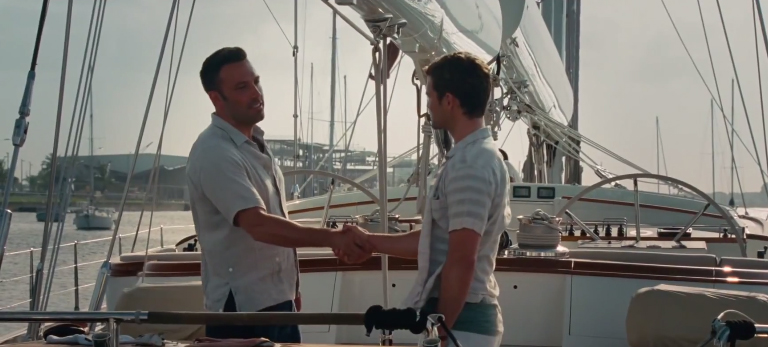
Runner Runner - Ben and Justin

Images credit: IMP Awards, Collider

Images copyright (©): 20th Century Fox

Out of the Furnace (2014)

Out of the Furnace PosterDirector: Scott Cooper

Release Date: December 6th, 2013 (US); January 29th, 2014 (UK)

Genre: Crime; Drama; Thriller

Starring: Christian Bale, Casey Affleck, Woody Harrelson

Scott Cooper’s film tells the story of two brothers left short-handed by the frankness of life, but more specifically it’s a look into the psyche of one sibling, Christian Bale’s Russell, emotionally shot and physically trapped. Out of the Furnace itself received a rough ride upon release. The cast, wasted, supersede the inefficiently constructed narrative, seemed to be the most common argument. It’s too slow, too poorly paced. Quite the opposite. The film is marvellously paced and the narrative is steeped in authentic poignancy. Sure the screenplay would benefit from a dose of balance, but Out of the Furnace is not a missed opportunity. It’s a really, really good piece of cinema.

A heart-on-sleeve type of guy, Russell Baze (Christian Bale) works three jobs. Aside from earning a meagre living at the nearby mill — the same one that has rendered his father incapacitated — Russell cares for his ailing dad whilst also attempting to keep his younger brother’s mind straight. Rodney is a solider whose deployments to Iraq are as scattered as the head on his shoulders. The brothers just about get by, but their lives are quickly shattered when a horrific accident suddenly opens demon-infested floodgates.

Realism seeps into every frame, every projected wooden crevice. We’re slap-bang in the centre of a hereditary coal and steel town, North Braddock, Pennsylvania and the camera rams this home. A huge factory is often shown looming in the background, the greyish smoke pillowing skyward a constant reminder of toxicity and waste. It hosts the eponymous furnace and endeavours to promote the air of struggle of its nearby citizens, but also their honest willingness to work. Already we’re drawn to Russell who embodies this mentality, a grafter by trade. Masanobu Takayanagi’s cinematography is musky — you’d be forgiven for any eye-rubbing to remove dust — and perfectly captures the mood of the town; filled with hard labourers and harder folk. It screams ‘get me out of here’.

Russell is a hearty soul, a trait that beams as he interacts with those close to him. Lena is his girlfriend at the beginning and their playfulness is infectious. Uncle Gerald, or ‘Red’, is another whom we watch engage positively with Russell. But it’s the latter’s relationship with his wayward brother Rodney that’s most genuine. They share an at times awkward yet always nurturing bond, one that is believable partly due to how Bale and Casey Affleck play it, but we’re also convinced by the harshness of reality and their subsequent eternal earnestness as a duo. Not much is going according to plan but these two remain decent guys with admirable qualities who are not impervious to the odd mistake. (Some mistakes very serious — Scott Cooper doesn’t shirk away from complexity).

Existing subserviently in manner but not meaning to this sibling relationships is Russell’s own personal battle with day-to-day existence. He’s mentally more mature than his brother; at one point it’s suggested that Rodney “might be safer over in Iraq” than wandering the chalky streets of North Braddock. The screenplay simmers patiently, as does Cooper’s precise direction, allowing us to connect with Russell and his unluckiness. But even as pillar after pillar collapses in the manual worker’s life, we’re afforded the chance to acknowledge the sincerity of each problem because they’re all completely applicable within the prevailing context.

In Russell, Cooper revives the teetering tragedy of Crazy Heart’s Otis Blake. In some ways the two mirror each other: in their jobs, slaving away without much financial reward; in their protectiveness, one for a son he never had and one for a brother he fears losing; in their mentality, both close to defeat yet deeply defiant and inspired by externalities. Out of the Furnace is the director’s second character study of two and is equally as effective as the first. The camera likes to linger on glances and facial expressions — not Russell’s exclusively — and so we’re able to feed off of each characters’ strained thoughts and the cast’s wholesome portrayals.

Christian Bale does for Casey Affleck here what Mark Wahlberg done for Bale in The Fighter. He underplays the performance, clearing room for Affleck’s hysterics. These range from anxiously proud to uncomfortably harrowing, but are consistently sterling. Bale’s is certainly the toughest role because restraint is absolutely key. He nails it. However, as Rodney, Affleck is stand out performer. Which is some feat considering the truly excellent efforts relayed by the remaining cast members. Woody Harrelson appears as Harlan DeGroat, an invasive and psychotic drug dealer whom Rodney owns money to. Harrelson’s recruitment is a great choice, his character a real baddie. A grizzled, rugged no good son of a bitch. Zoe Saldana, Forest Whitaker and Willem Dafoe complete the star-studded selection and the trio each donate valid performances.

If there is a fault to be picked and presented, it’s the unfortunate imbalance in narrative. The runtime is fine at almost two hours, but over half of that is enlisted as set up leaving only around 50 minutes for retaliation. The problem is not catastrophic — it likely would be in lesser hands — but it does dent an otherwise foolproof outing, incurring unevenness as opposed to equity. In an attempt to disguise the issue, we’re subject to interplayed cuts between scenes that actually do end up harmonising well together.

Out of the Furnace is another winning film from Scott Cooper. It’s worth pointing out the effective soundtrack that shifts between a Western twang and a mellow ambience, and one that is capped off by Pearl Jam’s Release. For that’s what the piece is all about, release. A very sombre picture with sporadic healing tendencies — though not enough — it is the recognisable mundaneness that really hits home.

Rating: 4 (White)

Out of the Furnace - Bale

Images credit: IMP Awards, Collider

Images copyright (©): Relativity Media

Dawn of the Planet of the Apes (2014)

★★★★★

Dawn of the Planet of the Apes PosterDirector: Matt Reeves

Release Date: July 11th, 2014 (US); July 17th, 2014 (UK)

Genre: Action; Drama; Science-fiction

Starring: Andy Serkis, Jason Clarke, Gary Oldman, Keri Russell

It’s always darkest before the dawn, or so the saying goes. Well, if Matt Reeves’ film is the culmination of a dawning ape species, then said saying is spot on. Dawn of the Planet of the Apes — we’ll stick to Dawn from now on — is frequently unsettling. Coalescing magnificently with arguably the best-looking visual palette since Middle Earth (every raindrop on fur is accounted for) is a story that sizzles with poise and acute direction. When the lesser of the film’s two halves is still approaching five stars, you know there is a winner playing out on screen.

Rise was a deft and engaging prelude that focused keenly on human-animal relations and biological moralities, but Dawn is more than that. Those traits are still prevalent of course, however Reeves invokes an emotional core by affording his actors the chance to tell a story. And whether it is the ping of Michael Giacchino’s score or the rugged outlook purveyed by Michael Seresin’s cinematography, it’s clear we are back in familiar territory. Apes fans rejoice. Apes newbies prepare. All eyes on the next branch, this one is swinging straight back to 1968.

A decade has passed since the fall of humankind due to viral infection. In San Francisco, a group of seemingly immune people have merged in an attempt to reignite the flame of civilisation, but this uprising is severely threatened when a few of the survivors inadvertently set foot in a developed ape colony. Caesar (Andy Serkis) is colony’s conscience-driven leader who hopes for peace, something that the two separate cultures may never be able to attain.

Fraught with tension, Dawn relentlessly teases a monumental clash. The contrast between two societies — apes and humans — is startling yet not unfamiliar. For better or worse, we watch as a total role reversal unfolds: people live hidden away with basic supplies, whereas apes roam landscapes carrying out practices akin to those originally implemented by human beings. They hunt. They safeguard. They educate. They even wear protective face masks during birth. Armed with subtitled grunts filling in for words, the opening quarter of an hour details this thriving lifestyle as it lulls us into a rhythm of admiration. The following gunshot that dully interrupts with immediacy not only acts as a wedge between life sources, it also represents their inability to coexist.

It takes human intervention to negatively hamper the structure of being that has been mustered by these hominoids. Dawn, then, is a cautionary parable about the disease of humanity; once we infect, we destroy. Reeves tactfully employs this overarching theme — the various characters on both sides of the Golden Gate Bridge openly discuss the merits and demerits of war, necessary primarily due to our own invasive attitude. (“Fear makes others follow.”) As the analysis plays out on screen we’re challenged to weigh up combat as a fundamental prerequisite. Is it? Reeves is firmly in the camp that denounces war and its resultant mess, and it’s hard to argue when his presentation is so compellingly and affectingly relayed. No issues arise when the script occasionally hints at predictability because of the hearty motifs and strands that weave throughout.

In fact, Dawn is all the more interesting because it is about the apes. They are the beginning, middle and end. Unlike Rise — which rightly honed in on human beings and their attempt to control animals — this second instalment sheds more light and dark on ape life. Given this, we’re allocated far more time to see the intricacies of the primate’s in-house relations and potential fallouts. And so, Andy Serkis, the spotlight is yours. The actor famed for his consistently dazzling motion capture acrobatics once again vaults into the skin of Caesar, and subsequently groans out a career defining performance. Each sinew matters because Serkis is inclined to make each sinew matter. Though he plays Caesar with air of perpetual dominance (“Ape not kill ape”) Serkis’ humility shines through. To many he’s simply a voice with no face, that guy who done the thing as Gollum. I certainly wouldn’t begrudge any formal recognition headed his way. What he does is acting, plain and simple. Utterly brilliant, too, and this role is his reward. It’s also ours.

Serkis’ powerful performance is made all the more tantalising by way of Dawn’s visuality. The film looks incredible. Motion capture settles into its surroundings as well as ever and the attention to detail routinely impresses. The apes might as well be authentic, drafted in from Hollywood’s premier acting zoo. San Francisco manifests gloomily, mirroring the prevailing mood of both the narrative and the characters involved. Reeves also harkens back to the tremor-like scariness of two previous outings, Cloverfield and Let Me In, by letting proceedings breathe a foreboding breath or two — the film’s curtain jerker is a genuinely ominous hunting scene. Mature heads also prevail when it comes to violence, which isn’t common, therefore smatterings of red spring with greater gravitas.

Toby Kebbell is Koba, Caesar’s second-in-command. The Brit’s mannerisms are so convincing that you’d be forgiven for thinking Koba is another Serkis creation. On the human front, Gary Oldman’s Dreyfus is the most captivating character. He’s a staunch defender of stretching ethical limits in order to prevail and, despite being fed a little less screen time than other major players, Oldman effectively channels his persona’s mindset. Jason Clarke lands the James Franco role as the human whom Caesar develops a bond with. The Aussie’s efforts are admirable and, more often than not, sufficiently potent.

Dawn, then, is one of 2014’s best films thus far. This reboot of the Apes franchise may yet prove to be a mightily formidable cinematic set once complete, but for now we can at least bide our time equipped with the knowledge that, as a standalone piece, part two has already achieved a status of grandiosity.

Bravo.

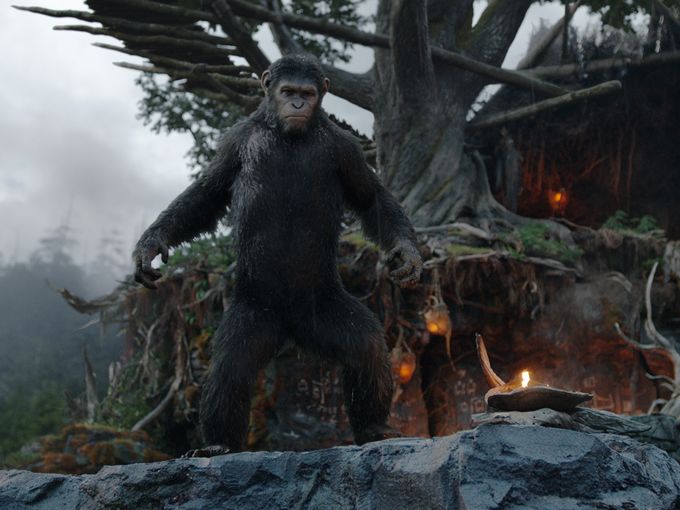
Dawn of the Planet of the Apes - Caesar

Images credit: IMP Awards, Collider

Images copyright (c): 20th Century Fox

The Dirties (2013)

★★

The Dirties PosterDirector: Matt Johnson

Release Date: October 4th, 2013 (US limited)

Genre: Drama

Starring: Matt Johnson, Owen Williams

His intentions are clear. Director Matt Johnson wants to create a film that tackles one of society’s most abhorrent problems, school shootings, in a way that is both original and impactful. He presents his piece as a documentary within a documentary; he and co-star Owen Williams’ first names mirror those of their respective characters; Johnson even looks to include elements of comedy, perhaps hoping that these moments will divert our attention away from more pressing matters just long enough for the film to cushion itself with added shock. None of it works. The Dirties severely lacks coherence, but that’s not the primary nuisance. Johnson and company probably don’t set out to be insensitive. Unfortunately, their film teeters unceremoniously along that edge.

A couple of high school mates decide to make a documentary about The Dirties, a group of bullies who terrorise their school. Matt (Matt Johnson) and Owen (Owen Williams) bear the brunt of The Dirties’ abusive behaviour and, when their film is ridiculed in class, one of them resultantly gains a dangerous thirst for revenge. The other, though, becomes increasingly wary of and alienated by his friend’s behaviour.

There’s only one endgame here, and we know of it after five minutes. In truth, we’re fully aware before the film even starts. It doesn’t matter where Matt and Owen are — in class, at a secluded shooting range, around a bonfire — the only notion that consistently wears on our mind is gun violence. More specifically, gun violence in school. An at times imperiously weighty subject, school shootings have become one of humankind’s most despicable and perplexing habits. It’s a clichéd proclamation but, in an age when trolls linger all over the internet and online connectivity dominates our lives, school is supposed to be safest place for a child. There’s absolutely no getting away from the horrible concept, particularly when it’s regularly regurgitated on screen. The Dirties fails for that reason. The film takes something bluntly tragic and tries to be overly meta. Subsequently, plot holes appear quicker than a bee to honey, devouring any potential progress. There’s too much going on — are we supposed to take the film as just that, an overtly fictional piece based on true events, or is it attempting to be real life, paraded in a false documentary format?

Seemingly, Johnson endeavours to veil the piece as the latter. Shouldn’t it be a tad more serious then? Of course, its central topic is one riddled with sombre importance, but this is something The Dirties struggles to maintain. This absence of earnestness is down to how the film is presented, often flavoured by comedy and exotic normality. The cameraman — who we’re essentially meant to discard as a credible human being — follows Matt and Owen around persistently and becomes an agent of humour. At one point Matt passes over the popcorn in a scene that seeks to induce amusement but instead only serves to remind us of the film’s inconceivability and, therefore, crassness. When Johnson recalls the gravity of his material, he reverts to a gratuitous display of foreshadowing involving a Columbine book. We see this book more than once, its third appearance unsettling for all the wrong reasons.

Kevin Smith, whose production company was involved in the release, referred to this as “the most important movie you will see all year”. Smith owns and runs a comic book store in his spare time and his connection to The Dirties is apt given the film’s numerous movie buff references. I get a kick out of correctly identifying film trivia as much as the next nerd, but that sort of thing shouldn’t be on the menu here. By this point nobody really seems to care though: the filmmakers start adjusting rules to suit their own needs rather than those of the subject at hand. “Out of respect for the victims and their families, the footage has not been altered in any way,” reads a statement at the beginning. Numerous musical overlays suggest otherwise.

Having looked at it from a real life documentary perspective, let’s now consider The Dirties as a fictional account. Which it is, obviously. The screenplay is littered with inconsistencies, none more prevalent than our two main characters. Even though one of them eventually snaps, we never get into the nitty-gritty of his transformation. In reality, both boys relay fairly consistent characteristics throughout: quite cheery and upbeat despite the bullying. The biggest nonsense of all though, is the aforementioned cameraman’s role. (Or cameramen — it’s possible there are two males). Aside from getting away with always filming during classes, the operator(s) does absolutely nothing to prevent the inevitable atrocities. Devoid of explanation, this is completely unforgivable and lazy on the part of both Johnson and his co-writer Matthew Miller.

Besides, as simply a film, The Dirties is actually quite boring. For the most part the lives of our leading protagonists aren’t all that eventful. Interactions with girls turn out to be mellow rather than awkward, and they both get along amiably with the teachers at their school. Humorous injections reverberate out of rhythm too. There’s no air of disquieting callousness — the subject matter itself is intrinsically worrisome, but the way it’s communicated isn’t.

The Dirties tries too hard to be different when all its topic of debate warrants is precision. In the end, our feelings on school gun violence are exactly the same as they were when the runtime set off: shootings are horrifying and deeply unsettling. Our feelings on overly ambitious pseudo-documentaries shaped flimsily around said hard-hitting matter? In sharp decline.

Though there are better, more thought-provoking films out there, it is worth commending Matt Johnson for his willingness to engage in such a polarising and difficult issue, particularly given this is his first jab at directing.

The Dirties - Owen and Matt

Images credit: IMP Awards, JoBlo

Images copyright (©): Phase 4 Films

Annie Hall (1977)

★★★★★

Annie Hall PosterDirector: Woody Allen

Release Date: April 20th, 1977 (US)

Genre: Comedy; Drama; Romance

Starring: Woody Allen, Diane Keaton

Films are often categorised under the “escape” section of our everyday lives. We watch to disassociate with reality for short bursts of time, to be present only within the context of the tedious romcom playing out on screen. Or the spectacular science-fiction trek that hurtles us towards another planet. Or the not-so-scary slasher flick we’ve seen a hundred times yet whose economical frights we still get a kick out of. Every so often though, there’s a film that commands our attention and refrains from releasing its grasp even long after the credits have finished rolling. Woody Allen’s infectious romantic dramedy is that film. Presented in a simple-yet-effective manner, it’s the delivery of the piece that approaches astounding. Annie Hall truly is a hallmark of American cinema.

Alvy Singer (Woody Allen) is an ardent New Yorker with a panache for eccentricity and a motor mouth to back it up. He’s also a comedian who plays doubles tennis every so often, and it’s on one of these sporting jaunts that Alvy meets Annie Hall (Diane Keaton). The connection between the pair is palpable from the moment they first awkwardly converse.

This isn’t a complicated film. Sure, it gets caught up in a barrage of intellectually stimulated dialogues echoed by apparently complex characters but that’s wholeheartedly where the fun lies. And it really is fun. Alvy is an erratic guy who just about holds it together by way of his methodological consistency. He wants to know the who, what, where, when, and why about everything because this allows him to pick apart and challenge. (“Everything our parents said was good is bad: sun, milk, red meat, college.”) Maybe it’s the comedian in him, but one gets the sense that his mannerisms have been ingrained since childhood — Alvy alludes to the adolescent trauma enforced by the roller coaster that often rattled above his house.

On the other hand there’s Annie. Not quite carefree but certainly free-spirited, Annie is bubbly and bumbling. The chipper lass ain’t entirely sure of herself when we first meet, though she steadily gains resolve and direction alongside the spitfire that is Alvy. They’re quite different people and share a relationship that invariably teeters between effusive and choppy. She’s Los Angeles, he’s New York. Certainly, their premier interaction post-tennis match embodies the joyous authenticity of the couple. The scene is awkward and endearing and hilarious, and from then we can’t take our eyes off of pair’s dynamic nor remove our permanent smile induced as a result of their witty banter. The film is all about them, fortunately. In some ways we feel unduly cut short at 93 minutes, but in others the hour and a half feels like a perfect summation of director Woody Allen’s vision. For a film so focused on two people — it does flirt with a variety of issues, but hones in on their relationship — Alvy and Annie are perpetually watchable.

Aided by semi-prominent collaborator Marshall Brickman, Allen’s original screenplay ensures his characters’ long-term watchability is a certainty. It’s outstanding. The film is bookended by two Woody Allen (or Alvy, but we get the sense they’re the same person) monologues, both of which represent the writer — and actor and director — at his most prosperous. Endlessly quotable (“Joey Nichols. See? Nichols. See? Nichols!”) and unafraid to tackle a whole range of affairs from 70s New York culture to drug use to the US East/West divide, Allen and Brickman’s screenplay rightly bagged an Academy Award at the organisation’s semicentennial ceremony. The narrative never suffocates its characters; even on the odd occasion when an overly vague cultural reference escapes Allen’s cerebral pen, the film skips along unscathed, our viewing experience likewise resilient.

This might also be one of the filmmaker’s funniest outings. With light-hearted subtlety often capitalised on by Allen and his acting partner Diane Keaton, Annie Hall never stops short at provoking laughter. Whether it’s a character living up to expectations — in the case of psychiatric results, it’s two characters — or a swivel away from narrative convention, humour is always lying in wait and we’re eternally willing to guzzle. The latter of these two examples sees Alvy accuse a pompous cinemagoer of being too indulgent. Allen, in this instance himself a quasi-critic evaluating the pretentious kind, is also poking fun at himself and the plethora of ‘don’t sneeze or you’ll miss the point’ diatribes he has written into the film.

As previously alluded to, the piece is shot abiding by a mantra of simplicity that serves to position the spotlight on its characters and accentuate their presence. The camera lingers on conversations for a long period of time because it knows it’s peering into aural gold. Richard Linklater’s Before trilogy springs to mind, a romantic moment in time that shares many intricacies with Annie Hall and was undoubtedly influence by Allen’s effective candour. Periodically we do see a few neat tricks play out, such as Alvy and company breaking the third wall or random subtitles translating small-talk for real thoughts, but these aren’t just pithy inclusions. Rather, they serve a purpose, be that to inject amusement or make a specific point about life.

The performances from Diane Keaton and Woody Allen ought to speak for themselves, but it’s worth noting that they’re wonderful. Annie Hall plays out in a non-chronological fashion. We already know the ending because it’s also the beginning, but that doesn’t matter one jot. It’s the journey that counts, and this journey is one of the very best.

Annie Hall - Woody and Diane

Images credit: IMP Awards, Total Film

Images copyright (©): United Artists