Out of the Furnace (2014)

Out of the Furnace PosterDirector: Scott Cooper

Release Date: December 6th, 2013 (US); January 29th, 2014 (UK)

Genre: Crime; Drama; Thriller

Starring: Christian Bale, Casey Affleck, Woody Harrelson

Scott Cooper’s film tells the story of two brothers left short-handed by the frankness of life, but more specifically it’s a look into the psyche of one sibling, Christian Bale’s Russell, emotionally shot and physically trapped. Out of the Furnace itself received a rough ride upon release. The cast, wasted, supersede the inefficiently constructed narrative, seemed to be the most common argument. It’s too slow, too poorly paced. Quite the opposite. The film is marvellously paced and the narrative is steeped in authentic poignancy. Sure the screenplay would benefit from a dose of balance, but Out of the Furnace is not a missed opportunity. It’s a really, really good piece of cinema.

A heart-on-sleeve type of guy, Russell Baze (Christian Bale) works three jobs. Aside from earning a meagre living at the nearby mill — the same one that has rendered his father incapacitated — Russell cares for his ailing dad whilst also attempting to keep his younger brother’s mind straight. Rodney is a solider whose deployments to Iraq are as scattered as the head on his shoulders. The brothers just about get by, but their lives are quickly shattered when a horrific accident suddenly opens demon-infested floodgates.

Realism seeps into every frame, every projected wooden crevice. We’re slap-bang in the centre of a hereditary coal and steel town, North Braddock, Pennsylvania and the camera rams this home. A huge factory is often shown looming in the background, the greyish smoke pillowing skyward a constant reminder of toxicity and waste. It hosts the eponymous furnace and endeavours to promote the air of struggle of its nearby citizens, but also their honest willingness to work. Already we’re drawn to Russell who embodies this mentality, a grafter by trade. Masanobu Takayanagi’s cinematography is musky — you’d be forgiven for any eye-rubbing to remove dust — and perfectly captures the mood of the town; filled with hard labourers and harder folk. It screams ‘get me out of here’.

Russell is a hearty soul, a trait that beams as he interacts with those close to him. Lena is his girlfriend at the beginning and their playfulness is infectious. Uncle Gerald, or ‘Red’, is another whom we watch engage positively with Russell. But it’s the latter’s relationship with his wayward brother Rodney that’s most genuine. They share an at times awkward yet always nurturing bond, one that is believable partly due to how Bale and Casey Affleck play it, but we’re also convinced by the harshness of reality and their subsequent eternal earnestness as a duo. Not much is going according to plan but these two remain decent guys with admirable qualities who are not impervious to the odd mistake. (Some mistakes very serious — Scott Cooper doesn’t shirk away from complexity).

Existing subserviently in manner but not meaning to this sibling relationships is Russell’s own personal battle with day-to-day existence. He’s mentally more mature than his brother; at one point it’s suggested that Rodney “might be safer over in Iraq” than wandering the chalky streets of North Braddock. The screenplay simmers patiently, as does Cooper’s precise direction, allowing us to connect with Russell and his unluckiness. But even as pillar after pillar collapses in the manual worker’s life, we’re afforded the chance to acknowledge the sincerity of each problem because they’re all completely applicable within the prevailing context.

In Russell, Cooper revives the teetering tragedy of Crazy Heart’s Otis Blake. In some ways the two mirror each other: in their jobs, slaving away without much financial reward; in their protectiveness, one for a son he never had and one for a brother he fears losing; in their mentality, both close to defeat yet deeply defiant and inspired by externalities. Out of the Furnace is the director’s second character study of two and is equally as effective as the first. The camera likes to linger on glances and facial expressions — not Russell’s exclusively — and so we’re able to feed off of each characters’ strained thoughts and the cast’s wholesome portrayals.

Christian Bale does for Casey Affleck here what Mark Wahlberg done for Bale in The Fighter. He underplays the performance, clearing room for Affleck’s hysterics. These range from anxiously proud to uncomfortably harrowing, but are consistently sterling. Bale’s is certainly the toughest role because restraint is absolutely key. He nails it. However, as Rodney, Affleck is stand out performer. Which is some feat considering the truly excellent efforts relayed by the remaining cast members. Woody Harrelson appears as Harlan DeGroat, an invasive and psychotic drug dealer whom Rodney owns money to. Harrelson’s recruitment is a great choice, his character a real baddie. A grizzled, rugged no good son of a bitch. Zoe Saldana, Forest Whitaker and Willem Dafoe complete the star-studded selection and the trio each donate valid performances.

If there is a fault to be picked and presented, it’s the unfortunate imbalance in narrative. The runtime is fine at almost two hours, but over half of that is enlisted as set up leaving only around 50 minutes for retaliation. The problem is not catastrophic — it likely would be in lesser hands — but it does dent an otherwise foolproof outing, incurring unevenness as opposed to equity. In an attempt to disguise the issue, we’re subject to interplayed cuts between scenes that actually do end up harmonising well together.

Out of the Furnace is another winning film from Scott Cooper. It’s worth pointing out the effective soundtrack that shifts between a Western twang and a mellow ambience, and one that is capped off by Pearl Jam’s Release. For that’s what the piece is all about, release. A very sombre picture with sporadic healing tendencies — though not enough — it is the recognisable mundaneness that really hits home.

Rating: 4 (White)

Out of the Furnace - Bale

Images credit: IMP Awards, Collider

Images copyright (©): Relativity Media

Independence Day (1996)

★★★

Independence Day PosterDirector: Roland Emmerich

Release Date: July 3rd, 1996 (US); August 9th, 1996 (UK)

Genre: Action; Adventure; Science-fiction

Starring: Will Smith, Jeff Goldblum, Bill Pullman

Two years before his monstrous monstrosity Godzilla, Roland Emmerich hit the streets of Washington DC to tackle an alien invasion. Time — and a great deal more effort — would go on to prove extraterrestrial superiority over the giant lizard, though that’s not a particularly astounding declaration. Just how effective is Independence Day? If popcorn-munching and Coke Zero-slurping is your kind of thing then the global disaster flick works a treat. Don’t expect any intellectual poise for there’s hardly an ounce to be had. But that’s not a problem — you wouldn’t show up to Comic-Con looking for a Jane Eyre panel. Emmerich zaps many of the right notes here and, despite the modern datedness of a visual palette once heralded as ground breaking, Independence Day cajoles along boisterously.

The unexpected arrival of alien spaceships only a few days premature of July 4th sends the United States into disarray. Major cities are under immediate threat causing the peoples within them to scatter. With less than a spoonful of hope to consume, President Thomas J. Whitmore (Bill Pullman) finds himself seeking aid from somewhat unconventional sources; specifically, ambitious pilot Steven Hiller (Will Smith) and nutty computer expert David Levinson (Jeff Goldblum).

Technology finds its way into the heart of on-screen antics more often than not. Alien or otherwise, this is sort of a love letter to technological innovation. The grandiose ships planted neatly above cityscapes not only hover with pristine accuracy, they also completely wipe out the land below with bellowing power. It’s technological warfare and the otherworldly beings have the upper hand, even when it comes to pertinent human made artefacts. (“They’re using our satellites against us.”)

But this appreciation of and for innovation speaks to a higher purpose relayed across the exceedingly long two and a half hours. Though the implementation is fairly blasé in terms of a ponderous deficit in depth, the film does propose the age-old alien versus human musing that has captured the imagination of pop culture since Neil Armstrong and of cinema since Stanley Kubrick, more or less. Emmerich and co-writer Dean Devlin’s script struggles to delve anywhere past the glossy surface — in truth, it can be really glossy — but the vigilant thinkers amongst us are still able to briefly consider some interesting possibilities as events roll across the screen.

Initially, we’re fed a distinct juxtaposition: disparate humans manifest, from the amusing to the serious to the disbelieving, whereas the stoic extraterrestrials are collectively brooding and sophisticated. It’s not until further down the heavily destroyed road that similarities strike; aliens, though technologically adept, can be just as frail as humanity. The suggestion of familiarity is intriguing but it doesn’t receive enough focus to fully unravel.

That’s because Independence Day rockets along with energy and sappy joy. Let’s be honest: the President’s Independence Day speech is amiably absurd, even more so than preceding the alien invasion. (“Perhaps it’s fate that today is the Fourth of July, and you will once again be fighting for our freedom.”) This mightn’t boast the scholarly prowess of a 2001 or even the tingling tension of an Alien, but it does come armed with fun and humour. Maybe it’s simply the childhood beer-goggles still clouding my judgement 15 years on, however it seems like the 90s was a time for chaos and frantic comedy on the silver screen. I’m thinking Space Jam. Jurassic Park. Home Alone. These films each share the same semblance of bumbling pandemonium as Independence Day, a trait that is rather infectious.

Admittedly, it is true that the quartet of aforementioned films come equipped with the stock aloof goof. We’ve essentially got two here, though Jeff Goldblum’s David Levinson is a tad more measured than his father Julius. (“‘All you need is love’ — John Lennon, smart man… shot in the back.”) The two bounce off each other with amusing distrust yet above the familial cabin fever, they’re a healthy duo and probably the best characters. Will Smith is as charismatic as ever, it’s the lack of well-roundedness that lets him down. His character Steven Hiller, along with most others, suffers from genericism syndrome. At least the guys fare better than the girls, the few of whom don’t have an awful lot to do.

Granted, this isn’t a spectacular examination of the human psyche or anything, it’s pure entertainment with a spectacular visual array. Unfortunately almost 20 years has passed and this once award winning ocular jigsaw has become penetrable. There are a number of clunky moments — the tunnel fireball stands out — but it’d be unfair to criticise a film for ageing.

One area that ought to attract some denunciation though is the prevailing lack of threat, an element that is sorely needed in order to usher in the full effect of disaster. There’s hardly any depth to the story, nor is there any strand of worry interwoven throughout proceedings which is odd given we watch the decimation of huge cities. Personal anxiety should arise, but never really does. Exposing the audience to so much carnage early on sanitises the remainder of the film — we know the worst has come and gone and the characters themselves aren’t really worth investing in, thus there is no obvious agent of emotion to clutch dearly.

Nevertheless, that is not Independence Day’s primary prerogative. Emmerich directs a film that should command greater emotional gravitas given the velocity of proceedings, but when push comes to shove this does what it sets out to do with exuberance and laughter. In fairness, compared to Godzilla, this is Citizen Kane.

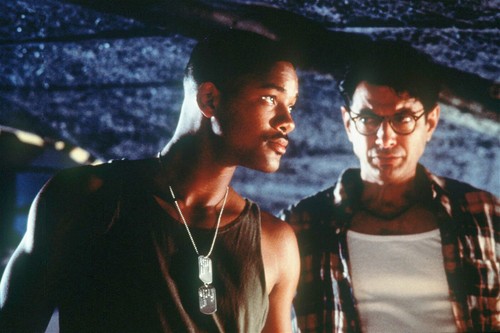
Independence Day - Smith and Goldblum

Images credit: IMP Awards, Collider

Images copyright (©): 20th Century Fox

Top 10 Films of 2014 (January-July)

Apart from serving as a stark and somewhat worrying reminder about university work that I’ve not yet completed but absolutely should have, August is also the last month of summer blockbuster season. I’ve no idea why that’s relevant. Here are my top 10 films of the calendar year thus far. UK release dates. It’s about a month late.

We all love lists though, so I hope you fine folks’ll forgive me.

10. X-Men: Days of Future Past

Bryan Singer guides the X-Men franchise back to form with a rip-roaring circus act made up of mind bending time travel, slow motion wall-running and Wolverine being Wolverine. Days of Future Past manages its cast supremely well – even the underused Evan Peters is magnetic. Though, not Magneto. He could be. That joke wasn’t even planned.

DoFP - McAvoy

9. Calvary

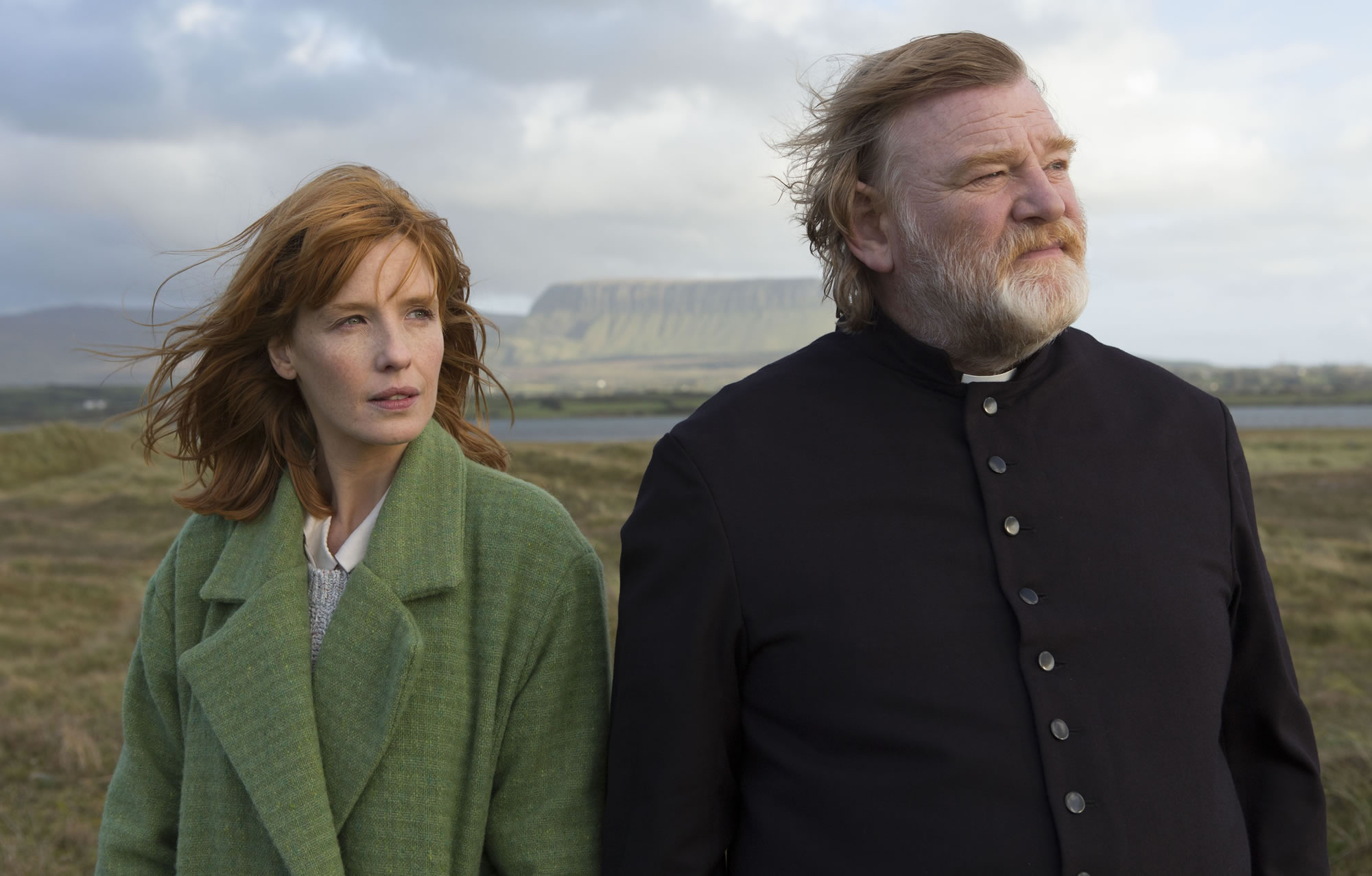
Brendan Gleeson both runs and steals the show as Father James Lavelle in a film that plays its cards from the get-go, before promoting a townsfolk guessing game as darkly entertaining and intriguing as any before. The screenplay evolves as characters unravel and, through Father James, we become an integral part of it all.

Calvary - Gleeson and Reilly

8. The Lego Movie

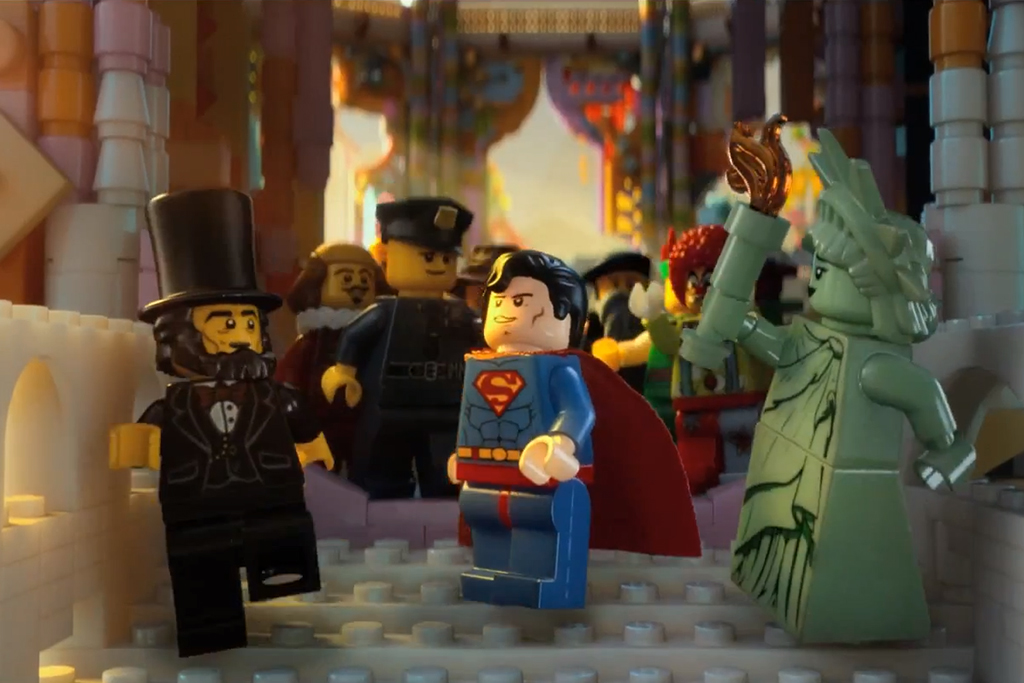
Everything is awesome! And hilarious. And energetic. And utterly batty. A flick that proudly flaunts something for everyone, The Lego Movie is non-stop from start until finish; the incessant stream of laughter that spills from our mouths makes it difficult to regain control of breathing. The film ain’t perfect but when things are this gleefully mental, it doesn’t need to be.

The Lego Movie - Icons

7. Locke

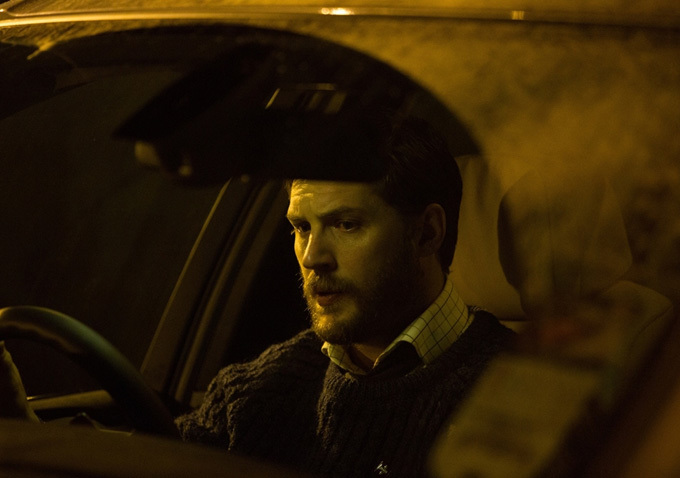
For 85 minutes we sit in a car with Tom Hardy and for 85 minutes Tom Hardy magnificently transforms into an ordinary guy bearing a portfolio of problems, each one weightier than the previous. Locke is a moment in time driven by authentic normality that’s incredibly hard to come by on film.

Locke - Hardy in Car

6. Edge of Tomorrow

Doug Liman’s sci-fi extravaganza is even more than that: it’s startlingly funny, unconditionally engaging and the only film I’ve seen twice at the cinema this year. Tom Cruise flips perception on its head, but Emily Blunt is the one who kicks most ass. Edge of Tomorrow is summer popcorn cinema done intelligently. The correct way.

Edge of Tomorrow - Blunt

5. Captain America: The Winter Soldier

Hailed as more than simply one of Marvel’s superhero jaunts, The Winter Soldier captures a variety of interests. There’s both a political tinge and an espionage strand to go along with the familiar genre narrative, and these additions work. Chris Evans unveils his best performance as the Cap’n in a film that is considered by many to be the best Marvel output to date. Honestly.

Captain America The Winter Soldier - Captain

4. Dawn of the Planet of the Apes

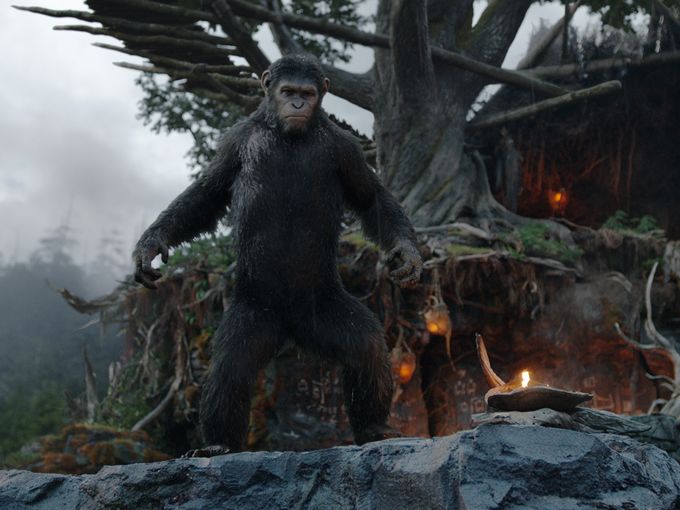
Dawn grabs the impressive progress made in Rise and swings to new, greater heights. The tone is more wrought and the outlook is increasingly bleak but, from acting to visuality, the execution is wholly sublime. To simplify Matt Reeves’ flick as the best looking film in a generation would be to do it a disservice. It is, but Dawn also boasts a fulfilling and rewarding foundation.

Dawn of the Planet of the Apes - Caesar and Mate

3. Inside Llewyn Davis

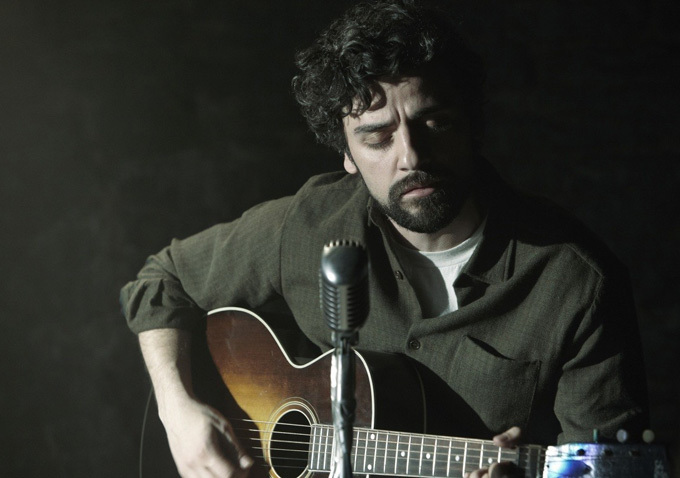
From smoky bars to icy streets, there’s no escaping the genuine purity of the Coen brothers’ folk piece. Its screenplay is morbidly delightful, and Oscar Isaac is a walking manifestation of just that. Llewyn is a bit of an ass yet we root for him. Peculiarly, and perhaps it’s just me, despite his downtrodden unluckiness we want to be him. Then again, it might simply be the allure of this latest Coen tale.

Inside Llewyn Davis - Oscar Isaac Guitar

2. 12 Years a Slave

Formally recognised as 2013’s best film, 12 Years a Slave hit UK cinemas in January of this year. It’s inarguably the toughest piece on this particular list, and is certainly one of the most gruelling watches in recent memory. Not only is Steve McQueen’s retelling of the harrowing slave trade important, but it’s also incredibly well delivered. People should see this because it depicts a vile chapter that ought to be bookmarked as a warning to humanity.

12 Years a Slave - Ejiofor

1. Blue Ruin

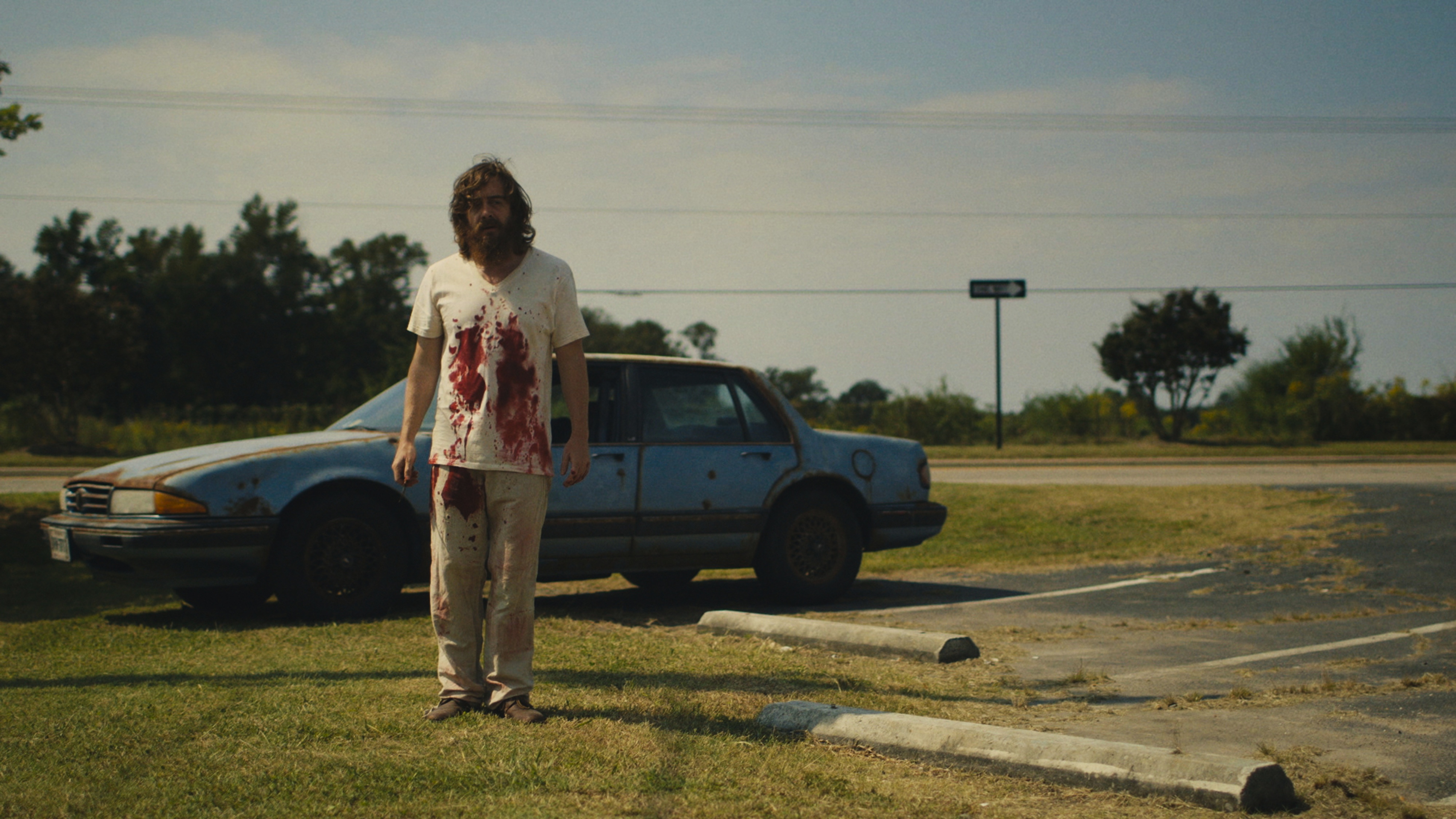
Though it’s not as heavy as 12 Years a Slave, or as furnished as Inside Llewyn Davis, or as visually striking as Dawn of the Planet of the Apes, Blue Ruin comes nail-bitingly close each time. This is simple storytelling relayed with a restrained confidence and wholesome purpose, and there’s even a tremendous lead performance from Macon Blair to cap it all off. It’s just brilliant.

Blue Ruin - Blair Distance

I’m off to read about the geopolitics of Hollywood.

Images credit: Collider

Images copyright (©): 20th Century Fox, Entertainment One, Warner Bros, A24, Walt Disney Studios, CBS Films

Dawn of the Planet of the Apes (2014)

★★★★★

Dawn of the Planet of the Apes PosterDirector: Matt Reeves

Release Date: July 11th, 2014 (US); July 17th, 2014 (UK)

Genre: Action; Drama; Science-fiction

Starring: Andy Serkis, Jason Clarke, Gary Oldman, Keri Russell

It’s always darkest before the dawn, or so the saying goes. Well, if Matt Reeves’ film is the culmination of a dawning ape species, then said saying is spot on. Dawn of the Planet of the Apes — we’ll stick to Dawn from now on — is frequently unsettling. Coalescing magnificently with arguably the best-looking visual palette since Middle Earth (every raindrop on fur is accounted for) is a story that sizzles with poise and acute direction. When the lesser of the film’s two halves is still approaching five stars, you know there is a winner playing out on screen.

Rise was a deft and engaging prelude that focused keenly on human-animal relations and biological moralities, but Dawn is more than that. Those traits are still prevalent of course, however Reeves invokes an emotional core by affording his actors the chance to tell a story. And whether it is the ping of Michael Giacchino’s score or the rugged outlook purveyed by Michael Seresin’s cinematography, it’s clear we are back in familiar territory. Apes fans rejoice. Apes newbies prepare. All eyes on the next branch, this one is swinging straight back to 1968.

A decade has passed since the fall of humankind due to viral infection. In San Francisco, a group of seemingly immune people have merged in an attempt to reignite the flame of civilisation, but this uprising is severely threatened when a few of the survivors inadvertently set foot in a developed ape colony. Caesar (Andy Serkis) is colony’s conscience-driven leader who hopes for peace, something that the two separate cultures may never be able to attain.

Fraught with tension, Dawn relentlessly teases a monumental clash. The contrast between two societies — apes and humans — is startling yet not unfamiliar. For better or worse, we watch as a total role reversal unfolds: people live hidden away with basic supplies, whereas apes roam landscapes carrying out practices akin to those originally implemented by human beings. They hunt. They safeguard. They educate. They even wear protective face masks during birth. Armed with subtitled grunts filling in for words, the opening quarter of an hour details this thriving lifestyle as it lulls us into a rhythm of admiration. The following gunshot that dully interrupts with immediacy not only acts as a wedge between life sources, it also represents their inability to coexist.

It takes human intervention to negatively hamper the structure of being that has been mustered by these hominoids. Dawn, then, is a cautionary parable about the disease of humanity; once we infect, we destroy. Reeves tactfully employs this overarching theme — the various characters on both sides of the Golden Gate Bridge openly discuss the merits and demerits of war, necessary primarily due to our own invasive attitude. (“Fear makes others follow.”) As the analysis plays out on screen we’re challenged to weigh up combat as a fundamental prerequisite. Is it? Reeves is firmly in the camp that denounces war and its resultant mess, and it’s hard to argue when his presentation is so compellingly and affectingly relayed. No issues arise when the script occasionally hints at predictability because of the hearty motifs and strands that weave throughout.

In fact, Dawn is all the more interesting because it is about the apes. They are the beginning, middle and end. Unlike Rise — which rightly honed in on human beings and their attempt to control animals — this second instalment sheds more light and dark on ape life. Given this, we’re allocated far more time to see the intricacies of the primate’s in-house relations and potential fallouts. And so, Andy Serkis, the spotlight is yours. The actor famed for his consistently dazzling motion capture acrobatics once again vaults into the skin of Caesar, and subsequently groans out a career defining performance. Each sinew matters because Serkis is inclined to make each sinew matter. Though he plays Caesar with air of perpetual dominance (“Ape not kill ape”) Serkis’ humility shines through. To many he’s simply a voice with no face, that guy who done the thing as Gollum. I certainly wouldn’t begrudge any formal recognition headed his way. What he does is acting, plain and simple. Utterly brilliant, too, and this role is his reward. It’s also ours.

Serkis’ powerful performance is made all the more tantalising by way of Dawn’s visuality. The film looks incredible. Motion capture settles into its surroundings as well as ever and the attention to detail routinely impresses. The apes might as well be authentic, drafted in from Hollywood’s premier acting zoo. San Francisco manifests gloomily, mirroring the prevailing mood of both the narrative and the characters involved. Reeves also harkens back to the tremor-like scariness of two previous outings, Cloverfield and Let Me In, by letting proceedings breathe a foreboding breath or two — the film’s curtain jerker is a genuinely ominous hunting scene. Mature heads also prevail when it comes to violence, which isn’t common, therefore smatterings of red spring with greater gravitas.

Toby Kebbell is Koba, Caesar’s second-in-command. The Brit’s mannerisms are so convincing that you’d be forgiven for thinking Koba is another Serkis creation. On the human front, Gary Oldman’s Dreyfus is the most captivating character. He’s a staunch defender of stretching ethical limits in order to prevail and, despite being fed a little less screen time than other major players, Oldman effectively channels his persona’s mindset. Jason Clarke lands the James Franco role as the human whom Caesar develops a bond with. The Aussie’s efforts are admirable and, more often than not, sufficiently potent.

Dawn, then, is one of 2014’s best films thus far. This reboot of the Apes franchise may yet prove to be a mightily formidable cinematic set once complete, but for now we can at least bide our time equipped with the knowledge that, as a standalone piece, part two has already achieved a status of grandiosity.

Bravo.

Dawn of the Planet of the Apes - Caesar

Images credit: IMP Awards, Collider

Images copyright (c): 20th Century Fox

The Mist (2007)

★★★★

The Mist PosterDirector: Frank Darabont

Release Date: November 21st, 2007 (US); July 4th, 2008 (UK)

Genre: Horror; Science-fiction; Thriller

Starring: Thomas Jane, Laurie Holden, Marcia Gay Harden, Toby Jones

The Mist trundles along quite tediously throughout its opening 10 minutes. The acting is overplayed and stodgy, relationships are too obvious and the dialogue is half way towards egregious. Then we head into town, to the supermarket, where Toby Jones appears and everything subsequently kicks off. Mr. Jones probably isn’t the reason for the immediate turn around in quality, though I’d be willing to bet he is part of it. Rather, it’s Frank Darabont’s screenplay that ushers forth this change. Those first few scenes were likely crummy on purpose, as a means to lure us into a false sense of security. Because otherwise there’s no security here. Things get worse before getting worse still. The Mist fails to attain horror perfection but what it does do is generate a very authentic sense of social familiarity surrounded by science-fiction monstrosities. And that is impressive.

After a freak storm runs rampant in a small town, various residents decide to visit the local supermarket and stock up on supplies. Among them are David Drayton (Thomas Jane) and his son Billy (Nathan Gamble), however their grocery trip soon devolves into chaos as danger-infested mist sweeps across the area. The group now trapped and anxious, it soon becomes clear that the mist isn’t the only simmering menace.

Before the crisis has grown legs, we dip in and out of numerous brief conversations that take place around the supermarket. It’s akin to a smattering of personality tastings, writer and director Frank Darabont teasing us with the potential for clashes that may or may not arise. Shortly thereafter, a warning klaxon moans out with a distressing echo and a bloody-faced man runs maniacally into the store. (“Something in the mist!”) This sequence is an excellent preparatory slice that establishes the tone going forward: brooding and culturally influenced. See, though this is an outstanding horror candidate, it’s not necessarily scary because of the fog or the monsters that roam inside. The Mist is frightening due to its stark portrayal of humanity come undone. Just how far will humankind plunge in its most testing moment?

The populace picture that follows isn’t exactly pristine; what threatens to simply be a scare-fest swiftly matures into a community drama driven by the unravelling of social status feuds. The supermarket houses a wide range of contrasting citizens, some characters amped up to 11 but all recognisable nonetheless. Debates slowly simmer before raging on with a high intensity and it is the product of these disagreements that horrifies us. Darabont’s screenplay adeptly includes religion, politics and class — they’re all in here. Whilst the religious element frequently takes a front seat, the director skilfully navigates any possible obstacles of audience alienation by placing utmost focus on the people. Though religion is the vehicle for hate, it’s not the agent. Humanity is, and this is an attack on folk being bad within the context of desperation. Collective counterculture in its most horrendous form.

What we have then is a patient and precise narrative, one that knows when to reveal and when to refrain. Fairly early on, we worry that the monster in the mist has been unveiled too soon, a worry that quickly proves to be unjustified. The aliens aren’t necessarily the issue. In some ways the mist is a metaphor for the cloudiness of humanity; enter the swelling smog and things can only get worse, or avoid it — in other words, promote honesty amongst your peers — and life will be alright. Toby Jones’ Ollie says it best: “As a species we’re fundamentally insane. Put more than two of us in a room, we pick sides and start dreaming up reasons to kill one another. Why do you think we invented politics and religion?”

Jones is really good. His character is the most normal, a typical assistant manager who’s a tad overweight and generous with his time. He strikes up an alliance with Thomas Jane’s painter David and a number of other hopeful victims. Jane is a solid lead on the journey, so much so that his dependability factor is eventually usurped by a genuinely powerful emotional outburst. Laurie Holden plays primary school teacher Amanda, her relationship with David one that hints at romance without ever acting upon anything. It is worth pointing out the lack of romance throughout the film: aside from a speedily adjourned kiss there’s none to be had, perhaps another indication of the overarching negative vibe. The most effective performance emanates from Marcia Gay Harden as local religious nut Mrs. Carmody. Harden throws herself full pelt into the role, as someone who degenerates from harmlessly deranged to eerily psychotic to absurdly vile. Although there are a large number of peripheral characters, the potency of a few outweighs the flimsiness of many.

On a technical level, The Mist is efficiently purveyed. Rohn Schmidt’s cinematography shows traces of his work on The Walking Dead (ironically, he’s only one of many here who would eventually swap mist for zombies) and reflects the terror of events succinctly. It’s sufficiently gory without being too upfront, and the alien creatures look rather impressive. The camera makes an effort too, its aggressive movements creating a very chaotic atmosphere. On the other hand music hardly conjures a bar, Darabont instead finding solace in silence and substantial dialogue.

Having said that, the implementation of Dead Can Dance’s “The Host of Seraphim” to hauntingly serenade the film’s final scene is an inspired decision. Much has been made about The Mist’s conclusion. In brief, the ending works. It’s real life, if real life involved aliens and hopelessness. Admirably — and somewhat horrendously — there is no shirking away. But the less said about it the better.

The Mist currently stands as Frank Darabont’s last directorial effort and it’s a worthy swan song. This should come as no surprise given the filmmaker’s track record — The Shawshank Redemption and The Green Mile, to name but a few. The Mist is a methodological piece, one that unfolds with great purpose and honesty. It might encase humanity in an exceedingly gloomy shell, but in the dire circumstances presented who’s to say that this forecast is unfounded?

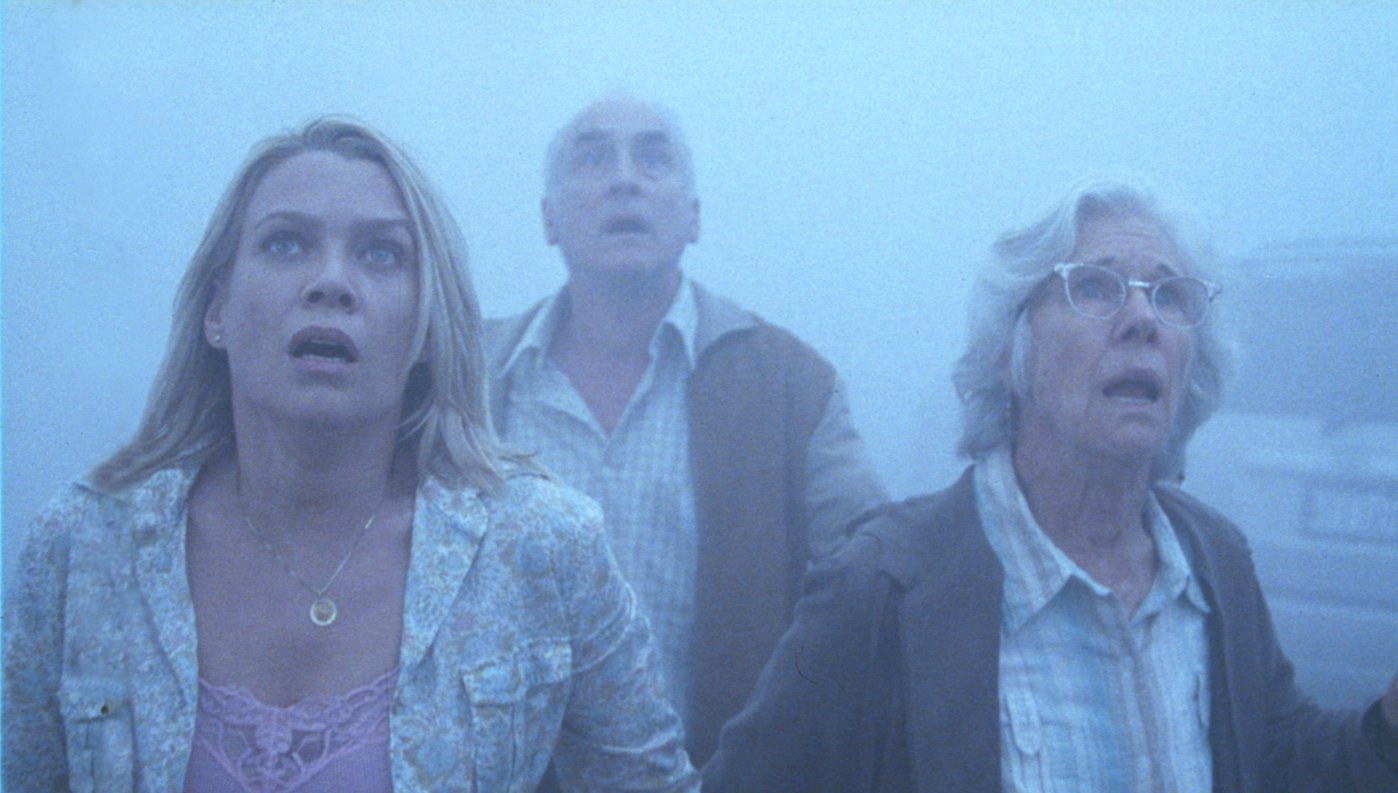
The Mist - Laurie Holden

Images credit: IMP Awards, Horrorphile

Images copyright (©): Metro-Goldwyn-Mayer, Dimension Films

The Dirties (2013)

★★

The Dirties PosterDirector: Matt Johnson

Release Date: October 4th, 2013 (US limited)

Genre: Drama

Starring: Matt Johnson, Owen Williams

His intentions are clear. Director Matt Johnson wants to create a film that tackles one of society’s most abhorrent problems, school shootings, in a way that is both original and impactful. He presents his piece as a documentary within a documentary; he and co-star Owen Williams’ first names mirror those of their respective characters; Johnson even looks to include elements of comedy, perhaps hoping that these moments will divert our attention away from more pressing matters just long enough for the film to cushion itself with added shock. None of it works. The Dirties severely lacks coherence, but that’s not the primary nuisance. Johnson and company probably don’t set out to be insensitive. Unfortunately, their film teeters unceremoniously along that edge.

A couple of high school mates decide to make a documentary about The Dirties, a group of bullies who terrorise their school. Matt (Matt Johnson) and Owen (Owen Williams) bear the brunt of The Dirties’ abusive behaviour and, when their film is ridiculed in class, one of them resultantly gains a dangerous thirst for revenge. The other, though, becomes increasingly wary of and alienated by his friend’s behaviour.

There’s only one endgame here, and we know of it after five minutes. In truth, we’re fully aware before the film even starts. It doesn’t matter where Matt and Owen are — in class, at a secluded shooting range, around a bonfire — the only notion that consistently wears on our mind is gun violence. More specifically, gun violence in school. An at times imperiously weighty subject, school shootings have become one of humankind’s most despicable and perplexing habits. It’s a clichéd proclamation but, in an age when trolls linger all over the internet and online connectivity dominates our lives, school is supposed to be safest place for a child. There’s absolutely no getting away from the horrible concept, particularly when it’s regularly regurgitated on screen. The Dirties fails for that reason. The film takes something bluntly tragic and tries to be overly meta. Subsequently, plot holes appear quicker than a bee to honey, devouring any potential progress. There’s too much going on — are we supposed to take the film as just that, an overtly fictional piece based on true events, or is it attempting to be real life, paraded in a false documentary format?

Seemingly, Johnson endeavours to veil the piece as the latter. Shouldn’t it be a tad more serious then? Of course, its central topic is one riddled with sombre importance, but this is something The Dirties struggles to maintain. This absence of earnestness is down to how the film is presented, often flavoured by comedy and exotic normality. The cameraman — who we’re essentially meant to discard as a credible human being — follows Matt and Owen around persistently and becomes an agent of humour. At one point Matt passes over the popcorn in a scene that seeks to induce amusement but instead only serves to remind us of the film’s inconceivability and, therefore, crassness. When Johnson recalls the gravity of his material, he reverts to a gratuitous display of foreshadowing involving a Columbine book. We see this book more than once, its third appearance unsettling for all the wrong reasons.

Kevin Smith, whose production company was involved in the release, referred to this as “the most important movie you will see all year”. Smith owns and runs a comic book store in his spare time and his connection to The Dirties is apt given the film’s numerous movie buff references. I get a kick out of correctly identifying film trivia as much as the next nerd, but that sort of thing shouldn’t be on the menu here. By this point nobody really seems to care though: the filmmakers start adjusting rules to suit their own needs rather than those of the subject at hand. “Out of respect for the victims and their families, the footage has not been altered in any way,” reads a statement at the beginning. Numerous musical overlays suggest otherwise.

Having looked at it from a real life documentary perspective, let’s now consider The Dirties as a fictional account. Which it is, obviously. The screenplay is littered with inconsistencies, none more prevalent than our two main characters. Even though one of them eventually snaps, we never get into the nitty-gritty of his transformation. In reality, both boys relay fairly consistent characteristics throughout: quite cheery and upbeat despite the bullying. The biggest nonsense of all though, is the aforementioned cameraman’s role. (Or cameramen — it’s possible there are two males). Aside from getting away with always filming during classes, the operator(s) does absolutely nothing to prevent the inevitable atrocities. Devoid of explanation, this is completely unforgivable and lazy on the part of both Johnson and his co-writer Matthew Miller.

Besides, as simply a film, The Dirties is actually quite boring. For the most part the lives of our leading protagonists aren’t all that eventful. Interactions with girls turn out to be mellow rather than awkward, and they both get along amiably with the teachers at their school. Humorous injections reverberate out of rhythm too. There’s no air of disquieting callousness — the subject matter itself is intrinsically worrisome, but the way it’s communicated isn’t.

The Dirties tries too hard to be different when all its topic of debate warrants is precision. In the end, our feelings on school gun violence are exactly the same as they were when the runtime set off: shootings are horrifying and deeply unsettling. Our feelings on overly ambitious pseudo-documentaries shaped flimsily around said hard-hitting matter? In sharp decline.

Though there are better, more thought-provoking films out there, it is worth commending Matt Johnson for his willingness to engage in such a polarising and difficult issue, particularly given this is his first jab at directing.

The Dirties - Owen and Matt

Images credit: IMP Awards, JoBlo

Images copyright (©): Phase 4 Films

Blogiversary Bash: Top 5 Leonardo DiCaprio Films

For those who might’ve missed it, I wrote an article for Cara’s joyous Blogiversary Bash: It’s my top five Leonardo DiCaprio films! He’s only one year short of the big four-oh, yet the Californian-born star already has a mightily impressive portfolio under his belt. His consistency in front of the camera is unwavering, which is quite a feat when you take into consideration the variety of roles DiCaprio has played; everything from a vile plantation owner, to an ill-fated artist, to aviation genius Howard Hughes.

Have a read if you’re interested, and be sure to check out the other excellent contributions too.

caragale's avatarSilver Screen Serenade

party corgi

Aaaaand we’re back with more Blogiversary Bash epicness! Today’s too-cool-for-school guest blogger? None other than Adam from Consumed by Film! Have you guys been to Adam’s site? If not, go there! Adam reviews films like a pro, and he’s got lots of great stuff to look through, so definitely check things out. Any ol’ who, Adam is here to talk about his favorite roles from a very talented actor.

View original post 883 more words

Transformers: Revenge of the Fallen (2009)

Transformers Revenge of the Fallen PosterDirector: Michael Bay

Release Date: June 19th, 2009 (UK); June 24th, 2009 (US)

Genre: Action; Adventure; Science-fiction

Starring: Shia LaBeouf, Megan Fox

When it comes to giant robots hitting each other, this is more horrific and dim than Pacific Rim. After being punched illegally below the belt last time, we’ve carelessly staggered back for round two where everything is bigger, louder and even more insulting. Transformers: Revenge of the Fallen, then, hones in on a once universal toy that has moved on from mild swearing to juvenile leg humping. Michael Bay’s second instalment looks neat for a while but once the materialistic disguise wears away we’re left with an outing that makes up for in immaturity what it loses in efficiency.

There is no structure here. No beginning, middle and end. It’s just a mass of special effects that progressively squanders specialness and a bunch of indecipherable machines who relentlessly fritter away parts. At two and a half hours long and over $200 million spent, Revenge of the Fallen simply isn’t good enough.

A few years have passed since the events in Transformers. Sam (Shia LaBeouf) is heading off to college, Mikaela (Megan Fox) is fixing vehicles and the Decepticons are looking for another reason to attack. Fortunately, a piece of the cube from the last film innocuously falls from an old T-shirt in Sam’s closet (imagine that!), setting in motion a series of events involving odd symbolic visions, the Pyramids of Giza, Optimus Prime and stealing the Sun. Or something.

Humans and Autobots now work together as part of a military NEST branch that targets Decepticons. Straight away, we see Autobots project the form of attractive females. A few scenes and countless soaring fireballs later (Bay can only withstand five minutes without including an explosion this time) the focus shifts to Megan Fox suggestively bending over a motorcycle, because that’s how mechanics roll in her neck of the woods. At least we know where we stand. The Transformers trademark has transformed from a children’s plaything to an adrenaline-fuelled macho void, and for absolutely no justifiable reason. Bay even uses college sex as an excuse to unleash his beloved brand of action-packed booms. His woman characters — because, let’s be honest, nobody else would dehumanise the female gender like this — are sold as nothing more than window dressing to pull in adolescents who know no better. Rachael Taylor’s smart scientist is out, services no longer required. Too intelligent obviously. Her substitute is Isabel Lucas, who exists solely to have a thing for Shia LaBeouf. Do the Oscars give out an award for misogyny?

The film is even more of a mess than its predecessor. From start to finish proceedings play out as a constant battle where the only people who care about civilian fatalities less than us are the filmmakers. “Worldwide casualties are in the neighbourhood of 7000,” we hear before the outing hastily returns to what’s important (loud bangs). The conclusion of this continuous war is a human versus robot encounter that is outrageously implausible even within the context of maximum implausibility. Though, it is rather poetic that the main monster here takes the form of an enormous hoover, particularly given Revenge of the Fallen is a total moral-vacuum. A National Security Advisor shows up at one point to explain the details of what happened previously. The moment actually works on two pathetic levels: both as a quick fix for those who avoided the first film and as a driving force for this film’s narrative. Essentially, Bay relies on simplifying that which is already simple because he feels it’s the only way his audience can understand the plot.

The piece even begins to suffer in the only area where it normally impresses. Sure, the visuals are pristinely executed and rather impressive for a while, but the mystique soon dissolves in favour of splurging cinematic yuck. A spread of music videoitis is rife; the camera simply cannot sit still and instead consistently circles characters in tandem with puppet string musical interludes. There’s never a hair out of place as good looking people appear even better looking and the average Joe doesn’t exist. We’re even rewarded with moments of slow motion, bestowing a longer life span upon the explosions. Ben Seresin’s cinematography is so obviously trying to impress that it manifests as desperate. And still, sequences unfurl with ugliness — watch out for the Decepticons landing sloppily on Earth.

Revenge of the Fallen is actually at its best when the Transformers aren’t around, when what’s playing out on screen is an awkward family comedy. Driven by stupid humour, the sequences involving Sam and his parents are the most entertaining. Kevin Dunn and Julie White offer brief junctures of light relief as Mr and Mrs Witwicky. (In truth, these sparsely spread few seconds go down like a glass of ice cold water in the desert). Shia LaBeouf annoys a tad more than in the first film, but it’s unfair to chastise him for the all-encompassing faults strangling a severely lacking script. Megan Fox has even less to do than in the first flick, if that’s possible.

It might not be a total money-making scheme yet — that’s the next one — but Revenge of the Fallen is undoubtedly the grandest black hole in a star-destroying franchise. Nothing’s salvageable from the wreckage. This is cinematic homicide and Michael Bay is guilty as charged.

Transformers Revenge of the Fallen - Shia LaBeouf and Megan Fox

Images credit: IMP Awards, Collider

Images copyright (©): Paramount Pictures

You’re Next (2013)

★★★

You're Next PosterDirector: Adam Wingard

Release Date: August 23rd, 2013 (US); August 28th, 2013 (UK)

Genre: Comedy; Horror; Thriller

Starring: Sharni Vinson, AJ Bowen, Joe Swanberg, Ti West

You’re Next is like a chocolate pizza: it’s propped up by two flavoursome ingredients, each one carrying a tenancy to be tasty without the other, but ultimately the hybrid doesn’t quite mesh together. And that’s not the only problem, given the pizza is also undercooked. Perhaps I ought to digress from food-related similes and start making sense. Adam Wingard takes scares and humour and crunches them together without unconditional success, in an attempt to make a witty horror film. He’s a smart director with a knack for the genre, which is why the creative funny parts work so well. But as he winks at us with satirical gags and rule bending, Wingard also slips in a helping of bewildered frights. The result is quite a confused outing, but it’s not without merit.

As far as family get-togethers go, the Davison clan aren’t having much luck. It’s mum and dad’s wedding anniversary therefore the whole crew have been invited over to celebrate. Erin (Sharni Vinson) tags along with her boyfriend Crispian (AJ Bowen), the latter hoping not to be outshined by his more successful kin this time. During dinner and an all too familiar serving of familial squabbling, a rouge arrow zips through the window. Chaos ensues. The Davisons are under attack.

Wingard casts his mate AJ Bowen in the main role opposite the fetching Aussie import Sharni Vinson. Bro points, eh? That’s unfair, because Bowen is actually fairly good at the personally insulted son and brother shtick, but it’s his in-movie partner who exits to the loudest ovation. Vinson is effortlessly charming and likeable, traits not always compatible with female leads in horror outings. Yet it’s her steely determination that convinces most of all; Vinson wears an air of intriguing mystique that coats her character in a bit more depth than is usually on display in these ventures. You’re Next isn’t just one of those ordinarily drab slasher flicks hell-bent on counting change over quality though. Captain Wingard is too canny for that.

The signs are plain to see from the get-go. Mother Aubrey Davison, on medication of course, exemplifies the OTT caricature of paranoia as she squeals and weeps her way through intruder anxiety. Others follow suit; from Joe Swanberg’s older brother Drake channelling his inner-Phil Dunphy (if the Modern Family keepsake was a douche), to the bubbly and seemingly spoilt Aimee played by Amy Seimetz. It’s the haunted house, the home invasion, the slasher. But it’s also the family dramedy wrapped in horror and, whilst the horror part flounders, Wingard’s amusing take on tribal bickering within a horror context truly succeeds. Erin epitomises the antithesis of both a drama-contained girlfriend and a scary movie chick. She’s the organiser, someone whose forward movements give her centre stage rather than a background stint. In way she’s us, shouting at every horror cliché there’s ever been. (Don’t go down to the basement, always carry a weapon, keep the windows boarded.) At one point Erin is informed, “I’ve never seen you act like this before”. “It’s a unique situation,” she replies, the interaction an indication of dissolving horror commonalities.

In some ways the film is a challenge to audiences, asking us to alter our perception and re-evaluate our willingness to accept and chew on genre staleness. A speech towards the end is a backhanded slap directed at those who gorge in genericism, who subsequently ignore the inventive pieces. Wingard has a palpable gripe. His first three films before this one — You’re Next is actually a 2011 piece — were all met with critical success, but aren’t at all well known. Home Sick? Pop Skull? A Horrible Way to Die? I’m certainly lost at sea. It’s time to rise from whatever rut we’re in and consider the hidden gems. Indeed, if they’re as perceptive as this ruby, Wingard has a point.

Unfortunately You’re Next falls flat on its morally-imbued face at times. It’s not scary yet it’s absolutely trying to be. The first attack scene around the dinner table wants desperately to be pulsating but ends up being too over-egged. We’re supposed to become enraptured in the immediacy of a horrifying ambush at home — shaky cam in full flow, drumming music beating emphatically, screams piercing — but it’s all too obvious. Comedy horror can work. An American Werewolf in London, for example, is as humorous as it is nerve-jangling. Here, exists a convolution of aim and execution. Wingard’s aim is valiant and he executes it with fifty percent triumph. The other half, the horror, is out of place. A case of the ‘quiet, quiet, quiet… BANG’ syndrome frequents proceedings. As characters are mercilessly slain we’re left in a state of flux: is this part of the satire, or a genuine attempt to frighten? Apparently the latter.

Having said that, the scare attempts do inevitably shower us with some moments of hearty gruesomeness. The film strikes as being a relative of Berberian Sound Studio, its audio effects as squelchy and excessive as they come. At some points the actors are quite literally swimming in pools of tomato-ey blood and guts. Throat slicing takes prominence, letting the soon-to-be deceased discover a cruel twist of fate in their final moment. It’s likely that the filmmakers are making a point about exorbitant amounts of red unfairly equating to disproportionate amounts of green. (That’s cash, as opposed to hash).

You’re Next fails to scare us because it leads us to believe that conventional horror simply isn’t scary. It’s a shame then that this falls on the conventional side of things when it’s not being astutely satirical. But Adam Wingard does a lot right and, even though his film mixes an incompatible broth too much, too often, it’s intelligent enough to warrant serious consideration. Who knows, this might even be the inaugural step in a new, smarter horror movement.

Maybe not.

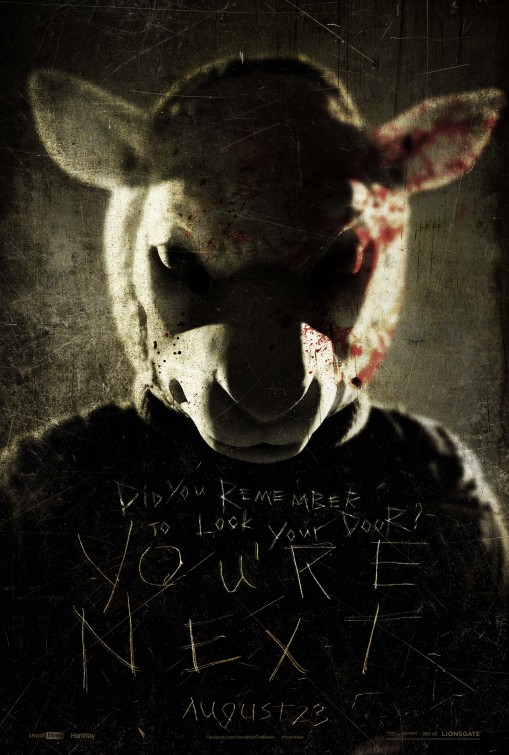
You're Next - Baddie

Images credit: IMP Awards, Collider

Images copyright (©): Lionsgate, Icon Productions