Top 10 Films of 2014

Have you guys seen that new Star Wars trailer? Or the Jurassic Park one? How crazy was Arrow’s mid-season finale? Better than what Agents of SHIELD had to offer? Or The Flash’s showing? The Walking Dead killed more people! Dave Bautista and Léa Seydoux are in Bond 24, and it’s called Spectre – spooky! Idris Elba might be in Bond 25 – funny!

Disney and Warner Bros are releasing around seventy-one Marvel and DC films over the next decade! Unless Pete has another Middle-earth itch, The Hobbit saga finally finished! Jennifer Lawrence is the year’s highest grossing actor! And those damn North Koreans cancelled The Newsroom… at least I think that’s what happened.

Phew. Now that we’ve caught up on all of the most important things to have happened in life over the last two months, let’s take a look at the year as a whole. In July, I posted my top ten films of 2014 up until then. (You can read that here). The final whistle is about to go on the second half of the year. What, if anything, will make the cut? Oh, drama!

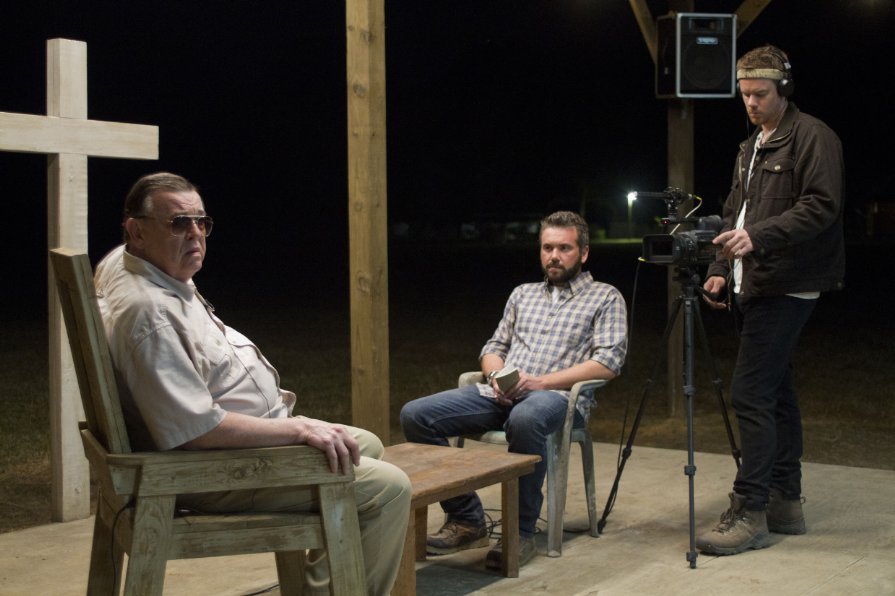
I’ll be sticking to UK release dates – the likes of Birdman, Foxcatcher and Selma aren’t out over here yet. I also haven’t seen Boyhood, but I reckon that’s the only significant omission. Click on any film title to read my review.

EDIT: I have now seen Boyhood. If you read my review, you’ll probably be able to guess where it would end up on this list.

10. Edge of Tomorrow

Edge of Tomorrow is the only film I’ve seen twice at the cinema this year. And for good reason; it’s an intelligent and engaging piece that could’ve easily gone awry. Director Doug Liman takes a chance by plucking Tom Cruise from the top of Hollywood’s good guy pile and dropping him face first on set as the slippery Major William Cage. Of course, Cruise resorts to his heroic norm soon enough, but not before the brilliant Emily Blunt gives him a few kickings.
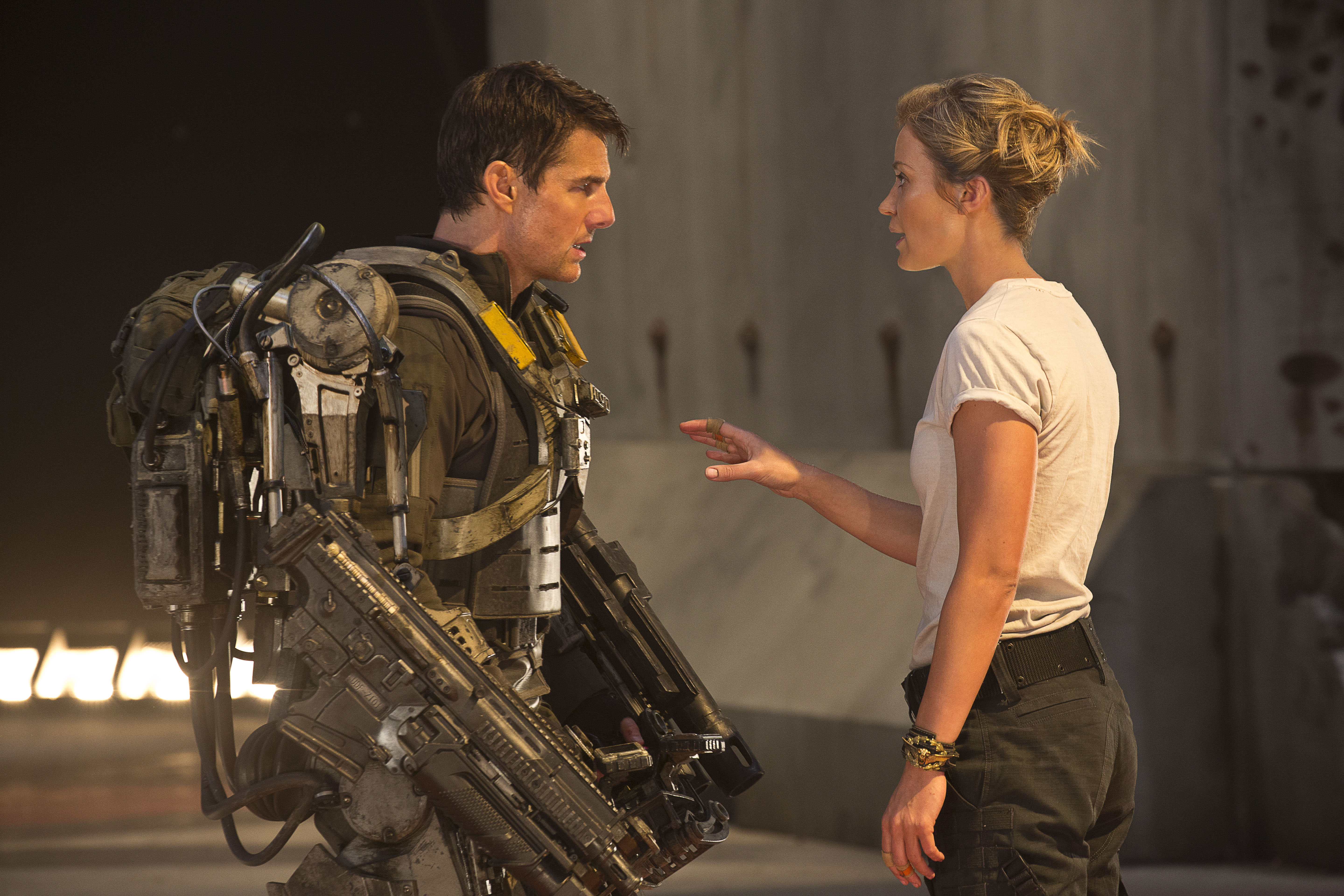
Edge of Tomorrow - Cruise and Blunt 2

9. The Guest

Speaking of iffy characters, this year Dan Stevens’ soldier is the pick of the bunch. The Guest is Adam Wingard’s best film to date and that is in no small part down to Stevens’ magnificent work as a mysterious visitor who somewhat miraculously charms his way into the Peterson household without much in the way of credentials. Stevens and fellow star Maika Monroe are fairly new to the big screen, and on the evidence of this retro-thriller we’ll be seeing a lot more of them both.

The Guest = Stevens

8. Captain America: The Winter Soldier

Steve Rodgers does his best James Bond impression in The Winter Soldier, the first Marvel film to truly break away from a standard that might’ve been becoming generic. Its influence can be traced back to films based around Cold War politics and the aforementioned espionage range, but that’s not to say The Winter Solider loses its superhero drive. In his third credited appearance Chris Evans nails it as the red, white and blue shield-tosser. (As in thrower of protective instrument and not, well… you know).
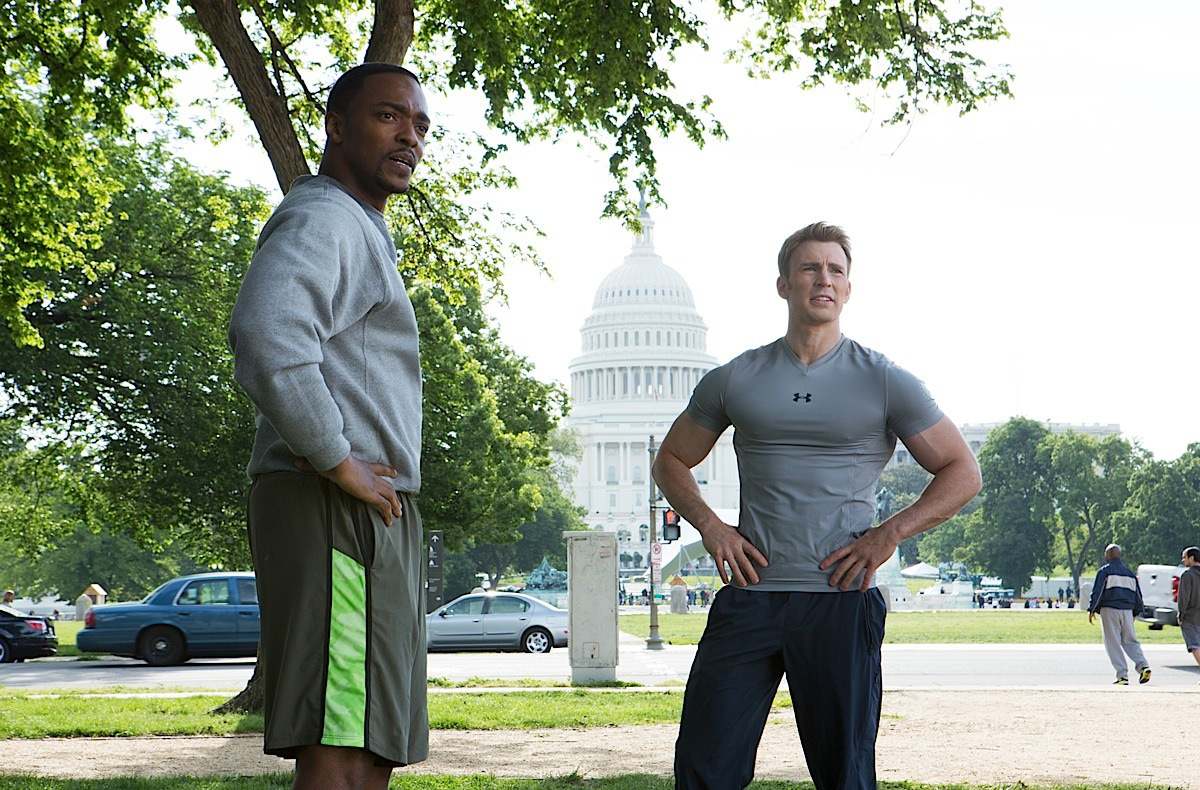
Captain America: The Winter Soldier - Chris Evans

7. Dawn of the Planet of the Apes

Matt Reeves’ sequel to Rise of the Planet of the Apes looks incredible, even by the lofty standards set in our technology age. But this is more than simply a visual wonderment, it’s also genuinely moving. Though Andy Serkis’ performance as Caesar is unlikely to earn him a golden statuette – in truth, those early rumblings were probably unfairly devoid of much foundation – the actor cements his position as peerless when it comes to motion capture acting. He deserves recognition, as does Dawn of the Planet of the Apes as one of the year’s best blockbusters.
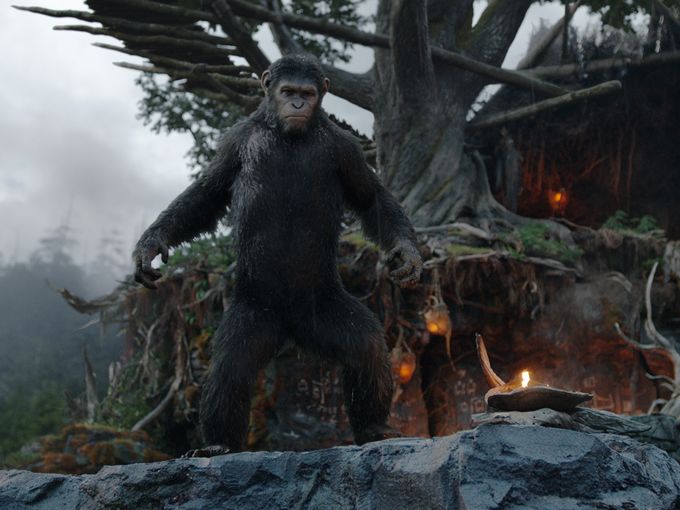
Dawn of the Planet of the Apes - Caesar

6. 12 Years a Slave

Critically-speaking, this is probably the most important film of 2014. Steve McQueen’s movie is an eternally tough watch because we are an eternally flawed species. You’ll do well to find any flaws throughout this offering though, for 12 Years a Slave is an unyielding masterstroke. It rightly won Best Picture back in March and, in truth, wouldn’t look out of place far higher on this list.

5. Gone Girl

We never really know where David Fincher is about to take us during Gone Girl, and as much as our minds are racing attempting to put those pieces together, we never really want to know either. It’s all just so creepy and insane. The director pulls no punches and lives up to his obsessive nature – everything looks pristine, adding to the unsettling aura. Rosamund Pike delivers the best performance of the year and Ben Affleck is quite exceptional too.

Gone Girl - Pike

4. Blue Ruin

I viewed Blue Ruin in a sparsely populated screening room, having entered carrying a brain filled less with critical expectation than a need for sleep. I didn’t sleep. Instead, I intently watched the tautest 90 minutes of the year play out, headlined by a manically normal Macon Blair. This revenge tale harkens back to Hitchcockian cinema; simple, frenetic and nail-biting.
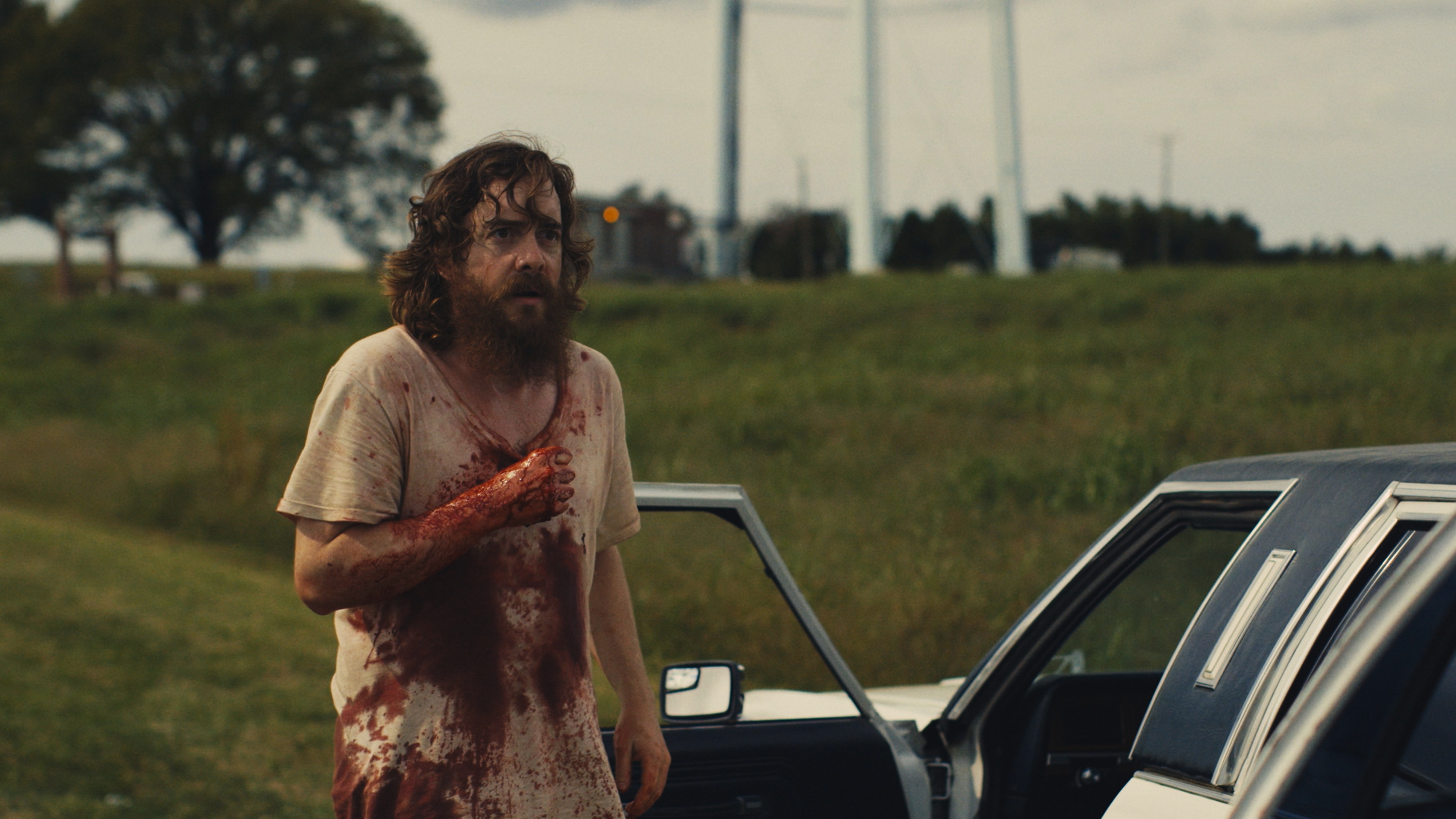
Blue Ruin - Blair

3. Inside Llewyn Davis

Inside Llewyn Davis placed third in my January-July top ten, behind Blue Ruin and 12 Years a Slave. Now that the last twelve months have collectively drawn to a close, and without the benefit of having re-watched any of the three, Inside Llewyn Davis has won out as the film that continues to reverberate in my mind with the most fondness. It must be down to Oscar Isaacs’ enchanting tones. Or the Coen brothers’ musky setting. This film is also the least bleak of the trio. Hurray for holiday spirit!

2. Guardians of the Galaxy

If The Winter Soldier bucked the generic Marvel trend, Guardians of the Galaxy entered another universe. James Gunn is given the most energetic and interactive cast of the year to work with, so he has them dancing in plant pots and making jokes about Kevin Bacon. Wouldn’t you? The film is packed full of witty gags, but is not without a touching underbelly. After only one outing, the Guardians might’ve even gained more favour than those Avengers. Thor needs to pray more.
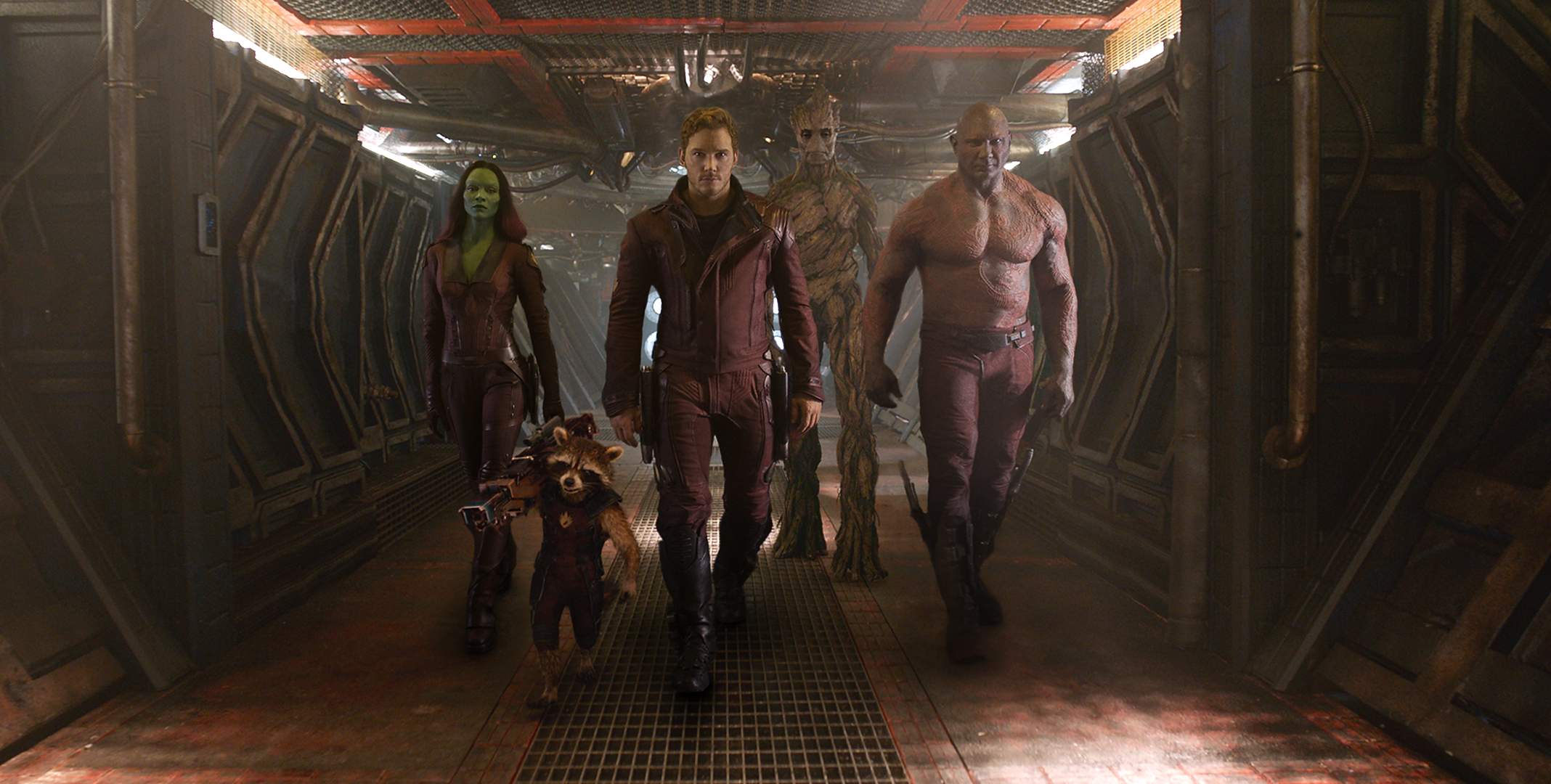
Guardians of the Galaxy - Cast

1. Interstellar

Interstellar isn’t perfect. The piece wobbles under the weight of its scientific load occasionally, and champions an ending that might exceed the justifiably grounded expectations of some. But it’s pure cinema. It’s inspiring and uplifting. Heart-breaking and mesmerising. Christopher Nolan pits the plausibility of science against the will of humanity, incorporating an effective cast and a thrilling technical palette in the process, and he subsequently conceives the best film of 2014.

Interstellar - MM

I hope you’re all having a tip-top holiday!

Images credit: Collider

Images copyright (©): Warner Bros, Picturehouse, Walt Disney Studios, 20th Century Fox, Fox Searchlight Pictures, CBS Films
Small, Tiny, Mini, Teensy, Micro-Hiatus

Hello fellow blog-o-maniacs!

Apologies for my infrequent presence on each of your wonderful blogs. I’m currently in the process of writing my university dissertation, and some other uni essays, therefore my hands are a bit full at the moment. I’ll still be around over the next month or so, but the manner in which I’ll be manifesting will probably be rather bitty.

I hope everyone is as cheery as Truman Burbank at the beginning of that Jim Carrey flick.

In other news, Interstellar was released in cinemas today here in the UK. I’ve already seen it (wormhole time-travel) and can confirm that it’s the greatest movie of all time.

Only half of that statement was a lie. I haven’t seen it.

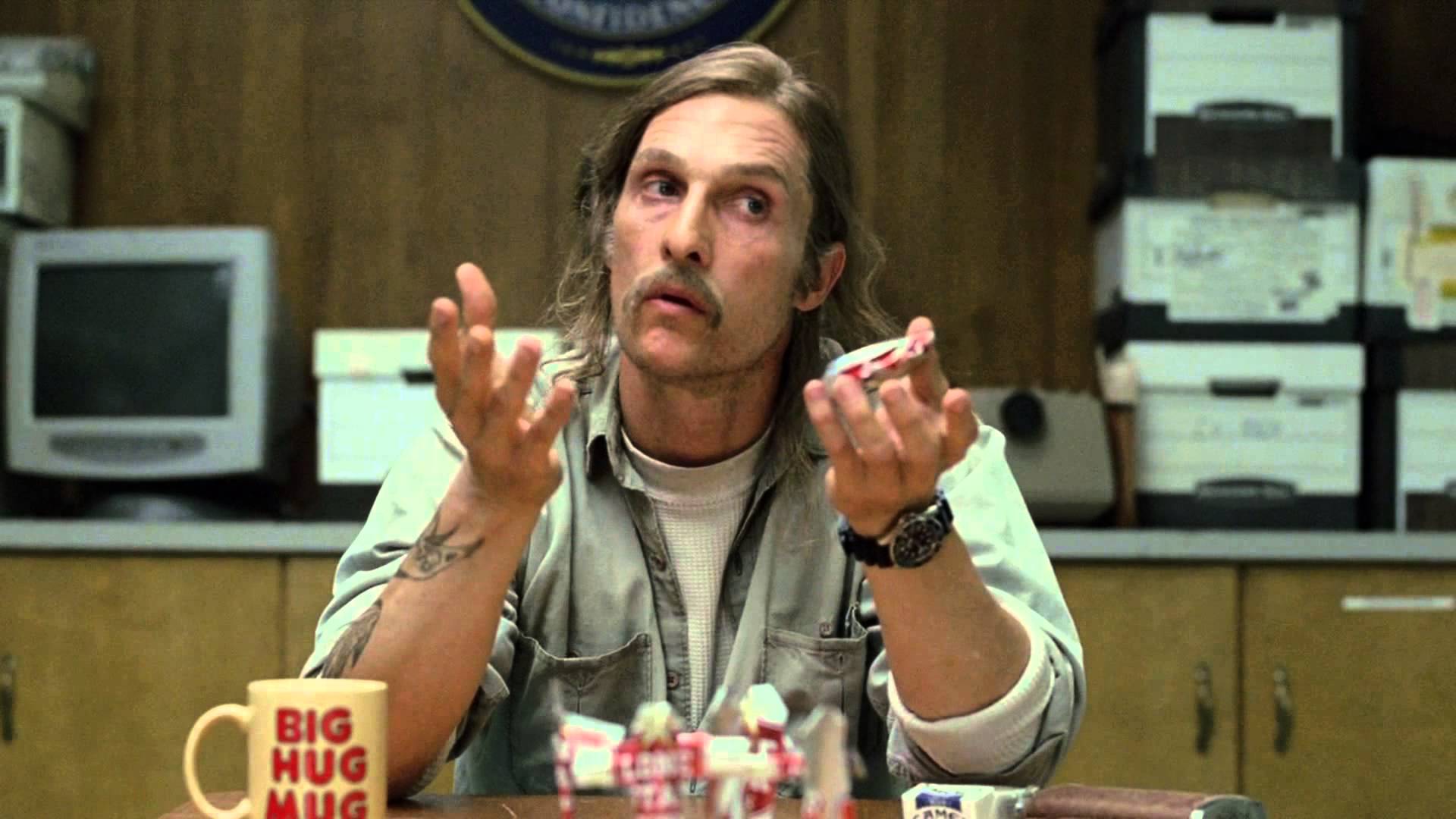
Rust knows. Nice mug.

True Detective - Rust Cohle

Image copyright: HBO

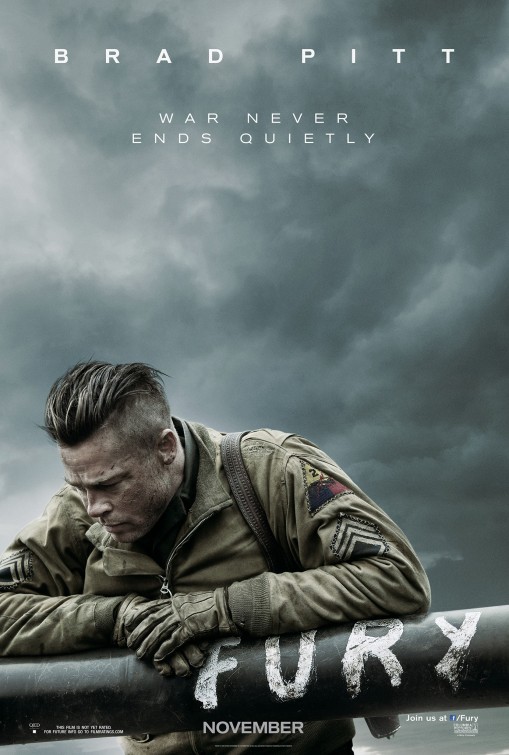
Fury (2014)

★★★★

Fury PosterDirector: David Ayer

Release Date: October 17th, 2014 (US); October 22nd, 2014 (UK)

Genre: Action; Drama; War

Starring: Brad Pitt, Logan Lerman, Shia LaBeouf, Jon Bernthal, Michael Peña

War is a nasty business. Of course, contemplating the nastiness of war isn’t a new undertaking, nor is it something that Fury director David Ayer feels compelled to shirk away from. His film is really quite horrendous. We see limbless bodies and bodiless limbs more often than we see rays of sunlight breaking through the clouds of 1945 Nazi Germany. Ayer’s intimate tale isn’t a fresh concept to the silver screen and it has absolutely been done better before, but there is a lot to admire here.

As World War II nears its conclusion, a Sherman tank troupe commanded by US Army sergeant Don Collier (Brad Pitt) is hurtled into the bloody doldrums of battle in Germany. Fighting through urban wastelands and disfigured countrysides, the ‘Fury’ group of five must survive via a combination of camaraderie and brute force, all the while depositing innocence at each rotation of their vehicle’s caterpillar track.

Ayer localises a grand story and his film is all the better for it. Often, the key to success in the war genre is engaging an audience in the plight of a few whilst also acknowledging the struggle of many. Fury manages this, no doubt aided by a stringently focused narrative that follows a particular group of soldiers. It’s their story and we’re always in their presence, allowing time (well over two hours of it) for us to empathise with the characters. And while the camera never ventures more than a few feet from at least one of the five, Ayer’s induction of a heavy and wearisome tone relentlessly captures the universal toil of war.

These characters don’t write the guidelines on positive morality either. In fact, their contribution to the Allied war effort has flurried any goodness purveyed by Collier and his crew. They each have a nickname — fittingly Collier’s is Wardaddy. That is not to say the man heralds a thirst for battle, rather it highlights Wardaddy’s efficiency in dark turmoil. (“Do as you’re told, don’t get close to anyone”). Brad Pitt plays him without immediate discernibility, casting doubt not over the sergeant’s motives, but over his methods. Ayer’s quintessential heroes are nothing of the sort. There are no good guys, only perceived bad guys.

The remainder of the group bear roles that are more clearly defined: Technician Boyd “Bible” Swan is the devoted religious type; Corporal Trini “Gordo” Garcia steers the tank with eccentricity; PFC Grady “Coon-Ass” Travis lacks moderation; and Private Norman Ellison carries the newbie status, a kid lost amongst a conflict in which he shouldn’t be fighting. Logan Lerman exudes ordinariness as Norman, reminding us of war’s infecting bullet wounds on humanity. Walking Dead alumni Jon Bernthal is also terrific as the gruff Coon-Ass but it’s Shia LaBeouf who wows more than any other. Scrubbing the stigma of celebrity from his face and replacing it with rotten dirt, LaBeouf displays a great deal of restraint, his eyes never far from filling with tears fuelled by a scarred mind. It turns out he can act, and act well.

LaBeouf’s character is the agent through which Ayer introduces a religious thread, one that doesn’t wholly endear itself to the narrative but does contribute towards an emotive punch. These faith-based overtones aren’t distracting as they only rear occasionally, and despite manifesting as a tad contrived, they do represent an attempt to manoeuvre proceedings away from any potential muscle bound machoness of battle. Indeed, the film manages to extract a large helping of connectivity from the audience through solemnity, a theme that runs along the piece like one of Nazi Germany’s seemingly endless mud trails. This helpless sobriety is first summed up in statement relayed by Jason Isaacs’ army Captain (“Why don’t they just quit?”), before revealing itself plainly in an extended Inglorious Basterds-esque dining room scene rightly devoid of any Tarantino quirk.

After 90 minutes of gruesome despair, the outing suddenly shifts its gaze in the direction of a more action-packed conclusion. The final act essentially wears the hallmark of a western standoff, trading cowboy hats for leather helmets. Granted in its final half hour Fury still maintains a gritty realism but this divergence in tone might not appease all. Tank jousts do occur before the lengthy concluding sequence, but frequently end in a matter of minutes. These battles are arduous in their execution, just as they should be, and do not glorify the mechanical face of war at all, whereas it could be argued that the long, underdog-ish rallying cry denoted in the final act does invite a semblance of glorification.

Technically, the film is a powerhouse. Cinematographer Roman Vasyanov turns the English countryside (where shooting primarily took place) into a bleak, putrefying Nazi Germany at the end of its tether. Two scenes stand out especially: a beautiful opening shot that patiently stalks a lone horseman as he tramples over smoky ruins and comes face to face with the fragility of tanks, and a dread filled moment nearer the end that involves a collection of simultaneously marching and chanting enemy troops. This uncompromising style meshes wonderfully with Steven Price’s score and pinpoint sound editing, and comes as close as any film to achieving the fist-clenching ambience of Saving Private Ryan.

It is certainly not as good as Spielberg’s aforementioned masterpiece, but not many outings born from this particular genre are. Fury is a visceral and effective retelling of war at its most desperate and least forgiving. If nothing else, it’s an example of high standard utility filmmaking.

Fury - Cast

Images credit: IMP Awards, Collider

Images copyright (©): Columbia Pictures

The Maze Runner (2014)

★★★

The Maze Runner PosterDirector: Wes Ball

Release Date: September 19th, 2014 (US); October 10th, 2014 (UK)

Genre: Action; Mystery; Science-fiction

Starring: Dylan O’Brien, Kaya Scodelario, Will Poulter, Thomas Brodie-Sangster

Twilight kick-started the craze only for it to ripen amongst the chaos of The Hunger Games’ Cornucopian anarchy. The young adult adaptation trend is sweeping cinema and its latest passenger, The Maze Runner, is certainly one of the better book to screen jobs. This latest jaunt owes a great debt to Suzanne Collins’ novels in particular, and manages to hold up stringently despite not sharing The Hunger Games’ politically infused backbone. It’s a solid film that will likely play better when pitted alongside the planned sequels, but for now Wes Ball’s directorial debut should be considered, at the very least, a steadfast success.

Devoid of his ability to remember, Thomas (Dylan O’Brien) awakens inside a noisy metal cage that is rapidly ascending skywards. It suddenly halts, opening to reveal bright sunlight and a group of grubby males. Thomas soon learns that about the Maze, an ever mobile entrapment monitored at night by dangerous spider-like Grievers. To make matters worse, the boys are stuck in the Glade — the grassy centre of the Maze — and there doesn’t appear to be any way out.

The rules: trust, run, return. Led by the longest serving inmate, Alby, the group of young males have systematically formed and subsequently cater to a subsistence society; some build bamboo prisons, some farm vegetables, some run the Maze. These Runners, we’re warned, must return from their exploration exploits before dark or else they’ll be trapped for the night and “no one has ever survived a night in the Maze”. The opening act is very pre-occupied with Basil Exposition. Launching us into this new, mysterious world without any briefing, the filmmakers do their damnedest to catch us up on happenings without giving too much away.

What we have, then, is a Lord of the Flies meets The Hunger Games narrative composite, and one that works rather well. Whilst thematic exploration is a tad frothy, the film definitely has the latter’s industry. It shows too. Visually, The Maze Runner dips into that familiar gloomy, metallic sheen before unravelling with energy and turbulence as characters enter the Maze. Perhaps too caught up in the action, the camera itself becomes overly-eager on occasion but cinematographer Enrique Chediak ultimately reflects the disparate tone of proceedings. It is worth pointing out John Paesano’s brooding score also, one that spikes in moments of danger and gets the heart racing.

And it’s not just in these areas of technicality that the film resembles its older cousin, but also in plot make-up. The Maze, it turns out, is split into eight sections much like games’ twelve in Catching Fire. The cage that elevates Thomas into the Glades at the start is essentially the glass pod that drops Katniss off at the Cornucopia. Although the piece doesn’t resonate thematically — at least not with the same rigour — there are interesting momentary flares. At its heart, The Maze Runner is an analysis of defeatism, of struggle and acceptance. Thomas’ arrival signals a resurgence in moral determination for some Gladers (“I don’t know if [Thomas] is brave or stupid but I think we should make him a Runner”) whereas others, such as the group’s perennial enforcer Gally, seem somewhat content with their chained destiny. We can almost empathise with him too, given the Glades isn’t really all that horrifying a place.

The aforementioned element of mystery — amplified when Kaya Scodelario’s sole female Teresa shows up — helps us relate to the characters as a collective; essentially, we know as much as they do and vice versa. By the same token, Wes Ball is faced with the task of balancing the integral build of tension with restraint when it comes to use of the Maze. He almost achieves this unity too and that simmering atmosphere is nearly there — the brutalist appearance of the snaring stone structure combined with hardly any knowledge, a sense of dissolution and a lack of someone to villainise all coalesce together into a medium-sized wave of carpeting tension.

We do get the sense that Ball and company have been sold down the river when it comes to matching the tone with on screen events. Put simply, the film needs to be a little more violent. Instead the audience can just about smell the stench of studio-implemented pandering at the expense of storytelling. Sequences in the Maze are effective yet never totally capture the risk that would normally be glaring from the screen, and it’s because of this sterilised approach. The Griever monsters, all hybrids of the Xenomorph, the Predator and Shelob, look like they could do some hefty damage but we never really feel the brunt of their potential capacity.

As is often the case in this genre these days, the cast do well. Dylan O’Brien leads the way as the “curious” Thomas and manages to garner a feeling of hard-to-pinpoint inner turmoil whilst also coming across as capable, as someone fuelled by purpose. The arrival of Teresa does prescribe in tandem worries over a clichéd romance between the pair, but love takes a back seat as it should under the circumstances. Kaya Scodelario is also effective in her role, but she’s the one who draws the shortest straw in terms of character development. More to come, I suspect.

Two other stand-outs are Will Poulter, who seems to be carving out a niche for himself as a promising big screen talent, and Thomas Brodie-Sangster. Game of Thrones fans will recognise Brodie-Sangster, here playing second in command Newt who is arguably the most accessible of the bunch. Despite his role as the most remonstrative resident, Poulter ensures that Gally retains an understandable righteousness. Friction-causing notwithstanding, Gally’s thoughts are always practical and occasionally hold greater verve than the riskier doings of others.

The inconclusive ending does hurt the film. Revelations arrive a tad too easily before concluding abruptly, and it is clear that those in charge have at least one eye on the sequel by the time the final act rolls around. It is also true that during the two hour runtime, there ought to have been a warrant for deeper examination into societal codes between the boys. Having said that, opting to engage with The Hunger Games over Lord of the Flies is probably a wise decision in 2014.

The Maze Runner is a very good three star film that could, given time and triumphant sequels, become a laudable four star franchise opener.

The Maze Runner - Dylan O'Brien and Will Poulter

Images credit: IMP Awards, Collider

Images copyright (©): 20th Century Fox

Friday the 13th (1980)

★★★

Friday the 13th PosterDirector: Sean S. Cunningham

Release Date: May 9th, 1980 (US)

Genre: Horror

Starring: Kevin Bacon, Adrienne King, Peter Brouwer

It would go on to spawn nine awkwardly named sequels, a cash driven remake and horror’s first modern crossover but Friday the 13th’s greatest influence has always been contained within the lore of the genre itself. Part of a thriving gore group with strands etched through the seventies and early eighties, Sean S. Cunningham’s outing is fairly camp by today’s standards (no pun intended) but also an entirely palatable effort. Should we be thanking the director for his contribution to an occasionally riveting genre, or cursing him for his ‘how to’ guide on making a easy buck? Probably a bit of both in truth, but we definitely shouldn’t be ignorant.

You probably all know the story by now. In 1957, a young boy drowned in Crystal Lake. In 1958, two camp residents were brutally murdered. Twenty one years have passed and the summer retreat location is re-opening, its renovation being undertaken by owner Steve Christy (Peter Brouwer) and a bunch of other counsellors. Of course, a blade-wielding killer has decided to pitch up for the night too.

Clichés are abound in Friday the 13th, but given the film was made so long ago a degree of slack-cutting ought to be implemented. It’s true that we can namecheck all of the hackneyed genre norms even before the end of the prologue, a trend that remains throughout and — looking back many years later via eyes worn out by forest chases, old creaky barns and loved up teens — is ultimately a bit disengaging. Then again, who’s watching a thirty-four year old slasher romp with a view to criticise when the local loony shows up? We’ve seen it all before, yes, but there is still stupidity fuelled fun to be had.

Such is the general nature of the slasher brand, the film isn’t all that frightening. The formula on display dictates what winds up being a fairly kooky tone; having settled on the joke-making, characters find themselves separated from the group — either through lust, sheer idiocy, or both — and are picked off innocuously. That’s not to say creepy moments are completely benched. On the off chance we do get see some post-death imagery that is quite unsettling, though by and large the kill scenes themselves are silly. (And, to be fair, quite admirably executed given the tiny budget).

The same plot would see the light of day a few years later, this time under of the guise of Sleepaway Camp, and Friday the 13th could have made use of that film’s shocking conclusion. At ninety minutes long, Victor Miller’s screenplay really does begin to feel the weight of repetition, particularly as it approaches its final act. More time should be filled with scary suspense, and absolutely would be in a more serious affair. The comedic underbelly (one that has no doubt felt the effects of age) taints any tension and, despite serving up the occasional moment of light relief, sticks the knife anything attempting to divert away from light froth — a silly interaction with a snake effectively sums up this quandary, especially as the pay-off gag is funny.

The cast, comprised of good looking kids you might see in a Pepsi commercial, are nothing more than genre pawns resistant to backstories and peeled straight off the slasher victim conveyor belt. These days they’d most certainly be chopped to pieces by the force of modern critical consumption. (Rich coming from a film blogger, admittedly). There is no central character, nobody who is distinguished outwith the cloak of ‘last person standing’, and it is therefore difficult to care. A youthful Kevin Bacon shows up looking peculiar in his iffy speedos, though he’s not the worst offender. Peter Brouwer plays camp owner Steve Christy, a guy I’d have been scared away by upon arrival at Crystal Lake — topless, moustached, prone to face stroking… he is the definition of a dodgy customer. A wary truck driver sums the characters up rather efficiently: “Dumb kids, heads full of rocks”.

Having said all that, the film should be acknowledged for its role in inspiring an often lively genre and it is here through which the franchise as a whole thrives. Part of the Halloween and A Nightmare on Elm Street crop, Friday the 13th is a significant contributor to a pack that would go on to influence a new form of popular mainstream cinema, a whole new genre in essence. Director Sean S. Cunningham shifts from a conventional shooting framework to one with flavours of today’s abundantly utilised found footage style. It works too: we collaborate with the killer’s point of view, adding a more primal dimension.

Other moments usher in previous genres knowledges, such as Hitchcockian shadows, Janet Leigh-esque screeches and Carrie-like drenched gowns, suggesting a semblance of directorial nous. The piece is also an introduction to one of cinemas most recognisable baddies in Jason Voorhees, though here his form is somewhat diminished. Moral issues such as revenge are timidly hinted at but not worth their inclusion.

Indeed, Friday the 13th couldn’t be cornier if it was on a cob. Characterisation — or the lack thereof — is at an unfathomable premium and the horror outing isn’t really all that spooky. But it’s not really horror. Three decades ago the picture was one of the first in a less weighty, more dainty subgenre whose cleaver would end up spurring on the likes of Scream, one of the 90s’ best and a favourite of mine.

For my money, that’s pretty good going.

Friday the 13th - Cast

Images credit: IMP Awards

Images copyright (©): Paramount Pictures, Warner Bros. Pictures

Gone Girl (2014)

★★★★★

Gone Girl PosterDirector: David Fincher

Release Date: October 2nd, 2014 (UK); October 3rd, 2014 (US)

Genre: Drama; Mystery; Thriller

Starring: Ben Affleck, Rosamund Pike

Somebody encourage Rosamund Pike to clear her schedule for early next year. By many accounts — relative superficiality considered — the awards rounds that take place in January and February can manifest as quite the gruelling undertaking, particularly for those nominated without much hope. I bet the endeavour is worth it though, all the glamming up and invariably rigorous speech preparation, when your name bellows around LA’s Dolby Theatre and that egregious Academy countdown begins.

Should she get there (and she should) Miss Pike will be an Oscar newbie come February 22nd. It’s early, granted, but the performance(s) she delivers in Gone Girl will take some beating. Gillian Flynn’s spotless adaptation of her own novel to screen might also take some beating. Heck, David Fincher may well find himself in another directorial gong joust. Gone Girl is not fun and games, just games. It’s downbeat and harsh and at times painfully glum. It’s intelligent and gripping and oddly satirical. It’s very, very good.

On his fifth wedding anniversary Nick Dunne (Ben Affleck) returns home to find a toppled table and smashed glass all over the floor, but not his wife Amy (Rosamund Pike). Upon subsequently reporting her missing, the bar owner plummets into a media frenzy fuelled by accusation, exoneration and consequence. Exactly what has happened to Amazing Amy?

Fincher refers to his back catalogue for inspiration, a method ultimately met with total vindication. Gone Girl refuses to settle on one genre platform and instead deftly mingles around a number of areas from which the director has previously thrived. The taut tension felt in Panic Room returns with a vengeance in tandem alongside Zodiac’s murky mystery. Much of what unfolds during the two and a half hour runtime does so in a mellow-ish manner; solemn, yet clawing away underneath the surface. We don’t really know what to believe or who to trust and Fincher works hard to emphasise that point. Historical diary entries penned by Amy are interspersed between the present, where husband Nick is battling the elements. Revelations come unstuck and we become part of the evolving saga, our minds constantly mobilising.

The director does this brilliantly, teasing us with character faults that we simply cannot ignore and that resultantly challenge our moral head space when nastiness arises. A coating of mystique, irrespective of its level, remains throughout all three acts — each of which vary in agency. What begins as a simmering thriller re-emerges as a social commentary on cultural norms, before climaxing in a fit of peculiarity and deceit. (Fincher himself has used the term “absurdist” to describe part of the story, and he is obviously spot on).

A lack of narrative jarring ought to be admired too, as each element works cohesively with the one before ensuring that there is no lull in proceedings. Don’t bring a watch, you won’t need to check the time. Perhaps the most interesting train of thought is the film’s exploration of a self-created image; this idea that we generate an idyllic version of ourselves to parade in front of others, when we’re in public. What happens, then, after five years of marriage? Script writer Gillian Flynn has an answer, and you get the sense that her adaptation to the big screen has come at an optimal time — the novel was only released in 2012, therefore the themes remain wholly tangible.

Another of those themes is one that seems to go hand in hand with personal façade: an exploration into the role of media. Specifically, media grossness. We watch the aftermath of Nick’s press conference where he outlines the brief details behind his wife’s disappearance, and the fallout is quite cruel. People become puppets via talk show hosts and public photographs and, to an extent, the film becomes less about finding Amy than it does Nick attempting to revitalise his own tarnished image. Ben Affleck paints Nick as a flounderer to a degree, but still as someone you’d fancy getting along with. The engulfing news storm is a usurping force of nature that strives to internalise the character’s prerogative, so much so that we doubt him relentlessly.

Navigating Rosamund Pike’s role as the eponymous gone girl is akin to traversing a recently laid mine field, and that is to the credit of Fincher and company. The actress is truly marvellous, a sentiment echoed in passing by Tyler Perry’s charismatic fixer Tanner Bolt: “Aww, she is good.” She is. Perry himself is one part of a diverse cast sustained by precision and efficiency, but it is the interaction between Affleck and Pike that engages most. Conversations between the pair relived through Amy’s diary entries are somewhat disoriented by a peculiar, haunting ambience. It is a haze struck up masterfully by the combined efforts of cinematographer Jeff Cronenweth and music men Trent Reznor and Atticus Ross, all three well versed in Fincher lore. Cronenweth’s visual sheen resembles the pristine surface and texture of The Girl with the Dragon Tattoo and, backed up by a disquieting score, relays a melancholic haze.

It’s worth pointing out the satirical infusion brought forth by the film’s final act, at a time when proceedings really begin to marshal around the absurd. Though we spend moments throughout the film tickled by characters’ comical reactions (an early police interrogation, for example) as proceedings start to unravel what might have seemed amusing an hour ago morphs into a manifestation of discomfort. Events on screen are obtusely elevated, of course, but at a base level there lurks a degree of potential reality.

Brought to fruition by a supremely talented cast also including the likes of Neil Patrick Harris and Carrie Coon, and guided magnificently by a director whose work has finally struck an impenetrable balance, is a film not afraid to break the mould; one that defiantly stands beside the courage of its own convictions.

Evidence hardly ever amounts to clarity during Gone Girl, but Gone Girl most certainly is evidence that David Fincher is on the top of his game.

Gone Girl - Affleck

Images credit: IMP Awards, Collider

Images copyright (©): 20th Century Fox

The Sacrament (2014)

★★★

The Sacrament PosterDirector: Ti West

Genre: Horror; Thriller

Release Date: June 6th, 2014 (US limited); June 8th, 2014 (UK)

Starring: AJ Bowen, Joe Swanberg, Amy Seimetz

The horror genre’s latest aficionado Ti West is back with another vibrant take on spook-ville. The director employs a seemingly ever present found footage style that gives his film an engaging intimacy, but that ultimately struggles to uphold much legitimacy. West is an intriguing prospect, someone who will doubtless see his name hurtling towards the annals of scary cinema before long. The filmmaker’s outings are always at least partially efficient and that is once again the case here. It’s not that The Sacrament is half cooked — the movie is better than that — rather, what opens promisingly soon flounders at the mercy of the found footage Kool-Aid and never quite musters the strength to bounce back.

Under the topical guise of VICE, reporter Sam (AJ Bowen) joins cameraman Jake (Joe Swanberg) and photographer Patrick (Kentucker Audley) as they venture to the home of a mysterious cult hoping to find the latter’s missing sister. Upon arrival, the trio discover apparent serenity embodied wholly by said sister Caroline (Amy Seimetz) whose sparky demeanour is overflowing with positivity. The group soon wander into an air of uncertainty and, unsurprisingly, all is not quite as it seems.

It should come as no surprise to viewers that West’s film is accomplished in a technical sense. The director knows how to work with mood and setting and here he combines the two with deft touch, even if the overall outcome is not completely satisfying. The Sacrament looks good, which is no mean feat given the gritty and sometimes turbulent parameters set out by the found footage genre. Those who have previously seen West’s segment in V/H/S will already be privy to his work alongside the eternal shaky cam — his Second Honeymoon narrative was arguably the best of a mediocre bunch — and that experience has paid off for the most part.

Where The Sacrament struggles is not in technical execution but instead when caught in the limited web of its shooting style. Sure, the simplicity surrounding found footage inherently induces a somewhat unlimited scope. Yet the genre has never really ascended beyond those conventions set out by The Blair Witch Project. Contrivance is abound and the usual questions rear their aching heads. Why are they still filming? Where does the second camera come from, and why wasn’t it used up until the point of necessity?

West and company attempt to get around these issues by inducing an added layer of realism. Something that gives off a more justifiable air. Our characters adopt the increasingly popular VICE tag, one supposed to lure us into a false sense of authenticity. It doesn’t really. The adoption of a company banner that we know of as genuine, in a film that we know for sure is fake, strikes as rather misguided. Events not caught on camera are textually narrated and the time occasionally flares up on screen in a documentary slant, by which point we’re calling out for a normal horror outing and not another flagrant attempt at pseudo-realism.

The shooting style can — and probably does — draw attention away from scares. Regardless, for a solid 50 minutes this is quite unnerving. The filmmakers successfully manipulate an obviously eclectic tone, one that is really quite odd. Sam and cameraman Jake, who we follow around for the most part, conduct everyday discussions with the cult residents when we’re instead expecting some form of kookiness. The landscape is usual and calm when it shouldn’t be and thus there manifests an offset nature, a decentralising vibe that is suitably unsettling.

The introduction of Father, the cult leader, also signals a swift switch away from normality. Played squirmingly well by Gene Jones, Father is eerily charismatic and utterly captivating. (“Everything just got caught up in this weird energy, I couldn’t think straight… he had a way about him”, recoils interviewer Jake). The man prescribes a nonchalant edginess, as if he is disconnected from those around him and too focused on the tainted greater good; the way he replies to Jake, his drawling laugh, that knowing grin — we are well aware that he’s up to no good but the residents are lost in his gaze. It is certainly not an inspired narrative, but Jones’ scenery-chewing execution is simply so fun to watch.

When we’re not enraptured by Father’s spell — he almost ventures into Scooby-Doo villain territory with his preemptive warnings (“You boys have a nice evening…”) — West shifts focus away from the haunting atmosphere to one fuelled by social commentary. Though in other hands this manoeuvre could be troubled by indulgence, West manages the informative titbits well without ever lecturing his audience. He’s an intelligent guy and gets his points across without condescension, choosing to single out our over reliance on technology and inability to be self-preserving.

It is a shame that the final act falters. Rather than capitalising on the creepy mood, the film turns towards gross out gore and action-influenced sequences. A prerogative that was previously guided by admirable restraint is quickly caught up in an unnecessary need to get things done, and therefore the subsequent end result is too generic to be impactful. An attempt at a shock-fest appears to infiltrate proceedings; it’s almost as if the outing substitutes Ti West for producer Eli Roth.

The Sacrament never quite usurps the constraints laid out by its choreography — in truth the genre is becoming increasingly stale. Despite this, and notwithstanding its blanket conclusion, the film is a superbly delivered piece. AJ Bowen, Joe Swanberg and Amy Seimetz should be noted for their ever welcoming screen presences in a movie that is really quite hair-raising for an hour.

The Sacrament - AJ Bowen and Joe Swanberg

Images credit: IMP Awards, Collider

Images copyright (©): Magnolia Pictures, Magnolia Home Entertainment

The Guest (2014)

★★★★

The Guest PosterDirector: Adam Wingard

Release Date: September 5th, 2014 (UK); September 17th, 2014 (US)

Genre: Thriller

Starring: Dan Stevens, Maika Munroe, Brendan Meyer, Sheila Kelly

Hot on the heels of their inverted slasher jaunt You’re Next, director Adam Wingard and writer Simon Barrett are back with another bold outing. The Guest moves along purposefully, fuelled by a pulpy beat that adds to its wholesale allure. In some ways it’s one of those that is difficult to consume in a single sitting — there are so many astutely placed kinks to pick out and admire.

Yet, the story is simple. A generally agreeable tale that would undoubtedly flounder in lesser hands. Wingard and Barrett are too committed to let matters evade them and The Guest thrives as a result.

As she opens the door to a stranger whom we later come to know as David (Dan Stevens), mother Laura Peterson (Sheila Kelly) is still wiping from her face the fresh and presumably frequent tears brought on by the thought of her son’s death in Afghanistan. David claims to be the deceased soldier’s squad mate, having stopped by in order to uphold a promise and offer his condolences. His presence immediately fills a gap and the popular David finds himself around for the long haul. Only, something about the visitor doesn’t sit correctly with daughter Anna (Maika Munroe).

It’s obvious that the director cherishes each and every frame afforded to him as the screen is relentlessly tinged with meaning and inquisition. We’re gripped from the get-go, unable to shake of the taut dinner table ambience or Dan Stevens’ malice-sprinkled gaze. The Guest isn’t a conventional thriller because it doesn’t rely on snappy movements or authoritative language. There is a lot of weapon speech (“I’m a soldier, man. I like guns,” David reassures us) but the tension here lies almost universally upon the brow of the lead actor.

The Downton Abbey star is far from lord-like on this occasion, though Stevens does retain a resolute posture, unmoved and unflinching. When we first meet him he manifests as a fairly ordinary guy, a former soldier about to make his way back into society. A peculiar glance is at first distracting, and then nerve-jangling. Stevens gives off an impression of suppressed power; his character is always in control and, to make matters worse, the Stevenson family are completely unaware. They are caught in a charisma spell. So are we.

Frankly, the actor is brilliant, his simple delivery layered with complex volume and mysterious motives. It’s almost as if Barrett penned the character with Stevens in mind. Superseding said performance is the actor’s ability to consistently engage the viewer, to make us like him even though we are unequivocally aware that the chap before us is a dodgy guy. His iffiness pours from every crevice and, somehow, we cannot help but egg David on. This element centres the film and effectively pulls the various pieces together. Part thriller, part mystery, part character study, an immediate need to like David infects proceedings with a darkly comedic underbelly.

It’s dark. It’s devious. It’s horrible. And it’s bloody delightful. As Robby Baumgartner focuses his camera on David, carefully edging closer into his nasty glare, we become the devil on the wanderer’s shoulder and indulge in helpings of fun as a result. Wingard knows he is appeasing the genre audience every step of the way. The director has history, rewriting the pillars of horror to accommodate something different in You’re Next, and this mantra is once again capitalised upon here.

The other performances are somewhat overshadowed by the excellence of the lead actor, but it is worth singling out newcomer Maika Munroe’s work as the entranced-cum-anxious daughter. Anna could very easily have stumbled over into annoying territory, but Munroe just about reigns in the mood swings and does enough positive rallying to see her through unscathed. Sheila Kelly’s performance as devastated mother Laura is also commendable. We believe in her plight to keep David around, though misguided due to the loss of her son, and we can therefore sympathise rather than judge. In between moments of ill-advised glee, we ultimately care about the family.

The sheer abundance of solid work done beforehand enables us to forgive the overly ironic haunted maze finale, and instead pass it off as a humorously cheesy side order. Everything else is so good. If such an anomaly exists in our ever diverging cinematic universe, The Guest is intelligent popcorn entertainment. And if such an anomaly exists, Adam Wingard might be on his way to mastering it.

The Guest - Dan Stevens

Images credit: IMP Awards, Collider

Images copyright (©): Picturehouse

All Is Lost (2013)

★★★★

All Is Lost PosterDirector: J. C. Chandor

Release Date: October 25th, 2013 (US limited); December 26th, 2013 (UK)

Genre: Action; Adventure; Drama

Starring: Robert Redford

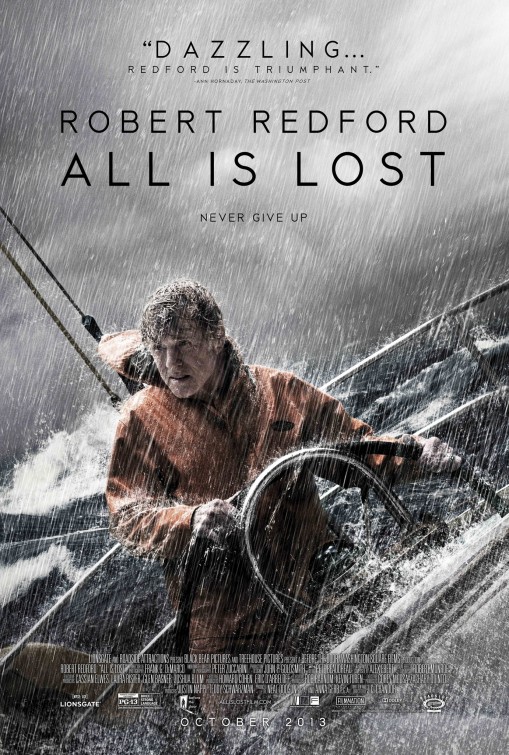
Robert Redford, in one of the most physically demanding roles to hit cinema screens as of late, is truly captivating in All Is Lost. But not in a flashy way. No, Redford is a loner here. An outcast, literally. He doesn’t talk much. Instead, nature does that for him. For this is a ferociously sounding film and one that, at just under one and three-quarter hours long, probably shouldn’t be as attention-clutching as it ends up consistently being throughout its runtime. There are limits exclusive to the genre, quite obvious at times, but those don’t really matter. This is a fine piece of filmmaking that boasts an even finer central turn from its lonely captain.

A man (Robert Redford) wakes up to an abundance of splashing water careering into his boat. Still half asleep, he ventures up top to check out the commotion and discovers a gaping hole in the vessel’s side caused by an errant shipping container. He doesn’t know it yet but despite fixing the damage in the short-term, the patched up hole is an indicator of the problems to come for the man, problems set to face exasperation at the mercy of an oncoming storm.

Such is the nature of the beast, All Is Lost serves up a very simple story. Man versus nature. There are only really two paths proceedings can slosh down; one, a venture towards the continuation of life and the other, quite frankly, death. Yet despite this perceived lack of narrative territory primed and ready for exploitation, what we see remains utterly captivating. Writer and director J. C. Chandor gets a lot of time out of his simple tale. The near two hour saga — a runtime that might ordinarily generate a tinge of doubt amongst viewers — surprisingly flies in, though given the filmmaker’s succinct track record perhaps surprise is not justified in this instance.

The storytelling is so easy, so uncluttered, that it becomes enticing. Watching Redford’s character patch up a damaged part of the boat transcends mundanity and evolves into something more. It is foreshadowing, but it is also life. This man’s life. He is a sailor and a carpenter. A geographer and chef. The simplicities are accentuated by Chandor’s precise direction and his natural screenplay, growing to the point where every action is must-see. All Is Lost emerges past the man too, though he is always at arm’s length, and considers nature as a pulsating force. The main centrepiece is a prolonged storm sequence that is noisy and intense. Wholly believable, it looks and sounds and presumably acts like a real storm, incessantly dangerous but not Hollywood-ised. We’re eagerly willing for it to pass.

Chandor utilises pathetic fallacy handily — though, admittedly, foreshadowing by way of some grumbling weather is a proposal already there for the taking. We see and hear the storm advance at the same time as Redford. There exists an incoming rush of dread as the captain bolts cupboards mechanically and secures glass bottles. Having said that, the anticipation isn’t overblown and nor should it be given the often low key approach of nature in reality. The inevitable punch carries more weight as a result, leaving Redford — and us — desperately clawing for some motion sickness tablets.

Robert Redford is undoubtedly the film’s infallible anchor. Aside from a sombre and somewhat playful opening monologue where we don’t actually see the actor, there is no verbiage whatsoever for the first twenty minutes. When the man (nameless due to a lack of necessity) finally utters words, he stutters as his throat is so lethargic. The ploy works because it isn’t really a plot. It’s another titbit of reality, one that captures the mood of solitude. Redford’s poise, his calmness laced with acceptance is magnificent. He never fully allows us into his thought process, maintaining a fairly stern stance. Therefore we’re captivated by what the sailor is doing and by what he is about to do — when Redford is analysing the wreckage, for instance. The actor purveys an uncanny grace in the face of turbulence and it is totally inviting.

In some ways, these traits pale in comparison to the sheer physicality of the role. We watch Redford engage in a heap of fixing and heaving and climbing and pumping, a quite miraculous measure given the actor’s advancing years. The eventual intrusion of heavy gale is relentless too, and in this regard Redford’s taxing demeanour adds both to the plight and strength of his lightly-worded character. His performance echoes that of Ryan Reynolds in Buried — we believe the struggle because the struggle is palpable and the sweat is dripping.

Credit should go to Frank G. DeMarco also, his cinematography presenting a quite wonderful setting. The film looks beautiful. Of course when shooting sunscapes that are cascading over waves of blue ocean, there already exists something of a platform to work from, but DeMarco’s excellent gloss aids our placement at sea alongside Redford. It is inventive too; diving with the vessel in a moment of peril particularly sticks out. This look is just one half of a lethal aesthetic duo, partnering up with the outing’s authentic audio. From the initial problem-causing container that groans in accordance, to the boat’s flapping sails caught in the wind, All Is Lost consistently complements our ears. Even the water has a voice, sometimes gentle and pondering, other times violently swelling.

The words ‘all is lost’ can be applied to much: materials that are swamped and destroyed by water; an aimlessly floating container; the doomed vessel; Robert Redford’s stranded, weary man. The film exists within a limited scope and there is only so much it can do, but a permanently laudable sole performance coupled with an incisive aesthetic ensures that All Is Lost a significantly worthwhile trip.

All Is Lost - Redford

Images credit: IMP Awards, Collider

Images copyright (©): Lionsgate, FilmNation Entertainment