Steve Jobs (2015)

★★★★

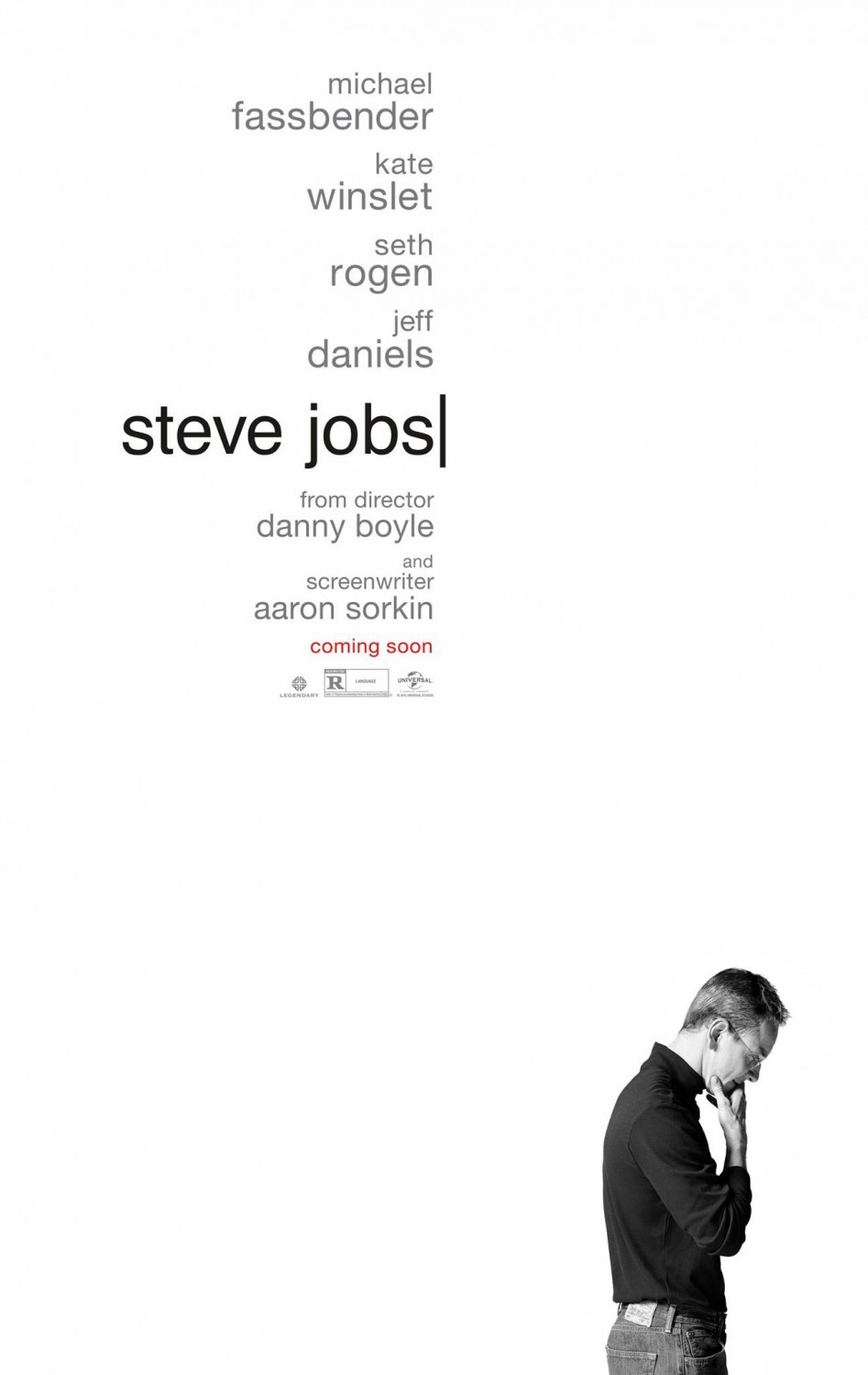
Steve Jobs PosterDirector: Danny Boyle

Release Date: October 23rd, 2015 (US); November 13th, 2015 (UK)

Genre: Biography; Drama

Starring: Michael Fassbender, Kate Winslet, Seth Rogen, Jeff Daniels

That it has taken the combined efforts of a handful of cinema’s specialists to create a portrait of Apple co-founder Steve Jobs, he himself a specialist in complexity, is somewhat fitting. Others have tried and subsequently missed the mark. Perhaps films such as Joshua Michael Stern’s Jobs lacked the raw materials to match the man, languishing instead in a pit of shallow personification. Shallowness is certainly not a characteristic that Danny Boyle’s pseudo-biopic (it’s more of a triple snapshot than a life journey) can be accused of. For his direction supports a piercing Aaron Sorkin script, the screenwriter’s words delivered with panache by an in form Michael Fassbender.

Steve Jobs stalks two primary areas of its protagonist’s life: technology and family. Most of us are aware of his technological feats, but here we see the visionary fear familial commitment, something Sorkin demonstrates early on. Backstage before the 1984 Apple Macintosh launch — the first of three elongated launch sequences; the 1988 NeXT Computer and 1998 iMac unveilings are the others — we watch as Jobs coldly interacts with his young daughter Lisa (played by Mackenzie Moss, Ripley Sobo, and Perla Haney-Jardine depending on the era) and her mother Chrisann Brennan (Katherine Waterston).

Brennan is disgusted at Jobs’ lack of humanity, that his daughter is living on benefits as his business thrives. The conversation switches to an earlier Apple product, the Lisa, and Jobs maintains his unflappable detachment by stressing that there is no titular connection between said machine and his child: “Nothing was named after you. It’s a coincidence”. We don’t believe the revelation, but emotional compromise isn’t how his mind functions. For a man whose existence is sustained via precision and calculation, coincidence doesn’t seem to fit. Perhaps that is why Jobs distances himself from his offspring; he cannot deal in uncertainty.

Sorkin temporarily counters this glacial mantra by having Jobs reel off other acts of kindness, but even those are wrapped up in a commercial blanket. Donating computers to schools for underprivileged kids (good publicity is great publicity after all), for instance. Meanwhile, only after a significant amount of pestering from Brennan does he agree to fund his own kid’s future. They somewhat bond after Lisa uses the Macintosh to doodle, a positive step born out the youngster taking an interest in something her father has created, and not vice-versa. It is a relationship that improves with time, Fassbender’s delicate touch increasingly indicating greater compassion.

There’s a shot around the halfway mark that is reminiscent of the one in Skyfall where techno-villain Raoul Silva can be seen ambling towards Bond from afar, camera frozen. Here, Apple CEO John Sculley (Jeff Daniels, brilliantly recapturing his Newsroom malaise) adopts the role of Silva and Jobs of Bond, though it is part of an extended montage delivered with a kinetic, stylish drive. This is probably the most Danny Boyle-esque the film gets, as elsewhere the director sits back and lets Sorkin’s electric screenplay absorb us. An unrelenting barrage of words does mean the verbiage can occasionally be tough to follow, and instances of humour are rarely afforded time to breath, but it really is a wicked script.

Alwin H. Küchler’s fluid lens work invokes Dutch tilts and floats alongside Jobs, funding his unique air. People constantly fuss around him, his demands fortuitously sky high right before product launches. This takes a little suspension of disbelief — chances are he never faced such family drama prior to the Macintosh introduction — but you do eventually begin to believe the hype. The man is like a rock star, a faultless salesman, and an underhanded criminal mastermind all at once. The cult of Apple is apparent too, with staff members “oohing” and “ahhing” during practice sessions. We even see Jobs wash his feet in some sort of messianic ritual.

The inventor dips in and out of the company for various reasons as the film progresses. When he ends up back with Apple for the movie’s final third, the iMac inauguration, Jobs is at his most charismatic and humorous. Fassbender affords him a chirpier exterior, or so it seems, cracking jokes and congratulating staff members for fixing problems (this clearly mirrors an earlier scene during which he unfairly admonishes an employee). It’s worth pointing out at this point that following his performances both here and in Macbeth, Fassbender ought to start dusting off the awards circuit apparel. The Irish star captures Jobs’ imperfect allure, but it is how the actor wins our empathy that truly astounds.

The spikiness remains. Issues with his now teenage daughter arise again, and it becomes apparent that the entrepreneur’s success is directly related to his relationship with Lisa. When the latter is fractured, the former is non-existent. You get the sense Jobs has spent a career over-egging one rather than focussing on both, and he realises it too: “What you make isn’t supposed to be the best part of you,” says close confidant Joanna Hoffman (a wonderful Kate Winslet), often the mediator between calm and crisis. The three time-sensitive snapshots collectively tell a succinct story and, though they are a tad repetitive, watching the layers unravel is a rewarding experience.

Daniel Pemberton delivers a technologically-infused score that sounds, oddly, like the Jaws theme sped up with light beeps replacing dense strokes. A Zimmer-like quality looms large late on, reflecting our central figure’s faux-heroic transformation. Camera filters change with each passing season, incorporating both rustic woodiness and a crisp sheen. The surrounding textures alter too — plastics make way for glass as the old oblong age evolves into a pre-Millennium new age that favours smoothness (see the difference between the rectangular Macintosh and the curved iMac).

Steve Jobs’ world makes sense to him but nobody else, and the film clearly expresses that. There are verbal jousts too with former partner Steve Wozniak (Seth Rogen), most of which highlight Jobs’ ignorance. But this is not a hatchet job. It is not a character assassination. Boyle’s picture is instead a contained examination of a convoluted man, a piece that refrains from taking sides and, in truth, never really suggests there were any sides to take in the first place.
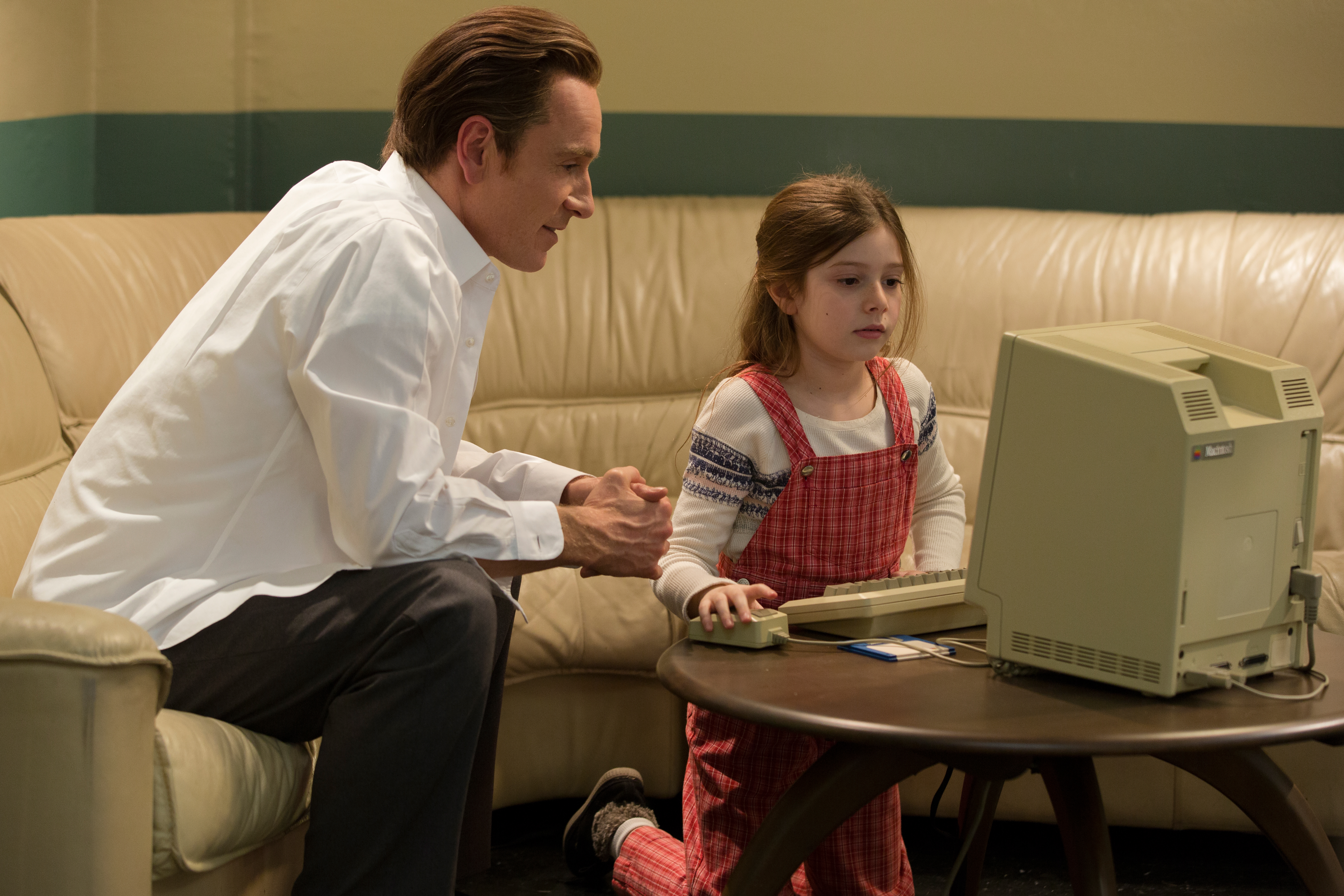
Steve Jobs

Images credit: IMP Awards, Collider

Images copyright (©): Universal Pictures

Frances Ha (2013)

★★★★

Frances Ha PosterDirector: Noah Baumbach

Release Date: May 17th, 2013 (US limited); July 26th, 2013 (UK)

Genre: Comedy; Drama; Romance

Starring: Greta Gerwig

There isn’t really a plot to Noah Baumbach’s low-key indie drama Frances Ha. Certainly not one of any conventional sort. We are thrown straight into the life of our central protagonist, the eponymous Frances (Greta Gerwig), without a proper introduction. From opening to closing she spends her time apartment hunting (this is the film’s central crisis), though Frances doesn’t seem all that worked up about her uncertain predicament. The screenplay, penned by Gerwig and Baumbach, is very loose — you get the feeling there was a lot of improvisation during filming.

And yet the whole thing bumbles along with excitable charm and an internal confidence born, perhaps, out of experience. It could be a Woody Allen venture: title cards pop up every so often detailing the various locations Frances attempts to settle (primarily around New York), and the nomad herself fits Allen’s ditzy mould. When she isn’t spending time with her best mate, who sports glasses with enormous lenses by the way, Frances is training to become a dancer. Unfortunately she ain’t quite up to the required standard and, in New York, triers don’t get paid: “I can’t even get outta the house on my feet”.

Characters often mumble incoherences, blabbing one minute about unaffordable rent bills and the next about finger injuries. In reality, despite what Aaron Sorkin would have us believe, we probably spend much of our time conversing in a similar fashion. Not that Baumbach’s film reflects real life: there is a scene where our luckless protagonist gallantly offers to pay the bill following a meal with a potential boyfriend (the body of her previous beau is still warm at this point), only for her card to be declined. Rather than letting Adam Driver’s Lev Shapiro — if that is his real name — do the honours, Frances bolts out of the restaurant and scampers around the neighbourhood looking for a cash point. She finds one eventually, reappearing at the table with some money and a randomly bloodied arm.

You laugh because the whole scenario is utterly bonkers, and it is one that cements the film’s reputation as a bible for clumsy folk. Frances Ha is like the Friends movie finally realised, only every character is Phoebe. This hodgepodge of kookiness is actually fairly endearing and lends itself to the overarching notion of misadventure. It transpires Frances is actually a pretty good dancer (“You were great tonight”), but her instructor opts to cut her from the Christmas play anyway. Is Frances the unluckiest person alive or is she simply too unprepared, her moment-to-moment style of living an inescapable and fruitless trap? Regardless, you stick with her because she refuses to give up her creative passion. That is admirable.

These underplayed indie outings are often left wide open when it comes to accusations of baselessness, and there is a sense that Baumbach only shot in black-and-white because there happened to be a spare roll lying around. But I don’t think the film aspires to be intentionally pithy. Indeed, there is a pithiness in the sense that it’s a quirky drama without an A-to-B plot and C-to-D script, but that’s just how it is in Baumbach’s New York. Another apartment dweller, Benji (Michael Zegen), wants to write for Saturday Night Live and suitably spends his days watching movies, presumably because procrastination is the key to comedic success.

Greta Gerwig plays Frances with a childlike innocence: she sleeps with the door ajar; she turns to her parents in a time of need; she engages in play fights with other resistant lodgers. There is even a moment where the camera cuts to her teaching a group of youngsters ballet, and she looks right at home. Grinning with a genuine smile, Gerwig superbly manages to captivate through a waft of potential annoyance, and as such you see and sympathise with the fragility bubbling beneath Frances’ surface.

Elegantly inelegant, the daydreamer relentlessly apologises to people when she’s probably only at fault two-thirds of the time. Solutions are right there at her fingertips yet she keeps washing her hands — a temporary job at the dance studio that would earn her some cash becomes available, but she is initially too impulsive (fed up with speculative opportunities?) to accept. The supporting players all contribute too, particularly Grace Gummer whose dissociative air is a terrific counterbalance to Gerwig’s friendliness.

Paul McCartney and David Bowie are part of a soundtrack that hops tactfully from in vogue pop to classical strings to early Hollywood-era romance. Sam Levy’s cinematography bears a trace of Wes Anderson — the camera often adopts a still frame that zips back and forth between characters in conversation. The film is generally mad, makes little sense, and exists in a hyper-surreal world where people do silly things and still manage to get by. But it is addictive and funny and sweet, and that’s all that matters really.

Frances Ha - Cast

Images credit: IMP Awards, Collider

Images copyright (©): ICF Films

Jaws (1975)

★★★★★

Jaws PosterDirector: Steven Spielberg

Release Date: June 20th, 1975 (US); December 26th, 1975 (UK)

Genre: Adventure; Drama; Thriller

Starring: Roy Scheider, Robert Shaw, Richard Dreyfuss

It is probably fair to say Jaws cemented Steven Spielberg’s status as a prominent athlete in the movie-making race. Released in 1975, the film ushered in a fresh era of monster flicks. Those hallmarks that we deem familiar in the genre today made their mainstream debut in Spielberg’s classic: the inaugural attack and subsequent denial; the saviour who is the only one bearing initial clarity; the prevention plan executed atop a wave of mayhem.

It is a blueprint that studios and filmmakers have followed since — the pitch for Alien famously included the tagline “Jaws in space” — primarily because the structure indiscriminately appeals to audiences. You only have to glance back at the last two summers to see the formula play out in Gareth Edwards’ Godzilla and Colin Trevorrow’s Jurassic World. Speaking of summer, Jaws is often also touted as the first seasonal blockbuster (it broke box office records upon release in the US). The catch? This blockbuster is one of those intelligently composed things.

Following the watery demise of a teenage girl via shark attack, the residents of Amity Island find themselves on high alert. Chief Martin Brody (Roy Scheider) is tasked with developing a solution, but when the problem takes the form of a person-guzzling creature solutions are hard to come by. Bill Butler’s camera focuses directly on the words “shark attack” as Brody punches them into the death certificate of the aforementioned teen, the surrounding silence signifying both the solemnity at hand and the imminent danger. Everybody is a potential target because, on Amity Island, everybody is water-bound.

The locale is a “summer town [that] needs summer dollars,” according to Mayor Larry Vaughn (Murray Hamilton). Speaking to an agitated Brody, he continues, “You yell shark and we’ve got a panic on our hands on the 4th of July.” Though his use of the word panic is probably a reference to any incoming tourists, chances are he is more concerned about panic on the business front. It’s commercialism versus well-being, a duel unethically buffeted by a mayor who slinks around in a bright suit looking like a candy floss vendor selling treats that appear appetising but are ultimately bad for your health. And it’s Brody who takes the brunt of his poor decision-making: after a grieving mother vents her fury to Brody’s face, the film evolves into a tale of redemption and vengeance.

A smart and often snarky screenplay accommodates various themes and elevates Jaws well beyond popcorn entertainment (though it can be just that if you want it to). Originally written by Peter Benchley, the screenplay was reshaped by Carl Gottlieb, adapting his own novel, as filming got under way. And to his credit Spielberg values the duo’s writing just as much as he does tension building and aquatic action. This means there is wit in abundance, “we’re gonna need a bigger boat” being the obvious calling card. It is more than just a throwaway line though — the iconic scene quite brilliantly combines comedy, timing, and terror.

The shark seems to strike out of the blue. Though precautions are in place (shutting down beaches etc.) everything seems a bit rushed, a bit chaotic, as if the appearance of the creature is a wholly uncommon event. A rubbery meteor thrashing into an otherwise idyllic seaside lifestyle. Then there are the constant distractions — while Brody tries to keep an eye on swimmers, a plethora of unwary residents inundate him with random musings. And when the islanders catch a bogus shark, the local photographer is too busy taking photos for anyone to notice it’s the wrong fish.

Like an old Wild West villain, the shark has a $3,000 bounty placed on its fin. We don’t see it for a long time, but we do catch a glimpse of the consequences left in the monster’s wake: a crab-strewn arm; a volcanic bloodbath; various images of unevenly dissected limbs. You can do nothing but watch as its grey silhouette stalks the dangling legs of helpless victims whose idea of a beach vacation involves more relaxation and less chomping. Simmering in the background is this domestic strand about a father trying to introduce his sons to a dangerous world, juggling the virtues of the sea with the violence of its inhabitants.

There is a masculine theme at play too, and it particularly rears when boatman Quint (Robert Shaw) shows up, gruff and tough, parading a confidence and idly disrespecting those around him. But there is more to Quint, a clouded morality that swims beneath the surface. Robert Shaw delivers a revelatory monologue with a look on his face that denotes unsubtly disguised horror in one of the film’s more serene, excellent scenes. He joins Brody and oceanographer Matt Hooper (Richard Dreyfuss) on a voyage to oust the shark and as the three guys get grimier and drunker, you constantly wonder just how exactly they’re going to conquer the aqua beast.

Jaws’ score is often heralded for its tense beat that builds to a crescendo, but it also bears a swooping grandiosity that marks the film’s action-adventure element. Sharp high notes chirp along pleasantly, notes that composer John Williams would go on to recycle for the first few Harry Potter outings. The film isn’t an out-and-out horror flick but it does dabble in gruesome visuals and a playfully heart pounding atmosphere.

There is a bit of dip in stress levels just before the final act plays out, but you let it slide as Spielberg has spent so long admirably refraining from bluster, favouring human drama instead. Led by the quintessential everyman Chief Brody, his regular qualities superbly highlighted by Roy Scheider, Jaws manifests as a clever genre-chewer that still boasts significant bite 40 years on.

Jaws - Cast

Images credit: IMP Awards, The Guardian

Images copyright (©): Universal Pictures

Brooklyn (2015)

★★★★

Brooklyn PosterDirector: John Crowley

Release Date: November 4th, 2015 (US); November 6th, 2015 (UK)

Genre: Drama; Romance

Starring: Saoirse Ronan, Emory Cohen, Domhnall Gleeson

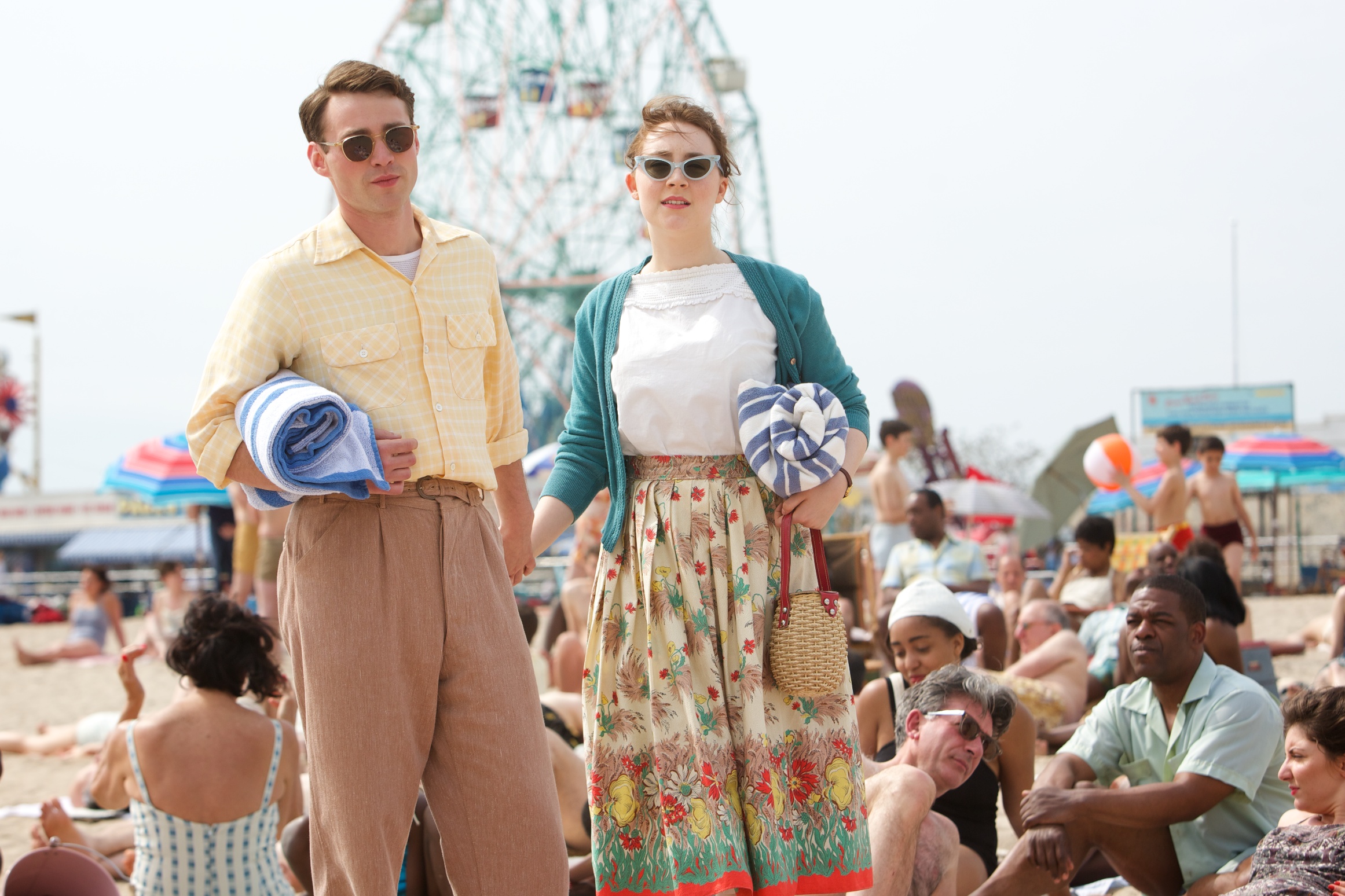
When we first meet Eilis Lacey (Saoirse Ronan) she is about to work a shift for store owner Miss Kelly — aptly nicknamed Nettles Kelly, played with spite by Bríd Brennan — who apparently enjoys making the young Irish lass’ life a misery. So when Eilis’ local priest sets in motion a plan that’ll take her across the pond, you expect to see a burst of excitement, relief even, emanate from our protagonist. Yet the prevailing emotion is guilt, over leaving her mother and older sister, over leaving her home, even over leaving her downbeat customer service job.

And this guilt never truly dissipates at any point during Brooklyn, John Crowley’s richly romantic immigrant drama. A shipmate on the stomach-lurching trip to the US manifests as a friendly face full of relaxing advice: “The mistake was coming home from America in the first place”. Her caring attitude reminds us of Eilis’ older sister Rose, who is movingly played by Fiona Glascott. Glascott, along with Saoirse Ronan and Emory Cohen, should be a main player during the upcoming awards season.

Upon arriving in Brooklyn, Eilis begins work as a seller in an upmarket department store, supervised by Miss Fortini (Jessica Paré) who fits somewhere between Nettles Kelly and The Devil Wears Prada’s Anne Hathaway on the strict spectrum. Eilis quickly realises she is an errant tadpole swimming in a giant urban ocean. She’s just a normal girl after all, someone who yawns at church and rolls her eyes when discussing boys. Yves Bélanger inserts a few mirror shots of Eilis, her reflection lost and alone amongst a rabble of strangers, their faces either hidden from view or burry.

She is scared to commit, perhaps a consequence of her rough separation from Ireland — an emotional packing scene between her and Rose is subtly powerful — or maybe because she is unsure of herself in this grand new world. However everything changes after two key events: the obvious, her meeting Tony Fiorello (Cohen), and the less obvious, a reaffirming experience at a holiday dinner for the homeless (Irish immigrants who built America, who founded opportunity for millions of others though their unselfish hard graft). At times Nick Hornby’s screenplay dabbles in romantic extremes, and when one of the immigrants sings a familiar song that leaves Eilis in tears, your sentimental barometer rages.

Tony doesn’t talk much because he loves listening to Eilis’ voice. He’s like James Dean, only less rebellious, and has the perfectly poised wavy hairdo and charming, cocky grin to match. The chemistry between the two sparks with authenticity, thanks in no small part to both actors. Cohen is readymade for 50s living and the manner in which he carefully interrogates his muse is unflinchingly amiable. Ronan is also excellent, for the most part reigning in her exterior while also managing to evoke an entire range of emotions, from longing to hope, and despair to joy.

We meet Tony’s youngest brother at a Fiorello family dinner, the kid a comedic firecracker with slapstick sensibilities. Laughs arrive on fairly regular basis throughout Brooklyn and the vast majority of them are mined around the dinner table (Crowley and co. could be on to a new subgenre). As head of the boarding where Eilis stays during her time in New York, Julie Walters is frequently the pivot from which laughter swings, often humorously shutting down the film’s very own ugly sisters — they’re actually beautiful, and not related — who constantly spew mischievous mealtime jibes.

Eilis’ commitment issues are especially highlighted in the presence of Tony, though she never looks disconnected, just slightly standoffish. We will her to take the plunge, not through malice, but because the pair are clearly meant to be together. The idealistic core that shapes their relationship reflects Felicity Jones and Eddie Redmayne’s rapport in The Theory of Everything. It’s not physical thing, nor even an emotional one; there is a sensitive pressure surrounding Jones and Redmayne’s companionship that isn’t necessarily prevalent here. Rather, both partnerships evoke a pleasant tenderness and both are as far from saccharine as is possible.

As Eilis’ confidence grows, her happiness shoots up and her outfits become brighter. Just as she is riding the crest of an enormously positive wave, a significant event sends the water crashing. We revisit Ireland and meet another potential love interest in Jim Farrell (Domhnall Gleeson). Those who have seen the trailer will know about Jim’s appearance, though upon spending some time with Tony you begin to wonder exactly how Brooklyn is going to successfully introduce a serviceable competitor for Eilis’ affections. Well it does, and the casting of the intrinsically unlikeable Domhnall Gleeson is why. Gleeson, by the way, seemingly repels poor films.

We revisit the theme of guilt born out of love and loneliness: when Eilis returns to Ireland everyone wants her to stay. To marry. To work. Distance can be both an enemy and a friend. Unfortunately the enemy consistently lingers like a spectre whereas the friend only visits fleetingly. From a tadpole in an ocean, back in Ireland Eilis looks like a misplaced New Yorker. She now has two homes and misses them both.

There is nothing flashy going on in Brooklyn, which is testament to John Crowley’s trust in the material — a solid screenplay, an unobtrusive score, a talented cast. The material, as it transpires, is delightful.

Brooklyn - Emory Cohen & Saoirse Ronan

Images credit: IMP Awards, Collider

Images copyright (©): Lionsgate, Fox Searchlight Pictures

Horns (2014)

★★

Horns PosterDirector: Alexandre Aja

Release Date: October 29th, 2014 (UK); October 31st, 2014 (US)

Genre: Drama; Fantasy; Thriller

Starring: Daniel Radcliffe, Juno Temple, Max Minghella

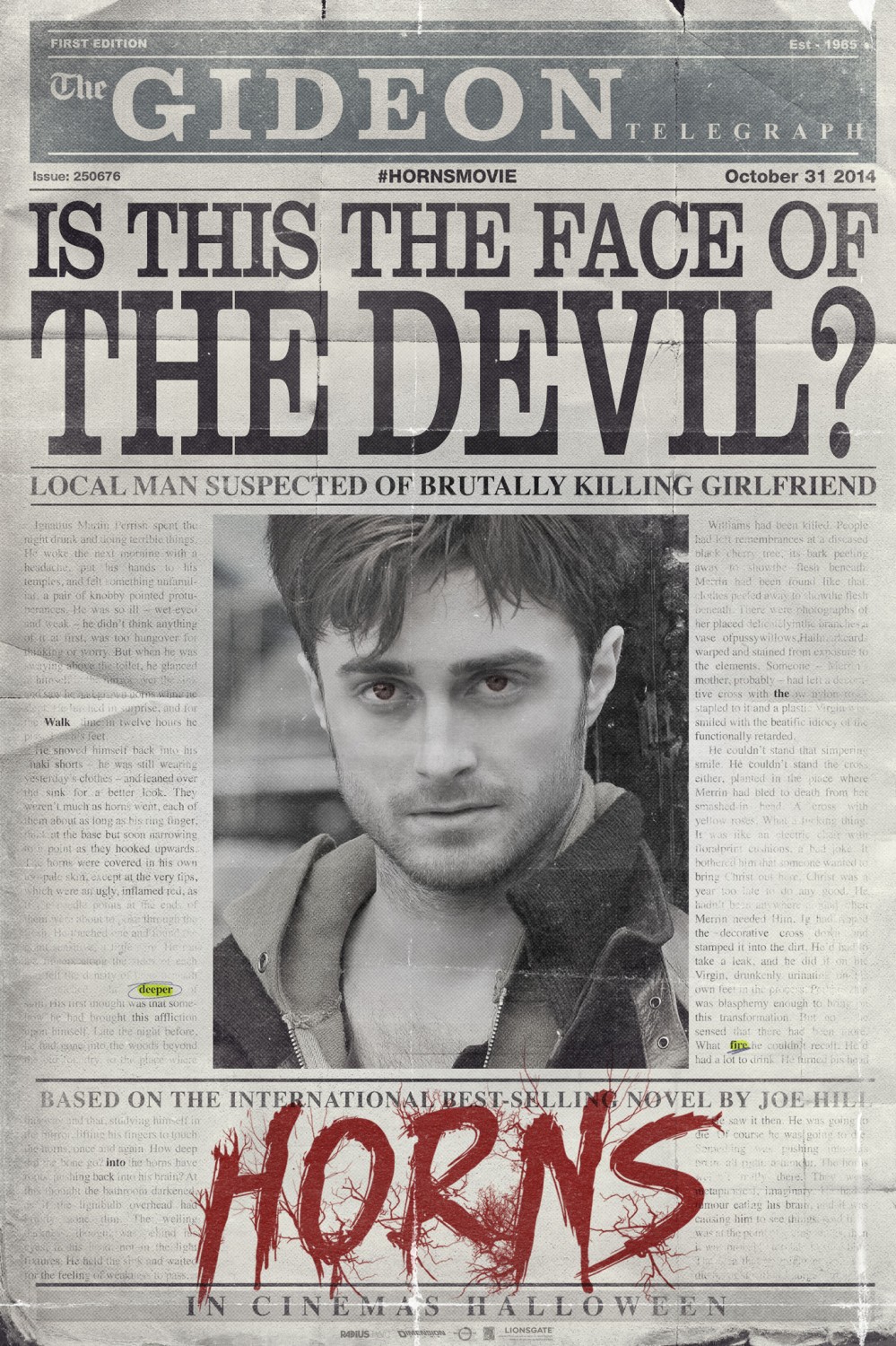
Based on author Joe Hill’s novel of the same, Horns represents another opportunity for Daniel Radcliffe to shed his boy-wizard skin. The actor ought to be commended for selecting varied post-Potter roles that, at least from the out looking in, continue to pose different challenges: in recent years, he has played an Edwardian-era lawyer, a Beat Generation poet, and now a horn-growing murder suspect. This might be his most interesting role on paper, but not even Radcliffe’s admirable effort can save Alexandre Aja’s inconsistent adaptation.

Labelled a killer by many in his community, Ig Perish (Radcliffe) wakes up one morning to discover a pair of bulging discs protruding from his forehead. The swollen abnormalities eventually evolve into manic-looking devil horns which, despite Ig’s best efforts, cannot be remove. Bereft of answers, he tries to get on with his life in as normal a manner as possible, and this mainly involves conferring with childhood mate and legal counsel Lee (Max Minghella). Only, those around Ig don’t quite follow suit.

The tone at the beginning is almost wholly comedic. Animal horns fully realised, whenever a mournful Ig finds himself in the company of others, people start acting horrendously: a mother vehemently denounces her young daughter’s fairly innocent behaviour; a receptionist spits vulgarities in the presence of a child; and a doctor yearns for drugs, only not the healthy kind. Yet it all feels forced. The aloof ambience doesn’t really have a foundation, spawning with no support. Why are people acting abominably? Why does Ig have horns? And if we must: who killed girlfriend Merrin (played by a seriously short-changed Juno Temple)?

The latter question is the one that instigates the film’s goings-on, but it isn’t necessarily the one that drives the piece. Horns doesn’t really have a central pivot point as far as the narrative goes. Instead, there a few floating plot strands, none of which are amply examined. Most time is spent disputing the reality of Ig’s jagged head attire; there is an ongoing debate surrounding whether the horns actually exist, or if they are simply a figurative manifestation of guilt. See, not everyone is privy to the mini antlers, and the presumption therefore is that they can only cast a spell on immoral folk: “Maybe the horns just don’t work on good people?”

It’s a premise that has potential, as evidenced by the book’s success, but director Aja struggles to maintain a settled tone, nonchalantly jumping around from dark comedy to revenge-thriller to grotesque horror. This hampers events on-screen and distracts us. You get the sense a straightforward crime-mystery would have been more palatable — the oddness, the tonal inconsistency, is too isolating. It also hurts Ig; he gets caught up in the film’s vacillating tonal underbelly, cracking jokes one minute and weighed down by despair the next. Radcliffe affords his character a degree of watchability, but it is tough to sympathise with a wimpy and agitated protagonist.

Aja is aiming, it seems, for a 21st century hipster-ish Twin Peaks. Heather Graham appears as a waitress wearing bubblegum-red lipstick and cream -pink overalls. If that is not enough, at one point the camera pulls away from a band playing in a club, the background aquarium-blue in colour and the atmosphere red-tinted. Though, by then you’ve probably already loaded up disc one of the Twin Peaks box set. Whereas David Lynch’s mesmeric concoction — both TV series and film — bore elements of genuine horror and hazy addiction (not to mention its band of universally compelling characters), this succumbs to a disorientating factor that it never shakes. Horns needs a Horne.

We get a Scream citation in the form of a doting detective, short hairdo and moustache combo invoked, but sadly it ain’t circa-1996 David Arquette. Even though there is always room for peer admiration, the film gets too caught up in saluting other, frankly better, horror instalments and inevitably misses its own creative train as a result. When Horns does try to chisel out original content it makes a host of unsubtle references to faith and Hell. A parade of snakes stalk Ig at one point, but on this occasion Parseltongue bites the dust.

In another underfed narrative thread, an explosive childhood flashback recalls The Butterfly Effect. Its intention, I guess, is to subsidise the edgy themes at large and suggest that violence once brought Ig and his cohorts together and now violence is in the process of tearing them apart. Had screenwriter Keith Bunin spent more time exploring how we, as a public, engage in tragedy-induced media frenzies, there might have been more for viewers to chew on. Gone Girl is a recent film that bitingly critiques how people reveal their true selves in dire moments, and it is overflowing with fascinating relevance. Admittedly, Gone Girl is also simply an all-round better film.

Horns is quite well-played in parts. A battle sequence performed to “Personal Jesus” makes very little sense yet garners a chuckle. The outing also has a laudable non-distinctive aesthetic; it could be set at any time in the last thirty years. The piece deposits its comedic purpose for something scarier later on, though it’s nothing truly frightening. It’s all just a bit grim really.

Horns - Daniel Radcliffe

Images credit: IMP Awards, Collider

Images copyright (©): Dimension Films, RADiUS-TWC

Crimson Peak (2015)

★★★★

Crimson Peak PosterDirector: Guillermo del Toro

Release Date: October 16th, 2015 (UK & US)

Genre: Drama; Fantasy; Horror

Starring: Mia Wasikowska, Tom Hiddleston, Jessica Chastain

The fact that Guillermo del Toro’s latest offering is a carnival of visual ebullience probably won’t come as a shock to anybody out there. A 19th century Gothic nightmare with lots of frothy verbiage, every last word enunciated to the nth degree, Crimson Peak delivers in most of the areas we would expect but not all of the areas we would like. Granted, this is not a horror movie nor does it try to be anything of the sort, but its fleeting moments of fright never quite amount to the haunted atmosphere del Toro covets. The narrative also takes some time to explode into life, eventually doing so with menace. At least until then we have a bedazzling aesthetic to keep us company.

Mia Wasikowska plays Edith Cushing, a young woman who seeks to carve her own way in the world without relying on her father’s (Jim Beaver) wealth. She writes (stories with ghosts, not ghost stories), though Edith’s professional hopes are initially dashed under the guise of superfluous reasoning when a superior decries her “feminine handwriting” and the lack of romance in her tale. Crafty and stubborn, she swaps pen strokes for typing but remains steadfast on narrative content. Matthew Robbins co-wrote the film with del Toro and, in Edith, the pair have concocted a female character whose determination to evade tradition is at odds with the prevailing social structure.

She meets Thomas Sharpe (Tom Hiddleston) when the latter shows up looking for funds to support his clay processing invention, and the duo fall in love. From dad to would-be muse Dr. Alan McMichael (Charlie Hunnam), everybody is wary of Thomas’ intentions: “There’s something about him that I don’t like”. Everybody except Edith, who really should have taken the hint upon seeing Thomas converse with his mischievous sister Lucille (Jessica Chastain) in the shadow beneath a large, looming tree.

Crimson Peak’s technical prowess is there for all to see, its rich texture and engrossing visuality arguably on a par with del Toro’s masterpiece Pan’s Labyrinth. But it lacks that film’s beating heart, perhaps because it is tougher to empathise with Edith here than it was Ofelia there. Pinpointing exactly why the Edith’s plight doesn’t translate as well is difficult; Wasikowska is perfectly fine in the role and her character is not disagreeably construed. It is true that her words are often quite gushy, certainly more so than those spoken by Lucille, and at best on a par with Thomas’ dialogue.

The film isn’t excessively melodramatic but its swirling air of grandiosity can hinder the credibility of characters’ actions — from where, for instance, is Edith’s insurmountable trust in Thomas born? To align grand romantic gestures and sap-filled exchanges with Gothic fiction would be a fair assessment, though I’d argue the genre itself is in that case flawed. Or, at the very least, the aforementioned traits don’t meet the screen with enough grounded authenticity in Crimson Peak, and definitely don’t fit a character who is trying to break free from cultural the norm.

Edith’s mother appears in ghost form, an apparition cut from the same ocular cloth as the spectre in another Jessica Chastain outing, Mama. Chastain has more to sink her teeth into here; as Lucille she is very mysterious, her movements icy and her stare searing. She often dawns extravagant gowns but unlike the bright, undiluted garments worn by her sister-in-law, Lucille’s attire often reflects her dark interior (deep rose-coloured and sharply defined). Her undulating poise sets a tone of torment and, as it transpires, Chastain is a terrific passive-aggressive tormentor. But Lucille is also on the verge of mental collapse — her composure, fake, could come unstuck at any moment.

Tom Hiddleston is also very good, though his role commands a different shade of mystery. He must be both a schemer and a sympathiser, and the actor finds the correct balance between the two. You feel his conflicted plight, yet you still can’t fully trust his crow-esque demeanour. In a sense the film is crying out for more interactions between the siblings, especially during its less compelling first half. A word too for Burn Gorman who is superbly cast as a sly detective of sorts, slinking around in the much the same vein as Metropolis’ Thin Man.

At times del Toro’s film is exceptionally violent. One bathroom-set murder harkens back to Casino Royale’s pre-title brawl, only this one is much blunter and probably much bloodier too. It is part of an effervescent production design that somehow straddles the line between realistic and dreamlike: marvellously crafted sets, eye-catching costumes, piercing sounds (just wait for Lucille’s ceramic-screeching monologue).

Enshrouded in a bleak snowy mist, Allerdale Hall — the mansion that hosts proceedings — could pass for a miniature Voldemort-led Hogwarts. Dan Laustsen’s camera swoops around torn halls and through once-noble doorways as if flaunting the Titanic. When it comes to housing, del Toro is decorative master and he incites every moan, groan, and grumble from Allerdale Hall as possible. Blood red clay seeps from floorboards and bleeds down the walls in Evil Dead II fashion; it’s as if the building is literally sinking into hell.

Crimson Peak benefits from the process of time, with each passing second coaxing greater momentum and a rise in intrigue level, until the film reaches its barnstormingly gory finale. But it also benefits from boasting a cast who collectively prescribe to the mood of the piece, and a director who knows this genre — his genre — better than most.

Crimson Peak - Tom Hiddleston & Mia Wasikowska

Images credit: IMP Awards, Collider

Images copyright (©): Universal Pictures

The Walk (2015)

★★★

The Walk PosterDirector: Robert Zemeckis

Release Date: October 9th, 2015 (UK & US)

Genre: Adventure; Biography; Drama

Starring: Joseph Gordon-Levitt, Charlotte Le Bon, Ben Kingsley

In 1896 the Lumière brothers screened one of their debut films, L’arrivée d’un train à La Ciotat. Legend mischievously has it that audience members, shocked by the sight of a steam locomotive moving towards them, fled from the vicinity with vigour. It’s one of those historic stories draped in romanticism that you desperately want to believe, and films such as The Walk give credence to stories such as those. The Walk isn’t as authentic as James Marsh’s brilliant Man on Wire, but then that documentary never dangled us 1,350 feet above Lower Manhattan.

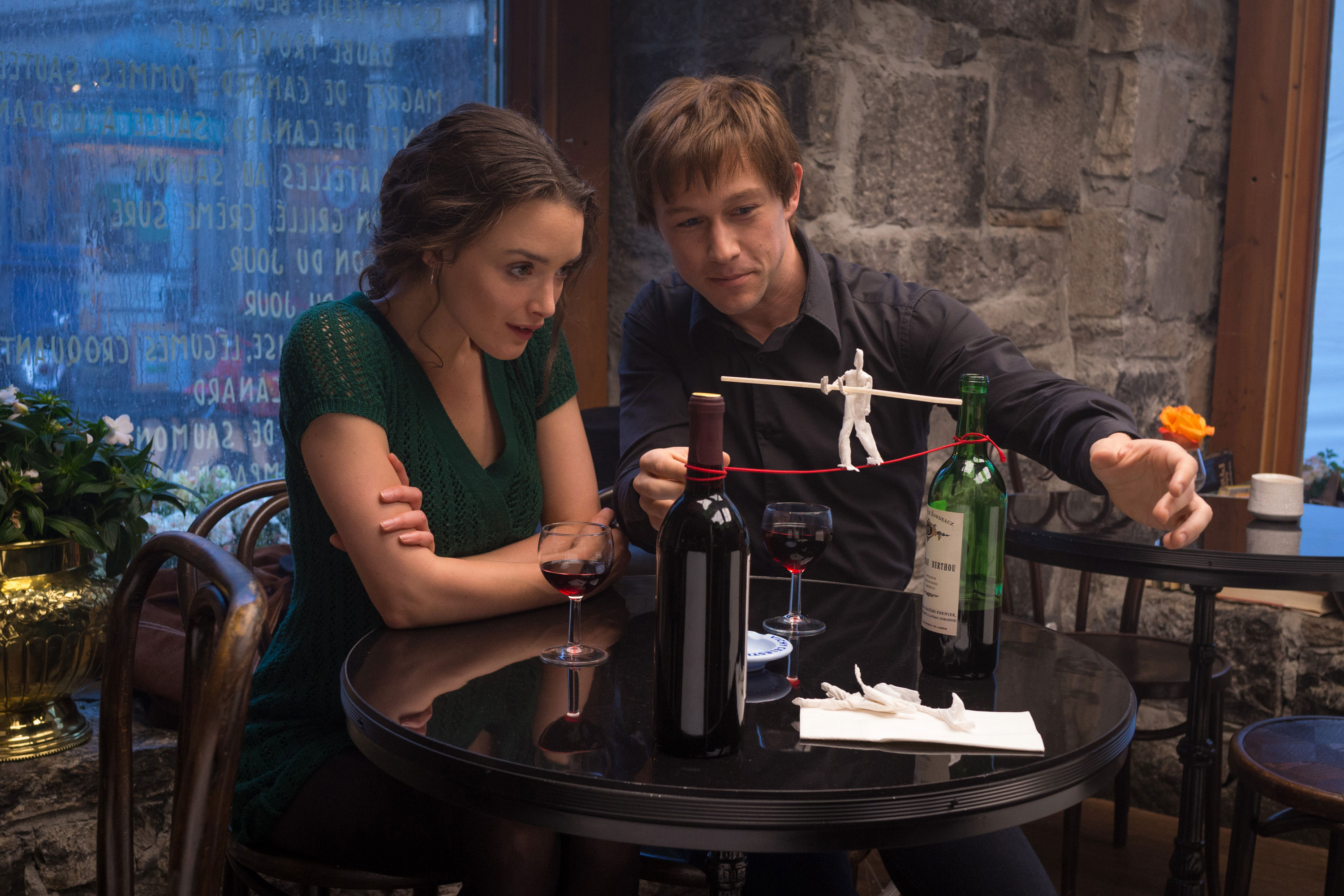
Philippe Petit (Joseph Gordon-Levitt) does not believe in “getting a permit”. He can say that again. After biting into a sugary sweet, the French street performer scuttles over to his local dentist and then moans about having to struggle through two hours of toothache as he waits for an appointment. He ain’t the only one squirming for two hours; if you don’t get along especially well with heights, things might get a bit tetchy. Petit’s pain-stricken time at the dentist acts as a catalyst for what he would later call the “artistic coup of the century”: a tightrope walk between the Twin Towers.

But before we can ascend, there is stuff to do. Narrative, or set-up, or something. The visuals down on ground level are oddly ropey. It’s as if the film is trying to mix a Toy Story-esque texture with real life, and it doesn’t quite work. The objective is clear and sort of understandable: to evoke a fairy tale quality that supports Petit’s impossible task, one bearing mythical connotations. But the uncanny aesthetic funds a light, sprightly momentum when perhaps something grittier would have been more interesting — the real Petit, for instance, has never shunned away from acknowledging his foolish qualities. In fairness, Joseph Gordon-Levitt does energetic vanity well.

Writer-director Robert Zemeckis and co-writer Christopher Browne do at least shed some light on Petit’s stubbornness. The performer’s selfish mantra in the pursuit of artistic merit places unfair stress on his friends and family, a sentiment also explored in Everest. As such Petit veers exceedingly close to unlikeable, which would be fine if the film wasn’t so hell-bent on trying to sell him as the dream-conquering saviour of New York. The screenplay takes liberties with specific true events. In Man on Wire, Petit admits to cheating on his girlfriend Annie (Charlotte Le Bon) immediately after achieving his goal, but the film shies away from this revelation and the alternative it proposes is unsatisfactory.

Petit’s characterisation could be bolder. In an interview on the Empire Podcast, Zemeckis revealed why he chose to selectively colour his lead: “The character I thought the audience could identify with is the one that I portrayed”. His reasoning is fair, but the director is underselling his audience’s willingness to empathise with shades of grey. Towards the end, one of Petit’s comrades suggest he has finally given soul to the Twin Towers, which might also be a fabrication. But at least this is part of Zemeckis’ attempt to pay homage to the World Trade Center post-9/11, and the idealistic notion is actually quite sweet.

Back in France we occasionally rendezvous with Ben Kingsley, playing tutor Papa Rudy, who sports a non-specific European accent — it’s all over the place and nowhere in particular. One of the team members recruited by Petit to fulfil his self-penned destiny suffers from vertigo, while another, who spends the film intoxicated on drugs, jokes about the height of the stunt (though to be fair, the latter’s Shaggy from Scooby-Doo demeanour is quite amusing). Petit himself donates to this atmosphere of farce with statements such as, “I whisper so the demons won’t hear me”.

It is all quite ludicrously caper-ish. Ocean’s Eleven atop the world’s tallest building. As the team plans Petit’s vertical-turned-horizontal heist, the tightrope walker dawns a number of amusing disguises: reporter, construction worker (foot impaled by nail included), tourist, businessman. Composer Alan Silvestri even occasionally treats us to Mission: Impossible’s famous vacillating whistle. The soundtrack also borrows from Damien Chazelle’s Whiplash, fielding a cantankerous drum and jazz beat aided by the prevailing tension. Thankfully there is no rushing during The Walk.

Inevitably, the outing has to wade through a sea of invasive anticipation. Most of the events that occur during the opening two-thirds are fine, but we’re only really here to trial the fearful majesty of high, high, high-wire walking. Following Petit’s lead — his calming influence is a saviour — the first time we peer over the edge of the World Trade Center an undeniable rush of exhilaration and terror ensues. This is where Dariusz Wolski’s cinematography really comes to fruition, at night unveiling a wonderful neon carpet below, and during the day capturing the voluminous bustle of New York City. The towers look incredible too; it’s nice seeing them relayed in such a positive light.

But is the walking part of The Walk just a stunning gimmick, or is it a genuine cinematic experience? Probably a bit of both. As Petit steps onto his wire you brace yourself in much the same way someone would prior to pelting down a steep slope on the world’s fastest roller coaster, but the sequence also incorporates classic movie tropes: burgeoning threat, visual amazement, a visceral personal reaction. There is one moment involving a seagull that almost ruins the spectacle (it’s ridiculous and unnecessary) but thankfully that dissipates quickly.

If 3D is one of modern cinema’s aggravating realities then this is the way it ought to be used. For around half an hour, the format contributes to the genuine awe you feel when balancing between the towers. Zemeckis has set a new benchmark in three-dimensional movie-making. Upping the ante? That’ll be a tall order.

The Walk - Charlotte Le Bon & Joseph Gordon-Levitt

Images credit: IMP Awards, Collider

Images copyright (©): TriStar Pictures

Sicario (2015)

★★★★

Sicario PosterDirector: Denis Villeneuve

Release Date: October 2nd, 2015 (US); October 8th, 2015 (UK)

Genre: Action; Crime; Drama

Starring: Emily Blunt, Benicio Del Toro, Josh Brolin

For Denis Villeneuve, Sicario marks something of a departure from Enemy’s odd intricacies and the personal anguish of Prisoners. It has more in common with the latter — a nasty streak and a bleak underbelly — but Villeneuve’s third English-language outing is a different beast entirely. It’s a very cold film. There is so much bloodshed that you almost become impervious to feeling, though attempts to humanise its various players are admirable and fairly successful. Sicario’s concerns are wrapped up in the (under)world of grisly cartels, and in how the war on drugs has fostered moral imprecision, even on the ‘good side’.

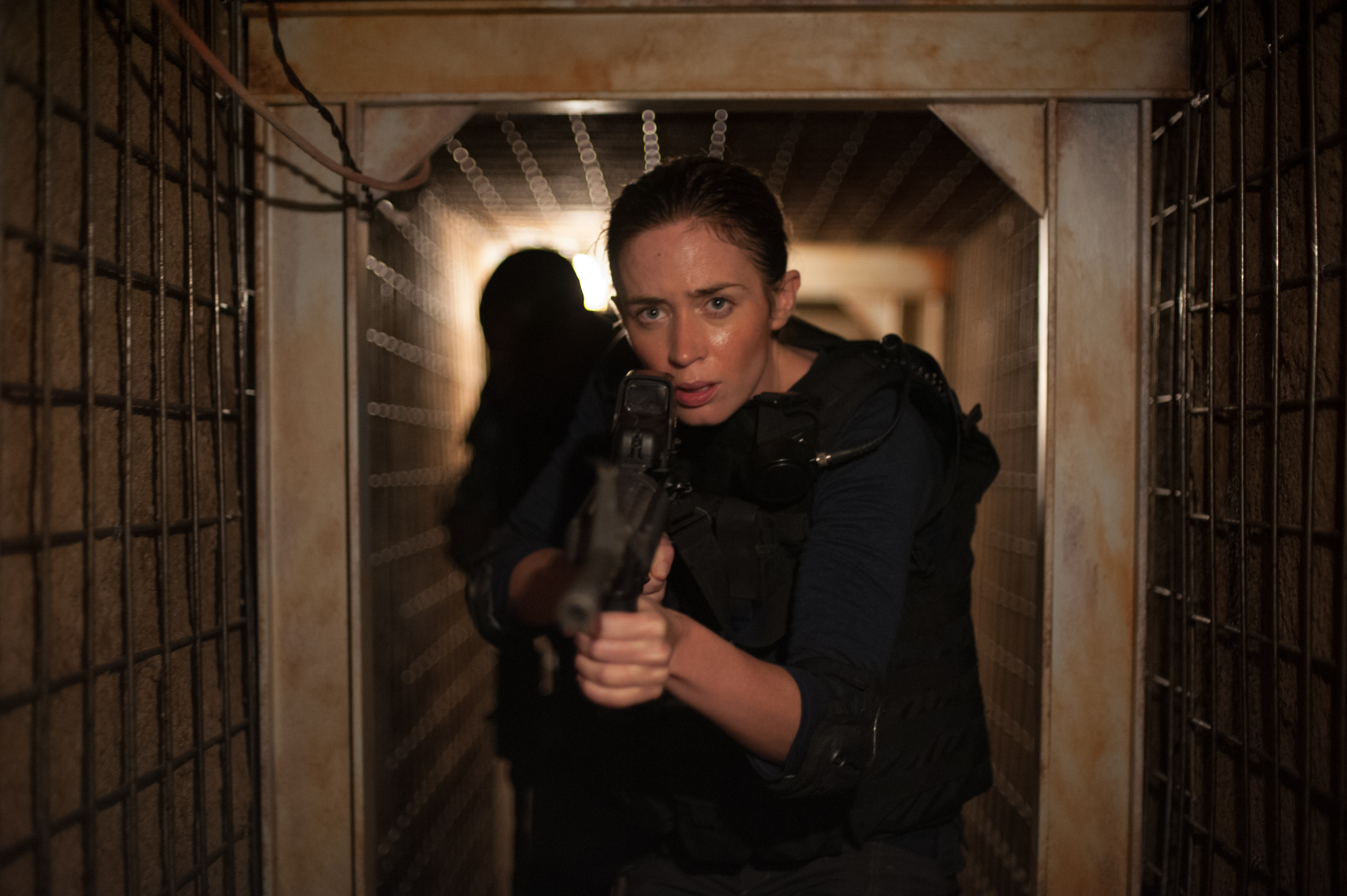
FBI agent Kate Macer (a brilliant Emily Blunt) is part of that good side, and one of only a few individuals whose outlook relays consistent righteousness. We realise instantly that Kate is both strong and capable, yet not at all infallible. Nobody is for that matter — when her team finds a myriad of deceased bodies plastered behind the walls of a house, physical and mental repulsion take over (there’s a lot of vomiting). This discovery triggers an IED explosion that kills two agents, setting in motion a covert investigation into some serious criminal wrongdoing. Kate, driven by a need for revenge, volunteers for the job.

She has to navigate a landscape dominated by important-looking men wearing suits and asking personal questions (“Do you have a husband?”). Josh Brolin’s Matt Garver is one of those men, an advisor-cum-field officer whose macho posture is supported by a spine of arrogance — for some reason he wears sandals during mission briefs. Garver leads the field operation, batting back Kate’s inquisitive questions with vague swings; you get the sense his unwillingness to reveal all has less to do with bureaucracy infecting law than it does pomposity.

Pitting Kate in amongst cowboys and sheriffs and gruff Texans with gristly beards seems to be Villeneuve and screenwriter Taylor Sheridan’s way of acknowledging reality while also challenging the effectiveness of a masculine culture. While most of the men — not all, Kate’s partner Reggie Wayne (Daniel Kaluuya) is similarly noble, though he too is portrayed as an outsider — are energised by the presence of their egos, Kate, indiscreet and somewhat inexperienced, is our key moral fibre. It’s through her gaze that we peer into an immoral world, and it increasingly feels like only her actions can reshape said immorality.

Sicario is clear in its admission that nothing is clear. People are neither good nor bad (in fairness some are quite bad) but instead exist somewhere along an ethical spectrum. A Mexican cop whom we visit throughout the film is shown interacting with his family, particularly his football-loving son. Joe Walker’s editing — which cuts from the search operation to the officer’s modest home — implicates the cop in some form of corruption, yet his family-conscious roots are never invalidated. The vast majority of people on-screen are treated as human beings, a trait often missing in films that depict warring factions (see American Sniper).

If government agencies and drug cartels are the factions at war, Juárez, Mexico is the battlefield. The city is introduced as a final level boss: maze-like, audibly inscribed with tales of dread, bookended by a pulsating score. It’s the urban equivalent of Everest’s Death Zone — the longer you stay, the more likely you are to die. Perennial, and future, Oscar nominee Roger Deakins often gives scenes time to breath, funding the perception of encroaching danger. Civic infection has wreaked havoc upon the people of Juárez, so much so that civilian life is now inseparable from criminal activity. Just ask Silvio, the aforementioned policeman.

Early on, we take a drive through the cartel capital in a stretch of truly exceptional filmmaking. It’s tense, eerily subdued. It makes you feel ill, and its conclusion ushers forth one of the most anxiety-ridden traffic jams in silver screen history. Following the film’s incredible opening third (which is ostensibly a 40-minute horrorfest) the pulse inevitable drops. What follows isn’t quite as interesting; it’s the downtime between assignments, where Kate and co. swan around bars and stare diligently at maps, invoked to add character depth.

One of those characters is Alejandro Gillick (Benicio Del Toro), the titular sicario. Del Toro saunters on screen parading a mystique that suggests he ain’t to be messed with. He folds his jacket even though it is already creased, a move that mirrors his make-up: externally unruffled but internally blazing. The actor has that grizzled veteran demeanour, his hitman reminiscent of Charles Bronson’s Harmonica in Once Upon a Time in the West. Gillick says very little, affording extra reverence to the few words he does speak: “You’re asking me how a watch works. For now, let’s just keep an eye on the time”. Or, in layman’s terms, conquering a complicated cartel network is inescapably complex.

Lines are blurred and identities masked in Sicario’s post-9/11 society. This is Zero Dark Thirty with a narcotic skin. There is a wonderful sequence that precedes the final act (at which point the tension re-escalates): darkened human silhouettes descend into the black abyss below a brooding, orange-tinted skyscape. It’s a sublimely serene moment in a film otherwise dominated by impending threat. The serenity, like life in Juárez, is short-lived.

Sicario - Emily Blunt

Images credit: IMP Awards, Collider

Images copyright (©): Lionsgate

Macbeth (2015)

★★★★

Macbeth PosterDirector: Justin Kurzel

Release Date: October 2nd, 2015 (UK); December 4th, 2015 (US)

Genre: Drama; War

Starring: Michael Fassbender, Marion Cotillard

Justin Kurzel’s ferocious take on Macbeth begins and ends with death. Though its Shakespearean format might isolate those who aren’t well-versed in the Bard’s prose, the film attains a degree of accessibility by dealing in brute force and thematic clarity. We see a Star Wars-esque information trail at the start, but this time the text is in blood red. Jed Kurzel, Justin’s brother, concocts a score that drills and hammers in tandem with bellowing battle cries, bestowing total discomfort upon us. Writers Todd Louiso, Jacob Koskoff, and Michael Lesslie opt to examine how the loss of innocence can incite the immoral side of power, and the results are unflinching.

Upon discovering he is destined to be king, Macbeth (Michael Fassbender) weighs up the immediacy of his sure-fire thronage. Lady Macbeth (Marion Cotillard) urges her husband to commit treasonous murder, to speed up the process by killing King Duncan (David Thewlis). Convinced, and perhaps driven by grief brought about by the death of his own child, the Thane of Scotland slays his superior. From then we see the man crumble, haunted by visions of dead clansmen he swore to protect in battle. He becomes a mad king increasingly propelled by unfettered impulsion and corrupted by power (“Full of scorpions, is my mind”).

Kurzel’s film will likely appeal to a specific audience; attempts to widen its potential reach are few and far between. Ye who enter devoid of prior knowledge, like myself, will have to contend with a movie that communicates entirely through the diction of Shakespeare. As such, it functions much in the same way a foreign language piece without subtitles would, which might alienate some viewers. It shouldn’t though. Blindly following the story is never too difficult as the actors offer a tangible, precise translation. It’s a testament to the performances of Fassbender and Cotillard in particular that the narrative is sold to us without a verbal parachute.

With Fassbender, it’s all in the eyes. His Macbeth, a brooding warrior at the fore, grows bags that darken beneath increasingly absent pupils as the pressure of sovereignty takes over. We never really know where we stand with him — his irreverent actions eventually hit a point of no return, but until then there’s a sorrowful tragedy surrounding Macbeth. In a case of role-reversal, it is Lady Macbeth who must take on the burden of regret. Cotillard is more subtle than her male counterpart. Her words, though often beautiful, are enshrouded in hysteria and pain; the camera unblinkingly lingers on her face during a scene towards the end as the actor speaks with utter command, evoking genuine heartbreak.

The framework from which the duo perform is comparable to how Eddie Redmayne and Felicity Jones navigated The Theory of Everything: one exercises true physicality while the other evokes a delicate-yet-purposeful poise. There is often a lingering stillness that is only interrupted by Fassbender’s increasingly perturbed movement, and only Cotillard has the guile to reign in said eccentricity. Friend-turned-foe Macduff, played by an emotionally-wrought Sean Harris, christens Macbeth the “Fiend of Scotland”.

Nicolas Winding Refn’s Valhalla Rising might have been a touchpoint for Kurzel, especially in a visual sense: the unquenchable mist, the moorish setting, the breadth of visceral savagery, all invoked. Battle scenes could very well be taking place among the Dead Marshes on the boggy road to Mordor. The Scottish setting, not unlike modern times, is always cloudy, or rainy, or dank, but the aesthetic is never mundane — fog is crimson coloured and dynamic. Cinematographer Adam Arkapaw mixes steady shots with a shaky cam effect, mirroring the vacillating levels of order and chaos afoot.

Arkapaw shot the soon-to-be iconic six-minute drug den raid in True Detective season one, and Macbeth revels in similar technical prowess. From sound, to look, to how the film is edited, it’s quite stunning. Scenes showing brutal murder, such as the death of King Duncan, are intercut with instances of solemn hush. A contrast is evident throughout, pitting light against dark (or perhaps it is dark against post-dark). The sound design is worth mentioning too: rallying howls echo with spine-tingling reverence around cavernous cathedral-like rooms.

To the credit of those on and off-screen, it never feels like we’re watching a play. In many ways this is a niche offering; much of the verbiage might not make sense, yet you can’t help but stare. And when what you’re staring at is this good, this impactful, words are almost inconsequential. Here are two more anyway: Hail Macbeth!

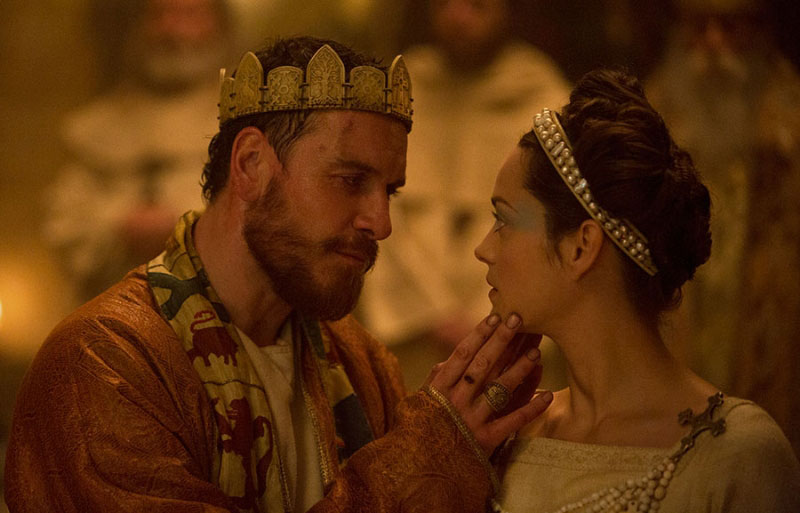
Macbeth - Michael Fassbender & Marion Cotillard

Images credit: IMP Awards, Collider

Images copyright (©): The Weinstein Company