Eye in the Sky (2016)

★★★★

Eye in the Sky PosterDirector: Gavin Hood

Release Date: April 1st, 2016 (US); April 15th, 2016 (UK)

Genre: Drama; Thriller; War

Starring: Helen Mirren, Aaron Paul, Barkhad Abdi, Alan Rickman

I often find that the most engaging films are those which, in one way or another, encourage viewers to invest more than just the alertness of their eyeballs. Films that oil the brain, that challenge you to weigh up testy themes or unfurl complicated arguments both in the cinema and later at home. Some of the best movies reflect the prevailing zeitgeist (Boyhood), while others re-evaluate histories (Bridge of Spies). There are also those which, having aged over time, can be examined under the guise of new perspectives (2001: A Space Odyssey). Eye in the Sky is one of the former, its content exclusively in tune with the woes of modern drone warfare and, unsurprisingly, it’s a heart-thumper.

A low key opening sequence outlines the active operation, the personnel involved, and the everyday atmosphere at play. There’s Colonel Katherine Powell (Helen Mirren), a senior intelligence official who has tracked down a group of terrorists residing in Nairobi, Kenya. She wishes to eliminate the group, one of whom is a former British national, and has the support of Lieutenant General Frank Benson (Alan Rickman). Evidently, the duo are used to navigating tough situations from afar — they are working from separate UK bases — though the situation Powell and Benson are about to encounter is probably as tough as it gets. That is, juggling the life of young girl selling bread in the vicinity of their prospective drone strike.

Gavin Hood’s film is formatted almost to match that of a 24 episode, which is to say it ticks along more or less in real time as people in suits number-crunch death percentages and debris projections. Foreshadowing is a factor too: Rickman, superbly authoritative yet typically human, drolly sweats over dolls and toys as the Lieutenant General, unaware his job will shortly have him deciding the fate of a child. Screenwriter Guy Hibbert colours his characters with titbits of everyday information in an attempt to humanise them, quite successfully given the amount on-screen. We learn, for instance, that American drone pilot Steve Watts (Aaron Paul) is only monitoring the controls of such a weapon in a bid to counter his college debt.

These people are secure, detached from a teetering war zone in Nairobi, their most immediate danger apparently food poisoning — Iain Glen’s queasy British Foreign Secretary struggles with an upset stomach, a first world problem if there ever was one. You wonder if they actually care about the civilians caught in their crosshairs or whether it is all just a political game of Pass the Buck (there was a laugh of incredulity in my screening following one such buck-passing incident). Some do care, primarily those ordered to get their hands dirty: Watts and new recruit Carrie Gershon (Phoebe Fox) wear the emotional baggage of their piloting well, while Barkhad Abdi’s undercover ground agent evokes conscientiousness despite having to navigate the tumultuous streets.

Others struggle with the dilemma too — as time goes on, it increasingly looks as though the terrorists are about to commandeer an enormous suicide attack, however their assassination in present circumstances would almost certainly kill the aforementioned young girl. We see timid bureaucracy in action; the chain of command gains branches by the second as nobody seems willing to make the final call, apart from Powell. This is militancy versus diplomacy and she is firmly aligned with the former, calculated and desperate, unwavering in her kill-or-be-killed motto. Mirren compels throughout and rules those around her with a cracked iron fist. At times you feel her judgement has been clouded by her innate desire to end what must be a years-long operation.

It’s possible too that she has been desensitised by process: surveillance technologies used by the conglomerate of global forces (borders are irrelevant in this inter-connected world) include spy cameras disguised as airborne birds and bugs (brick walls are irrelevant too). These trinkets embody the disconnect between tangible ground activities and those making the crucial decisions from afar, and such technologies likely lighten the load for senior decision-makers such as Powell. Interactions between UK and US agencies hint at the statistical and mechanical nature of modern warfare, a notion embodied by the varying systems of collateral damage interpretation between the two nations. It’s not a matter of saving every life, but rather reducing the total number of deaths.

Hibbert’s screenplay ties in real-world strands by referencing the ongoing migrant crisis (“Well let’s hope she’s not coming back,” bemoans Powell regarding the homegrown British terrorist) but really Eye in the Sky is all about the immorality of war in 2016. The best result the military’s facial recognition software can hope for is a “highly probable” match, which would be great in a university science lab but not ideal when lives are at stake. Any margin of error is amplified in battle and the debates between officials take on that extra weight, a weight that we also incur as we sympathise with various characters. Megan Gill edits Haris Zambarloukos’ cinematography to full effect, highlighting the stark anomalies in Nairobi: Gill cuts from the young girl setting up her bread stall to the extremists preparing their suicide vests, mere metres separating the two.

The film avoids problematic whirlpools and discriminatory icebergs by riding a wave maturity — it would be very easy to take a side, but as the piece nears conclusion it shines a blatantly more rounded light on a number of brutes earlier seen authoritatively commanding vehicle checkpoints. Unlike London Has Fallen, which clumsily waded its way into the drone debate, Eye in the Sky sets out to discuss and not to distract. Clearly they are different films in a tonal sense, aimed arguably at different audiences, but both speak the same thematic language and only the latter does so with any credibility.

There is one issue that the film only manages to partially iron out. You’ll almost certainly enter this having already formulated an opinion one way or the other, especially given the relevance and significance of drone warfare in today’s political climate. And although it is possible you’ll be made to reconsider that opinion — it helps that Hood’s gripping direction increasingly positions you alongside the toiling decision-makers — chances are the events depicted will not shift anyone’s viewpoint. This isn’t necessarily a reflection on the movie itself, but rather the divisiveness of its real-world content.

People band around the phrase “spoils of war” in relation to any profits gained through military victory. But it is war that spoils, and here we see that spoiling in action: it spoils ethical frameworks established by the civilised strand of humanity; it spoils urban locales that have hosted and continue to host generations of livelihoods; and, crucially, it spoils the daily existence of normal people living their normal lives. Eye in the Sky suggests war spoils some people more than others, and while that mightn’t be a new conclusion, the method of warfare on display is as morally challenging as it gets.

Eye in the Sky - Aaron Paul

Images credit: IMP Awards, Collider

Images copyright (©): Entertainment One, Bleecker Street

Midnight Special (2016)

★★★★

Midnight Special PosterDirector: Jeff Nichols

Release Date: March 18th, 2016 (US); April 8th, 2016 (UK)

Genre: Adventure; Drama; Science fiction

Starring: Michael Shannon, Joel Edgerton, Jaeden Lieberher, Kirsten Dunst

The opening shot of Midnight Special shows a motel door peephole. The peephole offers those inside the motel room the ability to spy on any external goings-on, and is in fact the only means to such an end: each of the room’s windows have been dressed in cardboard by occupants wary, perhaps, of the instability of conventional curtains. One of the room’s occupants, Alton (Jaeden Lieberher), has even donned enormous orange headphones and a pair of goggles, ears and eyes shielded from something, or maybe someone. It is a brilliant introduction to this patient, mysterious world created by Jeff Nichols, without doubt one of the most exciting up-and-coming filmmakers working today.

A number of forces are after Alton for a number of reasons: the FBI, for fear of his invasive abilities, that the child can undercut complicated governmental systems albeit without malice, and a Texas cult corrupted by the promise of an upcoming day of reckoning. Adam Driver represents the former as Paul Sevier, a compassionate analyst of sorts, and ranch leader Calvin Meyer (Sam Shepard) the latter. See, Alton possesses a variety of characteristics not written into the laws of physics. His eyes shoot blinding beams of light and his mind works prophetically, both of which make him valuable. But nobody values him more than his father Roy (Michael Shannon) who, with the assistance of friend Lucas (Joel Edgerton), sets out to shield Alton from harm.

Moral complexities are at large early on. Roy and Lucas’ motives aren’t initially clear therefore Shannon and Edgerton must convey a sense of righteousness or otherwise. As they leave their motel room with Alton, we cut to a suspicious receptionist. Shortly thereafter, the pair endure a nasty collision on the road and have a run-in with a state trooper which ends when the latter is shot. It’s not exactly a heroic introduction, but subtle nuances get us onside: Shannon’s paternal vibe towards his son and Alton’s reciprocal nature; Edgerton’s considered demeanour and his character’s need to protect any innocent bystanders (shooting not to kill the trooper, for instance).

The film is also Spielbergian in many ways, from its science fiction touch to how it places youth on a pedestal. You first notice the similarities in a dusk horizon shot, where the various silhouettes of imposing military trucks can be seen advancing along a shadowy road, the background an orange-tinted sky. A general nighttime vibe exists throughout the piece, partially because the screenplay requires it, but also because darkness funds an overarching sense of uncertainty and mystique. Visual flair is mostly restrained, though the film does let loose on two occasions with incredible results — especially incredible given the comparatively meagre $18 million budget.

Its celebration of youthful imagination is another trope from Spielberg’s wheelhouse, enacted generally across the piece but also more intimately when we see Alton reading a Human Torch comic. “Reading’s reading,” Lucas claims, to which Roy glumly replies, “He needs to know what’s real”. Lucas has been won over not just by Alton’s abilities but also his humanness. Roy, while evidently full of love for his son, is more strict when it comes to completing the task; that is, getting Alton to where he needs to be. Perhaps this early in proceedings Roy is unwilling to fully accept the consequences of doing so, which only adds further heft to his journey.

But he does have faith. Religion, the inevitability of one’s beliefs, the cultish haranguing instigated by an isolated community — these are all explored in Midnight Special. Calvin’s ranch carries significant pull, even to those who have left. “Do you miss it?” Roy asks former member Elden (David Jensen), and you can bet he does. We don’t really know anything about those on the ranch, nor those who have escaped, which includes Roy and his wife Sarah (Kirsten Dunst). Their backstories might have benefited from some filling in, though you have to commend Nichols for his consistency in letting the audience make up their own minds. And there certainly isn’t a total information blackout. Rather, this feels like a well-crafted piece, where each event and scene and conversation carries meaning.

It is always easy to compare a filmmaker’s current work to his/her previous efforts, though such a comparison makes sense here. In many ways, Nichols has taken the most appetising ingredients from both Take Shelter and Mud and moulded them into a sci-fi base: the former’s apocalyptic vision and air of encroaching trouble tags with the latter’s unflashy, youngster-imbued agenda. Alton is the physical manifestation of both elements, a dangerous otherworldly presence to some, yet to others simply a child searching for answers. Television news reels spew out stories on crippling addiction while honchos in suits decry the possibility of nuclear decimation, paranoid and afraid of change even if it is for the better.

Despite being set in contemporary times, the film has an undeniable retro quality similar to that purveyed in Super 8 (though clearly J.J. Abrams’ movie is set in a period that matches its retro-scape). David Wingo’s oscillating, spacey score somewhat soothes our ears as it recalls Alton’s futuristic attributes. It tends to play over scenes involving Alton and never jars, instead shining a positive light on what the boy could represent — that aforementioned change for the better — as well as his family’s motives. At times the music also reminded me of Kristin Øhrn Dyrud’s work in Coherence, a small sci-fi thriller bred from a similar pool of cagey mystery.

For those of you who thought Tomorrowland: A World Beyond lacked concrete storytelling or a consistent strain of intrigue, there’s every chance Midnight Special is film you have been looking for. While Nichols’ outing doesn’t flourish through splendour, it does keep the viewer engrossed for the duration. You have to be; various ideas are floated around — including concepts I haven’t touched upon here, such as undemocratic government surveillance — and it is often up to us to make our own moral judgement. Midnight Special is as much an on-the-road drama as it is any other genre, but it’s also very effective sci-fi. The special stuff, almost.

Midnight Special - Jaeden Lieberher & Michael Shannon

Images credit: IMP Awards, Collider

Images copyright (©): Warner Bros.

Batman v Superman: Dawn of Justice (2016)

★★★

Batman v Superman: Dawn of Justice PosterDirector: Zack Snyder

Release Date: March 25th, 2016 (UK & US)

Genre: Action; Adventure; Fantasy

Starring: Henry Cavill, Ben Affleck, Gal Gadot, Amy Adams

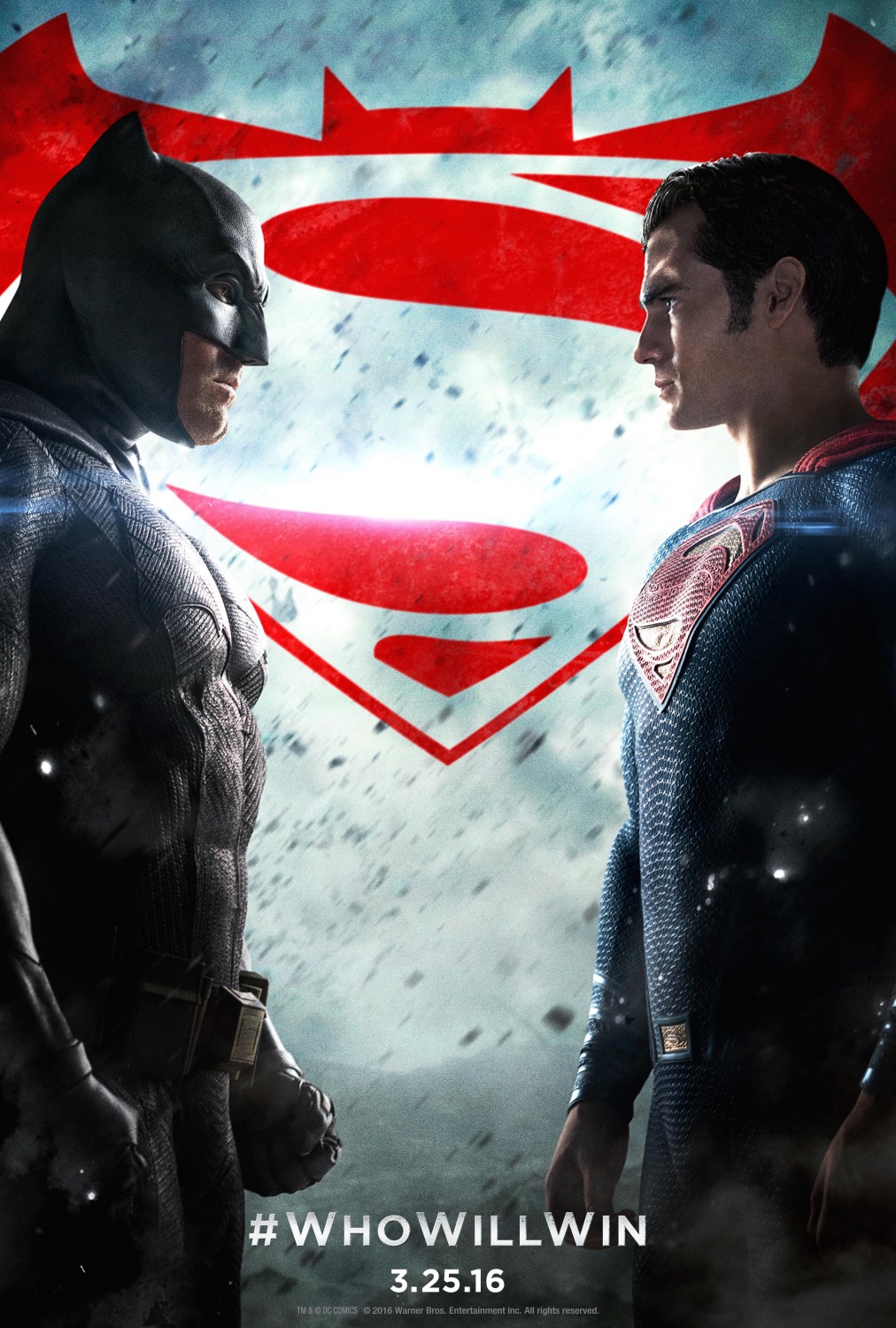
It’s not ideal when Warner Bros’ DC-Extended-Universe-launching Batman v Superman: Dawn of Justice opens with the murder of Bruce Wayne’s parents, something we’ve seen a million times. And when shortly thereafter a bat levitation sequence greets the screen, you start to wonder how much hassle it’d be to squeeze past the people in your row while heading for the exit. Fortunately, it transpires the bat levitation horror is part of a dream sequence and, fortunately, better things start to happen. Wonder Woman shows up, for one. Also known as Diana Prince, she is fuelled by a magnificent grunge-rock theme, her steely identity reinforced by Gal Gadot’s very believable sense of authority.

Conversely, authority is what Lex Luthor lacks, and this quality trade-off sums the movie up — as good as it is bad. In simple terms, the film revolves around Luthor’s war manifesto: he wants Batman and Superman to destroy each other so he can rule the world, or something. Luthor is an oddball played with typical eccentricity by Jesse Eisenberg, a blend of James Franco’s Harry Osborn and a young Steve Jobs, but madder. Violin strings squawk whenever he appears, rambling about this and that, rarely making sense and never really cementing himself in any sort of cohesive way. He fulfils the usual big-corp-honcho-posing-as-a-philanthropist remit, unavoidable given the nature of adapting iconic comic book characters, but nonetheless tired by this point.

Eisenberg does try to mask Luthor’s commonality: there’s hardly a moment when the actor isn’t sparking vocal idiosyncrasies and, if you’ll excuse the faint praise, this at least gives the character a strange watchability. Luthor suffers from a lack of focus because there are so many moving parts, too many for writers Chris Terrio and David S. Goyer to mould legibly. See, character-wise, those present aren’t the only ones afforded set-up time. A Joker reference nods towards the upcoming Suicide Squad film. We see other future players too, though I would be remiss to give away the game in a review. Such a scattergraph approach attests to the film’s overarching problem — unbridled messiness. This is as much a franchise player as any Marvel jaunt, perhaps even more so since Snyder has to colour the narratives of so many bare pawns.

The mess extends beyond personnel; some moments appear hastily written, including an exchange right at the beginning where Wayne orders an employee to evacuate everyone from a building on a collision course with Superman and General Zod (surely everyone would have already scampered). It’s a return to the conclusion of Man of Steel but from Wayne’s ground zero perspective. Sure enough, the building tumbles — a Bruce Wayne building — and we have our central conceit: Wayne blames Superman for the destruction and, like Luthor, wants to end the Kryptonian’s apparent clumsiness. Yet the dust cloud that forms following said collapse ushers in a more interesting discussion than anything levied by the Bat of Gotham versus Son of Krypton action-fest. It’s a physical manifestation of the domestic terror that has threatened urban centres with impetus since 9/11, a theme the film runs with for an hour, swapping 9/11 for Metropolis duel.

There’s anger too, primarily on the Bat front. Christopher Nolan’s Batman had a streak of grounded and gritty reality, whereas this Snyder incarnation abides by something more militant: the steely armour, the bulked up costume, the egregious surveillance, his branding of enemies. And while Nolan’s version felt less ‘idealistic superhero’ and more ‘corruption crusader’, a man truly immersed in his surroundings, the version Affleck portrays here has only a single broad stroke to work with. Affleck hasn’t had the time to embed his version of the character into the prospective DC landscape, therefore it is difficult to understand his psyche and run with his arc. We only really see him for what he is: a vigilante with weapons and a bone to pick.

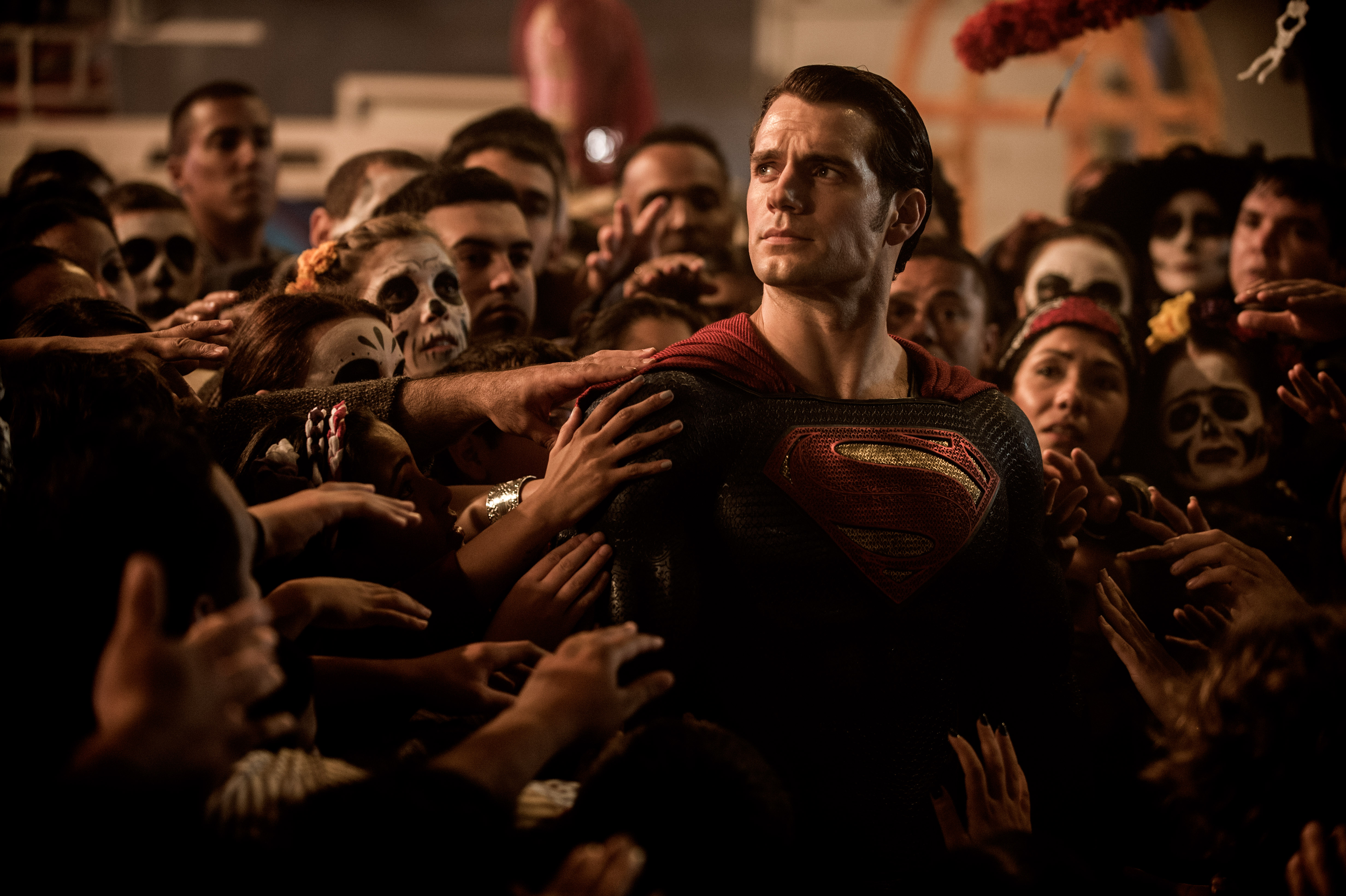
It is worth noting Batman does carry some allure and Affleck is good in the role. Henry Cavill is too, though his protagonist is significantly less interesting. The key idea surrounding his Superman threatens intrigue — he is the alien, the immigrant, the other targeted by Batman (the homegrown defender, the familiar in an unfamiliar world) because of his undemocratic power. Few comic book characters are more symbolic than Clark Kent’s alter ego, but he exists at a time when people cannot stand for anything because “it’s not 1938”. Moral righteousness has no place in this tainted wasteland and some don’t trust Superman, nor his upstanding mantra, for that reason. Anti-alien rallies cosy up with real life immigration debates, a comparison that gains further traction when we see Mexican Day of the Dead revellers side with their saviour.

But as a standalone character, he isn’t all that compelling. It’s probably a personal thing but I don’t quite see much attraction in an almost indestructible hero. We watch as Superman saves civilians from floods and fires and you wonder why anybody would hold a grudge against the guy — he is almost too good, too successful. And for someone who spends his spare time in a newsroom, it still boggles the mind that none of his colleagues are able to connect the Kent-Super dots. Lois also feels like a bit of a fifth wheel; she gets some reporting gigs and Amy Adams is fine, but there isn’t anything new going on. Her relationship with Kent advances little, for instance — she still believes in him and he still loves her.

Despite a promising first act, Snyder falls foul of his Man of Steel misdemeanours and throws caution to the CG wind via the film’s inevitable big battle (which, by the way, is sold on a falsehood). The physical saga feels bloated and is tough to engage with as you don’t yet believe in those doing the punching. Whereas the opening hour soars visually across scorching desert locales and through symbolic shots of Batman watching over his city, the second half of the movie gorges on disorienting and choppy action, both dimly lit and loudly enacted. It’s probably not as bad as the Man of Steel disaster but only because Wonder Woman is around on this occasion.

“So what does a rock have to do with homeland security?” asks Holly Hunter’s Kentucky Senator June Finch early on. Well, the film does devolve into a clash with a large Golem-like creature, where concrete buildings again suffer and gravelly terrain floods urban zones. And sure, that type of thing regularly happens in Marvel land, but Marvel land is also home to a multitude of richly-imbued characters. There is this idea sewn throughout Batman v Superman that power and goodness cannot coexist. The film has a lot of surface power and it’s no better than quite good, though there are artefacts worth salvaging.

Batman v Superman: Dawn Of Justice - Henry Cavill

Images credit: IMP Awards, Collider

Images copyright (©): Warner Bros.

10 Cloverfield Lane (2016)

★★★★

10 Cloverfield Lane PosterDirector: Dan Trachtenberg

Release Date: March 11th, 2016 (US); March 18th, 2016 (UK)

Genre: Drama; Horror; Mystery

Starring: Mary Elizabeth Winstead, John Goodman, John Gallagher Jr.

There’s a great deal to admire about a film that chooses a path and sticks to it in spite of executive-level switcherooing. 10 Cloverfield Lane only discovered its Cloverfield bloodline midway through development, a potentially hazardous move that would have rendered many other outings spineless, but sweeping conviction shines through here. The path Dan Trachtenberg confidently guides his movie down is laden with rich slabs of character identity. So rich, in fact, that it’s probable you’ll forget about the Cloverfield connection after 15 minutes (I did) and instead enjoy a simple thriller with tantalising — and, crucially, natural — twists and turns, its three pro-cum-antagonists each carrying the weight of intrigue.

We have Howard (John Goodman), the overseer, aka the one who owns the bunker within which the film takes place and who calls the shots accordingly. Then there is the convert, Emmett (John Gallagher Jr.), already booked into Howard’s hotel by the time we arrive. And finally, Michelle (Mary Elizabeth Winstead). She’s the sceptic. You can tell because her red nail polish wears away with stress. Michelle doesn’t call ahead as much as awaken in Howard’s bunker having felt the brunt of a pummelling car accident, one that catches both her and us off guard, a proper assault on the solar plexus.

Escape hangs over proceedings. The film opens with Michelle, who has the appearance of someone desperately trying to escape something — a relationship, perhaps, and probably life in general (odd titbit: Bradley Cooper voices her pleading boyfriend, relegated to a phone call). Bear McCreary’s ominous score plays as Michelle frantically scrambles around her flat looking for road booze and as she departs, keys shunned on the table, that drone grows in intensity. It aids a tone that suggests trouble; via car radio, we hear of widespread power outages. Shortly thereafter, Trachtenberg unveils imagery that reflects an air of claustrophobia: the rusty chain clamping Michelle to the wall in Howard’s bunker, for instance, or the large iron door reinforcing her isolation.

Winstead plays the terrified, suspicious type so well, her eyes often wide and bulging. She is vulnerable, clearly, and yet full of defiant craft — there’s more than a touch of stellar horror heroine going on here. Goodman, meanwhile, juggles sanity and insanity with incredible credibility. He breathes heavily, panting almost, as if he’s about to explode in a fit of rage or is recuperating from a previous outburst. The less said about his character’s motives the better, though Goodman’s soon-to-be iconic introduction ought to be noted: the camera tentatively navigates around Howard’s hulking figure before unveiling his menacing face from a low angle, further feeding our anxieties.

Who is this man and what does he want? Those questions fuel the film’s allure as it cagily probes away at answers. Early on, Howard bemoans humanity’s lack of preparation, that we talk a good game from afar and then panic when true disaster hits. “Crazy is building your ark after the flood has already come.” The flood on this occasion is a nuclear attack, according to Howard (frequent power surges bolster his end-of-days argument). Turns out this is a man who has proactively prepared for disaster by building a sturdy bunker. Maybe he’s not the freak, but we are. His musings start to make sense.

On the flip side, “Surviving Doomsday” books line the shelves of his shelter and you begin to wonder if the whole scenario is a deluded madman’s ruse. There is a false home-sweet-home aesthetic, plants that are surely fake, and a fictional kitchen window. Trachtenberg and cinematographer Jeff Cutter concoct a terrifically creepy malaise through framing — more than once, Howard appears to creep up on Michelle and Emmett while the pair are mid-conversation. There is nowhere to hide. Feelings of paranoia and mistrust battle with hints of Stockholm syndrome. These themes recall an episode of Lost starring Henry Ian Cusick and Clancy Brown where the former struggles to unravel the latter’s bunker-based theories.

But deep-seated worry does not have a stranglehold on the piece. Penned by a trio of writers — Whiplash director Damien Chazelle apparently revamped much of Josh Campbell and Matthew Stuecken’s initial plot and character work — the screenplay includes moments of wry comedy that don’t try to detract from the disconcerting situation, but instead lighten the mood just enough to afford the film a more digestible front. Often it’s Gallagher Jr. who is tasked with making quips and he obliges with assured charm, as opposed to the purposefully awkward charm the actor evoked in The Newsroom. Even McCreary’s brooding score takes a break: “I Think We’re Alone Now” plays over a montage of momentary serenity. It’s splendid song-weaving.

The title “10 Cloverfield Lane” may suggest otherwise but this is a character drama first and foremost, tinged with high-concept thrills that complement splashings of sci-fi and horror. The people on-screen share a complex dynamic, an alluring one built around secrecy and regret and revelation. You think you know where it’s all going and then Howard whips out a Pretty in Pink VHS (he seems like a VHS kinda guy). You get so drawn in by the chess game that any Cloverfield associations become somewhat irrelevant, which, I suppose, is a real credit to both the idea and its execution. For the first time in a long time, I left the screening wanting more. Wanting a sequel. Imagine that!

Images credit: IMP Awards, Collider

Images copyright (©): Paramount Pictures

London Has Fallen (2016)

★★

London Has Fallen PosterDirector: Babak Najafi

Release Date: March 3rd, 2016 (UK); March 4th, 2016 (US)

Genre: Action; Crime; Thriller

Starring: Gerard Butler, Aaron Eckhart

“Vengeance must always be profound and absolute,” sneers a baddie at the beginning of Babak Najafi’s London Has Fallen, sequel to Olympus Has Fallen. That movie wasn’t particularly good, though it still holds superiority over its younger British sibling, which is a pretty damning indictment of Najafi’s effort. As it transpires, vengeance is neither profound nor absolute. What is absolute is London Has Fallen’s failure to assert any sort of moral vigour, and boy does it try hard. This is a film that begins with an American-led drone strike — the strike lands somewhere in the Middle East and kills a bunch innocent civilians — and then concludes with a lot of western brouhaha. Gerard Butler’s pretty good, mind you.

An early morning jog unhealthily recants Captain America: The Winter Soldier, and London Has Fallen never really recovers. Why we find Special Agent Mike Banning (Butler) out jogging is a mystery anyway — this is a guy with an unpainted nursery room awaiting his handiwork at home. Banning is expecting a child with his wife, played by Radha Mitchell, whose limited screen time only marginally lags behind that awarded to both Angela Bassett and Charlotte Riley. The lack of time for the latter is a real shame given Riley’s sparky attitude imbues the piece with some much-needed freshness late on.

Ah yes: the nursery. We watch as Banning does a bit of home décor, all the while hoping upon hope he won’t get called away from his family to serve President Benjamin Asher (Aaron Eckhart). And why should he be called? It’s not as if Banning is the President’s most trusted right-hand man. Only, he is, though not for long: Banning has his resignation letter typed and ready to send. Finally he will be free to live a comfortable life with his wife and future child. It’ll be grea– wait, hold on. The British Prime Minister just died. Big funeral. All heads of state invited. Damn, so close.

And so we voyage across the pond, fingers crossed that the day will run smoothly. Of course, it turns out the Russian President can’t be bothered showing up because, y’know, Putin joke. Neither David Cameron nor Vladimir Putin are mentioned by name — the British PM is instead referred to as James Wilson, though the Russian President receives no such treatment. Prohibitive legalities taken into consideration, this random-name-generator approach infects proceedings with an early dose of second-handedness that the film really could do without. Elsewhere, it’s a case of broad strokes: the Italian PM is depicted as frisky, the French leader as fashionably late.

In fairness, nobody is buying a ticket to see a screenwriting masterclass, but even the basic story formulation feels lazy. When it isn’t flip-flopping between watery thematic substance and vaguely racist punchlines, we get to sit through Secret Service meetings during which potential terrorist plots are dismissed far too easily. And absolutely everything is telegraphed: ominous brassy horns sound out as Banning details the President’s route through London, foreshadowing trouble with as much subtlety as a jumbo jet taking off. Then there’s the godmother conversation that reveals whose death is pending. This sort of blatancy leaves us with no dramatic handle to cling on to.

There are a few decent things afoot. The London setting works as a familiar backdrop and it’s enjoyable seeing the characters race around the city. One shot especially stands out: as an air raid siren booms, the camera pans back from ground level towards the sky, its focus fully on Banning and Asher as they navigate ghost streets. Props should go to cinematographer Ed Wild and director Najafi for this brief juncture of inspiration. And when the piece refuses to take itself seriously, there is mild fun to be had (including one or two well-conceived action sequences). Rather than ill-judged attempts at joining the political conversation, London Has Fallen should embrace its silliness more. White House Down managed its limitations well, opting for nuttiness over seriousness with some success, and this ought to have following suit.

We do see visual prowess, then, but ultimately there is no escaping the absurd special effects. A river blast looks like something out of a video game cutscene. A bridge collapses in Final Destination style (not London Bridge, oddly). And it doesn’t seem to be a case of hokey-on-purpose, but rather just poor visual integration. There is a disconnect between scene-setting shots, which take on a grainy quality hinting at realism, and silly-looking explosions. On a side note: at one point events fly stateside, to Washington, D.C. and to a White House that looks in tiptop shape following its destruction in Olympus Has Fallen. Somewhere, a plasterer deserves one heck of a raise.

London Has Fallen unmasks the US President as damn competent with a weapon and then reckons it can contribute to the debate over the perils of modern warfare. The entire saga is far too flippant to get away with any of it: not the nervy and misguided faux-justification of terrorism via wheelchair reveal, nor its self-forgiving attitude towards unethical war. American Sniper suffered from a jingoistic eyesore and this evokes a similar blindness — it really doesn’t have a moral leg to stand on. If anything, you leave the cinema severely disliking everybody. Apart from Gerard Butler obviously. Have you seen him batter Jimmy Fallon with a giant hand?

London Has Fallen - Gerard Butler & Aaron Eckhart

Images credit: IMP Awards, Collider

Images copyright (©): Gramercy Pictures, Lionsgate

Bone Tomahawk (2016)

★★★★★

Bone Tomahawk PosterDirector: S. Craig Zahler

Release Date: October 23rd, 2015 (US); February 19th, 2016 (UK)

Genre: Adventure; Drama; Horror

Starring: Kurt Russell, Matthew Fox, Patrick Wilson, Richard Jenkins

Bone Tomahawk is an audible treat. Not since Peter Strickland’s Berberian Sound Studio has a movie sounded so raw and striking (Sicario might warrant a shout, in fairness). During the opening segment here, in which a pair of drifters execute a travelling party before stumbling upon an eerie burial ground, we learn about the 16 major veins that exist inside the human neck. “And you have to cut through ’em all,” claims scavenger Buddy (Sid Haig). David Arquette’s Purvis obliges and we hear every squeak, twist, and snap as he does so. It is cringe-inducing for all the right reasons and the perfect introduction to S. Craig Zahler’s unforgiving picture, a western thoroughly bludgeoned by despair and horror.

Sometime thereafter, Purvis turns up looking a bit worse for wear in Bright Hope, a small town with a population of 268 according to its welcome signpost. He runs into sheriff Franklin Hunt (Kurt Russell) and earns a bullet in the leg, the first of many indications that Hunt favours blunt practicality over weak-mindedness. And so begins the sequence of events which send the sheriff, his well-meaning deputy Chicory (Richard Jenkins), the egotistical John Brooder (Matthew Fox), and local foreman Arthur O’Dwyer (Patrick Wilson) on a mission to rescue the latter’s kidnapped wife, Samantha (Lili Simmons).

Foreshadowing and foreboding are wilfully employed by Zahler — replacing what could have been a more natural music-driven score, the howls of wolves (or worse) ominously serenade events early on and then manifest in threatening form later. It’s the ambiance of the west, or at least this incarnation of the west. “Oh boy, that smells good now that I know it’s not supposed to be tea,” Chicory muses, referring to corn chowder but also reflecting the film’s underbelly. See, though there are plenty of traditional western strands at play — the gruff sheriff who commands authority, the isolated community tormented by threat, plenty of horses — Bone Tomahawk sets its stall out with a difference.

Slowly paced scenes reflect the slower time period, when face-to-face interactions dominated and long distance journeys relied on animal willpower. Russell taps into this considered approach, employing words with authority; patience really is a virtue and in Hunt’s presence you get the sense patience will be rewarded. Comparisons with The Hateful Eight’s John Ruth are inevitable, though the pair have less in common than you might think. Composure, for one: Hunt’s detective-esque apprehension of Purvis is the product of gradual interrogation, whereas Ruth’s treatment of Daisy Domergue is often abrasive and erratic. It is a testament to the actor that he has managed to create such varied yet equally compelling characters from two very similar seeds.

The version of the 1890s we see on-screen is one characterised by manual labour. O’Dwyer is a worker, though his involvement in the job has been tempered by a nasty leg injury that continues to plague him during the group’s arduous trek. Wilson does his utmost to sell his character’s ongoing pain in a performance that values physicality over emotional depth, though that is not to say O’Dwyer is a bland protagonist. Quite the opposite, in fact: the persistence of his injury only serves to bolster his heroic tendencies, to the point that we believe in him as a viable saviour and not just a tag-along husband.

Such ponderous momentum affords these characters natural breathing space, and Fox’s Brooder benefits too. Brooder is perhaps the most intriguing of the main quartet, certainly the most mysterious — the camera often shows him isolated from his fellow pack. One moment he inspires anti-heroic Han Solo connotations, the next plain ignorance, and then there’s his penchant for wry humour: “I’ll probably beat you to the draw,” Brooder boasts before amusingly justifying said boast. This is the best Matthew Fox has been in years. It is also one of Richard Jenkins’ most endearing showings, a real triumph given the overarching strand of impersonal cruelty.

Zahler’s film takes up a somewhat conventional western face for much of its running time, though said face is masked by an uneasy mist. It would be best to avoid specific details, but I will note that proceedings take a turn for the sickeningly gory and genuinely unsettling. This genre mishmash works because terror and anxiety have always been woven into the genre. The mishmash refrains from stopping at abject fear too. This is also a film about how men are impacted by separation (O’Dwyer’s wife is missing, Hunt’s is worried at home, and Chicory’s deceased). As the group traverse further from civilisation and closer to potential doom, the score unveils a pained melancholy, manifesting almost as a sort of death soliloquy.

On a technical front, Bone Tomahawk is infallible. I’ve already lauded the sound quality and the production team maintain a similar level of excellence in their set creation and landscape scouting. It feels like the end of the 19th century; that retro gunslinging allure in full effect. We ride across mossy vistas and tiptoe through ghost valleys that bear some resemblance to those in The Return of the King. Presumably working with a low budget, those behind the lens have smartly utilised nature’s virtues and rustled up quite the canvass for exploration, fusing the harsh brutalities of No Country For Old Men with the pilgrimage proclivities of Slow West.

All of the elements are furnished to oaky perfection but you could remove the lot — the charcoal landscapes, the wooden interiors, the deceptive humour — to leave just the four central characters, and you would still have something well worth two hours of your time. These marauders are wacky and layered. Zahler sticks to his guns even after the craziness takes off, winningly heralding the richness of his protagonists over shock value. A late, brief exchange between sheriff and deputy recalls the film’s intimate, considered mantra. In one moment, Bone Tomahawk cements its status as a future classic.

Bone Tomahawk - Russell, Fox, Jenkins, Wilson

Images credit: IMP Awards, Collider

Images copyright (©): RLJ Entertainment

Straight Outta Compton (2015)

★★★★

Straight Outta Compton PosterDirector: F. Gary Gray

Release Date: August 14th, 2015 (US); August 28th, 2015 (UK)

Genre: Biography; Drama; History

Starring: O’Shea Jackson Jr., Corey Hawkins, Jason Mitchell

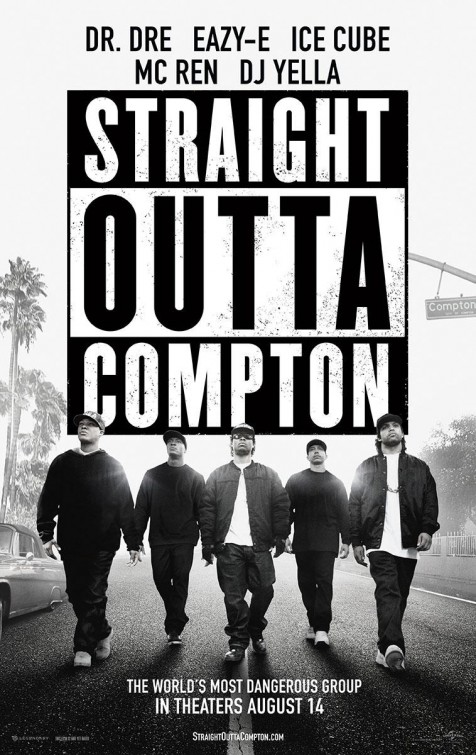
Full disclosure: I’m not a big late-80s/early-90s hip hop fan. Before F. Gary Gray’s Straight Outta Compton, I likely would have associated the letters “N.W.A.” with a professional wrestling promotion as opposed to anything of the rap variety. But cinema is a great enlightenment tool and here I am, enlightened, and all the better for it. The film takes us all the way back to 1986, to Compton, California and to the inception of one of the most influential groups in music history. Not that I know anything, but to me Straight Outta Compton plays like a film worthy of the N.W.A.’s hefty legacy.

It is primarily centred around the three most pivotal members: Eazy-E (Jason Mitchell), Ice Cube (Jackson O’Shea Jr.), and Dr. Dre (Corey Hawkins). We meet the former surrounded by guns and drugs, and the latter hopes and dreams. Despite its obvious pitfalls — impending violence and police sirens — the Compton hip hop culture proudly wears an aspirational quality that bellows from the screen; this is especially true during musical interludes, though these aren’t interludes as much as natural story progressions. And it is this underbelly of aspiration that resonates universally, beyond hip hop. What we have is a piece that serves its real life protagonists honourably by dismissing glorification and highlighting the relatable traits they foster.

This feels like the rise of the N.W.A., not an imitation. Every performance is authentic, from Jackson O’Shea Jr. who is more than just his father’s uncanny lookalike, authoritative and assured, to Jason Mitchell as Eazy-E, the rebel of rebels turned sympathetic figure. Mitchell sieves through the aggravating side of his character in order to trap something really genuine. It helps that the focus is not always on Eazy-E; we spend significant time with Dr. Dre, played with a terrific sense of roundedness by Corey Hawkins, and with Paul Giamatti’s Jerry Heller, a businessman with dollar signs in his eyes. This is a cast rich in talent, both raw and honed, backed up by strong supporting players (R. Marcos Taylor as Suge Knight; Aldis Hodge and Neil Brown Jr. as MC Renn and DJ Yella, respectively).

As is always the case when a biopic hits the stands, much has been said about historical fudgings. Most notably, the non-reference to Dr. Dre’s violent outbursts against women. That’s a fair quarrel, though I can only judge what I see. The guys on-screen are absolutely not angels, nor do they hold themselves to such a moral standard. They partake in overblown confrontations — the camera makes a point to zoom in on a tightly-grasped glass bottle during one conflict. Women are not treated well, often as little more than instruments to use (this does change upon the arrival of maturity). And bouts of in-fighting gain frequency as the group gains success. You believe in the bond between the members, but you also recognise the potential for bloated egos to overrule harmony. So when bloated egos overrule harmony, it’s not a shock.

The most charged relationship Gray’s outing explores, though, is not one between individual artists, but a collective one between all artists and the police. Our real world news media has been awash with the pitiful treatment, and worse, of black men in particular by US police officers, and this exceptionally tense relationship is reflected from the word go. For instance, we see Dr. Dre on the receiving end of a brutish arrest for no apparent reason: “I was literally just standing there… that’s it.” Police brutality is obviously an issue with complex ties to the rise of the N.W.A., therefore the extent to which it is featured here does seem justified and in many ways inevitable, but that inevitability does not diminish its impact at all.

Cop cars stalk the group constantly; they appear from nowhere almost to the point of parody, their lights flashing and alarms blaring. Conversations between officer and victim cement the shoddy use of power structures — one side inflicting orders with no real basis, the other side angrily demanding an explanation. This amounts to a handful of on-the-nose interactions (“You can’t come down here and harass my clients because they’re black”) but then these interactions are probably wrapped up in absolute truth, which makes the whole saga all the more infuriating for us folks on the side of those being unlawfully discriminated against.

On a lighter note, at two and a half hours long the film advances with unrivalled exuberance. This is all Gray’s direction; you can feel it. Be it in establishing compelling dialogues or encouraging us to head-bop along, the director never lets up: we zip through recording sessions and into electric live performances, and the spotlight evolves from a lone studio glow into an array of kinetic beams. The best example of this vitality is in an unrelenting diss sequence during which the picture cuts between the disser dissing and the dissees listening. It is a track that stems from a dispute based on artistic and financial integrity, another industry strand the piece explores in some detail.

It’s not as earnest as something like Crazy Heart or as indebted to soul-searching as a Walk the Line, but Straight Outta Compton thrives on the strength of its key figures and the scintillating, abrasive music they make. For someone like me, a representative of those uninitiated in the musical culture on display, this character-centric approach affords the film a grounding from which to flourish. Good characterisation, good storytelling — these are two of the tenets of good cinema, and Straight Outta Compton revels in both. That makes it good cinema.

Straight Outta Compton - Corey Hawkins

Images credit: IMP Awards, Collider

Images copyright (©): Universal Pictures

Grimsby (2016)

★★

Grimsby PosterDirector: Louis Leterrier

Release Date: February 24th, 2016 (UK); March 11th, 2016 (US)

Genre: Action; Comedy

Starring: Sacha Baron Cohen, Mark Strong

Should you walk into a screening of this latest Sacha Baron Cohen flick not knowing what exactly to expect, you’ll be brought up to speed almost immediately. The first thing we see is a sweaty, mouthy sex scene between Cohen and Rebel Wilson, and here’s the kicker: it takes place atop a mattress in a furniture store. Thankfully Cohen, playing Grimsby goof Nobby Butcher, chooses to purchase said mattress having already christened it. We watch him wheel the thing home using an abandoned shopping trolley; he’s docked out in an England strip and is sporting a 90s britpop hairdo. Meanwhile, Blur’s “Parklife” blares in the background.

It gets much grosser than an in-store romp, though Louis Leterrier’s Grimsby never matches the unfiltered rowdiness of Borat, Cohen’s pinnacle comedic achievement. The film tries — you’ll know it when you see it — but the actor, once a laudable harbinger of satirical bite (and he may be still), is suffocated by a plethora of unoriginal sexual antics. Obvious targets are set up to be shot down: Bill Cosby, blandly, and Donald Trump, more amusingly. Smarter quips are less prevalent, though there is at least one (“Chilcott was dismissed for good reason,” claims an agency insider). It doesn’t want to be that sort of film, which is fine, but the invention isn’t there to justify a simple 90-minute yuck-fest.

An opening Call of Duty action sequence makes use of Leterrier’s background in the genre (The Transporter, The Incredible Hulk): we take the viewpoint of Mark Strong’s Sebastian as he leaps onto vehicles and sends enemies flying with a barrage of roundhouse kicks. The violent obstacle course suitably concludes just as “Directed by Louis Leterrier” hits the screen. Sebastian is an MI6 agent and also Nobby’s brother, though the two haven’t been together since their childhood separation. Inevitably, their reunion sees the latter interrupt the former during a mission, resulting in the shooting of an ill, wheelchair-bound youngster and the escape of Sebastian’s actual target. And so, the brothers find themselves on the run.

In tandem with Cohen’s screenplay — co-written with long-time partner Peter Baynham and Wreck-It Ralph story moulder Phil Johnston — Leterrier attempts to infuse proceedings with that Edgar Wright sense of snap and whizz. It doesn’t work. Partly because the centrepiece jokes are based around sequences that overstay their welcome, thus any built-up momentum succumbs to comedic culling. But the use of flashbacks is also a great hindrance: we see the brothers as annoying kids, loud, sweary and arrogant. Not exactly the sympathetic formula required to make us feel for them when they are split up via fostering.

“Cigarettes & Alcohol” is the soundtrack to the film’s best scene: Nobby, having ditched the football jersey, dons his brother’s spy gear (including a black turtleneck jumper) and saunters forth in slow motion with enough Liam Gallagher swagger to match his Liam Gallagher mod mullet and sideburns combo. It is funny because you can feel a similar sort of pay-off building from the moment Leterrier intercuts Northern English football culture with britpop tunes and britpop attire. And it works because you believe in Cohen’s false big-headedness. He is fairly good as Nobby, it’s just that Nobby isn’t a particularly intriguing character.

The return of Barkhad Abdi to the silver screen is a welcome one, even though his role (drug runner) demands very little from a former Academy Award nominee. Booze comedian Johnny Vegas and Royle Family mainstay Ricky Tomlinson have fleeting supporting roles as two of Grimsby’s football-loving troupe: set during the 2016 World Cup, if ever there was something within the narrative to exemplify the film’s lack of reality or relevance, it would be the England national football team’s success. On the female side of things, Isla Fisher plays a helpful MI6 agent stuck behind mobile phones and computer screens while Penélope Cruz, well, has another portfolio credit.

Fans of Cohen might still enjoy this tamer-in-execution offering so long as they enter not expecting the piercing offence prevalent in earlier outings. Grimsby is basically just Johnny English Reborn, the not-so-good one, but with cruder jokes. There is a working class versus establishment thing going on, I think, but both sides are so plainly drawn nothing new or interesting sees the light of day. This is no Kingsman, which struck the correct balance between heightened impact and genre appreciation. Having said all of that, I did learn of Grimsby and Chernobyl’s twin city relationship. Wait, that was a joke?

Grimsby - Mark Strong & Sasha Baron Cohen

Images credit: IMP Awards, Collider

Images copyright (©): Columbia Pictures

45 Years (2015)

★★★★

45 Years PosterDirector: Andrew Haigh

Release Date: August 28th, 2015 (UK); December 23rd, 2015 (US)

Genre: Drama; Romance

Starring: Charlotte Rampling, Tom Courtenay

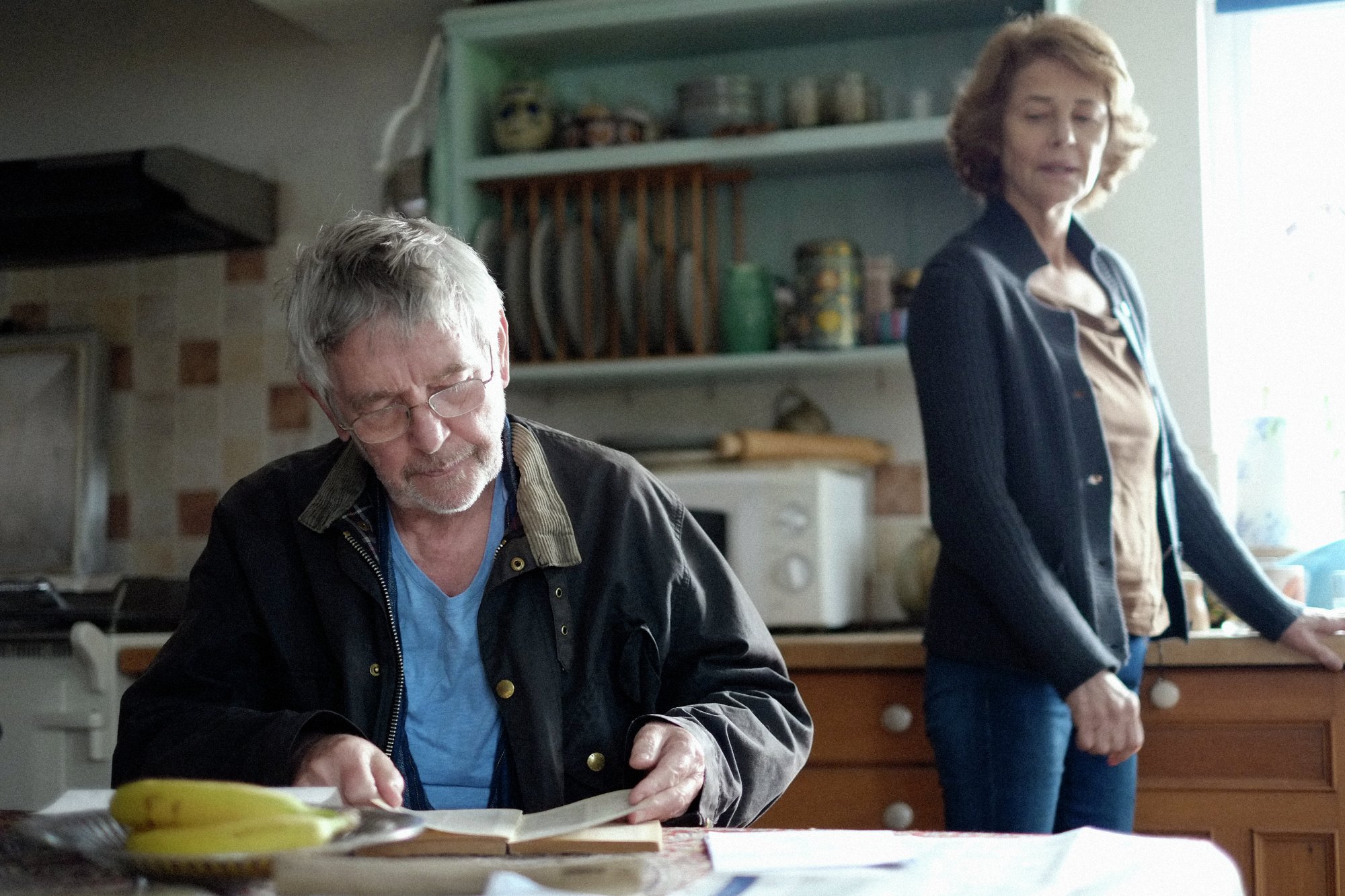
Apparent normalcy reigns supreme before being crushed in Andrew Haigh’s 45 Years. It is instantly established that our central couple — Kate (Charlotte Rampling) and Geoff (Tom Courtenay) — live an ordinary life together, or at least that they have done up until the point we meet them. We see, for instance, Kate having an amiable chat with her postman, a former student, as she finishes up her daily walk with the dog. Life is as it would be for just about any ageing couple: very innocuous. What’s also innocuous, though, is the means by which said life is turned upside down.

Geoff receives a letter in the mail and, upon reading it at the breakfast table, finds out that the frozen body of a former lover has been found in a Swiss crevasse (this following said lover Katya’s tragic death in the early 1960s). The immediate conversation reverts, again, to normalcy. The two discuss how they feel about the news, its similarity to the Tollund Man, the science of glaciers and their preservation qualities. Even the possibility that the body mightn’t, in fact, be that of Katya. All the while, Lol Crawley’s camera remains settled on the couple, affording them as much time to breath and converse as they need.

It’s Kate and Geoff’s 45th wedding anniversary on the Saturday — the film follows a day-by-day structure, starting on Monday — for which they are having a party, though what should be a time for pleasurable anticipation turns into one of uncertainty and eventual dread. “So full of history you see, like a good marriage,” Kate hears from her Maître d’ at the very start of the film, shortly after the news but before any anxieties have truly set in. Later, Kate makes her own assertion about the undisclosed histories of she and her husband: “We were both going through something really unpleasant and yet we never talked about it in all the years that we’ve known each other.”

Rampling is the more practical of the pair as Kate, the active one (she seems to be the main force behind the upcoming party and does most of the dog-walking). The film tends to see events from her point of view: we open with her, traverse the moors with her, travel into town with her, and investigate Geoff’s past with her. Rampling obliges by assuming an authority through her presence; not the bossy kind but the controlled sort that a former teacher might bear. She probably has the tougher role of the two given Kate’s detachment is a more gradual, subtle affair (Geoff, on the other hand, has his head in the clouds as soon as he learns of Katya’s fate).

Geoff is less sound, more wavering, and Courtenay plays him with a stuttering sensibility. His memories of Katya seem clear and he often appears nervous when relaying them to his wife. Haigh’s screenplay is understated, so much so that the film can only thrive upon its own, bare-bones merits, of which there are many — the acting is restrained, as is Haigh’s direction. So when secrets inevitably spill out, they take centre stage. We are compelled to listen and listen we do: to snippets of withheld information and the considered reactions that follow said revelations.

There is an excellent scene around halfway through the film during which we see Kate and Geoff meet with their friends, the camera floating between conversations that neither of the two are actively participating in. This is the corruptive power of a seemingly banal secret. Time also hangs over the piece; its inevitability is something both Kate and Geoff find themselves weighing up during a chat where they casually lament the lack of children and grandchildren in their life. Geoff speaks of Katya being frozen in time, and how it feels odd to him that he has aged immeasurably by comparison. He worries about “losing that purposefulness” and his fear resonates because it is something that all of us will someday comprehend.

Music is utilised minimally — there’s hardly a score, if one at all, Haigh instead placing confidence in the storytelling ability of nature’s tweets and gusts. Terrifically frosty shots of the Norfolk countryside highlight both the dewy autumn setting and the impending sense of isolation our main characters feel. 45 Years is a superbly told domestic trust drama. The underlying tension isn’t edge-of-your-seat, but rather needling and discomforting. From something to look forward to, Saturday’s party becomes a lingering dark shadow. And parties are supposed to be fun.

45 Years - Tom Courtenay & Charlotte Rampling

Images credit: IMP Awards, Collider

Images copyright (©): Artificial Eye